The Ultimate Guide to Omnichannel Communication in 2026
Learn omnichannel customer communication, best practices, examples, why it matters and how platforms align marketing, sales and support teams.

Learn omnichannel customer communication, best practices, examples, why it matters and how platforms align marketing, sales and support teams.
What kind of customer communication approach drives more sales?
Every business is looking for ways to improve their performance and maximize leads.
Enter omnichannel customer communication: a modern way of staying connected with customers using multiple devices, channels, and media.
Companies that delivered strong omni channel communication retained 89% of their customers.
Companies that invest in omnichannel communication strategies receive 2x more conversions. It makes it easier for them to address customers’ needs in a timely manner. As such it reduces time spent on inquiries by automating responses.
Let us discuss the tools, benefits and different examples of omni-channel customer communication strategies that can increase revenue for your business.
Omnichannel customer communication refers to a strategy that considers the entire “customer journey”: from pre-sales questions to post-sales support inquiries. Its objective is to provide customers with a consistent experience across multiple channels such as social media messages, web forms, live chats, emails and phone calls.
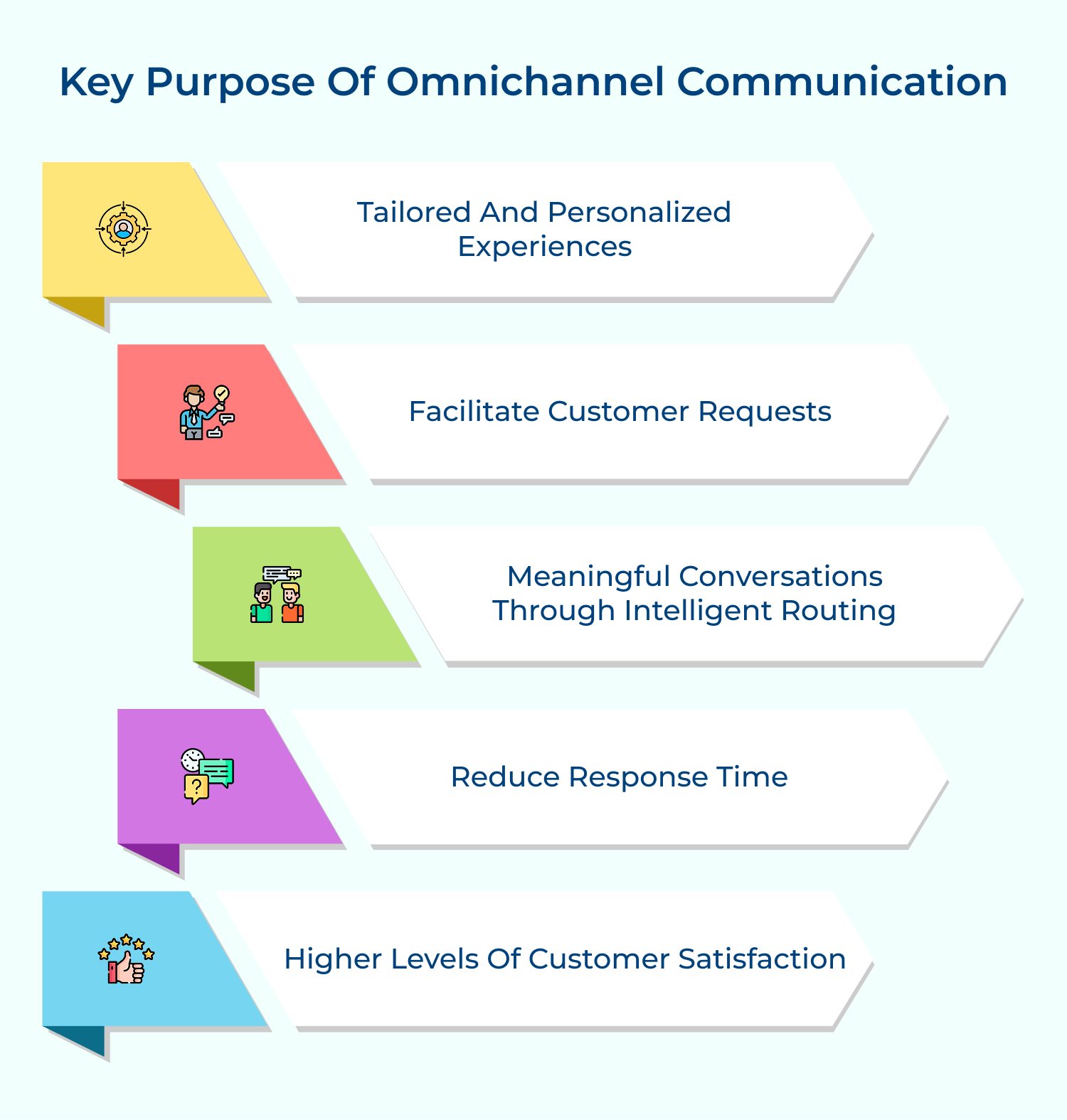
The omnichannel communication approach allows customers to use any channel they feel most comfortable or convenient with without having to repeat themselves or wait days on end for an answer.
Key purpose:
An omnichannel communication platform is defined as an integrated approach to customer marketing that combines multiple channels into one platform. It allows businesses to create a unified and seamless customer experience regardless of the communication channel used.
Businesses, by being omnichannel can provide customers with personalized interactions on any device or medium, with content tailored for each individual. It gives customers the convenience to engage when and how they want, enabling companies to provide optimal customer experiences that create loyal relationships.
Omnichannel communication creates a unified customer experience across all channels. Using omnichannel software ensures consistency throughout the entire customer journey.
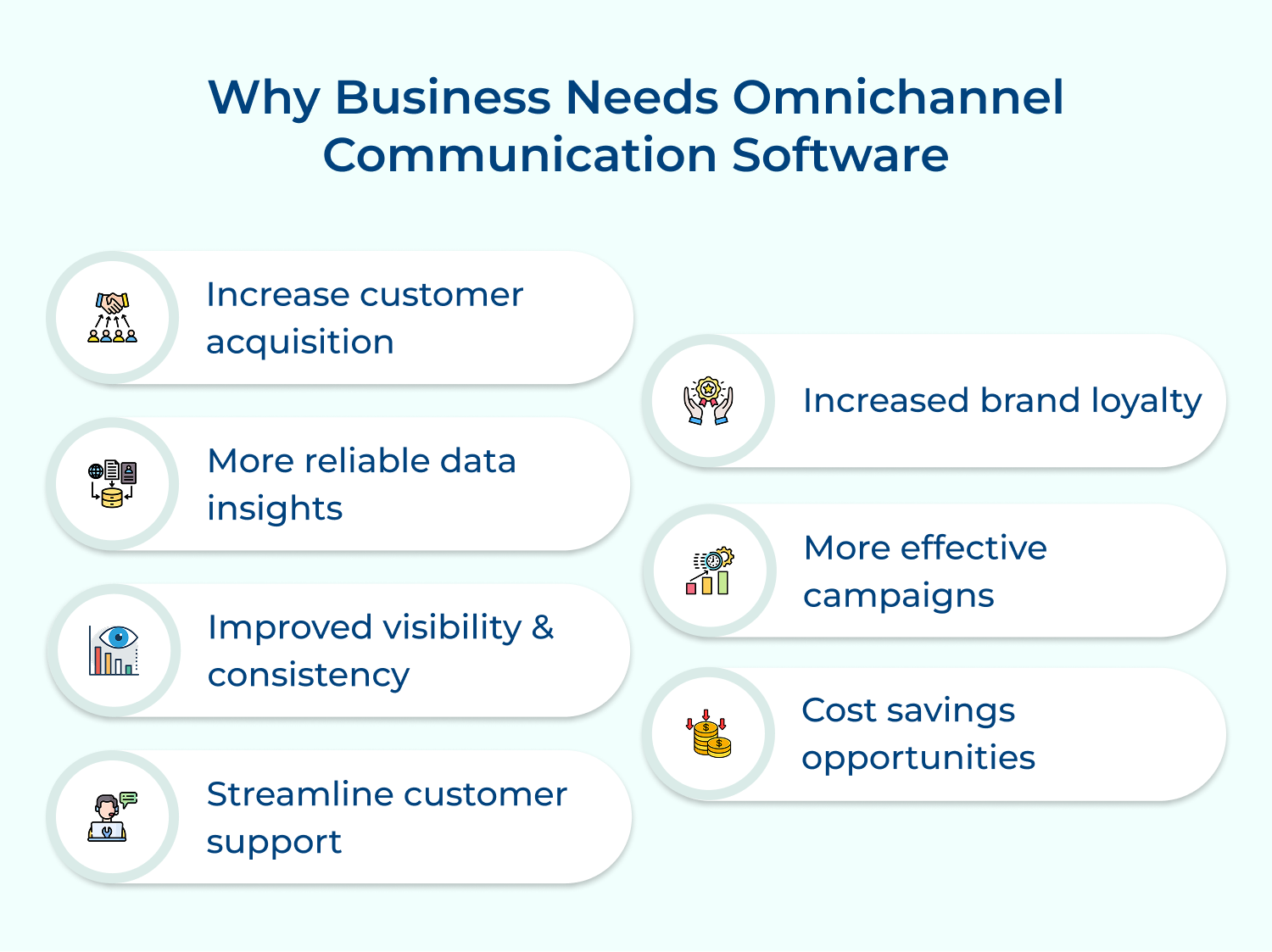
Companies that use a communication platform reduce their cost of service by 15-20%.
It also helps deliver a consistent experience across every customer interaction.
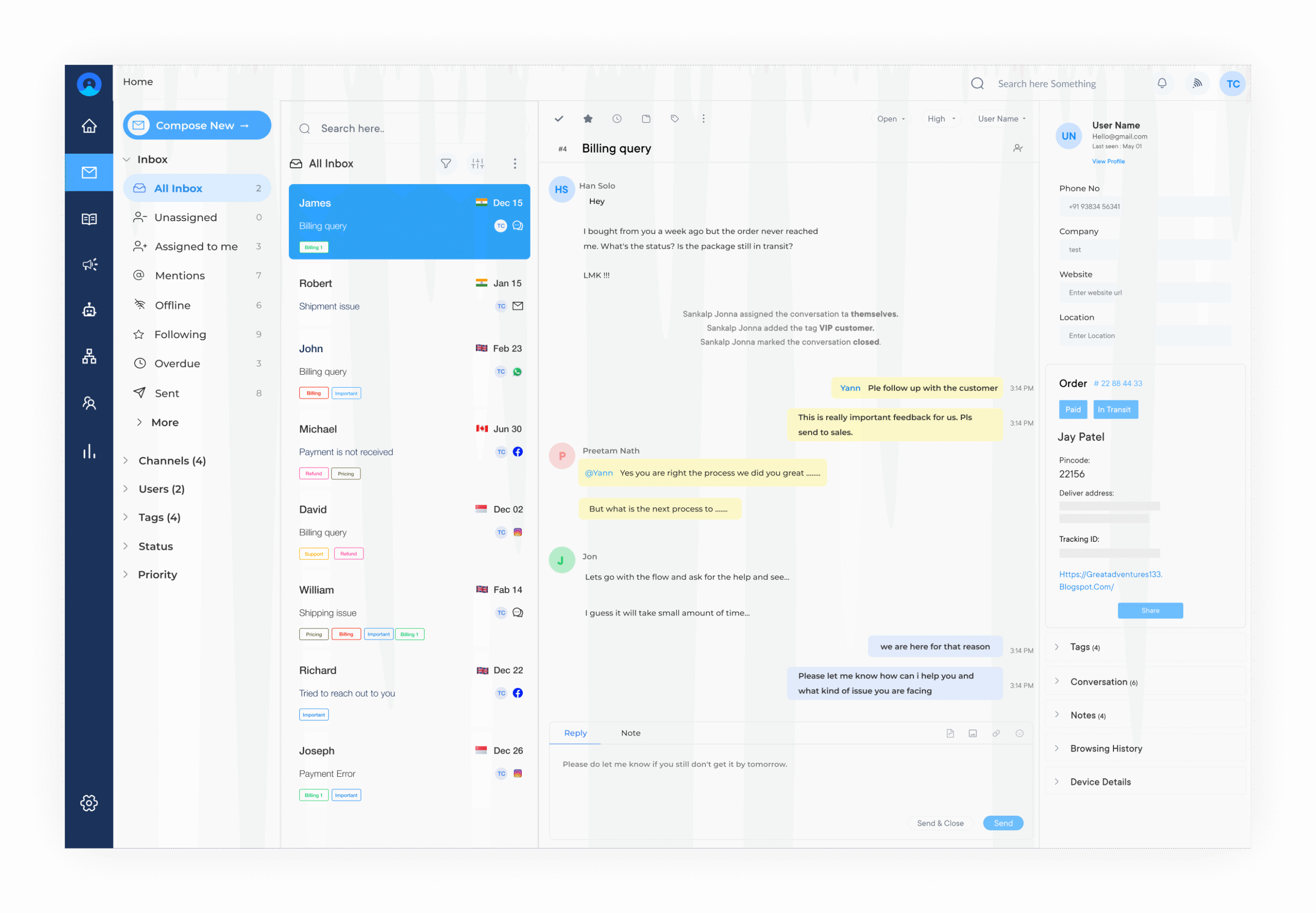
Omni24 is an omnichannel customer experience platform that helps businesses unify their customer communication across all channels. Its user-friendly interface and comprehensive analytics make it a top choice for businesses looking to enhance their customer communication strategies.
Key features:
Pricing: Omni24 offers a 14-day free trial and offers four subscription plans – (i) Standard at $29/user/month (ii) Professional at $64/user/month (iii) Ultimate at $114/user/month (iv) Enterprise $169/user/month
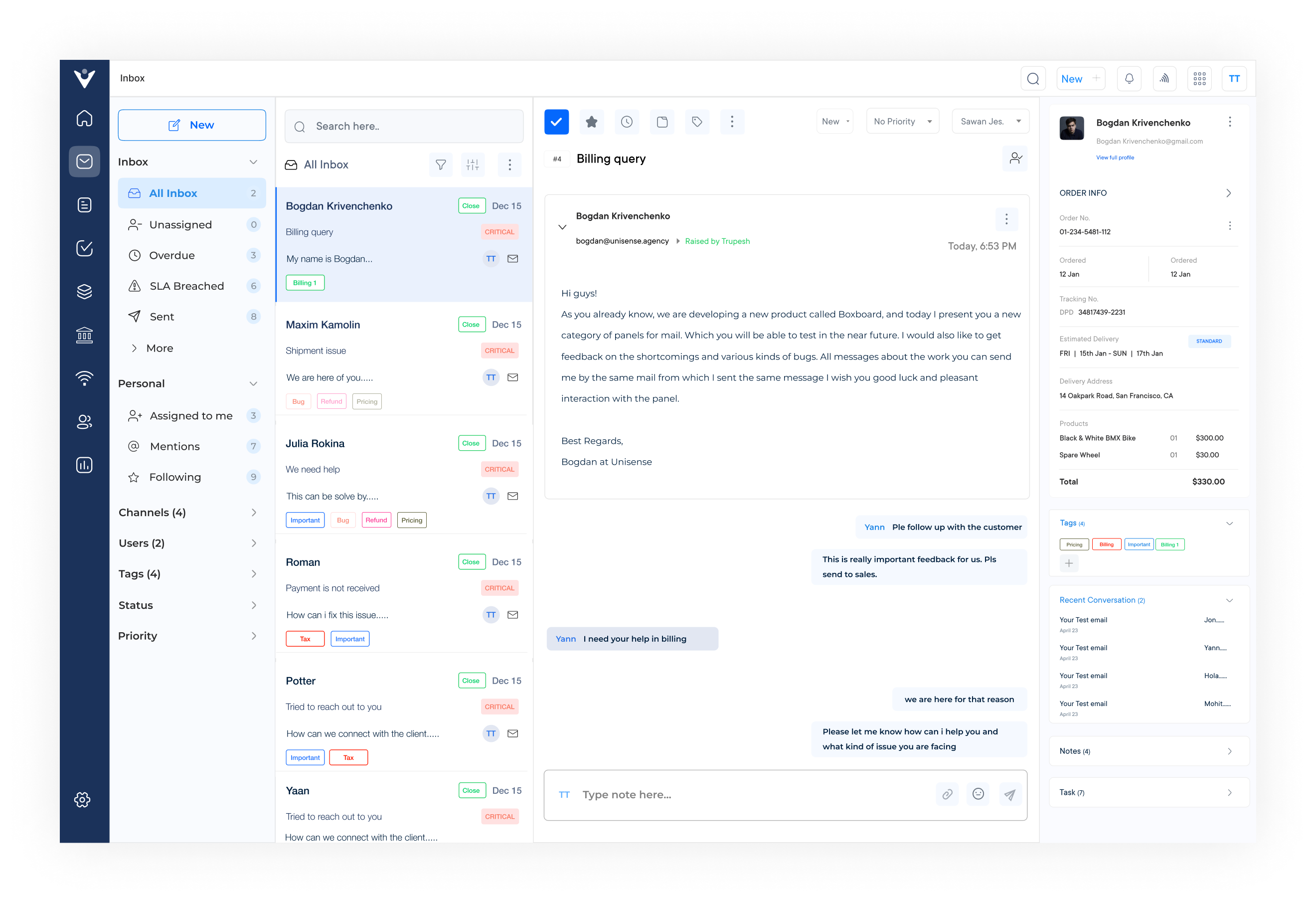
Veemo offers a conversational engagement suite that helps businesses streamline their customer interactions across multiple channels. With features designed to enhance customer engagement and streamline communication processes, Veemo is a complete omnichannel communication platform provides exceptional customer experiences at scale.
Key features:
Pricing: Vemmo offers a 14-day free trial for its customers. There are 4 subscription plans available that are billed annually- (i) Growth at $19/ user/month billed annually (ii)Team at $59/user/month (iii) Premium at $79/user/month (iv)Enterprise at $109/user/month
Genesys is an end-to-end customer experience management solution that enables businesses to understand their customer’s omni-channel interactions better and act accordingly in order to upsell them effectively in real time.
The innovative tools include Virtual Agents powered by Machine Learning algorithms that automate complex processes while understanding customer needs with personalization and accuracy at unprecedented speeds.
The software is a sophisticated reporting system that regularly collects and analyses required metrics needed for businesses to make informed decisions about future investments or product improvements, etc.
ZenDesk is an integrated tool technology platform designed for support teams looking for an efficient way to respond to their customers’ inquiries across all channels in real-time without compromising quality or speed of delivery.
Automated routing methods ensure easy handling of incoming queries over multiple digital channels including social media making sure customers don’t need to wait for long times for getting replied back from a concerned person on the other side.
Helpcrunch is a customer service application helping companies improve their customers’ satisfaction rate while decreasing churning rate across the board by building close relationships between the customer service agent and consumers through detailed profile knowledge leverage driven by multidimensional analytics techniques.
Customers can thus expect expert guidance tailored precisely according to individual purchase data instead of common generic answers as well as effortless cross-channel communication.
An omnichannel strategy ensures seamless access and puts customer experience first. Here are some best practices to implement it effectively.
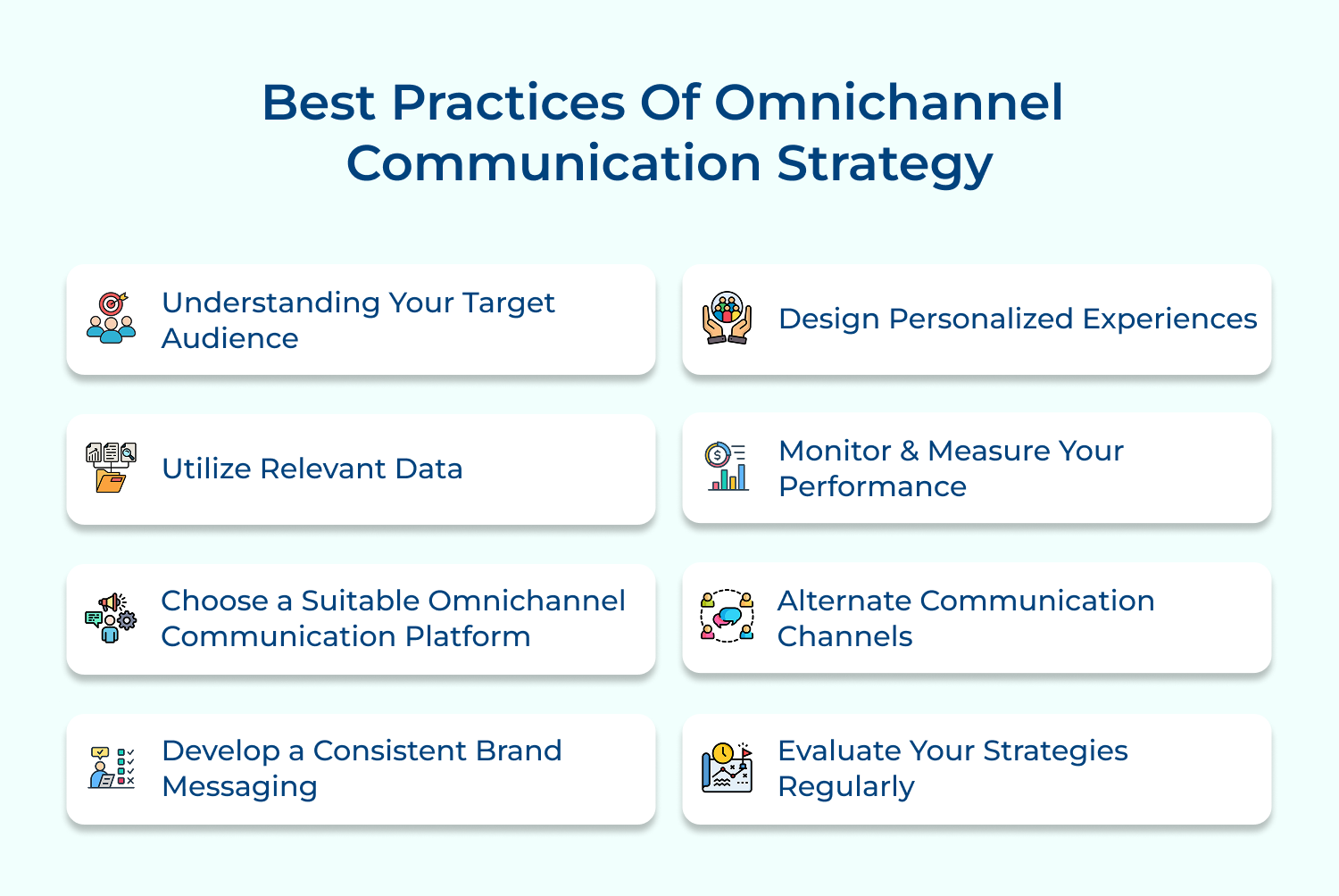
Businesses that adopt omnichannel communication strategies are supposed to understand their target audience. It will allow you to create an omnichannel communication strategy that is customized to your target audience.
When you understand your customer needs, expectations and pain points, you are able to align your products/services/solutions accordingly.
Takeaways:
Collecting customer data is another best practice for creating an omnichannel communication strategy.
You can gather relevant data such as market trends, customer habits and user experience insights from various sources. It will help you to better understand the needs of your customers.
Using customer data enhances omnichannel communication:
Takeaways:
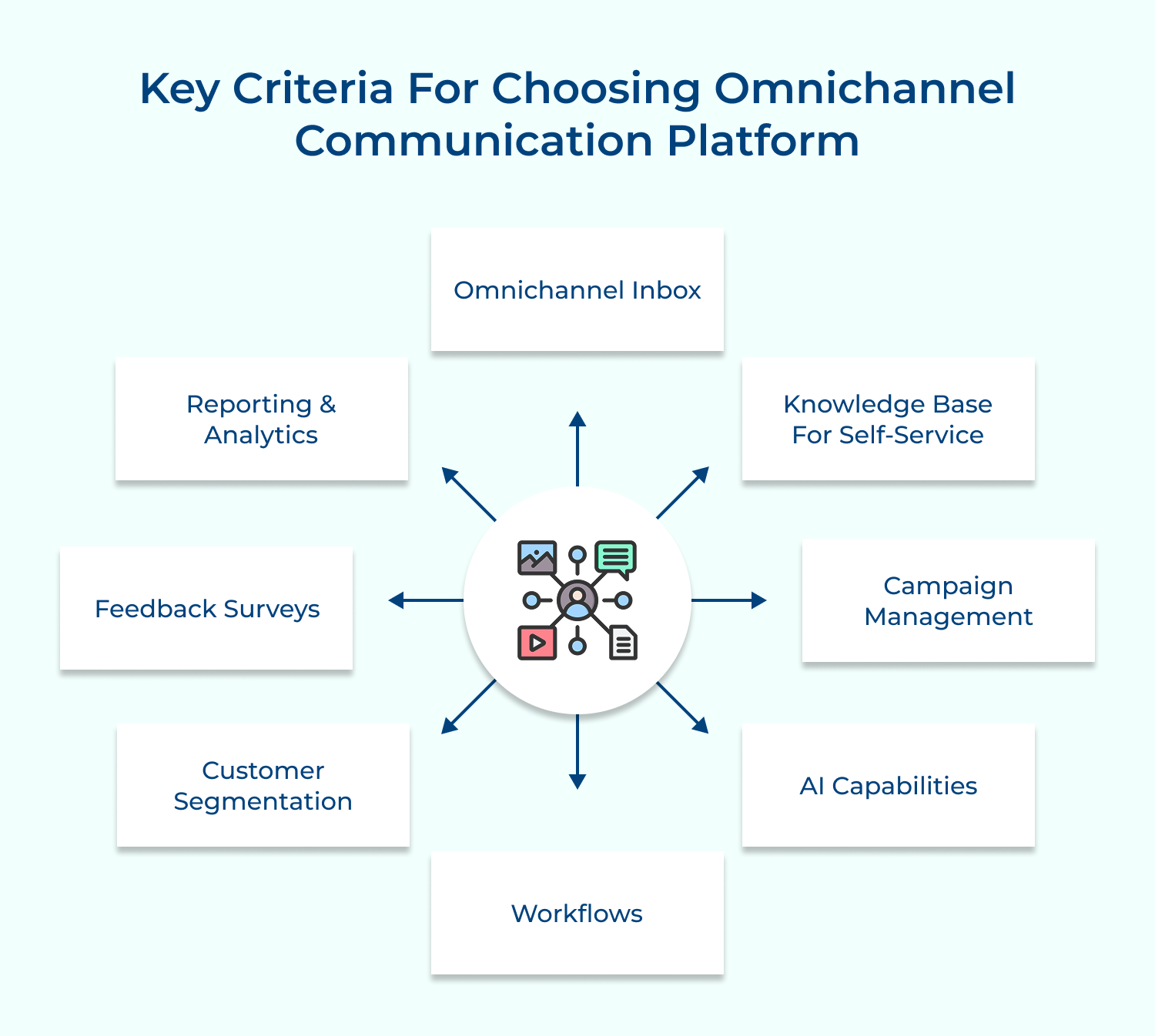
When creating an omnichannel communication strategy, the right platform is very very important!
It is essential for businesses to choose suitable platforms for both approaches out of traditional media channels like email, text, or phone as well as modern ones like chatbots, social media platforms, and apps, etc.
Depending upon the industry the target audience also differs. Based on your customers you need to choose the platform that will help you to engage them in real time for developing their trust and loyalty in your business.
Companies that provide a consistent service quality across multiple channels retain 89% of their
channels regardless of the platform used by the user.
Walgreens invested in an omnichannel communication approach so that customers are able to go online, offline, and back online again to a mobile phone. That experience should be seamless, and it should be cohesive.
Here is how omnichannel communication strategy helps to deliver a consistent experience
Effective consistent personalization is the capability to identify users across multiple touchpoints and it is quite challenging for businesses to achieve that. It requires collecting and unifying customer data from all digital channels under one central location.
An omnichannel experience should be tailored in order to give users the best experience across multiple platforms and devices while still maintaining a unified approach overall.
Omnichannel personalization creates customer experiences that are backed by real-time data from all channels and extends them across every touchpoint, to build consistent customer relationships wherever they interact with the brand.
Here is how omni-channel communication helps to deliver a personalized experience.
An omnichannel dashboard empowers your team with real time feedback about their interactions on their customer interactions handled on each channel.
It is important to monitor how your customers are interacting with each channel and measure how successful your strategies are over time in order to adjust them accordingly if necessary.
Having an omnichannel communication strategy helps agents meet the key metrics to improve performance. The key metrics are First Response Time (FRT), Total Resolution Time, Average Response Time (ART) and Missed Chats.
Here is how the omnichannel communication approach improves agents’ productivity.
Having alternative communication channels can also be a great omnichannel communication best practice.
Different forms of alternative communication channels such as audio-based messages through voice recordings or video calls instead of regular emails or online chats when appropriate and keep up with emerging trends so that you remain competitive in today’s digital landscape.
It will also help businesses to meet their customer expectations, increase their satisfaction ratio and maintain their loyalty.
Measuring the omnichannel communication strategies is very important as they are being implemented for your business. Evaluating them will provide you with a clear picture of the gray and white areas.
Ensure that you regularly evaluate your omni-channel communication strategies based on feedback from customers and constantly update them for maximum efficiency.
How will evaluating strategies on a regular basis help your business?
Businesses are shifting from the traditional methods of customer communication to automated digital world, one essential tool to have is a tool for omnichannel customer communication.
The ability to connect with customers across multiple channels in a unified manner allows for enhanced brand visibility and customer engagement. Through personalized interactions, brands can build stronger relationships with their audience, leading to increased loyalty.
Omni24 offers a comprehensive suite of tools that enable brands to create a seamless customer experience across various channels. Through comprehensive analytics and tracking capabilities, brands can gain valuable insights into customer behavior to make data-driven decisions. With Omni24, brands can truly revolutionize a brand’s communication strategy and pave the way for sustainable growth.

What is the difference between multichannel vs. omnichannel communication?
Both the terms, omnichannel and multichannel, are used interchangeably when it comes to effective customer service communication strategy. Understanding the omnichannel multichannel difference helps to connect all the touchpoints to deliver a consistent customer experience. Omnichannel communication is a holistic approach that connects all channels to engage with customers, while the multichannel approach aims to enable customers to reach the brand via a maximum number of channels. An omnichannel communication strategy ensures that customers are satisfied with getting a unified messaging experience through every channel. In the multichannel strategy, customer engagement is siloed.
What is an example of omnichannel communication?
One great omnichannel communication example is Zappos. It offers customer support through channels like Twitter, text, and its 24/7 call center. No matter which channel a customer uses, every support agent is equipped with enough information to pick up and continue the conversation at any time. Another major highlight of Zappos’ success is their 365 days return policy and free shipping. Zappos customer service has been widely renowned as the one going “above and beyond” to please customers.
What are the benefits of omni-channel communication?
Businesses investing in an omnichannel communication strategy can get better insights through data collection, better brand visibility, improved customer segmentation, and higher ROI. It also helps in delivering consistent brand messaging across channels and delivers a great omnichannel customer service experience.
What is omnichannel communication for customer service?
Omnichannel communication is a customer service strategy that integrates multiple channels (social media, email, phone, chat, in-store) into a single unified experience. It enables seamless transitions between channels while maintaining conversation context and customer history, allowing businesses to provide consistent, personalized service regardless of how customers choose to interact.
What is omnichannel communication for retail?
Omnichannel retailing is a customer experience strategy that lets customers interact with a brand on the channels of their choice and enjoy connected personalized experiences. Today, customers expect to have flexible and seamless shopping experiences. This is where omnichannel retail comes in.
 https://omni24.io/wp-content/uploads/2026/09/Social-commerce-scaled.png
1340
2560
Webvision Solution
https://omni24.io/wp-content/uploads/2023/04/Omni-Logo-1.svg
Webvision Solution2026-10-23 12:18:272026-10-23 12:18:27What is Social Commerce and Why Does It Matter?
https://omni24.io/wp-content/uploads/2026/09/Social-commerce-scaled.png
1340
2560
Webvision Solution
https://omni24.io/wp-content/uploads/2023/04/Omni-Logo-1.svg
Webvision Solution2026-10-23 12:18:272026-10-23 12:18:27What is Social Commerce and Why Does It Matter? https://omni24.io/wp-content/uploads/2026/08/AI-Customer-Service-Agents.png
1256
2400
Webvision Solution
https://omni24.io/wp-content/uploads/2023/04/Omni-Logo-1.svg
Webvision Solution2026-09-21 04:48:512026-09-21 04:48:51How to Build an AI Customer Service Agents: 8 Key Steps
https://omni24.io/wp-content/uploads/2026/08/AI-Customer-Service-Agents.png
1256
2400
Webvision Solution
https://omni24.io/wp-content/uploads/2023/04/Omni-Logo-1.svg
Webvision Solution2026-09-21 04:48:512026-09-21 04:48:51How to Build an AI Customer Service Agents: 8 Key Steps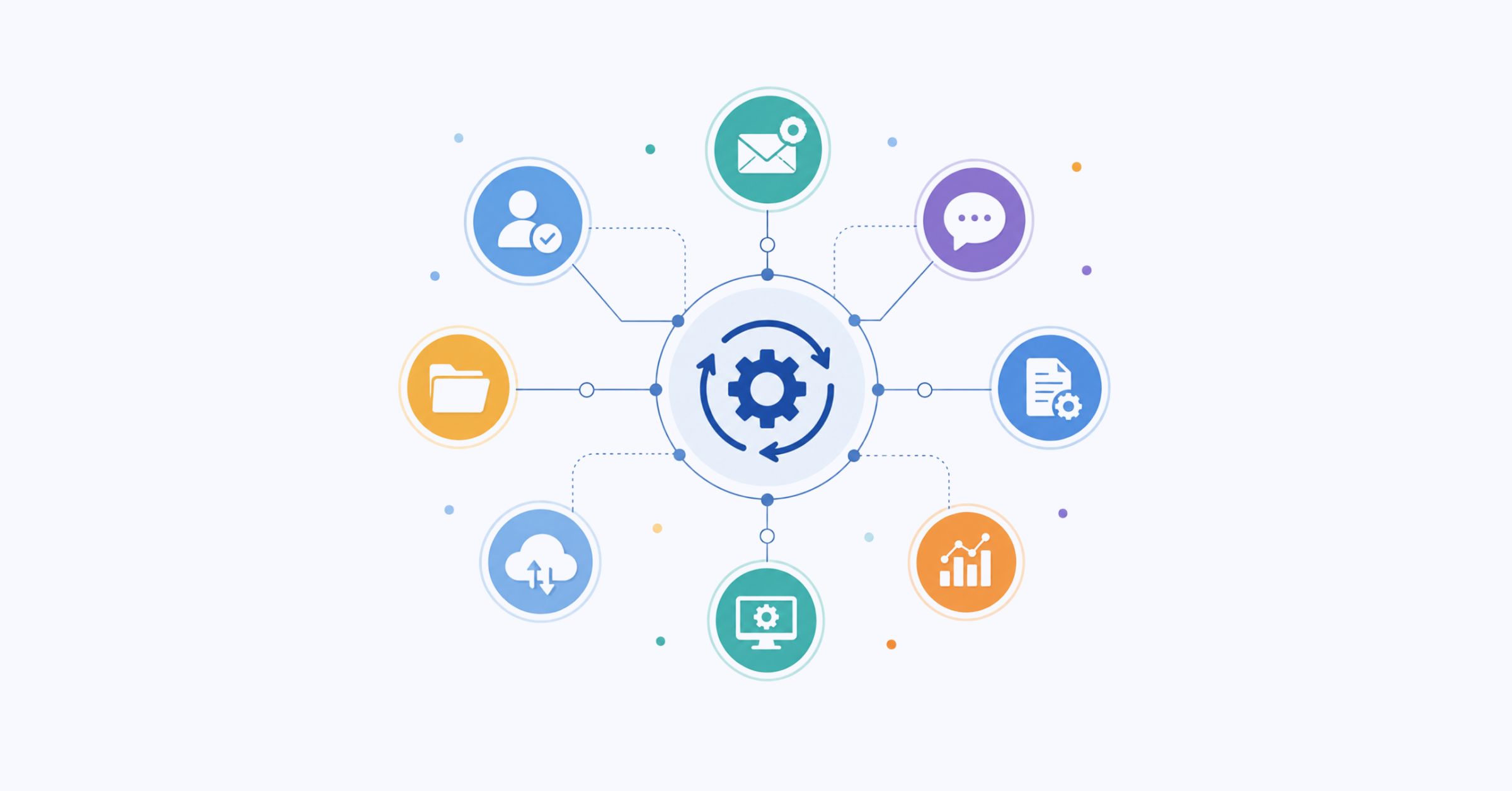 https://omni24.io/wp-content/uploads/2026/08/Omnichannel-Conversational-AI.png
1256
2400
Tushar Joshi
https://omni24.io/wp-content/uploads/2023/04/Omni-Logo-1.svg
Tushar Joshi2026-09-16 03:51:072026-09-16 03:51:07How to Build Omnichannel Conversational AI Strategy
https://omni24.io/wp-content/uploads/2026/08/Omnichannel-Conversational-AI.png
1256
2400
Tushar Joshi
https://omni24.io/wp-content/uploads/2023/04/Omni-Logo-1.svg
Tushar Joshi2026-09-16 03:51:072026-09-16 03:51:07How to Build Omnichannel Conversational AI Strategy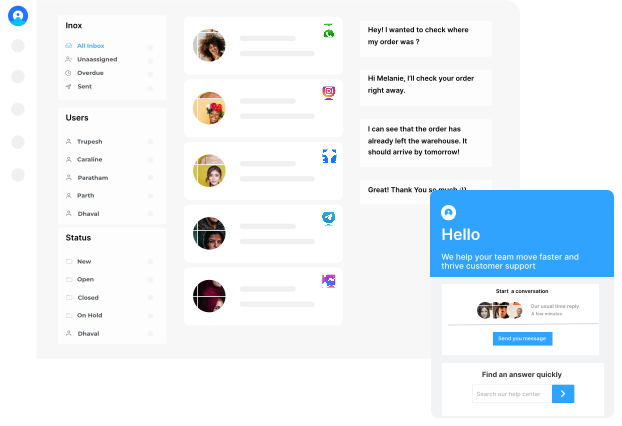
Whether it’s about acquire, engage or support – Omni24 covers all your customer engagement needs in one complete platform.

Copyright ©2026 Veemo All rights reserved.
CA, Los Angeles, Hall Ave, 19011