The Complete Guide to Customer Communication Management
Personalize and automate customer engagement with advanced customer communication management software
No Credit Card Needed | Guided Setup
Trusted by Customer Centric Businesses Globally





Personalize and automate customer engagement with advanced customer communication management software
No Credit Card Needed | Guided Setup
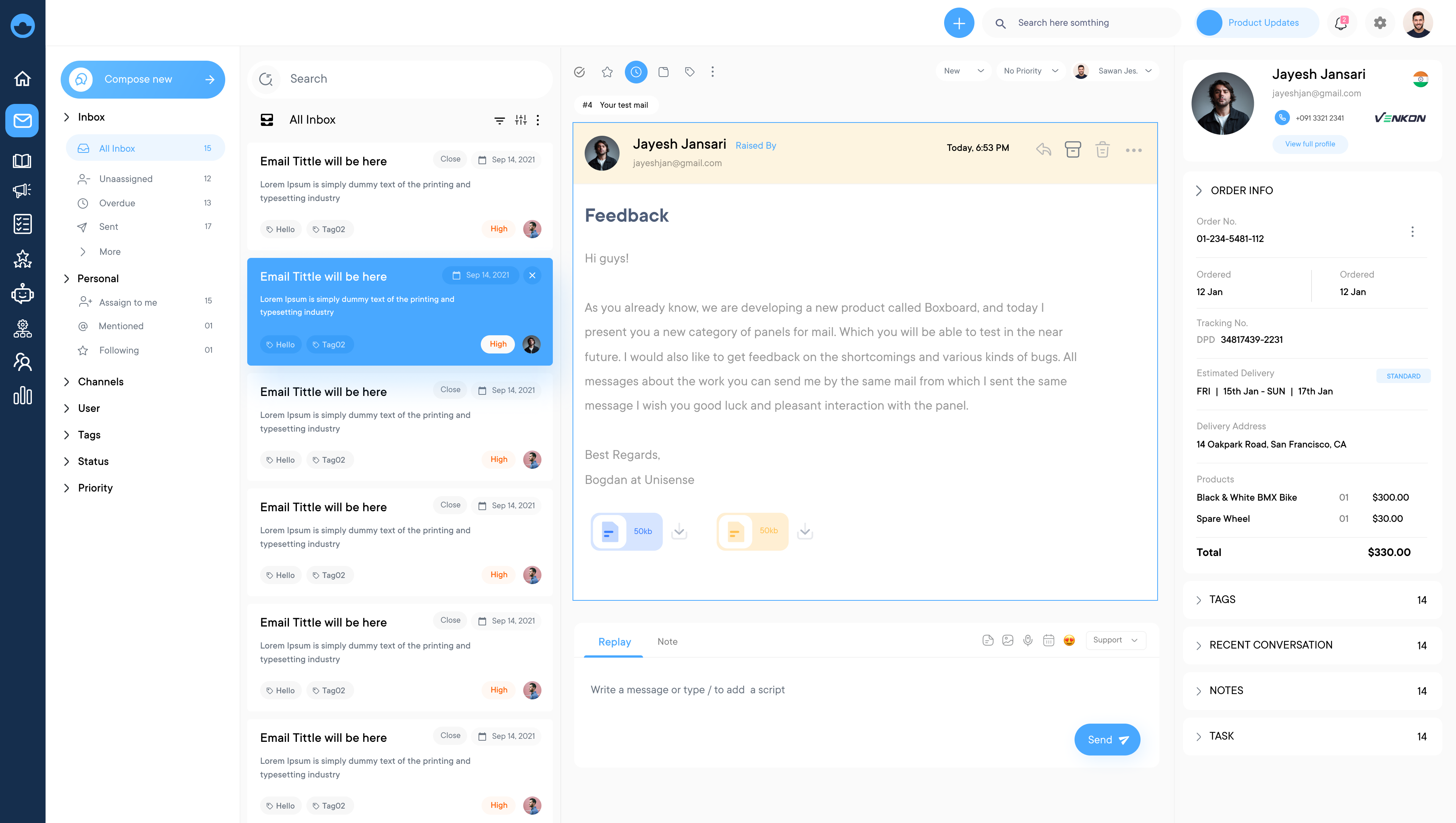
Manage your business conversations across all channels in one place with Omni24’s unified customer communication management platform
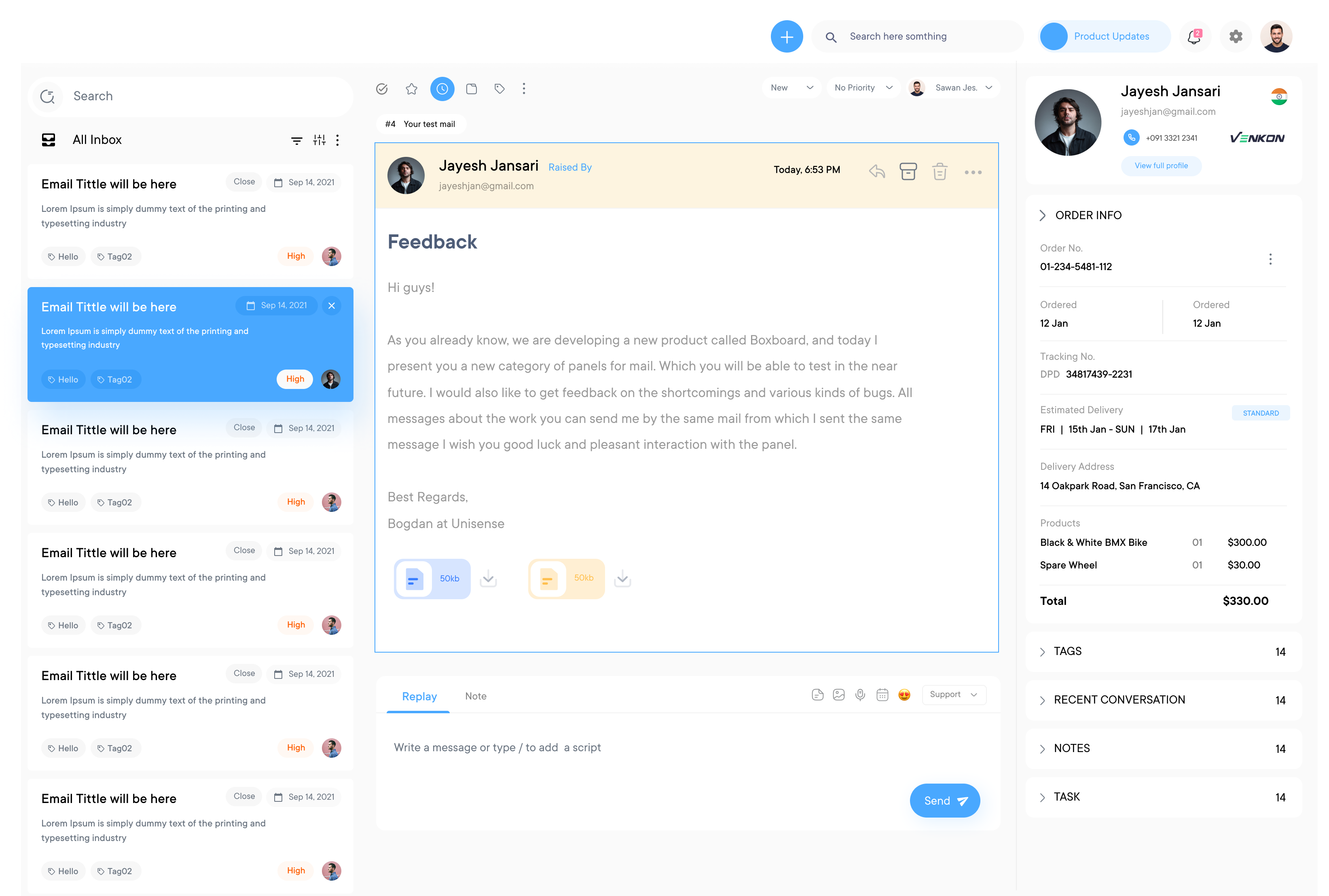
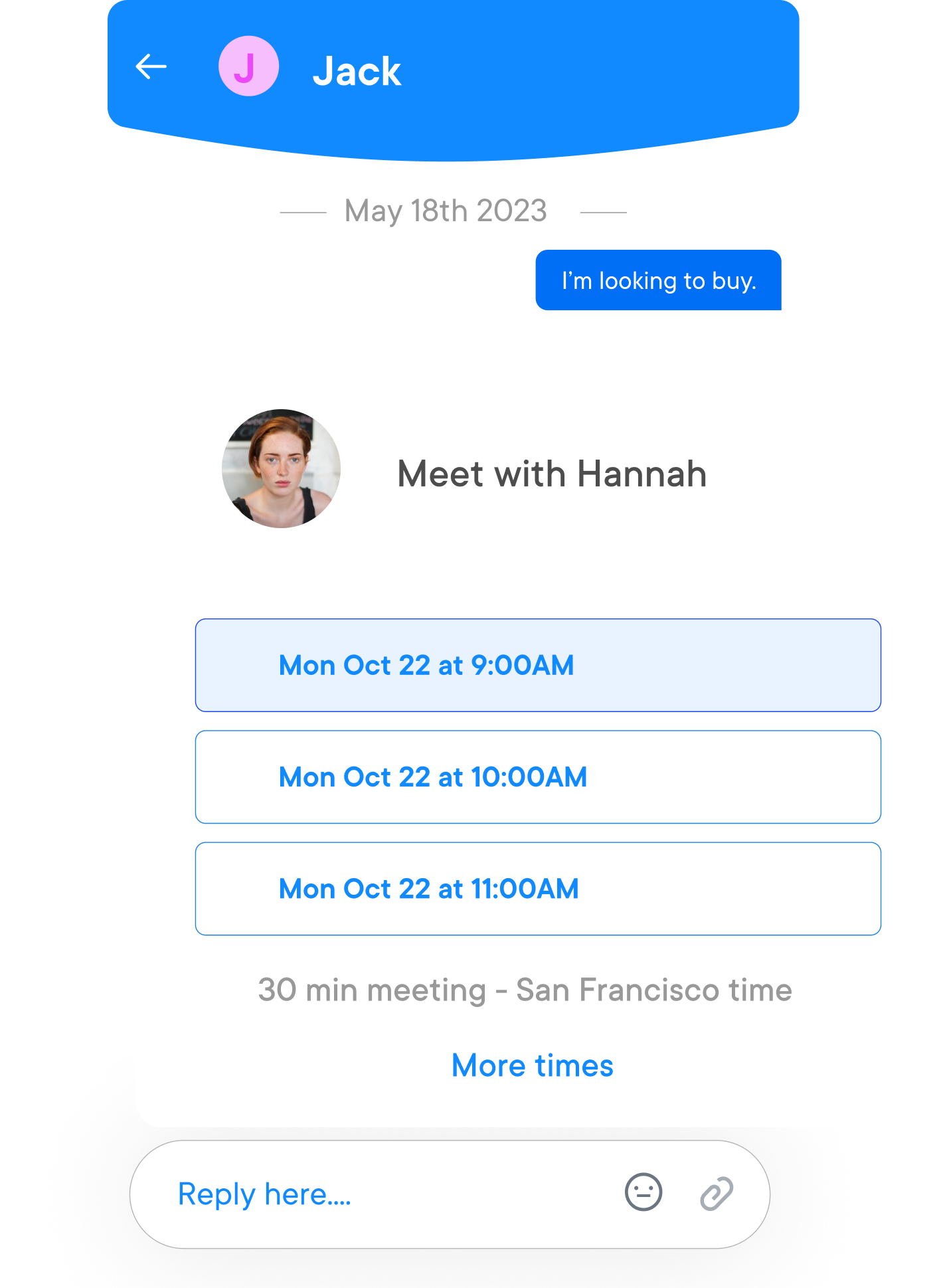
Disconnected channels frustrate customers and silently drain revenue as interactions span across email, chat, SMS and social media. Businesses without a unified approach risk losing loyalty at every touchpoint.
Customer communication management (CCM) helps in creating, personalizing and delivering outbound interactions across all channels. Explore a definitive guide of features, implementation steps, use cases and top software. Focus on the communication layer to build a scalable strategy.
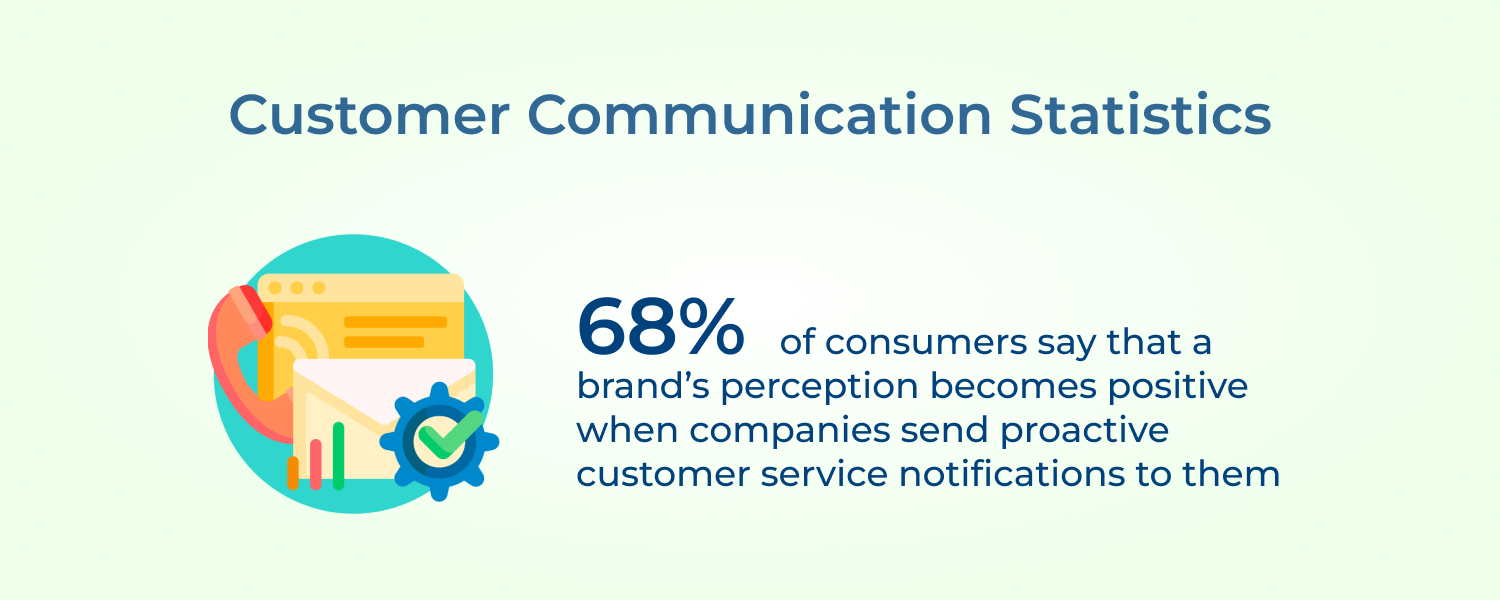
Customer Communication Management (CCM) is defined as a strategic approach that addresses the different phases of customer communications, such as bills, invoices, statements, notifications and marketing messages. CCM aims to create consistent, personalized, relevant and timely communications that improve customer engagement.
Businesses usually localize conversations with their customers in a central location with the help of software or tools. It helps the marketing as well as sales department to engage with the customers and encourage them to make a purchase.
Customer communication includes every customer-facing department. So, centralizing the conversation channel is beneficial as it helps employees work collaboratively. Along with written conversations, it includes phone or in-person conversations. With CCM, you get to record and categorize both conversations.
Key objectives:
Businesses that excel at customer experiences grow their revenues by 4%-8% compared to their competitors. Here are a few other benefits that are as follows:
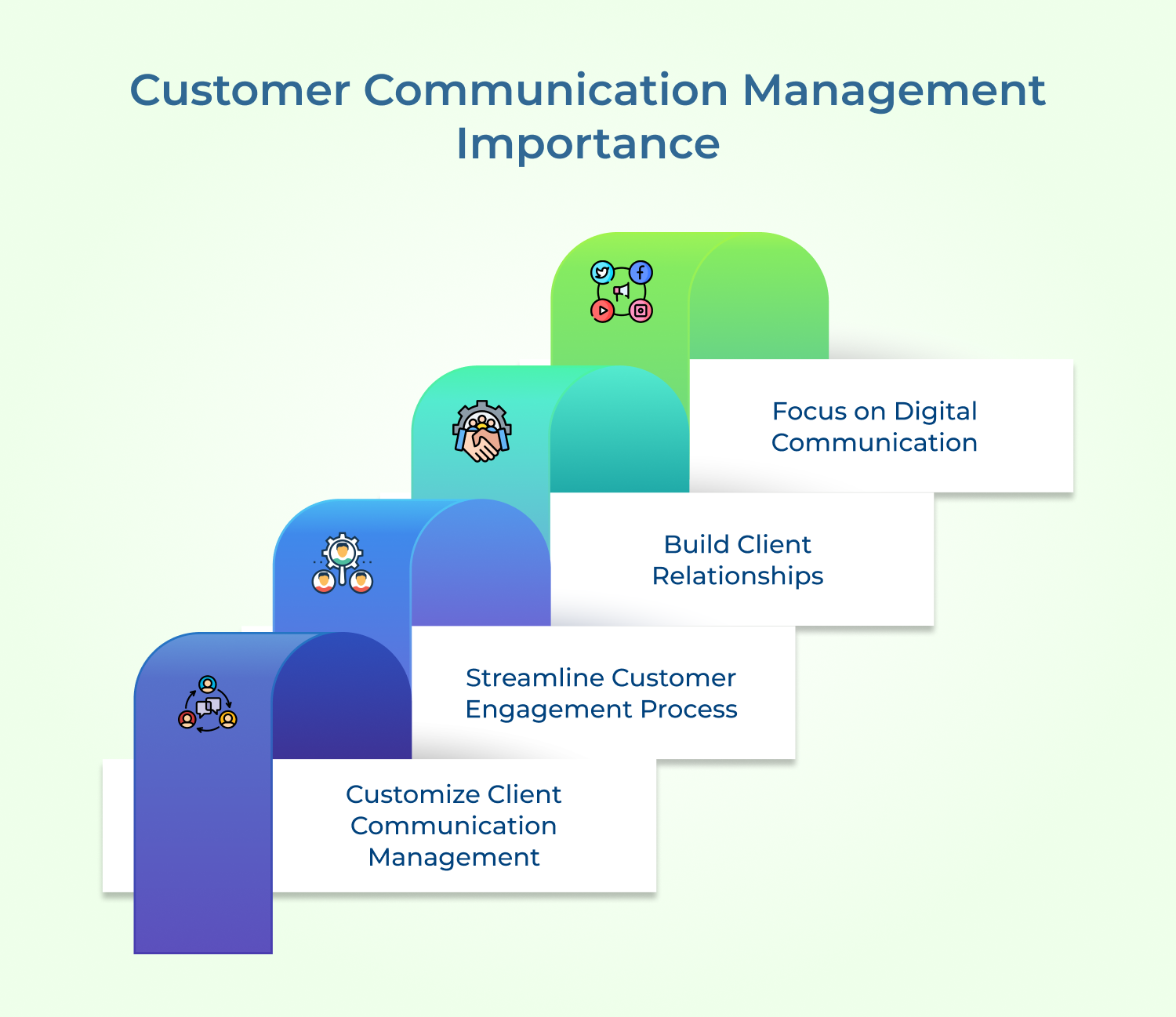
Omnichannel customer communication management strategy is not just a strategic move for revenue growth but to enhance customer experience as well.
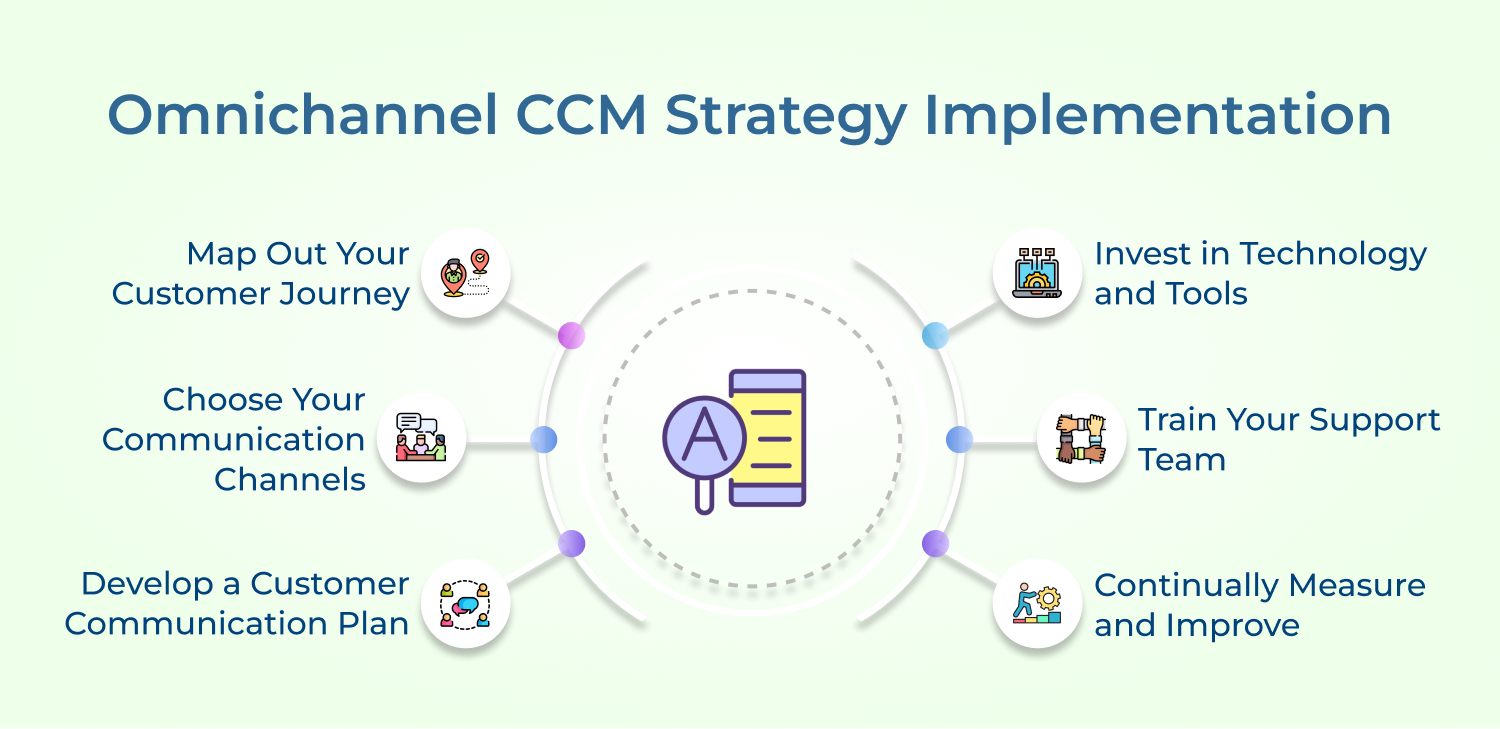
The first step towards implementing an omnichannel CCM strategy is to map out your customer journey. It involves understanding the touchpoints at which your customers interact with your brand and identifying the channels they prefer.
You can use tools like customer journey maps to visualize the customer experience and identify gaps in your current communication channels. Involve cross-functional teams to make sure that the journey map reflects real interactions instead of assumptions.
Follow this to identify key focus areas:
Once you learn about your customers’ communication preferences, choose the channels that you will use to communicate with them. Consider using multiple channels such as email, SMS, social media, chatbots and phone calls.
Make sure that all these channels are capable of sharing data seamlessly to deliver a frictionless customer experience. Cost and scalability should also guide channel selection alongside customer preference. Balancing these factors helps avoid overinvestment in underused platforms.
Consider the priorities while finalizing your channels:
After selecting your communication channels, develop a customer communication plan keeping in mind the customer journey. Define the communication objectives, create messaging guidelines, and optimize messages for each channel. Ensure that the messaging is consistent and aligns with the brand image.
Make sure that the messaging aligns with the brand image. A strong plan is used for regulatory requirements in the industry that builds long-term customer trust.
Investing in technology will enable you to monitor your customer communication channels effectively. Use a CRM system to keep track of customer data and interactions across channels. Deploy automation tools to streamline communication as well as manage customer responses.
Use analytics tools to track customer engagement along with feedback to improve CX. Scalable technology also supports future growth without the need for frequent changes. This protects long-term investment and simplifies system upgrades.
Train your support team to deliver excellent customer service and engagement across all communication channels. Emphasize the importance of consistency and the need to provide a seamless omnichannel experience for customers. Ensure that they have access to the right technology to deliver effective communication.
Ongoing coaching sessions enable teams to adopt new tools and evolve customer expectations. The continuous learning culture boosts your overall service quality over time. Training programs that need to focus on:
Finally, continually measure and improve your omnichannel communication strategy. Monitor customer feedback, engagement and conversion rates across all channels. Use analytics tools to identify areas of improvement and make data-driven decisions to improve the customer experience.
A defined benchmark against industry standards adds further context to internal results. It helps in setting realistic targets for ongoing improvement. Continuous improvement efforts should center around these key practices:
Implementing an omnichannel customer communication management strategy is essential for businesses to remain competitive. Follow these steps to ensure that your omnichannel communication is seamless, consistent and effective.
Customer Communication Management (CCM) refers to the processes used by organizations to optimize their interactions with customers across various channels. Let’s explore the features:
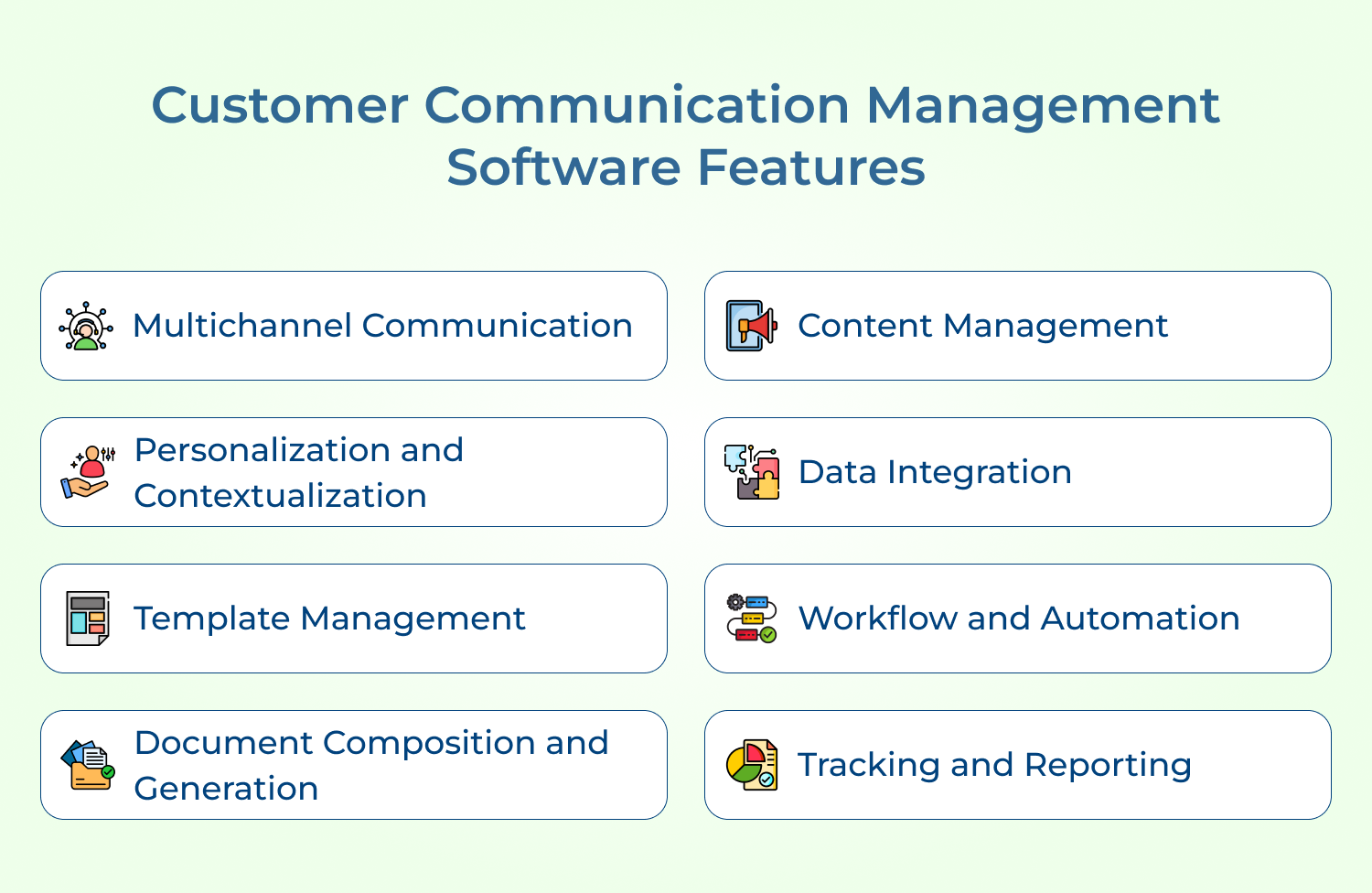
CCM enables businesses to communicate with customers through multiple channels, such as email, print, SMS, web portals, social media and more. This ensures that customers can interact with the company through their preferred communication channels.
Personalization and contextualization of customer communications help in tailoring your customers based on their current context, resulting in more engaging interactions. CCM allows businesses to personalize communications by leveraging customer data and preferences.
CCM solutions typically offer template management capabilities, allowing businesses to create, manage, and maintain templates for various types of customer communications. This streamlines the creation of consistent and on-brand communications.
CCM solutions enable businesses to compose and generate various types of documents, such as bills, statements, contracts, and marketing materials, in a variety of formats (e.g., PDF, HTML, print).
CCM solutions often include content management features, allowing businesses to centrally manage and reuse content across different communication channels and document types.
CCM solutions can integrate with various data sources, such as customer relationship management (CRM) systems, enterprise resource planning (ERP) systems, and other business applications, to ensure that customer communications are based on accurate and up-to-date information.
CCM solutions typically offer workflow and automation capabilities, enabling businesses to streamline and automate the process of creating, approving, and delivering customer communications.
CCM solutions provide tracking and reporting features, allowing businesses to monitor the delivery and effectiveness of customer communications, as well as analyze customer interactions and preferences.
Businesses can use these analytics to optimize their communication strategies, identify areas for improvement, and make data-driven decisions to enhance customer experiences.
Customer Communication Management plays a crucial role in ensuring that businesses are able to deliver personalized and consistent messages. Here are some helpful use cases to consider.
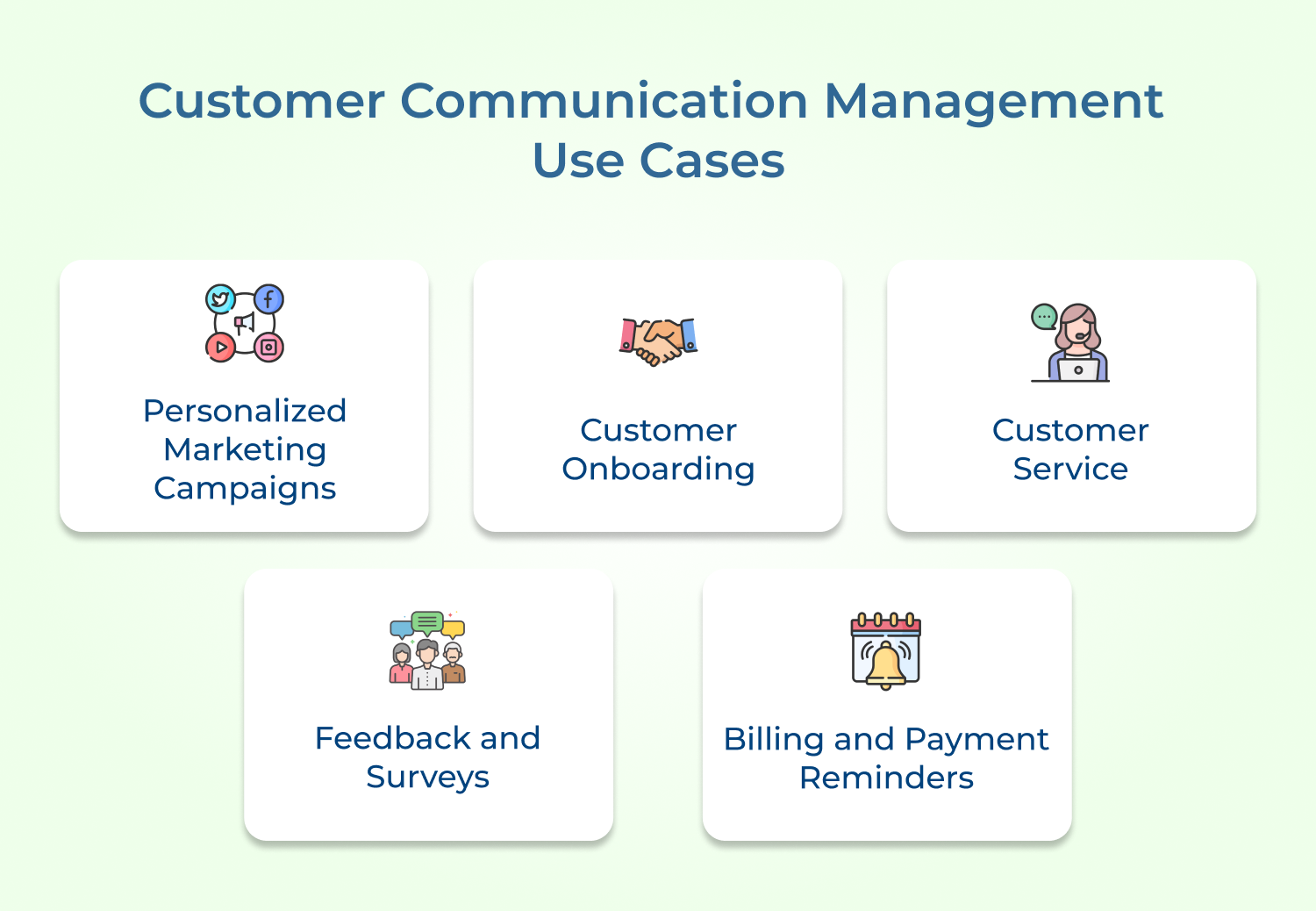
1. Personalized Marketing Campaigns
Customer communication management enables companies to create highly targeted marketing campaigns that resonate with their customers. Businesses can easily tailor their messages to individual customers after analyzing customer data as well as their preferences. It leads to higher engagement and conversion rates.
2. Customer Onboarding
Communication management strategies allow businesses to create seamless onboarding experiences for new customers. Sending personalized welcome messages, instructional guides and relevant information ensure that customers have a smooth transition as well as feel valued right from the start of their relationship with the brand.
3. Customer Service
CCM enhances customer service support in your business processes. Integrating various communication channels, such as email, SMS, and chatbots enables businesses to offer timely as well as personalized assistance to their customers. This improves response times, reduces customer frustration, and leads to higher customer satisfaction levels.
4. Feedback & Surveys
Communication management strategies enable businesses to gather feedback and conduct surveys to gain insights into customer preferences, needs, satisfaction levels, etc. Use targeted communication to encourage customers to provide valuable feedback. Use the collected data to improve products, services, and overall customer experience.
5. Billing & Payment Reminders
Communicating payment due dates and sending billing statements can be time-consuming, especially for large customer bases. CCM streamlines this process by automating the delivery of electronic invoices, payment reminders, and notifications. It reduces late or missed payments and enhances overall customer satisfaction.
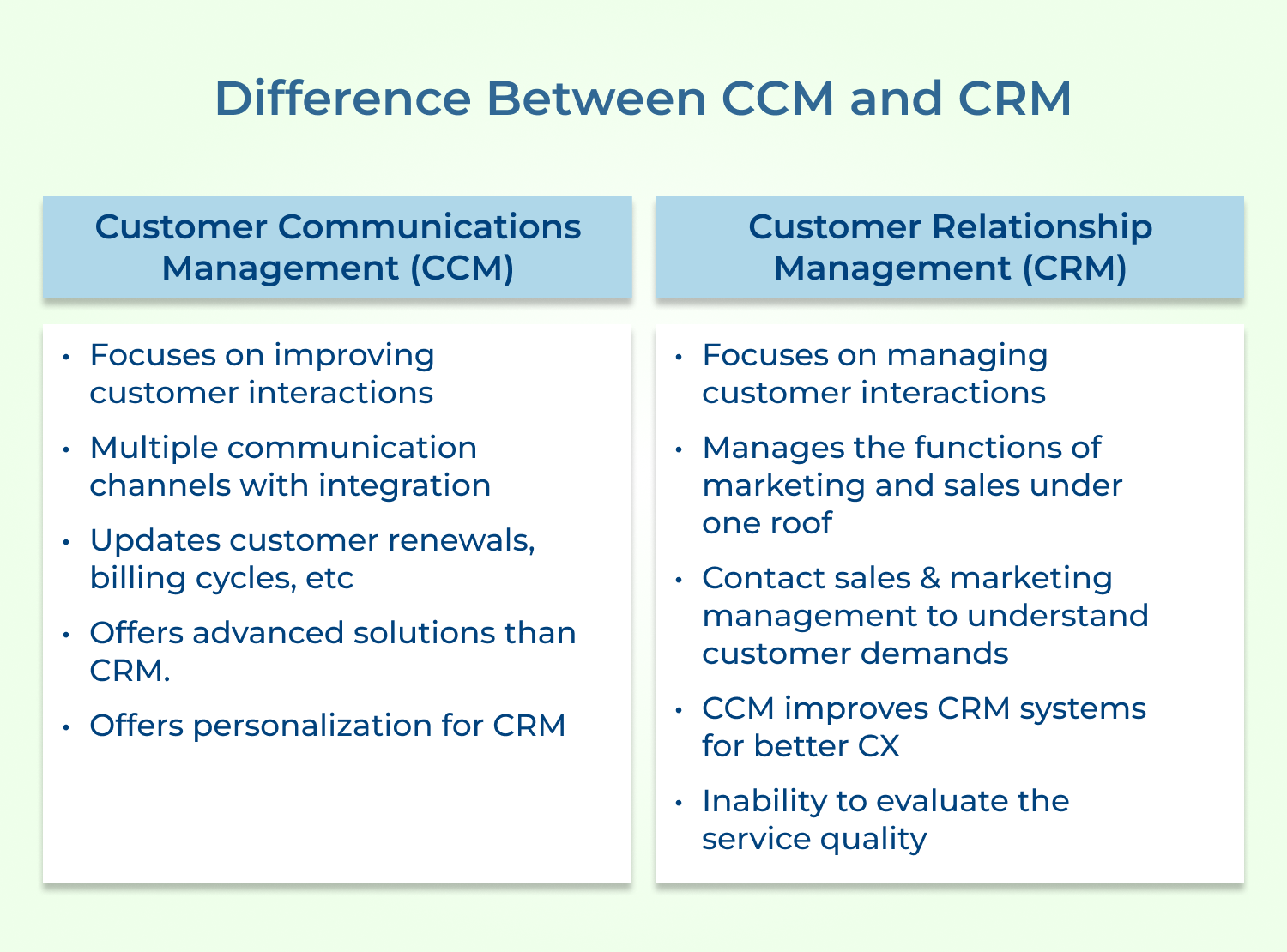
Customers get confused between CCM and CRM as both keep the customers in focus. Both are essentially important, yet you need to understand the difference as both have different goals.
1. Primary Focus
CCM primarily focuses on creating, managing, and delivering personalized customer communications across various channels. It aims to enhance the quality and consistency of customer interactions through targeted messaging as well as document management.
In contrast, CRM concentrates on managing and analyzing customer interactions throughout the customer lifecycle, with the goal of improving business relationships, customer retention, while also driving sales growth.
2. Functionality
CCM systems specialize in document creation, template management, and multichannel delivery of communications. They often include features for content personalization, compliance management, and automated document generation.
CRM systems offer a broader range of functionalities, including contact management, sales tracking, marketing automation, and customer service tools, providing a holistic view of customer interactions across departments.
3. Data Handling
Excelling at integrating and utilizing customer data to create personalized communications is a norm in CCM. They focus on leveraging existing customer information to tailor messages and documents.
However, CRM systems are designed to collect, store, and analyze a wide range of customer data, including demographics, purchase history, as well as interaction records. It is to provide insights into customer behavior and preferences across the entire customer journey.
4. User Base
CCM tools are primarily used by marketing, customer service, and compliance teams to create as well as manage customer-facing communications. They often require specialized skills in document design and content management.
CRM has a broader user base, including sales, marketing, customer service, and management teams, as they provide a centralized platform for tracking and managing all customer interactions across the organization.
5. Integration and Workflow
Typically integrate with existing business systems to pull relevant data for creating personalized communications. CCM focuses on streamlining the communication creation and delivery process.
Often serving as a central hub, CRM is all about integrating with various business applications to provide a unified view of customer data. It also facilitates cross-departmental workflows, from lead generation to post-sale support.
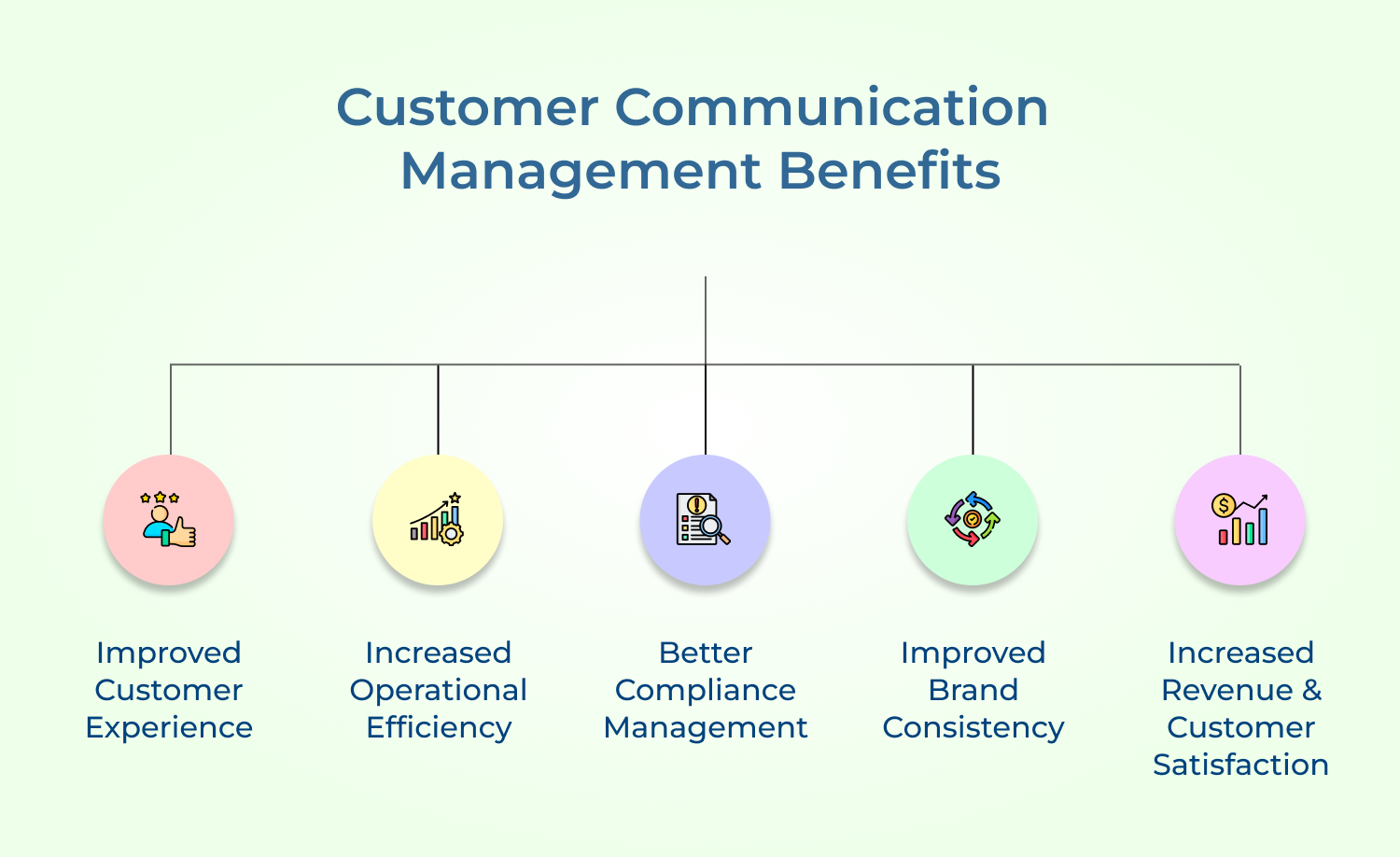
Customer communication management is an authentic tool that companies use to enhance customer experience. Here’s the list of aspects that benefits your business in the long-run.
1. Improved Customer Experience
CCM empowers businesses to personalize their customer interactions. It includes creating tailored messages, communication channels, and content that addresses specific customer needs. Eventually, it leads to building trust that strengthens customer relationships.
2. Increased Operational Efficiency
Customer communication management systems automate the curating, management, and delivery of customer messages across all channels. It results in improved operational efficiency by reducing manual effort, communication errors, operational costs, and turn-around times.
3. Better Compliance Management
CCM solutions assist in ensuring that your company’s communications are in compliance with industry regulations and guidelines. It is particularly important for companies in industries with strict regulatory requirements such as healthcare or financial services.
4. High Brand Consistency
Maintaining brand consistency across all customer communications is essential for enhancing overall recognition and credibility. CCM solutions provide a centralized repository of templates, content, and messaging ensuring consistency across all interactions.
5. Boost Revenue & Customer Satisfaction
CCM solutions help generate more business from existing customers by improving the customer experience and engagement. Satisfied customers are more likely to refer the business to their friends & family which leads to new customers as well as increased revenue.
Effective customer communication is key to building trust. Here are five best customer communication management (CCM) software solutions to help you manage client interactions.
Best communication management tool for outstanding customer experiences
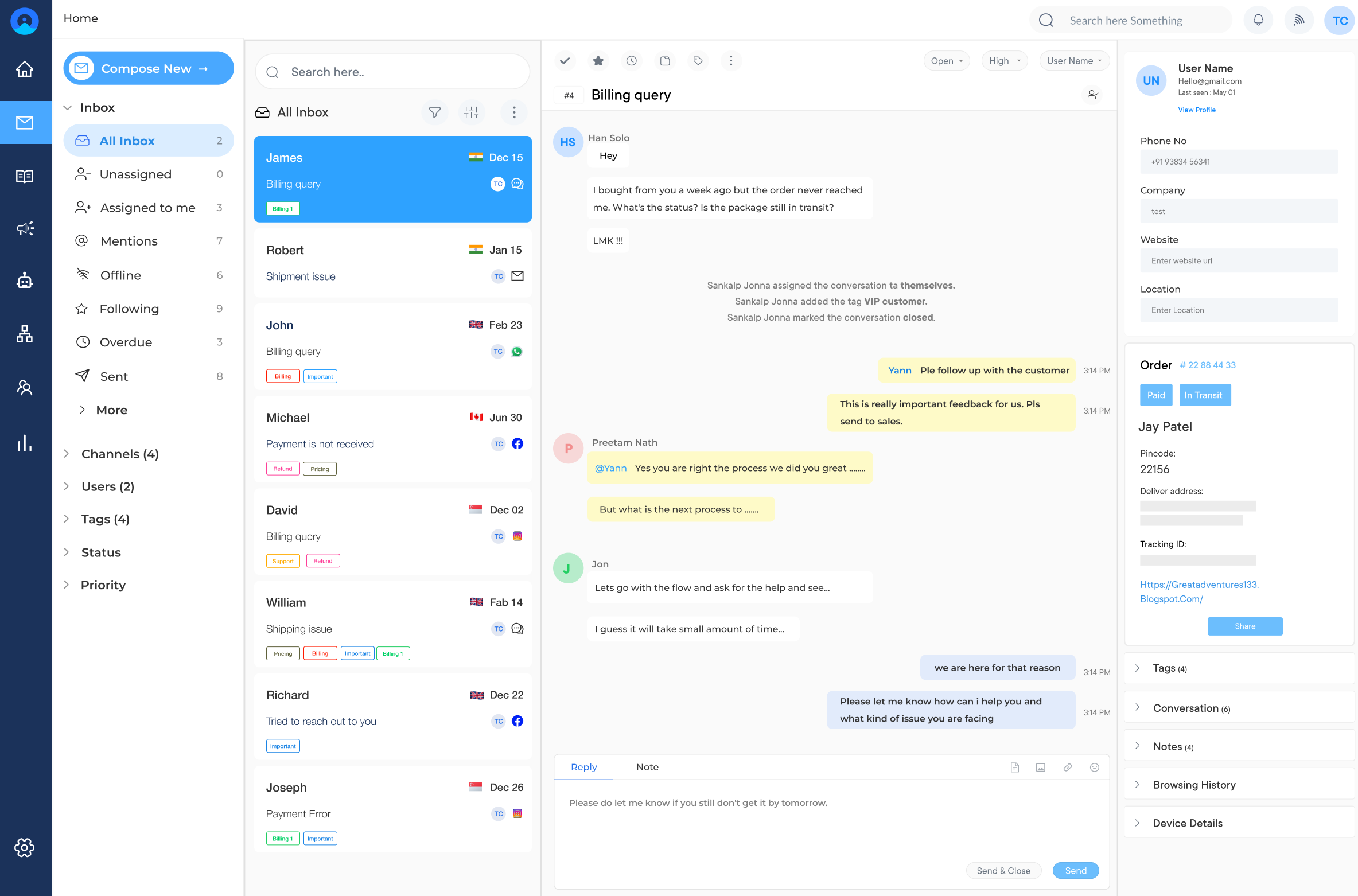
Omni24 is an AI-powered customer engagement platform combining support, sales and marketing into one unified suite. Its customer communication functionality streamlines business operations by connecting live chat, email, social media and SMS into a single workflow. This helps the team maintain context across every conversation, regardless of the channel a customer chooses.
Key features:
Top customer communication management solutions for your business needs
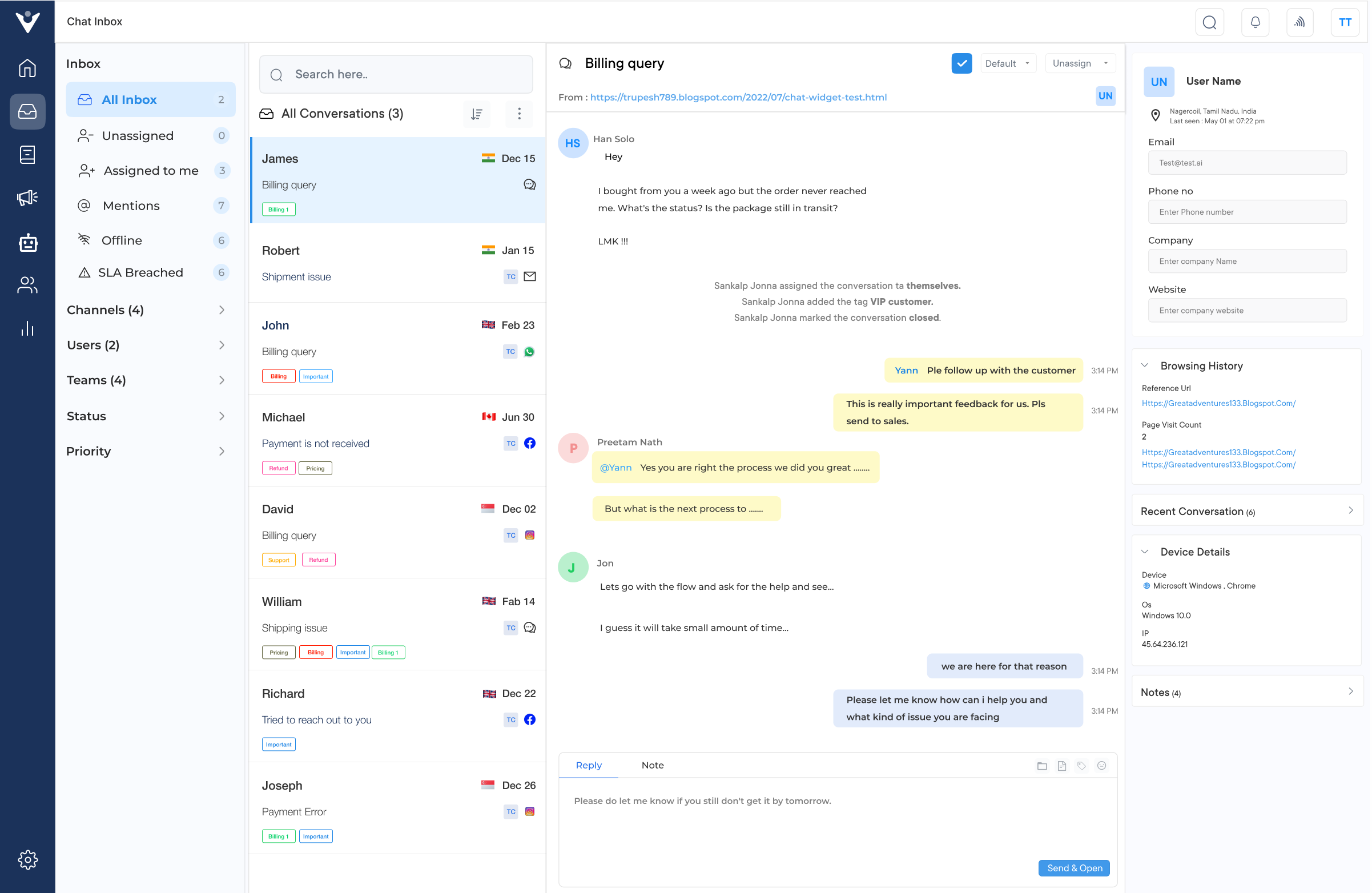
Veemo Chat is an AI-powered business communication and chatbot software that provides businesses with a variety of channels to interact with customers while maintaining lasting relationships. Its simple, easy-to-use interface makes it an ideal solution for businesses of all sizes, from small start-ups to large enterprises.
Key features:
Best customer communication management for seamless service interactions
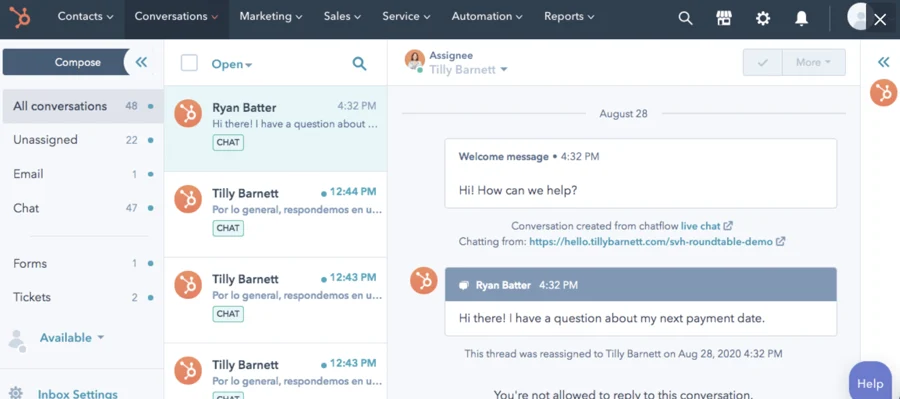
HubSpot is an excellent customer communication management platform for streamlining communication. The software system is rooted in its free CRM and any other customer data tool integrated. It has tools to manage live and digital interactions for customer communication. The software offers efficient marketing as well as sales email tools to help employees promptly engage with customers.
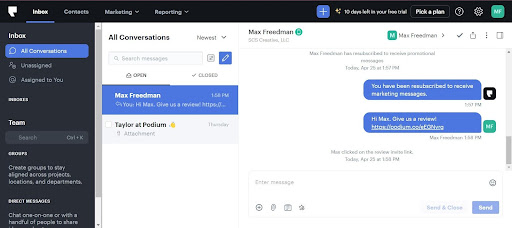
Podium offers a very interactive approach to its users. It centralizes messages with the help of conversational intelligence to stabilize various customer touch points. They have a chat tool on the website which lets the customers ask questions before a purchase.
Podium also has a feature that asks the customers to leave a review through a link that is sent to their phone. It offers modernized payment tools that allow customers to pay through a simple text.
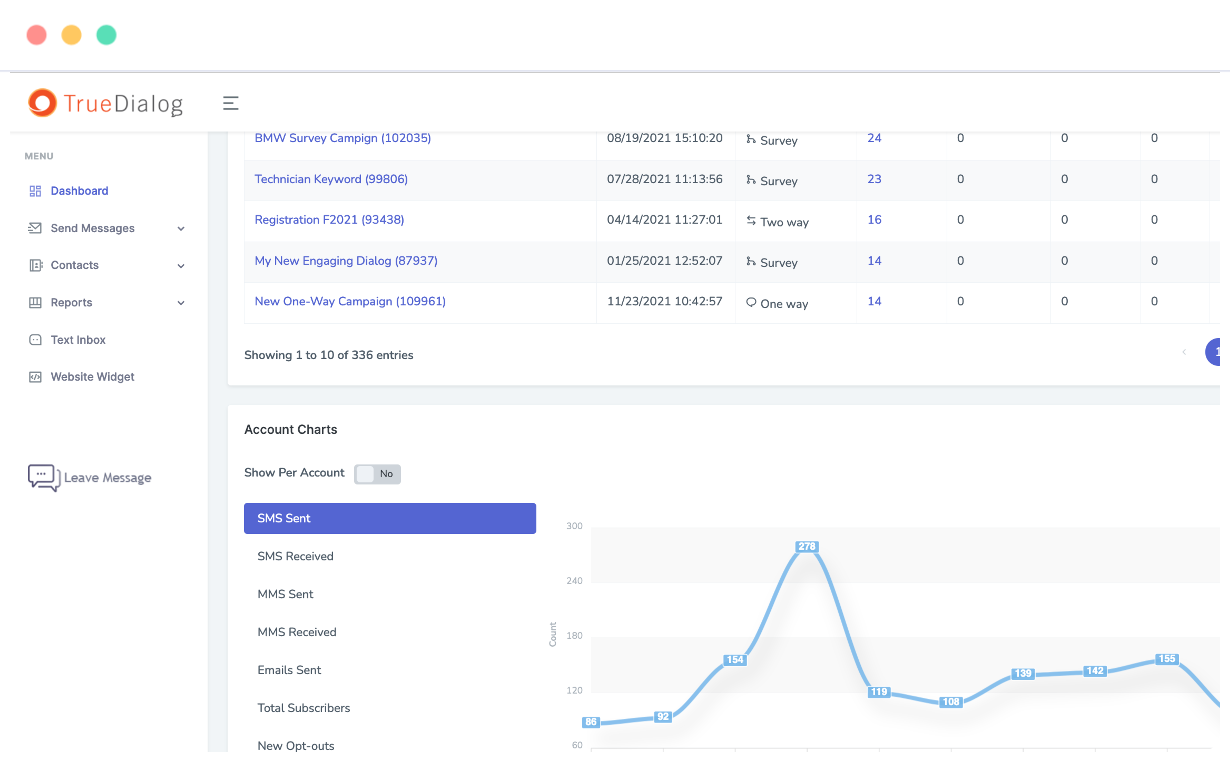
The use cases of this tool include encouraging customers to make a purchase by sending them attractive offers and discounts. TrueDialog is a specific SMS communication tool that schedules and sends text messages to customers.
It allows customers to respond to your messages and clear their queries on the spot. You can even automate the process of scheduling the messages in advance. It allows sending customer review and feedback forms
Effective customer communication is essential for any business to succeed. Keeping a tab on CCM best practices help businesses appease customers with their products.
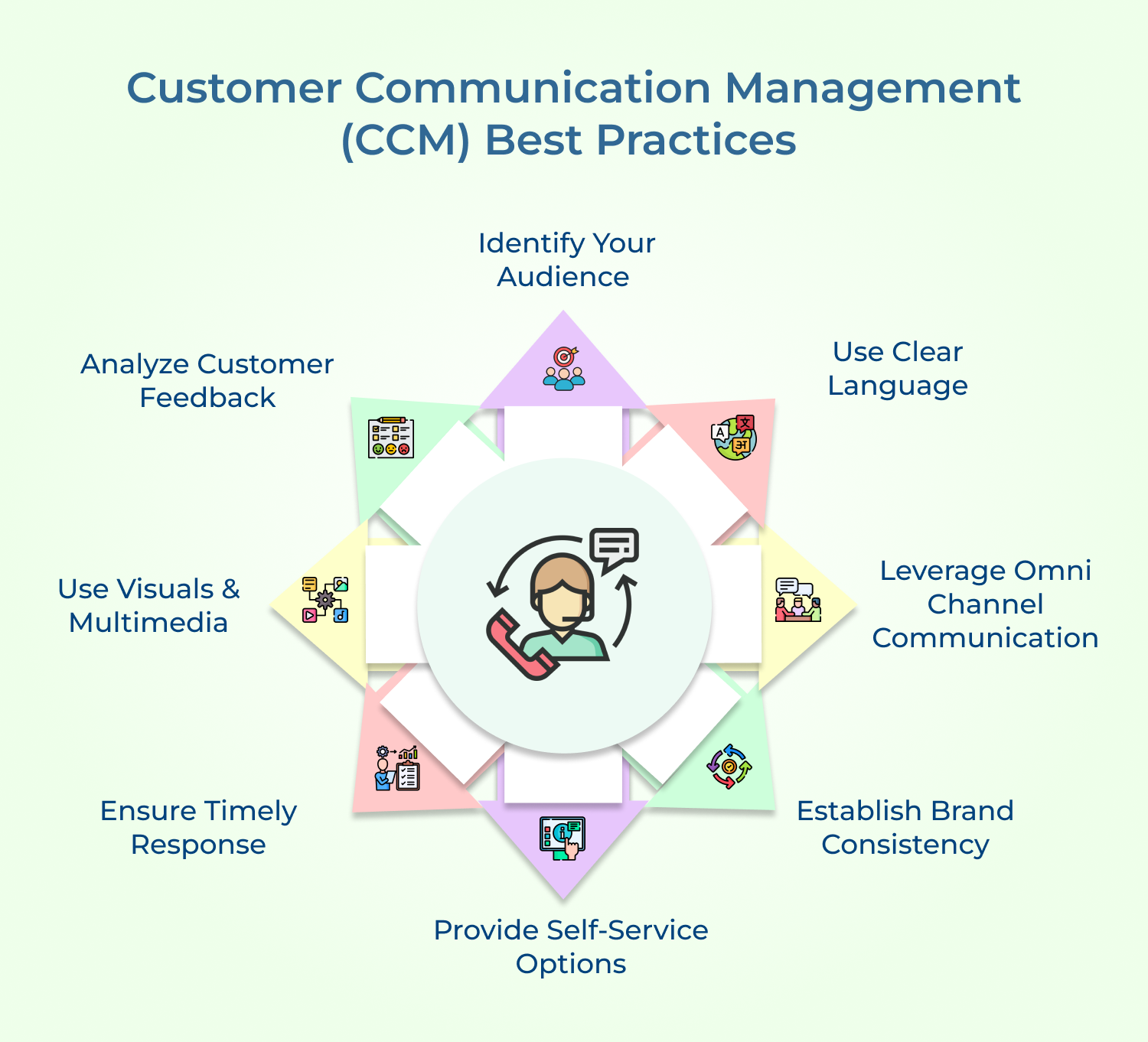
1. Identify your audience: Understand your customers’ needs, preferences and communication channels to create personalized messages that resonate with them.
2. Use clear language: Write in a way that is easy to grasp and avoids technical jargon. Use plain language to ensure that your message is clear as well as concise.
3. Leverage omni channel communication: Customers expect to interact with businesses across multiple channels. Leverage various communication channels such as email, SMS, social media and chatbots to provide a seamless experience.
4. Establish brand consistency: Ensure that your messages are consistent with your brand’s image, voice, and tone, across all communication channels as well as touchpoints.
5. Provide self-service options: Enable customers to access resources on their own through online portals, chatbots, or interactive voice response systems. It reduces customer effort and enhances their experience.
6. Ensure timely response: Respond to customer inquiries and complaints in a timely manner. Addressing their issues promptly to improve customer satisfaction.
7. Use visuals & multimedia: Use images, videos, and interactive content to engage customers while also creating a more memorable experience.
8. Analyze customer feedback: Use customer feedback to identify areas of improvement and measure the effectiveness of your communication efforts.
Effective customer communication management is the backbone of a business that wants to deliver personalized and timely interactions across all channels. A well-executed CCM strategy builds the trust and loyalty that drives long-term growth.
Ready to transform how your business connects with customers? Book a demo to see Omni24’s CCM capabilities in action. Explore our guide on Omnichannel Customer Service.
Omni24’s DCX platform harnesses automation and AI to deliver unified customer experiences across digital channels, while keeping human touch.
Some of the key components of CCM include content management, workflow automation, multichannel delivery and data analytics working together. Each component plays a distinct role to make sure messages reach customers accurately. Core components include:
CCM solution allows businesses to deliver personalized communications based on customer preferences, demographics, or past interactions. By tailoring the messaging as well as format to each customer, businesses can enhance the customer experience, make interactions more meaningful, and increase customer loyalty.
Customer communication management solutions are beneficial for businesses of all sizes. Larger enterprises may have more complex communication requirements. Small and medium-sized businesses can also benefit from the automation, personalization, as well as efficiency that CCM solutions offer. It is important to choose a customer communication management solution that aligns with the specific needs of your organization.
Most of the core technologies combine to power personalized, automated communication across channels. Each technology handles a specific part of the customer data in delivering pipeline. Key technologies include:
Customer communication, especially in industries such as finance, healthcare and insurance, must adhere to strict compliance as well as regulatory requirements. A CCM solution helps businesses maintain compliance by providing features like data encryption, secure transmission, and audit trails. It also enables businesses to easily manage communication templates, ensuring accuracy in messaging.
 https://omni24.io/wp-content/uploads/2026/08/AI-Customer-Service-Agents.png
1256
2400
Webvision Solution
https://omni24.io/wp-content/uploads/2023/04/Omni-Logo-1.svg
Webvision Solution2026-09-21 04:48:512026-09-21 04:48:51How to Build an AI Customer Service Agents: 8 Key Steps
https://omni24.io/wp-content/uploads/2026/08/AI-Customer-Service-Agents.png
1256
2400
Webvision Solution
https://omni24.io/wp-content/uploads/2023/04/Omni-Logo-1.svg
Webvision Solution2026-09-21 04:48:512026-09-21 04:48:51How to Build an AI Customer Service Agents: 8 Key Steps https://omni24.io/wp-content/uploads/2026/08/Omnichannel-Conversational-AI.png
1256
2400
Tushar Joshi
https://omni24.io/wp-content/uploads/2023/04/Omni-Logo-1.svg
Tushar Joshi2026-09-16 03:51:072026-09-16 03:51:07How to Build Omnichannel Conversational AI Strategy
https://omni24.io/wp-content/uploads/2026/08/Omnichannel-Conversational-AI.png
1256
2400
Tushar Joshi
https://omni24.io/wp-content/uploads/2023/04/Omni-Logo-1.svg
Tushar Joshi2026-09-16 03:51:072026-09-16 03:51:07How to Build Omnichannel Conversational AI Strategy https://omni24.io/wp-content/uploads/2026/08/Customer-Service-Teams.png
1256
2400
Tushar Joshi
https://omni24.io/wp-content/uploads/2023/04/Omni-Logo-1.svg
Tushar Joshi2026-09-15 04:01:522026-09-15 04:02:16How to Build Customer Service Teams: 6 Key Steps
https://omni24.io/wp-content/uploads/2026/08/Customer-Service-Teams.png
1256
2400
Tushar Joshi
https://omni24.io/wp-content/uploads/2023/04/Omni-Logo-1.svg
Tushar Joshi2026-09-15 04:01:522026-09-15 04:02:16How to Build Customer Service Teams: 6 Key Steps
Whether it’s about acquire, engage or support – Omni24 covers all your customer engagement needs in one complete platform.

Copyright ©2026 Veemo All rights reserved.
CA, Los Angeles, Hall Ave, 19011