How to Implement an Effective Digital Customer Journey?
Digital Customer Journey requires understanding feelings across every interaction and predicting future customer actions, not just expectations.
Digital Customer Journey requires understanding feelings across every interaction and predicting future customer actions, not just expectations.
Modern customers are always evolving in their behaviors and interact with brands in complex ways that are tricky to track.
From getting awareness through an offline billboard to receiving a “Thank you for your trust in us” in their email inbox, after a purchase, your customer’s journey is nothing short of a roller-coaster ride!
66% of customers expect companies to understand their needs. Understanding the customer’s journey is highly critical for any business that wants to retain customers and gain new ones.
A well-thought-out digital customer journey will ensure that customers have an enjoyable experience and are likely to remain customers for a longer period of time.
Let us discuss comprehensively what a Digital Customer Journey (DCJ) is, how to create it and which strategies can be used to maximize its effectiveness.
The digital customer journey (DCJ) is defined as a concept that encompasses every step in a digital engagement between consumers and brands. It isn’t just about acquiring new customers but also retaining current ones through strong relationships, which can lead to increased revenue down the line.
The DCJ captures all stages of engagement including awareness, consideration, purchase and repurchase as well as post-purchase activities such as loyalty programs or customer reviews.
Knowing where customers are along their digital journey can allow businesses to anticipate their behavior during each stage of the buying process and adjust their strategy accordingly.
Creating a seamless digital customer journey has become an integral part of improving the customer experience. By using customer insights, you will be able to create an amazing digital customer journey example that customers will remember.
Get ready to take your customers on the ultimate digital experience!
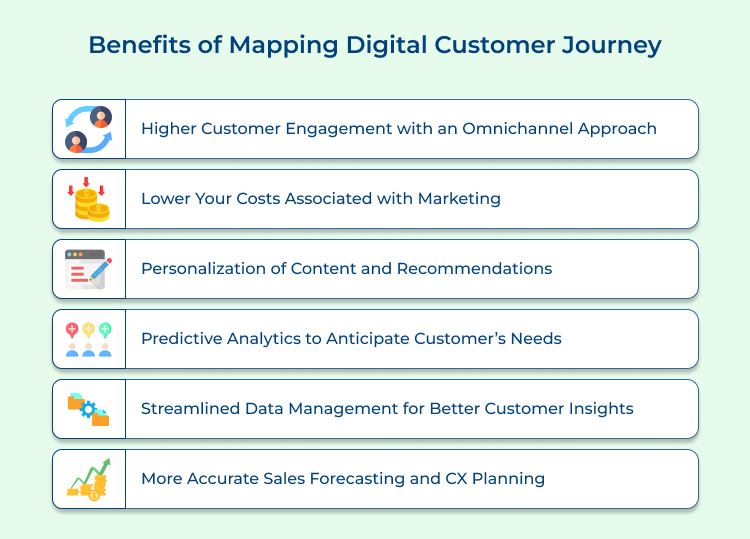
Here are key benefits of creating a seamless digital customer journey and how it can help your business:
Understanding how customers interact with a brand across various digital channels is one of the most effective ways for companies to optimize their customer experience. The customer journey consists of several stages that each need to be addressed to make sure a positive online experience is created.
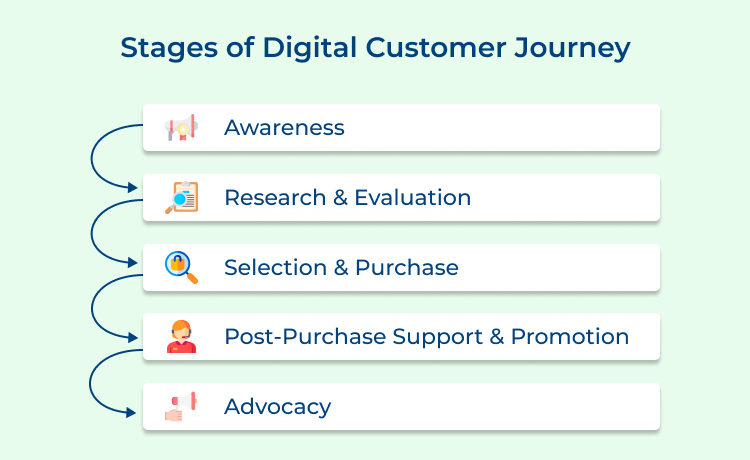
Here’s an overview of the typical digital customer journey stages:
Prior to a customer will consider purchasing any product/service, they usually need to become aware of what is available and which companies offer it. For example, if someone needs help designing an app, they will typically look online to discover what companies can offer this service.
After becoming aware of potential services or products, a customer will typically conduct more research and compare options before selecting one that best meets their specific needs. During this stage on the digital journey, customers are gathering information about various available offerings in order to determine which company can best meet their requirements for quality and value.
Following the evaluation phase comes selection and purchase. This is where customers make decisions based on their research, evaluate payment options, and complete the final purchase process. The payment methods offered during this phase should be easy for customers to understand and use securely without feeling anxious about their financial information being compromised.
Once customers have made a purchase from your website or using an app, it is important to provide post-purchase support as well as promotional offers in order to keep them as loyal customers. Prompt resolution of any issues experienced with products or services should be provided in order to create positive feelings associated with your company right away after purchase.
Many customers will go through advocacy where they share their experiences with friends and family members who may also be potential buyers of your products or services. Referrals are extremely valuable tools that should never be underestimated when it comes to expanding reach and improving brand loyalty while spreading awareness even further than before.
A customer journey is a customer’s progression through all stages of the sales funnel with your business. All customers will follow different paths, but there are common touch points that all customers go through in their digital journey. Mapping out the customer journey can help you to better target potential customers and increase your conversion rates.
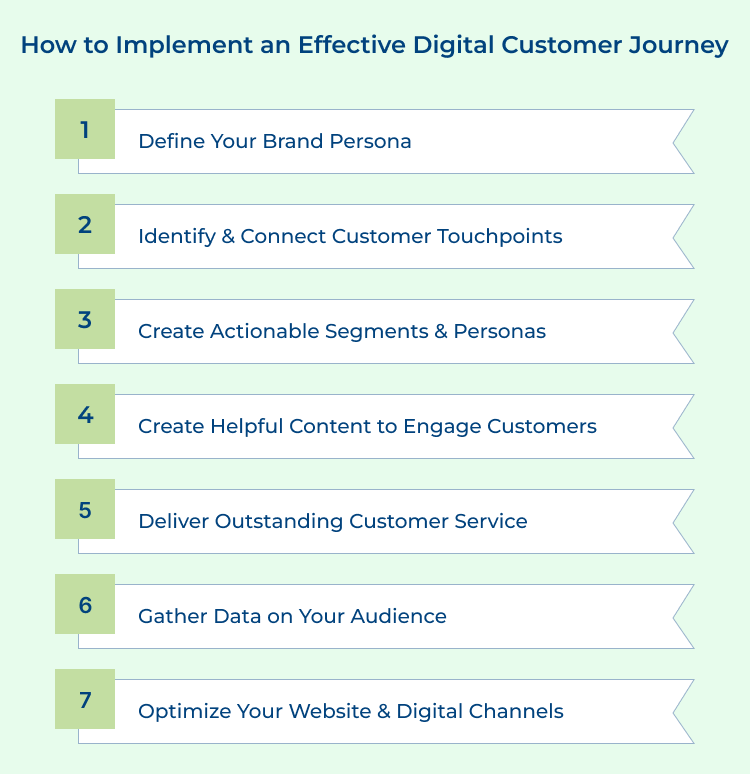
Here’s how to implement an effective digital customer journey:
The first step in creating an effective digital customer journey is developing a brand persona that reflects the core message your company wants to convey to customers.
Tips to follow while defining brand personas:
For example, if you are targeting B2B customers, you might create a more corporate brand identity as opposed to one targeted at B2C buyers who may prefer something more colorful and engaging.
The next step is identifying customer touchpoints throughout their journey with your business – from initial awareness through purchase decision-making, post-purchase, loyalty & advocacy stages of engagement all connected together into a cohesive cycle.
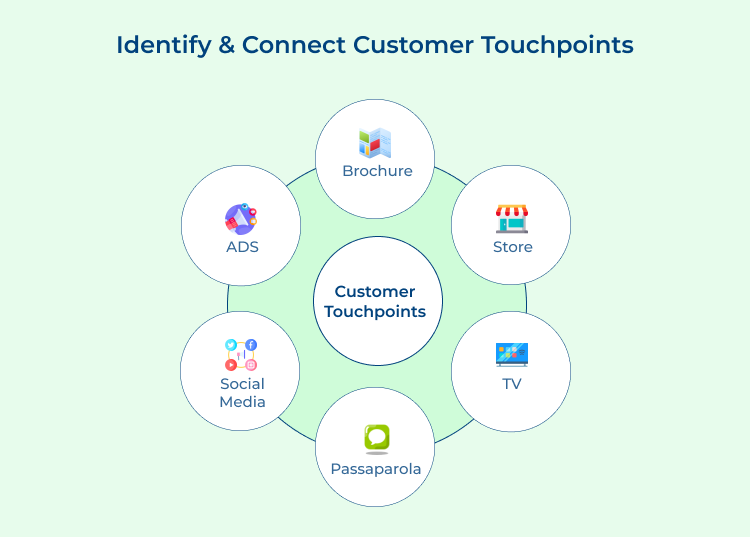
Companies that use tools like customer journey maps reduce their cost of service by 15-20%.
Mapping out each step in the process will help ensure that companies have covered all aspects of a successful strategy – such as:
Once you have identified the touch points along the digital customer journey it’s time to create actionable segments and personas.
These segments or personas represent who your ideal buyer looks like throughout their entire buying experience.
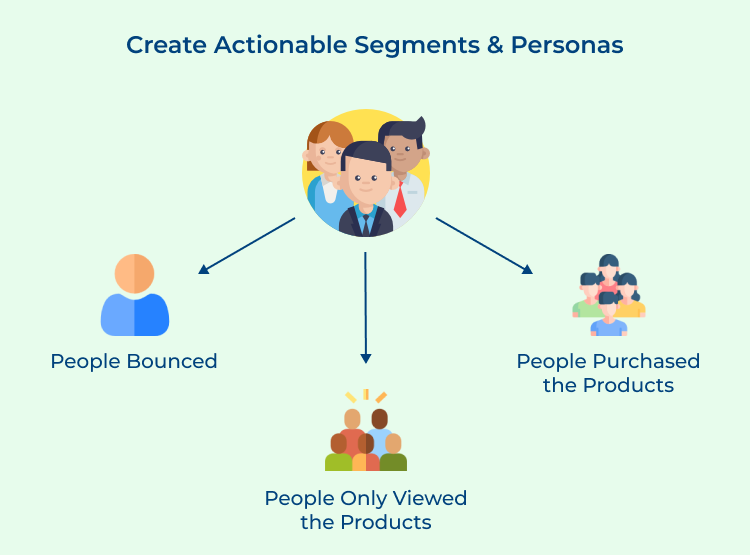
The goal here is not only to begin segmenting beyond just demographics but rather combine psychographic segments with behavioral data in order to achieve deeper personalization which is important for ensuring positive outcomes when engaging with prospects so they become return customers.
Once you understand where customers are in their buying process, you need to create content that matches what they’re looking for from each stage of the digital customer journey.
As customers move from one stage of engagement to another, it’s important that marketers provide relevant content resources at each stage in order to keep them engaged and informed about making a purchase decision.
Never forget that outstanding customer service goes hand in hand with delivering great user experiences throughout different touchpoint opportunities within a digital environment.
Whether using AI-powered chatbots or real live agents, responding quickly and thoroughly efficiently while maintaining good-natured interactions will give your organization long-lasting results when fully implemented correctly.
Our ability to understand our customer’s needs by providing superior service through traditional methods blended with new ways will determine the success rate amongst competition thereby connecting us further together and reaching desired outcomes we can both mutually benefit from!
Before you can begin mapping out the customer journey, you’ll need to gather data about who your audience is and what they do online.
The data you gather can be used to develop buyer personas that represent archetypes of real-life people that interact with your business throughout their buying process.
Having an optimized website means more than just making sure it looks aesthetically pleasing – it needs to work seamlessly across multiple devices while being able to combine data points along key areas of navigation to understand your custom behavior.
When you have scheduled content updates or even create distinct campaigns and funnels can help drive further engagement with customers making sure they never miss out on any promotions or discounts meant for them specifically.
A customer journey map provides a visual representation of the stages your customers go through when engaging with your brand.
Here are top 10 best practices outlined below that will help you create an effective digital customer journey map that meets the needs of your online customers.
1. Know your target audience: Knowing who your target audience is and what they need will help inform the design of your digital customer journey.
2. Understand the decision process: Understanding the various stages that customers go through when considering a purchase can help you craft a more impactful customer journey.
3. Analyze user behavior: Studying user behavior closely helps to determine where marketers should focus their efforts in order to maximize opportunities and personalize the user experience.
4. Test and iterate: Regularly testing and adjusting your digital customer journey can ensure it is always evolving to the changing needs of customers thus maximizing conversion rates along the way.
5. Create emotional connections: Digital marketing strategies are not just about selling but also about creating an emotional connection with existing & prospective customers, engaging them in conversations, and providing value to them over time.
6. Employ multi-channel tactics: Employing multi-channel tactics that include email campaigns, pay-per-click (PPC) ads, social media content, display ads can help create a seamless experience across all platforms which encourages repeat visits from customers and potential leads alike within your ecosystem of products/services/marketing campaigns.
7. Utilize automation technology: Modern automation technology such as machine learning algorithms makes it easier to capture data points at each touchpoint. Also use predictive analytics to understand buyer trends for optimizing user engagement levels on websites/apps throughout the entire digital customer journey process.
8. Optimize for mobile: As mobile usage continues to grow exponentially worldwide, optimizing for mobile devices is essential if you want an effective digital customer experience from start to finish – from landing pages through conversion settings to post-purchase retention processes that strengthen loyalty & deepen relationships over time with fans & followers alike!
9. Track metrics carefully: Tracking metrics throughout each stage of the digital customer journey process allows you track progress over time & identify areas of optimization so you get better results every step of the way!
10. Evaluate performance regularly: Regularly evaluating performance by auditing both quantitative (eCommerce conversions) & qualitative (customer feedback) assessments helps marketers find areas needing improvement while ensuring they remain on track towards meeting their goals!
Digital customer journeys are quickly becoming the way of the future. Companies today need to be able to understand their customers on a digital level in order to create tailored experiences that will keep customers engaged and buying more products or services.
To help businesses make better decisions, here are 5 examples of digital customer journeys that can be used as a guide.
1. Website tour: A website tour is a great way to show potential customers what your website has to offer without overwhelming them with too much information at once. By creating a guided customer journey through your website, you can introduce your products, highlight features, and let the customer move at their own pace as they explore your site.
2. Single page checkout: The single page checkout is quickly becoming an industry standard for eCommerce sites as it allows customers to purchase items from your store without having to go through multiple pages and steps in the process. This provides a simpler, more intuitive customer experience and encourages shoppers’ confidence when making payments online.
3. Shopping cart abandonment solution: Shopping cart abandonment is an issue many eCommerce stores face, but there’s no need to worry if you have an effective solution in place for this problem. For example, you could offer customers immediate discounts if they abandon a shopping cart on your site or send out automated emails with product reminders after they’ve left their carts behind.
4. Product education process: Many buyers want more than just shiny new products; they want education so they can make informed decisions when spending their money online. To meet this demand, you should consider incorporating educational elements into the digital customer journey such as product reviews, tutorials, and expert advice from staff members or industry influencers who are familiar with the product. It will help build trust between you and your prospects while also boosting sales conversions over time.
5. Loyalty program: Loyalty programs are designed to reward repeat customers for their continued loyalty over time by offering exclusive discounts and insider deals that otherwise wouldn’t be offered elsewhere. With an effective loyalty program in place within your digital customer journey, you can give existing customers special incentives for returning again and again – thus making them feel like valued customers who deserve special treatment above all others.
Digital customer journeys are increasingly being used by businesses as a way of engaging with their target audiences seamlessly across multiple platforms while delivering tailored experiences according to specific user segments’ needs and expectations.
Crafting an effective digital customer journey requires careful research upfront into what users need/expect in order for them to interact positively with your products/services – therefore its implementation shouldn’t be taken lightly.
It requires several key steps which include defining goals; collecting & understanding relevant data; design; test & measures results – all aimed at providing excellent experience which today’s consumers demand from companies they engage with online.

Why is it important to focus on a digital customer journey?
When businesses focus on defining the digital customer journey (DCJ) what customers follow is critical to offering a good user experience. This process that finally leads to the purchase must be optimized if we want good results. That is why more and more companies recommend products or services that might interest you.
What are the key stages of a digital customer journey?
The digital customer journey process comprises five different phases: awareness, consideration, purchase, retention, and advocacy. The user will decide on either buying or discarding your product/service, depending on how every interaction with your brand within those 5 phases makes them feel.
How can data analysis be used to optimize the digital customer journey?
Data analysis enables businesses to analyze customer interactions with their web/mobile applications. By analyzing data on product services, customer interactions, and various channels, businesses can identify areas for improvement and optimize product features that better meet customers’ needs.
Why is personalization important in the digital customer journey?
Personalization plays an important role in helping organizations retain customers, build trust among audiences and stay relevant. Personalization customizes experiences, offers, services and interactions to help brands build connections with consumers.
 https://omni24.io/wp-content/uploads/2026/09/Social-commerce-scaled.png
1340
2560
Webvision Solution
https://omni24.io/wp-content/uploads/2023/04/Omni-Logo-1.svg
Webvision Solution2026-10-23 12:18:272026-10-23 12:18:27What is Social Commerce and Why Does It Matter?
https://omni24.io/wp-content/uploads/2026/09/Social-commerce-scaled.png
1340
2560
Webvision Solution
https://omni24.io/wp-content/uploads/2023/04/Omni-Logo-1.svg
Webvision Solution2026-10-23 12:18:272026-10-23 12:18:27What is Social Commerce and Why Does It Matter? https://omni24.io/wp-content/uploads/2026/08/AI-Customer-Service-Agents.png
1256
2400
Webvision Solution
https://omni24.io/wp-content/uploads/2023/04/Omni-Logo-1.svg
Webvision Solution2026-09-21 04:48:512026-09-21 04:48:51How to Build an AI Customer Service Agents: 8 Key Steps
https://omni24.io/wp-content/uploads/2026/08/AI-Customer-Service-Agents.png
1256
2400
Webvision Solution
https://omni24.io/wp-content/uploads/2023/04/Omni-Logo-1.svg
Webvision Solution2026-09-21 04:48:512026-09-21 04:48:51How to Build an AI Customer Service Agents: 8 Key Steps https://omni24.io/wp-content/uploads/2026/08/Omnichannel-Conversational-AI.png
1256
2400
Tushar Joshi
https://omni24.io/wp-content/uploads/2023/04/Omni-Logo-1.svg
Tushar Joshi2026-09-16 03:51:072026-09-16 03:51:07How to Build Omnichannel Conversational AI Strategy
https://omni24.io/wp-content/uploads/2026/08/Omnichannel-Conversational-AI.png
1256
2400
Tushar Joshi
https://omni24.io/wp-content/uploads/2023/04/Omni-Logo-1.svg
Tushar Joshi2026-09-16 03:51:072026-09-16 03:51:07How to Build Omnichannel Conversational AI Strategy
Whether it’s about acquire, engage or support – Omni24 covers all your customer engagement needs in one complete platform.

Copyright ©2026 Veemo All rights reserved.
CA, Los Angeles, Hall Ave, 19011