The Ultimate Guide to Omnichannel Messaging
Omni24 streamlines customer interactions with omnichannel messaging and CRM integration, saving time, boosting satisfaction, while delivering a seamless experience.
No Credit Card Needed | Guided Setup
Omni24 streamlines customer interactions with omnichannel messaging and CRM integration, saving time, boosting satisfaction, while delivering a seamless experience.
No Credit Card Needed | Guided Setup
Engage with your customers across their entire life cycle with Omni24’s omnichannel messaging platform
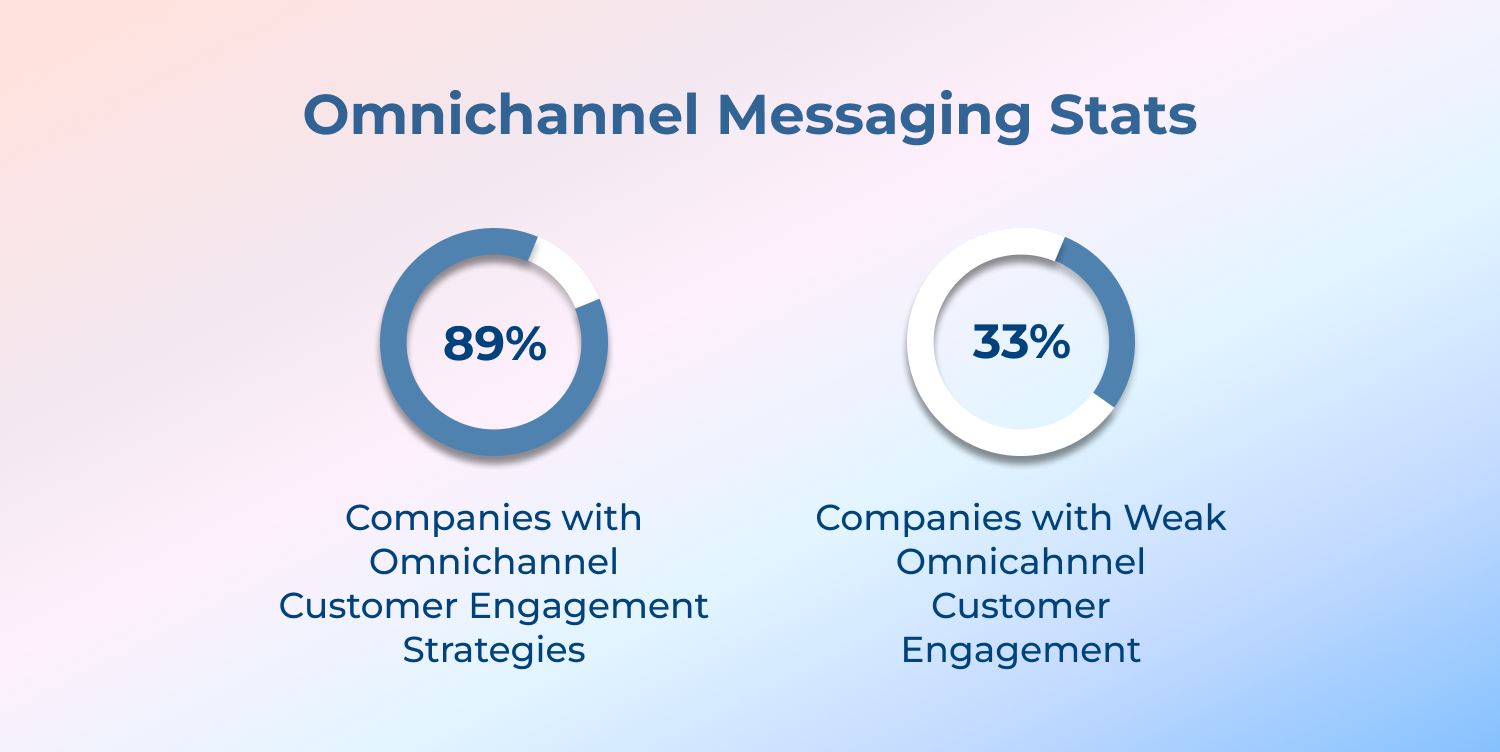
Consider a situation where your customers are on six channels and the team is barely able to keep up with them. 90% of consumers expect seamless service across businesses using omnichannel strategies to retain 89% of customers. Fragmented communication is a measurable revenue leak.
Explore what is an omnichannel messaging strategy, along with must-have features, top software comparisons and implementation best practices.
Omnichannel messaging is the practice of unifying customer communication across all channels into one single strategy where context follows the customer regardless of the conversation. It creates a continuous, personalized experience at every touchpoint, compared with multichannel messaging.
Omnichannel messaging refers to the ability to engage with customers through multiple channels, using a single cohesive messaging strategy. It allows businesses to provide a consistent and seamless experience for customers, regardless of the channel they choose to use.
Omnichannel messaging allows businesses to communicate with customers cohesively and consistently by centralizing the management with coordination of messaging, personalizing the interactions as well as automating certain processes to improve the customer experience.
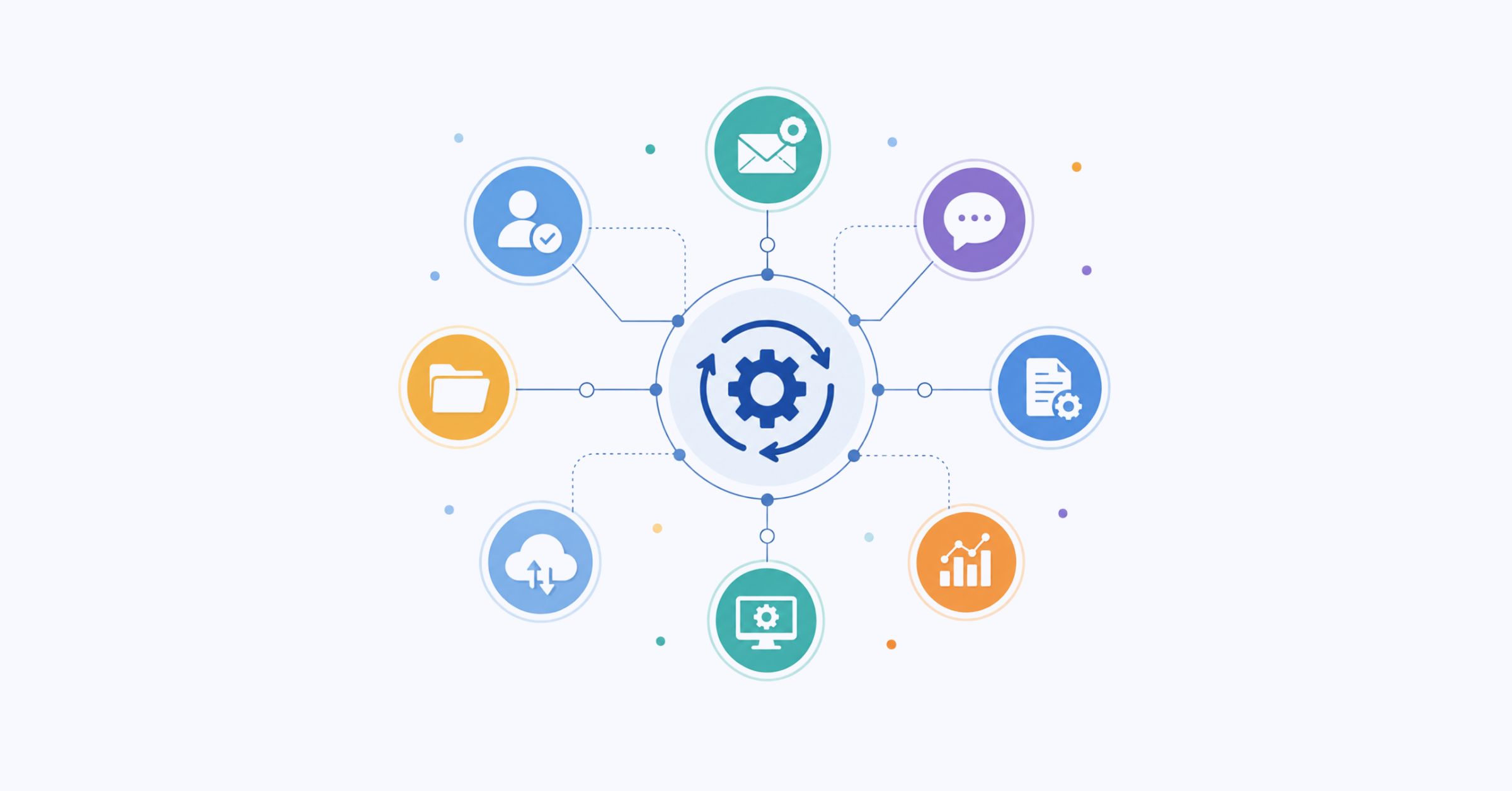
How it works:
Whether it’s through email, social media, SMS or live chat, having a centralized platform provides a consistent customer experience. Let’s delve into its must-have features.
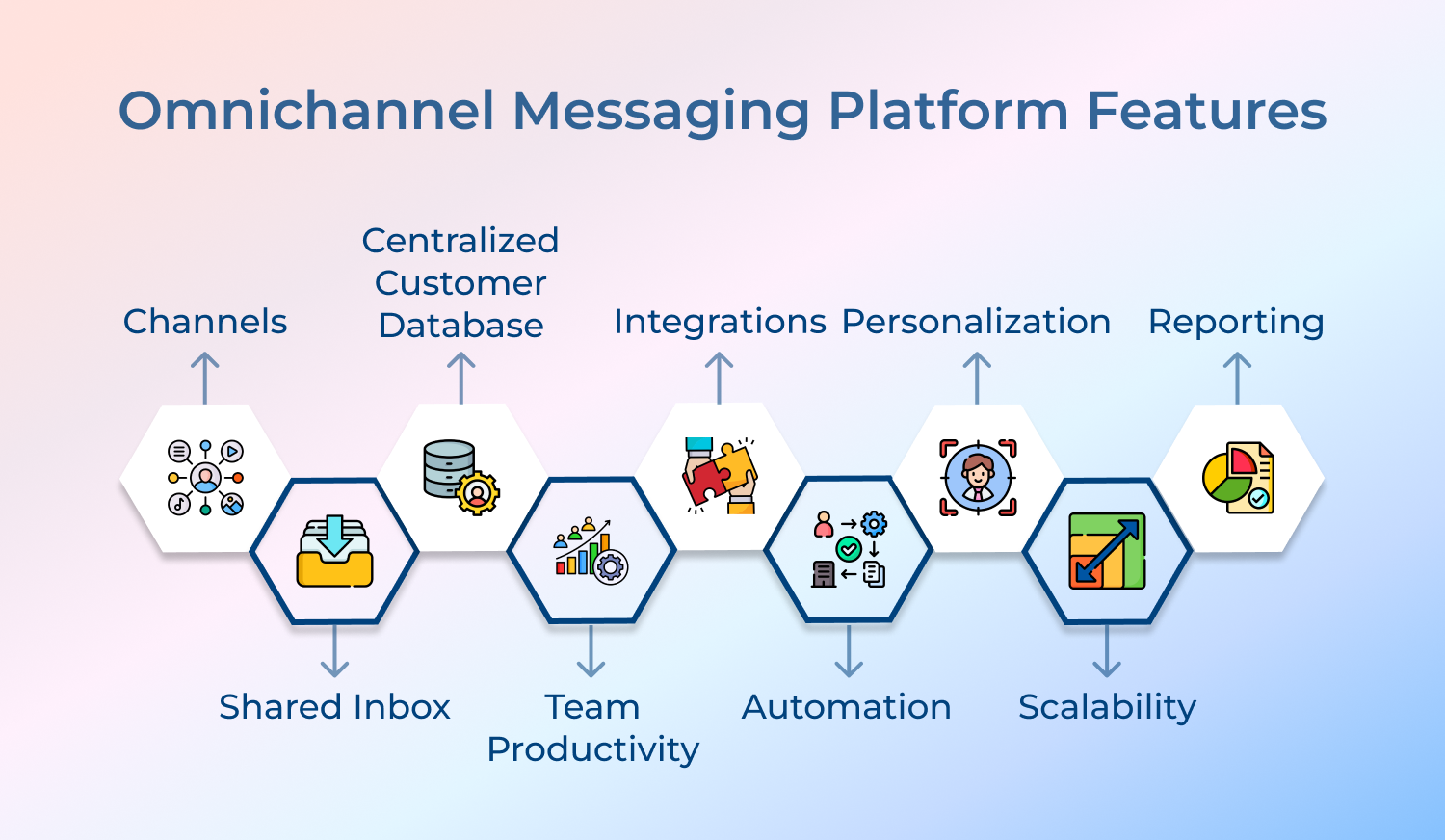
Here are some must-have features to look for in an omnichannel messaging platform:
Ensure that the platform supports the communication channels you intend to use to engage with customers. The channels may include live chat, email, SMS, social media and various social platforms. Compatibility with your preferred channels is essential to providing a seamless customer experience.
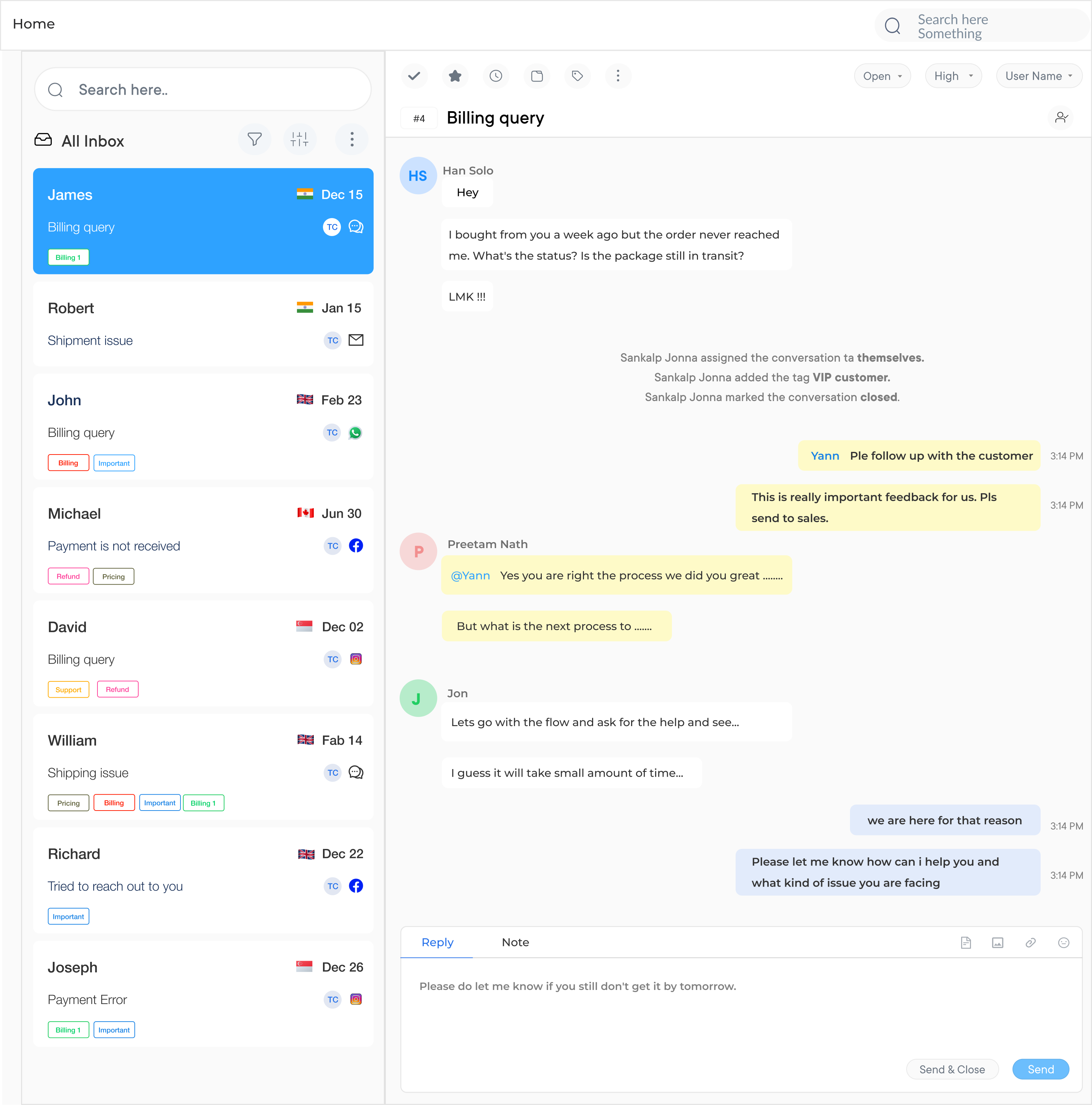
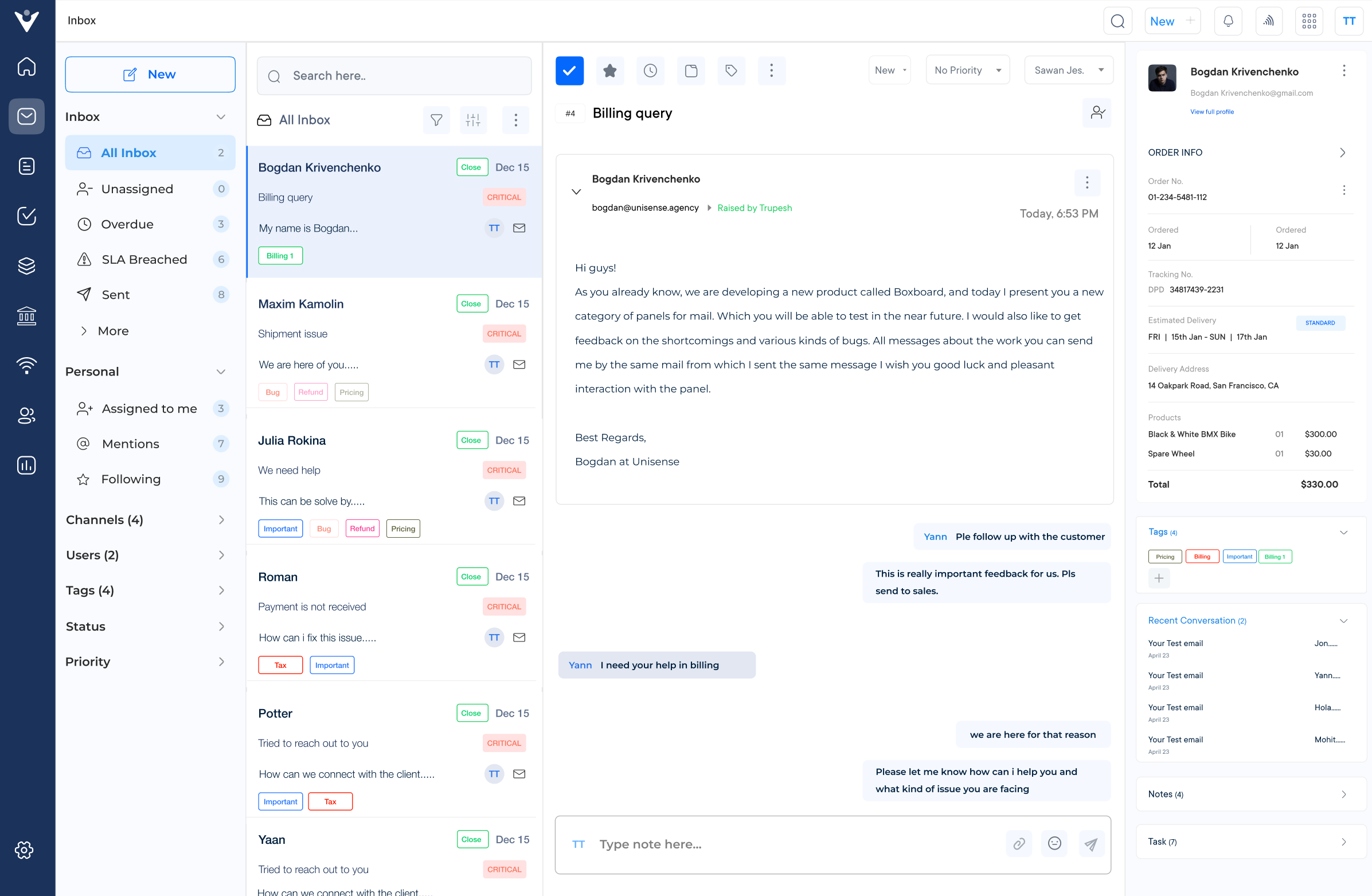
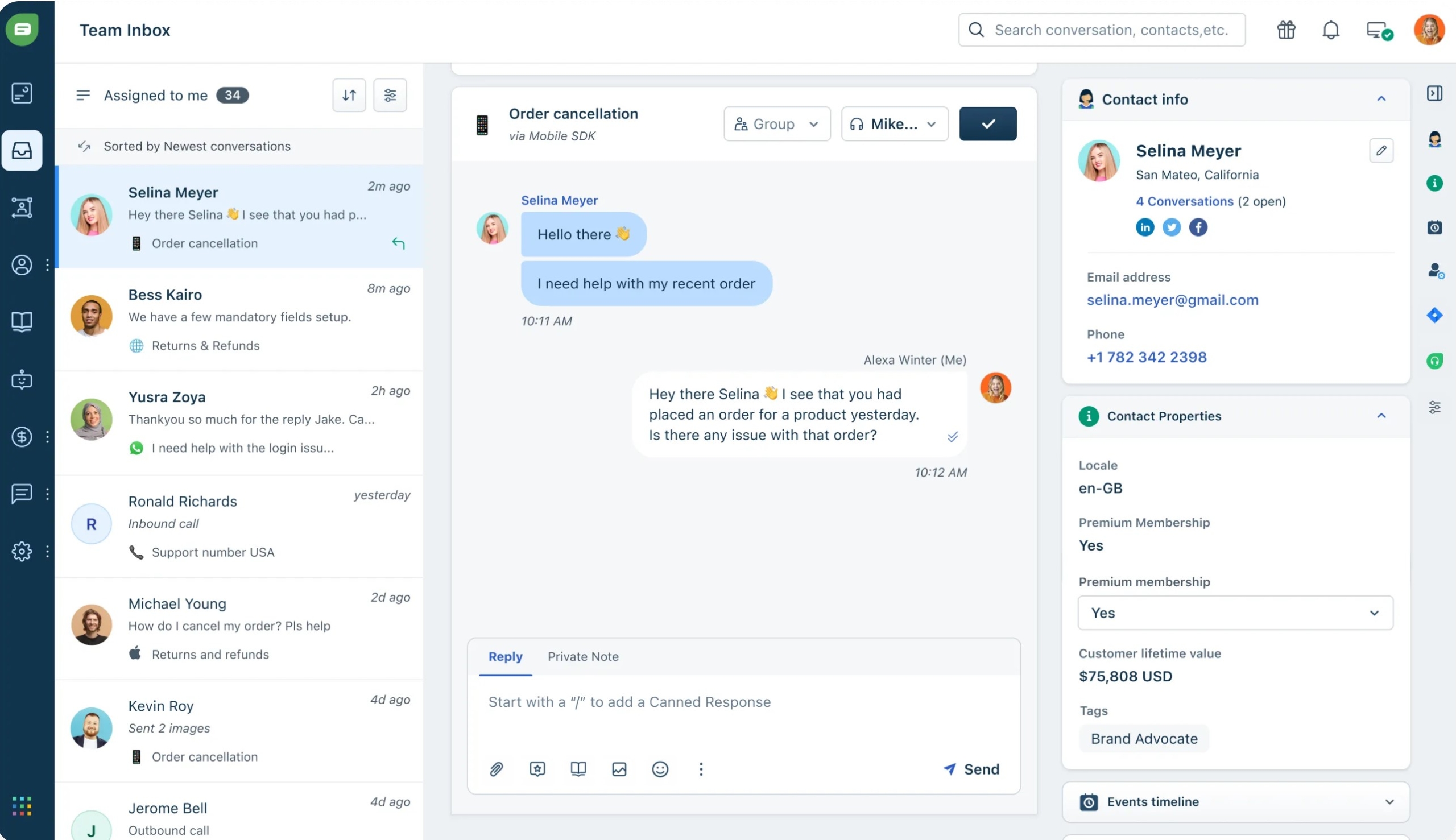
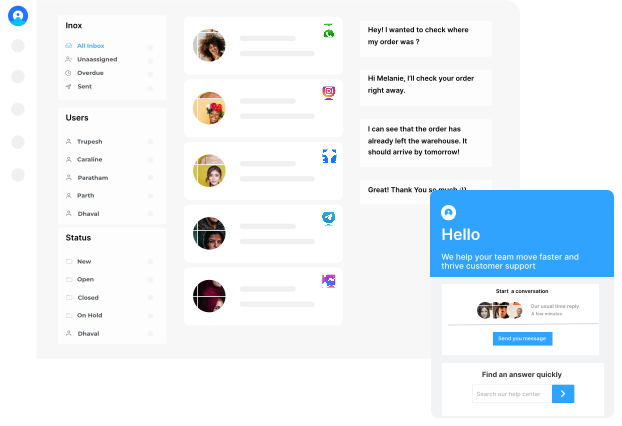
Seek a platform that integrates all customer communication channels, such as live chat, email, and WhatsApp, into a unified, shared inbox. The consolidation allows for a centralized view of conversations across teams, enhancing collaboration and ensuring consistent customer interactions.
A centralized customer database essentially stores and manages customer data across all channels. It ensures personalized customer interactions with high consistency, regardless of the channel they use to contact your business.
Opt for a platform that empowers agents with features akin to a helpdesk system. It includes the ability to assign, manage and track conversations efficiently. Streamlining workflows boosts team productivity and enables better customer support.
The ability to trigger actions based on customer behavior, such as sending follow-up messages or routing inquiries to the appropriate team, is one of the features you need to look out for that will guide you to pick the right tools. Automation streamlines processes and enhances response times.
Seek a platform that offers detailed reporting capabilities. Comprehensive reports on performance, customer interactions and campaign results are invaluable for optimizing your omnichannel strategies while enhancing overall customer engagement.
Creating an effective customer retention is not easy, and requires a deep understanding of customer behavior as well as preferences. But, omnichannel messaging platforms can offer solutions to every problem and create a process that elevates your overall customer experience (CX).
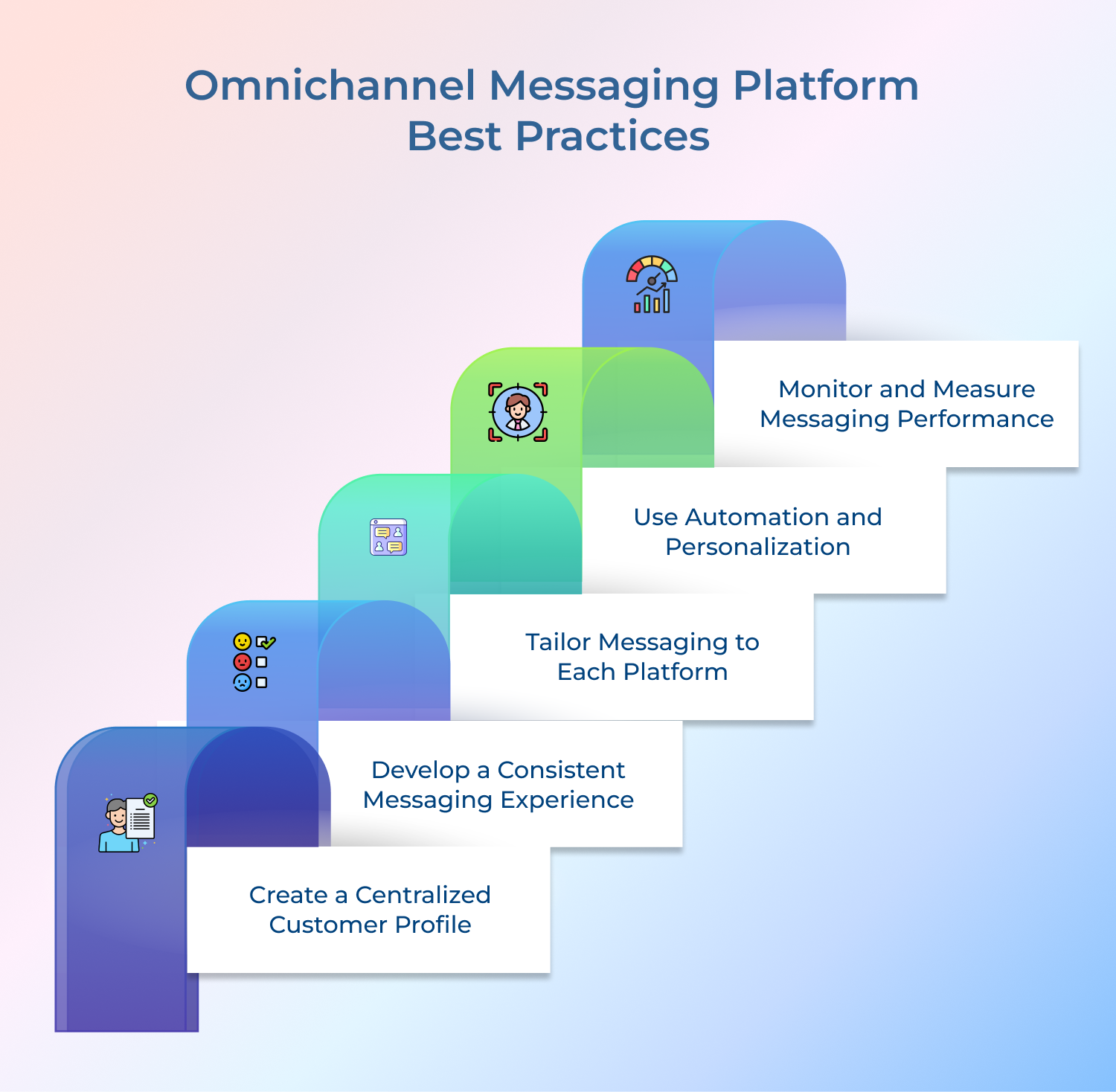
The first key to delivering an effective omnichannel messaging experience is creating a centralized customer profile. A centralized customer profile helps businesses understand customer behavior across different channels, providing insights into customer preferences, demographics, interactions, etc.
Businesses can develop a personalized messaging strategy that adapts to each customer’s interests with a centralized customer profile. It prevents agents from asking customers to repeat information already shared on a different channel.
Build a strong centralized profile using these elements:
Customers expect a seamless experience across all channels and businesses need to provide consistent branding, messaging as well as customer service. Businesses should develop a messaging style guide that outlines brand voice, tone, messaging and visuals.
Inconsistent messaging across channels confuses customers, which weakens brand trust over time. A properly documented style guide makes sure every team member communicates with the same clarity, regardless of the channel.
Each platform has its own unique strengths and features. Businesses need to tailor their messaging to each one. A one-size-fits-all approach will not work for an effective business messaging strategy.
For example, Twitter may require shorter messaging, while email may allow for more detailed content. Adapt messaging using these considerations:
Automation and personalization are key to delivering an effective omnichannel messaging experience. It helps businesses deliver consistent and timely messaging across different channels, while personalization tailors messages to each customer’s preferences.
Chatbots, triggered email campaigns and other automation deliver personalized messaging at scale. Over-automating without keeping a human touch in personalization makes conversations feel robotic and disconnected from genuine customer needs.
Balance automation and personalization with:
Monitoring and measuring messaging performance is essential for ensuring that businesses are delivering an effective omnichannel messaging experience. It helps businesses identify areas for improvement
Businesses risk continuing strategies that no longer resonate with evolving customer expectations without consistent measurement. Maintain regular performance reviews to make sure messaging stays aligned instead of assumptions.
Track performance using these key metrics:
An effective omnichannel messaging strategy is never static and requires ongoing testing to stay relevant. Businesses should regularly use different messaging approaches to identify what matches best with the audience.
Optimize messaging using these approaches:
Proper testing reveals insights that assumptions alone cannot provide, ensuring messaging continuously improves rather than stagnating.
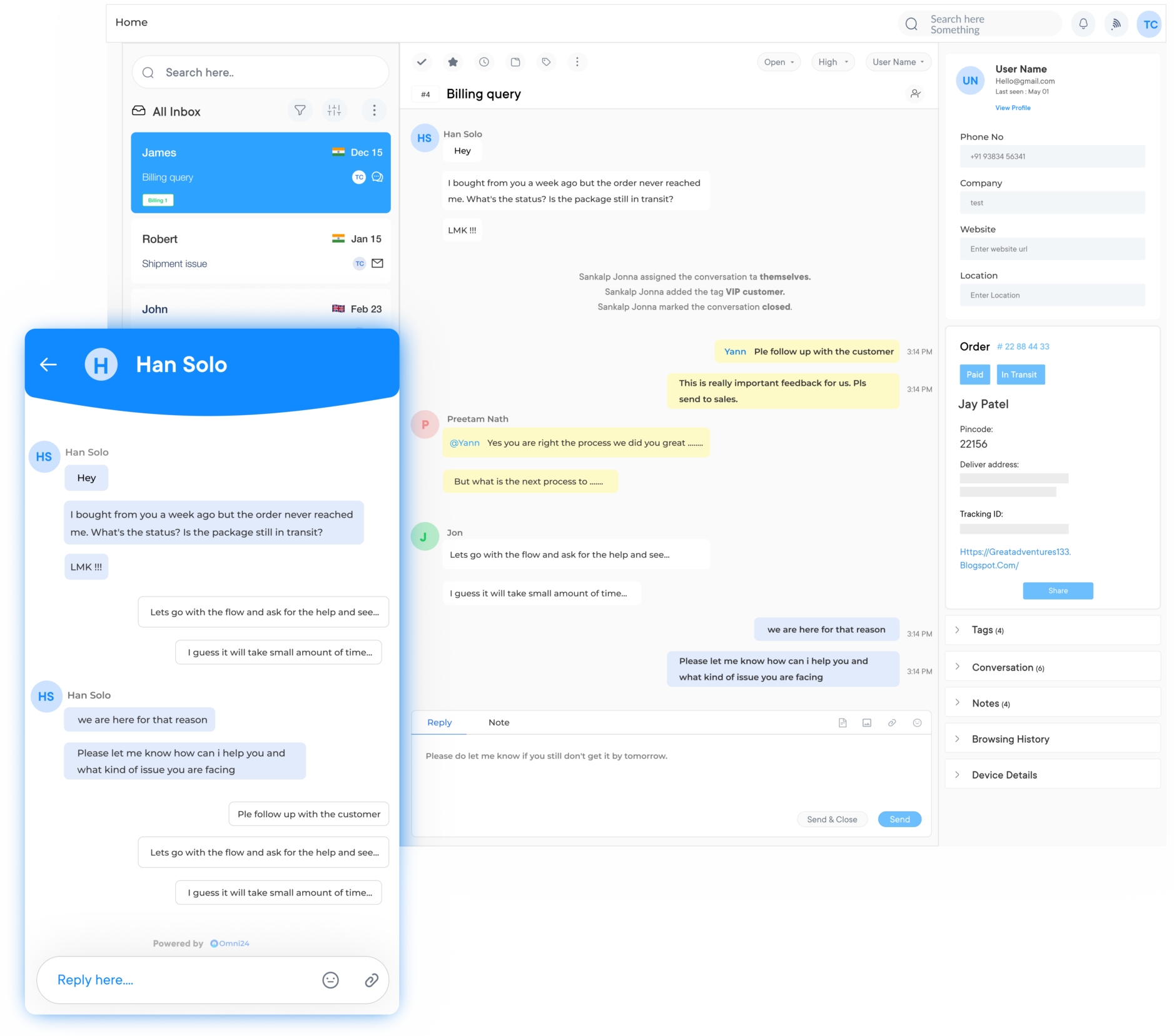
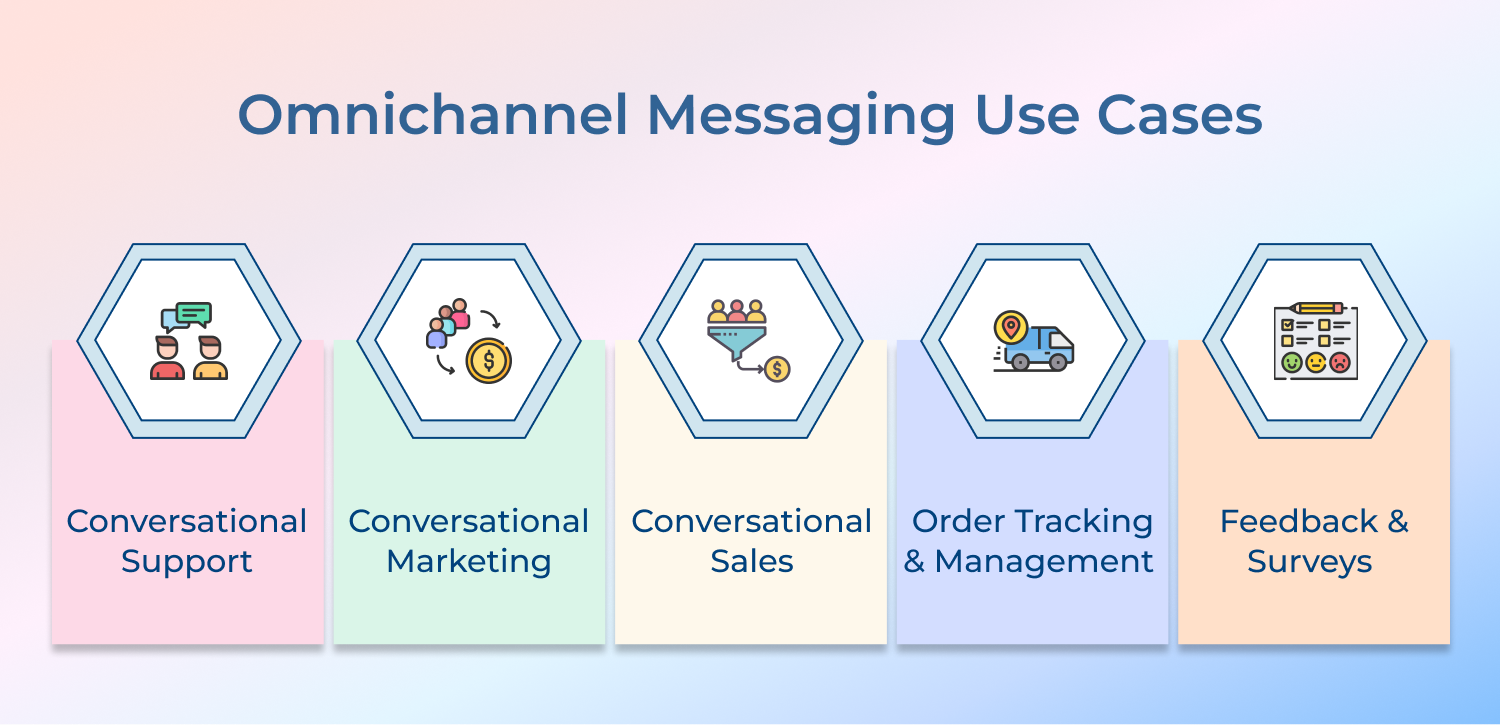
Omnichannel messaging utilizes multiple channels to communicate with customers consistently. Here are some use cases to help connect with customers at the right time and the right place.
Using an omnichannel customer service platform, businesses can manage and coordinate customer interactions across different channels, providing a coherent along with consistent experience for the customers. The platform can also integrate with customer relationship management (CRM) software to collect data on customer interactions and preferences which can be used to personalize while improving the messaging.
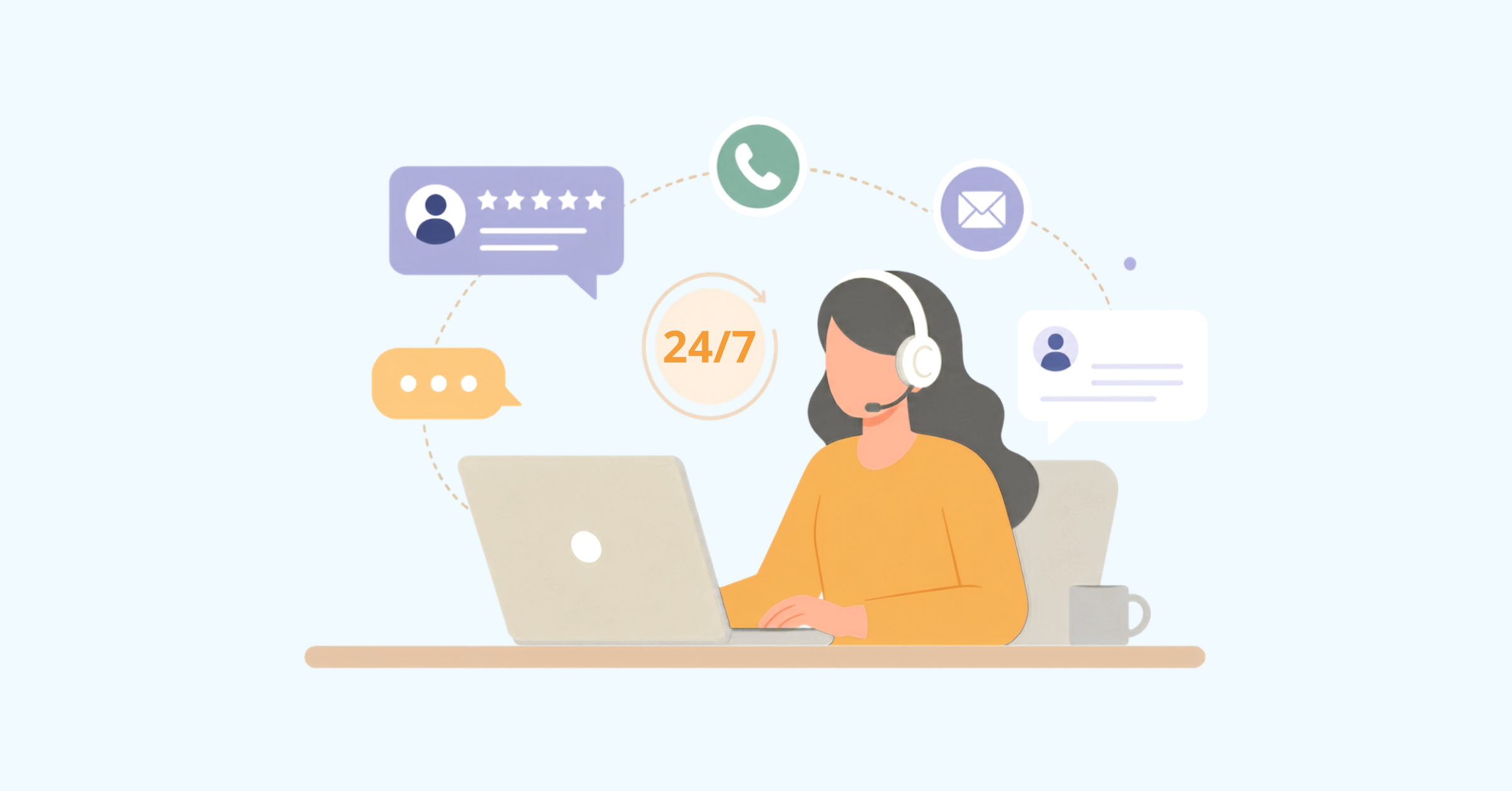
Conversational support through omnichannel messaging can also be automated through the use of chatbots, which can handle simple and repetitive queries to provide quick answers. It can be very helpful in reducing the support load and also providing 24/7 support.
Conversational marketing powered by omnichannel messaging represents a significant evolution in how businesses engage with their customers. It creates a comprehensive conversational marketing experience for customers by reaching out to them through the channel of their choice, providing a consistent, personalized and automated experience.
The chatbots initiate conversations while providing personalized recommendations and offers. It leverages the convenience with personalization of various communication channels to provide a seamless, consistent and engaging experience.
Omnichannel messaging channels also allow for lead nurturing. Through targeted messages they educate and build trust with potential customers, which can help them to convert potential leads into paying customers.
Businesses can also use chatbots to automate the process of meeting booking through omni channel messaging, by providing customers with real-time availability, allowing them to schedule a meeting by simply interacting with the chatbot. It can make the booking process more efficient and convenient for customers.
Omnichannel messaging revolutionizes the order tracking experience by reaching customers through various channels and accommodating their preferred mode of engagement, whether it’s SMS, email, mobile apps, social media or website chat.
Chatbots automate routine inquiries, delivering instant responses to customer queries. They retrieve essential information like order status, shipment details, and estimated delivery times. The seamless integration of omnichannel messaging with e-commerce shipping systems empowers customers with real-time updates on order progress and delivery status, from placement to final delivery.
Omnichannel messaging can be an effective tool for collecting feedback and conducting surveys across different channels such as email, SMS, social media and in-app messaging.
Businesses can use chatbots to automate the process of collecting feedback through omni channel messaging. Chatbots can initiate conversations with customers and ask them specific questions or provide them with a feedback form to fill out.
Implementing omnichannel messaging can yield great results, but the rollout isn’t without obstacles. Here are four common challenges businesses face along the way.
1. Channel Fragmentation During Rollout
Multiple channels into one unified system reveal gaps between legacy tools and new platforms. It leads to inconsistent data formats and communication protocols that delay full integration significantly.
2. Maintaining Consistent Messaging Across Teams
Support, sales and marketing teams often communicate in different tones when managing separate channels. Customers receive inconsistent messaging without shared guidelines in place, leading to loss of brand trust.
3. Data Syncing Across Platforms
Customer data scattered across multiple systems makes it difficult to maintain a single, accurate profile in real time. It leads to delayed or incomplete syncing, with outdated information reaching agents.
4. High Implementation and Maintenance Costs
Integrating multiple channels, platforms and CRM systems into one cohesive experience requires significant upfront investment. Small-sized businesses find the ongoing costs and technical complexity difficult to manage.
Follow these five solutions to help businesses succeed.
Omnichannel messaging is a marketing approach in which a business creates a seamless experience for its customers across all channels.
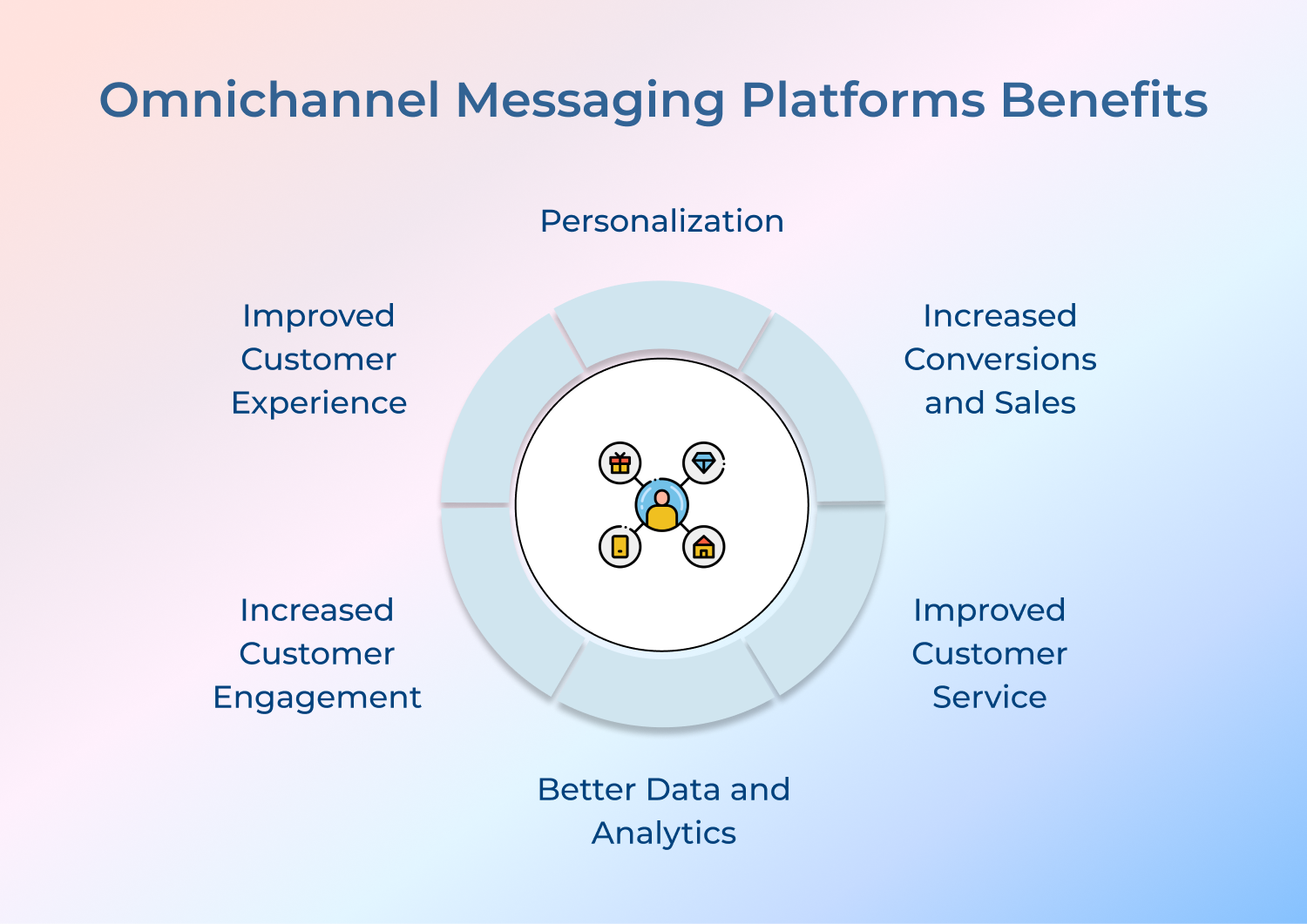
Here’s the list of the benefits to know:
Increased Customer Engagement
Omnichannel messaging platform reaches customers through the channels they are most active and engaged with, such as social media, chat apps, or email. Businesses can foster stronger relationships, leading to increased customer loyalty and satisfaction.
Improved Customer Experience
Omnichannel strategies ensure a consistent and cohesive experience for customers across different channels. Customers can switch between channels seamlessly while receiving the same level of service, improving the overall customer experience.
Personalization
Integration is easy with CRM systems; you can collect data on customer interactions and preferences. The data enables businesses to personalize their messaging, addressing individual needs and interests, ultimately enhancing the customer’s perception of the brand.
Increased Conversions and Sales
You can initiate more personalized and automated interactions. Businesses can use data-driven insights to offer products or services that align with a customer’s preferences, increasing the likelihood of conversions and sales.
Improved Customer Service
Your business can leverage chatbots to automate routine customer service tasks like answering frequently asked questions. The automation frees up human agents to handle more complex issues, leading to faster issue resolution and an overall improvement in customer service.
Better Data and Analytics
Omnichannel messaging platforms provide detailed data and analytics on customer communication as well as behavior. Businesses can use this information to ensure that they meet customer needs and preferences more effectively, leading to improved customer loyalty.
Omnichannel messaging software has become the answer for businesses looking to provide a seamless customer experience across multiple channels. Look into our curated tools list.
Best omnichannel messaging platform with unified inbox
Omni24 is an AI-powered customer engagement platform to unify support, sales, and marketing suites targeting distinct stages of the customer journey. It automates business operations to deliver personalized, timely experiences that boost satisfaction and loyalty.
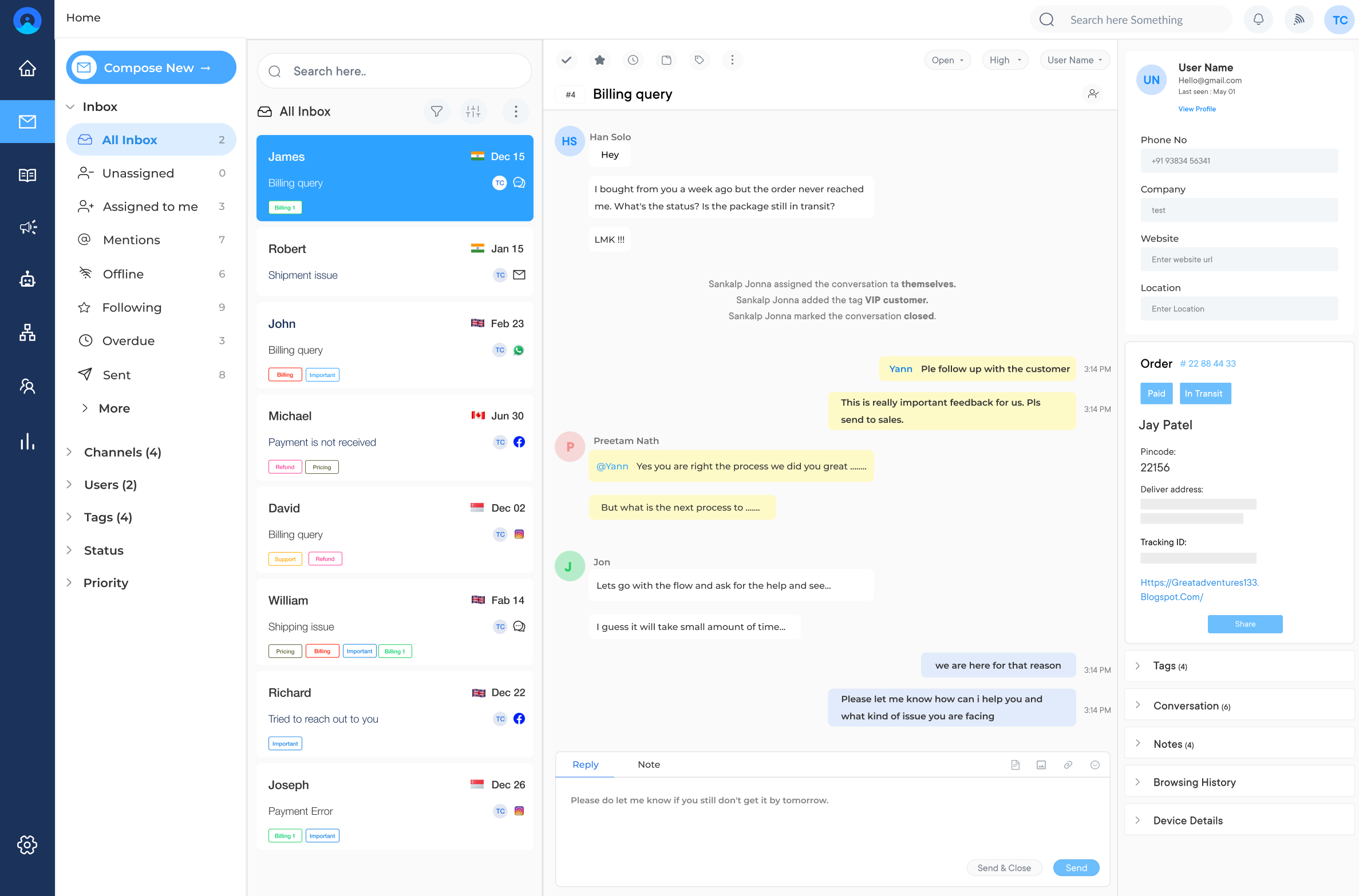
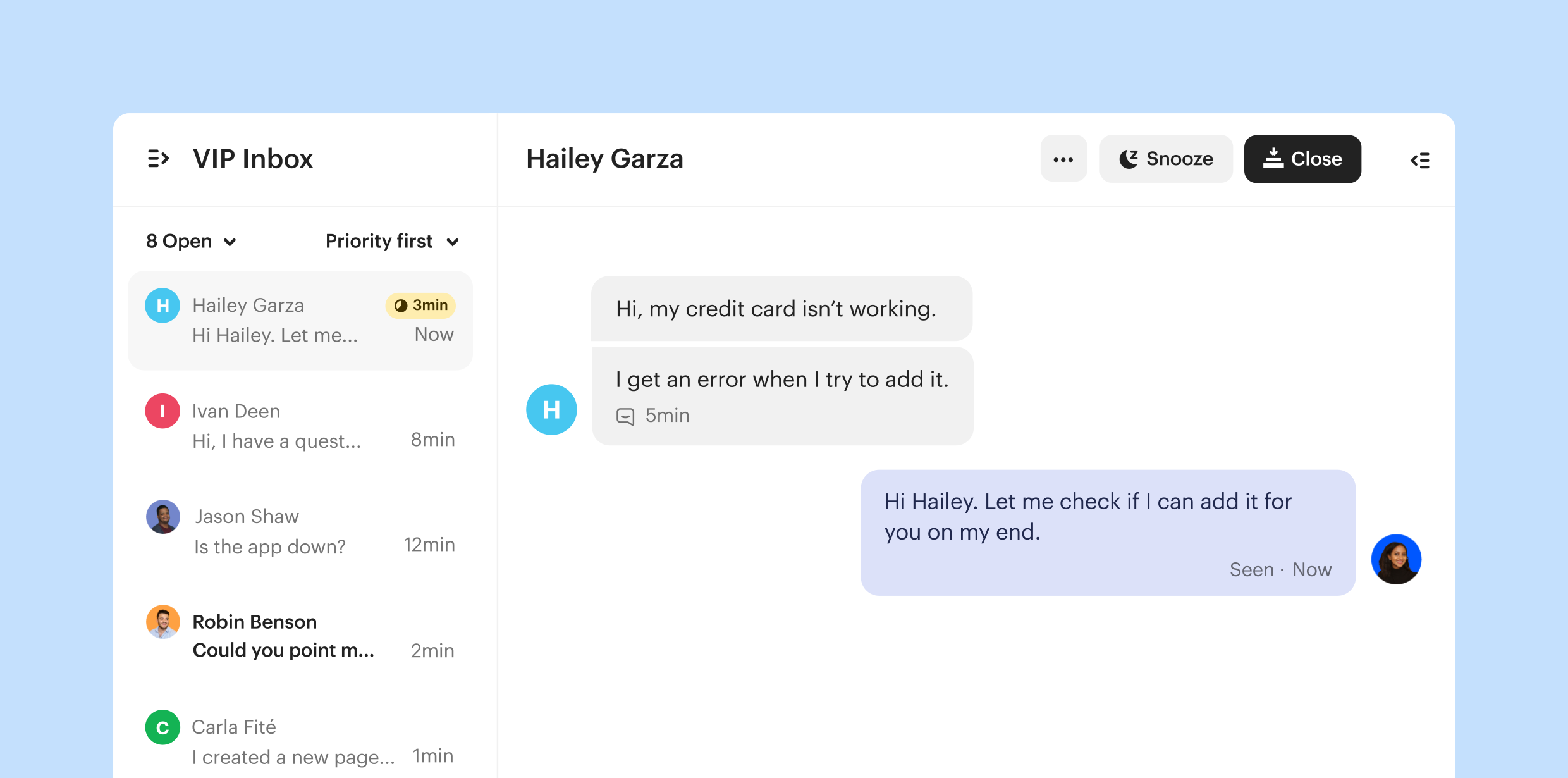
Omni24’s support suite brings email, live chat, social media and SMS into one unified inbox for Omnichannel messaging. Teams can collaborate internally and track SLAs without switching tools while the branded help center enables round-the-clock self-service.
Key features:
Pricing: The pricing starts from $29/user/month. The pricing depends on factors like the number of users, the level of features required, and the scale of customer support operations. Omni24 also offers a 14-day free trial for businesses to explore its features before making a commitment. Check out their pricing for more detailed comparison.
Top omnichannel messaging solution for small businesses
Veemo Chat is the best business messaging software with omnichannel functionality for seamless customer communication. It helps businesses engage website visitors instantly and consistently resolve issues across every channel.
This unifies conversations across live chat, email and social media into one connected dashboard so agents have complete context regardless of where a conversation started. Businesses can maintain personalized communication across all operations without switching between tools.
Key features:
Pricing: The Growth plan starts at $29/user/month with basic features, the Team plan is priced at $59/user/month and the Enterprise plan is priced at $129/user/month which includes advanced features. It also offers a 14-day free trial.
Comprehensive omnichannel messaging tool with easy customization
Zendesk is a comprehensive omnichannel inbox tool that is mostly used for customer service as well as engagement. Apart from interacting with customers on multiple channels, it can also create and track conversations to ensure an easy transition between the apps.
Key features include a unified inbox, automated routing, and integration with CRM systems.
Pricing for Zendesk starts at $19 per agent per month for the basic plan.
Intercom is a customer messaging platform that enables businesses to communicate with customers through channels, such as chat, email, and messaging apps. It provides features like conversational bots, targeted messaging campaigns, and customer data tracking.
Key features include advanced targeting, product tours, and a comprehensive knowledge base.
Pricing for Intercom starts at $67 per month for the basic plan.
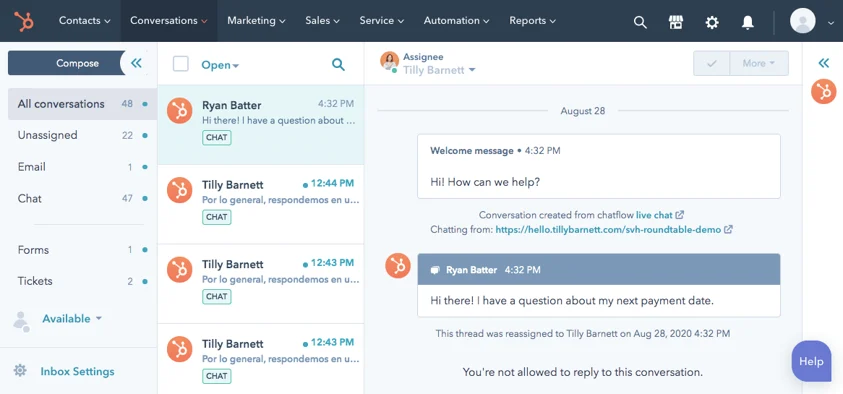
HubSpot offers a range of marketing, sales, and customer service tools, including an omnichannel messaging platform. It allows businesses to manage customer conversations across multiple channels, including live chat, email and more.
Key features include conversation routing, canned responses, and integration with HubSpot’s CRM.
Pricing for HubSpot’s Service Hub starts at $45 per month.
Freshdesk is a cloud-based customer support software that offers omnichannel messaging capabilities. It enables businesses to communicate with customers through channels like email, chat, messaging apps, and social media.
Key features include a unified inbox, automations, and AI-powered conversational bots.
Pricing for Freshdesk starts at $15 per agent per month for the basic plan.
Twilio is a cloud communications platform that provides omnichannel messaging solutions. It allows businesses to integrate messaging channels like SMS, WhatsApp, Facebook Messenger, and more into their applications.
Key features include programmable messaging APIs, conversation tracking, and flexible pricing models.
Pricing for Twilio’s messaging services varies based on usage and specific requirements.
Omnichannel messaging is the foundation of modern customer communication. It unifies every channel into one seamless experience that drives loyalty as well as growth.
Ready to see it in action? Start your 14-day free trial of Omni24 today. An effective omnichannel messaging strategy is the competitive advantage that separates growing businesses from others.
Omni24’s DCX platform harnesses automation and AI to deliver unified customer experiences across digital channels, while keeping human touch.
Omnichannel messaging greatly enhances the customer experience by providing convenience and consistency. Customers can choose their preferred channel for communication while still receiving the same level of service. It creates a more satisfying experience, leading to increased customer loyalty. Integrating multiple channels and ensuring their seamless functionality can be technically complex. However, with the right strategies and tools, these challenges can be overcome.
The right channels depend on understanding your target audience and their preferences before committing to any single platform. The setup often wastes budget without improving engagement. Key factors to consider include:
Omnichannel messaging improves customer engagement by meeting customers on their preferred platforms and providing a personalized experience throughout. Businesses reach customers at multiple touchpoints across their journey by utilizing different channels together.
This multi-touchpoint presence helps nurture relationships and strengthens interactions over time. The increased engagement leads to deeper connection between the customer and the brand.
For measuring the success of omnichannel messaging, businesses can track various metrics, such as customer engagement rates, conversion rates, customer satisfaction scores, and ROI. The data can be collected through analytics tools that monitor customer interactions across different channels. By analyzing these metrics, businesses can identify areas for improvement and optimize their omnichannel messaging strategy.
Both omnichannel and multichannel messaging use multiple channels but differ in the way the channels connect and function together. The distinction directly impacts the overall experience delivered across every touchpoint: