Important Digital Transformation Statistics for Every Business
Digital transformation statistics reveal operational boosts, customer gains and the evolving landscape defining successful businesses.

Digital transformation statistics reveal operational boosts, customer gains and the evolving landscape defining successful businesses.
How is digital transformation shaping industries and businesses across the globe? What do the latest statistics reveal about this rapidly evolving trend?
Digital transformation is revolutionizing the way organizations operate and interact with their customers. It encompasses the integration of digital technologies into various aspects of a business, including processes, services and products. As more and more companies strive to stay competitive, understanding the latest trends as well as statistics surrounding digital transformation becomes imminent.
We will explore some eye-opening statistics that shed light on the impact and potential of digital transformation projects across industries.
Digital transformation refers to the integration of digital technology into all aspects of a business, fundamentally changing how it operates and delivers value to its customers. It involves adopting new technologies, reshaping processes and rethinking business models to adapt to the current scenarios. The goal is to enhance customer experience, improve operational efficiency and stay competitive in a rapidly evolving market.
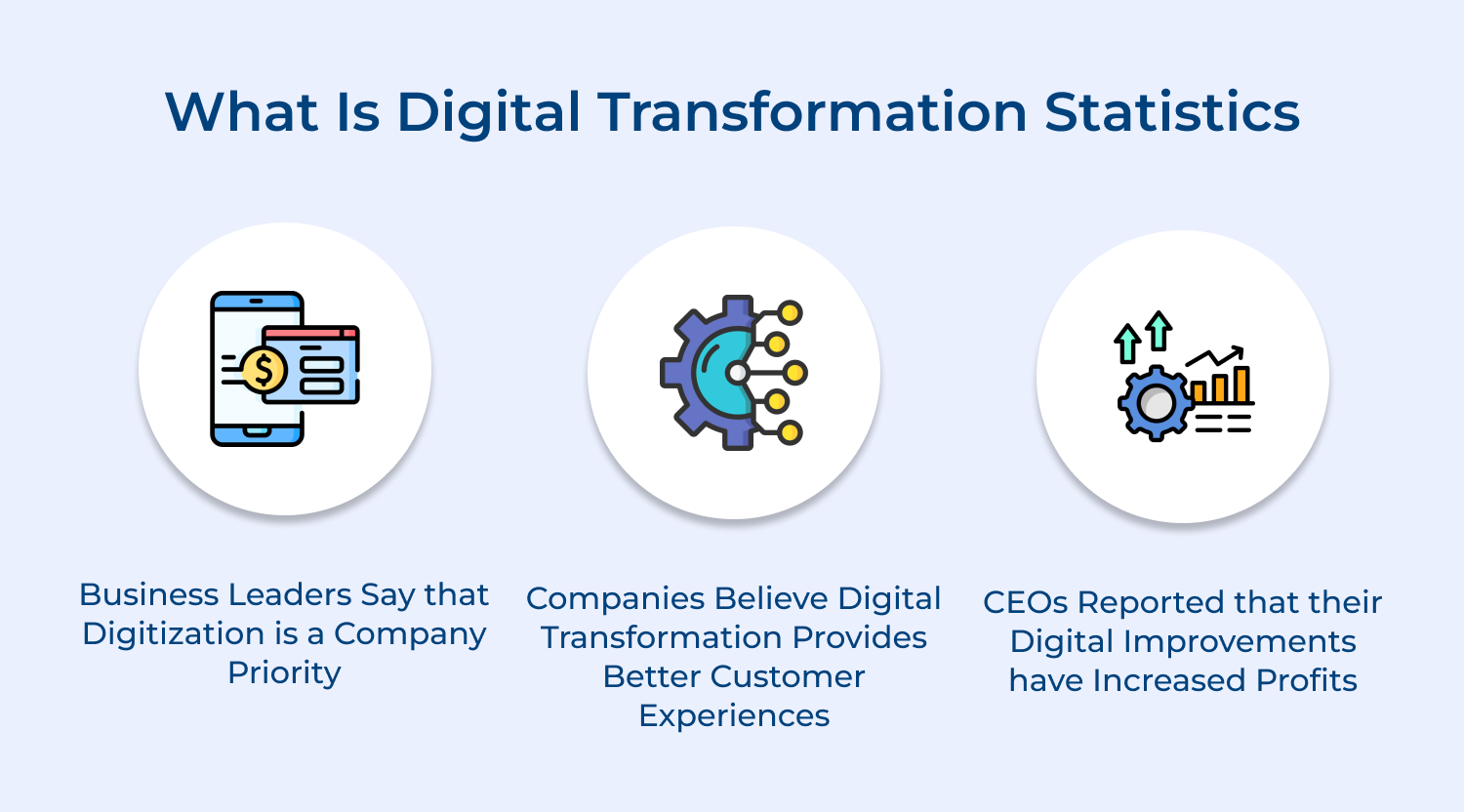
Key statistics:
As technology continues to advance at an unprecedented rate, businesses need to adapt and embrace digital platforms to stay relevant.
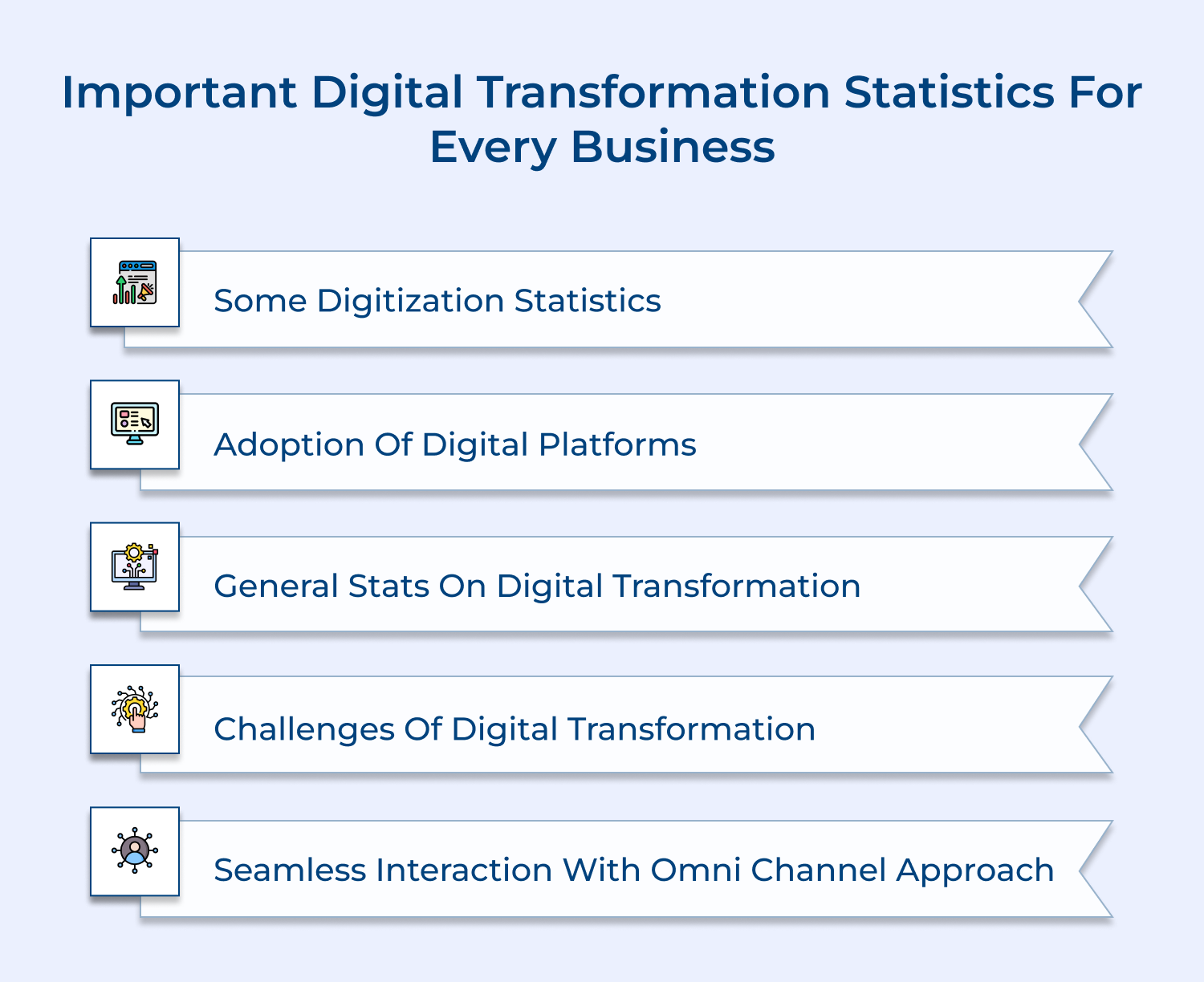
Understanding the essential statistics behind the transformation becomes necessary. These numbers not only showcase the significance of digitization but also shed light on the opportunities it presents.
Adoption of digital platforms allows companies to leverage digitized data and processes. These innovations contribute to how documentation, production quality, time-to-market, monitoring, and production performance, among other things, can improve.
Digital transformation is an overall shift toward IT solutions and capabilities, where companies understand that new-era technology skills could gain their competitive advantage as well as generate growth for the business.
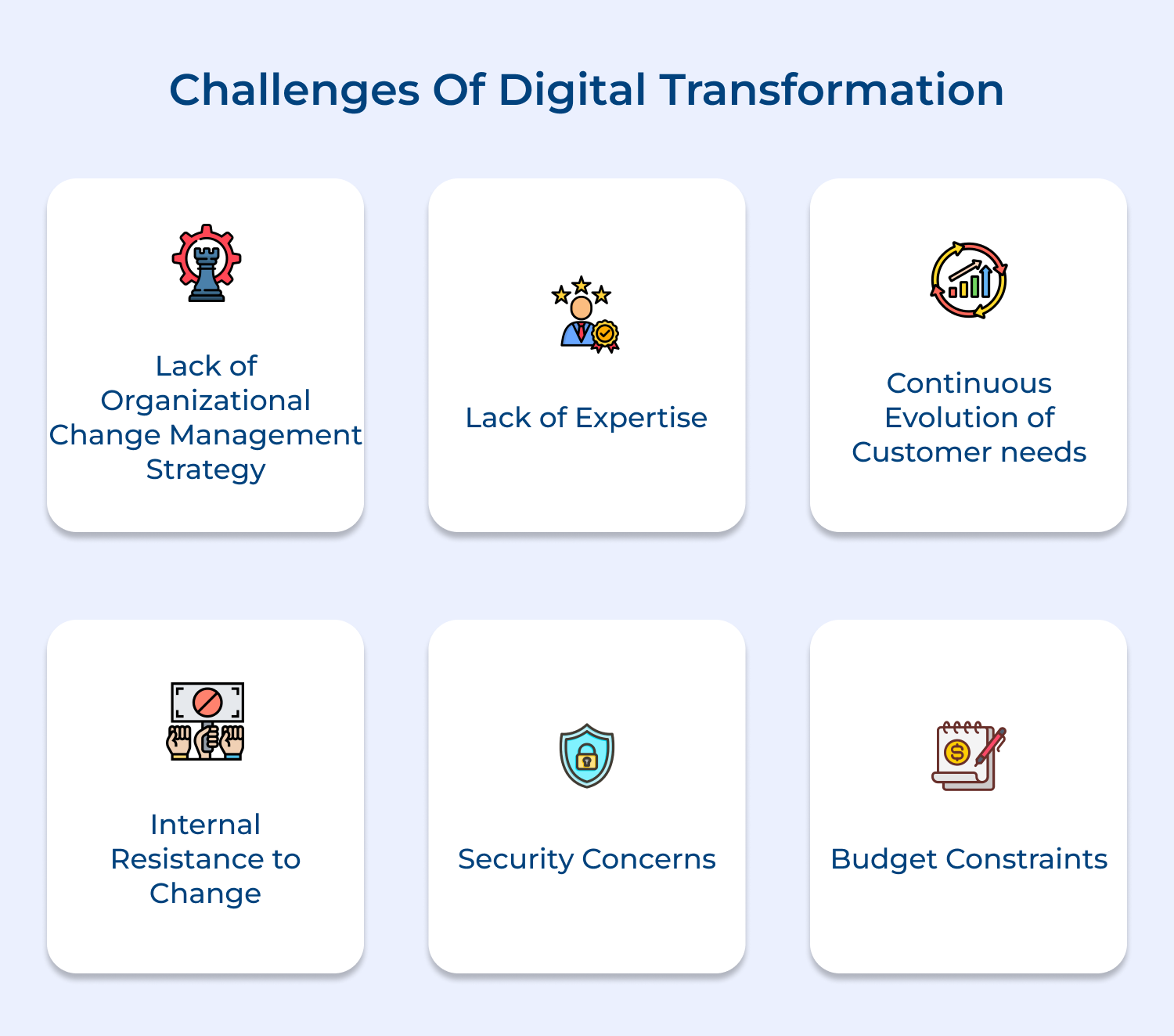
Digital transformation is a time consuming process. It takes considerable time, effort and resources to successfully shift as well as fully integrate it into everyday workflow. Like any other implementation, digital transformation trends do have some challenges. Here are few challenges to consider,
Omni channel helps organizations retain customers, allowing maintenance and increase in revenue, while also furthers the digitization of your business as made evident by these digital transformation figures.
As technology continues to advance, companies are realizing the importance of embracing digital strategies to stay competitive in the market.
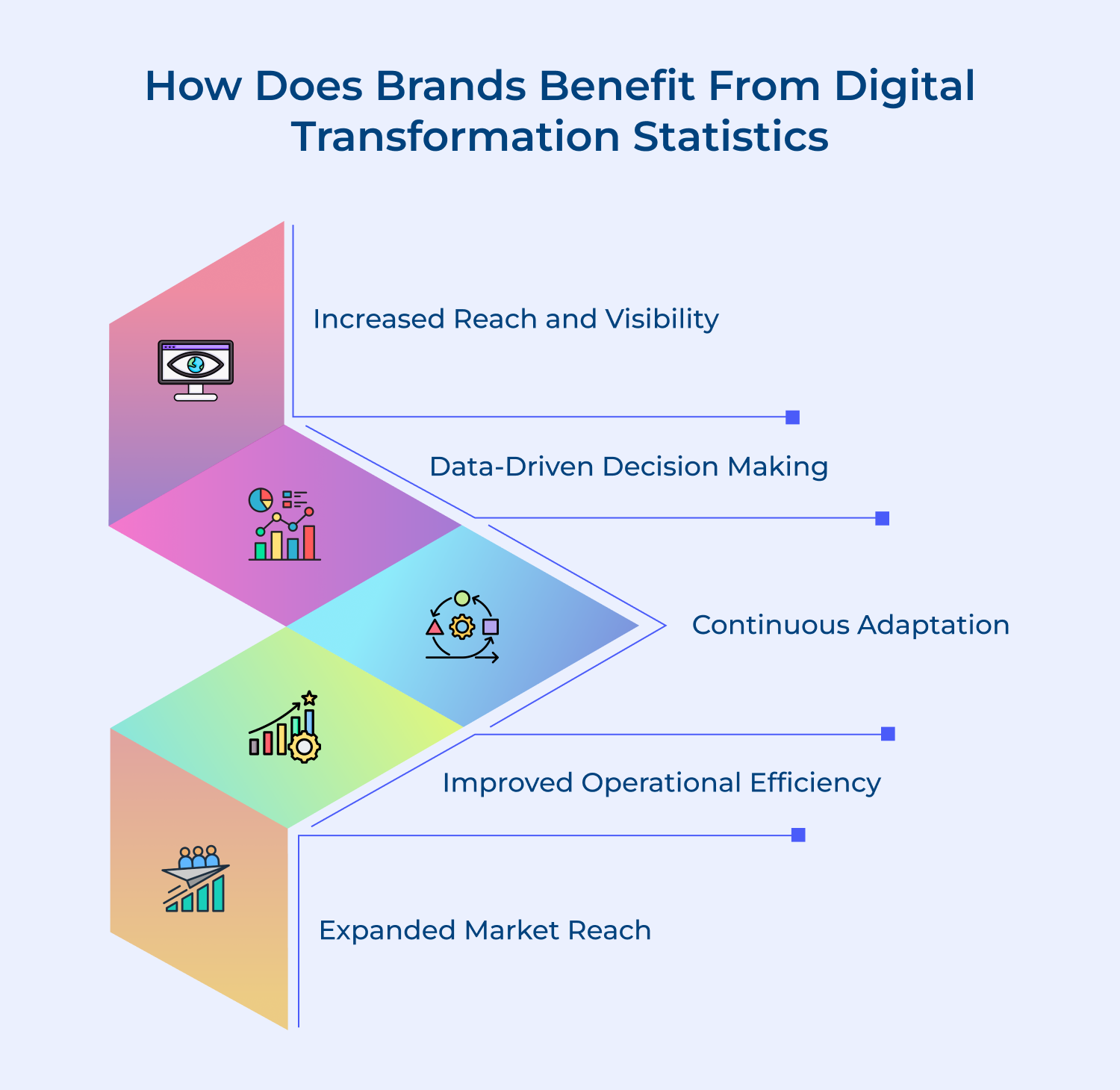
One of the primary benefits of digital transformation for brands is the ability to reach a wider audience. The rise of social media platforms and online advertising enables brands to connect with consumers from all over the world. According to statistics, more than 5.3 billion people are active internet users and over 4.96 billion people use social media. These numbers present a massive opportunity for brands to expand their reach and increase their visibility.
Digital transformation provides brands with access to a wealth of data. These data insights allow brands to make more informed decisions regarding marketing strategies, target audience and overall business operations. With advanced analytics tools, brands can monitor customer behavior, track campaign performance and gather real-time feedback. The data-driven approach helps brands optimize their marketing efforts, personalize customer experiences as well as deliver relevant content to their target audience.
Brands need to constantly adapt to new technologies and consumer trends. Digital transformation allows brands to stay agile and respond quickly to market changes. By analyzing data, brands can identify emerging trends, understand consumer preferences while tailor their strategies accordingly. The adaptability ensures that brands remain relevant as well as competitive in the ever-evolving digital landscape.
Digital transformation enables brands to streamline their processes and improve efficiency. Digitally transformed companies are more likely to have reduced operating costs and increased revenue. By automating manual tasks, implementing cloud-based systems and utilizing data-driven insights, brands can optimize their operations while also making better-informed decisions. It saves time and resources as well as allows employees to focus on higher-value tasks/innovation.
Digital transformation opens new doors for brands to expand their market reach. By leveraging digital platforms, social media and online marketing strategies, brands can reach a broader audience, target specific customer segments as well as engage with them on a deeper level. It not only helps to drive brand awareness and increase sales but also builds brand advocacy along with word-of-mouth marketing.
The essential digital transformation stats highlight the need for businesses to embrace digital platforms. Businesses can identify trends, customer preferences, allowing them to make informed decisions. Businesses can tailor their services to meet customer needs. Accurate statistics provide valuable insights into customer satisfaction levels and response times, enabling businesses to identify areas for improvement & implement strategies for enhanced customer service.
Businesses can proactively address customer concerns, personalize their interactions and create a positive customer experience with the right data in hand. By embracing digital transformation and leveraging the power of technology, businesses can stay competitive, meet customer expectations, as well as drive growth.

What are the current statistics on digital transformation adoption across industries?
According to recent studies, the adoption of digital transformation initiatives varies across industries. Research conducted by the International Data Corporation (IDC) reveals that 89% of companies have plans to adopt or have already implemented digital transformation strategies. Industries such as technology, finance and retail are at the forefront of digital transformation adoption. Sectors like healthcare, manufacturing and government are also catching up rapidly.
How do digital transformation statistics vary between small, medium and large enterprises?
Statistics show that while digital transformation is a priority for businesses of all sizes, large enterprises tend to have more resources and capabilities to implement extensive digital transformation initiatives. Small and medium-sized enterprises (SMEs), on the other hand, may face more challenges due to limited budgets as well as a lack of digital expertise. Despite this, a study by Deloitte found that SMEs are increasingly realizing the benefits of digital transformation and are actively pursuing it.
How does customer experience improve after implementing digital transformation initiatives?
One of the main objectives of digital transformation is to enhance the customer experience. By leveraging technology, businesses can personalize interactions, improve communication and streamline processes. For example, implementing a customer relationship management (CRM) system can help businesses better understand and serve their customers by providing real-time data on their preferences as well as behaviors.
How does customer experience improve after implementing digital transformation initiatives?
Digital transformation not only benefits customers but also improves the employee experience. By automating manual tasks and introducing collaborative tools, employees can work more efficiently as well as focus on higher-value activities. Resource constraints and lack of digital skills within the workforce are also challenges that businesses face during the transformation process.
 https://omni24.io/wp-content/uploads/2026/08/Omnichannel-Chatbots.png
1256
2400
Tushar Joshi
https://omni24.io/wp-content/uploads/2023/04/Omni-Logo-1.svg
Tushar Joshi2026-08-13 04:43:302026-08-24 09:02:01How Omnichannel Chatbots Improve Your Customer Experience
https://omni24.io/wp-content/uploads/2026/08/Omnichannel-Chatbots.png
1256
2400
Tushar Joshi
https://omni24.io/wp-content/uploads/2023/04/Omni-Logo-1.svg
Tushar Joshi2026-08-13 04:43:302026-08-24 09:02:01How Omnichannel Chatbots Improve Your Customer Experience https://omni24.io/wp-content/uploads/2026/08/Ecommerce-Chatbots-1.png
1256
2400
Tushar Joshi
https://omni24.io/wp-content/uploads/2023/04/Omni-Logo-1.svg
Tushar Joshi2026-08-12 03:57:552026-08-24 09:03:22Ecommerce Chatbots: What are They and Their Use Cases
https://omni24.io/wp-content/uploads/2026/08/Ecommerce-Chatbots-1.png
1256
2400
Tushar Joshi
https://omni24.io/wp-content/uploads/2023/04/Omni-Logo-1.svg
Tushar Joshi2026-08-12 03:57:552026-08-24 09:03:22Ecommerce Chatbots: What are They and Their Use Cases https://omni24.io/wp-content/uploads/2026/08/Omnichannel-Ecommerce.png
1256
2400
Tushar Joshi
https://omni24.io/wp-content/uploads/2023/04/Omni-Logo-1.svg
Tushar Joshi2026-08-11 04:50:362026-08-24 09:00:45How to Create an Omnichannel Ecommerce Strategy: 7 Best Ways
https://omni24.io/wp-content/uploads/2026/08/Omnichannel-Ecommerce.png
1256
2400
Tushar Joshi
https://omni24.io/wp-content/uploads/2023/04/Omni-Logo-1.svg
Tushar Joshi2026-08-11 04:50:362026-08-24 09:00:45How to Create an Omnichannel Ecommerce Strategy: 7 Best Ways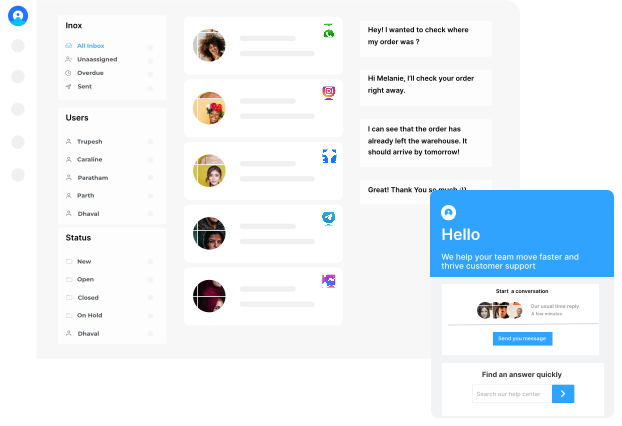
Whether it’s about acquire, engage or support – Omni24 covers all your customer engagement needs in one complete platform.

Copyright ©2026 Veemo All rights reserved.
CA, Los Angeles, Hall Ave, 19011