Top 10 Customer Experience Future Predictions for 2026
Unlock the customer experience future with personalized interactions, immersive tech and predictive strategies to connect meaningfully and thrive.

Unlock the customer experience future with personalized interactions, immersive tech and predictive strategies to connect meaningfully and thrive.
No matter which business owner or leadership professionals you ask, they all want to aim for one thing – better customer experience in the future! Companies that prioritize providing a seamless and personalized experience for their customers often see higher levels of satisfaction. But, as the landscape of customer experience continues to shift, it is important for businesses to stay ahead of the curve and anticipate future trends.
Businesses will need to adapt to the changing preferences of their customers in order to thrive and create positive customer experiences. Today, we will explore some customer experience future predictions and discuss how businesses can prepare themselves to meet the evolving expectations of their customers.
Customer experience is rapidly evolving along with advancements in technology and changing consumer behavior. As we move forward into the future, it’s important to understand what the predictions are for customer experience and what objectives companies should strive for to meet the expectations of their customers.
The importance of CX future lies in its potential to drive business success. As customer expectations continue to rise, companies that can anticipate and adapt to future CX trends will gain a significant competitive advantage. Improved CX leads to increased customer loyalty, higher retention rates along with greater profitability.
The future of customer experience is set to be more personalized, tech-driven and customer-centric than ever before.
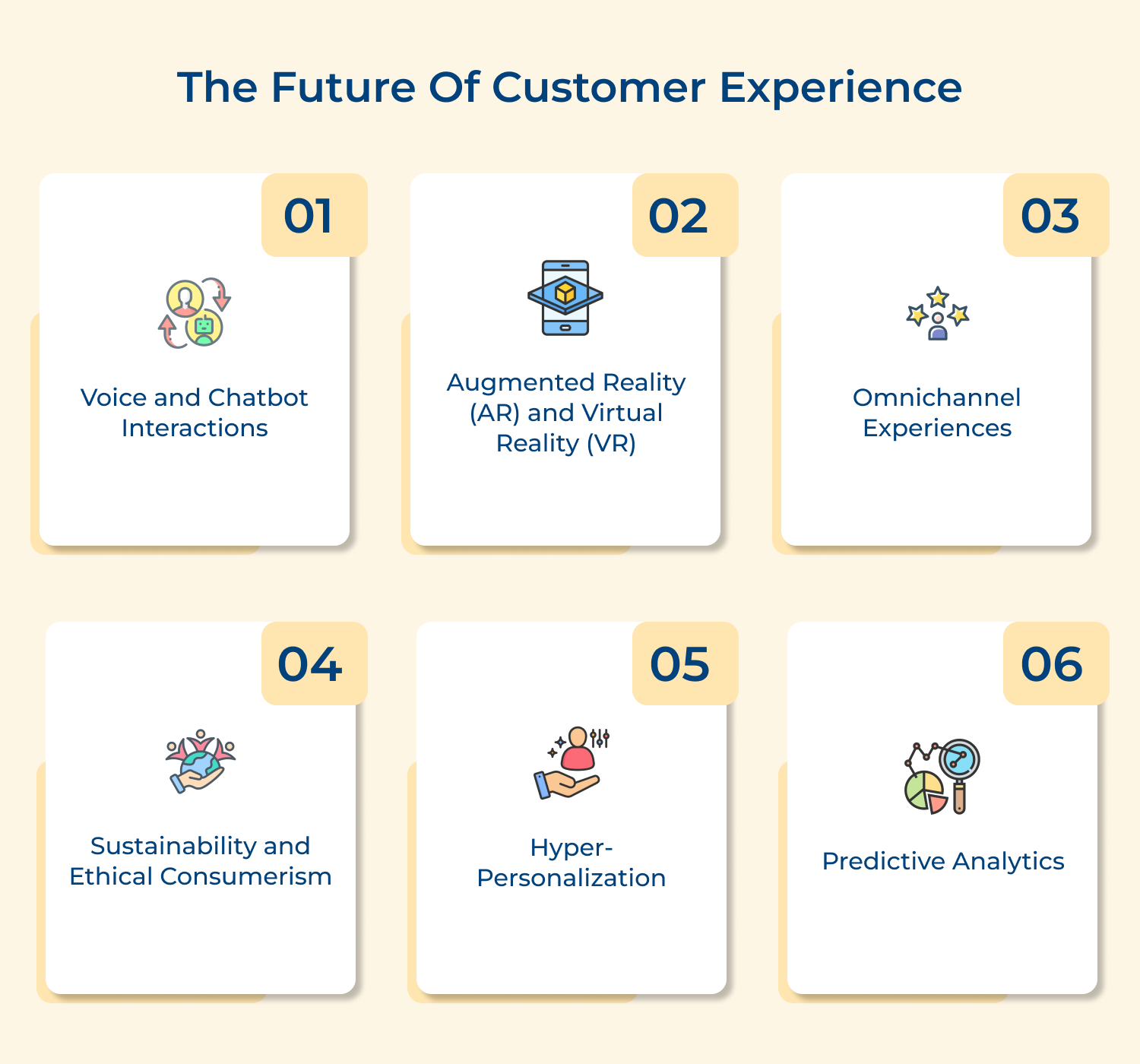
You’ve been showing interest in enhancing business’s digital customer experience but also want to learn the future trends to invest smartly?
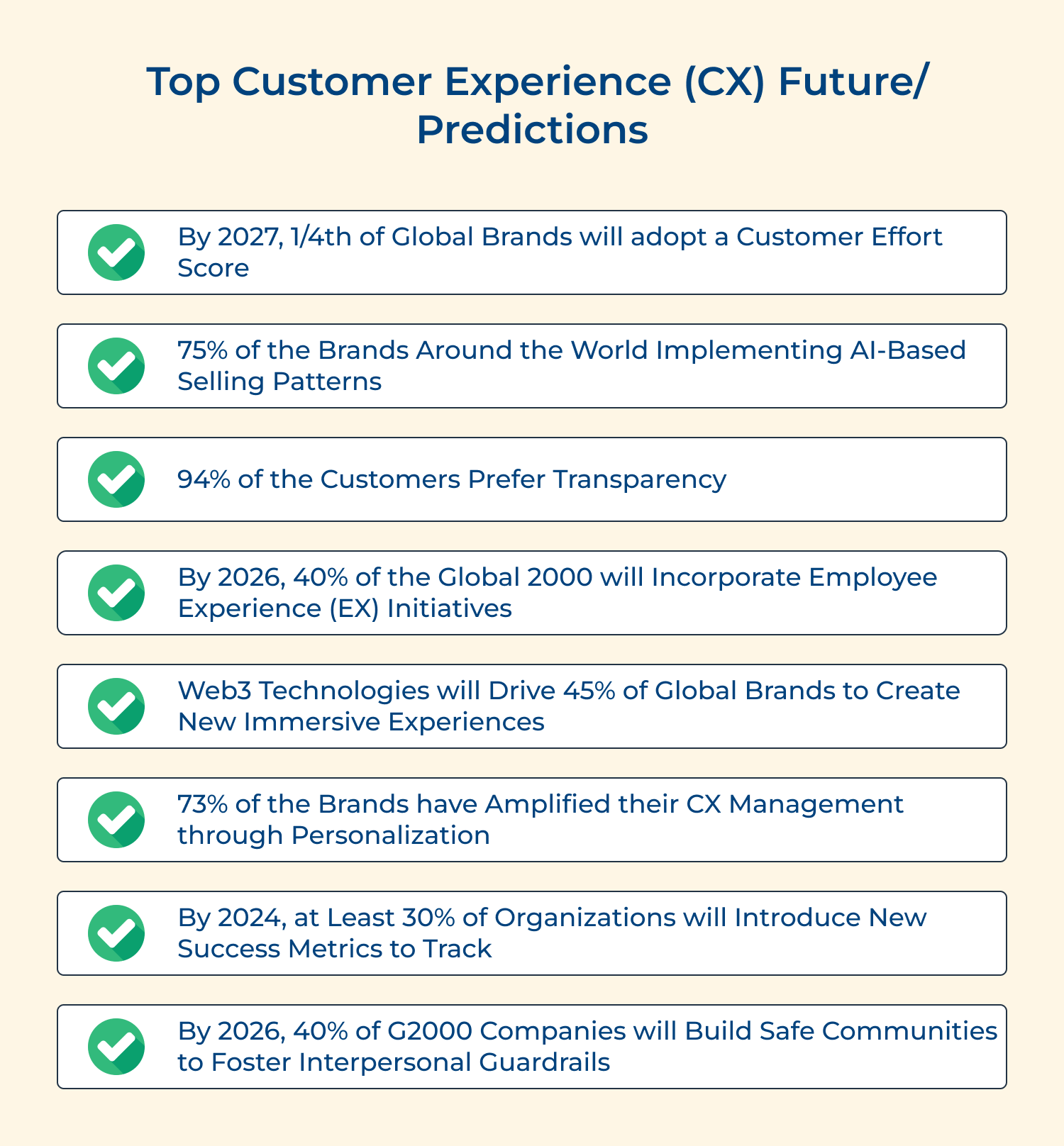
As technology continues to advance at a rapid pace, customer experience is expected to undergo significant changes by the year 2026.
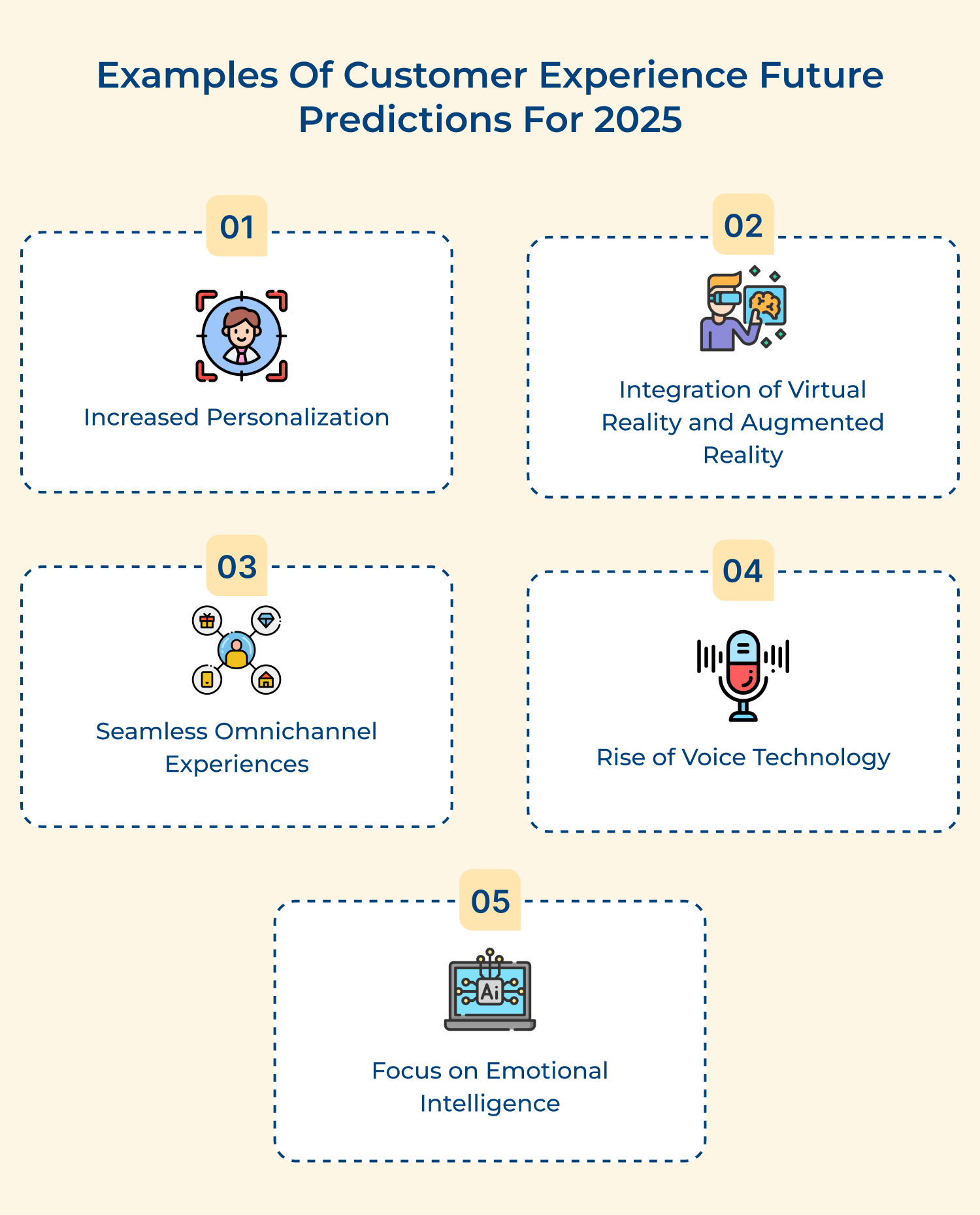
In 2026, personalization is expected to reach new heights. AI-driven algorithms will analyze vast amounts of customer data to create hyper-personalized experiences. Companies will leverage predictive analytics to anticipate customer needs and preferences, tailoring product recommendations, content, and offers in real-time.
The level of personalization will extend beyond digital interactions to in-store experiences, with smart devices and IoT sensors providing contextualized information to staff. The result will be a seamless, highly relevant customer journey that feels uniquely crafted for each individual, building stronger emotional connections and brand loyalty.
Virtual Reality (VR) and Augmented Reality (AR) are set to transform customer experiences in 2024. Retailers will offer immersive VR showrooms, allowing customers to explore products in lifelike 3D environments from the comfort of their homes. AR will enhance in-store experiences, providing interactive product information and visualizations through smartphone apps or smart glasses.
In the service industry, AR will facilitate remote assistance, with technicians guiding customers through repairs using overlaid instructions. These technologies will blur the lines between physical and digital realms, creating engaging, memorable experiences that drive customer satisfaction along with great sales.
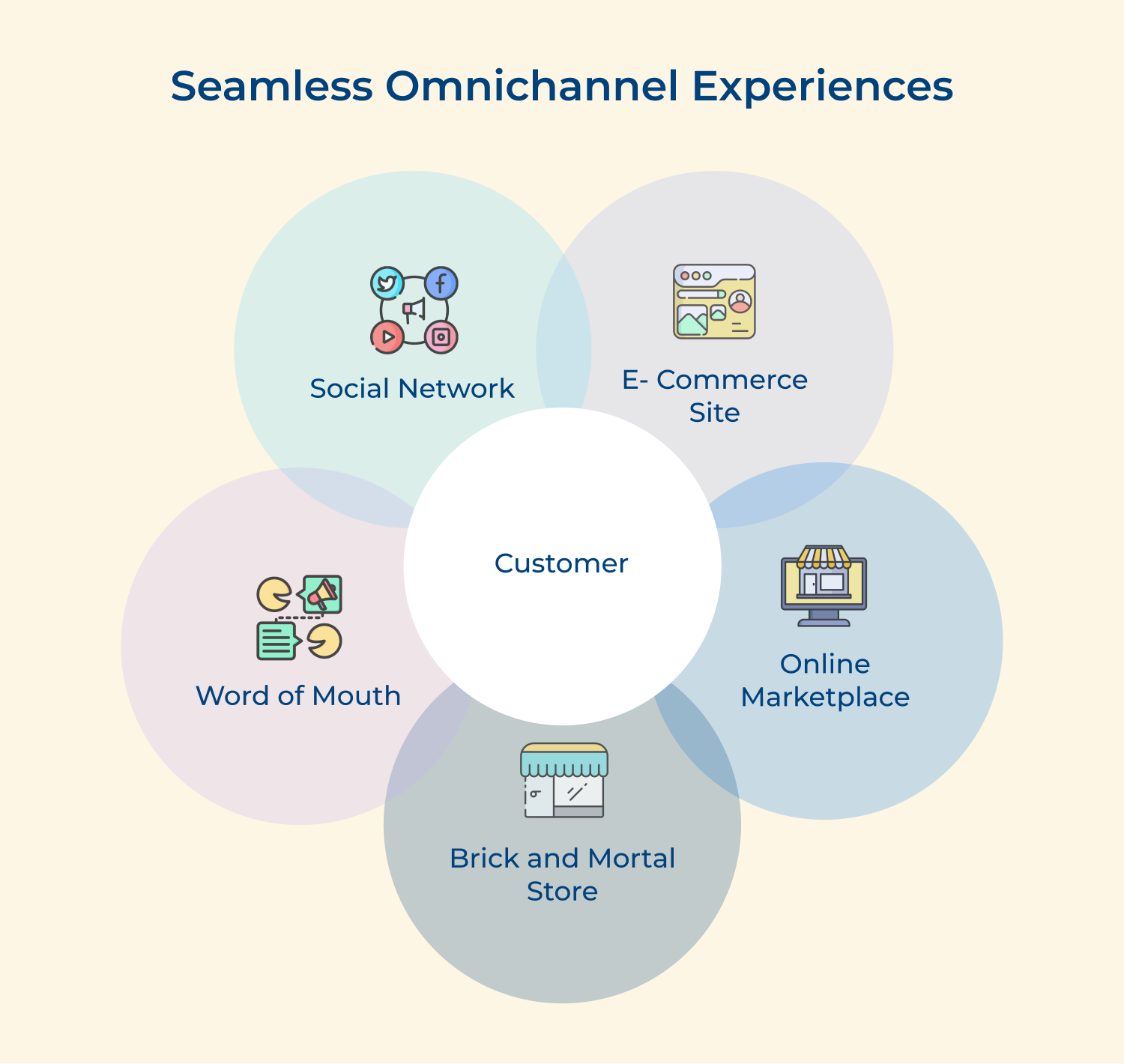
By 2026, the distinction between online and offline channels will become nearly invisible. Customers will expect a fluid experience as they move between devices and physical locations. Advanced data integration and AI will enable real-time synchronization of customer interactions across all touchpoints.
A conversation started on social media could seamlessly transition to an in-store visit, with staff having full context of the customer’s history and preferences. Mobile apps will integrate with in-store experiences, offering personalized navigation, instant product information, and contactless checkout options. This cohesive approach will eliminate friction points, creating a unified brand experience regardless of the channel.
Voice technology is predicted to play a central role in customer experience by 2026. Voice-activated assistants will become more sophisticated, handling complex queries and transactions across various devices. Customers will increasingly use voice commands to search for products, make purchases, and access customer support.
Companies will optimize their content and services for voice search, ensuring they remain discoverable in this new paradigm. Voice biometrics will enhance security and personalization, allowing for seamless authentication along with tailored responses. This shift towards voice interaction will make customer experiences more natural, accessible, and convenient, particularly for hands-free scenarios.
In the age of automation and artificial intelligence, businesses will need to focus on building emotional connections with their customers. Customer experience professionals will need to have a high level of emotional intelligence to understand and cater to the emotional needs of customers. It might involve empathy, active listening and genuine interactions that go beyond transactional relationships.
Overall, the customer experience landscape is expected to undergo significant changes in 2026, driven by advances in technology and changing customer expectations. Businesses that are able to adapt as well as innovate in response to these changes will be well-positioned to succeed in the future.
The future of customer experience is an exciting and ever-evolving landscape that will continue to shape the way businesses interact with their customers. As technology advances, we can expect to see more personalized and tailored experiences for consumers, as companies leverage data as well as artificial intelligence to better understand their customers.
In conclusion, the future of customer experience is bright and offers endless opportunities for businesses to connect with their customers in innovative and meaningful ways. By staying ahead of trends, embracing new technologies and prioritizing customer satisfaction, companies can ensure they are well-positioned for success in the rapidly evolving world of customer experience.

How can we improve customer experience in 2026?
In 2026, improving customer experience will be more important than ever. To enhance customer experience, businesses should focus on personalization, automation and omnichannel strategies. Personalization involves tailoring the customer experience to meet individual needs and preferences. Automation can help streamline processes as well as deliver timely and relevant communications. Omnichannel strategies ensure a seamless experience across all touchpoints, from online channels to brick-and-mortar stores.
What is the future of customer experience?
The future of customer experience is expected to be driven by technology and data. Artificial intelligence (AI) and machine learning will play a significant role in optimizing customer interactions while also predicting customer behavior. Virtual and augmented reality (VR/AR) will offer new ways to engage with customers as well as provide immersive experiences. Data analytics will enable businesses to better understand their customers and anticipate their needs.
Why is Customer Experience Future/ Predictions important?
Customer experience is a key differentiator for businesses in today’s competitive marketplace. Anticipating the future of customer experience enables businesses to stay ahead of the competition, attract & retain customers and drive revenue growth. Predictions about the future of customer experience can help businesses make informed decisions as well as investments in technology, processes and strategies that will deliver exceptional customer experiences.
Predictions About the Future of Customer Experience?
In the future, customer experiences will be highly personalized with businesses leveraging data as well as AI to deliver tailored products, services and communications to individual customers. Voice assistants and chatbots will become more prevalent in customer interactions, offering a convenient way for customers to engage with businesses. As consumers become more socially and environmentally conscious, businesses will need to prioritize sustainability along with ethical practices in their customer experience strategies to build trust.
 https://omni24.io/wp-content/uploads/2026/08/Omnichannel-Chatbots.png
1256
2400
Tushar Joshi
https://omni24.io/wp-content/uploads/2023/04/Omni-Logo-1.svg
Tushar Joshi2026-08-13 04:43:302026-08-24 09:02:01How Omnichannel Chatbots Improve Your Customer Experience
https://omni24.io/wp-content/uploads/2026/08/Omnichannel-Chatbots.png
1256
2400
Tushar Joshi
https://omni24.io/wp-content/uploads/2023/04/Omni-Logo-1.svg
Tushar Joshi2026-08-13 04:43:302026-08-24 09:02:01How Omnichannel Chatbots Improve Your Customer Experience https://omni24.io/wp-content/uploads/2026/08/Ecommerce-Chatbots-1.png
1256
2400
Tushar Joshi
https://omni24.io/wp-content/uploads/2023/04/Omni-Logo-1.svg
Tushar Joshi2026-08-12 03:57:552026-08-24 09:03:22Ecommerce Chatbots: What are They and Their Use Cases
https://omni24.io/wp-content/uploads/2026/08/Ecommerce-Chatbots-1.png
1256
2400
Tushar Joshi
https://omni24.io/wp-content/uploads/2023/04/Omni-Logo-1.svg
Tushar Joshi2026-08-12 03:57:552026-08-24 09:03:22Ecommerce Chatbots: What are They and Their Use Cases https://omni24.io/wp-content/uploads/2026/08/Omnichannel-Ecommerce.png
1256
2400
Tushar Joshi
https://omni24.io/wp-content/uploads/2023/04/Omni-Logo-1.svg
Tushar Joshi2026-08-11 04:50:362026-08-24 09:00:45How to Create an Omnichannel Ecommerce Strategy: 7 Best Ways
https://omni24.io/wp-content/uploads/2026/08/Omnichannel-Ecommerce.png
1256
2400
Tushar Joshi
https://omni24.io/wp-content/uploads/2023/04/Omni-Logo-1.svg
Tushar Joshi2026-08-11 04:50:362026-08-24 09:00:45How to Create an Omnichannel Ecommerce Strategy: 7 Best Ways
Whether it’s about acquire, engage or support – Omni24 covers all your customer engagement needs in one complete platform.

Copyright ©2026 Veemo All rights reserved.
CA, Los Angeles, Hall Ave, 19011