How to Build a Successful Help Desk Strategy: 11 Key Steps
Unlock efficient customer support with Omni24's help desk strategy. Elevate your customer support with a well-designed Support desk strategy tailored to your organization's needs.

Unlock efficient customer support with Omni24's help desk strategy. Elevate your customer support with a well-designed Support desk strategy tailored to your organization's needs.
Are you tired of inefficient and frustrating help desk experiences? Do you find yourself waiting for hours on end for a simple solution to your problem? If so, it’s time to rethink your help desk strategy.
71% of customers expect to receive assistance within five minutes of contacting a help desk, highlighting the need for an effective and responsive support system. A well-designed help desk strategy such as Omni24 can enhance customer satisfaction, improve productivity, and ultimately contribute to the growth of any organization.
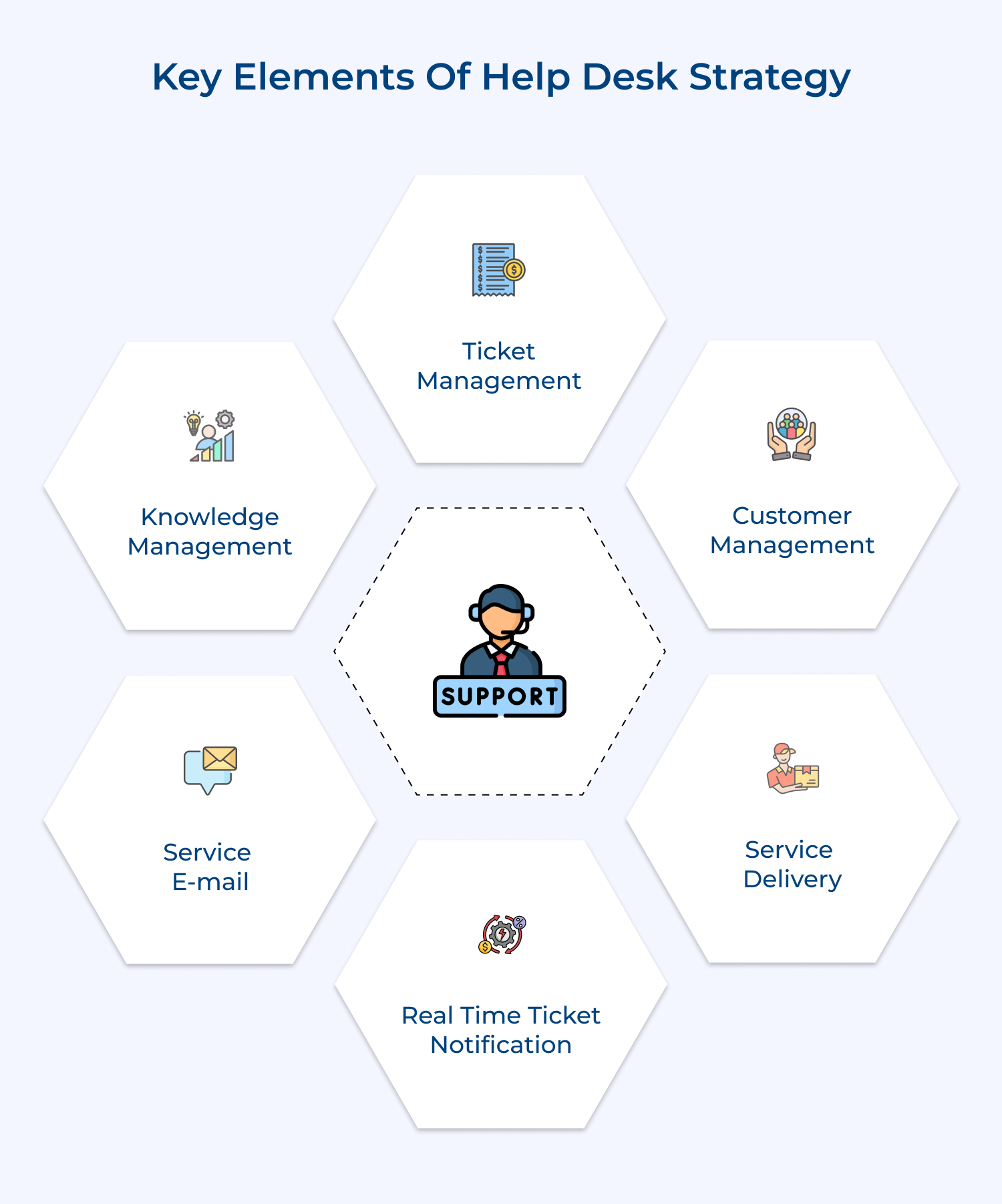
A help desk strategy is a plan of action designed to provide customer service and technical support to end-users within an organization. It is a set of guidelines that outlines the processes, tools, and resources needed to ensure that customers get the help they need in a timely manner.
The strategy should be designed to provide an efficient and effective way of resolving customer issues. It should be tailored to the organization’s needs as well as provide a consistent customer experience. The help desk strategy will ensure that customers get the help they need, when they need it by utilizing the latest technologies and providing customer feedback.
Key Objectives:
Implementing a well-thought-out help desk strategy is a transformative business decision. Join us as we explore the top five benefits of developing and integrating a help desk strategy.
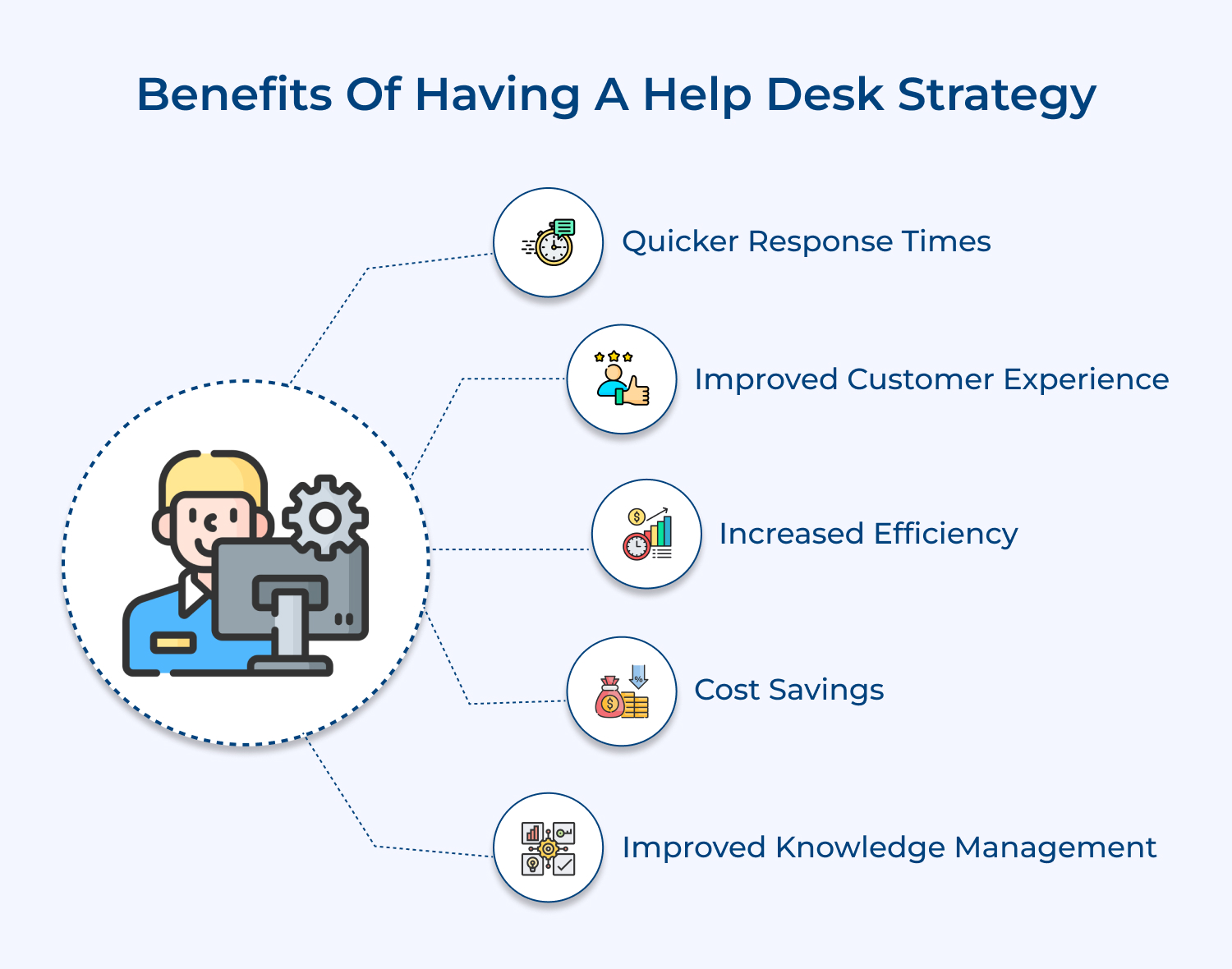
Having a help desk strategy ensures that customers receive a quicker response to their queries. It helps to reduce customer frustration and makes customers feel valued. Customers can now expect to receive a prompt response to their inquiries.
A help desk strategy can help to improve the customer experience. The overall customer experience can be improved by providing customers with a quick response to their queries. It leads to increased customer satisfaction and loyalty.
Having a help desk strategy increases efficiency. Businesses can provide customers with a quicker response time by automating processes. It reduces wait times and improves customer satisfaction.
A help desk strategy saves businesses money. Businesses can reduce the amount of time spent manually responding to customer queries by automating processes. This can help to lower costs and improve customer satisfaction.
Businesses ensure that customer queries are addressed quickly and efficiently by automating processes. The process reduces the amount of time spent manually responding to customer queries.
Setting up a successful, omnichannel help desk strategy is important for any business wanting to offer great customer service. Here are the key steps that every business should consider when it comes to building a successful help desk strategy:
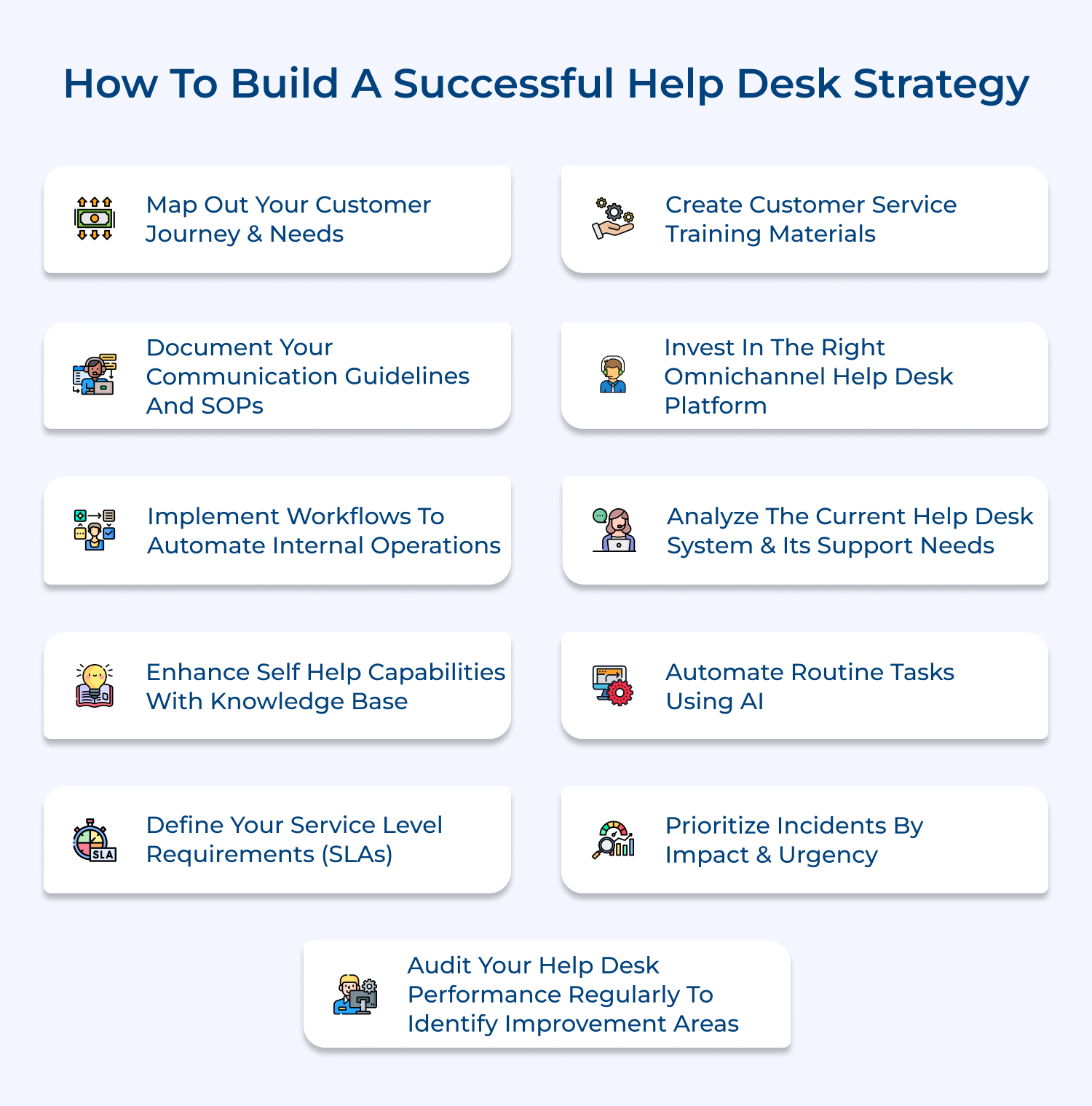
Starting with customer needs and mapping out all the steps of the customer journey, is essential when building a successful help desk strategy. It enables institutions to identify areas for improvement and optimization by comprehending customer demands, service goals, identifying gaps in service delivery, business processes, activities as well as data flows.
An established process for providing customer support can create more consistent experiences delivered at all touchpoints and transform their service capability. This helps companies to gain insight into how customers are interacting with their products or agents and what changes need to be made to enhance the overall value provided.
Robust help desk strategies build on customers’ feedback and other internal analytics which in return provides organizations with better understanding of the customer needs.
Pro tips:
Standardizing communication procedures with customers is essential if your business wants to provide a consistently high level of service quality. When creating your help desk strategy, document communication protocols and best practices when interacting with customers.
The standard operating procedures should cover both written communications like emails and live chats as well as telephone calls or video conferencing. Having these guidelines in place ensures that all customer interactions adhere to the same standards, streamlines approaches between staff members and helps maintain consistency.
Pro tips:
A workflow engine enables companies to automate internal processes such as assigning tasks, approving tickets, escalating issues, setting up reminders for follow-up tasks, billing clients for services rendered etc. Automation saves time on mundane tasks that are essential for effective help desk functioning such as logging client requests in databases.
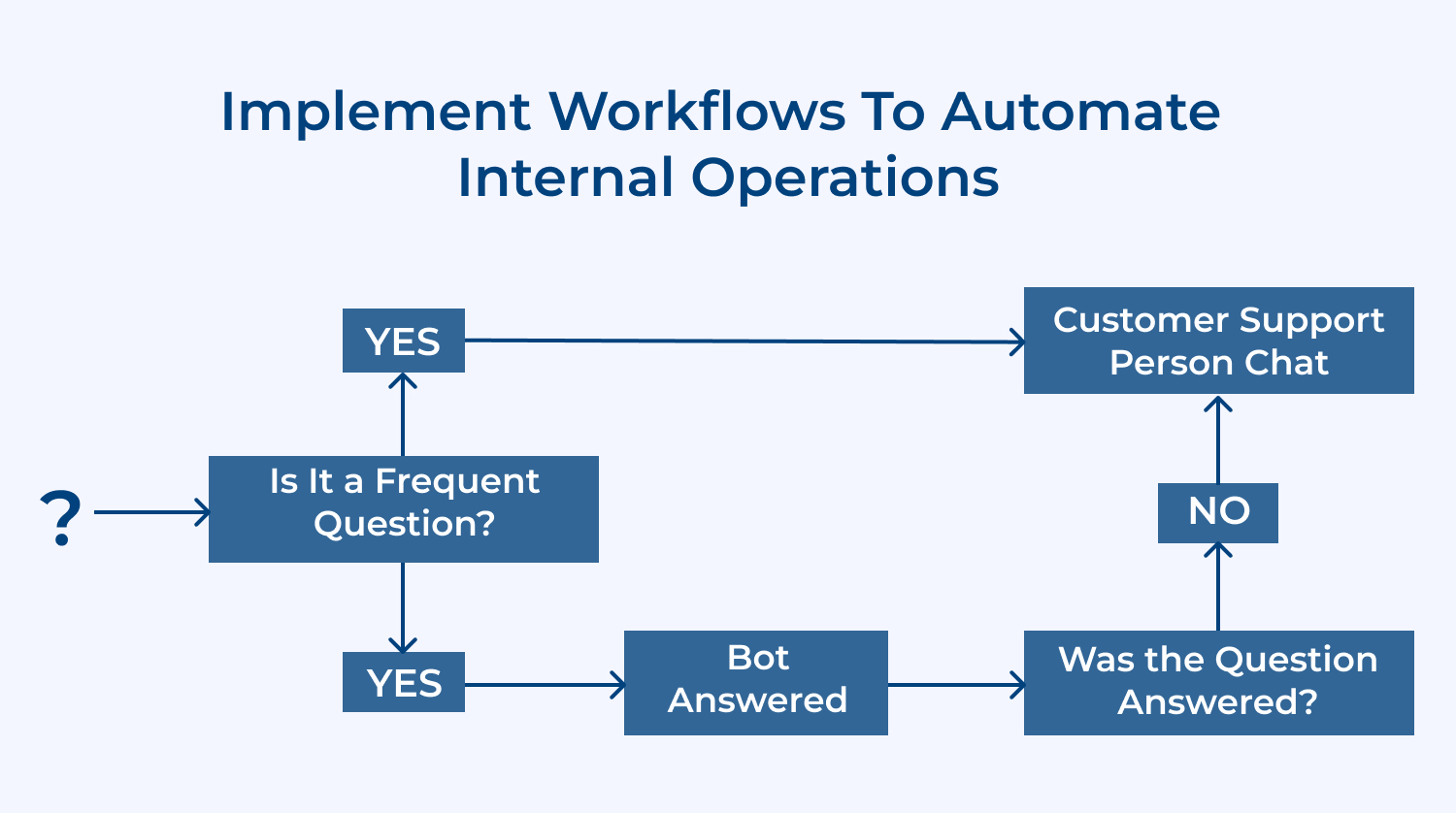
Automated workflows also provide other benefits such as reducing the risks of manual errors in data entry processes that would otherwise be carried out by humans. It increases transparency because notifications about changes or progress related to tickets can be sent automatically to everyone involved, reducing human error even further.
Pro tips:
Creating a knowledge base can be dynamic in streamlining the entire help ticket process from start to finish. A knowledge base serves as the hub of all information regarding common queries and issues that customers often face. The database allows your team members access to past resolutions as well as current support offerings, permitting them to better serve customers in real time without having to go through any extra steps.
Customers also prefer knowledge based solutions rather than any of the self-service portals. Incorporating help desk analytics into your self-help capabilities will track usage data so you can update your knowledge base with more accurate information over time.
Best practice:
SLAs set out what the customer expects from your service and provide metrics that measure the performance of those expectations. The metrics can include response time, resolution rate, turnaround time, accuracy and more. You create a system that consistently meets customer needs with an efficient approach to resource allocation as well as cost control.
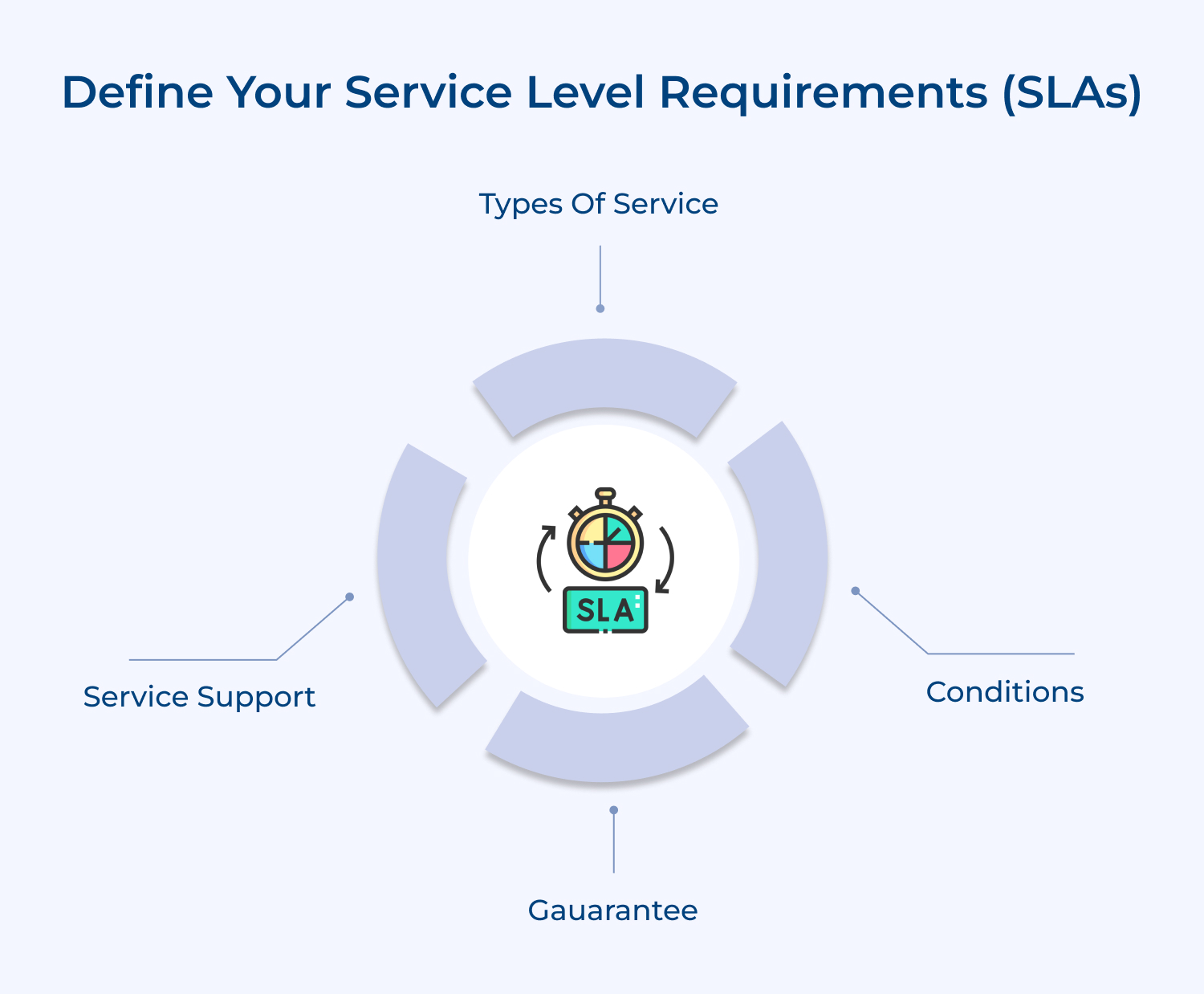
Setting well-defined SLAs for your help desk team also enables you to be legally protected as you’re creating a standard defined by measurable services provided in good faith. Benefits in creating tiers and product offers allow customers to purchase only what they actually need or desire.
Best practices:
A well thought out help desk approach provides customers with the information they need to get their inquiries answered quickly and effectively. Customer service training materials should include important topics such as how to use the help desk system efficiently, dealing with customer complaints, responding promptly and professionally to customer emails, handling difficult conversations, as well as understanding technical jargon.
Organizations can create a more efficient service desk strategy that leads to improved customer satisfaction by providing staff with training on best practices for helping customers and knowledge of relevant industry standards.
How to implement?
The key to delivering great customer service is having comprehensive omnichannel help desk software. An omnichannel platform combines the different channels of communication into one interface while offering additional features such as automated responses, reporting capabilities and analytics on team performance.
Whatever platform you decide to invest in should be able to integrate with all existing channels you’re using, providing integrated usage stats and seamless transitions between conversations across different channels. Rolling out a dedicated help desk solution within your organization you can ensure high levels of customer satisfaction without neglecting internal operations or financial objectives.
Pro tips:
The first step of building a successful help desk strategy is assessing the current state of your help desk system. You will gain insight into areas needing improvement in order to provide better customer service with less time and effort by analyzing your current system.
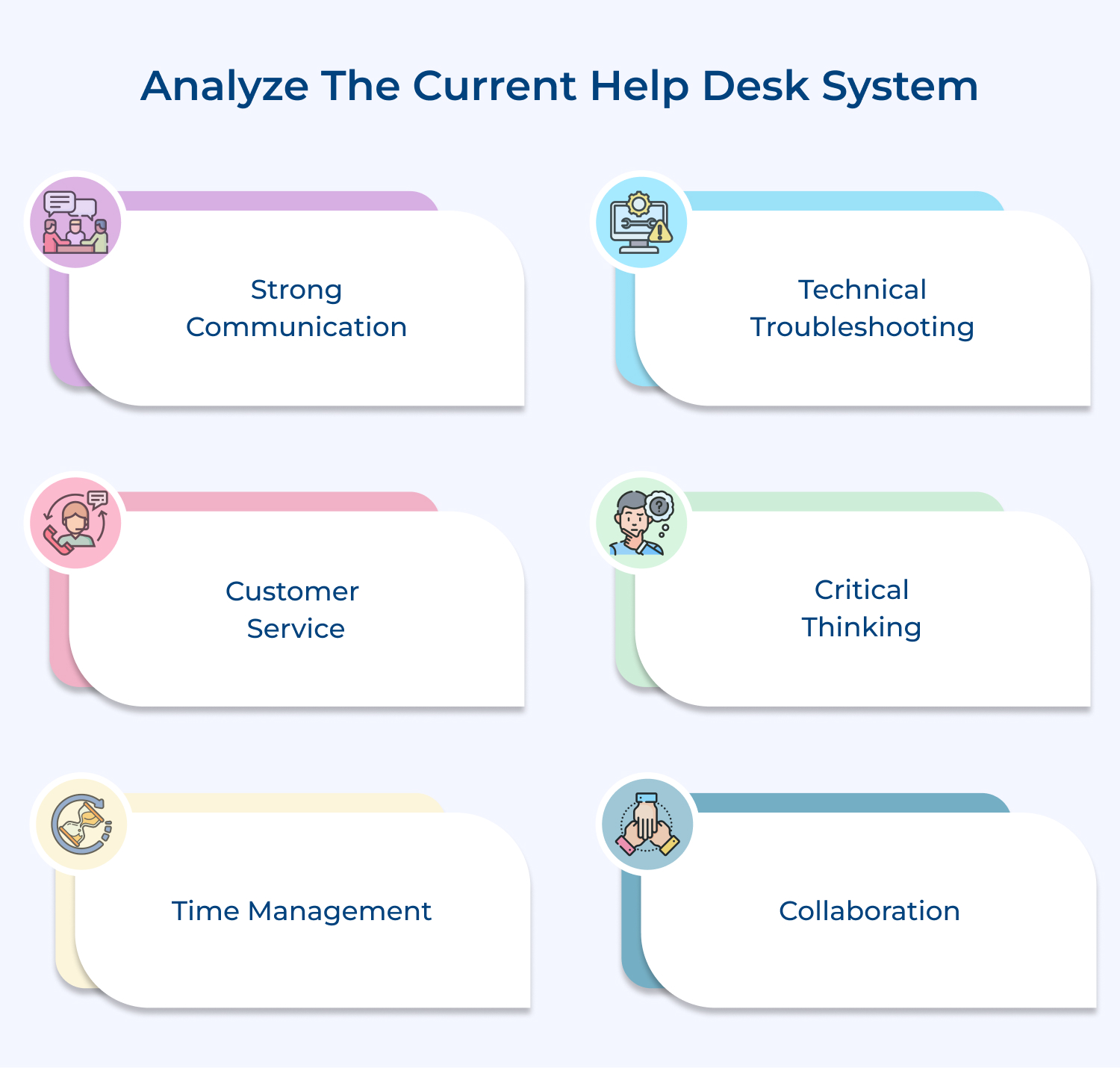
Take note of common challenges you are facing such as technical problems, customer inquiries, or resource constraints. Once you’ve identified problem areas you can use this information to enact changes which will improve efficiency while also better addressing customer need satisfaction.
Pro tips:
In order to take your existing help desk strategy even further, consider automating some processes using artificial intelligence (AI). Automation can make mundane tasks such as formatting tickets or responding to frequently asked questions more efficient by eliminating manual data entry.
AI software can also be used in tandem with other automation tools like chatbots, allowing customers to initiate conversations without having to contact agents directly. Chatbots are great for boosting response times which in turn can lead to quicker resolution rates and overall better customer experience.
How to implement?
When developing your help desk strategy, one of the most important elements is setting up an incident prioritization system based on impact and urgency. It allows you to prioritize incidents according to their severity or risk.
You must identify what criteria should be used when assessing the impact and urgency of each request, such as customer complaints being more urgent than planned maintenance, or requests related to finance carrying higher importance than other requests. Prioritizing incidents in this way allows you to better manage larger issues and allocate resources appropriately for potential problems.
Best practices:
78% of the customers have backed out of a purchase due to bad customer experience. So, just setting up rectification models is not enough. Once you’ve established the necessary technology for your staff members and customers, you should conduct regular audits of your How Desk performance to identify areas for improvement.
The audits should look at key metrics such as response times and customer satisfaction levels, as well as what percentage of incoming tickets are being addressed quickly or need further investigation or escalation up the chain of command before resolution is achieved. You’ll be better equipped to determine how you can make improvements in order to deliver more efficient customer service across multiple channels.
Pro tips:
A service desk acts as a single point of contact for customers and employees to seek assistance, or receive information. These are the four essential components that a help desk should have:
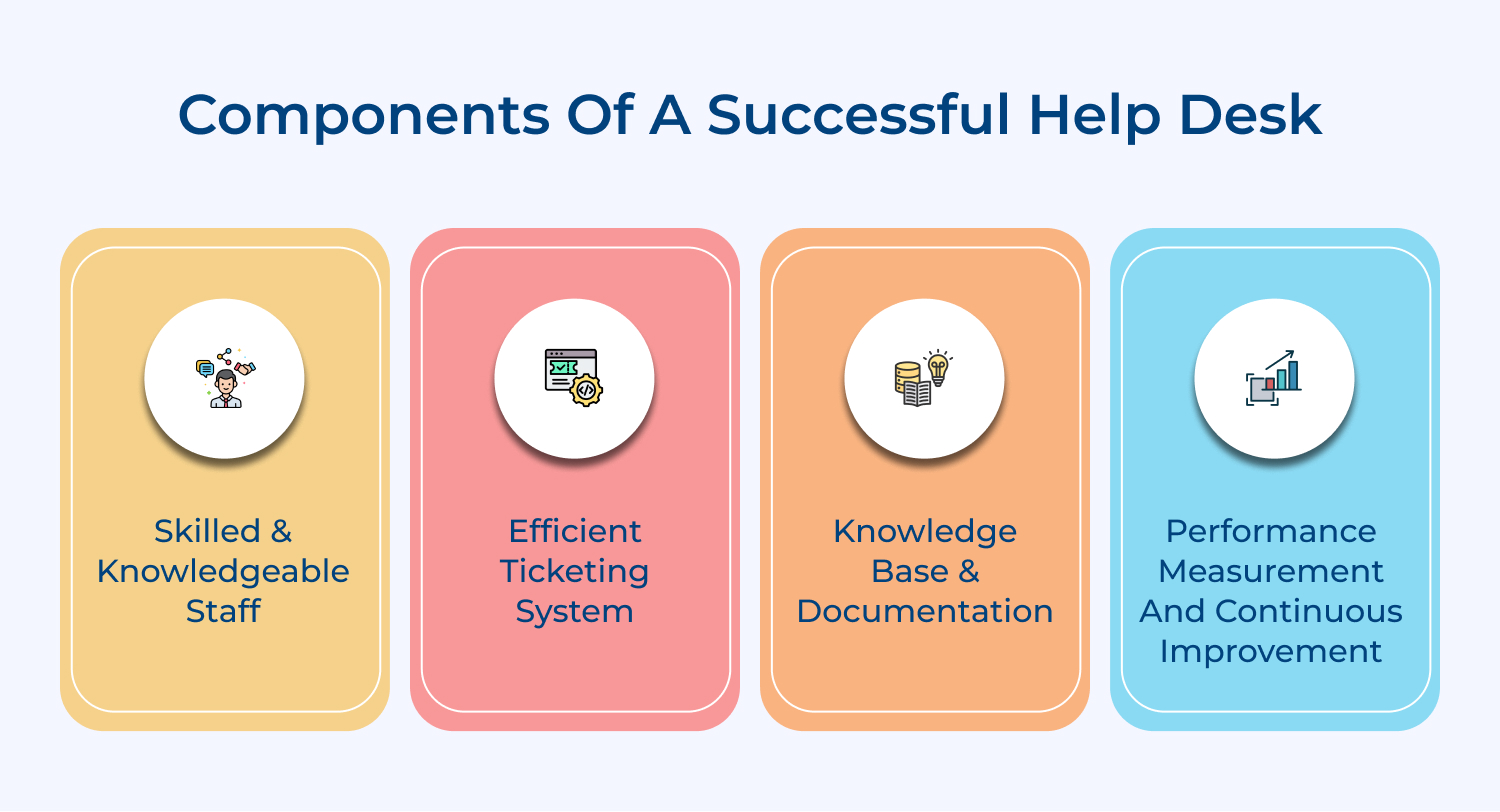
The first and foremost component of a successful service desk is a team of skilled as well as knowledgeable staff. These employees should have a deep understanding of the products or services provided by the organization. They should also possess excellent communication and problem-solving skills to effectively address customer queries as well as resolve any issues they may encounter. Ongoing training and development programs should be implemented to keep the staff updated with the latest technologies including industry trends.
A ticketing system allows service desk agents to track, prioritize and assign tickets to appropriate team members. It also enables customers to receive regular updates on the status of their requests. An efficient ticketing system helps streamline workflows, minimize response times and ensure that no customer query or issue falls through the cracks.
A comprehensive knowledge base and documentation is essential for a successful service desk. The resource should contain detailed information about commonly encountered issues, troubleshooting guides and frequently asked questions. Service desk agents can reduce the workload as well as handle more complex queries by providing self-help options to customers. Regularly updating along with expanding the knowledge base based on customer feedback and evolving needs is crucial to maintain its effectiveness.
Regularly measuring and analyzing key performance indicators (KPIs) helps identify areas of improvement as well as monitor the efficiency of the service desk. KPIs could include metrics such as average response time, first-call resolution rate, customer satisfaction scores and ticket backlog. Service desk managers can identify trends, implement necessary changes, as well as enhance the overall quality of customer support by regularly reviewing these metrics.
70% of the customer’s journey is based on how they feel they are being treated. While planning for help desk strategy, consider the challenges and how you should overcome them:
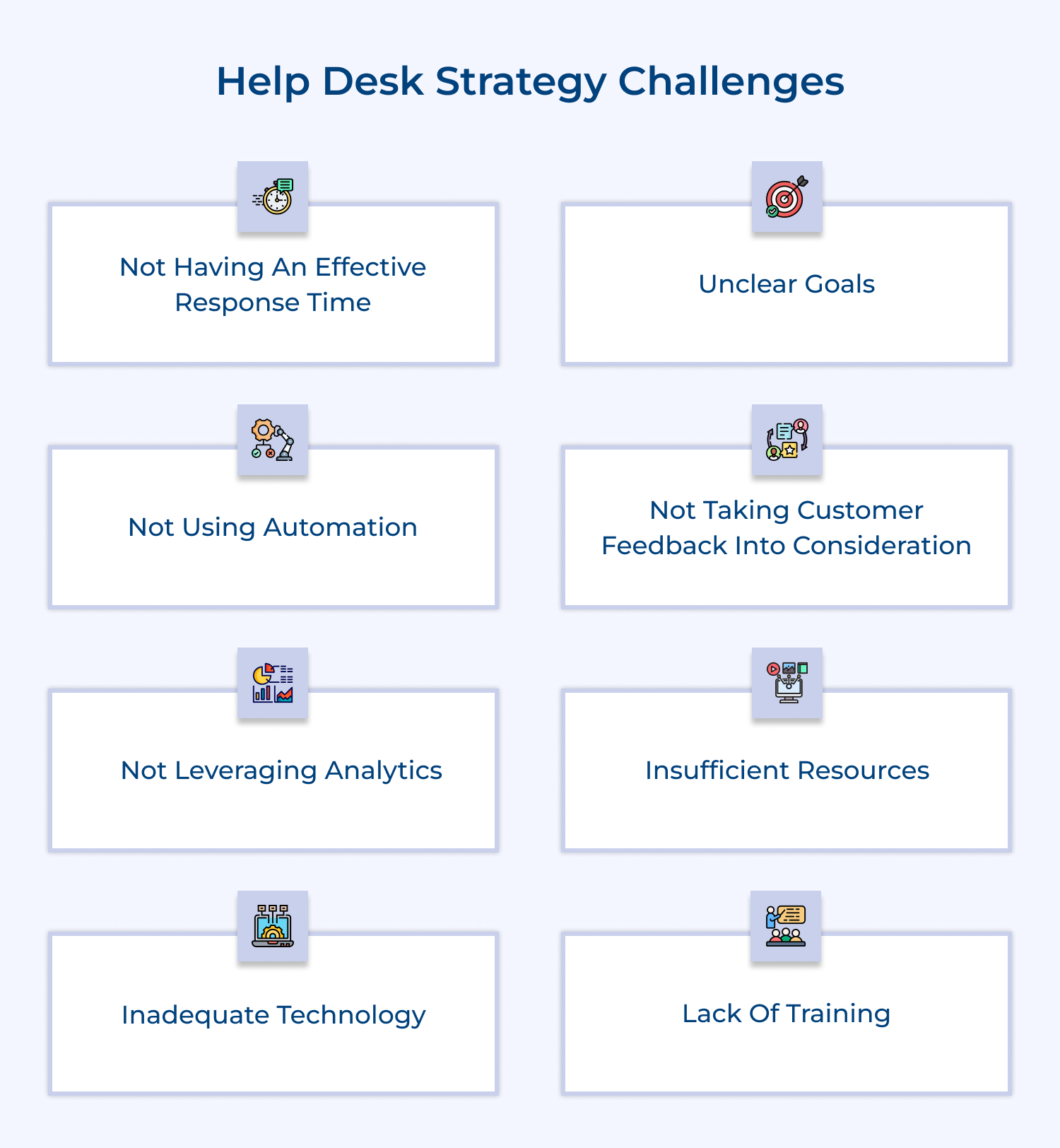
Most of the time organizations face trouble responding to queries because of either a sudden influx of incoming tickets or reduced human resource. A help desk strategy should ensure that customer queries are answered in an appropriate amount of time. This should include a system for monitoring response times and setting an appropriate goal.
Setting an objective before you chart a plan is always necessary when it comes to creating an effective help desk strategy. Without clear goals or objectives, it can be difficult to make decisions and measure success. Solutions include defining success metrics, establishing key performance indicators, as well as setting measurable goals.
Of course, having a representative take care of the tickets adds the human touch to the conversation but one person can only do limited work. Automation can be a great tool for improving accuracy. Automation tools can be used to respond to common customer inquiries, log customer requests, and provide updates.
Not listening to what a customer has to say is like walking around blindfolded, you don’t know where you’re heading! Customer feedback can be a great source of insights on areas that need improvement. Utilizing customer feedback can help to ensure the help desk is providing the best possible experience.
Analytics can provide valuable insights on customer support operations, such as which products or services are causing the most support tickets, what types of issues are being reported, and which areas need more resources. Leveraging analytics improves the overall help desk strategy. Use analytics to forecast peak support times, allowing for resource allocation and strategic planning.
When you plan to build an effective CX strategy, you also need to include enough resources to sustain the team for quality time. Having limited resources can make it difficult to implement an effective help desk strategy. Solutions include optimizing existing resources, outsourcing, and leveraging technology.
We’re churning technological updates faster than ever! An outdated or inadequate technology makes it difficult to implement an effective help desk strategy. Solutions include investing in new technology, investing in cloud-based solutions, and leveraging automation.
Quality help desk service requires proper training. Solutions include providing ample training opportunities, developing comprehensive job descriptions, and utilizing online training programs. Foster a culture of knowledge-sharing within the team, encouraging experienced staff to mentor and train newer members for skill enhancement.
Help desk strategies are an important part of a successful CX strategy. Businesses can provide customers with a better experience, leading to increased customer loyalty and satisfaction by having a well-thought-out help desk strategy in place.
Businesses can ensure that their help desk strategy is effective and successful by avoiding common challenges such as poorly defined goals, lack of resources, unclear processes, insufficient training, as well as poorly monitored performance.
The customers have a better experience, which leads to increased customer satisfaction and loyalty. So, step up your CX with a right help desk strategy in place as well as take your business to the next level.

Why do companies need a help desk strategy?
A well-developed help desk strategy makes sure that customer concerns are addressed promptly and in a professional manner. It also helps to streamline internal processes, enhance customer satisfaction, as well as maintain a positive brand image. Companies can efficiently manage customer relationships and provide the necessary assistance to address any problems or concerns that may arise.
How can a help desk strategy be adapted to meet the changing needs of customers?
In order to meet the changing needs of customers, a help desk strategy can be adapted in several ways. First, it is important to stay up-to-date with the latest technology and digital platforms to ensure effective communication. Offer multiple channels for customer support, such as phone, email, and live chat, to allow customers to choose their preferred method. Training for help desk staff on customer service skills and problem-solving techniques enhance the overall customer experience.
How can you measure the effectiveness of your help desk strategy?
Monitor key metrics such as customer satisfaction ratings, response-resolution times, as well as ticket volume. Conduct surveys and gather feedback from customers to gauge their experience. Track the number of repeat tickets or escalations to identify areas for improvement. Analyzing these metrics will provide valuable insights and allow you to make data-driven decisions to enhance your help desk strategy.
How can I ensure a smooth transition to a new help desk strategy?
Communication is key during this period. Clearly communicate the changes to your team members and customers, providing training as well as support as necessary. Perform thorough testing while also gradually phasing in the new strategy to minimize any disruptions. Regularly monitor and evaluate the performance of the new system, making necessary adjustments along the way.
Are there any software tools that can support my help desk strategy?
Yes, there are numerous software tools available to support your help desk operations. Customer relationship management (CRM) systems, such as Omni24 or Veemo Support which provide comprehensive solutions for ticket management, customer communication, and knowledge base management. The tools help streamline operations, facilitate efficient collaboration, and enhance customer satisfaction by centralizing all help desk activities.
 https://omni24.io/wp-content/uploads/2026/07/Customer-Data-Platform.png
1256
2400
Tushar Joshi
https://omni24.io/wp-content/uploads/2023/04/Omni-Logo-1.svg
Tushar Joshi2026-07-08 03:58:592026-07-08 03:58:59How a Customer Data Platform Unlocks Unified Customer Insights
https://omni24.io/wp-content/uploads/2026/07/Customer-Data-Platform.png
1256
2400
Tushar Joshi
https://omni24.io/wp-content/uploads/2023/04/Omni-Logo-1.svg
Tushar Joshi2026-07-08 03:58:592026-07-08 03:58:59How a Customer Data Platform Unlocks Unified Customer Insights https://omni24.io/wp-content/uploads/2026/07/Unified-Customer-View.png
1256
2400
Tushar Joshi
https://omni24.io/wp-content/uploads/2023/04/Omni-Logo-1.svg
Tushar Joshi2026-07-07 03:37:342026-07-07 03:37:34How a Unified Customer View Transforms Customer Experience
https://omni24.io/wp-content/uploads/2026/07/Unified-Customer-View.png
1256
2400
Tushar Joshi
https://omni24.io/wp-content/uploads/2023/04/Omni-Logo-1.svg
Tushar Joshi2026-07-07 03:37:342026-07-07 03:37:34How a Unified Customer View Transforms Customer Experience https://omni24.io/wp-content/uploads/2026/06/Omnichannel-CRM.png
1256
2400
Tushar Joshi
https://omni24.io/wp-content/uploads/2023/04/Omni-Logo-1.svg
Tushar Joshi2026-07-06 03:49:012026-07-06 04:00:22How to Implement Omnichannel CRM Strategy: 7 Key Steps
https://omni24.io/wp-content/uploads/2026/06/Omnichannel-CRM.png
1256
2400
Tushar Joshi
https://omni24.io/wp-content/uploads/2023/04/Omni-Logo-1.svg
Tushar Joshi2026-07-06 03:49:012026-07-06 04:00:22How to Implement Omnichannel CRM Strategy: 7 Key Steps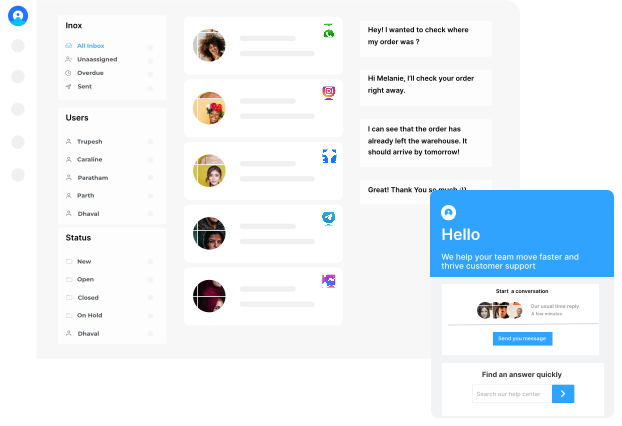
Whether it’s about acquire, engage or support – Omni24 covers all your customer engagement needs in one complete platform.

Copyright ©2026 Veemo All rights reserved.
CA, Los Angeles, Hall Ave, 19011