9 Best Shopify Customer Service Apps for AI Support
Leverage the best shopify customer service apps with AI support to help store owners manage and improve customer support with efficient, streamlined communication.


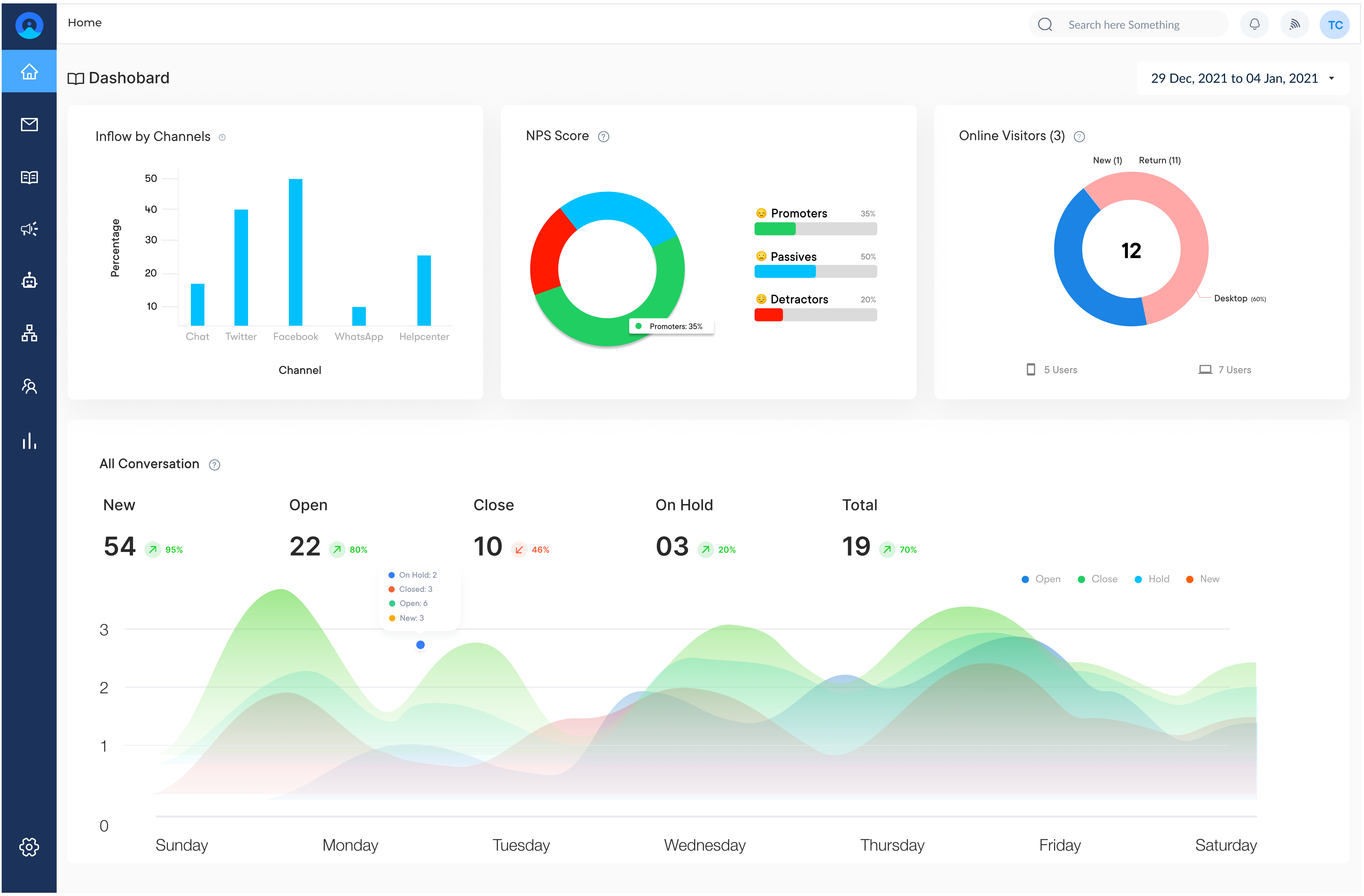
Leverage the best shopify customer service apps with AI support to help store owners manage and improve customer support with efficient, streamlined communication.
Implement a support ticket management system to efficiently organize, assign, and track every customer query, ensuring prompt responses while no message goes unnoticed.
Shopify customer service app stores all your customer queries in one centralized place, allowing you to respond to them promptly. Provide seamless customer support for improved customer satisfaction.
Communicate with your customers through various channels, such as live chat, email or phone, using Shopify customer support app. It allows your customers to choose from their preferred communication channel.
Enhance the customer support experience by offering self-service options. This way, your customers can independently find answers to common questions without contacting your customer support and waiting for a response.
Support your customers with chatbot automotion to make their buying journey seamless. Deliver instant assistance to their queries to help them make purchase decisions faster and provide an exceptional experience.
Missed queries, delayed responses and scattered support tickets are killing Shopify store revenue. Shopify customer service apps that integrate directly with your store to centralize communication and automate workflows to manage customer inquiries across channels.
Poor support costs e-commerce businesses annually in lost customers. Explore the nine best SCSAs by comparing features, pricing, automation capabilities and omnichannel support to help find the right choice. The right Shopify customer service app makes the difference even if you’re scaling fast.
Shopify is a popular e-commerce platform that allows businesses to create and manage their online stores. It also offers a wide range of third-party app integrations to enhance the user experience and streamline various business processes. One such category of apps is Shopify customer service Apps, which are designed to improve customer support and engagement.
Shopify customer support Apps are third-party applications that integrate with your Shopify store, providing features and tools to help you deliver exceptional customer service. These work by connecting to shopify store’s data as well as functionality, allowing you to manage customer queries and provide personalized support directly from within the app.
One way to streamline and enhance your customer support efforts is by utilizing Shopify customer support apps. Here’s why you should use these apps,
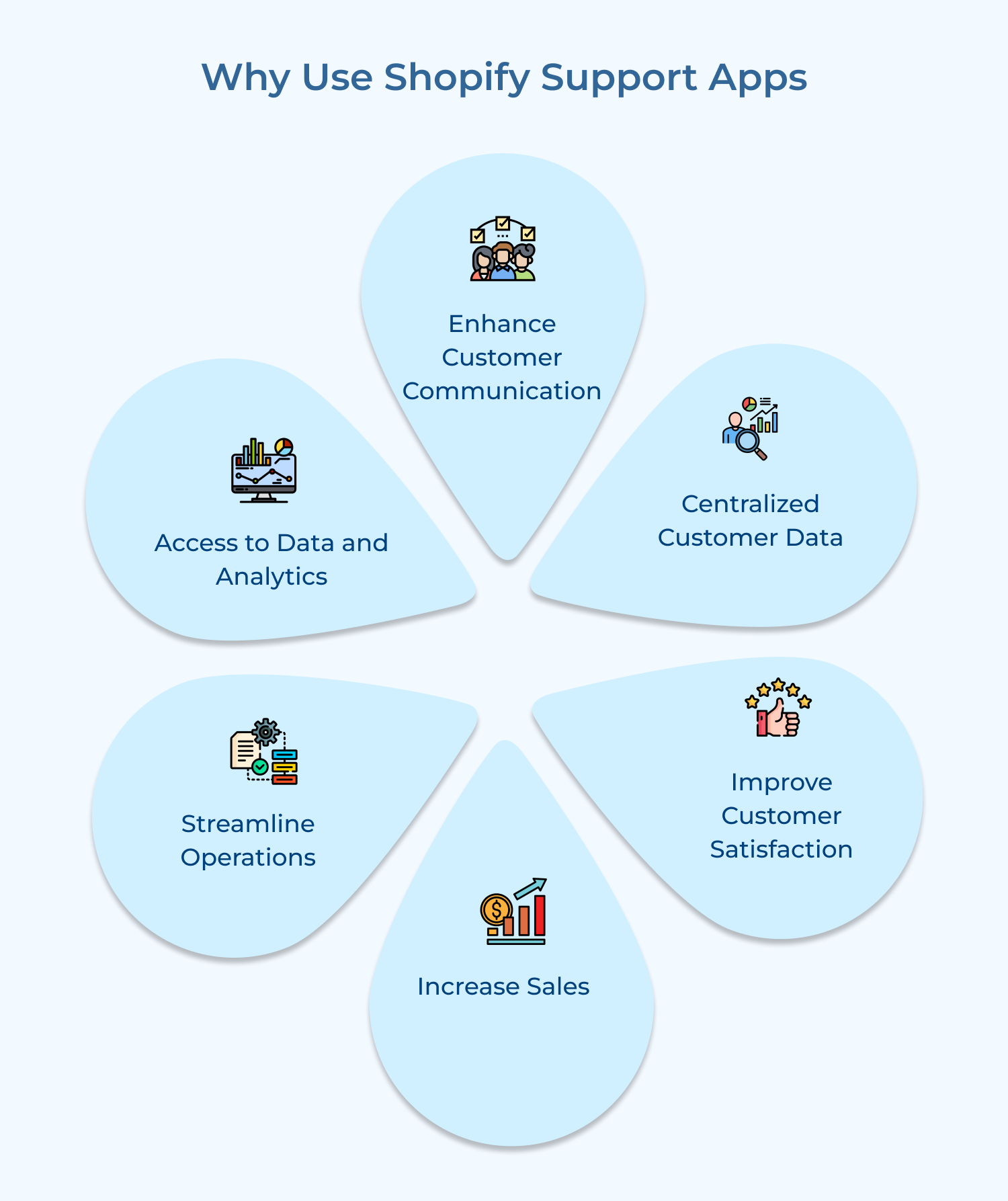
Shopify is a popular e-commerce platform that allows businesses to create and manage their online store.
Excellent customer service platform for shopify stores
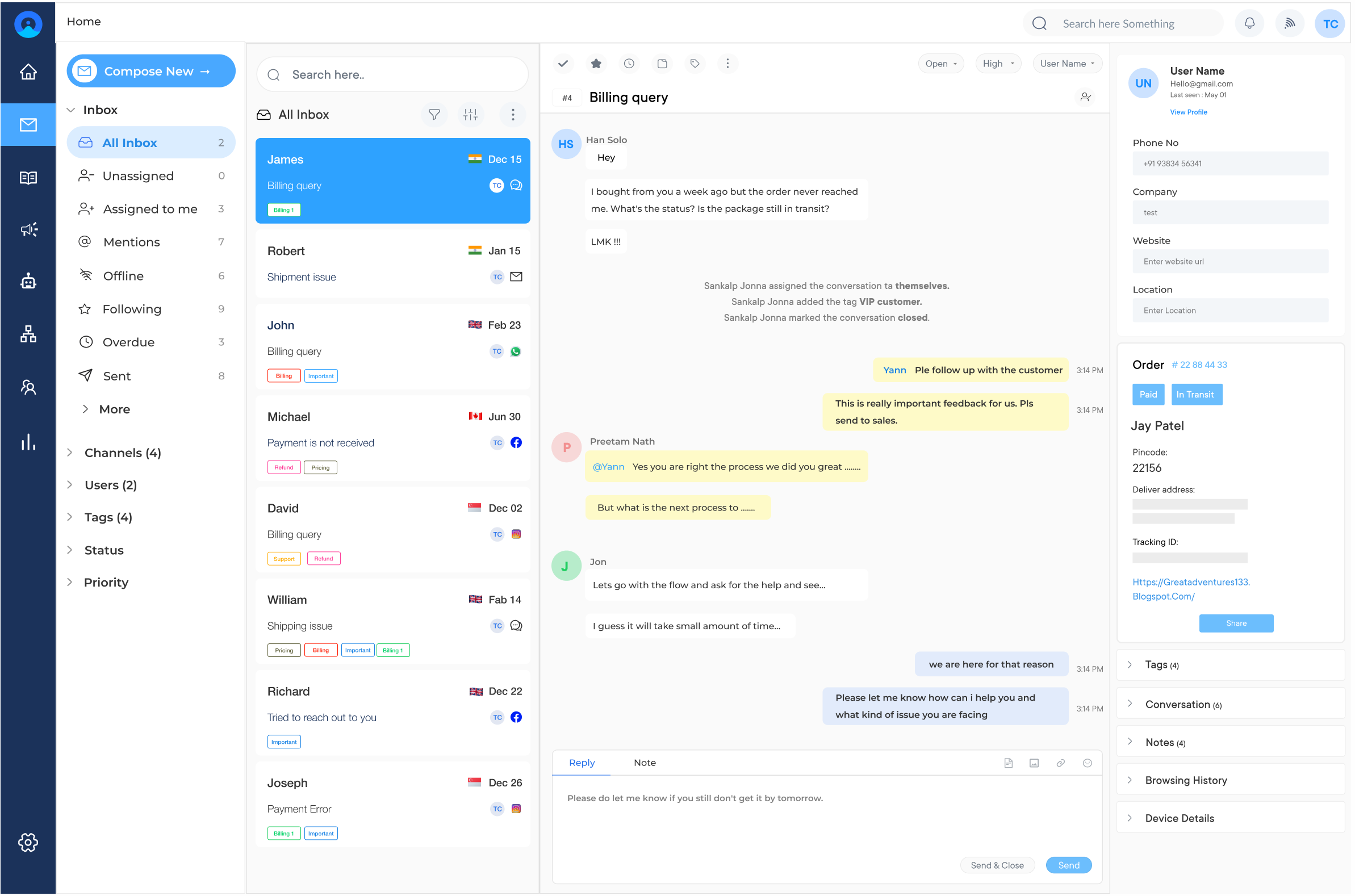
Omni24 is an AI-powered omnichannel customer engagement platform that unifies support, sales and marketing in one suite. All customer data lives in one centralized place, so every conversation is backed by the same complete context. The single source of data with AI and automation across the entire customer journey lets teams act on real conversations.
What makes Omni24 valuable for Shopify sellers is it turns scattered customer touchpoints into one connected workflow. Support agents can view order history, past conversations and purchase behavior directly within the chat, letting them resolve issues faster while spotting upsell opportunities.
Key features:
Pricing: Omni24’s pricing starts from $29/user/month and goes up to $149/user/month based on the features and add-ons. All plans come with 14 days free trial and include a shared inbox, known base base and omnichannel support.
Cloud-based customer engagement platform for all businesses
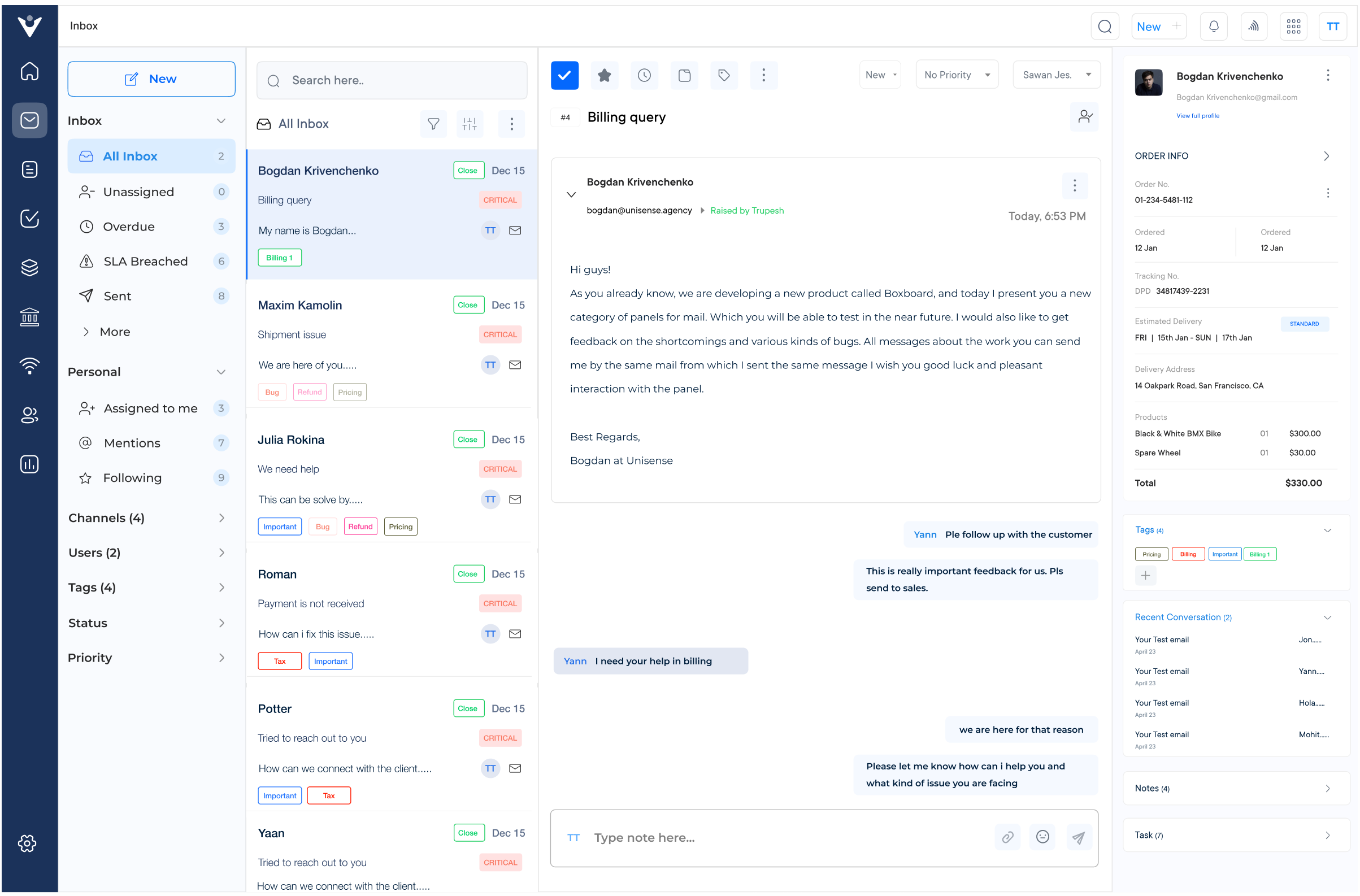
Veemo Support is an AI-powered customer support platform built to unify customer communication across every channel into a single inbox. It is a part of Veemo’s AI-powered customer engagement suite, designed to help businesses manage their sales, marketing and support operations.
Packed with automation and AI-powered chatbots, Veemo Support helps Shopify sellers stay organized as order volume grows. Routine order and product queries get handled automatically, while agents collaborate directly on more complex tickets. It keeps resolution fast without duplicating effort or leaving customers waiting.
Key Features:
Pricing: Veemo’s pricing plans start from $29/user/month and go up to $129/user/month based on the features and add-ons. The software pricing is also customizable as per business requirements.
Simple and Scalable Customer Engagement Platform
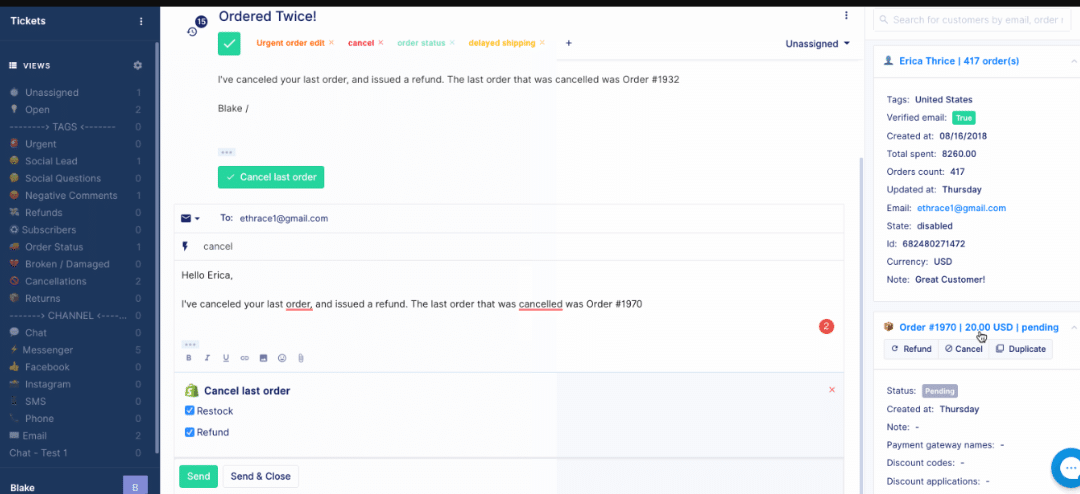
Gorgias is a powerful shopify help desk app and customer service platform specifically designed for e-commerce businesses. It seamlessly integrates with Shopify and provides a centralized hub for managing customer interactions across multiple channels.
Key features: Omnichannel support with live chat, email, social media and messaging app integrations. Automated responses, workflows and intelligent ticket routing for improved efficiency.
Pricing: Gorgias offers a range of pricing plans, starting from $60 per month for the Basic plan with higher tiers offering additional features and user seats.
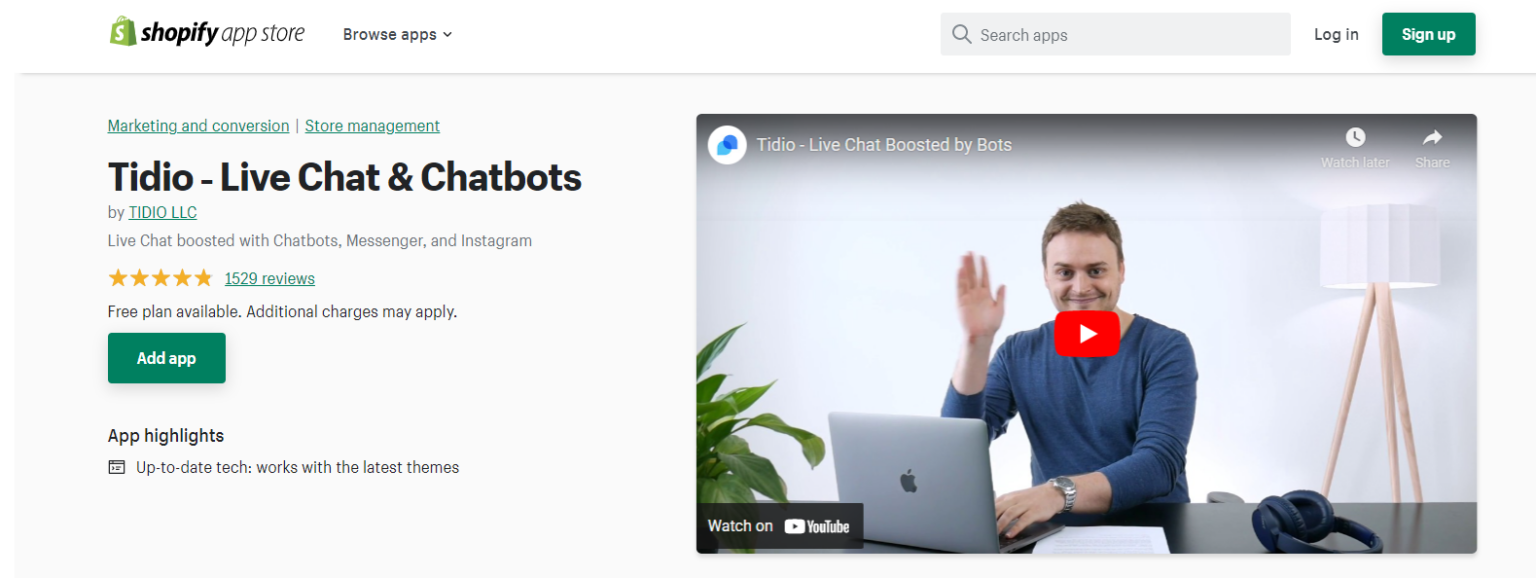
Tidio is a shopify live chat app and messaging platform that seamlessly integrates with shopify stores. It offers a range of features to facilitate real-time customer support and engagement.
Tidio provides an intuitive interface that is easy to set up and use, even for non-technical users. It offers a range of customization options, allowing businesses to match the chat widget with their branding and design.
Pricing: Tidio offers a freemium plan with basic features and paid plans starting from $19 per month for the Communicator plan with higher-tier plans offering additional features.
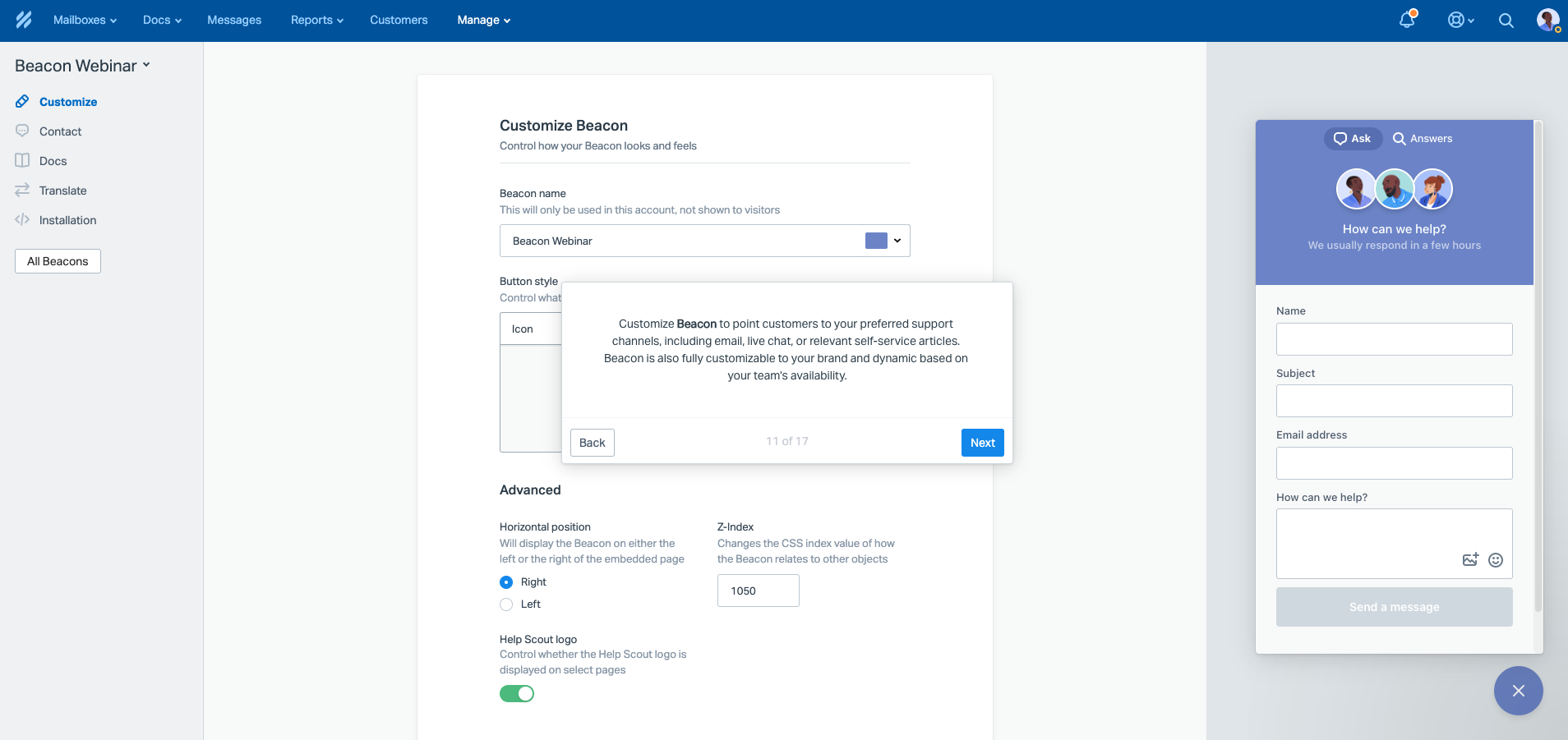
HelpScout is a customer service platform that offers a suite of tools for managing customer inquiries, conversations and support operations. It integrates with Shopify and other e-commerce platforms.
HelpScout provides an intuitive and user-friendly interface for managing customer support across multiple channels. It offers advanced features such as automation, workflow management and collaboration tools for efficient team operations.
Pricing: HelpScout offers a range of pricing plans, starting from $20 per user per month for the Basic plan with higher tiers offering additional features and user seats.
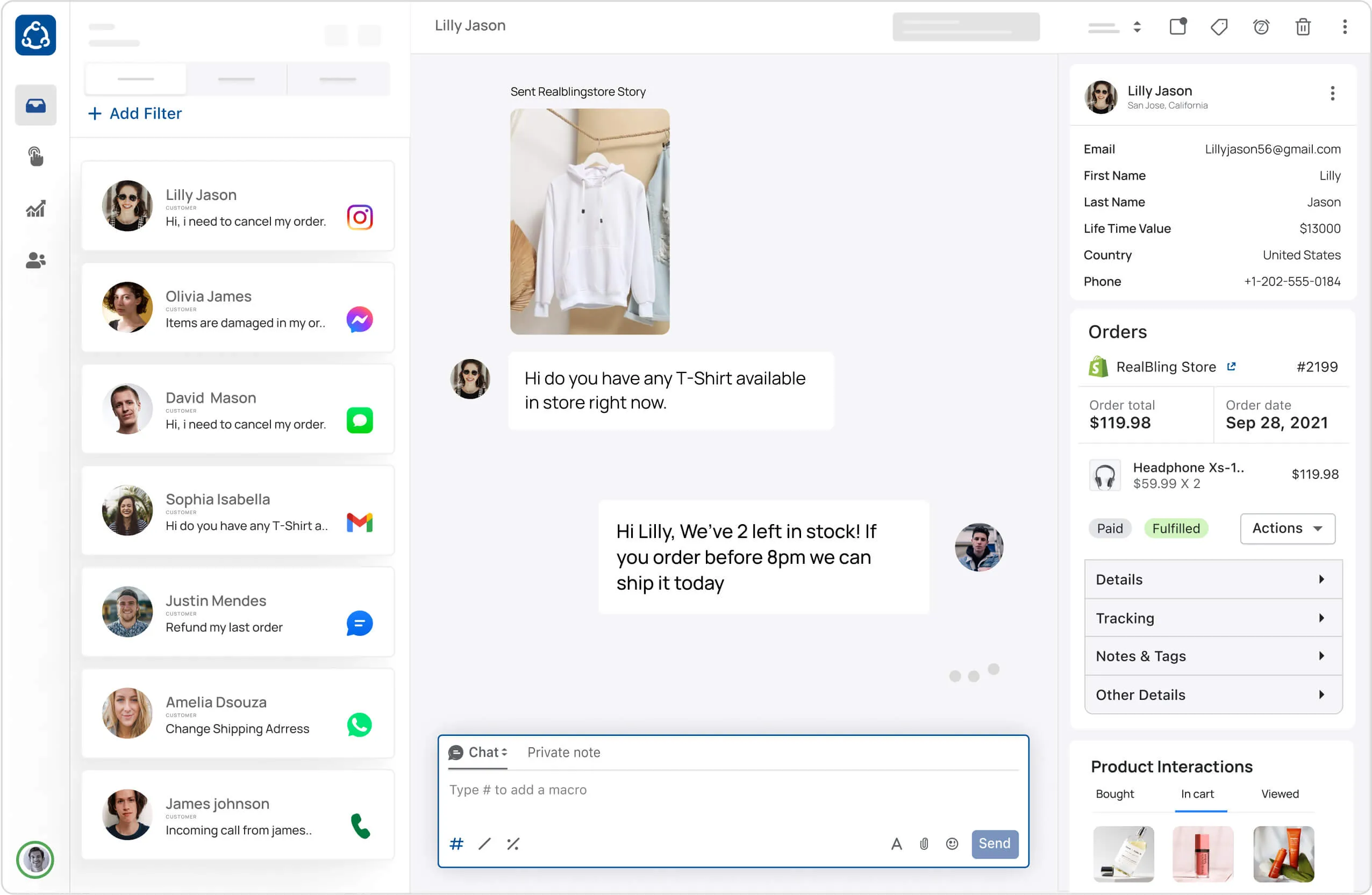
Richpanel is a customer engagement platform that offers live chat, helpdesk and marketing automation capabilities. It integrates seamlessly with Shopify and other e-commerce platforms.
Implement live chat support and AI-powered chatbots on your Shopify store. Manage customer inquiries and support tickets from a centralized help desk.
Key features: Live chat and AI-powered chatbots for real-time customer engagement. Centralized help desk for managing customer support inquiries. Marketing automation and targeted campaign capabilities.
Pricing: Richpanel offers a range of pricing plans, with the basic plan starting from $19 per month.
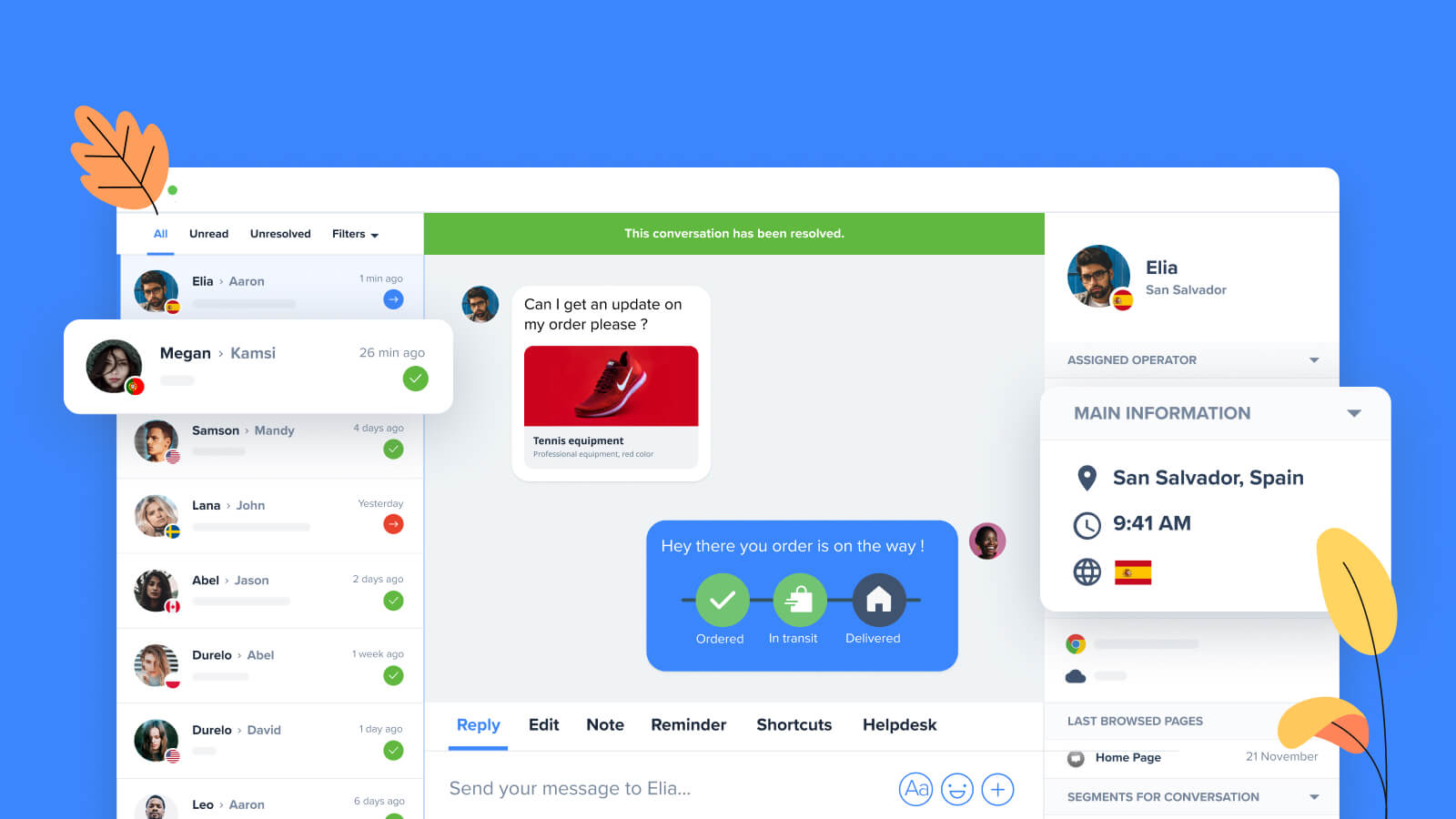
Best conversational marketing platform backed with chatbot builder
Crisp is a live chat and conversational marketing platform designed for businesses of all sizes. Implement live chat support and engage with customers in real-time. Manage customer inquiries and conversations across various channels. Leverage advanced targeting and segmentation for personalized engagement.
Key features: Omnichannel support through live chat, email and messaging apps. Advanced targeting and segmentation for personalized engagement. Detailed customer journey tracking and analytics for optimization.
Pricing: Crisp offers a range of pricing plans, starting from $25 per month for the Unlimited plan, with higher-tier plans offering.
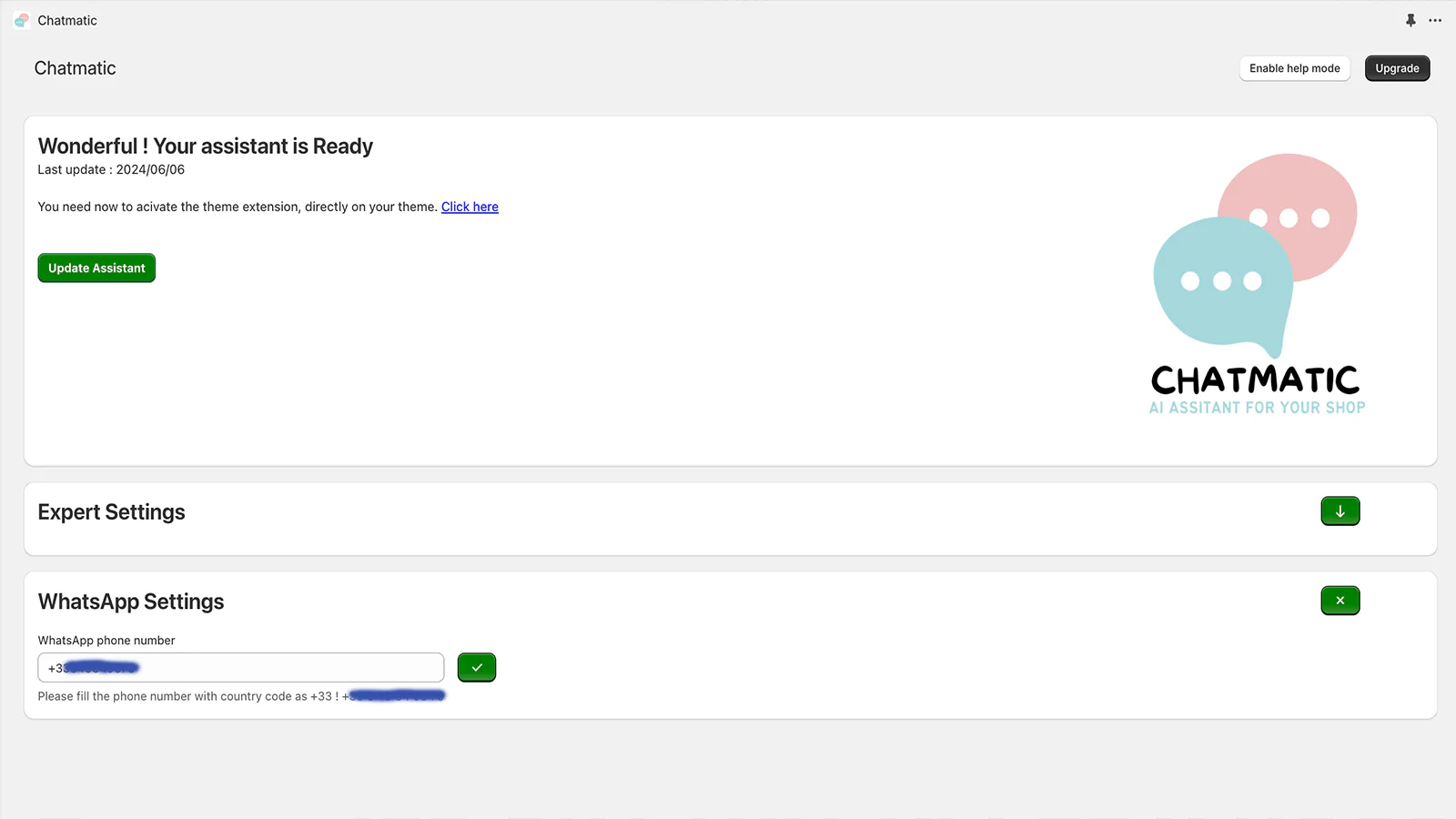
Chatmatic is a chatbot and live chat platform that seamlessly integrates with Shopify stores, enabling businesses to automate customer support as well as engagement. It allows you to deploy chatbots for automated support, engage with customers through live chat and access detailed analytics.
Key features: Chatbot builder for creating automated support flows. Live chat and messaging app integration for real-time engagement. Detailed analytics and customer data for optimization.
Pricing: Chatmatic offers a range of pricing plans, starting from $49 per agent per month.
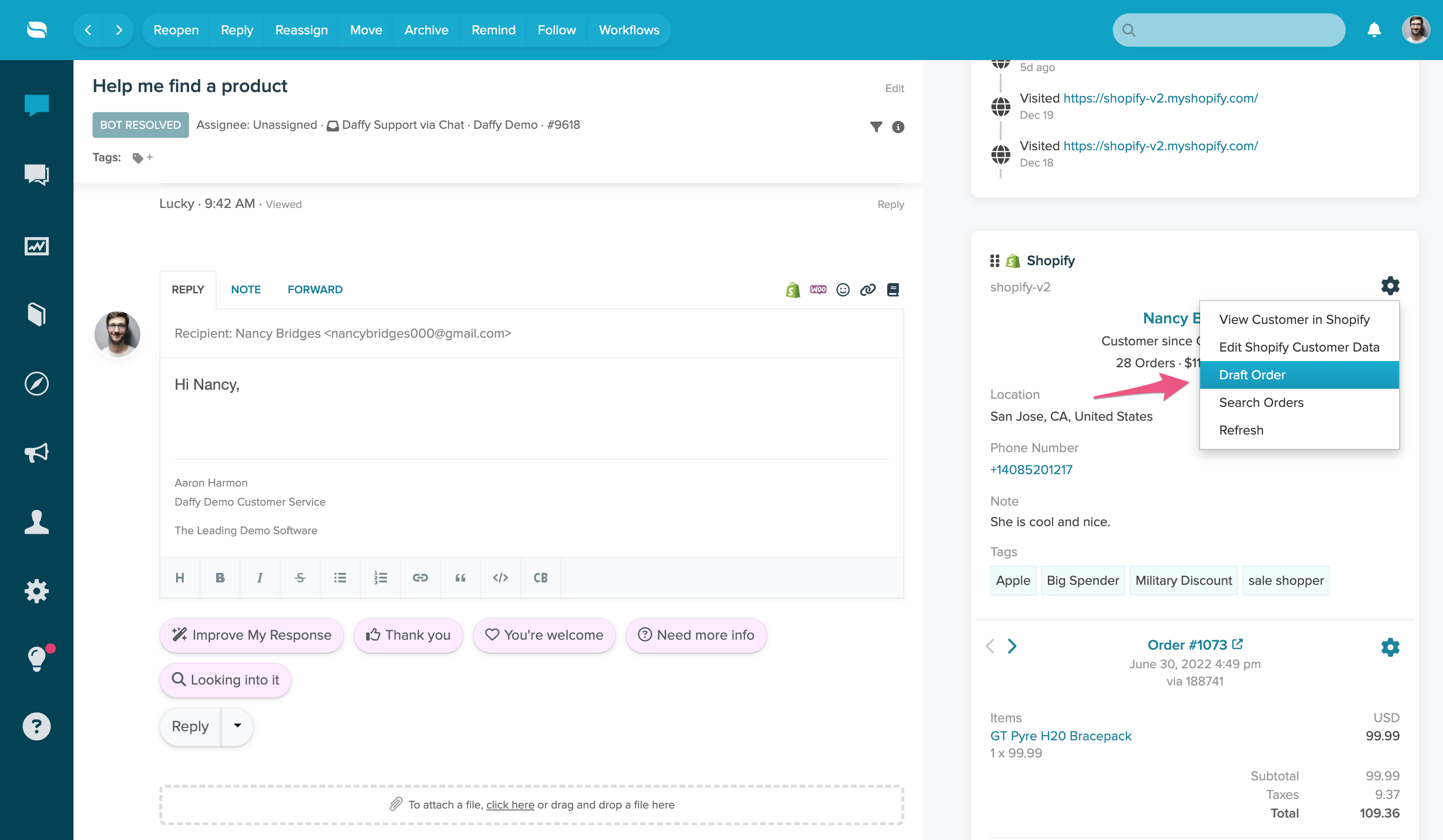
Reamaze is a comprehensive customer service platform that offers both live chat and helpdesk capabilities, seamlessly integrating with Shopify stores. Reamaze helps you to engage with customers through live chat, manage support tickets and inquiries.
Key features: Live chat with advanced features like co-browsing and video chat. Unified helpdesk for managing customer inquiries and support tickets
Pricing: Re:amaze offers a range of pricing plans, starting from $39 per month for the Starter plan, with higher tiers offering additional features and user seats.
Choosing the right Shopify Customer Support Apps is crucial for businesses to maximize the benefits and ensure a seamless customer experience.
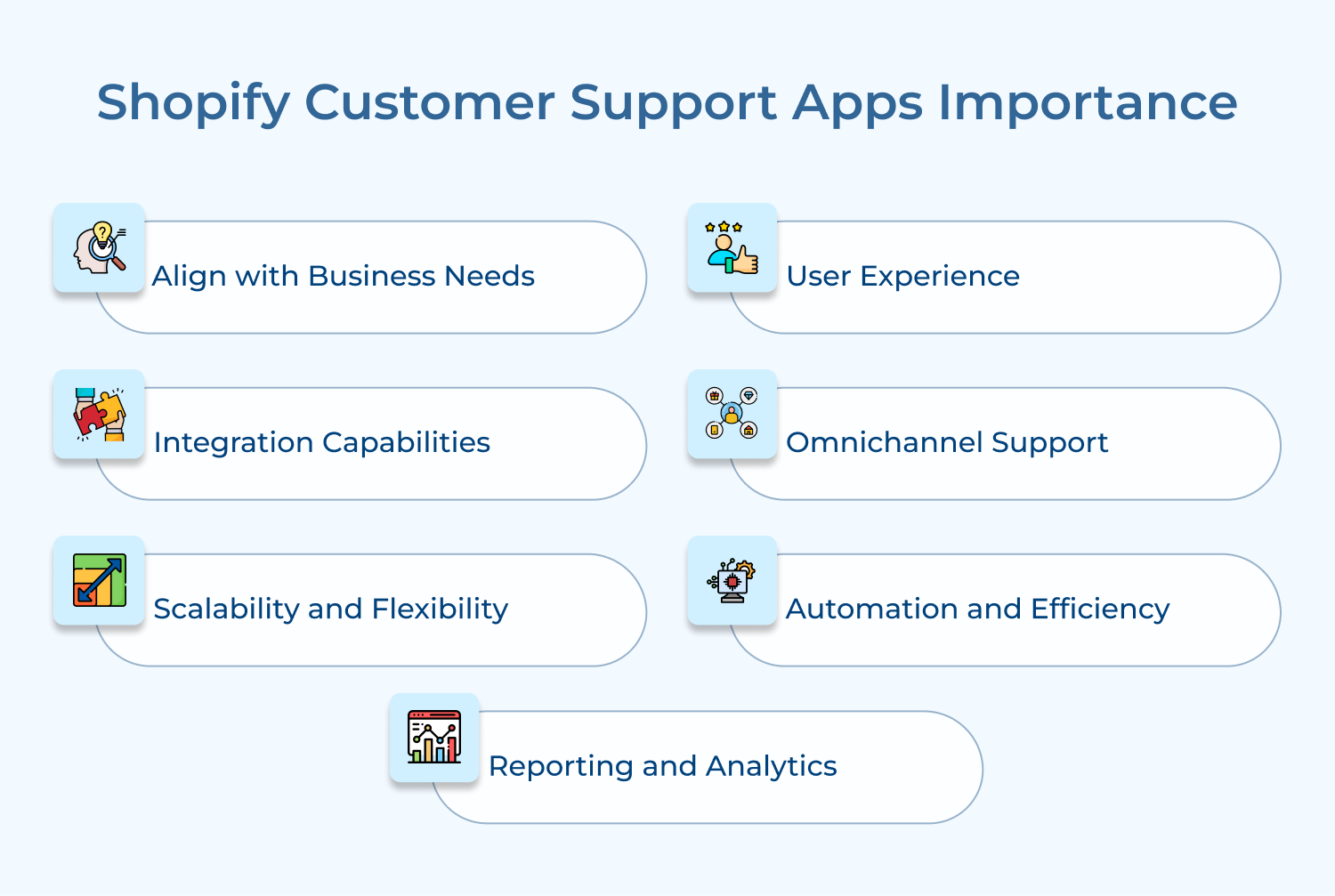
Different businesses have varying customer support requirements based on their size, industry and customer base. It’s essential to choose an app that aligns with your specific needs, whether it’s live chat functionality, omnichannel support, automation capabilities or advanced reporting and analytics.
Seamless integration with your existing Shopify store and other tools is crucial for a streamlined customer support experience. The right app should easily connect with your store, CRM, helpdesk software and other platforms to ensure data synchronization and efficient workflows.
As your business grows, your customer support needs may evolve. Choosing an app that offers scalability and flexibility in terms of features, pricing plans and user management can ensure that it can accommodate your changing requirements without the need for frequent migrations or replacements.
The user experience of the customer support app is crucial for both your customers and support agents. Apps with intuitive interfaces, customization options and user-friendly features can significantly improve the overall support experience.
The right customer support app should offer automation features, such as chatbots, predefined responses and intelligent routing, to streamline workflows. These features can help reduce response times, handle routine inquiries and free up agents for more complex tasks.
Robust reporting & analytics capabilities are essential for measuring and improving your customer support performance. The right app should provide detailed insights into key metrics, such as response times, resolution rates and customer satisfaction scores, enabling data-driven decision-making.
A shopify customer service app plugs directly into your store to track order and customer data, so support feels personal instead of generic. Let’s look at how these apps actually work.
Integration
Install the desired app from the Shopify App Store and connect it with your store. The process typically involves granting the app access to your store data and configuring any necessary settings
Channel Integration
Many customer service apps offer omnichannel support, allowing you to manage customer interactions across multiple channels, such as live chat, email, social media, and messaging apps.
Customer Data Access
The app pulls relevant customer data from your Shopify store, including order history, customer profiles, and previous interactions. The information is displayed within the app interface, providing agents with a comprehensive view of each customer’s journey.
Automated Workflows
Some customer service apps offer automation features, such as predefined responses, chatbots and automated workflows. These features can help streamline common tasks, reduce response times and improve overall efficiency.
Agent Management
For businesses with multiple customer service agents, these apps often include features for agent assignment, collaboration and performance tracking.
Reporting and Analytics
Many customer service apps provide detailed reporting and analytics capabilities, allowing you to track key metrics, such as response times, resolution rates and customer satisfaction scores.
Implementing Shopify customer service apps effectively can significantly enhance your customer support operations and deliver exceptional experiences.
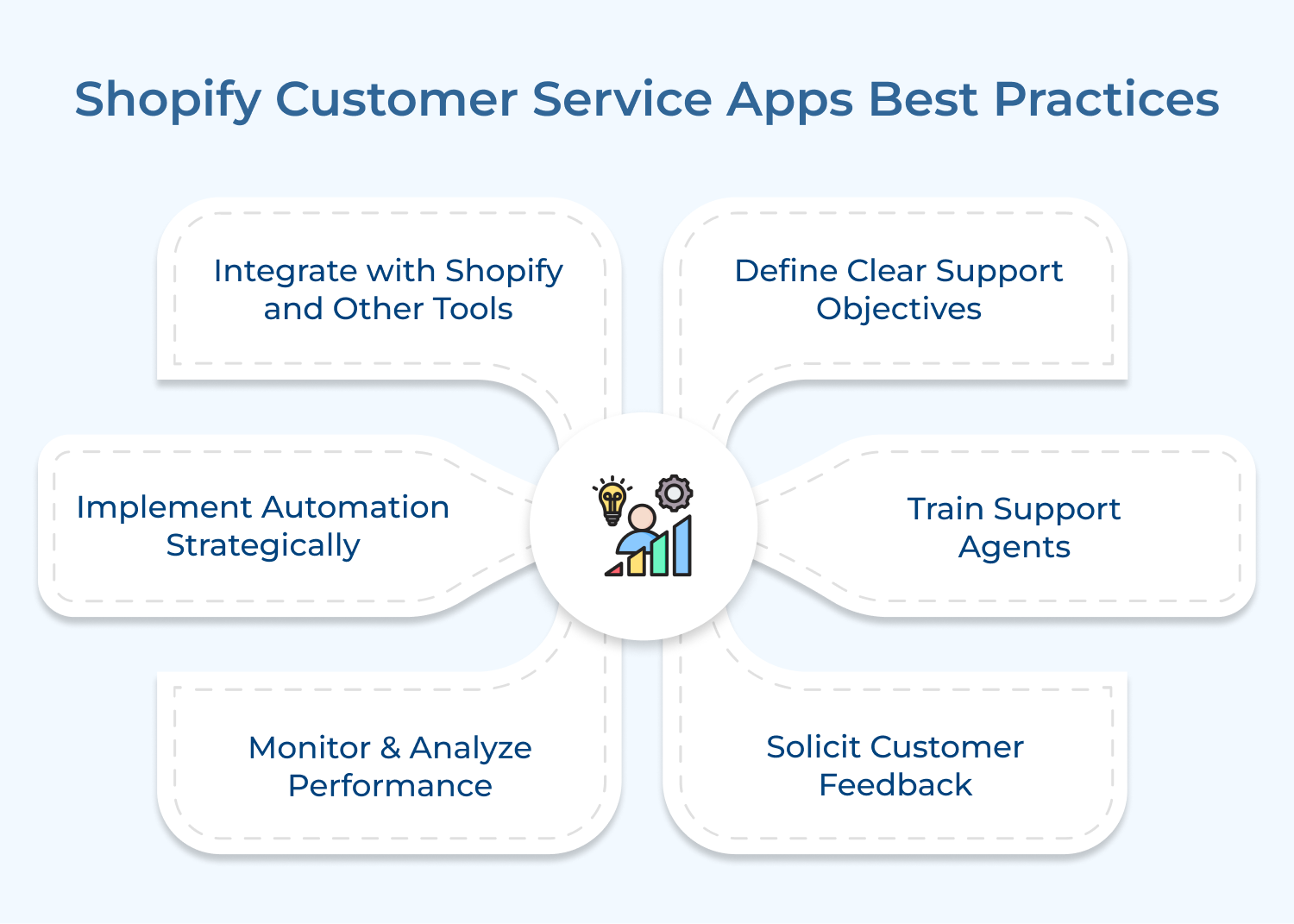
1. Define clear support objectives: Establish clear goals and objectives for your customer service strategy, such as reducing response times, improving resolution rates or increasing customer satisfaction scores. It will help you select the right apps and features to align with your objectives.
2. Integrate with shopify and other tools: Ensure seamless integration between your Customer Service App, Shopify store and other tools like CRMs, helpdesk software as well as marketing platforms. It creates a cohesive ecosystem and streamlines data flow.
3. Train support agents: Provide comprehensive training to your customer service team on the app’s features, workflows and best practices. Well-trained agents can leverage the app’s capabilities to deliver efficient and personalized support.
4. Implement automation strategically: Utilize automation features like chatbots, predefined responses and workflows judiciously. Automated responses should be tailored to common inquiries and scenarios, while more complex issues should be routed to human agents.
5. Monitor and analyze performance: Regularly review the app’s reporting & analytics features to track key performance indicators (KPIs) such as response times, resolution rates and customer satisfaction scores. Use these insights to identify areas for improvement and optimize your support strategies.
6. Solicit customer feedback: Implement feedback mechanisms within the app to gather customer insights and suggestions for improvement. Use this feedback to refine your support processes and enhance the overall customer experience.
The right Shopify customer service app directly determines how well your store retains customers. The tools reviewed here cover every stage of the customer journey from omnichannel inboxes to AI-powered automation.
Ready to elevate your store’s support experience? Start your 14-day free trial of Omni24. The best Shopify customer service apps build loyalty that drives long-term revenue growth.
Omni24’s customer engagement platform harnesses automation and AI to deliver unified customer experiences across digital channels, while keeping human touch
A great Shopify customer support app should have features such as live chat, ticketing system, knowledge base and integration with popular communication channels like email or social media. It should also offer automation tools to streamline customer service processes and provide analytics to track performance.
Customer support is crucial for Shopify stores because it helps build trust and loyalty with customers. Good customer service can lead to repeat business, positive reviews, and word-of-mouth referrals, all of which can help drive sales.
Every Shopify customer service app does not require payment upfront. Many offer free plans covering the basics like ticketing and live chat, letting smaller stores get started without cost. The paid tiers unlock more advanced capabilities as order volume and support needs grow over time.
These apps improve satisfaction by cutting response times and making support feel personal instead of generic. Faster, context-aware help consistently translates into more loyal shoppers when agents can anticipate needs and resolve issues before frustration builds up during the shopping experience.
Most Shopify customer service apps connect with the broader tools stores already depend on, keeping data synced without manual efforts. This reduces duplicate entry and gives support teams more accurate view of each customer across every touchpoint they interact.
Shopify customer service apps implement robust security measures including end-to-end encryption, secure data storage, GDPR compliance, and regular security audits. They typically offer features like two-factor authentication, role-based access control, and secure payment processing integration. Apps must also comply with Shopify’s strict security standards to protect sensitive customer information.
You can measure the effectiveness of a customer service app on your Shopify store by tracking key metrics such as response time, resolution time, customer satisfaction ratings, ticket volume and customer retention rates. You can also use feedback surveys and customer reviews to gauge the overall impact of the app on your store’s customer service experience.
 https://omni24.io/wp-content/uploads/2026/09/Social-commerce-scaled.png
1340
2560
Webvision Solution
https://omni24.io/wp-content/uploads/2023/04/Omni-Logo-1.svg
Webvision Solution2026-10-23 12:18:272026-10-23 12:18:27What is Social Commerce and Why Does It Matter?
 https://omni24.io/wp-content/uploads/2026/08/AI-Customer-Service-Agents.png
1256
2400
Webvision Solution
https://omni24.io/wp-content/uploads/2023/04/Omni-Logo-1.svg
Webvision Solution2026-09-21 04:48:512026-09-21 04:48:51How to Build an AI Customer Service Agents: 8 Key Steps
 https://omni24.io/wp-content/uploads/2026/08/Omnichannel-Conversational-AI.png
1256
2400
Tushar Joshi
https://omni24.io/wp-content/uploads/2023/04/Omni-Logo-1.svg
Tushar Joshi2026-09-16 03:51:072026-09-16 03:51:07How to Build Omnichannel Conversational AI Strategy

Whether it’s about acquire, engage or support – Omni24 covers all your customer engagement needs in one complete platform.

Copyright ©2026 Veemo All rights reserved.
CA, Los Angeles, Hall Ave, 19011