10 Best Customer Feedback Tools & Software
Leverage the best customer feedback software to gain insights, boost productivity and build lasting client relationships


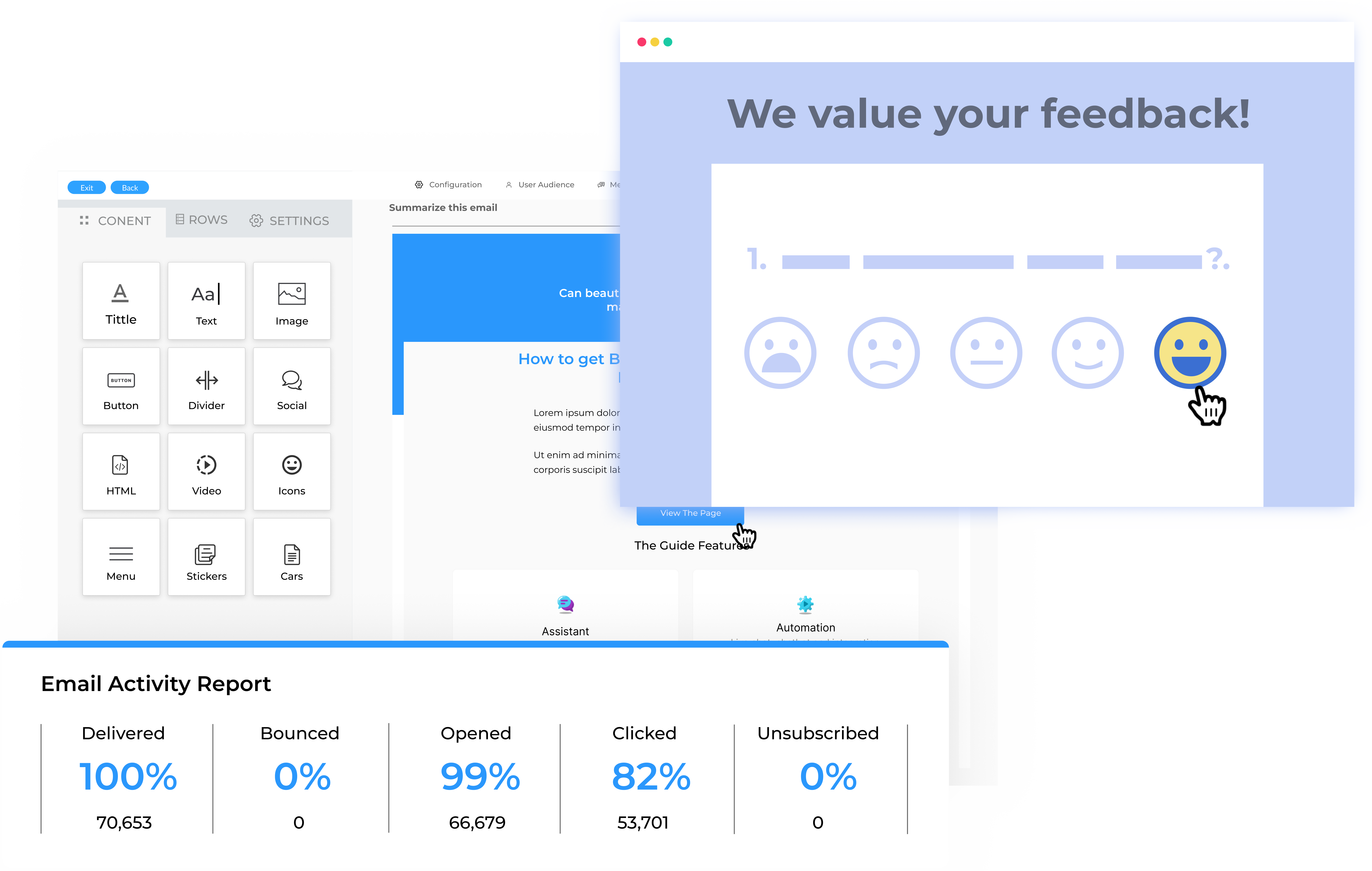
Leverage the best customer feedback software to gain insights, boost productivity and build lasting client relationships
Streamline support processes and improve response times using powerful customer service tools.

Customer feedback tools help businesses gather real-time insights, address issues promptly and improve satisfaction, driving stronger customer loyalty.
Feedback tools provide valuable data on customer preferences, pain points and desired features, guiding product development to align with customer needs.
Client feedback tools turn raw feedback into actionable insights, helping businesses make data-driven decisions across marketing, sales and customer service.
Regular feedback monitoring helps businesses detect and address issues early, enabling swift corrective actions and minimizing negative impacts.
Most businesses lose customers without knowing why because feedback is scattered, siloed and ignored. Customer feedback tools are software designed to capture, organize and analyze customer opinions across channels. Businesses with structured feedback loops reduce churn by up to 25% and make products with greater precision.
Explore the best customer feedback tools based on key features, pricing, tool types and selection criteria to help find the right platform. It converts raw opinions into measurable improvements.
A customer feedback tool is defined as a software solution that helps collect, analyze and manage feedback from customers. These tools come in various forms, including surveys, review platforms, social media monitoring tools and more. Customer feedback tools lie in their ability to bridge the gap between businesses and customers.
Key objectives:
Collecting and analyzing the feedback can be a daunting task without the right tools. That’s where customer feedback tools come in handy.
| Software | Key Features | Price | Trial |
|---|---|---|---|
| Omni24 |
|
Starts at $34/month | 14-day free trial |
| Veemo Survey |
|
Starts at $34/month | 14-day free trial |
| Typeform |
|
Starts at $25/month | 14-day free trial |
| Feedier |
|
Starts at $89/month | 14-day free trial |
| Hotjar |
|
Starts at $39/month | Free basic plan available |
| UserTesting |
|
Custom pricing | Free demo available |
| Delighted |
|
Starts at $224/month | 7-day free trial |
| Survicate |
|
From $53/month/user | Free basic plan available |
| GetFeedback |
|
From $150/month/user | 14 days |
| Qualtrics |
|
Custom pricing | 30 days |
Customer feedback tools allow companies to identify areas for improvement and make informed decisions based on feedback. Let’s explore some of its key features:
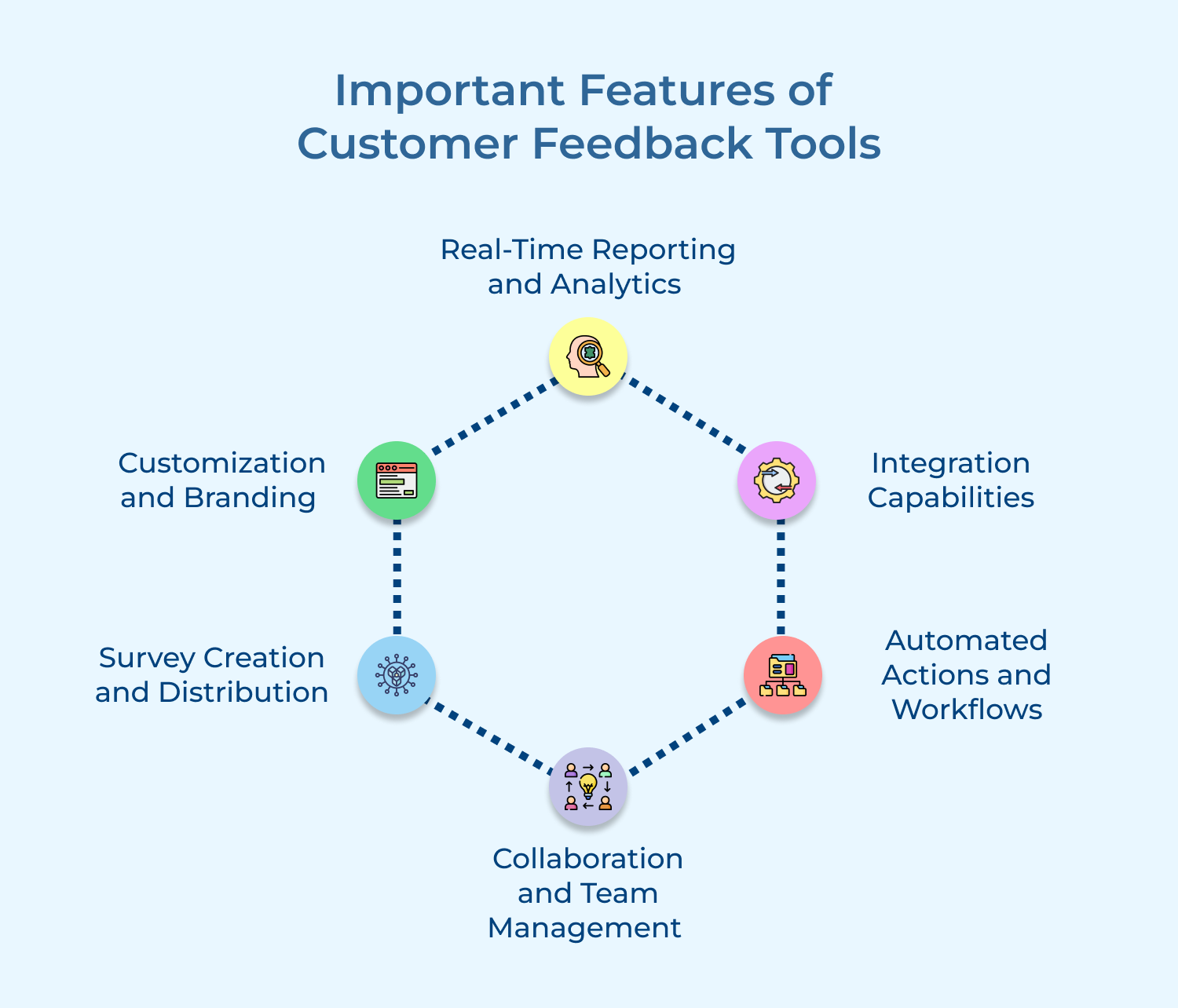
Customer feedback tools have the ability to create and distribute surveys. Advanced tools offer intuitive drag-and-drop interfaces for survey design, allowing users to easily construct questionnaires without technical expertise. They provide a variety of question types, including multiple choice, rating scales, and open-ended questions, to gather diverse insights.
Customization features allow businesses to align surveys with their brand identity. It includes the ability to add logos, adjust color schemes, and customize fonts. Some tools even offer white-labeling options to create a seamless branded experience. Beyond aesthetics, customization extends to survey logic.
Real-time dashboards that update as responses come in, allowing businesses to monitor feedback instantly. Some tools also offer predictive analytics, helping businesses anticipate future trends based on historical data.
Top customer feedback tools offer integrations with CRM systems, help desk software, marketing automation platforms, and more. It allows businesses to sync customer feedback data across their tech stack, providing a more holistic view of the customer journey.
Automation features help businesses act on feedback efficiently. Some tools offer more advanced workflow capabilities, allowing businesses to create multi-step processes that are initiated based on specific criteria. It can help ensure that no valuable feedback falls through the cracks and that appropriate action is always taken.
As customer feedback often involves multiple departments, tools that facilitate team
Collaboration is invaluable. This includes features like shared dashboards, role-based access controls and the ability to leave internal comments on feedback.
Some tools also offer task assignment and tracking features, helping teams coordinate their efforts in responding to and acting on customer feedback. It can be particularly useful for larger organizations or those with complex feedback management processes.
Customer feedback is an essential aspect of any business looking to improve and grow. There are now various software tools available that can help businesses. Consider the tools below:
Best Customer feedback platform for insight
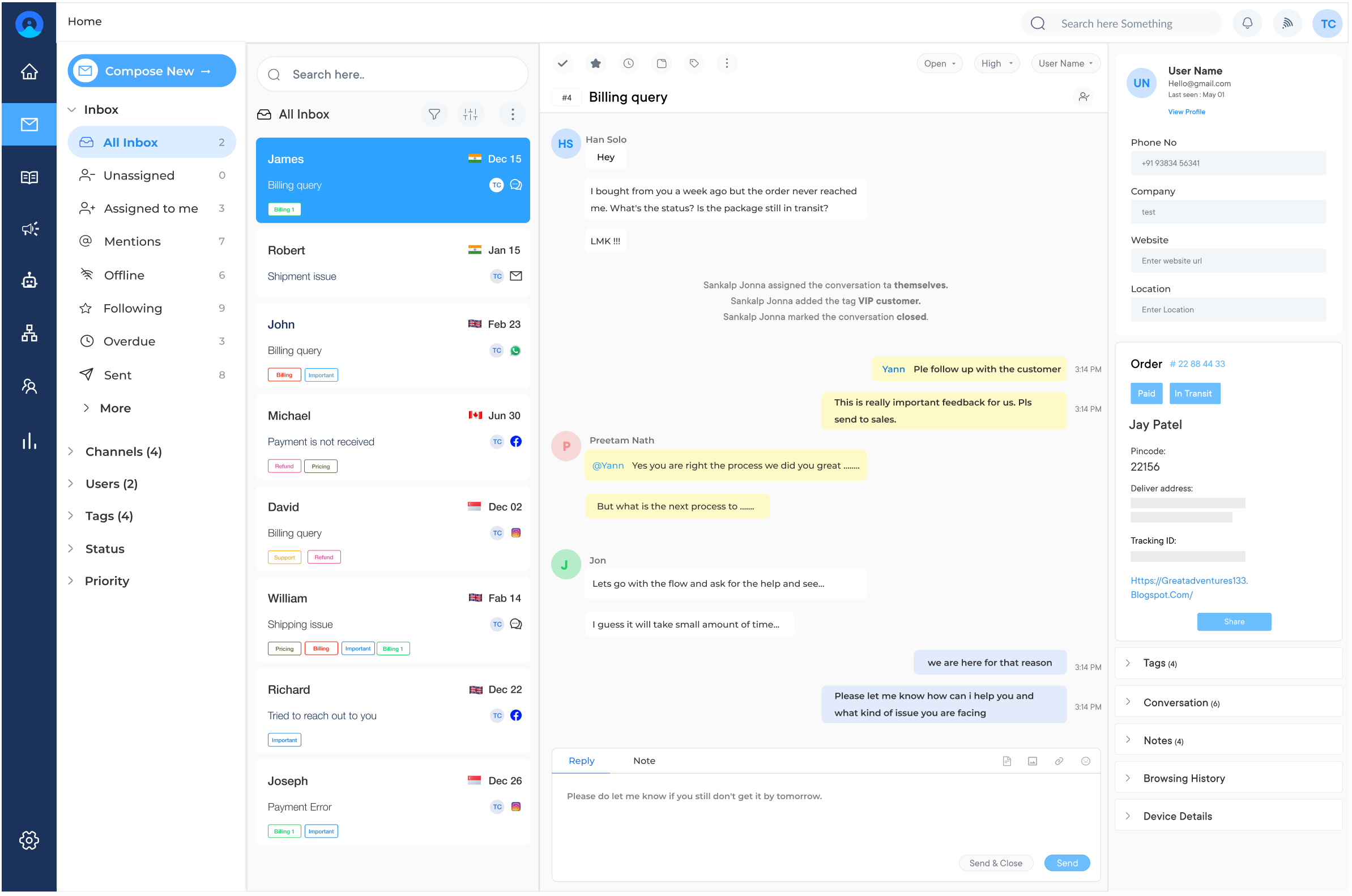
Omni24 is an AI-powered omnichannel customer engagement platform that unifies support, sales and marketing across the entire customer lifecycle. It unifies into a single customer data platform, connecting survey responses with real customer conversations, giving businesses an actionable view of customer sentiment.
Omni24’s feedback can be used for everything from gathering post-support satisfaction scores to running deeper market research surveys. AI-powered text analysis surfaces themes and sentiment from open-ended responses to improve the overall quality of insights collected.
Key features:
Pricing: Omni24’s pricing starts from $29/user/month and goes up to $149/user/month based. All plans come with 14 days free trial and include a shared inbox, knowledge base along with omnichannel support.
Excellent customer feedback software for Surveys

Veemo Survey is a customer satisfaction platform that offers businesses to create engaging surveys and collect feedback across various touchpoints. The software provides a conversational interface that improves survey completion rates and gives actionable insights for better decision-making.
Key Features:
Pricing: Veemo’s pricing plans start from $29/user/month and go up to $129/user/month based on the features and add-ons. The software pricing is also customizable as per business requirements.
Great customer feedback software with conversational UI

Typeform stands out with its visually appealing, conversational approach to surveys. It creates engaging, interactive forms that can boost response rates and provide a better user experience.
Key features include a conversational UI, logic jumps, custom design options, data analysis tools, and various integrations. It also offers features like hidden fields and self-notifications for efficient data collection.
Typeform benefits businesses by creating more engaging surveys, potentially increasing response rates and data quality. Its aesthetically pleasing design aligns well with brand image considerations.
Pricing begins at $25/month for the basic plan. Typeform offers a free trial and a limited free plan.
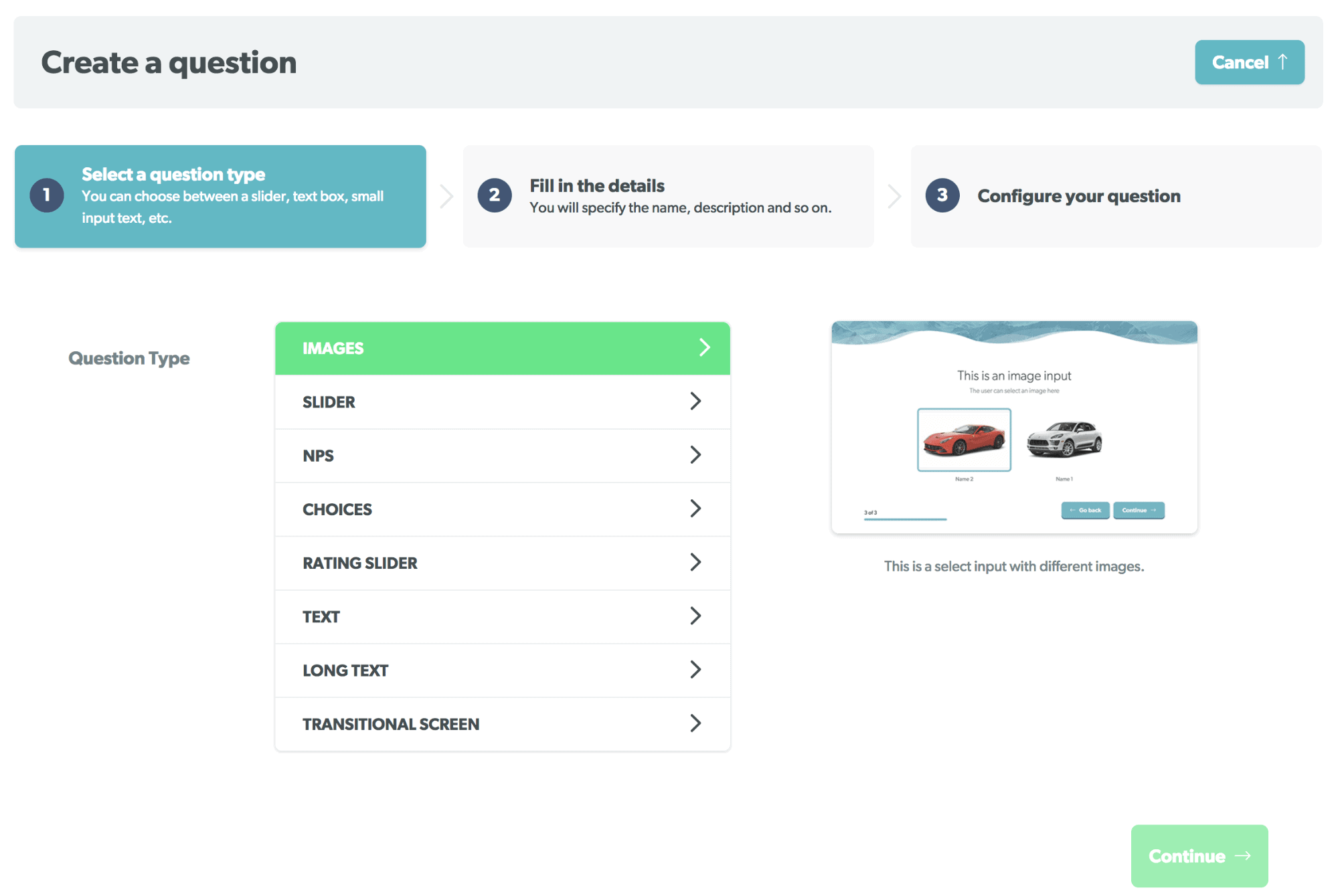
Feedier takes a gamified approach to feedback collection, making the process more engaging for respondents. It offers a unique way to incentivize and reward customers for their feedback.
Its key features include gamified surveys, automated feedback collection, customer journey mapping, sentiment analysis, and a reward system. It also offers real-time analytics and customizable survey designs.
Feedier can increase survey completion rates through its gamification approach. It helps businesses collect more feedback and gain deeper insights into customer experiences and preferences.
Pricing starts at $89/month for small teams. Feedier offers a 14-day free trial to test its features.
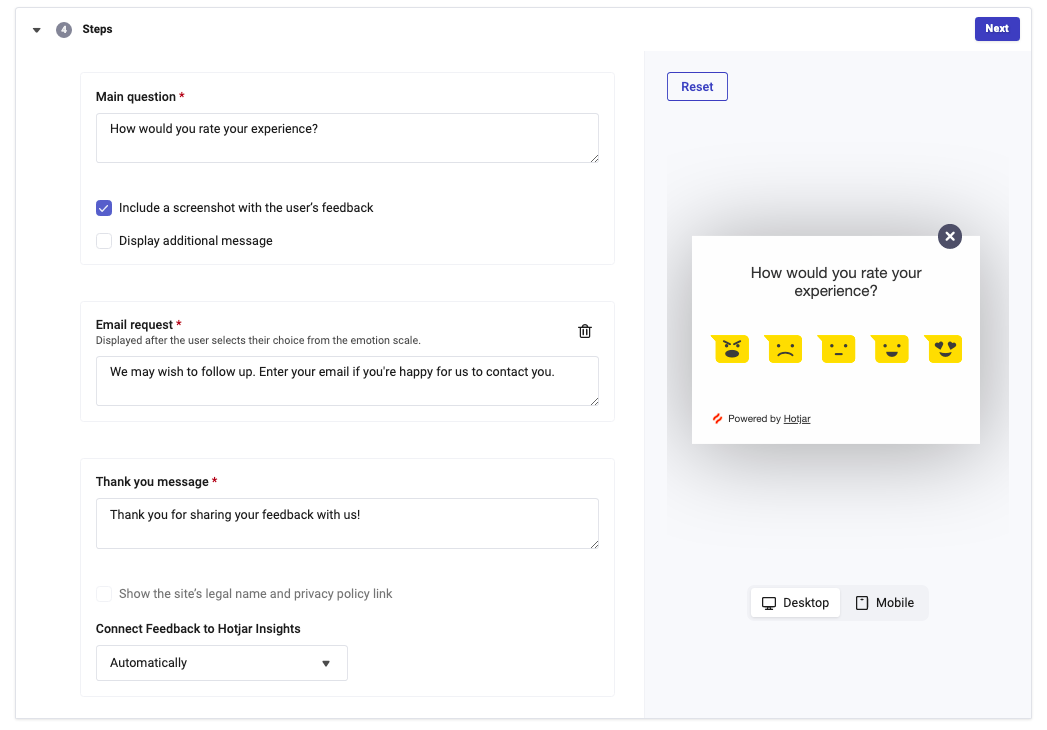
Hotjar combines quantitative and qualitative feedback tools, offering features like heatmaps and session recordings alongside more traditional survey options.
The key features include heatmaps, session recordings, feedback polls, survey tools, and conversion funnels. It also offers user behavior analytics to provide context to feedback data.
Hotjar benefits businesses by providing visual insights into user behavior alongside direct feedback. This combination can uncover usability issues and improve overall user experience.
Pricing starts at $39/month for small websites. Hotjar offers a free basic plan with limited features.
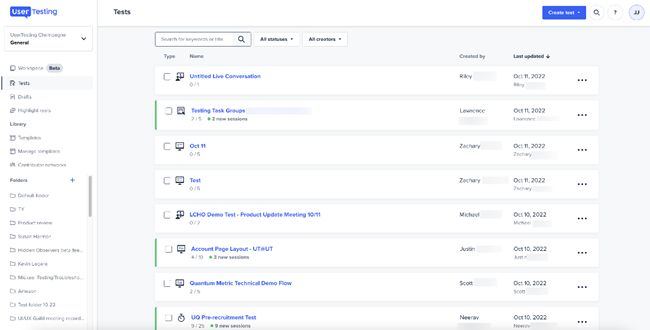
UserTesting focuses on video-based customer feedback, allowing businesses to watch and listen to real people as they interact with their products or services.
Key features include video feedback, targeted audience selection, usability testing tools, live conversation capabilities, and a metrics dashboard. It also offers template test plans for quick setup.
UserTesting provides businesses with rich, contextual feedback through video. This can lead to deeper insights into customer behavior and more empathetic product development.
Pricing is custom and based on specific needs. UserTesting offers a free trial upon request.
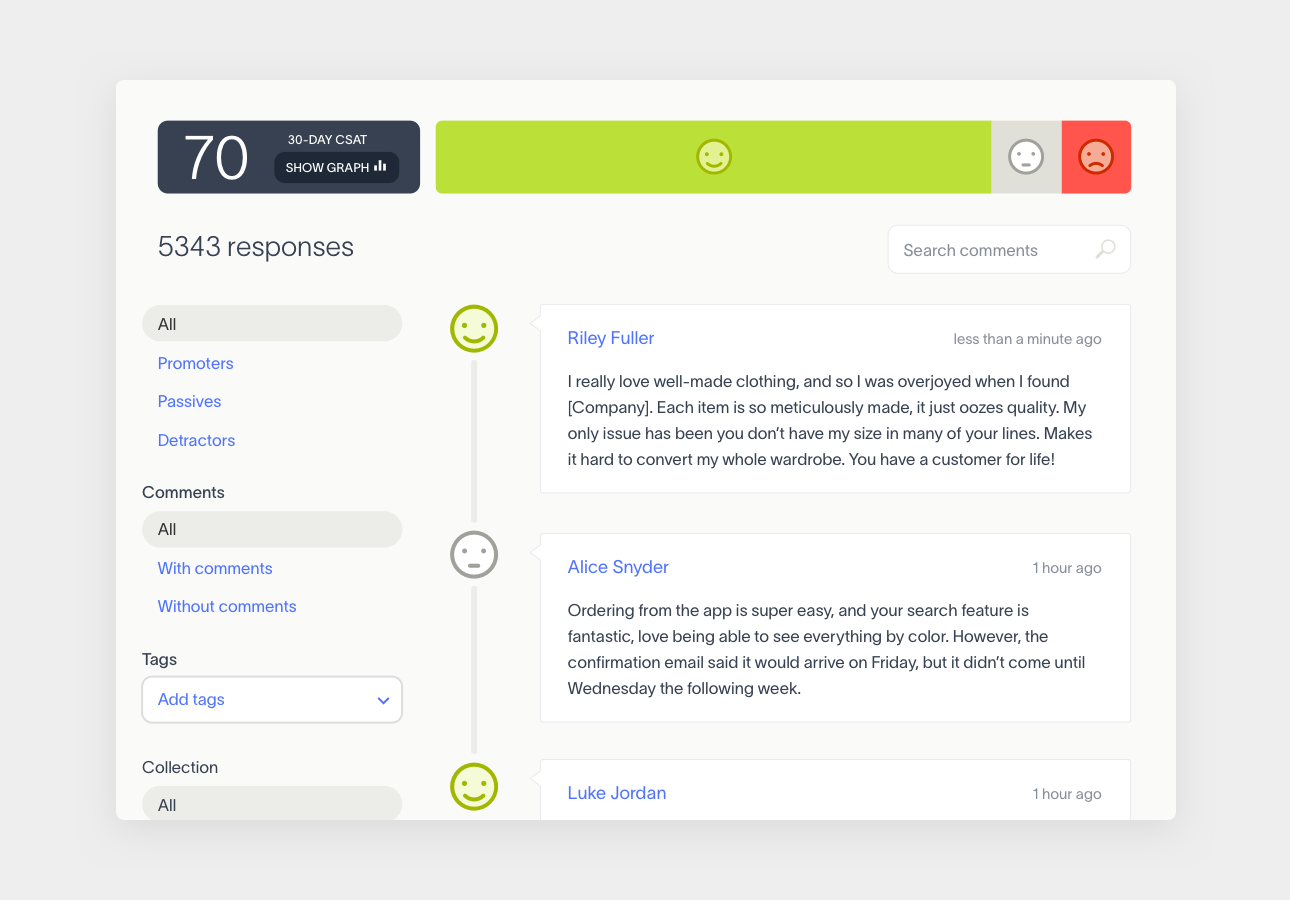
Delighted specializes in Net Promoter Score (NPS) surveys but also offers other customer experience metrics like CSAT and CES.
The key features include NPS, CSAT, and CES surveys, multi-platform distribution, real-time alerts, trend analysis, and customizable branding. It also offers automation features for ongoing feedback collection.
Delighted helps businesses track customer loyalty and satisfaction over time. Its focus on key metrics provides actionable insights for improving customer experience.
Pricing starts at $224/month for small teams. Delighted offers a 7-day free trial.
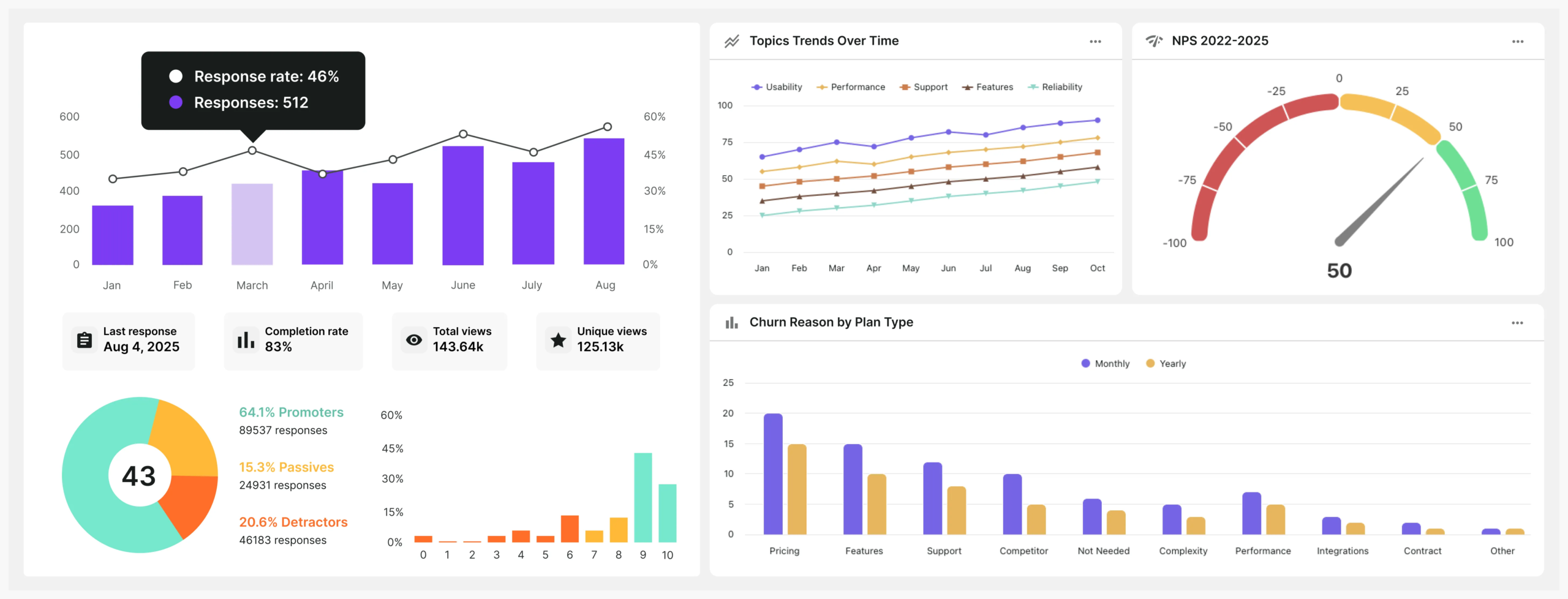
Survicate is a powerful customer feedback and survey platform that helps businesses of all sizes collect, analyze, and act on customer insights. By enabling companies to capture feedback across multiple channels, it empowers teams to improve customer experience and make data-driven decisions with ease.
Key features: Launch surveys via email, website, mobile apps, or in-product widgets. Pre-designed templates for NPS, CSAT, CES, and product feedback. Real-time analytics, customizable dashboards, and advanced targeting options for the right audience at the right moment.
Pricing: Survicate offers a free basic plan with limited responses, making it accessible for startups. Paid plans begin at $53 per month (billed annually).
Read more: Curious how Survicate compares with other survey tools? Dive into our Survicate comparison article.
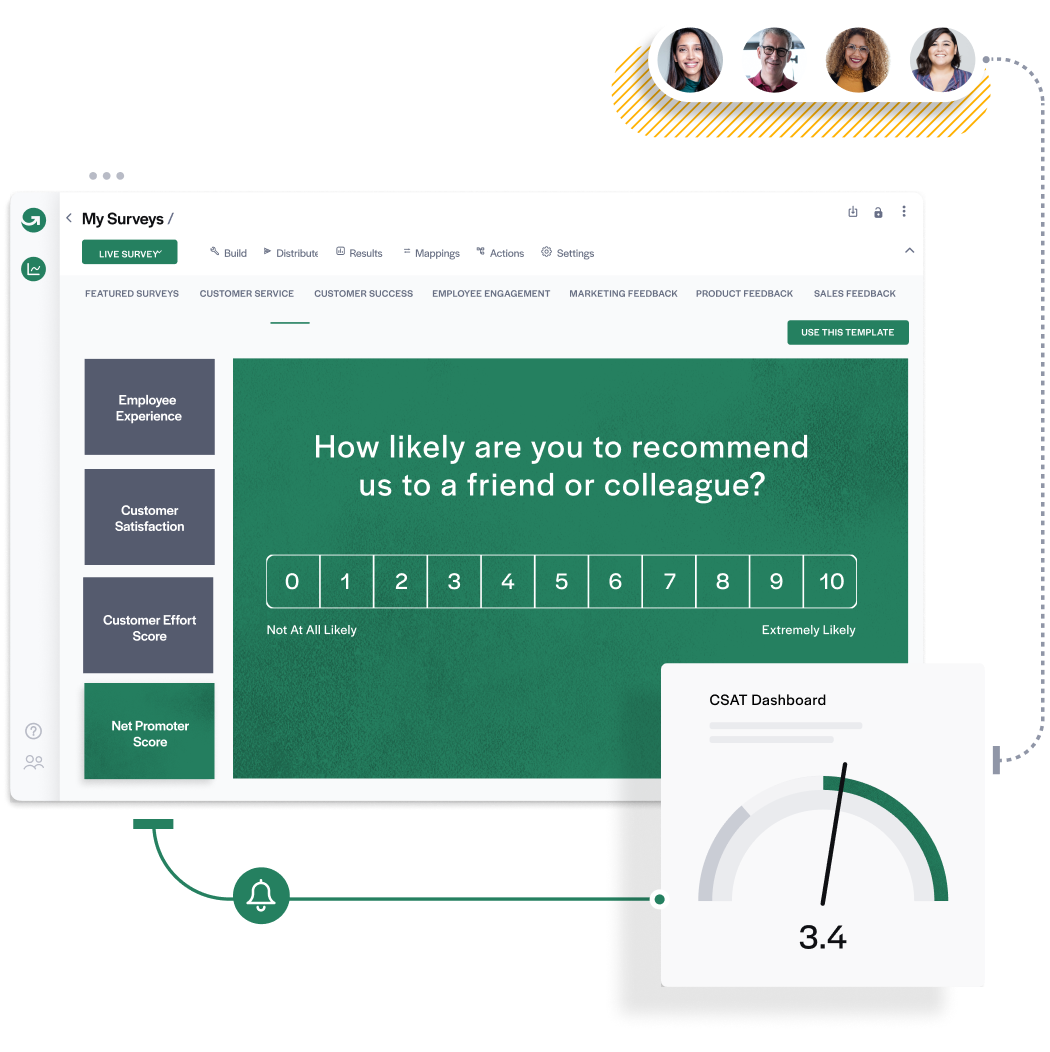
Salesforce-native customer feedback platform that provides seamless integration for collecting and analyzing customer feedback within the Salesforce ecosystem.
Key Features: Multi-channel surveys, CRM integration, automated feedback collection, custom branding, advanced analytics, and real-time alerts.
Pricing: Business plans start at $450/month; custom enterprise pricing available.
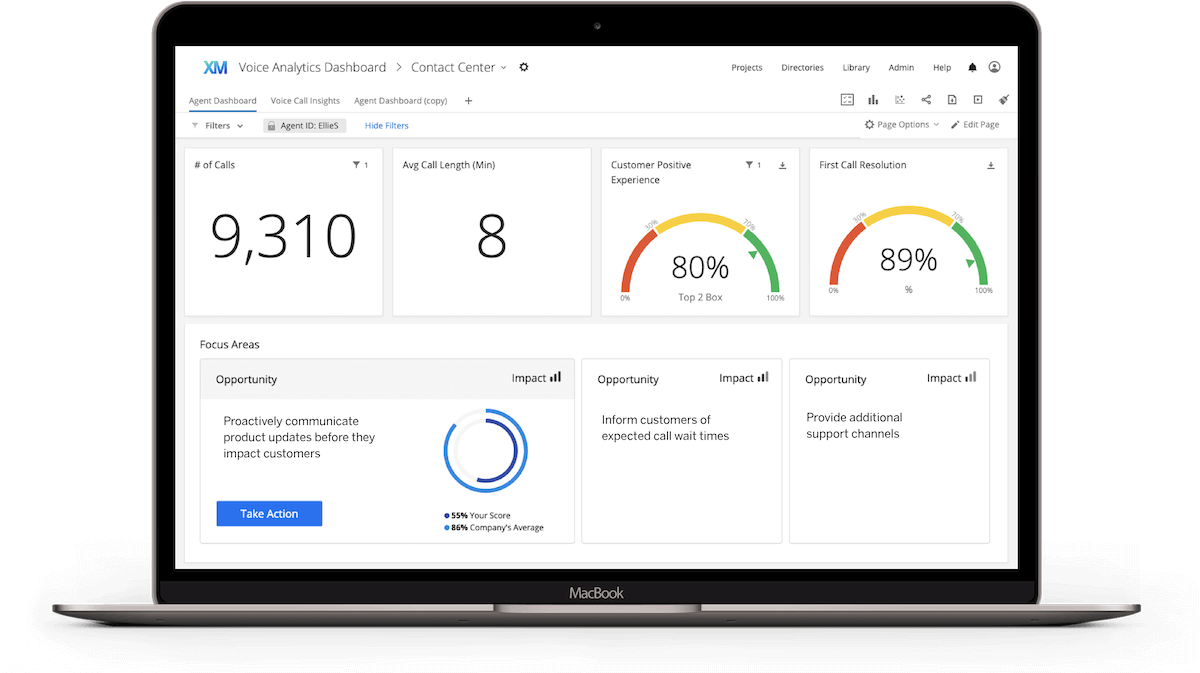
Enterprise-grade experience management platform offering comprehensive tools for customer, employee, product, and brand experience research and analysis.
Key Features: Advanced survey logic, predictive analytics, text analysis, statistical analysis, multi-channel distribution, and extensive integration capabilities.
Pricing: Custom pricing based on organization needs; typically starts from $1,500/month for business plans.
Read more: Searching for a better fit than Qualtrics? Here’s our roundup of the best Qualtrics alternatives.
Selecting the right customer feedback tool is crucial for gathering actionable insights and improving your business

Defining your objectives is crucial in choosing the best tool for collecting customer feedback. Determine what specific insights you aim to gain—whether it’s understanding customer satisfaction, gathering product feedback, or assessing market trends.
Clear objectives help in selecting a tool that aligns with your goals, ensuring that the features and capabilities of the software directly support your desired outcomes and enhance the effectiveness of your feedback collection efforts.
Identifying your target audience is key when selecting a feedback tool. Consider who will be providing the feedback, including their demographics, preferences, and preferred communication channels.
Ensure the tool supports these channels, whether through email, mobile surveys, or in-app feedback, to maximize response rates and gather relevant, actionable data. This alignment enhances the relevance and quality of the feedback you receive.
Assessing your technical capabilities is important for ensuring compatibility with your chosen feedback tool. Evaluate your organization’s existing technical infrastructure, including system requirements and user expertise.
Choose a tool that integrates seamlessly with your current systems and is easy for your team to use. This minimizes technical challenges and facilitates a smooth implementation, ensuring the tool’s effective use within your organization.
Consideration of integration needs is essential when selecting a feedback tool. Ensure the tool can integrate with your existing systems, such as CRM, marketing platforms, or customer support software.
Seamless integration enhances data flow, automates processes, and provides a unified view of customer insights, making it easier to manage and act on feedback. This ensures a more efficient and cohesive feedback management process.
Evaluating key features helps in selecting a feedback tool that meets your specific requirements. Look for features such as customizable surveys, real-time analytics, automated follow-ups, and multi-channel distribution.
Prioritize tools that offer functionalities aligned with your objectives, enhancing your ability to gather, analyze, and act on customer feedback effectively. Ensure the tool’s features support your overall feedback strategy and operational needs.
Reading user reviews and case studies provides valuable insights into the practical performance of feedback tools. Reviews offer perspectives on ease of use, customer support, and effectiveness, while case studies illustrate real-world applications and success stories.
The information helps assess how well the tool performs in different scenarios, guiding you in making an informed decision based on user experiences and proven results.
Analyzing reporting capabilities is crucial for making the most of customer feedback. Ensure the feedback tool offers comprehensive reporting features, such as customizable dashboards, detailed data visualization and trend analysis.
Robust reporting capabilities enable you to interpret feedback effectively, track performance against your objectives, and derive actionable insights that drive improvements and strategic decisions.
Understanding and responding to customer feedback has never been more important. Here are the reasons why customer feedback platforms are crucial for your business growth.
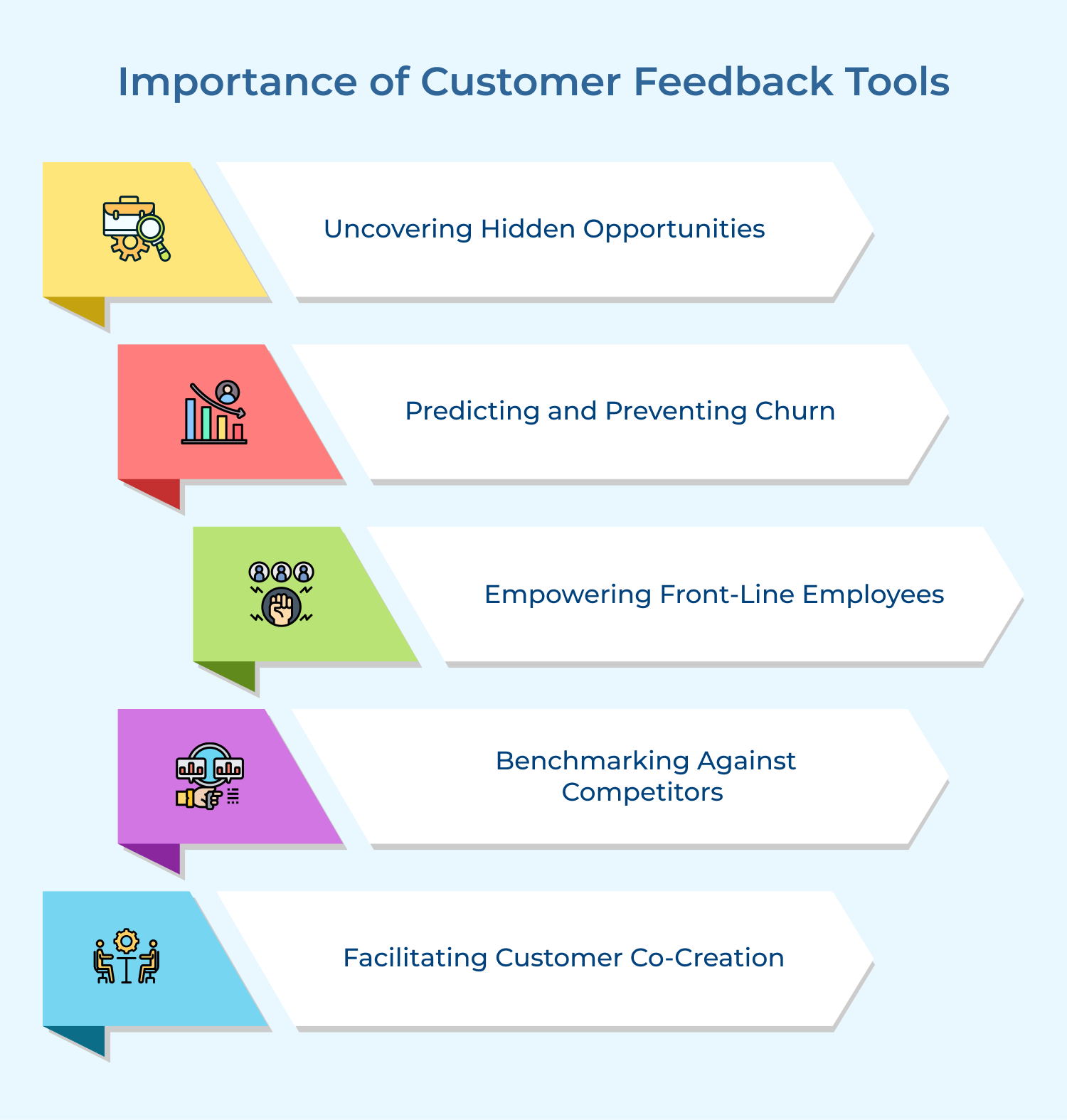
Customer feedback tools often reveal unexpected insights that may not be apparent through other means. Customers might highlight uses for your product you hadn’t considered or point out features they wish existed. These insights can spark innovation, leading to new product lines or even entirely new opportunities.
Advanced customer feedback tools can help identify patterns that predict customer churn. The early warning system allows businesses to proactively address issues, potentially saving valuable customer relationships and reducing churn rates.
Customer service representatives, sales teams, and other customer-facing staff can use this real-time feedback to adjust their approaches more effectively, and personalize interactions. The empowerment can lead to improved employee satisfaction and performance.
Many customer feedback tools allow businesses to benchmark their performance against industry standards. The data is invaluable for understanding your position in the market, where you’re outperforming and setting realistic improvement goals.
Transform customers from passive respondents into active participants in your business development. It not only leads to products and services that better meet customer needs but also fosters a sense of ownership and loyalty among participating customers.
The best customer feedback tool is the fastest way to close the gap between what your business delivers and what customers actually want. Omni24 combines AI-powered surveys, omnichannel communication and real-time analytics to offer the best balance of depth.
Ready to see it in action? Book a live demo today. The best customer feedback tools drive decisions that build lasting customer loyalty.
Omni24’s customer engagement platform harnesses automation and AI to deliver unified customer experiences across digital channels, while keeping human touch
Customer feedback tools allow businesses to gather feedback directly from customers, whether
through surveys, reviews, or social media channels. By understanding customers’ preferences, needs, and concerns, businesses can tailor their products and services to better meet customer expectations. This ultimately leads to increased customer satisfaction and loyalty, as customers feel heard and valued by the business.
Customer feedback tools provide valuable insights into customers’ interactions with products and services across their entire journey. Businesses can identify clear areas for improvement quickly by analyzing this feedback data without relying on internal guesswork or assumptions about customer needs.
The feedback-driven helps teams discover new features to implement and potential product ideas to ensure products truly meet customer needs instead of internal assumptions reducing costly development mistakes down the line.
Integrating customer feedback tools with existing systems helps streamline the entire collection and analysis process. It reduces manual work across departments. Most modern platforms offer flexible integration options that connect with tools your team already relies on daily.
Customer feedback tools provide businesses with valuable insights into market trends, customer preferences, and competitor positioning within the industry landscape. It helps team to inform smarter strategic decisions over time. This data supports market research in several key ways:
Customer feedback tools level the playing field for small businesses, allowing them to compete with larger corporations in terms of customer satisfaction and product development. By leveraging customer feedback tools, small businesses can better understand their target audience, refine their products and services, and build strong customer relationships. Additionally, customer feedback tools are often cost-effective and easy to implement, making them an ideal solution for small businesses with limited resources.
Customer feedback tools collect data through various channels, such as online surveys, feedback forms, social media monitoring, and review platforms. Once data is collected, these tools use analytical techniques to organize, categorize, and analyze feedback data.
This analysis provides businesses with valuable insights into customer preferences, satisfaction levels, and areas for improvement. By leveraging customer feedback tools, businesses can make data-driven decisions that drive growth and success.
 https://omni24.io/wp-content/uploads/2026/09/Social-commerce-scaled.png
1340
2560
Webvision Solution
https://omni24.io/wp-content/uploads/2023/04/Omni-Logo-1.svg
Webvision Solution2026-10-23 12:18:272026-10-23 12:18:27What is Social Commerce and Why Does It Matter?
https://omni24.io/wp-content/uploads/2026/09/Social-commerce-scaled.png
1340
2560
Webvision Solution
https://omni24.io/wp-content/uploads/2023/04/Omni-Logo-1.svg
Webvision Solution2026-10-23 12:18:272026-10-23 12:18:27What is Social Commerce and Why Does It Matter? https://omni24.io/wp-content/uploads/2026/08/AI-Customer-Service-Agents.png
1256
2400
Webvision Solution
https://omni24.io/wp-content/uploads/2023/04/Omni-Logo-1.svg
Webvision Solution2026-09-21 04:48:512026-09-21 04:48:51How to Build an AI Customer Service Agents: 8 Key Steps
https://omni24.io/wp-content/uploads/2026/08/AI-Customer-Service-Agents.png
1256
2400
Webvision Solution
https://omni24.io/wp-content/uploads/2023/04/Omni-Logo-1.svg
Webvision Solution2026-09-21 04:48:512026-09-21 04:48:51How to Build an AI Customer Service Agents: 8 Key Steps https://omni24.io/wp-content/uploads/2026/08/Omnichannel-Conversational-AI.png
1256
2400
Tushar Joshi
https://omni24.io/wp-content/uploads/2023/04/Omni-Logo-1.svg
Tushar Joshi2026-09-16 03:51:072026-09-16 03:51:07How to Build Omnichannel Conversational AI Strategy
https://omni24.io/wp-content/uploads/2026/08/Omnichannel-Conversational-AI.png
1256
2400
Tushar Joshi
https://omni24.io/wp-content/uploads/2023/04/Omni-Logo-1.svg
Tushar Joshi2026-09-16 03:51:072026-09-16 03:51:07How to Build Omnichannel Conversational AI Strategy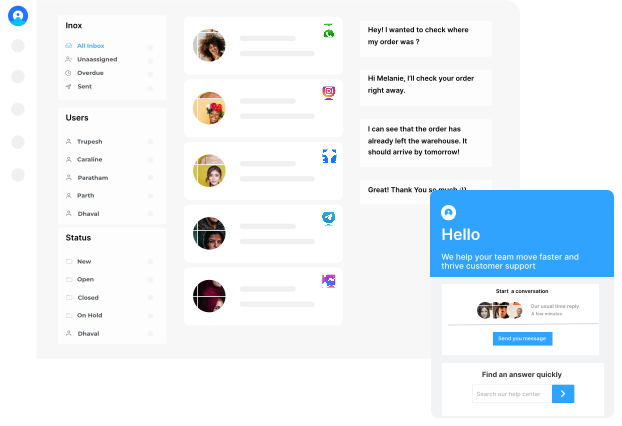
Whether it’s about acquire, engage or support – Omni24 covers all your customer engagement needs in one complete platform.

Copyright ©2026 Veemo All rights reserved.
CA, Los Angeles, Hall Ave, 19011