10 Best Omnichannel Messaging Platform & Software for Businesses
Omnichannel messaging software revolutionizes how businesses communicate with customers and increases their satisfaction levels.


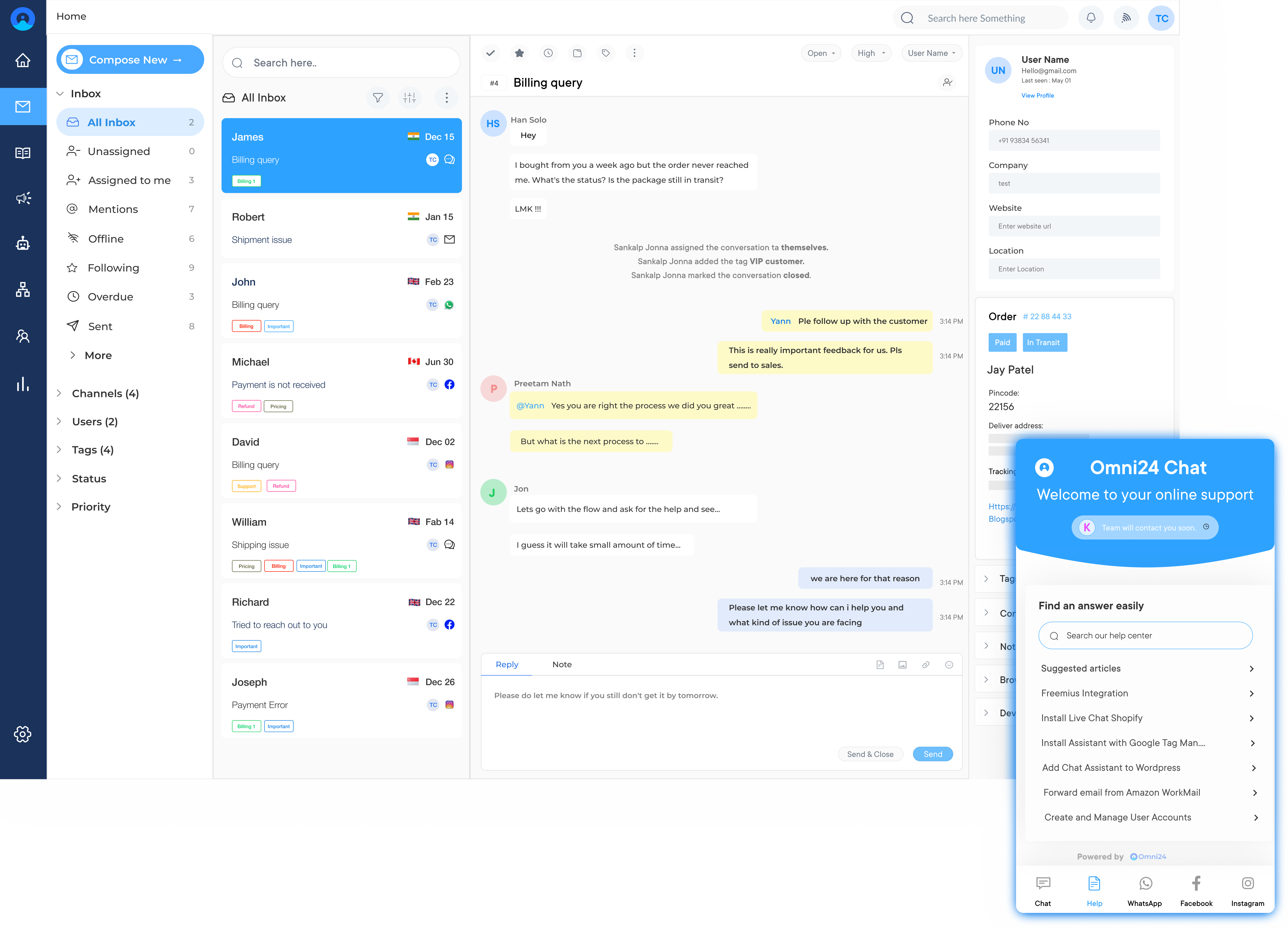
Omnichannel messaging software revolutionizes how businesses communicate with customers and increases their satisfaction levels.
Allow businesses to connect with customers through various communication channels from a single platform using a robust omnichannel messaging software.
Make your business cost efficient by scaling it high with the top omnichannel messaging tools. The software removes inter-departmental silos, integrates with other systems and collaborates more efficiently.
Leveraging an omnichannel messaging software, businesses can deliver a seamless experience across all channels. It promotes loyalty and encourages customers to return.
Deliver consistent support to customers by using the best omnichannel messaging platform. Offer personalized and timely communication that will help your business to enhance customer satisfaction levels significantly.
Targeted and personalized marketing campaigns powered by omnichannel messaging tools lead to higher engagement rates. Consequently, it leads to better conversation rates.
Many businesses face the problem of scattered conversations across email, SMS, WhatsApp, live chat and social media, which drain agent productivity. Omnichannel Messaging Software comes into play by unifying every channel into a single platform where conversations flow seamlessly across touchpoints.
Businesses failing to deliver consistent cross-channel communication see lower retention, while with connected messaging report comparatively higher. Walk through the guide to explore top platforms based on key features, selection criteria and what to expect.
An omnichannel messaging software refers to a communication tool that allows businesses to connect with their customers across multiple channels, such as email, SMS, social media and chat apps, in a consistent manner.
The omnichannel customer communication tool integrates all these channels into a single platform, providing a 360-degree view of customer interactions and enabling a more personalized as well as targeted approach to messaging.
To help you choose the best omnichannel messaging tool for your business, we’ve compiled a comparison table of some of the top options available:
| Software | Key Features | Price | Trial |
|---|---|---|---|
| Omni24 | 1. AI-powered chatbots 2. Unified inbox 3. Customer journey mapping 4. Analytics and reporting |
Starts at $34/month per user | 14-day free trial |
| Veemo | 1. Multi-channel messaging 2. Video chat integration 3. Team collaboration tools 4. CRM integration |
Starts at $34/month per user | 14-day free trial |
| LivePerson | 1. AI-driven conversational platform 2. Intent detection 3. Proactive messaging |
Custom pricing; contact for a quote | Demo available upon request |
| Twilio Flex | 1. Programmable contact center 2. Omnichannel routing 3. Customizable UI |
Starts at $1/active user hour or $150/named user per month | Pay-as-you-go option available |
| Freshdesk Messaging | 1. Unified conversation view 2. AI-powered chatbots 3. Team inbox |
Starts at $15/agent per month | 21-day free trial |
| RingCentral Engage Digital | 1. Social media management 2. Automated routing 3. Sentiment analysis |
Custom pricing; contact for a quote | Demo available upon request |
| Intercom | 1. Multi-channel inbox integration 2. Custom chatbots 3. Audience segmentation |
$74/month | 14 days |
| MessageBird | 1. Flow builder 2. Custom API integration 3. Analytics dashboard |
$35/month | 30 days |
| Zendesk | 1. Unified agent workspace 2. AI-powered automation 3. Custom reporting |
$49/agent/month | 14 days |
Having the right omni-channel messaging platform is crucial for businesses looking to effectively communicate with their customers across multiple channels.
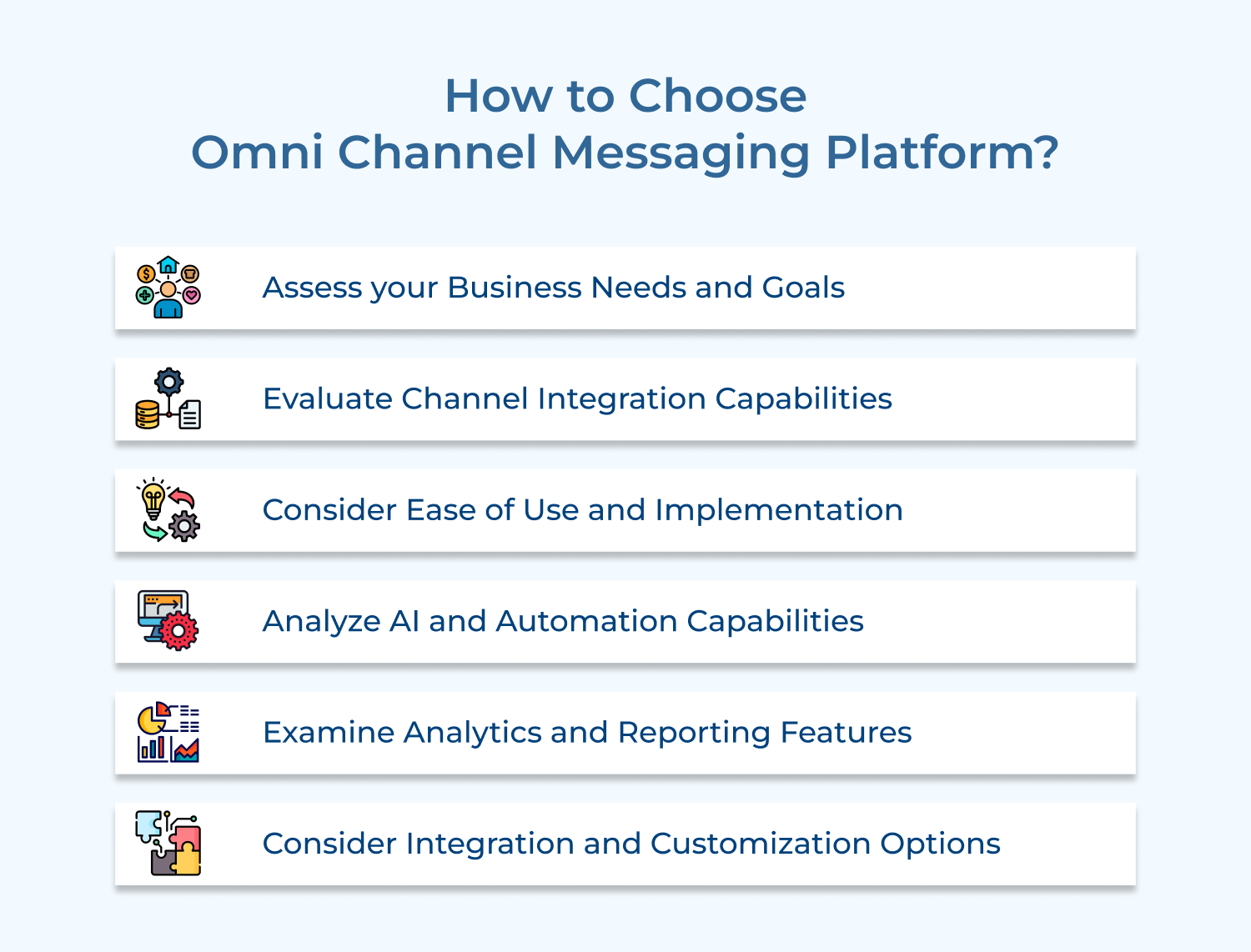
Begin by thoroughly evaluating your company’s specific requirements and objectives. Consider factors such as the size of your customer base, the channels they prefer and the volume of interactions you handle daily.
Are you looking to improve response times, increase customer satisfaction, or boost sales through proactive engagement? Understanding your goals will help you prioritize features and capabilities when comparing different platforms.
The essence of an omnichannel platform is its ability to seamlessly integrate various communication channels. Ensure that the platform you choose supports all the channels your customers use. Look for solutions that offer a unified inbox, where agents can manage all interactions regardless of the channel.
Look for a solution with an intuitive interface that your agents can quickly learn and navigate. Consider how long it will take to set up and integrate with your existing systems? Some platforms offer out-of-the-box solutions that can be implemented quickly, while others may require more extensive customization.
Evaluate the AI capabilities of each platform, including chatbots, natural language processing and machine learning features. Look for solutions that offer intelligent routing to direct queries to the most appropriate agent based on skills and availability. Consider platforms that provide sentiment analysis to help prioritize urgent or sensitive issues.
Automation features like canned responses, workflow automation and proactive messaging can significantly improve efficiency.The right balance of AI and human touch can lead to improved customer satisfaction and operational efficiency.
Data-driven decision making is crucial for continual improvement of your customer service strategy. Look for platforms that offer comprehensive analytics and reporting capabilities. These should include real-time dashboards for monitoring key performance indicators, as well as detailed reports on metrics:
The ability to track agent performance can be valuable for training and resource allocation. Look for platforms that allow you to customize reports and easily export data for further analysis.
Your omnichannel messaging platform should work harmoniously with your existing tech stack. Evaluate each platform’s ability to integrate with your CRM, help desk software, e-commerce platform and other critical business tools.
Some platforms offer extensive customization options, allowing you to create a unique experience for your customers and agents. But, balance the need for customization with ease of use and maintenance. The right platform should offer enough flexibility to meet your specific needs without requiring extensive ongoing development work.
Omnichannel messaging software has become a popular solution for many businesses in this digital era.
Excellent omnichannel platform for SMBs & enterprises
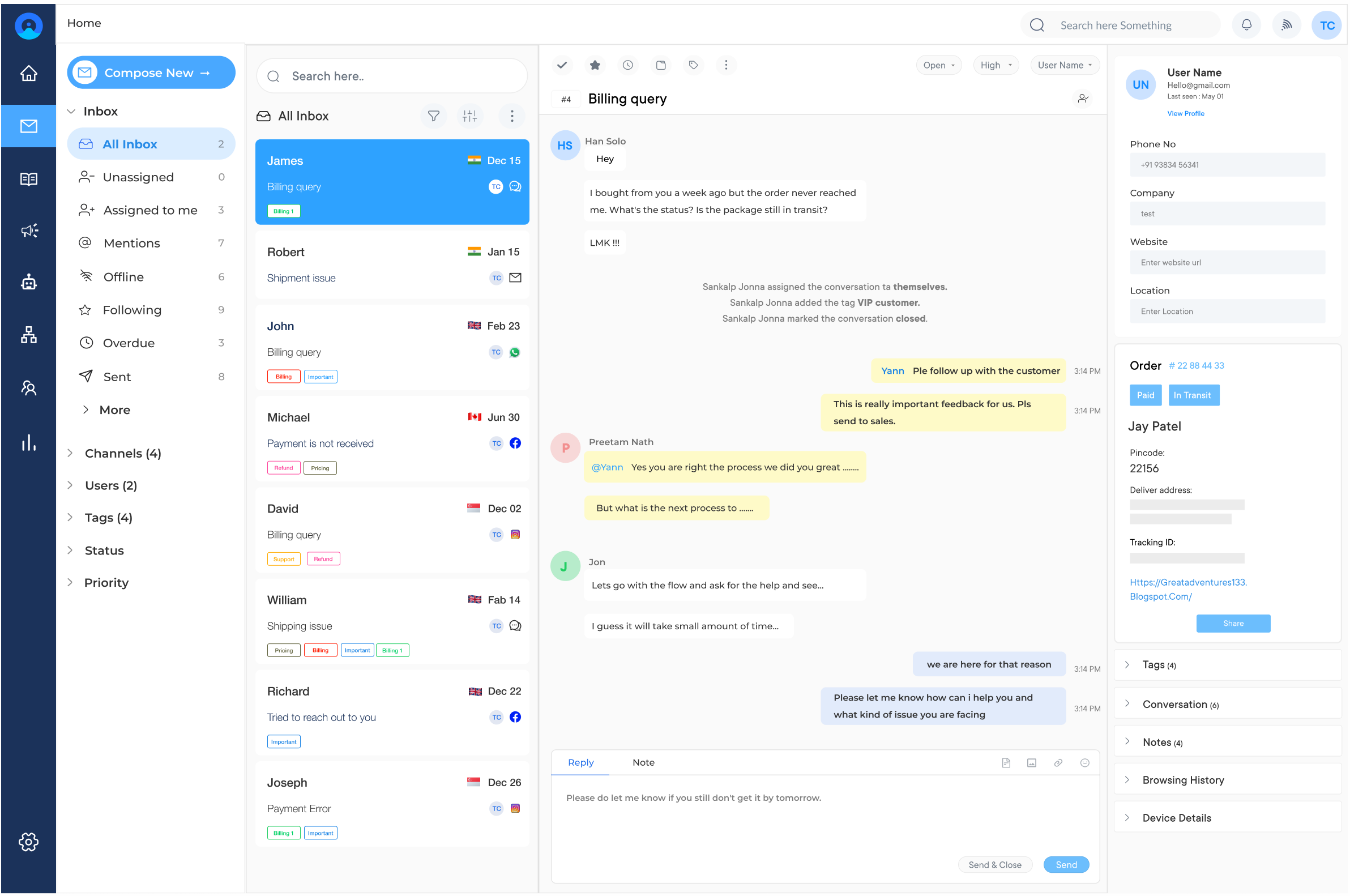
Omni24 is an AI-powered omnichannel customer engagement platform that unifies support, sales, and marketing across the entire customer lifecycle. It brings every conversation, from chat and email to social media, into a single interface, giving businesses one unified view of each customer relationship.
Businesses use Omni24 to manage conversations across channels without losing context, whether starting on WhatsApp and continuing over email or switching from social media to live chat. Automation and chatbots handle routine tasks, while the unified customer view provides agents with full conversation history for personalized responses.
Key features:
Pricing: The pricing starts from $34/month. The pricing depends on factors like the number of users, the level of features required and the scale of customer support operations. Omni24 also offers a 14-day free trial for businesses to explore its features before making a commitment.
Best omnichannel messaging software
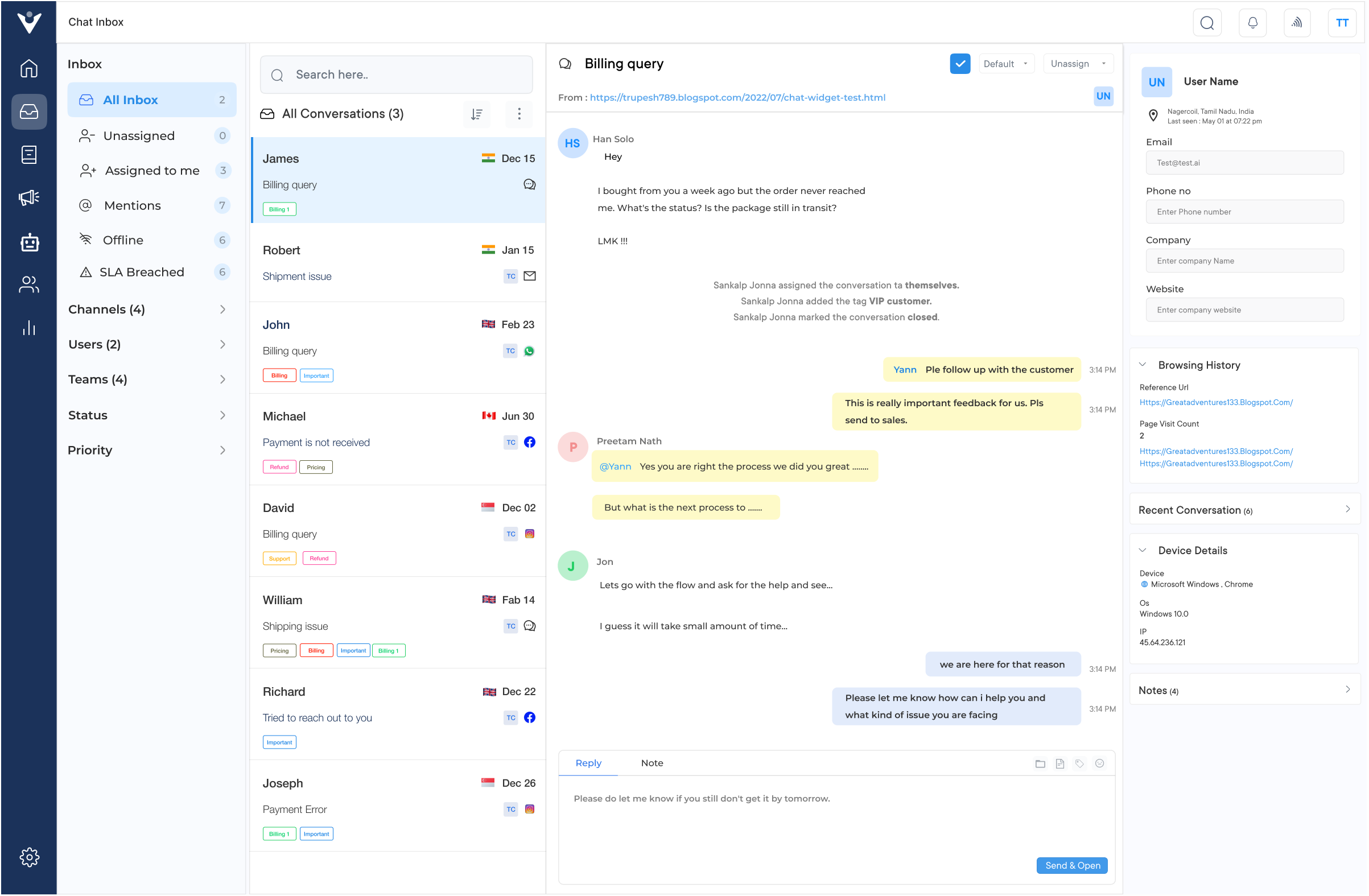
Veemo Support is a customer support and help desk software built to manage conversations across every messaging channel such as email, chat, social media, etc. It’s part of Veemo’s broader customer engagement suite, giving support teams a connected system for handling every customer request efficiently.
The platform’s shared inbox brings every customer conversation into one unified place, so agents never lose context as customers switch channels mid-conversation. Workflow automation enables businesses to manage routine tickets, freeing up teams to resolve complex issues faster.
Key features:
Pricing: There are three pricing plans – the Growth plan starts at $34/user/month with basic features. The Team plan is priced at $79/user/month with more features. The Enterprise plan is priced at $149/user/month which includes advanced features. The software pricing is also customizable as per business requirements. It also offers a 14-day free trial.
Modern omnichannel messaging tool
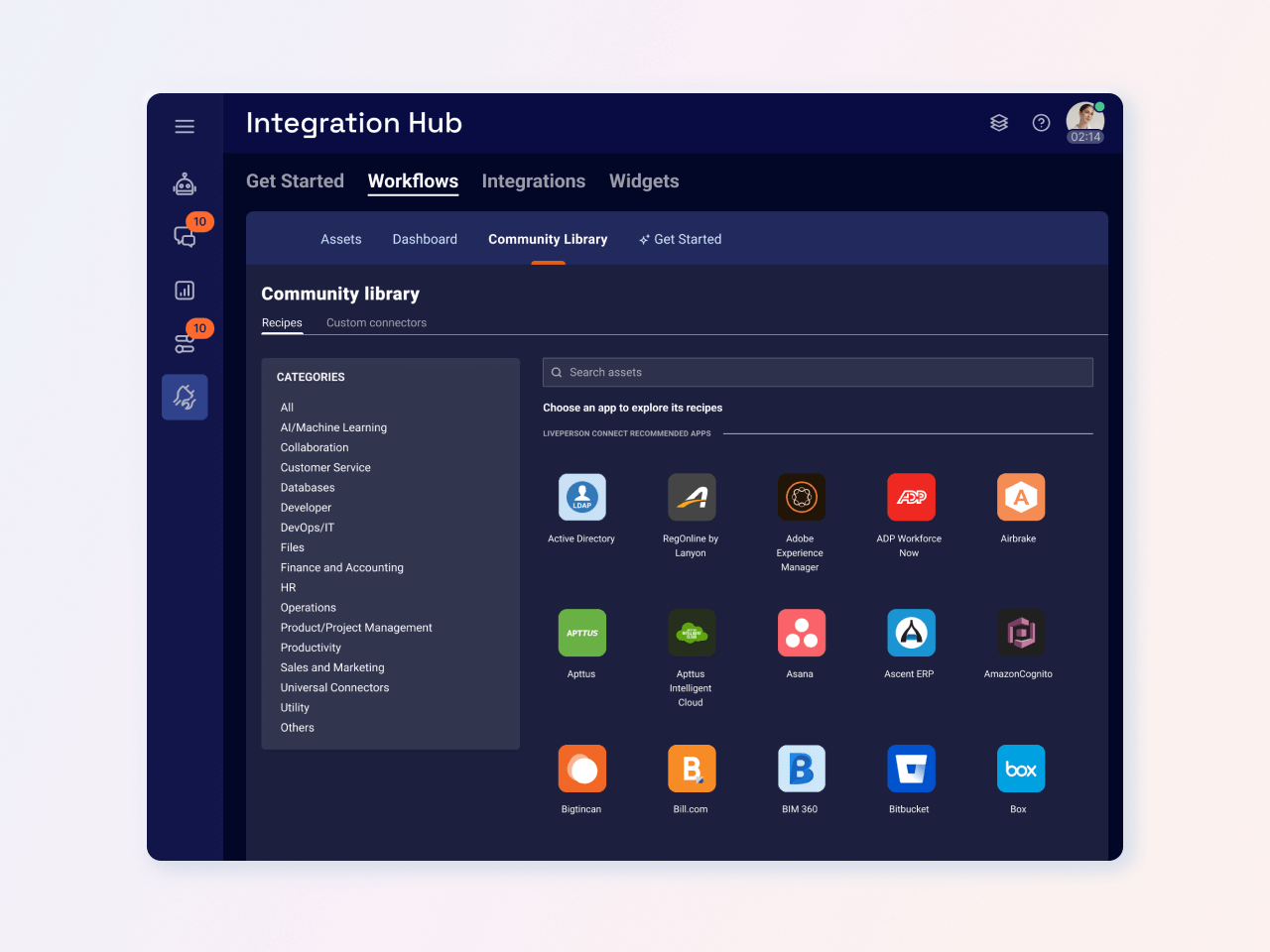
LivePerson is an AI-powered conversational platform that focuses on creating meaningful connections between brands and customers across messaging channels.
Key features: AI-powered conversational bot, intent analysis, personalized messaging, seamless bot-to-human handoffs, conversation analytics and integration with popular messaging apps.
How it helps business: LivePerson helps businesses automate and personalize customer interactions at scale. It reduces costs by handling routine inquiries automatically while improving customer satisfaction through timely responses across preferred channels.
Read more: Not satisfied with LivePerson? Here are some powerful LivePerson alternatives worth considering.
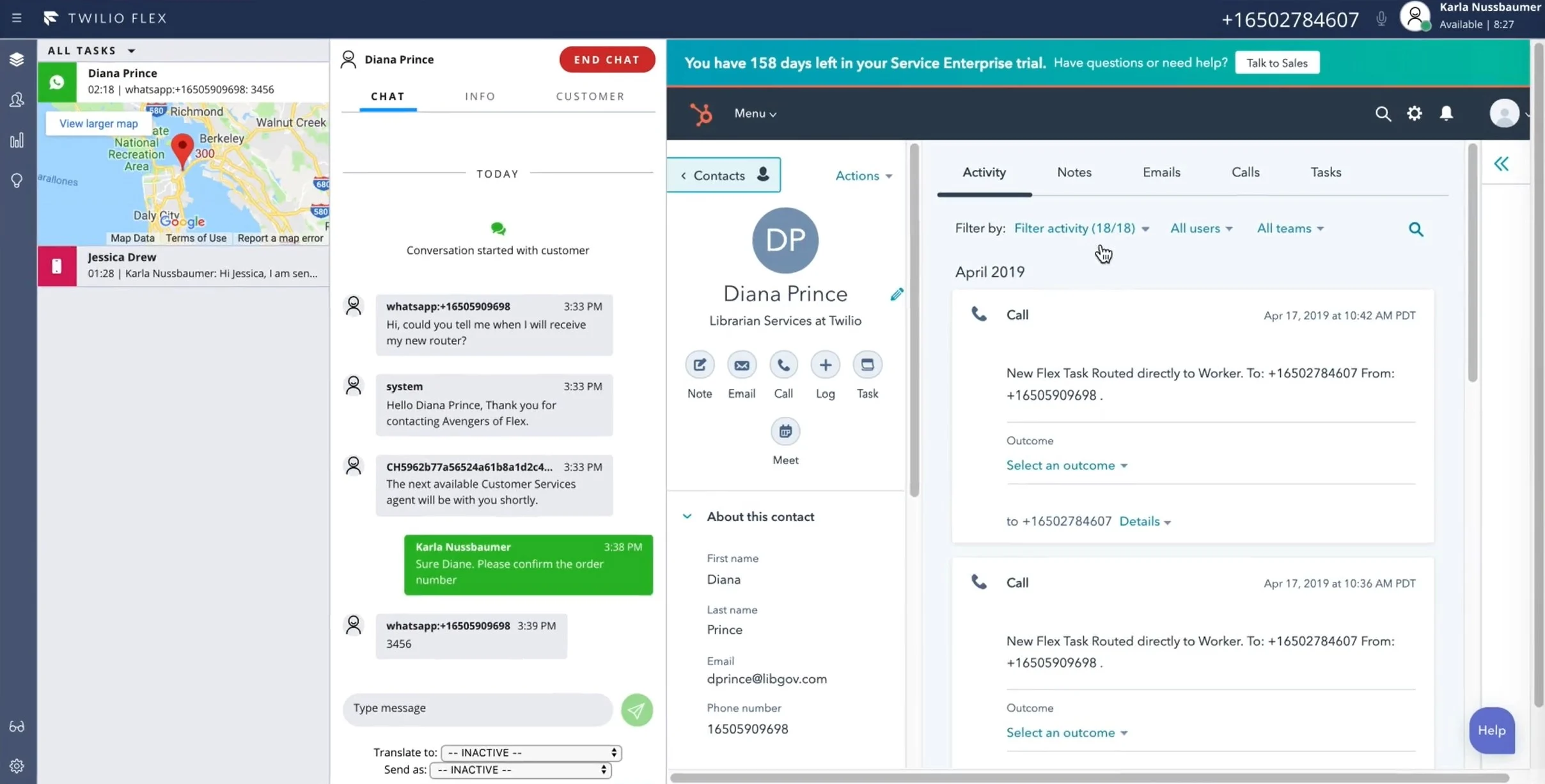
Twilio Flex is a programmable contact center platform that allows businesses to create custom omni channel communication experiences.
Key features: Fully customizable interface, support for voice, SMS, chat and social channels, workforce management tools, real-time reporting as well as extensive API for integrations.
How it helps business: Twilio Flex gives businesses complete control over their customer communication stack. It allows for tailored solutions that fit specific business needs, improving efficiency and providing a consistent brand experience across all touchpoints.

Freshdesk Messaging (formerly Freshchat) is part of the Freshworks suite, offering a modern messaging platform for customer engagement across web, mobile and social channels.
Key features: AI-powered chatbots, contextual messaging, campaign management, custom chat widgets, team collaboration tools & integration with Freshdesk and other Freshworks products.
How it helps business: Freshdesk Messaging enables businesses to provide instant support to customers. It helps increase engagement, improve conversion rates and enhance customer satisfaction by offering timely assistance across multiple channels.
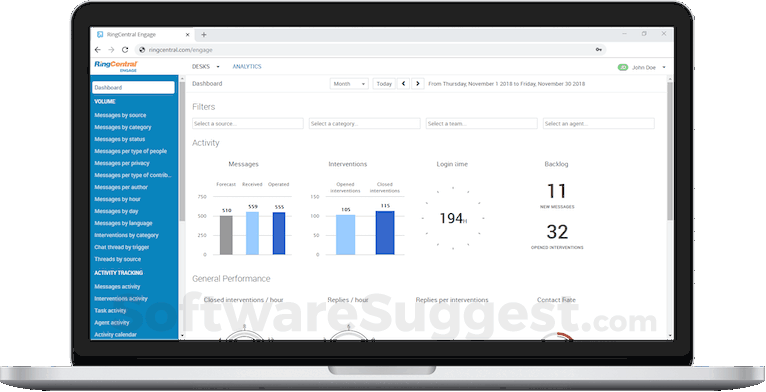
RingCentral Engage Digital is an AI-powered customer engagement platform that unifies digital channels into a single efficient workspace.
Key features: Unified agent desktop, AI-assisted routing, automated task distribution, social media management, sentiment analysis and integration with RingCentral’s communication suite.
How it helps business: RingCentral Engage Digital helps businesses manage high volumes of digital interactions efficiently. It improves agent productivity, ensures consistent messaging across channels and provides valuable insights to enhance customer experience strategies.
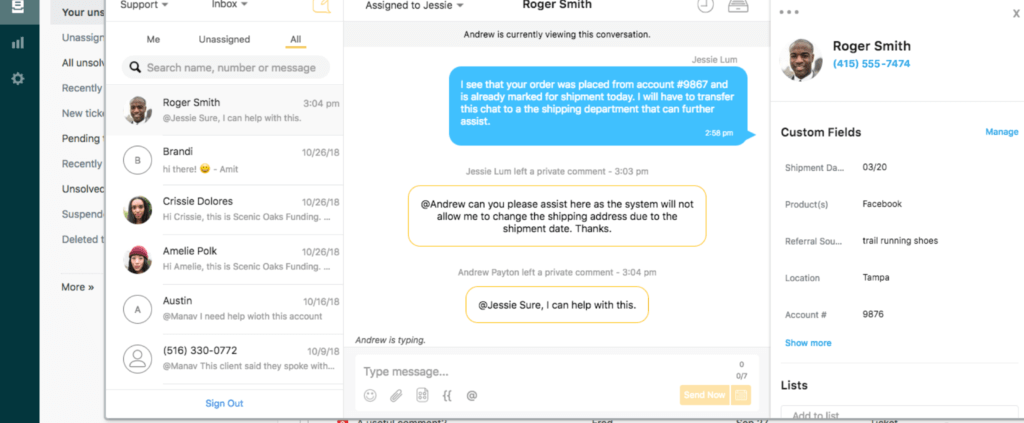
Zendesk stands as a comprehensive customer service platform that unifies all customer interactions across channels. It excels in creating seamless conversations by integrating email, social media, chat, and voice support into a single interface.
The platform’s strength lies in its ability to maintain context across all customer touchpoints, enabling agents to deliver more personalized and efficient support. Its AI capabilities help automate routine inquiries while ensuring complex issues are properly routed to human agents.
Price: Starting at $49/agent/month. Enterprise plans available with custom pricing. Free trial offered for 14 days.

Intercom revolutionizes business messaging through its robust customer communication platform. It specializes in combining proactive support with targeted messaging and customer engagement tools.
The platform excels in providing contextual assistance through its Messenger feature, which can be embedded across websites and applications. Intercom’s standout quality is its ability to segment customers and automate personalized messaging sequences based on user behavior.
Price: Starts at $39/month for essentials. Custom pricing for enterprise solutions. Monthly billing available.

Drift specializes in conversational marketing and sales, offering intelligent chatbots and routing capabilities. Its unique approach focuses on revenue acceleration through conversational solutions.
The tool provides qualifying leads and connecting prospects with the right team members in real-time. It’s particularly effective for B2B companies looking to enhance their marketing and sales processes.
Key Features: Conversational AI, intelligent routing, meeting scheduler, custom playbooks, and revenue acceleration tools.
Price: Custom pricing based on features and scale. Premium features available for enterprise clients.
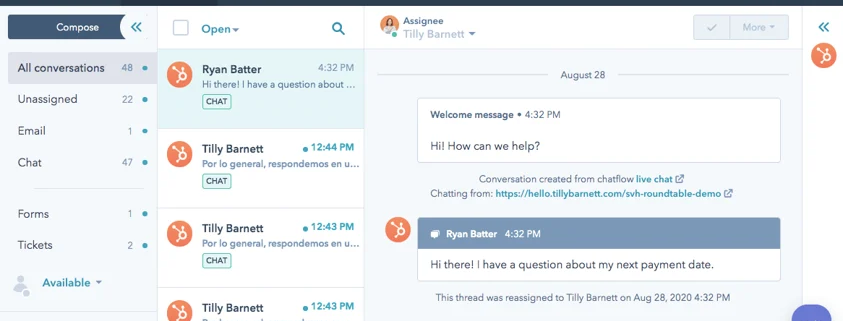
HubSpot Service Hub integrates seamlessly with its CRM platform to provide comprehensive customer service solutions. It specializes in connecting marketing, sales, and service teams through a unified platform.
The tool creates knowledge bases, facilitating customer self-service options while maintaining detailed customer interaction histories.
Key Features: Knowledge base tools, customer feedback surveys, ticket automation, conversation routing, and detailed reporting.
Price: Starter plan begins at $45/month. Professional and Enterprise plans available with advanced features.
Businesses are aggressively investing in omnichannel messaging platforms to engage with customers on multiple channels seamlessly. Let’s learn the reasons why they choose to do it:

A unified inbox consolidates messages from various channels into a single interface, allowing agents to manage all customer interactions efficiently. The centralized approach ensures consistent communication and eliminates the need to switch between multiple platforms.
Key aspects:
Chatbots and AI-powered assistants automate routine inquiries and provide instant responses to customers. The capability enhances efficiency, reduces response times and allows human agents to focus on more complex issues that require empathy.
Intelligent routing ensures that customer messages are directed to the most appropriate agent or department based on factors such as skill set, availability and customer history. It optimizes resource allocation and improves first-contact resolution rates.
Key aspects:
A comprehensive view of customer data and interaction history provides agents with context for each conversation. The context further enables them to deliver personalized service and helps agents understand the customer’s journey across different touchpoints.
Key aspects:
Robust analytics tools provide insights into customer communication patterns, agent performance and overall service quality. The data-driven approach helps businesses identify areas for improvement and make informed decisions about resource allocation strategy.
Key aspects:
Proactive messaging allows businesses to initiate conversations with customers based on their behavior, preferences, or specific triggers. Being proactive enables targeted marketing campaigns, personalized notifications and timely customer service interventions.
Key aspects:
The cross-channel capability ensures that customer conversations remain coherent and contextual, even when switching between channels. It allows for a seamless customer experience and prevents the frustration of having to repeat information.
Leveraging an omnichannel messaging software ensures that customers receive a consistent experience, regardless of the channel they choose to communicate through.
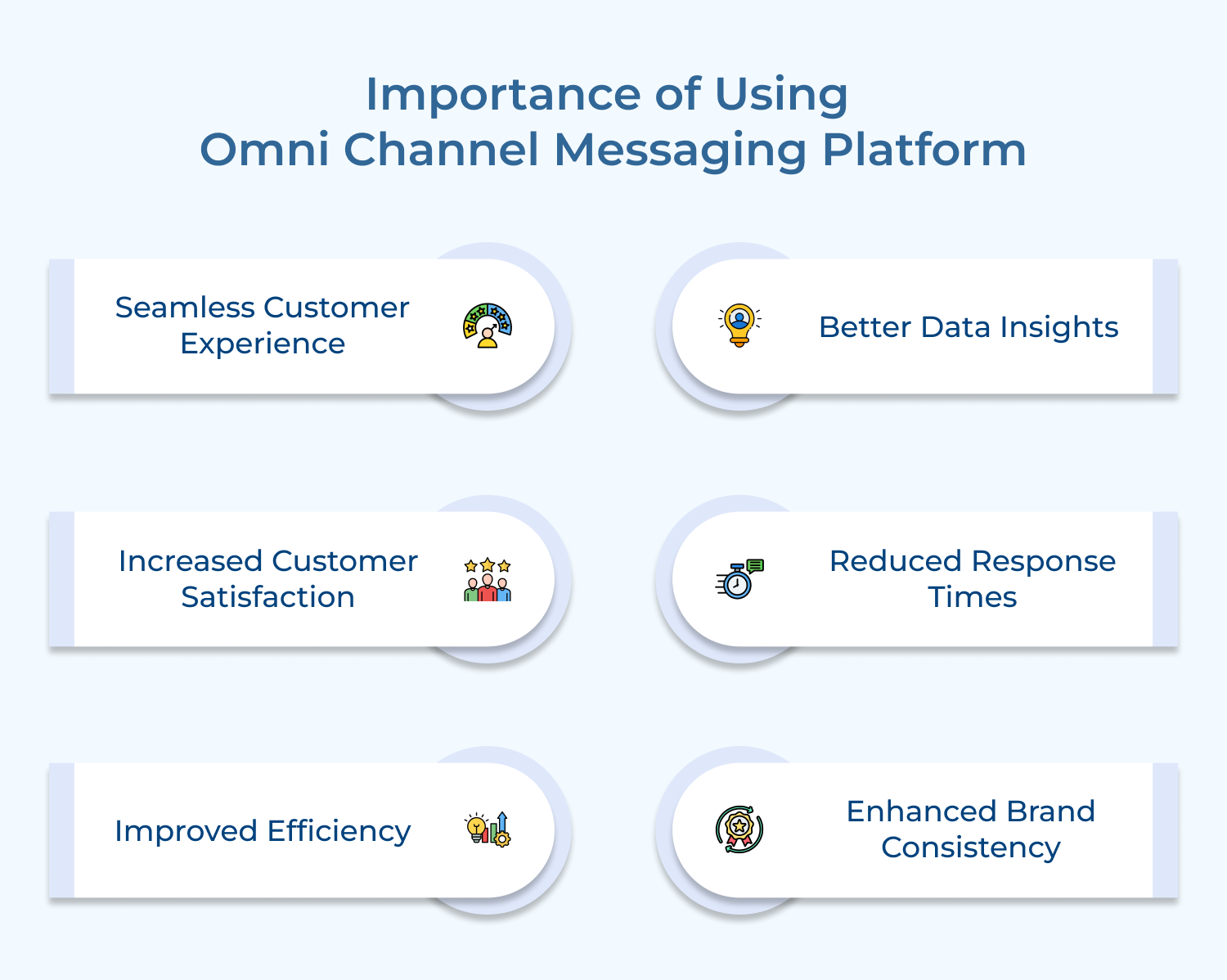
The right omnichannel messaging software eliminates communication silos, keeping every customer conversation in context and transforming fragmented touchpoints into a coherent experience. It is a baseline for growing businesses to maintain a scalable customer service.
Ready to see it in action? Start your 14-day free trial of Omni24. The businesses winning on customer experience are those that invest in a proven omnichannel messaging platform.
Omni24’s customer engagement platform harnesses automation and AI to deliver unified customer experiences across digital channels, while keeping human touch
To get started with omnichannel messaging, you first need to choose a reliable omnichannel messaging software provider. Once you have selected a provider, you will need to set up your account, integrate the software with your existing messaging platforms and learn how to use its features effectively. Many providers offer training and support to help you get started with omnichannel messaging.
Omnichannel messaging software is designed with security in mind, since it involves handling sensitive customer data across multiple channels. Most reputable providers take this responsibility seriously, from data collection to storage and access controls.
They typically use encryption protocols to protect data in transit and at rest, while adhering to strict data protection regulations. It makes sure that the security and privacy of user information across every connected channel.
Omnichannel messaging software usage comes down to a few key practices that directly impact customer experience. Businesses that follow these consistently see stronger engagement and higher satisfaction across every messaging channel they operate.
Most omnichannel messaging software providers strive to create user-friendly interfaces that are intuitive and easy to navigate. They typically offer training resources, tutorials and customer support to help users maximize the software’s capabilities. Many providers regularly update their software to improve usability and address any user feedback or issues.
 https://omni24.io/wp-content/uploads/2026/08/AI-Customer-Service-Agents.png
1256
2400
Webvision Solution
https://omni24.io/wp-content/uploads/2023/04/Omni-Logo-1.svg
Webvision Solution2026-09-21 04:48:512026-09-21 04:48:51How to Build an AI Customer Service Agents: 8 Key Steps
https://omni24.io/wp-content/uploads/2026/08/AI-Customer-Service-Agents.png
1256
2400
Webvision Solution
https://omni24.io/wp-content/uploads/2023/04/Omni-Logo-1.svg
Webvision Solution2026-09-21 04:48:512026-09-21 04:48:51How to Build an AI Customer Service Agents: 8 Key Steps https://omni24.io/wp-content/uploads/2026/08/Omnichannel-Conversational-AI.png
1256
2400
Tushar Joshi
https://omni24.io/wp-content/uploads/2023/04/Omni-Logo-1.svg
Tushar Joshi2026-09-16 03:51:072026-09-16 03:51:07How to Build Omnichannel Conversational AI Strategy
https://omni24.io/wp-content/uploads/2026/08/Omnichannel-Conversational-AI.png
1256
2400
Tushar Joshi
https://omni24.io/wp-content/uploads/2023/04/Omni-Logo-1.svg
Tushar Joshi2026-09-16 03:51:072026-09-16 03:51:07How to Build Omnichannel Conversational AI Strategy https://omni24.io/wp-content/uploads/2026/08/Customer-Service-Teams.png
1256
2400
Tushar Joshi
https://omni24.io/wp-content/uploads/2023/04/Omni-Logo-1.svg
Tushar Joshi2026-09-15 04:01:522026-09-15 04:02:16How to Build Customer Service Teams: 6 Key Steps
https://omni24.io/wp-content/uploads/2026/08/Customer-Service-Teams.png
1256
2400
Tushar Joshi
https://omni24.io/wp-content/uploads/2023/04/Omni-Logo-1.svg
Tushar Joshi2026-09-15 04:01:522026-09-15 04:02:16How to Build Customer Service Teams: 6 Key Steps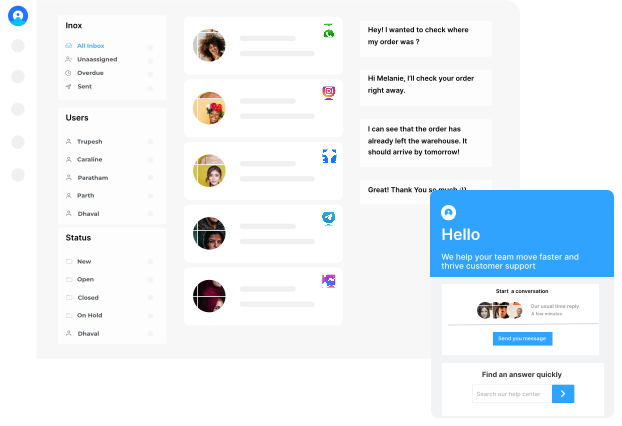
Whether it’s about acquire, engage or support – Omni24 covers all your customer engagement needs in one complete platform.

Copyright ©2026 Veemo All rights reserved.
CA, Los Angeles, Hall Ave, 19011