9 Best Conversational AI Platforms & Tools Compared
Conversational AI platforms deliver personalized experiences by leveraging customer data, helping businesses build stronger relationships and increase loyalty.


Conversational AI platforms deliver personalized experiences by leveraging customer data, helping businesses build stronger relationships and increase loyalty.
Scalable conversational AI platforms manage high volumes of interactions, allowing businesses to grow without compromising on the quality of customer service.
Leveraging conversational AI platforms allows businesses to provide continuous, round-the-clock support. It ensures that customers can access assistance whenever they need it, leading to improved client engagement.
The conversational AI platforms can manage a high volume of simultaneous interactions, making it easy to scale customer service operations as the business grows, without compromising the quality of service.
Conversational AI platforms use machine learning algorithms to deliver personalized responses, and create tailored interactions to meet customer needs/preferences. Offering personalized support increases customer loyalty and satisfaction.
Automating repetitive tasks and handling routine customer inquiries with conversational AI platforms can reduce the need for extensive human support teams. It leads to significant cost savings and more efficient resource allocation.
Support queues in your business grow faster than your team can handle, leading to customers escalating. The gap is due to a technology failure. Conversational AI platforms (CAPs) leverage NLP as well as ML to conduct human-like dialogues across chat, voice and messaging channels. Organizations adopting CAPs eliminate costs by 30% that static teams cannot match.
Explore the top tools by comparing their features, pricing, use cases and integration to help you make a confident decision. Find the best leading conversational AI platforms that match your business needs.
Conversational AI platforms are essentially software tools that use artificial intelligence (AI) to communicate with users in a natural, conversational manner. These platforms can take many forms, such as chatbots, voice assistants or even virtual agents.
Key objectives:
Conversation AI tools have become essential for businesses to enhance customer engagement that is more personalized. Let’s look into the comparison chart of some of the best tools.
| Software | Key Features | Price |
|---|---|---|
| Omni24 |
|
Free tier available; Enterprise pricing starts at $34 per month |
| Veemo |
|
Free tier available; Enterprise pricing starts at $34 per month |
| Microsoft Bot Framework |
|
Free tier available; Pricing based on Azure consumption |
| Rasa |
|
Open-source version free; Enterprise starts at $3,000/month |
| MobileMonkey |
|
Free plan available; Pro plan starts at $119/month |
| Dialogflow (Google) |
|
Standard: $0.002/request |
| Amazon Lex |
|
Voice: $0.004/request Text: $0.00075/request |
| Drift |
|
Plan starts at $2,500/month |
| Intercom |
|
Starter plan begins at $74/month |
Conversational AI tools have been revolutionizing the way businesses interact with customers, automate processes, and streamline operations. Here are its key capabilities to consider:

Conversational AI has the ability to understand and interpret human language. NLP and NLU technologies enable these tools to comprehend the context, intent and sentiment behind user inputs, whether they’re typed or spoken.
The advanced capability allows the AI to accurately interpret queries, even when they’re phrased in different ways or contain colloquialisms or industry-specific jargon. Advanced NLP can also handle complex queries, understand nuances as well as maintain context throughout a conversation, making interactions more natural and human-like.
Conversational AI tools excel at managing the flow of conversations. They can handle multi-turn dialogues, maintaining context and coherence throughout the interaction. Dialog management capabilities enable the AI to ask follow-up questions, provide relevant information sequentially, and guide users through complex processes or decision trees.
The dialog management feature is crucial for tasks like troubleshooting, where the AI needs to gather information step-by-step, or for sales processes where the AI might need to qualify leads through a series of questions.
Modern conversational AI platforms can seamlessly integrate with multiple communication channels. It includes websites, mobile apps, social media platforms, messaging apps, voice assistants and even IoT devices.
The ability to provide a consistent experience across various touchpoints is crucial in an omnichannel customer service environment. Users can start a conversation on one platform and continue it on another without losing context, enhancing the overall user experience.
Advanced conversational AI tools can personalize interactions based on user data, preferences, and interaction history. They can access information from CRM systems, past purchases, browsing behavior and other relevant data sources to tailor responses. The capability enables more relevant and engaging conversations, improving user satisfaction while potentially increasing conversion rates for businesses.
One of the most powerful capabilities of modern conversational AI is its ability to learn and improve over time. Through machine learning algorithms, these systems can analyze conversations, identify patterns and refine their responses based on successful interactions.
The continuous learning process allows the AI to handle a wider range of queries more accurately over time, adapt to changing user needs and even predict user intents based on historical data.
Conversational AI tools often come with robust analytics capabilities. They can analyze various metrics such as user engagement, common queries, conversation flows and resolution rates. The data provides valuable insights into user behavior, preferences and pain points.
Businesses can use these insights to improve their products, services and overall customer experience. Advanced analytics can also help in identifying trends, predicting customer needs, and informing strategic business decisions.
If you’re looking to incorporate conversational AI into your business strategy, here are some of the top conversational AI platforms to consider:
Excellent AI platform for conversational experiences

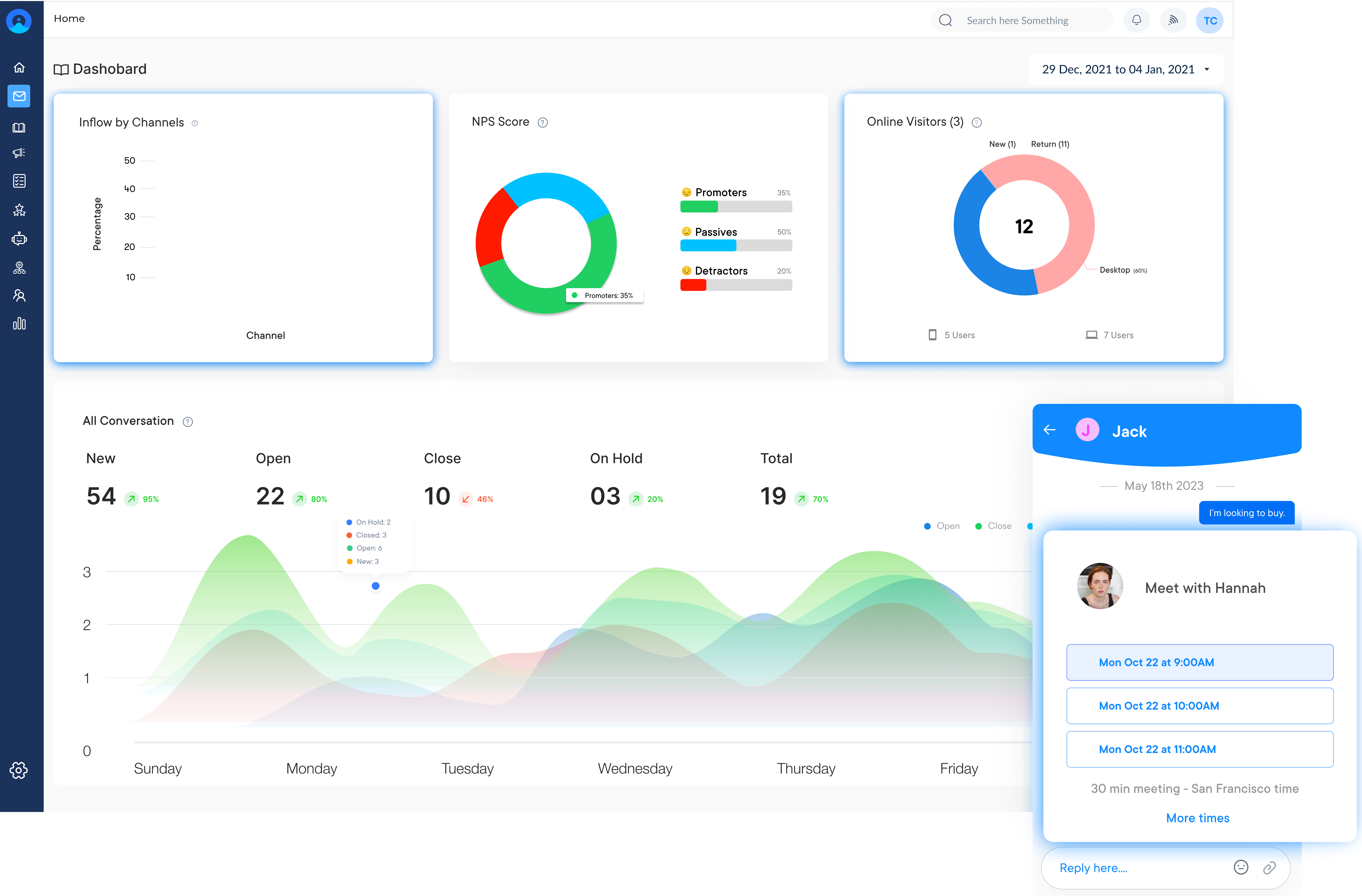
Omni24 is an AI-powered customer engagement platform that consolidates support, sales and marketing across the entire customer lifecycle. Instead of depending solely on a chatbot on top of existing workflows, it builds conversational capabilities directly into the system handling tickets, as well as campaigns.
Omni24’s chatbot avoids the grounding every conversation in actual support history and account data, so responses stay accurate as volume grows. Analytics and reporting also help identify where the chatbot requires improvement.
Key features:
Pricing: Omni24’s pricing starts from $29/user/month and goes up to $149/user/month based on the features along with add-ons. All plans come with 14 days free trial and include a shared inbox, knowledge base as well as omnichannel support.
Popular AI enabled conversational platform
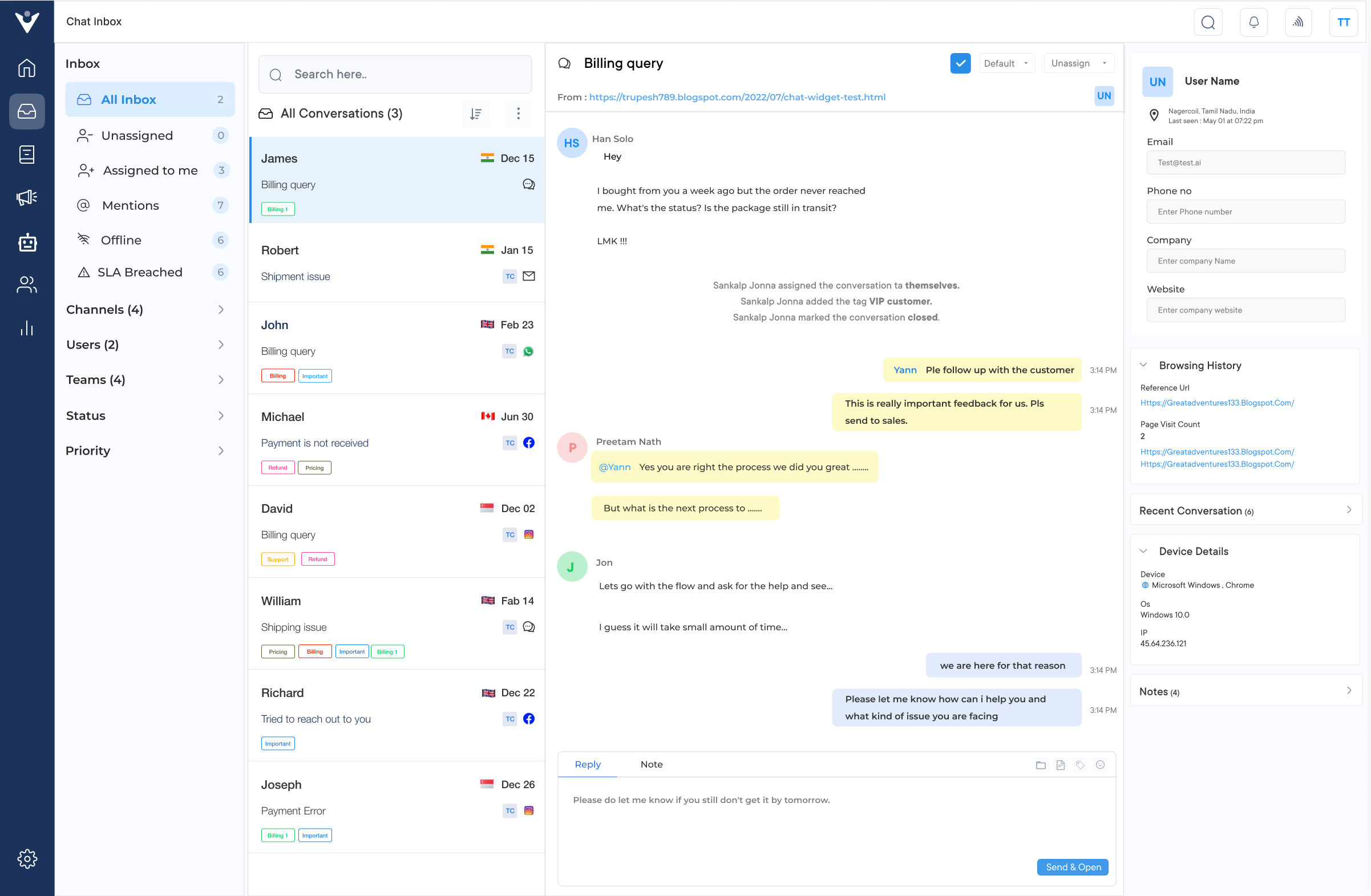
Veemo Chat is an omnichannel live chat software that helps businesses communicate with their customers in real-time, providing a seamless customer support experience. The software is a part of Veemo’s customer engagement suite of products designed to streamline and enhance various aspects of business operations.
Businesses use Veemo Chat to offer instant support to website visitors, resolve issues and provide personalized recommendations. One of its use cases is sales, where businesses engage with potential customers, address their concerns and guide them towards making a purchase.
Key features:
Pricing: Veemo’s pricing plans start from $29/user/month and go up to 129/user/month based on the features. The software pricing is also customizable as per business requirements.
Best AI chatbot building platform
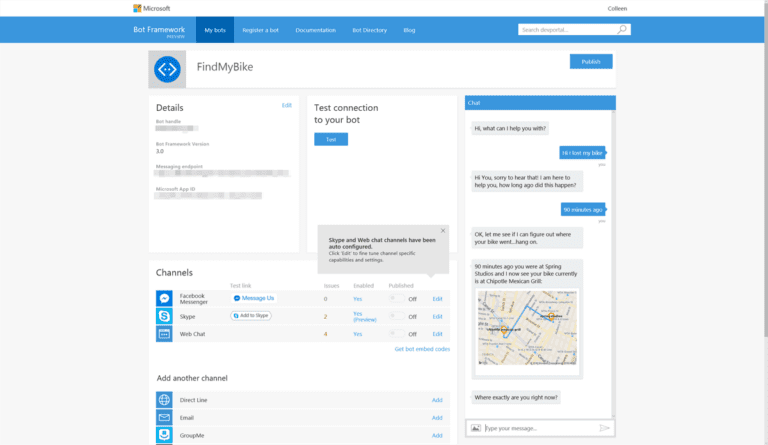
Microsoft Bot Framework is a comprehensive development platform for building and deploying intelligent bots. It integrates with Microsoft’s Azure cloud services and cognitive services, allowing developers to create sophisticated conversational interfaces for various channels as well as applications.
Key features: Visual bot builder, Language Understanding (LUIS), QnA Maker integration, multi-channel deployment, Azure integration and adaptive dialogs.
Pricing: Free tier available. Pricing primarily based on Azure consumption. Enterprise plans offer advanced features and support.
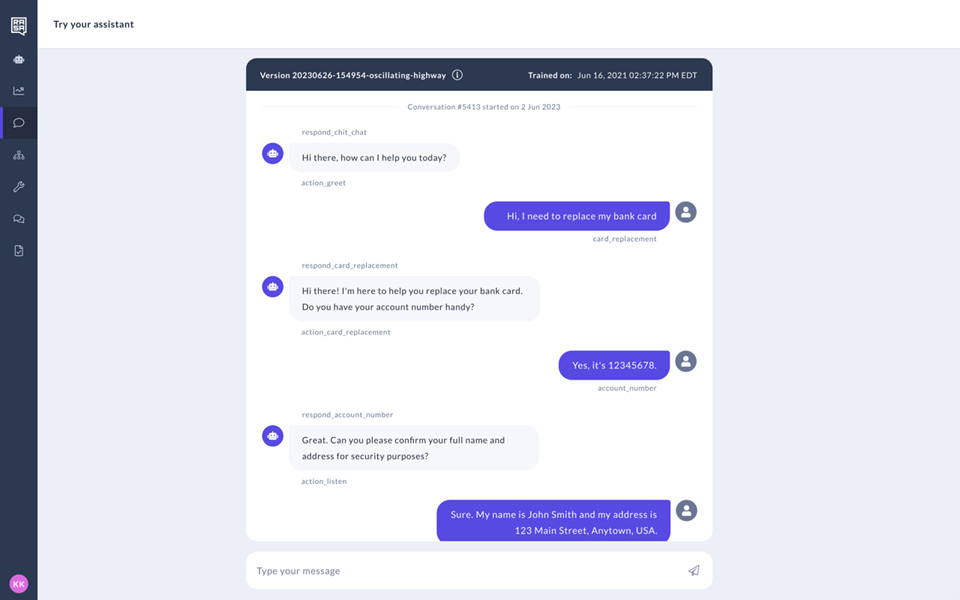
Rasa is an open-source machine learning framework for automated text and voice-based conversations. It allows developers to build contextual AI assistants and chatbots with full control over the underlying architecture, making it highly customizable as well as suitable for on-premises deployments.
Key features: Open-source, customizable NLU, contextual AI, integration flexibility, on-premises deployment options and advanced dialog management.
Pricing: Open-source version free. Rasa Enterprise starts at $3,000/month with custom pricing for large deployments.
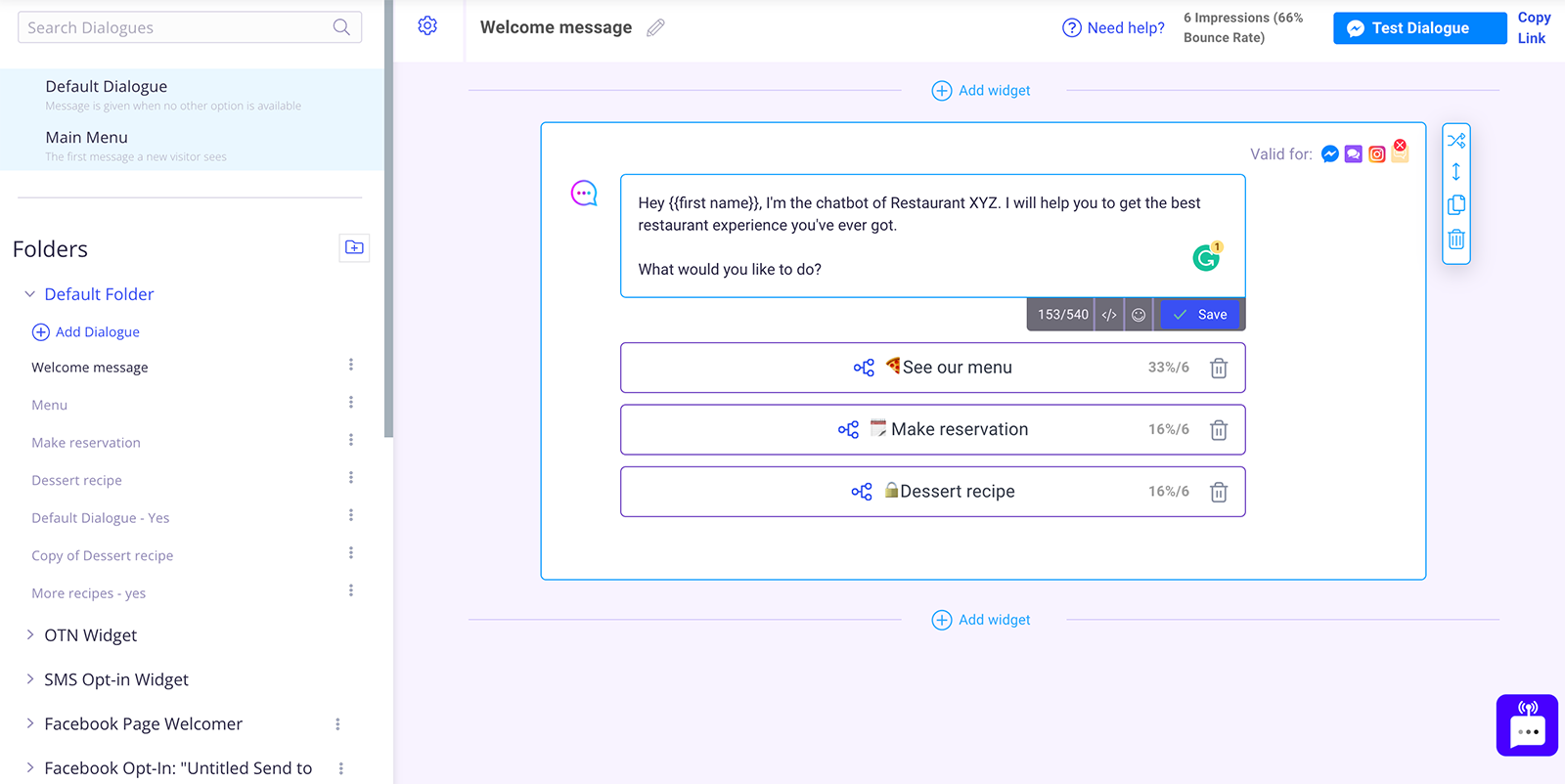
MobileMonkey is a multi-channel chatbot platform designed for marketing and customer service. It offers a user-friendly interface for building chatbots without coding with a focus on lead generation and customer engagement across various messaging platforms.
Key features: Visual chatbot builder, multi-channel bots, lead generation tools, audience segmentation, AI-powered chat blasting and integration with popular CRM systems.
Pricing: Free plan available for basic features. Pro plan starts at $119/month. Enterprise pricing available for larger businesses.
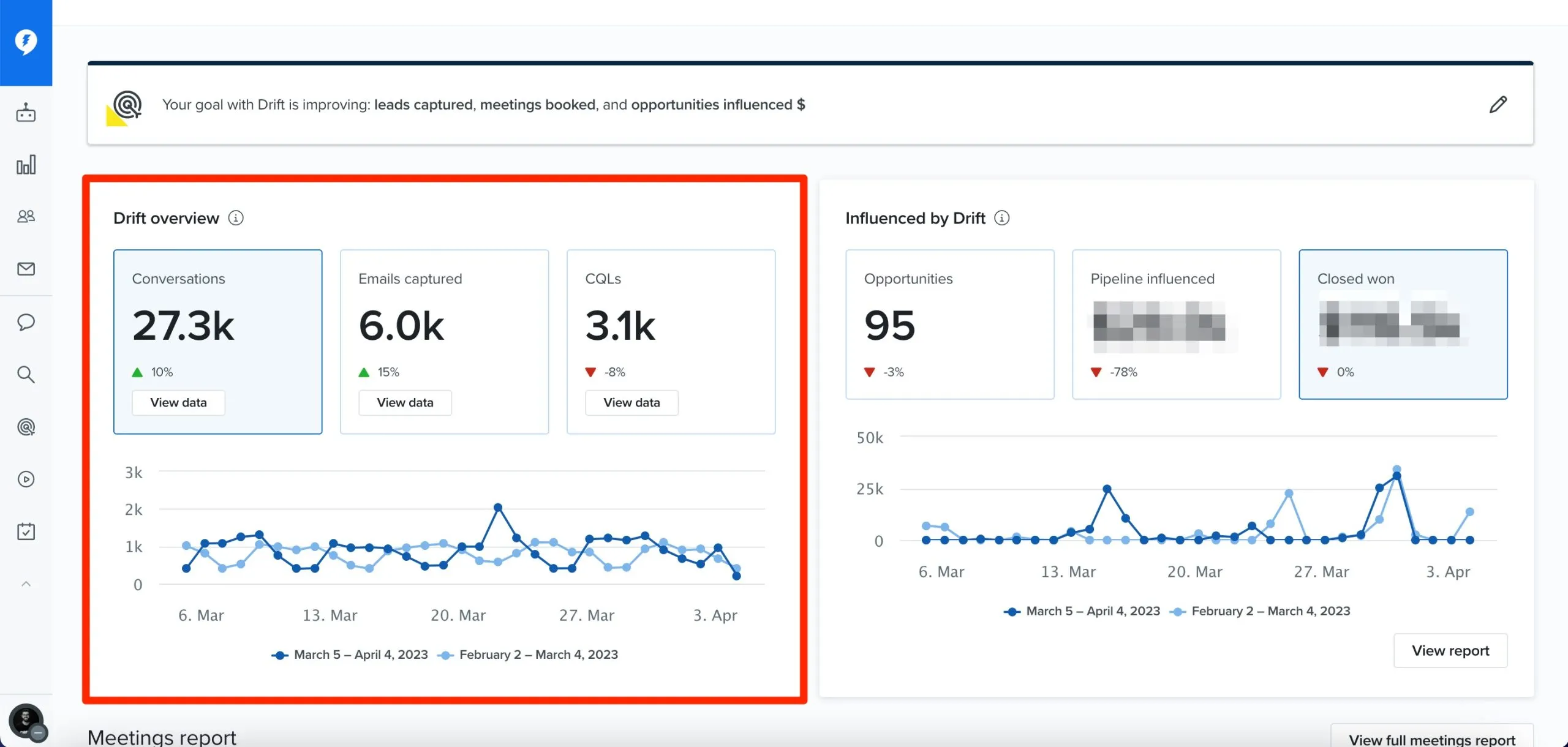
Drift is a revenue acceleration platform that uses conversational AI to connect businesses with the best leads in real-time. It focuses on converting website visitors into qualified leads through intelligent chatbots, integrating seamlessly with sales and marketing workflows.
Key features: Intelligent routing, account-based marketing, custom chatbots, video messaging, email automation along with advanced reporting and analytics.
Pricing: Premium plan starts at $2,500/month. Enterprise and custom pricing available for larger organizations.
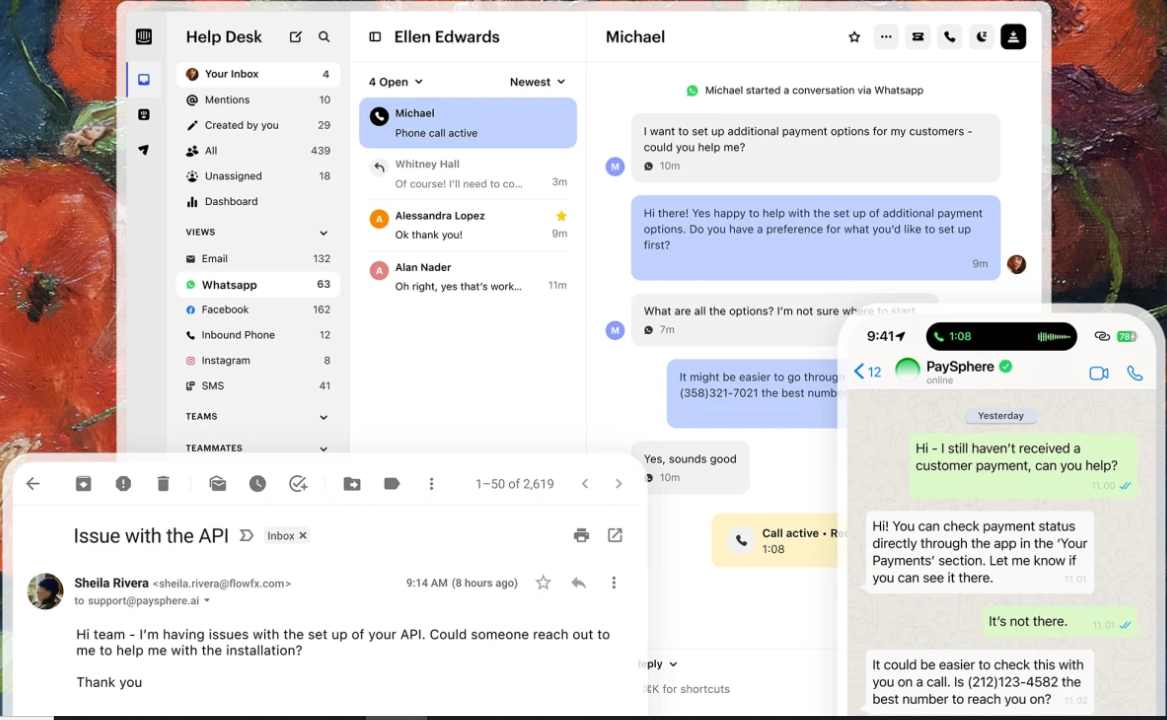
Intercom is a customer communications platform that combines chatbots, live chat and self-service support. Its conversational AI capabilities help businesses automate customer interactions while maintaining a personal touch, supporting both marketing and customer service functions.
Key features: Custom chatbots, targeted messaging, product tours, help center articles, customer segmentation and integration with various business tools.
Pricing: Starter plan begins at $74/month. Pro and Premium plans available with custom pricing for advanced features.
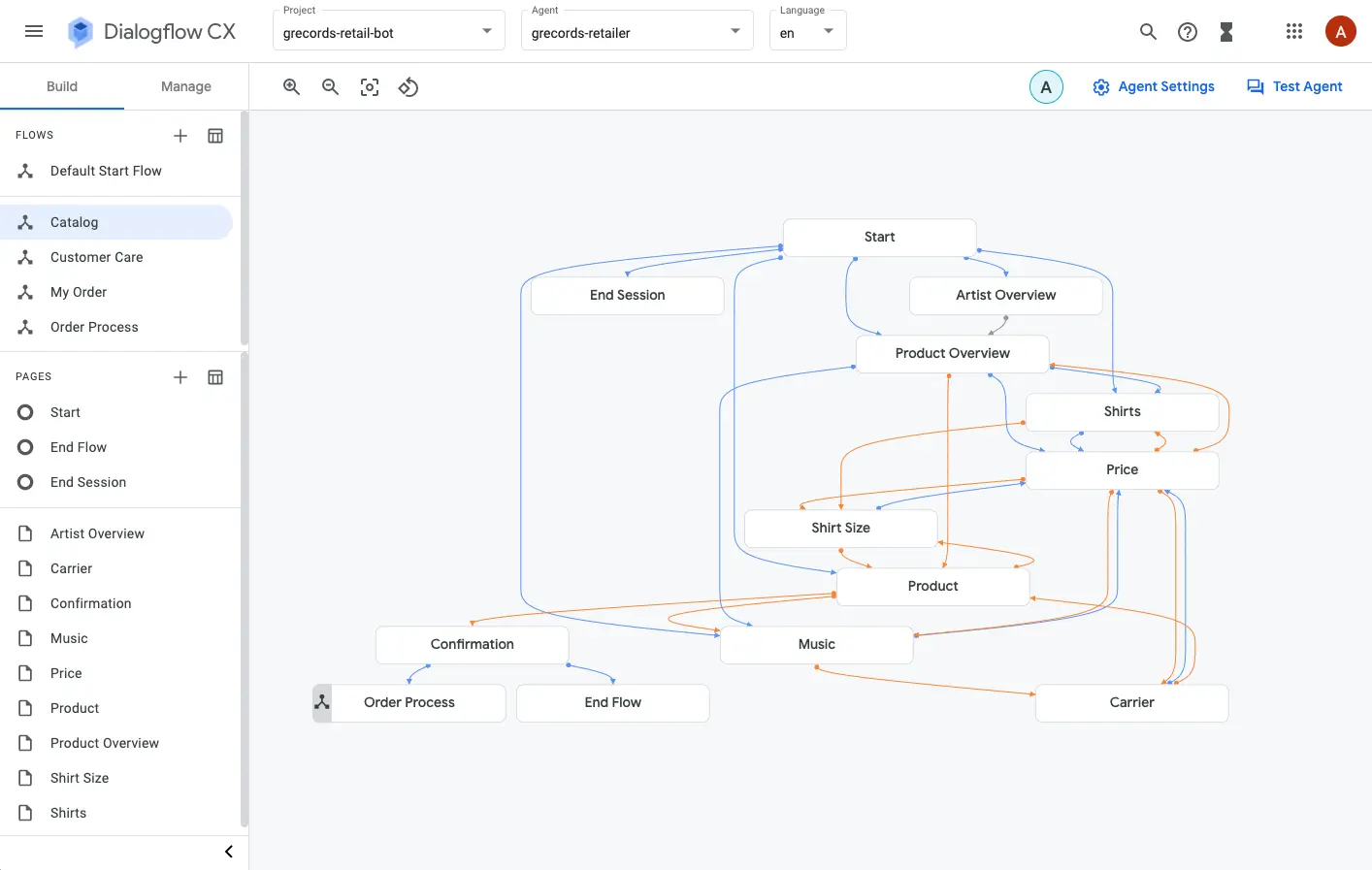
A natural language understanding platform that integrates machine learning and Google’s language expertise to create sophisticated conversational interfaces for websites, mobile applications, messaging platforms, and IoT devices. Perfect for businesses seeking robust integration with Google’s ecosystem and advanced language processing capabilities.
Key features: Multi-language support in over 30 languages, pre-built agents for common use cases, seamless integration with Google services, cross-platform deployment, robust analytics and monitoring tools, as well as voice recognition optimization.
Price: Free tier available with generous limits. Custom pricing for enterprise-level solutions with volume discounts is available.
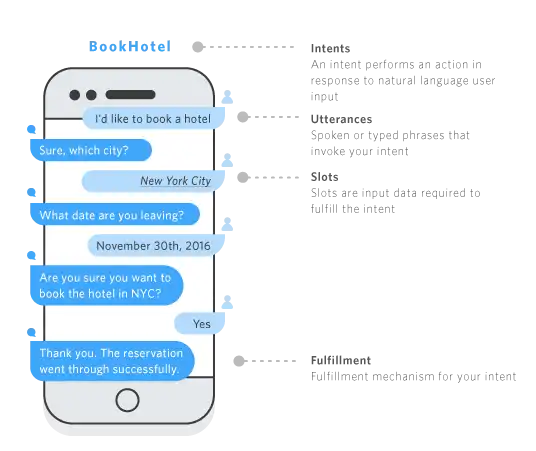
A conversational interface-building service that uses the same deep learning technologies powering Amazon Alexa is designed to create sophisticated chatbots. Excellent choice for AWS users seeking deep cloud integration.
Key features: Automatic speech recognition and conversion, multi-platform deployment options, seamless AWS integration, progressive response building, as well as built-in analytics.
Price: Pay-as-you-go model starting at $0.004 per voice request. Volume discounts and enterprise pricing available.
Selecting the right conversational AI platform can significantly impact how effectively your business engages customers and scales support. Here are five key factors to guide your decision.
Identify the specific challenges that lead you want conversational AI to solve. A platform that doesn’t map to clear objectives often ends up underused or misaligned with actual business requirements.
Look for software that can handle increasing conversation volume or new use cases as your business scales. A software solution built only for current needs often leads to a disruptive, costly switch once demands outgrow the platform’s capabilities.
Evaluate provider’s track record for uptime, responsiveness and ongoing improvements over time. A conversational AI platform is only as dependable as the team behind it. Vendor reliability matters just as much as the technology itself.
Look beyond the initial price to understand how costs evolve as conversation volume, additional languages or advanced features is used. Some platforms appear affordable at first but become expensive as usage and business needs grow over time.
Consider how quickly your team can get up, including onboarding time and the learning curve involved. A platform that is too complex to adopt slows down implementation and delays the value it’s meant to deliver.
Conversational AI platforms are being utilized across various industries for a wide range of purposes. Here are some key use cases of Conversational AI platforms:
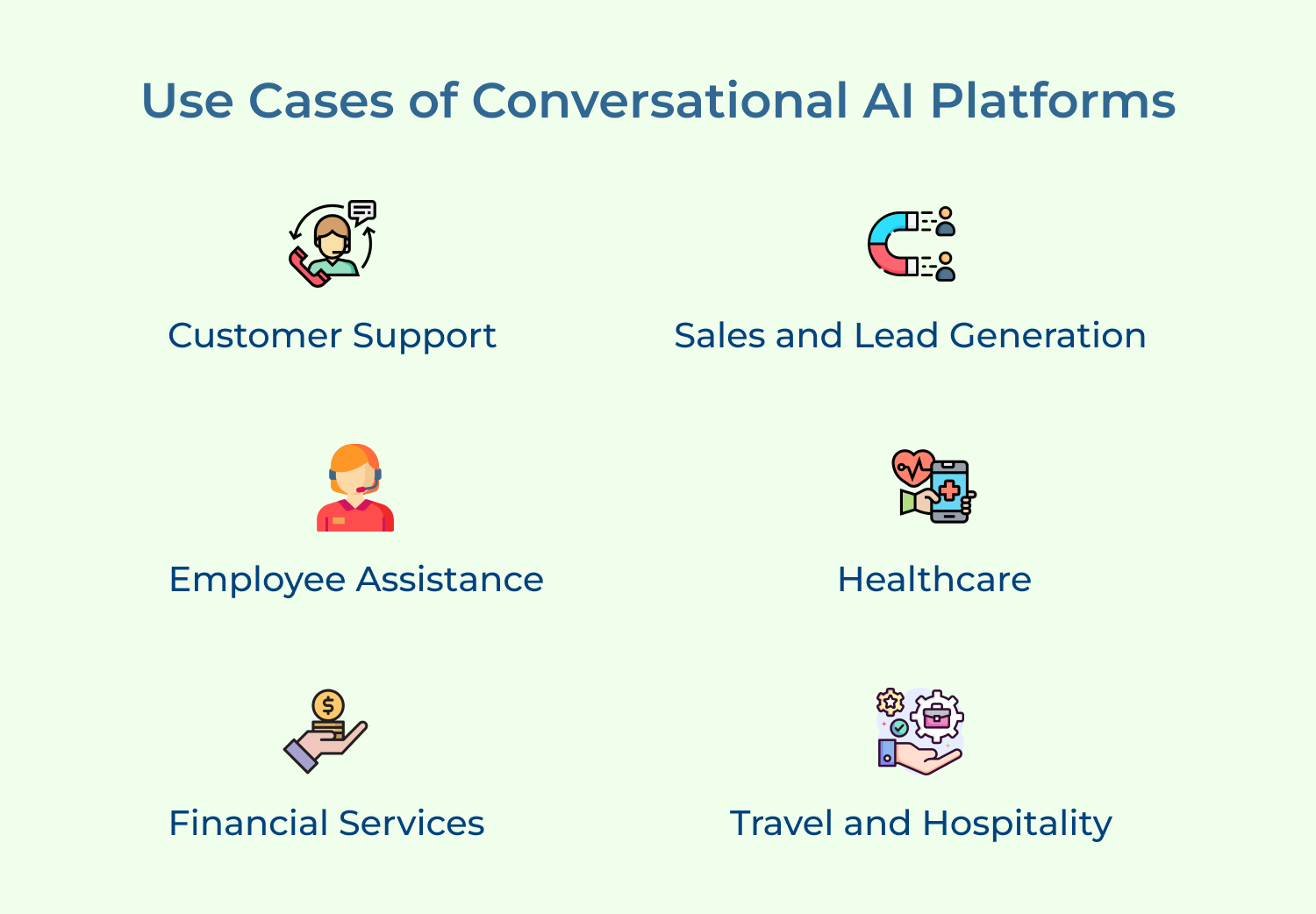
Conversational AI excels in providing 24/7 customer support. AI-powered chatbots can handle common inquiries, troubleshoot basic issues and provide instant responses to frequently asked questions. It reduces wait times, improves customer satisfaction and allows human agents to focus on more complex issues.
AI chatbots can engage website visitors, qualify leads and guide potential customers through the sales funnel. They can answer product-related questions, provide personalized recommendations and even facilitate transactions.
Conversational AI can serve as an internal knowledge base, helping employees find information quickly. It can assist with HR-related queries, IT support and accessing company policies or procedures. For example, a large corporation might deploy an AI assistant to help employees book meeting rooms, submit expense reports, or access training materials.
In the healthcare sector, conversational AI can be used for patient triage, appointment scheduling and providing basic medical information. It can help patients assess symptoms, offer general health advice and direct them to appropriate care resources. Some platforms are even being developed to assist support, providing preliminary counseling and resources.
Banks and financial institutions use conversational AI for a variety of tasks, including account inquiries, transaction processing and financial advice. AI can help customers check balances, transfer funds or get information about loans and investments.
In the travel industry, conversational AI assists with booking flights, hotels and rental cars. It can provide travel information, handle itinerary changes and offer recommendations for activities at the destination.
Conversational AI platforms have revolutionized the way businesses interact with customers, providing personalized and real-time communication that enhances customer experience.
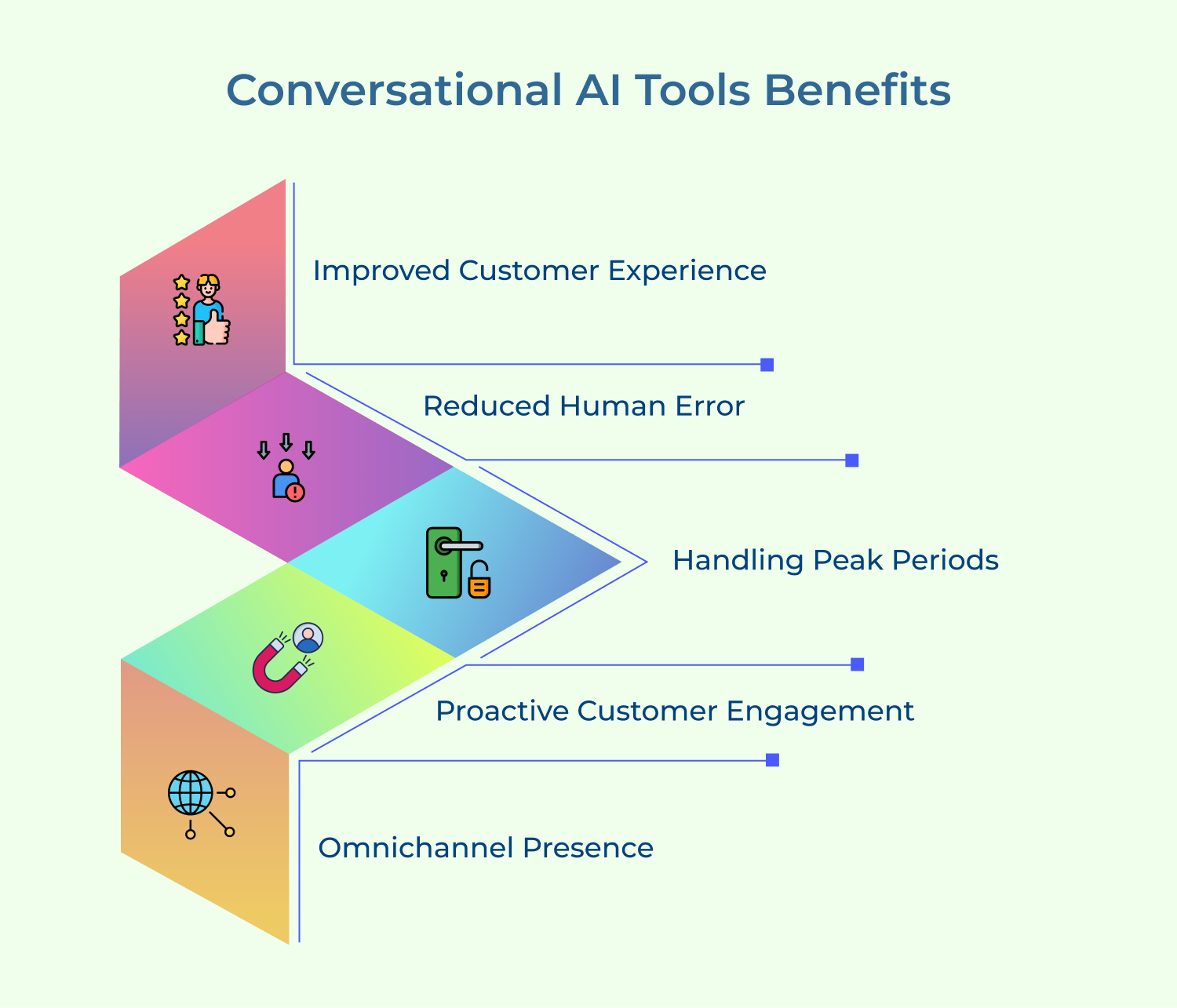
Conversational AI platforms provide instant, 24/7 customer support, eliminating wait times and enhancing customer satisfaction. They offer personalized interactions, remembering customer preferences and history to provide tailored responses. It leads to faster query resolution and a more seamless customer journey, ultimately improving overall customer experience.
AI-powered chatbots as well as virtual assistants are programmed with accurate information and follow predefined workflows, minimizing the risk of human errors in customer interactions. They provide consistent, fact-based responses, reducing misinformation and ensuring compliance with company policies and regulations.
Conversational AI can manage an unlimited number of simultaneous interactions, making it ideal for handling high volumes during peak periods or unexpected spikes in customer queries. The scalability ensures that no customer is left waiting, even during busy times like product launches, sales events or crisis situations.
AI platforms can analyze customer data and behavior to initiate proactive engagements. They can send personalized product recommendations, reminders for renewals or appointments and alerts about relevant offers or updates. The proactive approach helps in cross-selling, upselling, while improving customer retention by anticipating and addressing customer needs before they arise.
Conversational AI enables businesses to maintain a consistent presence across multiple communication channels. The omni-channel capability ensures that customers can engage with the brand on their preferred platform, receiving consistent information and service quality regardless of the channel they choose.
Select a conversational AI platform based on its scalability, budget, and channel mix. Omni24 is ideal for businesses of all sizes that transform reactive support into proactive, round-the-clock customer engagement.
Book a live demo to see it in action. Want to go deeper? The best chatbot software builds relationships, reduces churn and scales your support without increasing headcount cost.
Omni24’s customer engagement platform harnesses automation and AI to deliver unified customer experiences across digital channels, while keeping human touch
When evaluating conversational AI platforms, there are several key features to look for. Some of the important features include natural language processing capabilities, sentiment analysis, multi-channel support, integration with various data sources, scalability and the ability to customize and personalize interactions.
Conversational AI platforms use natural language processing to understand and respond to user queries in a human-like way. These platforms analyze input, determine intent and generate responses based on conversation context in real time. The process typically involves:
Businesses leverage conversational AI platforms to improve customer service, increase efficiency and enhance user engagement. The platforms manage high query volumes without the delays typical of human-only support teams. Key advantages that drive adoption are:
Conversational AI platforms are more advanced than traditional chatbots as they can engage in more natural and contextual conversations with users. These platforms leverage machine learning and AI technologies to continuously improve their responses as well as provide more personalized interactions with users.
Various industries can benefit from adopting conversational AI platforms, including e-commerce, healthcare, banking, travel and customer service. These platforms can be used for diverse applications such as customer support, information retrieval, appointment scheduling, and product recommendations.
Conversational AI can be implemented through chatbots on websites, messaging apps, voice assistants, or phone systems. Businesses can integrate conversational AI platforms into their existing communication channels to provide users with instant, personalized responses.
When evaluating conversational AI platforms, it’s essential to consider factors such as functionality, ease of integration, customization options, scalability, pricing and customer support. It’s also important to test the platform’s performance with real user interactions and gather feedback to determine its effectiveness in meeting business goals.
 https://omni24.io/wp-content/uploads/2026/09/Social-commerce-scaled.png
1340
2560
Webvision Solution
https://omni24.io/wp-content/uploads/2023/04/Omni-Logo-1.svg
Webvision Solution2026-10-23 12:18:272026-10-23 12:18:27What is Social Commerce and Why Does It Matter?
https://omni24.io/wp-content/uploads/2026/09/Social-commerce-scaled.png
1340
2560
Webvision Solution
https://omni24.io/wp-content/uploads/2023/04/Omni-Logo-1.svg
Webvision Solution2026-10-23 12:18:272026-10-23 12:18:27What is Social Commerce and Why Does It Matter? https://omni24.io/wp-content/uploads/2026/08/AI-Customer-Service-Agents.png
1256
2400
Webvision Solution
https://omni24.io/wp-content/uploads/2023/04/Omni-Logo-1.svg
Webvision Solution2026-09-21 04:48:512026-09-21 04:48:51How to Build an AI Customer Service Agents: 8 Key Steps
https://omni24.io/wp-content/uploads/2026/08/AI-Customer-Service-Agents.png
1256
2400
Webvision Solution
https://omni24.io/wp-content/uploads/2023/04/Omni-Logo-1.svg
Webvision Solution2026-09-21 04:48:512026-09-21 04:48:51How to Build an AI Customer Service Agents: 8 Key Steps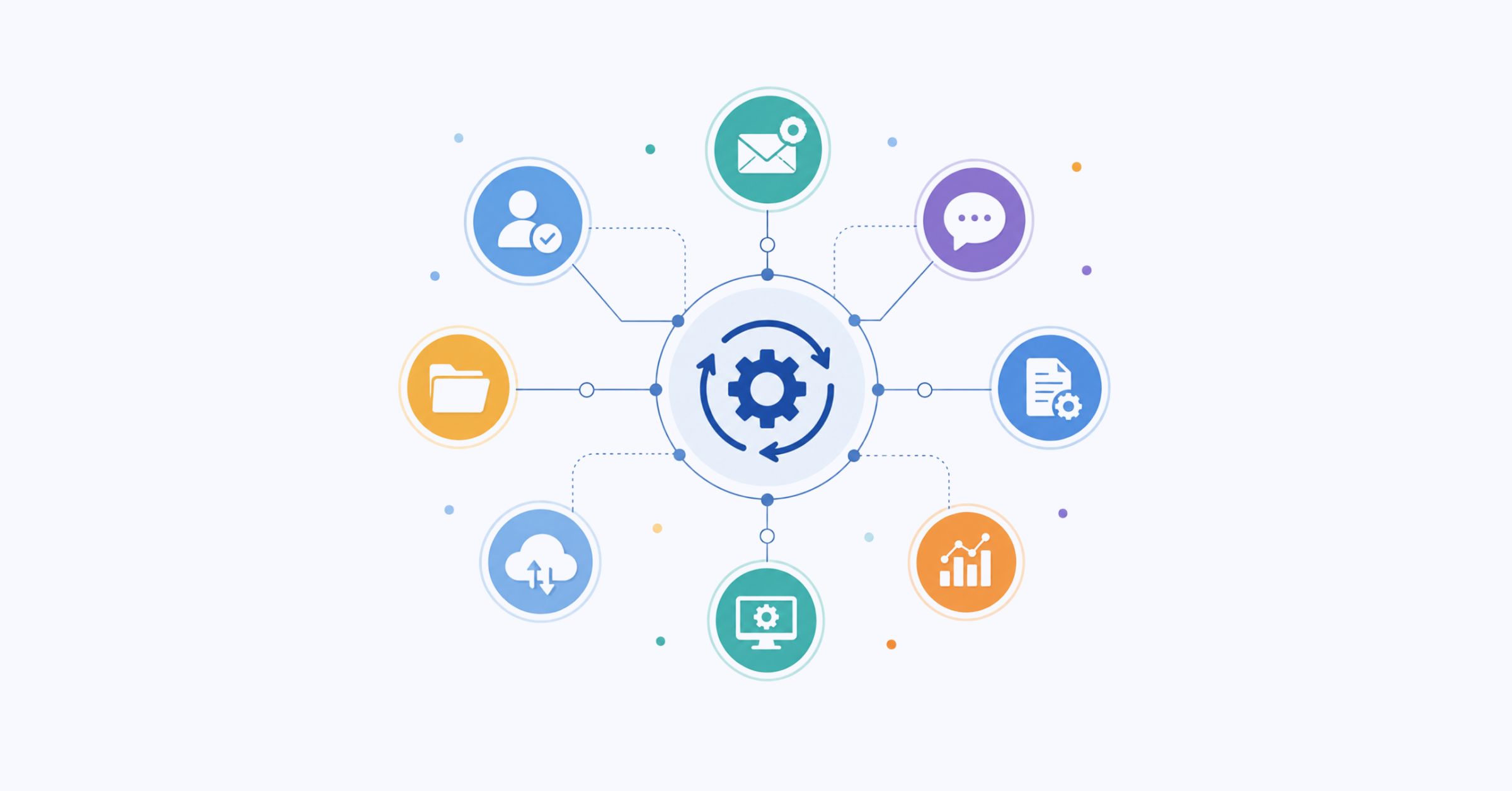 https://omni24.io/wp-content/uploads/2026/08/Omnichannel-Conversational-AI.png
1256
2400
Tushar Joshi
https://omni24.io/wp-content/uploads/2023/04/Omni-Logo-1.svg
Tushar Joshi2026-09-16 03:51:072026-09-16 03:51:07How to Build Omnichannel Conversational AI Strategy
https://omni24.io/wp-content/uploads/2026/08/Omnichannel-Conversational-AI.png
1256
2400
Tushar Joshi
https://omni24.io/wp-content/uploads/2023/04/Omni-Logo-1.svg
Tushar Joshi2026-09-16 03:51:072026-09-16 03:51:07How to Build Omnichannel Conversational AI Strategy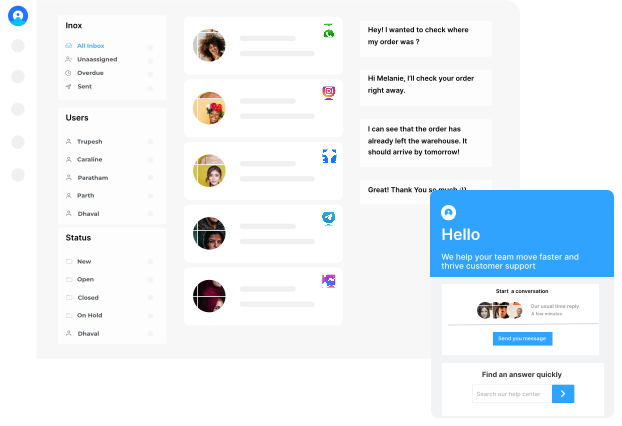
Whether it’s about acquire, engage or support – Omni24 covers all your customer engagement needs in one complete platform.

Copyright ©2026 Veemo All rights reserved.
CA, Los Angeles, Hall Ave, 19011