The Ultimate Guide for Effective Customer Communication
Effective customer communication helps in delivering exceptional customer service and enhances overall business relationships.
No Credit Card Needed | Guided Setup
Effective customer communication helps in delivering exceptional customer service and enhances overall business relationships.
No Credit Card Needed | Guided Setup
Clear customer communication ensures satisfaction and encourages long-term engagement.
Do you know why most businesses lose customers? If you think it’s your product’s fault, then you are wrong. It is due to the broken communication you follow. Companies with strong interaction practices retain, while others directly erode revenue
Proper customer communication helps in maintaining structured sharing of information between a business and customers. Walk through the guide to understand core strategies, channels, skills and tools that define effective communication in real-time while scaling personalized outreach.
Customer communication is defined as the exchange of information between a company and its customers. It plays a crucial role in building and maintaining strong relationships with customers. Effective customer communication involves not only conveying information about products/services but also listening to customer concerns, questions and feedback.
In a competitive marketplace, businesses with strong customer communication strategies are more likely to retain customers, receive positive reviews, and differentiate themselves from competitors. It plays a crucial role in customer retention, brand advocacy, and long-term business success.
Key elements:
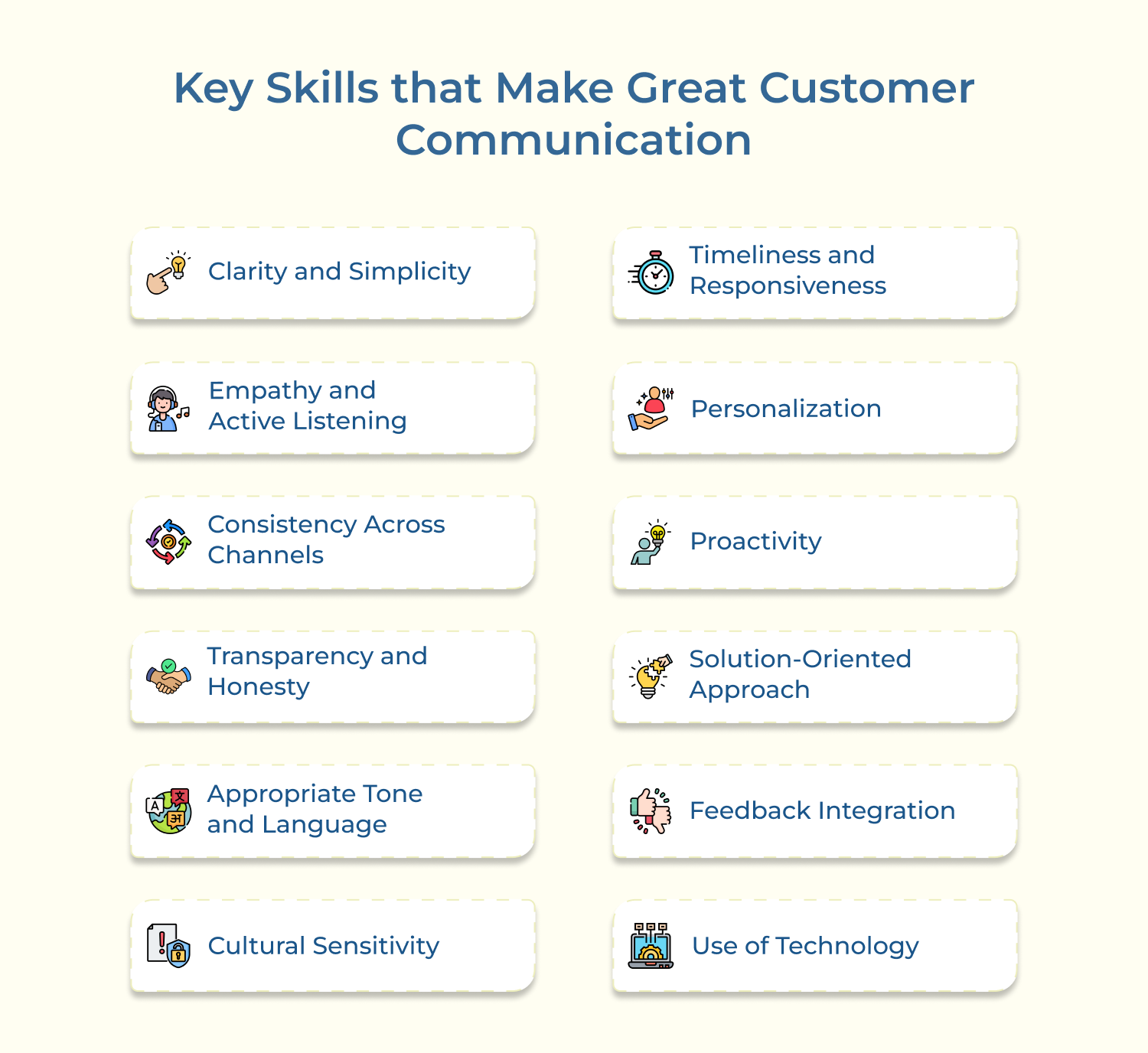
Great customer communication is a cornerstone of business success, fostering loyalty, trust and positive brand perception.
Great customer communication is clear, concise and easy to understand. It avoids jargon, technical terms or complex language that might confuse the customer.
Instead, it uses simple, straightforward language that conveys the message effectively. The clarity ensures that customers can quickly grasp the information or instructions provided, reducing frustration and the need for follow-up questions.
Prompt responses are crucial in a fast-paced world. Great customer communication involves addressing inquiries, concerns, or issues in a timely manner across all channels, whether it’s phone, email, social media or chat. Quick responses show that the company values the customer’s time and is committed to providing efficient service.
Exceptional customer communication demonstrates empathy towards the customer’s situation. It involves actively listening to understand the customer’s needs, concerns, and emotions. By acknowledging the customer’s feelings, companies can build rapport and show that they genuinely care about the customer’s experience.
Rather than waiting for customers to reach out with problems, great communication involves proactively reaching out to customers. This could include sending updates about order status, notifying about potential issues before they occur or providing helpful tips and information relevant to the customer’s recent purchases or interactions.
Effective communication focuses on finding solutions rather than dwelling on problems. It involves taking ownership of issues, offering clear resolutions and following through to ensure customer satisfaction. This approach turns potentially negative experiences into positive ones.
Great communication adapts its tone to suit the situation and the customer. While maintaining professionalism, it can be friendly and casual or more formal as appropriate. The language used should also align with the company’s brand voice while being respectful and appropriate for the specific customer.
Excellent customer communication includes mechanisms for gathering and acting on customer feedback. This could involve follow-up surveys, requests for reviews or simply asking for feedback during interactions. More importantly, it involves demonstrating how this feedback is used to improve products, services, or communication processes.
Great customer communication is culturally aware and sensitive. It respects cultural differences, avoids assumptions and adapts to cultural norms when interacting with diverse customer bases.
Businesses have a variety of channels through which they can communicate with their customers.
Phone support: Phone support remains a crucial channel for customer service. It offers real-time, personalized interaction, allowing customers to explain complex issues and receive immediate responses.
It is particularly effective for handling sensitive or urgent matters. But it can be resource-intensive and may lead to longer wait times during peak periods.
Email: Email communication provides a written record of interactions and allows for detailed explanations. It’s convenient for customers who prefer not to engage in real-time conversations or need to share documents.
Email support also enables businesses to manage high volumes of inquiries efficiently. The downside is that response times can be longer, which may not suit urgent issues.
Live chat: Live chat offers immediate, text-based support on websites or mobile apps. It combines the real-time nature of phone support with the convenience of written communication.
Live chat is ideal for quick questions and can handle multiple conversations simultaneously, improving efficiency. It’s particularly popular among younger demographics who prefer text-based communication.
Social media: Social media platforms have become important channels for customer service. They allow for public & private interactions, enabling businesses to address issues visibly and build brand reputation. Social media support is often faster and more casual than traditional channels. But it requires careful management to handle potentially negative public interactions effectively.
Self-service portals: Self-service portals, such as knowledge bases, FAQs and community forums, empower customers to find solutions independently. These resources are available 24/7 and can significantly reduce the workload on support teams. Self-service options are cost-effective and appeal to customers who prefer to solve issues on their own.
In-person support: For businesses with physical locations, in-person support remains valuable. Face-to-face interactions allow for a more personal touch and can be crucial for industries like retail or hospitality. In-person support is excellent for building relationships and handling complex issues that require hands-on assistance.
Video chat: Video chat combines the personal touch of in-person support with the convenience of remote assistance. It’s particularly useful for technical support, product demonstrations, or situations where visual communication is beneficial. Video chat can enhance the customer experience by providing a more engaging and personal interaction.
SMS/Text messaging: Text messaging offers a quick and convenient way to communicate with customers. It’s ideal for sending brief updates, reminders or simple support interactions. SMS is widely accessible and has high open rates, making it effective for time-sensitive communications.
Chatbots/AI assistants: AI-powered chatbots are becoming increasingly sophisticated, offering 24/7 support for common queries. They can handle a high volume of interactions simultaneously and provide instant responses.
Chatbots are cost-effective and can be integrated across multiple platforms. While they may not replace human support entirely, they can significantly reduce the workload on support teams by handling routine inquiries.
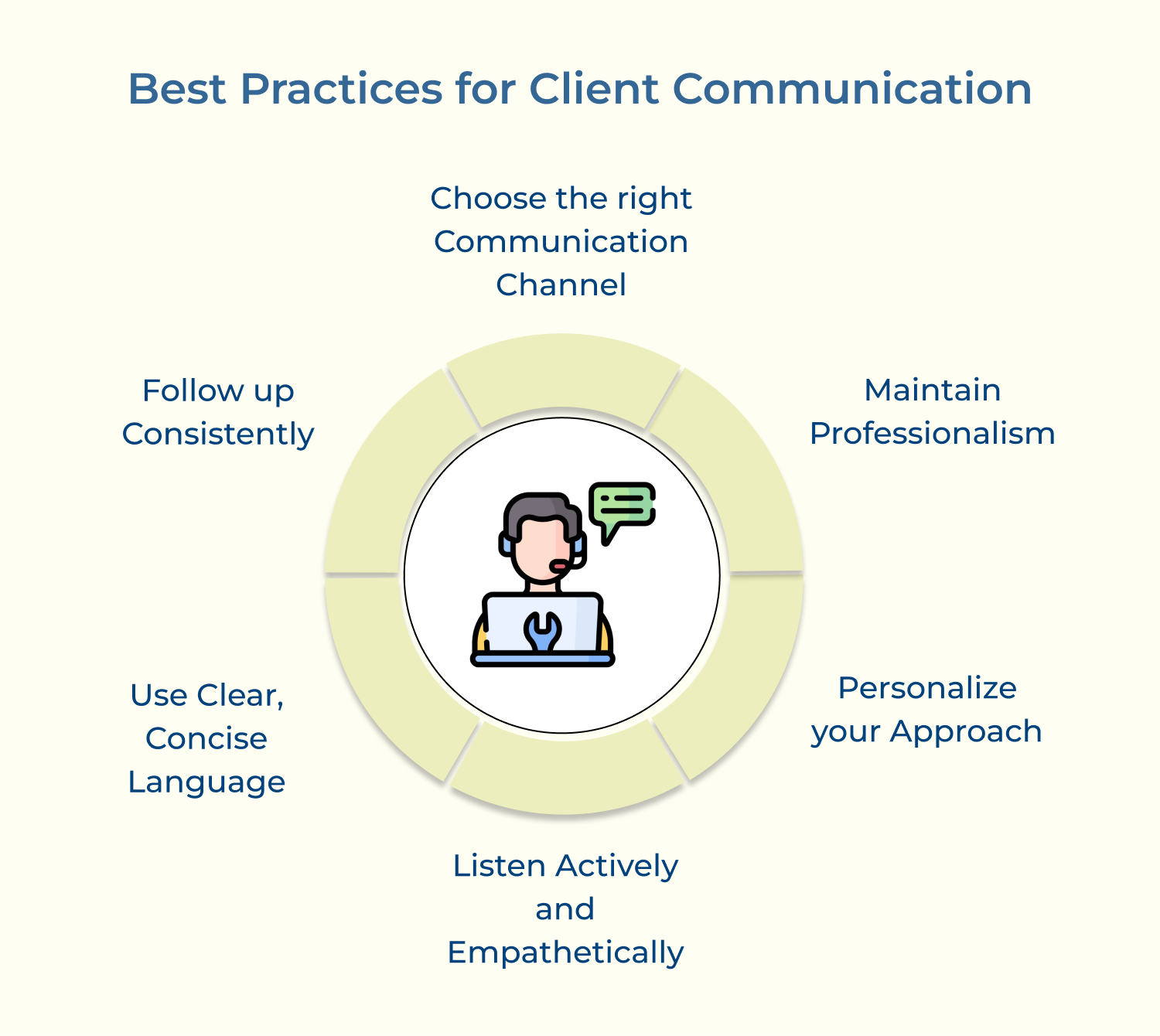
Effective communication is crucial in any client-business relationship. Implementing customer communication best practices can enhance this process. Whether you are working in any industry, maintaining clear communication with your clients is key to building trust.
1. Choose the right communication channel: Select the most appropriate medium for each interaction. Consider the message’s urgency, complexity and the client’s preferences.
For quick updates, email or text might suffice. For in-depth discussions or sensitive topics, opt for phone calls or face-to-face meetings. Video conferencing can be an excellent middle ground, offering personal interaction without the need for physical presence.
A few factors to weigh when choosing:
2. Maintain professionalism: Always communicate in a professional manner, regardless of the channel or situation. Use appropriate language, maintain a courteous tone and respect boundaries.
Avoid overly casual language or sharing personal information that isn’t relevant to the business relationship. Remember that you’re representing your company in every interaction.
Situations that test professionalism:
3. Personalize your approach: Tailor your communication style to each client’s preferences and needs. Some may prefer brief, to-the-point messages, while others appreciate more detailed explanations.
Take note of their communication style and mirror it appropriately. Use the client’s name and reference previous interactions to show that you value the relationship.
4. Listen actively and empathetically: Practice active listening by giving your full attention to the client. Demonstrate empathy by acknowledging their concerns and emotions.
Ask clarifying questions to ensure you fully understand their needs. The approach helps build trust and shows that you genuinely care about their perspective. Signs you’re listening effectively:
5. Use clear, concise language: Avoid jargon or technical terms that the client may not understand. Express ideas clearly and concisely. If you must use industry-specific terms, provide brief explanations.
Break down complex information into digestible chunks. Use bullet points or numbered lists for clarity when appropriate, especially in written communications.
6. Follow up consistently: Establish a regular follow-up routine. After meetings or important discussions, send a summary of key points and action items. Meet agreed-upon deadlines and provide progress updates.
Follow-up habits worth building:
If there are delays or changes, communicate proactively. Regular check-ins, even when there’s no pressing issue, show dedication and help maintain a strong relationship.
Customer communication tools help businesses effectively engage with customers across multiple channels.
1. Customer Relationship Management (CRM) Systems
CRM platforms like Salesforce, HubSpot and Zoho CRM serve as centralized databases for customer information. They track interactions, manage leads and provide insights into customer behavior. CRMs often integrate with other communication tools, forming the backbone of CCM strategies.
2. Email Marketing Platforms
Tools like Mailchimp, Constant Contact and SendGrid allow businesses to create, send, as well as track email campaigns. They offer features such as segmentation, personalization, and automation to deliver targeted messages to specific customer groups.
3. Social Media Management Tools
Platforms like Hootsuite, Sprout Social and Buffer help businesses manage their social media presence across multiple channels. These tools allow scheduling posts, monitoring mentions and analyzing engagement metrics to improve social media communication strategies.
4. Live Chat Software
Live chat tools like Intercom, Zendesk Chat and Olark enable real-time communication with website visitors. They provide instant support, answer queries and can help convert leads into customers.
5. Help Desk Software
Tools like Zendesk, Freshdesk and Help Scout centralize customer support requests from various channels into a single platform. They help track, prioritize and resolve customer issues efficiently.
6. Survey and Feedback Tools
Platforms like SurveyMonkey, Qualtrics and Typeform help businesses gather customer feedback, measure satisfaction as well as identify areas for improvement in their communication strategies.
7. Knowledge Base Software
Tools like Confluence, Document360 and HelpJuice enable businesses to create a self-service knowledge base, allowing customers to find answers to common questions independently.
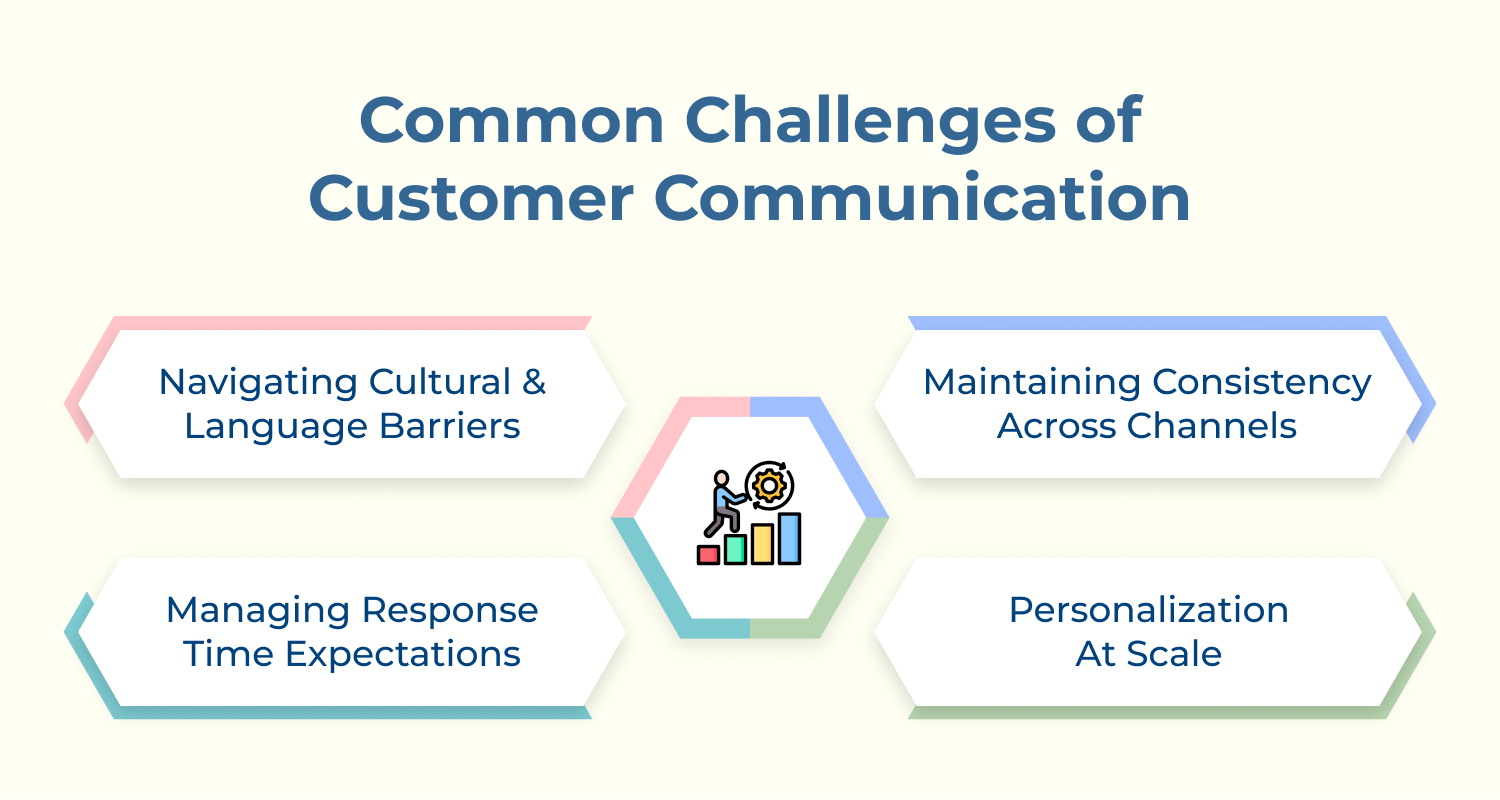
Effective communication with customers is crucial for any business to succeed. But, there are several challenges that businesses face when it comes to customer communication.
1. Maintaining Consistency Across Channels
Customers interact through multiple platforms, including social media, email, phone and chat, which makes messaging challenging. Discrepancies in information or tone across channels can confuse customers and damage brand credibility.
2. Personalization at Scale
Customers expect personalized interactions, but delivering tailored experiences is complex. Balancing personalization with efficiency requires sophisticated data management. Making each customer feel valued without overwhelming support teams remains a persistent challenge.
3. Managing Response Time Expectations
Quick responses across every channel are preferred by most customers, and meeting these expectations becomes difficult during high-volume periods. Outside business hours strains teams and resources significantly.
4. Navigating Cultural and Language Barriers
Businesses operating globally or in diverse markets, communicating effectively across different cultures and languages presents challenges. Misunderstandings due to language barriers can lead to customer dissatisfaction.
Overcoming these challenges requires the right combination of strategy, tools and team across the organization.
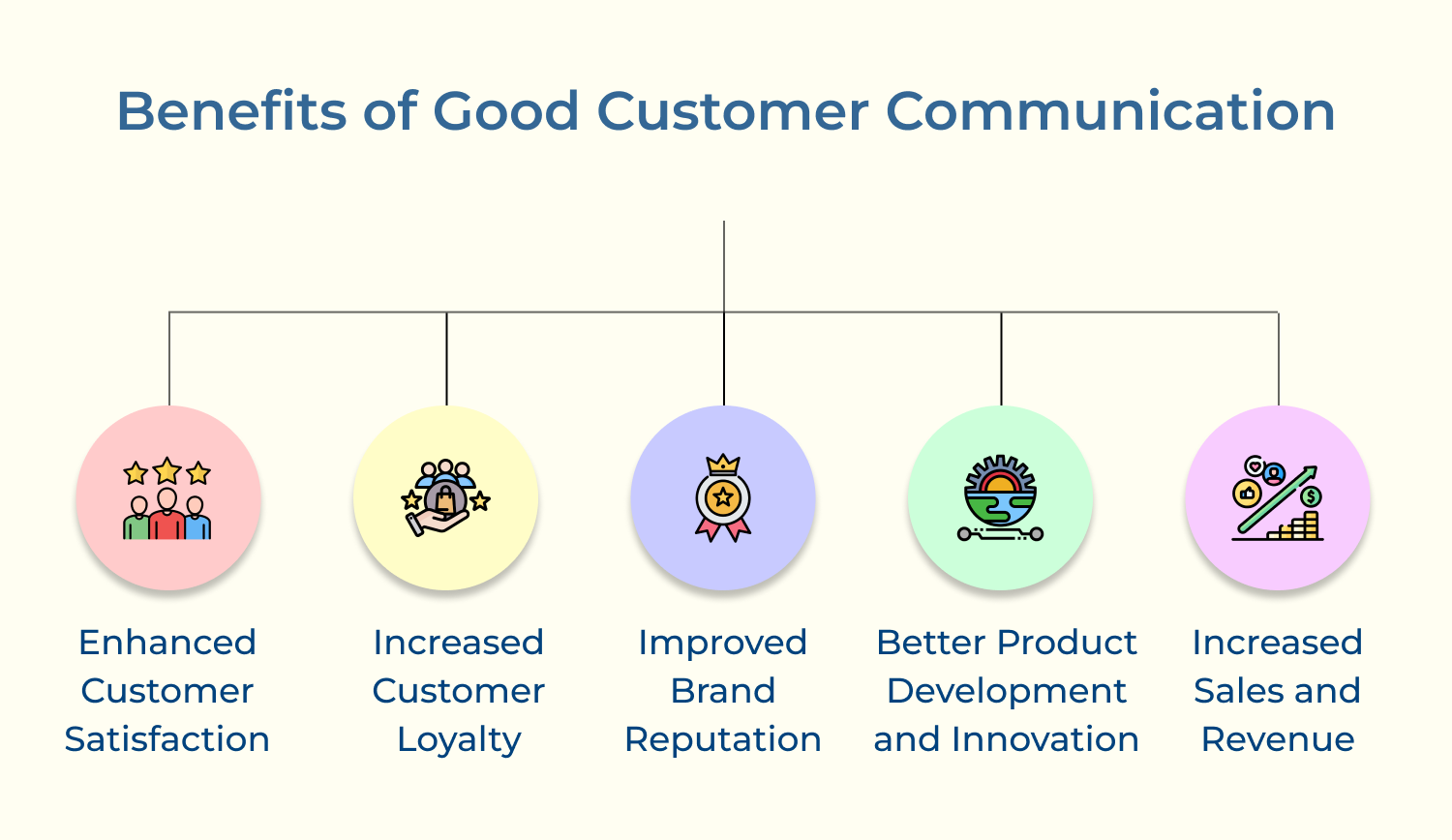
Customer communication is a crucial aspect of any business, as it plays a significant role in building and maintaining relationships with customers.
Enhanced Customer Satisfaction
Effective communication helps meet and exceed customer expectations. It leads to higher satisfaction levels as customers feel valued and understood. Regular communication also allows companies to proactively address issues.
Increased Customer Loyalty
Consistent and meaningful communication builds stronger relationships with customers. The loyalty translates into repeat business, positive word-of-mouth referrals and a higher customer lifetime value.
Improved Brand Reputation
Open and transparent communication helps establish trust. Transparency is particularly crucial during challenging times or when addressing customer concerns, as it demonstrates the company’s commitment to honesty and customer care.
Better Product Development and Innovation
Effective customer communication provides valuable insights into customer needs, preferences and pain points. The customer-centric approach leads to the development of products and services that better meet market demands.
Increased Sales and Revenue
Clear and persuasive communication can directly impact sales. By effectively conveying product benefits, addressing customer objections and providing timely support, businesses can guide customers through the purchasing process more efficiently. Regular communication keeps the brand top-of-mind, increasing the likelihood of upsells, cross-sells and repeat purchases.
E-commerce customer service separates high-retention brands from forgettable ones. Businesses that treat support as a growth function consistently outperform in terms of loyalty, conversion and lifetime value.
Ready to build a support operation? Book a live demo to see the platform in action. Brands that invest in technology-backed ecommerce customer service reduce churn and increase repeat purchases. It turns every support interaction into a retention opportunity.
Omni24’s customer engagement platform harnesses automation and AI to deliver unified customer experiences across digital channels, while keeping human touch
Customer communication is important because it allows businesses to understand the needs, preferences and concerns of their customers. By listening to customers and providing them with relevant and timely information, companies can build loyalty in the long term. Effective communication can also help resolve issues quickly and prevent misunderstandings that can lead to customer dissatisfaction.
The purpose of customer communication channels is to provide customers with ways to interact with a company, ask questions, provide feedback and receive assistance. These channels can include phone calls, emails, social media, live chat and in-person interactions. By offering multiple communication options, businesses can meet the diverse preferences of their customers and ensure that they are accessible.
There are several ways to improve customer communication, including:
Effective communication in customer service involves listening to customers, understanding their needs and responding appropriately. It requires clear & concise language, active listening skills and empathy towards customers’ concerns.
Customer service representatives should be attentive, patient and respectful in their interactions with customers. Effective communication can help build trust, resolve issues and create positive experiences that can lead to customer loyalty.