Social Media Customer Service for Teams: A Practical Guide

Social media customer service allows businesses to respond quickly to customer inquiries or issues, providing real-time support that enhances satisfaction and builds trust.

No Credit Card Needed | Guided Setup

Trusted by Customer Centric Businesses Globally

Engage Customers Anytime Anywhere – The Power of Social Media Customer Support

Engaging with customers on social media help businesses to create stronger relationships and turn every interaction into an opportunity to build brand loyalty.

  • Faster Response Times

    Social media customer service enables businesses to respond quickly to user queries. Real-time communication via platforms allows companies to address concerns promptly, improving customer satisfaction.

  • Enhanced Customer Engagement

    Social customer care offers a direct way to engage with customers. Businesses can build stronger relationships by responding to comments and participating in conversations, fostering a sense of community.

  • Increased Brand Visibility

    Addressing customer issues on social media can boost a brand’s visibility. Positive interactions provided on public forums can enhance the brand’s reputation and attract new customers through word-of-mouth as well as social sharing.

  • Gain Valuable Customer Insights

    Monitoring social media interactions offers businesses valuable insights into customer preferences, behaviors and pain points. The data can be used to improve overall customer experience, leading to better business decisions.

  • Cost-Effective Customer Support

    Social media platforms provide an affordable way to deliver customer service in comparison to traditional channels. Businesses can efficiently address multiple customer concerns without extensive resources.

  • Crisis Management and Reputation Building

    Social media allows businesses to manage crises proactively by addressing negative feedback promptly. Transparent responses help mitigate potential damage and demonstrate accountability.

Customers expect answers on Instagram within the first few hours, making support teams overwhelmed. Proper social media customer service helps in managing customer inquiries, complaints and support requests.

Every interaction across social media happens in a visible space, where both quality as well as speed directly shape brand perception. Walk through the definitive guide to learn strategies, best practices and measurement frameworks to build a scalable social media customer service framework.

What is Social Media Customer Service?

Social Media Customer Service refers to providing customer support and assistance through various social media platforms like Facebook, Twitter, Instagram, LinkedIn, etc. It involves engaging with customers, addressing their queries, resolving issues and managing brand reputation in the public digital space.

Modern customers expect quick responses through their preferred social channels, making it essential for businesses to maintain an active presence along with responsive support system. Organizations that excel in social media support improve customer satisfaction, enhance brand loyalty, and generate positive word-of-mouth marketing.

Key objectives:

  • Issue resolution: Efficiently solving problems and complaints to maintain customer satisfaction.
  • Brand reputation management: Handling public interactions professionally to create a positive brand image.
  • Customer engagement: Building relationships with customers through meaningful interactions and personalized support.
  • Proactive support: Anticipating customer needs and offering assistance before issues escalate.

Why is Social Media Customer Service Important for Your Business?

Social media has become one of the first places customers turn for support. Below are key reasons why investing in social media customer service pays off.

1. Faster Response Times
Social media customer service enables businesses to respond where customers already spend their time within minutes. The speed helps in building trust and reduces the frustration customers feel while waiting for help.

2. Public Trust Building
Public conversations on social media give businesses a chance to showcase their responsiveness to a wider audience. Customers who see problems resolved quickly and professionally help build confidence before they even need support themselves.

3. Real-Time Customer Insights
Social platforms make it easy to gather direct customer feedback in real time. Businesses can spot recurring complaints, emerging trends or product issues, using these insights to improve offerings before problems scale.

4. Lower Support Costs
Managing support publicly on social media costs less than maintaining large phone or email support teams. One response can resolve an issue while also being visible to other customers, reducing the need for repeated outreach.

5. Turning Support into Advocacy
Resolving issues quickly and publicly on social media turns frustrated customers into vocal advocates. Positive interactions get shared or screenshotted, leading to extending the reach of good customer service beyond the original conversation.

How to Implement Social Media Customer Service?

Excellent customer service on social media platforms is a must for businesses building brand loyalty. Having the right strategy is also just as important to ensure customer satisfaction.

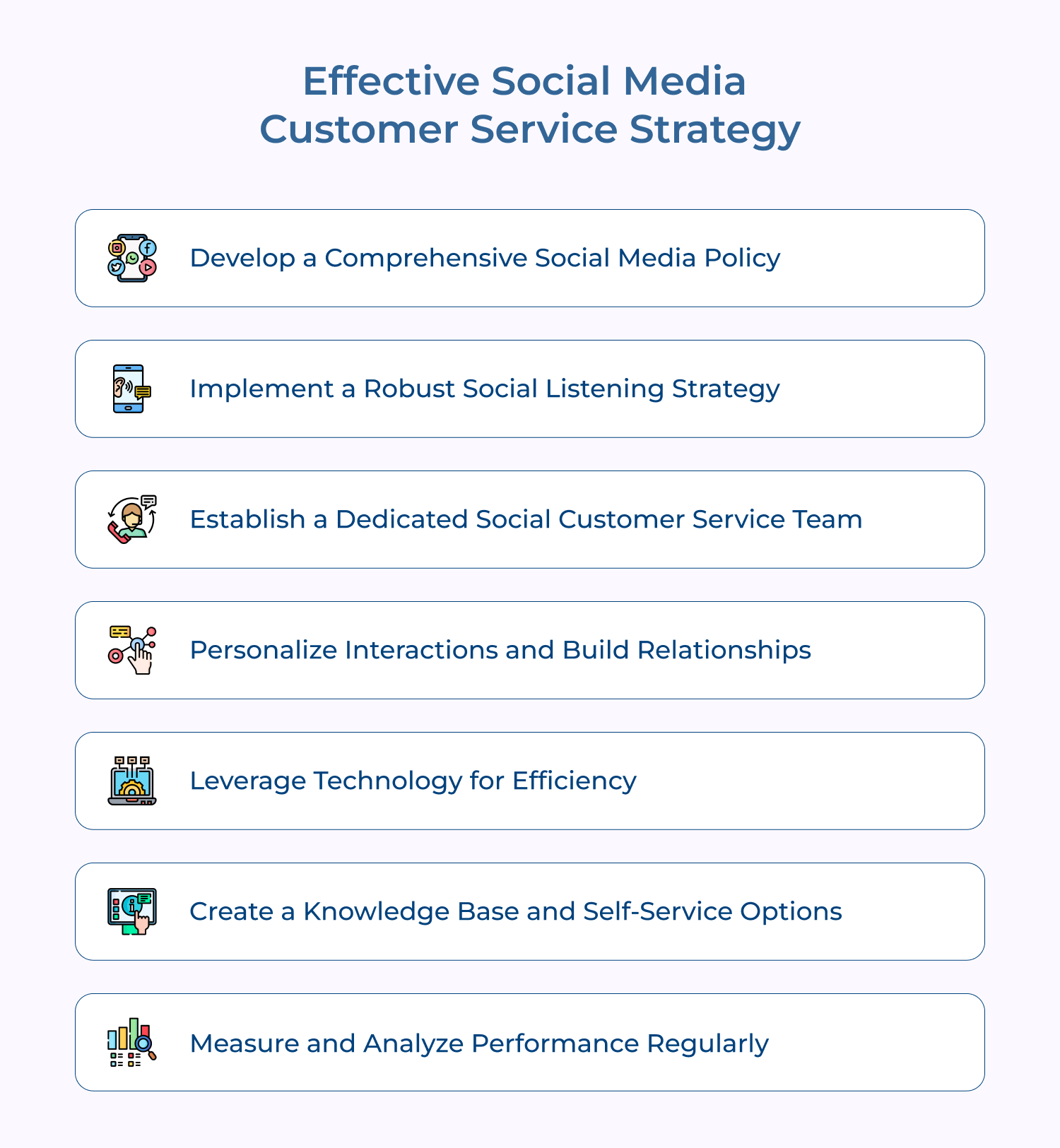
Effective Social Media Customer Service Strategy

Develop a Comprehensive Social Media Policy

Create a clear, detailed policy that outlines how your team should handle customer interactions on social platforms. It maintains proper response times, tone of voice, escalation procedures and guidelines for handling sensitive information.

Make sure all team members are trained on the same policy to maintain consistency and professionalism in customer interactions. Different agents end up giving customers conflicting answers on the same issue without a shared reference point. A strong policy also needs to plan for the unexpected:

  • Crisis response protocol: set who approves messaging during a viral complaint.
  • Legal review triggers: identify responses involving refunds, liability or regulatory topics for a second check.
  • Regular policy audits: Update guidelines as new platforms or features change how customers reach out.

Implement a Robust Social Listening Strategy

Leverage social listening tools to monitor mentions of your brand, products and relevant keywords across social media platforms. The proactive approach lets you address customer concerns before escalating and joining conversations about your brand.

Such a proactive approach allows you to address customer concerns before they escalate and engage in conversations about your brand. Set up alerts for both direct mentions and indirect references to catch all potential customer service opportunities.

A complete setup includes more than your own handle:

  • Competitor mentions: Reveals when dissatisfied customers are comparing with rivals in real time.
  • Misspellings and slang: Catches informal or shorthand references to your brand name that formal miss.
  • Sentiment shifts over time: Identify overall tone across brand changes before volume alone would show it.

Establish a Dedicated Social Customer Service Team

Create a specialized team focused solely on social media customer service. The team should be well-versed in your products or services, company policies and social media best practices.

Ensure they have direct lines of communication with other departments to quickly resolve complex issues. Consider implementing a 24/7 rotation to provide round-the-clock support on social platforms. Staffing the team means planning for scale:

  • Peak-hour coverage: Schedules extra agents during the busiest social engagement windows.
  • Cross-training with support: Allows support agents to get involved during the traditional support surges without losing quality.
  • Clear escalation paths: Routes technical issues to specialists without delaying the customer.

Personalize Interactions and Build Relationships

Train your team to personalize each interaction by addressing customers using their name and referencing their specific issues. Encourage agents to show empathy and use a conversational tone that aligns with your brand voice.

Building genuine relationships with customers on social media can turn them into brand advocates and improve overall customer satisfaction. Customers that are feeling genuinely heard are likely to defend your brand publicly in situations when they criticize it.
Some of the habits that make personalization feel authentic instead of scripted:

  • Reference past interactions: Shows customers the brand is remembering them instead of their current complaint.
  • Match the customer’s tone: Mirrors formal or casual language to keep the exchange natural.
  • Celebrate milestones publicly: Acknowledge loyal customers with small gestures of appreciation.

Leverage Technology for Efficiency

Implement customer service software that integrates with your social media accounts to streamline workflow. Use chatbots for initial customer interactions, frequently asked questions and after-hours support.

But, ensure there’s a smooth handoff to human agents for complex issues. Utilize CRM systems to maintain customer history across channels for more informed and personalized service. The context prevents customers from having to repeat their issue every time they reach out.
A few additional capabilities worth prioritizing are:

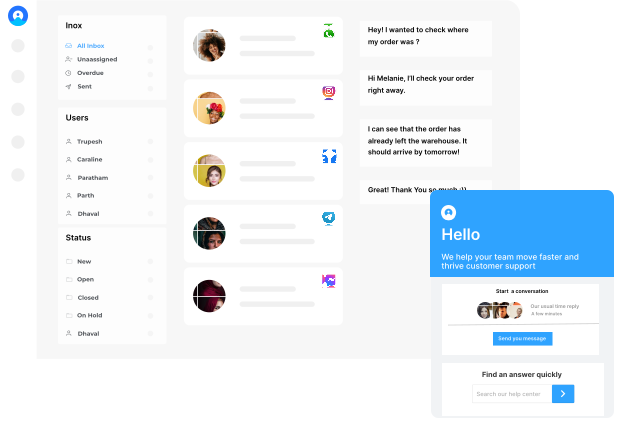
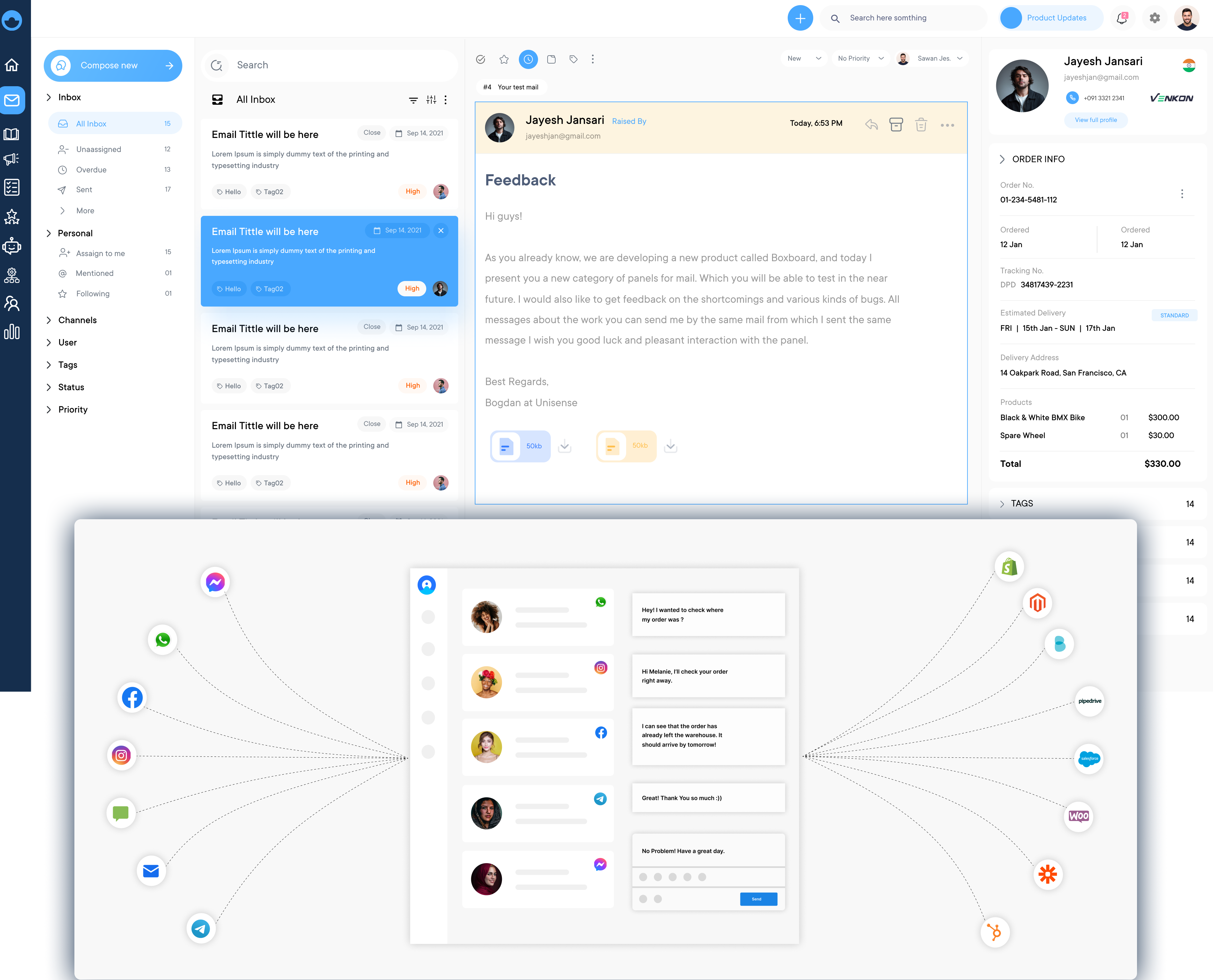
  • Unified inbox across platforms: Enable agents to manage every social channel from one screen.
  • Automated tagging and routing: Sorts incoming messages based on topic before an agent even opens them.
  • Sentiment flagging: Identify angry or urgent messages so they get handled efficiently

Create a Knowledge Base and Self-Service Options
Develop a comprehensive, easily accessible knowledge base that addresses common customer queries. Share links to relevant articles or FAQs in your social media responses to encourage self-service.

The strategy not only empowers customers to find solutions independently but also reduces the workload on your customer service team.

Measure and Analyze Performance Regularly
Establish key performance indicators (KPIs) for your social customer service, such as response times, resolution rates and customer satisfaction scores. It’s easy to assume a strategy is working when it’s actually stagnant without consistent tracking.

A Strong measurement means:

  • Benchmark against past quarters: Display whether changes to the strategy are actually working.
  • Share findings across teams: Provide product and marketing visibility into recurring customer pain points.
  • Set improvement targets: Turns raw metrics into time-bound goals for the team.
Important Tools Required for Social Customer Service

Social media is a great platform for businesses to engage with their customers. However, to effectively manage customer inquiries and concerns, businesses need to utilize the right tools.

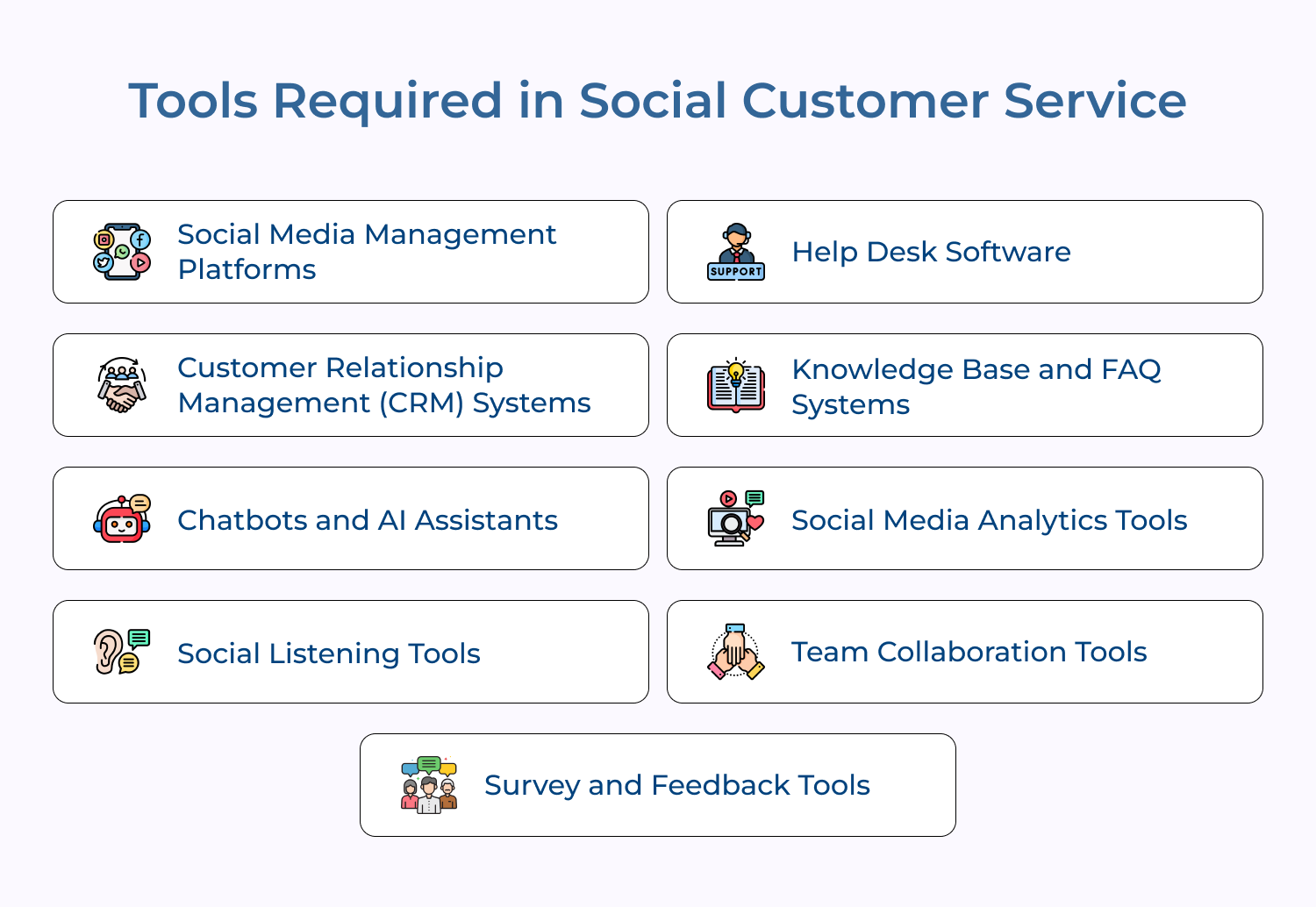
Tools Required in Social Customer Service

1. Social Media Management Platforms

The essence of social customer service is the comprehensive social media management platforms. The key tools like Hootsuite, Sprout Social or Buffer allow teams to monitor multiple social channels from a single dashboard. These platforms offer features such as post scheduling, content curation and most importantly for customer service, social listening as well as engagement tracking.

2. Customer Relationship Management (CRM) Systems

A robust CRM system is crucial for maintaining a holistic view of customer interactions across all channels, including social media. When a customer reaches out via social media, agents can quickly access their purchase history, previous interactions and other relevant information.

3. Chatbots and AI Assistants

Artificial Intelligence-powered chatbots are becoming increasingly important in social customer service. Bots can handle simple queries automatically, freeing up human agents to focus on more complex issues. AI chatbots can provide instant responses 24/7, improving response times and customer satisfaction. Advanced AI assistants can even understand context and sentiment, providing more nuanced responses.

4. Social Listening Tools

While often part of larger social media customer service software, dedicated social listening tools like Mention, Brandwatch or Talkwalker offer more advanced features. For customer service, social listening tools help identify potential issues before they escalate, spot trends in customer sentiment and even find opportunities to proactively assist customers who might not have directly reached out to the brand.

5. Help Desk Software

Help desk management software ensures that no customer query falls through the cracks and allows for proper tracking as well as management of issues from first contact to resolution. These systems often include features like ticket assignment, internal notes and performance metrics, which are crucial for managing a team of customer service.

6. Knowledge Base and FAQ Systems

A comprehensive, easily accessible knowledge base is invaluable for both customers and service agents. For social customer service, agents can quickly find and share links to relevant articles, reducing response times while ensuring consistency in information provided.

7. Social Media Analytics Tools

These tools can help customer service teams understand peak times for customer inquiries, measuring the impact of their efforts on overall customer satisfaction as well as brand perception. Teams can improve their response strategies and demonstrate the value of social customer service to stakeholders.

Best Practices of Social Media Customer Service

Providing customer service on social media requires a different set of skills and strategies compared to traditional customer service channels. Let’s explore a few of them:

Best Practices of Social Media Customer Service 

Make Your Team Responsive

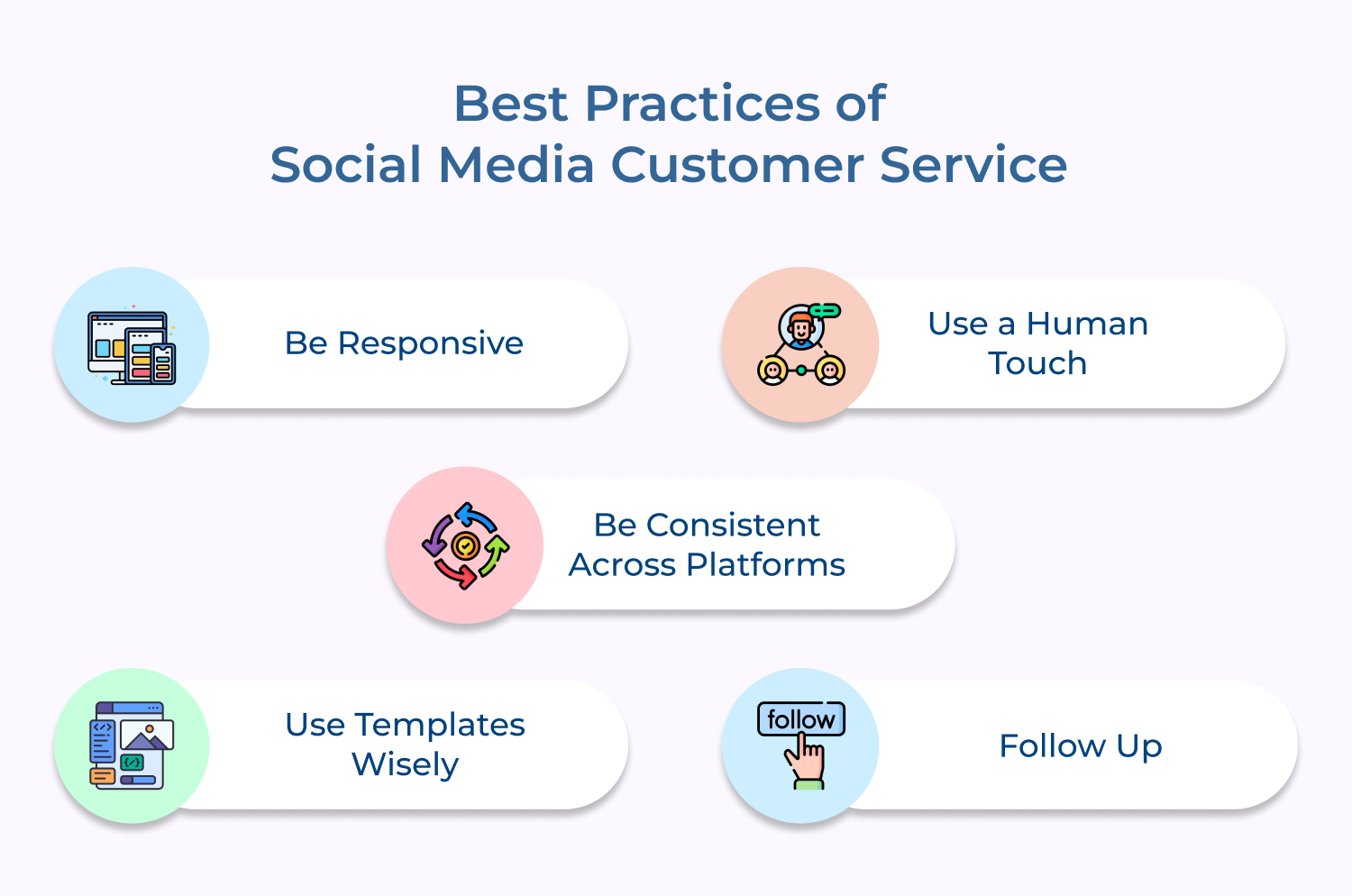
Quick response times are crucial in social media customer service. Aim to reply within 1-2 hours, if not sooner. Set up notifications to alert your team of new messages or mentions, ensuring no customer query goes unnoticed.

Maintain a Proper Human Touch

While automation can help, personalized responses are key. Address customers by name, show empathy and tailor your language to each situation. This human approach helps build trust and rapport with your audience.

Be Consistent Across All the Platforms

Maintain a uniform tone and level of service across all social media channels. The consistency reinforces your brand identity and ensures customers receive the same quality of support regardless of their preferred platform.

Use Pre-Defined Response Templates Wisely

Pre-written responses can save time, but use them judiciously. Customize templates for each interaction to avoid sounding robotic. Blend templated content with personalized details to strike the right balance between efficiency and authenticity.

Seamless Follow-Up

Don’t just solve the immediate issue; go the extra mile. Check back with customers after resolving their problems to ensure satisfaction. The proactive approach demonstrates your commitment to customer care and can turn a negative experience into a positive one.

How to Measure Social Media Customer Service?

Effective social media customer service is crucial for modern businesses, but how do you know if your efforts are paying off?

How to Measure Social Media Customer Service

1. Response Time

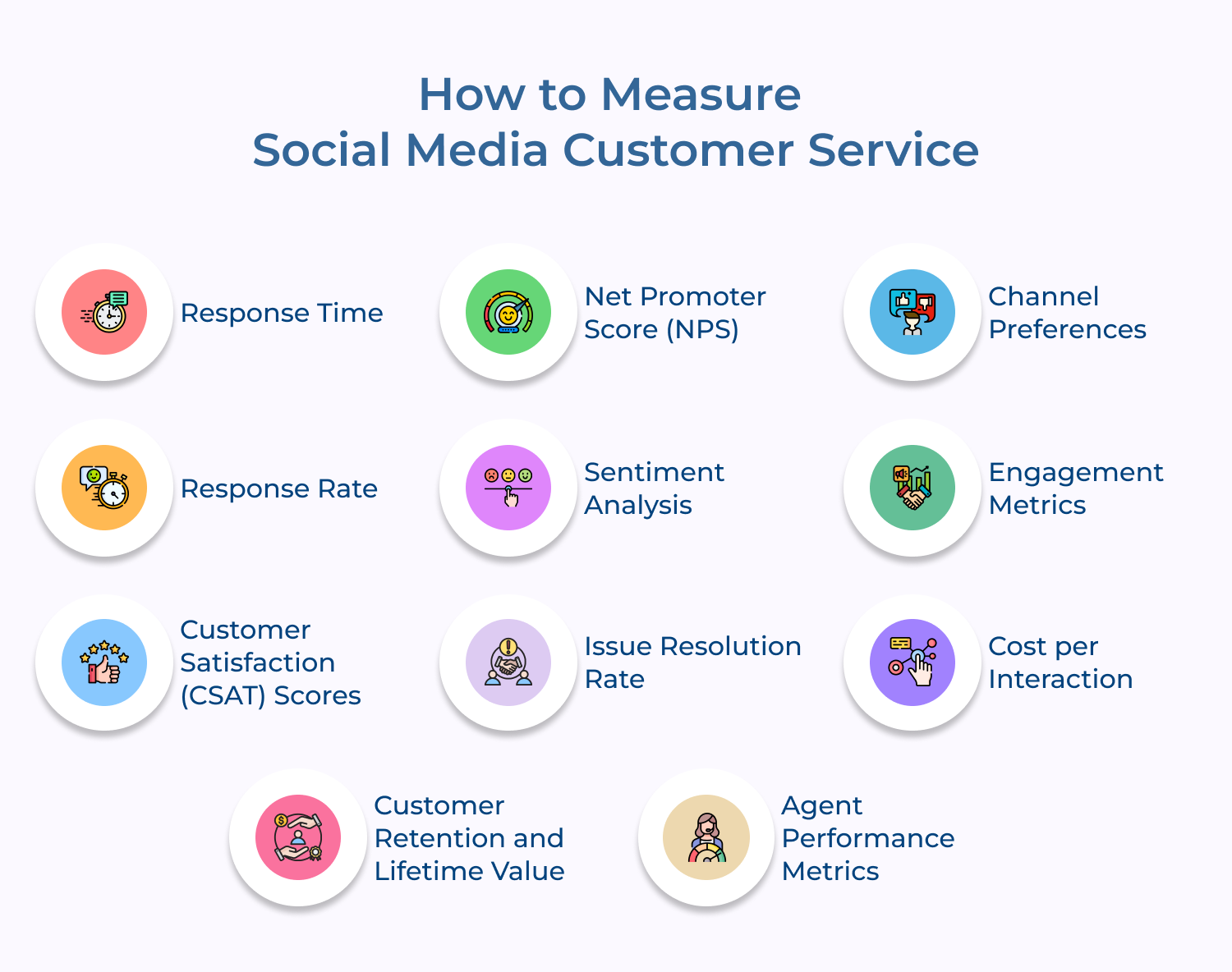
Response time is one of the most critical metrics in social media customer service. Customers expect quick replies, especially on social platforms.

  • Average response time: Calculate the average time it takes your team to respond to customer inquiries.
  • First response time: Measure how long it takes to send the first reply to a customer’s initial message.
  • Resolution time: Track the total time from the first customer contact to the final resolution of their issue.

Set benchmarks for these metrics based on industry standards and your business goals. Aim to continually improve these times.

2. Response Rate

Your response rate indicates how many customer inquiries you’re addressing.

  • Calculate your response rate by dividing the number of responses to the total number of inquiries received.
  • Aim for a response rate as close to 100% as possible.
  • Track this metric over time to ensure you’re not missing customer messages.

3. Customer Satisfaction (CSAT) Scores

CSAT scores provide direct feedback from customers about their service experience.

  • Implement post-interaction surveys asking customers to rate their experience.
  • Use a simple scale (e.g., 1-5 or 1-10) for easy quantification.
  • Calculate your average CSAT score and track it over time.
  • Analyze low scores to identify areas for improvement.

4. Net Promoter Score (NPS)

NPS measures customer loyalty and the likelihood of recommending your brand.

  • Ask customers, “On a scale of 0-10, how likely are you to recommend our company to a friend or colleague?”
  • Calculate your NPS by subtracting the percentage of detractors (0-6) from the percentage of promoters (9-10).
  • Track your NPS over time to gauge the long-term impact of your customer service efforts.

5. Sentiment Analysis

Sentiment analysis helps you understand the overall tone of customer interactions.

  • Use social media monitoring tools to track positive, negative and neutral sentiments in customer messages.
  • Monitor how sentiment changes over time and after service interactions.
  • Identify common themes in positive and negative sentiment to inform your strategy.

6. Issue Resolution Rate

This metric shows how effectively your team resolves customer issues.

  • Track the number of issues resolved versus the total number of issues raised.
  • Calculate the percentage of issues resolved on the first contact.
  • Monitor trends in unresolved issues to identify recurring problems.

7. Channel Preferences

Understanding which social media platforms your customers prefer for service can help you allocate resources effectively.

  • Track the volume of inquiries across different social media platforms.
  • Monitor how these preferences change over time.
  • Use this data to ensure adequate staffing and training for high-volume channels.

8. Engagement Metrics

While not directly related to customer service, engagement metrics can indicate the overall health of your social media presence.

  • Track likes, shares, comments and click-through rates on your service-related posts.
  • Monitor how engagement changes when you implement new service strategies.

Grow your Business with Social Media Customer Service

Businesses treating social media customer service as a core support channel consistently outperform. It provides faster resolutions, stronger brand trust and deeper customer loyalty, all of which flow directly from a well-executed social media strategy.

  • Speed and responsiveness: Customers expect replies within hours instead of days.
  • Consistency across platforms: Unified tone and quality build predictable brand experiences.
  • Data-backed improvement tracking: CSAT, response time and sentiment turns assumptions into growth.

Ready to scale your social media support? Start Omni24’s 14-day free trial to see the platform in action. Effective social media customer service transforms interaction into a brand-building moment, making it the highest-ROI investment in customer experience.

Read more: Discover why social media customer experience matters as much as service.

Scale Your Customer Engagement with Omni24

Omni24’s customer engagement platform harnesses automation and AI to deliver unified customer experiences across digital channels, while keeping human touch

FAQs on Social Media Customer Support

Social media customer service can address a wide range of issues such as product inquiries, order status updates, technical support, billing questions and complaints about products or services. Customers can reach out to businesses on social media for quick and convenient assistance.

Customers prefer social media for customer service because it is quick, convenient and accessible. With just a few clicks, customers can connect with a company and receive real-time assistance. Social media also allows for public interactions, which can help other customers who may have similar questions or concerns.

Responding quickly on social media is crucial for customer satisfaction. Studies have shown that customers expect a response within a few hours when reaching out to businesses on social media. A prompt response shows that the company values its customers and their concerns.

Businesses can set up social media customer service by creating dedicated customer service accounts, establishing response time goals and training staff to handle customer inquiries effectively. It is also important to regularly monitor social media channels for incoming messages and comments.

Companies can measure the effectiveness of their social media customer service by tracking key performance indicators such as response time, resolution rate, customer satisfaction scores and social media engagement metrics. These metrics can help businesses identify areas for improvement and enhance their customer service efforts.

Social media customer service improves satisfaction by delivering personalized responses that address customer concerns publicly and transparently. Resolving issues in full builds credibility that private channels can’t replicate. The visibility drives satisfaction in a few key ways:

  • Faster perceived response times: Public timestamps make quick replies visible to everyone watching.
  • Increased accountability: Transparent resolutions allow teams to follow up consistently.
  • Stronger trust and loyalty: Customers see proof of good service before they even need it themselves.

Managing negative feedback starts with responding promptly, acknowledging the issue, and offering a real solution to the customer’s concern. Removing negative comments always backfires, because screenshots spread faster than the original post.

Businesses treat criticism as a visible opportunity to demonstrate their commitment to customer service. A solution-focused public reply often does more for reputation than a dozen positive posts because prospective customers pay close attention to brands managing conflict.