What is Mobile App Survey & How to Collect It?
Mobile app surveys capture real user feedback, guiding improvements, meeting customer expectations and enhancing overall satisfaction.

Mobile app surveys capture real user feedback, guiding improvements, meeting customer expectations and enhancing overall satisfaction.
Did you know that mobile users are projected to spend over 4.2 trillion hours, in apps consumer spend will hit $150 billion globally?
That’s a staggering amount of time spent within the digital realm, presenting both an opportunity and a challenge for businesses seeking valuable insights from their audience.
Traditional methods of surveying are becoming increasingly outdated in today’s digital world. Enter the mobile app survey – a tool poised to revolutionize the way businesses gather data. The power of mobile technology helps companies to engage with their audience directly on their devices.
Explore the benefits of mobile app surveys and why they represent the future of data collection in an increasingly mobile-centric world.
A mobile app survey is a tool used by app developers and marketers to gather feedback from users about their experience with a mobile application. These surveys can be implemented within the app itself, prompting users to provide feedback on various aspects such as usability, design, features, performance and overall satisfaction.
A mobile app survey helps businesses identify strengths and weaknesses in their app, enabling data-driven improvements and feature enhancements. By capturing real-time feedback you can boost engagement as well as foster customer loyalty, as users feel their opinions are valued.
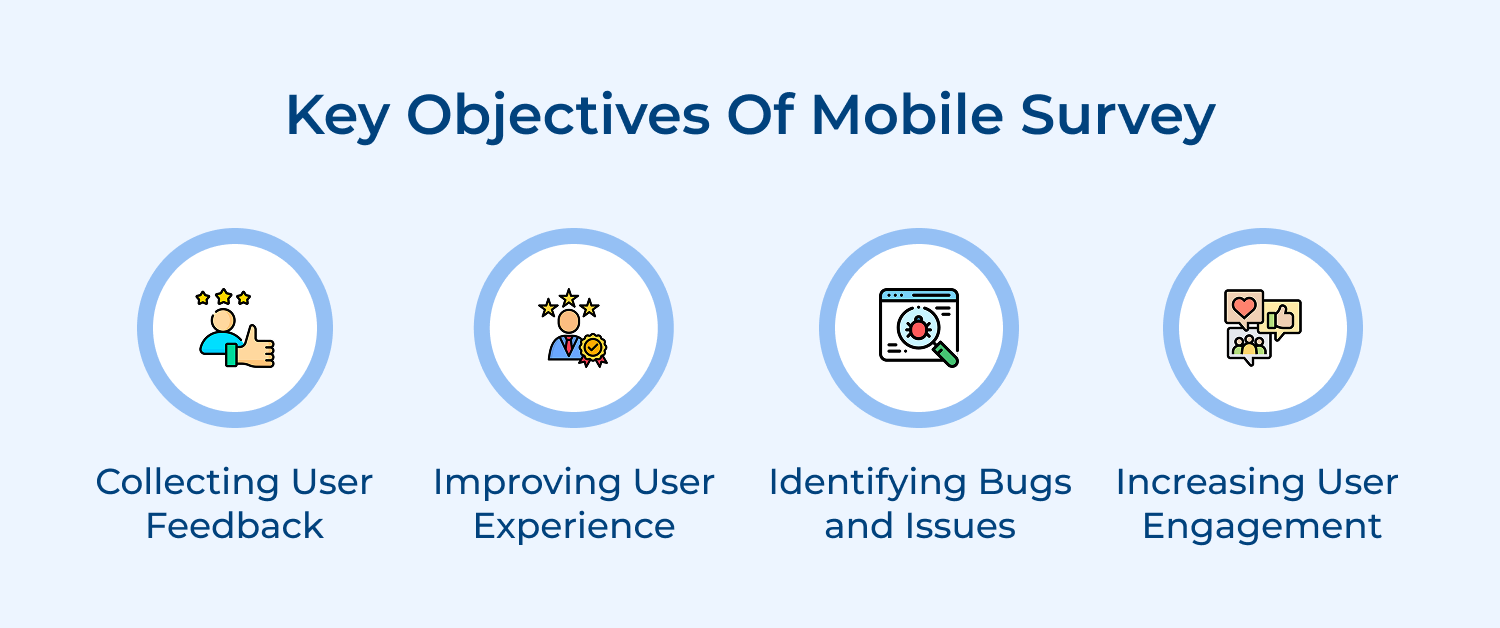
Key objectives:
1. Collecting user feedback: One of the main purposes of a mobile app survey is to gather feedback about their experience with the app. It helps app developers understand what users like and dislike about the app, as well as identify areas for improvement.
2. Improving user experience: Collecting feedback through a survey helps app developers make data-driven decisions to enhance user experience. It could involve making changes to the app’s design based on user preferences.
3. Identifying bugs and issues: Mobile app surveys can identify any technical issues that users may be experiencing. By asking specific questions about performance, developers can pinpoint areas that need to be addressed to improve the app’s performance.
4. Increasing user engagement: Surveys can be a valuable tool for engaging users and encouraging them to provide feedback. By making the survey interactive and easy to complete, app developers can increase user participation.
Mobile surveys are gaining popularity as people increasingly rely on smartphones for daily tasks. They offer unique benefits for feedback and research that traditional surveys can’t match.
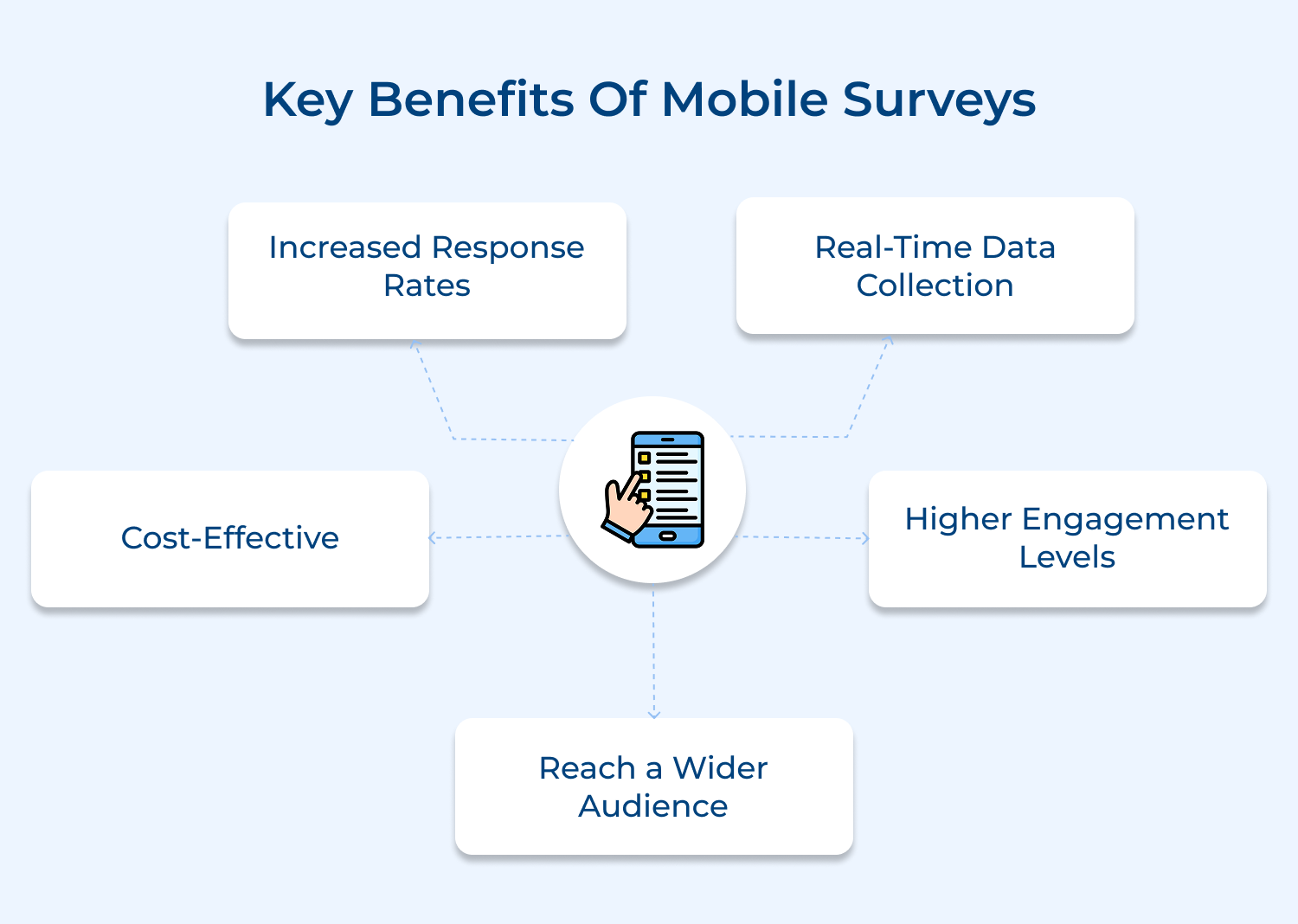
1. Increased Response Rates
Mobile surveys tend to have higher response rates compared to traditional surveys. With the convenience of being able to access surveys on their smartphones anytime & anywhere, respondents are more likely to participate and provide their feedback. It leads to more accurate data for businesses.
2. Real-Time Data Collection
Surveys via mobile allow for real-time data collection, meaning that businesses can gather feedback and insights instantly. It enables organizations to make quick decisions and adjustments based on the feedback received, leading to more effective strategies.
3. Cost-Effective
Mobile app surveys are more cost-effective than traditional surveys that require printing and mailing. With mobile surveys, businesses can save on printing, postage, and distribution costs, making it a more budget-friendly option for gathering feedback or conducting research.
4. Higher Engagement Levels
Mobile surveys are often more engaging and interactive than traditional surveys. With features such as multimedia content, sliders, and interactive questions, respondents are more likely to remain engaged throughout the survey, resulting in more insightful responses.
5. Reach a Wider Audience
The majority of the population owns smartphones, and mobile surveys enable businesses to reach a wider audience. it is particularly beneficial for companies looking to gather feedback from younger demographics who may be more likely to respond to surveys on their mobile devices.
Mobile surveys have become a popular tool for collecting feedback due to the convenience they offer. Here are some types of feedback you can collect with mobile surveys:
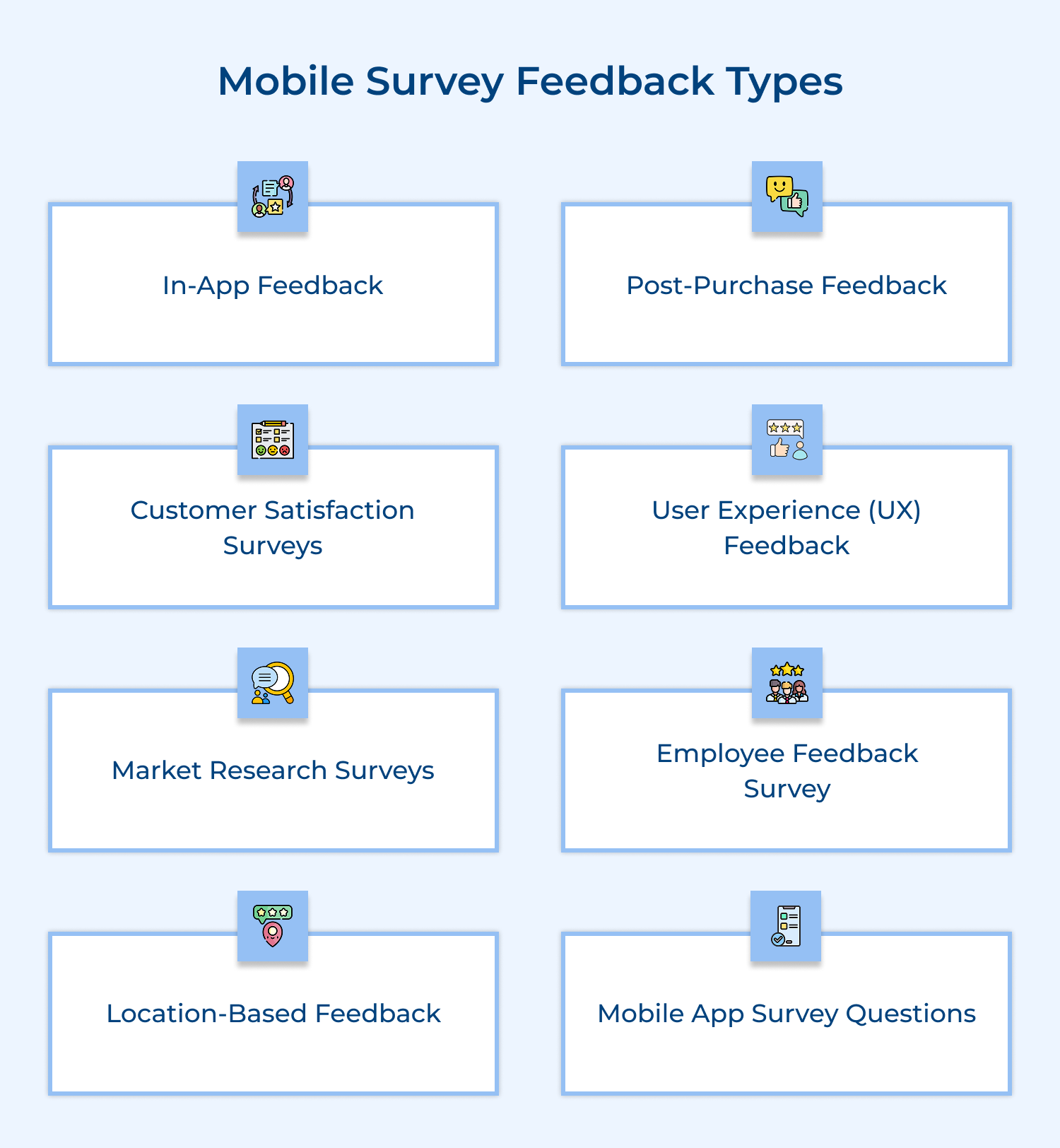
In-app feedback surveys allow users to provide feedback on a specific feature or function within a mobile app. Such type of feedback can help developers understand user preferences and identify areas for improvement.
Example:
Collecting feedback from customers after they have made a purchase can provide valuable insights into the overall customer experience. Post-purchase feedback surveys can help businesses understand customer satisfaction levels, identify any issues with the purchase process and gather feedback on products or services.
Example:
Customer satisfaction (CSAT) surveys are a common type of feedback survey that businesses use to gauge customer satisfaction levels. These surveys typically measure satisfaction with products, services and overall customer experience.
Example:
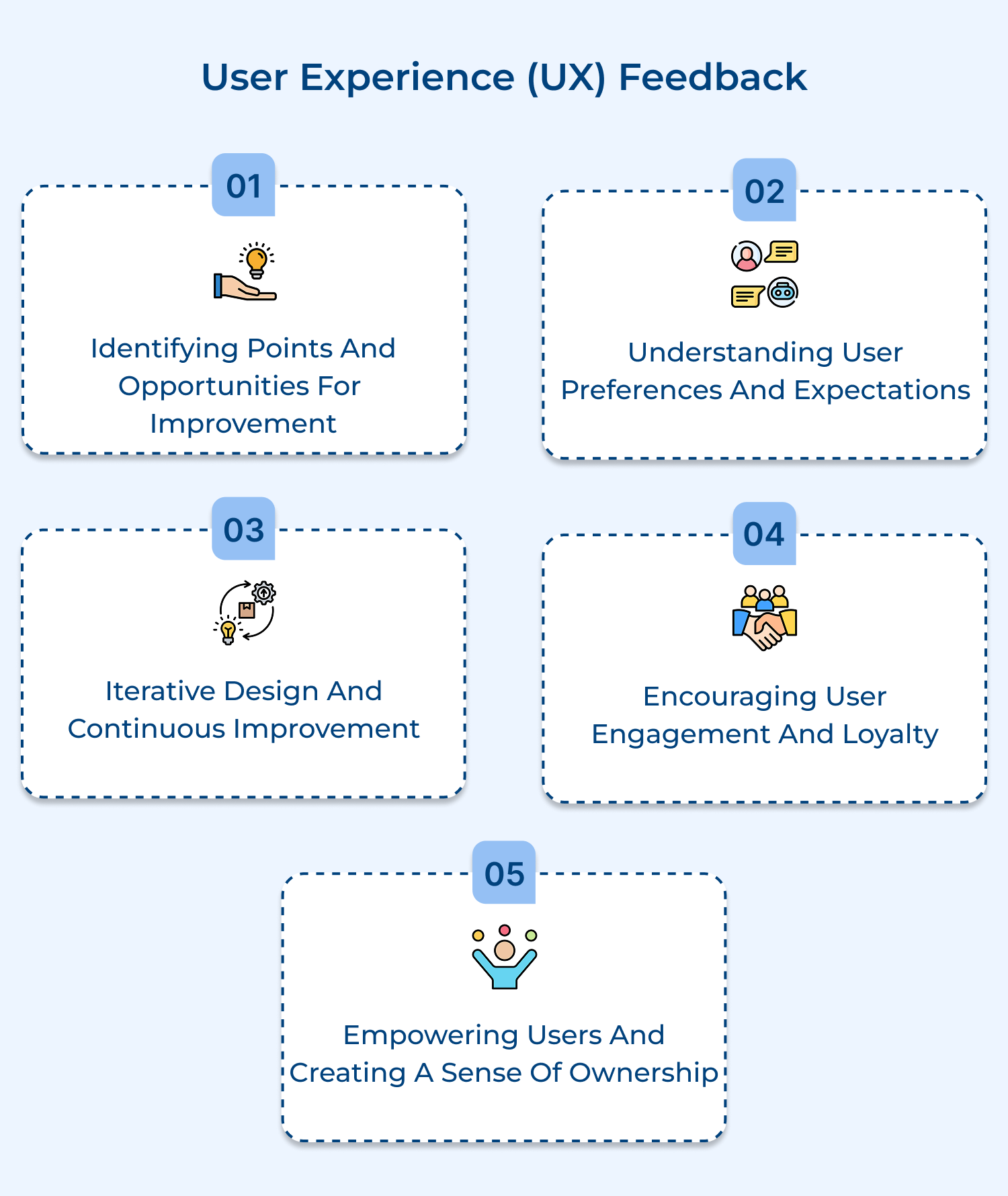
Collecting user experience feedback through mobile surveys can help businesses gather insights into how users interact with a website, app or digital product. This feedback can be used to improve usability, navigation and overall user experience.
Example:
Mobile surveys can also be used for market research purposes to gather insights into consumer preferences, behavior, and trends. Market research surveys can help businesses identify market opportunities, understand competitors, and make informed business decisions.
Example:
Businesses can also use mobile surveys to gather feedback from employees. Employee feedback surveys can help businesses assess employee satisfaction, engagement and overall workplace culture.
Example:
Location-based feedback surveys enable businesses to gather customer feedback based on their precise location. For example, a retail store can use location-based feedback surveys to gather feedback from customers who visit a specific store location.
Such feedback can help businesses tailor their marketing efforts and improve customer experiences at specific locations.
Example:
When conducting mobile app surveys, it’s important to ask the right questions to gather valuable insights about user experience, satisfaction, and areas for improvement. Here are some examples of mobile app survey questions you can consider:
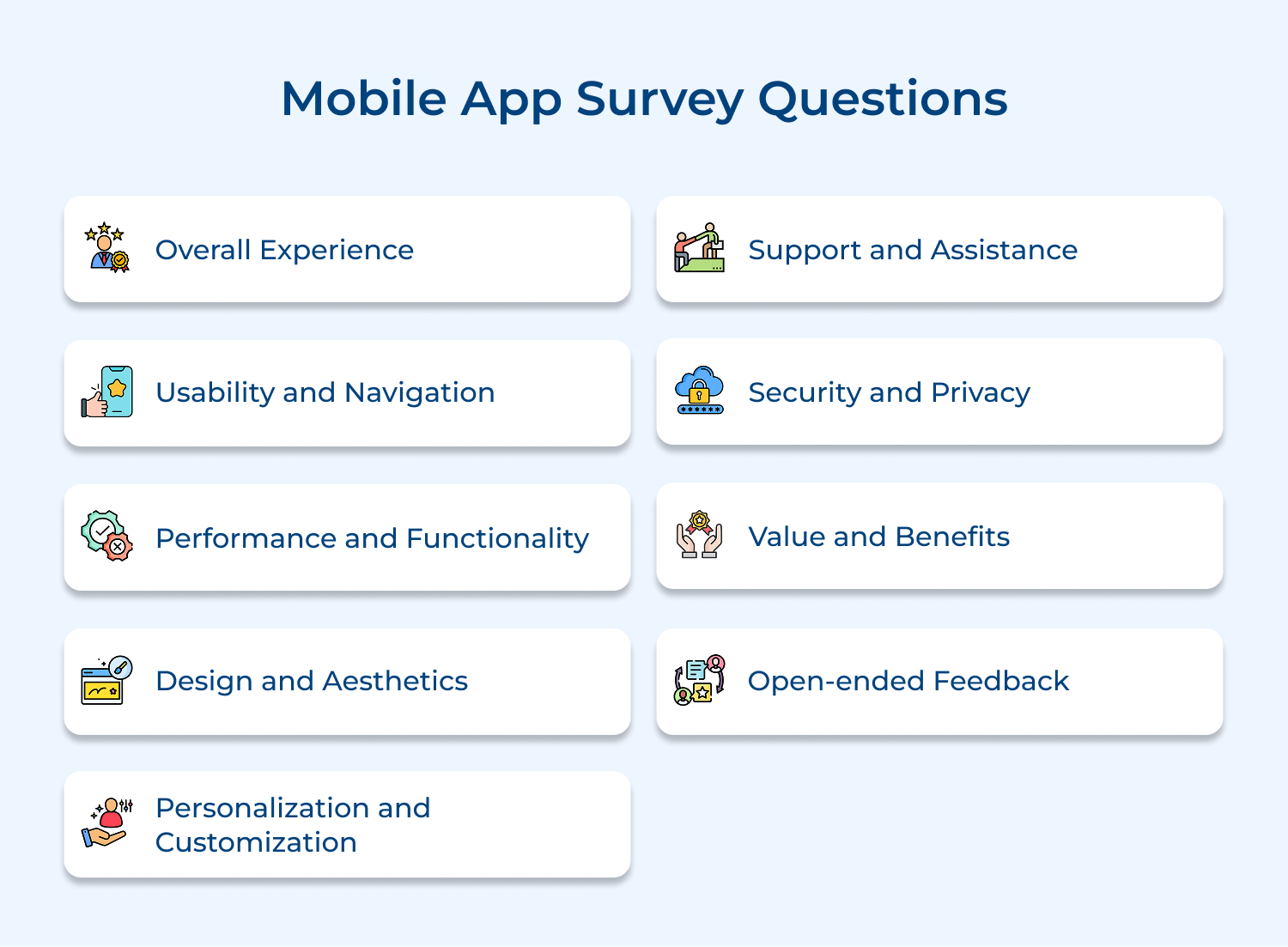
1. Overall Experience
2. Usability and Navigation
3. Performance and Functionality
4. Design and Aesthetics
5. Personalization and Customization
6. Support and Assistance
7. Security and Privacy
8. Value and Benefits
9. Open-ended Feedback
Remember to keep your survey questions clear, concise and focused on specific aspects of the app. It’s advisable to include a mix of closed-ended (e.g., rating scales, multiple-choice) and open-ended questions to gather both quantitative & qualitative feedback.
Mobile app surveys have indeed revolutionized the way data is collected in today’s fast-paced world. With more and more people relying on their smartphones for everyday tasks, mobile surveys offer a convenient and accessible way to gather insights on the go.
Companies can now reach a wider audience, collect real-time data, and make informed decisions quickly than ever before. By embracing mobile surveys, businesses can stay ahead of the curve and adapt to the ever-changing digital landscape. The future of data collection is mobile, and the possibilities are endless.

Why is user feedback important for mobile apps?
User feedback is crucial for mobile apps because it provides valuable insights into how users are interacting with the app, what their preferences are and what improvements can be made to enhance their overall experience. Without user feedback, developers would be left in the dark about what users want and need in an app.
How can mobile app surveys improve user experience?
Mobile app surveys can improve user experience by allowing developers to gather direct feedback from users on various aspects of the app. Surveys can help identify bugs, usability issues and areas for improvement. By incorporating user feedback from surveys, developers can make data-driven decisions to enhance the app’s performance and increase user satisfaction.
What is the response rate for mobile app surveys?
The response rate for mobile app surveys can vary depending on factors such as the length of the survey, the timing of the survey and the incentives offered for completing the survey. Generally, response rates for mobile app surveys tend to be higher than traditional surveys due to the convenience of completing surveys on mobile devices and the ability to reach users in real-time.
What are the common challenges of mobile app surveys?
Some common challenges of mobile app surveys include low response rates, survey fatigue and the potential for bias in responses. To combat these challenges, developers can keep surveys short and focused, offer incentives for completing surveys, and target specific user groups for feedback. It’s also important to analyze survey data carefully to ensure that results are valid and reliable.
 https://omni24.io/wp-content/uploads/2026/09/Social-commerce-scaled.png
1340
2560
Webvision Solution
https://omni24.io/wp-content/uploads/2023/04/Omni-Logo-1.svg
Webvision Solution2026-10-23 12:18:272026-10-23 12:18:27What is Social Commerce and Why Does It Matter?
https://omni24.io/wp-content/uploads/2026/09/Social-commerce-scaled.png
1340
2560
Webvision Solution
https://omni24.io/wp-content/uploads/2023/04/Omni-Logo-1.svg
Webvision Solution2026-10-23 12:18:272026-10-23 12:18:27What is Social Commerce and Why Does It Matter? https://omni24.io/wp-content/uploads/2026/08/AI-Customer-Service-Agents.png
1256
2400
Webvision Solution
https://omni24.io/wp-content/uploads/2023/04/Omni-Logo-1.svg
Webvision Solution2026-09-21 04:48:512026-09-21 04:48:51How to Build an AI Customer Service Agents: 8 Key Steps
https://omni24.io/wp-content/uploads/2026/08/AI-Customer-Service-Agents.png
1256
2400
Webvision Solution
https://omni24.io/wp-content/uploads/2023/04/Omni-Logo-1.svg
Webvision Solution2026-09-21 04:48:512026-09-21 04:48:51How to Build an AI Customer Service Agents: 8 Key Steps https://omni24.io/wp-content/uploads/2026/08/Omnichannel-Conversational-AI.png
1256
2400
Tushar Joshi
https://omni24.io/wp-content/uploads/2023/04/Omni-Logo-1.svg
Tushar Joshi2026-09-16 03:51:072026-09-16 03:51:07How to Build Omnichannel Conversational AI Strategy
https://omni24.io/wp-content/uploads/2026/08/Omnichannel-Conversational-AI.png
1256
2400
Tushar Joshi
https://omni24.io/wp-content/uploads/2023/04/Omni-Logo-1.svg
Tushar Joshi2026-09-16 03:51:072026-09-16 03:51:07How to Build Omnichannel Conversational AI Strategy
Whether it’s about acquire, engage or support – Omni24 covers all your customer engagement needs in one complete platform.

Copyright ©2026 Veemo All rights reserved.
CA, Los Angeles, Hall Ave, 19011