How Hybrid Chatbots Improve Customer Experience
A hybrid chatbot blends AI speed with human expertise to deliver fast, accurate and empathetic support that boosts satisfaction and efficiency.
A hybrid chatbot blends AI speed with human expertise to deliver fast, accurate and empathetic support that boosts satisfaction and efficiency.
Hybrid chatbots are transforming how businesses interact with customers by combining the strengths of rule-based systems and advanced AI technologies.
85% success rate is reported for AI–human hybrid chatbot implementations, outperforming fully automated-only approaches in reliability and ROI.
Capable of handling both simple queries and complex interactions, hybrid chatbots enhance operational efficiency while freeing up human agents for more critical tasks. The adoption of hybrid chatbots has become essential for companies seeking to deliver exceptional service.
Explore the functionality, benefits, applications and challenges of hybrid chatbots in the current business landscape.
A hybrid chatbot combines the strengths of rule-based and AI-powered chatbots to create a versatile, effective conversational agent. While rule-based chatbots follow predefined scripts to handle specific queries, AI-powered chatbots utilize natural language processing and machine learning to respond to user inputs more conversationally.
The importance of hybrid chatbots lies in their ability to offer a seamless user experience. They can manage simple queries efficiently while also adapting to more complex interactions, thus meeting diverse user needs without compromising performance.
Key objectives:
Hybrid chatbots seamlessly integrate rule-based and AI technologies, enabling them to effectively manage both simple inquiries as well as complex customer interactions.
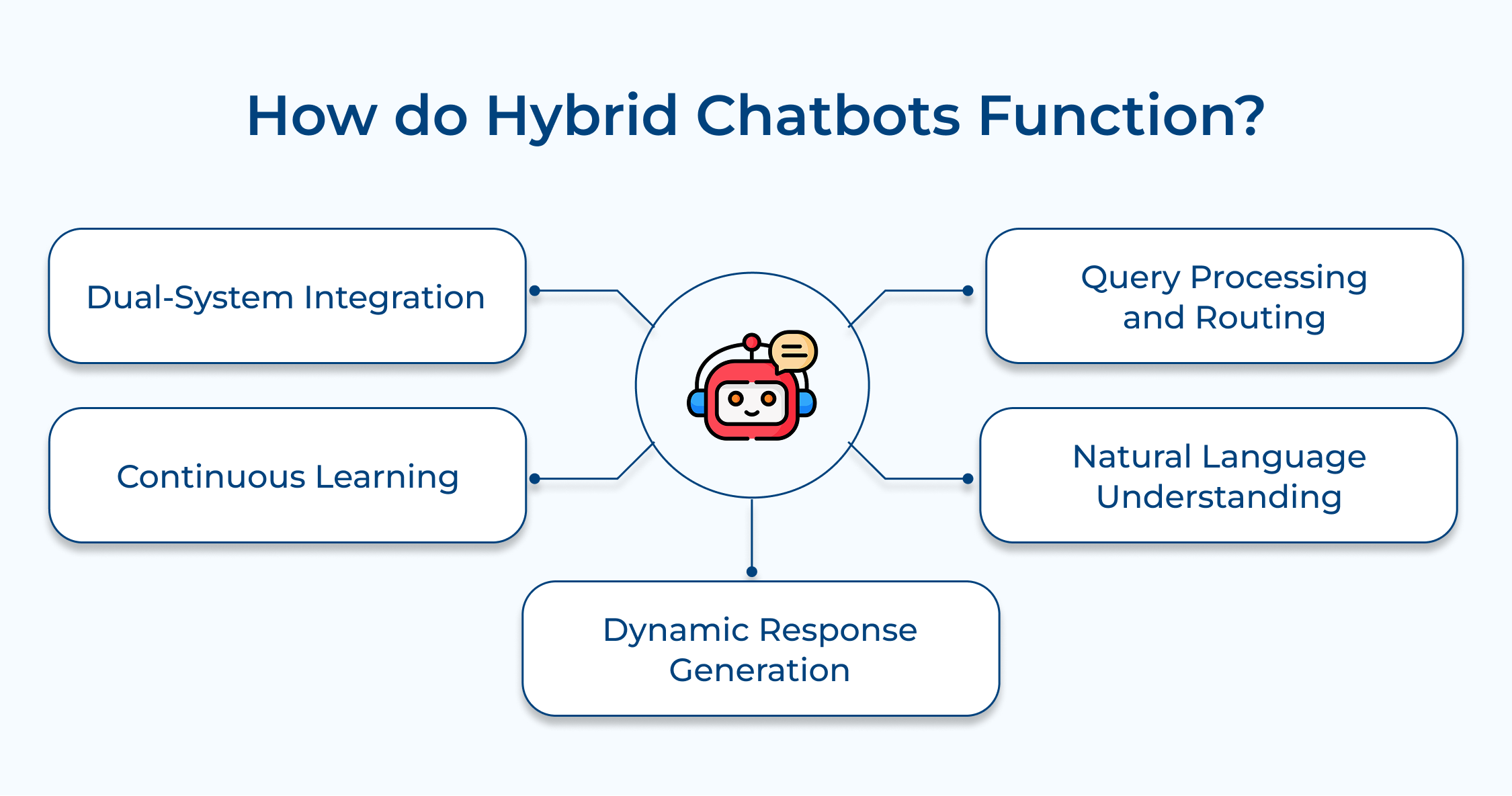
1. Dual-System Integration
Hybrid chatbots merge rule-based and AI systems. The rule-based component follows predefined scripts for straightforward queries, while the AI system uses natural language processing for complex interactions.
2. Query Processing and Routing
User inputs are initially analyzed to determine the best handling method. Simple queries match predefined patterns and are managed by the rule-based system. Complex queries are routed to the AI component for deeper analysis.
3. Natural Language Understanding
The AI system employs NLP techniques to interpret user intent, analyzing semantic structure and context. Machine learning models, trained on extensive datasets, help understand language variations.
4. Dynamic Response Generation
Responses are generated based on the understood intent. Rule-based interactions use pre-written responses, while AI-handled queries may generate unique responses using natural language generation techniques.
5. Continuous Learning
The AI component learns from each interaction, refining its capabilities over time. Human feedback and performance analysis contribute to ongoing improvements in both AI and rule-based components.
Hybrid chatbots find applications across various business sectors, enhancing customer service, sales and operational efficiency while delivering personalized user experiences.
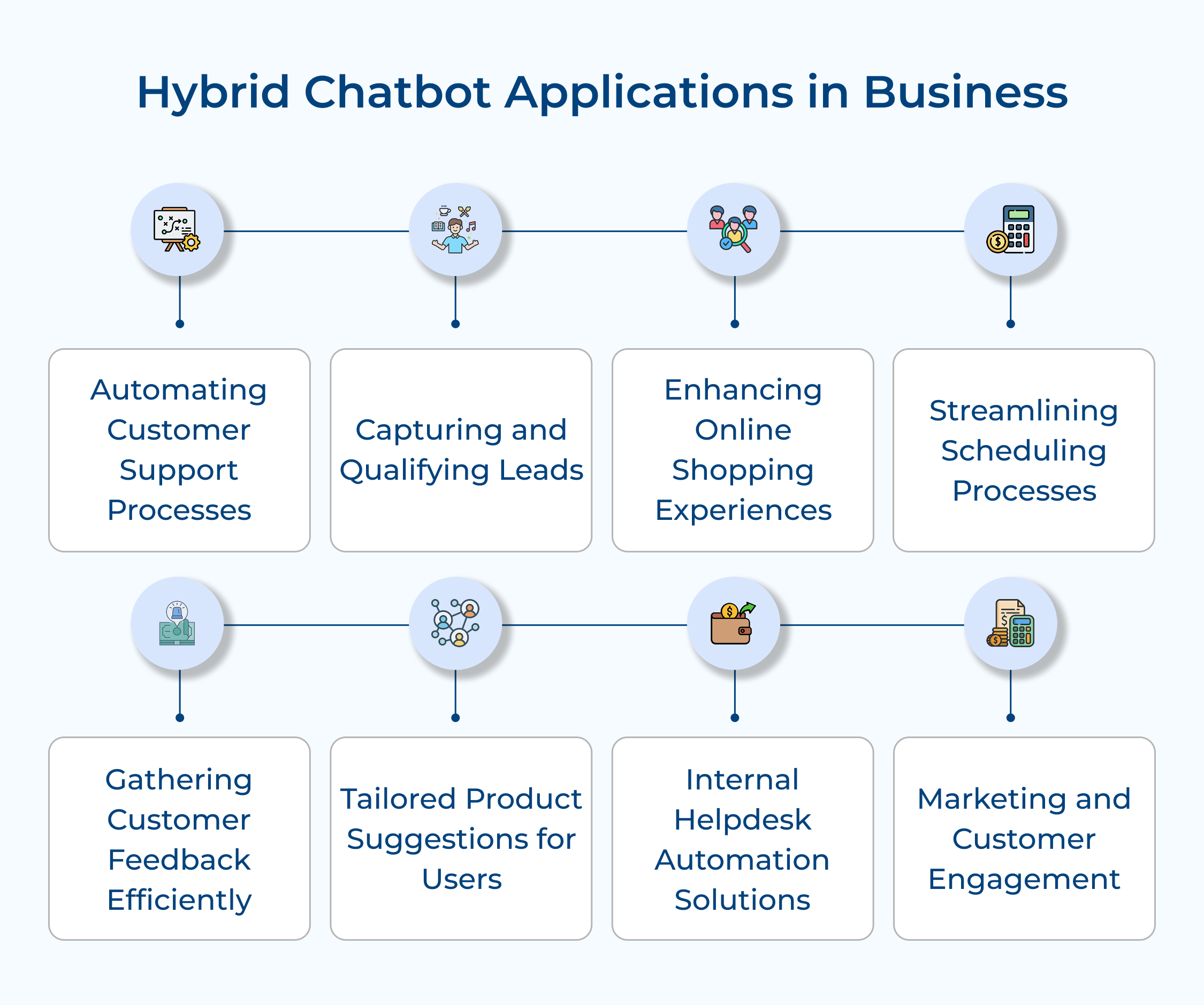
Automating customer support processes is crucial for businesses to handle high volumes of inquiries efficiently. It reduces wait times, ensures 24/7 availability and frees up human agents for complex issues. This automation leads to improved customer satisfaction, reduced operational costs and the ability to scale support operations without proportionally increasing staff.
Hybrid chatbots can be implemented to handle common customer queries, provide product information and guide users through troubleshooting steps. They can automatically resolve simple issues, update account information and process returns or exchanges. For complex issues, they can gather initial information before seamlessly transferring to a human agent.
Best practices:
Efficient lead capture and qualification are essential for businesses to focus their sales efforts on the most promising prospects. It helps prioritize resources, reduce response times to potential customers and increase conversion rates. Automating this process ensures consistent lead evaluation and enables 24/7 lead generation.
Hybrid chatbots can engage website visitors, collect contact information and ask qualifying questions to determine lead quality. They can provide initial product information, schedule demos or consultations and route qualified leads to appropriate sales representatives. The chatbot can also nurture leads by sending personalized follow-up messages and content.
Best practices:
Enhancing online shopping experiences is crucial in today’s competitive e-commerce landscape. It helps reduce cart abandonment, increase customer satisfaction and drive sales. Providing personalized, instant assistance can replicate the benefits of in-store shopping, making customers feel supported and confident in their purchases.
Hybrid chatbots can assist shoppers by answering product questions, providing size guides and offering personalized recommendations. They can help with order tracking, returns processing and upselling or cross-selling relevant items. The chatbot can also guide users through the checkout process, addressing any concerns that might prevent purchase completion.
Best practices:
Streamlining scheduling processes is essential for businesses to manage appointments efficiently, reduce no-shows and maximize resource utilization. It eliminates the back- and-forth of manual scheduling, provides 24/7 booking capabilities and enhances customer convenience. This efficiency leads to improved customer satisfaction and operational productivity.
Hybrid chatbots can handle appointment bookings, check availability in real-time, send confirmations and reminders, plus process rescheduling or cancellations. They can integrate with calendar systems, consider factors like staff availability and service duration, even suggesting optimal time slots based on historical data and current schedules.
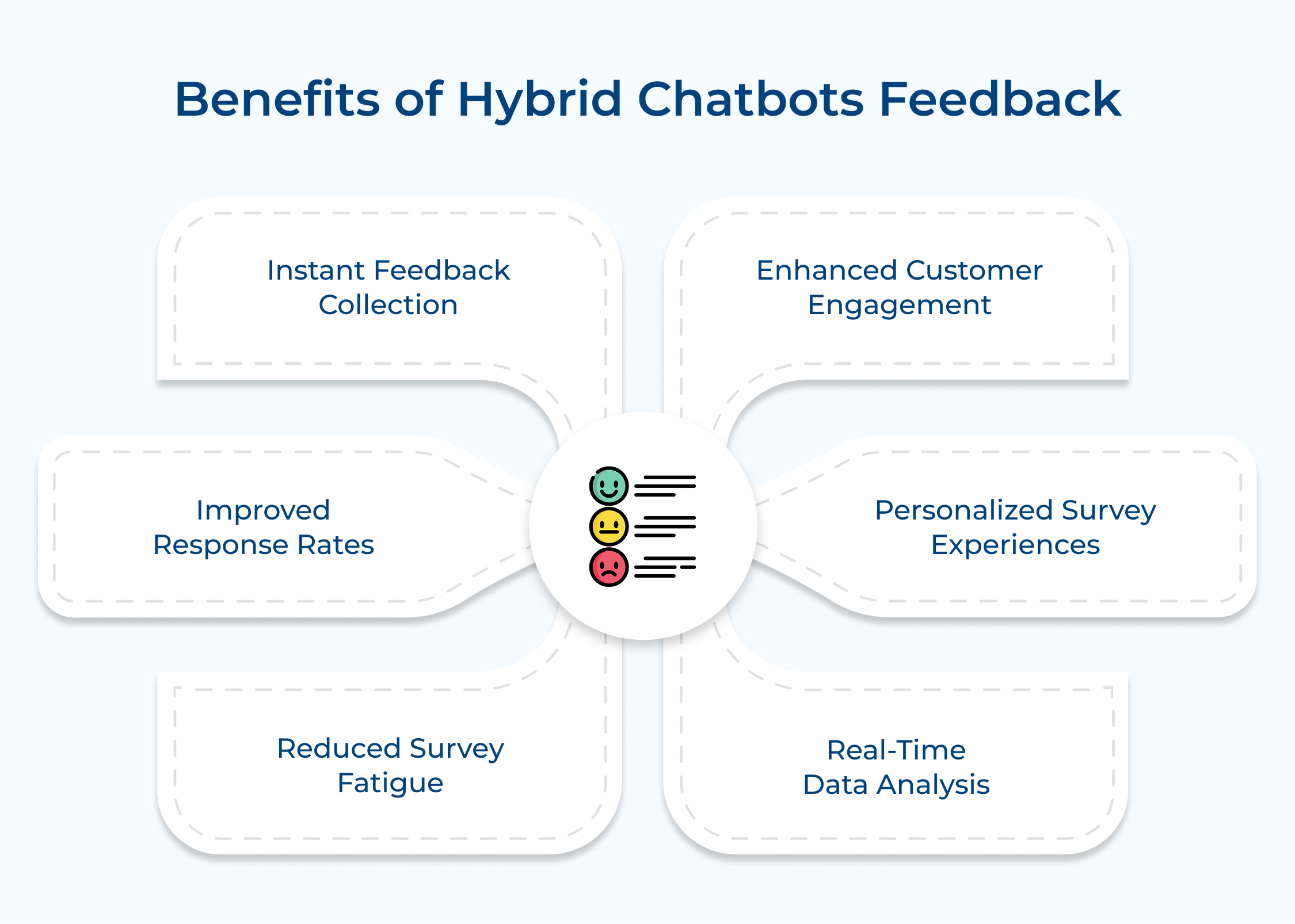
Efficient customer feedback collection is crucial for businesses to understand customer satisfaction, identify areas for improvement and drive product or service enhancements. It provides valuable insights into customer preferences and pain points.
Hybrid chatbots can proactively engage customers post-purchase or after support interactions to collect feedback. They can conduct surveys, ask open-ended questions and even analyze sentiment in responses. The chatbot can adapt its questions based on previous answers, diving deeper into specific areas when necessary.
Best practices:
Tailored product suggestions are essential for enhancing the customer shopping experience, increasing average order value and improving customer satisfaction. Personalized recommendations help customers discover relevant products quickly, reducing decision fatigue and increasing the likelihood of purchase. This capability is crucial for effective upselling and cross-selling.
Hybrid chatbots can analyze user browsing history, purchase patterns and stated preferences to offer personalized product recommendations. They can suggest complementary items during the shopping process, recommend alternatives if a product is out of stock and even proactively reach out with tailored suggestions based on past interactions.
Best practices:
Internal helpdesk automation is crucial for improving employee productivity, reducing response times to internal queries and ensuring consistent information dissemination across the organization. It helps in managing high volumes of internal support requests efficiently, allowing IT and HR teams to focus on more complex, high-value tasks.
Hybrid chatbots can handle common internal queries related to IT support, HR policies, or company procedures. They can guide employees through troubleshooting steps, provide policy information, assist with password resets and facilitate service requests. For complex issues, the chatbot can collect initial information before routing to the appropriate human specialist.
Best practices:
Effective marketing and customer engagement are essential for building brand loyalty, increasing customer lifetime value and driving business growth. Automated, personalized engagement helps businesses maintain consistent communication with customers, deliver targeted marketing messages and create interactive experiences that resonate with their audience across various touchpoints.
Hybrid chatbots can engage customers with personalized marketing messages, run interactive campaigns or quizzes and provide product information. They can segment users based on interactions, deliver tailored content or offers and guide customers through marketing funnels. The chatbot can also collect preferences and feedback to inform future marketing strategies.
Best practices:
A unique set of capabilities sets hybrid chatbots apart in the digital landscape. Here are the key features that make these chatbots an invaluable asset for modern businesses seeking enhanced customer engagement.
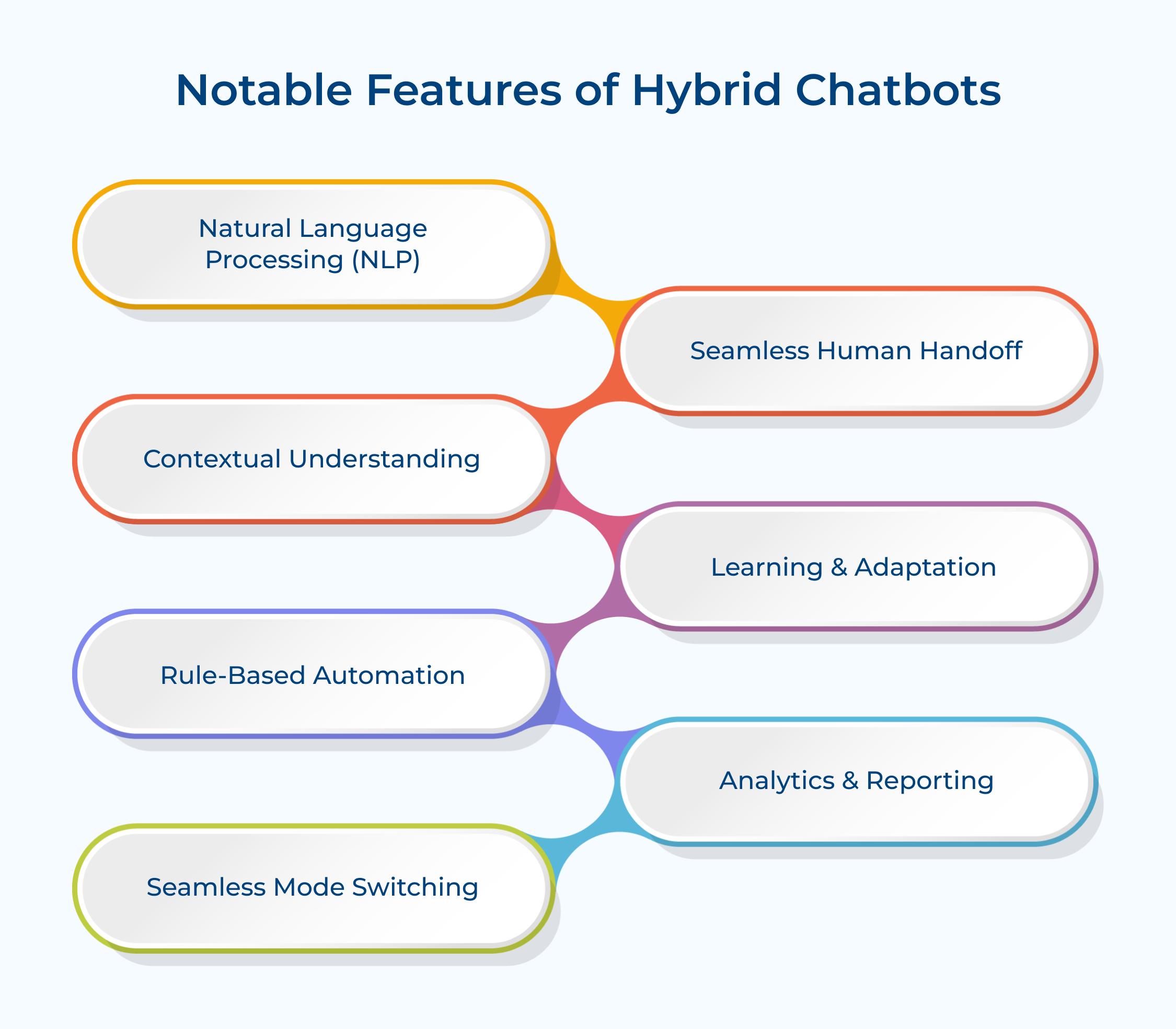
Natural Language Processing (NLP) forms the core of hybrid chatbots, enabling these systems to understand and interpret human language in nuanced ways. The capability allows chatbots to recognize context, identify intent and discern emotions from user inputs.
The transformation from simple keyword matching to meaningful interactions makes conversations more engaging and relevant. For example, a user expressing difficulty with an order prompts a more empathetic response, rather than a generic reply.
Contextual understanding is crucial for hybrid chatbots to provide coherent and relevant responses throughout a conversation. Unlike traditional chatbots that may treat each interaction as isolated, hybrid chatbots retain previous exchanges, maintaining a natural dialogue flow.
The ability to reference earlier messages helps create a more connected conversation. If a user inquires about their order status after mentioning a specific product, the chatbot can provide accurate information based on prior context.
Efficiency in handling straightforward queries comes through rule-based automation.
Predefined scripts allow chatbots to deliver quick responses to common questions, such as operating hours or return policies. Immediate assistance for users addressing routine inquiries reduces the need for human intervention, significantly enhancing customer satisfaction.
The capability to seamlessly switch between rule-based and AI-driven modes stands out as a key feature of hybrid chatbots.
Flexibility in catering to various user needs enhances the chatbot’s effectiveness. Simple questions can be addressed in rule-based mode for instant answers, while more complex conversations can transition to AI mode for nuanced interpretations and responses.
Recognizing when an issue requires human intervention is essential for hybrid chatbots.
The seamless human handoff feature allows users to transition effortlessly to a human agent whenever the chatbot encounters complex questions or emotionally charged situations. Comprehensive support is ensured without frustrating the customer, thus improving overall service quality.
Machine learning algorithms enable hybrid chatbots to continuously learn from user interactions. Over time, these chatbots refine their understanding of language nuances, enhance their ability to recognize intent and improve response accuracy. This learning process is vital for adapting to evolving user needs, ensuring the chatbot remains relevant and effective.
Gathering and analyzing data is another significant feature of hybrid chatbots. Tracking metrics related to user interactions, such as common questions, response times and customer satisfaction levels, provides invaluable insights for businesses. This data informs decision-making, strategy development and service improvements.
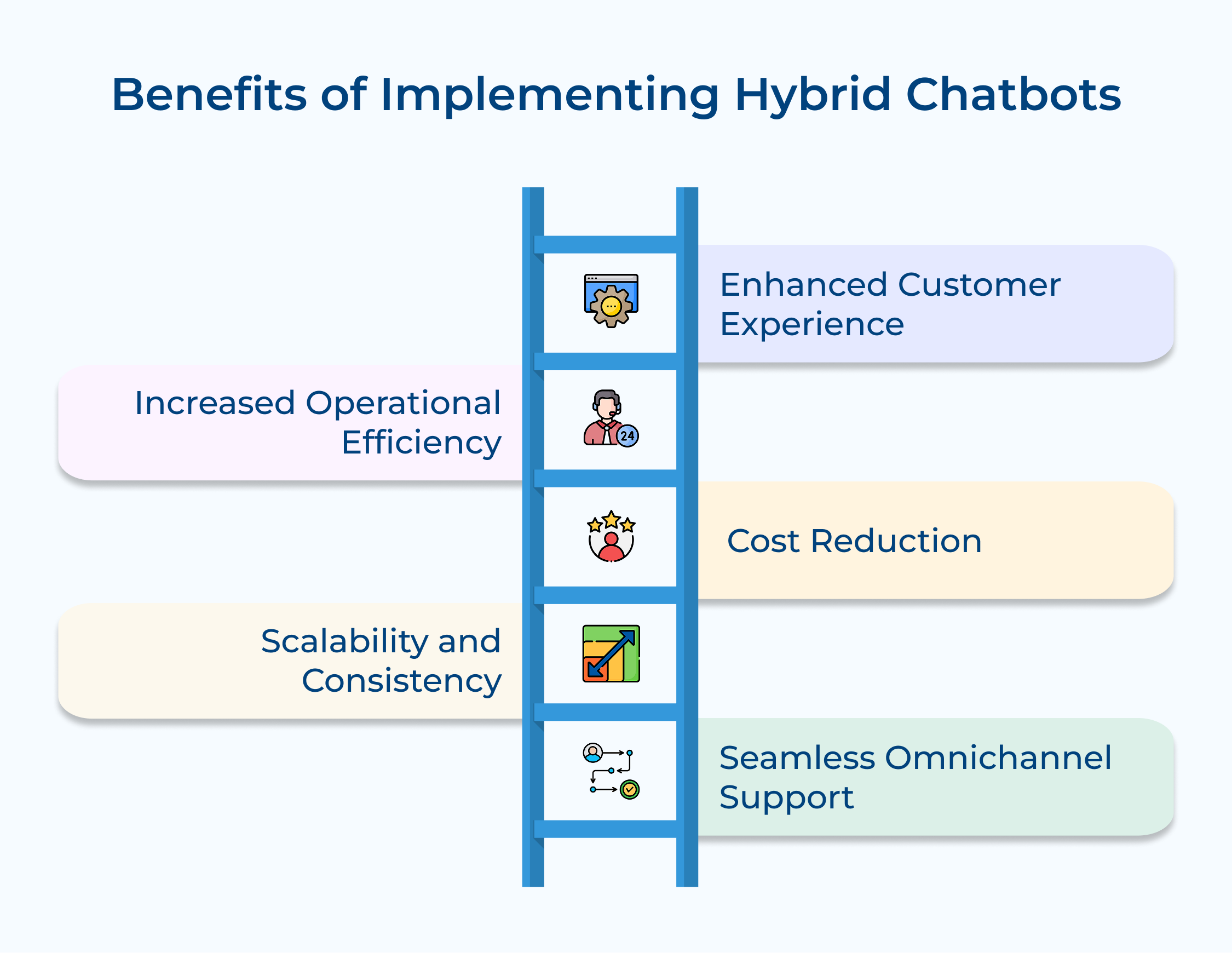
Integrating hybrid chatbots into business operations offers numerous advantages that enhance both efficiency and customer experience. Here are the key benefits:
Implementing hybrid chatbots presents its own set of challenges despite their power. Let’s address common hurdles in deployment and offer effective strategies to overcome them.
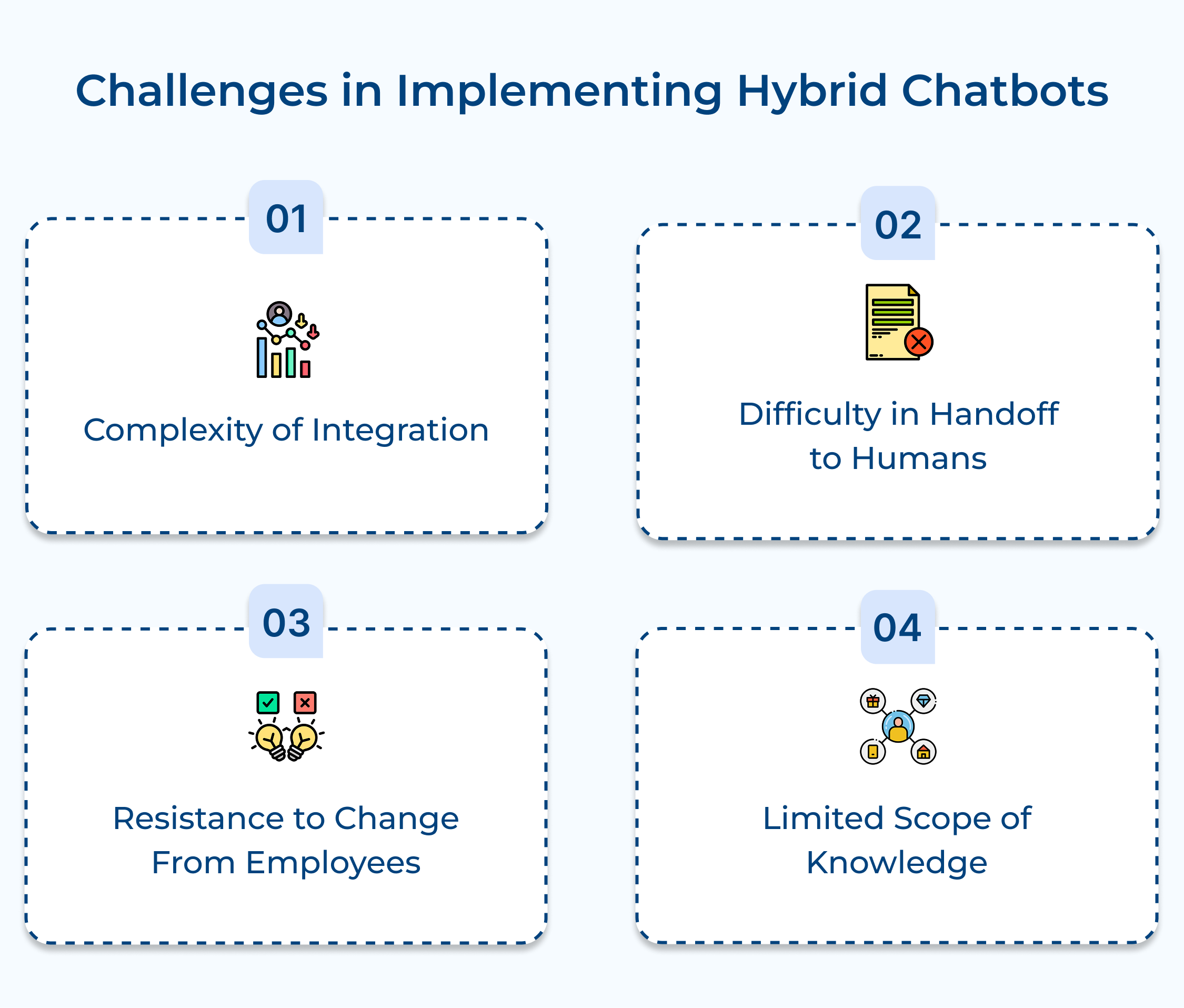
Complexity of Integration
Challenge: Integrating hybrid chatbots with existing systems can be complex due to different platforms, databases and APIs.
Solution: Conduct a thorough assessment of current systems before implementation. Opt for chatbot solutions that offer robust integration capabilities or work with experienced developers to ensure seamless connections to existing software.
Difficulty in Handoff to Humans
Challenge: Ensuring smooth handoff from the chatbot to human agents can be difficult, especially in maintaining context.
Solution: Design a clear protocol for handoffs that includes sharing conversation history and relevant context with human agents. Training agents to understand chatbot interactions can further enhance the customer experience during transitions.
Resistance to Change from Employees
Challenge: Employees may feel threatened by the introduction of hybrid chatbots, fearing job displacement or changes in their roles.
Solution: Clearly communicate the benefits of chatbots in enhancing efficiency rather than replacing human jobs. Provide training to help employees understand how to work alongside chatbots and utilize them to improve their workflows. Engaging employees in the chatbot development process can also foster buy-in and acceptance.
Limited Scope of Knowledge
Challenge: Hybrid chatbots may struggle to provide accurate answers if they encounter queries outside their programmed knowledge base.
Solution: Regularly update the chatbot’s knowledge base with new information and frequently asked questions. Implement mechanisms for the chatbot to learn from user interactions and feedback, allowing it to expand its scope over time.
Real-world implementations of hybrid chatbots demonstrate their effectiveness in enhancing customer experience and operational efficiency across diverse industries.
1. Sephora
Sephora, a leading beauty retailer, implemented a hybrid chatbot named Sephora Virtual Artist to enhance customer engagement.
Implementation: The chatbot uses AI to analyze user preferences and provide personalized product recommendations. It combines rule-based responses for FAQs with AI capabilities for virtual try-ons.
Results: This approach led to increased customer satisfaction, as users received tailored suggestions and a fun, interactive shopping experience. The chatbot significantly boosted online sales and improved customer loyalty.
2. HDFC Bank
HDFC Bank in India deployed a hybrid chatbot called Eva to streamline customer service.
Implementation: Eva handles a wide range of inquiries, from checking account balances to providing information about loans. It uses NLP to understand customer queries and can escalate complex issues to human agents.
Results: The implementation of Eva reduced customer wait times and improved response accuracy. Customer satisfaction scores increased and the bank reported significant cost savings by automating routine inquiries.
3. Lowe’s
Lowe’s, a home improvement retailer, developed a hybrid chatbot named LoweBot to assist customers in-store and online.
Implementation: LoweBot helps customers locate products, offers DIY tips and answers product-related questions. It combines rule-based automation for straightforward queries with AI for more complex assistance.
Results: LoweBot enhanced the customer shopping experience by providing instant support. The integration led to higher customer engagement and a noticeable increase in in-store sales, demonstrating the effectiveness of hybrid chatbots in retail.
4. KLM Royal Dutch Airlines
KLM implemented a hybrid chatbot named BlueBot to assist passengers with various inquiries.
Implementation: BlueBot helps users with booking flights, providing flight status updates and answering frequently asked questions. It utilizes AI to handle complex queries while offering a smooth transition to human agents when needed.
Results: The chatbot improved response times and reduced the workload on customer service agents. KLM reported increased customer satisfaction and a reduction in operational costs, showcasing the efficiency of hybrid chatbots in the travel industry.
5. Duolingo
Duolingo, a language learning platform, introduced a hybrid chatbot to enhance user engagement and learning outcomes.
Implementation: The chatbot interacts with users in real-time, helping them practice languages through conversational exercises. It uses rule-based prompts for structured learning while employing AI to adapt to users’ responses and provide personalized feedback.
Results: The hybrid chatbot significantly improved user retention and engagement rates. Learners enjoyed the interactive experience, leading to increased daily usage and a higher rate of course completion.
Hybrid chatbots profoundly impact both business operations and customer experience (CX). Combining automation with advanced AI capabilities allows these chatbots to streamline processes, enhance efficiency and provide personalized interactions. Organizations can offer 24/7 support, leading to quicker response times and increased customer satisfaction.
The seamless transition between automated responses and human assistance ensures that customers receive optimal service. As more businesses adopt hybrid chatbots, they gain a competitive advantage through improved customer loyalty, valuable insights and the ability to adapt to evolving market demands. Overall, hybrid chatbots represent a significant advancement in customer engagement strategies.

How can Hybrid Chatbots be trained to understand more complex requests?
Hybrid chatbots can be trained to handle complex requests through a combination of methods. These include using large, diverse datasets for machine learning, implementing advanced natural language processing algorithms and continuous learning from real user interactions. Regular analysis of chat logs helps identify areas for improvement. Human oversight in training ensures the chatbot can handle nuanced queries effectively.
Can Hybrid Chatbots be used for sales and marketing?
Yes, hybrid chatbots are highly effective for sales and marketing. They can engage customers 24/7, qualify leads, provide product information and offer personalized recommendations. These chatbots can handle initial sales inquiries, schedule appointments and even process simple orders. They excel at nurturing leads through targeted content delivery and can integrate with CRM systems for seamless sales pipeline management.
How can businesses ensure that Hybrid Chatbots provide accurate and consistent information to users?
Businesses can ensure accuracy and consistency in hybrid chatbots by maintaining a centralized, regularly updated knowledge base. Implementing strict content approval processes and version control helps maintain information integrity. Regular audits of chatbot responses, coupled with AI-driven analytics to identify inconsistencies, are crucial. Integration with up-to-date backend systems, along with providing easy pathways for human oversight, also contributes to information accuracy.
Can hybrid chatbots understand and respond to voice interactions?
Yes, hybrid chatbots can be equipped with voice recognition capabilities to handle voice interactions. This involves integrating speech-to-text and text-to-speech technologies. Natural Language Processing (NLP) algorithms help interpret spoken language, while the chatbot’s existing AI and rule-based systems process the converted text. The response is then converted back to speech. This enables voice-based interactions across various platforms.
How do hybrid chatbots integrate AI with rule-based systems?
Hybrid chatbots integrate AI with rule-based systems through a layered approach. Simple, predictable queries are handled by the rule-based system for quick, consistent responses. When queries fall outside predefined rules or require more nuanced understanding, the AI layer takes over. This integration allows for efficient handling of routine tasks while leveraging AI for complex, context-dependent interactions.
Does a hybrid chatbot replace human customer service?
Hybrid chatbots complement rather than replace human customer service. They handle routine queries and initial customer interactions, freeing human agents to focus on complex issues requiring empathy or critical thinking. Chatbots can operate 24/7, improving response times and consistency. They’re designed to seamlessly transfer to human agents when necessary, enhancing overall customer service efficiency.
Is a hybrid chatbot hard to set up?
Setting up a hybrid chatbot can be complex, but it’s manageable with proper planning and resources. It requires defining clear objectives, choosing appropriate technologies and integrating with existing systems. While initial setup involves significant effort in training the AI and creating rule-based flows, many platforms now offer user-friendly interfaces with pre-built components to streamline the process.
 https://omni24.io/wp-content/uploads/2026/08/AI-Customer-Service-Agents.png
1256
2400
Webvision Solution
https://omni24.io/wp-content/uploads/2023/04/Omni-Logo-1.svg
Webvision Solution2026-09-21 04:48:512026-09-21 04:48:51How to Build an AI Customer Service Agents: 8 Key Steps
https://omni24.io/wp-content/uploads/2026/08/AI-Customer-Service-Agents.png
1256
2400
Webvision Solution
https://omni24.io/wp-content/uploads/2023/04/Omni-Logo-1.svg
Webvision Solution2026-09-21 04:48:512026-09-21 04:48:51How to Build an AI Customer Service Agents: 8 Key Steps https://omni24.io/wp-content/uploads/2026/08/Omnichannel-Conversational-AI.png
1256
2400
Tushar Joshi
https://omni24.io/wp-content/uploads/2023/04/Omni-Logo-1.svg
Tushar Joshi2026-09-16 03:51:072026-09-16 03:51:07How to Build Omnichannel Conversational AI Strategy
https://omni24.io/wp-content/uploads/2026/08/Omnichannel-Conversational-AI.png
1256
2400
Tushar Joshi
https://omni24.io/wp-content/uploads/2023/04/Omni-Logo-1.svg
Tushar Joshi2026-09-16 03:51:072026-09-16 03:51:07How to Build Omnichannel Conversational AI Strategy https://omni24.io/wp-content/uploads/2026/08/Customer-Service-Teams.png
1256
2400
Tushar Joshi
https://omni24.io/wp-content/uploads/2023/04/Omni-Logo-1.svg
Tushar Joshi2026-09-15 04:01:522026-09-15 04:02:16How to Build Customer Service Teams: 6 Key Steps
https://omni24.io/wp-content/uploads/2026/08/Customer-Service-Teams.png
1256
2400
Tushar Joshi
https://omni24.io/wp-content/uploads/2023/04/Omni-Logo-1.svg
Tushar Joshi2026-09-15 04:01:522026-09-15 04:02:16How to Build Customer Service Teams: 6 Key Steps
Whether it’s about acquire, engage or support – Omni24 covers all your customer engagement needs in one complete platform.

Copyright ©2026 Veemo All rights reserved.
CA, Los Angeles, Hall Ave, 19011