How to Effectively Capture Customer Attention?
Capturing customer attention helps brands stand out, builds connections, boosts engagement and drives long-term growth in crowded markets.

Capturing customer attention helps brands stand out, builds connections, boosts engagement and drives long-term growth in crowded markets.
In the fast-paced digital marketplace, capturing customer attention is more critical than ever. Countless brands are vying for visibility, and those that understand how to engage effectively can set your business apart.
A 10% increase in average focus is associated with a 17% increase in consumer spending across various mediums.
Customer attention is about encouraging meaningful connections that lead to loyalty and advocacy. Addressing pain points and delivering value allows brands to create lasting impressions.
Discover the essential strategies for capturing customer attention, highlighting the importance of targeted marketing, personalized experiences and innovative engagement techniques.
Dive into the art of attracting and retaining customer focus in a competitive landscape.
Customer attention refers to the focus and interest that potential as well as existing customers give to a brand, product/service. It encompasses the engagement and awareness a customer has when interacting with a business, whether through marketing efforts, customer service or product experiences.
Understanding customer attention is crucial in a competitive market, as it directly influences purchasing decisions and brand loyalty. Capturing customer attention can lead to increased sales, stronger customer relationships and improved brand perception.
Key objectives:
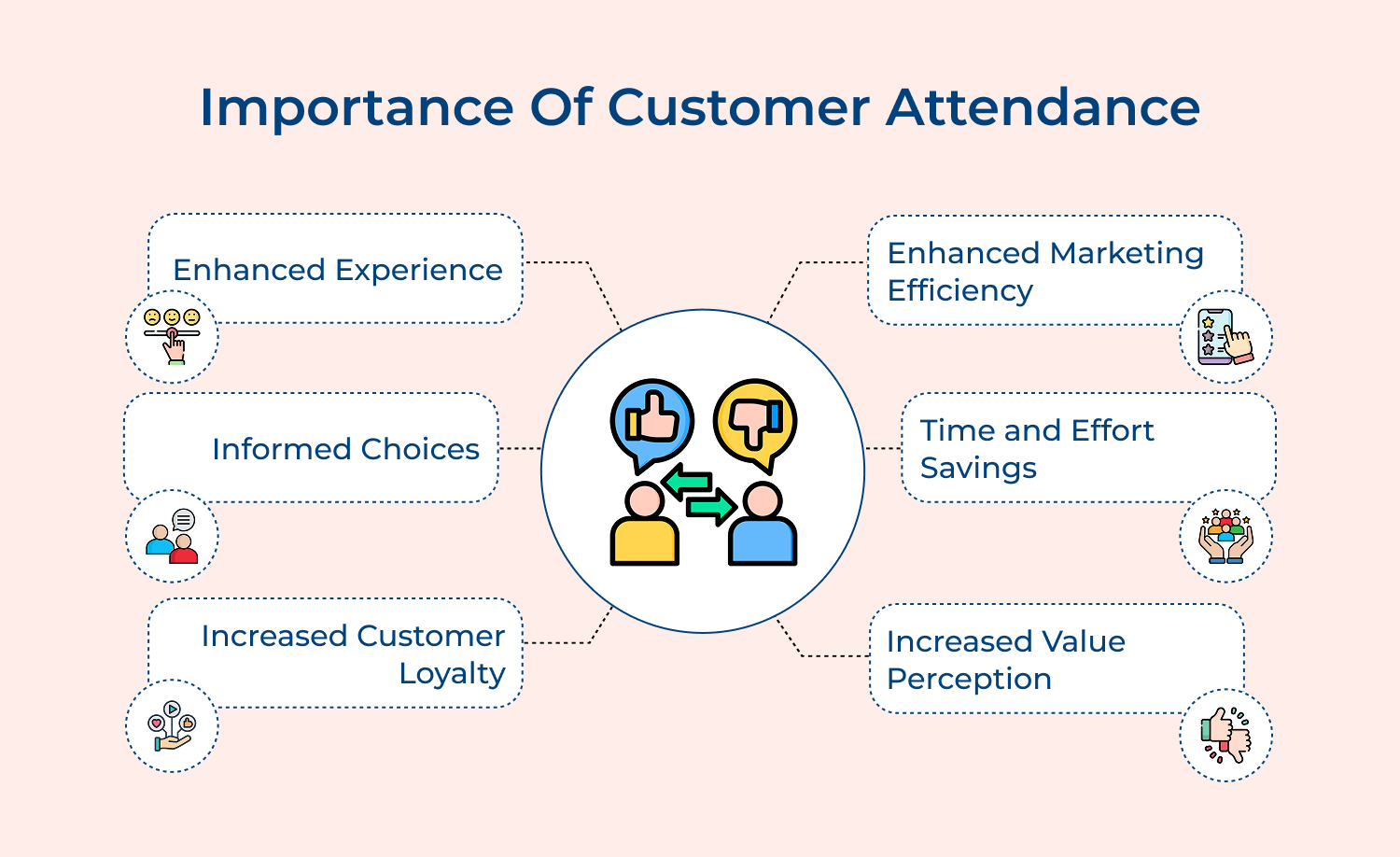
Understanding the significance of customer attention is crucial for businesses. It directly influences engagement, loyalty and ultimately, revenue growth. Here are the insights.
Capturing customer attention involves strategic approaches that resonate with your audience’s needs and preferences, enhancing overall engagement. Here are the strategies.
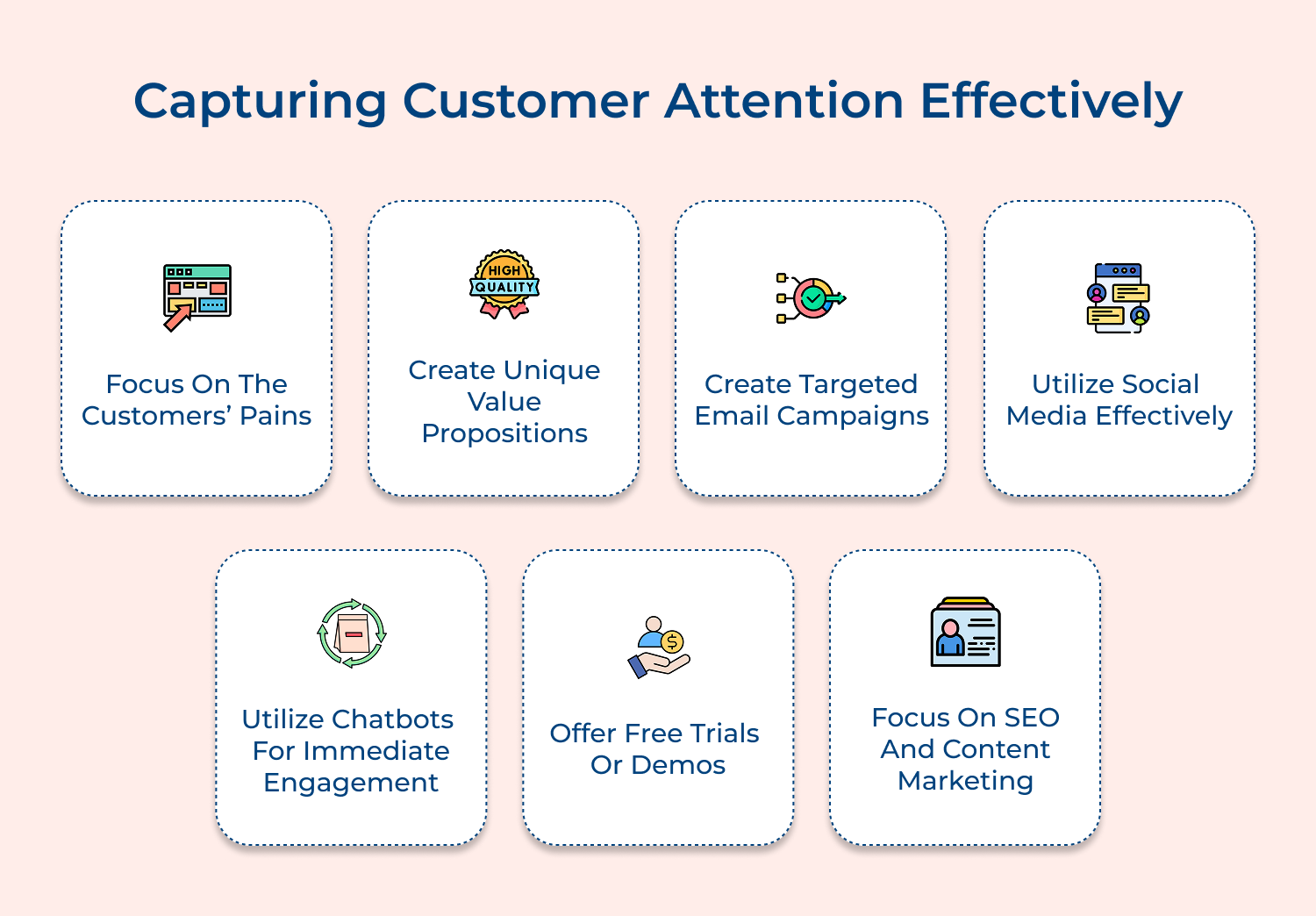
Understanding customer pain points allows businesses to tailor their solutions effectively. By addressing specific challenges, brands can establish relevance and build trust, making it easier to engage potential customers as well as position themselves as problem solvers.
Conduct surveys, interviews and market research to identify common pain points among your target audience. Use this information to create targeted content and messaging that directly addresses these challenges, making your offerings more appealing.
Pro Tips:
A strong unique value proposition (UVP) differentiates your brand from competitors and clearly communicates the benefits of your offerings. It captures attention by answering the critical question: “What makes your product or service unique and valuable?”
Develop a concise statement that outlines the unique benefits your offerings provide. Incorporate this UVP across all marketing materials, ensuring it resonates with your target audience and highlights how you solve their specific problems.
Pro Tips:
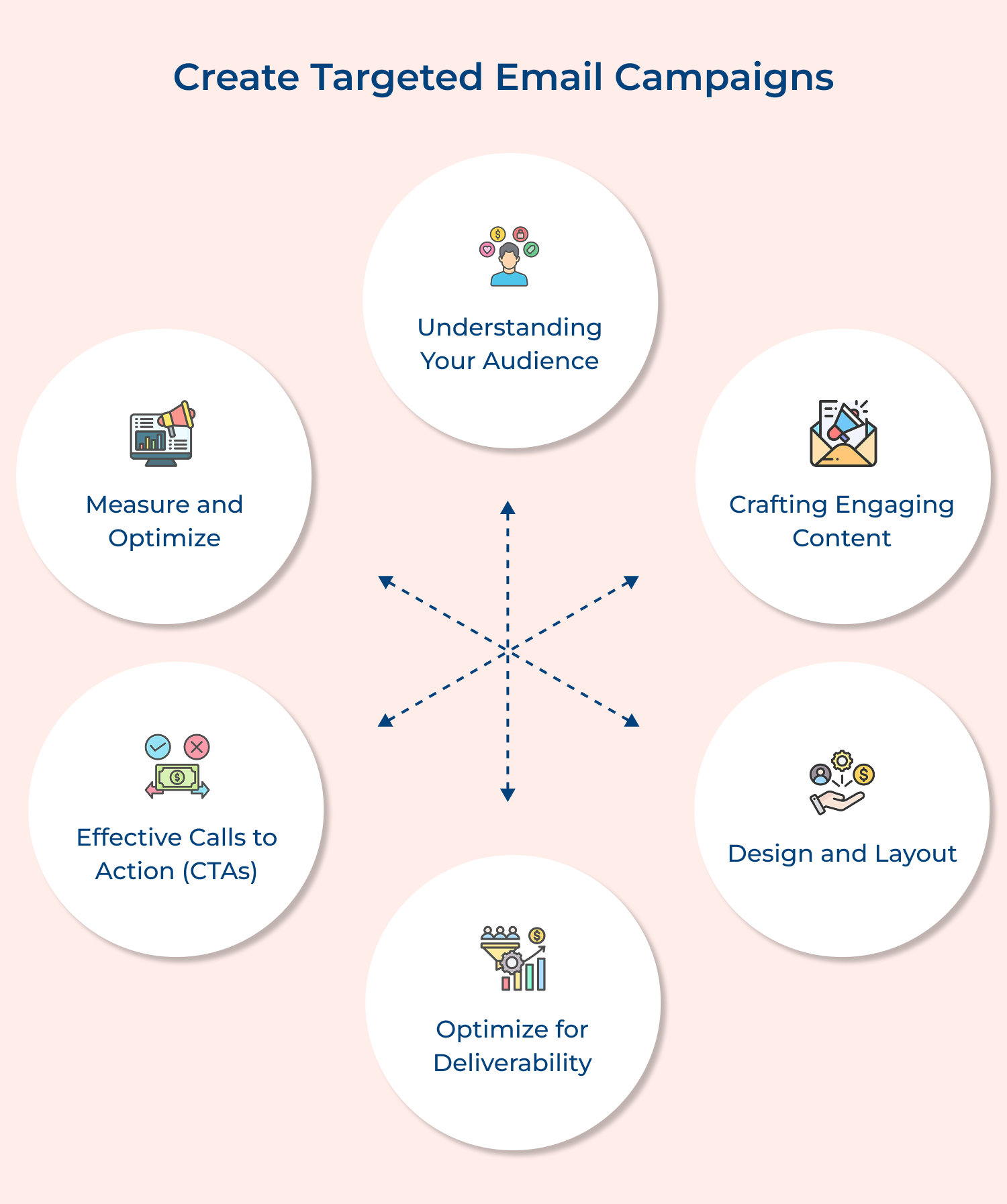
Targeted email campaigns allow you to deliver personalized content to specific segments of your audience, increasing relevance and engagement. This focused approach is more effective than generic messaging, leading to higher open and conversion rates.
Segment your email list based on factors like demographics, behavior, or purchase history. Craft personalized messages for each segment, addressing their unique needs and providing tailored offers that encourage action.
Pro Tips:
Social media platforms are essential for reaching and engaging with your audience where they already spend time. Effective social media use enhances brand visibility, encourages community and provides opportunities for real-time interaction with customers.
Choose the right platforms based on your audience’s preferences and share relevant content that encourages interaction. Use a mix of promotional and engaging content to keep your audience interested.
Pro Tips:
Chatbots provide immediate responses to customer inquiries, enhancing the user experience and capturing attention. They can handle multiple queries simultaneously, ensuring that customers receive timely assistance and information.
Implement chatbots on your website or social media platforms to address common questions, provide information and guide users through the purchasing process. This 24/7 availability boosts customer satisfaction.
Pro Tips:
Offering free trials or demos allows potential customers to experience your product firsthand. This reduces perceived risk and encourages engagement, as users can see the value of your solution before making a financial commitment.
Promote free trials or demos prominently on your website and through marketing channels. Ensure a seamless sign-up process and provide support during the trial period to maximize the user experience.
Pro Tips:
SEO and content marketing improve your online visibility, driving organic traffic to your site. Effective SEO strategies ensure that potential customers can find your content when searching for solutions to their problems.
Conduct keyword research to identify relevant search terms and create high-quality content that addresses these keywords. Optimize your website or blog posts for search engines to improve rankings and capture attention.
Pro Tips:
Implementing effective steps to attract customer focus can significantly boost brand visibility and encourage meaningful relationships with potential clients. Here are the steps.
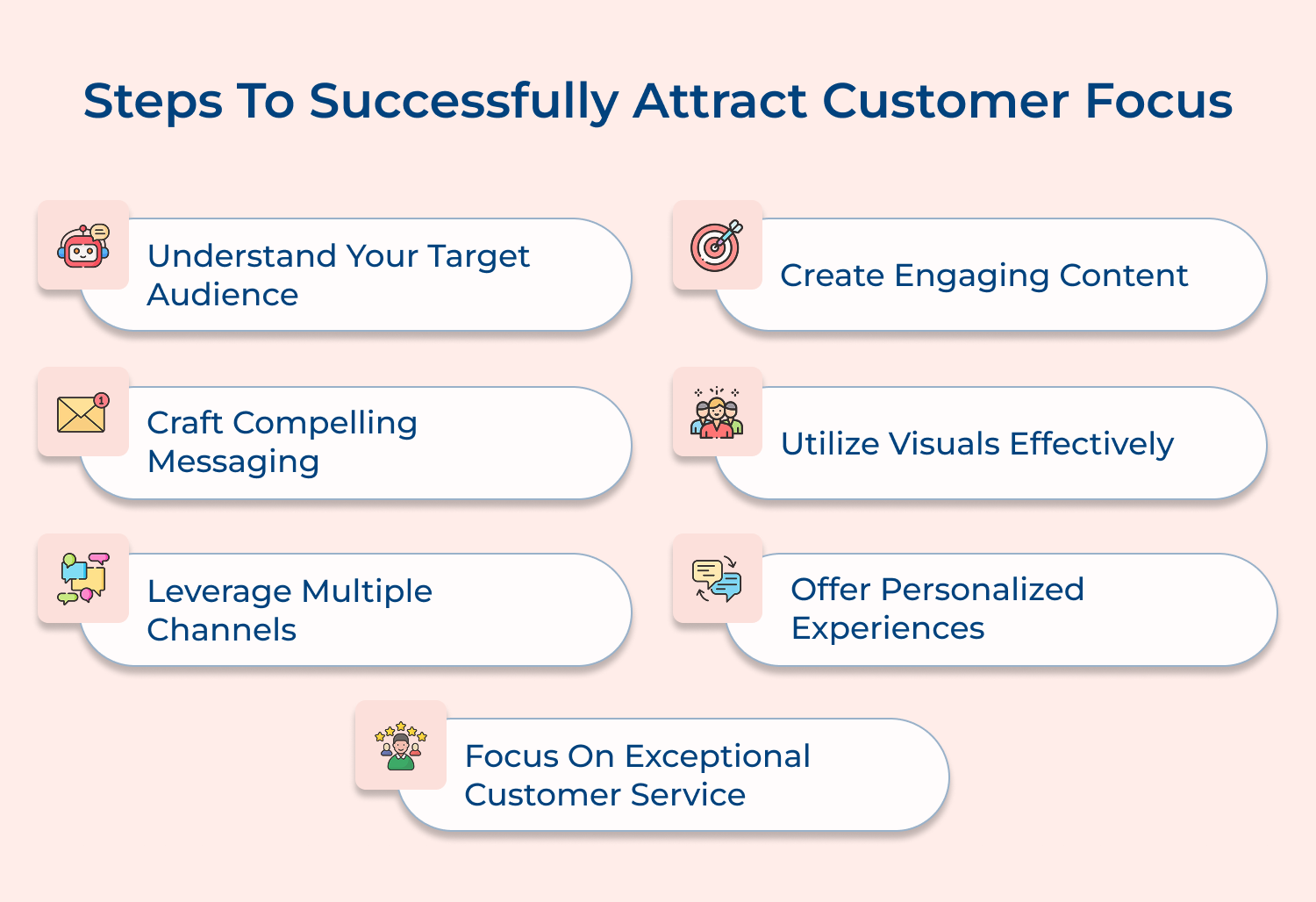
The first step in attracting customer focus is to gain a deep understanding of your target audience. Conduct thorough market research to identify demographics, preferences, behaviors and pain points. Utilize tools like surveys, focus groups and analytics to gather data.
Creating customer personas can be beneficial, as they encapsulate the characteristics and motivations of different segments of your audience. The more you understand your customers, the better you can tailor your marketing efforts to meet their specific needs, making them feel recognized and valued.
Once you understand your audience, the next step is to develop clear and compelling messaging. Your brand’s voice should resonate with your target customers and effectively communicate your value proposition. Focus on the unique benefits your products or services offer.
Use persuasive language that addresses customer pain points and desires. Highlight how your offerings can solve their problems or improve their lives. Consistency in messaging across all platforms is crucial to reinforce brand identity and establish trust. This ensures that customers receive a coherent experience regardless of where they interact with your brand.
To maximize visibility and attract customer attention, utilize a multi-channel marketing approach. Customers engage with brands across various platforms, including social media, email, content marketing and traditional advertising. Each channel offers unique opportunities to reach your audience.
Tailor your content and strategies to suit each platform. For example, visual content works well on Instagram, while in-depth articles are better suited for blogs. By diversifying your channels, you can increase your reach and improve the chances of capturing customer focus.
Content is a powerful tool for attracting customer focus. Develop high-quality, relevant content that provides value to your audience. This could be in the form of blog posts, videos, podcasts, or infographics.
Use storytelling techniques to make your content relatable and engaging. Share customer testimonials, success stories, or behind-the-scenes looks at your brand. Engaging content not only captures attention but also encourages customers to interact with your brand, encouraging a sense of community and connection.
Incorporating eye-catching visuals into your marketing strategy can significantly enhance customer engagement. Visuals such as images, videos or infographics help communicate your message more effectively and can capture attention more quickly than text alone.
Ensure that your visuals align with your brand identity and evoke the desired emotional response. Consistent branding across all visuals helps reinforce brand recognition and trust. Consider creating shareable content that customers can easily distribute on social media, expanding your reach even further.
Personalization is a key factor in attracting and retaining customer focus. Use customer data to tailor experiences that cater to individual preferences. This can include personalized product recommendations, targeted email campaigns, or customized landing pages based on customer behavior.
Customers appreciate brands that recognize their unique needs and preferences. Personalization enhances customer engagement and makes them feel valued, significantly increasing the likelihood of repeat interactions as well as long-term loyalty.
Outstanding customer service is vital for attracting and maintaining customer focus. Ensure that your team is well-trained to address inquiries and resolve issues promptly. Responding quickly and effectively to customer concerns demonstrates that you value their time & opinions.
Positive customer interactions build trust and encourage ongoing engagement. Consider implementing customer service tools, such as live chat or chatbots, to provide immediate assistance. Actively seek customer feedback to continuously improve your service offerings.
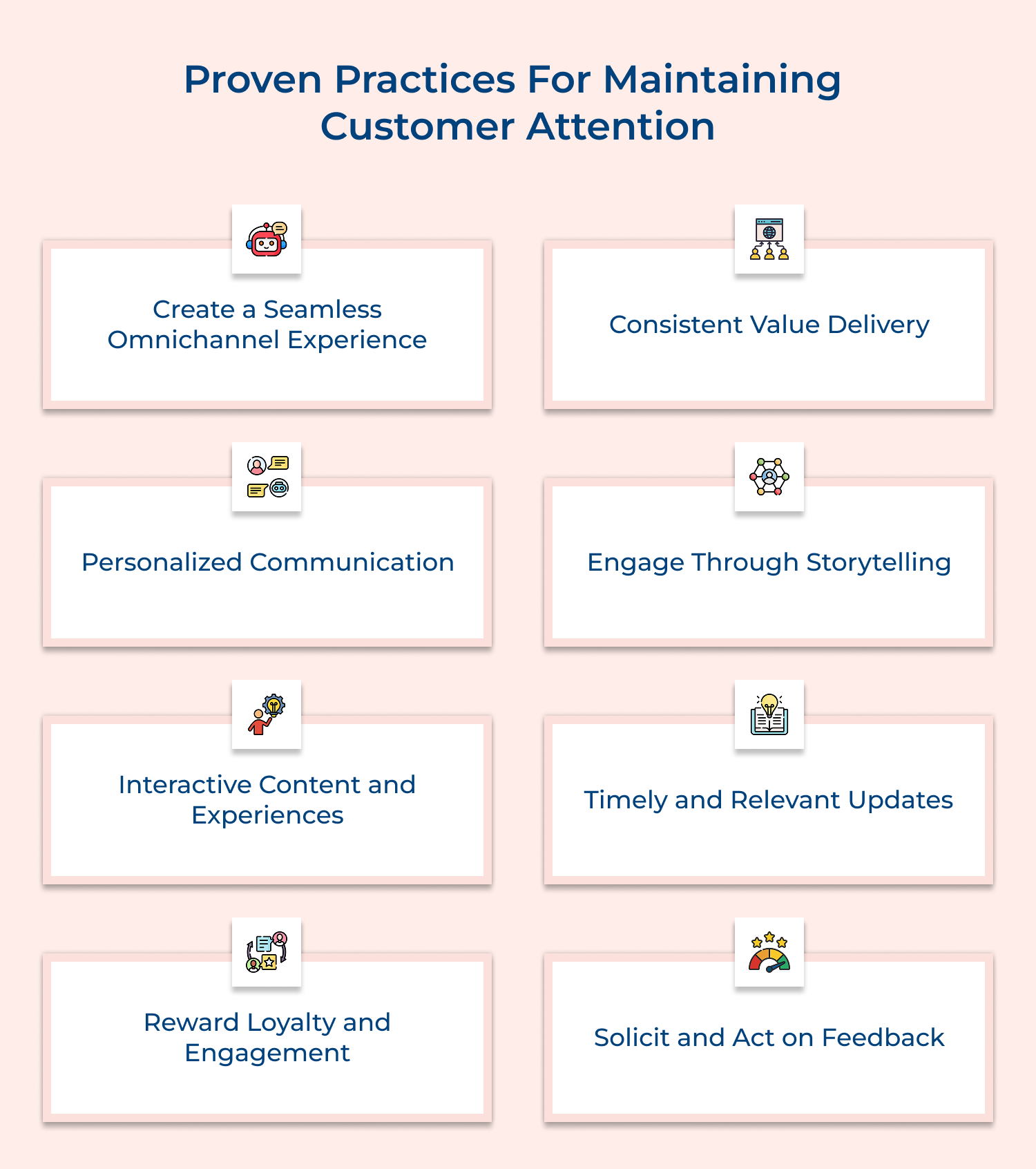
Maintaining customer attention requires consistent efforts and best practices that nurture ongoing engagement. These practices are essential for success.
Evaluating customer attention helps businesses understand engagement levels and refine strategies for better results. Effective methods ensure continuous improvement. Here are the methods.
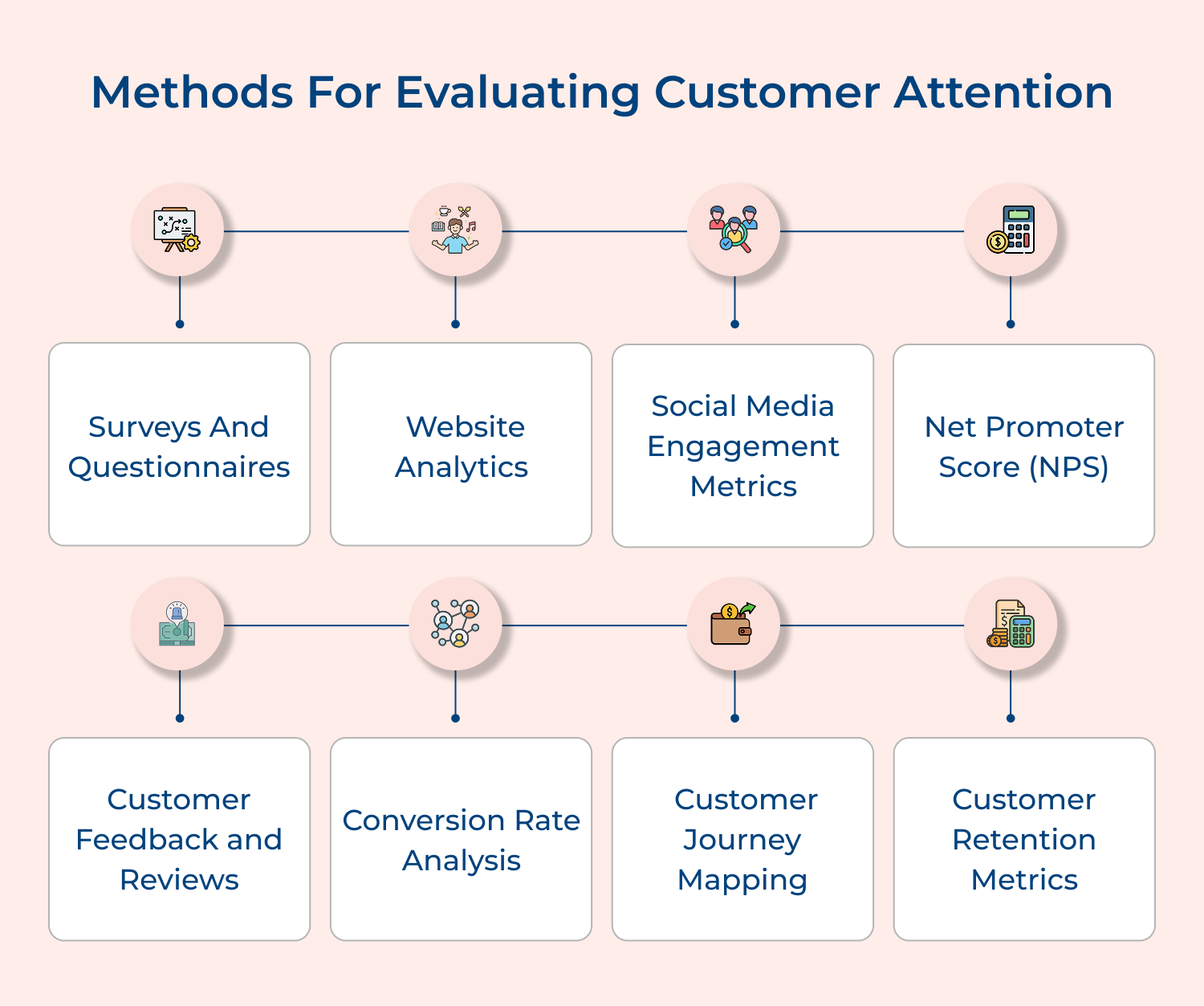
Surveys and Questionnaires
Surveys are one of the most direct ways to evaluate customer attention. By asking customers about their experiences, preferences and how they engage with your brand, you can gather valuable insights. Online tools like SurveyMonkey or Google Forms allow for easy distribution and data collection. Focus on questions that gauge how customers perceive your marketing messages and whether they find your content engaging.
Website Analytics
Utilizing web analytics tools such as Google Analytics helps you track customer behavior on your website. Metrics like page views, time spent on pages, bounce rates and click-through rates provide insight into what captures customer attention. Analyzing this data allows you to identify which content or products are most engaging, enabling you to refine your strategies accordingly.
Social Media Engagement Metrics
Social media platforms offer various metrics to evaluate customer attention. Likes, shares, comments and overall engagement rates reflect how well your content resonates with your audience. Tools like Hootsuite or Sprout Social can help you analyze these metrics, allowing you to adjust your social media strategy based on customer interaction.
Net Promoter Score (NPS)
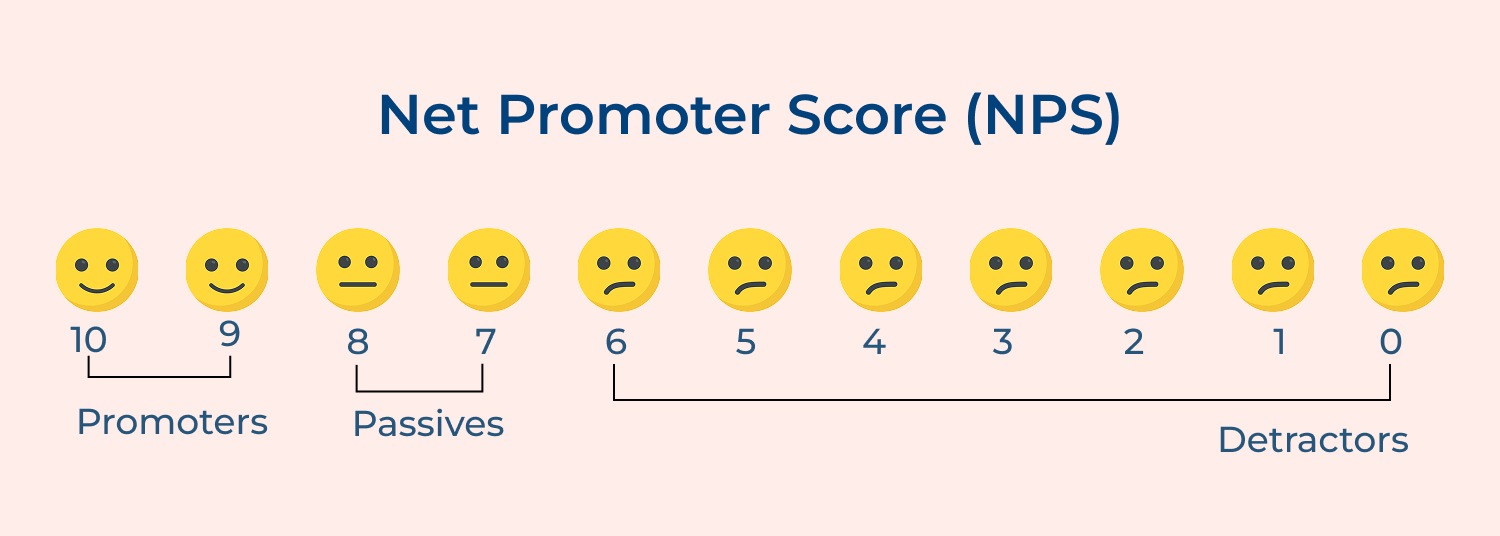
NPS measures customer loyalty and satisfaction by asking how likely customers are to recommend your brand to others. A high NPS indicates strong customer attention and engagement, while a low score may signal the need for improvement. Regularly surveying customers for NPS can provide ongoing insights into their perception of your brand.
Customer Feedback and Reviews
Collecting feedback through reviews, testimonials and direct comments can reveal valuable insights about customer attention. Analyzing feedback can highlight what aspects of your brand or offerings capture customers’ interest, as well as areas needing improvement. Tools like Trustpilot or Yelp can help manage and analyze customer reviews effectively.
Conversion Rate Analysis
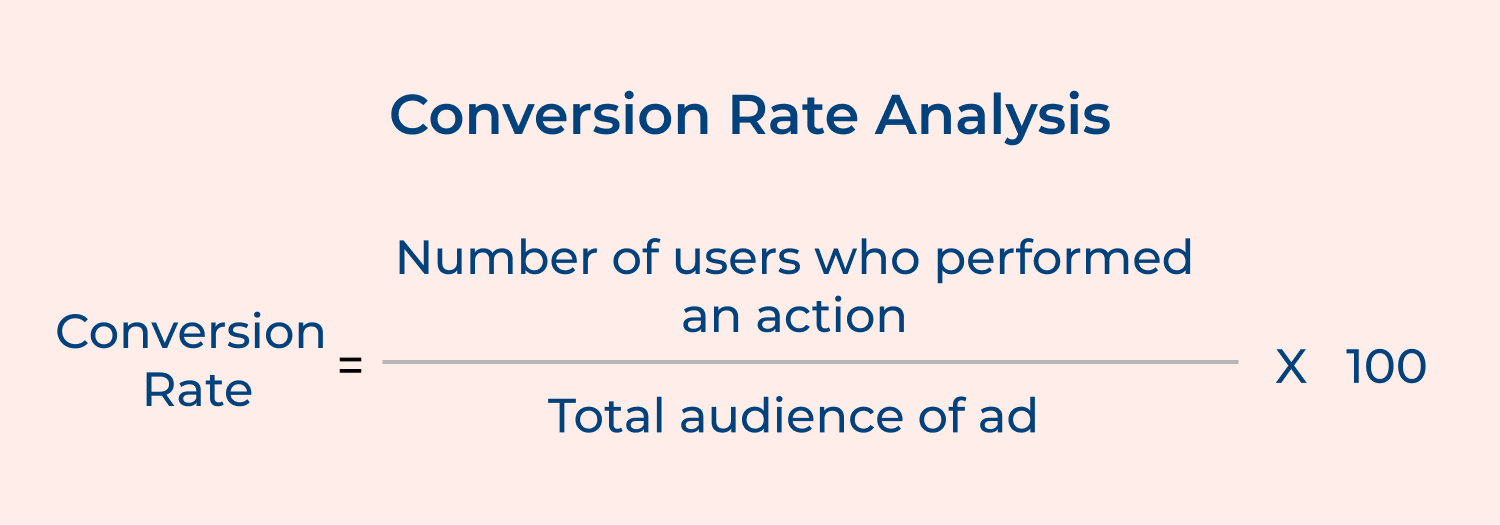
Conversion rate analysis is crucial for evaluating customer attention. This metric measures the percentage of visitors who take a desired action, such as making a purchase or signing up for a newsletter. By analyzing conversion rates at different stages of the customer journey, businesses can identify where attention wanes and optimize those areas to improve engagement as well as retention.
Customer Journey Mapping
Mapping the customer journey helps visualize the various touch points customers encounter with your brand. By analyzing each stage—from awareness to post-purchase—you can identify where attention peaks and where customers may lose interest. This method helps in refining the overall customer experience and engagement strategies.
Customer Retention Metrics
Customer retention metrics focus on the ability of a business to retain customers over time. Analyzing retention rates provides insights into customer loyalty and satisfaction. High retention indicates that your brand successfully captures customer attention and meets their needs, while low retention may signal the need for improved engagement strategies.
Learning from real-world examples of successful customer engagement provides valuable insights for businesses seeking to enhance their strategies. Here are the examples.
Nike: Personalized Experiences
Nike has mastered the art of personalized customer engagement through its NikePlus membership program. By offering tailored content, exclusive access to products and personalized training plans, Nike creates a unique experience for each member. The Nike app further enhances this engagement by allowing customers to track their workouts and receive tailored product recommendations. This personal touch not only encourages loyalty but also encourages customers to interact with the brand consistently.
Coca-Cola: Interactive Campaigns
Coca-Cola’s “Share a Coke” campaign is a prime example of engaging customers through personalization and interactivity. By replacing its iconic logo with popular names on bottles, Coca-Cola encouraged customers to find and share bottles with their names or their friends’ names. This campaign not only sparked social media sharing but also created a personal connection with the brand. Customers actively participated by posting photos with their personalized bottles, generating significant buzz and engagement.
Amazon: Customer-Centric Innovation
Amazon is renowned for its customer-centric approach, focusing on convenience and personalized experiences. Features like “Customers who bought this also bought” and tailored product recommendations enhance the shopping experience. Amazon Prime offers members exclusive benefits like free shipping and access to streaming services, further engaging customers. The seamless integration of user reviews and feedback allows Amazon to continuously refine its offerings based on customer preferences, encouraging trust & loyalty.
Zappos: Exceptional Customer Service
Zappos is famous for its exceptional customer service, which has become a core part of its brand identity. The company empowers its employees to go above and beyond in assisting customers, often engaging in friendly conversations that create memorable experiences. Zappos has a no-time-limit policy for customer calls, ensuring that representatives can fully address customer needs. This commitment to service encourages a strong emotional connection with customers, leading to high levels of repeat business and brand loyalty.
Capturing customer attention is vital for business success in today’s competitive landscape. Effective strategies that address customer pain points, create unique value propositions leverage targeted marketing enhance engagement and encourage loyalty.
Utilizing tools like social media, chatbots and free trials allows businesses to create meaningful interactions that resonate with their audience. Such efforts drive conversions and cultivate long-term relationships, leading to increased customer retention & advocacy.
Prioritizing customer attention helps businesses stand out, build credibility and achieve sustainable growth, making it an essential component of any successful marketing strategy.

What are some effective strategies for grabbing and retaining customer attention?
Effective strategies include creating compelling content that addresses customer pain points, using eye-catching visuals, implementing personalized marketing campaigns, offering unique value propositions and leveraging social proof. Consistent engagement across multiple channels, providing exceptional customer service and regularly innovating products or services also help maintain attention. Interactive experiences, limited-time offers and storytelling techniques can further enhance customer engagement and retention.
How does branding contribute to attracting customer attention?
Strong branding helps attract customer attention by creating a distinct identity that stands out in a crowded marketplace. A well-defined brand communicates your company’s values, personality and unique selling points, making it more memorable to consumers. Consistent branding across all touchpoints builds recognition, which naturally draws customer attention and makes them more likely to engage with your products or services.
What role do social media platforms play in engaging customer attention?
Social media platforms are crucial for engaging customer attention by providing direct, real-time interaction with your audience. They offer opportunities for sharing diverse content formats, from images or videos to live streams and stories. Social media allows for targeted advertising, community building and viral marketing. It also provides valuable insights into customer preferences and behaviors, enabling more effective attention-grabbing strategies.
How do personalized marketing approaches enhance customer attention?
Personalized marketing enhances customer attention by delivering relevant, tailored content to individual consumers. By using data analytics to understand customer preferences and behaviors, businesses can create highly targeted messages that resonate more deeply. This approach increases the likelihood of capturing attention, as customers are more likely to engage with content that feels specifically designed for them, leading to improved conversion rates and customer loyalty.
What are the consequences of failing to maintain customer attention?
Failing to maintain customer attention can lead to decreased brand loyalty, reduced sales and loss of market share. Customers may switch to competitors who better capture their interest. It can result in lower engagement rates across marketing channels, wasted advertising spend and diminished return on investment. Long-term consequences include difficulty in launching new products, reduced customer lifetime value and potential damage to brand reputation.
 https://omni24.io/wp-content/uploads/2026/09/Social-commerce-scaled.png
1340
2560
Webvision Solution
https://omni24.io/wp-content/uploads/2023/04/Omni-Logo-1.svg
Webvision Solution2026-10-23 12:18:272026-10-23 12:18:27What is Social Commerce and Why Does It Matter?
https://omni24.io/wp-content/uploads/2026/09/Social-commerce-scaled.png
1340
2560
Webvision Solution
https://omni24.io/wp-content/uploads/2023/04/Omni-Logo-1.svg
Webvision Solution2026-10-23 12:18:272026-10-23 12:18:27What is Social Commerce and Why Does It Matter? https://omni24.io/wp-content/uploads/2026/08/AI-Customer-Service-Agents.png
1256
2400
Webvision Solution
https://omni24.io/wp-content/uploads/2023/04/Omni-Logo-1.svg
Webvision Solution2026-09-21 04:48:512026-09-21 04:48:51How to Build an AI Customer Service Agents: 8 Key Steps
https://omni24.io/wp-content/uploads/2026/08/AI-Customer-Service-Agents.png
1256
2400
Webvision Solution
https://omni24.io/wp-content/uploads/2023/04/Omni-Logo-1.svg
Webvision Solution2026-09-21 04:48:512026-09-21 04:48:51How to Build an AI Customer Service Agents: 8 Key Steps https://omni24.io/wp-content/uploads/2026/08/Omnichannel-Conversational-AI.png
1256
2400
Tushar Joshi
https://omni24.io/wp-content/uploads/2023/04/Omni-Logo-1.svg
Tushar Joshi2026-09-16 03:51:072026-09-16 03:51:07How to Build Omnichannel Conversational AI Strategy
https://omni24.io/wp-content/uploads/2026/08/Omnichannel-Conversational-AI.png
1256
2400
Tushar Joshi
https://omni24.io/wp-content/uploads/2023/04/Omni-Logo-1.svg
Tushar Joshi2026-09-16 03:51:072026-09-16 03:51:07How to Build Omnichannel Conversational AI Strategy
Whether it’s about acquire, engage or support – Omni24 covers all your customer engagement needs in one complete platform.

Copyright ©2026 Veemo All rights reserved.
CA, Los Angeles, Hall Ave, 19011