CXM vs CRM: What’s the Difference and Why it is Important?
CXM and CRM both enhance customer interactions and business outcomes via better service, but differ significantly in approach.

CXM and CRM both enhance customer interactions and business outcomes via better service, but differ significantly in approach.
Providing exceptional customer service is crucial for businesses in the modern business ecosystem. Both customer experience management (CXM) and customer relationship management (CRM) play pivotal roles in shaping interactions as well as driving satisfaction.
While they are often used interchangeably, CEM and CRM serve distinct yet complementary purposes within a successful CX strategy. Understanding the differences and how they work together can significantly enhance your ability to optimize customer interactions and achieve an increase in repeat business and referrals.
Let us explore the disparities between CXM vs CRM and how businesses can leverage both strategies to enhance customer satisfaction and loyalty.
Customer experience management (CXM) is defined as the practice of designing and reacting to customer interactions to meet or exceed their expectations. It involves taking into consideration every touchpoint a customer has with your brand, from initial awareness to the final purchase and beyond.
The goal of customer experience management is to create loyal, satisfied customers who will continue to do business with your company and advocate your brand/service through positive word-of-mouth.
Key objectives of CEM include:
Customer Relationship Management (CRM) is defined as a strategy that focuses on building strong relationships with customers and improving customer satisfaction as well as loyalty. CRM is not just a software system, but also a way of doing business that utilizes technology to streamline processes and improve customer interactions.
Key objectives of CRM include:
Both CEM and CRM focus on improving the customer experience; they do so in different ways. Understanding the key differences between the two concepts can help businesses tailor their strategies to better meet the needs and expectations of their customers.
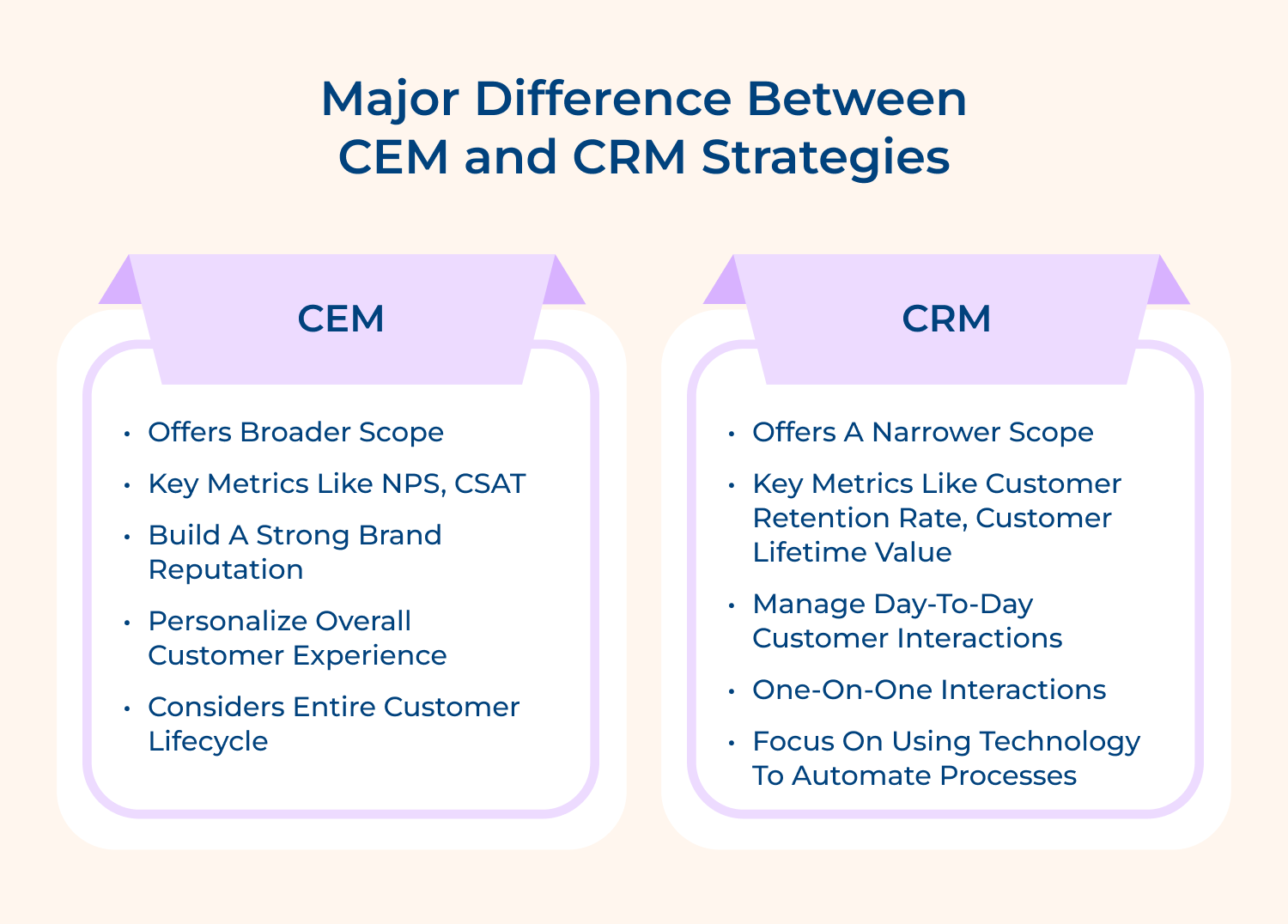
CEM focuses on the overall experience that a customer has with a business throughout the entire customer journey. It takes into account every interaction and touchpoint, ensuring each one contributes to a positive and seamless experience.
CRM focuses on managing and maintaining relationships with individual customers, tracking their interactions, preferences, and history with the company.
CEM has a broader scope, confining all aspects of the customer’s journey, from awareness and consideration to purchase and loyalty. It involves understanding the customer’s emotions, perceptions, and reactions at each stage and making improvements based on feedback.
CRM has a narrower scope, focused on managing specific customer data and interactions to foster long-term relationships.
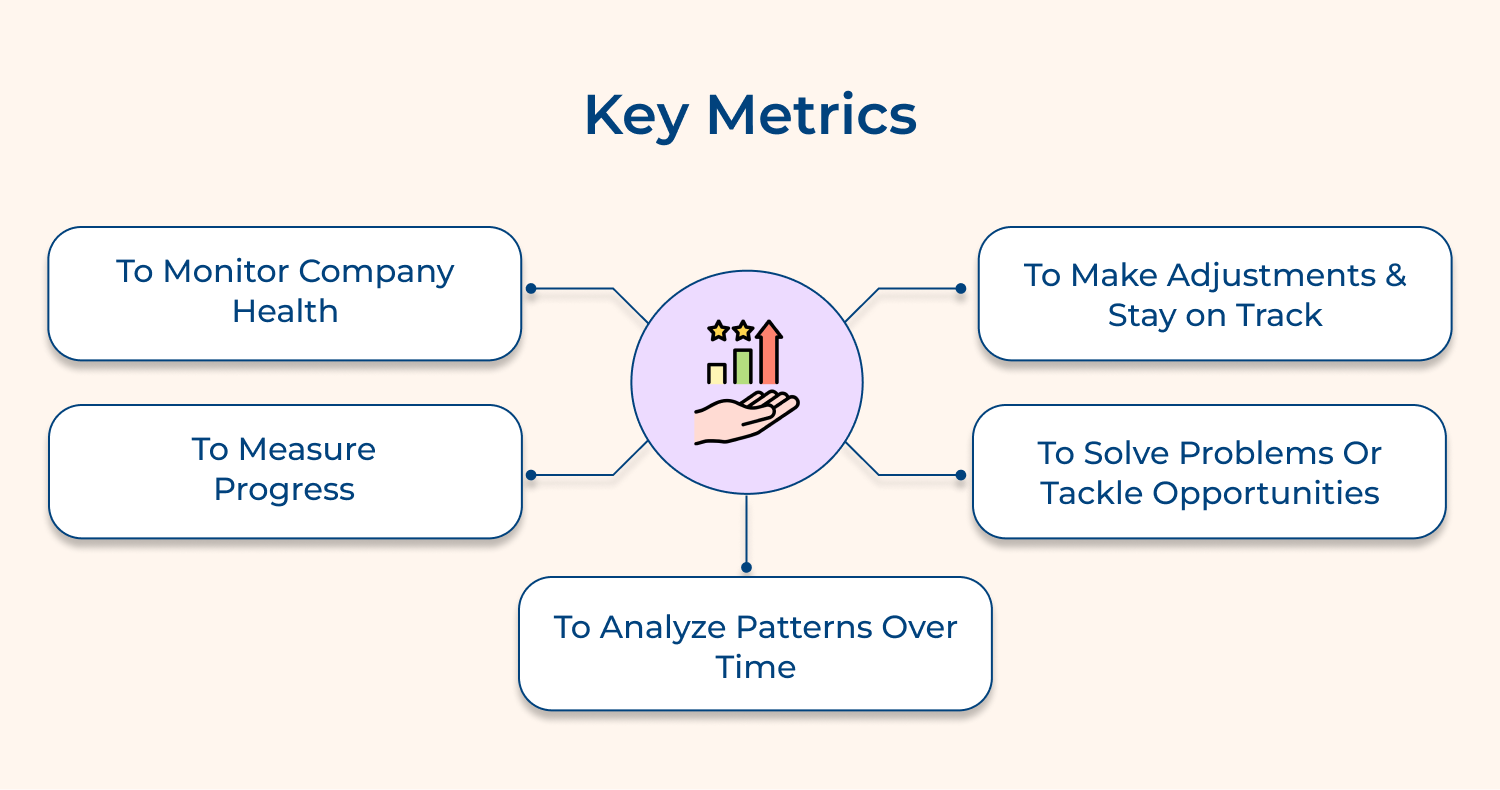
When it comes to measuring success, CEM focuses on key metrics such as Net Promoter Score (NPS), Customer Satisfaction (CSAT), and Customer Effort Score (CES). These metrics help businesses understand how satisfied customers are with their overall experience and determine areas for improvement.
CRM focuses on metrics such as customer retention rate, customer lifetime value, and conversion rate, which are more related to individual customer interactions and relationships.
While both CEM and CRM rely on technology to some extent, CRM is more focused on using technology to manage customer data, track interactions, and automate processes. CRM systems often include features such as contact management, sales force automation, and marketing automation.
CEM usually involves a mix of technology solutions, including customer feedback tools, analytics platforms, and customer journey mapping software, to help businesses improve the overall customer experience.
CEM requires collaboration across different departments within an organization, including marketing, sales, customer service, and product development, to ensure a consistent customer experience. It involves breaking down silos and aligning teams around the common goal of delivering exceptional experiences.
CRM is often managed by sales and marketing teams, who are responsible for maintaining and nurturing individual customer relationships.
CEM is more strategic in nature, focusing on long-term goals and building a strong brand reputation through exceptional customer experiences. It involves understanding the customer’s needs/preferences/behaviors, and making strategic decisions to improve their overall journey.
CRM is more tactical, focused on managing day-to-day customer interactions and transactions to drive sales and retention.
CEM involves two-way communication with customers, soliciting feedback, and responding to their needs and concerns in a timely manner. It’s about building trust and loyalty by showing customers that their opinions matter.
CRM also involves communication with customers but is more focused on one-on-one interactions, such as personalized emails, phone calls, and targeted marketing campaigns.
CEM focuses on personalizing the overall customer experience, tailoring interactions and touchpoints to meet the individual needs and preferences of each customer. It involves using data and analytics to create personalized recommendations, offers, and experiences that make customers feel valued and appreciated.
Customer relationship management also involves personalization but is more focused on individual customer relationships, using data to track customer preferences, behaviors, and interactions to deliver targeted communication.
CEM looks at the entire customer lifecycle, from the moment a customer first becomes aware of a business to the point where they become loyal advocates. It involves understanding how customers move through different stages of the journey and making improvements to enhance their overall experience.
CRM, on the other hand, focuses on managing relationships with customers at each stage of the lifecycle, from acquisition and conversion to retention.
Customer experience management recognizes the importance of employees in delivering exceptional experiences and empowering employees to provide outstanding service. It involves aligning employee goals/incentives with the overall customer experience strategy and rewarding employees for delivering exceptional service.
CRM also involves employees but is more focused on using technology to automate processes and track interactions, rather than empowering employees to build relationships with customers.
In the customer experience management comprehensive guide, we understand that CXM has become increasingly important in today’s highly competitive business landscape. CEM refers to the process of managing and optimizing a customer’s interactions with a company or brand across all touchpoints, from initial contact to post-purchase support.
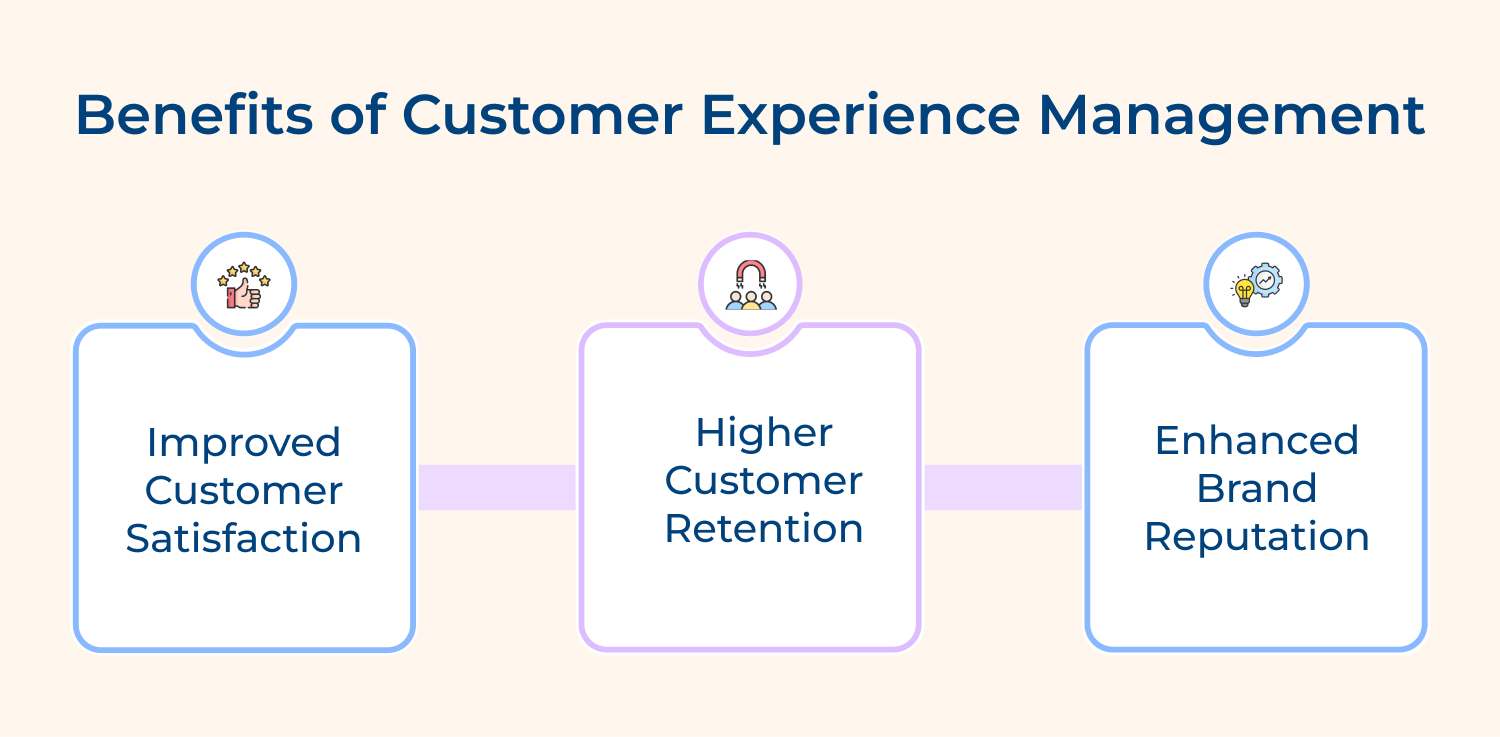
Here are some key benefits of implementing a customer experience management strategy:
Customer relationship management (CRM) is a powerful tool that businesses can use to manage and improve their relationships with customers. By keeping track of customer interactions, preferences, and feedback, businesses can better understand their customers and tailor their products and services to meet their needs.
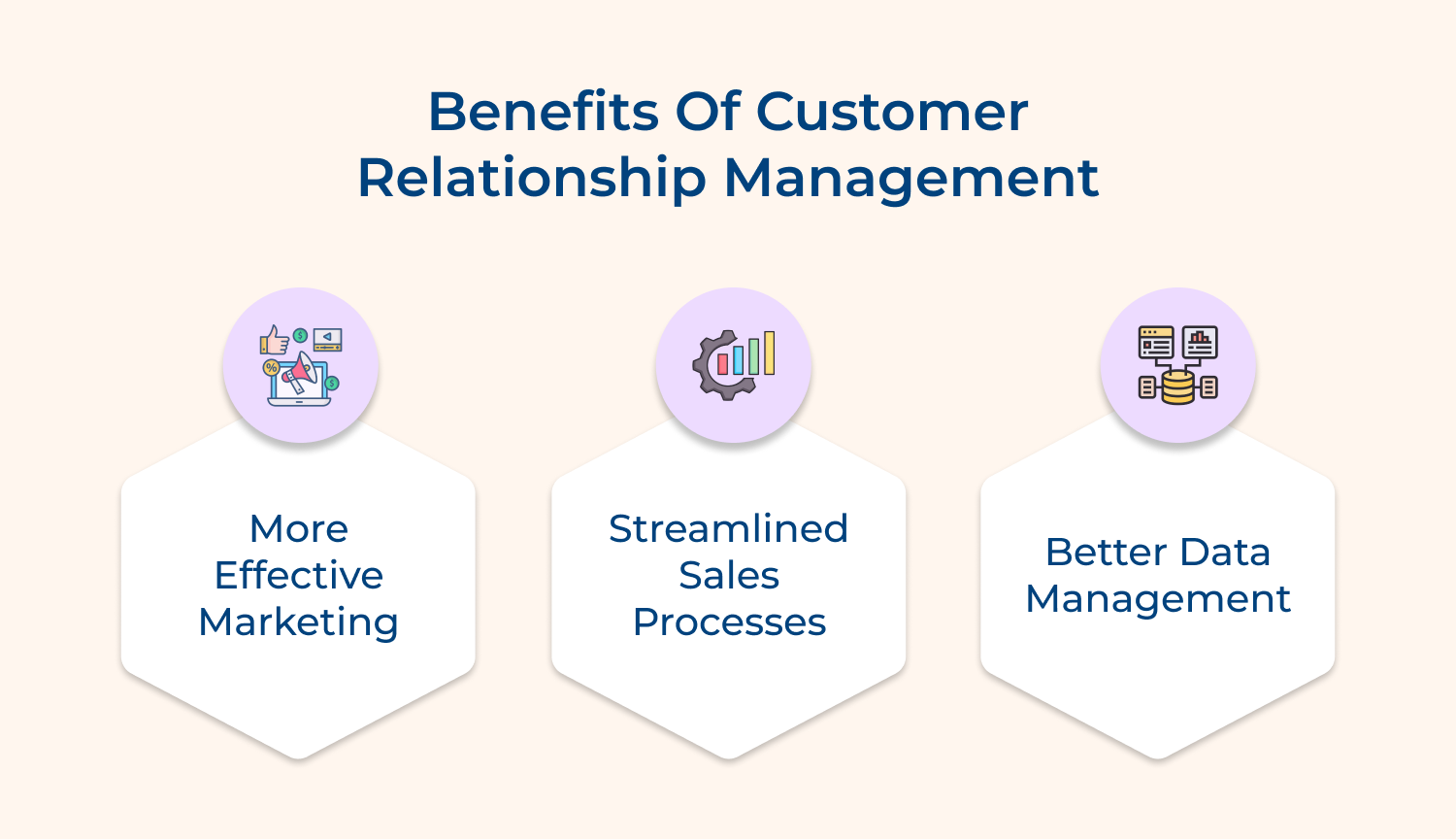
Here are some of the key benefits of implementing a CRM system:
Customer Relationship Management (CRM) and Customer Experience Management (CEM) are two essential components of a successful digital marketing strategy. While they may seem like separate entities, they actually work hand in hand to create a seamless and positive experience for customers.
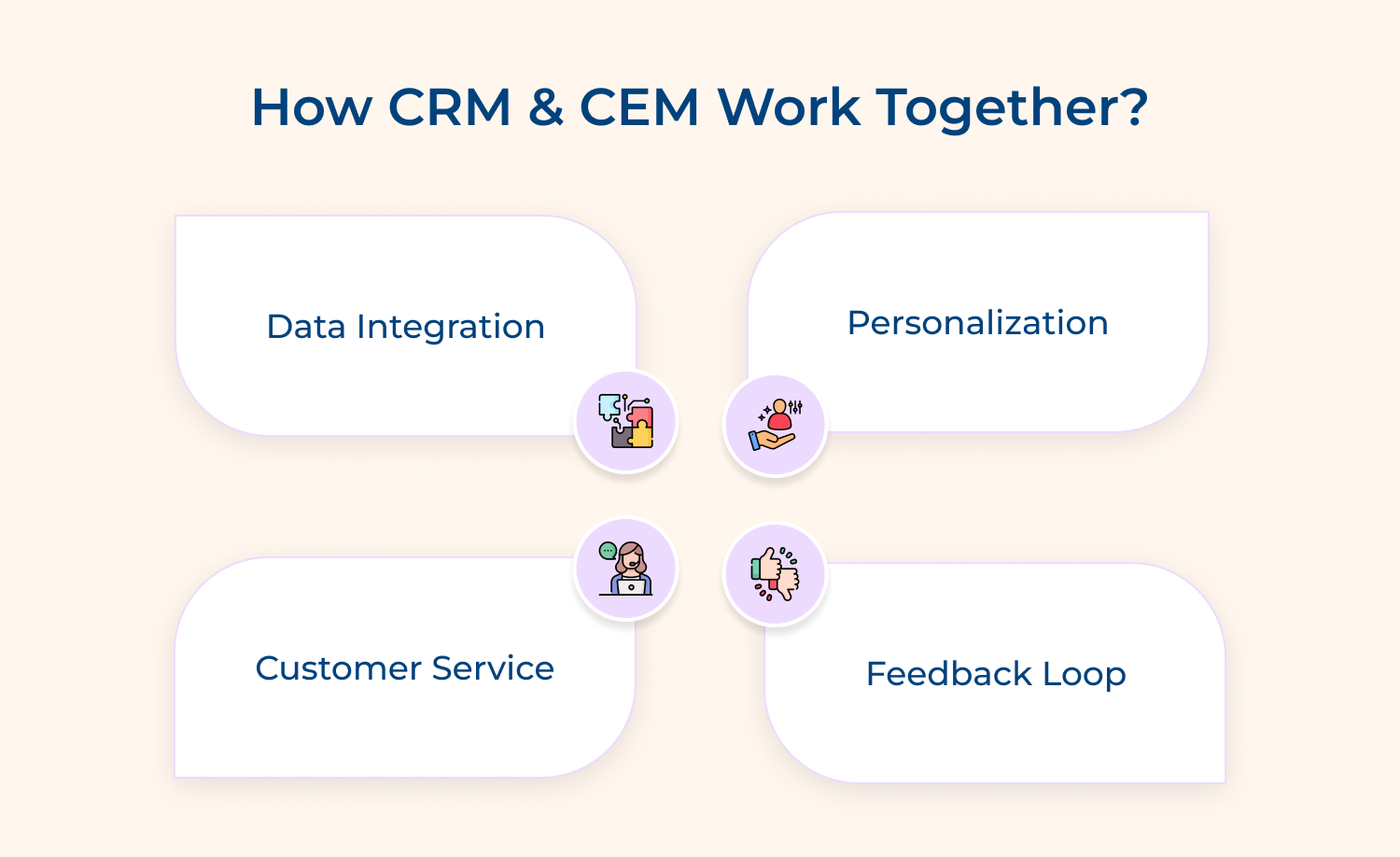
So, how do CRM and CEM work together?
Customer Relationship Management (CRM) and Customer Experience Management (CEM) are crucial components of a successful digital marketing strategy. CRM allows businesses to manage and analyze customer interactions, ensuring personalized and efficient communication. On the other hand, CEM focuses on creating positive interactions and experiences for customers at every touchpoint.
Implementing both CRM and CEM strategies can help businesses improve customer retention as well as satisfaction. Integrating these components into a digital marketing strategy will lead to a more effective and successful customer-focused approach, helping businesses thrive in today’s competitive market.

What are the key considerations for businesses when deciding whether to focus more on CXM or CRM?
When deciding whether to focus more on CXM or CRM, businesses should consider their overarching goals and priorities. If the primary focus is on building long-term relationships with customers and improving loyalty, CRM might be the right choice. On the other hand, if the main goal is to deliver exceptional experiences at every touchpoint, CXM could be more beneficial. It’s important to assess where your business stands in terms of customer satisfaction, loyalty, and overall experience to determine which approach aligns best with your objectives.
What specific strategies are employed in CXM that differ from those in CRM?
Customer Experience Management focuses on understanding and improving the overall customer journey, from initial awareness to post-purchase interactions. Strategies in CXM often involve mapping out customer touchpoints, gathering feedback through surveys and reviews, and personalizing interactions based on customer behavior and preferences. On the other hand, Customer Relationship Management is more focused on managing individual customer interactions, tracking sales processes, and nurturing leads through targeted communication and marketing efforts.
How do CXM and CRM approaches vary in their customer interactions?
CXM focuses on providing a seamless and personalized experience for customers throughout their journey with a brand. This involves anticipating customer needs, addressing pain points, and creating positive interactions that enhance overall satisfaction. CRM, on the other hand, is more transactional in nature, focusing on managing customer data, tracking sales processes, and maintaining ongoing communication to nurture relationships and drive future sales. While both approaches are essential for building strong customer relationships, CXM emphasizes the overall experience, while CRM focuses on individual interactions and transactions.
 https://omni24.io/wp-content/uploads/2026/08/AI-Customer-Service-Agents.png
1256
2400
Webvision Solution
https://omni24.io/wp-content/uploads/2023/04/Omni-Logo-1.svg
Webvision Solution2026-09-21 04:48:512026-09-21 04:48:51How to Build an AI Customer Service Agents: 8 Key Steps
https://omni24.io/wp-content/uploads/2026/08/AI-Customer-Service-Agents.png
1256
2400
Webvision Solution
https://omni24.io/wp-content/uploads/2023/04/Omni-Logo-1.svg
Webvision Solution2026-09-21 04:48:512026-09-21 04:48:51How to Build an AI Customer Service Agents: 8 Key Steps https://omni24.io/wp-content/uploads/2026/08/Omnichannel-Conversational-AI.png
1256
2400
Tushar Joshi
https://omni24.io/wp-content/uploads/2023/04/Omni-Logo-1.svg
Tushar Joshi2026-09-16 03:51:072026-09-16 03:51:07How to Build Omnichannel Conversational AI Strategy
https://omni24.io/wp-content/uploads/2026/08/Omnichannel-Conversational-AI.png
1256
2400
Tushar Joshi
https://omni24.io/wp-content/uploads/2023/04/Omni-Logo-1.svg
Tushar Joshi2026-09-16 03:51:072026-09-16 03:51:07How to Build Omnichannel Conversational AI Strategy https://omni24.io/wp-content/uploads/2026/08/Customer-Service-Teams.png
1256
2400
Tushar Joshi
https://omni24.io/wp-content/uploads/2023/04/Omni-Logo-1.svg
Tushar Joshi2026-09-15 04:01:522026-09-15 04:02:16How to Build Customer Service Teams: 6 Key Steps
https://omni24.io/wp-content/uploads/2026/08/Customer-Service-Teams.png
1256
2400
Tushar Joshi
https://omni24.io/wp-content/uploads/2023/04/Omni-Logo-1.svg
Tushar Joshi2026-09-15 04:01:522026-09-15 04:02:16How to Build Customer Service Teams: 6 Key Steps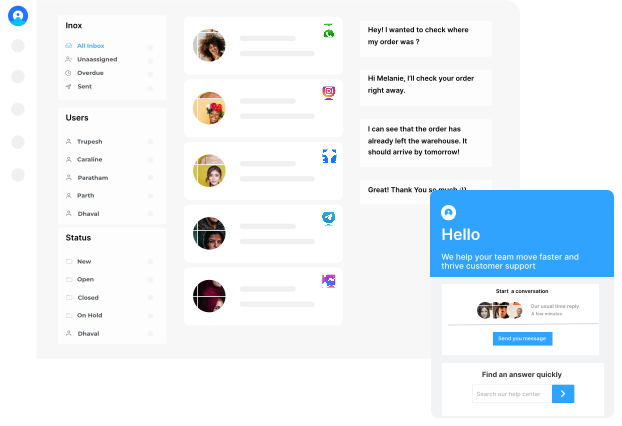
Whether it’s about acquire, engage or support – Omni24 covers all your customer engagement needs in one complete platform.

Copyright ©2026 Veemo All rights reserved.
CA, Los Angeles, Hall Ave, 19011