What is Social Commerce and Why Does It Matter?
Social commerce enables brands to sell directly via social media platforms. It empowers businesses to drive engagement and convert interactions into instant sales.
Social commerce enables brands to sell directly via social media platforms. It empowers businesses to drive engagement and convert interactions into instant sales.
Your customers discover products on Instagram and TikTok, but you’re still forcing them to leave those apps to complete purchases. Such friction costs you sales every day as people abandon their carts mid-journey.
The global social commerce market is valued at USD 2.11 trillion and projected to reach USD 7.55 trillion by 2031.
While you are directing traffic to your website, competitors are closing sales directly within social feeds where customers already spend hours. Social commerce lets customers complete entire purchases without leaving their favorite social platforms.
Explore the guide that covers everything you need to know about turning social scrolling into actual revenue for your business.
Social Commerce is the practice of buying and selling products or services directly through social media platforms. Instead of clicking an external link to complete a purchase, customers can browse products, read reviews and check out without ever leaving their favorite social apps. It turns scrolling through Instagram or TikTok into an actual shopping experience where discovery and purchase happen in the same place.
E-commerce happens on dedicated online stores or marketplaces like Amazon or Shopify sites. Customers visit these websites specifically to shop. They search for products and complete transactions in a traditional retail environment that is digital.
Social commerce lives inside social media platforms where people already spend their time. The shopping experience is woven into the social feed alongside posts from friends and entertaining content. Discovery happens organically through influencer recommendations and user-generated content rather than deliberate product searches.
Key Objectives:
Social commerce guides customers from first discovery to final purchase without ever leaving the social platform. Each stage happens within the feed where people engage with content.
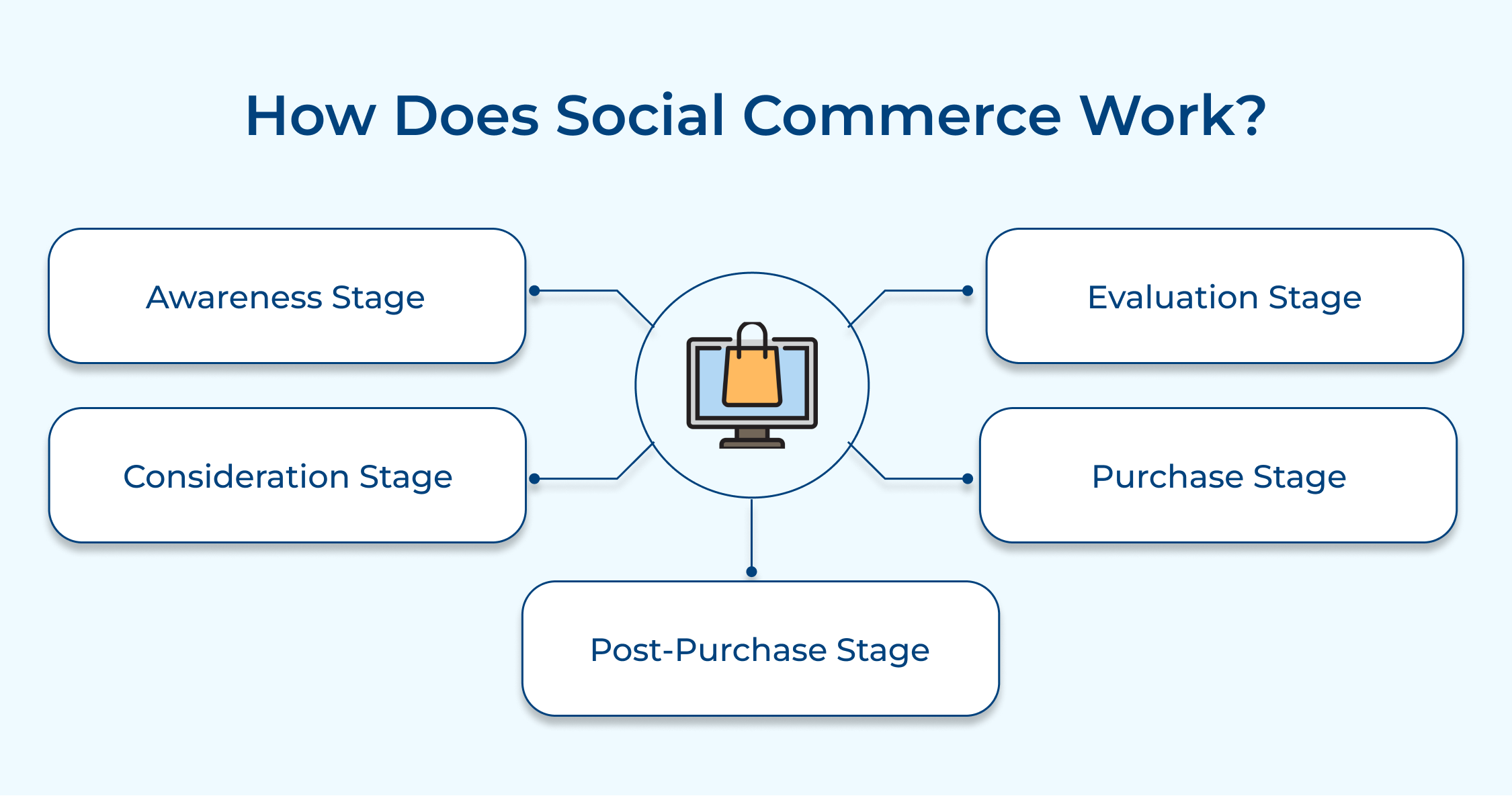
1. Awareness Stage
Customers discover products through sponsored posts, influencer content, or friend recommendations that appear in their feeds. Brands reach potential buyers where they spend time rather than relying on them to visit a store.
2. Consideration Stage
Users explore product details, watch demo videos and read reviews directly within the social platform. They can save items to wishlists or share them with friends to get opinions before making decisions.
3. Evaluation Stage
Shoppers compare options by checking multiple product pages and viewing user-generated photos. They engage with brand comments or direct messages to ask questions and clarify doubts instantly.
4. Purchase Stage
Customers complete checkout using saved payment information without leaving the app. The entire transaction happens in a few taps from the product page to order confirmation.
5. Post-Purchase Stage
Buyers share their purchases through posts or stories and leave reviews for other shoppers. Brands can retarget them with complementary products or loyalty rewards to encourage repeat purchases.
The numbers tell a compelling story about where shopping is headed. These recent statistics reveal why social commerce deserves a central place in your marketing strategy.
The above statistics show that social commerce isn’t just a trend but a fundamental shift in how people shop. Marketers who ignore this channel risk missing out on billions in potential revenue and disconnecting from younger consumers.
Social commerce offers distinct advantages that traditional online stores simply can’t match. These benefits can transform how you connect with customers and drive revenue growth.
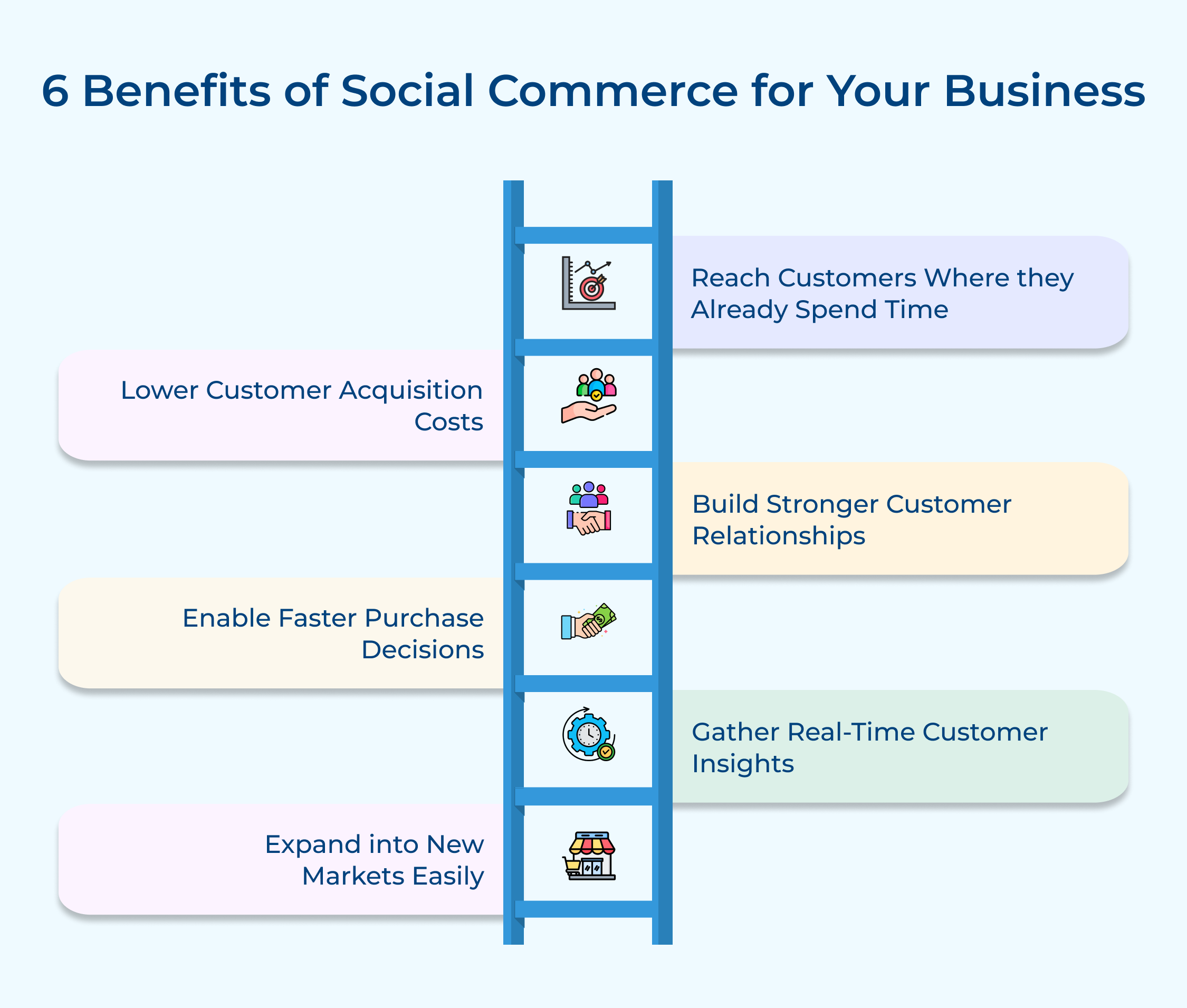
1. Reach Customers Where They Already Spend Time
Your audience scrolls social media for hours daily anyway. Social commerce lets you meet them there instead of hoping they’ll visit your website or remember your brand later.
2. Lower Customer Acquisition Costs
Organic sharing and user-generated content act as free marketing when customers post about your products. You spend less on ads while reaching more people through authentic peer recommendations.
3. Build Stronger Customer Relationships
Direct messaging and comment interactions create personal connections that feel more human than email exchanges. Customers trust brands they can talk to and get immediate responses from real people.
4. Enable Faster Purchase Decisions
The seamless checkout process captures impulse buys before customers change their minds. Eliminating the jump to external websites means fewer abandoned carts and higher conversion rates overall.
5. Gather Real-Time Customer Insights
Comments, shares and engagement metrics show exactly what resonates with your audience. You can test products and adjust messaging based on immediate feedback rather than waiting for survey results.
6. Expand Into New Markets Easily
Social platforms have built-in audiences across different demographics and geographies. You can reach international customers or niche communities without building separate storefronts for each market.
Leading social commerce platforms like Instagram or TikTok enable seamless in-app selling. They help businesses boost engagement and drive conversions where customers already spend time.
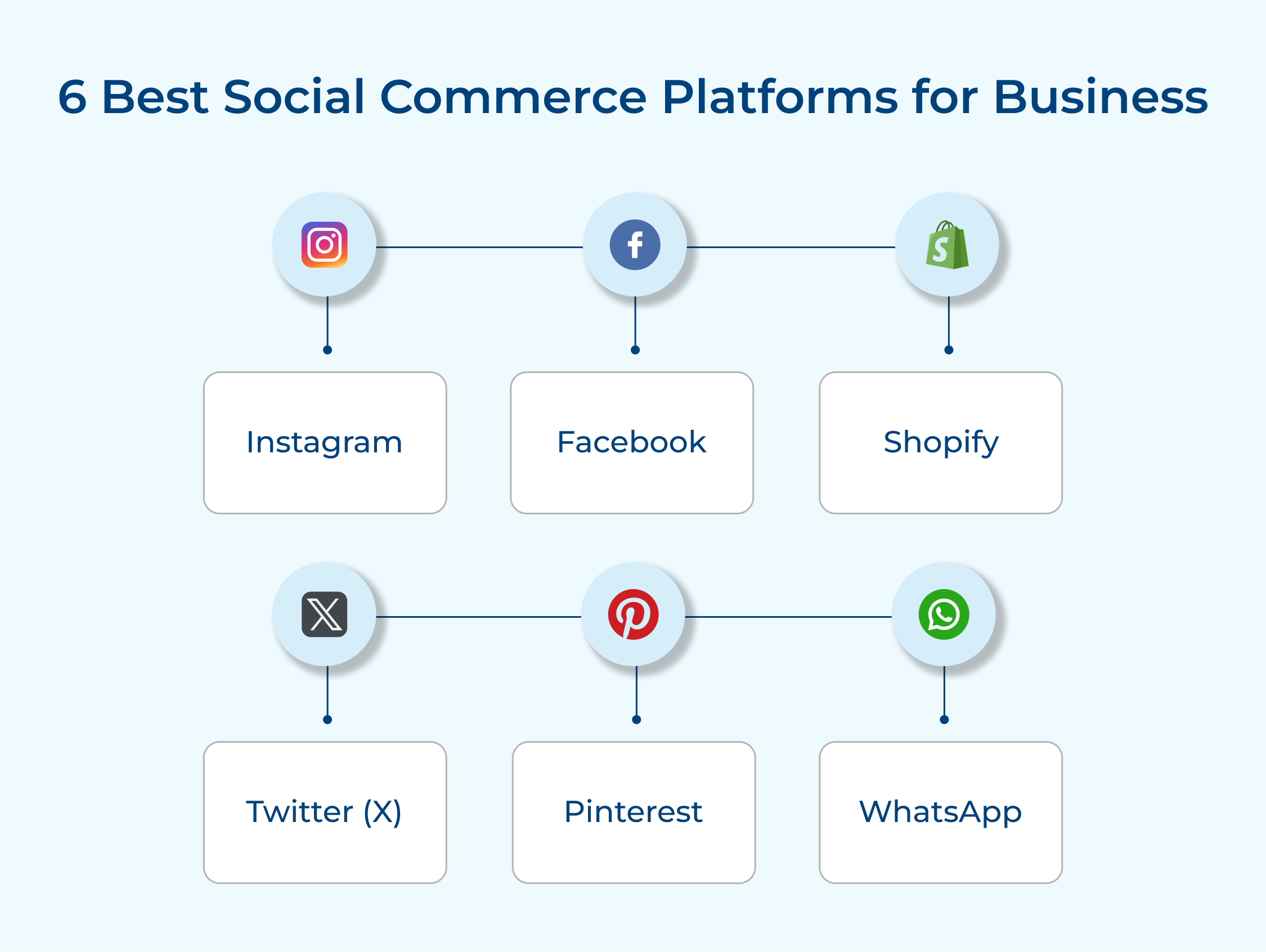
Instagram Shopping transforms your visual content into a direct sales channel where customers buy without leaving the app. With 130 million users tapping shopping posts monthly, it eliminates the friction between discovering a product and completing the purchase instantly.
Who should use Instagram for social commerce? Businesses selling visually appealing products to younger audiences will thrive here. If your brand story can be told through photos and short videos then Instagram is your playground.
Here’s how you can turn Instagram into your digital storefront:
For example, a small jewelry brand posts a reel showing how to style their earrings for different occasions. Viewers tap the product tags and buy three pairs within minutes without ever visiting an external website.
Facebook’s social commerce features let businesses sell directly through posts, shops and live videos to its billions of active users. It’s particularly powerful for reaching older demographics and local communities who trust recommendations from friends or family in their feeds.
Three effective ways to use Facebook as a social commerce platform:
Are there challenges with Facebook commerce and how do you handle them? Yes, the main hurdle is standing out among endless content competing for attention. Combat this by posting consistently, engaging genuinely with comments and using Facebook’s targeted ads to reach people most likely to buy from you.
Shopify bridges the gap between your online store and social media platforms by integrating selling capabilities across all channels. It’s crucial for businesses that want to manage inventory and sales from Instagram, Facebook, TikTok and Pinterest through a single centralized system.
Twitter functions as a social commerce platform through product announcements and limited drops that create viral buzz. It works best for tech products, collectibles and brands with loyal communities who want exclusive access to new releases.
Here are four key questions to evaluate Twitter’s fit for your business:
Answering these helps determine if Twitter’s fast-paced conversation style matches your brand’s social commerce strategy. The platform rewards brands that can engage authentically and move quickly rather than those seeking polished marketing campaigns.
Here’s how brands leverage Twitter to drive product sales:
Pinterest operates as a visual discovery engine where users actively search for products to buy for future projects. Its social commerce features let brands turn inspirational pins into direct purchases, making it essential for home decor, fashion, recipes and DIY businesses.
Users save products to themed boards while planning purchases weeks or months ahead, then return to buy when ready. Product pins display real-time pricing and availability, letting shoppers click through to complete purchases on your site seamlessly.
Pro tips:
WhatsApp serves as a social commerce platform by enabling direct one-on-one conversations between businesses and customers during the buying process. It’s particularly valuable for B2B companies and service-based businesses where personalized communication builds trust before high-value purchases.
Three effective ways WhatsApp works for social commerce:
For example B2B wholesale furniture suppliers use WhatsApp to share product catalogs with interior designers and hotel buyers. They discuss customization options through messages, send quotes and process bulk orders worth thousands through secure in-chat payments.
Why does WhatsApp work for social commerce? The platform combines the intimacy of personal messaging with business transaction capabilities that feel natural. Customers trust brands they can message directly, especially for expensive purchases requiring consultation before commitment.
Social commerce success requires more than just listing products on social platforms. These proven strategies help you create seamless shopping experiences that convert casual scrollers into loyal customers.
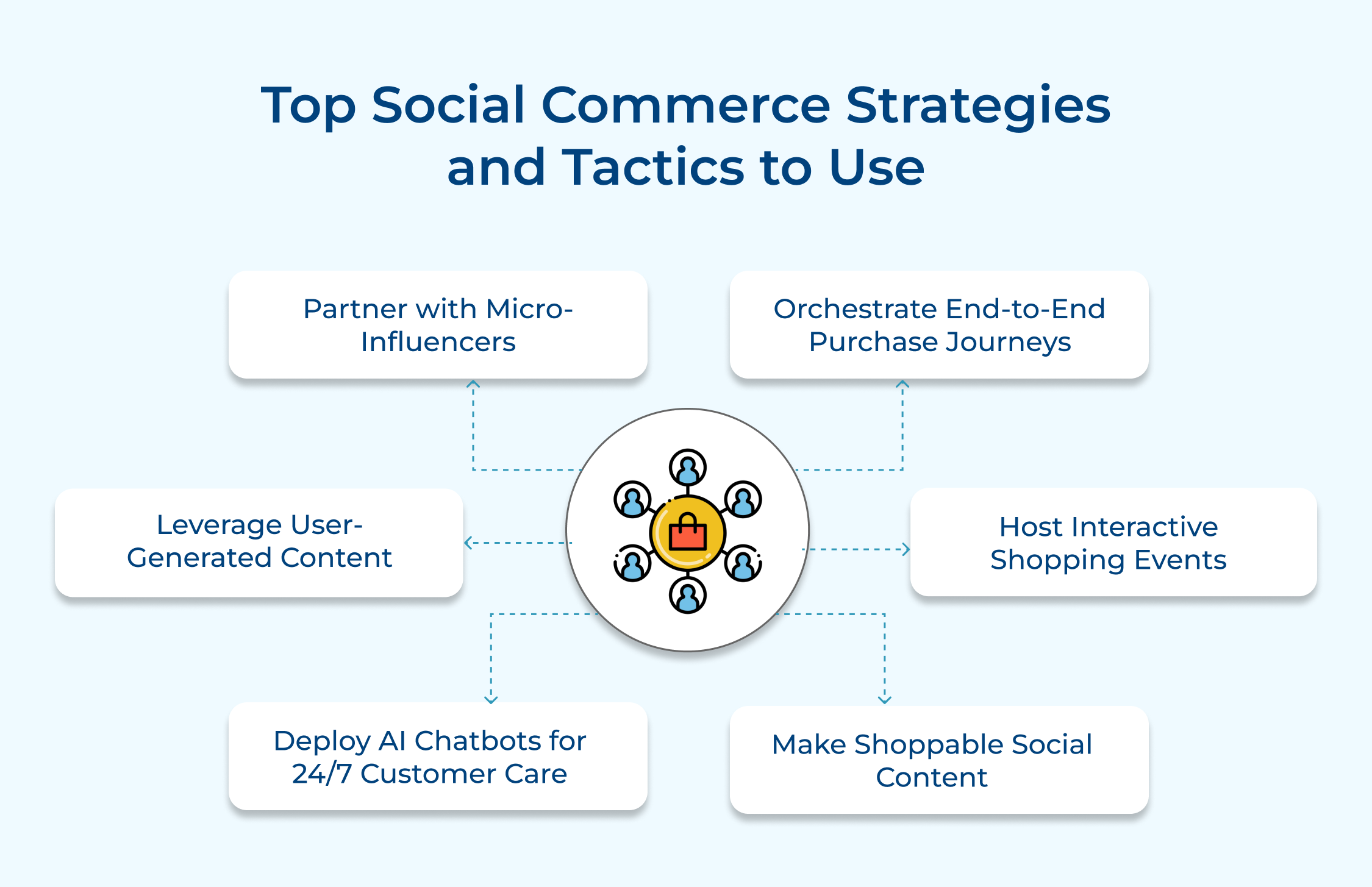
Map out every touchpoint from initial product discovery to post-purchase follow-up within the social platform itself. Customers should never feel lost or confused about what step comes next in their buying journey.
Key elements to create seamless customer journeys:
Successful brands analyze drop-off points and continuously optimize the path to purchase based on real behavior. You want buying to feel as natural as liking a post or sending a message to friends.
Live shopping events combine entertainment with real-time purchasing opportunities that create urgency and excitement. Viewers watch product demonstrations while asking questions and buying instantly without waiting for the broadcast to end.
Schedule weekly or monthly live sessions where you showcase new products and offer exclusive event-only discounts. The limited-time nature drives immediate purchases rather than the endless browsing that happens with static product posts.
Transform every piece of content you create into a potential sales opportunity by adding product tags and links. Your audience discovers products organically while consuming entertaining or educational content they actually want to see.
Ways to create compelling shoppable content:
Focus on creating value first through helpful or entertaining content rather than aggressive selling. The product tags should feel like natural extensions of content that would be interesting even without shopping features.
Implement automated chatbots that answer common questions and help customers find products even when your team sleeps. These bots handle routine inquiries instantly while escalating complex issues to human team members during business hours.
Essential chatbot capabilities for social commerce:
Train your chatbot with real customer questions so responses feel natural rather than robotic and frustrating. The goal is solving problems faster than customers could by searching your website or waiting for email replies.
Encourage customers to post photos or videos using your products by creating branded hashtags and running contests. This authentic content acts as social proof that influences purchase decisions far more effectively than polished brand advertisements.
Repost customer content to your official channels with proper credit and product tags included for easy purchasing. Seeing real people enjoy your products builds trust with potential buyers who relate to everyday users.
Collaborate with creators who have smaller but highly engaged audiences in your specific niche or local area. These influencers charge less than celebrities while delivering authentic recommendations their followers actually trust and act on.
How to maximize influencer partnerships for sales:
Focus on engagement rates rather than follower counts when selecting influencer partners for your brand. An influencer had 5,000 followers who got 500 likes per post outperforms one with 50,000 followers getting the same engagement.
examples show how different businesses leverage social platforms to drive actual sales and build lasting relationships.
1. Patagonia
Patagonia uses Instagram Shopping and Facebook Shops to sell sustainable outdoor gear while staying true to their environmental mission. They tag products in breathtaking nature photography and adventure stories that inspire customers to explore the outdoors responsibly.
The brand builds deeper connections with eco-conscious consumers who appreciate buying directly through content. Social commerce helps Patagonia reach younger audiences who prefer shopping on platforms they trust rather than traditional retail sites.
2. BoAt Turns Chatter into Conversions
boAt leverages Instagram Reels and influencer collaborations to showcase their audio products through energetic lifestyle content or reviews. They partner with micro-influencers and celebrities to create shoppable videos where viewers tap product tags or buy earbuds immediately.
This strategy dramatically shortens the sales cycle by capturing impulse purchases during moments of peak interest. boAt reaches India’s massive youth market on their preferred platform while building a trendy brand image that fuels word-of-mouth growth.
3. Silk and Snow
Silk and Snow sells premium mattresses/furniture through Facebook Live Shopping events where they demonstrate product quality in real-time. They answer customer questions about materials and comfort during broadcasts while offering exclusive live-only discounts that create urgency.
Live shopping builds trust for high-ticket items that customers typically want to test before buying in stores. The interactive format overcomes hesitation about purchasing furniture online by providing personalized guidance that replicates the in-store experience.
Social commerce eliminates the gap between discovering products and actually buying them by keeping customers on their favorite platforms. You meet people where they already spend hours scrolling and turn those moments into seamless shopping experiences.
Start experimenting with shoppable posts and live events on platforms where your audience already engages. The brands winning today are those making buying feel as natural as liking a post or chatting with friends.

Is social commerce the same as social media marketing?
No, social media marketing promotes products to drive traffic to your website or store. Social commerce enables complete transactions within the social platform itself, eliminating the need for customers to leave the app at all.
How can small businesses benefit from social commerce?
Customer intent data is information that provides insights into the mindset of potential customers. It includes data on what customers are searching for, what they are interested in and what actions they are likely to take.
How can businesses determine customer intent?
Businesses can determine customer intent through various methods such as analyzing search queries, monitoring online behavior and conducting surveys or focus groups. By collecting the data, businesses can better understand what their customers want and how they can tailor their marketing strategies to meet those needs.
How does social commerce impact customer trust?
Social commerce builds trust through reviews, user-generated content and peer recommendations visible right where purchases happen. Customers feel more confident buying after seeing real people use products rather than relying solely on brand claims.
How do I measure the success of my social commerce strategy?
Track conversion rates from social posts, average order values and customer acquisition costs compared to other channels. Monitor engagement metrics like comments and shares since these indicate how well your content resonates before driving sales.
How can businesses use AI tools to enhance their social commerce efforts?
AI chatbots answer product questions instantly while analyzing customer behavior to recommend personalized products automatically. AI also helps create optimized product descriptions and identifies which content types drive the most sales for your specific audience.
https://omni24.io/wp-content/uploads/2026/09/Social-commerce-scaled.png
1340
2560
Webvision Solution
https://omni24.io/wp-content/uploads/2023/04/Omni-Logo-1.svg
Webvision Solution2026-10-23 12:18:272026-10-23 12:18:27What is Social Commerce and Why Does It Matter? https://omni24.io/wp-content/uploads/2026/08/AI-Customer-Service-Agents.png
1256
2400
Webvision Solution
https://omni24.io/wp-content/uploads/2023/04/Omni-Logo-1.svg
Webvision Solution2026-09-21 04:48:512026-09-21 04:48:51How to Build an AI Customer Service Agents: 8 Key Steps
 https://omni24.io/wp-content/uploads/2026/08/Omnichannel-Conversational-AI.png
1256
2400
Tushar Joshi
https://omni24.io/wp-content/uploads/2023/04/Omni-Logo-1.svg
Tushar Joshi2026-09-16 03:51:072026-09-16 03:51:07How to Build Omnichannel Conversational AI Strategy

Whether it’s about acquire, engage or support – Omni24 covers all your customer engagement needs in one complete platform.

Copyright ©2026 Veemo All rights reserved.
CA, Los Angeles, Hall Ave, 19011