What are Customer Complaints & How to Handle it Effectively?
Customer-centric businesses thrive by investing in support to understand customer complaints and enhance experience.

Customer-centric businesses thrive by investing in support to understand customer complaints and enhance experience.
Customer complaints are not the negative feedback only, it is the precious opportunity to enhance customer relations and build stronger ones. Your response will determine the reputation of your brand.
Intelligent companies know how to handle various forms of complaints and consider them as developmental opportunities. Nevertheless, complaints are a part of it; there is no business that will please all customers at all times.
According to a research conducted by American express, 78 % of customers have abandoned a transaction due to a bad customer experience.
Effective response to complaints will retain clients, create loyalty, and discover new knowledge on how to develop products and services.
Customer complaint means any negative feedback expressed by customers regarding products/services. It is a critical tool for businesses to understand their customer’s expectations and improve their overall satisfaction.
Customer complaints can come in various forms, such as verbal complaints made in person or over the phone, written complaints sent via email or letter, or complaints made through social media platforms. Regardless of how a customer complaint is relayed, businesses need to address and resolve them on time.
Key objectives:
Handling customer complaints is an inevitable part of running a business. While no business owner wants to receive negative feedback from customers, it’s important to acknowledge complaints and professionally address them.

We will outline a step-by-step process for effectively handling customer complaints.
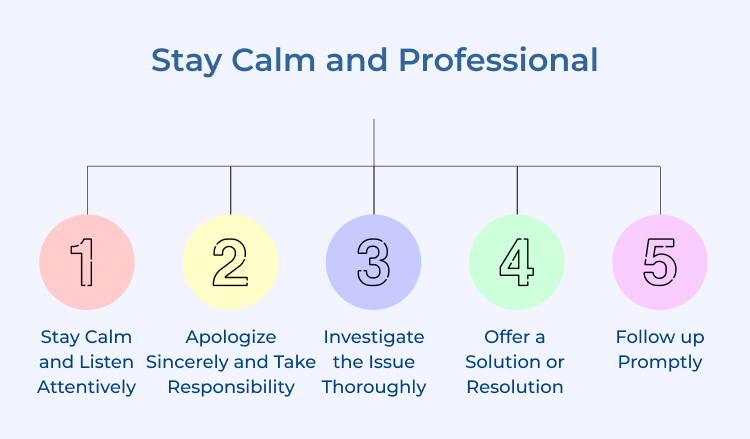
The first step in handling customer complaints is to listen to the customer’s concerns and empathize with their situation. It’s important to make the customer feel heard and understood before attempting to resolve the issue. Show genuine concern for their complaint and acknowledge their frustrations as well.
Pro tips:
It’s crucial to remain calm and professional while dealing with customer complaints, even if the customer is being difficult or rude.
Remember that customer complaints are not personal attacks but rather opportunities to improve your business. Keep a level head and focus on finding a solution to the problem at hand.
Pro tips:
Apologizing to the customer for any inconvenience or dissatisfaction they may have experienced is key to resolving the complaint.
Hence, take responsibility for the issue, even if it was not directly your fault. It shows the customer that you care about their experience and are committed to finding a resolution.
Pro tips:
Investigation is essential as it can prevent similar situations from occurring in the future. Gather all relevant information and facts related to the complaint to better understand what went wrong.
Doing so involves reviewing customer records, speaking to employees involved, or inspecting the product or service in question.
Pro tips:
After investigating the complaint, it’s time to offer a solution to the customer. It could involve providing a refund, offering a replacement product/service, or implementing changes to prevent similar issues in the future.
Businesses should be transparent with the customer about the steps they plan to take to address the complaint.
Pro tips:
Once the complaint has been resolved, it’s important to follow up with the customer to ensure their satisfaction.
Check-in with them to ensure the solution provided was effective and that they are happy with the outcome. It demonstrates your commitment to customer service and can help rebuild trust with the customer.
Pro tips:
Businesses should learn from each customer complaint and use it as an opportunity to improve their business.
Thoroughly analyze the root cause of the complaint and identify the areas where your business can make changes to prevent similar issues in the future. Use customer feedback to continually improve your products, services, and customer experience.
Pro tips:
Customer complaints are a common occurrence in any business, regardless of its size or industry. Understanding the different types of customer complaints can help businesses address them effectively and improve customer satisfaction.
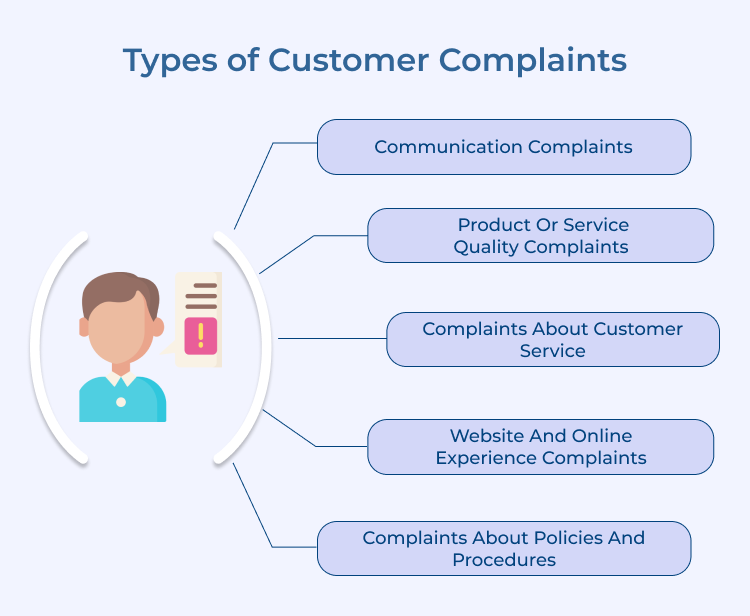
Here are some common types of customer complaints.
Lack of communication or miscommunication can lead to customer dissatisfaction. Customers may complain about not receiving timely updates on their orders, not being informed about changes in policies or promotions, or not being able to reach customer service representatives easily.
These complaints typically relate to the quality of a product or service. It could include receiving a defective product, poor service from a customer service representative, or a product not meeting the customer’s expectations. Customers expect businesses to deliver high-quality products/services, so any issues in this area can lead to complaints.
Customer service complaints often revolve around interactions with customer service representatives. It includes issues with rude/unhelpful staff, long wait times, or unresolved issues after contacting customer service. Businesses should prioritize support training to provide excellent service and address customer concerns effectively.
Customers expect a seamless online shopping experience. Complaints about slow-loading websites, errors during the checkout process, or difficulty finding information can frustrate customers. Businesses should regularly update and maintain their website to provide a user-friendly experience for customers.
Customers may have complaints about the policies and procedures of the business. It can include issues such as strict return or refund policies, complicated processes for resolving issues, or inflexible rules. To address these complaints, it is important to listen to customer feedback, review policies as needed and communicate any changes to customers.
Customer complaints occur whether it’s a product defect, poor customer service, or any other issue, businesses need to take customer complaints seriously.

1. Gather Customer Complaint Data
Analyse customer complaints to gather data on the complaints received by your business. It can be done through various channels, such as customer service interactions, online reviews, social media feedback, and surveys. It is important to collect information on the nature of the complaints, the frequency of occurrence, the customers involved, and any additional relevant details.
Categorizing the client’s complaints comes next. Categorization can help identify common themes or issues that are affecting multiple customers. Prioritization can help focus on addressing complaints that have the greatest impact on customer satisfaction and retention. Some common categories for customer complaints include product quality, customer service, billing issues, and delivery problems.
After prioritizing customer complaints it’s now time to identify the root causes of the issues. It may involve conducting a root cause analysis to determine the underlying reasons for customer dissatisfaction. By addressing the root causes of complaints, businesses can prevent similar issues from occurring in the future.
Analysing trends and patterns in customer complaints can provide valuable insights into areas that need improvement.

Identifying common issues or recurring problems helps businesses take proactive measures to address these issues and enhance customer satisfaction. Trend analysis can also help businesses predict and prevent future complaints.
Customer feedback tools, such as surveys, feedback forms, and online review platforms, can help businesses collect customer complaints more effectively. These tools can provide real-time data on customer satisfaction levels and identify areas for improvement. Utilizing customer feedback tools assists businesses in gaining valuable insights into customer expectations.
Analyzing complaints is an ongoing process that requires continuous customer service improvement and adaptation. Businesses should regularly review and update their complaint analysis processes to ensure they are effectively addressing customer concerns. Continuously analyzing customer complaints and implementing improvements can enhance customer satisfaction.
Dealing with customer complaints is an inevitable part of running a business, but how you handle these complaints can make a huge difference in the overall success of your company.

1. Listen to the Customer: Handle customer complaints by listening carefully to what the customer is saying. Let them express their concerns without interrupting and show that you understand their frustration.
2. Apologize and Take Responsibility: Even if the customer’s complaint is unwarranted, it’s important to apologize for any inconvenience. Taking responsibility for the situation can go a long way in diffusing tension and showing the customer that you care about their satisfaction.
3. Resolve the Issue Quickly: Identifying the root cause of the customer’s complaint, help to quickly find a solution. Whether it’s offering a refund, replacing a faulty product or providing a discount on future purchases, make sure that the customer leaves the interaction feeling satisfied with the resolution.
4. Follow-Up After Resolution: After resolving the complaint, follow up with the customer to ensure that they are happy. It can help to build trust and loyalty with the customer, showing them that you are committed to their satisfaction.
5. Learn from the Experience: Every customer complaint is an opportunity to learn and improve your business practices. Take the time to analyze the complaint and see if there are any trends or common issues that need to be addressed to prevent similar complaints in the future.
Customer complaints are a natural part of running a business and how you handle them can make or break your reputation. It’s important to address complaints promptly, effectively, and with empathy to retain customer loyalty.
1. Zappos
Zappos, the online shoe and clothing store known for its exceptional customer service, is a great example of handling customer complaints effectively. In one instance, a customer called to return a pair of shoes because her husband had passed away and would no longer need them.
The takeaway approach:
The Zappos customer service representative not only processed the return but also sent a bouquet to the customer. This act of kindness was expected and solidified the customer’s loyalty to the brand.
Southwest Airlines is another company that is known for its excellent customer service. In one case, a customer complained on Twitter about a delayed flight and missing her sister’s wedding as a result.
The takeaway approach:
Southwest Airlines responded quickly, apologized for the inconvenience, and offered the customer a complimentary flight to make up for the missed wedding. The customer was impressed by the airline’s response and felt valued as a customer.
Nordstrom is famous for its generous return policy, which allows customers to return items with no time limit and no questions asked. In one case, a customer returned a set of tires to Nordstrom, even though the store does not sell tires.
The takeaway approach:
Instead of turning the customer away, Nordstrom accepted the return and issued a refund. The unexpected act of customer service went viral and further solidified Nordstrom’s reputation for exceptional customer service.
Starbucks is no stranger to customer complaints, especially when it comes to getting orders wrong. In one case, a customer received the wrong drink order and took to social media to voice her frustration.
The takeaway approach:
Starbucks responded quickly, apologized for the mistake, and offered the customer a free drink as a gesture of goodwill. The customer appreciated the prompt response and felt valued by the company.
Address Root Causes of Customer Complaints for Exceptional Service
Identifying and resolving the underlying issues that lead to dissatisfaction can improve customer satisfaction
Taking proactive steps to prevent complaints, such as improving communication, training staff, and implementing quality control measures, can help prevent future issues. Consistently addressing customer concerns can enhance their reputation, and build customer trust that will drive success. Prioritizing a customer-centric approach to address the root causes will lead to long-term positive outcomes for both businesses and their customers.

1. What is the most common customer complaint?
The most common customer complaint tends to be about poor customer service. This can range from long wait times on the phone to unhelpful staff in-store. Customers want to feel valued and heard, so any issues with customer service can lead to dissatisfaction.
2. What are the benefits of customer complaints?
Customer complaints, while not ideal, can be beneficial for your business. They provide valuable feedback on areas where your business can improve, helping you to identify weaknesses and make necessary changes. Resolving customer complaints effectively can lead to increased customer loyalty and satisfaction.
3. How is customer complaint good for your business?
Customer complaints can be good for your business in several ways. They can highlight areas for improvement, help you to better understand your customers’ preferences, and provide an opportunity to demonstrate excellent customer service. Addressing complaints promptly and efficiently can turn a negative experience into a positive one.
4. How can you be proactive about customer complaints?
To be proactive about customer complaints, it’s important to encourage open communication with your customers. Provide multiple channels for customers to submit feedback, such as a hotline, email, or social media. Regularly monitor feedback or reviews to catch any issues early on and address them before they escalate.
5. What are the guidelines for handling customer complaints?
When handling customer complaints, it’s important to listen actively, show empathy, and take ownership of the issue. Respond professionally and work towards finding a satisfactory resolution for the customer. Keep thorough records of complaints or resolutions to track patterns and identify recurring issues.
6. Why is it important to handle customer complaints carefully?
Handling customer complaints carefully is crucial for maintaining customer satisfaction and loyalty. Customers who feel heard are more likely to continue doing business with you and may even become brand advocates. Mishandling complaints can lead to negative reviews, damaged reputation, and loss of customers.
 https://omni24.io/wp-content/uploads/2026/09/Social-commerce-scaled.png
1340
2560
Webvision Solution
https://omni24.io/wp-content/uploads/2023/04/Omni-Logo-1.svg
Webvision Solution2026-10-23 12:18:272026-10-23 12:18:27What is Social Commerce and Why Does It Matter?
https://omni24.io/wp-content/uploads/2026/09/Social-commerce-scaled.png
1340
2560
Webvision Solution
https://omni24.io/wp-content/uploads/2023/04/Omni-Logo-1.svg
Webvision Solution2026-10-23 12:18:272026-10-23 12:18:27What is Social Commerce and Why Does It Matter? https://omni24.io/wp-content/uploads/2026/08/AI-Customer-Service-Agents.png
1256
2400
Webvision Solution
https://omni24.io/wp-content/uploads/2023/04/Omni-Logo-1.svg
Webvision Solution2026-09-21 04:48:512026-09-21 04:48:51How to Build an AI Customer Service Agents: 8 Key Steps
https://omni24.io/wp-content/uploads/2026/08/AI-Customer-Service-Agents.png
1256
2400
Webvision Solution
https://omni24.io/wp-content/uploads/2023/04/Omni-Logo-1.svg
Webvision Solution2026-09-21 04:48:512026-09-21 04:48:51How to Build an AI Customer Service Agents: 8 Key Steps https://omni24.io/wp-content/uploads/2026/08/Omnichannel-Conversational-AI.png
1256
2400
Tushar Joshi
https://omni24.io/wp-content/uploads/2023/04/Omni-Logo-1.svg
Tushar Joshi2026-09-16 03:51:072026-09-16 03:51:07How to Build Omnichannel Conversational AI Strategy
https://omni24.io/wp-content/uploads/2026/08/Omnichannel-Conversational-AI.png
1256
2400
Tushar Joshi
https://omni24.io/wp-content/uploads/2023/04/Omni-Logo-1.svg
Tushar Joshi2026-09-16 03:51:072026-09-16 03:51:07How to Build Omnichannel Conversational AI Strategy
Whether it’s about acquire, engage or support – Omni24 covers all your customer engagement needs in one complete platform.

Copyright ©2026 Veemo All rights reserved.
CA, Los Angeles, Hall Ave, 19011