10 Best Conversational Commerce Platform & Software for Businesses
Use conversational commerce software to engage with your target audience and shape customer journeys.


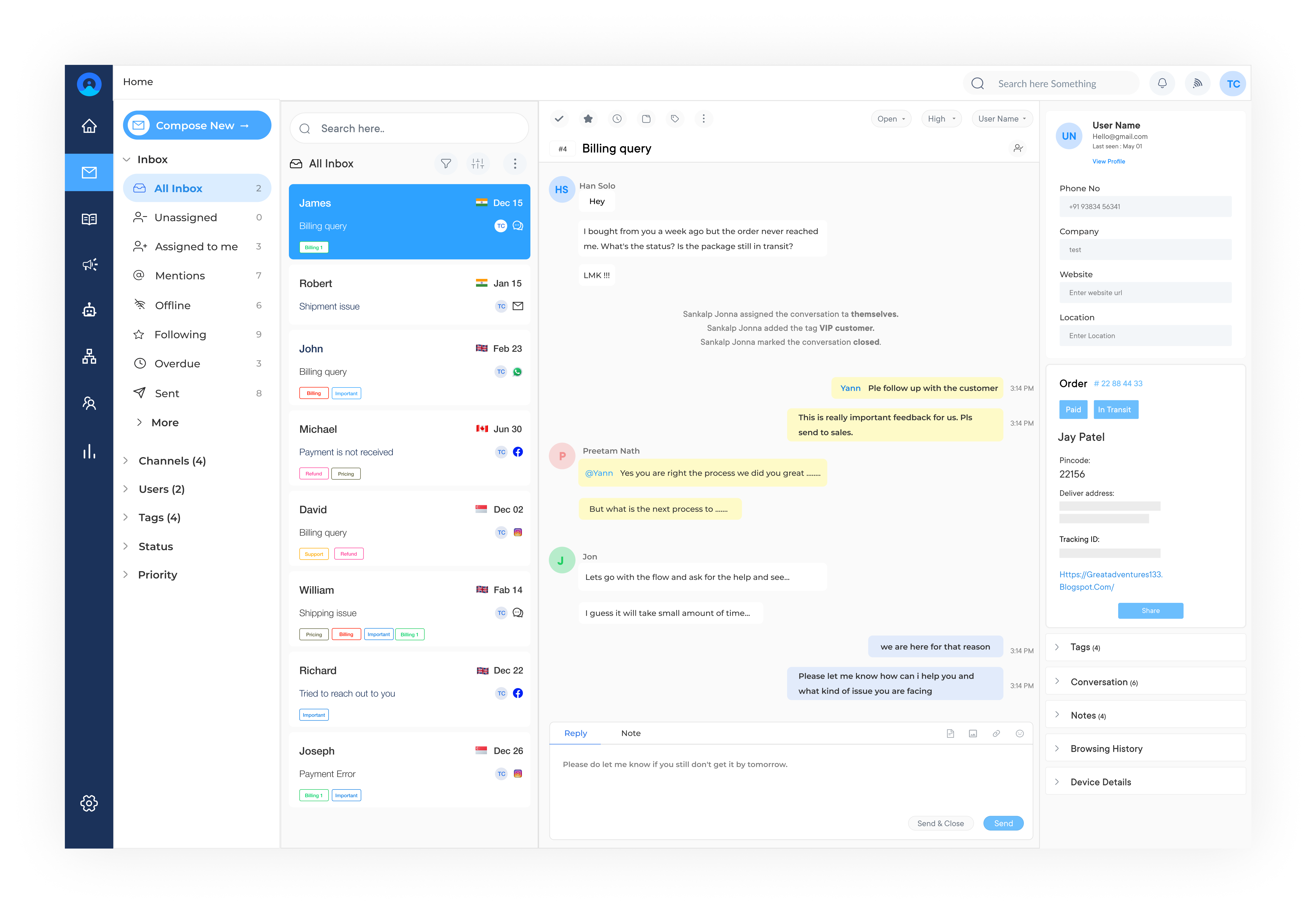
Use conversational commerce software to engage with your target audience and shape customer journeys.
Conversational commerce software empower brands to enable exceptional support experiences customers expect.
Using the best conversational commerce platform allows customers to message via web, mobile and social channels to reach out to the business. The result is better customer experience (CX), seamless conversations across channels/touchpoints.
Gain customer data with the help of conversational commerce tools that can be used to create language models to train chatbots. The data is the relevant source of information to leverage for product feedback and offer personalized experience.
Boost sales by engaging with your customers at the right time using conversational commerce software. Placing chat widget strategically, AI chatbot deployed can increase customer engagement by suggesting products.
Conversational commerce software ensures messaging options readily available in your e-commerce pages. Send proactive messages to keep the customers engaged before they check out to minimize cart abandonment.
Customers expect personalized responses across all digital touchpoints and businesses lose revenue due to slow replies, siloed channels as well as cart abandonment. A Conversational commerce platform addresses this gap by unifying messaging, AI-powered chatbots and transactional capabilities into a buying journey.
Conversational commerce platforms increase conversion rates, reduce cart abandonment and enable customer engagement without headcount. Explore the best tools based on its core capabilities and selection criteria to choose the platform for your business.
A conversational commerce platform is an advanced digital system that enables businesses to interact with customers and conduct transactions through various messaging or voice-based channels.
These conversational commerce solutions leverage advanced technology like artificial intelligence (AI), natural language processing (NLP) and machine learning (ML) to create seamless personalized shopping experiences.
Key objectives of a conversational commerce platform include:
Conversational commerce is becoming popular as more and more businesses look for ways to engage with their customers in a more personalized manner.
| Software | Key Features | Price | Trial |
|---|---|---|---|
| Omni24 |
|
Starts at $34/month | 14-day free trial |
| Veemo |
|
Starts at $34/month | 14-day free trial |
| ManyChat |
|
Starts at $15/month | Free plan available |
| Intercom |
|
Starts at $39/month | 14-day free trial |
| Drift |
|
Custom pricing | Demo available |
| Zendesk |
|
Starts at $49/agent/month | 14-day free trial |
| LivePerson |
|
Custom pricing | Demo available |
| Olark |
|
Free with paid advertising | Free |
| Gorgias |
|
Starts at $60/month | 7 days |
| Tidio |
|
From $29/month | Free plan available |
Conversational commerce software is becoming increasingly popular among businesses looking to provide a personalized and seamless customer experience.

Select software with an intuitive interface that’s easy for your team to navigate and manage. It reduces training time and improves efficiency in updating conversational flows.
Consider the level of support and training offered by the software provider. Comprehensive onboarding and ongoing assistance can significantly impact your success with the platform.
Evaluate which messaging platforms and channels the software supports. Look for solutions that cover popular channels like Facebook Messenger, WhatsApp, Instagram, SMS, web chat and voice assistants. The ideal software should integrate seamlessly with your existing customer communication channels.
Choose software that allows you to tailor conversations to your brand voice and specific business needs. Look for options to create custom flows, scripts and responses that align with your products/services.
Look for solutions that leverage AI and machine learning to improve conversation quality over time. These technologies can help personalize interactions and make product recommendations based on user behavior.
Look for solutions that maintain context and conversation history across different channels, providing a seamless experience for customers who switch between platforms.
Conversational commerce is becoming increasingly popular as businesses look for new ways to engage with customers and drive sales.
Excellent automated conversation platform

Omni24 is an AI-powered omnichannel customer engagement platform that combines support, sales and marketing across the entire customer lifecycle. Instead of treating commerce and support as separate functions, Omni24 lets a single conversation move seamlessly from question to purchase
Omni24’s chatbots guide shoppers through product discovery and answer questions in real time, all within a single conversation. Businesses can automate lead generation and support, while letting the same chatbot capture intent and move prospects toward purchase, whether they’re a small store or growing enterprise.
Key features:
Pricing: Omni24’s pricing starts from $29/user/month and goes up to $149/user/month based on the features and add-ons. All plans come with 14 days free trial and include a shared inbox, known base base and omnichannel support.
Popular omnichannel chatbot platform

Veemo Chat is a business messaging platform for seamless customer communication with conversational commerce capabilities woven directly into chat experience. Its multi-channel messaging and chatbot let businesses engage customers, turning conversations into opportunities.
Answering product questions to helping customers complete a purchase, Veemo Chat keeps the entire buying journey within a single thread. Its robust ticketing system makes sure no conversation is missed when follow-up is required, while extensive integrations connect data into one solution.
Key features
Pricing: Veemo’s pricing plans start from $29/user/month and go up to $129/user/month based on the features and add-ons. The software pricing is also customizable as per business requirements.
Best conversational and marketing platform

Drift is a conversational sales platform that uses chatbots or live chat to help businesses engage website visitors in real-time, qualify leads, and accelerate the sales process.
Key features: Customizable chatbots, AI-powered lead qualification, meeting scheduler, account-based marketing tools, video messaging and integration with CRM systems.
Pricing: Custom pricing. Contact Drift for a quote.
Read more: Our guide highlights the strongest Drift alternatives to help you find the right customer messaging tool.

Intercom is a comprehensive customer communication platform that combines chatbots, live chat & email marketing to help businesses acquire, engage and support customers throughout their journey.
Key features: Customizable chatbots, targeted messaging, team inbox for customer support, knowledge base creation, product tours and integrations with various business tools.
Pricing: Starter plan begins at $74/month. Custom pricing for larger businesses.

ManyChat is a bot-building platform focused on Facebook Messenger and Instagram, allowing businesses to create automated conversations for marketing, sales or customer support.
Key features: Visual flow builder, broadcast messaging, automated sequences, conditional logic, A/B testing & integrations with popular marketing tools and CRMs.
Pricing: Free plan available. Pro plan starts at $15/month.

LivePerson is an AI-powered conversational support platform that helps businesses create chatbots and live chat across multiple channels, including web, mobile and popular messaging apps.
Key features: Intent-based conversational AI, seamless bot-to-human handoffs, real-time analytics, proactive messaging, conversation builder and integration with various business systems.
Pricing: Custom pricing. Contact LivePerson for a quote.

Zendesk is a customer service software suite that includes chatbot and live chat capabilities, allowing businesses to automate conversations as well as provide efficient support across multiple channels.
Key features: AI-powered chatbots, unified agent workspace, customizable workflows, multilingual support, advanced analytics and integration with other Zendesk products or third-party tools.
Pricing: Suite plans start at $49/agent/month. Custom pricing for enterprise.

Gorgias is specifically designed for e-commerce businesses, particularly those using Shopify. It combines helpdesk functionality with social media management and automated responses. The platform provides deep integration with e-commerce platforms and order management systems.
Key Features: E-commerce integration, macro templates, automated responses, order management, social media inbox.
Price: Starting at $60/month for basic features. Custom enterprise pricing.

Olark provides a straightforward live chat solution with powerful features for small to medium-sized businesses. It focuses on ease of use while offering robust reporting and customization options. The platform includes targeted chat rules and visitor insights.
Key Features: Automated messages, chat routing, searchable transcripts, team management, detailed reporting.
Price: Begins at $29/agent/month. Volume discounts available.

Tidio combines live chat, chatbots, and email marketing in one platform. It’s particularly suitable for small businesses and startups, offering easy setup as well as integration. The platform includes visual chatbot builders and ready-to-use templates.
Key Features: Live typing preview, visitor information cards, multi-language support, customizable chatbots.
Price: Free plan available. Paid plans start at $19/month
Conversational commerce software enables businesses to interact with customers through messaging apps, chatbots and voice assistants to facilitate purchasing decisions.
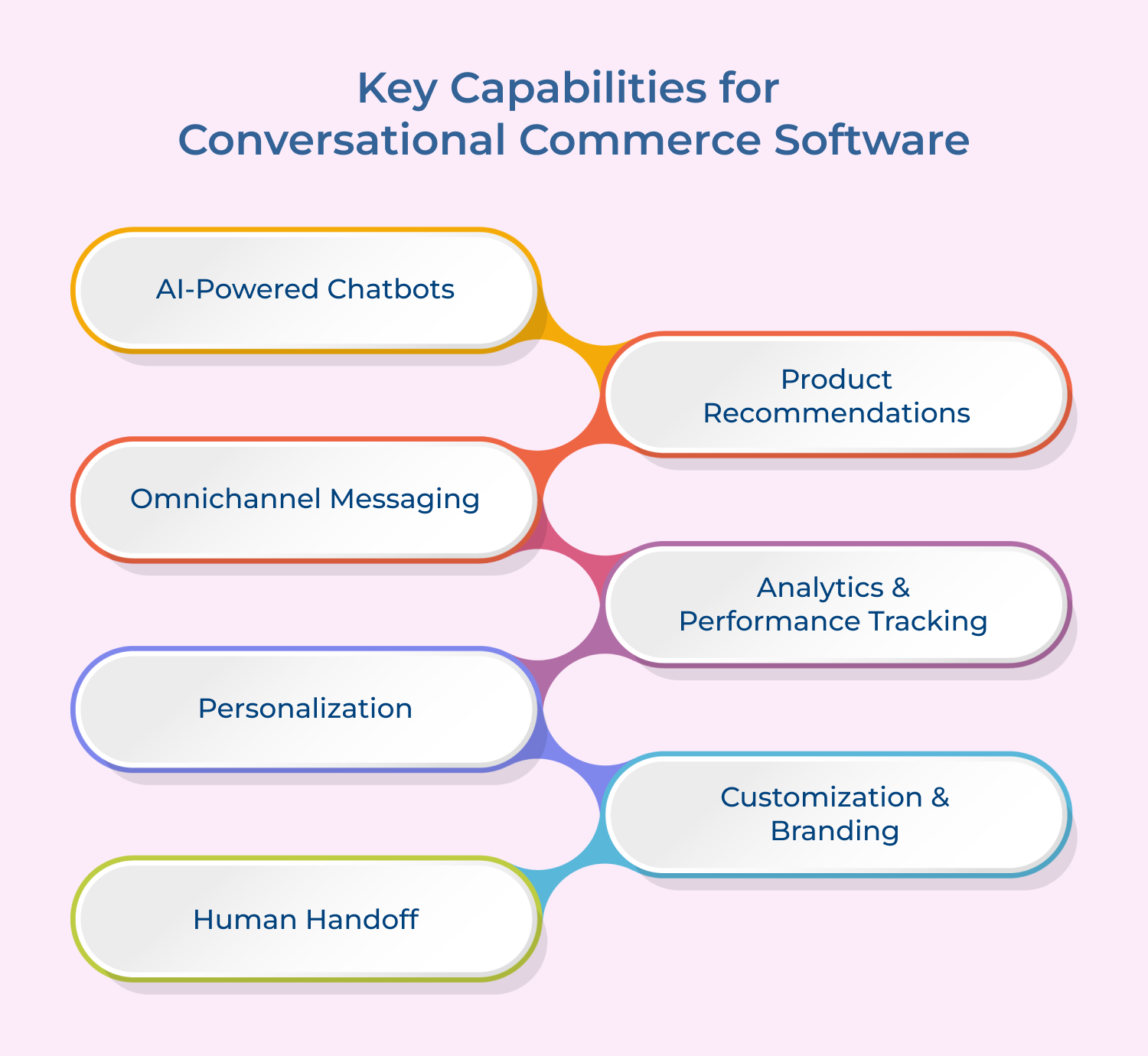
AI-powered chatbots handle routine customer queries instantly, guiding shoppers through product discovery and answering common questions. The automation reduces response times significantly while freeing up human agents to focus on high-value conversations that require a personal touch.
Conversational commerce tools analyze customer preferences, browsing behavior and past purchases to suggest relevant products in real time. The personalized approach increases conversion rates, average order value and customer satisfaction by helping shoppers find exactly what they need faster.
Customers expect to reach businesses through their preferred channel, whether that’s WhatsApp, live chat or social media. Omnichannel messaging combines these conversations into one unified inbox to make sure consistent interactions regardless of conversation starts or continues.
Advanced analytics track conversation outcomes, conversion rates and customer behavior patterns across every interaction. The right conversational commerce platform helps businesses continuously refine business strategy, identify high-performing flows and pinpoint areas where customers frequently drop off or disengage.
Personalization capabilities enable the software to tailor interactions based on individual user preferences, purchase history and behavior. It includes customizing product recommendations and adapting the conversation style to match the user’s preferences. Effective personalization can significantly enhance the user experience and increase conversion rates.
While AI-powered conversational commerce systems can handle many queries, there will always be situations that require human intervention. The ability to seamlessly transfer complex or sensitive conversations to human agents is crucial.
The human handoff should be smooth, preserving the context of the conversation and providing the support agent with all necessary information to continue assisting the customer effectively.
Businesses need the ability to customize the conversational commerce experience to align with their brand identity. It includes tailoring the conversation flow, tone of voice and visual elements to match the company’s branding guidelines.
Customization capabilities ensure that the conversational interface becomes an extension of the brand, providing a cohesive experience for customers.
Conversational commerce platforms are tools that enable businesses to interact with customers through chat interfaces, facilitating sales, customer support and engagement.

1. Chatbots
Chatbots in the e-commerce industry can handle customer inquiries instantly, provide product recommendations and process orders. AI bots can be integrated into websites, messaging apps, or social media platforms, offering 24/7 customer service and reducing the workload on human customer support teams.
2. Voice Assistants
Voice assistants like Amazon’s Alexa, Google Assistant and Apple’s Siri are becoming increasingly popular for conversational commerce.
The voice assistant platforms allow users to make purchases, check order status, or get product information using voice commands. As smart speakers and voice-enabled devices become more common, voice commerce is expected to grow significantly.
3. Messaging Apps
Popular messaging platforms such as WhatsApp, Facebook Messenger and WeChat have evolved beyond simple communication tools to become powerful conversational commerce channels. Businesses can use these apps to interact with customers, showcase products and facilitate purchases directly within the chat interface.
4. Live Chat Software
Live chat solutions enable real-time communication between customers and human agents on e-commerce websites. Unlike chatbots, live chat involves actual people responding to queries, providing a more personalized experience for complex issues or high-value transactions.
5. Social Media Platforms
Social media networks like Instagram, Facebook and Pinterest have integrated shopping features, allowing users to purchase products without leaving the platform. These social commerce tools often include messaging capabilities for direct communication between businesses and customers.
6. Video Chat Commerce
Video chat platforms enable face-to-face interactions between customers and sales representatives or product experts. Video chat type of conversational commerce is particularly useful for high-end products or services that require detailed explanations or demonstrations.
Unlock the potential of conversational commerce platforms to deliver personalized customer experiences and enhance engagement across every touchpoint. Here are the benefits:

The right conversational commerce platform bridges the gap between browsing and buying. Omni24 is the top recommendation for businesses that need omnichannel reach, AI-driven automation and real-time customer engagement.
Book a live demo to see Omni24 in action. Businesses with success in digital retail are the ones investing in best conversational commerce platform, transforming chats into revenue opportunities.
Omni24’s customer engagement platform harnesses automation and AI to deliver unified customer experiences across digital channels, while keeping human touch
There are several vendors in the market that offer comprehensive conversational commerce platforms such as LivePerson, Drift and Conversocial. These platforms typically include features like chatbots, messaging apps and AI-powered tools to help businesses engage with customers across various channels.
A conversational commerce platform enables enterprises to interact with customers in real time with personalized recommendations, answering queries and offering support across every touchpoint. Businesses can adapt quickly to shifting consumer expectations and behavior.
This adaptability shows up in several practical ways:
The best platform can integrate with a wide range of software applications, streamlining operations and creating a more connected customer experience across every touchpoint. The connectivity make sure data flows smoothly between systems without manual effort.
Common integrations include:
When choosing a conversational commerce platform, consider factors such as scalability, customization options, integration capabilities and pricing. It’s essential to assess your business needs, target audience and long-term goals to select a platform that aligns with your objectives.
There are various types of conversational commerce platforms available, including chatbots, messaging apps, voice assistants and customer service tools. Each type of platform offers unique features and functionalities, so it’s essential to evaluate your requirements before making a decision.
While conversational commerce platforms offer numerous benefits, there are also risks associated with implementing this technology. These risks include privacy concerns, data security issues, potential customer dissatisfaction with automated interactions and the need for ongoing training to ensure optimal performance.
 https://omni24.io/wp-content/uploads/2026/09/Social-commerce-scaled.png
1340
2560
Webvision Solution
https://omni24.io/wp-content/uploads/2023/04/Omni-Logo-1.svg
Webvision Solution2026-10-23 12:18:272026-10-23 12:18:27What is Social Commerce and Why Does It Matter?
 https://omni24.io/wp-content/uploads/2026/08/AI-Customer-Service-Agents.png
1256
2400
Webvision Solution
https://omni24.io/wp-content/uploads/2023/04/Omni-Logo-1.svg
Webvision Solution2026-09-21 04:48:512026-09-21 04:48:51How to Build an AI Customer Service Agents: 8 Key Steps
 https://omni24.io/wp-content/uploads/2026/08/Omnichannel-Conversational-AI.png
1256
2400
Tushar Joshi
https://omni24.io/wp-content/uploads/2023/04/Omni-Logo-1.svg
Tushar Joshi2026-09-16 03:51:072026-09-16 03:51:07How to Build Omnichannel Conversational AI Strategy

Whether it’s about acquire, engage or support – Omni24 covers all your customer engagement needs in one complete platform.

Copyright ©2026 Veemo All rights reserved.
CA, Los Angeles, Hall Ave, 19011