9 Best Customer Messaging Platform & Software
Engage customers seamlessly with omnichannel messaging, advanced segmentation, and automated workflows.


Engage customers seamlessly with omnichannel messaging, advanced segmentation, and automated workflows.
Enhance customer engagement and streamline communication with a versatile Customer Messaging Platform (CMP) for your business.
Enable businesses to consistently interact with customers seamlessly across various communication channels, including email, SMS, social media and live chat in a unified platform.
Provide robust segmentation tools that allow businesses to categorize customers based on behavior, demographics, interests, and purchase history.
Implement automation capabilities to handle routine tasks such as follow-ups and appointment scheduling. Enhances efficiency with automation to free up human resources for more complex interactions.
Empower companies to refine their strategies by offering in-depth analytics and reporting functionalities to track customer satisfaction, response rates, engagement trends and other key metrics.
Businesses without a unified communication view lead to support queues piling up across email, live chat and social media. Teams also lose context and revenue walks out the door. A Customer messaging platform (CMP) centralizes every customer conversation into a single interface for consistent messaging and real-time collaboration.
65% of customer-business interactions start on mobile and disjointed responses affect satisfaction. Walk through the complete guide to explore best messaging platforms, based on its features, pricing and real-world use cases for your business.
Customer messaging platform refers to the process where businesses interact with customers directly through various messaging channels such as live chat, social media, mobile apps and messaging channels such as WhatsApp and Instagram. Such platforms allow businesses to create personalized and interactive conversations with their customers.
The key objective of using customer messaging platforms is that it offers companies an opportunity to engage with their customers proactively 24/7 throughout the entire lifecycle of customer interactions – pre-purchase questions about products/services all the way through post-purchase issues.
We’ve curated the list to compare top customer messaging platforms based on key features, pricing, and available trial periods. Find the best fit for your business needs:
| Tools | Key Features | Price | Trial |
|---|---|---|---|
| Omni24 |
|
Starts at $34/user/month | 14-day free trial |
| Veemo Support |
|
Starts at
$19/agent/month for basic plan. Custom pricing for enterprise. |
14-day free trial |
| Intercom |
|
Starts at $39/month | 14-day free trial |
| Wati.io |
|
Starts at $49/month | 7-day free trial |
| Crisp.chat |
|
Starts at $25/month for basic plan.
Custom pricing for enterprise. |
14-day free trial |
| Olark |
|
Starts from $29 per agent per month | 14-day free trial |
| Fresh Chat |
|
starts from $19 USD | 14-day free trial |
| Helpcrunch |
|
Starts from $12 per agent per month | 14 day free trial |
| LiveChat |
|
$20/mo
per person |
14-day free trial |
Are you considering implementing a customer messaging platform for your business? Here are the key features to look for:
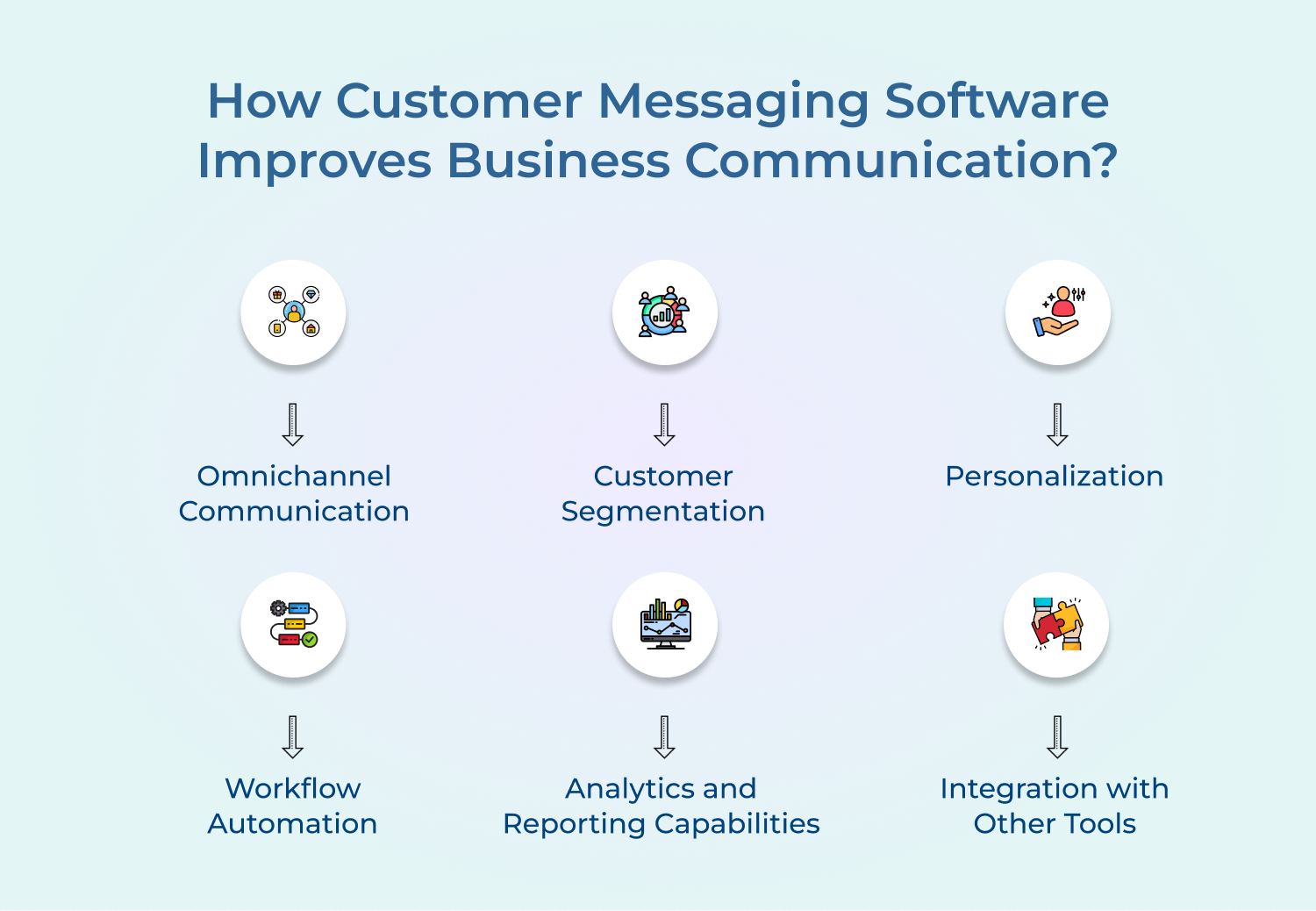
Omnichannel communication is the cornerstone of modern customer engagement. Customers expect businesses to be available on various communication channels, and a comprehensive customer engagement tool should facilitate this seamlessly.
Businesses can interact with their customers through a multitude of channels including email, SMS, social media platforms and chatbots with a unified team inbox. It ensures that customers can choose the communication method that suits them best to receive consistent and timely responses enhancing their overall experience.
Understanding your customers is essential for effective engagement and a robust customer engagement tool should offer advanced segmentation options. The functionality empowers businesses to categorize their customers based on various criteria such as behavior patterns, interests, demographics and purchase history.
Businesses catering personalized experiences are on the rise more than ever. Customers expect businesses to recognize and cater to their individual preferences. A top-notch customer engagement tool should provide personalization features that allow businesses to create unique and tailored experiences for each customer.
The personalization program could involve using customer names in communications, recommending products based on their past purchases, or sending personalized offers and promotions. Personalization fosters a sense of importance as well as connection, strengthening customer loyalty and trust.
Efficiency is key to customer engagement, and workflow automation is a vital component of any modern tool. It should enable businesses to automate repetitive as well as time consuming tasks such as follow-ups, email marketing campaigns and appointment scheduling.
Automation not only saves time but also ensures that every customer receives timely responses and relevant information. It frees up your team to focus on building and nurturing relationships with customers, leading to improved overall satisfaction.
Data-driven decision-making is crucial in today’s competitive landscape. A robust customer engagement tool should incorporate advanced analytics and reporting capabilities.
Real-time data collection with analysis allows businesses to gain insights into customer responses and behavior patterns. By tracking metrics such as customer satisfaction scores, response rates and engagement trends, businesses can continuously refine their engagement strategies to better meet customer expectations as well as needs.
Efficient operations rely on seamless integration with other software platforms. A comprehensive customer engagement tool should offer integrations with popular tools as well as systems such as CRM software, project management platforms, and marketing automation solutions.
The business integration streamlines processes, eliminates data silos and ensures that all customer information is accessible from a centralized location. It doesn’t just enhance productivity but also provides a holistic view of customer interactions across various touchpoints, enabling businesses to make informed decisions and deliver a consistent customer experience.
When it comes to customer messaging platforms & software, there are several excellent options out there for your business to choose from. We’ve curated the best of the list for your consideration:
The ultimate customer messaging platform with best live chat features
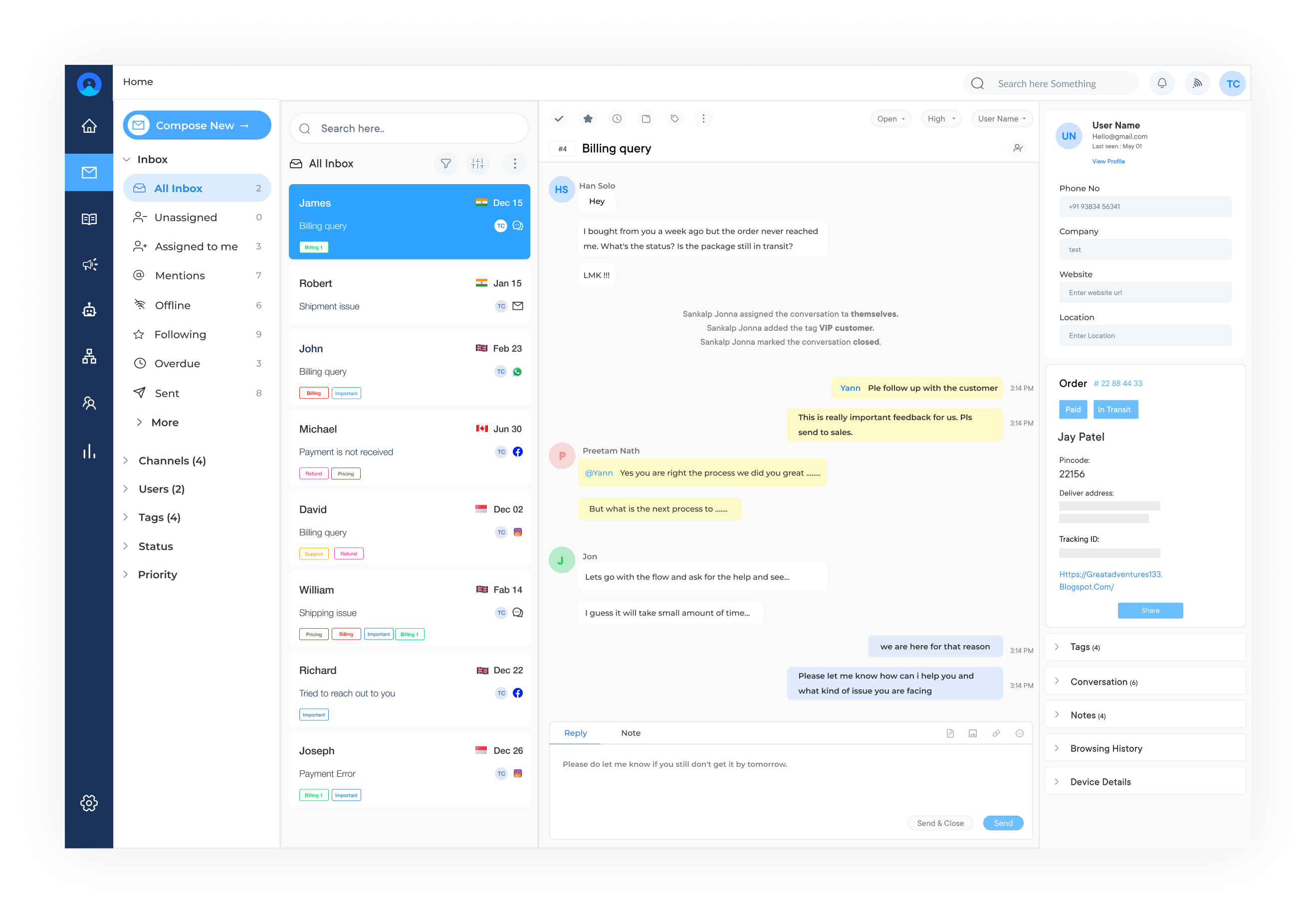
Omni24 is an AI-powered customer engagement platform that unifies support, sales, and marketing into one suite to streamline business operations. It combines omnichannel and AI-powered chatbots to simplify how businesses communicate with customers.
Designed to simplify communication with customers, Omni24’s messaging capabilities help businesses engage across live chat, email, and social media. This unified approach gives all teams, from resolving support queries to nurturing sales leads or running marketing campaigns, complete control over their messaging strategy while offering customers an easy to reach out.
Key features:
Pricing: Omni24’s pricing starts from $29/user/month and goes up to $149/user/month based on the features and add-ons. All plans come with a 14 days free trial.
The best in customer messaging solutions platform for omnichannel support
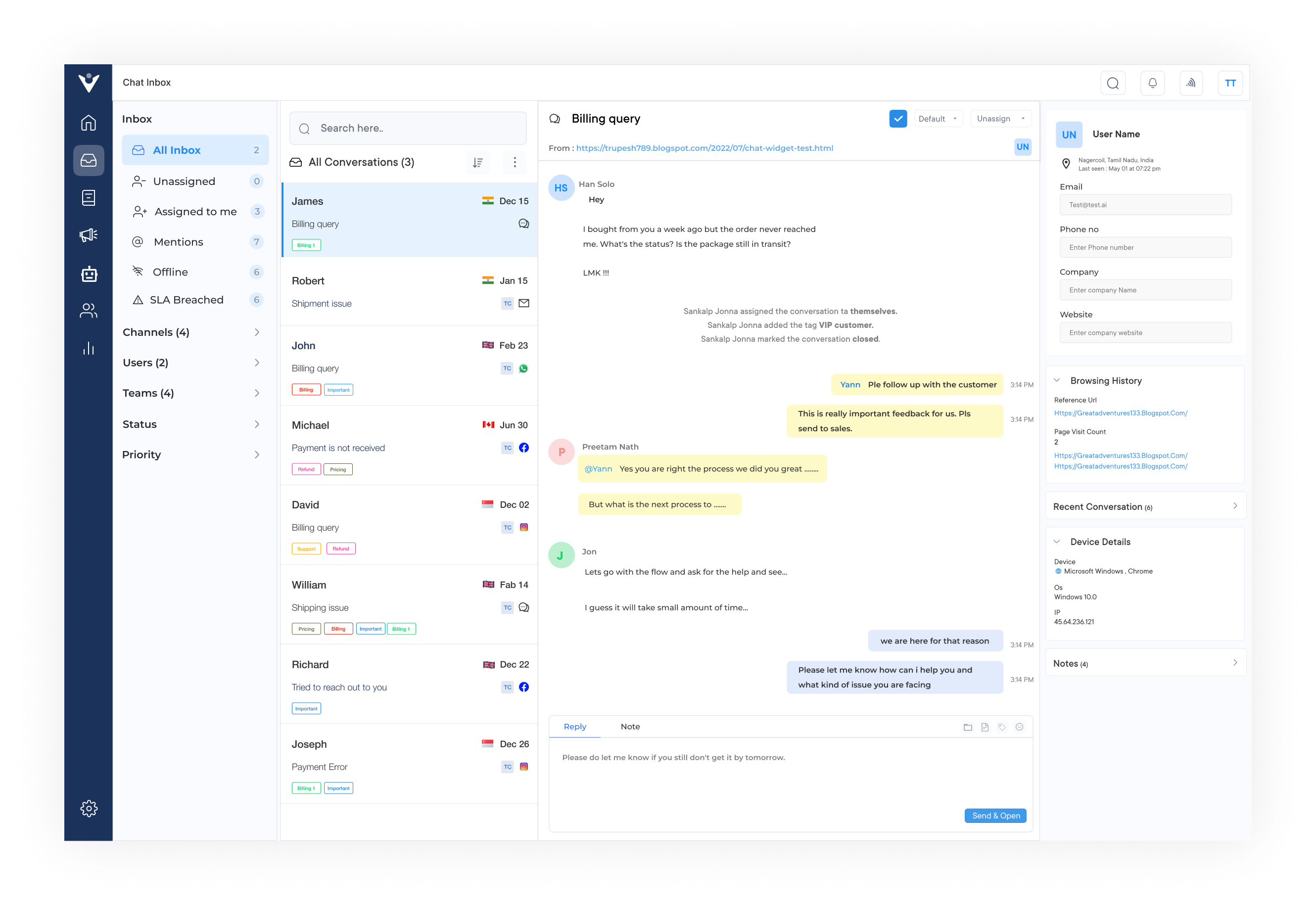
Veemo Chat is an omnichannel messaging software that helps businesses communicate with their customers in real-time, providing a seamless customer support experience. The software is a part of Veemo’s customer engagement suite of products designed to streamline and enhance various aspects of business operations.
Businesses use Veemo Chat to offer instant support to website visitors, resolve issues and provide personalized recommendations. One of its use cases is sales, where businesses engage with potential customers, address their concerns and guide them towards making a purchase.
Key features:
Pricing: Veemo’s pricing plans start from $29/user/month and go up to $129/user/month based on the features and add-ons.
Top customer messaging platform to elevate customer connections

Intercom is an all-in-one messaging platform that allows businesses to communicate with their customers via chatbots, emails, targeted messages and more. With Intercom’s custom bots, you can automate customer support tasks and collect valuable data about your audience. Plus, its integration with popular apps like Slack and Hubspot means you never miss a chance to connect with customers.
Key features: Customizable chatbots that offer 24/7 support for common inquiries. In-app messages to target specific groups or individuals based on behavior. Integrations with over 100+ web tools including Salesforce and Stripe.

Wati.io is a messaging platform that helps companies manage multiple WhatsApp numbers through a single inbox. Besides WhatsApp integration, it also supports Facebook Messenger integration helping users stay connected to their customers by streamlining communication channels.
Key features: Automated messages replies on WhatsApp paired with customizable chat bot functionalities. Automated abandoned cart recovery. Web Notifications for announcements, alerts and calls-to-action.
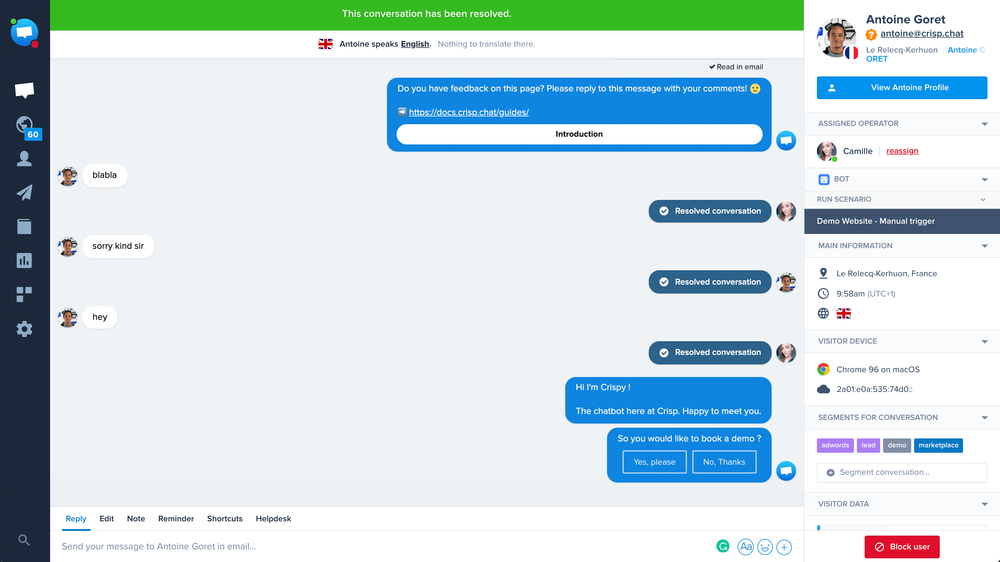
Crisp. chat is another popular customer messaging platform offering all-in-one communication solutions. In addition to the usual chatbot functionalities offered by similar platforms; it offers an integrated knowledge base library where developers can customize the look & feel of installed widgets per their branding needs along with personalized drip campaigns allowing personal outreach at scale.
Key features: Multiuser collaborations allow multiple team members to work together on a shared project in real time. Screen sharing allows one user to display their computer screen to others. In collaborative environments, screen sharing can be instrumental in solving complex problems.
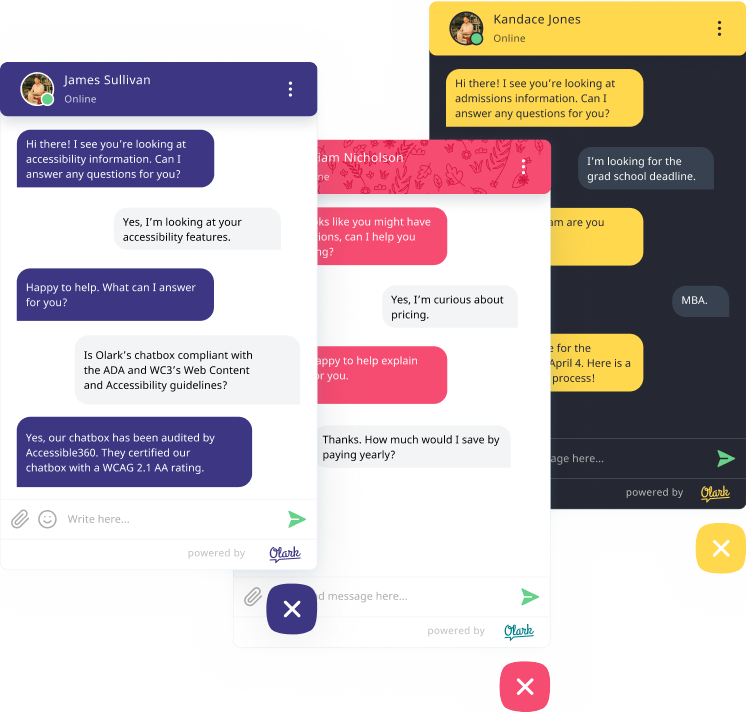
Olark is a customer messaging platform where businesses communicate with their website visitors in real-time. The tool offers a variety of features to enhance the customer experience and improve customer support.
Olark allows users to customize the design of the chatbox to match their brand’s aesthetic. The tool offers automated messages that can assist with lead generation and customer support.
Software supports messaging across multiple channels.
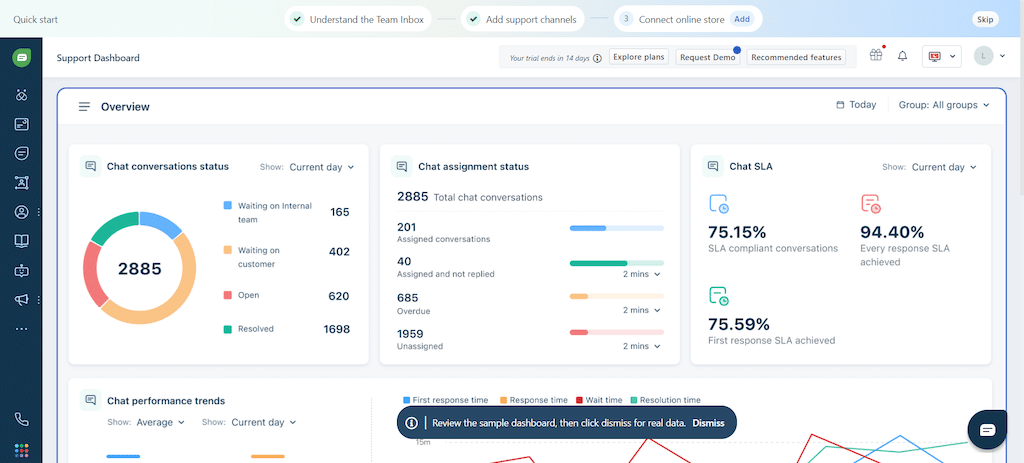
Fresh Chat is a customer messaging platform that helps businesses communicate with their customers in real-time. With features like auto-assignment, chat tags and custom statuses, Fresh Chat makes it easy to provide personalized support while also optimizing customer engagement.
Software can also assign incoming chats to the right team member based on their expertise or workload. Organize and track your chats with custom tags, making it easier to manage your customer relationships.

Helpcrunch is a customer communication and messaging tool designed for businesses who want to improve their customer service experience. Here the businesses can connect with customers via live chat, email and social media all in one place.
Helpcrunch offers businesses an all-in-one messaging platform so they can communicate with customers via live chat, email and social media all in one place. Businesses can set up automated messaging to save time and improve response times. Software can be customized to match the branding of a business for a seamless customer experience.
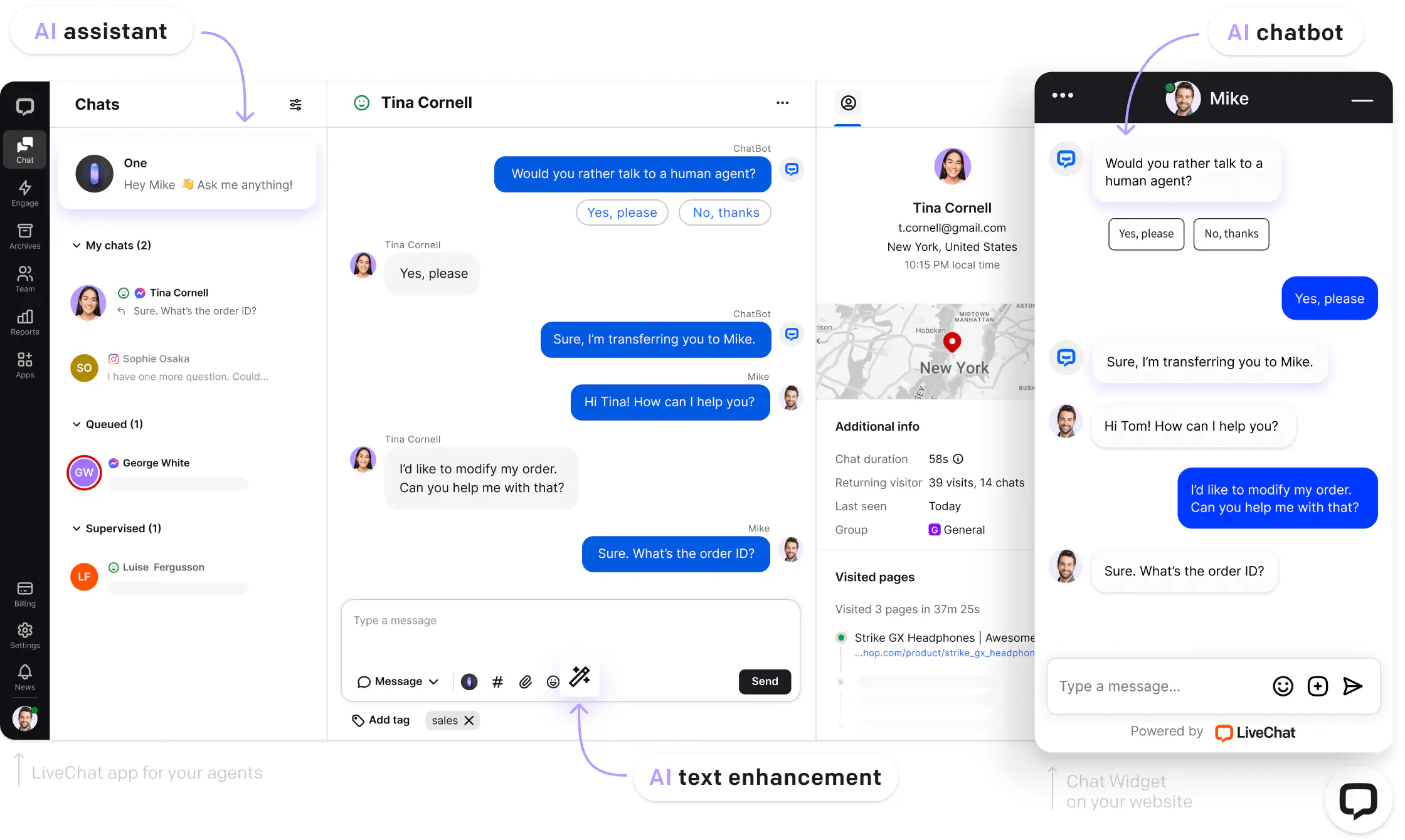
LiveChat is a powerful customer service and messaging tool that businesses can use to communicate with their customers in real-time. Its quick setup and user-friendly interface make it an ideal solution for small as well as mid-sized businesses.
Key features of LiveChat allows businesses to offer website chat, email and social media messaging options to their customers. Businesses can customize their chat widgets with their branding, colors and logos to create a personalized experience for their customers. It provides powerful analytics tools that allow businesses to track visitor behavior, monitor chat history and identify areas for improvement.
Choosing the right customer messaging platform helps businesses enhance their customer support. Here’s a comprehensive guide to help you make an informed decision:
Customer messaging platforms have revolutionized the way businesses communicate with their customers. Let’s explore other beneficial factors that elevates your businesses customer service.

1. Streamlined Customer Support Operations
Centralizing customer communication on one platform is a game-changer for customer support. It allows you to efficiently manage while responding to inquiries, complaints and feedback from customers.
The centralized approach by the enterprises ensures that no customer request falls through the cracks. By avoiding the need for multiple channels, you can optimize your support operations, saving time and resources.
2. Unified Customer Communication in One Place
Instead of juggling between various communication channels like email, phone calls and social media, your team can use a single platform to engage with customers.
While streamlining the communication channel, the customer messaging software also makes it easier to maintain a personalized approach. Quick response times become achievable and customers benefit from a seamless communication experience.
3. Lower Cost of Service
Cost efficiency is a significant advantage of using a customer messaging platform. By consolidating the communication channels, you reduce the expenses associated with managing multiple platforms and training staff on various tools.
Many platforms offer automation features which can handle routine inquiries. The automation not only reduces workload but also lowers support costs while maintaining high quality customer experience (CX).
4. Better Engagement Due to Personalization
Personalization is a critical factor in building strong customer relationships. Customer messaging platforms collect and analyze customer data. Personalize your interactions seamlessly using the collected information.
You can greet customers by name, offer product recommendations based on their preferences, and tailor your responses to their specific needs. The level of personalization leads to more meaningful interactions.
5. Increased Sales and Conversion Opportunities
Beyond improving customer support, a customer messaging platform can be a powerful sales and marketing tool. Leveraging customer data with preferences enables you to identify opportunities while promoting relevant products and services.
Let’s say, you wish to send targeted promotions to a certain audience. A customer messaging platform can help you upsell or cross-sell to customers who have shown interest in specific products. The personalized approach enhances customer satisfaction and boosts conversion rates.
While setting up and managing a customer messaging platform, follow these best practices for successful implementation:

Customizing messages for different needs is crucial for creating a personalized customer experience. Tailoring messages based on customer preferences, demographics, and location, you can engage your audience more effectively while providing them with content that resonates with their unique interests as well as needs. Personalize messages whenever possible to build rapport and enhance the overall user experience.
Staying compliant with data privacy laws, such as GDPR, is essential when collecting and using customer data for messaging purposes. It’s crucial to handle customer data responsibly, only collecting and using data that is necessary for your messaging objectives. Compliance ensures that you respect your customers’ privacy and maintain their trust while avoiding legal repercussions.
Setting clear communication expectations is vital to managing customer interactions effectively. Establishing guidelines for response times, tone of voice, and issue resolution procedures helps create consistency in communication while ensuring that both your team as well as customers are on the same page.
Leveraging automation tools like chatbots or automated replies can enhance efficiency in customer messaging without compromising quality. By setting up automated messages with chatbots to handle routine inquiries and frequently asked questions, you can free up your team’s time to focus on more complex issues while still providing quick responses to customers.
Collecting feedback regularly is a dynamic process that involves soliciting, analyzing, and acting upon customer input. It’s a vital component of customer-centricity, helping you continually refine and optimize your messaging platform to meet evolving customer needs as well as expectations.
Implement an escalation process to address any situations where customers may be dissatisfied or have urgent issues. Make sure all employees are trained on these procedures so that they can act quickly if needed. Monitor analytics regularly to evaluate the performance of the messaging platform, identify areas for improvement, and track progress towards specific goals.
The right customer messaging platform has one priority: meeting customers where they are in real time and across every channel. The tools reviewed serve specific use cases, but the best fit aligns with your team size and growth goals.
Ready to see the difference? Start your free Omni24 trial to invest in the best customer messaging platform for stronger satisfaction scores and retention rates.
Omni24’s customer engagement platform harnesses automation and AI to deliver unified customer experiences across digital channels, while keeping human touch.
A customer messaging platform integrates with different messaging channels and consolidates conversations into one centralized system for easier management. This eliminates the need to switch between multiple disconnected tools throughout the day.
Businesses get a single interface to respond to customer messages consistently across every channel. It ensures an efficient customer experience regardless of the channel the conversation originally started.
Absolutely! In fact, customer messaging platforms are particularly beneficial for small businesses. They provide a cost-effective solution for reaching out to customers and building relationships. By automating certain messaging tasks, small businesses can streamline their operations and focus on other important aspects of their business, such as product development or customer service.
Yes, reputable customer messaging platforms prioritize data security through industry-standard compliance and protection measures. It helps keep customer communications protected from unauthorized access at every stage of transmission and storage. Key security practices include:
Yes, most customer messaging platforms offer integrations with popular CRM (Customer Relationship Management) systems, ecommerce platforms, and other business tools. Integration allows for seamless data transfer and synchronization, enabling you to have a holistic view of customer interactions while streamlining your workflows.
Customer messaging platforms typically offer segmentation and personalization features that make outreach more targeted. Proper customer segmentation allows targeted messaging based on demographics, purchase history, or browsing behavior.
Personalization features let you dynamically insert customer-specific details, such as name or last purchase date. It makes every interaction feel genuinely relevant instead of generic or mass-produced.
 https://omni24.io/wp-content/uploads/2026/08/AI-Customer-Service-Agents.png
1256
2400
Webvision Solution
https://omni24.io/wp-content/uploads/2023/04/Omni-Logo-1.svg
Webvision Solution2026-09-21 04:48:512026-09-21 04:48:51How to Build an AI Customer Service Agents: 8 Key Steps
https://omni24.io/wp-content/uploads/2026/08/AI-Customer-Service-Agents.png
1256
2400
Webvision Solution
https://omni24.io/wp-content/uploads/2023/04/Omni-Logo-1.svg
Webvision Solution2026-09-21 04:48:512026-09-21 04:48:51How to Build an AI Customer Service Agents: 8 Key Steps https://omni24.io/wp-content/uploads/2026/08/Omnichannel-Conversational-AI.png
1256
2400
Tushar Joshi
https://omni24.io/wp-content/uploads/2023/04/Omni-Logo-1.svg
Tushar Joshi2026-09-16 03:51:072026-09-16 03:51:07How to Build Omnichannel Conversational AI Strategy
https://omni24.io/wp-content/uploads/2026/08/Omnichannel-Conversational-AI.png
1256
2400
Tushar Joshi
https://omni24.io/wp-content/uploads/2023/04/Omni-Logo-1.svg
Tushar Joshi2026-09-16 03:51:072026-09-16 03:51:07How to Build Omnichannel Conversational AI Strategy https://omni24.io/wp-content/uploads/2026/08/Customer-Service-Teams.png
1256
2400
Tushar Joshi
https://omni24.io/wp-content/uploads/2023/04/Omni-Logo-1.svg
Tushar Joshi2026-09-15 04:01:522026-09-15 04:02:16How to Build Customer Service Teams: 6 Key Steps
https://omni24.io/wp-content/uploads/2026/08/Customer-Service-Teams.png
1256
2400
Tushar Joshi
https://omni24.io/wp-content/uploads/2023/04/Omni-Logo-1.svg
Tushar Joshi2026-09-15 04:01:522026-09-15 04:02:16How to Build Customer Service Teams: 6 Key Steps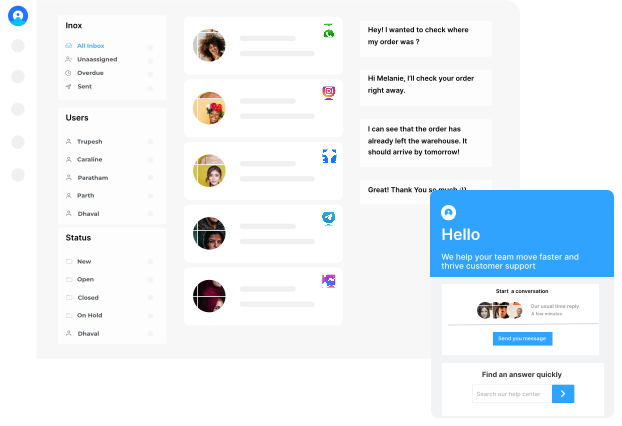
Whether it’s about acquire, engage or support – Omni24 covers all your customer engagement needs in one complete platform.

Copyright ©2026 Veemo All rights reserved.
CA, Los Angeles, Hall Ave, 19011