How to Build a Brand Awareness Strategy and Why It Matters?
Learn what brand awareness is and discover proven strategies to build, measure and leverage it for significant business growth as well as customer loyalty.

Learn what brand awareness is and discover proven strategies to build, measure and leverage it for significant business growth as well as customer loyalty.
It comes with no surprise that these days standing out is more challenging than ever. A staggering 81% of consumers need to trust a brand to consider buying from it and 77% prefer shopping with brands they follow on social media. Without strong brand awareness, businesses risk being overlooked.
Building brand awareness isn’t just about visibility; it’s about building trust and emotional connections with your audience. This blog delves into actionable strategies (such as targeted marketing campaigns, leveraging social media and engaging directly with your audience) to elevate your brand’s presence as well as drive business success.
Brand awareness refers to the extent to which consumers recognize and recall a particular brand. It’s the level of familiarity and association that people have with a company’s name, logo, products, or services. Brand awareness is about creating a lasting impression in the minds of potential customers, making your brand easily identifiable in a crowded marketplace.
High brand awareness can lead to increased trust, as consumers are more likely to choose familiar brands over unknown ones. It also contributes to word-of-mouth marketing, as people tend to recommend brands they know. Strong brand awareness can provide a competitive edge, making it easier to launch new products or enter new markets.
Key objectives:
Building brand awareness is essential for establishing trust and differentiating your business in a competitive market. Here are the key reasons why brand awareness matters:

Attraction of New Customers
Familiarity with your brand makes consumers more likely to consider your products or services. High brand awareness builds trust, even among first-time users, reducing perceived risk and encouraging potential customers to explore your offerings. It acts as a magnet for attracting new buyers.
Higher Perceived Value
A well-known brand often commands higher perceived value. Consumers associate recognition with quality and reliability, making them willing to pay more. This boosts profit margins and strengthens your market position, allowing your brand to stand out as a leader in its segment.
Word-of-Mouth Referrals
Strong brand awareness encourages organic referrals. People familiar with and positive about your brand naturally recommend it to friends, family, colleagues, etc. These personal recommendations carry trust, making word-of-mouth marketing both highly effective and cost-efficient compared to traditional advertising.
Simplified Decision-Making
In a crowded market, consumers choose familiar brands. Recognition acts as a shortcut, reducing the effort and time needed to make a purchase. For businesses, this can mean quicker decisions, higher conversion rates and increased sales volumes.
Consumer Trust
Familiar brands earn consumer trust. Recognition creates comfort, which is crucial as customers face abundant information and skepticism. Trusted brands can better withstand market changes and negative publicity, giving them a competitive edge over lesser-known competitors.
Influencing Brand Loyalty
Repeated exposure builds preference, which can evolve into loyalty. Brand-aware customers consistently choose your products over competitors, even when alternatives exist. Loyalty drives repeat business, increases customer lifetime value and provides a stable base to sustain your brand through challenging periods.
Building brand awareness helps establish a strong market presence. The following strategies offer effective ways to increase brand visibility and recognition.

A strong social media presence is crucial for connecting with your audience, boosting visibility and building relationships. It’s a cost-effective way to reach more people and stay top-of-mind.
Sharing engaging content, responding to comments, running promotions and participating in conversations enables brands to build a community as well as increase awareness effectively.
Actionable tips:
Content marketing positions a brand as an industry authority and provides valuable information to the audience. It builds trust by focusing on helpful insights rather than promotions.
Brands can create blogs, videos and infographics addressing audience needs. Sharing this content across channels drives website traffic, boosts engagement and increases overall brand awareness.
Actionable tips:
Email marketing gives brands a direct way to reach potential and existing customers. It helps nurture leads, share valuable content and stay top-of-mind.
Brands can send newsletters, promotions, product updates and educational content. Segmenting the audience based on preferences or behavior ensures messages are targeted, relevant.
Actionable tips:
Search Engine Optimization (SEO) boosts a brand’s visibility in search results, helping potential customers find it more easily. Effective SEO drives organic traffic and increases brand awareness.
Optimize website content, meta descriptions and tags. Create high-quality content and build authoritative backlinks to improve rankings as well as visibility over time.
Actionable tips:
Community outreach programs let brands engage with their local community, build goodwill and boost visibility. They showcase social responsibility, enhancing reputation while creating positive associations.
Brands can sponsor events, volunteer, or run initiatives. These activities help them gain exposure and media coverage. At the same time, they strengthen their connection with the community and increase overall brand awareness.
Actionable tips:
User-generated content (UGC) offers authentic, relatable content that boosts brand credibility and awareness. It acts as social proof, showing how customers use and enjoy products or services.
Brands can encourage users to share photos, videos, or reviews, then feature this content on social media or marketing materials for authentic representation.
Actionable tips:
Engaging in online communities lets brands connect with their audience where they’re already active. It helps showcase expertise, provide value and build relationships without being overly promotional.
Join forums, social media groups, or platforms like Reddit and Quora, sharing insights as well as helpful answers to boost visibility.
Actionable tips:
Retargeting advertising keeps a brand top-of-mind for people who have already shown interest by visiting its website. It boosts conversion chances and reinforces brand awareness.
Use retargeting pixels to show tailored ads on other sites or social media, targeting users based on the pages or products they viewed.
Actionable tips:
Providing value beyond products strengthens connections with the audience and positions the brand as more than a seller. It boosts loyalty, encourages referrals and attracts new customers.
Try offering free resources, educational content, webinars or tools, establishing authority and keeping the audience engaged even when they’re not buying.
Actionable tips:
PPC advertising helps brands quickly boost visibility for specific keywords or target audiences. It drives immediate traffic and is especially useful for new or lesser-known brands.
Run targeted ads on Google Ads or social media, reaching users based on search queries, demographics, interests, or behaviors for precise and effective exposure.
Actionable tips:
Maximizing brand awareness requires strategic efforts. Implementing effective techniques can significantly enhance your visibility. Here are some key tips to help you achieve:

Develop a Strong Value Proposition
Clearly articulate your unique value proposition to differentiate your brand in the market. Highlight the specific benefits your products or services offer. A compelling value proposition helps potential customers understand why they should choose you over competitors, fostering brand recognition.
Create High-Quality Content
Produce informative and relevant content tailored to your target audience’s needs. This can include whitepapers, case studies and blog posts. High-quality content positions your brand as a thought leader and builds trust, encouraging potential customers to engage as well as remember your brand.
Leverage LinkedIn Effectively
Utilize LinkedIn as a primary platform for professional engagement. Share valuable content, participate in industry discussions and connect with potential clients. A well-maintained LinkedIn presence enhances visibility and credibility, helping to establish relationships within your professional network.
Utilize Email Marketing
Implement targeted email marketing campaigns to nurture leads and maintain relationships with existing customers. Share relevant content, updates and personalized offers. Effective email communication keeps your brand top-of-mind and encourages engagement.
Encourage Customer Advocacy
Develop strong relationships with satisfied customers and encourage them to advocate for your brand. Implement referral programs or request testimonials and case studies. Positive word-of-mouth from existing customers can significantly enhance your brand’s reputation.
Monitor and Analyze Results
Regularly track and analyze your brand awareness efforts using analytics tools. Assess metrics like website traffic, engagement rates and conversion rates to evaluate effectiveness. This data allows you to refine your strategies, ensuring you maximize your brand impact.
Measuring brand awareness is essential for understanding how effectively your brand is recognized in the market. Here are some key metrics to consider:

1. Reach and Impressions
Reach refers to the total number of unique individuals who see your content, while impressions indicate how many times your content is displayed, regardless of whether it was clicked or engaged with.
Monitoring these metrics on social media platforms and other digital channels can help you understand how many people are exposed to your brand. A higher reach often correlates with increased brand visibility.
2. Website Traffic
Analyzing the volume of traffic to your website can provide insights into brand awareness. Tools like Google Analytics allow you to track unique visitors, page views and traffic sources.
A notable increase in direct traffic or referrals may suggest that more people are actively seeking out your brand, indicating growing awareness.
3. Social Media Engagement
Engagement metrics—such as likes, shares, comments and followers—are vital indicators of brand awareness on social platforms. High engagement levels suggest that your content resonates with your audience, leading to greater visibility.
Tools like Sprout Social or Hootsuite can help track these metrics across various platforms, providing a comprehensive view of your brand’s social presence.
4. Brand Mentions
Tracking how often your brand is mentioned across the web—including social media, blogs and news articles—can offer valuable insights into brand awareness. Tools like Google Alerts or Mention can help monitor these mentions.
An increase in brand mentions often indicates growing recognition and interest in your brand among consumers as well as the media.
5. Search Volume
The frequency of searches for your brand name or related keywords can indicate brand awareness.
Tools like Google Trends and keyword research platforms (such as SEMrush) can help you assess how many people are searching for your brand over time. A rise in search volume may suggest that more people are becoming aware of and interested in your brand.
6. Surveys and Polls
Conducting surveys or polls can provide direct insights into consumer awareness and perceptions of your brand.
Questions can assess brand recall, familiarity and overall sentiment. Tools like SurveyMonkey or Typeform can facilitate the collection of this data. This qualitative feedback can be invaluable in understanding how your brand is viewed in the marketplace.
7. Customer Feedback and Reviews
Analyzing customer reviews and feedback on platforms like Google Reviews, Yelp, or social media can offer insights into brand awareness as well as perception.
Positive reviews can enhance brand credibility, while negative feedback can highlight areas for improvement. Monitoring this feedback allows you to gauge how well your brand is resonating with customers.
8. Email Open and Click-Through Rates
If you utilize email marketing, tracking open and click-through rates can provide insights into brand awareness.
High open rates suggest that recipients recognize and are interested in your brand, while click-through rates indicate the effectiveness of your messaging. Tools like Mailchimp or Constant Contact can help analyze these metrics.
Brand awareness is a fundamental pillar of successful marketing and business growth. It’s the gateway to customer engagement, loyalty and ultimately, sales. By implementing a diverse range of strategies, brands can significantly enhance their visibility and recognition in the marketplace.
Building brand awareness is an ongoing process that requires continuous effort, creativity and adaptability. Regularly measuring and analyzing your brand awareness using various metrics allows you to refine your strategies as well as stay ahead.
Remember, a well-recognized brand is not just seen; it’s remembered, trusted and chosen. Invest in your brand awareness today to secure your business’s success tomorrow.

How Brand Awareness Works?
Brand awareness works by creating mental associations between a brand and its key attributes in consumers’ minds. It involves repeated exposure to brand elements like logos, slogans and products through various marketing channels. As consumers encounter the brand more frequently, they become familiar with it, leading to recognition and recall in relevant situations.
Why is brand awareness important?
Brand awareness is crucial because it forms the foundation of consumer decision-making. It helps products stand out in crowded markets, builds trust and influences purchasing decisions. High brand awareness can lead to increased market share, customer loyalty and pricing power. It also facilitates the introduction of new products as well as helps companies weather market fluctuations or negative publicity.
How do companies increase brand awareness?
Companies increase brand awareness through multi-channel marketing strategies. These include consistent visual branding, engaging social media presence, content marketing, influencer partnerships and traditional advertising. They also use public relations, sponsorships and experiential marketing. Providing excellent customer experiences, encouraging word-of-mouth marketing and leveraging SEO for online visibility are other effective tactics for boosting brand awareness.
Is Brand Awareness Different from Brand Recognition?
Yes, brand awareness and brand recognition are different, though related, concepts. Brand awareness is a broader term encompassing both recognition and recall. Brand recognition refers to consumers’ ability to identify a brand when presented with visual or auditory cues. Brand recall is the ability to retrieve a brand from memory when given a product category or need.
 https://omni24.io/wp-content/uploads/2026/09/Social-commerce-scaled.png
1340
2560
Webvision Solution
https://omni24.io/wp-content/uploads/2023/04/Omni-Logo-1.svg
Webvision Solution2026-10-23 12:18:272026-10-23 12:18:27What is Social Commerce and Why Does It Matter?
https://omni24.io/wp-content/uploads/2026/09/Social-commerce-scaled.png
1340
2560
Webvision Solution
https://omni24.io/wp-content/uploads/2023/04/Omni-Logo-1.svg
Webvision Solution2026-10-23 12:18:272026-10-23 12:18:27What is Social Commerce and Why Does It Matter? https://omni24.io/wp-content/uploads/2026/08/AI-Customer-Service-Agents.png
1256
2400
Webvision Solution
https://omni24.io/wp-content/uploads/2023/04/Omni-Logo-1.svg
Webvision Solution2026-09-21 04:48:512026-09-21 04:48:51How to Build an AI Customer Service Agents: 8 Key Steps
https://omni24.io/wp-content/uploads/2026/08/AI-Customer-Service-Agents.png
1256
2400
Webvision Solution
https://omni24.io/wp-content/uploads/2023/04/Omni-Logo-1.svg
Webvision Solution2026-09-21 04:48:512026-09-21 04:48:51How to Build an AI Customer Service Agents: 8 Key Steps https://omni24.io/wp-content/uploads/2026/08/Omnichannel-Conversational-AI.png
1256
2400
Tushar Joshi
https://omni24.io/wp-content/uploads/2023/04/Omni-Logo-1.svg
Tushar Joshi2026-09-16 03:51:072026-09-16 03:51:07How to Build Omnichannel Conversational AI Strategy
https://omni24.io/wp-content/uploads/2026/08/Omnichannel-Conversational-AI.png
1256
2400
Tushar Joshi
https://omni24.io/wp-content/uploads/2023/04/Omni-Logo-1.svg
Tushar Joshi2026-09-16 03:51:072026-09-16 03:51:07How to Build Omnichannel Conversational AI Strategy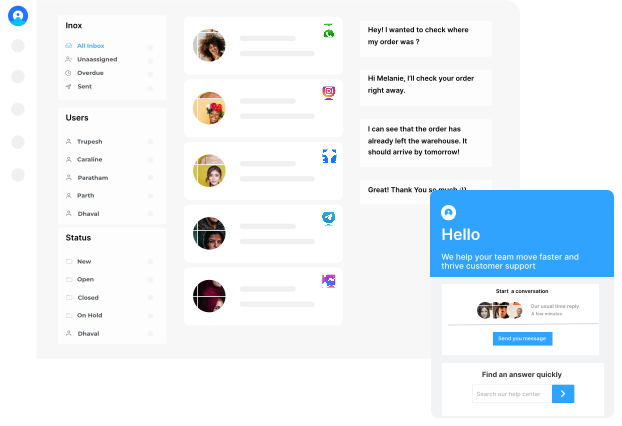
Whether it’s about acquire, engage or support – Omni24 covers all your customer engagement needs in one complete platform.

Copyright ©2026 Veemo All rights reserved.
CA, Los Angeles, Hall Ave, 19011