What is Live Chat Routing and How it Works?
Streamlined guide to chat routing with practical strategies that help teams improve support speed, accuracy as well as customer satisfaction.

Streamlined guide to chat routing with practical strategies that help teams improve support speed, accuracy as well as customer satisfaction.
Customer support teams often struggle to connect customers with the right agents — chats bounce between departments, resolution times stretch out and frustration mounts on both sides. Without smart routing, even expert agents can miss the mark, leaving customers waiting or speaking to someone who doesn’t have the right expertise.
Strategic live chat routing changes all that. By routing conversations based on intent, complexity, and agent skill, companies can deliver faster replies: AI-powered routing cuts response times by ~30% versus manual methods. This not only reduces waiting but helps teams handle more chats efficiently — live chat agents can juggle conversations, lowering support costs per interaction.
Live chat routing is the process of directing incoming customer messages to the most appropriate support agent based on factors like expertise and availability. It ensures customer queries are handled efficiently by connecting them with agents who can best address their specific issues while maintaining balanced workloads across the support team.
Live chat routing begins with automated systems that analyze incoming messages using predetermined rules or AI-powered tools to understand the customer’s intent. These systems evaluate factors like message content and customer history to determine the nature of the query as well as its complexity. Then the system matches the customer with an available agent who has the right skills to handle that specific issue.
The routing process continues with queue management that prioritizes conversations based on urgency and business rules. Some messages might receive immediate attention while others are placed in waiting queues with estimated response times. Throughout this process, the system continually monitors agent workloads to prevent any single agent from becoming overwhelmed with too many simultaneous conversations.
Key Objectives:
Live chat routing helps support teams manage conversations more efficiently by matching customers with the right agents faster. It enhances speed, accuracy and overall service quality.
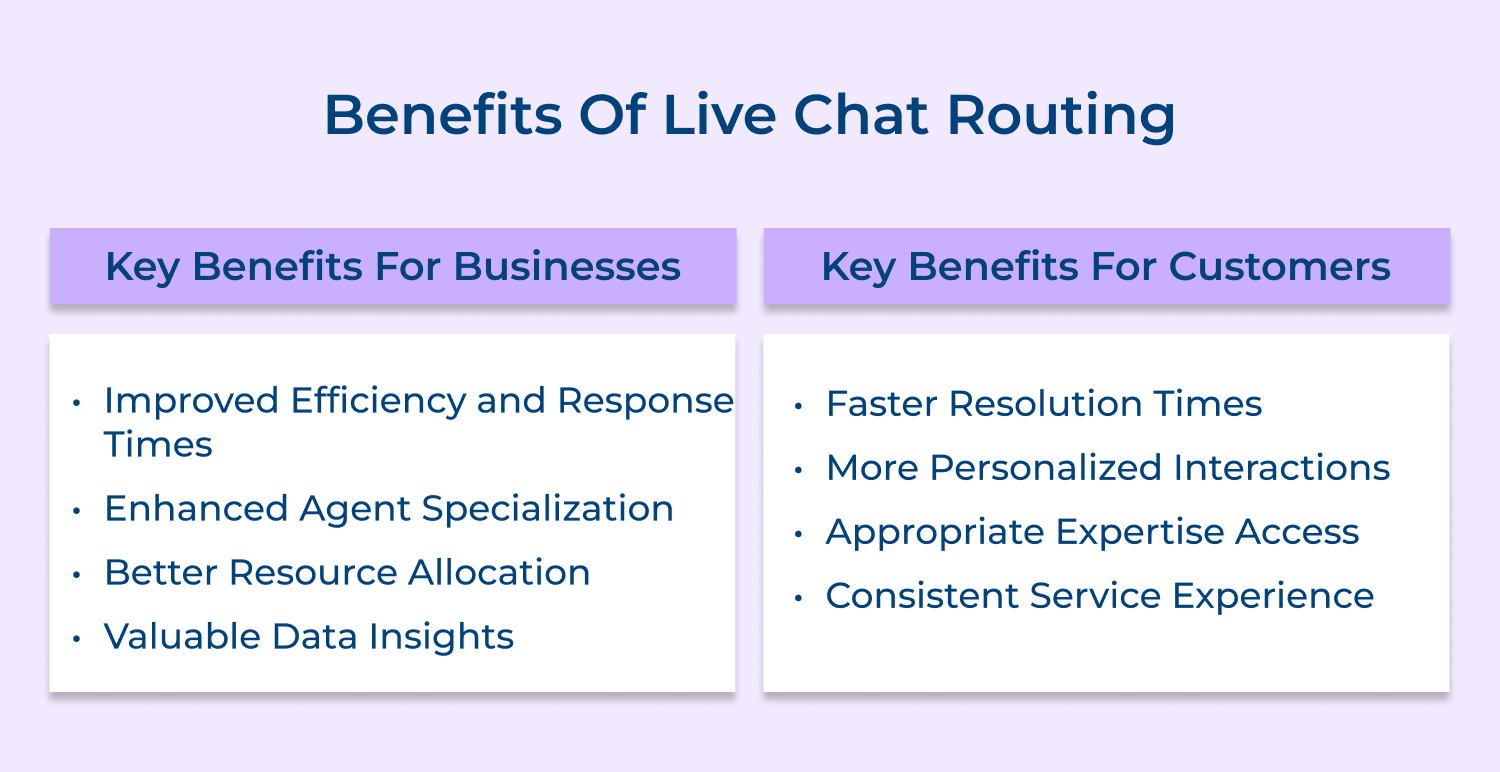
Improved Efficiency and Response Times
A smart chat widget helps route chats to the right agents instantly, eliminating slow manual assignments. With faster routing options, your team can handle more conversations without compromising on quality, ultimately building stronger customer trust.
Enhanced Agent Specialization
Routing options ensure agents only take chats they’re skilled at handling. Instead of guessing through unfamiliar issues, they resolve queries faster—allowing you to build specialized teams for specific products or services.
Better Resource Allocation
Tracking volumes and routing patterns help managers get a clear view of team capacity. This helps distribute chats evenly, prevent overload, and plan staffing during peak times more effectively.
Valuable Data Insights
When you route chats through a structured system, you gain insights into customer issues, agent performance, and resolution trends. These analytics help improve training, fix product gaps, and streamline internal processes.
Brands must prioritize the customer experience perspective because customers now expect personalized, efficient service as standard. When routing is designed with customer needs in mind rather than just operational convenience, it transforms support from a necessary cost center into a competitive advantage that drives loyalty and positive word-of-mouth.
Faster Resolution Times
Customers get connected to chat agents who already understand their type of issue, so they don’t waste time repeating details. This smart matching keeps chat sessions smooth and eliminates unnecessary transfers between teams.
More Personalized Interactions
Routing tools can direct returning users to chat agents they’ve spoken with before. That familiarity creates a warmer, more personal chat session where customers feel remembered—not like just another case number.
Appropriate Expertise Access
When someone has a technical problem, they’re instantly matched with technical specialists. No confusing menus, no bouncing around—just direct access to the right expertise the moment a chat session starts.
Consistent Service Experience
Whether customers reach out in the morning, late evening, or during peak hours, routing ensures they get the same level of quality service. This consistency builds trust and strengthens the overall customer-brand relationship.
Here are eight best practices to help you intelligently route incoming live chat requests and elevate your customer service game.
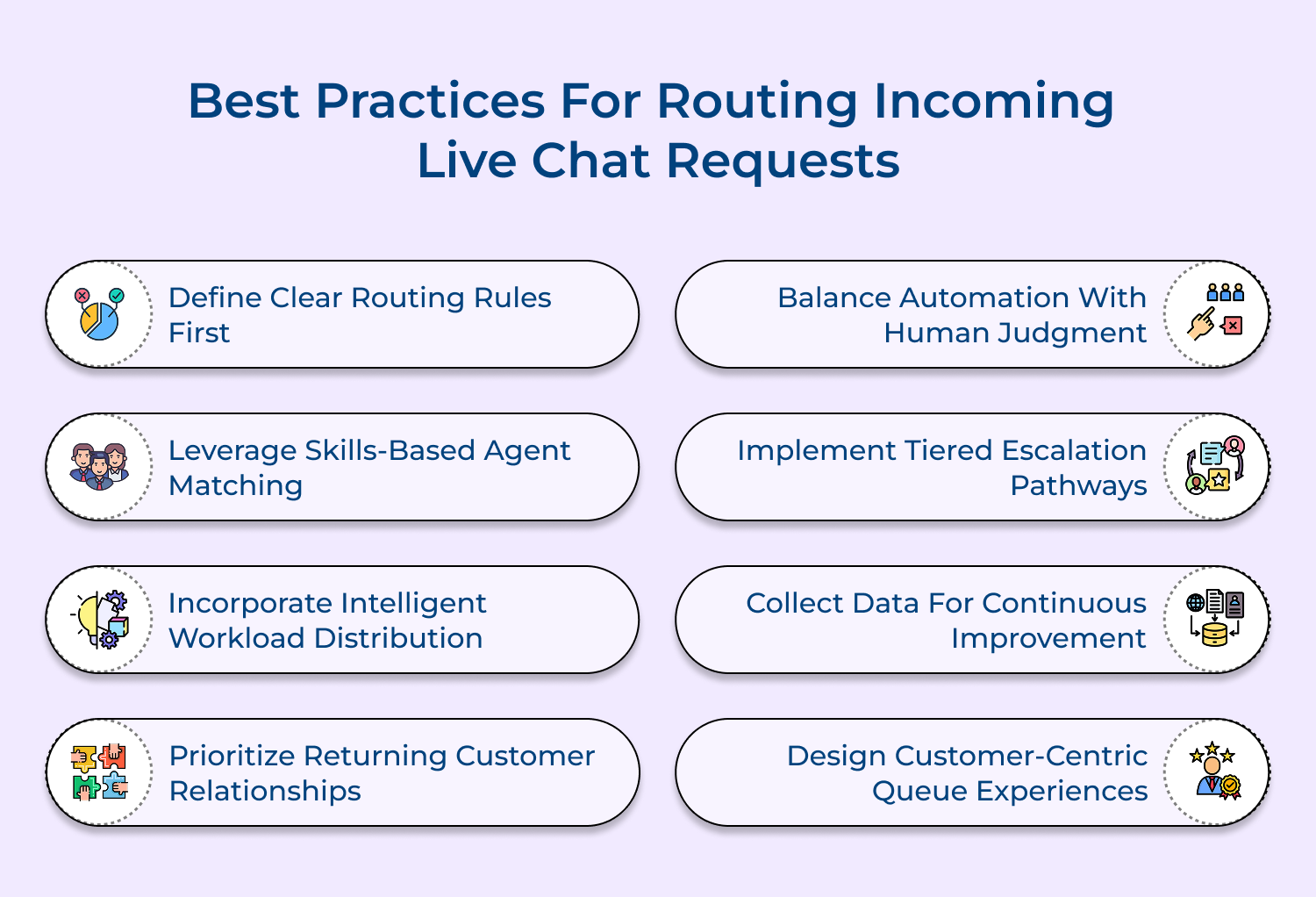
Establishing clear routing rules is the backbone of a smooth and efficient chat support experience. When your routing isn’t structured, customer inquiries bounce around between agents, slowing down resolutions and increasing frustration on both sides.
Here are some routing approaches that work well across different business types:
Ultimately, the right routing rules depend on your business goals, common inquiry patterns, and team capabilities. Start by analyzing what customers ask most and how your team works, then build routing options that simplify, not complicate, the experience.
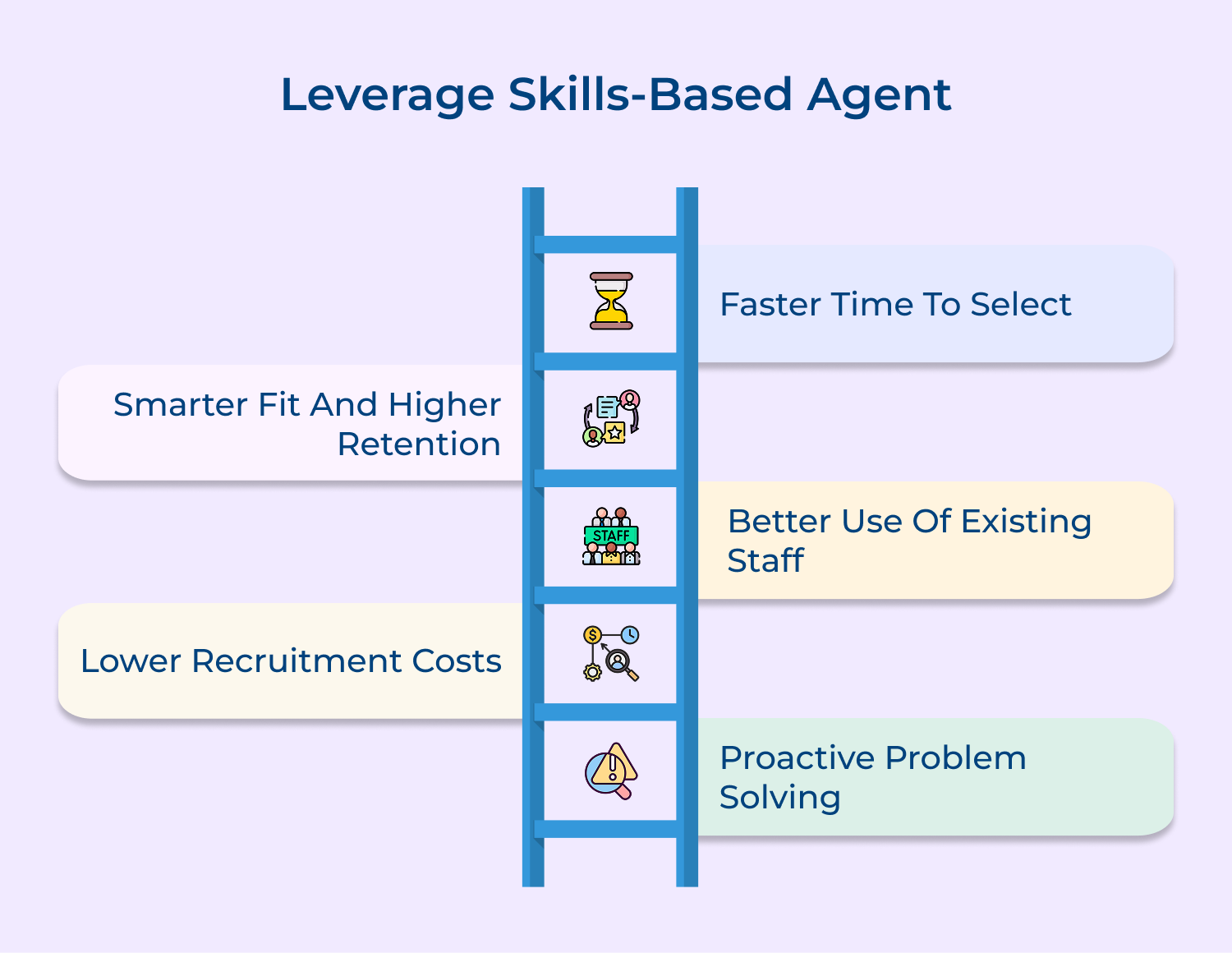
Skills-based agent matching ensures customers reach agents with the exact expertise they need, reducing transfers and speeding up resolutions.
This checklist helps you evaluate team capabilities, uncover skill gaps, and build a reliable framework for matching agents to the right conversations.
Without it, your routing system may misalign with real agent strengths, leading to inefficient support.
Skills-Based Matching Assessment Checklist:
When implementing skills-based routing, remember that skills evolve over time and require ongoing management. Create pathways for agents to develop new competencies through training and shadowing opportunities. Your routing system should grow with your team rather than locking agents into fixed skill categories.
Intelligent workload distribution helps support teams manage conversation volume effectively by balancing chats across agents and preventing burnout. It ensures customers get timely responses while agents maintain a manageable workload. Not all chat sessions require the same effort, so smart distribution adjusts assignments to create a smooth, sustainable workflow for everyone.
Here’s how effective workload distribution works:
For example, a mid-sized e-commerce brand facing a 40% spike in chat volume during flash sales uses intelligent distribution to trigger five extra agents when wait times exceed three minutes, preventing cart abandonment and improving conversions.
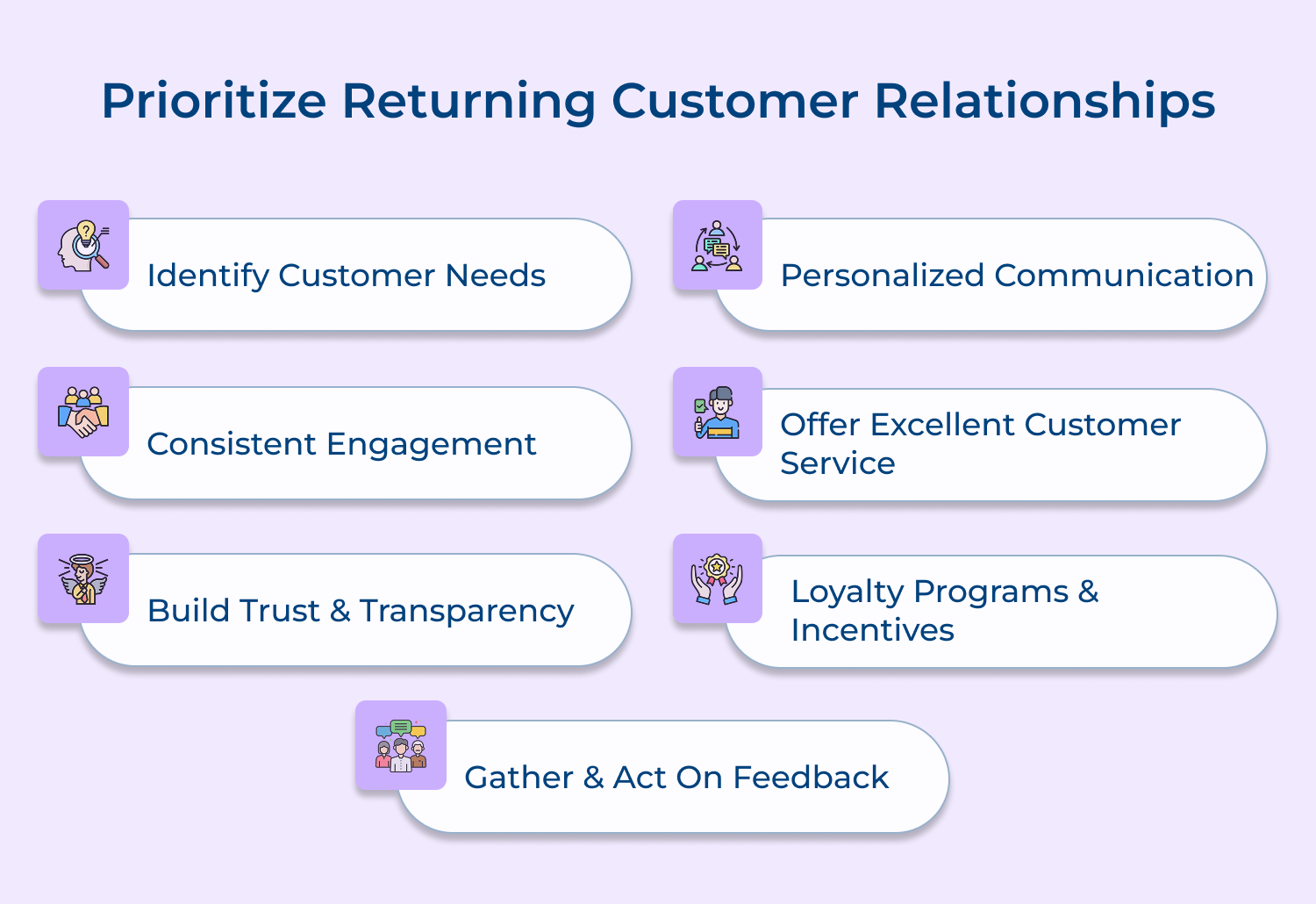
Prioritizing returning customers means routing them back to agents they’ve already spoken with. This makes support feel personal and saves customers from repeating their history or issues. It also leads to faster, smoother resolutions.
Store past interactions in your CRM and use them as a routing factor. When a customer returns, the system should automatically try to connect them to the same agent. If that agent isn’t available, the next agent should receive the full conversation history so the customer doesn’t start from scratch.
Pro tips:
Balancing automation with human judgment creates a routing system that leverages technology’s efficiency while preserving the flexibility of human decision-making. This hybrid approach ensures straightforward cases move quickly through automated channels. Complex or sensitive situations receive the detailed attention that only human agents can provide. Chatbots and AI serve as effective first-line responders for chat routing by:
These AI systems help by handling routine classification tasks consistently and instantaneously. They can process hundreds of incoming messages simultaneously using natural language processing to understand customer needs and direct them to the right service path without bottlenecks.
Consider a telecommunications company whose AI system identifies billing queries with 95% accuracy and routes them directly to the billing team. However, when a customer mentions both “billing issue” and “considering cancellation,” the system flags this for supervisor review to ensure proper retention protocol.
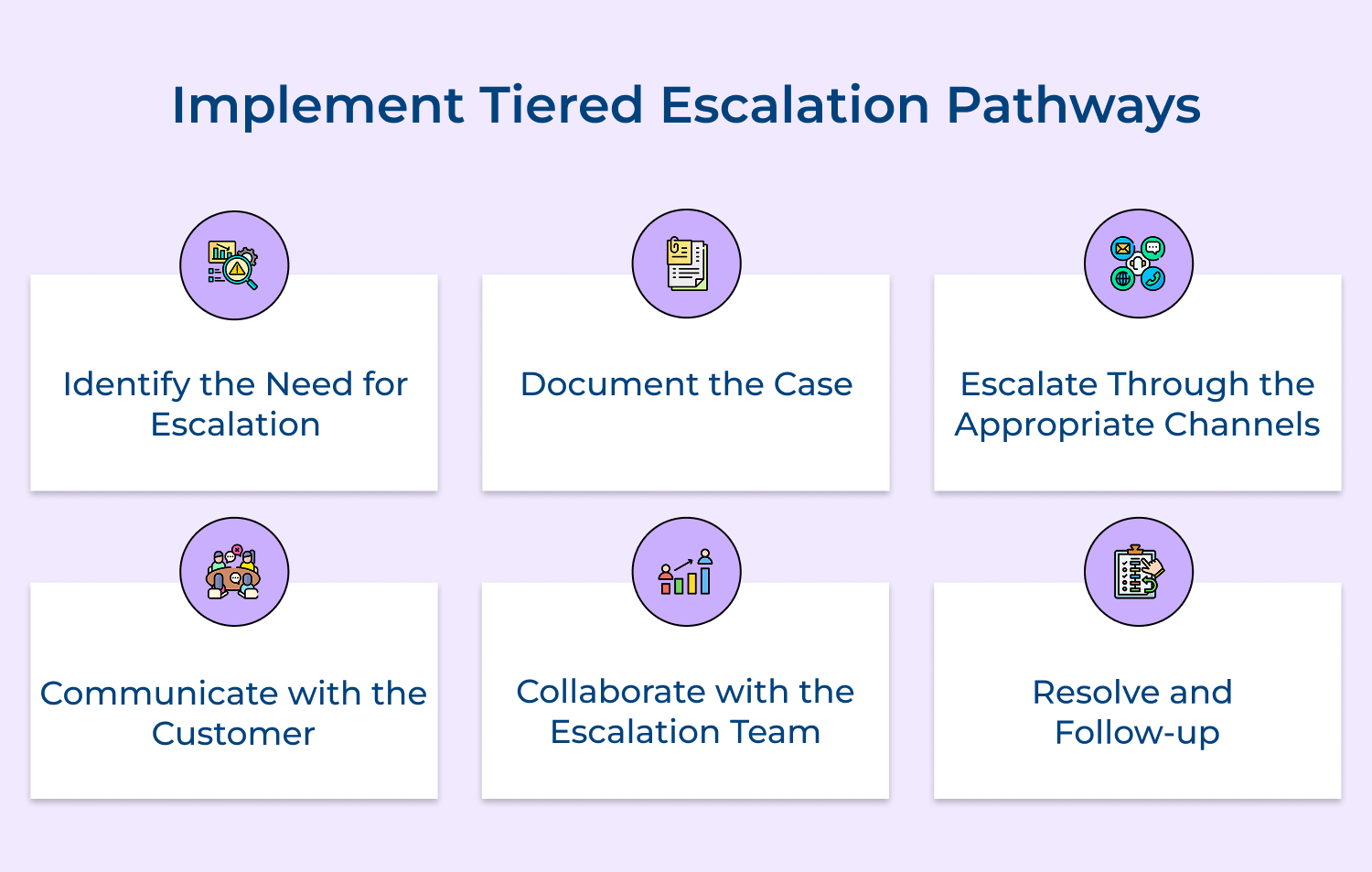
Implementing tiered escalation pathways gives your support team a clear structure for moving conversations to higher levels when needed. It ensures complex issues get the right attention without overwhelming specialist teams or creating inconsistent experiences for customers. Clear escalation rules also remove guesswork, helping agents make consistent decisions no matter who handles the initial chat.
Here’s how to set practical escalation criteria:
It also helps to define expected response times for each tier. Quick replies work for simple issues, while advanced cases may take longer—but the timeline should always be communicated. Finally, include clear handoff notes so customers never have to repeat themselves.
Collecting and analyzing routing performance data creates a foundation for ongoing optimization of your chat support system. This evidence-based approach reveals what’s working well and what needs adjustment, allowing you to refine your routing strategy systematically. Below are some data collection method:
Designing customer-centric queue experiences means acknowledging that customers will sometimes have to wait while making that experience clear, predictable, and low-friction. The goal is to keep customers informed, reduce frustration, and prevent drop-offs during high-volume periods.
Provide Accurate Wait Estimates
Share realistic wait times based on current volume and agent availability. Update these estimates as queues change, and show both position in line as well as estimated wait time so customers understand their progress.
Offer Alternative Contact Options
If waits become long, offer email, self-service articles, or callback options. Clearly explain how each option works and the expected response time so customers can choose what works best.
Maintain Engagement During Waits
Use progress indicators that show real movement in the queue. Share helpful content like product tips or FAQs, and collect information upfront so agents can begin assessing the issue before joining the chat. This keeps customers engaged and helps speed up resolutions once the chat starts.
Let’s delve into the most common obstacles businesses face regarding live chat routing and explore potential solutions to ensure your customers’ experiences are smooth.
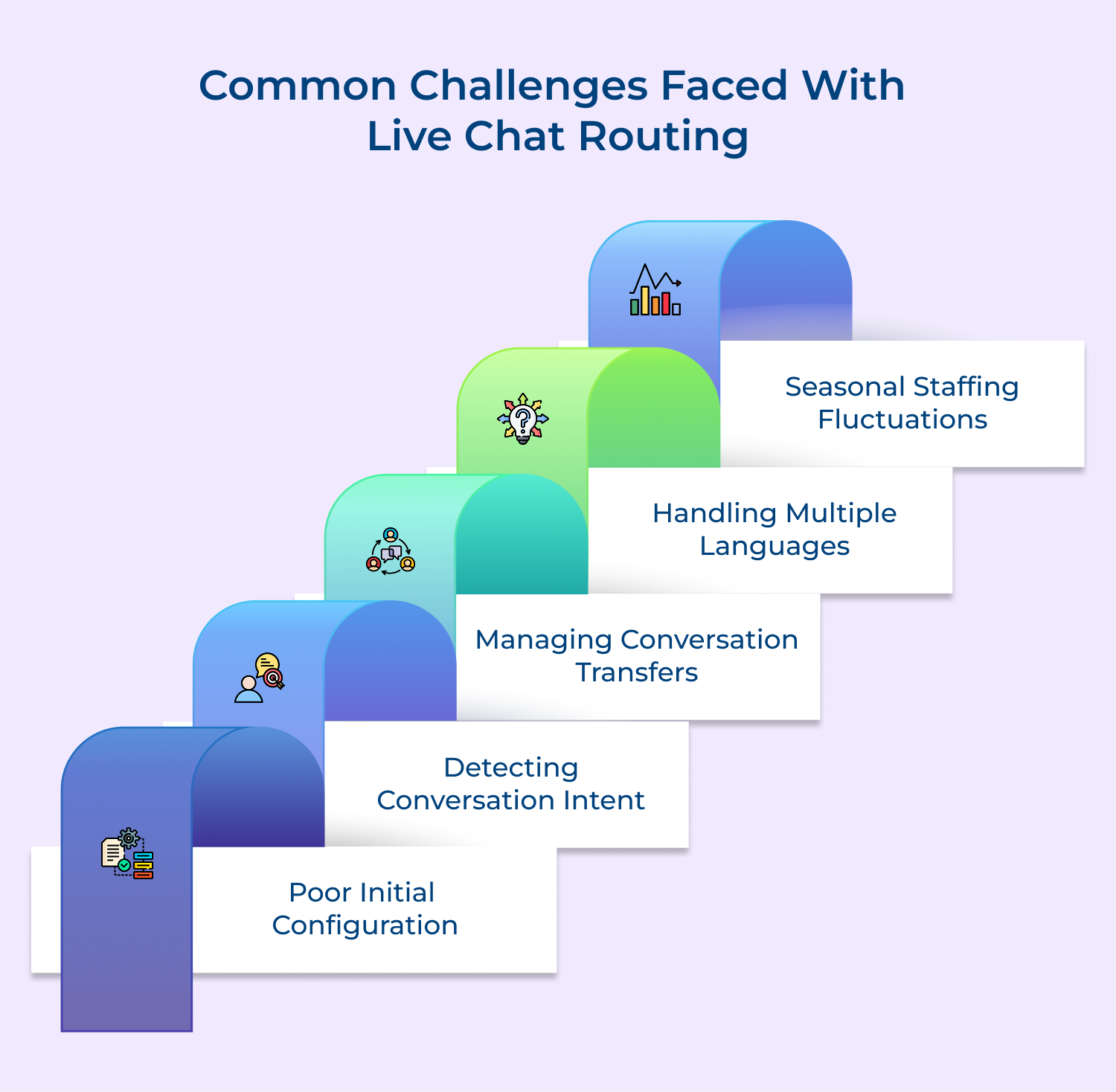
Challenge 1: Poor Initial Configuration
Many organizations rush into implementing chat routing without first understanding their customer inquiry patterns as well as support team capabilities. This leads to routing rules that don’t match actual business needs, creating inefficiencies where simple issues get routed to specialized agents while complex inquiries end up with inadequately trained staff.
Challenge 2: Detecting Conversation Intent
Chat systems often struggle to accurately determine what customers actually need from their initial messages. Unlike phone systems having clear menu options, chat inquiries frequently begin with vague statements that make automated categorization difficult. Without proper intent detection, even the most sophisticated routing rules will direct conversations incorrectly.
Challenge 3: Managing Conversation Transfers
When conversations need to move between agents or departments, many routing systems create disjointed experiences. Customers become frustrated when they must repeat information, context gets lost between transfers, and resolution times increase dramatically. Each transfer represents a potential breaking point in the customer experience.
Challenge 4: Handling Multiple Languages
Global support operations face unique challenges with multilingual routing requirements. Many systems struggle to accurately detect languages, maintain proper coverage across time zones, and ensure consistent experiences regardless of which language customers use. This complexity increases exponentially with each additional supported language.
Challenge 5: Seasonal Staffing Fluctuations
Support teams with seasonal hiring face difficulties maintaining routing effectiveness as team composition changes. Temporary agents require rapid onboarding into routing systems, skill profiles need frequent updates, and routing rules must adapt to changing team capabilities throughout seasonal cycles.
Let’s explore some of the solution for above challenges:
Artificial intelligence is transforming customer conversations by bringing sophisticated decision-making to live chat routing that goes beyond basic rules-based systems.
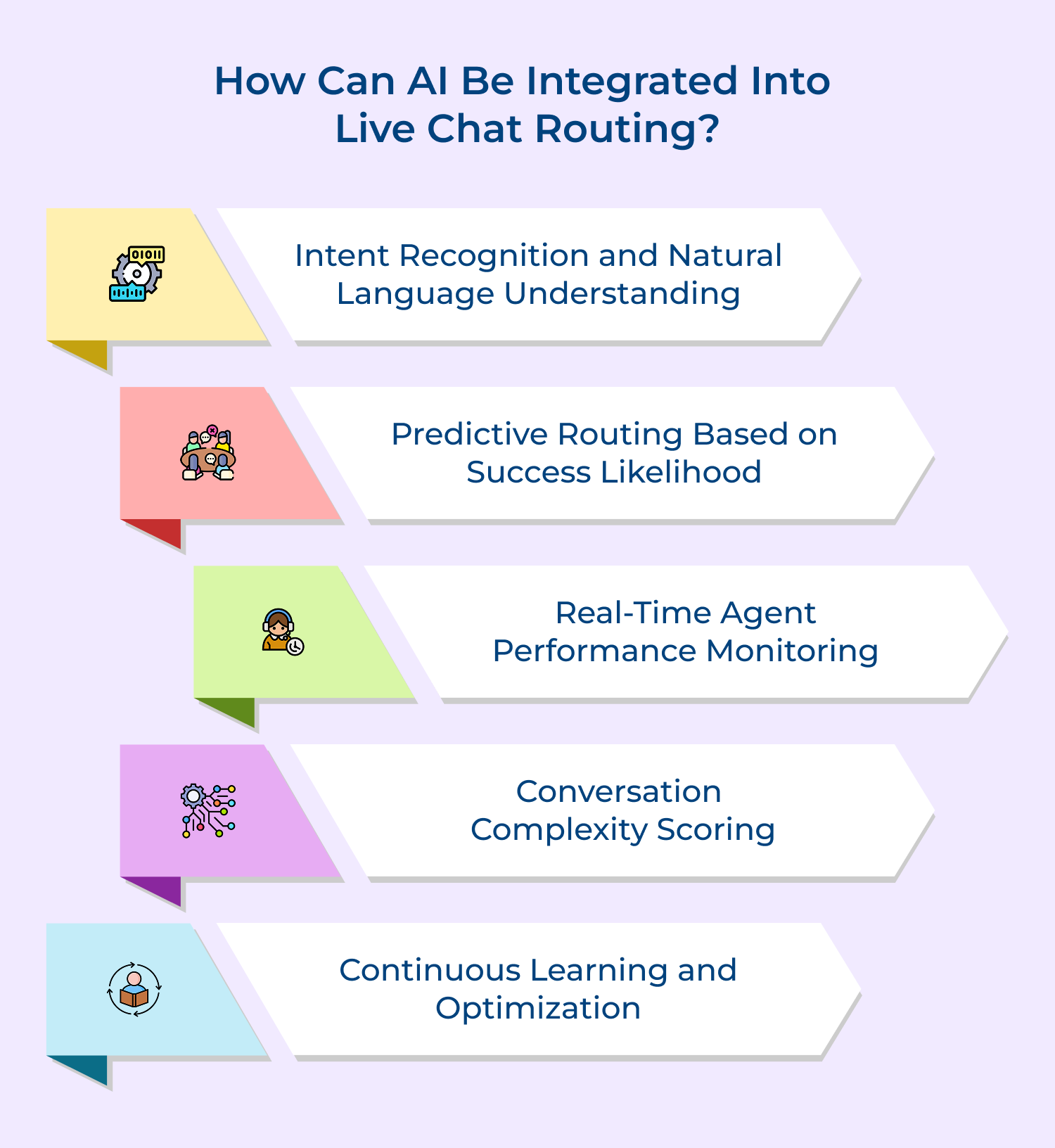
AI systems analyze the actual meaning behind customer messages rather than just scanning for keywords. These systems understand context, sentiment, and implied requests even when customers express themselves unclearly, ensuring conversations reach the right department on the first try.
Advanced AI predicts which agent-customer pairings will most likely succeed based on historical conversation data. The system matches current customers with agents who have demonstrated success for similar issues or communication styles, significantly improving first-contact resolution rates.
AI continuously evaluates agent metrics and emotional state to make dynamic routing decisions. The system detects when agents might be experiencing fatigue and can temporarily adjust routing to give them simpler conversations, ensuring consistent customer experiences regardless of timing.
AI evaluates both technical difficulty and emotional complexity of incoming conversations to determine appropriate routing. The system distinguishes between straightforward questions and multifaceted issues requiring senior staff, ensuring efficient use of specialized talent throughout your support team.
AI routing systems improve automatically by analyzing conversation outcomes and adjusting their decision-making processes. These systems identify successful patterns, detect inefficiencies, and recognize emerging topic clusters before human managers would notice them.
Real-life examples make it easier to understand how live chat routing works in everyday business scenarios. These cases show how smart routing improves overall customer experience.
Zappos: Relationship-Based Routing
Zappos routes returning customers to agents they’ve previously interacted with whenever possible. Their system recognizes customer accounts and prioritizes maintaining relationships by connecting customers with familiar agents who already understand their preferences as well as purchase history.
This relationship-focused approach has strengthened Zappos’ legendary customer loyalty. By creating continuity across interactions, customers develop genuine connections with specific agents, leading to higher satisfaction ratings and increased repeat purchases.
American Express: Tiered Priority Routing
American Express implements sophisticated tiered routing based on card membership level and conversation context. Their system detects both explicit requests and subtle indicators of customer intent to direct conversations to specialized teams for different membership tiers.
This tiered approach has reinforced American Express’s premium brand positioning and justifies their annual membership fees. Customers perceive tangible benefits from their membership level through superior service experiences, resulting in higher retention rates.
Delta Air Lines: Proactive Issue Routing
Delta uses predictive routing when service disruptions occur by proactively identifying affected customers. Their system detects flight delays or cancellations and routes incoming conversations from impacted passengers to specialized disruption teams before customers even mention the issue.
This anticipatory approach has transformed potentially negative experiences into opportunities for brand differentiation. By addressing the actual issue immediately without requiring customer explanation, Delta turns service recovery into a competitive advantage that builds goodwill even during challenging situations.
Effective live chat routing transforms customer support from a frustrating game of chance into a precision-targeted experience. By intelligently directing conversations based on customer needs, agent skills, and business priorities, routing systems create the foundation for efficient resolutions while building meaningful relationships that extend beyond individual interactions.
The best routing systems balance technological automation with human judgment, creating experiences that feel both efficient as well as personal. As AI capabilities continue advancing, the future of chat routing promises even more intelligent matching that anticipates customer needs before they’re expressed, turning support interactions into opportunities for deeper connection and loyalty.

1. What is live chat routing and why is it important for my business?
Live chat routing is the process of directing customer conversations to the most appropriate support agents based on factors like expertise, availability, and customer needs. It’s crucial because it significantly reduces resolution times, improves first-contact resolution rates, and creates more satisfying experiences for both customers as well as agents by ensuring the right issues reach the right people consistently.
2. How does skills-based routing differ from traditional queue-based routing?
Skills-based routing matches conversations to agents based on their specific expertise areas rather than placing all chats in a single queue. Traditional queue routing simply assigns chats in sequential order to the next available agent regardless of their skills. Skills-based systems create more efficient matches by considering what each agent knows best, reducing transfers and enabling faster, more accurate responses.
3. Can live chat routing systems integrate with our existing CRM and support tools?
Most modern routing platforms offer integration capabilities with popular CRM systems, ticketing platforms, and knowledge bases. These integrations allow routing decisions to incorporate customer history, purchase records, and previous interactions. The depth of integration varies by provider, but most support standard API connections and pre-built connectors for major business systems like Salesforce, Zendesk, HubSpot, etc.
4. How can we measure if our chat routing system is working effectively?
Effective routing systems can be evaluated through several key metrics: reduction in transfer rates between agents, improvement in first-contact resolution percentages, decreased average handling times, and higher customer satisfaction scores. Agent feedback about receiving appropriately matched conversations and reduced queue wait times for customers indicate your routing system is creating efficient connections.
5. Does implementing AI-powered routing require a complete overhaul of our support processes?
Many AI routing solutions can be implemented incrementally alongside existing processes without requiring a complete system replacement. Organizations typically start with basic intent detection and gradually add more sophisticated capabilities like predictive routing as well as dynamic workload balancing. The implementation approach should align with your team’s technical capabilities and comfort with new technologies rather than forcing disruptive changes.
6. How do we balance automated routing with maintaining personal customer relationships?
Creating relationship-based routing rules that prioritize previous agent-customer connections is the key to balancing automation with personalization. Your system should first attempt to match returning customers with familiar agents before applying other routing criteria. For new customers, collect preference information early in the conversation to enable more personalized routing decisions while still leveraging the efficiency benefits of automation.
 https://omni24.io/wp-content/uploads/2026/09/Social-commerce-scaled.png
1340
2560
Webvision Solution
https://omni24.io/wp-content/uploads/2023/04/Omni-Logo-1.svg
Webvision Solution2026-10-23 12:18:272026-10-23 12:18:27What is Social Commerce and Why Does It Matter?
https://omni24.io/wp-content/uploads/2026/09/Social-commerce-scaled.png
1340
2560
Webvision Solution
https://omni24.io/wp-content/uploads/2023/04/Omni-Logo-1.svg
Webvision Solution2026-10-23 12:18:272026-10-23 12:18:27What is Social Commerce and Why Does It Matter? https://omni24.io/wp-content/uploads/2026/08/AI-Customer-Service-Agents.png
1256
2400
Webvision Solution
https://omni24.io/wp-content/uploads/2023/04/Omni-Logo-1.svg
Webvision Solution2026-09-21 04:48:512026-09-21 04:48:51How to Build an AI Customer Service Agents: 8 Key Steps
https://omni24.io/wp-content/uploads/2026/08/AI-Customer-Service-Agents.png
1256
2400
Webvision Solution
https://omni24.io/wp-content/uploads/2023/04/Omni-Logo-1.svg
Webvision Solution2026-09-21 04:48:512026-09-21 04:48:51How to Build an AI Customer Service Agents: 8 Key Steps https://omni24.io/wp-content/uploads/2026/08/Omnichannel-Conversational-AI.png
1256
2400
Tushar Joshi
https://omni24.io/wp-content/uploads/2023/04/Omni-Logo-1.svg
Tushar Joshi2026-09-16 03:51:072026-09-16 03:51:07How to Build Omnichannel Conversational AI Strategy
https://omni24.io/wp-content/uploads/2026/08/Omnichannel-Conversational-AI.png
1256
2400
Tushar Joshi
https://omni24.io/wp-content/uploads/2023/04/Omni-Logo-1.svg
Tushar Joshi2026-09-16 03:51:072026-09-16 03:51:07How to Build Omnichannel Conversational AI Strategy
Whether it’s about acquire, engage or support – Omni24 covers all your customer engagement needs in one complete platform.

Copyright ©2026 Veemo All rights reserved.
CA, Los Angeles, Hall Ave, 19011