How Conversational Analytics Improves CX: 10 Proven Ways
Conversational analytics is important because it reveals customer needs. Leveraging these insights helps businesses enhance experiences and drive growth.

Conversational analytics is important because it reveals customer needs. Leveraging these insights helps businesses enhance experiences and drive growth.
Are you struggling to understand your customers’ true needs?
Many businesses miss out on valuable insights because they don’t analyze customer conversations effectively. Without this understanding, responding to customer issues can feel like a guessing game.
Businesses using conversation analytics see up to 20% higher customer satisfaction through real-time sentiment analysis and multichannel insights.
Conversational analytics provides the solution by turning every interaction into valuable data. It helps businesses optimize customer service, improve personalization and drive growth by analyzing real-time conversations.
Let’s explore how you can leverage conversational analytics for impactful business decisions.
Conversational analytics is a technology-driven approach that analyzes voice-text-based conversations between customers and businesses to extract meaningful insights.It combines natural language processing (NLP), machine learning, speech recognition to interpret, categorize, derive actionable intelligence from dialogues occurring across multiple channels like chatbots, call centers, social media and messaging platforms.
Conversations represent a goldmine of unstructured data containing customer sentiments, pain points, preferences and behaviors. Conversational analytics transforms these interactions into structured, quantifiable insights that drive business decisions.
Key objectives:
Unlock smarter decisions, deeper customer insights and real-time intelligence that transforms how your business understands every conversation.
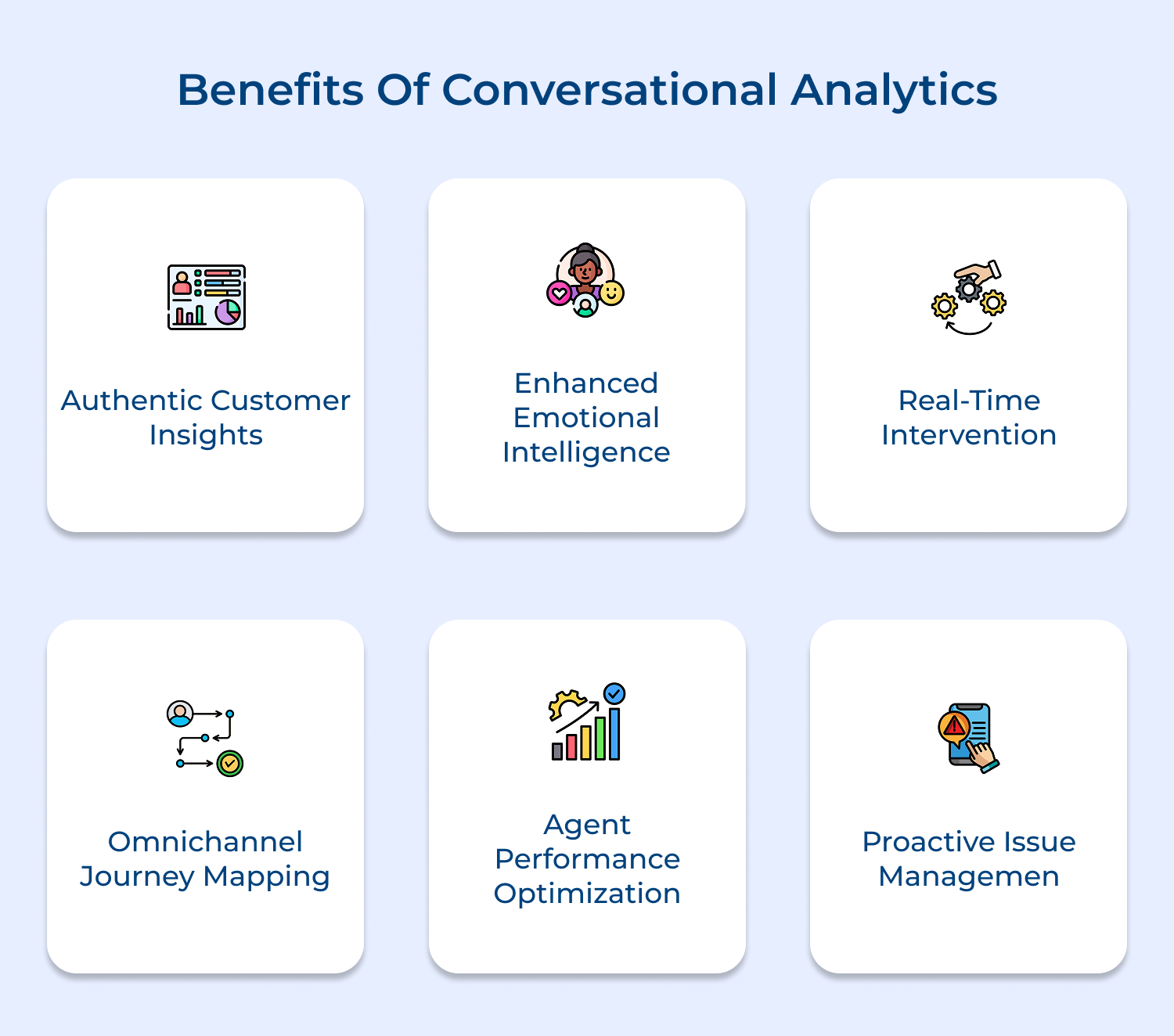
1. Authentic customer insights: Conversational analytics identifies patterns in customer interactions, helping businesses understand pain points and preferences naturally during conversations. Companies gain authentic insights that drive meaningful improvements without imposing additional surveys on customers.
2. Enhanced emotional intelligence: Analysis of conversation tone, sentiment and content provides businesses with deeper emotional intelligence about customer feelings during interactions. Organizations can develop more empathetic responses and relationship-building opportunities that traditional metrics typically miss.
3. Real-time intervention: Real-time analysis enables companies to intervene during problematic customer interactions before escalation occurs. Support teams can transform potential negative experiences into positive outcomes, demonstrating responsive customer service when it matters most.
4. Omnichannel journey mapping: Tracking conversation metrics across multiple channels creates a comprehensive view of the customer journey. Companies can identify friction points and implement strategic improvements to deliver seamless omnichannel experiences for their customers.
5. Agent performance optimization: Agent performance analysis reveals successful conversation techniques and coaching opportunities throughout customer interactions. Teams can adopt proven best practices that improve first-call resolution rates and elevate customer satisfaction scores consistently.
6. Proactive issue management: Automated categorization of customer inquiries uncovers trending topics and emerging issues before widespread impact. Organizations can respond proactively to market changes and evolving customer needs, staying ahead of potential problems.
Conversational analytics improves CX by uncovering customer insights and identifying pain points. It enables businesses to personalize interactions and enhance overall satisfaction.
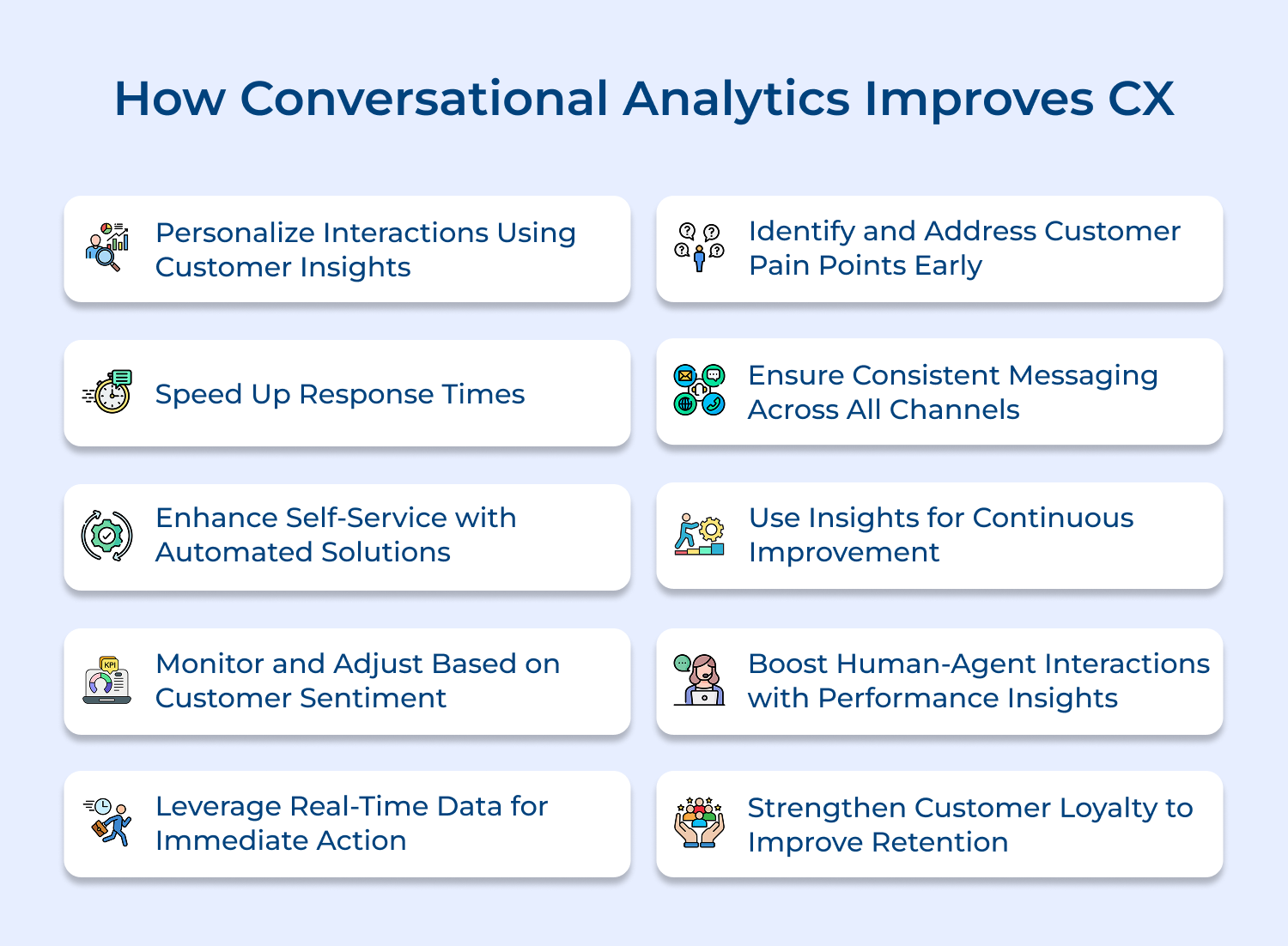
Personalizing interactions means tailoring communication based on customer behavior, preferences and past interactions, all powered by conversational analytics.
Personalized experiences make customers feel valued, which increases their satisfaction and strengthens their relationship with your brand. It also leads to higher engagement and drives repeat business.
You can use analytics to gather customer data and customize responses based on their preferences, needs or past purchases, making each interaction more relevant.
Pro tips:
Speeding up response times means tracking customer interactions to identify delays and streamline communication for quicker service.
Customers expect fast service and delays can cause frustration. Quicker response times reduce this frustration and improve customer satisfaction, leading to better overall experiences.
Monitor customer interactions in real time to identify slow responses. Automate certain replies and optimize workflows to ensure a quicker turnaround time.
Pro Tips:
Enhancing self-service involves creating automated solutions like chatbots or FAQ pages to help customers find answers on their own.
More customers prefer solving issues independently. Offering easy-to-access self-service options saves time, improves satisfaction and reduces the burden on customer service teams.
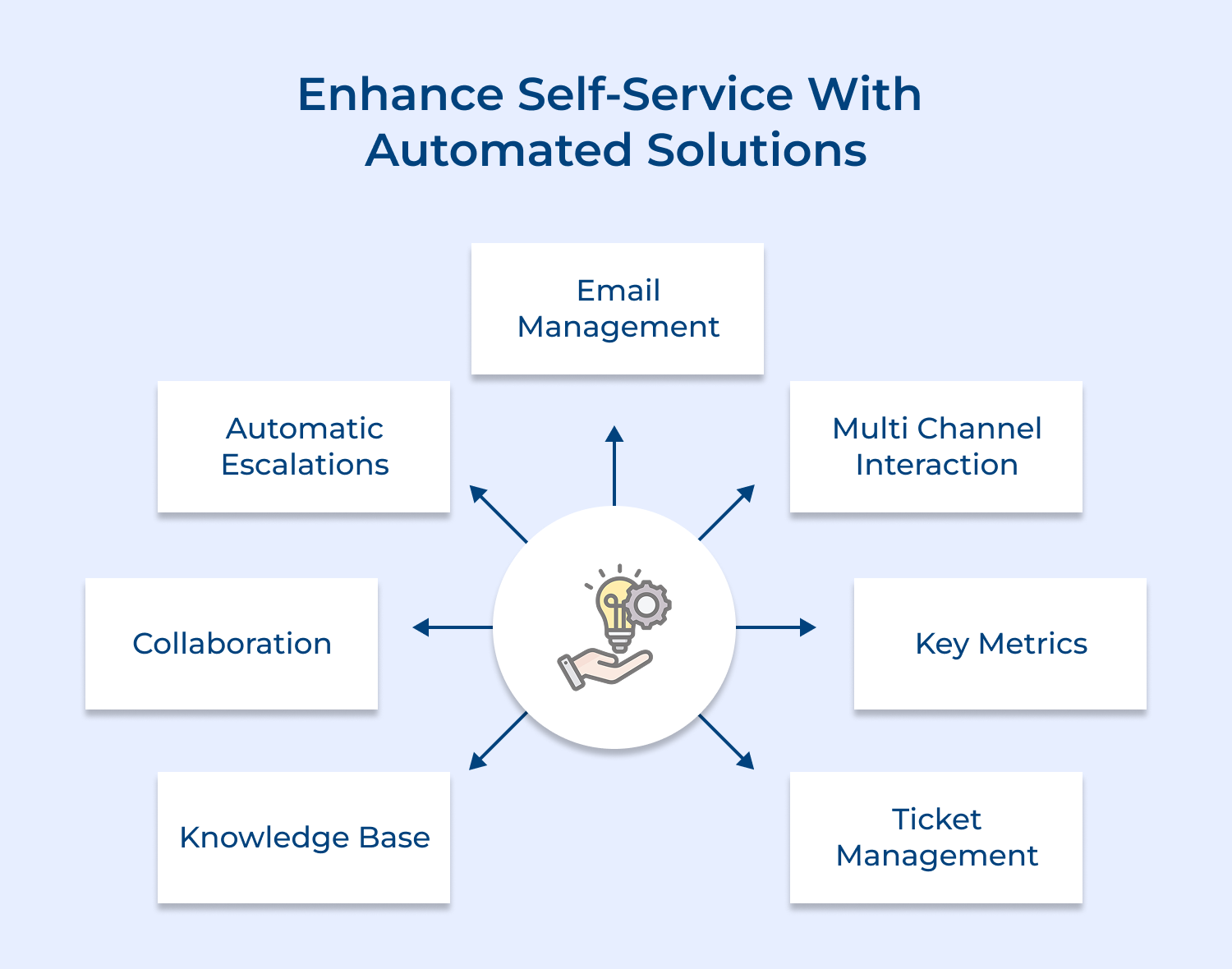
Identify the most common customer inquiries and create automated responses or knowledge resources. Use conversational AI to guide customers through self-service options.
Actionable Tips:
Monitoring customer sentiment means analyzing the tone or emotion of customer interactions to gauge their feelings and adjust responses accordingly.
Understanding customer sentiment helps you respond appropriately. Addressing negative emotions early can prevent dissatisfaction, while nurturing positive sentiment improves customer loyalty.
Use sentiment analysis tools to track customer moods during interactions. When negative sentiment is detected, intervene quickly to resolve the issue and improve the experience.
Pro tips:
Real-time data allows businesses to analyze customer interactions instantly, enabling immediate action to address customer needs.
Real-time insights help businesses act quickly, providing relevant solutions and responding to customer queries before they turn into bigger problems. It improves service quality and customer satisfaction.
Monitor conversations in real time using analytics tools. Use this data to resolve issues promptly, offer proactive support or adjust services to meet customer expectations.
Pro Tips:
Identifying customer pain points means recognizing recurring issues in conversations and addressing them proactively.
Detecting pain points early allows businesses to resolve problems before they escalate. Proactive solutions improve customer satisfaction and prevent frustration from building up.
Analyze customer conversations for patterns of recurring problems. Use this information to refine processes or improve your offerings to eliminate these pain points.
Pro Tips:
Ensuring consistent messaging means aligning communication across all customer touchpoints, including chat, email and social media.
Consistency in messaging builds trust with customers. It creates a seamless experience across all channels, making it easier for customers to understand and engage with your brand.
Monitor interactions across all communication platforms to ensure responses are consistent. Use a centralized platform to manage communication and ensure your messaging remains aligned.
Actionable Tips:
Using insights for continuous improvement involves analyzing customer data to identify areas where communication, service or products can be improved.
Continuous improvement allows businesses to stay ahead of customer expectations. It helps you adapt and refine your strategies to consistently deliver exceptional service.
Evaluate customer conversations regularly to identify trends. Use the insights to improve processes, fine-tune customer service practices and enhance the customer journey.
Pro Tips:
Boosting human-agent interactions means using performance insights from conversational analytics to improve agent communication skills and effectiveness.
Performance insights help agents improve their efficiency and customer service quality. Better agent interactions lead to increased customer satisfaction and enhance overall service delivery.
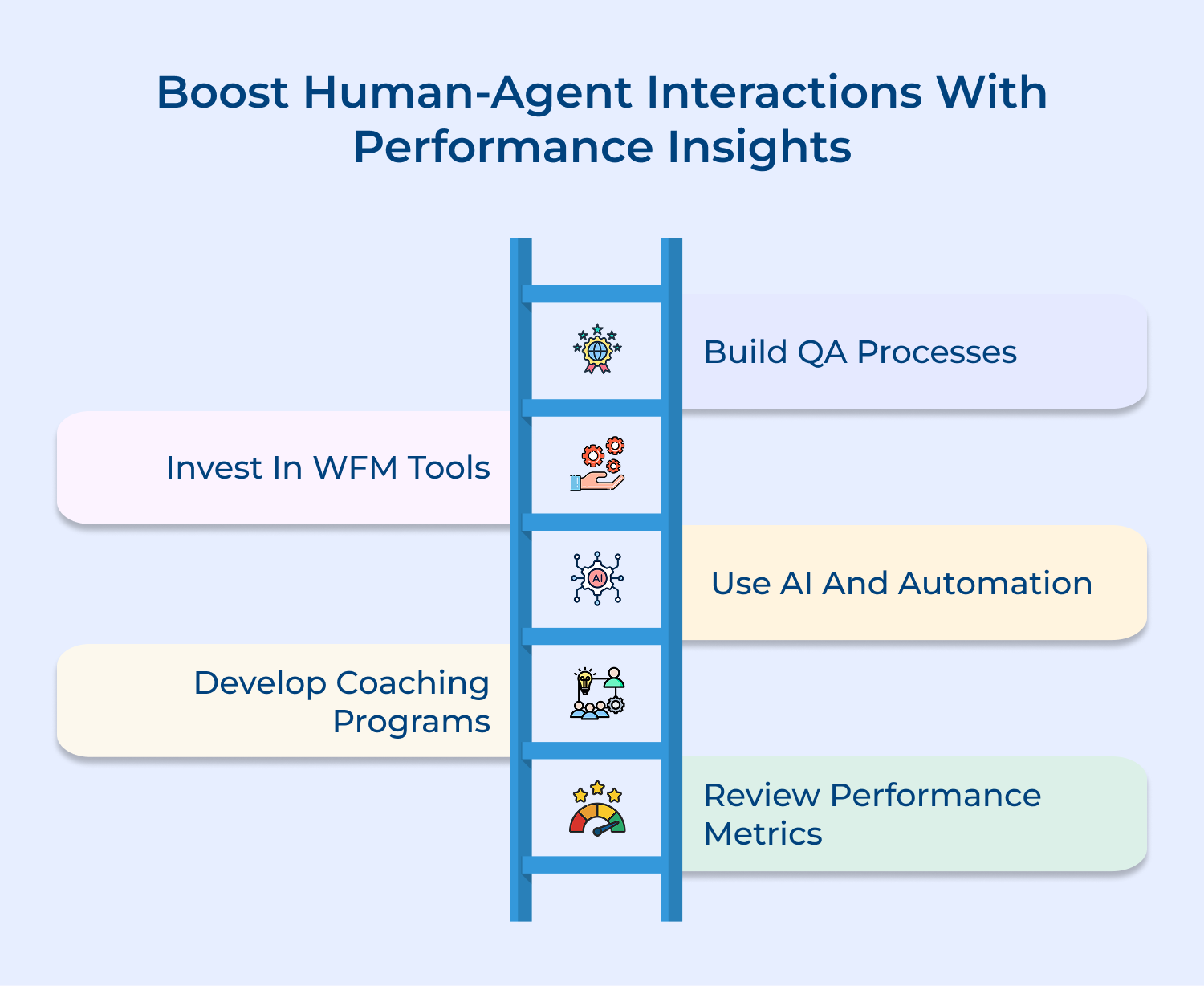
Track agent performance based on customer feedback and analyze data on response times accuracy. Offer agents guidance and training to improve their skills.
Pro Tips:
Strengthening customer loyalty means using insights from conversational analytics to create personalized and responsive interactions that encourage customers to stay loyal.
Loyal customers are more likely to return, refer others and spend more over time. Offering personalized service improves retention, increases lifetime value and boosts brand advocacy.
Use data to personalize interactions, offer targeted promotions and provide proactive support. By showing customers they are valued, you build stronger loyalty and satisfaction.
Pro Tips:
Conversational analytics tools analyze customer interactions to uncover insights, trends and sentiments. They help businesses improve experiences, resolve issues faster and optimize performance.
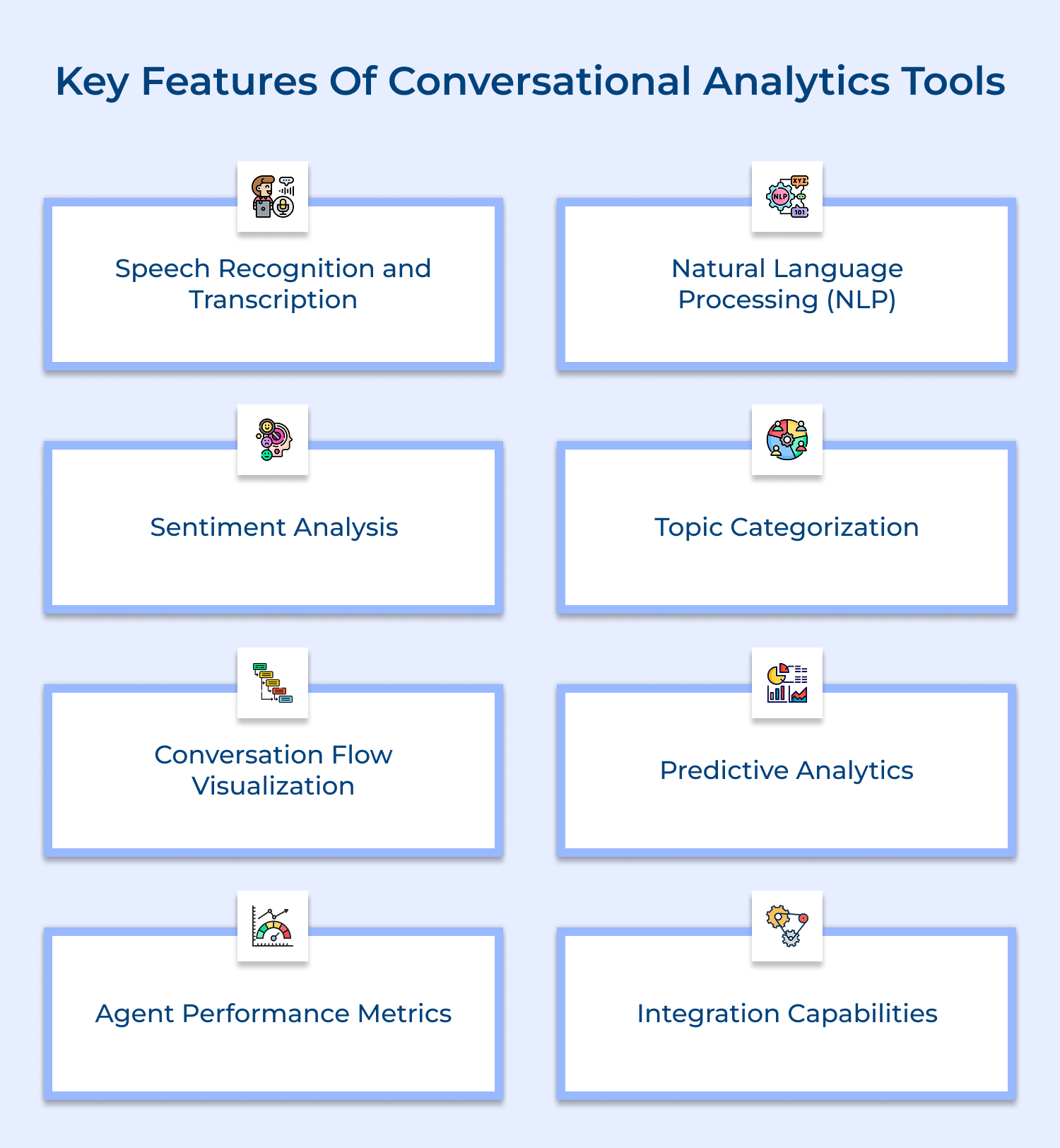
Advanced speech recognition engines convert spoken conversations into searchable text with accuracy rates exceeding 95% even in challenging audio environments. These systems handle multiple speakers, accents and industry-specific terminology while maintaining context throughout lengthy conversations. Modern platforms include speaker diarization to distinguish between customer and agent voices, enabling separate sentiment analysis for each participant.
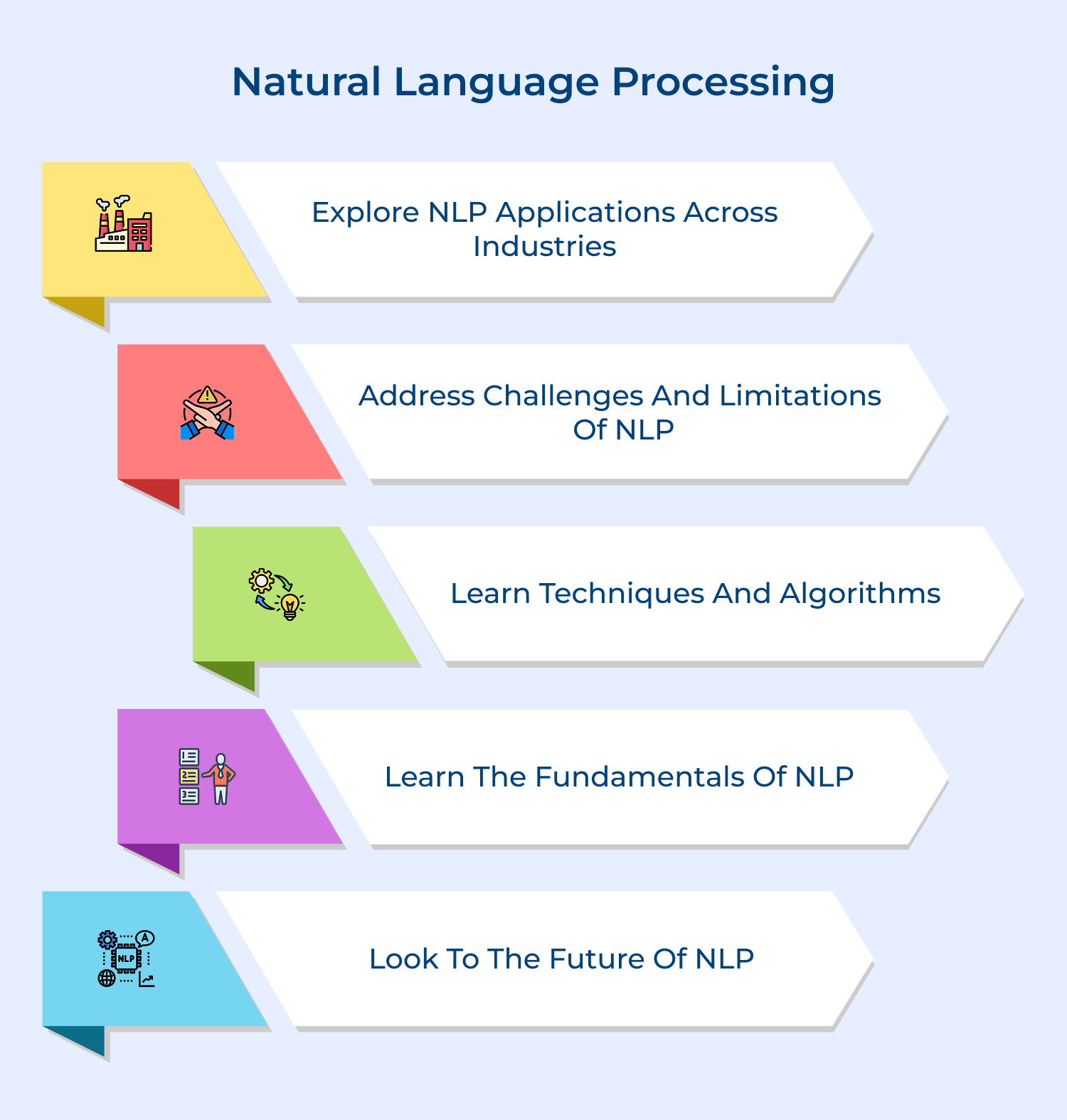
Sophisticated NLP algorithms identify intent, sentiment and key topics without requiring strict verbal formats or keywords. These systems recognize hundreds of potential intents across various business contexts, understanding both explicit statements and implicit meanings. Advanced platforms detect subtle linguistic nuances, including sarcasm, frustration, confusion and appreciation, through contextual analysis rather than simple keyword detection.
Conversational analytics tools evaluate emotional tone throughout interactions, tracking sentiment shifts from positive to negative or vice versa. Modern systems move beyond binary positive/negative classifications to recognize complex emotional states including confusion, relief, surprise and gratitude. Multi-dimensional sentiment analysis examines linguistic patterns, speech cadence, interruption frequency and conversational flow to create comprehensive emotional profiles for each interaction.
Automated categorization engines classify conversations into detailed topic hierarchies without requiring predefined scripts or templates. These systems identify primary and secondary subjects within complex, multi-topic conversations. Advanced platforms detect topic switching patterns and conversation flow, revealing when & why discussions change direction. The resulting categorization enables precise analysis of issue frequency, resolution approaches, and emerging trends.
Interactive visualization tools map conversation pathways, highlighting common question sequences, resolution approaches and deviation points. These visualizations reveal how conversations evolve from initial contact to resolution, identifying inefficient paths and optimization opportunities. Advanced systems compare conversation flows across time periods, agent groups, or customer segments to identify successful patterns and problematic sequences.
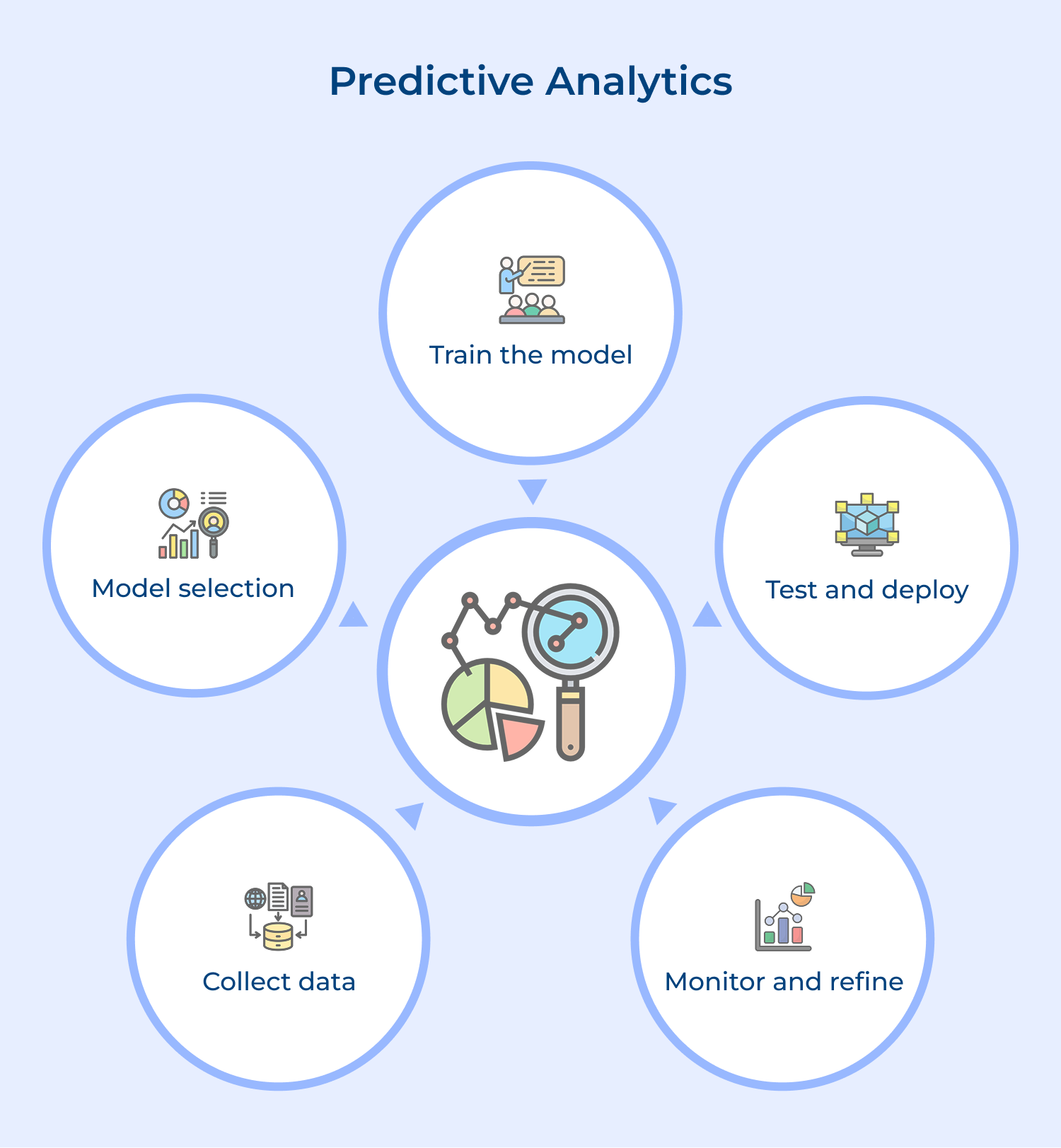
Machine learning algorithms analyze conversation patterns to forecast customer behavior, future contact reasons, or likely outcomes. These systems identify early indicators of customer churn, escalation risk, or purchase readiness based on linguistic markers and conversation patterns. Advanced platforms make real-time recommendations during live interactions based on success patterns from thousands of similar previous conversations.
Comprehensive agent evaluation frameworks assess technical knowledge, communication skills, compliance adherence and emotional intelligence. These systems move beyond traditional metrics like handling time to evaluate meaningful performance indicators including first-contact resolution rate, customer sentiment improvement and problem complexity management. Advanced platforms provide personalized coaching recommendations based on individual agent strengths and improvement opportunities.
Robust API frameworks connect conversational analytics with CRM systems, knowledge bases, and business intelligence platforms. These integrations enhance customer profiles with interaction insights while providing agents relevant historical context during conversations. Advanced systems enable bi-directional data flow, allowing conversational insights to trigger actions in connected systems while pulling contextual information to enhance analysis accuracy.
Conversational analytics is used to enhance customer support, sales and marketing by uncovering insights from interactions. It helps identify trends, improve agent performance and drive personalized, data-driven experiences.
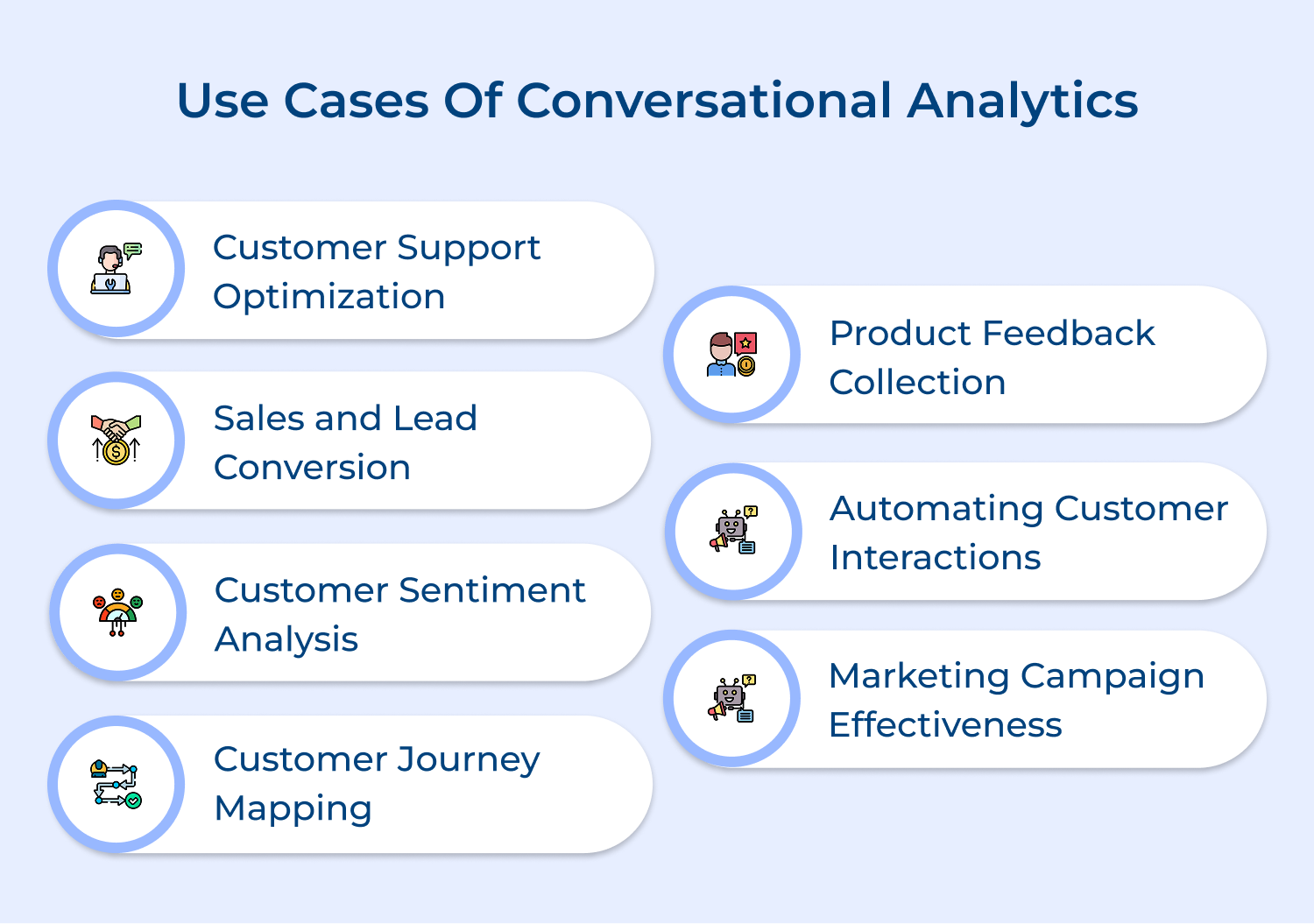
1. Customer Support Optimization
Conversational analytics helps businesses analyze customer support interactions to improve agent performance. Examining chat logs, call transcripts and support data reveals trends, common issues. These insights enable businesses to enhance training, optimize workflows and reduce customer wait times, improving service quality.
2. Sales and Lead Conversion
Sales teams can use conversational analytics to improve lead qualification and conversion rates. Analyzing conversations with potential clients uncovers language and behaviors that signal strong buying intent. With these insights, sales teams can adjust their approach and engage prospects more strategically, boosting conversion rates.
3. Customer Sentiment Analysis
Real-time sentiment analysis allows businesses to understand customer emotions toward their products, services, or interactions. Examining tone, word choice and emotional cues in conversations helps businesses gauge satisfaction or frustration. With this information, organizations can address negative situations promptly and improve customer experiences.
4. Customer Journey Mapping
Tracking interactions across multiple touchpoints enables businesses to map the entire customer journey. Insights from this data highlight pain points and opportunities to optimize touchpoints. An accurate understanding of customer behavior allows for personalized services, leading to higher retention and more seamless customer experiences.
5. Product Feedback Collection
Conversational analytics helps businesses collect and analyze feedback in real time. Monitoring customer interactions such as chats, surveys and support tickets provides valuable insights into product performance. This data helps identify areas for improvement and makes it easier for businesses to refine products based on customer needs.
6. Automating Customer Interactions
Automated systems, such as chatbots and virtual assistants, benefit from conversational analytics. Analyzing past interactions allows businesses to train these systems to address common customer inquiries more effectively. As AI tools learn from these interactions, they continuously improve, providing more efficient customer service.
7. Marketing Campaign Effectiveness
Conversational analytics allows businesses to evaluate the success of marketing campaigns. By analyzing conversations from social media, emails and other channels, businesses can determine how well their messaging resonates with customers. The insights gained help optimize strategies, refine content and target the right customer segments.
To use conversational analytics effectively, regularly monitor interactions, track key metrics and act on insights promptly. Combine data with human judgment to enhance customer experience.
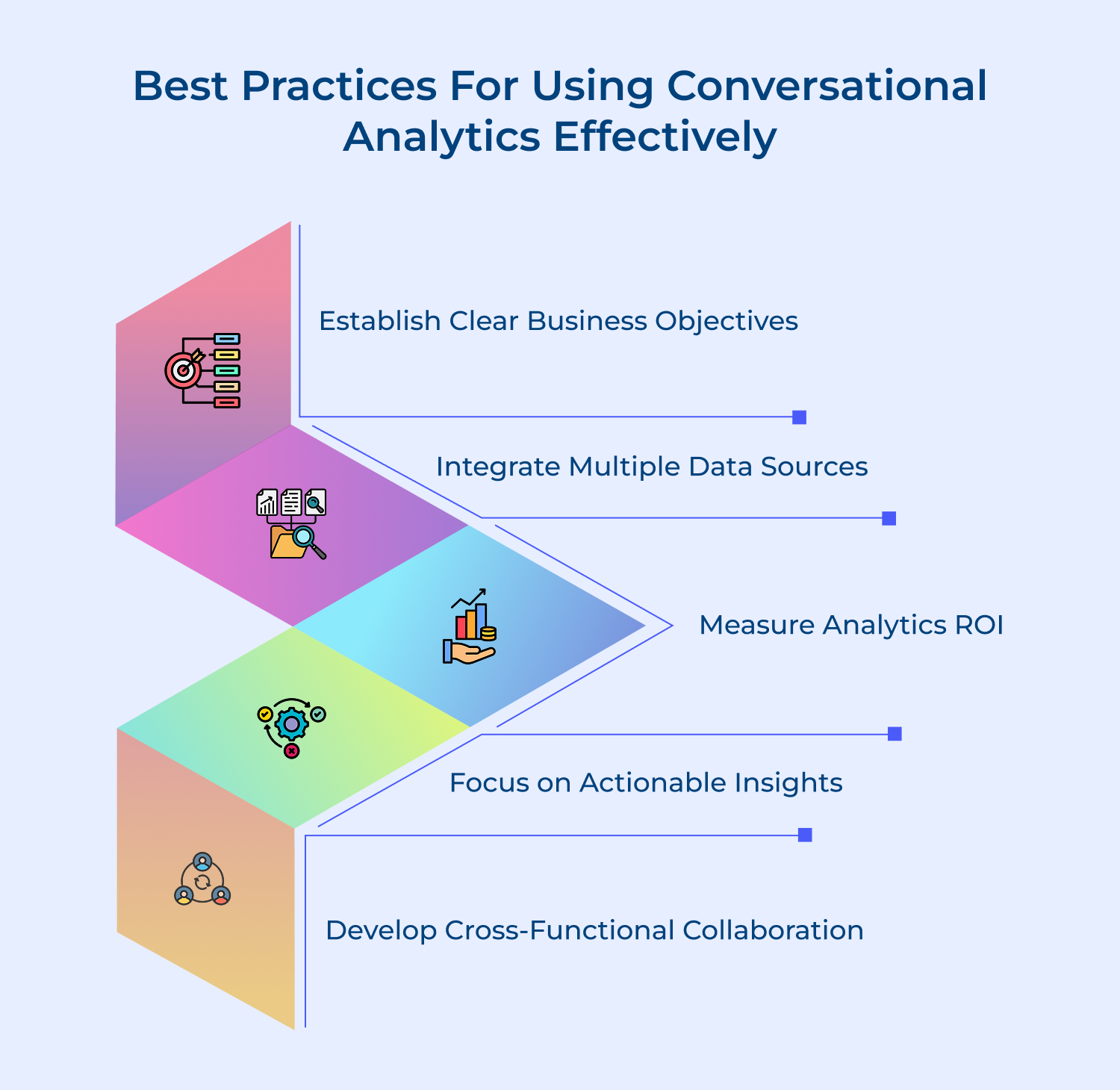
1. Establish Clear Business Objectives
Define specific, measurable goals before implementing conversational analytics. Link analytics initiatives directly to business outcomes like improved CSAT scores, reduced churn or increased conversion rates rather than pursuing insights without clear purpose or application.
2. Integrate Multiple Data Sources
Connect conversational data with CRM information, purchase history and customer journey touchpoints. This comprehensive approach provides crucial context for interpreting conversation patterns and ensures insights reflect the complete customer relationship rather than isolated interactions.
3. Measure Analytics ROI
Track specific business improvements directly resulting from conversational analytics initiatives, calculating clear return on investment metrics. Document both quantitative gains like reduced handling time and qualitative improvements such as enhanced customer sentiment or agent confidence.
4. Focus on Actionable Insights
Convert analytical findings into specific, implementable recommendations rather than generating reports without clear application. Create systematic processes for routing insights to appropriate teams and tracking implementation of analytics-driven improvements across the organization.
5. Develop Cross-Functional Collaboration
Establish regular knowledge-sharing between analytics teams, frontline staff, product developers and executive leadership. Create shared metrics across departments and implement joint ownership of improvement initiatives to ensure conversational insights drive meaningful organizational change.
Conversational analytics plays a pivotal role in improving customer experiences and optimizing business operations. Analyzing customer interactions reveals valuable insights, enabling businesses to personalize communication and increase service efficiency.
Gaining these insights allows companies to anticipate customer needs, respond quickly and build stronger relationships. As customer expectations continue to evolve, integrating conversational analytics into your strategy ensures you stay competitive and provide exceptional service.

How does conversational analytics differ from traditional speech analytics?
Traditional speech analytics primarily focused on analyzing voice recordings for specific keywords or phrases in contact centers. Conversational analytics represents a significant evolution by analyzing the full context of interactions across all communication channels. It examines conversation flow, sentiment patterns, customer intent and relationship dynamics rather than simply identifying isolated words or phrases in voice-only interactions.
What types of insights can businesses gain from conversational analytics?
Conversational analytics reveals customer sentiment trends, common pain points, product feedback, competitive mentions, compliance issues and effective resolution strategies. It identifies which conversation approaches lead to higher satisfaction or conversion rates, which topics generate the most contacts, what language resonates with customers and where confusion or frustration commonly occurs during customer interactions.
How accurate are the transcription and analysis capabilities?
Modern conversational analytics platforms achieve transcription accuracy rates exceeding 95% in most business environments. Analysis accuracy varies by metric type with topic categorization typically reaching 85-90% accuracy while more nuanced measurements like sentiment analysis or intent detection typically achieve 75-85% accuracy. These rates continue improving through machine learning and regular system training.
What technical infrastructure is required to implement conversational analytics?
Implementation requirements vary based on solution type, but typically include integration with communication platforms, sufficient data storage for conversation records, processing capacity for analysis and secure access systems for resulting insights. Cloud-based solutions reduce infrastructure demands while on-premises solutions require more substantial technical resources but may offer greater customization and control.
How do companies ensure privacy and compliance when implementing conversational analytics?
Responsible implementations include clear customer notification about recording and analysis practices, secure data encryption during storage & processing, automated redaction of sensitive information like credit card numbers or health data, role-based access controls limiting who can view conversation data and comprehensive retention policies ensuring data isn’t kept longer than necessary or legally permissible.
What’s the typical return on investment for conversational analytics?
Organizations typically see ROI through reduced operating costs, improved customer retention, increased sales conversion and enhanced agent productivity. Mid-sized contact centers often report 15-25% efficiency improvements within the first year, while larger enterprises frequently document 3-5x return on investment through combined operational savings and revenue enhancement within 18-24 months of full implementation.
 https://omni24.io/wp-content/uploads/2026/08/AI-Customer-Service-Agents.png
1256
2400
Webvision Solution
https://omni24.io/wp-content/uploads/2023/04/Omni-Logo-1.svg
Webvision Solution2026-09-21 04:48:512026-09-21 04:48:51How to Build an AI Customer Service Agents: 8 Key Steps
https://omni24.io/wp-content/uploads/2026/08/AI-Customer-Service-Agents.png
1256
2400
Webvision Solution
https://omni24.io/wp-content/uploads/2023/04/Omni-Logo-1.svg
Webvision Solution2026-09-21 04:48:512026-09-21 04:48:51How to Build an AI Customer Service Agents: 8 Key Steps https://omni24.io/wp-content/uploads/2026/08/Omnichannel-Conversational-AI.png
1256
2400
Tushar Joshi
https://omni24.io/wp-content/uploads/2023/04/Omni-Logo-1.svg
Tushar Joshi2026-09-16 03:51:072026-09-16 03:51:07How to Build Omnichannel Conversational AI Strategy
https://omni24.io/wp-content/uploads/2026/08/Omnichannel-Conversational-AI.png
1256
2400
Tushar Joshi
https://omni24.io/wp-content/uploads/2023/04/Omni-Logo-1.svg
Tushar Joshi2026-09-16 03:51:072026-09-16 03:51:07How to Build Omnichannel Conversational AI Strategy https://omni24.io/wp-content/uploads/2026/08/Customer-Service-Teams.png
1256
2400
Tushar Joshi
https://omni24.io/wp-content/uploads/2023/04/Omni-Logo-1.svg
Tushar Joshi2026-09-15 04:01:522026-09-15 04:02:16How to Build Customer Service Teams: 6 Key Steps
https://omni24.io/wp-content/uploads/2026/08/Customer-Service-Teams.png
1256
2400
Tushar Joshi
https://omni24.io/wp-content/uploads/2023/04/Omni-Logo-1.svg
Tushar Joshi2026-09-15 04:01:522026-09-15 04:02:16How to Build Customer Service Teams: 6 Key Steps
Whether it’s about acquire, engage or support – Omni24 covers all your customer engagement needs in one complete platform.

Copyright ©2026 Veemo All rights reserved.
CA, Los Angeles, Hall Ave, 19011