Why Branding Trends are Important for Business Growth
Branding trends guide how brands evolve to stay relevant in a changing market. Following them helps businesses connect with audiences, build trust and remain competitive.

Branding trends guide how brands evolve to stay relevant in a changing market. Following them helps businesses connect with audiences, build trust and remain competitive.
Client expectations are evolving in ways that make yesterday’s successful strategies feel outdated. What worked last year won’t necessarily carry you through tomorrow’s challenges.
Falling behind on branding trends means watching competitors capture the trust. Almost 77% of marketers view strong brands as essential for growth and 81% of consumers require trust in a brand before making a purchase. Your audience sticks to brands that understand their current needs. The gap between businesses and what clients expect grows wider.
The good news is that understanding emerging brand strategy trends gives you a clear roadmap for staying ahead of these shifts. Let’s explore the branding trends that will separate market leaders from followers in 2026.
Branding trends represent the evolving approaches that shape how companies build recognition and trust with their audiences. These patterns emerge from shifts in technology and consumer expectations. Understanding current trends helps you stay competitive in your industry.
These trends directly influence how your audience perceives and engages with your company. When you align with meaningful movements, you build stronger relationships and differentiate yourself from competitors.
Key Objectives:
Staying aware of branding trends isn’t about chasing every new fad. It’s about understanding the forces that shape how your clients make decisions and form lasting business relationships.
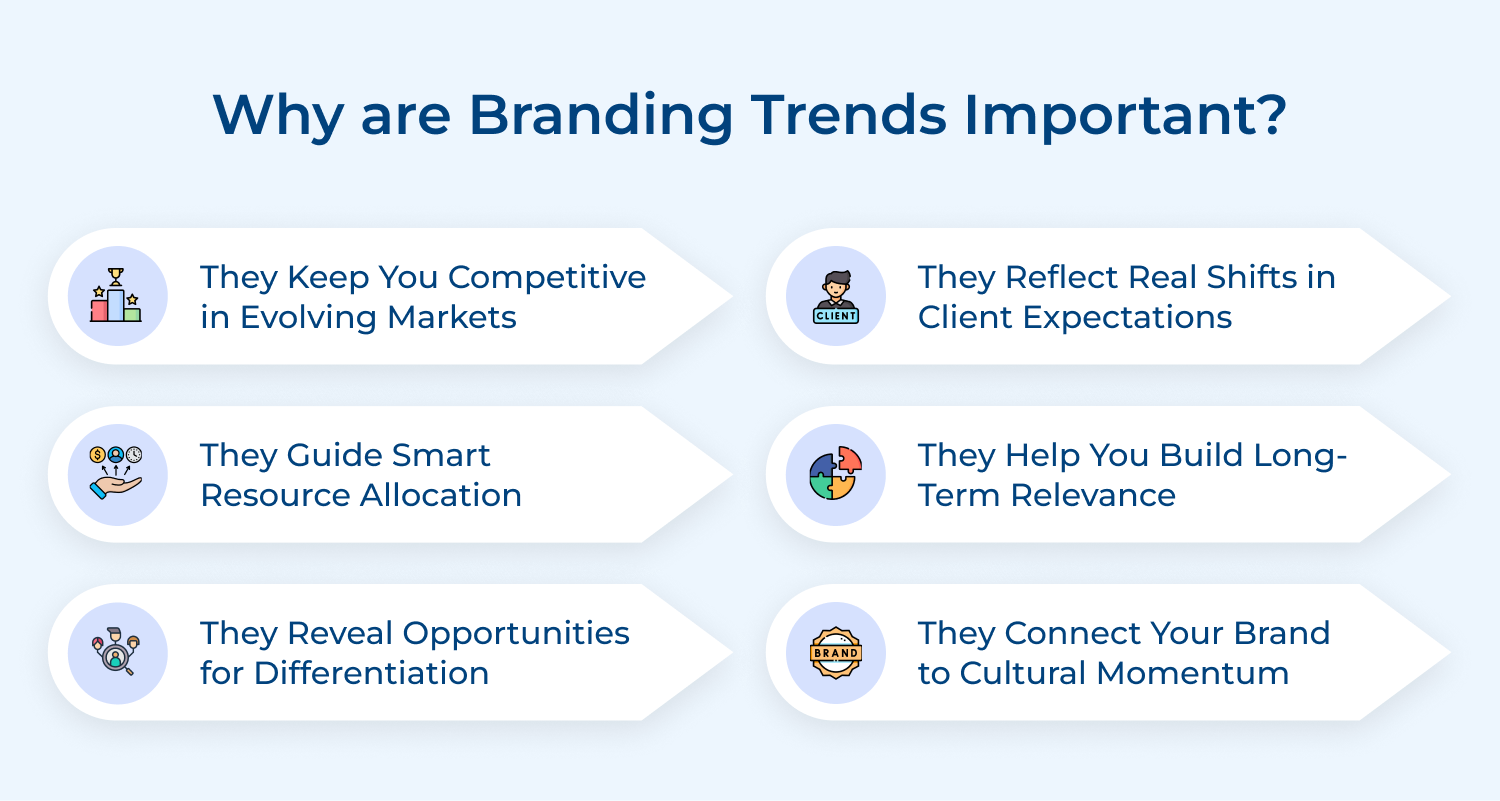
1. Competitive in evolving markets: Your competitors are watching these trends and adapting their strategies accordingly. When you understand what’s shaping the landscape, you can position yourself strategically rather than reactively. The awareness helps you maintain relevance while others struggle to catch up with market expectations.
2. Reflect real shifts in client expectations: Trends emerge because something fundamental has changed in how people evaluate and choose business partners. These patterns reveal what your clients now consider essential versus optional. Paying attention helps you meet expectations before they become deal-breakers in your industry.
3. Guide smart resource allocation: Knowing which trends matter helps you invest time and budget in areas that will actually move the needle. You avoid wasting resources on outdated tactics that no longer resonate. The strategic focus ensures your branding efforts generate measurable returns rather than just activity.
4. Reveal opportunities for differentiation: Understanding the broader landscape helps you identify gaps where your company can stand out meaningfully. You can decide whether to follow or deliberately position yourself differently. This insight turns trends into competitive advantages rather than pressures to conform.
5. Help you build long-term relevance: Brands that ignore trends risk becoming invisible as the market moves forward without them. Adapting thoughtfully to meaningful changes keeps your company feeling current. The ongoing evolution builds trust that you understand the challenges your clients face today and tomorrow.
6. Connect your brand to cultural momentum: Trends often tie into larger conversations about technology and values. When you align with movements that matter, you become part of something bigger than just your products or services. The connection creates emotional resonance that purely transactional relationships cannot achieve.
Here’s a look at how you can leverage these trends to elevate your brand and remain relevant in a constantly evolving marketplace.
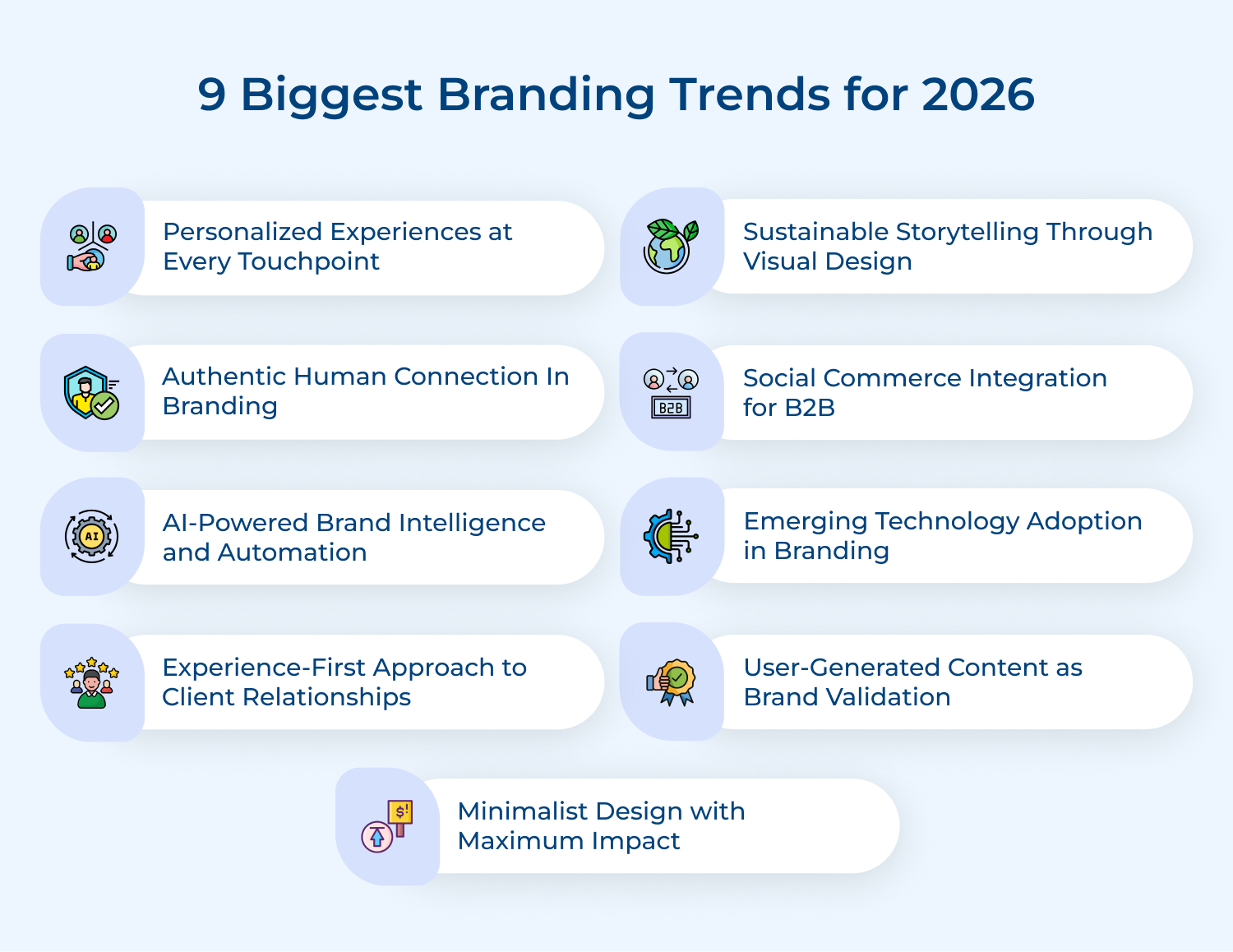
Clients expect interactions that feel specifically designed for them rather than generic broadcasts. The branding trend matters because personalized engagement builds stronger relationships.
Understanding what personalization means in practice helps you implement it effectively:
A software company might notice a client frequently visits their security features page. Instead of sending generic product updates, they automatically share case studies about how similar companies solved security challenges.
People want to work with real humans who understand their challenges rather than faceless corporations. The branding strategy trend cuts through the noise because authenticity builds trust faster than polished campaigns.
Put your team members front and center in your brand presence. Share their expertise through articles and speaking opportunities. Let clients see both your successes and how you handle setbacks with integrity.
Pro tips:
Artificial intelligence helps you understand and respond to clients at a scale that human teams alone cannot achieve. This trend has become necessary because client expectations for speed and relevance have increased dramatically.
Here’s how leading companies apply AI to strengthen their brand presence:
The key is using AI to enhance human creativity rather than replace it. Technology provides the foundation, but your team’s judgment determines which insights matter most.
Companies must prioritize how every interaction feels to clients rather than just what information gets delivered. A frustrating interaction with your brand gets compared to seamless experiences from completely different industries.
Your brand’s visual presence should communicate environmental and social responsibility through deliberate design choices. Clients increasingly evaluate partners based on shared values and measurable impact.
Integrate sustainability into your visual identity system rather than creating separate campaigns. Use your website design to minimize energy consumption. Show your sustainable practices through photography that documents real initiatives rather than generic nature imagery.
Best practices:
Professional networks have evolved into active marketplaces where purchasing decisions happen through social interactions and peer validation. Customers increasingly discover solutions through platforms where they already spend time building relationships.
Here’s how you can leverage social commerce effectively in your strategy:
The power of this approach lies in meeting clients where they naturally gather information. When prospects see colleagues discussing your solutions in their feeds, it carries more weight than traditional advertising.
New technologies create opportunities to differentiate your brand through innovative client experiences. This trend gains significance because early adopters establish themselves as forward-thinking partners while competitors still rely on conventional approaches.
Smart implementation of emerging tools can transform how clients experience your brand:
A manufacturing company recently implemented AR tools that let prospects point their phones at factory floors to see how new equipment would fit.
Your clients’ voices carry more credibility than anything your marketing team could create alone. This trend has become essential because prospects trust peer experiences over corporate messaging when evaluating potential partners.
Here’s how authentic client content strengthens your brand positioning effectively:
The most effective approach treats clients as partners in building your brand story. When you amplify their experiences and give them platforms to share knowledge, you create a self-reinforcing cycle of validation.
Focused design helps your message cut through information overload that exhausts modern professionals. The branding trend has become necessary because cluttered experiences cause decision fatigue and push potential clients toward competitors who respect their attention.
Strip away unnecessary elements from your brand touchpoints to highlight what truly matters. Use white space strategically to let important information breathe. Choose clear typography and limited color palettes that guide eyes to key messages without competing distractions.
Pro tips:
Let’s look at how leading companies are putting these trends into practice. These examples show what happens when brands commit to meaningful evolution.
1. Amazon
Amazon has embraced AI-powered personalization to create interactions that feel tailored to each customer’s specific needs. Their recommendation engine analyzes browsing patterns to suggest products before you even search for them. The one-click ordering system removes friction points that typically slow purchasing decisions.
The approach has transformed Amazon into more than just a retailer in customers’ minds. People return because the platform understands their preferences and makes shopping effortless. The brand has become synonymous with convenience because every design choice prioritizes reducing steps between wanting something and receiving it.
2. Nike
Nike leverages user-generated content by making customers central to their brand narrative. Their apps encourage runners to share workout data and achievements that inspire others. The brand highlights real people’s fitness journeys rather than only featuring professional athletes in advertisements.
The branding strategy strengthens emotional bonds between the brand and its community members. Customers feel like participants in a movement rather than just buyers. Nike maintains cultural relevance by reflecting the authentic experiences of people who actually use their products.
3. Patagonia
Patagonia has built its brand around sustainable storytelling through transparent business practices. They document their supply chain openly and share the environmental cost of each product. Their “Don’t Buy This Jacket” campaign encouraged customers to repair existing gear rather than purchasing unnecessarily.
The approach has deepened customer loyalty because it demonstrates values that align with their audience’s beliefs. People choose Patagonia knowing the brand prioritizes environmental responsibility over pure profit. The authenticity of their commitment creates trust that competitors, spending millions on marketing, struggle to achieve.
4. IKEA
IKEA has adopted augmented reality to solve furniture shopping’s biggest challenges. Their AR app lets customers visualize how pieces will look in their actual spaces before buying. The brand uses minimalist design principles in products and marketing to communicate simplicity clearly.
These innovations address real friction points rather than adding technology for novelty’s sake. Customers make more confident purchasing decisions because they can see solutions in context. IKEA maintains its position as an accessible design leader by continuously removing barriers between customers and the homes they want.
The branding trends we’ve explored aren’t just fads but fundamental shifts in how companies connect with their audiences. When you adapt thoughtfully to these changes, you position yourself as a forward-thinking partner rather than someone stuck in outdated approaches.
Start by choosing one or two trends that align with your current challenges and capabilities. You don’t need to adopt everything at once to see meaningful results. The key is moving forward with intention and staying curious about how your audience’s expectations continue to evolve.

What are the anticipated business expectations for branding in 2026?
Businesses expect brands to demonstrate authentic purpose beyond profit while delivering personalized experiences that feel human rather than automated. Companies anticipate stronger integration between digital and physical touchpoints. Transparency around sustainability practices has shifted from optional to essential for maintaining client trust and competitive positioning.
Which is a current trend in branding?
AI-powered personalization stands out as one of the most impactful current trends transforming how brands interact with their audiences. Companies use machine learning to predict client needs and deliver relevant content at the right moments. This approach balances automation efficiency with the authentic human connection that builds lasting relationships.
Why are trends important for brands?
Trends reflect fundamental shifts in how people make decisions and evaluate potential partners in business relationships. Following meaningful trends keeps your brand relevant as client expectations evolve rapidly. Ignoring these changes risks making your company appear disconnected from the realities your audience faces today.
What is new product branding?
New product branding involves creating a distinct identity for a fresh offering that connects emotionally with your target audience. You establish how the product fits within your existing brand family or stands independently. This process includes visual design, and messaging that communicates unique value clearly.
What is the next big design trend in 2026?
Minimalist design with intentional simplicity continues gaining momentum as professionals deal with constant information overload. Brands embrace clean layouts with generous white space that let key messages breathe. This approach prioritizes clarity over decoration because confused prospects simply move on to competitors who communicate more directly.
 https://omni24.io/wp-content/uploads/2026/09/Social-commerce-scaled.png
1340
2560
Webvision Solution
https://omni24.io/wp-content/uploads/2023/04/Omni-Logo-1.svg
Webvision Solution2026-10-23 12:18:272026-10-23 12:18:27What is Social Commerce and Why Does It Matter?
https://omni24.io/wp-content/uploads/2026/09/Social-commerce-scaled.png
1340
2560
Webvision Solution
https://omni24.io/wp-content/uploads/2023/04/Omni-Logo-1.svg
Webvision Solution2026-10-23 12:18:272026-10-23 12:18:27What is Social Commerce and Why Does It Matter? https://omni24.io/wp-content/uploads/2026/08/AI-Customer-Service-Agents.png
1256
2400
Webvision Solution
https://omni24.io/wp-content/uploads/2023/04/Omni-Logo-1.svg
Webvision Solution2026-09-21 04:48:512026-09-21 04:48:51How to Build an AI Customer Service Agents: 8 Key Steps
https://omni24.io/wp-content/uploads/2026/08/AI-Customer-Service-Agents.png
1256
2400
Webvision Solution
https://omni24.io/wp-content/uploads/2023/04/Omni-Logo-1.svg
Webvision Solution2026-09-21 04:48:512026-09-21 04:48:51How to Build an AI Customer Service Agents: 8 Key Steps https://omni24.io/wp-content/uploads/2026/08/Omnichannel-Conversational-AI.png
1256
2400
Tushar Joshi
https://omni24.io/wp-content/uploads/2023/04/Omni-Logo-1.svg
Tushar Joshi2026-09-16 03:51:072026-09-16 03:51:07How to Build Omnichannel Conversational AI Strategy
https://omni24.io/wp-content/uploads/2026/08/Omnichannel-Conversational-AI.png
1256
2400
Tushar Joshi
https://omni24.io/wp-content/uploads/2023/04/Omni-Logo-1.svg
Tushar Joshi2026-09-16 03:51:072026-09-16 03:51:07How to Build Omnichannel Conversational AI Strategy
Whether it’s about acquire, engage or support – Omni24 covers all your customer engagement needs in one complete platform.

Copyright ©2026 Veemo All rights reserved.
CA, Los Angeles, Hall Ave, 19011