How Ecommerce Customer Segmentation Drives Higher Conversions
A practical guide to ecommerce customer segmentation strategies that improve targeting, increase conversions and drive long-term customer loyalty.
A practical guide to ecommerce customer segmentation strategies that improve targeting, increase conversions and drive long-term customer loyalty.
Blasting the same message to every shopper is precisely why your conversion rates stay flat. Segmented email campaigns drive 76% more revenue than generic ones, yet most ecommerce teams still treat every customer identically, leaving serious money on the table.
Ecommerce customer segmentation is the practice of dividing your online shoppers into distinct groups based on behavior, purchase history, demographics or lifecycle stage. This guide covers proven segmentation models, actionable strategies and practical tools for implementing effective ecommerce customer segmentation.
E-commerce customer segmentation divides your online shoppers into distinct groups based on shared characteristics like buying behavior and preferences. This strategy helps you understand who your customers really are and what drives their purchase decisions.
Generic marketing messages get ignored in crowded inboxes. When you segment customers you can send targeted emails that actually resonate with each group. A first-time buyer needs different messaging than a loyal customer who shops monthly.
Segmentation directly impacts your bottom line through better resource allocation. Instead of spreading your marketing budget thin across everyone you invest more in high-value segments. You’ll see higher conversion rates when your offers match what specific customer groups actually want.
Key objectives:
Segmented email campaigns generate 760% more revenue than non-segmented campaigns. Let’s explore the advantages that make this segmentation strategy essential for growth.
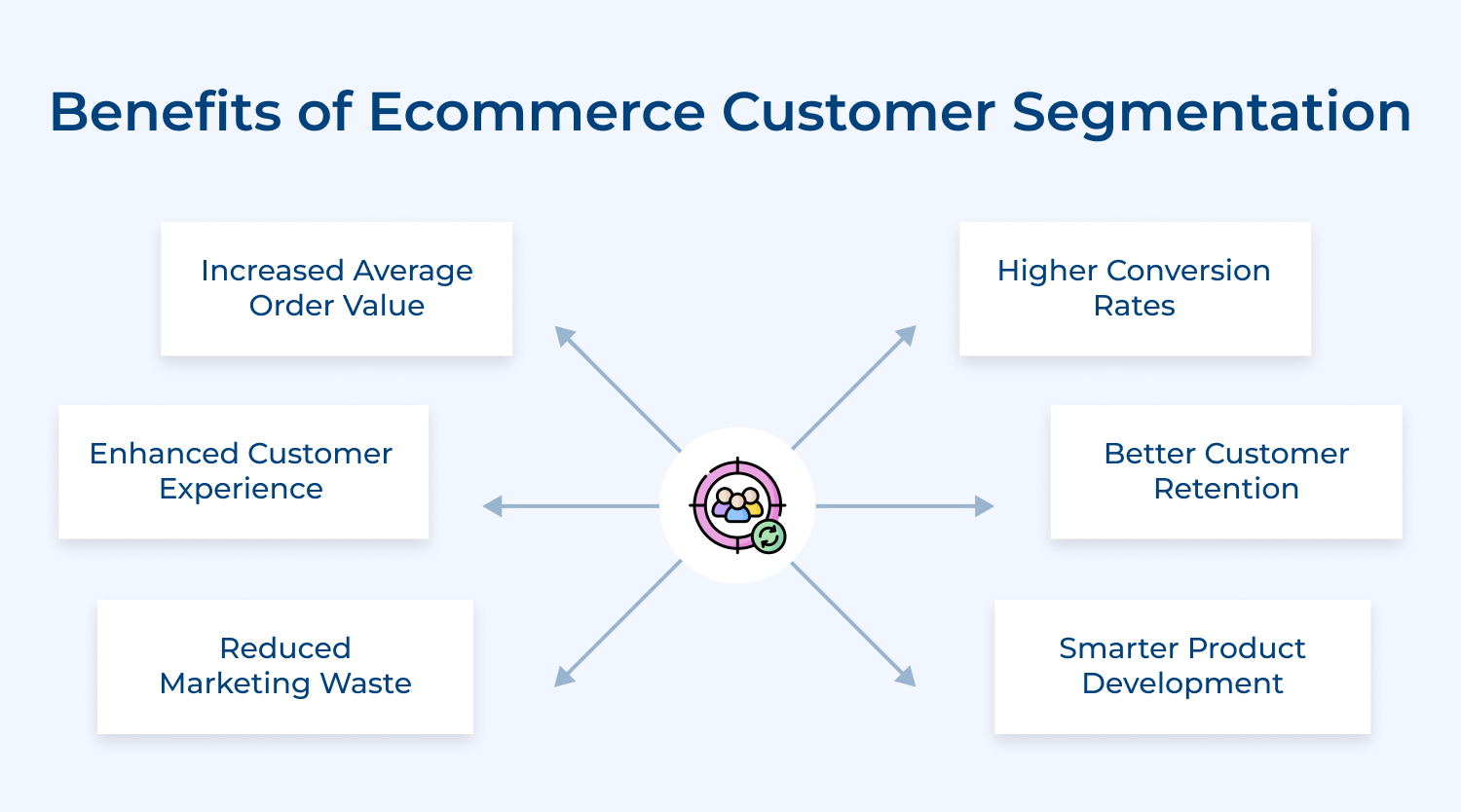
1. Higher Conversion Rates
Targeted messaging speaks directly to customer pain points and desires. When shoppers see products that match their actual needs they’re far more likely to complete purchases instead of browsing aimlessly.
2. Better Customer Retention
Understanding different customer groups helps you keep them coming back. You can create loyalty programs and retention strategies tailored to what motivates each segment to stay engaged with your brand.
3. Smarter Product Development
Segmentation reveals what different customer groups actually want from your products. These insights guide your development roadmap so you build features and offerings that have guaranteed demand before investing resources.
4. Reduced Marketing Waste
Stop spending money on ads that reach the wrong people. Segmentation ensures your campaigns target shoppers most likely to buy. This precision dramatically lowers your customer acquisition costs over time.
5. Enhanced Customer Experience
Shoppers receive relevant content and offers instead of generic promotions. From personalized homepages to curated product suggestions every touchpoint feels designed specifically for them rather than for a faceless mass audience.
6. Increased Average Order Value
Different segments have different spending capacities and product interests. When you understand these patterns you can upsell and cross-sell effectively. Premium customers see luxury bundles while budget shoppers get value packs.
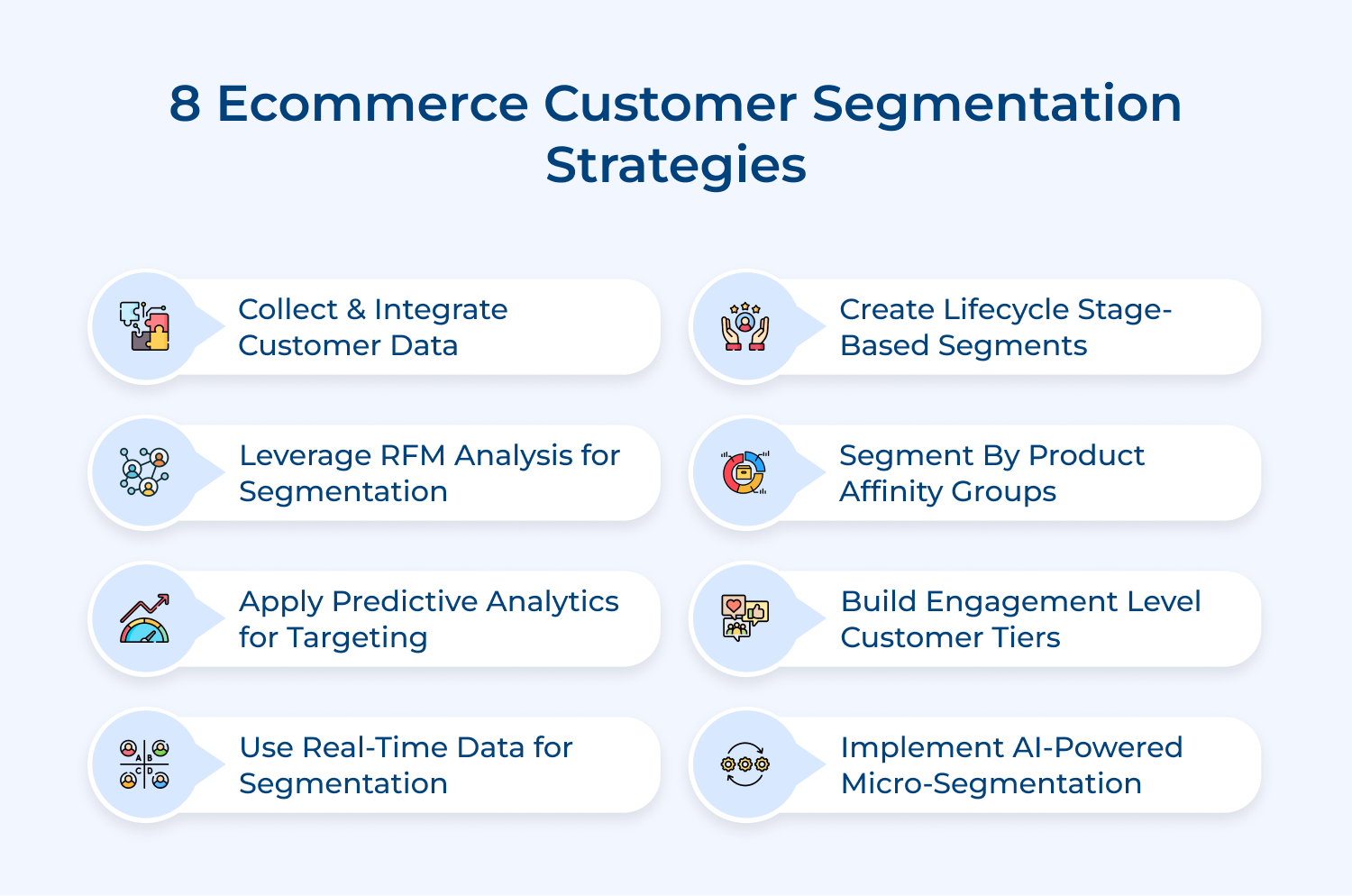
Dive into these eight powerful eCommerce customer segmentation strategies and discover how they can transform your business.
If your customer data lives in five different tools, you’re not seeing the full picture. You’re seeing fragments.
Bringing everything together helps you build accurate customer segments instead of guessing based on incomplete data.
Here’s what that looks like:
Imagine Sarah browses baby clothes on mobile but checks out on desktop. Without integration, that looks like two people. With integrated data, you recognize one cross-device shopper — and optimize her experience accordingly.
When your data is unified, your segmentation becomes smarter, sharper and far more profitable.
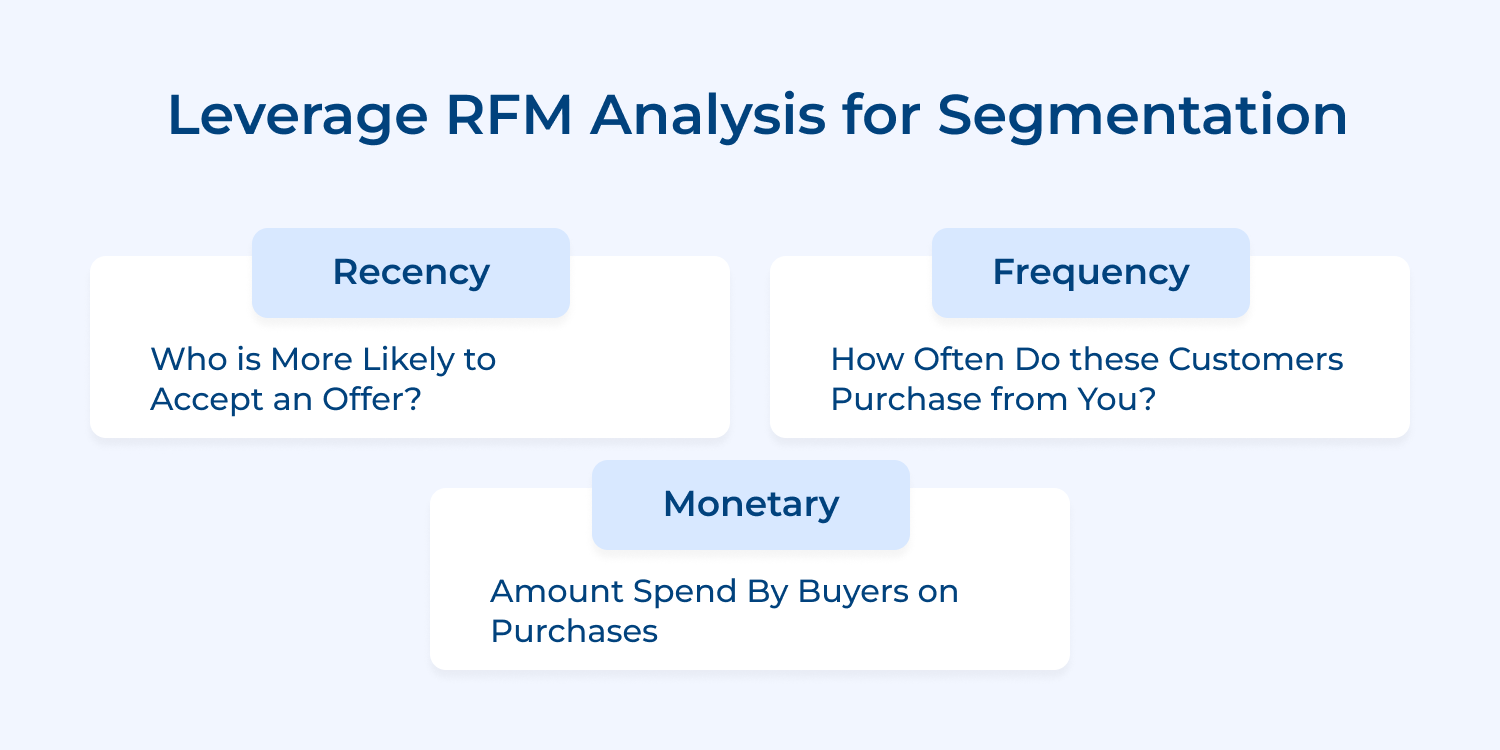
If you want a simple but powerful way to segment customers, start with RFM — Recency, Frequency and Monetary value. It helps you quickly understand who your best customers are and who might be slipping away.
Here’s how it works:
The only catch is that new stores may not have enough historical data. Start with what you have and refine your scoring as your customer base grows.
Predictive analytics uses historical data patterns to forecast future customer behavior. This forward-looking approach helps you act proactively rather than simply reacting to what already happened yesterday.
Machine learning algorithms spot subtle patterns humans miss in large datasets. You can anticipate which customers will buy next or identify early warning signs of churn before it’s too late.
Pro tips:
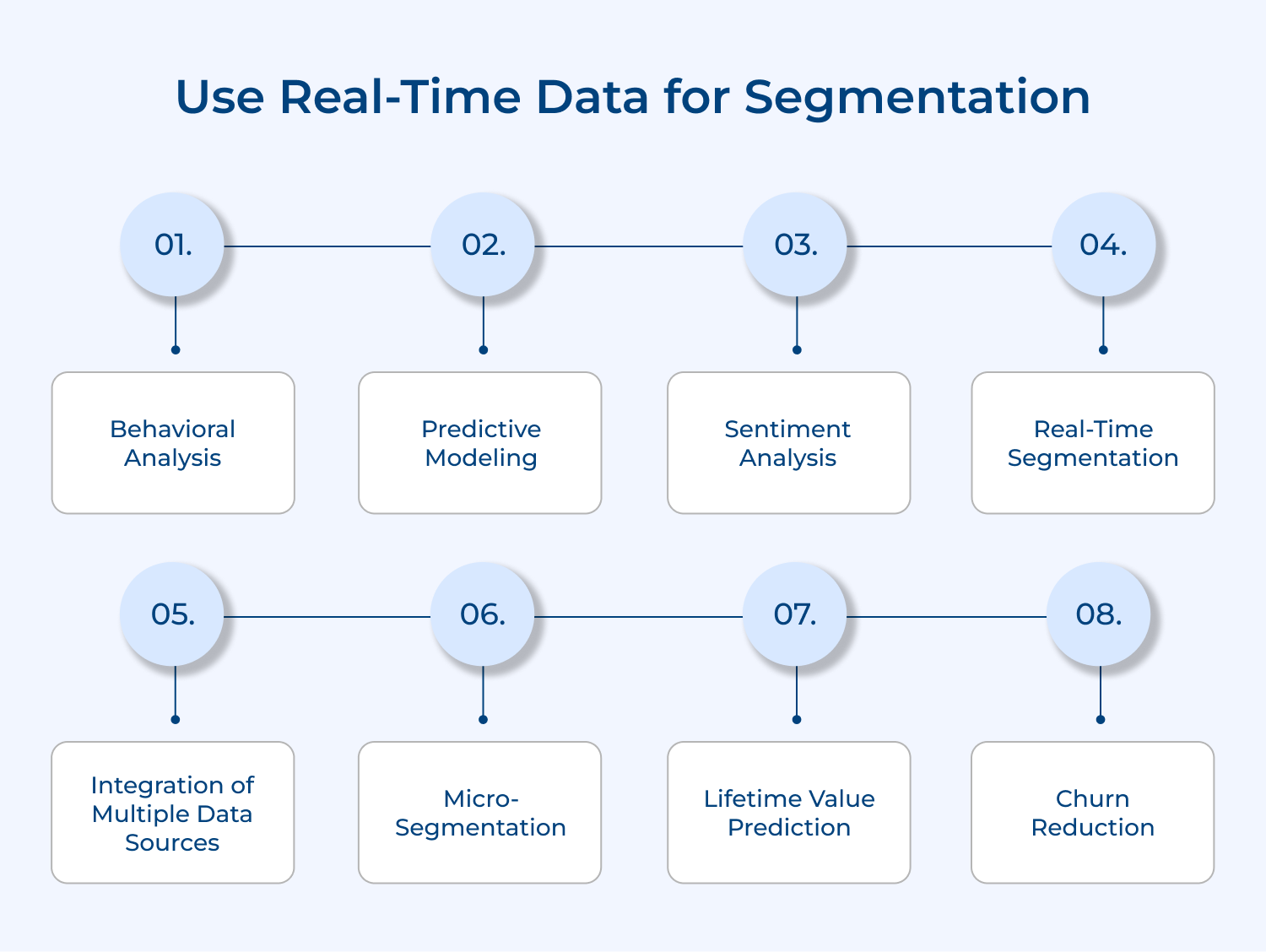
Real-time segmentation adjusts customer groups instantly based on current behavior and actions. This dynamic approach keeps your segments fresh rather than relying on outdated information from last month.
How does real-time segmentation actually improve your results? When a customer abandons their cart you can immediately move them into a recovery segment. They receive a reminder email within an hour while the products are still fresh in their mind.
Here’s how to make your segments respond to live customer behavior:
For example a fashion retailer ASOS uses real-time data to segment browsers by style preferences during each session. If you spend time viewing streetwear the homepage dynamically reshuffles to feature similar items. This instant personalization keeps engagement high throughout the browsing experience.
Lifecycle segmentation groups customers by where they stand in their journey with your brand. This approach recognizes that a first-time visitor needs completely different messaging than a loyal repeat customer.
Tailor your communication strategy to match each stage’s unique needs and motivations. New visitors need education about your products while loyal customers want exclusive perks and recognition for their ongoing support.
Best practices:
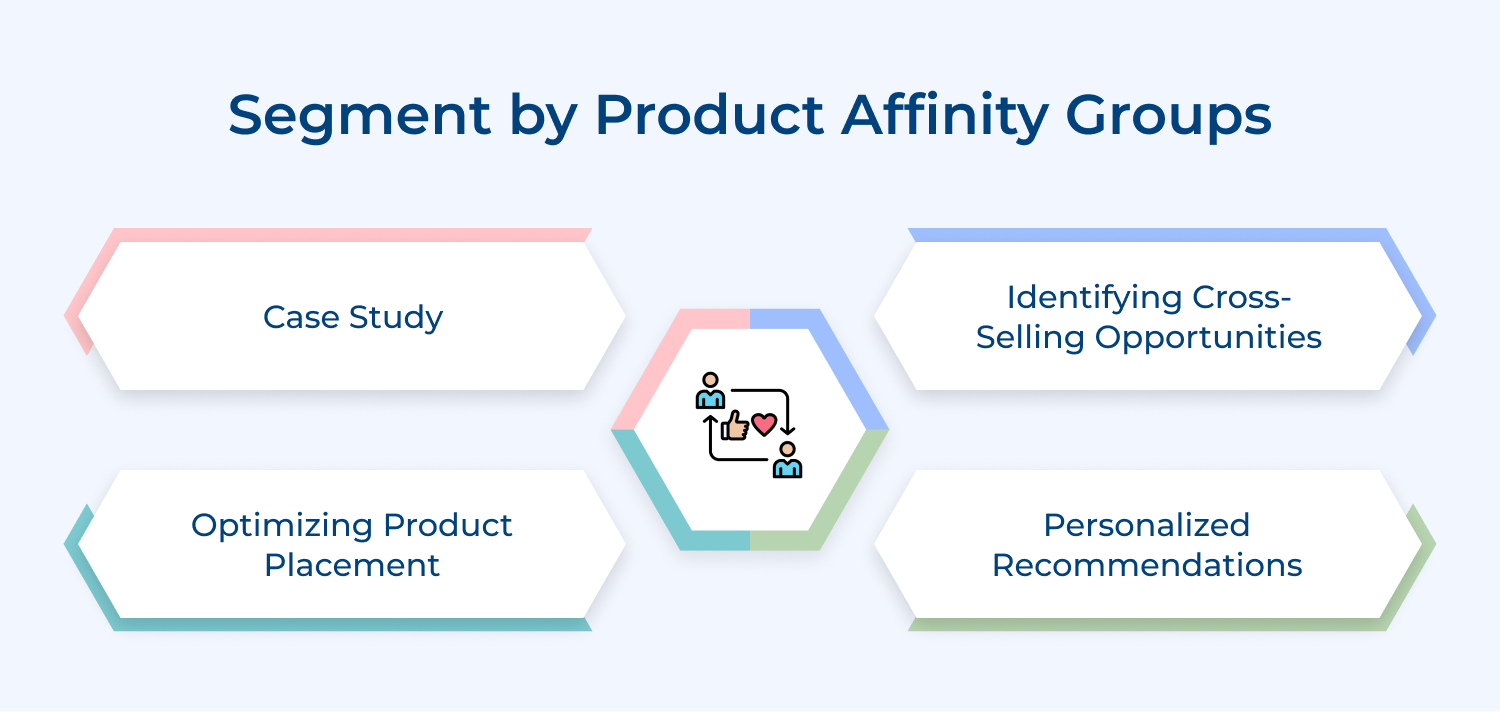
Not all customers shop the same way and that’s exactly why product-based grouping works so well. Instead of relying on demographics, you organize customers based on what they consistently browse and buy.
Here’s how product affinity helps:
This approach fits perfectly within your broader customer lifecycle strategy because preferences evolve as customers mature with your brand. When you align offers with real buying behavior, personalization feels natural.
Engagement segmentation separates highly active customers from those barely interacting with your brand. This strategy helps you invest resources appropriately rather than treating all customers as equally engaged with your business.
Before implementing engagement tiers answer these five critical questions:
These questions prevent arbitrary tier definitions and ensure your segments reflect meaningful behavioral differences. You’ll avoid the mistake of treating occasional browsers the same as your most enthusiastic brand advocates.
How do you actually put engagement tiers into practice? Start by scoring customers across multiple touchpoints like email opens and website visits. Someone who opens every email and browses weekly earns higher scores than someone ignoring your messages for months.
AI-powered micro-segmentation uses machine learning to automatically create highly specific customer groups. Instead of broad categories based on basic behavior, this approach analyzes large volumes of data to uncover complex patterns and relationships.
Create Highly Granular Customer Groups
Machine learning models process thousands of data points simultaneously – including browsing patterns, purchase intervals, device usage and price sensitivity. This allows the system to form tightly defined clusters that traditional rule-based segmentation would never detect.
Continuously Refine Segments Automatically
As new data flows in, the system updates segments without manual intervention. Customers shift between groups based on real behavior, ensuring your targeting always reflects current intent.
Uncover Hidden Behavioral Patterns
AI can detect subtle correlations – such as how browsing depth or timing influences purchase likelihood – helping you act proactively instead of reactively.
Different segmentation approaches reveal unique insights about your customers. Here’s how each type helps you understand and serve your audience better.
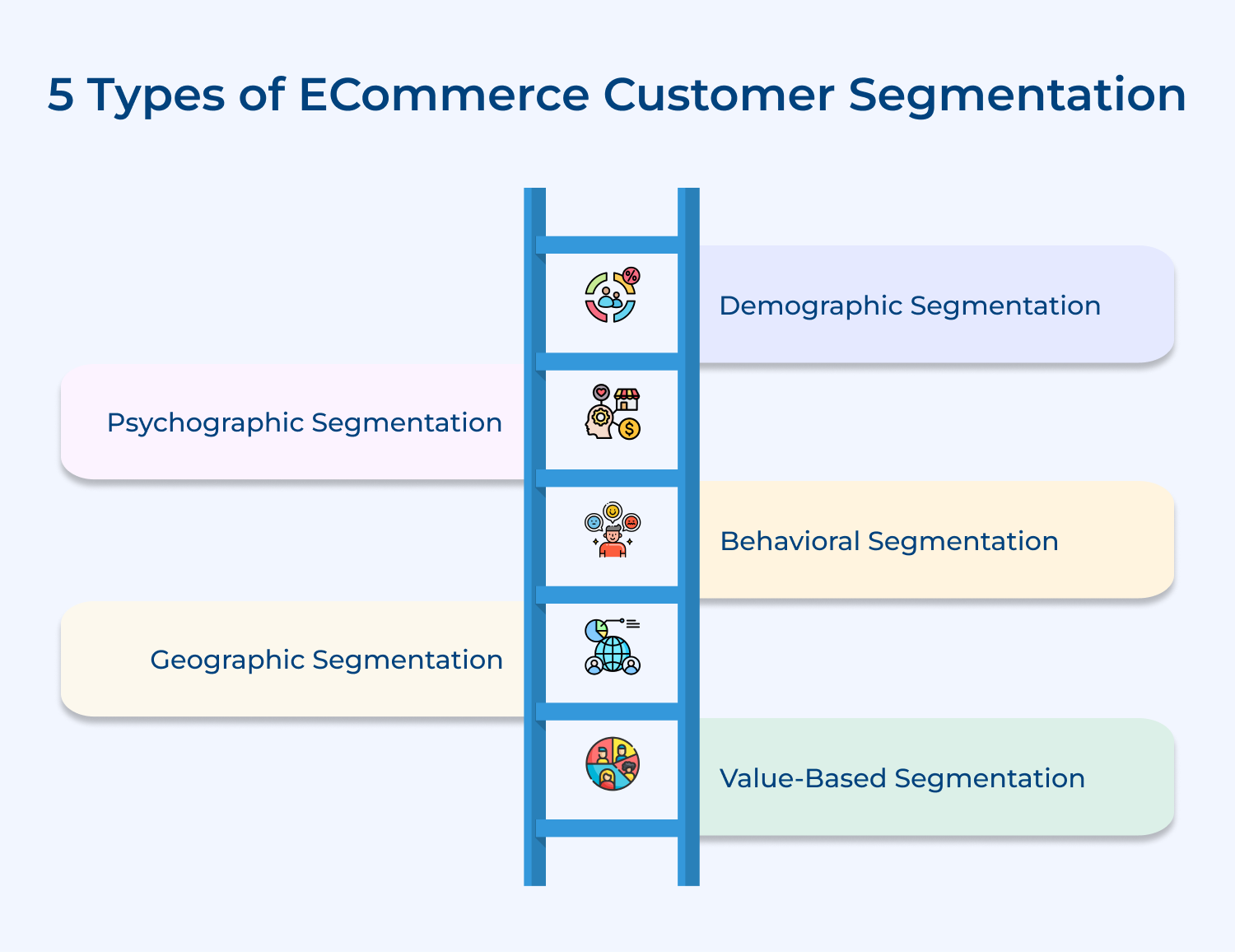
Demographic segmentation groups customers by basic characteristics like age and gender. This straightforward approach gives you a foundational understanding of who shops with you and helps tailor your messaging accordingly.
How demographic segmentation helps your business:
These categories shape everything from product selection to visual design choices. A store selling to millennials will showcase products differently than one targeting baby boomers with distinct lifestyle needs.
Psychographic segmentation goes beyond surface-level data while focusing on what truly drives your customers — their values, beliefs, interests and lifestyle choices. It helps you understand why people buy from you, not just what they purchase or who they are demographically.
When you understand motivations, your marketing becomes far more powerful. Someone choosing eco-friendly products likely cares about sustainability and ethical sourcing. A luxury shopper, on the other hand, may prioritize exclusivity, status and premium experiences.
How psychographic segmentation helps your business:
For example, Patagonia targets environmentally conscious consumers by promoting conservation initiatives and repair programs. Therefore, attracting customers who see purchases as value-driven decisions.
Behavioral segmentation tracks how customers actually interact with your store. Purchase history and browsing patterns reveal intent better than any demographic data ever could.
How behavioral segmentation helps your business:
This approach identifies your most engaged customers versus window shoppers. You can nurture high-intent browsers using targeted offers while re-engaging those who haven’t visited recently with compelling reasons to return.
Geographic segmentation divides customers by location from country down to neighborhood level. Regional preferences and local trends dramatically influence what people want to buy as well as when.
Weather patterns alone justify geographic targeting for many e-commerce stores. Promoting winter coats in Alaska while showcasing swimwear in Florida seems obvious but many businesses still blast identical messages everywhere.
How geographic segmentation helps your business:
For example, Starbucks uses geographic data to customize menu offerings by region. Stores in Asia feature green tea lattes prominently while Southern US locations emphasize sweet tea products.
Value-based segmentation ranks customers by their economic worth to your business. It identifies who spends the most and has highest lifetime value potential versus one-time bargain hunters.
How value-based segmentation helps your business:
Your most valuable customers deserve special treatment and exclusive access to new products. Meanwhile occasional shoppers might respond better to promotional offers that encourage repeat purchases without expecting premium service levels.
Even the best segmentation strategies hit roadblocks during implementation. Understanding these common obstacles helps you prepare solutions before problems derail your efforts.
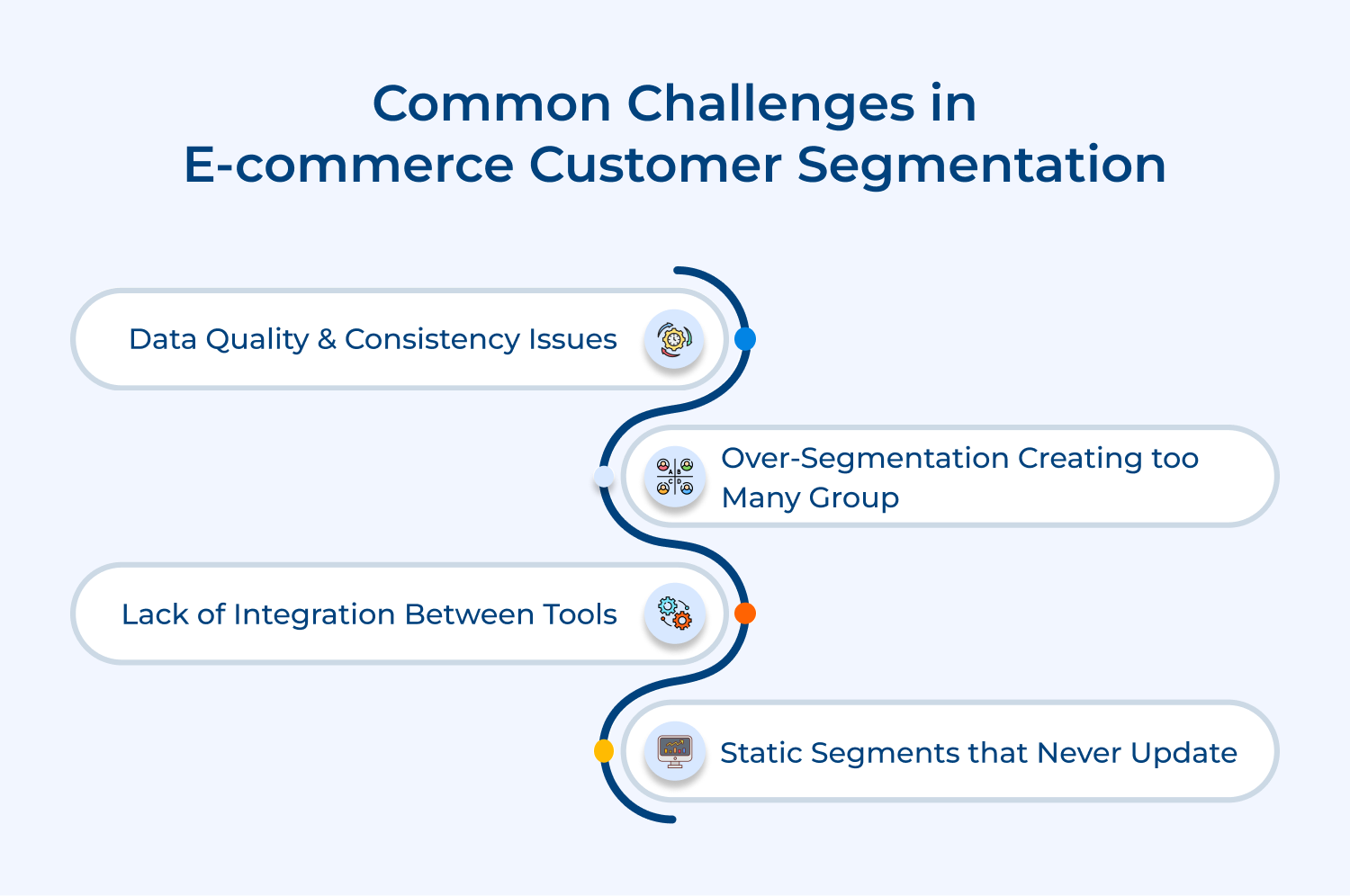
1. Data Quality and Consistency Issues
Poor data quality creates unreliable segments that lead to misguided marketing decisions. Duplicate records and missing information make it impossible to understand who your customers really are or group them accurately.
2. Over-Segmentation Creating Too Many Groups
Creating excessive segments fragments your audience into groups too small to target effectively. You end up spending more time managing segments than actually engaging customers with meaningful campaigns.
3. Lack of Integration Between Tools
Disconnected marketing tools and platforms prevent you from building complete customer profiles. Your email platform doesn’t talk to your e-commerce system so segments remain incomplete and inaccurate.
4. Static Segments That Never Update
Outdated segments based on old behavior don’t reflect current customer interests or status. Someone who made one purchase six months ago shouldn’t remain in your “new customer” segment forever.
These challenges might seem daunting but practical solutions exist for each one. Here’s how to tackle these obstacles and build a segmentation system that actually works.
Customer segmentation transforms generic online stores into personalized shopping experiences that truly resonate. When you understand distinct customer groups you stop guessing and start delivering exactly what each segment wants.
Start implementing these strategies today to see measurable improvements in conversion rates and customer loyalty. The data you need already exists in your systems waiting to reveal insights that will fundamentally change how you connect with shoppers.

What data is used for e-commerce customer segmentation?
E-commerce segmentation relies on purchase history and browsing behavior as foundational data sources. Demographic information like age and location combines with engagement metrics such as email opens as well as cart abandonment patterns for complete profiles.
Can small stores use e-commerce customer segmentation?
Small stores absolutely can implement customer segmentation even with limited resources and budgets. Start with basic segments like new versus returning customers then expand as your data grows and you understand patterns better.
What tools help with e-commerce customer segmentation?
Popular platforms include Klaviyo for email segmentation and Segment for data integration across channels. Shopify and WooCommerce offer built-in segmentation features while Google Analytics provides behavioral insights that inform your grouping decisions.
How does e-commerce customer segmentation increase conversions?
Segmentation delivers relevant product recommendations and personalized offers that match specific customer interests perfectly. When shoppers see exactly what they want instead of generic promotions they’re significantly more likely to complete purchases.
What are common mistakes in e-commerce customer segmentation?
Creating too many tiny segments spreads resources thin and complicates campaign management unnecessarily. Other frequent errors include using outdated data and failing to test whether different segments actually respond differently to campaigns.
 https://omni24.io/wp-content/uploads/2026/08/AI-Customer-Service-Agents.png
1256
2400
Webvision Solution
https://omni24.io/wp-content/uploads/2023/04/Omni-Logo-1.svg
Webvision Solution2026-09-21 04:48:512026-09-21 04:48:51How to Build an AI Customer Service Agents: 8 Key Steps
https://omni24.io/wp-content/uploads/2026/08/AI-Customer-Service-Agents.png
1256
2400
Webvision Solution
https://omni24.io/wp-content/uploads/2023/04/Omni-Logo-1.svg
Webvision Solution2026-09-21 04:48:512026-09-21 04:48:51How to Build an AI Customer Service Agents: 8 Key Steps https://omni24.io/wp-content/uploads/2026/08/Omnichannel-Conversational-AI.png
1256
2400
Tushar Joshi
https://omni24.io/wp-content/uploads/2023/04/Omni-Logo-1.svg
Tushar Joshi2026-09-16 03:51:072026-09-16 03:51:07How to Build Omnichannel Conversational AI Strategy
https://omni24.io/wp-content/uploads/2026/08/Omnichannel-Conversational-AI.png
1256
2400
Tushar Joshi
https://omni24.io/wp-content/uploads/2023/04/Omni-Logo-1.svg
Tushar Joshi2026-09-16 03:51:072026-09-16 03:51:07How to Build Omnichannel Conversational AI Strategy https://omni24.io/wp-content/uploads/2026/08/Customer-Service-Teams.png
1256
2400
Tushar Joshi
https://omni24.io/wp-content/uploads/2023/04/Omni-Logo-1.svg
Tushar Joshi2026-09-15 04:01:522026-09-15 04:02:16How to Build Customer Service Teams: 6 Key Steps
https://omni24.io/wp-content/uploads/2026/08/Customer-Service-Teams.png
1256
2400
Tushar Joshi
https://omni24.io/wp-content/uploads/2023/04/Omni-Logo-1.svg
Tushar Joshi2026-09-15 04:01:522026-09-15 04:02:16How to Build Customer Service Teams: 6 Key Steps
Whether it’s about acquire, engage or support – Omni24 covers all your customer engagement needs in one complete platform.

Copyright ©2026 Veemo All rights reserved.
CA, Los Angeles, Hall Ave, 19011