How to Setup an Escalation Management Process: 6 Key Steps
Successful escalation management shortens problem resolution time and boosts customer satisfaction for outstanding business experiences.

Successful escalation management shortens problem resolution time and boosts customer satisfaction for outstanding business experiences.
Conflicts In any business are inevitable. However, how these conflicts are handled can create a significant impact on the overall business performance.
Escalation often involves a customer getting more frustrated with a service process. They have an issue that has yet to be solved efficiently and quickly. They expect you to respond before you take up more of their time.
30% of customers have less patience and their average wait time is a maximum of 2 minutes. It means escalations need to be resolved as early as possible. Escalation management is a structured approach to effectively resolving issues.
Effective escalation management is essential for maintaining customer satisfaction and keeping a tab on mistakes that can cost huge. Let’s explore the importance of escalation management and how it can benefit your organization.
Escalation refers to raising a concern or issue to a higher level of authority to seek a resolution. Escalation can occur in any situation when there is a problem that needs to be addressed and resolved quickly.
The key goals of escalation include:
Escalation management refers to a significant aspect of any business that involves the process of resolving issues that have been escalated to higher levels of authority. It can be necessary when standard procedures are not working or when a situation requires immediate attention.
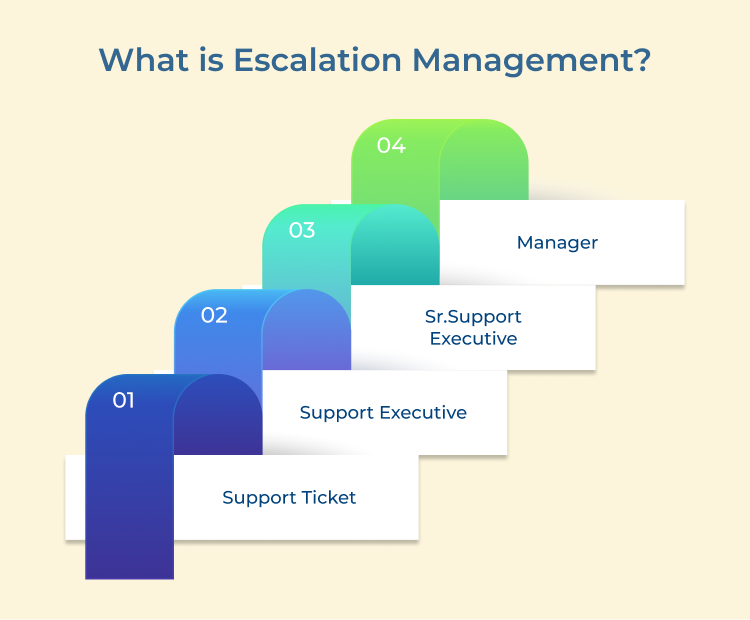
Key components of escalation management include:
Escalation management framework is a structured approach to resolving customer complaints or issues that have not been adequately addressed through regular channels. Effectively managing escalations can ensure that customer satisfaction is maintained and that potential conflicts are resolved in an efficient manner.
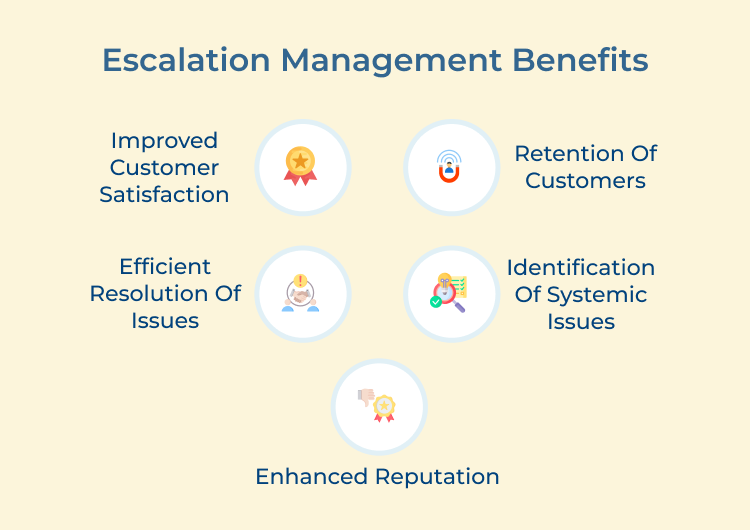
There are several key benefits to implementing escalation management within an organization:
Conflicts or issues are bound to arise from time to time in any business. It is important to have a proper escalation management process in place to resolve these issues effectively. Setting up a streamlined customer support escalation management framework ensures that problems are addressed promptly, before they cause further damage to the business.
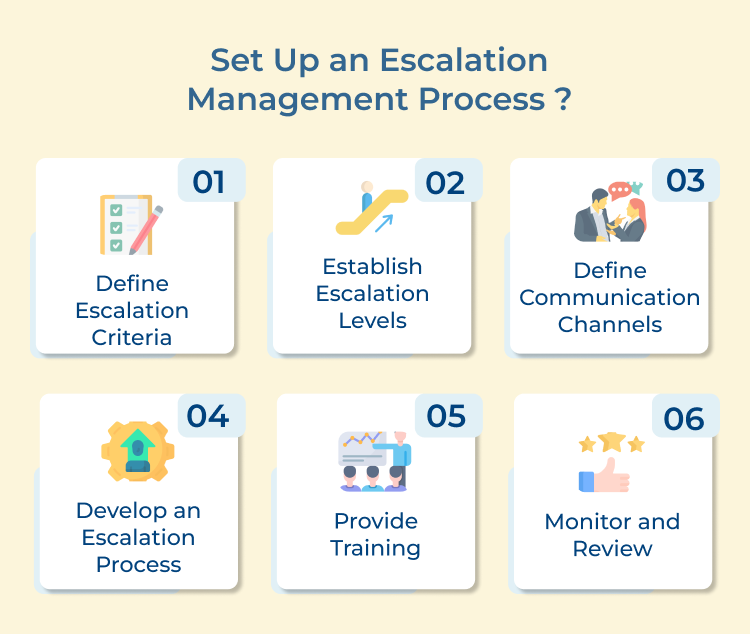
Here are some steps to set up an escalation management process:
Identify the types of issues that warrant escalation. It could include issues that are time-sensitive, high impact, or outside the scope of normal procedures. Clearly define the criteria for when a situation should be escalated.
Pro tips:
Create a hierarchy of escalation levels within the organization. It could include escalating from the frontline staff to a team lead, then to a manager and finally to an executive or higher-level decision-maker.
Make sure that everyone in the company understands the escalation levels and who to contact at each level.
Tips to Follow:
Establish clear communication channels for escalating issues. It could include setting up an email address/phone number specifically for escalations, or using a ticketing system to track escalated issues. Ensure that everyone is aware about the reporting process and the concerned point of contact in such scenarios.
Pro tips:
Outline all the steps that need to be taken when an issue is escalated. It could include notifying all relevant parties, gathering additional information and determining a resolution plan. Make sure the process is well-documented and followed consistently.
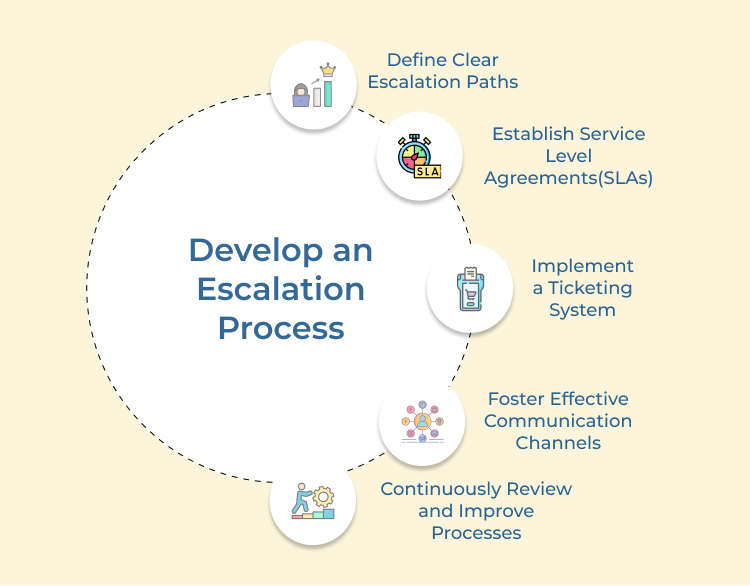
Tips to Follow:
Train employees on the escalation management process to ensure that everyone understands their role in handling escalated issues. Make sure employees know when and how to escalate a problem, as well as how to communicate effectively throughout the process.
Tips:
Regularly monitor the escalation management process to ensure it is working effectively. Take note of any common issues that arise and look for opportunities to improve the process. Conduct regular reviews to address any gaps or challenges.
Pro tips:
Escalation management is a critical process in any business or organization, as it involves timely and effective handling of issues or concerns that have escalated beyond the initial point of contact.
There are various types of escalation management strategies that can be employed to ensure that issues are resolved efficiently and effectively.
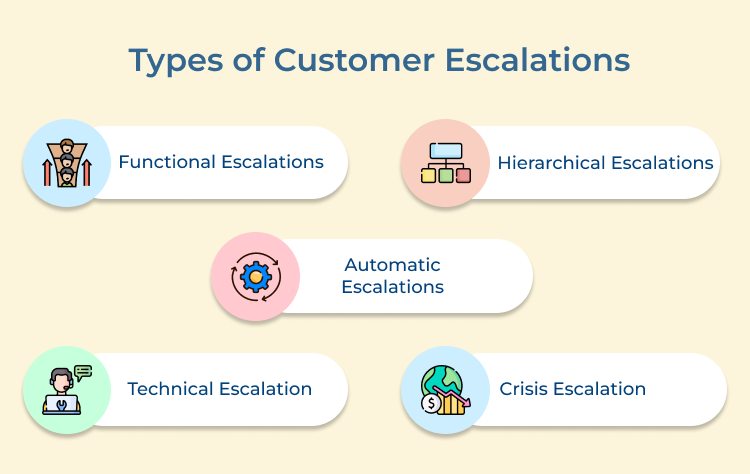
Here are some common types of escalation management:
Functional escalations occur when a customer’s issue needs to be escalated to a different department or team within the organization. This type of escalation is necessary when the initial point of contact is unable to resolve the issue and requires assistance from other departments with specialized knowledge or resources.
Hierarchical escalations involve escalating an issue up the chain of command within an organization. The type of escalation is used when a customer’s concern cannot be resolved by frontline staff and requires the attention of higher-level management.
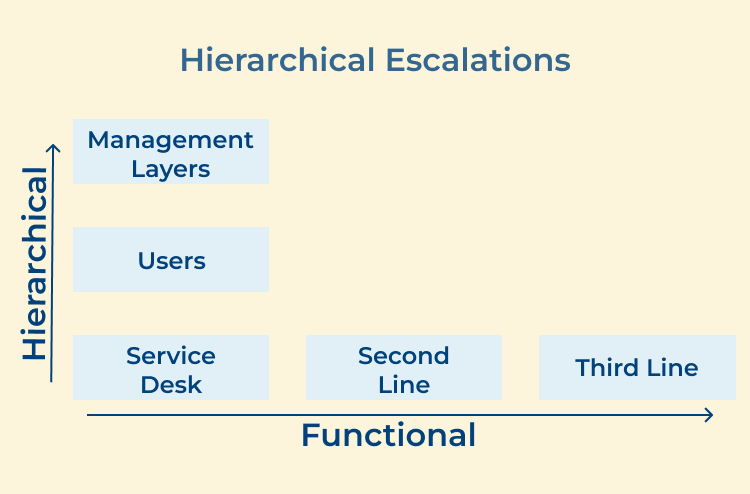
Hierarchical escalations ensure that issues are addressed by decision-makers who have the authority to make necessary changes or adjustments.
Automatic escalations are triggered by predefined rules or criteria within a system or software. Such escalations ensure that issues are addressed in a timely manner based on specific parameters, such as response time or severity of the problem. It helps to streamline the escalation process and prevent delays in resolving critical issues.
Technical escalations involve escalating an issue to technical support or IT professionals within an organization. It is necessary when the issue is related to technical difficulties, system malfunctions or other complex technical issues that require specialized knowledge and expertise to resolve.
Crisis escalations are used in emergency situations or critical incidents that require immediate attention. Such escalation involves activating a crisis management team or protocol to address the crisis and mitigate any potential damage or negative impact on the business. Crisis escalations are essential for handling unexpected events or emergencies effectively.
Escalations are bound to happen at some point or the other. Whether it is a customer complaint, a technical issue, or a project delay, having a clear escalation management process in place is significant to quickly resolving issues and maintaining customer satisfaction.
Here are some best practices for effective escalation management:
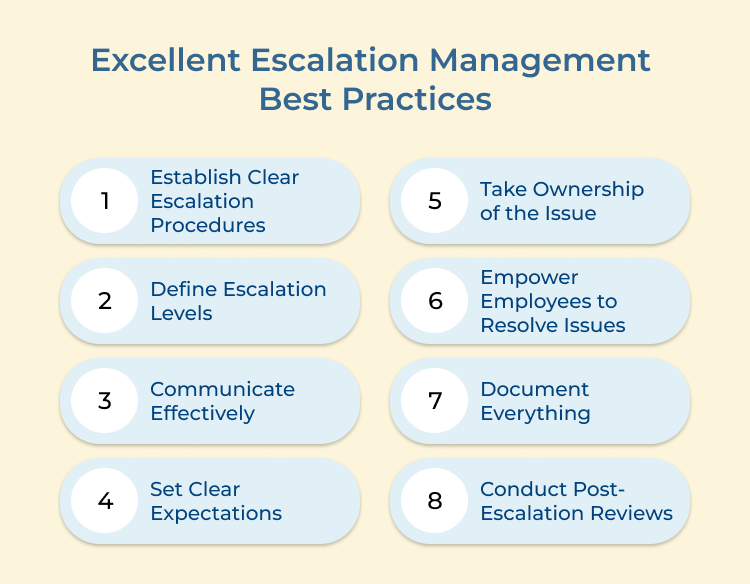
Document clear escalation procedures that outline how issues should be escalated, who should be involved at each level and how communication should flow. Make sure that all employees are aware of these procedures and know when & how to escalate issues.
Follow the below tips:
Clearly define different levels of escalation based on the severity of the issue. It could include levels such as frontline support, team lead, manager and executive. Each level should have specific criteria for when an escalation should occur.
Consider few tips:
Effective communication is key during an escalation. Ensure that everyone involved is kept informed of the status of the issue, any updates and the expected resolution time. Use multiple channels such as email, phone calls and meetings to ensure that communication is clear.
Here are the tips to follow:
Set clear expectations with the customer or stakeholder regarding the escalation process. Let them know what they can expect in terms of communication, resolution time and potential outcomes. Managing expectations can help prevent misunderstandings and improve customer satisfaction.
Here are some tips to consider:
When an issue is escalated, the person or team responsible for resolving it should take ownership of the problem. It means actively working towards a solution, keeping stakeholders informed and ensuring that the issue is resolved in an estimated time.
Few tips to follow:
Empower frontline employees to resolve issues whenever possible. Provide them with the training, resources and authority to address customer concerns without having to escalate them to higher levels. It can help speed up the resolution process and improve customer satisfaction.
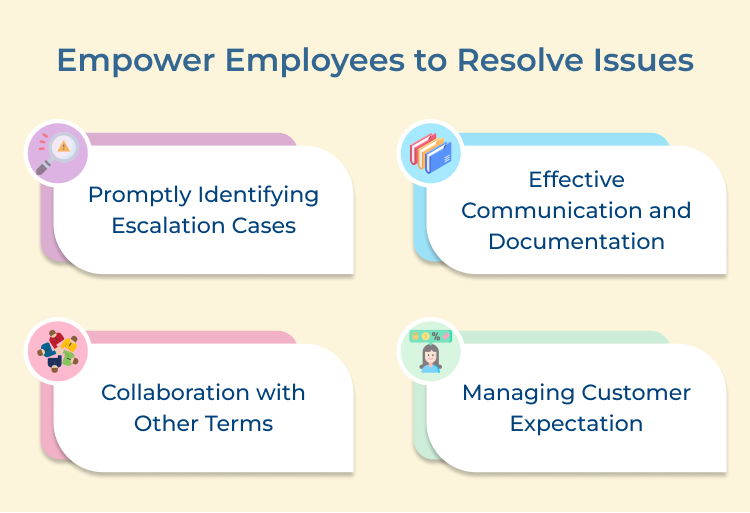
Here are few tips:
Keep detailed records of all escalations, including the issue, actions taken, communication with stakeholders and the final resolution. The documentation can be useful for identifying patterns, improving processes and avoiding similar escalations in the future.
Some tips to follow:
After an escalation has been resolved, conduct a post-escalation review to analyze what went wrong, what could have been done differently and how to prevent similar issues in the future. Use this feedback to continuously improve your escalation management process.
Here are some tips to follow:
Escalation management is an Important process in any organization, as it involves resolving customer issues that have been escalated to higher levels of management. But, there are several challenges that can arise in the escalation management process.
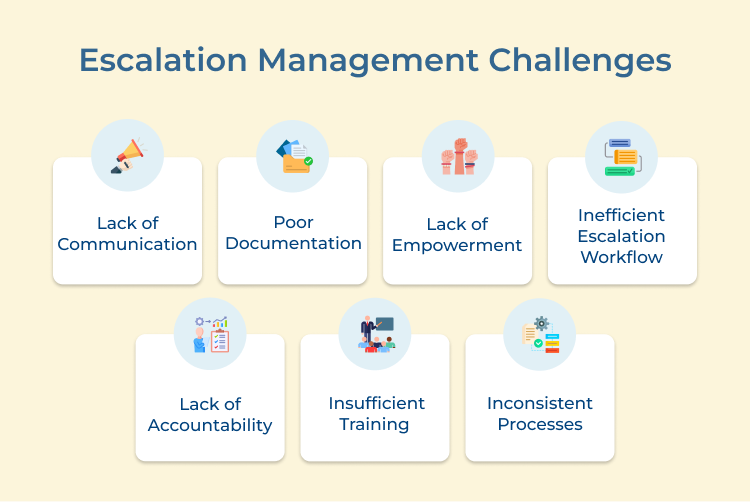
Here are seven common challenges faced in escalation management and some strategies to solve them:
Improper communication between different departments or teams can lead to delays in resolving the customer’s issue and can also result in a poor customer experience.
Solution:
Irregular documentation of the escalation process can create difficulty to track the progress of the case and ensure that all necessary steps have been taken to resolve the issue.
Solution:
The frontline employees should be empowered to resolve customer issues on their own. They may escalate cases prematurely, leading to unnecessary delays in the resolution process.
Solution:
An inefficient escalation workflow can result in cases being lost or overlooked, leading to dissatisfied customers and potential revenue loss.
Solution:
Not having clear accountability can be difficult to ensure that escalations are being handled properly and that all necessary steps are being taken to address the customer’s issue.
Solution:
Untrained employees are not competent to handle customer escalations. They may struggle to effectively resolve the issues, leading to customer dissatisfaction.
Solution:
Different teams /departments within the organization have different escalation processes that usually leads to confusion in resolving customer issues.
Solution:
Effective escalation management is vital for maximizing customer retention. Addressing customer concerns in an efficient manner assists businesses to show their dedication to customer satisfaction as well as loyalty. Implementing clear communication channels, empowering employees to make decisions, and continuously improving processes based on customer feedback are key steps in effective escalation management.
Taking a proactive approach to resolving issues as well as showing customers that their satisfaction is a top priority helps businesses ensure long-term relationships and repeat business. Remember, happy customers lead to a successful and thriving business.

1. Why are escalation management processes important?
Escalation management processes are significant in ensuring that customer issues are handled efficiently. When a customer concern cannot be resolved by frontline customer service representatives, it is important to have a system in place to escalate the issue to higher levels of management. It ensures that the customer receives the assistance they need in a timely manner and prevents the issue from escalating further.
2. What does an escalation manager do?
An escalation manager is responsible for overseeing the escalation process within an organization. They are tasked with identifying and resolving complex customer issues that cannot be resolved at the frontline level. Escalation managers work closely with both customers and internal teams to ensure that issues are addressed promptly.
3. Why does escalation management matter in customer service
Escalation management is crucial in customer service because it can help prevent customer churn and negative word-of-mouth publicity. When customers feel that their concerns are being taken seriously, they are more likely to continue doing business with the company. An effective escalation management practice can help identify systemic issues within the organization that need to be addressed to improve overall customer satisfaction.
4. How to improve your escalation management capabilities?
To improve your escalation management capabilities, consider implementing the following strategies:
1. Develop clear escalation procedures: Ensure that all team members are aware of the escalation process and know when & how to escalate customer issues.
2. Provide training: Offer training to employees on how to handle customer escalations and empower them to make decisions to resolve issues.
3. Use technology: Utilize customer service software to track and manage escalations, ensuring that nothing falls through the cracks.
 https://omni24.io/wp-content/uploads/2026/08/AI-Customer-Service-Agents.png
1256
2400
Webvision Solution
https://omni24.io/wp-content/uploads/2023/04/Omni-Logo-1.svg
Webvision Solution2026-09-21 04:48:512026-09-21 04:48:51How to Build an AI Customer Service Agents: 8 Key Steps
https://omni24.io/wp-content/uploads/2026/08/AI-Customer-Service-Agents.png
1256
2400
Webvision Solution
https://omni24.io/wp-content/uploads/2023/04/Omni-Logo-1.svg
Webvision Solution2026-09-21 04:48:512026-09-21 04:48:51How to Build an AI Customer Service Agents: 8 Key Steps https://omni24.io/wp-content/uploads/2026/08/Omnichannel-Conversational-AI.png
1256
2400
Tushar Joshi
https://omni24.io/wp-content/uploads/2023/04/Omni-Logo-1.svg
Tushar Joshi2026-09-16 03:51:072026-09-16 03:51:07How to Build Omnichannel Conversational AI Strategy
https://omni24.io/wp-content/uploads/2026/08/Omnichannel-Conversational-AI.png
1256
2400
Tushar Joshi
https://omni24.io/wp-content/uploads/2023/04/Omni-Logo-1.svg
Tushar Joshi2026-09-16 03:51:072026-09-16 03:51:07How to Build Omnichannel Conversational AI Strategy https://omni24.io/wp-content/uploads/2026/08/Customer-Service-Teams.png
1256
2400
Tushar Joshi
https://omni24.io/wp-content/uploads/2023/04/Omni-Logo-1.svg
Tushar Joshi2026-09-15 04:01:522026-09-15 04:02:16How to Build Customer Service Teams: 6 Key Steps
https://omni24.io/wp-content/uploads/2026/08/Customer-Service-Teams.png
1256
2400
Tushar Joshi
https://omni24.io/wp-content/uploads/2023/04/Omni-Logo-1.svg
Tushar Joshi2026-09-15 04:01:522026-09-15 04:02:16How to Build Customer Service Teams: 6 Key Steps
Whether it’s about acquire, engage or support – Omni24 covers all your customer engagement needs in one complete platform.

Copyright ©2026 Veemo All rights reserved.
CA, Los Angeles, Hall Ave, 19011