What is Knowledge Retention and How to Measure it?
Explore proven strategies for knowledge retention, ensuring critical insights are applied to enhance productivity, all while maintaining a competitive edge.

Explore proven strategies for knowledge retention, ensuring critical insights are applied to enhance productivity, all while maintaining a competitive edge.
An organization’s ability to retain and leverage its collective knowledge is a key differentiator. From capturing the expertise of retiring employees to encouraging a culture of continuous learning, effective knowledge retention strategies are essential for maintaining a competitive edge.
But what does successful knowledge retention look like in practice? How are leading organizations ensuring that critical knowledge is preserved, shared and applied?
We will explore proven strategies and real-world examples of knowledge retention in action, offering insights for organizations looking to unlock the full potential of their knowledge assets.
Knowledge retention refers to an organization’s ability to maintain critical information, skills, and expertise over time. It involves capturing, storing and effectively transferring knowledge from individuals to the collective organizational memory. The process ensures that valuable insights, experiences and best practices are not lost due to employee turnover, retirement or other factors.
Knowledge retention strategies aim to safeguard an organization’s intellectual capital, maintain competitive advantage and promote continuous learning & innovation. By implementing effective knowledge retention practices, organizations can prevent knowledge gaps, improve decision-making, enhance productivity and encourage a culture of knowledge sharing among employees.
key objectives:
46% of L&D professionals saw a bigger gap in skills/knowledge in 2022 than compared to previous years. Knowledge retention does fill the space and benefits the firm in the long run.
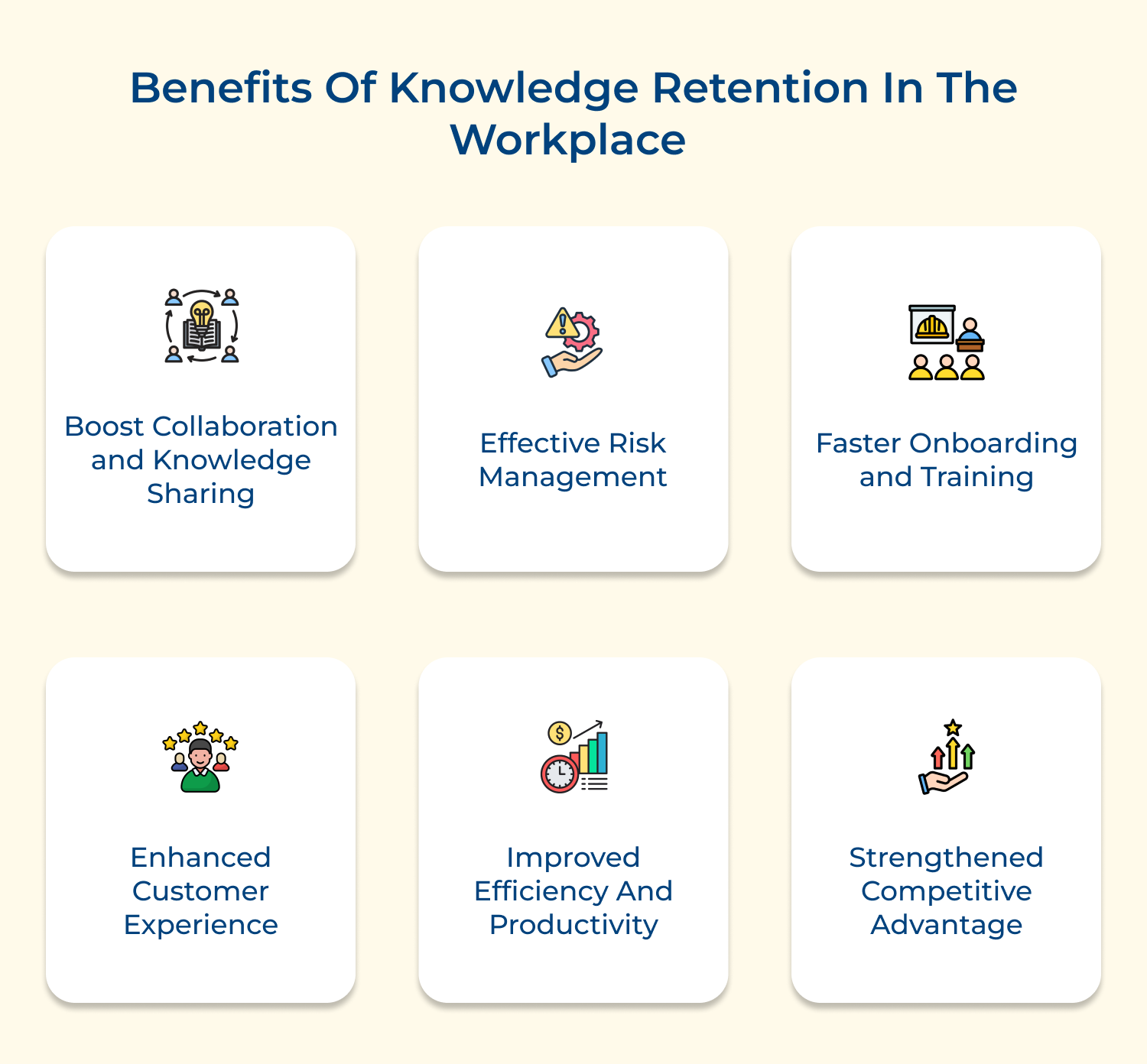
A robust knowledge retention strategy is essential for businesses to preserve intellectual assets. Here’s a comprehensive approach to developing an effective knowledge retention strategy:
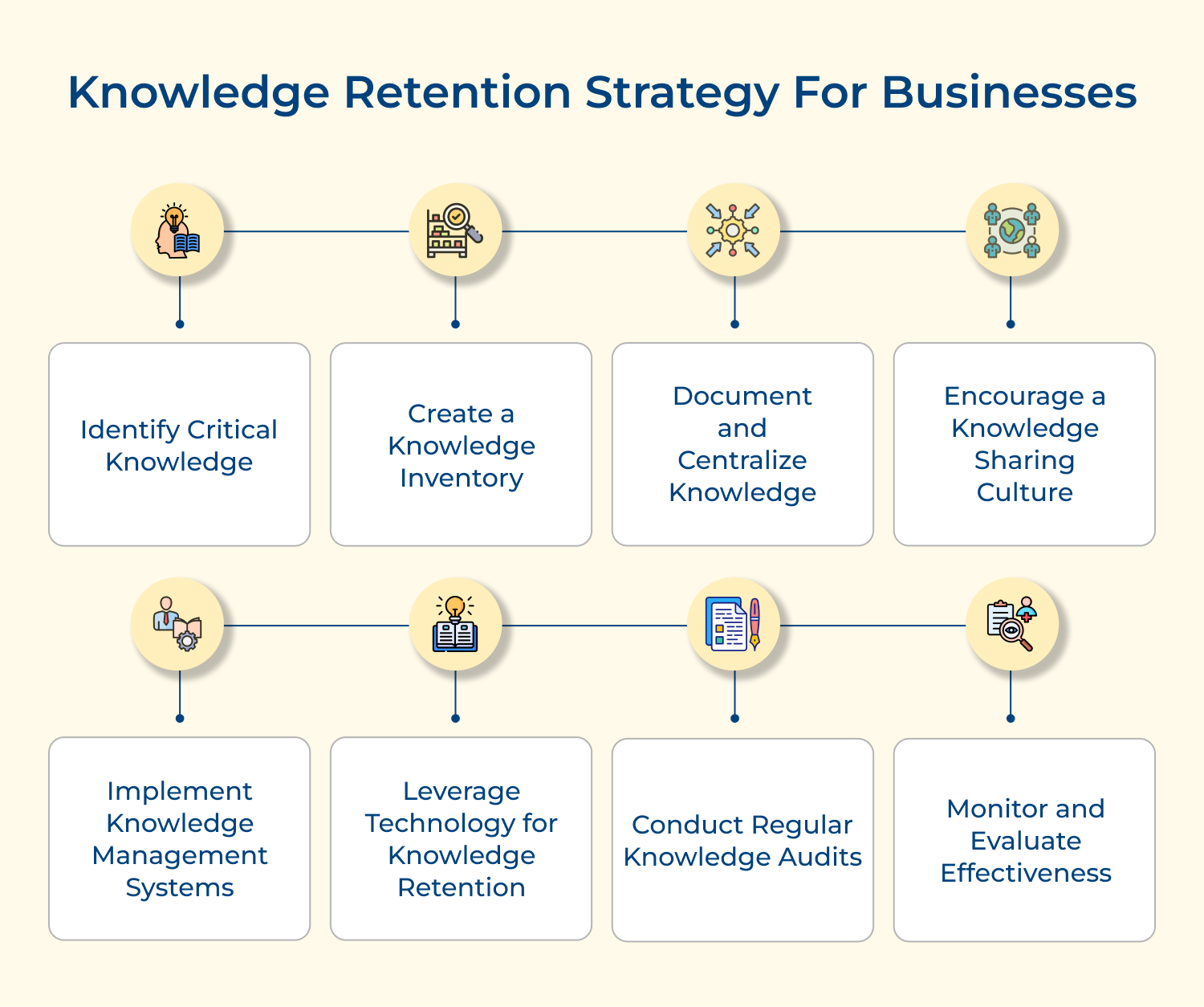
Identifying critical knowledge involves determining the essential skills, experience and information that are vital to your organization’s success. It includes both explicit knowledge, which is easily documented/shared and tacit knowledge, which is more experience-based as well as difficult to articulate. Focus on knowledge that is unique, valuable and at risk of being lost due to employee turnover or changing roles.
Pro tips:
A knowledge inventory is a systematic catalog of your organization’s knowledge assets. It should include information about what the knowledge is, who holds it, where it is stored and how it is used. Creating an inventory helps you identify knowledge gaps, redundancies and silos. It also makes it easier to locate as well as access relevant knowledge when needed.
Pro tips:
Documentation is the process of capturing knowledge in a clear, accessible format. It can include written procedures, guidelines, case studies, or video tutorials. Centralizing this documentation in a single repository, such as a knowledge management system or internal wiki, makes it easier for employees to find and use. Encourage employees to contribute their knowledge and keep documentation up-to-date.
Pro tips:
A knowledge sharing culture is one where employees freely exchange ideas, insights and best practices. Encourage this by making knowledge sharing a core value, recognizing and rewarding knowledge sharing behaviors, all while providing opportunities for collaboration. It can include communities of practice, mentoring programs, lunch and learns or knowledge sharing sessions. Leaders should model knowledge sharing and emphasize its importance.
Pro tips:
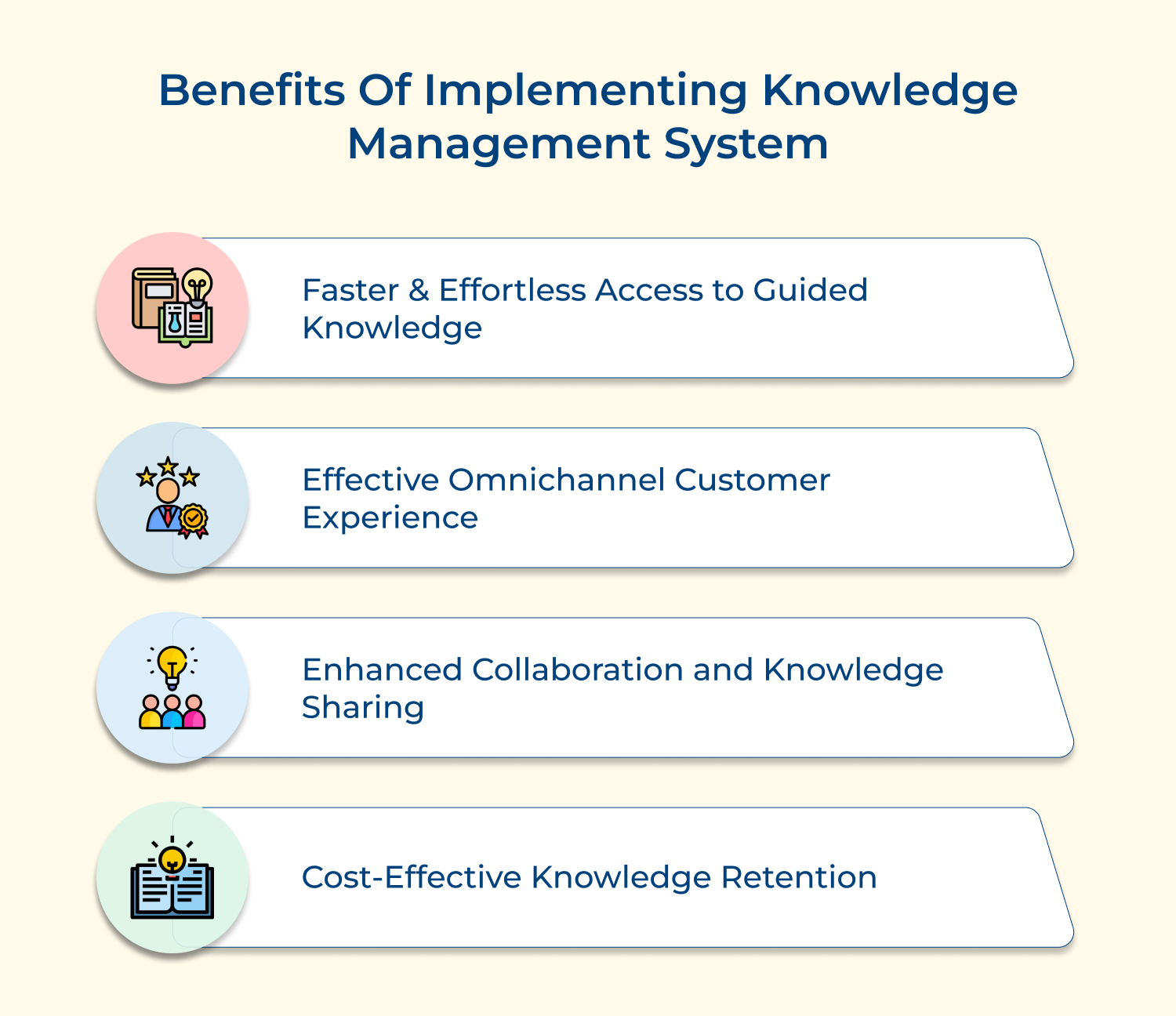
Knowledge management systems are technologies that support the creation, storage, sharing and application of knowledge. These can range from simple document management systems to more advanced platforms with search, collaboration and workflow capabilities. Choose a system that aligns to your organization’s needs, integrates with existing tools and is easy for employees to use. Provide training and support to encourage adoption.
Pro tips:
Technology can play a key role in capturing, storing and sharing knowledge. In addition to knowledge management systems, consider using tools like video conferencing, screen recording, or podcasting to capture and share tacit knowledge. Artificial intelligence and machine learning can help automate knowledge discovery as well as recommendations. Virtual and augmented reality can enable immersive learning experiences. Stay current with emerging technologies for knowledge retention.
Pro tips:
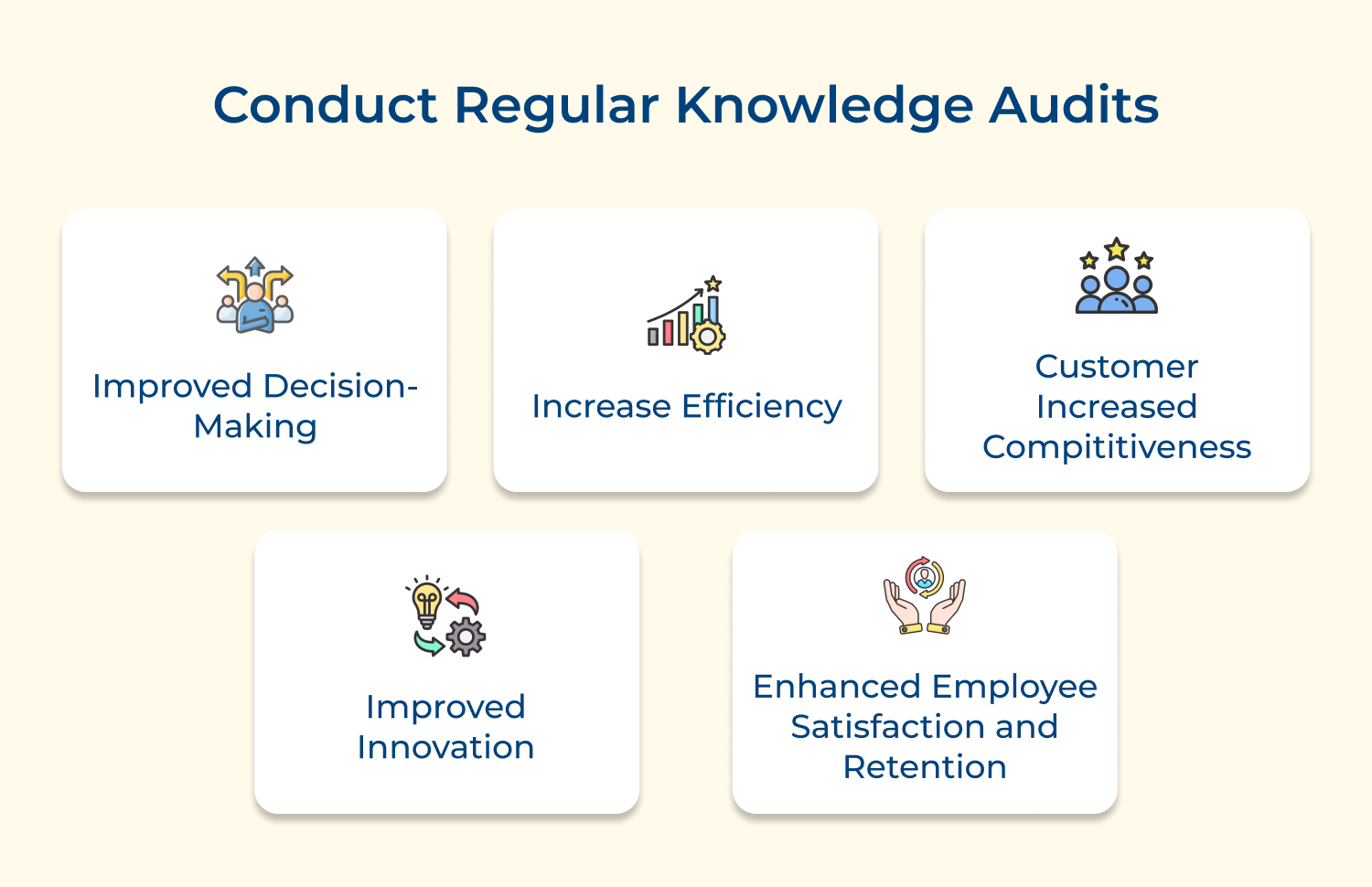
Knowledge audits are periodic assessments of an organization’s knowledge assets and knowledge management practices. They help identify strengths, weaknesses and areas for improvement. Audits can include surveys, interviews, focus groups or analysis of knowledge artifacts. Use audit findings to update your knowledge retention strategy, close knowledge gaps and align knowledge management with business goals. Conduct audits regularly to ensure continuous improvement.
Pro tips:
Measuring the effectiveness of knowledge retention in the workspace ensures employee productivity and reduces knowledge loss. Here are the key metrics and KPIs to track.
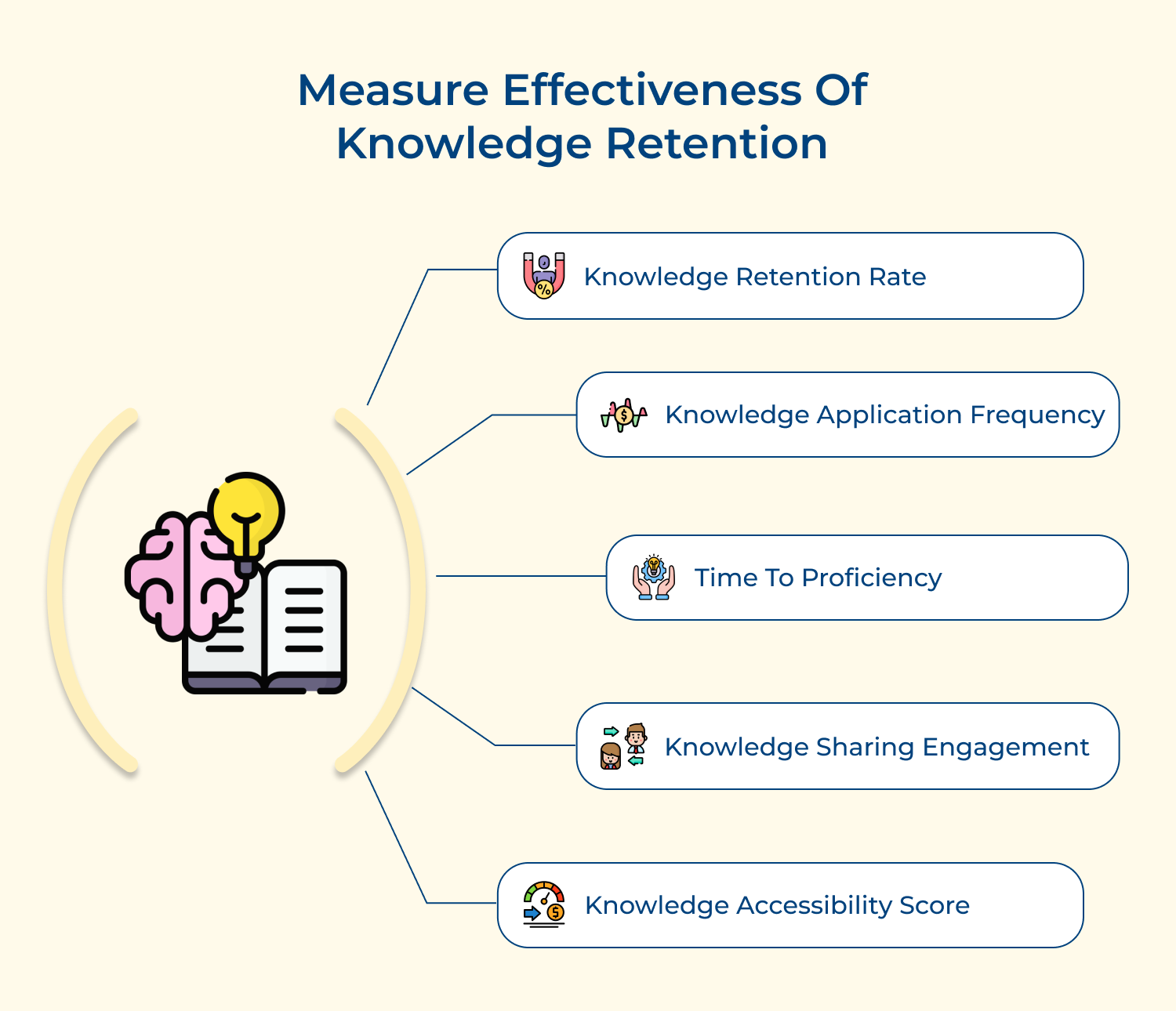
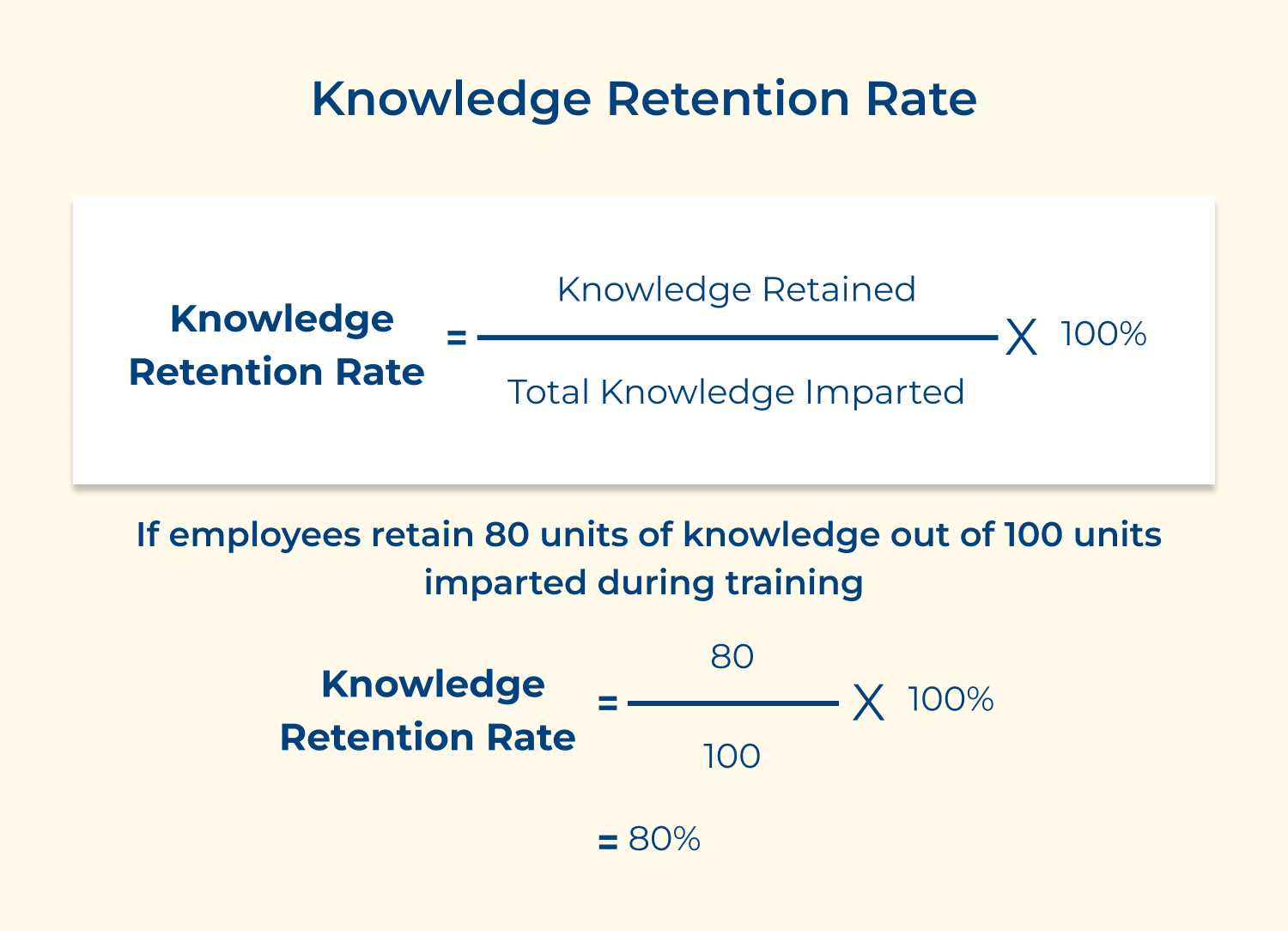
Knowledge Retention Rate measures the percentage of knowledge that employees retain after training or learning initiatives. It helps assess the effectiveness of learning programs and identifies areas for improvement.
Pro tips:
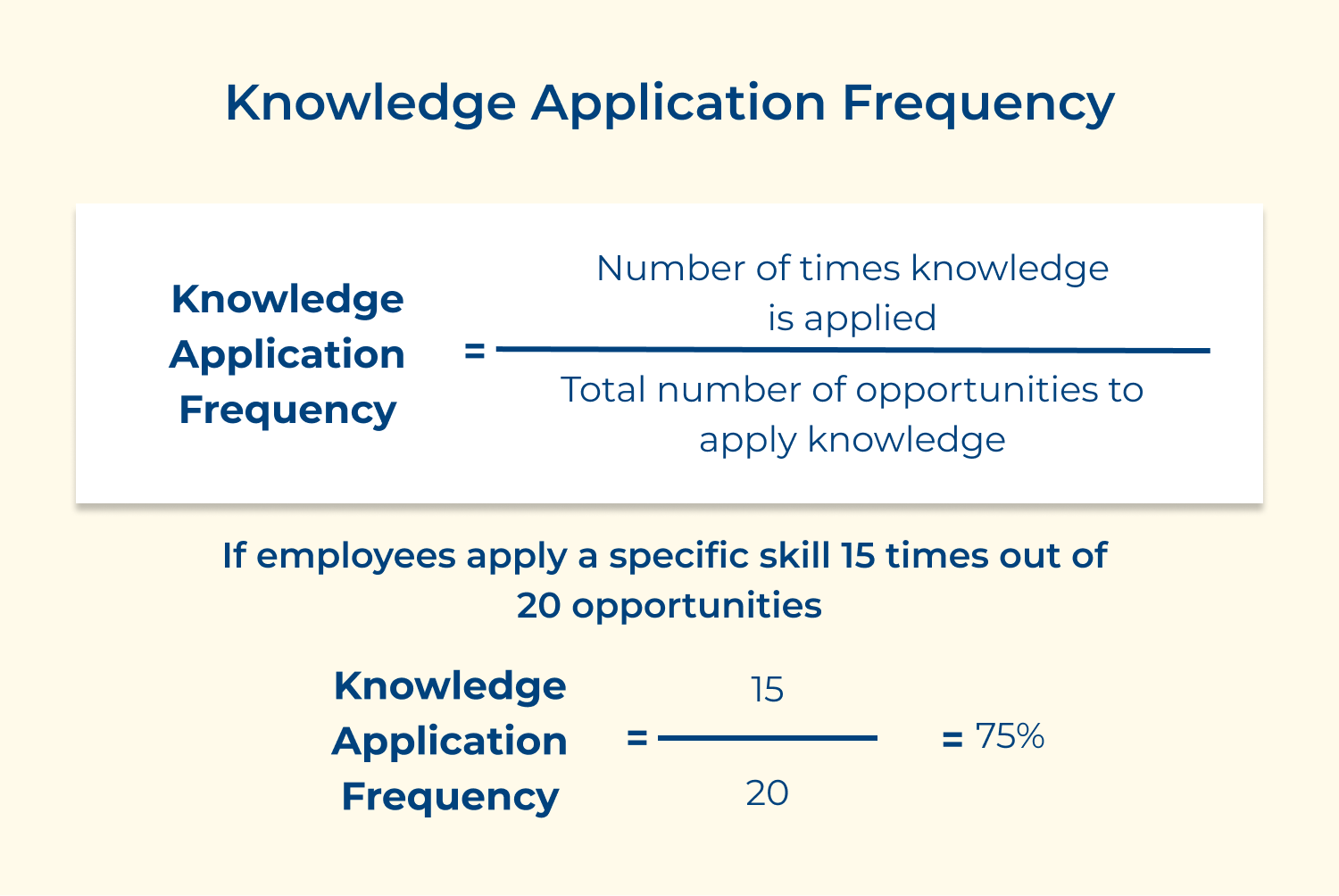
Knowledge Application Frequency measures how often employees apply the knowledge they have acquired to their work. It indicates the practical utility and relevance of the knowledge retained.
Pro tips:
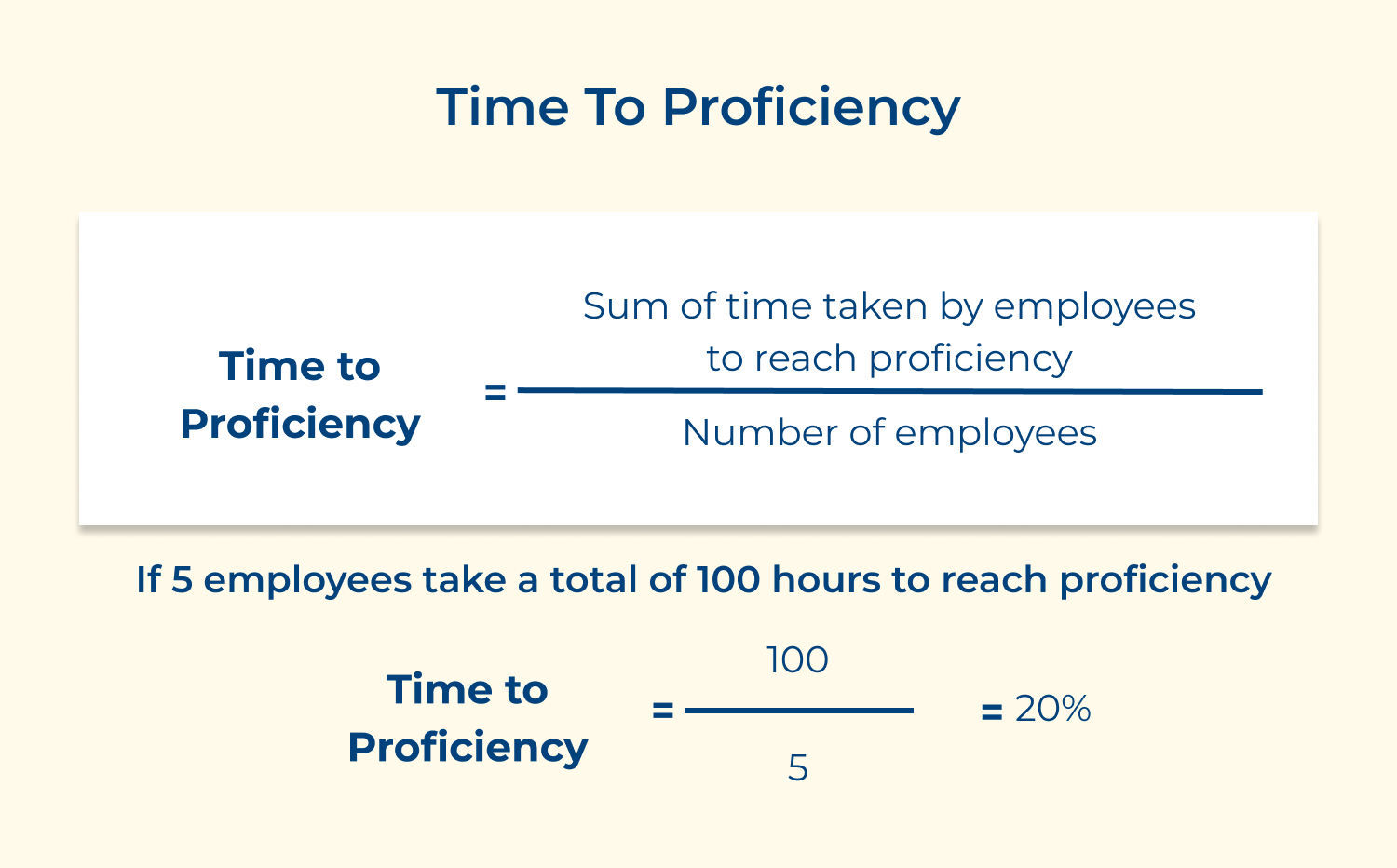
Time to Proficiency measures the duration it takes for employees to reach a desired level of proficiency after acquiring new knowledge or skills. It helps assess the efficiency of learning programs.
Tips:
Knowledge Sharing Engagement measures the level of employee participation in knowledge sharing activities, such as contributing to knowledge bases, mentoring, or leading training sessions. It reflects the culture of knowledge sharing within the organization.
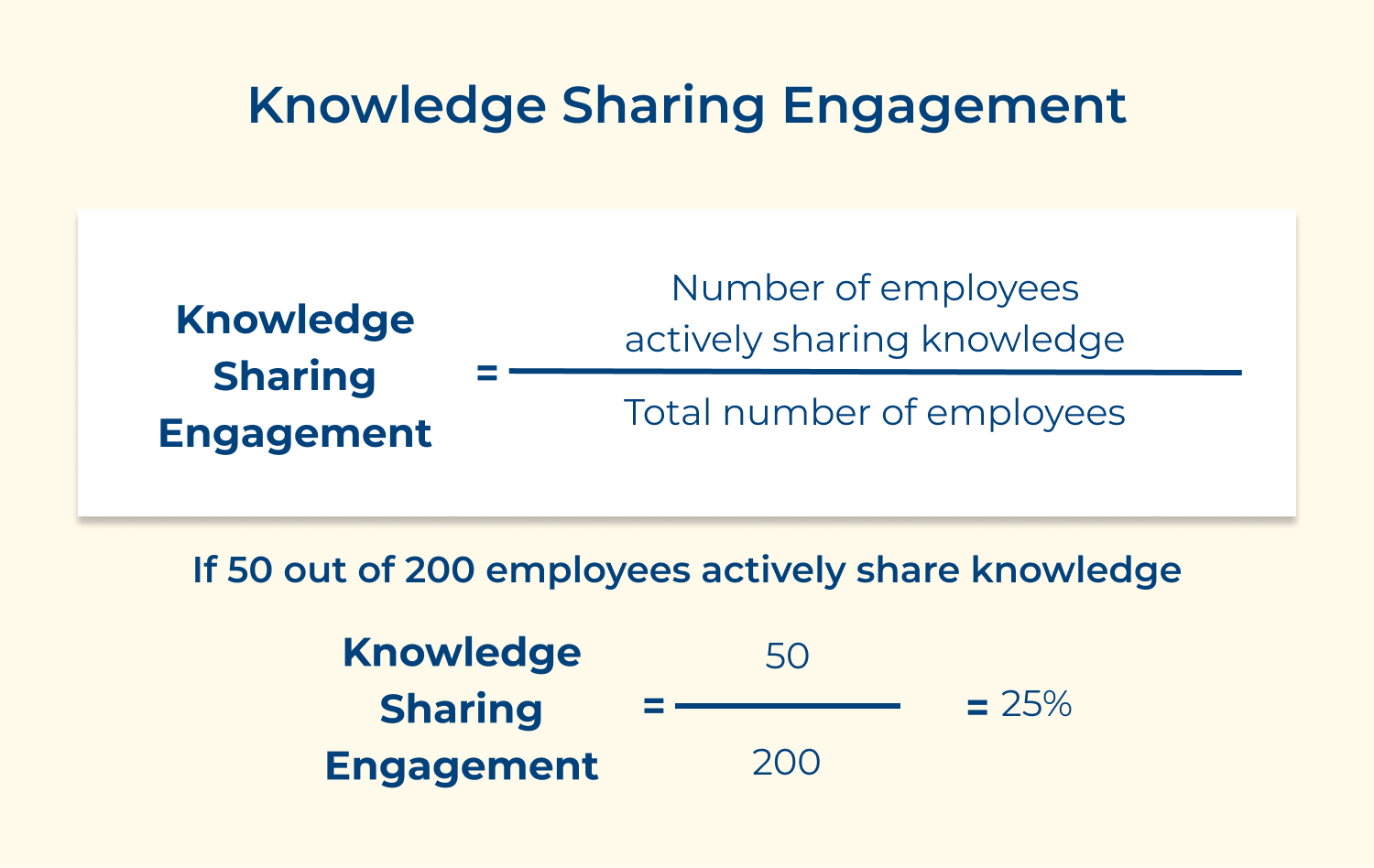
Pro tips:
Knowledge Accessibility Score measures the ease with which employees can access and retrieve relevant knowledge when needed. It assesses the effectiveness of knowledge management systems and practices.
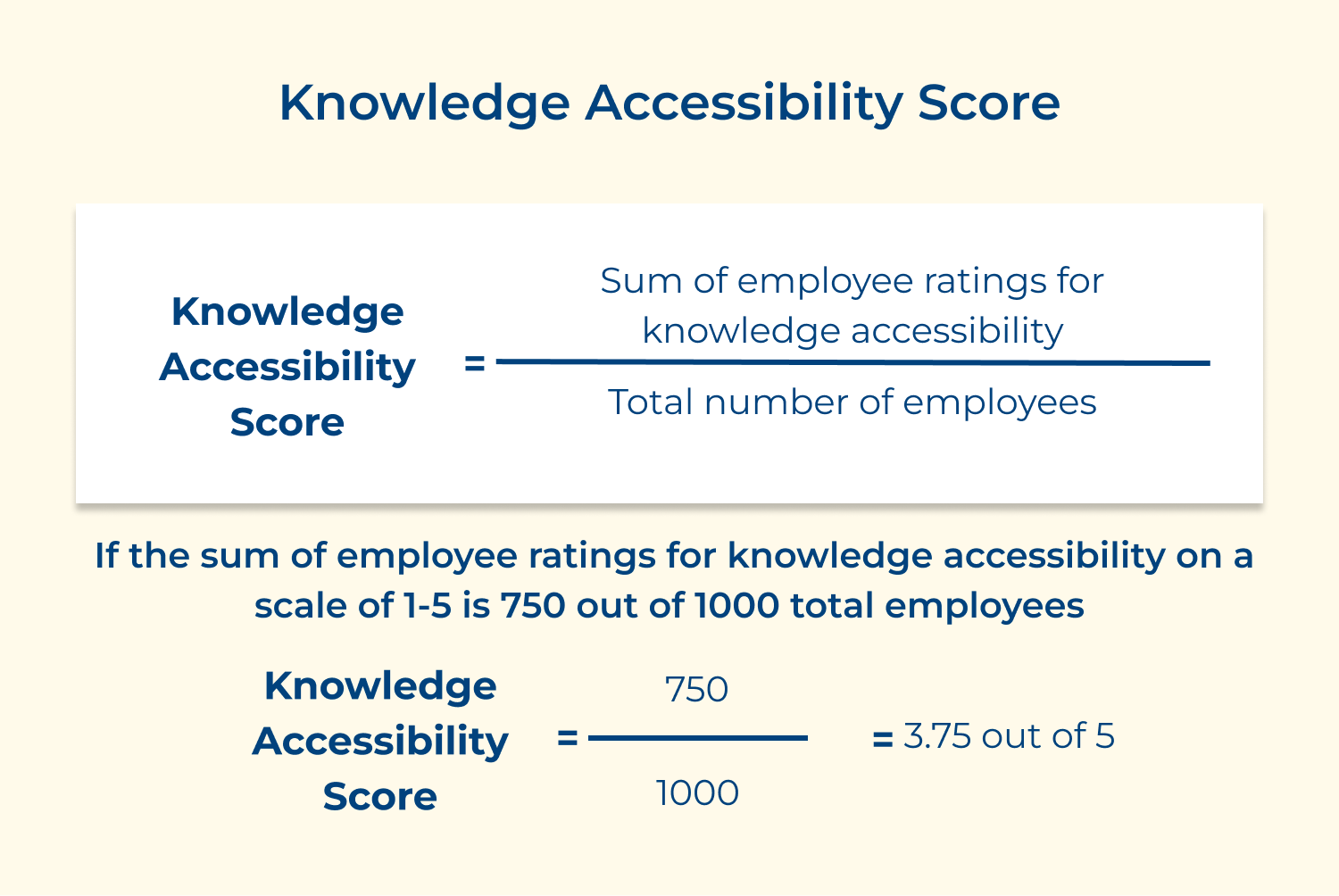
Tips:
Knowledge retention challenges can impede its effectiveness. Understanding and addressing these obstacles is crucial for maintaining valuable institutional knowledge.
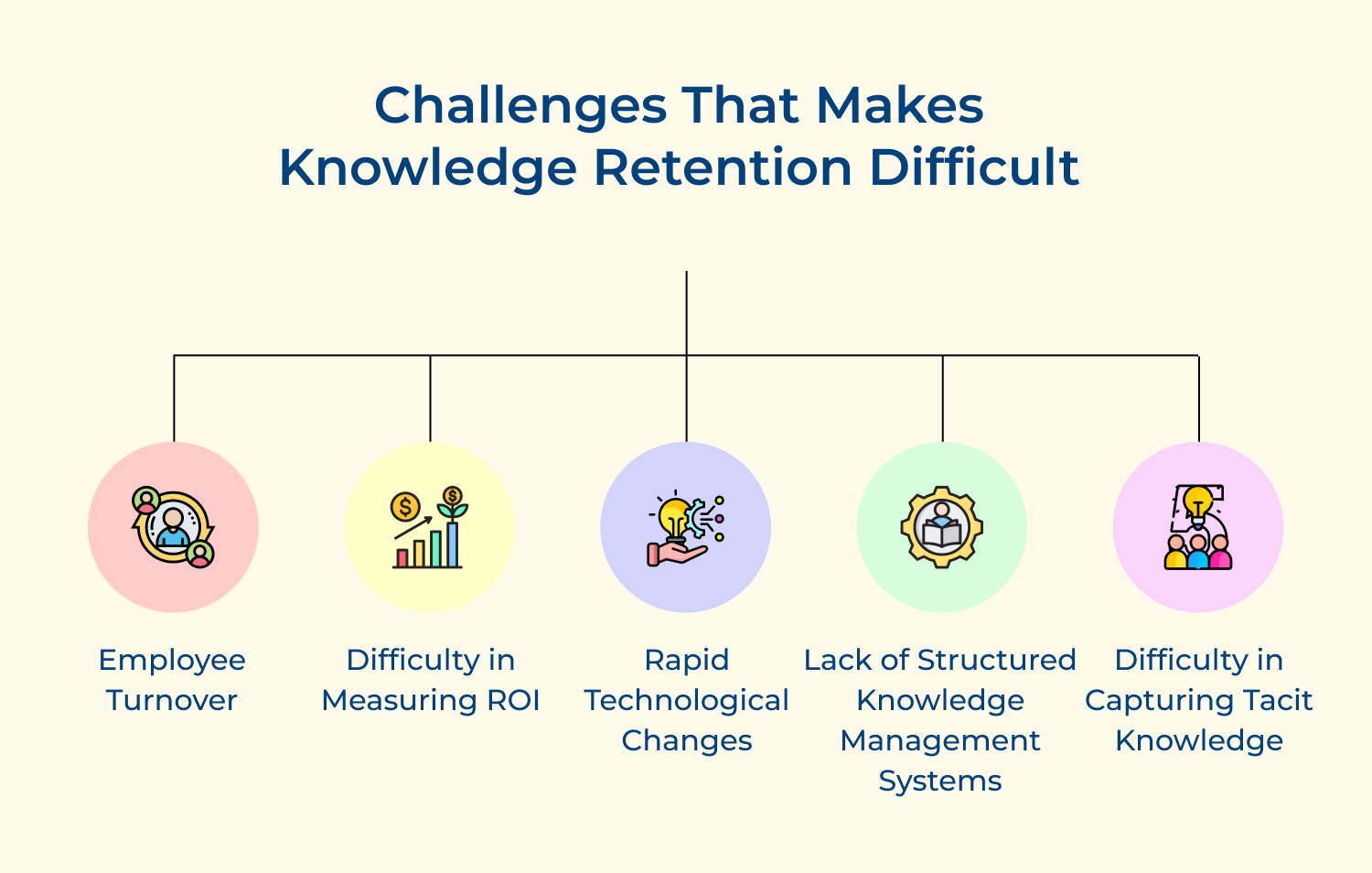
High staff turnover rates create immediate knowledge gaps when experienced workers leave organizations. Critical expertise walks out the door alongside departing employees, leaving behind incomplete processes and lost institutional memory that took years to develop.
Organizations struggle to quantify the financial benefits of knowledge management initiatives making it hard to justify investments. Without clear metrics, leadership often views knowledge retention as a cost center rather than a strategic asset.
Fast-evolving technologies quickly make existing knowledge obsolete requiring constant updates to knowledge bases. Workers must continuously learn new systems while organizations struggle to keep documentation current with technological advances.
Many organizations operate without formal systems to capture and organize knowledge effectively. Information remains scattered across emails, personal files, and individual minds rather than being systematically documented.
The most valuable knowledge often exists as unspoken expertise and intuitive understanding that employees develop through experience. This tacit knowledge proves extremely difficult to document and transfer to others through traditional training methods.
Effective solutions focus on systematic knowledge capture and sustainable retention practices.
Improving knowledge retention is essential for maintaining organizational efficiency. Here are the best practices to ensuring the continuity of expertise in the workplace:
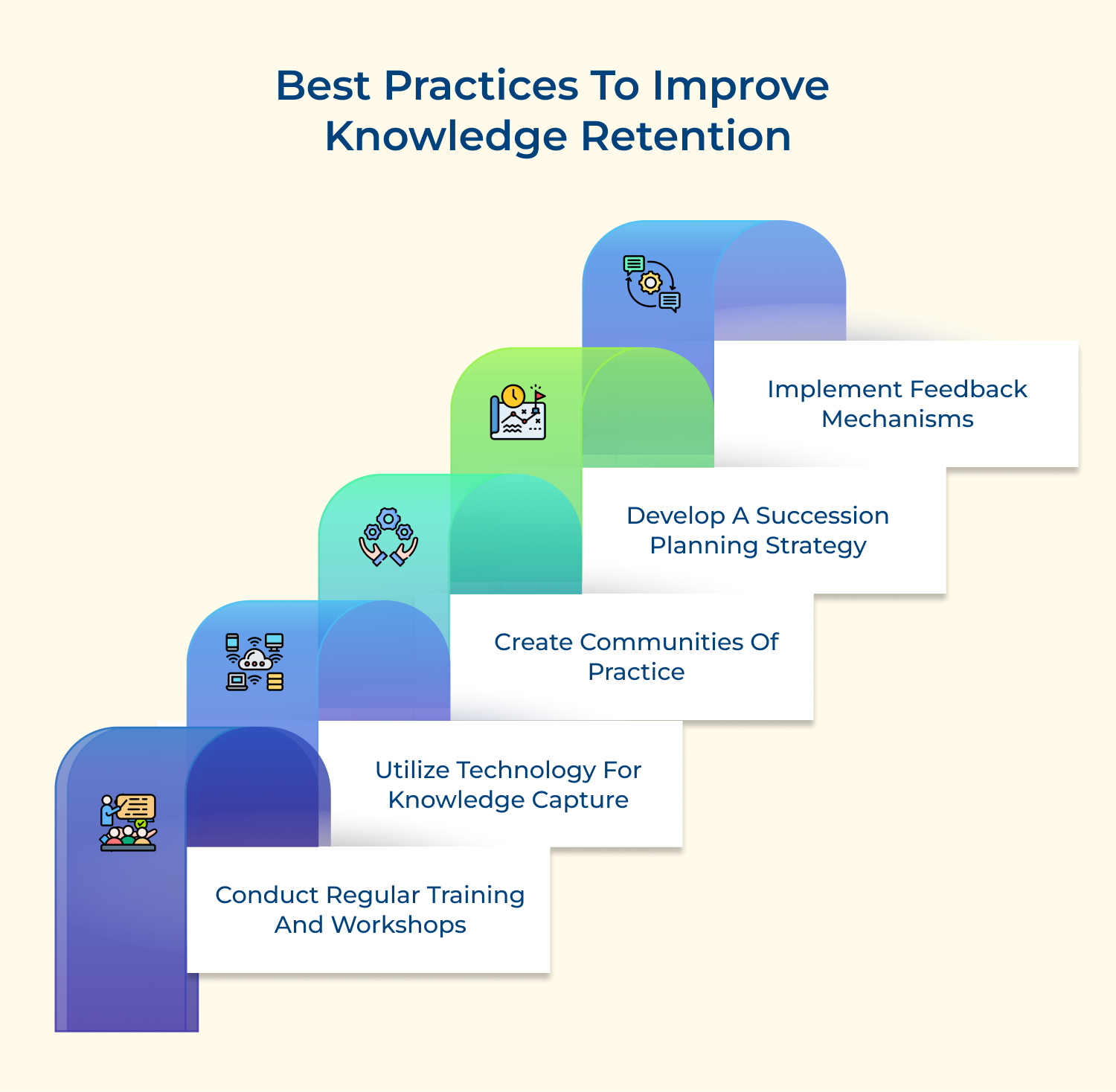
Conduct Regular Training and Workshops
Organize ongoing training sessions/workshops to keep employees’ skills and knowledge up-to-date. These should cover both technical skills and soft skills relevant to the organization. Encourage employees to share their expertise by leading some of these sessions. Utilize a mix of in-person and online learning platforms to accommodate different learning styles as well as schedules.
Utilize Technology for Knowledge Capture
Leverage technology tools such as video recording, screen capture software and collaborative platforms to capture as well as share knowledge. Record important meetings, training sessions and presentations for future reference. Use these recordings to create searchable transcripts and summary documents, making the information more accessible to review.
Create Communities of Practice
Establish communities of practice around specific topics, skills, or areas of expertise within the organization. These groups bring together employees with shared interests to exchange ideas, solve problems and share best practices. Provide support and resources for these communities to thrive, such as dedicated meeting times as well as collaborative tools.
Develop a Succession Planning Strategy
Implement a comprehensive succession planning strategy to ensure critical knowledge is not lost when key employees leave or retire. Identify critical roles and the knowledge associated with them. Develop plans to transfer this knowledge to potential successors through targeted training, job shadowing and mentoring. Regularly review as well as update succession plans to reflect organizational changes.
Implement Feedback Mechanisms
Create mechanisms for employees to provide feedback on the knowledge retention practices and resources. Regularly solicit feedback to understand their needs, identify challenges and gather suggestions for improvement. Use this feedback to refine as well as enhance knowledge management efforts.
Effective knowledge retention is no longer a nice-to-have but a must-have for organizations. By implementing a multi-faceted strategy that encompasses culture, technology as well as measurement, organizations can preserve their most valuable asset – the knowledge and expertise of their people.
The key is to start small, iterate often and continuously improve based on feedback as well as results. With a robust knowledge retention strategy in place, organizations can not only survive but thrive in the face of change, disruption and competition. The future belongs to the knowledge-driven organization.

What causes poor knowledge retention?
Poor knowledge retention can be caused by various factors including lack of engagement with the material, insufficient repetition or practice, information overload, stress or fatigue, inadequate sleep and ineffective learning strategies. Distractions, multitasking and not connecting new information to existing knowledge can also hinder retention. Not applying the information in practical contexts or failing to understand its relevance can lead to poor retention.
What is the importance of knowledge retention?
Knowledge retention is crucial for personal and professional growth. It allows individuals and organizations to build upon existing knowledge, make informed decisions, as well as solve problems efficiently. Retained knowledge forms the foundation for creativity and innovation. In business, it prevents the loss of valuable expertise when employees leave, ensures continuity in operations and maintains competitive advantage. Effective knowledge retention also reduces the time and resources spent on relearning.
How does knowledge retention work?
Knowledge retention works through the process of encoding, storage and retrieval in the brain. When information is initially learned, it’s encoded into short-term memory. Through repetition, application and connection to existing knowledge, it’s transferred to long-term memory for storage. Effective retention involves creating strong neural pathways for this stored information. Retrieval practice, spaced repetition and applying knowledge in various contexts strengthen these pathways, making the information more accessible when needed.
Why does knowledge retention matter?
Knowledge retention matters because it’s the foundation of learning and growth. It enables the application of past experiences to new situations, encouraging problem-solving and decision-making skills. In education, it ensures that learning builds progressively. In business, it preserves institutional knowledge, maintains productivity and drives innovation. Effective knowledge retention reduces the need for constant retraining, saves time/resources and allows individuals as well as organizations to adapt quickly to challenges.
What makes knowledge retention so hard?
Knowledge retention is challenging due to the brain’s tendency to forget information that’s not regularly used or deemed important. The overwhelming amount of information we encounter daily can lead to cognitive overload. Stress, lack of sleep and poor nutrition can impair cognitive functions necessary for retention. Ineffective learning methods, lack of context or relevance, and failure to connect new information to existing knowledge can make retention difficult.
 https://omni24.io/wp-content/uploads/2026/09/Social-commerce-scaled.png
1340
2560
Webvision Solution
https://omni24.io/wp-content/uploads/2023/04/Omni-Logo-1.svg
Webvision Solution2026-10-23 12:18:272026-10-23 12:18:27What is Social Commerce and Why Does It Matter?
 https://omni24.io/wp-content/uploads/2026/08/AI-Customer-Service-Agents.png
1256
2400
Webvision Solution
https://omni24.io/wp-content/uploads/2023/04/Omni-Logo-1.svg
Webvision Solution2026-09-21 04:48:512026-09-21 04:48:51How to Build an AI Customer Service Agents: 8 Key Steps
 https://omni24.io/wp-content/uploads/2026/08/Omnichannel-Conversational-AI.png
1256
2400
Tushar Joshi
https://omni24.io/wp-content/uploads/2023/04/Omni-Logo-1.svg
Tushar Joshi2026-09-16 03:51:072026-09-16 03:51:07How to Build Omnichannel Conversational AI Strategy

Whether it’s about acquire, engage or support – Omni24 covers all your customer engagement needs in one complete platform.

Copyright ©2026 Veemo All rights reserved.
CA, Los Angeles, Hall Ave, 19011