7 Different Types of Chatbots and How They Work
Explore chatbot types and how each functions so businesses can choose the right solution to improve efficiency.
Explore chatbot types and how each functions so businesses can choose the right solution to improve efficiency.
Many businesses struggle with overwhelming customer inquiries while lacking resources to provide instant support. Traditional methods create bottlenecks that frustrate customers and drain operational budgets without delivering consistent results.
Customers abandon purchases when they cannot get immediate answers, while your support team burns out handling repetitive questions. Chatbots manage 49% of customer interactions, with 42% of B2C brands using them as primary support, saving $8 billion annually.
Understanding the seven distinct chatbot types empowers you to select the perfect automated solution for your specific business needs. The comprehensive guide reveals how each chatbot technology works and which scenarios deliver maximum value for your investment.
A chatbot is a computer program that simulates human conversation through text or voice interactions. Think of it as a digital assistant that can understand your questions and respond in natural language. These automated helpers live on websites, messaging apps, or phone systems to engage with customers 24/7 without needing human staff.
Chatbots process your input using natural language processing to understand intent. They then search their knowledge base or follow programmed rules to generate appropriate responses. Advanced versions use machine learning to improve their answers over time through conversations.
Key Objectives:
Choosing the right chatbot type for your specific business needs can dramatically transform your customer experience and operational efficiency.
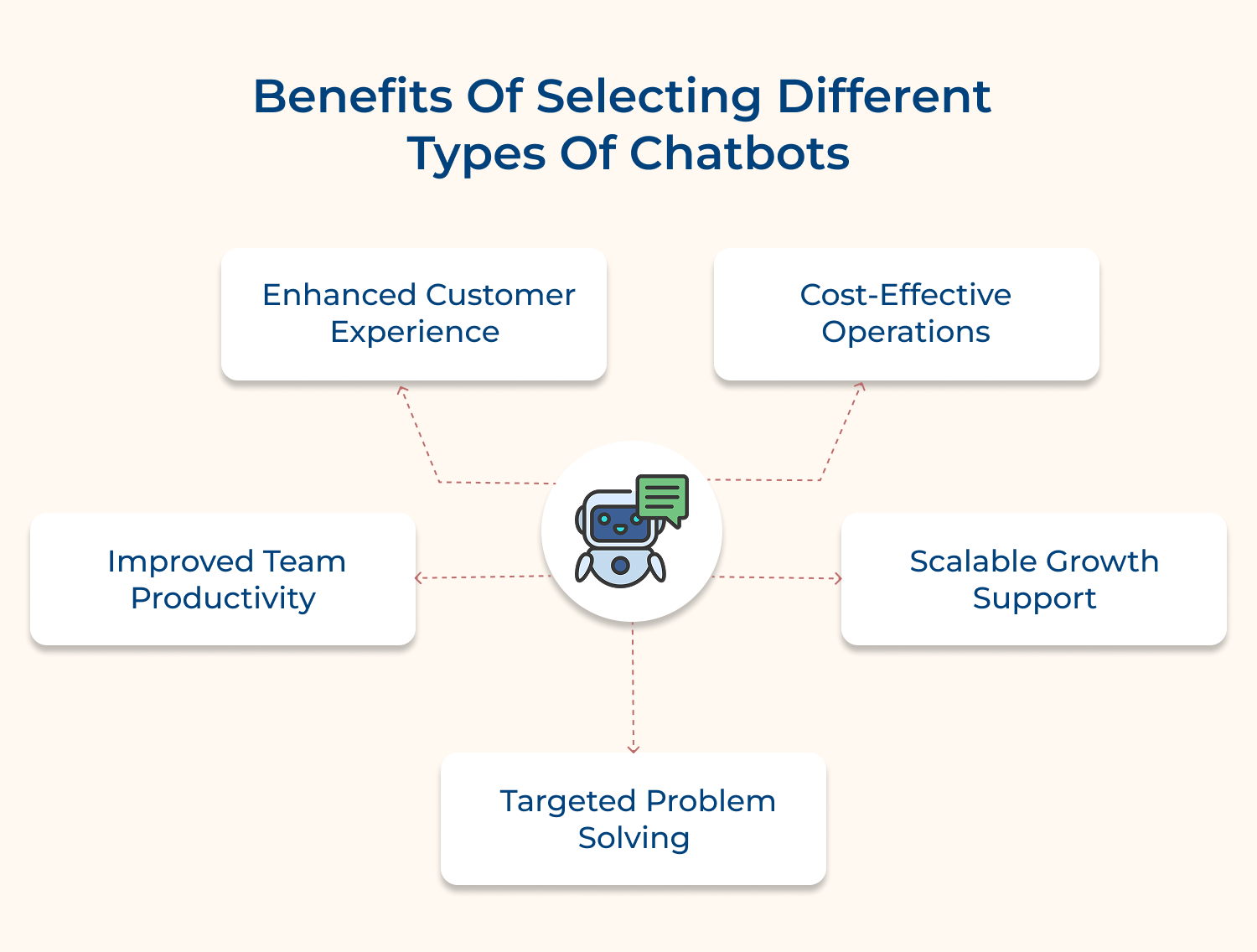
1. Enhanced Customer Experience
Rule-based chatbots excel at handling straightforward queries with instant responses while AI-powered bots manage complex conversations naturally. This combination ensures customers always receive appropriate help regardless of their question complexity or communication style.
2. Cost-Effective Operations
Simple chatbots reduce support costs by handling basic inquiries automatically while sophisticated versions tackle advanced issues without human intervention. This strategic deployment means you invest resources where they create maximum value for your business.
3. Scalable Growth Support
Different chatbot types grow with your business needs from basic FAQ handling to complex transaction processing. As your company expands you can upgrade both capabilities without rebuilding your entire customer service infrastructure from scratch.
4. Targeted Problem Solving
Specialized chatbots address specific business challenges like appointment scheduling or product recommendations with precision. This focused approach delivers better results than generic solutions because each bot type is designed for particular use cases.
5. Improved Team Productivity
Strategic chatbot selection frees human agents from routine tasks while handling complex cases that require empathy and critical thinking. This intelligent division of labor maximizes both automated efficiency and human expertise where it matters most.
Types of chatbots vary based on functionality, intelligence and use cases across industries. Let us explore seven types of chatbots, each offering distinct capabilities to meet diverse business needs.
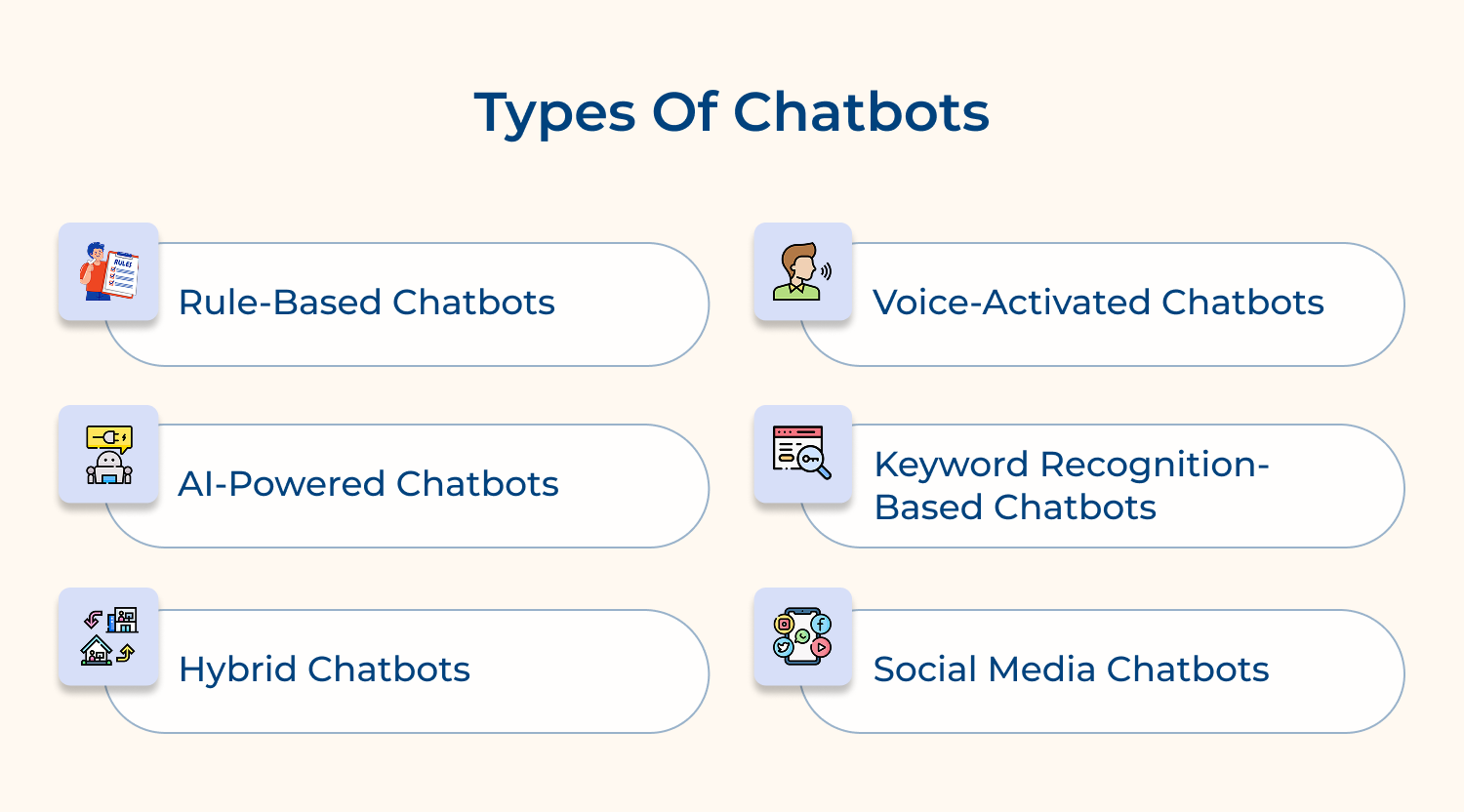
Rule-based chatbots operate through predetermined decision trees where each user input triggers specific programmed responses. These bots follow strict if-then logic patterns without learning capabilities. They excel at handling structured conversations with predictable outcomes and clearly defined pathways.
But here’s the catch – what happens when customers ask questions outside your programmed scenarios? Rule-based bots simply cannot handle unexpected queries or variations in language. They become stuck when users deviate from anticipated conversation flows.
Here’s how these systematic bots process every customer interaction:
Customer service teams often deploy rule-based chatbots for handling basic inquiries like store hours or return policies. A retail website might use one to guide customers through size charts or shipping information with simple yes-no questions.
AI-powered chatbots represent the next evolution in customer service automation because they understand context and learn from every interaction. Unlike their rule-based counterparts these intelligent systems process natural language and adapt their responses based on conversation history or different user behavior patterns.
How do these smart systems actually work? AI chatbots use natural language processing to break down user messages into meaningful components. They analyze intent behind words rather than just matching keywords. Machine learning algorithms help them improve responses over time through pattern recognition.
Smart implementation strategies can maximize your AI chatbot’s effectiveness and user satisfaction:
Are AI-powered chatbots worth the investment for your business? These systems deliver significant long-term value through improved customer satisfaction and reduced support costs. Their learning capabilities mean they become more effective over time while handling increasingly complex customer needs.
Hybrid chatbots combine the reliability of rule-based systems with the intelligence of AI technology to create comprehensive customer service solutions. These versatile tools use structured workflows for common queries while leveraging artificial intelligence for complex conversations that require deeper understanding and contextual awareness.
Voice-activated chatbots process spoken language and respond through audio output to create hands-free customer interactions. These systems are essential for accessibility and multitasking scenarios where typing isn’t practical or possible for users.
Here are practical applications where voice technology transforms customer experience:
However, voice technology faces significant barriers that prevent widespread adoption across all business sectors. Background noise interference can disrupt conversation accuracy, while accent variations sometimes lead to misunderstandings.
Keyword recognition-based chatbots identify specific trigger words in user messages to deliver relevant responses without understanding the complete sentence context or meaning. Small businesses with limited budgets and straightforward customer inquiries benefit most from keyword-based systems.
Consider these essential factors before implementing keyword recognition technology:
These questions help determine whether keyword matching aligns with your customer communication patterns and business requirements.
A restaurant might use keyword recognition to handle reservation requests when customers mention “booking” “table” or “reservation” along with date information. The bot instantly connects these triggers to booking responses without needing complex conversation understanding.
Social media chatbots operate directly within platforms like Facebook, Instagram and Twitter to engage customers where they already spend time online. These specialized bots are essential because modern consumers expect instant responses across all social channels.
Here are five ways businesses leverage social media chatbots to enhance customer engagement:
Lead Generation: Social bots capture prospect information through interactive quizzes or contests that naturally collect contact details and preferences.
However, social media chatbots face unique challenges that traditional website bots don’t encounter. Platform algorithm changes can limit bot visibility, while character restrictions may prevent comprehensive responses.
Menu-based chatbots guide users through structured conversation paths using clickable buttons and predefined options rather than free-text input. These systems are needed when businesses want to control conversation flow and ensure customers reach specific outcomes.
Users navigate through hierarchical menus by selecting buttons that lead to more detailed options or final answers. This approach eliminates typing errors and language barriers while providing clear pathways to information or services that customers need most.
Pro tips:
Understanding these fundamental differences helps businesses choose the right chatbot technology for their specific needs and customer expectations.
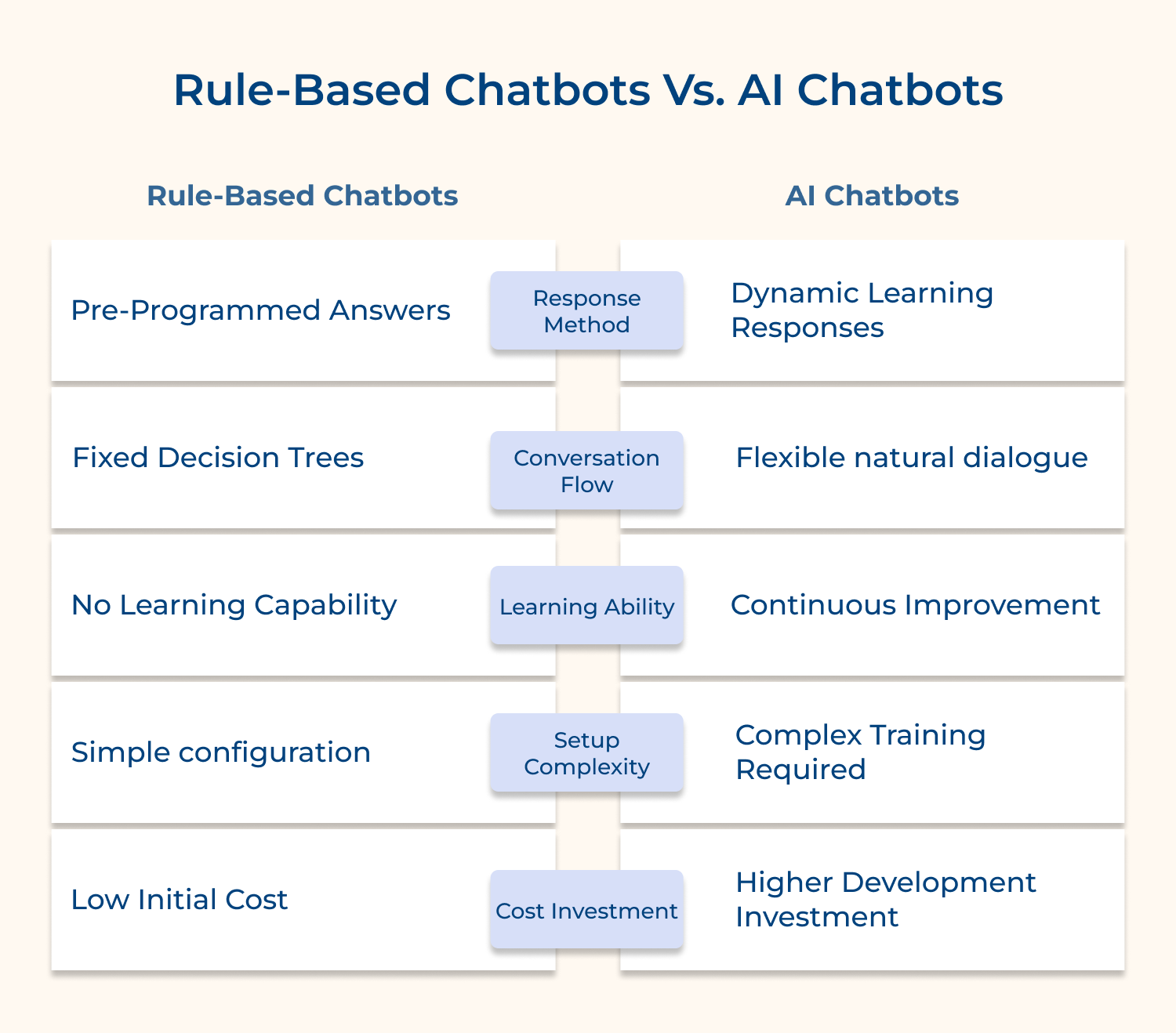
1. Response Method
Rule-based chatbots deliver answers from a predetermined database of responses that developers create during the initial setup phase. Every possible user query must have a matching programmed response stored in the system’s knowledge base for the conversation to proceed successfully.
AI chatbots generate responses dynamically by analyzing user input and drawing from vast language models to create contextually appropriate answers. These systems understand the intent behind messages rather than simply matching keywords to produce more natural and relevant conversations with users.
2. Conversation Flow
Rule-based systems follow rigid decision trees where each user selection leads to specific predetermined pathways that cannot deviate from programmed logic. Users must navigate through structured menus or use exact keywords to receive appropriate responses from the chatbot system.
AI-powered chatbots engage in flexible natural dialogue that adapts to user communication styles and conversation patterns in real-time. These systems can handle unexpected questions, topic changes and complex multi-part inquiries without losing conversation context or requiring users to restart interactions.
3. Learning Ability
Rule-based chatbots operate with static knowledge that remains unchanged unless developers manually update the programming and response database. These systems cannot improve their performance or learn from customer interactions without direct human intervention and code modifications.
AI chatbots continuously analyze conversation patterns to enhance their response accuracy and conversation quality over time. Machine learning algorithms help these systems identify successful interaction patterns and adapt their communication strategies based on accumulated experience.
4. Setup Complexity
Rule-based chatbots require straightforward configuration where developers create conversation flows and input response options into the system database. Most businesses can implement these systems quickly with basic technical knowledge and minimal programming expertise required for successful deployment.
AI chatbots demand extensive training with large datasets, conversation examples and ongoing refinement to achieve acceptable performance levels. These systems require specialized technical expertise, machine learning knowledge and significant time investment before they can handle customer interactions effectively.
5. Cost Investment
Rule-based chatbots involve minimal upfront costs with simple licensing fees and basic development expenses for most business implementations. Ongoing maintenance costs remain low because these systems require only occasional updates to response databases and conversation flow adjustments.
AI chatbots require substantial initial investment for development training & integration with existing business systems and customer service workflows. However, these systems often provide better long-term value through improved customer satisfaction and reduced support costs as they handle increasingly complex inquiries.
Selecting the right chatbot requires careful evaluation of your specific business needs and customer expectations to ensure maximum return on investment.
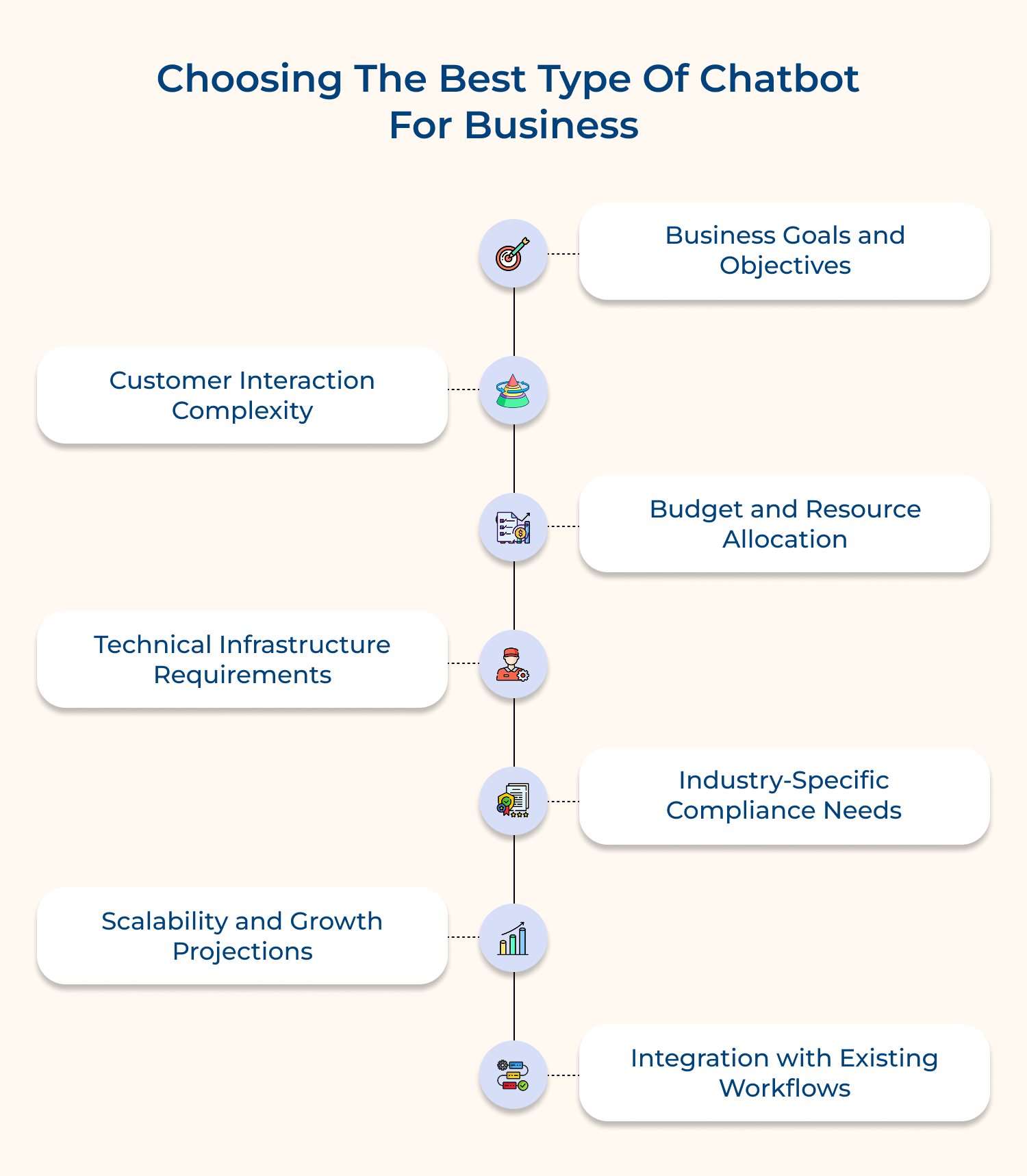
Start by clearly defining what you want your chatbot to accomplish for your organization. Are you primarily focused on reducing customer service costs or do you want to generate more leads through automated conversations? Understanding your primary objectives helps determine whether you need a simple rule-based system or a sophisticated AI-powered solution.
Consider the typical complexity of conversations your customers have with your business. Simple inquiries about store hours or basic product information work well with rule-based chatbots, while complex troubleshooting or personalized recommendations require AI-powered systems that can understand context and nuance.
Evaluate both your initial investment capacity and ongoing maintenance budget before deciding on chatbot technology. Rule-based systems offer lower upfront costs but may require frequent manual updates, while AI chatbots demand higher initial investment but provide long-term scalability and reduced maintenance needs.
Assess your current technology stack and determine what level of integration complexity your team can realistically handle. Some chatbot types require extensive API connections and custom development work, while others offer plug-and-play solutions that integrate easily with existing customer service platforms.
Review any regulatory requirements or industry standards that might affect your chatbot implementation, such as data privacy laws or accessibility guidelines. Healthcare and financial services often require specialized security features, while retail businesses might need different compliance considerations for customer data handling.
Think about how your customer service needs might evolve over the next few years as your business grows. Will you need to handle more complex inquiries or serve customers across multiple channels? Choosing a chatbot type that can scale with your business prevents costly system replacements as your requirements become more sophisticated.
Consider how seamlessly your chosen chatbot will connect with current business processes and staff responsibilities within your organization. The best chatbot solutions complement rather than complicate existing workflows while providing clear handoff procedures when human intervention becomes necessary for complex customer issues.
Understanding how different chatbot types deliver measurable business value helps organizations make informed decisions about their customer service automation investments.
1. Customer Support Automation
AI-powered chatbots handle routine customer inquiries instantly while reducing support ticket volume by up to 70%. These systems resolve common issues like password resets order tracking and basic troubleshooting without human intervention. The result is faster customer resolution times and significant cost savings for support teams.
2. Lead Generation and Qualification
Conversational AI chatbots engage website visitors through interactive questionnaires that identify high-quality prospects automatically. These systems collect contact information preferences and purchase intent data while visitors browse your site. Sales teams receive pre-qualified leads with detailed context about customer needs and buying readiness.
3. Sales Assistance and Product Recommendations
Intelligent chatbots analyze customer behavior and preferences to suggest relevant products during the shopping journey. These systems can cross-sell complementary items, answer detailed product questions and guide customers through complex purchasing decisions. The personalized approach increases average order value and improves customer satisfaction rates.
4. Appointment Scheduling and Booking
AI chatbots integrate with calendar systems to handle appointment scheduling across multiple service providers and time zones. These systems check availability, send confirmation messages and manage cancellations or rescheduling requests automatically. Businesses reduce administrative overhead while providing customers with convenient 24/7 booking access.
5. Employee Support and Internal Operations
Enterprise chatbots streamline internal processes by helping employees find information, submit requests and complete routine tasks efficiently. These systems can handle HR inquiries, IT support tickets and policy questions while integrating with existing business systems. The automation reduces internal support costs and improves employee productivity.
The evolution of chatbot technology represents a fundamental shift in how businesses connect with customers across digital channels. Each chatbot type serves distinct purposes from simple rule-based systems handling basic inquiries to sophisticated AI-powered solutions managing complex conversations.
Smart businesses recognize that choosing the right chatbot type directly impacts customer satisfaction and operational efficiency. By understanding these different technologies you can transform your customer service experience while reducing costs and improving engagement across all touchpoints.

What are the different types of chatbots?
The main chatbot types include rule-based systems that follow predetermined paths, AI-powered bots using natural language processing, hybrid solutions combining both approaches, voice-activated systems for hands-free interaction, keyword recognition bots, social media chatbots and menu-based systems with clickable options.
What are hybrid chatbots?
Hybrid chatbots combine rule-based frameworks with AI capabilities to handle both simple and complex customer interactions effectively. They use structured workflows for routine queries while leveraging artificial intelligence for nuanced conversations, seamlessly transferring to human agents when situations exceed their programmed capabilities.
How does a predictive AI chatbot work?
Predictive AI chatbots analyze user behavior patterns and conversation history to anticipate customer needs before they’re explicitly stated. These systems use machine learning algorithms to identify trends, predict likely questions and proactively offer relevant solutions or information based on contextual clues.
How does a conversational AI bot differ from other types of chatbots?
Conversational AI bots understand context and maintain natural dialogue flow unlike rule-based systems that follow rigid scripts. They process language nuances, learn from interactions and adapt responses dynamically while other chatbot types rely on predetermined answers or simple keyword matching for customer communication.
Which chatbot type is best for small businesses?
Small businesses typically benefit most from rule-based or keyword recognition chatbots due to lower costs and simpler implementation requirements. These systems handle common inquiries effectively while requiring minimal technical expertise, making them ideal for businesses with straightforward customer service needs and limited budgets.
 https://omni24.io/wp-content/uploads/2026/09/Social-commerce-scaled.png
1340
2560
Webvision Solution
https://omni24.io/wp-content/uploads/2023/04/Omni-Logo-1.svg
Webvision Solution2026-10-23 12:18:272026-10-23 12:18:27What is Social Commerce and Why Does It Matter?
https://omni24.io/wp-content/uploads/2026/09/Social-commerce-scaled.png
1340
2560
Webvision Solution
https://omni24.io/wp-content/uploads/2023/04/Omni-Logo-1.svg
Webvision Solution2026-10-23 12:18:272026-10-23 12:18:27What is Social Commerce and Why Does It Matter? https://omni24.io/wp-content/uploads/2026/08/AI-Customer-Service-Agents.png
1256
2400
Webvision Solution
https://omni24.io/wp-content/uploads/2023/04/Omni-Logo-1.svg
Webvision Solution2026-09-21 04:48:512026-09-21 04:48:51How to Build an AI Customer Service Agents: 8 Key Steps
https://omni24.io/wp-content/uploads/2026/08/AI-Customer-Service-Agents.png
1256
2400
Webvision Solution
https://omni24.io/wp-content/uploads/2023/04/Omni-Logo-1.svg
Webvision Solution2026-09-21 04:48:512026-09-21 04:48:51How to Build an AI Customer Service Agents: 8 Key Steps https://omni24.io/wp-content/uploads/2026/08/Omnichannel-Conversational-AI.png
1256
2400
Tushar Joshi
https://omni24.io/wp-content/uploads/2023/04/Omni-Logo-1.svg
Tushar Joshi2026-09-16 03:51:072026-09-16 03:51:07How to Build Omnichannel Conversational AI Strategy
https://omni24.io/wp-content/uploads/2026/08/Omnichannel-Conversational-AI.png
1256
2400
Tushar Joshi
https://omni24.io/wp-content/uploads/2023/04/Omni-Logo-1.svg
Tushar Joshi2026-09-16 03:51:072026-09-16 03:51:07How to Build Omnichannel Conversational AI Strategy
Whether it’s about acquire, engage or support – Omni24 covers all your customer engagement needs in one complete platform.

Copyright ©2026 Veemo All rights reserved.
CA, Los Angeles, Hall Ave, 19011