Digital Customer Communication: What is it & Why it Matters
Businesses must communicate properly with audiences, as digital customer communication has become more critical than ever with rising online interactions.

Businesses must communicate properly with audiences, as digital customer communication has become more critical than ever with rising online interactions.
The rise of social media and messaging apps has made businesses shift towards digital customer communication. It’s critical to meet customers where they are and communicate in a way that is convenient and efficient for them. Digital customer communication can bring many benefits to businesses, including increased customer satisfaction, improved brand image, and enhanced customer loyalty.
88% of customers claim that the experience that a company provides is as important as its product and services.
Digital customer communication is part of the comprehensive client communication that an organization typically sends over the customer lifecycle: starting from when a customer makes contact to learn about products/services, through the assessment phase, to purchasing and ongoing retention and upselling.
Digital customer communication is defined as the use of digital channels such as email, social media, mobile messaging apps, and chatbots to communicate and engage with customers. The goal of digital communication is to provide personalized and timely information to customers to establish a strong relationship between the business and its customers.
Digital customer communication has proven particularly vital during global events that limit physical interactions, highlighting its role in business continuity and adaptability. It also offers cost-effective solutions for scaling customer support operations while maintaining consistent service quality across all channels.
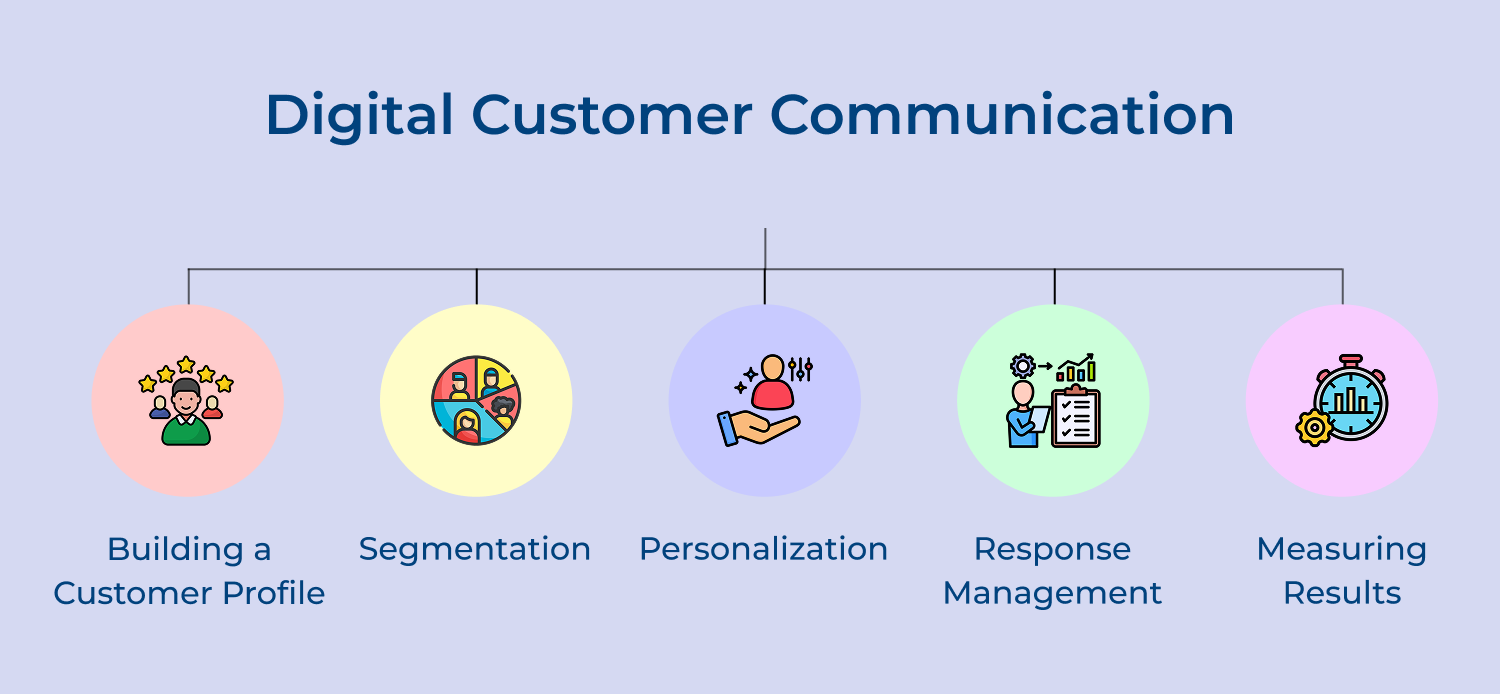
Modern businesses must focus on creating a superior customer experience, and digital customer communication is a significant part of it. 96% of customers say excellent customer service builds trust.
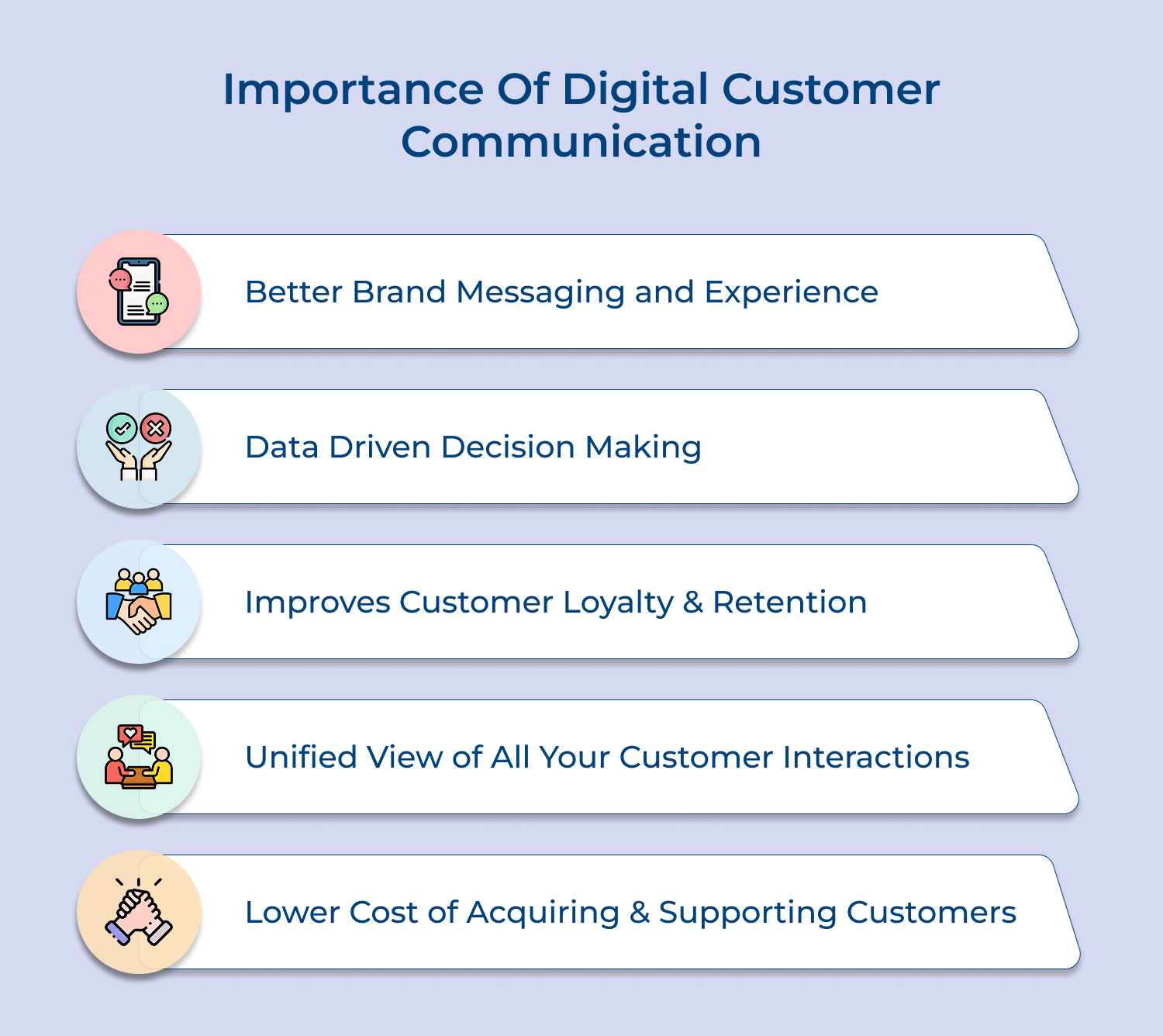
Different types of digital communication has become a vital component of business success. Ensuring you stay up-to-date with trends, and adopting new technologies and strategies can give you a competitive edge over competitors.
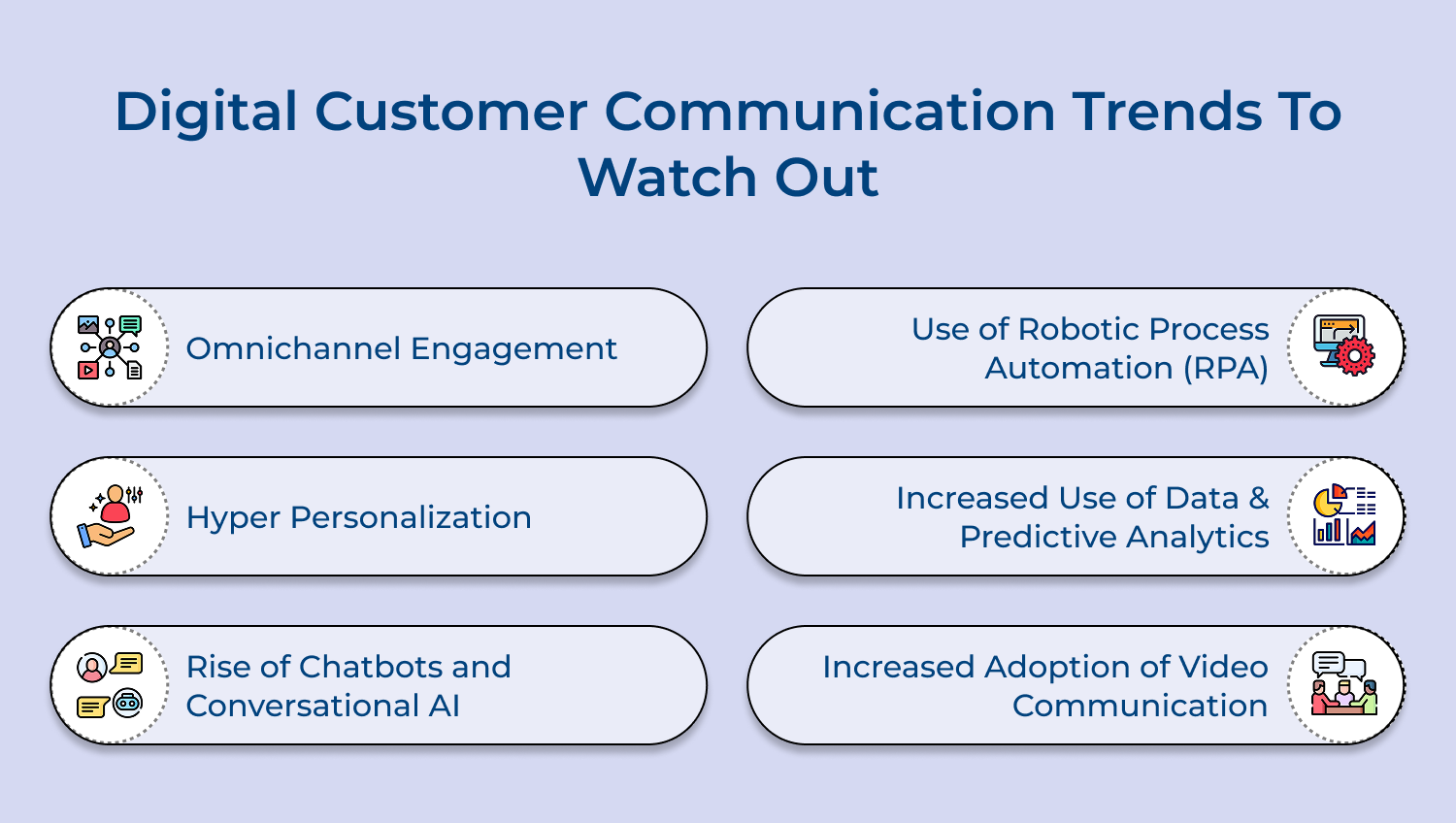
Omnichannel is the integration of all communication channels, including phone, email, social media, and chatbots, into a single customer experience.
A successful omnichannel strategy must provide customers with a consistent experience regardless of how they communicate with the brand.
Omnichannel engagement is essential because:
Companies that can offer a seamless and efficient cross-channel experience are more likely to attract and retain their customers than those that don’t.
As there is abundance of data available in the digital world, businesses can use customer data to create personalized experiences that can impress customers.
Hyper-personalization involves collecting and analyzing data about individual customers’ behaviors, habits, and preferences, then using such data to create personalized messages, offers, and recommendations.
By understanding customers on an individual level:
Chatbots and conversational AI are transforming the way businesses interact with customers.
AI powered chatbots can communicate with customers in real-time, answering questions and resolving issues. They can also be used to send personalized messages and provide recommendations based on customer preferences.
Using conversational AI and chatbots help in delivering great digital customer communication by following ways:
It is becoming increasingly sophisticated, with chatbots using natural language processing (NLP) to understand and respond to customer inquiries.
Robotic Process Automation (RPA) is the use of software robots to automate repetitive tasks that are often performed manually.
Leveraging RPA can help businesses reduce handling time, improve accuracy, and enhance the overall efficiency of customer communications.
How RPA helps to deliver digital communication to customers?
Data and predictive analytics are becoming increasingly important for businesses to understand their customers.
By using data and predictive analytics, businesses can identify key customer trends, preferences, and behaviors. Such information can be used to create targeted communications and marketing campaigns that are tailored to specific customer segments.
Here is how predictive analytics helps digital client communication:
Video communication has become a powerful tool for businesses to digitally connect with customers.
Using video based communication can be used to provide customers with a more engaging and informative experience. Videos can be used for product demos, tutorials, and testimonials, helping customers feel more informed and confident in their purchasing decisions.
With the increase of remote working, video communication has become more important than ever, providing businesses with the ability to communicate with customers regardless of physical distance.
Digital customer communication is an essential aspect of modern businesses, and they must get it right to retain customers and attract new ones.
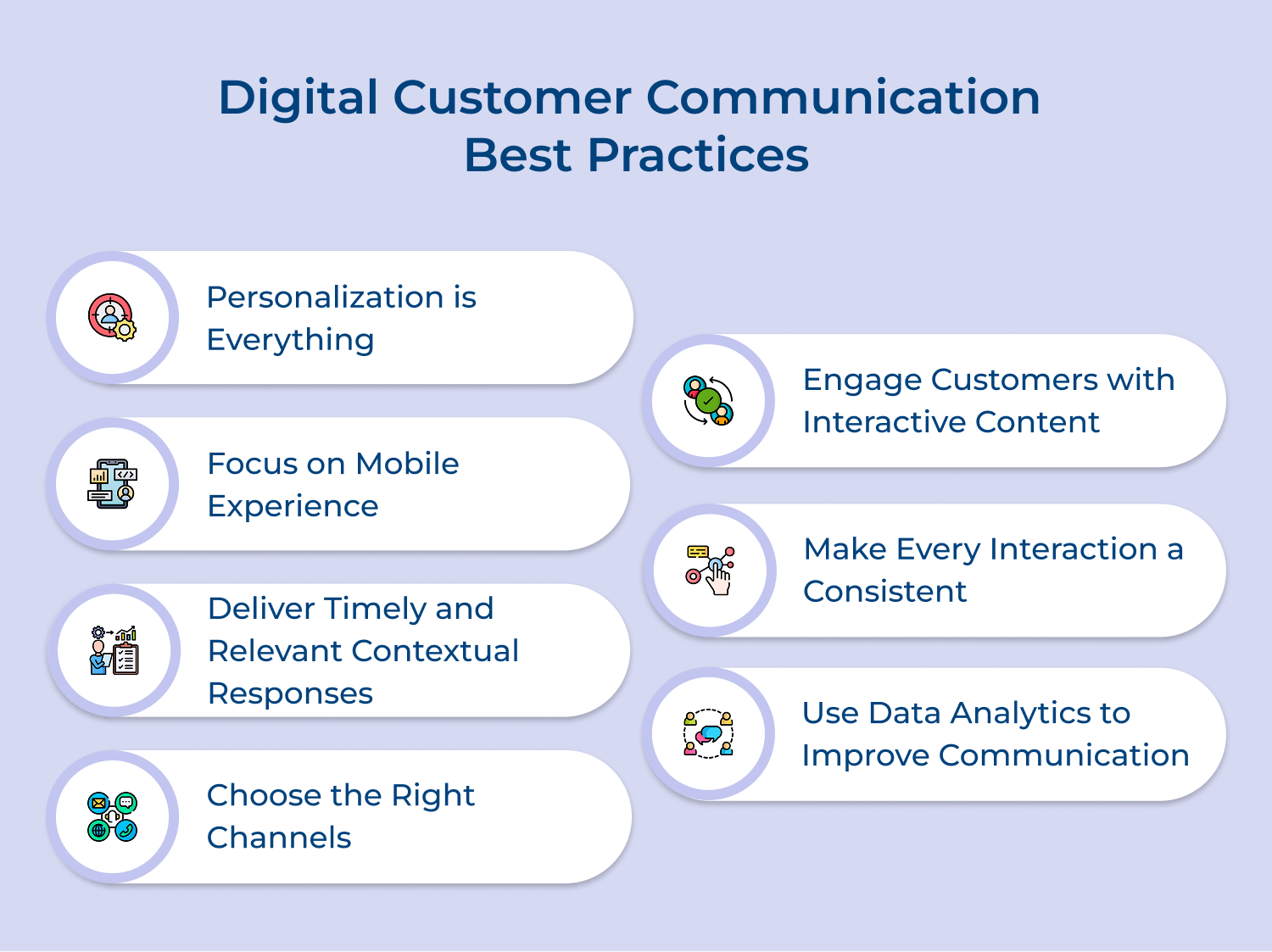
Personalization is the key to successful digital customer communication. Customers expect businesses to know them and their preferences. Personalization helps create a better customer experience, which leads to customer loyalty. Businesses can use customer data to personalize communication, such as sending personalized emails, targeted ads, or product recommendations on their website.
Most customers access digital channels through their mobile devices. Therefore, businesses must optimize their communication for mobile devices, which includes ensuring that their website is mobile-friendly, emails, and texts are formatted for mobile devices, and digital ads are displayed correctly on mobile screens.
Customers expect businesses to communicate with them in real-time and with relevant information. Delayed responses or irrelevant information can harm the relationship between businesses and their customers. Therefore, businesses must respond quickly to customer queries and provide relevant information such as promotions and product updates.
Businesses must communicate with customers through the channels the customers prefer. Some customers prefer to be contacted via email, while others prefer to receive text messages or social media messages. Businesses must identify the channels their customers prefer and use them to communicate with them. Using the wrong channel can lead to fewer responses and, ultimately, fewer sales.
Interactive content such as polls, quizzes, and surveys is a great way to engage customers with digital communication. These types of content help businesses gather valuable information from customers and get their feedback. Interactive content also helps businesses understand their customers’ preferences and behavior.
Consistency is key to successful digital customer communication. Businesses must ensure that their communication is consistent across all channels. Inconsistency can confuse customers and damage the relationship between the business and their customer. Consistency includes using the same tone of voice, logo, and messaging across all online channels.
Businesses must use analytics to monitor and improve digital customer communication. Analytics can help businesses understand their customers’ behavior, preferences, and engagement levels to help businesses improve their communication by providing the right information at the right time and through the right channels.
Due to the surge of ChatGPT and other AI tools, brands have realized the need to increasingly adopt these technologies to create more personalized and efficient customer experiences.
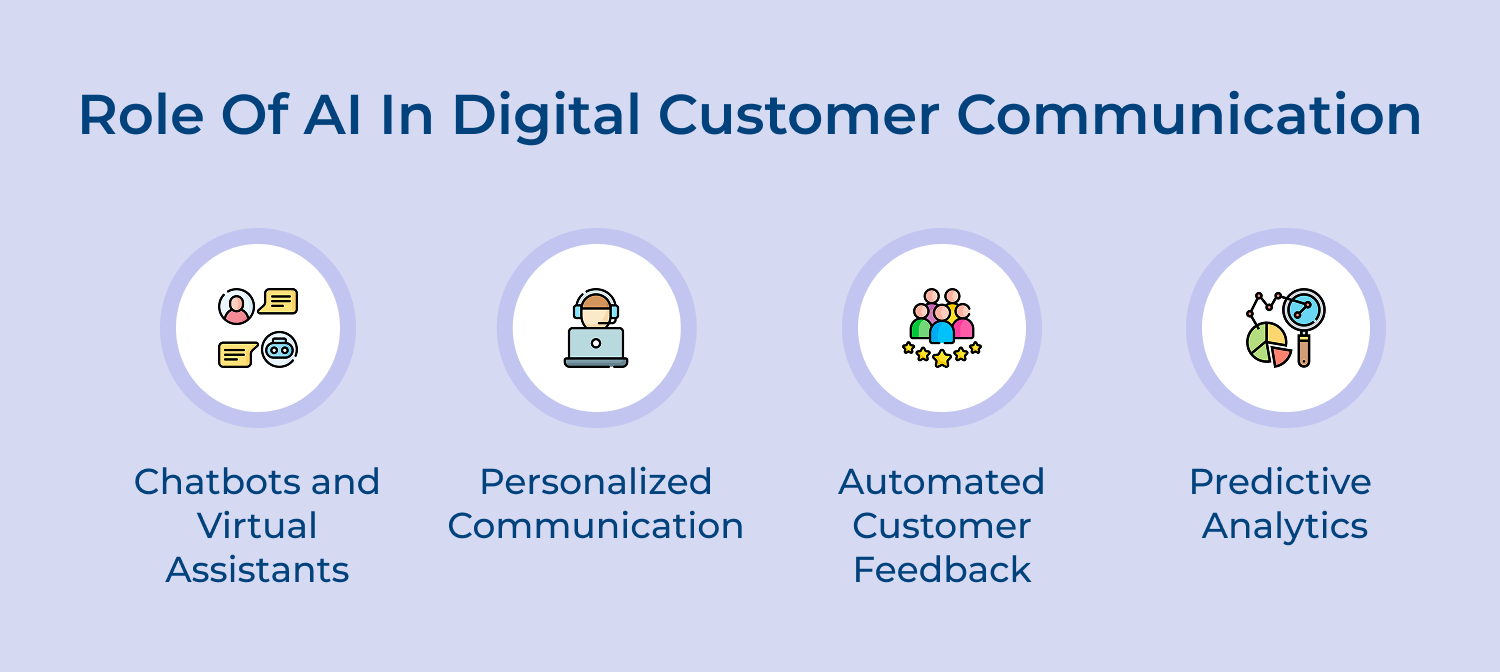
Chatbots and virtual assistants are the most common forms of AI and automation used in customer communication. These tools have the ability to handle simple customer queries and provide quick solutions without any delay.
Chatbots are proactive and intuitive, which makes them an efficient tool in managing large volumes of customer interactions. With the help of natural language processing (NLP), chatbots can understand and respond to customer queries in real-time, providing personalized assistance whenever required.
AI and automation help businesses create more personalized interactions with their customers. By leveraging customer data and behavior patterns, businesses can provide tailored experiences that meet customers’ needs.
For instance, AI algorithms can analyze customer data, such as purchase history, browsing patterns, and social media activity, to provide personalized product recommendations and discounts that match the customer’s interests.
Automated customer feedback collection is a vital component of modern customer communication.
With the help of AI and automation, feedback can be collected in real-time and analyzed for insights such as customer sentiment, satisfaction levels, and areas of improvement. This data can then be used to optimize customer experiences and improve operational efficiency.
AI and automation help businesses predict customer behavior and anticipate customer needs. By utilizing predictive analytics, businesses can create targeted marketing campaigns and proactively offer personalized recommendations that meet their customers’ needs.
Predictive analytics eliminates the need for customers to search for relevant products or services, providing a faster and more convenient shopping experience.
Read more: Learn more about the best customer communication tools of 2026.
Customer communication management provides businesses with the necessary tools and techniques to automate, manage and control their customer-facing communications, eliminating manual processes and reducing operational costs. It also helps businesses to analyze customer behavior, preferences and feedback, enabling them to tailor their communication strategies and offerings accordingly.
Implementing a digital customer communication management strategy within an organization can have a significant impact on business outcomes such as improved customer satisfaction, retention, and loyalty. It also promotes cross-selling and up-selling opportunities, leading to increased revenue generation. Effective communication management helps businesses to deliver the right message to the right customer at the right time, ultimately enhancing their overall experience with the brand.
Read more: See how Digital Customer Service supports consistent and engaging digital customer communication.

1. What are the benefits of using digital channels for customer communication?
Digital channels allow businesses to communicate with their customers without any geographical or time barriers, making it easier to connect with customers on a global scale. Additionally, digital communication can be highly personalized, allowing businesses to cater to the needs of their customers effectively. This leads to enhanced customer experiences and higher engagement rates.
2. How can businesses enhance digital customer communication?
Businesses can enhance digital customer communication by investing in the right digital communication tools and technology. Adoption of personalized and relevant messaging, real-time interactions, and AI technologies can significantly improve digital customer communication. Regularly analyzing data to optimize marketing tactics, increasing the use of social media platforms, and staying active on digital channels will help businesses to stay relevant and effective in customer communication.
3. How can businesses maintain data privacy while using digital customer communication?
With customer data privacy and security becoming increasingly important, businesses must ensure they remain compliant with data privacy regulations like GDPR. Digital customer communication tool providers must implement strict data protection protocols with features that enable customers to control their data sharing preferences.
4. How can businesses measure the effectiveness of their digital customer communication?
Businesses can measure the effectiveness of their digital customer communication by tracking social media engagement metrics like comments, shares, likes, views, click-through rates for email marketing, open rates for SMS, etc. Furthermore, collecting feedback from customers through surveys and feedback forms helps businesses fine-tune their communication strategy.
5. How can businesses ensure effective communication with customers using different platforms?
Businesses must adapt their communication style and strategy for each digital channel to enhance engagement. Using a strategy of creating personalized communication, businesses must tailor messaging for various social media channels, email, or SMS platforms. Staying active and responsive is also crucial to boost customer engagement and enhance trust and loyalty.
 https://omni24.io/wp-content/uploads/2026/09/Social-commerce-scaled.png
1340
2560
Webvision Solution
https://omni24.io/wp-content/uploads/2023/04/Omni-Logo-1.svg
Webvision Solution2026-10-23 12:18:272026-10-23 12:18:27What is Social Commerce and Why Does It Matter?
https://omni24.io/wp-content/uploads/2026/09/Social-commerce-scaled.png
1340
2560
Webvision Solution
https://omni24.io/wp-content/uploads/2023/04/Omni-Logo-1.svg
Webvision Solution2026-10-23 12:18:272026-10-23 12:18:27What is Social Commerce and Why Does It Matter? https://omni24.io/wp-content/uploads/2026/08/AI-Customer-Service-Agents.png
1256
2400
Webvision Solution
https://omni24.io/wp-content/uploads/2023/04/Omni-Logo-1.svg
Webvision Solution2026-09-21 04:48:512026-09-21 04:48:51How to Build an AI Customer Service Agents: 8 Key Steps
https://omni24.io/wp-content/uploads/2026/08/AI-Customer-Service-Agents.png
1256
2400
Webvision Solution
https://omni24.io/wp-content/uploads/2023/04/Omni-Logo-1.svg
Webvision Solution2026-09-21 04:48:512026-09-21 04:48:51How to Build an AI Customer Service Agents: 8 Key Steps https://omni24.io/wp-content/uploads/2026/08/Omnichannel-Conversational-AI.png
1256
2400
Tushar Joshi
https://omni24.io/wp-content/uploads/2023/04/Omni-Logo-1.svg
Tushar Joshi2026-09-16 03:51:072026-09-16 03:51:07How to Build Omnichannel Conversational AI Strategy
https://omni24.io/wp-content/uploads/2026/08/Omnichannel-Conversational-AI.png
1256
2400
Tushar Joshi
https://omni24.io/wp-content/uploads/2023/04/Omni-Logo-1.svg
Tushar Joshi2026-09-16 03:51:072026-09-16 03:51:07How to Build Omnichannel Conversational AI Strategy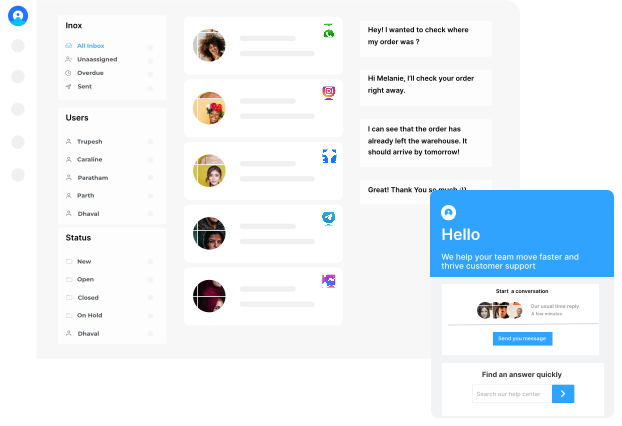
Whether it’s about acquire, engage or support – Omni24 covers all your customer engagement needs in one complete platform.

Copyright ©2026 Veemo All rights reserved.
CA, Los Angeles, Hall Ave, 19011