Customer Journey Mapping: When and How to Create Them
Customer journey mapping reveals experiences, highlights pain points and optimizes interactions to boost satisfaction, loyalty and engagement.

Customer journey mapping reveals experiences, highlights pain points and optimizes interactions to boost satisfaction, loyalty and engagement.
Customer journey mapping is a popular technique for businesses to enhance their customer experience. By visualizing the customer’s interactions with a company, from initial awareness to post-purchase support, businesses can identify opportunities for improvement.
Companies that implement customer journey mapping see a 54% greater return on marketing investment (ROMI) indicating a significant financial benefit from understanding customer journeys.
Embracing customer-centricity through journey mapping meets and exceeds customer expectations. By understanding the entire customer journey, companies can develop strategies that prioritize needs and create a seamless experience.
Let us explore the importance of journey mapping and how it can drive success in a customer-focused economy.
A customer journey map is defined as a visual representation of the steps a customer takes before, during and after interacting with a business. It is a tool used by marketers to understand the customer’s experience and identify opportunities for improvement in the overall journey.
By adopting the customer’s perspective, a journey map provides actionable insights into how customers navigate through various stages of engagement. It highlights areas that may cause friction or dissatisfaction while showcasing moments that build trust and loyalty. It serves as a blueprint for improving customer satisfaction and building long-term relationships.
Key objectives :
Customer journey mapping helps businesses understand the entire client experience, from first interaction to post-purchase support, while identifying pain points and areas for improvement.
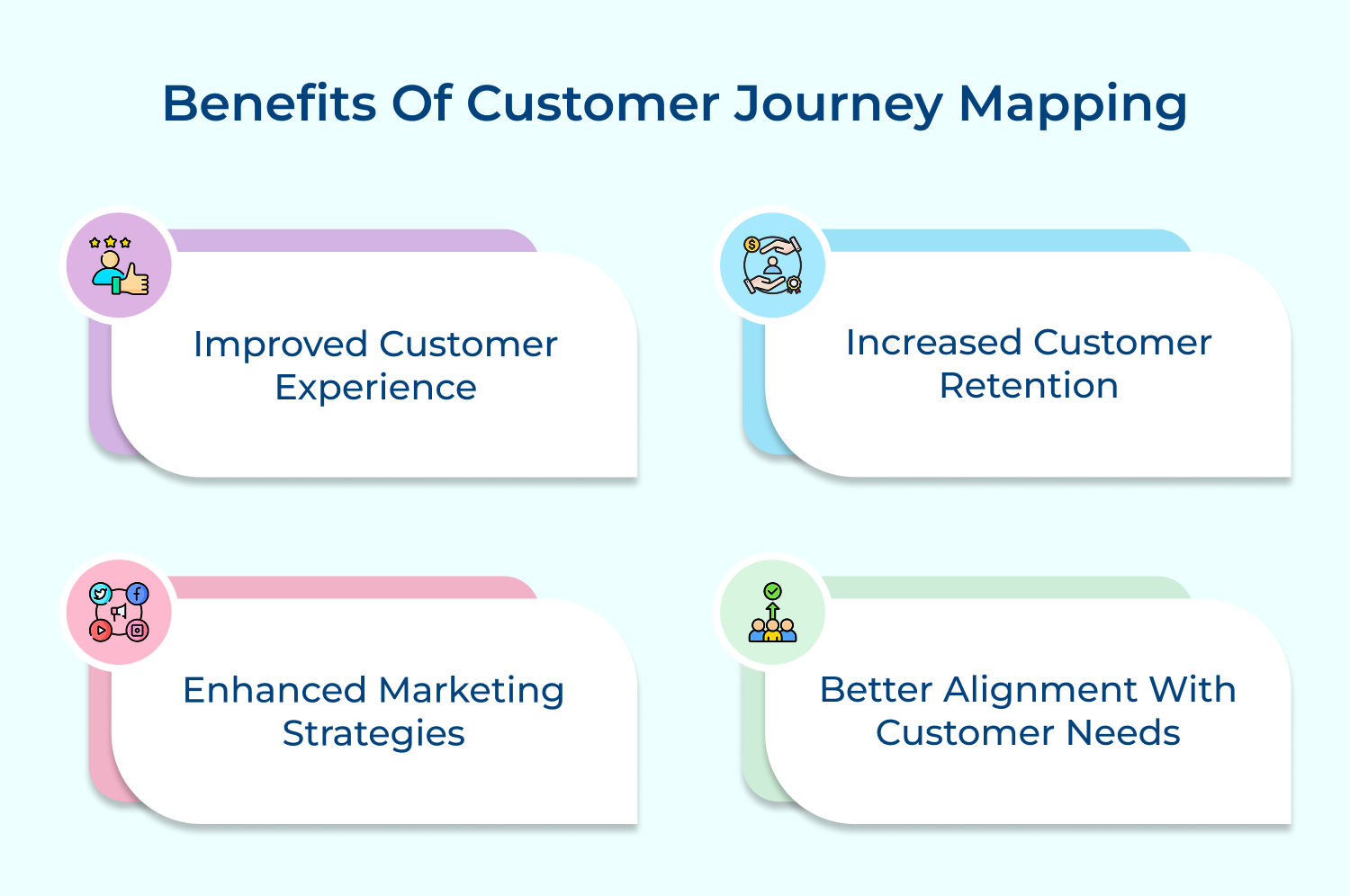
Mapping out the customer journey helps businesses identify areas where customers may be experiencing frustration or dissatisfaction. It allows businesses to make necessary changes to improve the overall customer experience and increase customer satisfaction.
Understanding the customer journey identifies opportunities to build stronger relationships with customers and increase loyalty. By addressing pain points and providing a seamless experience, businesses can improve customer retention rates.
Customer journey mapping identifies the most effective marketing channels and touchpoints throughout the journey. The information can be used to tailor marketing strategies and messages to better engage customers at each stage of their journey.
Mapping out the customer journey empowers businesses to gain insight into the client’s needs and behaviors. The information can be used to tailor products, services and marketing efforts to better meet the customer expectations.
Companies can create a visual representation of the customer’s journey to identify pain points, as well as opportunities for improvement that eventually enhance the overall customer experience.
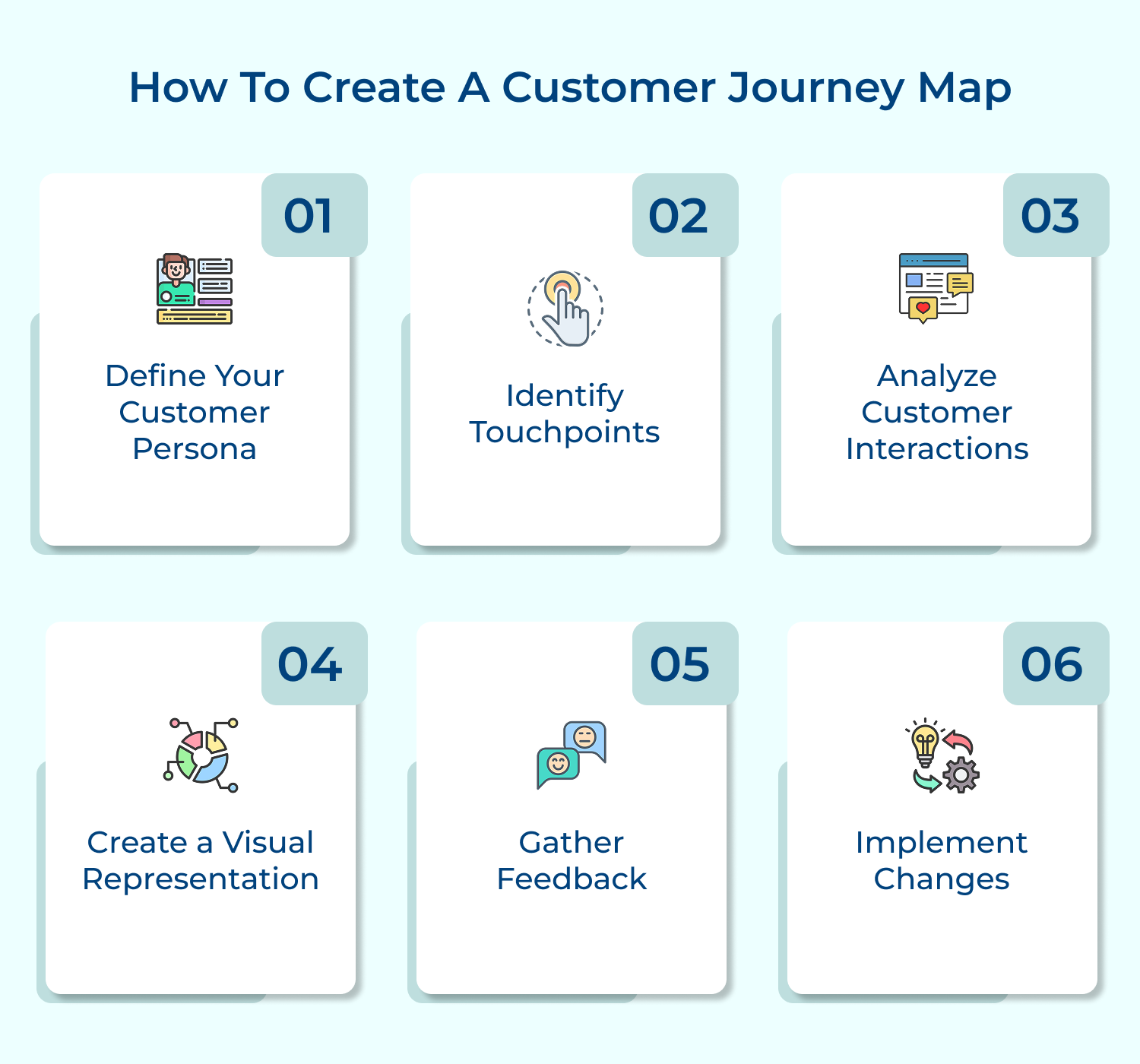
Before you can create a customer journey map, you need to clearly define who your target customers are. Develop a detailed customer persona that includes demographics and pain points. It will help you understand your customers’ needs and tailor your customer journey map accordingly.
Best Practices:
Map out the different touch points through which customers interact with your brand, such as social media, website, email, customer service and in-person interactions. Identify all the potential touchpoints that customers may encounter along their journey, from awareness to post-purchase.
Best Practices:
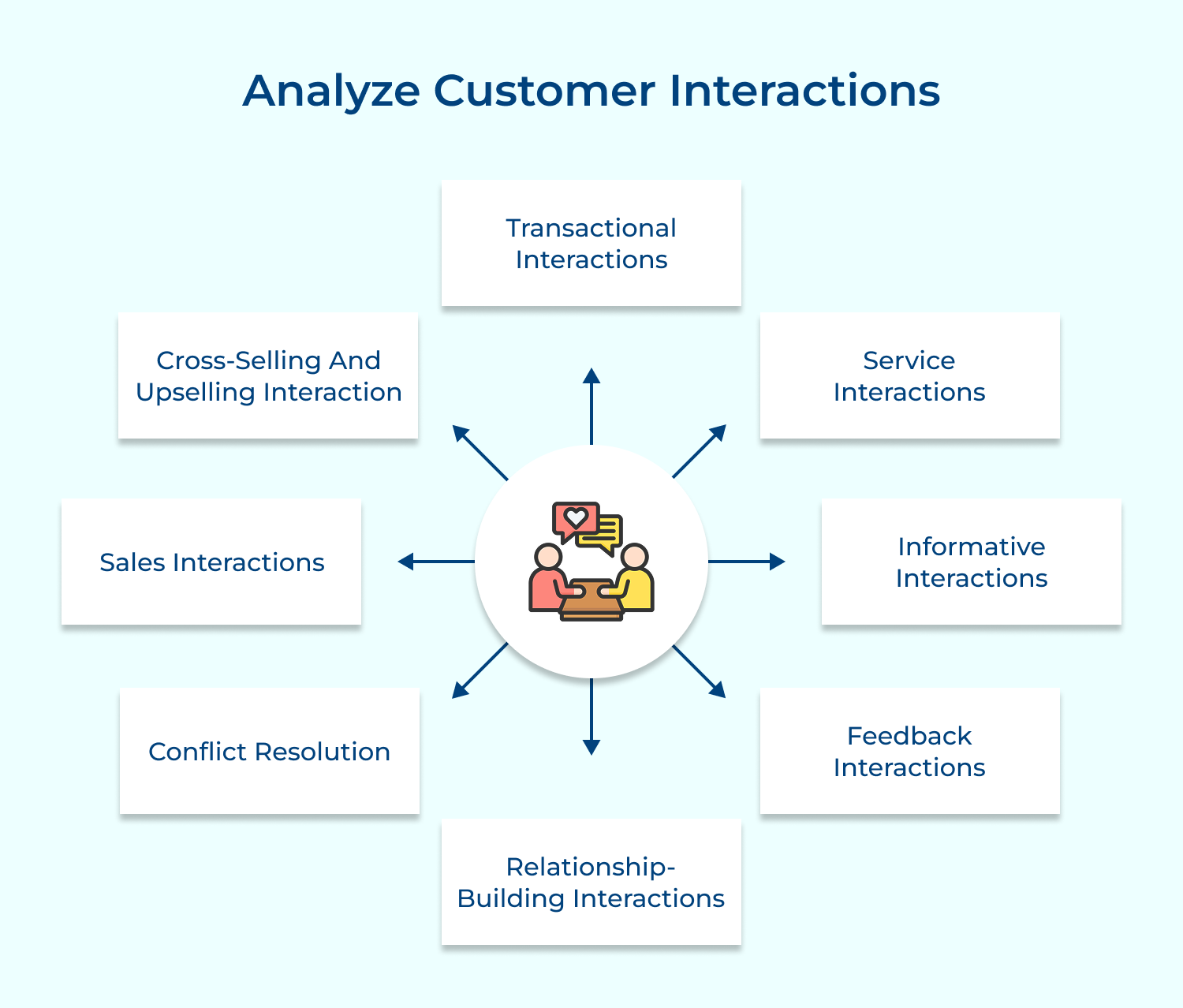
Analyze each touchpoint and consider how customers are interacting with your brand at each stage of the journey. Pay attention to the emotions, motivations and actions of customers at each touchpoint and identify any pain points or opportunities for improvement.
Best Practices:
Create a visual customer journey map that illustrates the customer’s interactions with your brand from start to finish. Use a timeline or flowchart format to map out the various touchpoints, interactions and emotions experienced by customers at each stage of their journey.
Best Practices:
Gather feedback from customers, employees and stakeholders to improve your customer journey map. Use surveys, interviews, focus groups and observation to gain insights into the customer experience as well as identify areas for enhancement.
Best Practices:
Businesses should use the insights gathered from your customer journey map to make strategic changes to improve the customer experience. Address pain points, optimize touchpoints and personalize interactions to enhance customer satisfaction.
Best Practices:
Customer journey maps are essential tools for optimizing the customer experience. They visually track interactions and offer insights to boost satisfaction and improve touchpoints.
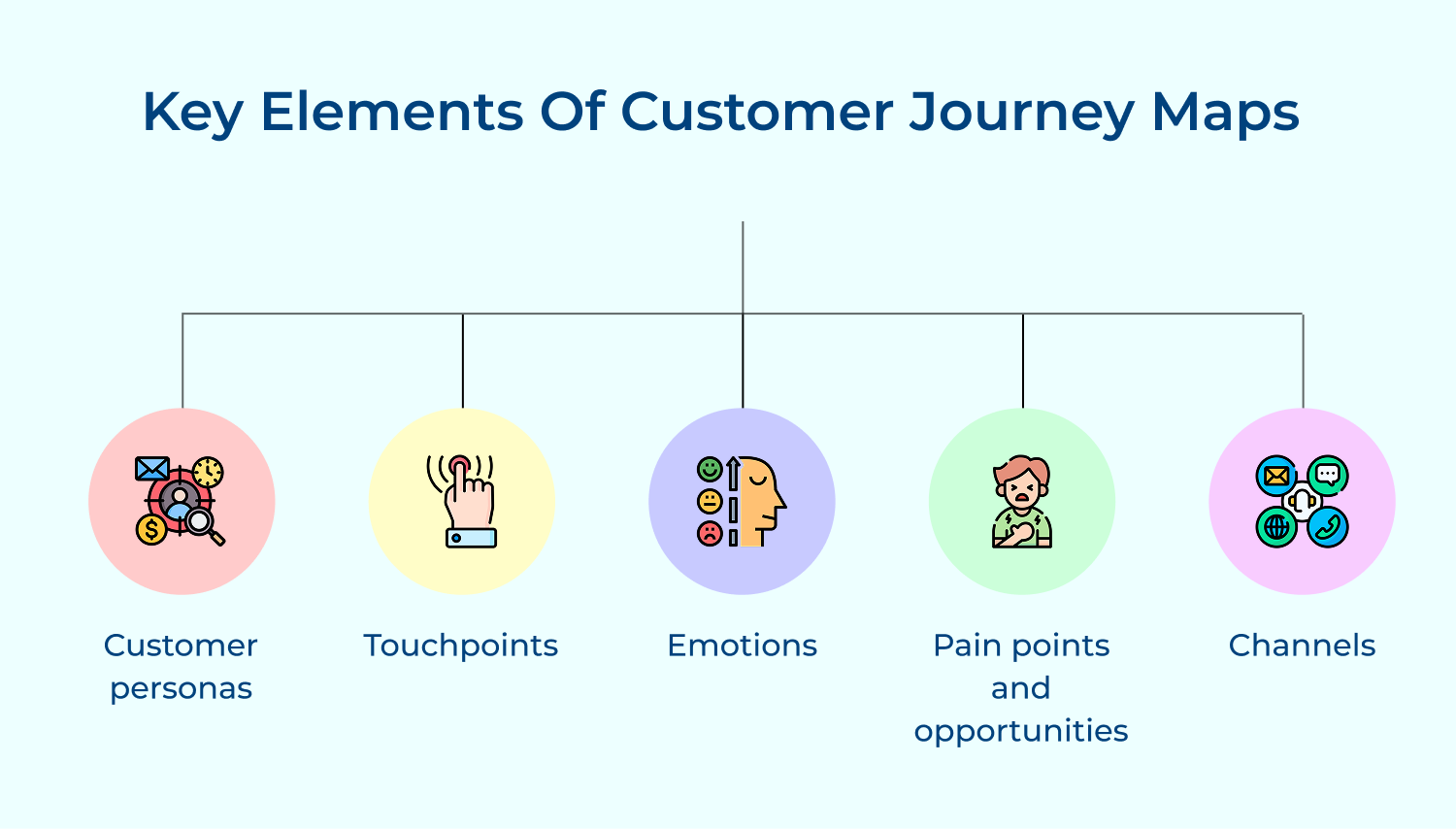
1. Customer personas: Before you can accurately map out a customer journey, you need to have a clear understanding of who your customers are. Developing customer personas detailed profiles of your target audience, creates a more accurate representation of the customer journey.
2. Touchpoints: A touchpoint is any interaction a customer has with your brand, whether it’s through your website, social media, email, or in-store experience. Mapping out each touchpoint along the customer journey identifies areas where you can improve the customer experience.
3. Emotions: Emotions influence how customers feel about your brand and their overall satisfaction. Including emotional cues in your customer journey map, understand how customers are feeling at each touchpoint and tailor your marketing efforts accordingly.
4. Pain points and opportunities: Identifying pain points or dissatisfaction for customers. It addresses issues and improves the overall customer experience. Conversely, pinpointing opportunities – moments where you can delight customers and build customer loyalty.
5. Channels: Customers interact with brands through a variety of channels, including websites, social media, email and mobile apps. Mapping out the customer journey across different channels creates a seamless, omnichannel experience for your customers.
Mapping each customer touchpoint helps businesses align marketing & sales strategies to match customer needs. Various tools are available to enhance the mapping process.
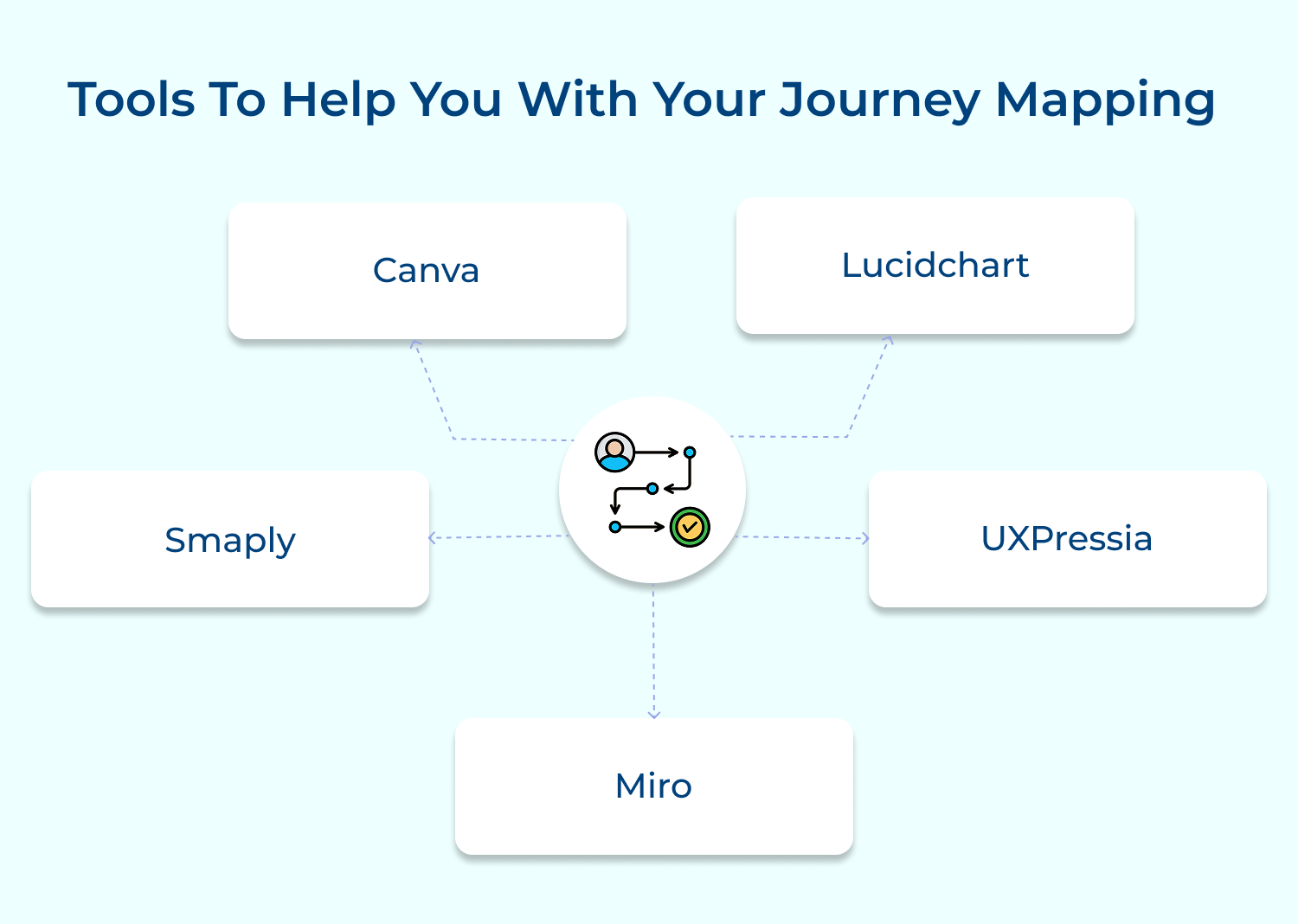
Canva is a user-friendly graphic design platform that offers a wide range of templates and tools to create visually stunning journey maps. With Canva, you can customize the layout, colors and fonts to match your branding, making it easy to create professional-looking maps that capture the customer experience.
Lucidchart is a cloud-based diagram tool that allows users to create dynamic and interactive journey maps. With its drag-and-drop interface, users can easily add shapes, images and text to map out the customer journey in a visually engaging way. Lucidchart also offers collaboration features, making it easy to share and edit maps with team members in real-time.
Smaply is a dedicated journey mapping tool that offers a range of features specifically designed for creating customer journey maps. With Smaply, users can document customer personas, pain points and touchpoints to create comprehensive maps that provide valuable insights into the customer experience. Smaply also offers integrations with other tools, such as CRM systems, to enhance the mapping process.
UXPressia is a user experience tool that enables businesses to create customer journey maps, personas and impact maps to visualize the customer experience. With its intuitive interface, users can easily drag & drop elements to create detailed journey maps that highlight key touchpoints and interactions. UXPressia also offers collaboration features, allowing teams to work together on creating and analyzing journey maps.
Miro is a collaborative online whiteboard platform that offers a range of templates and tools for creating journey maps. With Miro, teams can work together in real-time to map out the customer journey, add comments and make revisions as needed. Miro also offers integrations with other tools, such as Slack and Google Drive, to streamline the journey mapping process.
Data-driven mapping is a powerful tool for businesses looking to elevate the customer journey. By leveraging customer data, companies can create personalized and targeted marketing strategies that enhance the overall customer experience.
Understanding customer behavior and preferences through data-driven mapping allows businesses to anticipate needs, tailor communication and drive sales. Investing in data analytics and mapping tools is crucial for modern businesses looking to stay ahead in the competitive marketplace.

Why should you use customer journey maps?
Customer journey maps allow businesses to understand the entire experience their customers have with their brand, from the initial contact to post-purchase interactions. By visualizing the customer journey, businesses can identify pain points, moments of delight and areas for improvement. This insight creates more personalized marketing campaigns, increases customer loyalty and drives sales.
Why do you need a journey map and when should you have one?
A journey map is essential for businesses that want to improve the customer experience. Whether you’re launching a new product, redesigning your website, or looking to boost customer satisfaction, a journey map understands how customers interact with your brand at every touchpoint. You should have a journey map whenever you want to gain insights into the customer experience or make data-driven decisions about your marketing strategy.
What’s included in a customer journey map?
A typical customer journey map includes the various stages a customer goes through when interacting with a brand, such as awareness, consideration, purchase and post-purchase. It also includes customer actions, emotions and pain points at each stage, as well as the touchpoints or channels they engage with (e.g., website, social media, email).
What is a touchpoint in a customer journey map?
A touchpoint is any interaction a customer has with a brand, whether it’s through a website, social media, customer service, or a physical store. Touchpoints can be both digital and offline, and they play a crucial role in shaping the overall customer experience. By mapping out touchpoints in a customer journey map, businesses can identify where customers are engaging with their brand and how they can optimize these interactions.
How often should you update your customer journey map?
Customer journey maps should be regularly reviewed and updated to reflect changes in customer behavior, market trends, or business goals. It’s recommended to revisit your journey map at least once a year or whenever there are significant changes in your business strategy, products or target audience. By keeping your journey map up to date, you can ensure that your marketing efforts are aligned with the evolving needs and expectations of your customers.
 https://omni24.io/wp-content/uploads/2026/09/Social-commerce-scaled.png
1340
2560
Webvision Solution
https://omni24.io/wp-content/uploads/2023/04/Omni-Logo-1.svg
Webvision Solution2026-10-23 12:18:272026-10-23 12:18:27What is Social Commerce and Why Does It Matter?
https://omni24.io/wp-content/uploads/2026/09/Social-commerce-scaled.png
1340
2560
Webvision Solution
https://omni24.io/wp-content/uploads/2023/04/Omni-Logo-1.svg
Webvision Solution2026-10-23 12:18:272026-10-23 12:18:27What is Social Commerce and Why Does It Matter? https://omni24.io/wp-content/uploads/2026/08/AI-Customer-Service-Agents.png
1256
2400
Webvision Solution
https://omni24.io/wp-content/uploads/2023/04/Omni-Logo-1.svg
Webvision Solution2026-09-21 04:48:512026-09-21 04:48:51How to Build an AI Customer Service Agents: 8 Key Steps
https://omni24.io/wp-content/uploads/2026/08/AI-Customer-Service-Agents.png
1256
2400
Webvision Solution
https://omni24.io/wp-content/uploads/2023/04/Omni-Logo-1.svg
Webvision Solution2026-09-21 04:48:512026-09-21 04:48:51How to Build an AI Customer Service Agents: 8 Key Steps https://omni24.io/wp-content/uploads/2026/08/Omnichannel-Conversational-AI.png
1256
2400
Tushar Joshi
https://omni24.io/wp-content/uploads/2023/04/Omni-Logo-1.svg
Tushar Joshi2026-09-16 03:51:072026-09-16 03:51:07How to Build Omnichannel Conversational AI Strategy
https://omni24.io/wp-content/uploads/2026/08/Omnichannel-Conversational-AI.png
1256
2400
Tushar Joshi
https://omni24.io/wp-content/uploads/2023/04/Omni-Logo-1.svg
Tushar Joshi2026-09-16 03:51:072026-09-16 03:51:07How to Build Omnichannel Conversational AI Strategy
Whether it’s about acquire, engage or support – Omni24 covers all your customer engagement needs in one complete platform.

Copyright ©2026 Veemo All rights reserved.
CA, Los Angeles, Hall Ave, 19011