Ecommerce Customer Service Guide: Benefits, Types and Strategies
Use ecommerce customer service best practices, expert strategies to increase consumer satisfaction and brand reputation.
No Credit Card Needed | Guided Setup
Use ecommerce customer service best practices, expert strategies to increase consumer satisfaction and brand reputation.
No Credit Card Needed | Guided Setup
Provide excellent customer service for your ecommerce brand following the ecommerce customer support best practices.
Online retailers are losing customers due to unanswered queries, delayed responses and failed returns. E-commerce customer service is a game changer as it supports online retailers to assist before, during and after a purchase.
It includes channels such as live chat, email and self-service to resolve issues while repeat revenue. Walk through this definitive guide to understand what an operational team needs to build a high-performing support function. Brands with positive customer service gets higher customer retention.
Ecommerce customer service refers to the support and assistance provided to customers who shop online. It encompasses all interactions between an online retailer and its customers before, during and after a purchase.
A well designed ecommerce customer service strategy is crucial in the digital marketplace, where face-to-face interactions are absent and building loyalty relies heavily on the quality of customer support.
Key objectives :
Customer support is an essential component of any eCommerce business. Providing excellent customer service not only helps in retaining existing customers but also in attracting new ones.
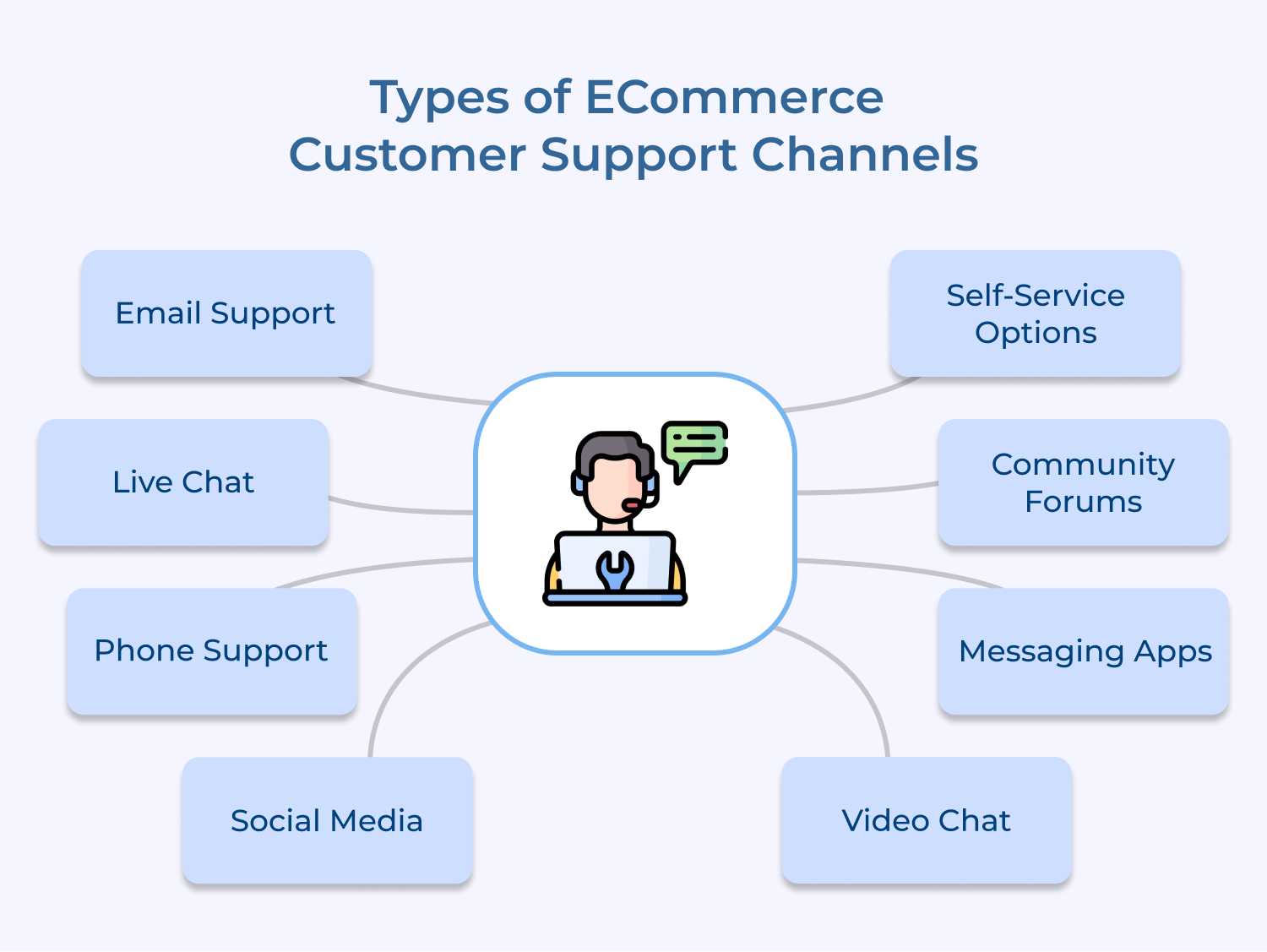
1. Email support: Email remains a popular support channel due to its convenience and ability to handle complex issues. It allows customers to explain their problems in detail and attach relevant files. It provides a written record of interactions and allows for batch processing of requests.
2. Live chat: Real-time text-based communication on the website or app. Live chat offers immediate assistance, which can be crucial for converting browsing customers. It’s efficient for handling quick queries and can be augmented with chatbots for 24/7 availability.
3. Phone support: Traditional but still valuable, especially for urgent or complex issues. It allows for a personal touch and can help build stronger customer relationships. But, it can be resource-intensive and may require longer wait times during peak periods.
4. Social media: Platforms like Facebook, Twitter and Instagram are increasingly used for customer support. They offer public & private messaging options and are particularly useful for addressing complaints quickly to prevent negative publicity.
5. Self-service options: Customer self-service includes FAQs, knowledge bases and video tutorials. They empower customers to find answers independently, reducing the load on support staff. They’re available 24/7 and can be particularly useful for common queries.
6. Messaging apps: WhatsApp, Facebook Messenger and other messaging platforms are becoming popular for customer support. They offer a familiar, convenient interface for customers and support rich media sharing.
7. Video chat: Useful for complex issues that require visual demonstration. It can provide a more personal touch and is particularly valuable for high-value customers or products.
Exceptional customer service is the key differentiator that sets your ecommerce business apart. As more consumers shift to online shopping, providing outstanding support has become crucial.
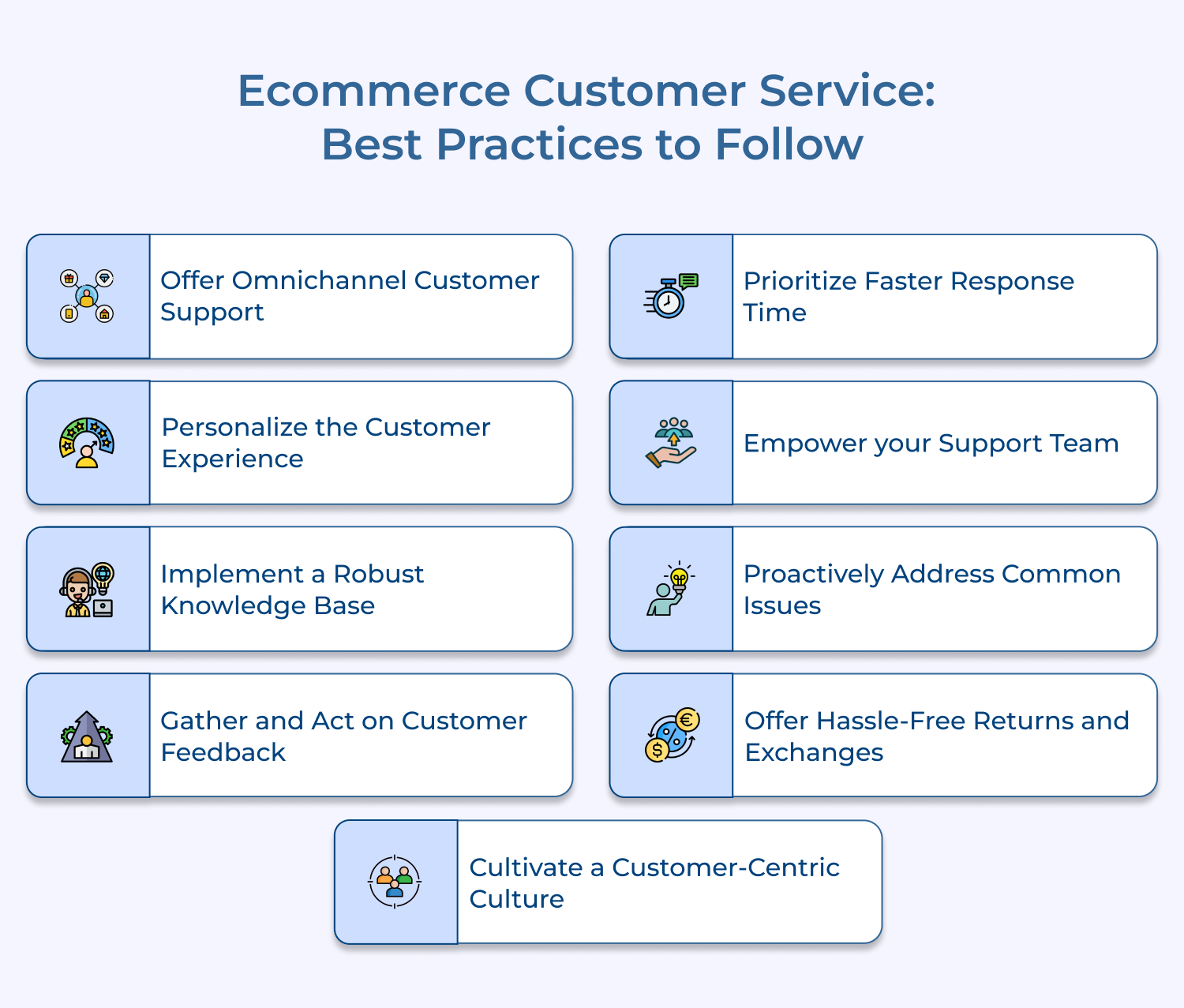
Modern customers expect to reach you through their preferred communication channels.
By providing multichannel customer service, you cater to diverse customer preferences and ensure accessibility. Integrate these channels to maintain a consistent customer experience and seamless conversation history across platforms.
Implement a robust omnichannel support strategy that includes:
The ecommerce companies must understand how quick response time is crucial for them to retain customers. Deploy chatbots for instant responses to common queries outside business hours. But, ensure there’s an easy way for customers to escalate to human support when needed.
Pro tips:
Leverage customer data and previous conversation history to provide personalized customer service. Personalization shows customers you value their business and understand their unique needs, and increasing satisfaction.
Businesses can also use CRM systems to:
Authorizing your support team Your customer service representatives are the face of your brand. Empowered agents can resolve issues more efficiently and leave customers with a positive impression of your brand.
Empower the customer service team by:
A well-organized, searchable knowledge base can significantly reduce support tickets by allowing customers to find answers independently. Regularly update your knowledge base based on common customer inquiries and feedback. This not only improves customer satisfaction but also frees up your support team to handle more complex issues.
You can create:
Don’t wait for customers to encounter problems. Proactive customer service communication reduces anxiety, builds trust and minimizes the need for customers to reach out with concerns. Anticipate and address common issues before they arise:
Use this feedback to refine your products, processes and support strategies. When customers see their input leading to tangible improvements, they feel valued and are more likely to remain loyal. Continuously improve your customer service strategy by actively seeking and implementing customer feedback:
A clear, customer-friendly return policy is essential for building trust in online purchases. While a generous return policy may seem costly, it can lead to increased customer confidence and higher overall sales.
Implement:
When every employee understands the importance of customer satisfaction, it naturally leads to better service across all touchpoints. Exceptional customer service should be ingrained in your company culture:
Excellent customer support can be a key differentiator in the modern hyper competitive world. Let us discuss the effective ways to enhance your customer support and drive sales.
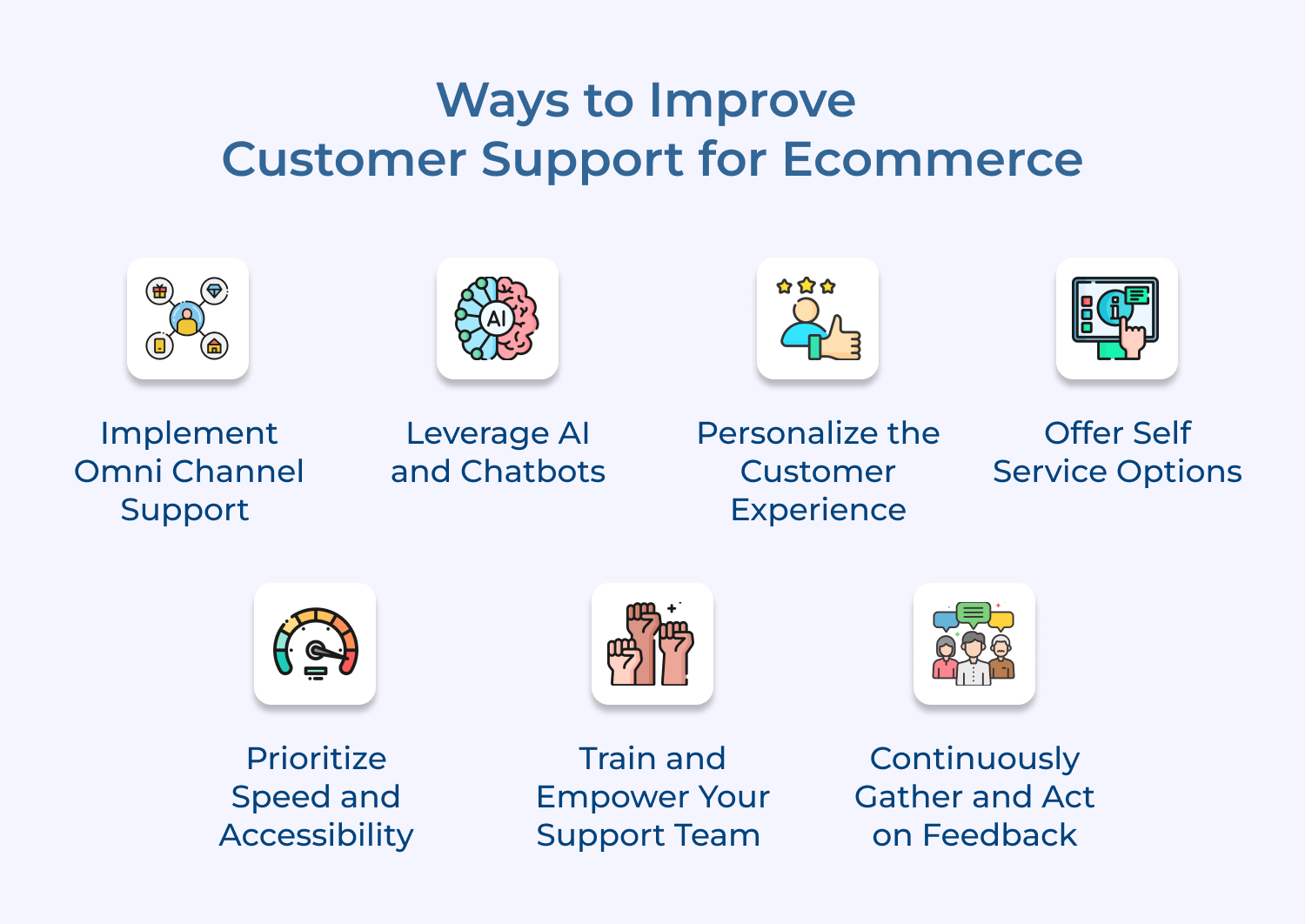
Customers expect to reach you through their preferred channels. Offer support across multiple platforms, including email, phone, live chat, social media and messaging apps.
Ensure a seamless experience by integrating these channels, allowing customers to switch between them without losing context. This approach not only caters to diverse preferences but also improves response times and customer satisfaction.
Artificial Intelligence (AI) and chatbots can significantly improve your customer support efficiency. Use them to handle routine inquiries, provide instant responses 24/7 and free up your human agents for more complex issues.
Chatbots can offer product recommendations, track orders and answer frequently asked questions. But, always provide an option to escalate to a human agent for more nuanced or sensitive matters.
Use data analytics to understand your customers’ preferences, purchase history and behavior. This information allows you to provide personalized support, tailored product recommendations and targeted solutions. Address customers by name, reference their previous interactions and anticipate their needs. Personalization builds stronger connections and increases customer loyalty.
Many customers prefer to find answers on their own. Develop a comprehensive to empower customers with self-service options
Ensure these resources are easily searchable and regularly updated. This approach not only satisfies independent customers but also reduces the workload on your support team.
In ecommerce, quick responses are crucial. Set and adhere to response time standards for each communication channel. Implement a ticketing system to track and prioritize issues. Consider offering 24/7 support for critical matters.
Make your contact information easily visible on your website and within your app. Remember, accessibility and promptness can turn a potentially negative experience into a positive one.
Your support team is the face of your brand. Invest in their training, ensuring they have deep product knowledge and excellent communication skills. Empower them to make decisions and resolve issues without excessive escalation. Regular coaching, performance feedback and performance. A well-trained, motivated team will provide superior customer experiences.
Implement systems to collect customer feedback after each interaction. Apart from that, regularly analyze this feedback to identify areas for improvement in your products, processes and support quality
Close the loop by informing customers about changes made based on their feedback, showing that you value their input.
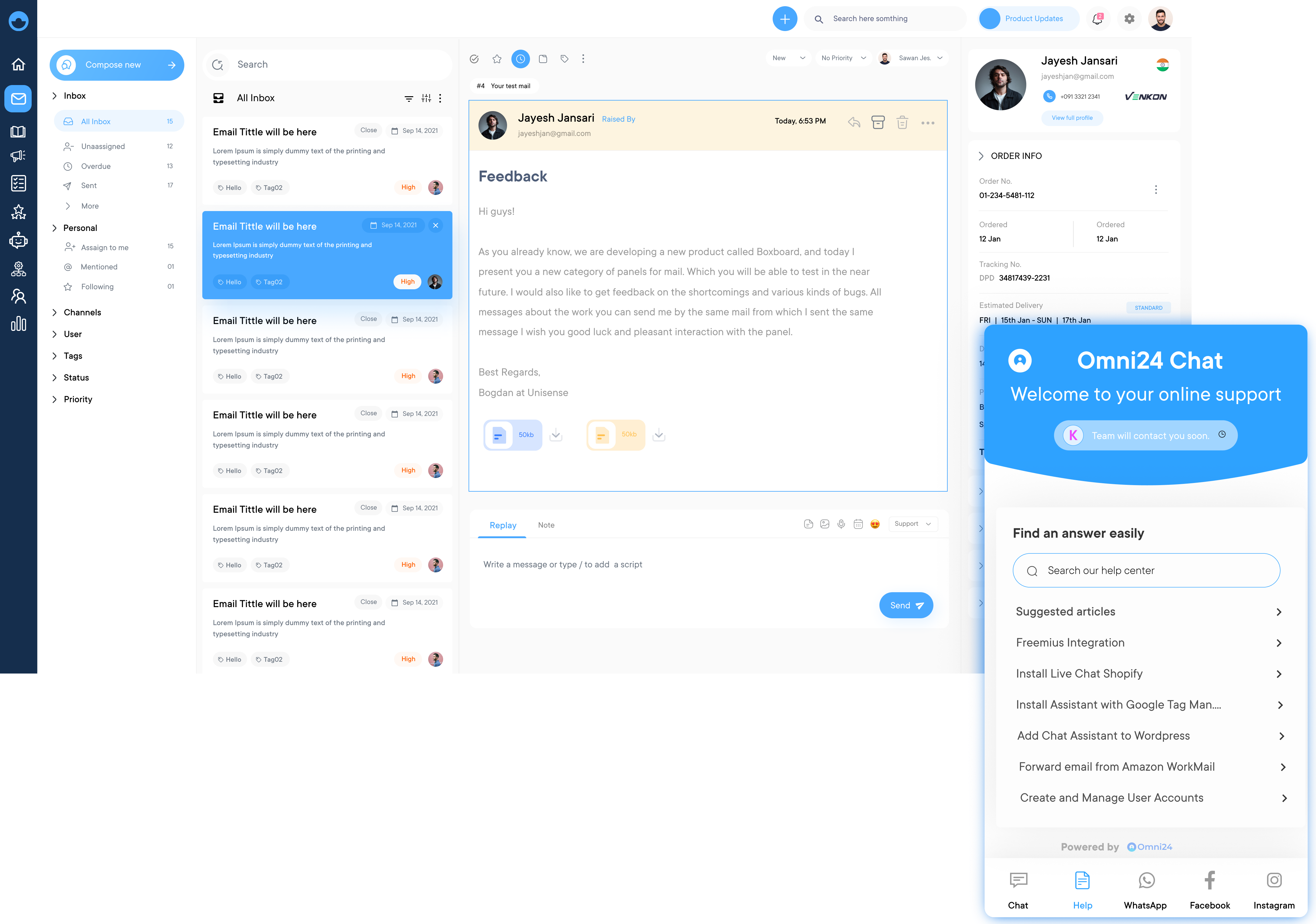
Providing excellent customer service is essential for maintaining customer satisfaction. One key tool that can help streamline operations is ecommerce customer service software.
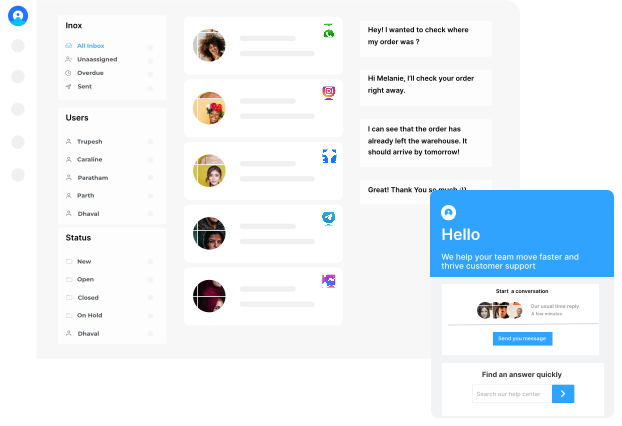
Modern ecommerce customer service software should provide seamless omnichannel support. Agents can view a customer’s entire interaction history across all channels, enabling more personalized and efficient service. Customers can start a conversation on one channel and continue it on another without losing context.
A robust ticketing system is essential for organizing and tracking customer inquiries. It automatically assigns unique ticket numbers to each customer issue, allowing for easy reference and follow-up. A good ticketing system also includes features like status tracking, internal notes and automated reminders to prevent requests from falling through the cracks.
Ecommerce customer service software should include a comprehensive knowledge base with frequently asked questions, product information, troubleshooting guides and how-to articles. Some advanced systems even incorporate AI-powered chatbots to guide customers through simple processes or answer basic questions.
Integrating customer service software with a CRM system provides agents a 360-degree view of each customer. It includes purchase history, previous interactions, preferences and any other relevant data.
The information at their fingertips, agents can provide more personalized and informed support. Customer service CRM integration also allows for better tracking of customer lifetime value, enabling businesses to tailor their service approach based on a customer’s importance to the company.
Automation features can significantly improve efficiency and consistency in customer service operations. It includes automated responses for FAQs, ticket routing based on predefined rules, and triggered actions based on specific events or timeframes.
Workflow management tools allow managers to create and optimize service processes, ensuring that complex issues follow a standardized path to resolution. It can include approval processes, escalation procedures and task assignments.
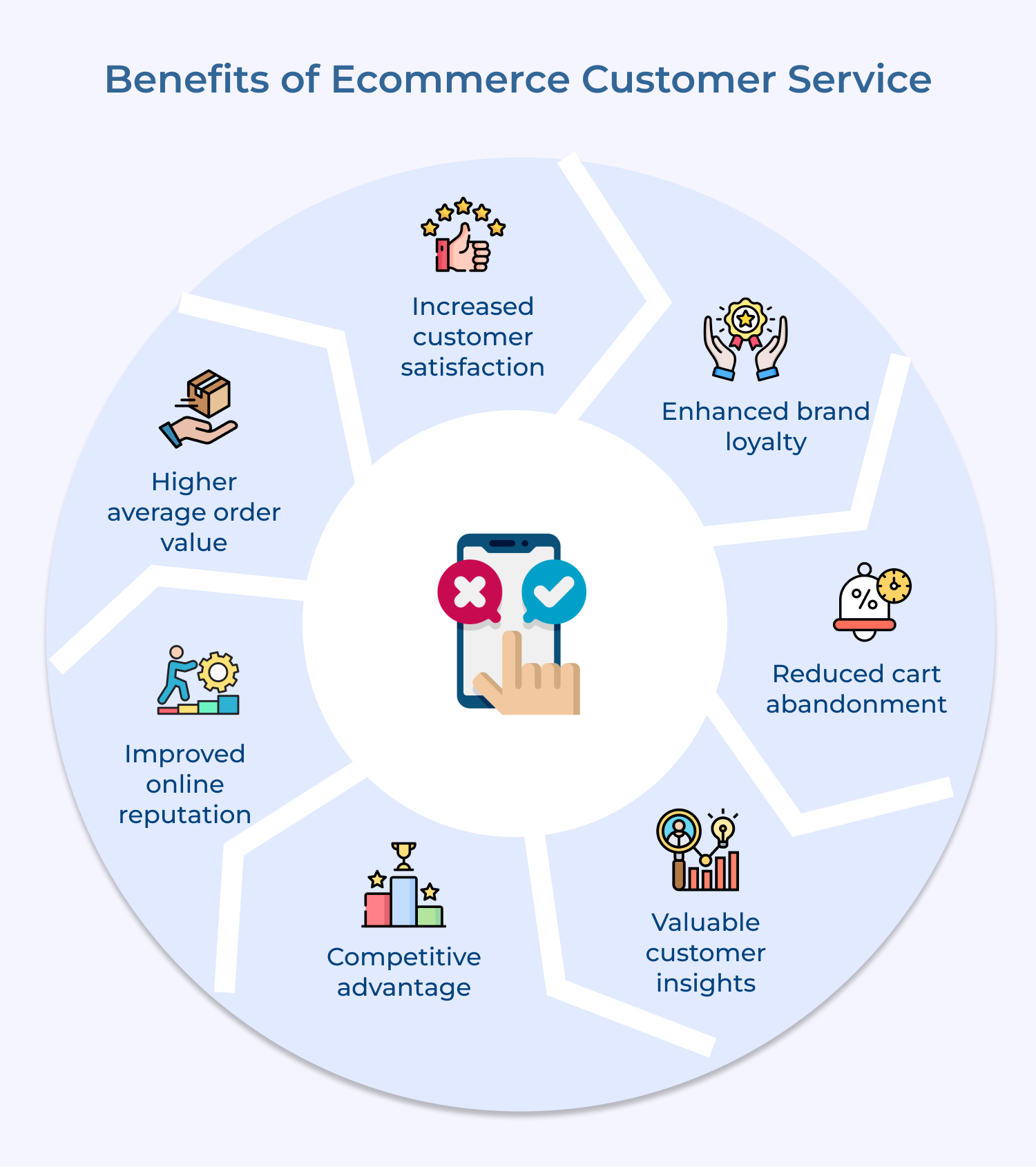
As the digital marketplace continues to grow, providing excellent customer support has become a key differentiator for firms. Here’s why you should consider Ecommerce customer service.
1. Increased customer satisfaction: Responsive and helpful customer service leads to higher satisfaction rates. When customers feel supported throughout their online shopping journey, they’re more likely to have a positive experience with the brand.
2. Enhanced brand loyalty: Excellent customer service builds trust and fosters long-term relationships with customers. Satisfied customers are more likely to become repeat buyers and brand advocates, driving sustainable growth for the business.
3. Reduced cart abandonment: Timely support can address customer concerns and questions during the purchasing process, potentially reducing cart abandonment rates. This can lead to increased sales and revenue.
4. Valuable customer insights: Interacting with customers provides businesses firsthand feedback and insights into product issues and areas for improvement. The information can guide product development and website optimization efforts.
5. Improved online reputation: Positive customer service experiences often lead to favorable reviews and ratings. This can boost the company’s online reputation, attracting new customers and building credibility.
6. Higher average order value: Knowledgeable customer service representatives can provide product recommendations and upsell opportunities, potentially increasing the average order value.
In the competitive world of ecommerce, providing excellent customer service is crucial for success. But, some practices can harm your business rather than help it.
1. Slow Response Times
Customers expect quick responses to their queries and concerns. Failing to respond promptly leads to frustration and lost sales, especially situations when customers are left waiting hours or days for a basic reply.
2. Lack of Multichannel Support
Limiting customer service to a single channel, such as email, frustrates customers who prefer other modes of communication. This restrictive approach forces customers into an inconvenient process, leading to reduced satisfaction and resolution rates across board.
3. Impersonal, Robotic Responses
Relying heavily on generic, copy-paste replies makes customers feel undervalued and unheard while automation can be helpful. Overusing canned responses for every situation removes the human touch that builds genuine trust and loyalty.
4. Ignoring Customer Feedback
Customer feedback whether positive or negative, is invaluable for improving your ecommerce business. Missed feedback resolution such as complaints and suggestions, represents a significant missed opportunity for meaningful growth as well as improvement.
Avoiding these pitfalls requires speed, empathy and consistency across every customer touchpoint.
Ecommerce customer service separates high-retention brands from forgettable ones. Businesses that treat support as a growth function consistently outperform on loyalty, conversion and lifetime value.
Ready to build a support operation that scales? Start your 14-day free trial of Omni24 to see the platform in action. Brands that invest in technology for better ecommerce customer service reduce churn to increase repeat purchase and turn interaction into a retention opportunity.
Omni24’s customer engagement platform harnesses automation and AI to deliver unified customer experiences across digital channels, while keeping human touch
E-commerce support is important because it plays a vital role in ensuring customer satisfaction and retention. Providing effective support can help address customer issues, answer their questions and lead to a positive shopping experience. This can result in higher customer loyalty, increased sales and improved brand reputation.
Customer service in e-commerce is delivered through various channels such as live chat, email, phone support and social media. These channels enable businesses to interact with customers in real time, addressing concerns as they arise across the shopping journey.
Good customer service allows businesses to build lasting trust that turns first-time buyers into repeat customers who return with confidence and recommend the brand to others.
Multi-channel e-commerce service is all about offering support across several communication methods at once. It gives customers the flexibility to choose whichever option feels most convenient for their specific level at that moment.
Effective e-commerce customer support requires a combination of tools working together across every stage of the customer journey. Businesses often depend on helpdesk software, live chat software and email automation to manage conversations efficiently and consistently.
Social media monitoring tools also play a role in tracking customer queries and maintaining a consistent level of support across every channel businesses operate on daily.
Customer service is important for e-commerce businesses because it can directly impact customer satisfaction, loyalty and retention rates. By providing excellent customer service, businesses can build strong relationships with customers, encourage repeat purchases and attract new customers through positive word-of-mouth. In a competitive e-commerce market, great customer service can be a key differentiator for businesses looking to stand out and succeed.