Customer Driven Marketing Strategy: A Step-by-Step Guide
Customer-driven marketing strategy focuses on understanding customer needs to deliver timely solutions that solve problems and enhance lives.

Customer-driven marketing strategy focuses on understanding customer needs to deliver timely solutions that solve problems and enhance lives.
Businesses are constantly looking for ways to attract customers in the hyper-personalized marketplace. An effective way that can be a blessing to such businesses is the deployment of a customer-driven marketing strategy.
63% of marketers believe that a customer-driven marketing strategy is more effective than traditional marketing.
But what exactly is a customer driven marketing strategy and why is it so important?
Customer-driven marketing puts the needs and preferences of the customers at the center of all business decisions. By understanding the pain points of the wants of their target audience, businesses can develop effective customer driven marketing campaigns and build stronger client relationships.
Let us explore the necessity of customer-driven marketing and how businesses can benefit from implementing this approach in their marketing strategies.
Customer-driven marketing refers to a strategy that is purely customer-centric and focuses on meeting their needs rather than trying to persuade them to buy a specific product or service. The approach puts the customer at the center of the marketing efforts, making it essential to understand their preferences, behaviors and motivations.
Key Objectives of Customer-Driven Marketing:
Customer-driven marketing strategies are essential for businesses looking to truly connect with their target audience and build long-lasting relationships. Companies can create more personalized marketing campaigns by focusing on customer preferences.
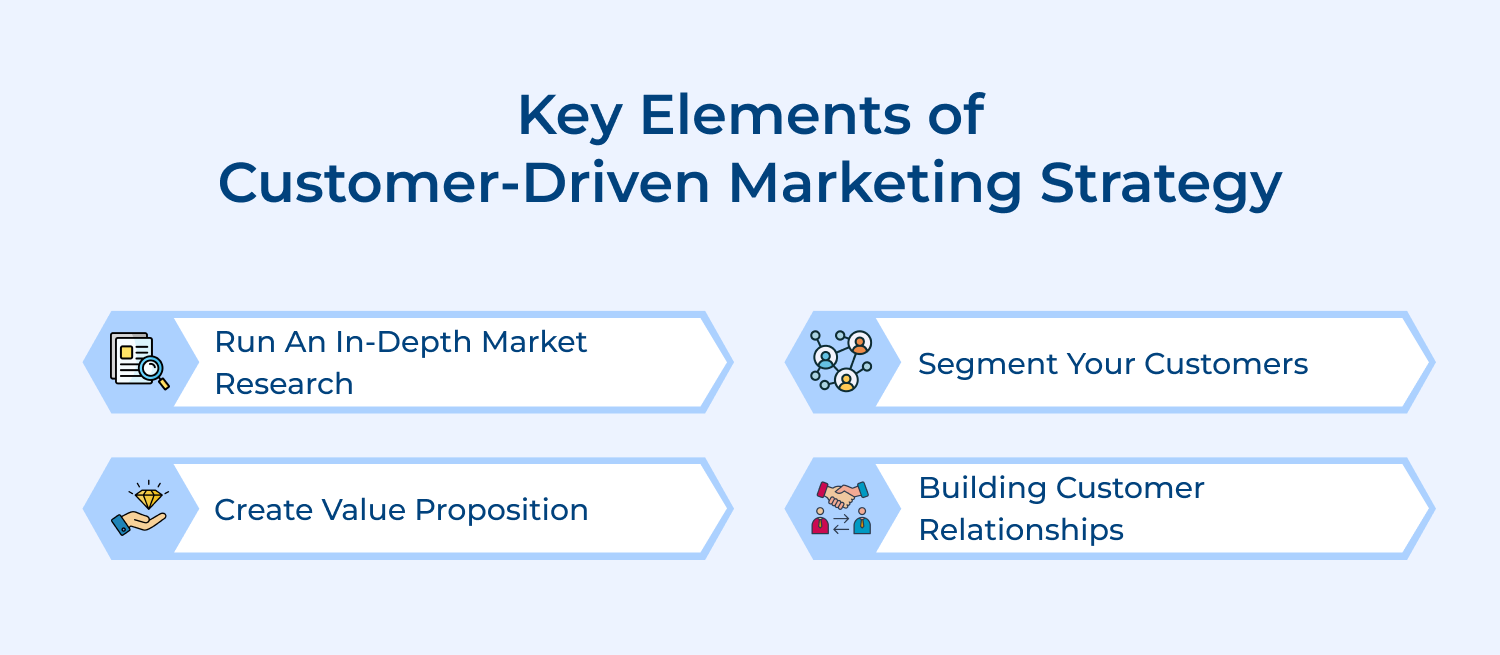
Here are some key elements of a customer-driven marketing strategy:
Modern businesses are focusing more on customer-driven marketing strategies. By being customer-centric in all marketing efforts, businesses can better understand their needs and preferences, ultimately leading to increased customer satisfaction.
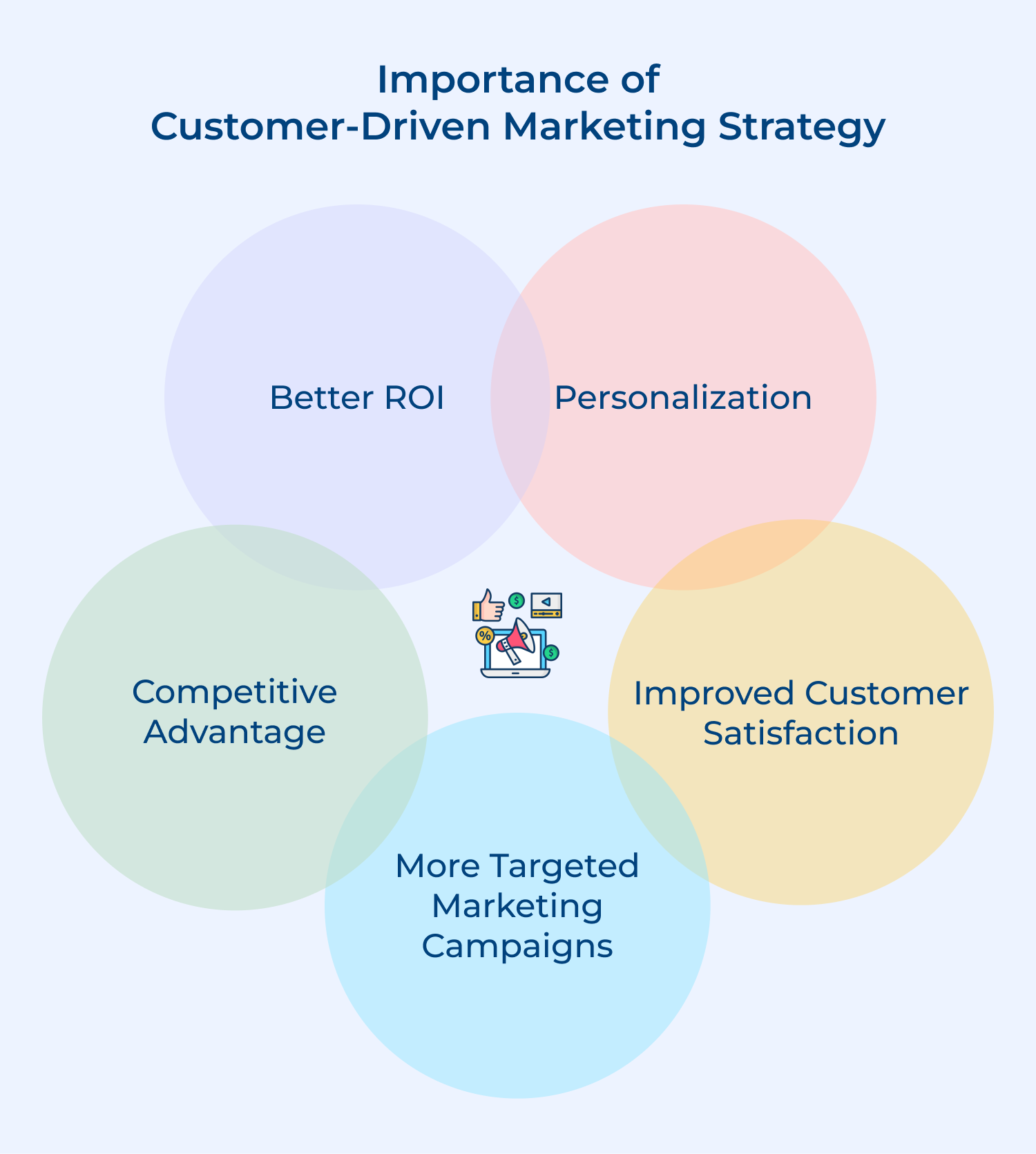
Here are five key reasons why a customer-driven marketing strategy is essential for success:
Businesses that leverage a customer-driven marketing strategy can attract and retain customers effortlessly in the competitive market. By putting customer preferences at the forefront of marketing efforts, companies can better connect with their target audience and drive sales.
Here are five steps to create an effective customer-driven marketing strategy:
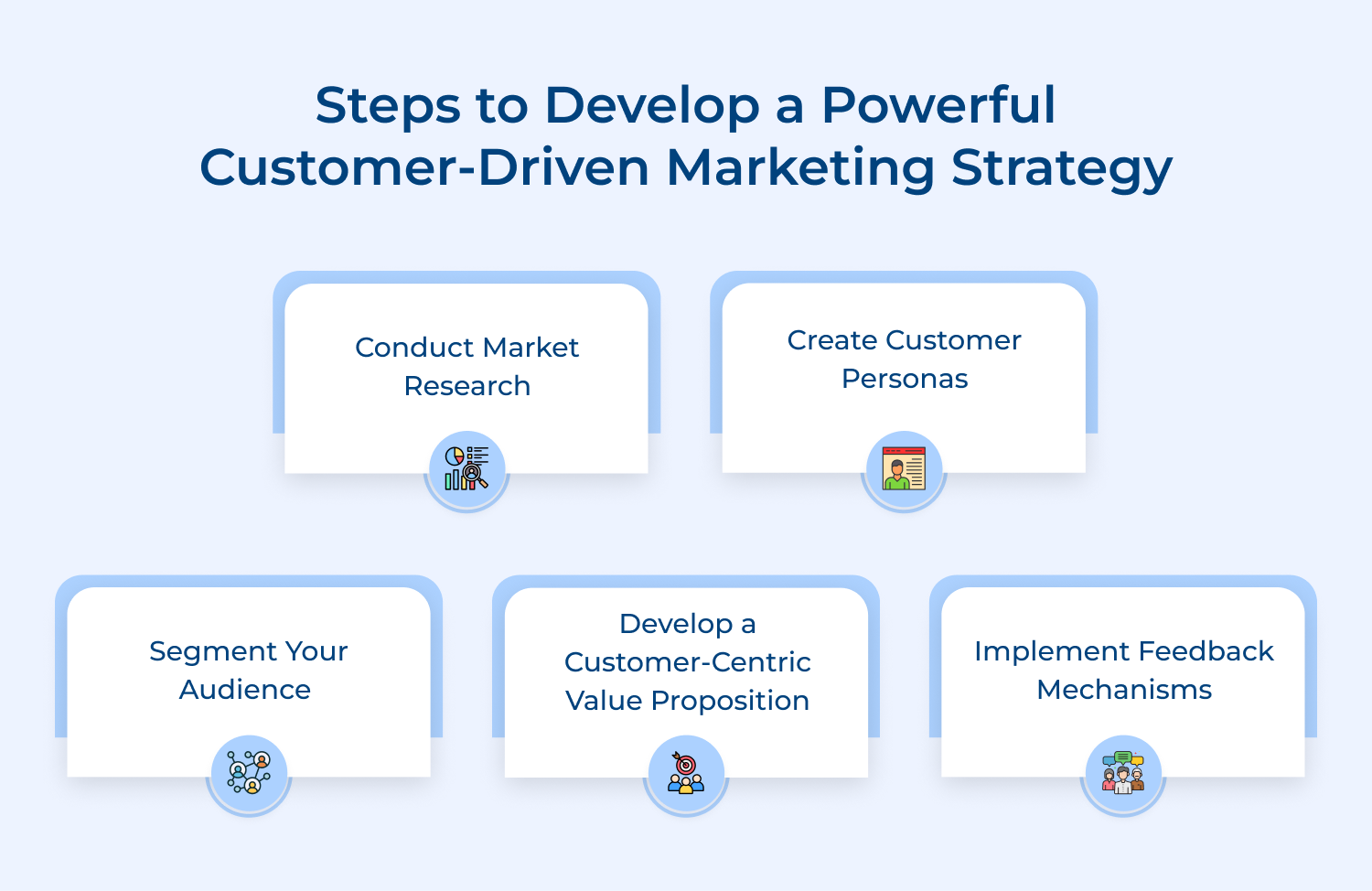
Before implementing any marketing strategy, it is important to understand your target audience. Conduct market research to gather information on consumer demographics, behavior, preferences and purchasing habits.
The insights will help you tailor your marketing efforts to better meet the needs of your customers.
Best Practices:
Customer personas are fictional representations of your ideal customers based on real data and market research.
Creating detailed customer personas helps you to better understand the needs, wants and challenges of your target audience. The information will guide your marketing efforts and help you create engaging content.
Best Practices:
Not all customers are the same, so it is important to segment your audience based on factors such as demographics, behavior and preferences.
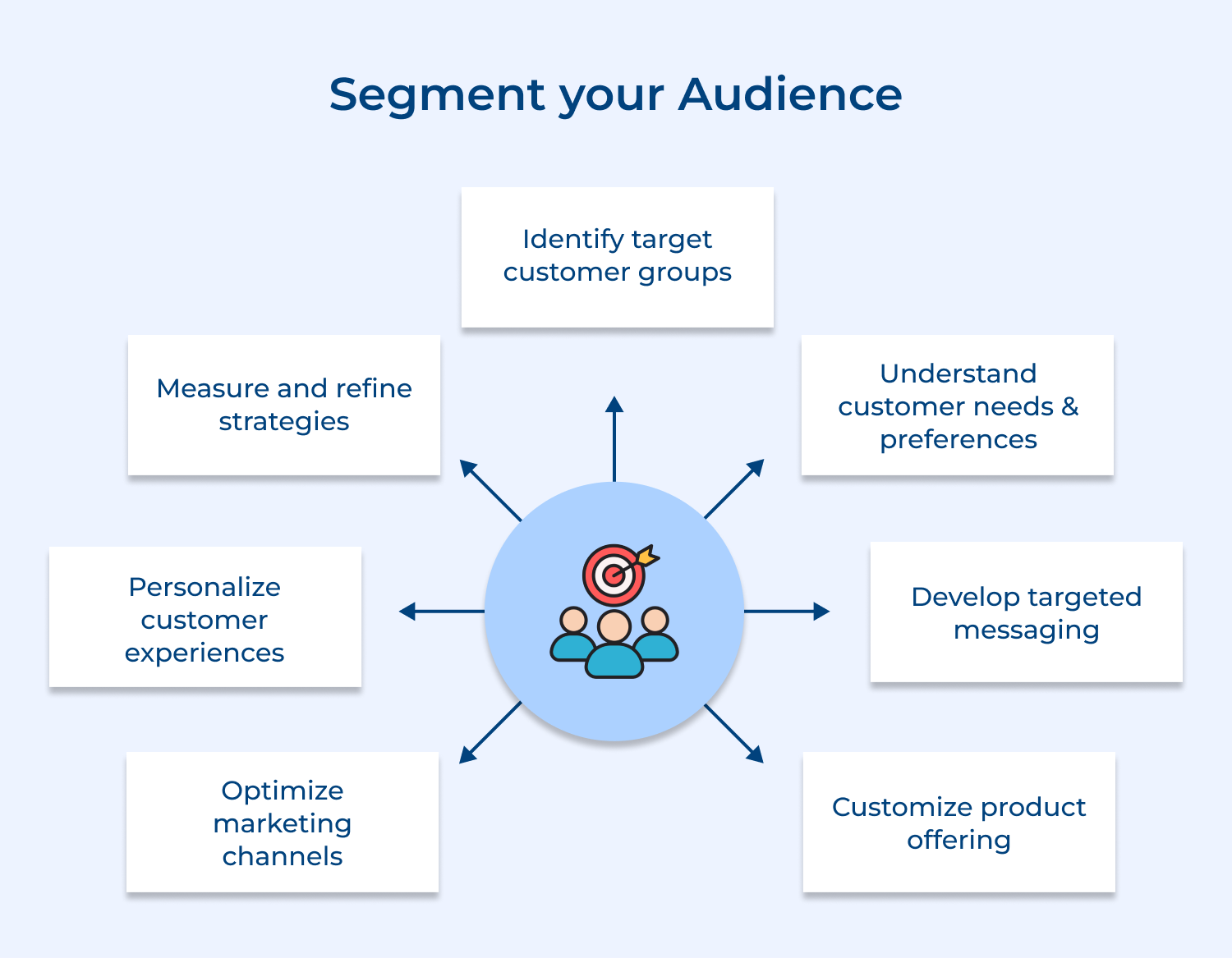
Segmenting your audience helps target specific groups by designing personalized marketing messages that resonate with their needs and motivations. The approach can lead to higher engagement and conversion rates.
Best Practices:
The value proposition is a statement that communicates the unique benefits and value of your product or service provided to customers.
To create a customer-driven value proposition, focus on addressing the needs and pain points of the target audience. Highlighting how your offering solves their problems or fulfills their desires can attract loyal customers.
Best Practices:
Customer feedback is a valuable source of insight that can help you improve your marketing strategy and better serve your customers.
Implement feedback mechanisms such as surveys, reviews and social media monitoring to gather feedback on customer satisfaction or suggestions for improvement. Use the feedback to make informed decisions and continuously optimize your marketing efforts.
Best Practices:
There are two key approaches that companies can take when developing their marketing strategies: customer-driven and customer-centric.
While these two approaches may sound similar, they actually have distinct differences that can impact the success of a company’s marketing efforts.
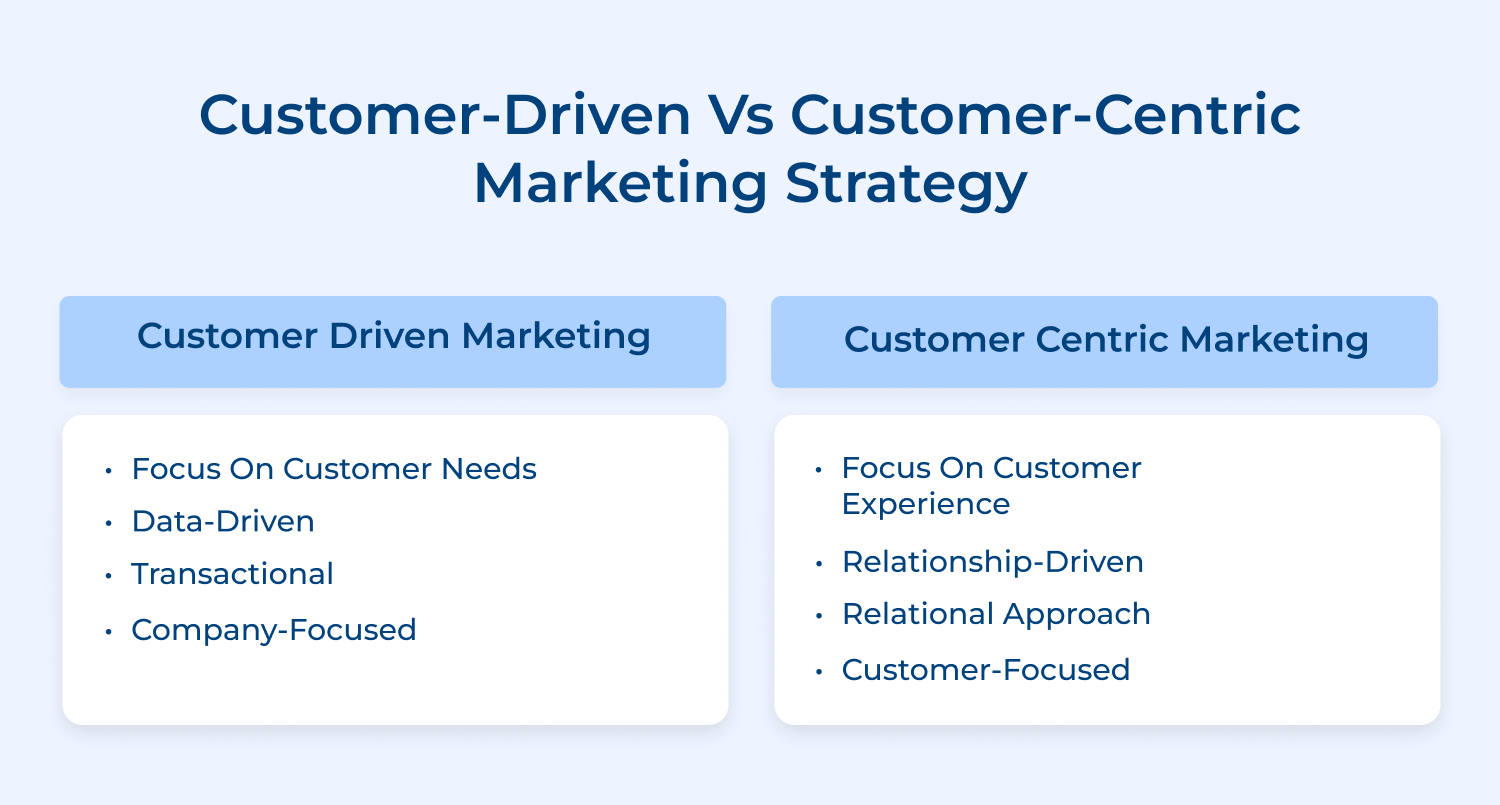
Here are the key differences between customer-driven and customer-centric marketing strategies:
1. Focus on customer needs vs. customer experience
Customer-driven marketing focuses on identifying the specific needs and preferences of customers. The approach is highly personalized and takes into account individual customer behaviors.
Customer-centric marketing focuses on creating a seamless and positive customer experience across all touchpoints, rather than just meeting individual needs.
2. Data-driven vs. relationship-driven
Customer-driven marketing relies heavily on data and analytics to understand customer behavior and preferences.
Customer-centric marketing places a greater emphasis on building relationships with customers and delivering a personalized experience that goes beyond data analysis.
3. Transactional vs. relational approach
Customer-driven marketing is often transactional, as it focuses on increasing sales and revenue by meeting customer needs.
Customer-centric marketing takes a relational approach by focusing on building long-term relationships with customers and creating value for them beyond the initial transaction.
4. Company-focused vs. customer-focused
Customer-driven marketing tends to be company-focused, as it prioritizes the goals and objectives of the company in meeting customer needs.
Customer-centric marketing is customer-focused, as it prioritizes the needs and preferences of customers in driving marketing strategy.
A customer-driven marketing strategy is a popular approach in the modern business landscape. By focusing on the needs of customers, companies aim to create a more personalized and engaging experience for their target audience.
While this sounds great in theory, there are several challenges that companies may face when implementing a customer-driven marketing strategy.
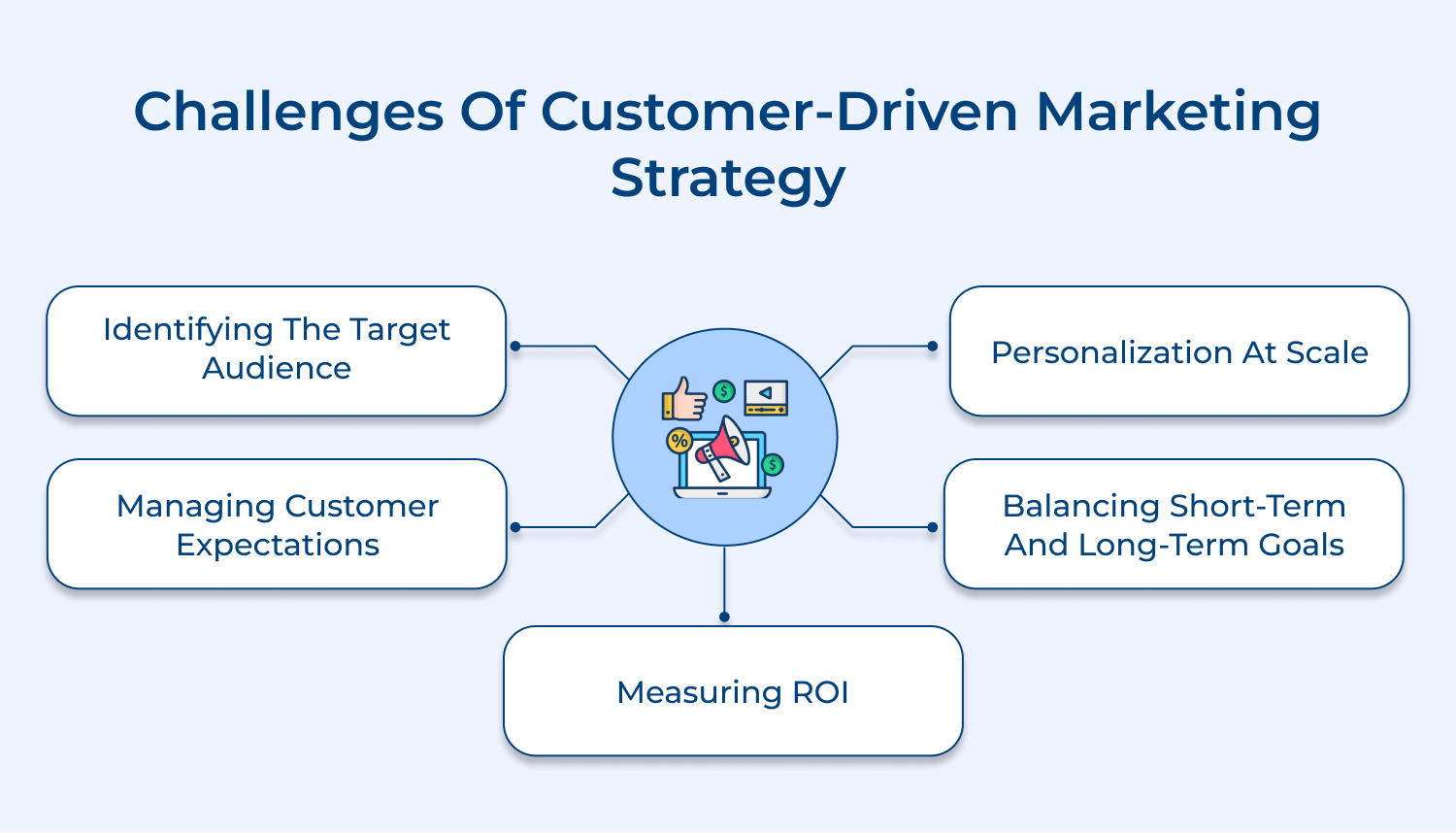
Customer driven marketing strategy is the key to success for many businesses. Understanding the needs of your target audience, you can create a marketing strategy that resonates with them and leads to increased sales as well as customer loyalty.
Here are some real life examples of companies that have successfully implemented customer-driven marketing strategies:
Apple has long been known for its customer-centric marketing approach. They prioritize creating products and services that meet the needs of their customers, rather than pushing out products that may not be well-received. This approach has led to a loyal customer base and a reputation for innovation.
Starbucks is another company that puts the customer at the center of their marketing strategy. They have built a strong brand identity around the idea of creating a “third place” outside of work and home where customers can enjoy their favorite coffee beverages. By listening to customer feedback and store design to meet customer needs, Starbucks has been able to maintain a strong presence in the competitive coffee market.
Amazon is known for its customer-centric approach to marketing, with a focus on personalized recommendations and fast, convenient delivery options. By leveraging data and technology, Amazon is able to provide a personalized shopping experience for each customer, making it easy for them to find and purchase the products they need. The customer-driven approach has helped Amazon become one of the largest and most successful e-commerce companies in the world.
Nike is another company that understands the importance of listening to and understanding its customers. They have built a strong brand identity around the idea of empowering athletes and providing high-quality sports apparel and footwear that meets their performance needs. By partnering with top athletes and incorporating customer feedback into their product development process. Nike has been able to create products that resonate with their target audience and drive sales.
In conclusion, creating a successful marketing strategy that drives long-term customer loyalty is crucial for the sustained growth and success of any business. By focusing on building strong relationships with customers, providing value and consistently delivering exceptional products or services, businesses can cultivate a loyal customer base that will continue to support them for years to come.
Leveraging data-driven insights, personalized communication and innovative marketing tactics can help businesses stay ahead of the competition. By prioritizing customer satisfaction and loyalty, businesses can drive sustainable growth in the ever-evolving market landscape.

1. How to develop an effective customer-driven marketing strategy?
To develop an effective customer-driven marketing strategy, start by conducting market research to understand your target audience. Identify their needs, preferences and pain points. Use the information to create buyer personas, which are fictional representations of your ideal customers. Tailor your marketing messages and regularly gather feedback to refine your strategy.
2. How to measure the success of your customer-driven marketing strategy?
Measuring the success of your customer-driven marketing strategy involves tracking key performance indicators (KPIs) such as customer engagement, lead generation, conversion rates, and customer retention. Analyze metrics like website traffic, social media engagement, email open rates and customer feedback to evaluate the effectiveness of your marketing efforts. Use the data to make data-driven decisions and optimize your strategy for better results.
3. How will you design a customer-driven marketing strategy?
Designing a customer-driven marketing strategy involves aligning your marketing efforts with the preferences and behaviors of your target audience. Start by defining your target market and understanding their needs. Create personalized marketing messages and campaigns that speak to the customer pain points. Use customer feedback and data analytics to continuously improve your strategy for better results.
4. How does a customer driven marketing strategy work for a business?
A customer-driven marketing strategy works for a business by focusing on building strong relationships with customers and delivering value to meet their needs. By understanding your customers you can increase customer satisfaction, loyalty and advocacy. It can lead to higher customer retention rates, increased sales and long-term business success.
5. Why is customer driven marketing strategy important?
A customer-driven marketing strategy is important because it helps businesses stay relevant, competitive and successful in today’s customer-centric marketplace. By putting the customer needs at the center of marketing efforts, businesses can create more engaging and effective campaigns that resonate with their target audience. It can lead to increased customer loyalty, brand awareness and profitability, ultimately driving business growth.
 https://omni24.io/wp-content/uploads/2026/09/Social-commerce-scaled.png
1340
2560
Webvision Solution
https://omni24.io/wp-content/uploads/2023/04/Omni-Logo-1.svg
Webvision Solution2026-10-23 12:18:272026-10-23 12:18:27What is Social Commerce and Why Does It Matter?
https://omni24.io/wp-content/uploads/2026/09/Social-commerce-scaled.png
1340
2560
Webvision Solution
https://omni24.io/wp-content/uploads/2023/04/Omni-Logo-1.svg
Webvision Solution2026-10-23 12:18:272026-10-23 12:18:27What is Social Commerce and Why Does It Matter? https://omni24.io/wp-content/uploads/2026/08/AI-Customer-Service-Agents.png
1256
2400
Webvision Solution
https://omni24.io/wp-content/uploads/2023/04/Omni-Logo-1.svg
Webvision Solution2026-09-21 04:48:512026-09-21 04:48:51How to Build an AI Customer Service Agents: 8 Key Steps
https://omni24.io/wp-content/uploads/2026/08/AI-Customer-Service-Agents.png
1256
2400
Webvision Solution
https://omni24.io/wp-content/uploads/2023/04/Omni-Logo-1.svg
Webvision Solution2026-09-21 04:48:512026-09-21 04:48:51How to Build an AI Customer Service Agents: 8 Key Steps https://omni24.io/wp-content/uploads/2026/08/Omnichannel-Conversational-AI.png
1256
2400
Tushar Joshi
https://omni24.io/wp-content/uploads/2023/04/Omni-Logo-1.svg
Tushar Joshi2026-09-16 03:51:072026-09-16 03:51:07How to Build Omnichannel Conversational AI Strategy
https://omni24.io/wp-content/uploads/2026/08/Omnichannel-Conversational-AI.png
1256
2400
Tushar Joshi
https://omni24.io/wp-content/uploads/2023/04/Omni-Logo-1.svg
Tushar Joshi2026-09-16 03:51:072026-09-16 03:51:07How to Build Omnichannel Conversational AI Strategy
Whether it’s about acquire, engage or support – Omni24 covers all your customer engagement needs in one complete platform.

Copyright ©2026 Veemo All rights reserved.
CA, Los Angeles, Hall Ave, 19011