Ultimate Guide to Help Desk with Features & Benefits

Explore how help desk streamlines the process of managing your IT services and supports conversations in a single place.

No Credit Card Needed | Guided Setup

Trusted by Customer Centric Businesses Globally

Deliver Efficient Customer Support with Omnichannel Helpdesk

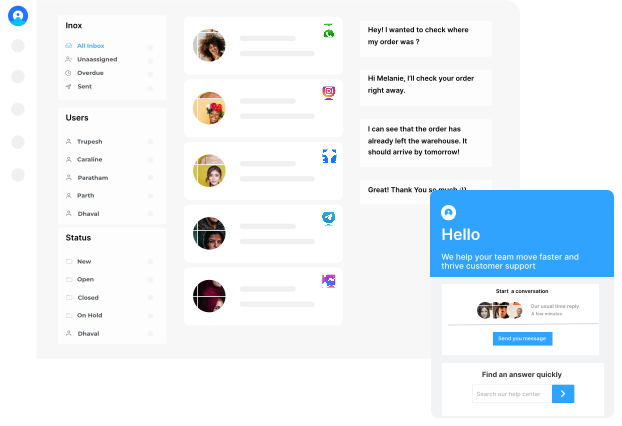
Turn your customer issues into meaningful conversations across all channels with Omni24’s omnichannel help desk.

  • Connect All Support Channels at One Place

    Integration of all support channels (email, chat, social media, phone) into one platform helps customers in a smooth transition between channels without needing to repeat their issue. It saves time and improves the overall customer experience.

  • Automate Your Processes with Workflows

    Setting up custom workflows helps to automate repetitive tasks and ensures that no support request goes unanswered.

  • Prioritize Critical Conversations with SLAs

    Service Level Agreements (SLAs) help you prioritize critical conversations by setting response times for different channels. It ensures you never overlook important customer inquiries and keeps your team accountable.

  • Streamline Your Support Operations

    Consolidation of all support channels into a single platform streamlines your customer service efforts. Omni24 makes it easy for teams to manage client inquiries without switching tabs.

  • Make Team Collaboration a Breeze

    Shared inbox software and collaboration tools together make team collaboration seamless. Teams can work together, assign tasks and share knowledge for better customer resolution.

  • Track Agent Action with Audit Logs

    Audit logs allow you to see every interaction between agents and customers. This helps you to identify areas for improvement and ensures compliance with company policies.

Unresolved tickets pile up when agents have to manage duplicate queries across channels, causing customer churn, which is a clear sign that many businesses don’t know what a help desk is or how it could fix. Businesses can no longer afford reactive support as customer expectations are rising.

A help desk receives, tracks, prioritizes and resolves customer support requests across multiple channels, replacing inbox chaos with an organized workflow. Explore the definitive guide to different types of help desks, features and the evaluation process for modern support operations.

What is a Help Desk?

A help desk is defined as a centralized resource that provides assistance and support to users who have product or service-related queries. It includes desktop computers, mobile devices, software applications, networks, internet connectivity, etc. Businesses usually have an IT help desk or a technical support team to manage user requests and issues.

The core purpose is to minimize operational disruption by resolving issues quickly and consistently. It creates an intake process that captures every request and tracks resolution against measurable timeframes.

Key objectives:

  • Rapid issue resolution: Reduce downtime by addressing user problems within defined timeframes.
  • Centralized ticket tracking: Maintain a single record of every request from submission to closure.
  • Consistent user experience: Deliver support quality regardless of handling the support request.
  • Knowledge base development: Build a repository of solutions that speed up future troubleshooting.

How to Implement and Manage a Successful Help Desk?

Help desk is often the first line of contact between customers and your business, so it’s important to get it right. Follow these help desk best practices to run a successful customer service.

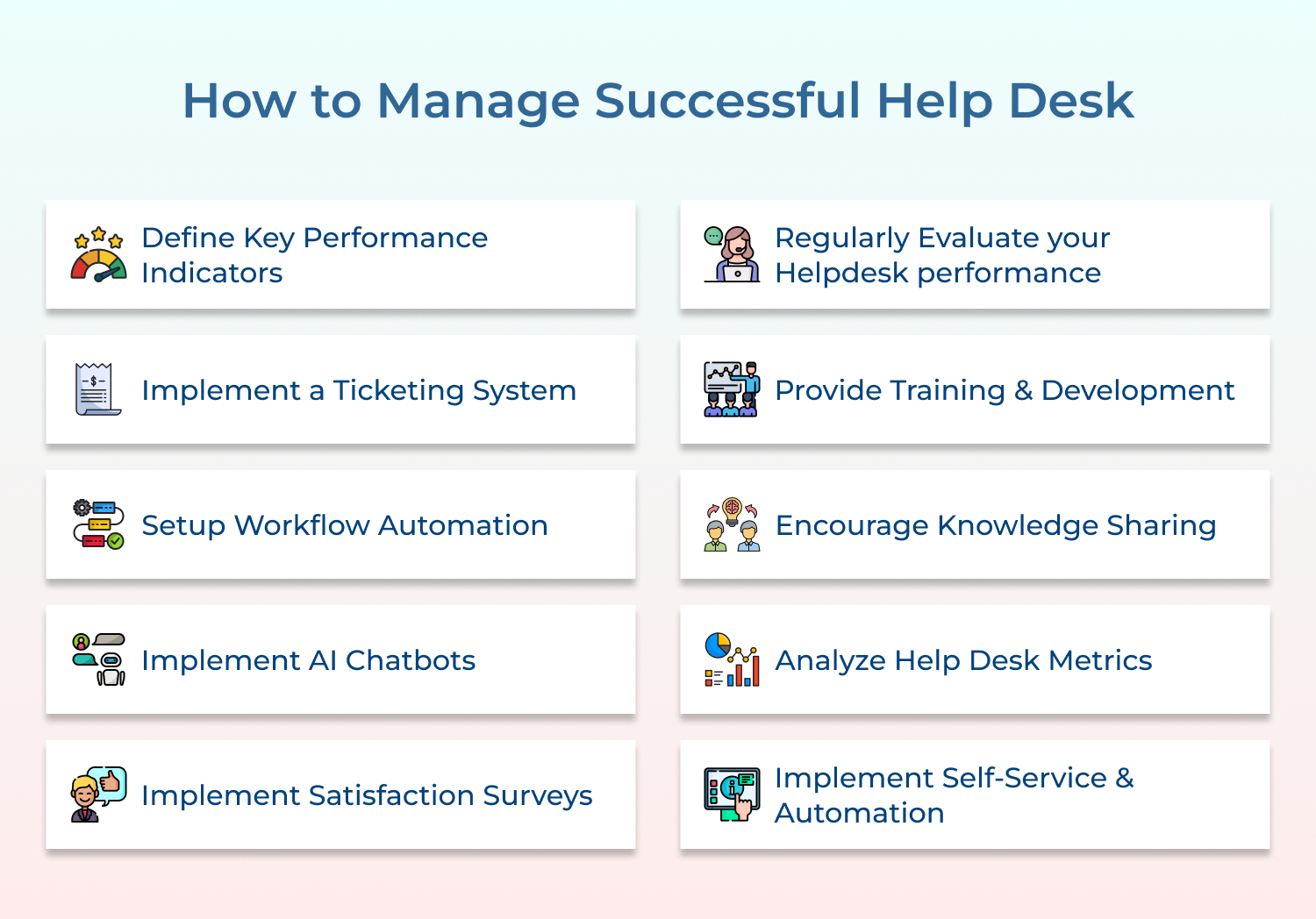
How to Manage Successful Help Desk

1. Define Key Performance Indicators (KPIs)

The first step in measuring and improving help desk performance is to establish clear and measurable KPIs. These KPIs will help evaluate the effectiveness of the help desk and identify areas that need improvement.

Some common help desk KPIs include:

  • First response time: How quickly help desk agents respond to customer inquiries.
  • Average resolution time: The time it takes to resolve a customer issue.
  • Customer satisfaction rating: Feedback from customers on their satisfaction with the help desk support received.
  • First contact resolution rate: The percentage of customer issues resolved on the first contact with the help desk.

2. Implement a Ticketing System

A ticketing system is a critical tool for help desk management. It helps to streamline the customer support process by organizing and tracking customer inquiries.

A well-configured ticketing system enables easy data collection. Performance can be measured against established KPIs without manual effort, giving agents a clear view of team output.

Leveraging a ticketing system can assist the help desk agents in the following ways:

  • To prioritize and assign tickets
  • Tracking response times
  • Monitoring the status of each ticket

3. Setup Workflow Automation

Setting up workflow automation is a great way to manage the help desk effectively. It allows you to automate manual and monotonous tasks that involve time and impact productivity.

Automated response templates and knowledge base updates streamline the support process. Proper integration of help desk software with CRM platforms provides a complete view of customer interactions. It enables agents to deliver personalized solutions faster.

Workflow automation helps in the following ways:

  • Automating repetitive tasks such as ticket routing and categorization can save valuable time and ensure that customer queries reach the right agents promptly.
  • Automating response templates and knowledge base updates can streamline the support process.

4. Implement AI Chatbots

Deploying AI-enabled chatbots help businesses in managing help desk effectively. Bots can be used as the primary point of contact to handle routine inquiries and provide instant responses 24/7. Delivering instant response improves the average response time metric and boosts customer satisfaction.

AI chatbots analyze conversation patterns to identify common issues, enabling proactive problem-solving. Complex queries can be escalated to human agents to make sure seamless transition from automation to human intervention.

Key ways chatbots help in managing the help desk successfully:

  • AI chatbots have the potential to analyze conversation patterns to identify common issues, enabling proactive problem-solving.
  • Chatbots can also be programmed to escalate complex queries to human agents, ensuring a seamless transition from automation to human intervention when necessary.

5. Implement Customer Satisfaction Surveys

Customer satisfaction surveys are an effective way to measure the quality of help desk support and gather feedback from customers. The surveys can be sent after each customer interaction or periodically to evaluate overall satisfaction levels.

Thoroughly analyzing survey results, businesses can identify areas that need improvement and take necessary actions to enhance customer satisfaction.

Customer satisfaction surveys can be used in the following ways:

  • Customer feedback acquired through surveys helps to identify the gaps in the support delivery and improve the service quality.
  • Surveys compute customer satisfaction with KPIs like CSAT, and customer loyalty that impact the financial stability of a firm.
  • CSAT surveys help in retaining unsatisfied customers and increase their lifetime value.

6. Provide Ongoing Training and Development

Continuous training and development are essential for help desk agents to stay updated with the latest technologies and best practices. Through help desk best practices, agents will be upskilled and will be able to contribute their best toward customers.

Here are a few help desk best practices to follow:

  • Arrange regular training sessions: It can help improve their technical skills, communication abilities, and problem-solving capabilities.
  • Investing in training programs: This will showcase to your employees that their professional growth is valued and leads to better customer support.

7. Implement Self-Service and Automation Options

Self-service options are a good way to manage the help desk. Businesses can implement self-service options such as FAQs, and knowledge bases to guide customers with the right solution to the problems. Leveraging AI-powered chatbots can significantly reduce the strain on the help desk.

When customers can find solutions to their problems without agent intervention, leading to faster resolution times and improved customer satisfaction.

Follow these best practices:

  • Encourage customers to refer self-service options that are available on the website/app
  • Implement chatbots on the main page of the website to guide visitors to find solutions seamlessly.

8. Regularly Evaluate your Help Desk performance

Help desk performance is not a one-time effort but an ongoing process. It is essential to know whether the system is functioning correctly. Regularly review to ensure alignment with organizational goals and customer expectations.

Follow the help desk best practices for effective help desk management.

  • Regularly evaluate the implemented help desk strategies and reassess KPIs to ensure they align with organizational goals and customer expectations.
  • Stay updated with industry trends and technology advancements to implement innovative solutions for better help desk performance.
How Does a Help Desk Benefit Your Business?

Help desk software is a powerful tool for businesses to provide customer support, collaboration, automation and data analytics. Understanding the benefits of help desk can significantly enhance overall efficiency.

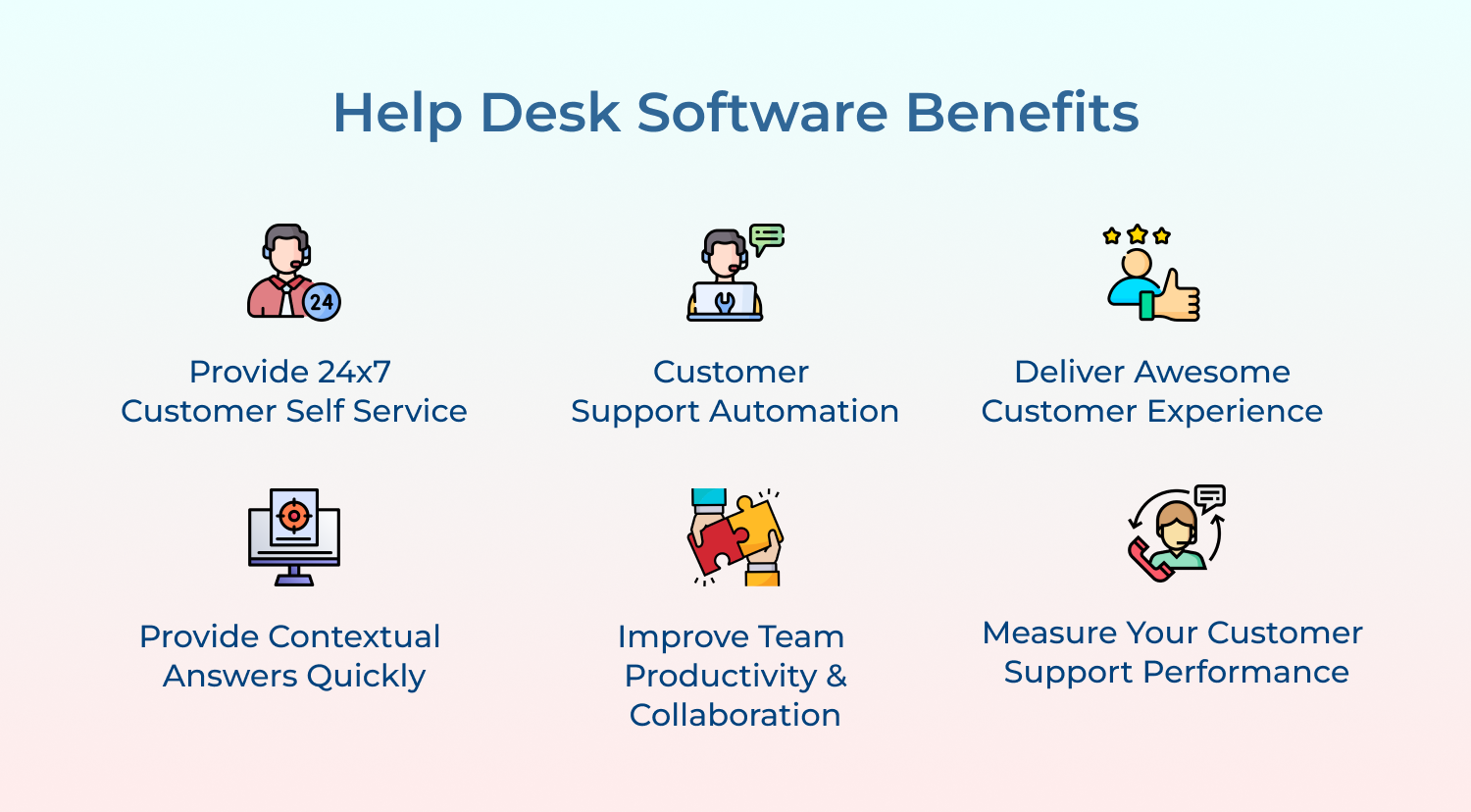
Help Desk Software Benefits
  • Customer support automation: The role of help desk software is to automate manual tasks and operations that free up valuable time and resources. The time can be allocated to more important tasks that eventually will increase the efficiency.
  • Deliver awesome customer experience: A good help desk software enables companies to deliver exceptional customer experience. The features like automated tickets and notifications, real-time response times encourage customers to get in touch with the support team when needed.
  • Improve team productivity & collaboration: Help desk software enables the support staff to collaborate on issues in real time, improving productivity and communication internally. It streamlines the process of approving changes/requests based on user feedback from other departments which leads to faster resolutions.
  • Provide 24×7 customer self service: Businesses can offer an easily accessible self-service portal with a help desk tool. Customers can have 24×7 access to common issues without needing to connect with the support team. it provides convenience to those who need help when the support team is not available.
  • Provide contextual answers: A help desk software allows businesses to store indexed knowledge bases and FAQs which enables agents to quickly access answers to related questions. It reduces the response time to answer basic queries and saves time for complex issues that require deeper understanding.
  • Measure your customer support performance: Companies can closely monitor team performance and trend analysis in order to provide suggestions where necessary. Also, provide metrics into customer satisfaction levels which is vital for understanding areas of improvement within your customer support process.

The Role of AI and Automation in Help Desk Management

Customer service processes have undergone a significant transformation with the rise of AI tools and automation technologies.

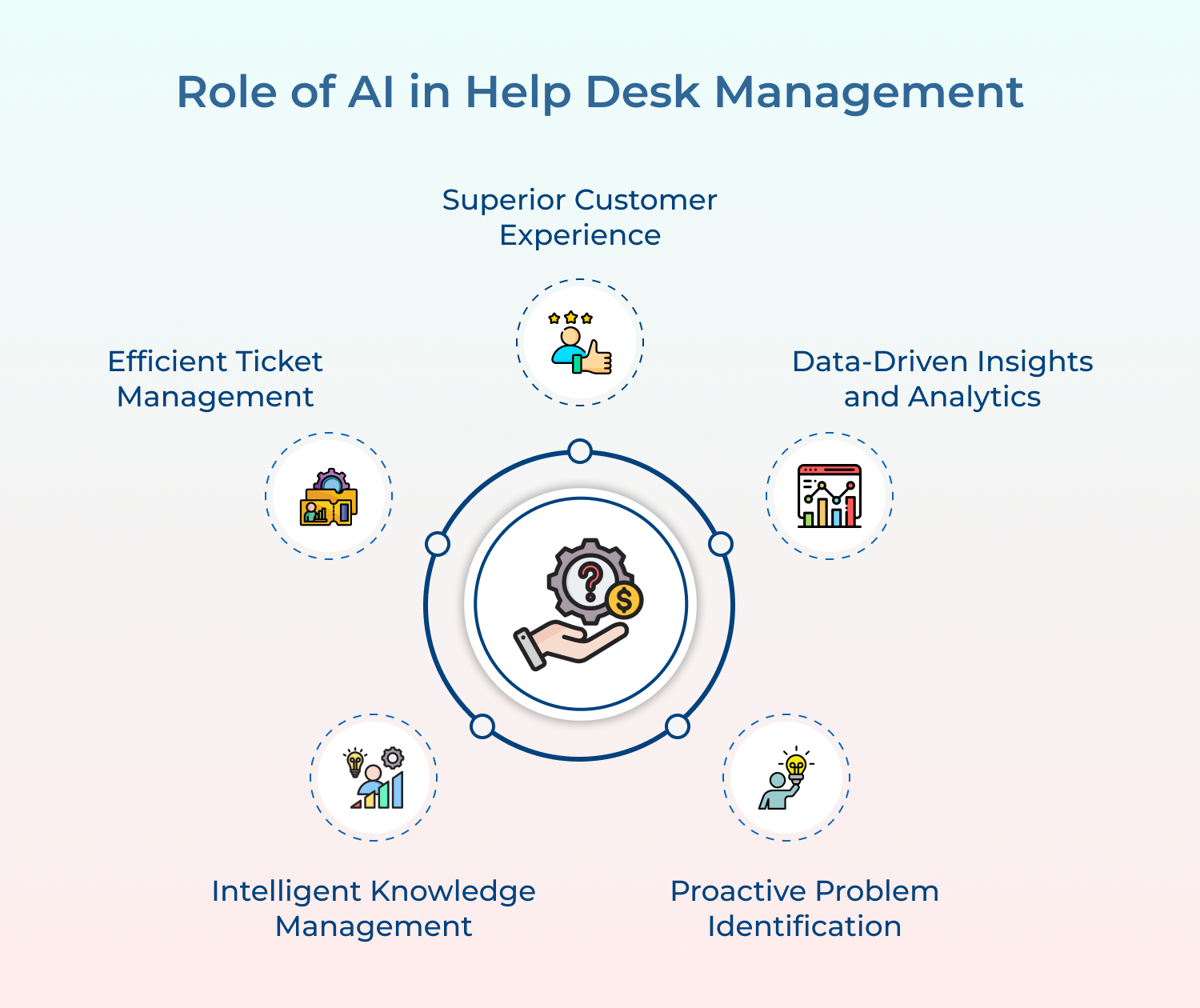
Role of AI in Help Desk Management

1. Superior customer experience: Leveraging AI-powered chatbots helps businesses provide instant responses 24×7. Bots can be easily scaled based on the volume of service requests. Bots reduce wait time for faster and more efficient support that boosts the overall customer experience.

2. Efficient ticket management: Help desk teams can automate ticket creation, classification, and routing processes. AI algorithms can analyze incoming tickets and route them to the right department/agent based on predefined rules. It saves time leading to faster resolution and higher customer satisfaction.

3. Intelligent knowledge management: AI-driven self-service portals and knowledge bases enable customers to find answers to their questions without human intervention. By empowering customers to find solutions on their own, businesses can significantly reduce the volume of incoming support requests and free up their help desk agents to focus on complex issues.

4. Proactive problem identification: AI has the power to identify potential issues before customers even report them. By analyzing patterns and user behavior, AI systems can detect potential problems. The proactive approach allows the help desk team to address underlying issues, prevent further escalations, and provide a seamless customer experience.

5. Data-driven insights and analytics: Automation of help desk management provides valuable insights to understand customer needs and pain points. By analyzing client interactions and feedback, businesses can identify areas of improvement in their help desk operations. It also helps in making data-driven decision-making that accelerates overall business performance.

What Makes of a Good Help Desk: 7 Key Characteristics

A good help desk plays a crucial role in providing effective support to customers. Here’s the list of help desk’s key characteristics that help you improve your efficiency

Role of AI in Help Desk Management
  1. Knowledgeable and well-trained staff: A good help desk is staffed with knowledgeable and well-trained support agents who possess a deep understanding of the products, services, or systems they support. They should have strong technical skills, problem-solving abilities, and the ability to communicate complex information clearly and concisely.
  2. Responsive and timely support: Faster response times are essential for a good help desk. Users or customers expect their issues to be addressed quickly, and delays can lead to frustration and dissatisfaction. A good help desk should have clear service level agreements (SLAs) and processes in place to ensure timely responses and resolution of issues.
  3. Multi-channel support: A good help desk should offer support through multiple channels, such as phone, email, live chat, self-service portals, and knowledge bases. It allows users or customers to choose their preferred method of communication and ensures that support is easily accessible.
  4. Organized ticketing system: An effective ticketing system enables easy tracking and management of support requests, prioritization of issues, assignment of tickets to the right teams, and clear communication with users or customers throughout the resolution process.
  5. Robust knowledge base: A comprehensive and up-to-date knowledge base is a valuable asset for a good help desk. It should contain articles, FAQs, troubleshooting guides, and other resources that users or customers can access for self-service support. This can reduce the workload on support staff and empower users to find solutions independently.
  6. Continuous improvement and feedback: A good help desk should have processes in place for continuous improvement. It includes regularly collecting user or customer feedback, identifying areas for improvement, and implementing changes or updates to enhance the overall support experience.
  7. Integration with other systems: A good help desk should seamlessly integrate with other business systems, such as customer relationship management (CRM) software, asset management tools, and reporting platforms. The integration enables better data sharing, streamlined workflows, and more efficient support operations.

Must-Have Features of a Help Desk

Help Desk software is a great solution for businesses that look forward to supporting their customers efficiently. Let’s explore what it has to offer that benefits your business.

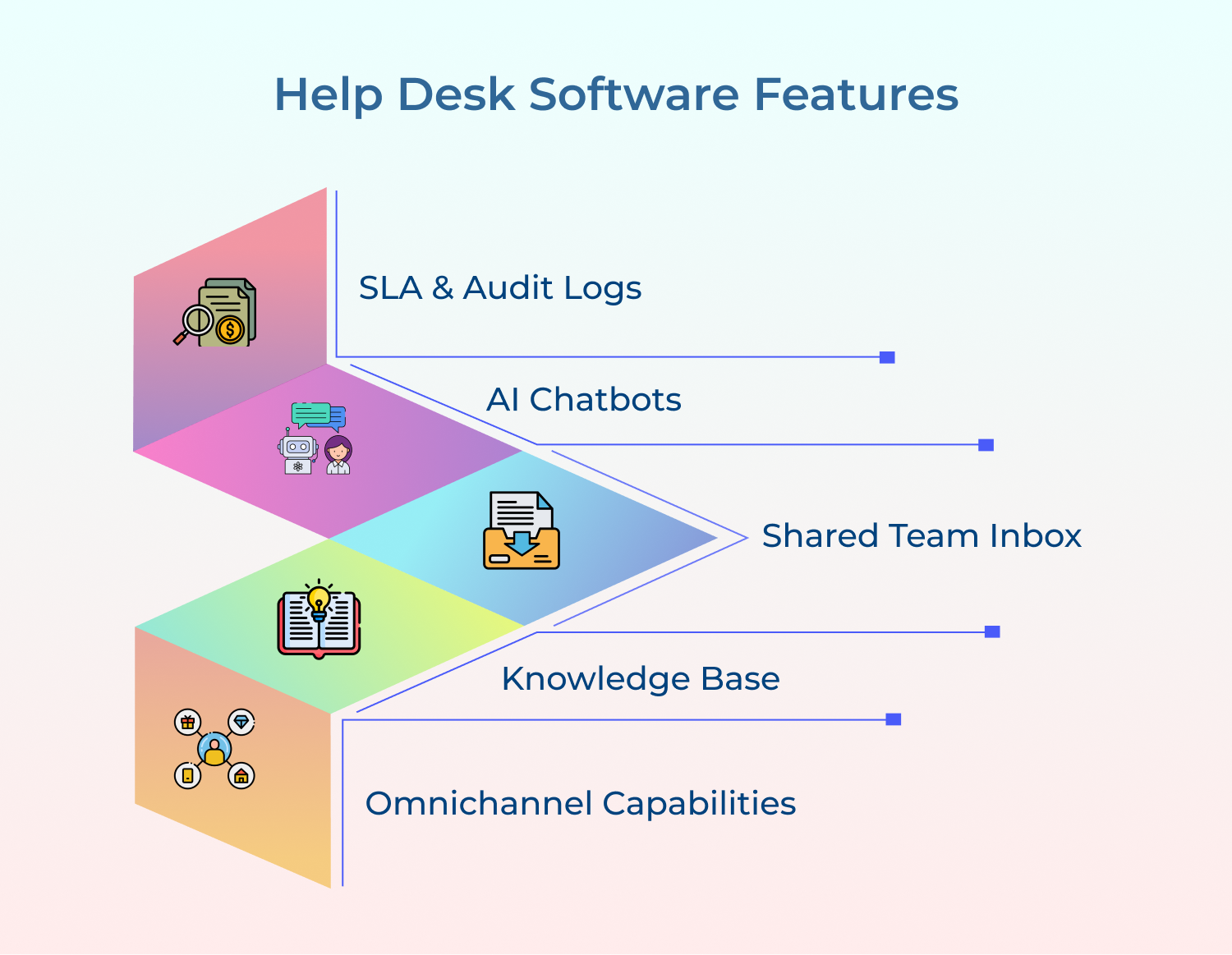
Help Desk Software Features

Shared Team Inbox

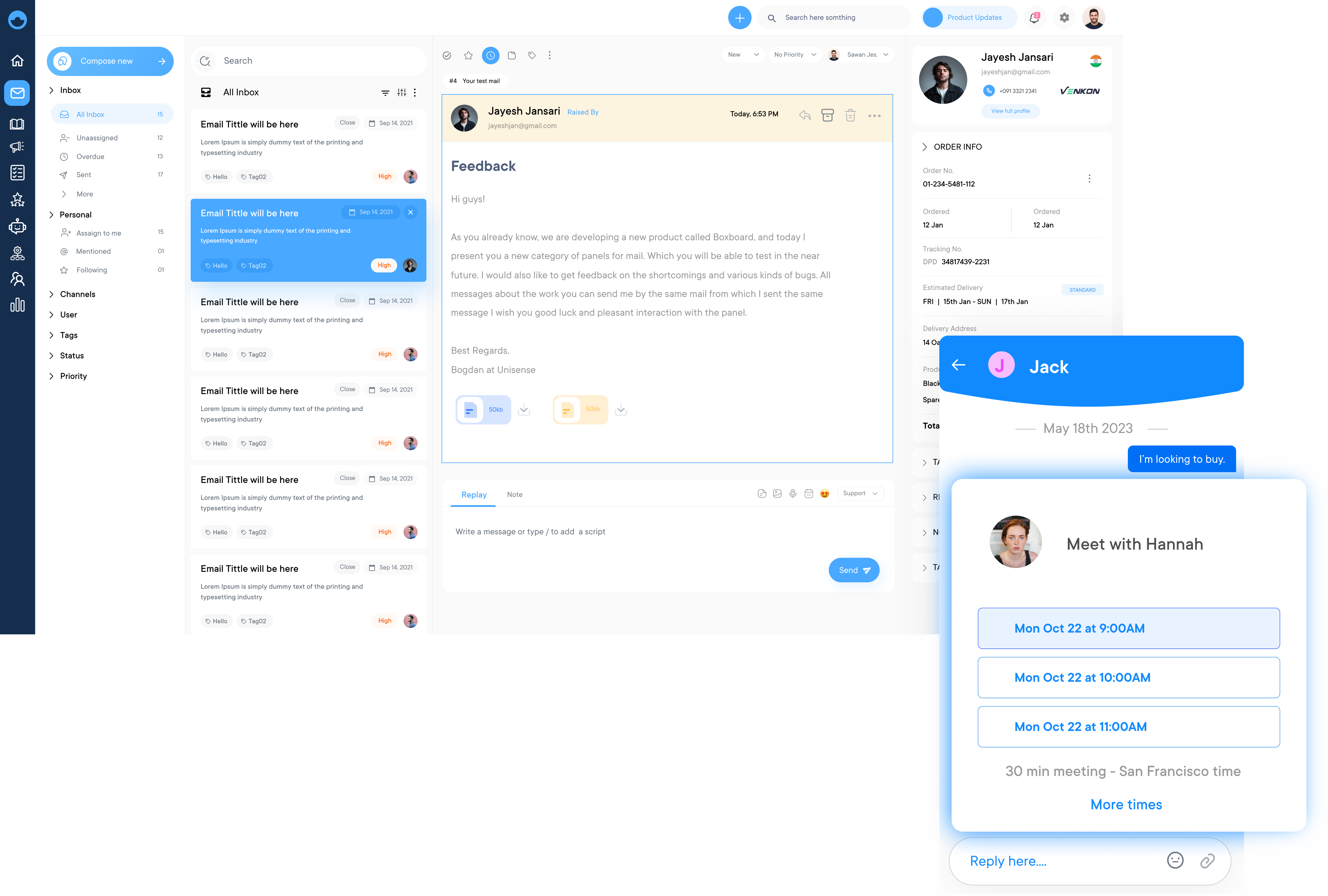
A shared team inbox allows support agents to collaborate, assign tickets, and manage customer conversations from a single platform. The inbox feature is a great way to streamline communication and increase customer response time.

Knowledge Base

Help desk software generally includes a searchable database of information that customers can access for self-service support. This helps customers quickly find answers to their questions without having to contact your team for assistance.

Omnichannel Capabilities

The omnichannel capabilities help customers make an easy transition between different communication channels like email, chat, and social media, to contact your team. It empowers your support team to unify all client queries in one place and manage them effectively.

SLA & Audit Logs

Service Level Agreements (SLA) are often included with help desk automation software that allows businesses to track the average time the team takes to respond to customer inquiries. Audit logs also allow you to track changes that were made by various members of your team over time.

AI Chatbots for Support Automation

AI Chatbots can automate customer service tasks and handle and manage them 24×7. It can provide instant responses to common queries and the complex queries are directed toward the right department/ team to provide the relevant response to the query in real time.

Best Help Desk Tools to Manage Customer Service

Help desk software provides valuable support to businesses that require customer service and technical assistance. The right service desk tool can make a huge difference in the success or failure of a company’s customer service offering.

1. Omni24

Best Help Desk tool for your business

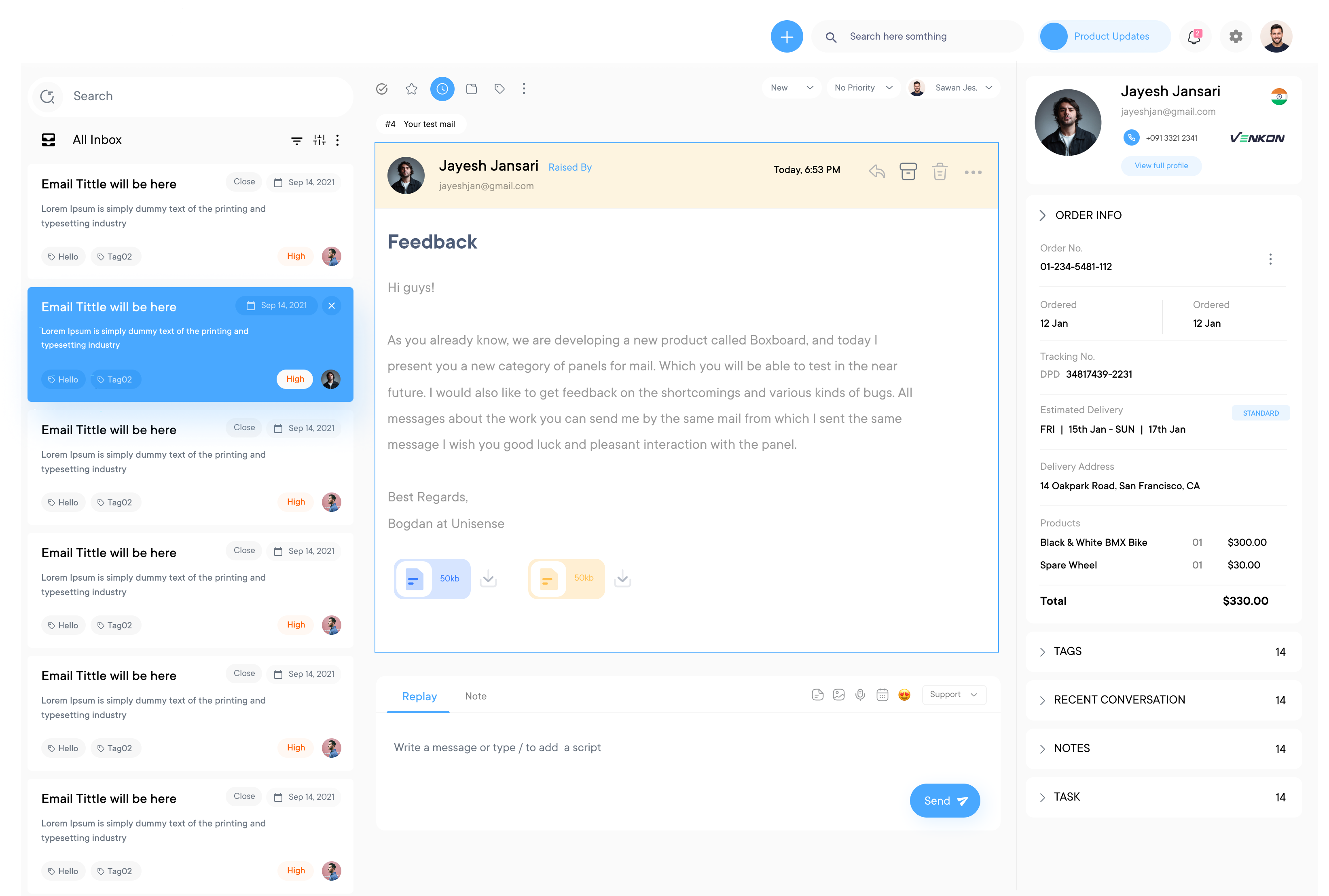
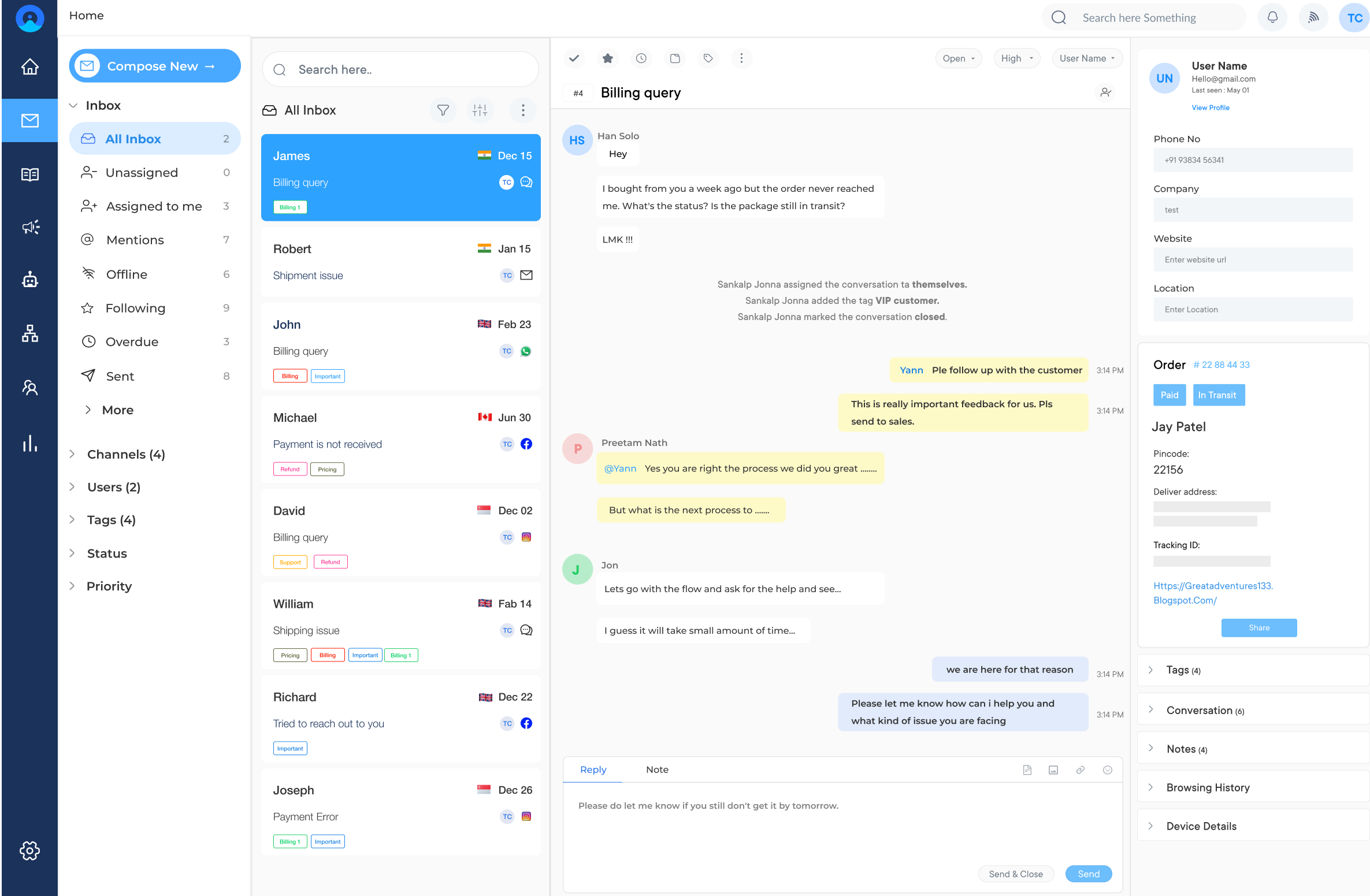
Omni inbox

Omni24 is an AI-powered customer engagement platform offering support, sales and marketing suite for better CX. Omni24’ help desk automates workflows and seamless channels to help businesses manage customer queries efficiently while boosting operational efficiency at scale.

Key features:

  • Omnichannel inbox: Consolidates conversations across all channels into one dashboard for streamlined management.
  • Self-service portal: Provides a customizable knowledge base and FAQ section for customers.
  • Customizable workflows: Create tailored workflows to match specific business processes.
  • Smart routing: Automatically assigns incoming queries to the most suitable agent to ensure efficient workload distribution.

2. Veemo Support

Top Help desk tool to manage customer support

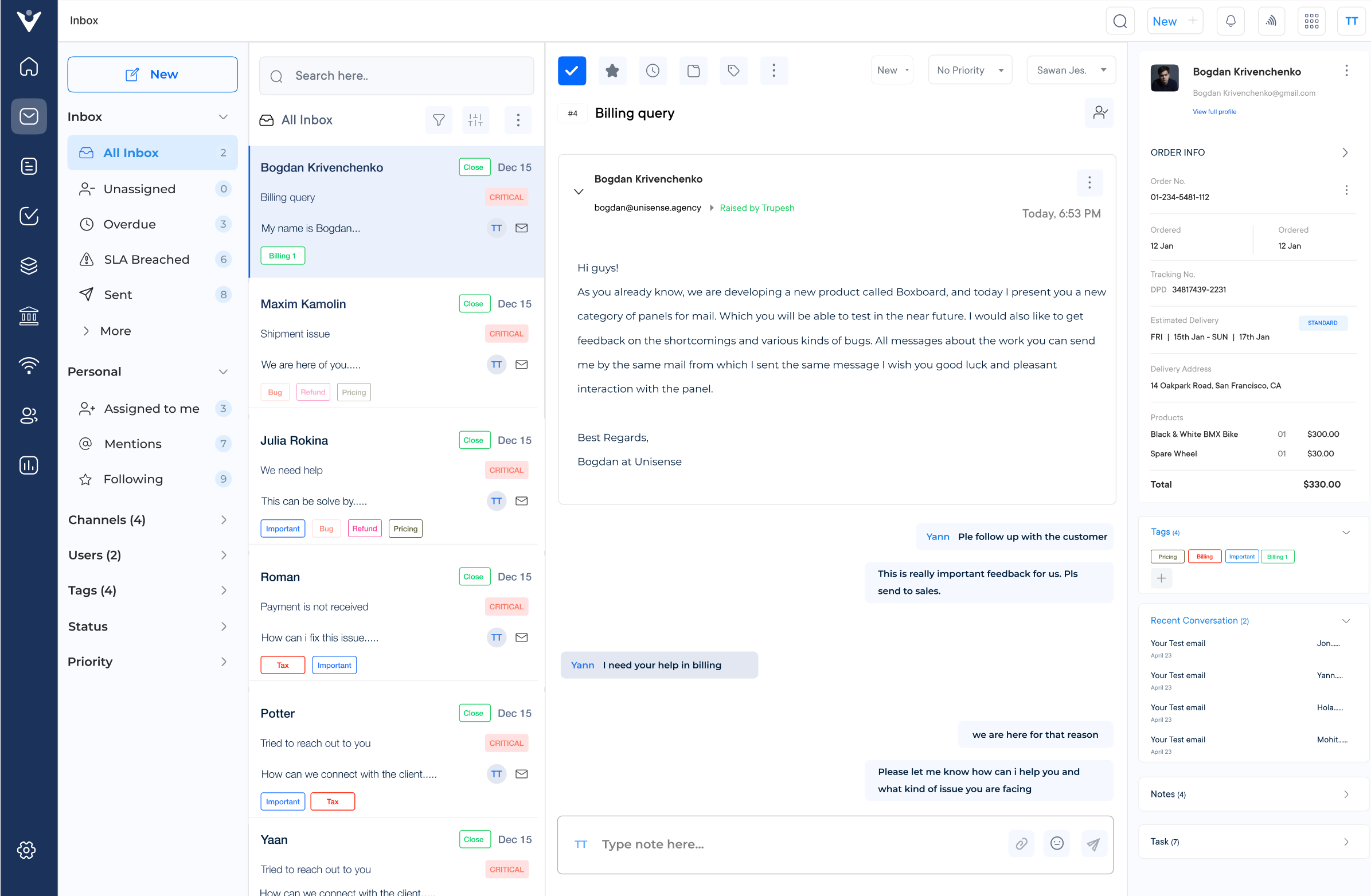
Veemo_Inbox

Veemo Support is a customer support and help desk software that streamlines support operations into a centralized interface. The software is designed to streamline and enhance various aspects of business operations. Veemo Support helps to automate workflows, manage tickets efficiently and provide self-service to customers.

Key features:

  • Unified ticket management: Centralizes all customer inquiries into a single ticket view to manage tickets efficiently.
  • Intelligent automation: Offers customizable automation rules to route, prioritize, and assign tickets based on predefined criteria.
  • Self-service portal: Creates a knowledge base for customer self-help and reduces ticket volume.
  • Team collaboration tools: Provide shared ownership and internal notes for collaborative problem-solving as well as knowledge sharing.

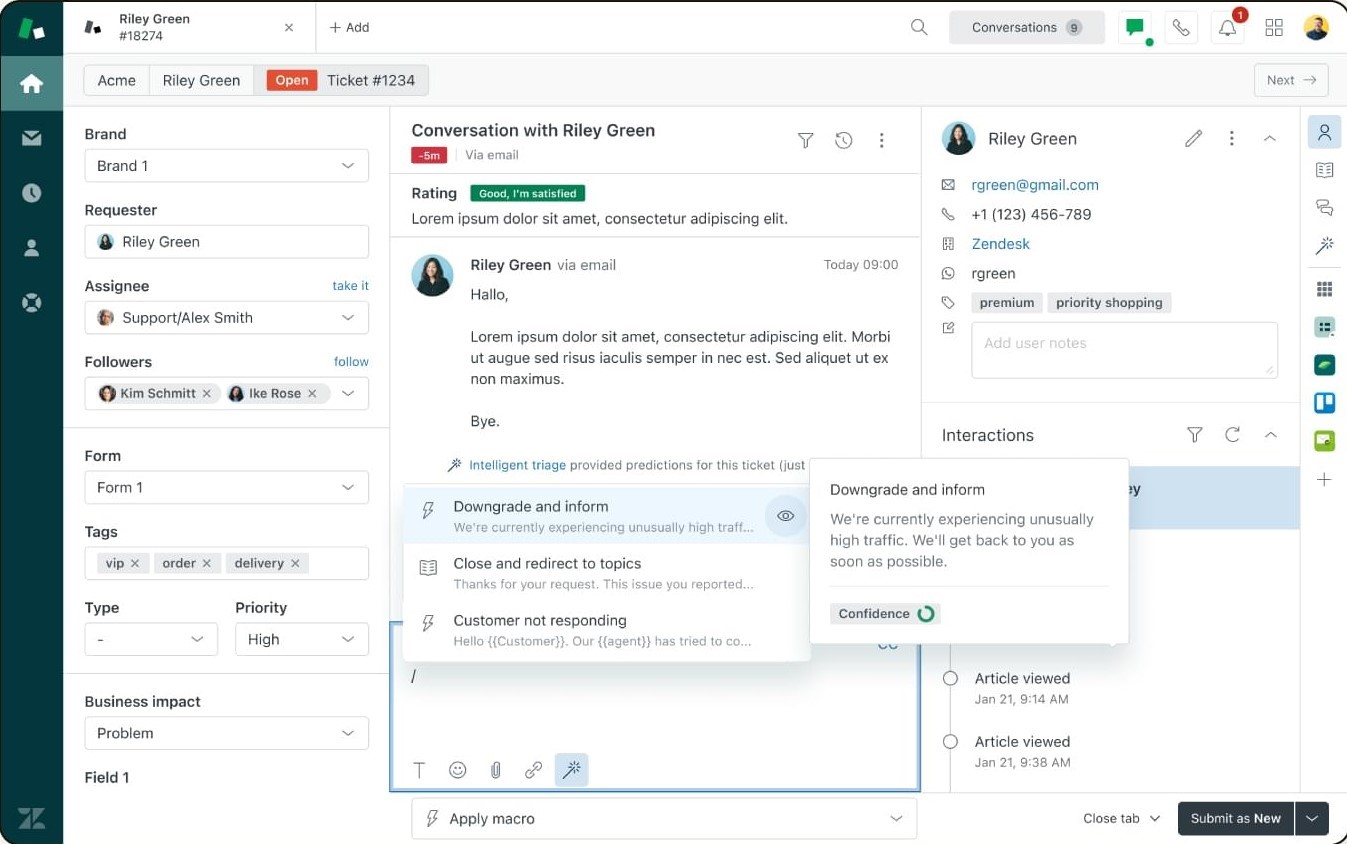
3. Zendesk

The Ultimate Help Desk tool to empower your team

Zendesk Helpdesk Software

Finally, Zendesk is an all-in-one CRM platform with tools designed to streamline every aspect of customer service operations including incident management, automatic replies, and automated case resolutions powered by data analytics insights that enable better decision making when handling different customer scenarios.

With customizable branding options integrated into their software suite UI/UX features promoting brand consistency are yet another advantage offered by Zendesk while access reports offer complete visibility over agent productivity levels.

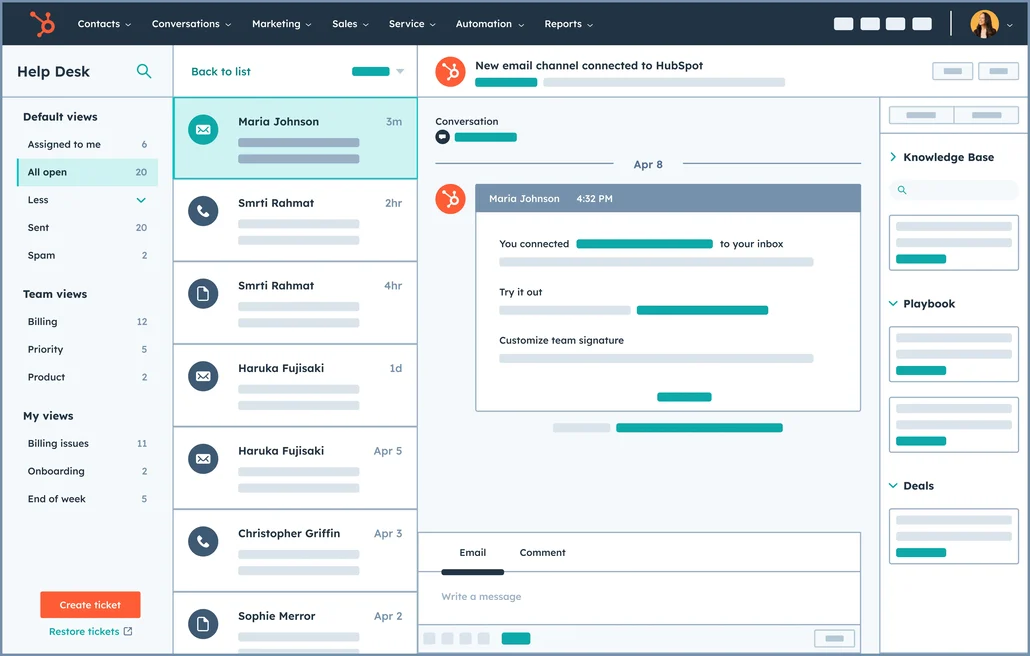
4. HubSpot Service Hub

Hubspot Helpdesk Dashoard

HubSpot Service Hub is a part of the HubSpot CRM platform and offers help desk capabilities along with other customer service tools.

Key Features: Ticketing system, knowledge base, live chat, customer feedback management, and integration with HubSpot’s marketing and sales tools.

Pricing: Starts from $45 per month for the Starter plan.

Harnessing the Power of Help Desk for Business Growth

A help desk system is the backbone of any customer support operation, centralizing inquiries, accelerating resolutions and keeping teams aligned. Businesses that invest in the right solution see stronger customer relationships, lower operational costs and measurable gains in satisfaction scores.

  • Centralized ticket management eliminates silos to make sure no customer request falls through the cracks.
  • AI-powered automation handles repetitive tasks to free agents to focus on complex, high-value interactions.
  • Self-service portals and knowledge bases reduce ticket volume while empowering customers to resolve issues.

Ready to explore the difference of a modern help desk? Start your 14-day free trial of Omni24 today. The right help desk software converts reactive customer support into a proactive, revenue-driving function that scales your business.

Scale Your Conversations with Omni24’s Digital Customer Experience Platform

Omni24’s DCX platform harnesses automation and AI to deliver unified customer experiences across digital channels, while keeping human touch.

FAQs on Help Desk Software

Yes, most help desk software offers integrations with other business systems like CRM, project management tools or e-commerce platforms. These integrations enhance the overall effectiveness and efficiency of your customer support operations by allowing seamless data transfer and improving collaboration between different teams.

To ensure a successful implementation of help desk software, it’s crucial to involve all relevant stakeholders, including your support team and IT department. Set clear goals and expectations, provide thorough training to your staff, and establish standardized workflows and processes. Regularly review and optimize your system based on customer feedback and emerging trends.

Yes, many help desk software solutions offer customization options to align with your brand and specific requirements. You can often customize the user interface, email notifications, ticket fields and even create custom reports. Ensure that the software you choose offers the level of customization you need to make it a seamless part of your overall customer support strategy.

For urgent support, you can reach out to Help Desk through multiple channels. The website always has a 24/7 live chat available to raise a ticket. Alternatively, many websites also offer email addresses along with customer service contact information for further querying.

Yes, our Help Desk provides remote assistance for software troubleshooting. Our technicians can securely connect to your device using industry-standard remote access tools. It allows us to diagnose and resolve software issues efficiently, without the need for on-site visits. Remote assistance is available during our regular support hours for most software-related problems.