Customer Experience Strategy: Examples and Best Practices
Businesses investing in great CX strategy embrace a customer-centric mindset with a sound digital experience strategy across all functions.

Businesses investing in great CX strategy embrace a customer-centric mindset with a sound digital experience strategy across all functions.
Amidst pandemic, companies were forced to adapt their internal and external customer processes to ensure convenience in a more virtual world. As a customer’s perception of a positive or negative experience can make or break a brand.
Hence, it is crucial to have a strong customer experience strategy framework. 73% of customers say CX is the number one thing they consider when deciding whether to purchase from a company.
Customer experience directly impacts satisfaction with a product or service. A positive CX leads to increased satisfaction and higher customer lifetime value (LTV).
Learn more about what exactly is customer experience (CX) strategy and how to implement a successful CX strategy plan.
A customer experience (CX) strategy is defined as a blueprint created by businesses to optimize interactions that a customer has with the company. The goal of a CX strategy is to deliver a positive experience that meets & exceeds their expectations and build long-term customer relationships.
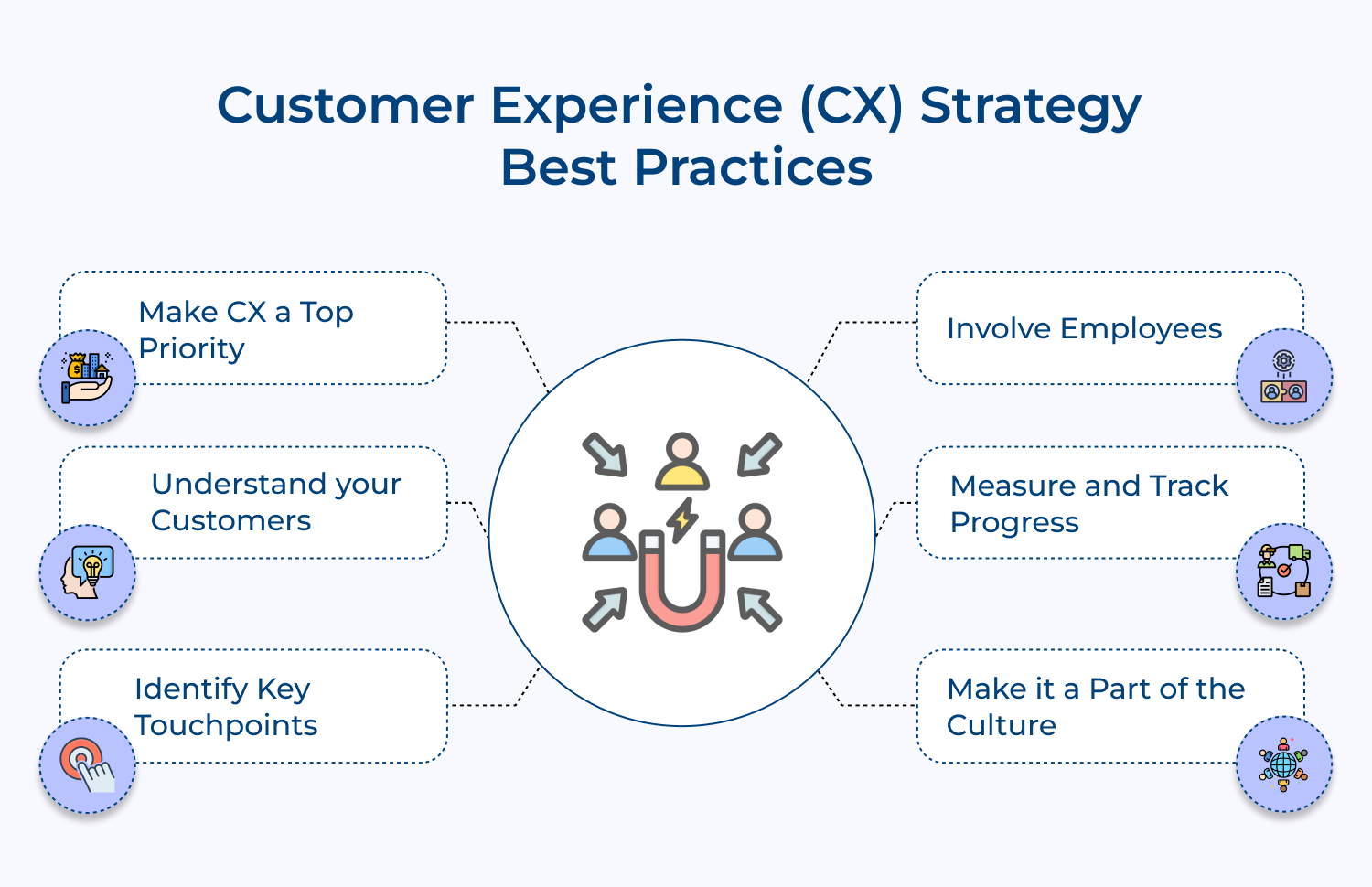
A CX strategy typically includes a thorough understanding of the customer, including their needs, pain points and expectations. It also includes identifying key customer journey touchpoints such as website, social media, customer service, in-store and more. Based on the insights, measurable CX goals are set and improvements are made to touchpoints to meet those goals.
Businesses focus on customer experience as it has a significant impact on their bottom line. A positive CX leads to increased customer satisfaction, while a poor CX leads to loss of customers.
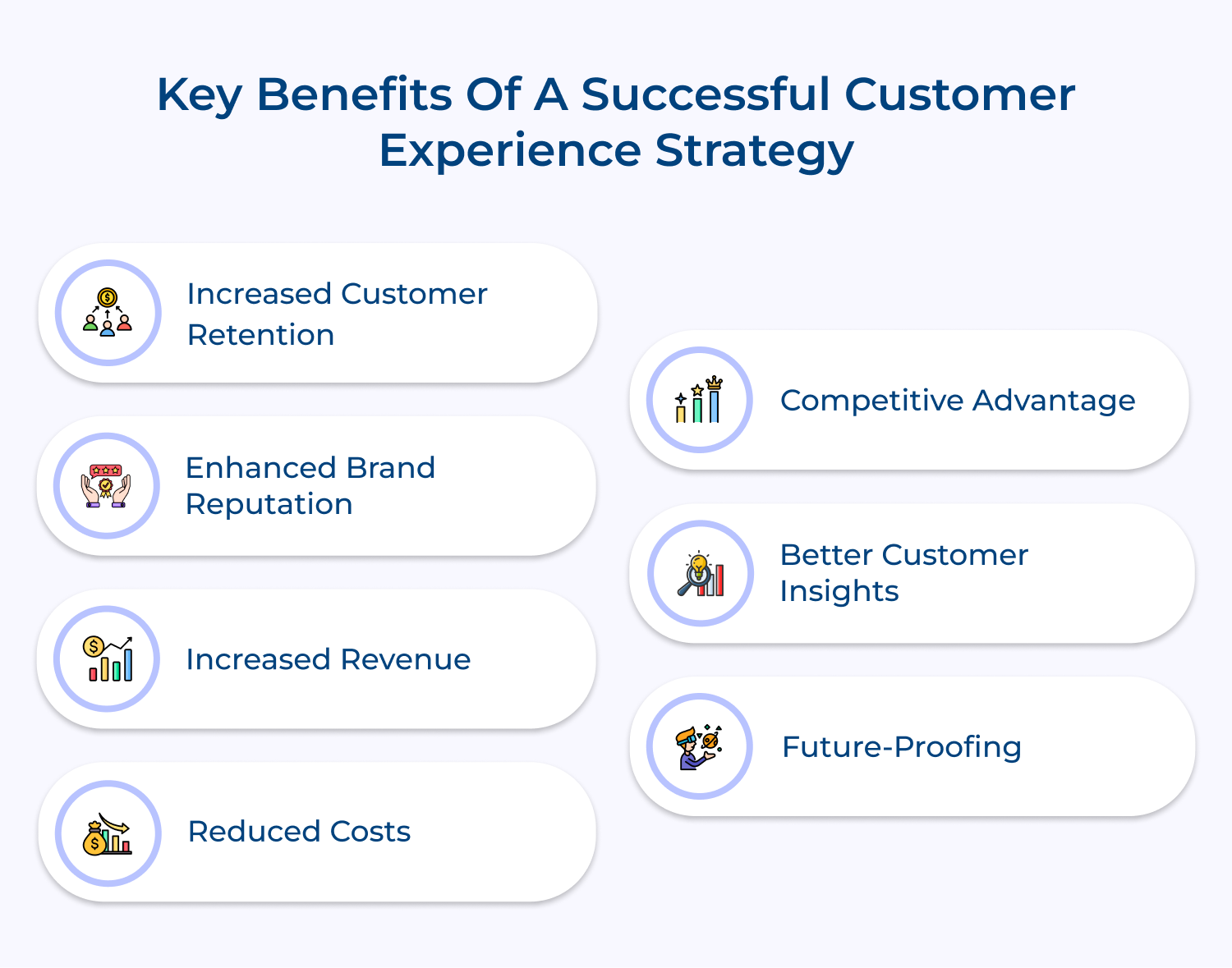
CX strategy should be aligned with the overall business strategy. The CX strategy should be embedded in the culture of the organization, not just in a specific department.
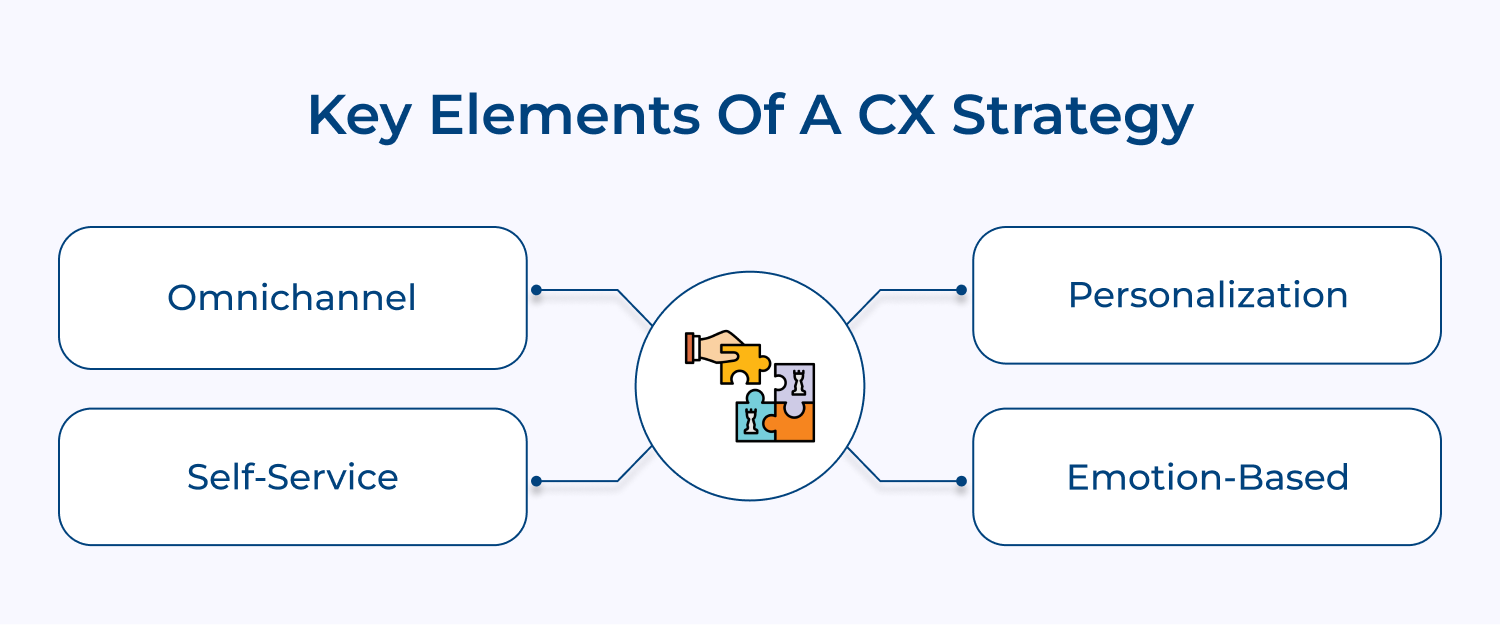
Building a customer experience (CX) strategy involves understanding your customers’ needs and then designing and delivering touchpoints that meet or exceed those expectations.
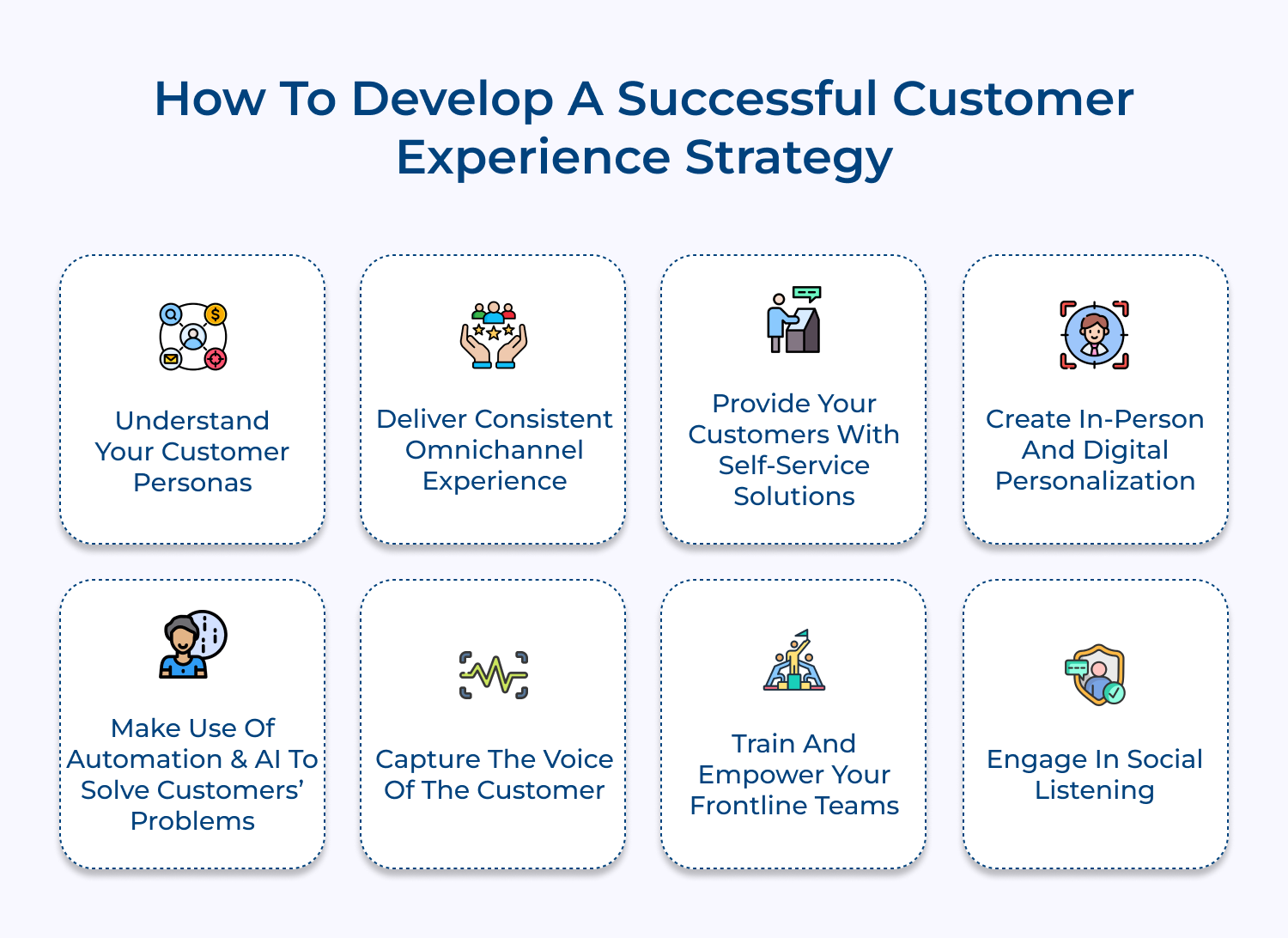
Creating customer personas is important for a business because it helps them understand their target audience about product development, marketing and customer service.
71% of companies that exceed their revenue and lead goals use customer personas.
Here are a few specific reasons why businesses need customer personas:
Omnichannel customer experience is becoming increasingly important as customers expect to be able to interact with businesses through multiple channels and have a seamless experience throughout.
Delivering a consistent omnichannel experience can be a complex task, but it’s essential for businesses to increase customer satisfaction, loyalty and revenue.
Here are key components to deliver a consistent omnichannel customer experience (CX):
Self-service solutions can be a powerful tool for improving customer experience. When organizations empower customers to help themselves with self-service technology, they can improve CX and sales.
According to Metrigy’s study, self-service knowledge bases can improve customer ratings, revenue, and agent productivity.
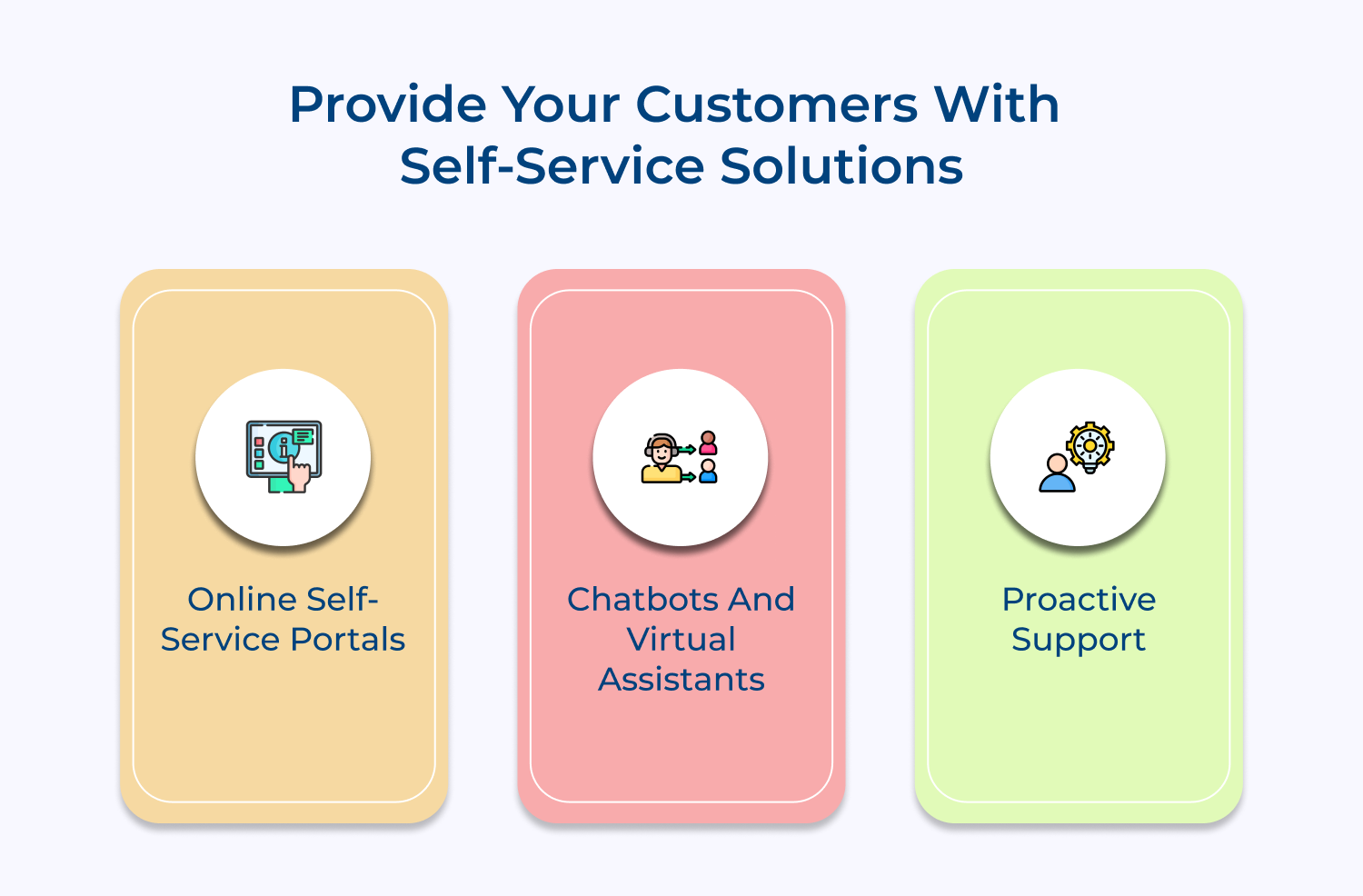
Key components:
Personalization is the use of customer data to tailor the customer experience to the individual’s needs and preferences.
Having the right level of personalization can help businesses to deliver a great customer experience by making the experience more relevant, convenient and tailored to the individual customer’s needs.
Here are some of the ways:
Businesses can improve the customer experience by using AI automation that helps in providing faster service, anticipating customer needs, and personalizing the customer experience.
Invespro says, “Chatbots can save up to 30% in customer support costs and can help businesses by speeding up response time and answering up to 80% of FAQs”.
Capturing the voice of the customer (VOC) is the process of gathering feedback to understand their needs, expectations, and perceptions of a business’s products or services.
Once the VOC is captured, it can be analyzed to identify patterns, trends, and areas for improvement in the customer experience. This information can be used to inform decisions on product development, marketing strategies, and customer service improvements.
Analyzing the VOC, businesses can stay tuned to the changing needs and expectations of their customers through different ways mentioned below:
Training teams on customer experience (CX) is essential to ensure that they have the skills, knowledge, and understanding needed to deliver a great customer experience.
Here are a few ways to train teams on CX:
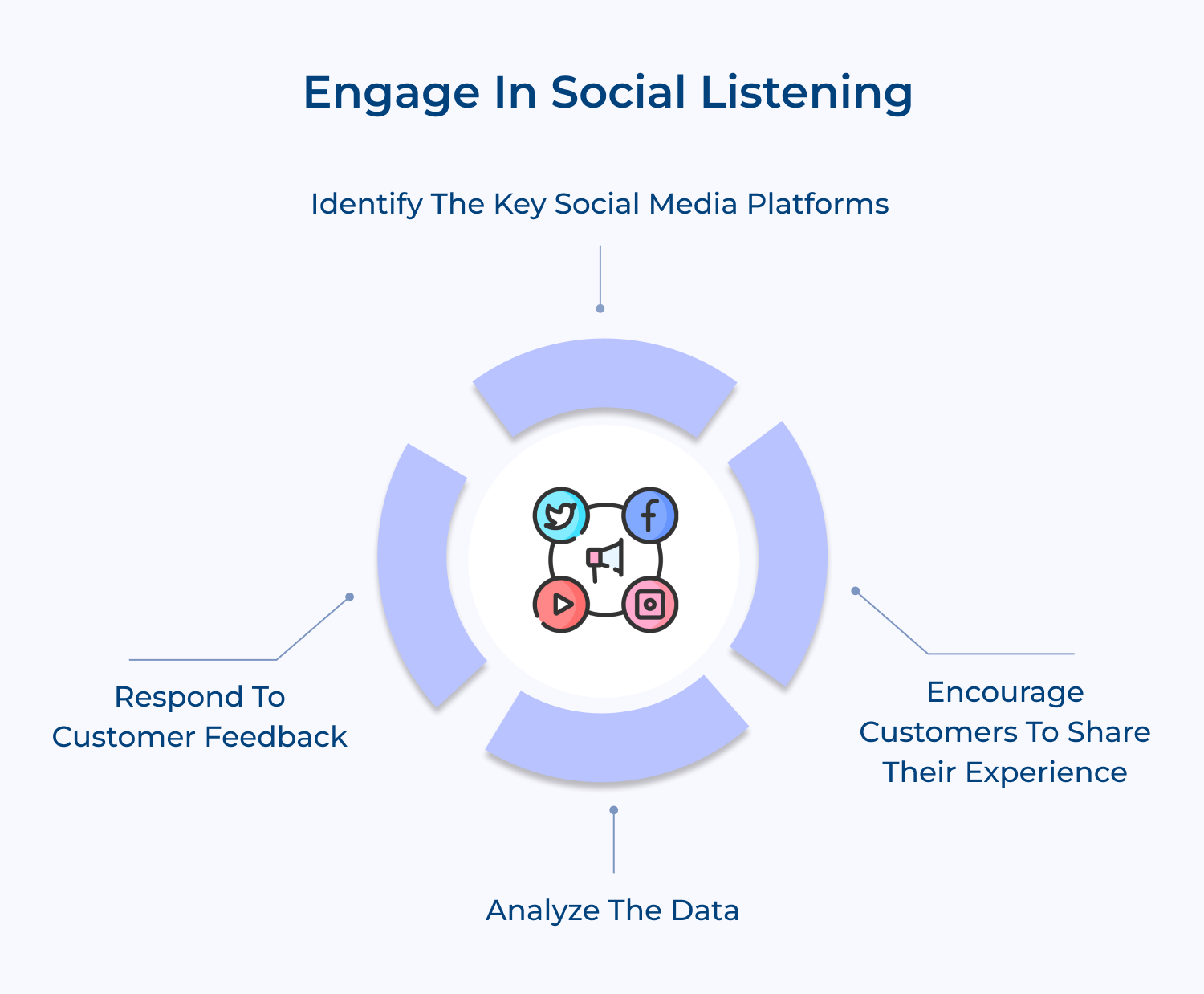
Social listening is the process of monitoring online conversations and mentions of a brand, product or industry to gain insights into customer sentiments.
Want to understand the structure behind successful CX strategies? Read more about key customer experience frameworks.
Having a well-designed customer experience management framework can have a significant impact on any business. The better experience your customers have, they are highly likely to give positive reviews.
Modern businesses are aware of the implications of poor CX and act in their power to enhance satisfaction at every touchpoint. However, there are certain challenges faced while trying to create a frictionless experience.

The customer experience is constantly evolving, as customer expectations and behaviors change over time. A successful CX strategy must be able to adapt to these changes in order to remain relevant and effective. A successful CX strategy requires ongoing monitoring to track progress and identify areas for improvement.
A successful CX strategy is a long-term journey that requires ongoing effort, commitment and investment. It requires businesses to continuously monitor, measure and improve the customer experience, while also engaging employees and building long-term customer relationships.
Read more: Learn how businesses are driving real change in our blog on customer experience transformation.

How do you use customer service reports to maximize your ROI?
Customer service reports provide valuable insights into areas where your business is excelling and where there is room for improvement. Analyzing these reports helps you identify trends, patterns and customer pain points. The information helps you make informed decisions on how to allocate resources as well as improve the customer experience, leading to increased customer satisfaction, loyalty and higher ROI.
Why are customer service reports important?
Customer service reports provide a clear picture of how well your business is meeting customer expectations. They help you identify areas of improvement, track your progress over time and make data-driven decisions to enhance customer satisfaction. By monitoring key performance indicators (KPIs) such as response times, resolution rates and customer feedback, you ensure that your customer service efforts are aligned with your business goals.
How do you create and use customer service reports?
To create a customer service report, you will need to gather data from various sources, such as customer surveys, ticketing systems, social media channels, etc. You can then analyze the data to generate insights that will help you improve your customer service strategy. When using customer service reports, it is important to regularly review as well as update them, track KPIs and communicate findings with relevant teams to drive improvements across the organization.
How Customer Service Reports Affect Customer Satisfaction?
Customer service reports play a crucial role in improving customer satisfaction levels. Analyzing customer feedback, identifying pain points, while implementing changes based on data-driven insights, helps businesses to enhance the overall customer experience. It leads to higher customer retention rates, increased loyalty and positive word-of-mouth referrals.
Why do you need to create regular customer service reports?
Creating regular customer service reports is essential for monitoring performance, tracking progress and identifying areas for improvement. Generate reports on a consistent basis to ensure that your customer service efforts are aligned with your business objectives and that you are meeting or exceeding customer expectations. Regular reporting also allows you to measure the impact of any changes or initiatives implemented and make adjustments as needed to drive continuous improvement.
 https://omni24.io/wp-content/uploads/2026/09/Social-commerce-scaled.png
1340
2560
Webvision Solution
https://omni24.io/wp-content/uploads/2023/04/Omni-Logo-1.svg
Webvision Solution2026-10-23 12:18:272026-10-23 12:18:27What is Social Commerce and Why Does It Matter?
https://omni24.io/wp-content/uploads/2026/09/Social-commerce-scaled.png
1340
2560
Webvision Solution
https://omni24.io/wp-content/uploads/2023/04/Omni-Logo-1.svg
Webvision Solution2026-10-23 12:18:272026-10-23 12:18:27What is Social Commerce and Why Does It Matter? https://omni24.io/wp-content/uploads/2026/08/AI-Customer-Service-Agents.png
1256
2400
Webvision Solution
https://omni24.io/wp-content/uploads/2023/04/Omni-Logo-1.svg
Webvision Solution2026-09-21 04:48:512026-09-21 04:48:51How to Build an AI Customer Service Agents: 8 Key Steps
https://omni24.io/wp-content/uploads/2026/08/AI-Customer-Service-Agents.png
1256
2400
Webvision Solution
https://omni24.io/wp-content/uploads/2023/04/Omni-Logo-1.svg
Webvision Solution2026-09-21 04:48:512026-09-21 04:48:51How to Build an AI Customer Service Agents: 8 Key Steps https://omni24.io/wp-content/uploads/2026/08/Omnichannel-Conversational-AI.png
1256
2400
Tushar Joshi
https://omni24.io/wp-content/uploads/2023/04/Omni-Logo-1.svg
Tushar Joshi2026-09-16 03:51:072026-09-16 03:51:07How to Build Omnichannel Conversational AI Strategy
https://omni24.io/wp-content/uploads/2026/08/Omnichannel-Conversational-AI.png
1256
2400
Tushar Joshi
https://omni24.io/wp-content/uploads/2023/04/Omni-Logo-1.svg
Tushar Joshi2026-09-16 03:51:072026-09-16 03:51:07How to Build Omnichannel Conversational AI Strategy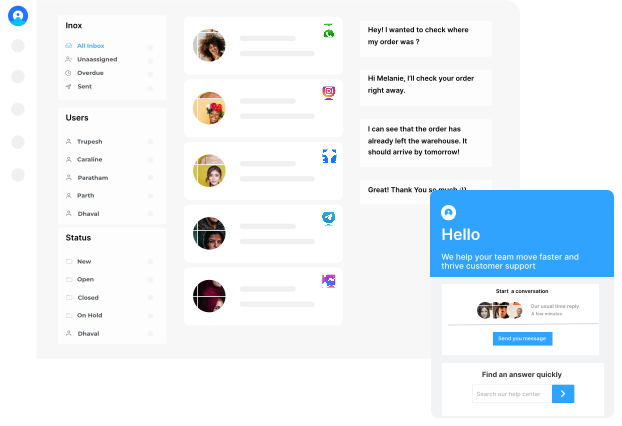
Whether it’s about acquire, engage or support – Omni24 covers all your customer engagement needs in one complete platform.

Copyright ©2026 Veemo All rights reserved.
CA, Los Angeles, Hall Ave, 19011