11 Effective Customer Service Techniques to Improve Satisfaction
Customer service techniques are strategies that improve interactions, boost satisfaction and build loyalty.

Customer service techniques are strategies that improve interactions, boost satisfaction and build loyalty.
Customer service is essential for any business looking to thrive in a competitive market. 48% of consumers expect a response to their social media inquiries within 24 hours, indicating the need for timely engagement across channels.
It’s not just about resolving complaints or answering inquiries; it’s about building genuine connections with customers that go beyond transactions. By adopting customer service techniques, businesses can cultivate relationships that lead to long-term success.
Let’s explore the importance of incorporating customer service techniques into your business strategy. By focusing on creating positive interactions and experiences for your customers, you can build stronger relationships that will benefit both your business as well as your customers.
Customer service techniques are defined as the strategies or methods used by businesses to interact with and satisfy customers. The key objectives of customer service techniques are to build positive relationships with customers, increase customer satisfaction and loyalty.
Good customer service also means knowing how to handle different types of situations in a friendly way. It includes things like staying calm when customers are upset, giving clear answers to their questions and ensuring to follow up after helping them. When service staff use these techniques properly, they can turn an unhappy customer into a satisfied one.
Key objectives:
79% of consumers prioritize personalized experiences over personalized messaging, emphasizing the importance of tailored interactions in customer service. Customer service techniques help create positive client experiences that lead to loyalty and advocacy.
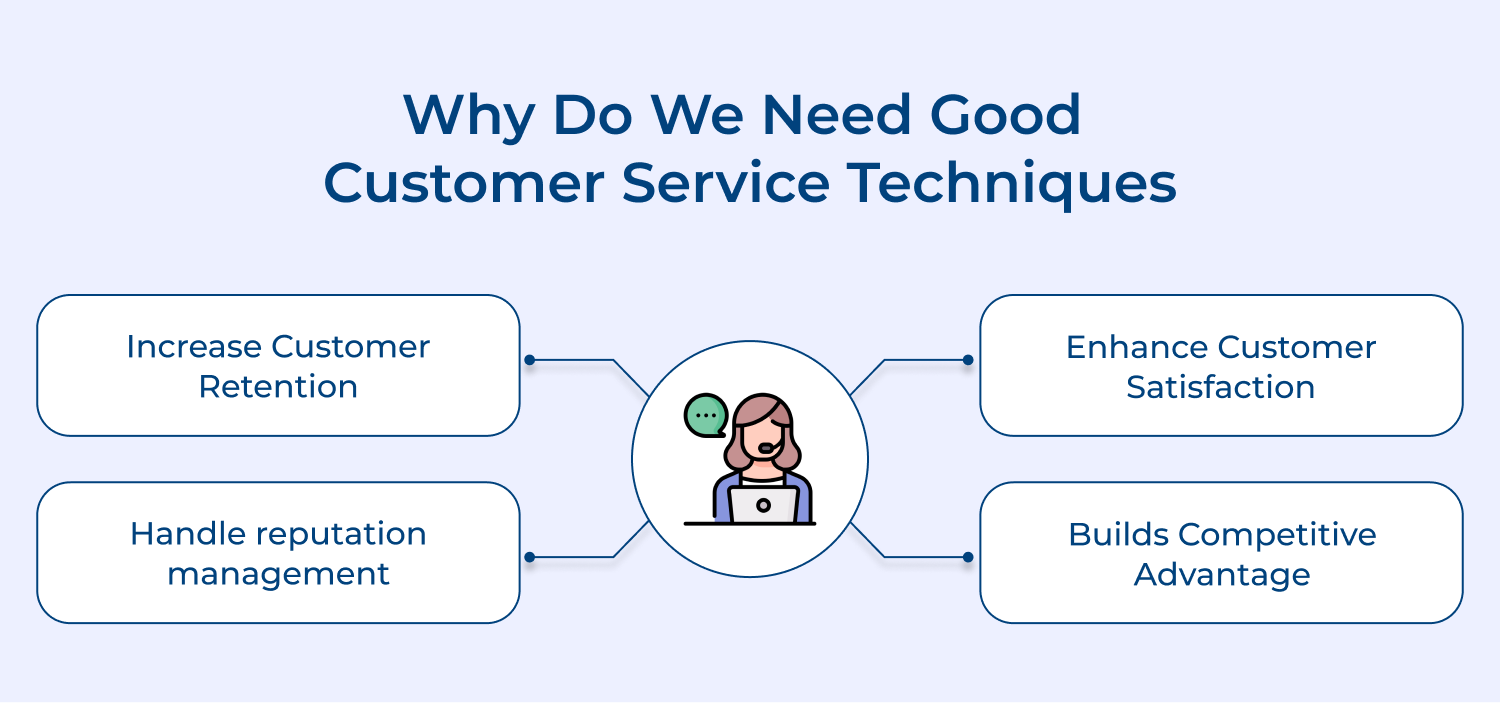
To provide excellent customer service, it is important to utilize effective techniques that can help resolve issues, address concerns and build positive client relationships.
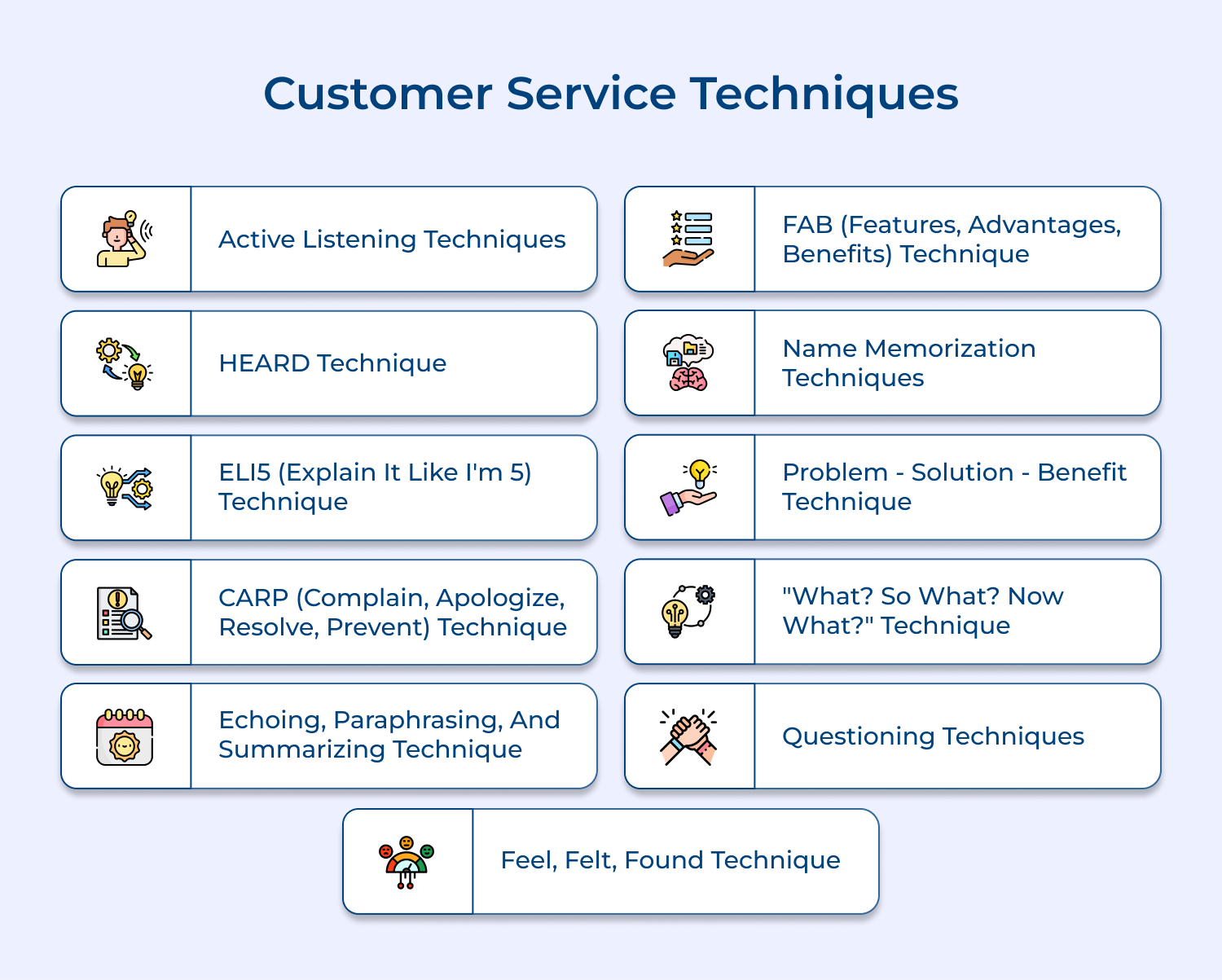
Active listening is a fundamental customer service technique that involves fully engaging with the customer and paying attention to their needs.
When to use it: Use active listening techniques when a customer is expressing a problem or complaint. By actively listening to their concerns, you can show empathy and understanding, which can help defuse the situation.
The HEARD technique stands for Hear, Empathize, Apologize, Resolve and Diagnose. This technique helps guide the customer service interaction in a structured and effective manner.
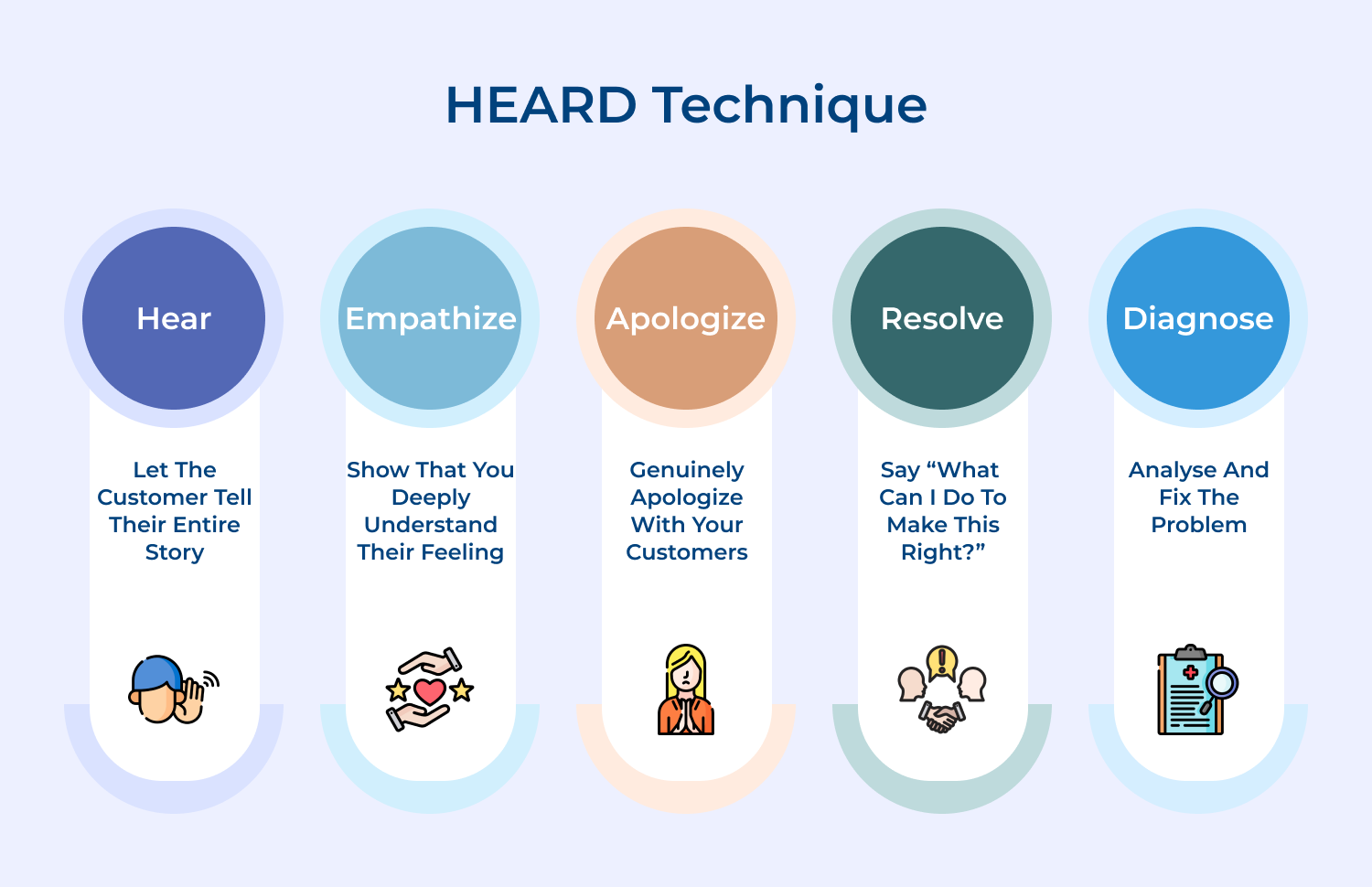
Let’s break down each component of this technique:
When to use it: Use the HEARD technique when dealing with a customer who is upset or dissatisfied. By following each step of the HEARD technique, you can address the issue in a systematic way and work towards a resolution.
The ELI5 technique involves simplifying complex information or concepts in a way that is easy for the customer to understand. The idea behind this technique is to break down complicated ideas into simpler terms that even a five-year-old child could comprehend. By using this technique, educators, professionals and experts can effectively communicate complex information to a wide audience.
For example, if someone is trying to explain how a computer works using the ELI5 technique, they might say something like, “A computer is like a big brain that can think really fast. It uses tiny electrical signals to communicate as well as solve problems, just like how you use your brain to think or figure things out.”
When to use it: Use the ELI5 technique when explaining technical or complicated issues to a customer. By breaking down the information into simple terms, you can ensure that the customer fully understands the situation and any potential solutions.
The CARP technique is a customer service approach that focuses on addressing complaints and preventing similar issues from occurring in the future.
Here is a breakdown of the CARP technique:
When to use it: Use the CARP technique when a customer has experienced a problem or issue with your product or service. By following the CARP process, you can acknowledge the complaint, apologize for any inconvenience, resolve the issue and take steps to prevent it from happening again.
This technique involves echoing the customer’s concerns, paraphrasing their statements and summarizing the conversation to ensure mutual understanding.
When to use it: Use echoing, paraphrasing and summarizing techniques during a customer service interaction to demonstrate active listening. Make sure that both parties are on the same page.
The FAB technique is a sales technique that can also be utilized in customer service to highlight the features, advantages and benefits of a product or service.
When to use it: Use the FAB technique when explaining the value of your product or service to a customer. By focusing on the features, advantages, you can help the customer see how your offering can meet their needs and solve their problems.
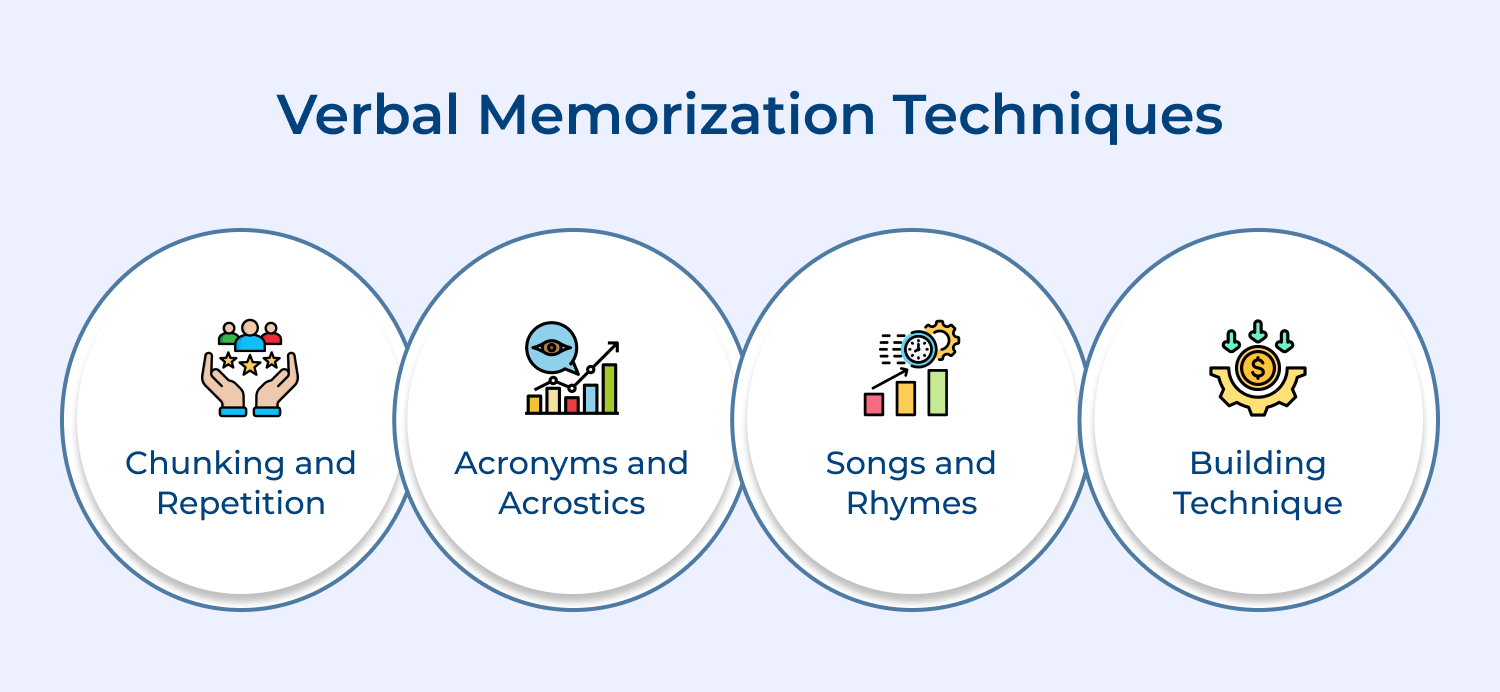
Name memorization techniques involve actively learning and remembering the names of customers to personalize the customer service experience.
When to use it: Use name memorization techniques when interacting with repeat customers or in situations where personalized service can make a difference. By addressing customers by name, you can create a more personalized and positive experience.
The problem – solution – benefit technique involves identifying the customer’s problem, offering a solution and highlighting the benefits of that solution.
When to use it: Use the problem – solution – benefit technique when recommending a product or service to a customer. By framing the solution in terms of how it can address the customer’s problem and provide benefits, you can effectively demonstrate the value of your offering.
The technique involves asking the customer questions to uncover their needs, discussing the importance of those needs and outlining the next steps to address them.
When to use it: Use the “What? So What? Now What?” technique during a customer service interaction to guide the conversation and establish a clear path forward for resolving the customer’s issue.
Questioning techniques involve asking open-ended questions to gather information, clarify customer needs, and guide the conversation.
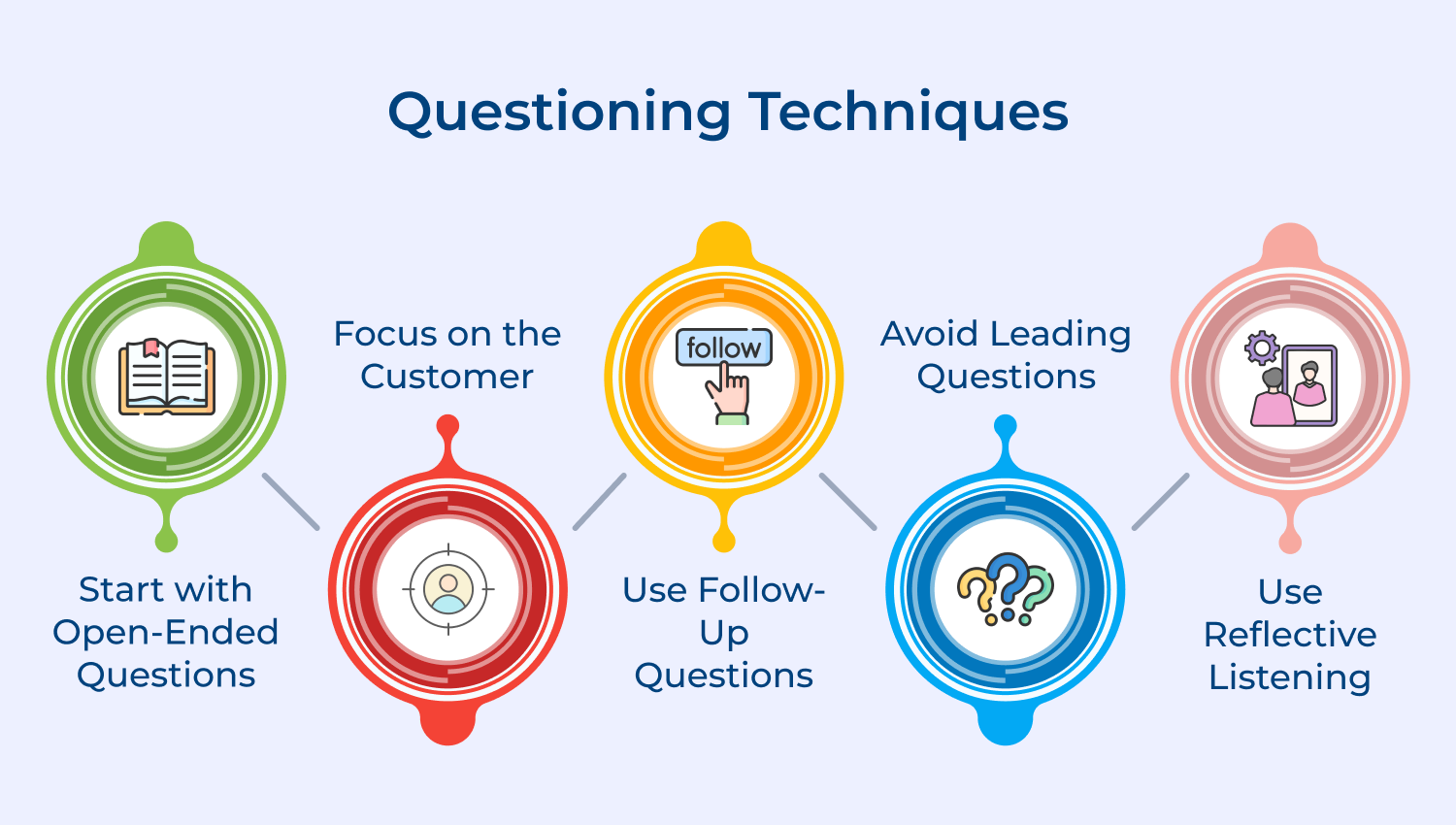
When to use it: Use questioning techniques when engaging with customers to gather information, identify their needs and address any concerns. By asking thoughtful questions, you can better understand the customer’s perspective and provide tailored solutions.
The Feel, Felt, Found technique involves acknowledging the customer’s feelings, relating to their experience and sharing a positive outcome or resolution.
The Feel, Felt, Found technique is a classic sales and persuasion strategy that involves three steps:
When to use it: Use the Feel, Felt, Found technique when empathizing with a customer’s concerns and sharing similar experiences or success stories. By showing empathy and understanding, you can build trust with the customer.
Effective communication is crucial in providing top-notch customer service. By improving your communication with customers, you can enhance their overall experience and build stronger relationships.
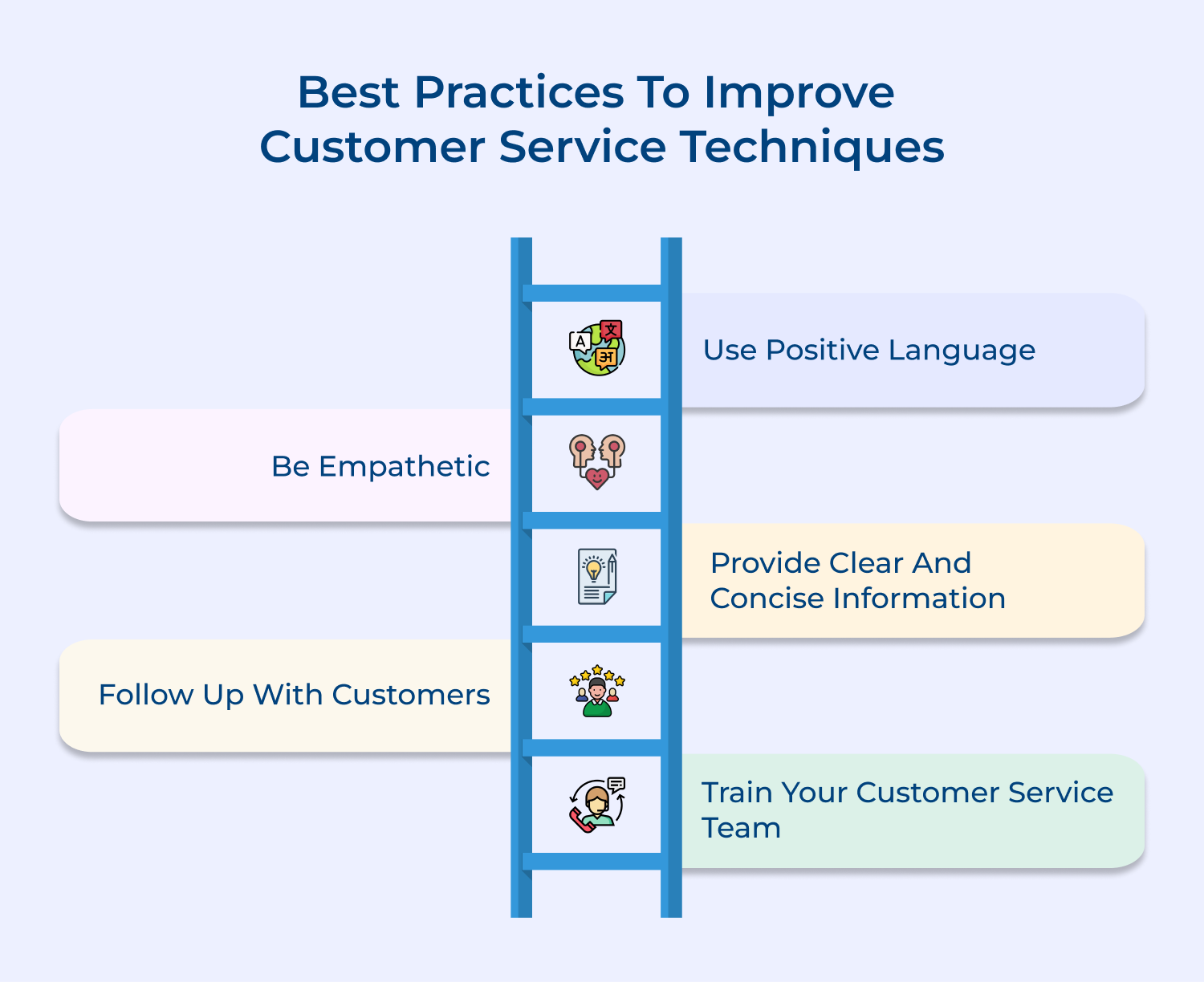
Here are some best practices to help you improve communication with customer service techniques:
Using positive language can help diffuse tense situations and create a more pleasant interaction with customers. Instead of saying “I can’t do that,” try saying “Let me see what I can do to help you.” Positive language can help reassure customers that you are there to assist them.
Empathy is key to building rapport with customers. Show genuine concern for their issues and demonstrate that you understand their emotions. By expressing empathy, you can make customers feel heard and valued.
When communicating with customers, make sure to provide clear and concise information. Avoid jargon or technical language that may confuse customers. Break down complex information into simple terms so that customers can easily understand.
After resolving a customer issue or answering a question, follow up with customers to ensure they are satisfied or not. It shows that you care about their experience and are committed to providing excellent customer service.
Provide ongoing training for your customer service team to improve their communication skills. Offer workshops or seminars on active listening, conflict resolution and empathy. By investing in your team’s development, you can enhance the quality of customer interactions.
Communication is key in customer service and many companies have found success by implementing various communication techniques to enhance their relationships with customers.
Zappos, an online retailer known for their exceptional customer service, emphasizes the importance of transparent and honest communication with customers. They have a 24/7 customer service team that is available to assist customers with any questions or concerns they may have. Zappos also encourages their employees to engage with customers on a personal level, creating a more personalized and enjoyable shopping experience.
Southwest Airlines is known for their friendly and helpful customer service representatives. They have implemented a communication technique known as active listening, where employees listen attentively to customers and make an effort to understand their needs. This helps to build trust and rapport with customers, leading to a positive overall experience.
Nordstrom is another company that excels in customer service communication. They have a customer service policy that empowers employees to make decisions on the spot to resolve customer issues. This proactive approach to communication helps to quickly address any problems that may arise and ensures that customers feel valued.
Apple is known for their customer-centric approach to communication. They have a team of customer service representatives who are trained to empathize with customers and provide solutions that meet their needs. Apple also utilizes technology to streamline communication, offering features such as chat support and remote troubleshooting to assist customers in real-time.
Mastering customer service techniques is essential for delivering exceptional customer experiences (CX). By focusing on providing top-notch customer service, businesses can build strong relationships with their customers, increase customer loyalty and drive business growth.
Investing in training, listening to customer feedback and continuously improving service standards are all key components in mastering customer service. By prioritizing customer satisfaction, businesses can differentiate themselves in a competitive market and create long-lasting relationships with their customers.

What is the main purpose of customer service software?
Customer service software is a tool used by businesses to manage and track customer interactions across various channels. The main purpose of customer service software is to streamline and automate customer support processes, ultimately improving customer satisfaction.
What is a customer service platform?
A customer service platform is a software solution that integrates various customer service tools and channels into a single platform. This allows businesses to manage customer interactions more efficiently and effectively. Customer service platforms often include features such as ticket management, live chat, knowledge base and social media integration.
How is CRM different from marketing?
CRM (Customer Relationship Management) is a strategy used by businesses to manage and analyze customer interactions throughout the customer lifecycle with the goal of improving customer relationships and increasing sales. CRM focuses on building long-term relationships with customers, while marketing focuses on promoting products or services to attract new customers.
What are the 7 Cs of customer service?
The 7 Cs of customer service refer to the key principles that businesses should follow to provide exceptional customer service. These principles include: courtesy, competence, communication, credibility, consistency, consideration and cleanliness.
What is the difference between CRM and customer service?
The main difference between CRM and customer service is that CRM is a broader strategy that encompasses all customer interactions, not just customer service. Customer service, on the other hand, specifically refers to the support and assistance provided to customers when they have questions, issues or concerns. CRM includes customer service as one of its components but also includes aspects like sales, marketing and customer data management.
 https://omni24.io/wp-content/uploads/2026/08/Omnichannel-Conversational-AI.png
1256
2400
Tushar Joshi
https://omni24.io/wp-content/uploads/2023/04/Omni-Logo-1.svg
Tushar Joshi2026-09-16 03:51:072026-09-16 03:51:07How to Build Omnichannel Conversational AI Strategy
https://omni24.io/wp-content/uploads/2026/08/Omnichannel-Conversational-AI.png
1256
2400
Tushar Joshi
https://omni24.io/wp-content/uploads/2023/04/Omni-Logo-1.svg
Tushar Joshi2026-09-16 03:51:072026-09-16 03:51:07How to Build Omnichannel Conversational AI Strategy https://omni24.io/wp-content/uploads/2026/08/Customer-Service-Teams.png
1256
2400
Tushar Joshi
https://omni24.io/wp-content/uploads/2023/04/Omni-Logo-1.svg
Tushar Joshi2026-09-15 04:01:522026-09-15 04:02:16How to Build Customer Service Teams: 6 Key Steps
https://omni24.io/wp-content/uploads/2026/08/Customer-Service-Teams.png
1256
2400
Tushar Joshi
https://omni24.io/wp-content/uploads/2023/04/Omni-Logo-1.svg
Tushar Joshi2026-09-15 04:01:522026-09-15 04:02:16How to Build Customer Service Teams: 6 Key Steps https://omni24.io/wp-content/uploads/2026/08/conversational-ai-ecommerce.png
1256
2400
Webvision Solution
https://omni24.io/wp-content/uploads/2023/04/Omni-Logo-1.svg
Webvision Solution2026-09-08 04:06:222026-09-08 04:06:22How Conversational AI for Ecommerce Boosts Sales in 2026
https://omni24.io/wp-content/uploads/2026/08/conversational-ai-ecommerce.png
1256
2400
Webvision Solution
https://omni24.io/wp-content/uploads/2023/04/Omni-Logo-1.svg
Webvision Solution2026-09-08 04:06:222026-09-08 04:06:22How Conversational AI for Ecommerce Boosts Sales in 2026
Whether it’s about acquire, engage or support – Omni24 covers all your customer engagement needs in one complete platform.

Copyright ©2026 Veemo All rights reserved.
CA, Los Angeles, Hall Ave, 19011