9 Best Sprinklr Alternatives & Competitors To Enhance Customer Engagement
Explore robust Sprinklr alternatives that provide comprehensive social media tools, seamless integrations & advanced analytics to elevate your digital strategy.


Explore robust Sprinklr alternatives that provide comprehensive social media tools, seamless integrations & advanced analytics to elevate your digital strategy.
Seeking a powerful social media management solution beyond Sprinklr? You’re in the right place.
Our guide explores top-tier alternatives that deliver comprehensive social media management, customer engagement and analytics capabilities.
We’ve got you covered with affordable options, specialized features and more! From enterprise-grade solutions to nimble tools for growing businesses, discover alternatives that can elevate your social media strategy.
So, let’s get started with streamlining your workflows and driving meaningful customer interactions across multiple channels.
Sprinklr is a popular social media management platform that is used by many businesses to streamline their digital marketing efforts.

When searching for alternatives to Sprinklr’s customer engagement platform, businesses should consider several key features that can enhance their customer interactions.
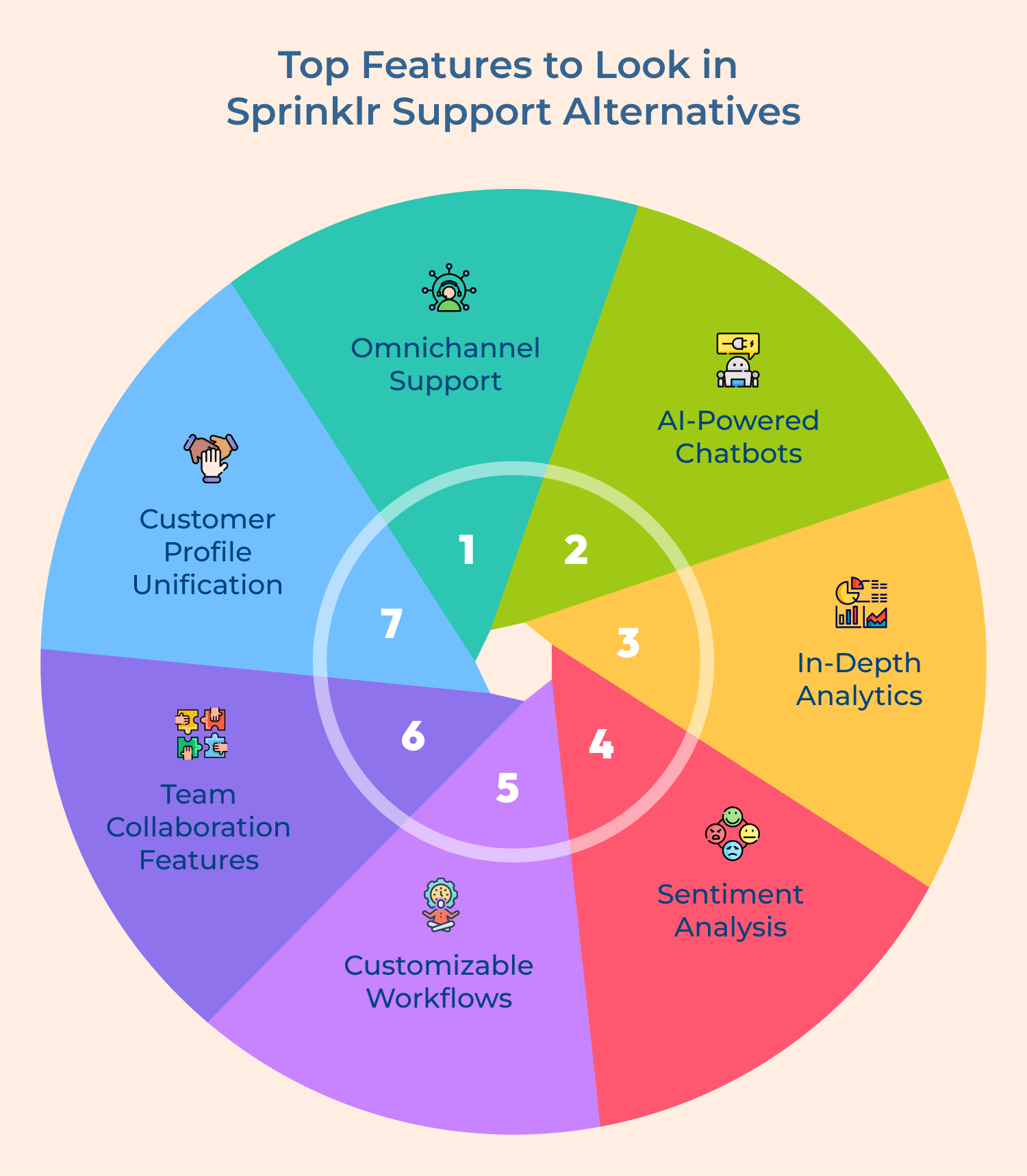
A robust alternative should offer seamless integration across multiple communication channels. The ideal solution allows agents to switch between channels effortlessly while maintaining context, ensuring a consistent customer experience. Look for platforms that can unify interactions from various sources into a single interface, reducing the complexity of managing multiple tools.
Advanced chatbot functionality is crucial for modern customer engagement. Seek alternatives that provide sophisticated AI-driven chatbots capable of handling complex queries, not just basic FAQs. These bots should be able to understand context, learn from interactions and seamlessly hand off to human agents when necessary. The ability to customize and train chatbots to align with your brand voice as well as specific use cases is also valuable.
Comprehensive analytics capabilities are essential for data-driven decision-making. Look for platforms that offer real-time dashboards, customizable reports and the ability to track key performance indicators (KPIs) across all channels. Advanced features might include predictive analytics to forecast customer behavior, trend analysis to identify emerging issues and the ability to correlate customer engagement data with business outcomes.
Effective sentiment analysis tools can provide crucial insights into customer feelings and opinions. Alternatives should offer sophisticated natural language processing (NLP) capabilities to accurately gauge sentiment across text-based communications. Look for solutions that can detect nuances in tone, identify emerging trends in customer sentiment and provide actionable insights based on this analysis.
Every business has unique processes, so the ability to tailor workflows is critical. Seek platforms that offer flexible workflow creation and management tools. This might include visual workflow builders, the ability to set up complex routing rules (e.g., customer priority, agent skills or topic) and automation capabilities to handle repetitive tasks. The system should be adaptable enough to grow with your business and accommodate changes in your customer engagement strategy.
Effective customer engagement often requires input from multiple team members or departments. Look for alternatives that facilitate seamless collaboration within the platform. Key features might include internal chat systems, the ability to easily transfer or escalate issues, shared notes on customer interactions and tools for knowledge sharing among team members. Some platforms also offer features like simultaneous document editing or virtual team spaces for more complex collaborations.
A unified view of the customer is crucial for personalized engagement. Seek alternatives that excel at aggregating customer data from various sources into a single, comprehensive profile. It should include interaction history across all channels, purchase history, preferences and any other relevant data points. Advanced systems might offer AI-driven insights based on this unified data, suggesting next best actions or personalized offers for each customer.
When it comes to customer experience management, Sprinklr is a popular choice for many businesses. However, its alternatives offer more than just what Sprinklr gives.
Best Sprinklr alternative with a comprehensive suite of customer tools
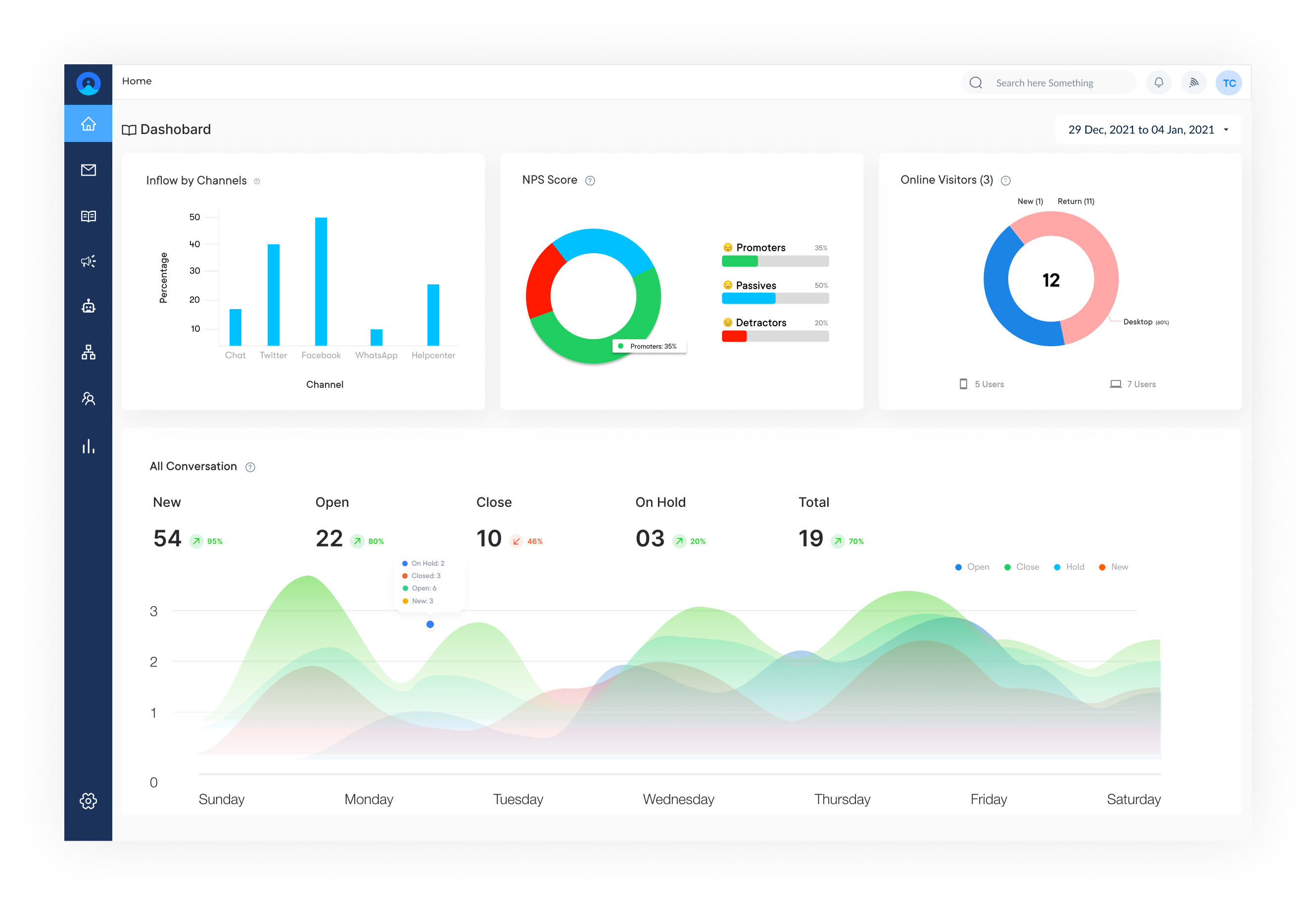
Omni24 is a popular customer service software that offers a comprehensive suite of tools for support, sales and customer engagement. It provides a unified workspace for agents to manage tickets from various channels.
Omni24’s strengths:
Pricing: Omni24’s pricing starts from $29/user/month with basic features and the advanced features plan is priced at $149/user/month. You can also customize pricings as per your business requirements. All plans come with a 14-day free trial.
Best Sprinklr alternative to streamline customer support operations
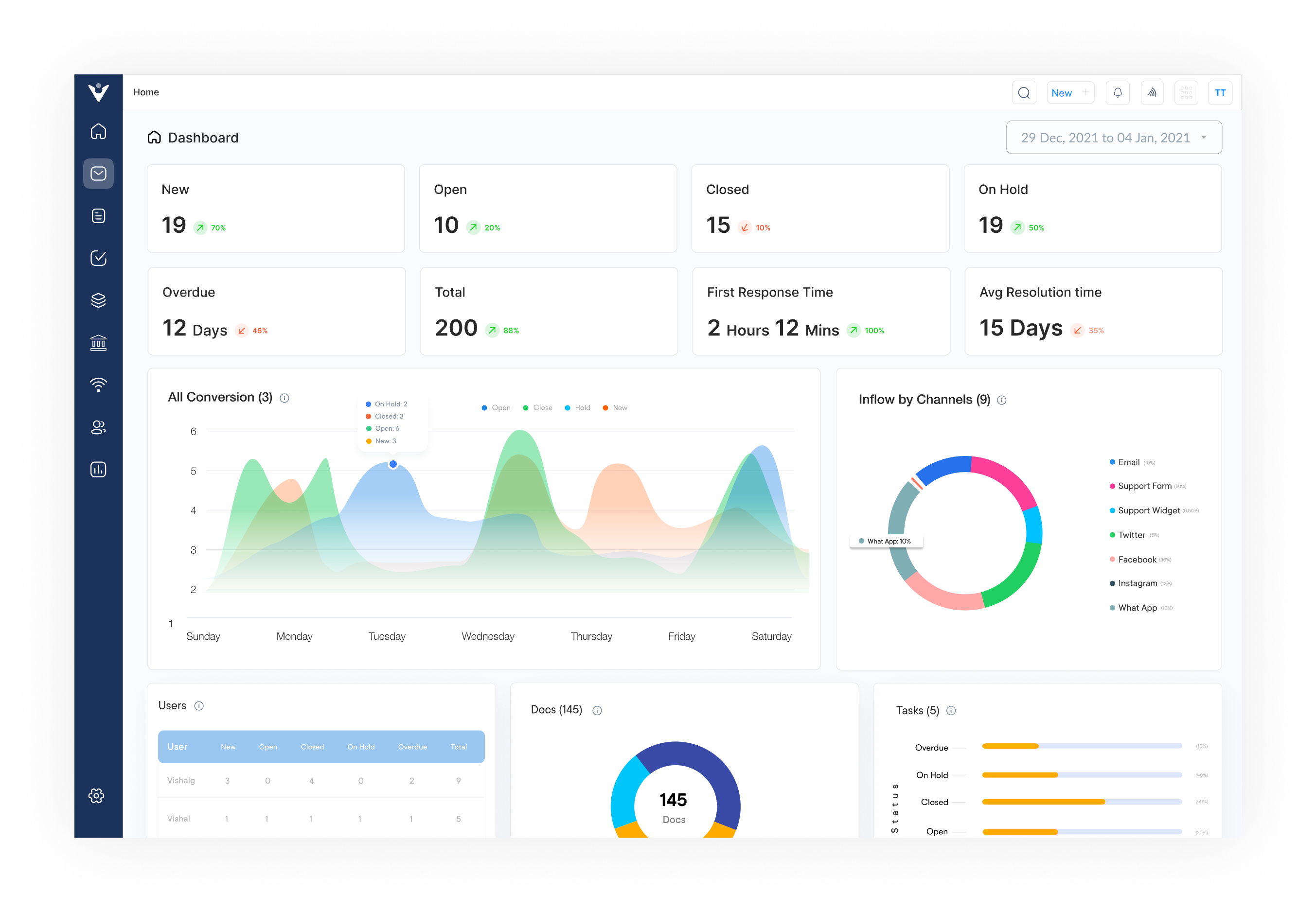
Veemo Support is an omnichannel help desk software to streamline support operations into a centralized interface. The software is a part of Veemo’s customer engagement suite of products designed to streamline and enhance various aspects of business operations. Veemo Support offers a range of tools to automate workflows, manage tickets efficiently and provide self-service options to customers.
Key features:
Pricing: Veemo’s three tier pricing plan starts at $29/month and the team plan is priced at $79/month. You can also customize the pricing plan as per the business needs or requirements.
Intercom is a conversational relationship platform that combines customer messaging, marketing and support features. It excels in providing real-time, personalized customer interactions through live chat, chatbots and targeted messaging.
The platform’s strength lies in its ability to seamlessly blend support and marketing functions, allowing businesses to engage customers throughout their journey. It also offers powerful segmentation and automation tools for targeted communications.
Salesforce Service Cloud is an enterprise-grade customer service platform that leverages the power of Salesforce’s CRM capabilities. It offers a wide range of features, including case management, omnichannel routing and AI-powered recommendations.
The service Cloud’s features include its deep integration with other Salesforce products, extensive customization options and robust reporting capabilities. It’s particularly well-suited for large organizations with complex support needs.
HubSpot Service Hub is part of HubSpot’s all-in-one CRM platform, offering customer service tools that integrate seamlessly with marketing and sales functions. It provides features such as ticketing, live chat, knowledge base and customer feedback surveys.
The CRM platform stands out for its user-friendly interface, strong automation capabilities and tight integration with other HubSpot products. Hence, making it an excellent choice for businesses already using HubSpot’s ecosystem.
Helpscout is a customer support platform designed with simplicity and ease of use in mind. It offers essential features like shared inboxes, live chat and knowledge base management.
The software’s features include its clean, intuitive interface, robust email management capabilities and detailed reporting features. It’s particularly well-suited for small to medium-sized businesses looking for a straightforward, no-frills support solution.
Kustomer is a customer service CRM platform that aims to provide a holistic view of the customer. It offers features such as omnichannel support, automated workflows and AI-powered assistance.
The customer service tool’s unique selling point is its ability to consolidate customer data from various sources, providing agents with a comprehensive customer timeline. This approach enables more personalized and context-aware support interactions.
Gladly takes a people-centric approach to customer service, organizing interactions around individual customers rather than tickets. It offers features like omni channel communication, self-service options and intelligent routing.
Gladly’s strengths include its unique customer-centric interface, powerful search capabilities, and ability to provide a seamless experience across different channels. It’s well-suited for businesses looking to provide highly personalized support experiences.
Dixa is a customer engagement platform that aims to unify customer interactions across multiple channels. It offers features such as intelligent routing, real-time analytics, and AI-powered automation.
The features include its ability to provide a unified agent workspace for all channels, its focus on creating personal connections with customers and its powerful automation capabilities. It is particularly well-suited for businesses looking to blend traditional contact center functionality with modern digital engagement tools.
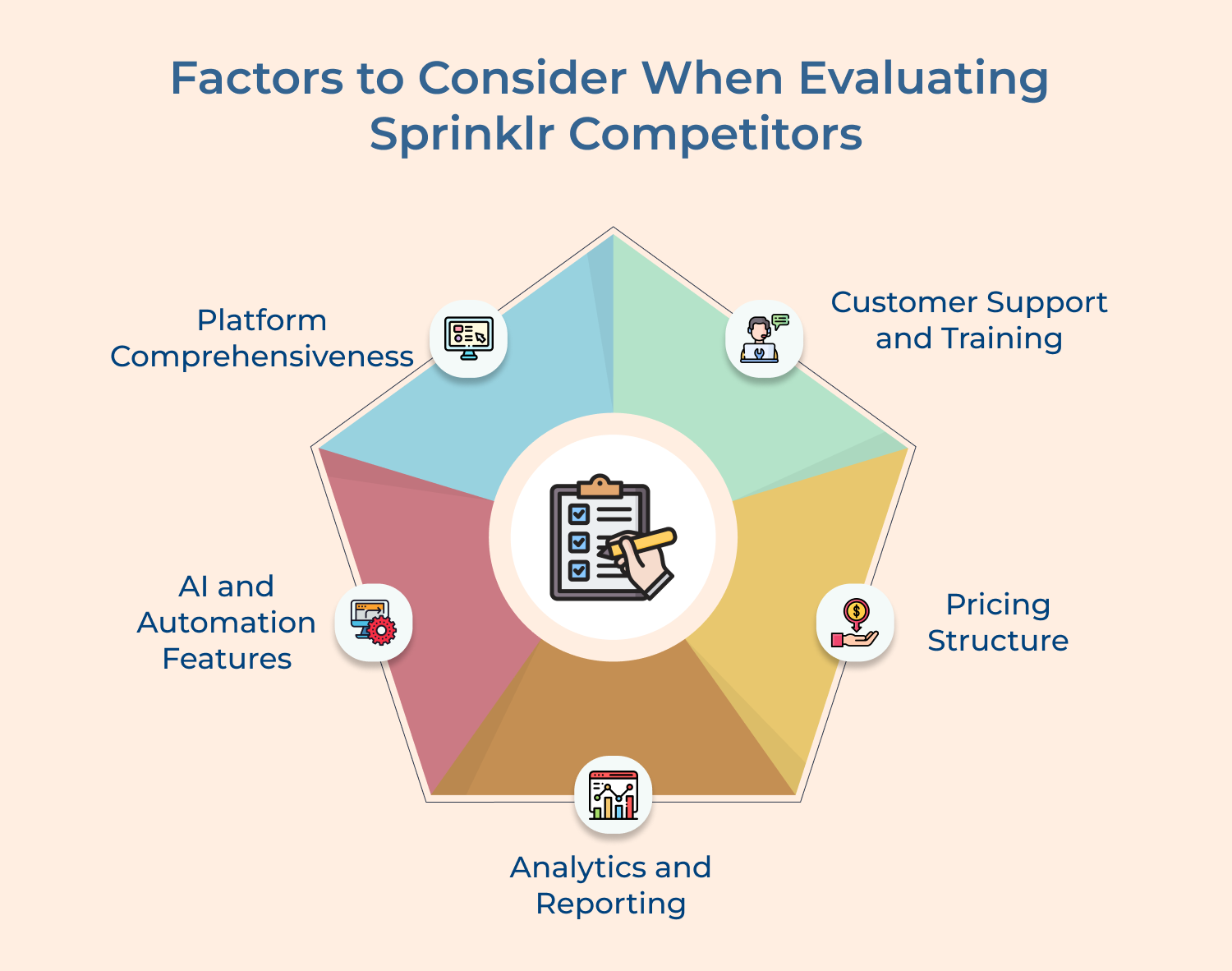
When assessing Sprinklr alternatives, consider these key factors to ensure you choose a platform that best meets your organization’s unique customer experience needs.
Omni24 is considered one of the top Sprinklr alternatives due to its comprehensive feature set and cost-effectiveness. It offers robust social media management tools, including scheduling, publishing and analytics, across multiple platforms. Omni24’s strength lies in providing a unified ecosystem for CRM, marketing, along with customer support. Its AI-powered assistant helps in content creation and optimal posting times.
The platform offers detailed analytics and custom reporting capabilities. While it may not match Sprinklr’s enterprise-level depth, Omni24; s user-friendly interface, affordable pricing and strong customer support make it an attractive option for small to medium-sized businesses seeking a powerful yet accessible social media management solution.
Omni24’s DCX platform harnesses automation and AI to deliver unified customer experiences across digital channels, while keeping human touch.
When choosing a Sprinklr alternative, it’s important to consider factors such as the size/scope of your business, your specific marketing needs, budget constraints and the level of customer service you require. It’s advisable to conduct thorough research on different alternatives, read reviews and even request demos or trials to see which option aligns best with your business goals.
Using a Sprinklr alternative can offer advantages such as cost-effectiveness, more tailored solutions, better customer service and the ability to choose features that specifically meet your business needs. Some alternatives like Omni24 may also offer more flexible pricing options or additional services that Sprinklr may not provide.
Sprinklr alternatives often prioritize customer support and service to differentiate themselves in the market. Many alternatives offer dedicated account managers, online support resources, training programs and quick response times to help customers with any issues or questions they may have. Be sure to inquire about the level of customer support before choosing an alternative.
Integration options vary among Sprinklr alternatives. For example, Omni24 offers seamless integration with popular marketing platforms such as social media platforms, CRMs, email marketing tools and analytics platforms. Before selecting an alternative, make sure to confirm that it can integrate with your existing systems to streamline your marketing efforts.
Sprinklr alternatives typically offer robust data and analytics capabilities to help businesses track as well as analyze their marketing performance. These features may include real-time reporting, customizable dashboards, audience insights, campaign tracking and more. Look for an alternative that provides comprehensive data and analytics tools to help you make informed decisions while optimizing your marketing strategies.
 https://omni24.io/wp-content/uploads/2026/03/Help-desk-vs-Knowledge-base.png
1256
2400
Tushar Joshi
https://omni24.io/wp-content/uploads/2023/04/Omni-Logo-1.svg
Tushar Joshi2026-04-30 04:31:292026-04-30 04:31:29Help Desk vs Knowledge Base: Key Differences & Benefits
https://omni24.io/wp-content/uploads/2026/03/Help-desk-vs-Knowledge-base.png
1256
2400
Tushar Joshi
https://omni24.io/wp-content/uploads/2023/04/Omni-Logo-1.svg
Tushar Joshi2026-04-30 04:31:292026-04-30 04:31:29Help Desk vs Knowledge Base: Key Differences & Benefits https://omni24.io/wp-content/uploads/2026/03/Multimodal-Customer-Experience.png
1256
2400
Tushar Joshi
https://omni24.io/wp-content/uploads/2023/04/Omni-Logo-1.svg
Tushar Joshi2026-04-29 04:31:222026-04-29 04:31:22How to Implement Multimodal Customer Experience (CX) Strategy
https://omni24.io/wp-content/uploads/2026/03/Multimodal-Customer-Experience.png
1256
2400
Tushar Joshi
https://omni24.io/wp-content/uploads/2023/04/Omni-Logo-1.svg
Tushar Joshi2026-04-29 04:31:222026-04-29 04:31:22How to Implement Multimodal Customer Experience (CX) Strategy https://omni24.io/wp-content/uploads/2026/03/Customer-Experience-Team.png
1265
2400
Tushar Joshi
https://omni24.io/wp-content/uploads/2023/04/Omni-Logo-1.svg
Tushar Joshi2026-04-27 04:59:122026-04-27 04:59:12What Does a Customer Experience(CX) Team Do?
https://omni24.io/wp-content/uploads/2026/03/Customer-Experience-Team.png
1265
2400
Tushar Joshi
https://omni24.io/wp-content/uploads/2023/04/Omni-Logo-1.svg
Tushar Joshi2026-04-27 04:59:122026-04-27 04:59:12What Does a Customer Experience(CX) Team Do?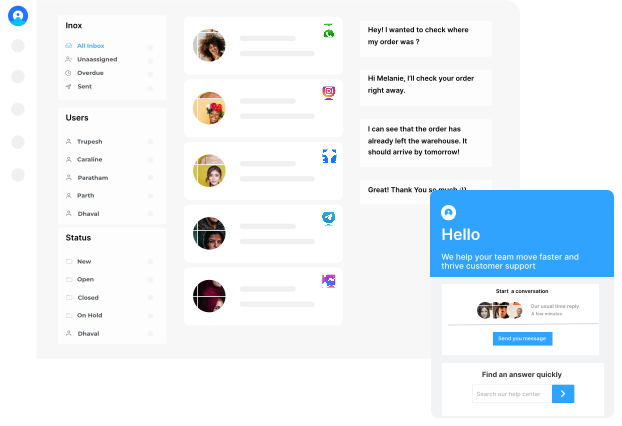
Whether it’s about acquire, engage or support – Omni24 covers all your customer engagement needs in one complete platform.

Copyright ©2026 Veemo All rights reserved.
CA, Los Angeles, Hall Ave, 19011