What Does a Customer Experience(CX) Team Do?
A customer experience team drives loyalty, satisfaction, and growth by shaping journeys, analyzing feedback while delivering excellent customer engagements.

A customer experience team drives loyalty, satisfaction, and growth by shaping journeys, analyzing feedback while delivering excellent customer engagements.
You know how customers expect more than just a decent product these days – they want real service that feels human. Investing in your customer experience team isn’t just nice to have, it’s essential.
Give your CX team the right training and support, and they’ll make your customers happy. This builds loyalty, strengthens your brand as well as helps your revenue grow.
In fact, companies that focus on CX see an 80-percent increase in revenue. Treat CX like a priority, and you’ll see customers sticking around, recommending you as well as coming back again.
A Customer Experience (CX) Team is a group of individuals within an organization who ensure that customers have a positive and satisfying experience during company interactions. These teams are responsible for understanding the needs and expectations of customers, identifying pain points in the customer journey while implementing strategies to improve overall satisfaction.
The CX Team typically consists of individuals from various departments within the company, including marketing, sales, customer service and product development. Each member brings a unique perspective and expertise to the team, which allows for a comprehensive approach to improving the customer experience through various CXM platforms.
Key objectives
A Customer Experience (CX) Team plays a crucial role in ensuring that customers have a positive interaction with a company or brand. Here are some more points to consider:
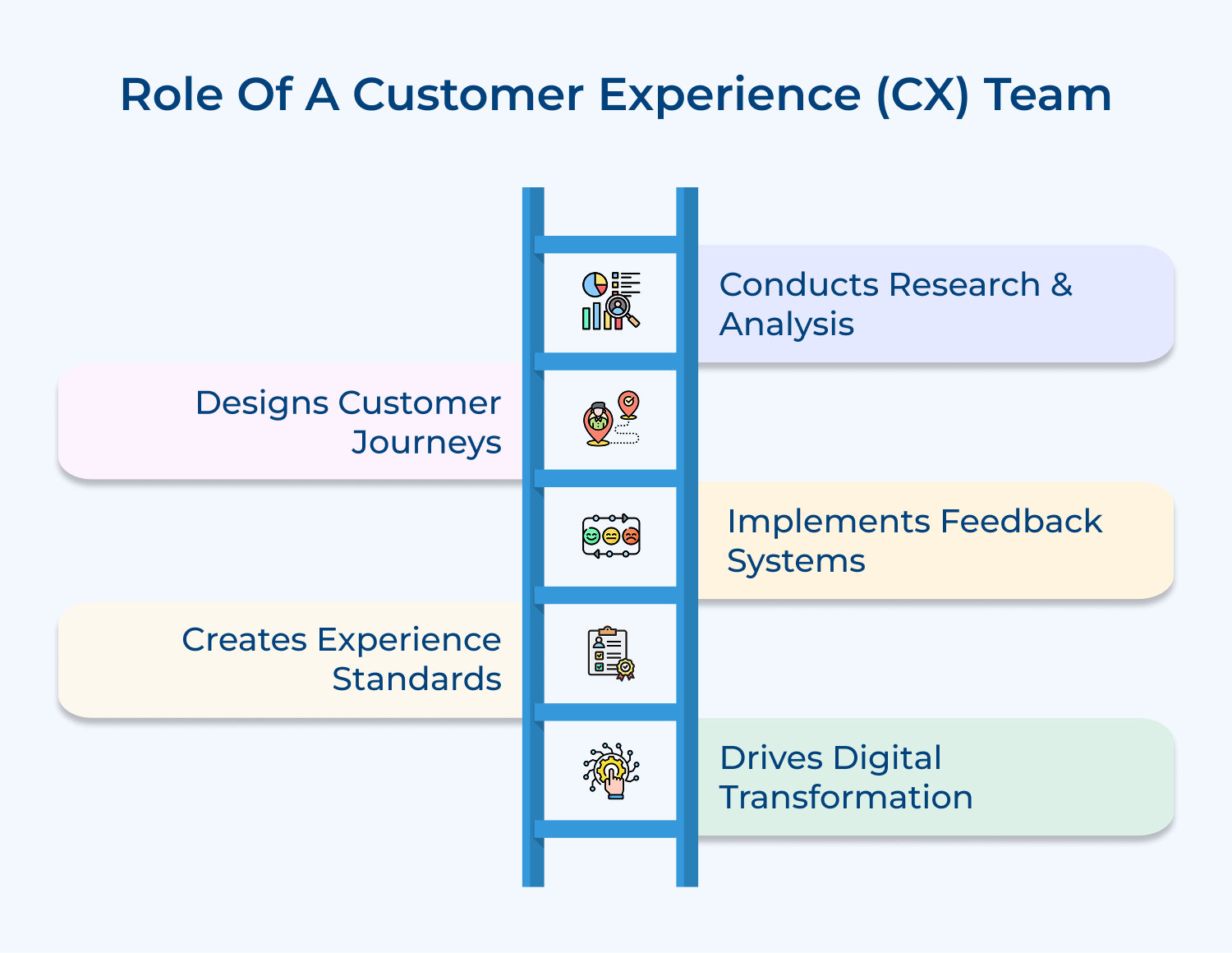
Conducts Research & Analysis
Customer experience management starts with gathering valuable insights through customer surveys, interviews, and analytics. CX teams dig into customer trends, behaviors and pain points, then turn that research into practical actions that improve every interaction.
Designs Customer Journeys
CX teams create clear customer journeys that show how people engage at each stage. They spot critical moments, remove friction, and design smoother paths that make experiences logical as well as effortless.
Implements Feedback Systems
Strong feedback systems are a core part of customer experience management. CX teams collect input across channels, study customer sentiment, prioritize issues and share updates so customers know their voices matter.
Creates Experience Standards
To deliver consistency, CX teams set clear guidelines on service protocols, tone of communication, and quality benchmarks – ensuring every interaction reflects brand values as well as customer expectations.
Drives Digital Transformation
CX specialists refine digital touchpoints for ease and efficiency. They push for tools that enhance self-service while keeping human support available when it matters most.
Building a customer experience department is essential for any business that wants to prioritize customer satisfaction. Here are some steps to consider when building one:

Before jumping into building a customer experience department, it’s important to define your goals and objectives. What do you want to achieve with your customer experience efforts? Do you want to improve customer satisfaction scores, reduce customer churn, or increase repeat purchases? Clearly outlining your goals will help guide your department’s initiatives and activities.
Goals can be categorized into experience improvements (reducing friction points), business outcomes (increasing retention), and operational efficiencies (lowering support costs). Regular review meetings keep objectives visible and allow for adjustments based on changing market conditions. Senior leadership should formally approve these goals to secure organization-wide commitment.
Here are few best practices to apply:
Building an excellent customer experience department starts with hiring the right people. Choose individuals who are passionate about service, communicate well, and show empathy.
Grow your team step by step. Begin with generalists who set the base, then add specialists as you scale. Offer clear career paths that reward advocacy and measurable impact.
Use a hub-and-spoke model where the core team works with CX champions in other departments. This approach helps your business consistently deliver excellent customer experiences and build lasting loyalty.
Best practices to follow:

To truly prioritize customer experience, it’s important to instill a customer-centric culture within your company. This involves emphasizing the importance of customer satisfaction at all levels of the organization, from the leadership team down to front-line employees.
Encourage all employees to think about how their actions impact the customer and empower them to make decisions that benefit the customer.
Encourage collaboration and communication between departments to ensure a seamless customer journey. Reward employees who go above and beyond to deliver exceptional customer service.
Actionable tips:
Investing in the right technology makes customer interactions smoother and boosts efficiency. Start with tools like customer relationship management (CRM) software and feedback platforms. These help you understand customer needs, respond quickly as well as gather valuable data for future initiatives.
Focus first on systems that support your main customer experience goals. Make sure new tools connect easily with existing platforms like your CRM or support system.
Build dashboards that give leaders a clear strategic view while also showing frontline teams the operational details they need to act on improvements.
Pro tips:
Feedback is essential for improving the customer experience. Implement a process for collecting feedback from customers, whether it’s through surveys, focus groups, or social media listening. Use this feedback to identify areas for improvement and make necessary adjustments to your customer experience strategies.
Combine multiple feedback methods including surveys, interviews, social listening, and operational data to create a comprehensive view.
Establish a formal process for routing insights to responsible departments with accountability for action. Track both resolution of individual issues and systemic improvements addressing root causes.
Consider follow best practices:
Ongoing training is essential for a strong customer experience department. Give your team chances to grow their skills, stay updated on industry trends, and learn best practices. This helps them handle customer engagements with confidence and deliver a better digital customer experience.
Set up tiered training programs. Offer basic courses for all employees and advanced tracks for CX specialists.
Go beyond formal sessions by creating communities where teams share challenges and solutions. Add certification paths that reward growing expertise and keep everyone motivated to deliver excellent customer experiences.
Best practices to consider:
A strong customer experience function isn’t just about fixing issues – it’s about building stronger relationships. In fact, 86% of buyers say they’ll pay more for a great customer experience.

A dedicated CX team fosters stronger emotional connections with customers through consistent, positive interactions. When customers feel valued and understood, they develop brand loyalty, resulting in higher retention rates as well as reduced churn across the customer lifecycle.
Companies with exceptional customer experience generate significantly higher revenue. CX teams identify opportunities to optimize the buyer’s journey, remove purchase barriers, and create upsell opportunities. Hence, directly impacting sales performance and overall business profitability.
In markets where products and services are increasingly similar, customer experience becomes a powerful differentiator. CX teams create unique, memorable interactions that set organizations apart from competitors, helping brands stand out in crowded marketplaces regardless of price points.
CX teams collect, analyze, and distribute valuable customer insights across the organization. This voice-of-customer data enables smarter business decisions, product improvements, and service enhancements based on actual customer needs rather than internal assumptions.
Proactive CX teams identify and resolve customer pain points before they escalate. The approach minimizes costly service recovery efforts, reduces support ticket volume, and streamlines processes. Ultimately lowering operational expenses while improving customer satisfaction.
Exceptional experiences generate positive word-of-mouth and favorable online reviews. CX teams actively manage these reputation factors, amplifying positive feedback and addressing negative experiences to create a strong brand reputation.
The customer experience team is responsible for managing all customer interactions and ensuring that customers are satisfied with the company’s products. Let’s explore a few more:
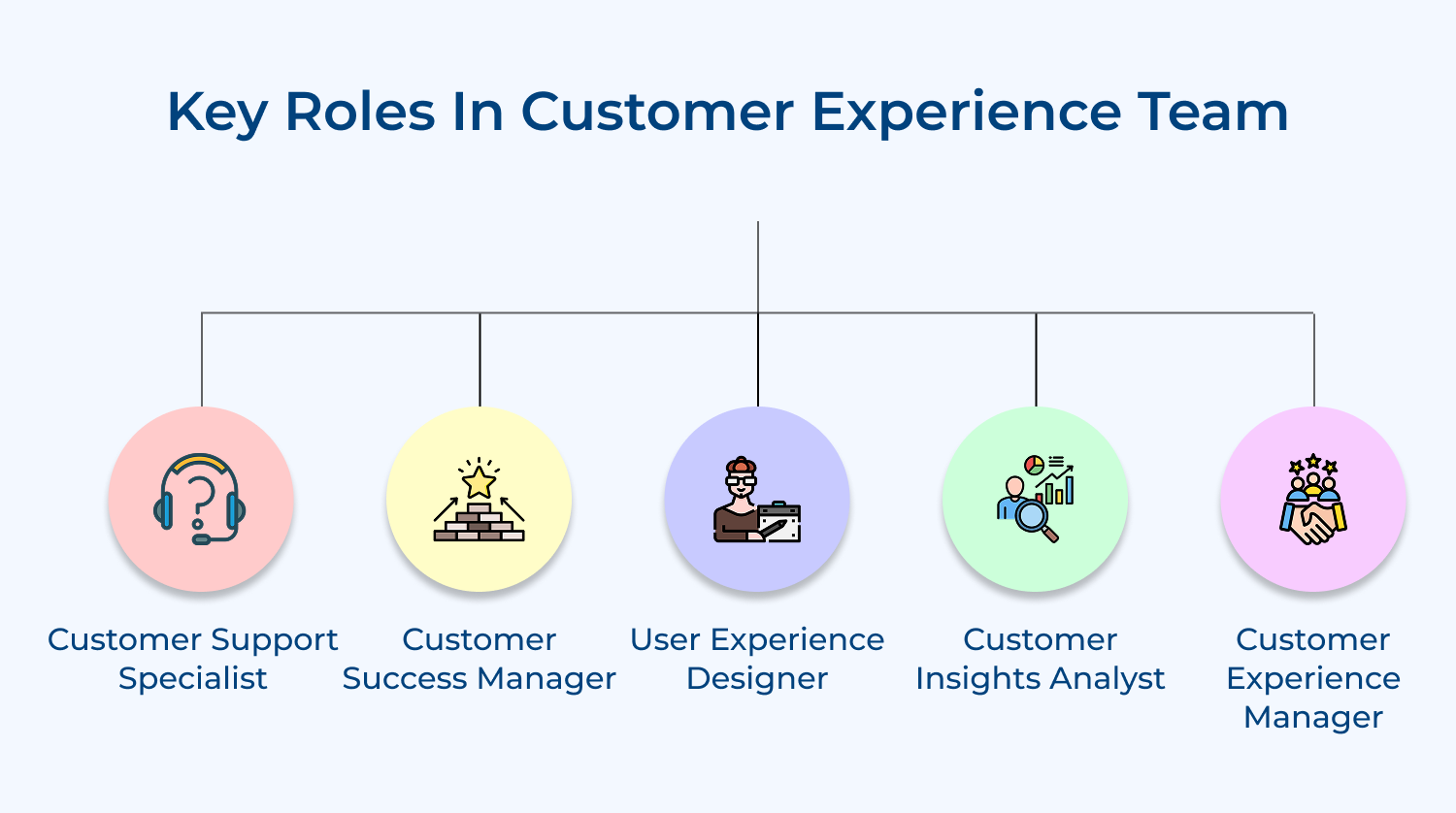
Customer Support Specialist
Customer support specialists are the frontline of the customer experience team. They are responsible for addressing customer inquiries, resolving issues, and providing assistance with product or service-related questions. Customer support specialists often communicate with customers through various channels such as phone, email, chat, or social media.
Customer Success Manager
Customer success managers work closely with customers to ensure they are maximizing the value of the company’s products or services. They help customers achieve their goals and address any issues or concerns that may arise. Customer success managers also play a key role in building strong relationships with customers and increasing customer loyalty.
User Experience Designer
User experience designers are responsible for creating a positive and intuitive experience for customers when interacting with a company’s website, app, or other digital platforms. They conduct research, design user interfaces, and test usability to ensure that customers have a positive interaction with the company’s digital assets.
Customer Insights Analyst
Customer insights analysts gather and analyze data to better understand customer behavior, preferences as well as needs. They use this information to identify trends, make data-driven recommendations, and improve the overall customer experience. Customer insights analysts play a critical role in helping companies make informed decisions that align with customer expectations.
Customer Experience Manager
Customer experience managers lead the CX team and design strategies that boost satisfaction as well as build customer loyalty. They work cross-functionally with other departments to ensure a consistent and positive customer experience across all touchpoints.
Building a strong Customer Experience (CX) team enhances a company’s reputation by creating deeper connections with customers. Improving customer satisfaction, providing seamless interactions, and actively listening to feedback builds long-term loyalty as well as strengthens brand recognition.
As customer expectations rise, businesses that invest in CX will maintain a competitive advantage, offering superior service that resonates with their target audience. Ultimately, a customer-first approach ensures that the company remains top of mind, earns trust, and establishes a positive reputation that drives sustained growth in the industry.

What is the difference between customer service and customer experience teams?
Customer service teams handle specific support interactions and issue resolution. Customer experience teams take a broader approach, analyzing and optimizing the entire customer journey across all touchpoints. While service teams focus on solving immediate problems, CX teams work strategically to prevent issues and create seamless experiences from awareness through loyalty.
What departments should the CX team collaborate with?
CX teams must collaborate with virtually every customer-facing department including marketing, sales, product development, customer support, and operations. They also work closely with IT, finance, and human resources to ensure systems, policies as well as employee training align with customer experience goals. Effective collaboration requires strong communication channels across the organization.
What skills are essential for CX team members?
Essential CX skills include data analysis, journey mapping, empathy, communication, project management, and change management expertise. Team members need both analytical abilities to identify experience gaps and interpersonal skills to influence stakeholders across departments. Experience with CX technologies and research methodologies provides additional value to the team.
How does a CX team impact company culture?
CX teams promote customer-centricity throughout the organization by sharing customer insights, celebrating customer-focused wins, and advocating for the customer voice in decision-making. They help establish customer experience as a core value, encouraging all employees to consider how their work impacts customers regardless of their direct customer contact.
What technologies do CX teams typically use?
CX teams leverage various technologies including customer feedback platforms, journey mapping tools, analytics software, voice of customer solutions, and customer relationship management systems. They also utilize sentiment analysis, AI-powered insights platforms, and dashboard solutions that consolidate data from multiple channels to provide comprehensive experience visibility.
How does a CX team handle negative customer feedback?
CX teams approach negative feedback as valuable improvement opportunities rather than criticism. They systematically categorize feedback, identify root causes, develop action plans, and close the loop with customers. The process involves sharing insights with relevant departments, implementing changes, and measuring the impact of those improvements over time.
 https://omni24.io/wp-content/uploads/2026/09/Social-commerce-scaled.png
1340
2560
Webvision Solution
https://omni24.io/wp-content/uploads/2023/04/Omni-Logo-1.svg
Webvision Solution2026-10-23 12:18:272026-10-23 12:18:27What is Social Commerce and Why Does It Matter?
https://omni24.io/wp-content/uploads/2026/09/Social-commerce-scaled.png
1340
2560
Webvision Solution
https://omni24.io/wp-content/uploads/2023/04/Omni-Logo-1.svg
Webvision Solution2026-10-23 12:18:272026-10-23 12:18:27What is Social Commerce and Why Does It Matter? https://omni24.io/wp-content/uploads/2026/08/AI-Customer-Service-Agents.png
1256
2400
Webvision Solution
https://omni24.io/wp-content/uploads/2023/04/Omni-Logo-1.svg
Webvision Solution2026-09-21 04:48:512026-09-21 04:48:51How to Build an AI Customer Service Agents: 8 Key Steps
https://omni24.io/wp-content/uploads/2026/08/AI-Customer-Service-Agents.png
1256
2400
Webvision Solution
https://omni24.io/wp-content/uploads/2023/04/Omni-Logo-1.svg
Webvision Solution2026-09-21 04:48:512026-09-21 04:48:51How to Build an AI Customer Service Agents: 8 Key Steps https://omni24.io/wp-content/uploads/2026/08/Omnichannel-Conversational-AI.png
1256
2400
Tushar Joshi
https://omni24.io/wp-content/uploads/2023/04/Omni-Logo-1.svg
Tushar Joshi2026-09-16 03:51:072026-09-16 03:51:07How to Build Omnichannel Conversational AI Strategy
https://omni24.io/wp-content/uploads/2026/08/Omnichannel-Conversational-AI.png
1256
2400
Tushar Joshi
https://omni24.io/wp-content/uploads/2023/04/Omni-Logo-1.svg
Tushar Joshi2026-09-16 03:51:072026-09-16 03:51:07How to Build Omnichannel Conversational AI Strategy
Whether it’s about acquire, engage or support – Omni24 covers all your customer engagement needs in one complete platform.

Copyright ©2026 Veemo All rights reserved.
CA, Los Angeles, Hall Ave, 19011