9 Best Enterprise Help Desk Software & Platform
Implement enterprise help desk software to prioritize tickets, integrate knowledge bases, automate workflows and scale support operations efficiently.


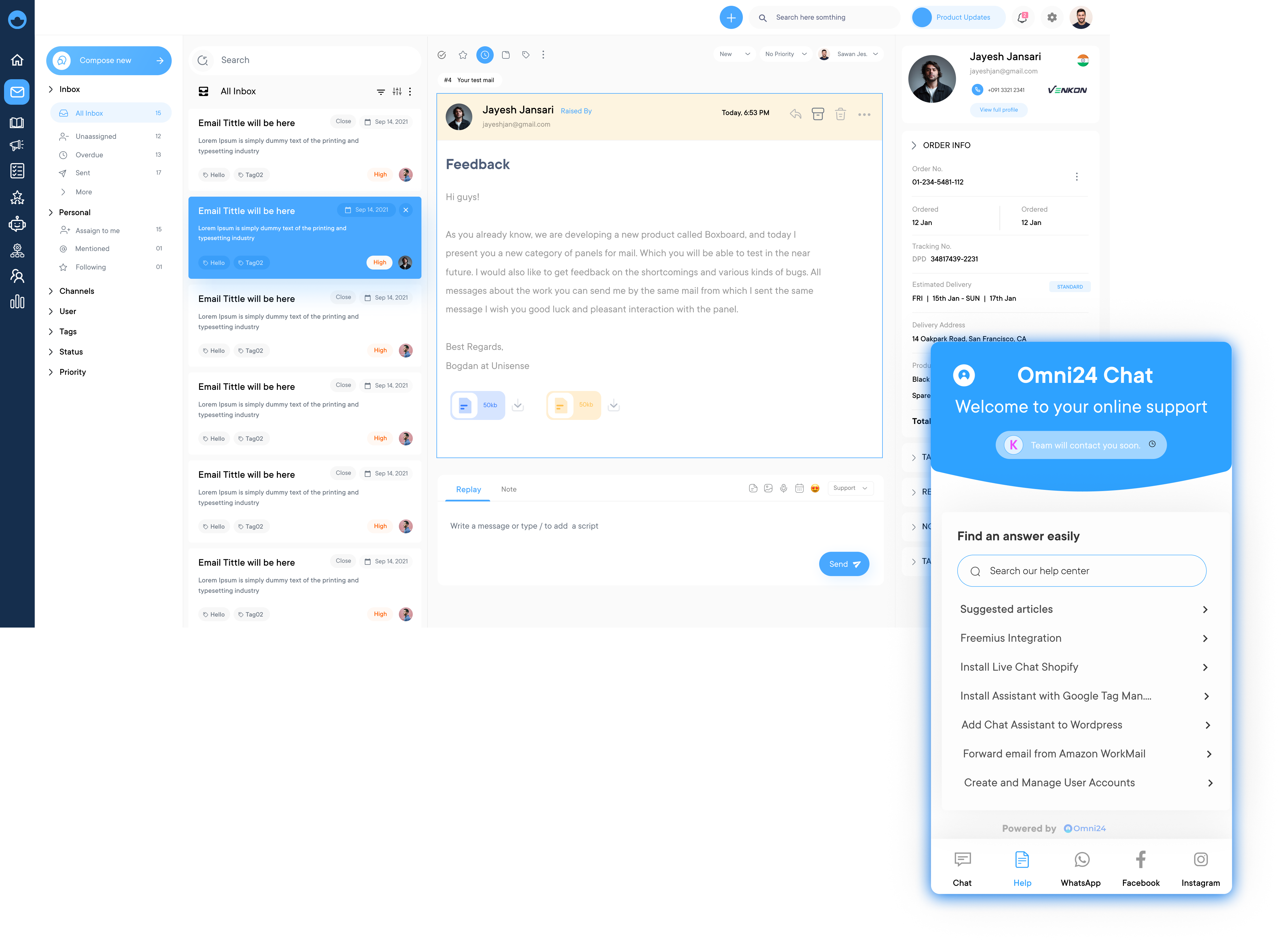
Implement enterprise help desk software to prioritize tickets, integrate knowledge bases, automate workflows and scale support operations efficiently.
Enterprise help desk provides a collaborative space for the teams to provide the ultimate service to the customers.
Efficiently manage support tickets with automated routing and escalation to boost help desk productivity.
Integrate a comprehensive knowledge base with ticketing and asset management for faster, more accurate issue resolution.
Scale effortlessly to handle high volumes of requests and users, ensuring consistent performance as your organization grows.
Streamline operations by automating routine tasks, reducing human error, and enabling agents to focus on more complex issues.
Support tickets pile up across disconnected channels when IT teams spend hours chasing unresolved escalations and revenue follows. Unresolved issues cost thousands of productive hours, leading to accelerated churn risk. Businesses that utilize the best enterprise help desk software can manage both external inquiries and internal employee requests simultaneously
Walk through the list of top platforms and compare based on features as well as pricing to make a confident decision on building an excellent support operation.
An enterprise help desk software is a centralized, all-in-one support platform for providing support both externally to customers as well as internally to your employees. The software is more robust as well as scalable to cater to the needs of larger organizations with 1000+ employees.
Key points:
Discover leading enterprise help desk solutions built for scale and efficiency.
| Tool | Key Features | Price | Trial |
|---|---|---|---|
| Omni24 |
|
$29/user/month | 14-day free trial |
| Veemo Support |
|
$29/user/month | 14-day free trial |
| Freshdesk |
|
$19/agent/month | 14-day free trial |
| Hiver |
|
$19/user/month | Available (no free plan) |
| Gorgias |
|
$10/month | 7-day free trial |
| LiveChat |
|
$20/agent/month | 14-day free trial |
| Front |
|
$25/user/month | Free trial available |
| Kustomer |
|
Custom pricing | Free trial available |
| Help Scout |
|
$22/user/month | 15 days |
Understanding the features, you can make informed decisions to implement an effective and reliable service desk solution for your organization.
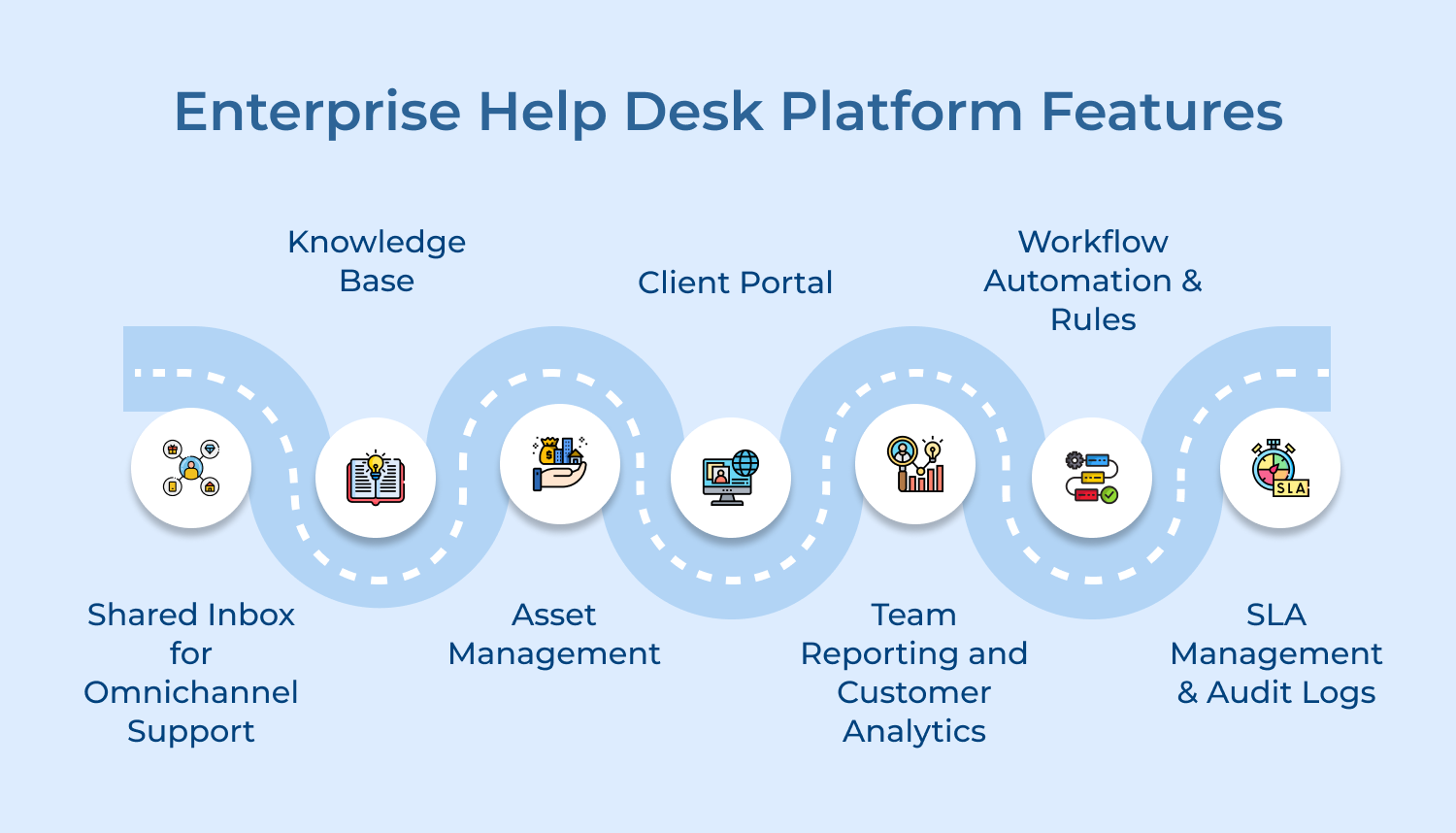
Primarily, an IT Service Desk collects inquiries from various channels, such as email, phone, chat, social media, etc and handles support tickets. A service desk agent then manages all these incoming messages.
Though the shared inbox feature ensures consistent communication from all the integrated channels, it also creates a seamless experience for the users. Hence, a higher customer satisfaction becomes the new norm for the companies implementing this strategy.
A well-maintained knowledge base translates to volume reduction of repetitive tasks and simple service desk inquiries. It serves as a centralized repository of information, including FAQs, troubleshooting guides, and self-help resources.
Employees and customers alike access the knowledge base to find answers to their questions. Although the customers are more benefited by this as they resolve the issues on their own before reaching out to the service desk. Thus, promoting self-service and independence.
Asset management is critical for tracking and managing all IT assets within an organization. It allows the service desk to keep track of hardware, software, licenses, along with all kinds of configurations.
Management provides insights into asset lifecycles, enables proactive maintenance as well as upgrades. It ensures compliance with licensing and security requirements.
A client portal serves as a self-service portal for employees as well as customers, providing them with a convenient way to submit and track their IT requests. Here the users can create, view, edit as well as update their tickets.
Portal provides access to knowledge base articles and communicates directly with service desk agents. While enhancing transparency, it also improves communication and empowers users to be more involved in the resolution process.
The only way an enterprise IT service desk can optimize its performance is when it gets the right feedback. This is usually through effective reporting and analytics. Team reporting provides insights into metrics such as ticket volume, response times, resolution rates and customer satisfaction.
Customer analytics help identify trends, patterns and areas for improvement. Hence, enabling service desk managers to make data-driven decisions, implement process improvements, all while ensuring continuous service improvement.
Automation comes as a secondary nature when it comes to streamlining IT service desk operations. Workflow automation allows for the automatic assignment of tickets, escalation of critical issues and routing of requests to the appropriate teams or individuals.
It isn’t just time that you save with automation rules, reductions in human error also increases. All of this trickles down to efficient ticket handling.
Read more: Find out why transport and logistics enterprises are turning to advanced help desk software for seamless service.
Service Level Agreements (SLAs) are essential for defining and measuring service desk performance against predefined targets. It allows the service desk to track and manage SLAs, ensuring timely resolution to agreed-upon service levels.
Audit logs provide a detailed record of all actions performed within the service desk, enabling traceability, accountability and compliance with regulatory requirements.
Businesses strive to provide excellent customer support. As a result, numerous software providers have entered the market, each claiming to offer the best solution for your firm.
Best Enterprise Help Desk For Customization
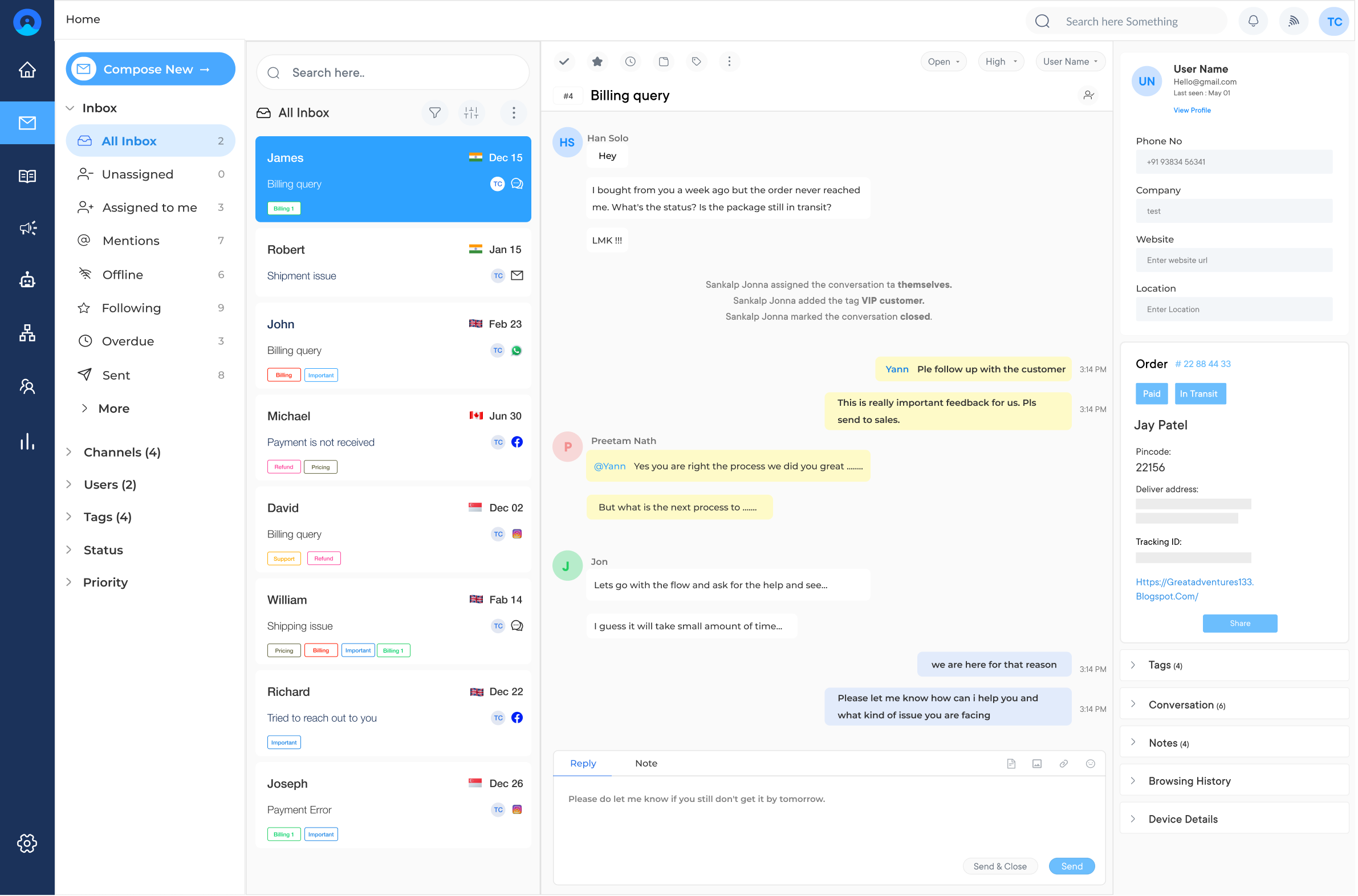
Omni24 is an AI-powered customer engagement platform that combines support, sales and marketing as one unified suite. It allows enterprise businesses to manage customer inquiries from email, chat and social media, ensuring every interaction is responded to promptly.
Enterprise teams handling high inquiry volumes across departments use Omni24’s automation to handle repetitive tasks such as ticket routing and categorization, freeing agents to focus on complex issues. This improves resolution times while keeping every conversation connected across entire customer journey.
Key features:
Pricing: The pricing starts at $29/month/user and goes up to $149/month/user. Check out their pricing for more details.
Top Enterprise Help Desk Solution
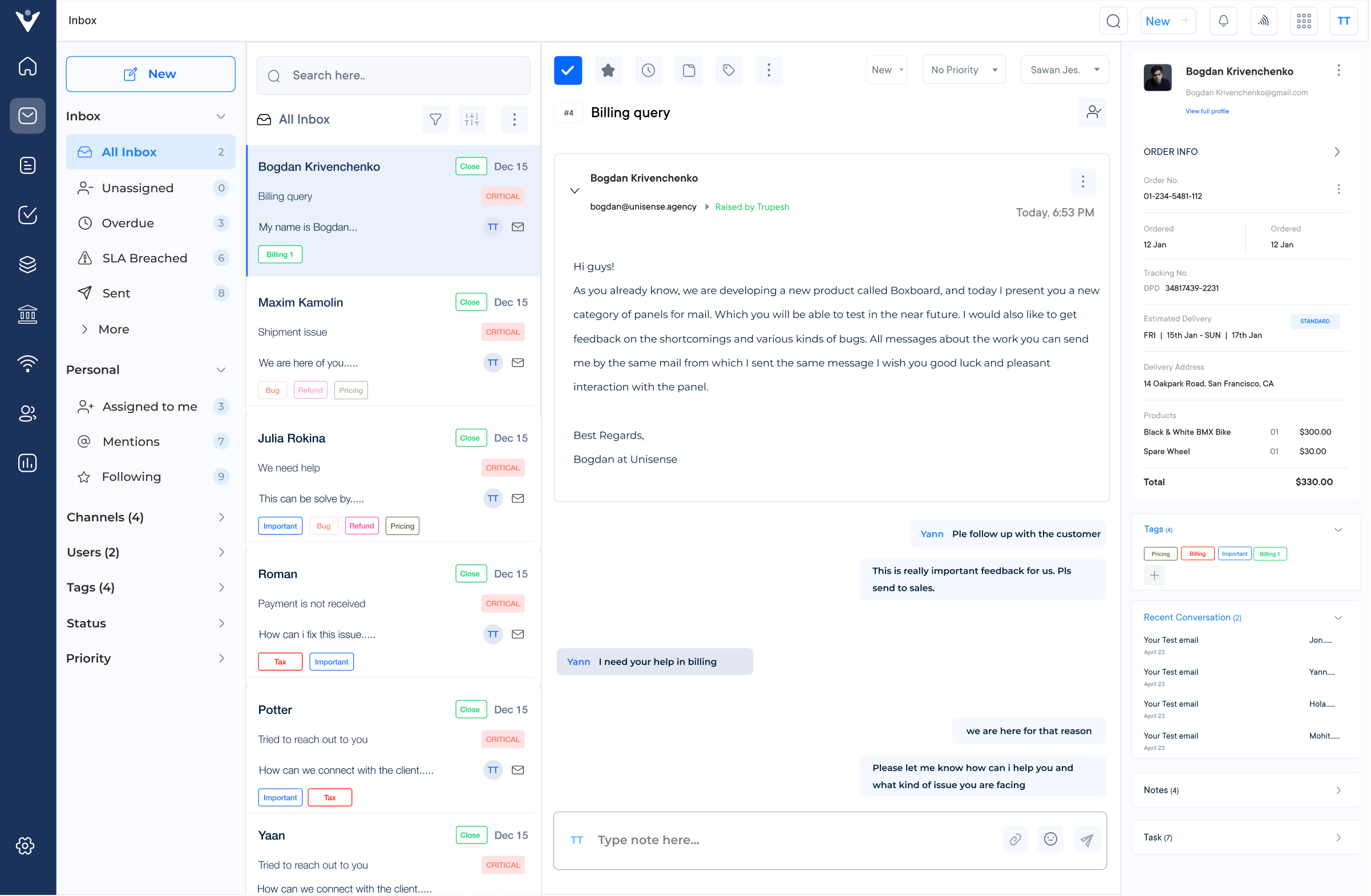
Veemo Support is an all-in-one help desk solution that combines ticketing, self-service and automation features. The software is a part of Veemo’s customer engagement suite of products designed to streamline and enhance various aspects of business operations.
Organizations can use it to create knowledge bases, FAQs and community forums, reducing the load on support teams. Its intelligent ticket routing, along with workflow automation, ensures that requests are assigned to the right team members.
Key features:
Pricing: Veemo offers plans ranging between $29/month/user and $129/month/user. Businesses can avail their 14-day free trial offer.
Ultimate Help desk Software to manage customer support
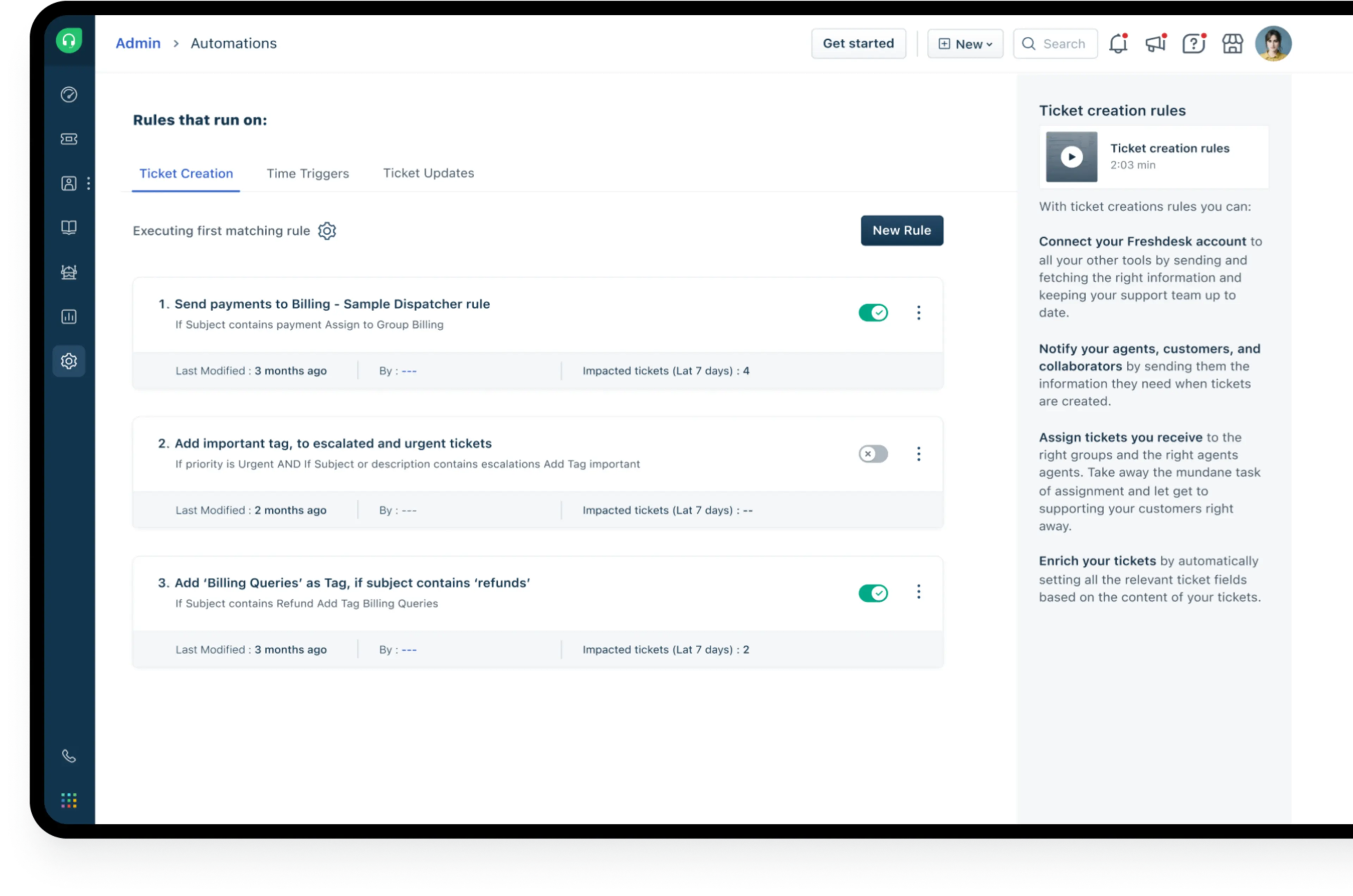
Freshdesk is a versatile help desk solution that caters to the unique needs of business. It enables companies to manage customer support tickets, automate workflows and provide self-service options to users. Freshdesk also offers real-time collaboration features, allowing teams to work together efficiently on resolving complex issues.
Freshdesk leverages technologies like chatbots to automate routine tasks and improve response times. A knowledge base feature where businesses can create a library of self-service articles and FAQs.

Hiver is a collaborative email help desk ticketing software specifically designed for enterprises using Gmail. It seamlessly integrates with Gmail, allowing support agents to manage customer inquiries without leaving their inbox. It provides shared inboxes, enabling teams to collaborate efficiently and assign tickets to the right agents. Hiver also offers features like email templates and collision alerts ensuring seamless customer support delivery.
Hiver also offers features like email templates and collision alerts ensuring seamless customer support delivery. A detailed analysis on email performance, response times and team productivity. Identifies bottlenecks, monitors team performance to help you make data-driven improvements.
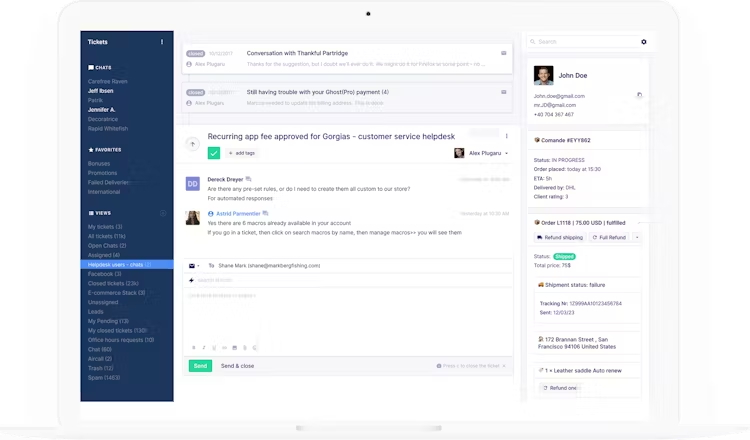
Gorgias is a customer support platform that specializes in providing an efficient help service desk experience. It integrates various e-commerce platforms to ensure seamless communication with customers. Gorgias also provides detailed customer profiles, enabling agents to provide personalized support based on customer history and preferences.
Consolidates customer data from various platforms into a single interface. It allows support agents to have a holistic view of customer information. Uses AI to identify common questions and suggest automated responses, saving time for support agents.
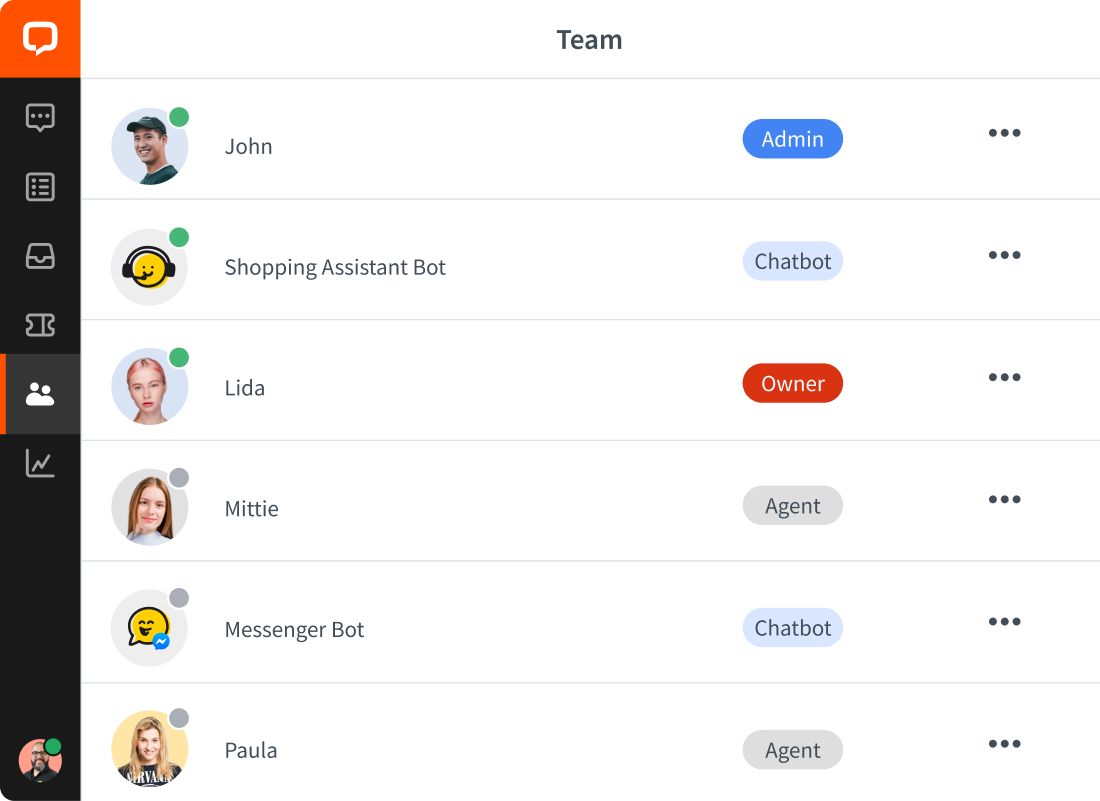
LiveChat is an enterprise customer service platform that combines real-time chat capabilities with comprehensive help desk functionality. It enables large organizations to manage high-volume customer interactions while maintaining personalized service levels.
LiveChat delivers enterprise-ready capabilities including AI-powered chatbots, advanced visitor tracking, custom chat widget branding, detailed analytics, automated ticket routing, built-in translation.
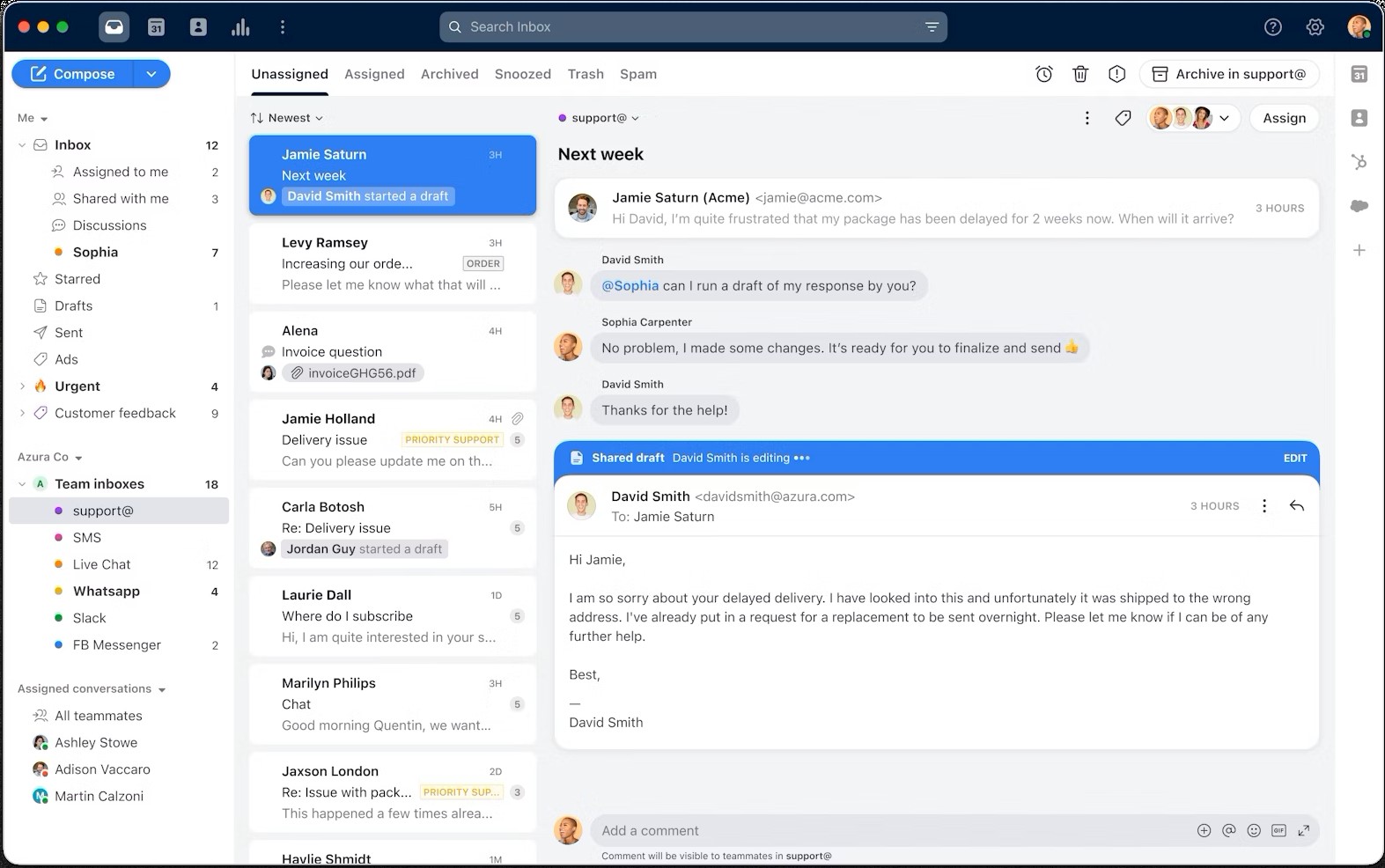
Front transforms enterprise live chat software by providing a unified inbox that centralizes emails, chats, and social media interactions. This collaborative platform helps large teams manage complex customer relationships efficiently while maintaining consistent communication across all channels, making it ideal for enterprise-scale customer engagement.
Front combines shared inbox management, rule-based automation, advanced analytics, custom SLA tracking, team collaboration tools, multi-channel messaging, activity tracking, advanced search capabilities.
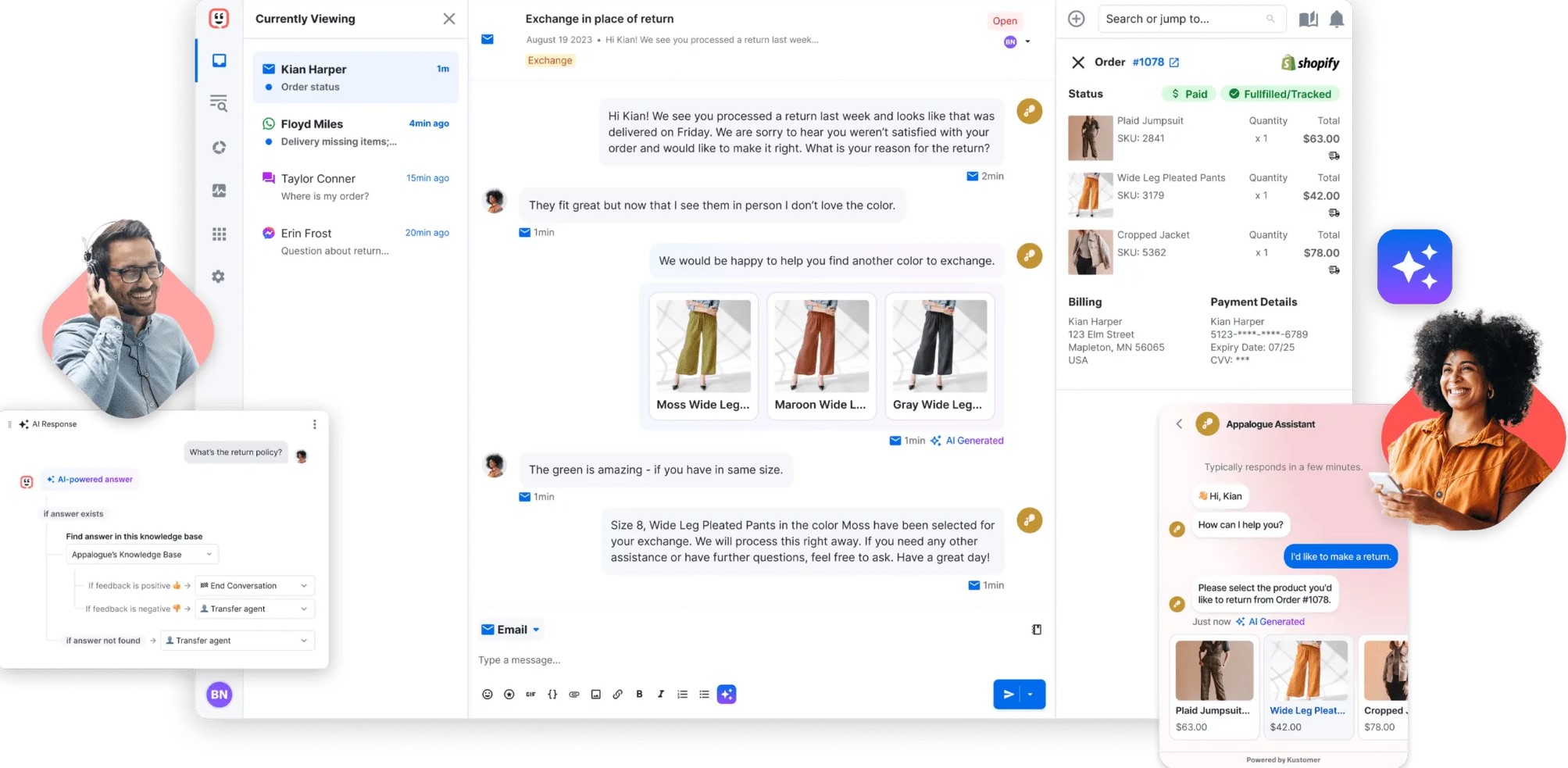
Kustomer operates as a comprehensive CRM-centric help desk solution designed for enterprise operations. It provides a unified view of customer interactions and data, enabling support teams to deliver personalized service at scale.
Kustomer integrates omnichannel support, AI-powered customer insights, customizable workflows, advanced routing capabilities, timeline-based customer views, automatic customer data enrichment, team collaboration tools.
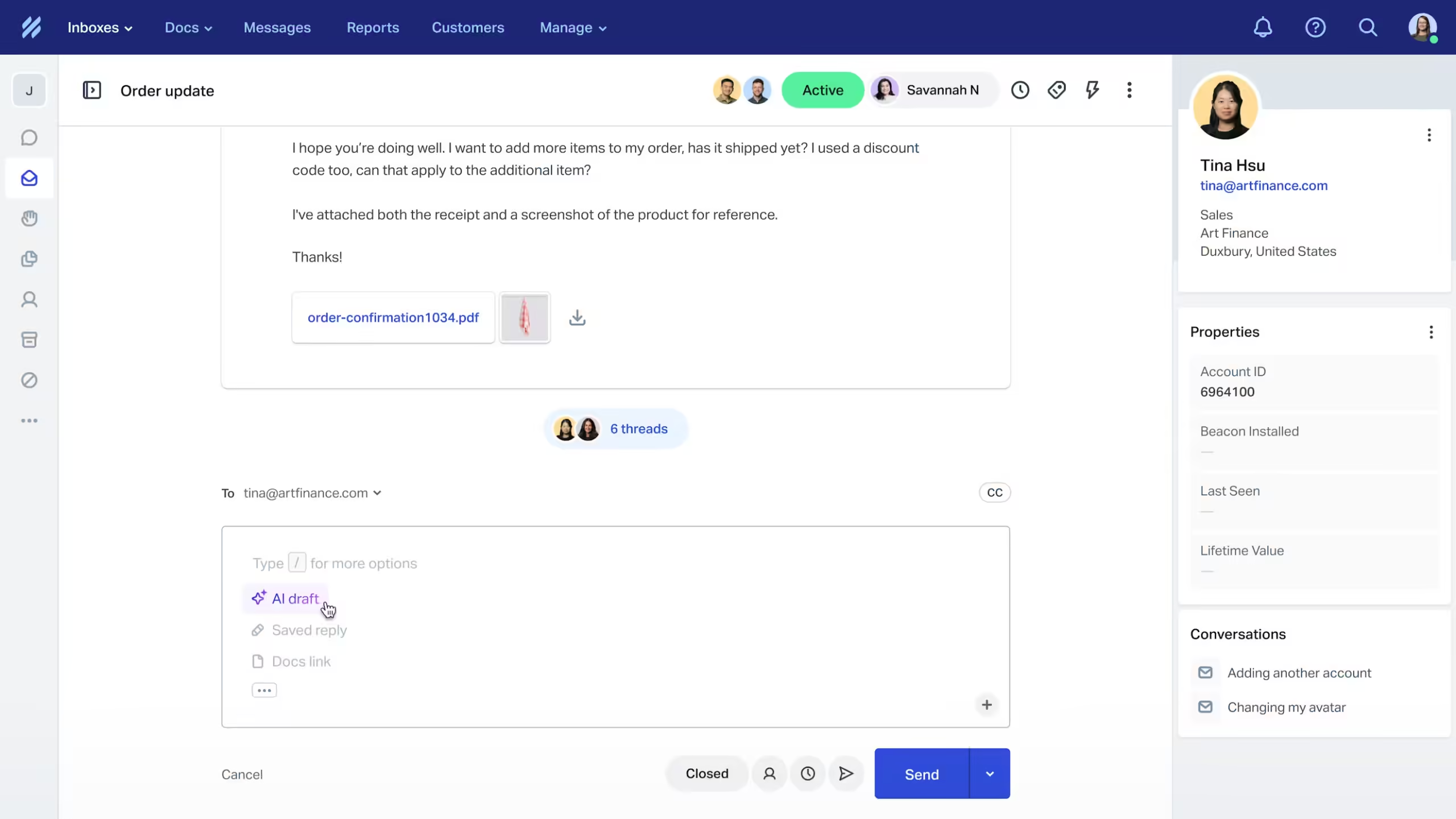
Help Scout offers a streamlined yet powerful enterprise help desk solution that prioritizes ease of use without compromising on functionality. It provides a balanced approach to customer support management, making it particularly suitable for growing enterprises that need robust features without overwhelming complexity.
Help Scout encompasses shared inbox functionality, integrated knowledge base tools, custom workflows, conversion tracking, customer property management, automated assignments, satisfaction ratings, saved replies and collision detection.
Enterprise service desk solution is a comprehensive design to optimize handling customer support inquiries and service requests within an organization.
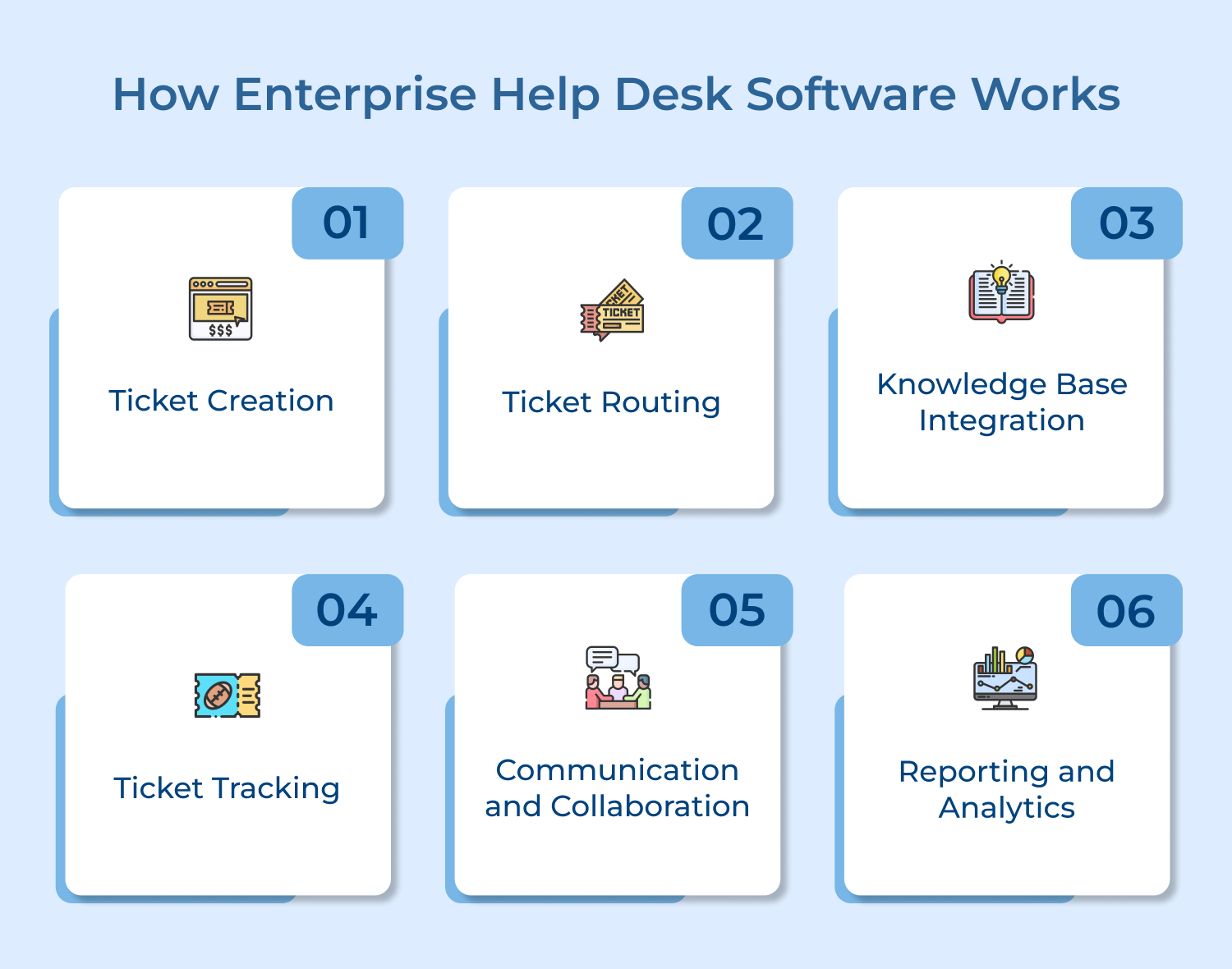
Ticket creation
When a customer or an internal user encounters an issue or has a question, they can initiate a support request through various channels. The enterprise help desk ticketing software automatically creates a ticket for each request, capturing relevant details based on priority level.
Ticket routing
The software uses predefined rules and workflows to route incoming tickets to the appropriate support team or individual based on factors like issue type, department, or expertise level. It ensures that the right resources are assigned to handle each request efficiently.
Knowledge base integration
Many help desk solutions integrate with a knowledge base, which is a repository of frequently asked questions, troubleshooting guides, and best practices. Agents can easily access the knowledge base to find solutions to common issues, reducing resolution times.
Ticket tracking
Here, agents get to track the status of each ticket, prioritize urgent requests, and set due dates or service level agreements (SLAs). The visibility helps that no ticket falls through the cracks and that critical issues are addressed promptly.
Communication and collaboration
The enterprise help desk facilitates seamless communication between agents, customers and other stakeholders. Agents get to exchange messages, share updates and collaborate on complex issues within the ticket thread, ensuring that all relevant information is documented.
Reporting and analytics
Enterprise help desk software typically provides robust reporting and analytics capabilities. Managers generate detailed reports on metrics such as ticket volumes, resolution times, agent performance, and customer satisfaction.
Proper performance measurement plays a key role in analyzing various KPIs. The results help in gaining useful insights into the strengths and weaknesses within the team.
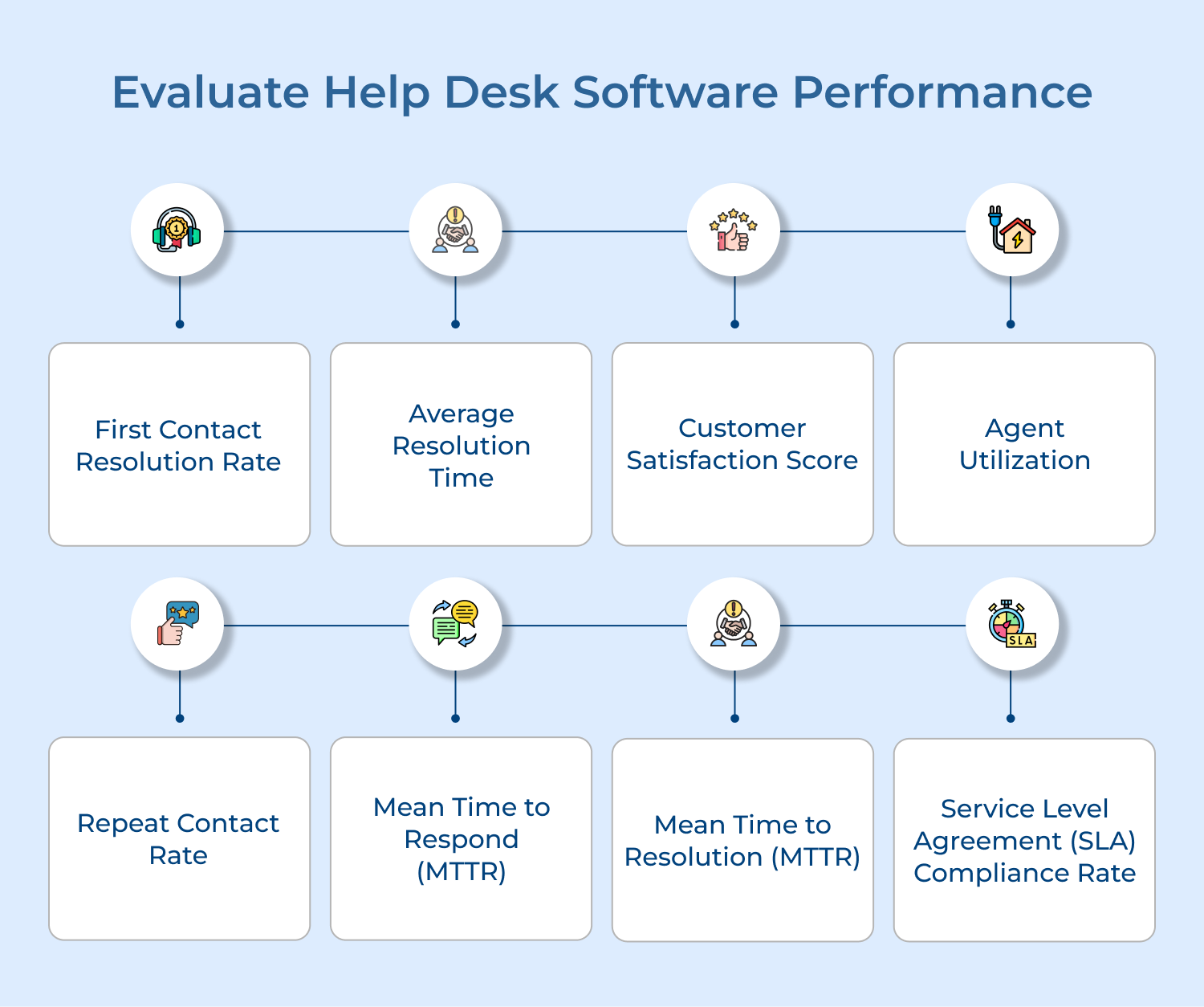
Metric shows the percentage of customer issues that are resolved during the initial contact. It is calculated as no. of tickets resolved first time divided by total no. of tickets handled. The result is that the customer gets an answer quickly and effortlessly.
The average resolution time measures the average duration it takes for your help desk to resolve customer issues. The metric gives you insights into the efficiency of your team, the complexity of the problems they handle and the effectiveness of your support processes.
Understanding the voice of customers could be the best way to improve customer satisfaction. Maintaining as well as exceeding customer expectations can boost customer retention. You gather feedback through post-interaction surveys or ratings. A high customer satisfaction score indicates that your team is meeting customer needs and expectations.
Measures the productivity of your help desk agents that helps you see if your team is overwhelmed or overstaffed. Performance statistics identify which support agents are top performers while illuminating opportunities for additional training. Agent utilization evaluates the amount of time agents spend on active support tasks versus idle time.
The repeat contact rate measures the percentage of customers who return for additional support on the same issue. A high repeat contact rate indicates a failure to resolve the issue adequately in the first interaction. It is best to encourage agents to ask customers if they need any more assistance before ending a call as it stops the customer from opening up another chat.
The average time it takes to respond to a service request or incident is usually a MTTR metric. This metric is crucial as it measures the speed at which the help desk acknowledges the customer’s problem and begins working on a solution. A quick response time would mean that the help desk is attentive and ready to assist. A shorter MTTR indicates that your team is responsive and prioritizes timely assistance.
Measures the average time it takes for the help desk to fully resolve an issue. It includes the time from the initial contact to the final resolution. The metrics help evaluate the efficiency of the help desk in addressing problems and delivering solutions. A low MTTR indicates that your help desk is efficient in resolving issues.
A well maintained support system will not only boost the productivity but maintain the service quality as well. Let’s see the benefits of implementing a help desk.
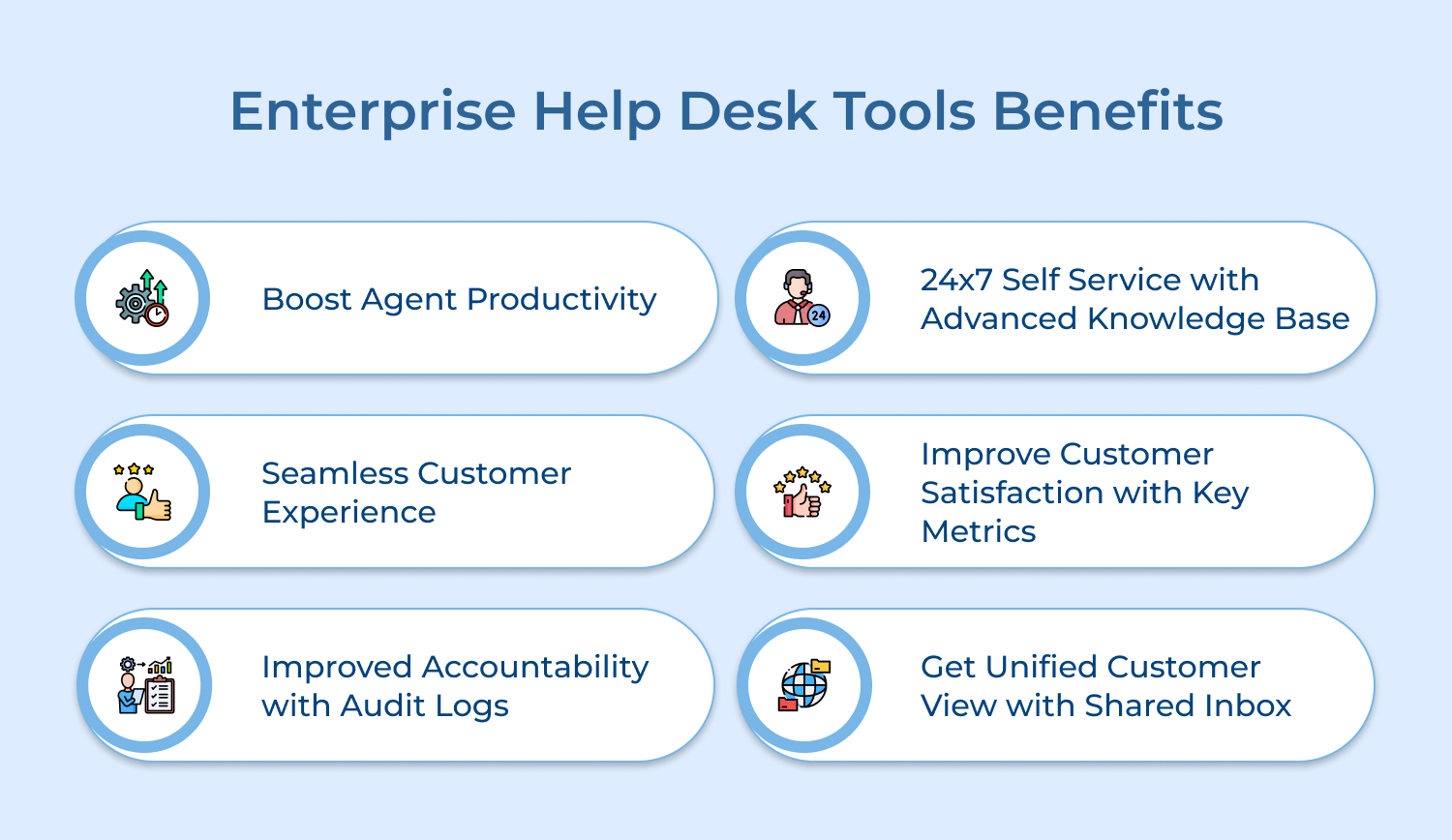
The best enterprise help desk software scales your entire support operation. Out of other platforms reviewed, Omni24 is the best solution that includes an omnichannel inbox, AI-powered automation and customization options built for large-scale teams.
Ready to see it in action? Start your 14-day free trial in Omni24. The right enterprise help desk solution turns reactive support measurable outcome for business growth.
Omni24’s customer engagement platform harnesses automation and AI to deliver unified customer experiences across digital channels, while keeping human touch
The help desk process typically involves a series of steps to ensure efficient issue resolution. It starts with the user reporting a problem or submitting a request to the help desk. The ticket is then logged, categorized and assigned to an appropriate technician. The technician investigates the issue and provides a solution or escalates it if necessary. The ticket is closed once the problem is resolved and the user is notified of the outcome.
A good enterprise help desk offers a wide range of services addressing various IT-related concerns across the organization. It expands from routine technical issues to complex system troubleshooting that requires specialized expertise. Key services include:
Employees can provide technical support with the right solution, focusing on resolving issues efficiently across every department. Its primary goal is to troubleshoot problems and ensure employees can effectively use IT systems without unnecessary disruption.
Beyond issue resolution, the help desk also handles user inquiries and provides ongoing guidance on technology usage. It ensures IT-related queries get addressed consistently across every department within the organization.
An enterprise ticketing system is a software application used by a help desk to manage and track incoming IT-related tickets effectively. It provides a centralized platform where users can submit, track and update their tickets. It allows technicians to prioritize tasks, assign tickets to appropriate personnel and monitor the progress of issue resolution. Ticketing systems streamline the help desk process, improving efficiency and customer satisfaction.
Enterprise help desk software plays a crucial role in driving efficient IT support. It enables help desk technicians to manage a high volume of tickets and generate reports for performance evaluation. It often includes features like knowledge bases, self-service portals and automation capabilities. It empowers users to resolve simple issues on their own, reducing the overall workload on the help desk.
Web Help Desk is a popular enterprise help desk software that offers various features to enhance IT support. It allows ticket creation through multiple channels ensuring easy access for employees.
It offers automated ticket routing and optimizes agent workload. It also provides self-service options, empowering employees to find solutions to common problems themselves. It offers reporting and analytics capabilities, enabling organizations to monitor performance to make improvements.
Several types of help desk services exist and each serving different organizational needs, budgets and structures. The right choice depends on company size and internal resource availability. Common types include:
 https://omni24.io/wp-content/uploads/2026/08/Omnichannel-Chatbots.png
1256
2400
Tushar Joshi
https://omni24.io/wp-content/uploads/2023/04/Omni-Logo-1.svg
Tushar Joshi2026-08-13 04:43:302026-08-13 04:43:30How Omnichannel Chatbots Improve Your Customer Experience
https://omni24.io/wp-content/uploads/2026/08/Omnichannel-Chatbots.png
1256
2400
Tushar Joshi
https://omni24.io/wp-content/uploads/2023/04/Omni-Logo-1.svg
Tushar Joshi2026-08-13 04:43:302026-08-13 04:43:30How Omnichannel Chatbots Improve Your Customer Experience https://omni24.io/wp-content/uploads/2026/08/Ecommerce-Chatbots-1.png
1256
2400
Tushar Joshi
https://omni24.io/wp-content/uploads/2023/04/Omni-Logo-1.svg
Tushar Joshi2026-08-12 03:57:552026-08-13 04:37:30Ecommerce Chatbots: What are They and Their Use Cases
https://omni24.io/wp-content/uploads/2026/08/Ecommerce-Chatbots-1.png
1256
2400
Tushar Joshi
https://omni24.io/wp-content/uploads/2023/04/Omni-Logo-1.svg
Tushar Joshi2026-08-12 03:57:552026-08-13 04:37:30Ecommerce Chatbots: What are They and Their Use Cases https://omni24.io/wp-content/uploads/2026/08/Omnichannel-Ecommerce.png
1256
2400
Tushar Joshi
https://omni24.io/wp-content/uploads/2023/04/Omni-Logo-1.svg
Tushar Joshi2026-08-11 04:50:362026-08-11 04:50:36How to Create an Omnichannel Ecommerce Strategy: 7 Best Ways
https://omni24.io/wp-content/uploads/2026/08/Omnichannel-Ecommerce.png
1256
2400
Tushar Joshi
https://omni24.io/wp-content/uploads/2023/04/Omni-Logo-1.svg
Tushar Joshi2026-08-11 04:50:362026-08-11 04:50:36How to Create an Omnichannel Ecommerce Strategy: 7 Best Ways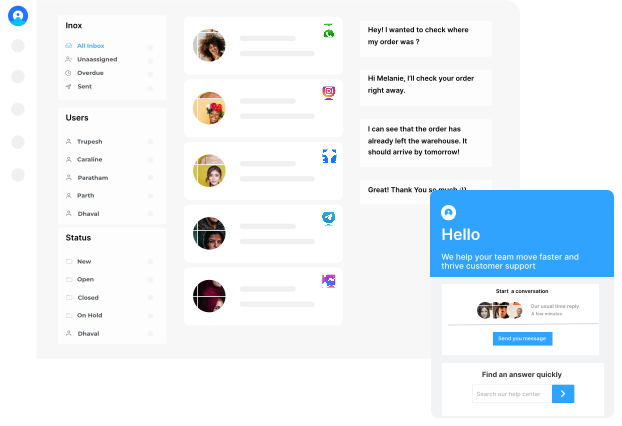
Whether it’s about acquire, engage or support – Omni24 covers all your customer engagement needs in one complete platform.

Copyright ©2026 Veemo All rights reserved.
CA, Los Angeles, Hall Ave, 19011