What is Customer Experience (CX) Design: Importance & Use Cases
Customer Experience (CX) Design boosts satisfaction, drives business growth and differentiates from competitors. Explore its importance and use cases for success.

Customer Experience (CX) Design boosts satisfaction, drives business growth and differentiates from competitors. Explore its importance and use cases for success.
Competition is fierce and customers have more choices than ever before, companies are constantly looking for ways to differentiate themselves from their competitors. One of the most effective ways to do that is by providing a superior customer experience. This is where Customer Experience (CX) Design comes into play.
CX design focuses on creating meaningful and delightful experiences for customers at every touchpoint, from initial contact to post-purchase interactions. We will explore what CX Design is and how businesses can implement it effectively.
Customer Experience (CX) design is the process of systematically crafting and enhancing every interaction a customer has with a brand or organization. It involves understanding customer needs, expectations, and emotions while designing experiences that meet them. CX design goes beyond just providing a product or service. It aims to create memorable and positive experiences that build customer advocacy.
Good CX design can significantly reduce customer support costs by preventing issues before they arise and streamlining service processes. It also provides valuable insights into customer behavior and preferences, enabling businesses to make data-driven decisions about product development and service improvements.
Key objectives:
Customer experience (CX) design is the process of developing products or services that provide seamless experience throughout the entire customer journey.
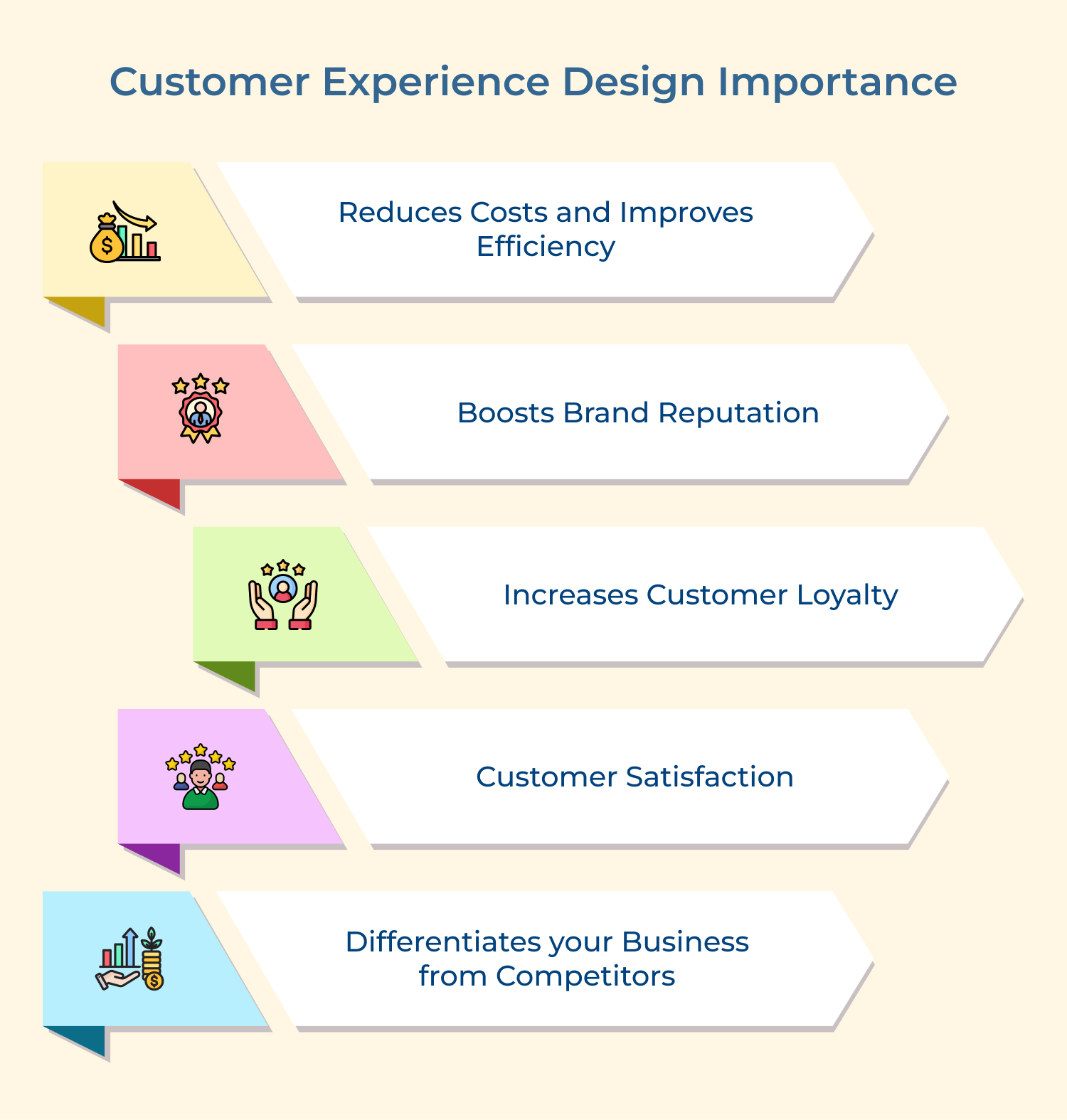
1. Increases customer loyalty: A positive customer experience can improve customer loyalty and retention. 95% of the consumers agree that customer service experience affects their brand loyalty. CX design ensures that positive experiences are delivered to customers at every touchpoint.
2. Customer satisfaction: Customers are more likely to return to your business if they have had a good experience. Customer satisfaction has been up by 2% since 2020 despite an increase in challenge. CX design ensures that customers have a seamless and effortless experience when interacting with your brand.
3. Differentiates your business from competitors: 61% of the customers will spend at least 5% more if they have good customer experience. Designing CX can differentiate your business by providing a unique and personalized experience for your customers. CX design ensures that your business provides a positive experience that your competitors cannot match.
4. Reduces costs and improves efficiency: CX design can reduce operating costs and improve efficiency. If customers have a positive experience, they are more likely to complete a sale. Improve operational efficiency while providing a positive experience to experience business’s increased revenue.
5. Boosts brand reputation: A good customer experience boosts brand reputation and word-of-mouth marketing. Customers are more likely to share their positive experiences with others, increasing the reach of your brand. CX design ensures that your brand reputation remains positive, even in situations where a customer may not be satisfied.
Any business or organization can benefit from Customer Experience CX design, as it can help improve customer loyalty, increase conversions and boost revenue.
Here are the different use cases for CX design:
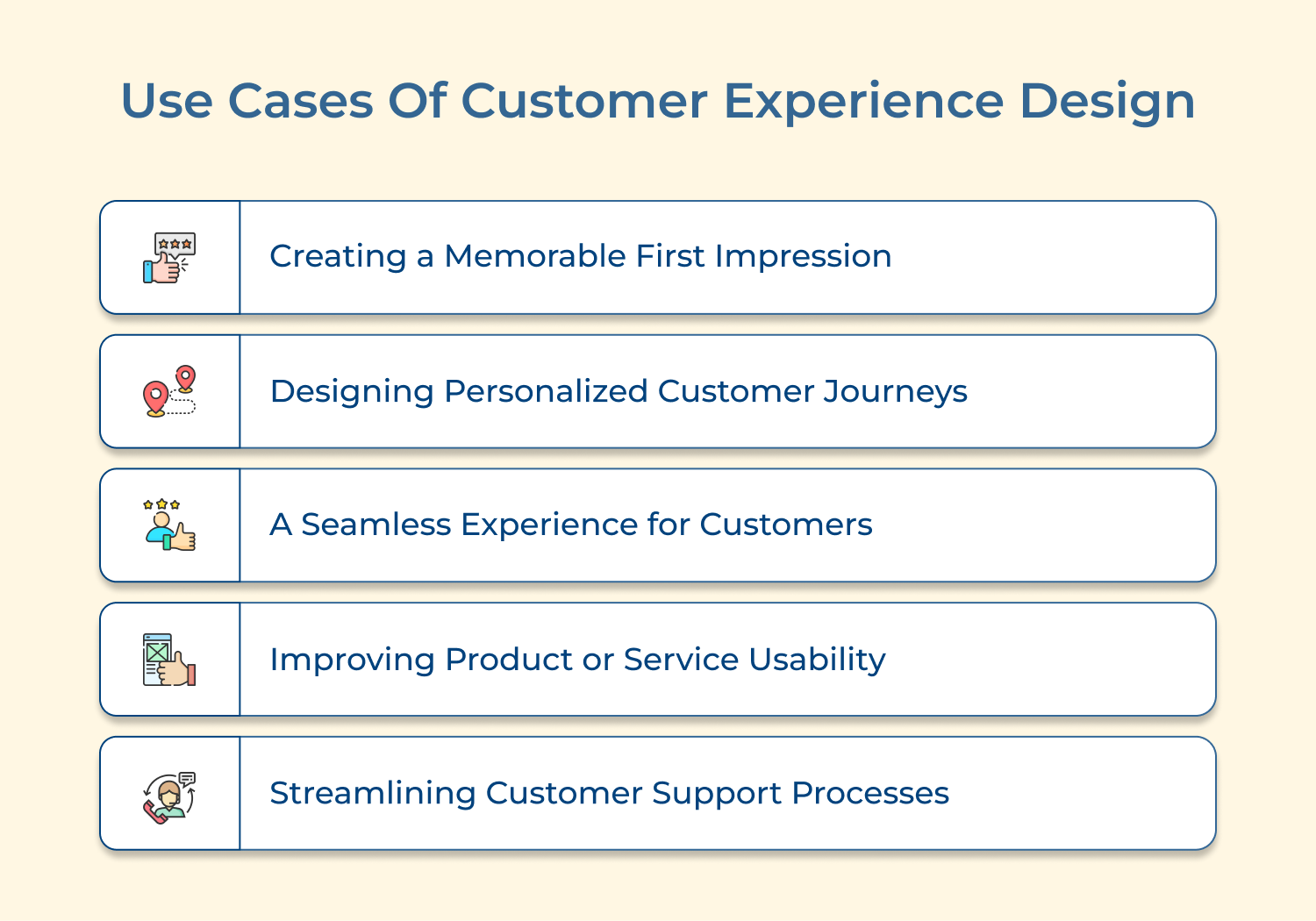
1. Creating a Memorable First Impression
The first impression a customer has when they encounter a brand can significantly impact their decision to engage further. Focus on user-friendly interfaces, engaging content and personalized interactions to set the tone for a memorable customer experience from the start.
2. Designing Personalized Customer Journeys
Customer experience design also plays a vital role in shaping personalized customer journeys. Leverage customer data and insights to develop targeted experiences that cater to individual preferences. Personalized engagement increases the likelihood of repeat purchases.
3. A Seamless Experience for Customers
CX design helps organizations deliver consistent brand experiences through design and integration of various channels such as websites, mobile apps, social media platforms, physical stores etc. Organizations build stronger customer relationships and build brand loyalty through a cohesive experience.
4. Improving Product or Service Usability
Customer experience design goes beyond aesthetics and includes improving the usability of products or services. Conducting user research, testing prototypes as well as iterating based on feedback allows companies to refine their offerings and deliver a seamless experience throughout the customer journey.
5. Streamlining Customer Support Processes
Customer experience design streamlines support processes to ensure timely and effective resolutions to customer queries or issues. Implementing self-service options, live chat functionalities or AI-powered chatbots can enhance overall support experiences, reducing customer frustration and improving brand perception.
Developing an effective customer experience (CX) design is crucial for businesses looking to differentiate themselves in a competitive marketplace.
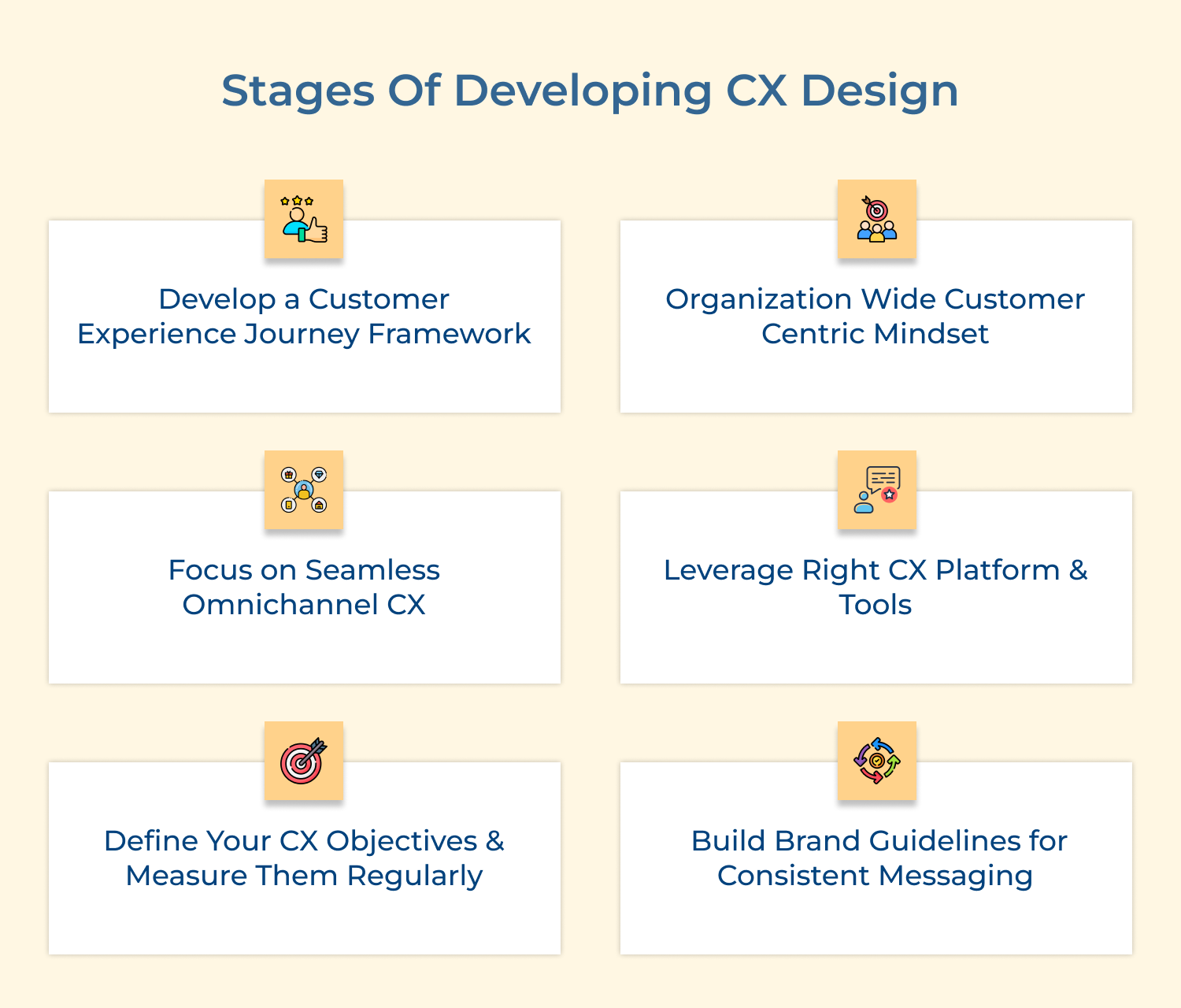
Developing a customer experience (CX) journey framework is essential for businesses that prioritize delivering personalized and exceptional experiences to their customers. An effective CX journey framework helps businesses understand their customers’ journeys from the customer’s perspective. It gains insights into their pain points/preferences and creates experiences that satisfy their expectations.
Here are some best practices to develop an effective CX journey framework:
A customer-centric culture creates a positive, inclusive environment that places customer satisfaction at the forefront of every action and decision made within an organization. It allows companies to make informed decisions that are focused on the customer’s needs.
Best Practices:
Customers expect seamless and consistent experiences across all channels. It’s important for businesses to focus on creating an omnichannel customer experience (CX) that connects and engages customers throughout their entire journey. It requires a shift from a channel-centric approach to a customer-centric approach that delivers an integrated and personalized experience.
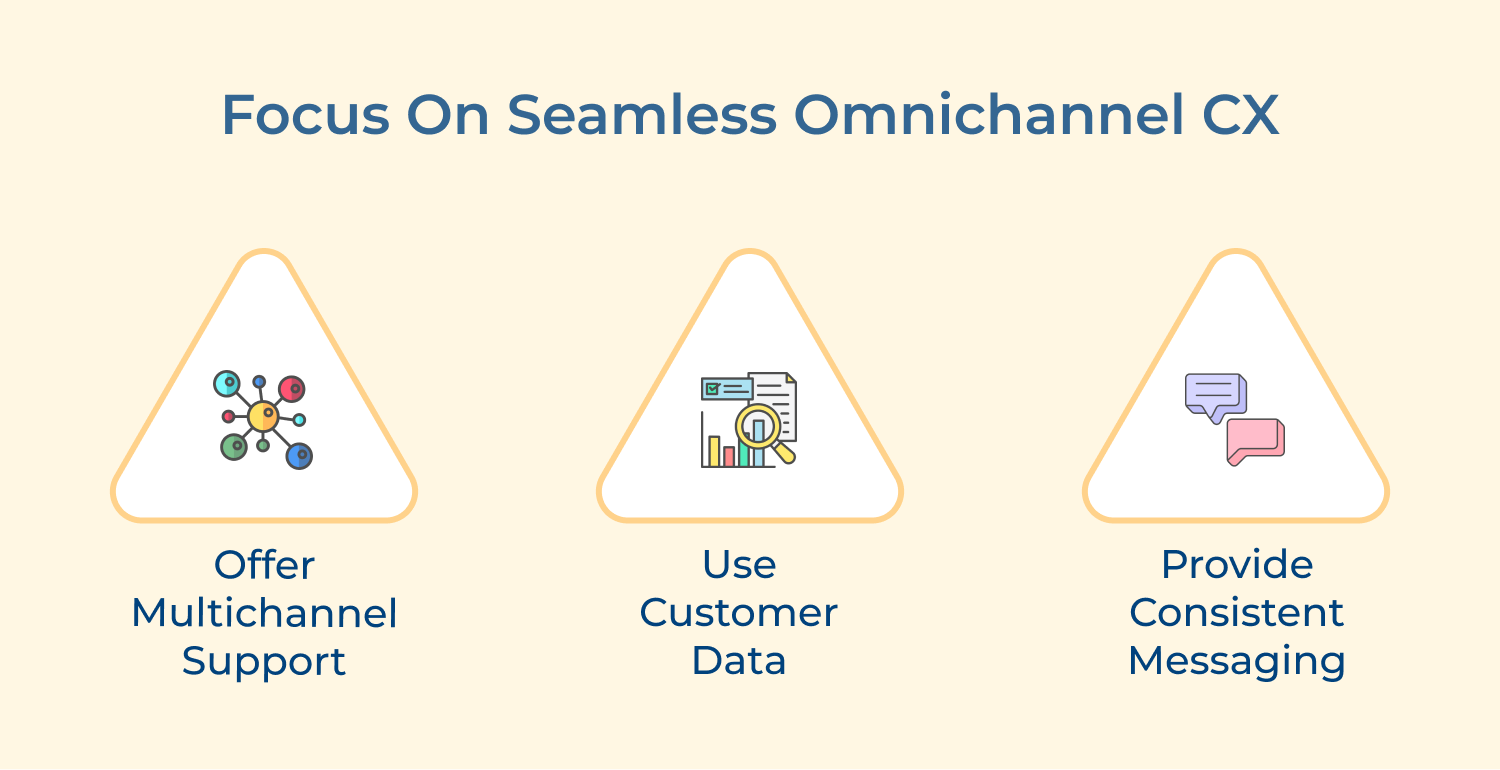
Best Practices for Seamless Omnichannel CX:
Customers expect organizations to provide them with a seamless and personalized experience across all channels, including social media, emails, mobile apps etc. As a way to meet these expectations, businesses need to implement the right CX platforms and tools to deliver a top-notch customer experience.
Best Practices:
Investing in CX design is no longer optional – it’s essential. Businesses can ensure that their CX strategy is aligned with customer needs and is optimized for success by defining CX objectives as well as measuring them regularly.
Here are some best practices for CX design:
Brand messaging is crucial for any business seeking to establish a strong customer base. It guides the business’s communication strategy along with how they convey their values and personality to their target audience. Effective brand messaging can help businesses stand out in a crowded market and build a loyal customer following.
Here are three best practices to consider when building brand guidelines for consistent messaging:
Customer experience (CX) design is a crucial aspect of building lasting relationships with customers. It is essential to avoid critical mistakes in the CX design process. Here are six critical mistakes to avoid for an effective CX design.
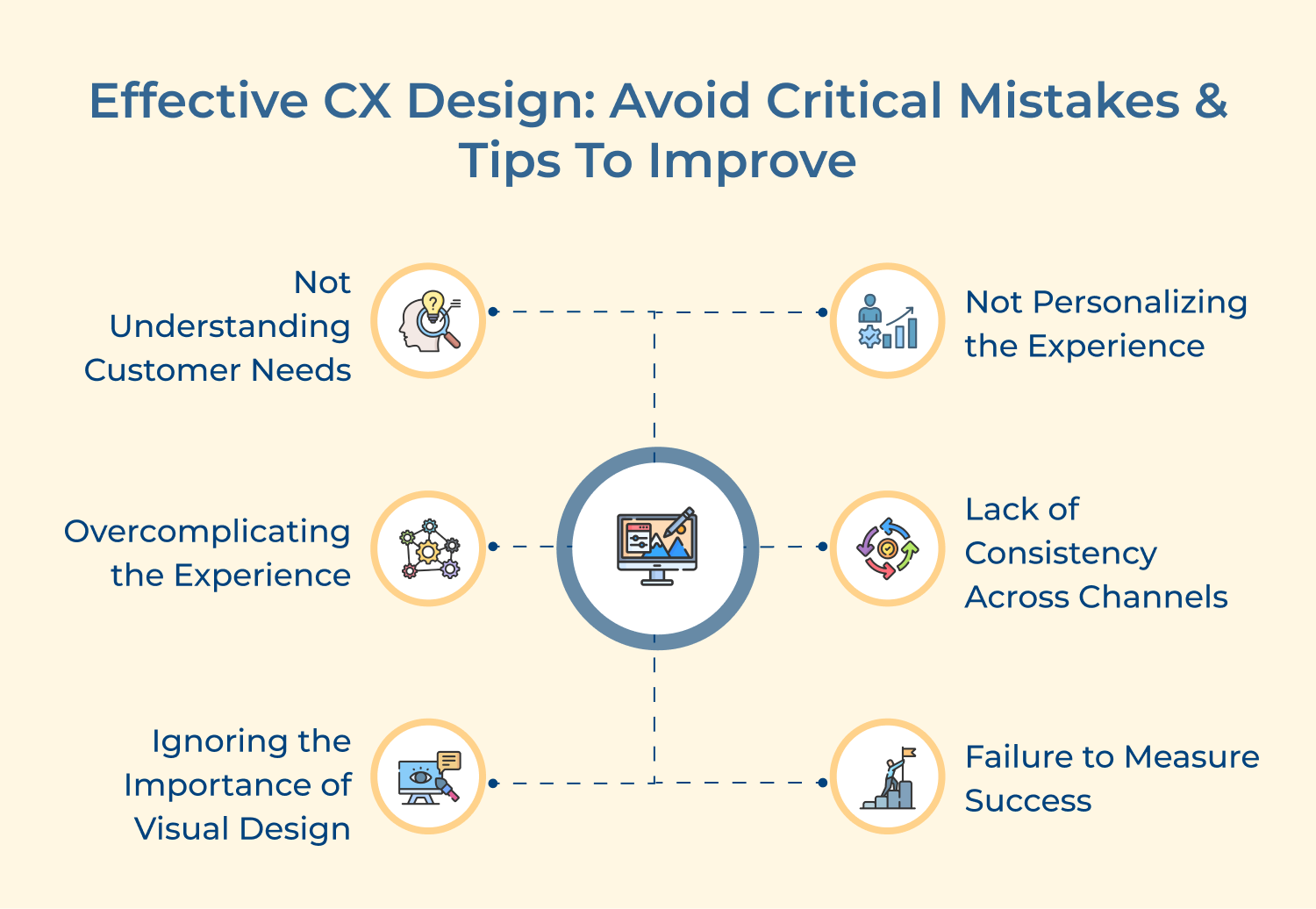
One of the biggest mistakes that businesses make is not taking the time to truly understand their customers’ needs. It can result in a CX design that falls short and fails to address the pain points as well as preferences of your target audience.
Tip: Invest in thorough market research, conduct surveys and gather customer feedback to gain insights into what your customers want as well as expect from your brand.
A convoluted customer experience can be a major turn-off for customers. From complicated navigation on your website to overly lengthy and confusing purchasing processes, overcomplicating the experience can frustrate as well as discourage potential customers.
Tip: Keep your CX design simple, intuitive and user-friendly to ensure a seamless experience for your customers.
Visual design plays a significant role in shaping customers’ perception of your brand and their overall experience. Neglecting the visual aspect of your CX design can result in a lackluster and unmemorable experience.
Tip: Invest in visually appealing and cohesive design elements that align with your brand identity as well as create a visually engaging experience for your customers.
Customers expect a personalized experience tailored to their specific needs and preferences. Failing to personalize your CX design can make your brand appear impersonal and indifferent to individual customer needs.
Tip: Utilize customer data to personalize interactions, recommend relevant products or services and provide customized communication to make your customers feel valued.
Customers interact with brands across multiple channels, including websites, social media and mobile apps. Failing to maintain consistency in your CX design across these channels can lead to confusion and a disjointed experience for customers.
Tip: Ensure that your brand’s messaging, visual identity and overall experience remain consistent across all platforms to create a cohesive as well as seamless journey for your customers.
Failure to measure the success of CX design is a critical mistake that businesses should avoid. CX metrics can help to measure the effectiveness of the CX strategy and identify areas that require improvement.
Tip: Metrics such as Net Promoter Score (NPS), customer satisfaction (CSAT) and customer effort score (CES) can help businesses track customer sentiment while identifying opportunities to improve the experience.
Customer Experience (CX) is about creating a positive emotional response throughout the entire customer journey. CX design involves understanding the customer’s needs, wants and expectations to create a smooth as well as seamless experience across all touchpoints.
Businesses can create a seamless and engaging experience by understanding the challenges, best practices. Focusing on your customers’ experience is an extremely efficient way of increasing your business’s bottom line while also keeping your users happy. A well-designed CX helps in building customer loyalty, driving revenue growth and increasing customer satisfaction.

What are the benefits of CX design?
There are several benefits of CX design, including improved customer satisfaction, increased customer loyalty and retention, reduced customer churn as well as higher revenue growth. A well-designed CX also helps to differentiate a business from its competitors and leads to positive word-of-mouth marketing. A focus on CX can help businesses identify areas for improvement in their products or services.
What are the best practices for CX design?
There are several best practices for CX design, including conducting thorough customer research to understand their expectations, map their customer journey to identify pain points and opportunities for improvement. Simplify the design to avoid overwhelming customers, personalize the experience, provide consistent messaging and visual design across all touchpoints. Measure success with relevant metrics such as Net Promoter Score or customer satisfaction scores.
What role does the design team play in CX design?
The design team is responsible for creating interfaces and experiences that meet the needs of customers. Designers should work closely with other teams such as marketing and customer support, to ensure a consistent experience across all touchpoints. They should also conduct user testing and iterate on designs based on feedback to continually improve the CX. The design team should be focused on creating a positive and enjoyable experience that fosters customer loyalty while also driving business growth.
How can businesses improve their CX design?
One way businesses can improve their CX design is by regularly soliciting feedback from customers and using the feedback to make iterative improvements to their offerings. They can also invest in customer research to gain a better understanding of their needs. Another way to improve CX design is by focusing on simplicity and ease of use, making it as easy as possible for customers to navigate through the various touchpoints of the customer journey.
 https://omni24.io/wp-content/uploads/2026/07/Web-Self-Service.png
1257
2400
Webvision Solution
https://omni24.io/wp-content/uploads/2023/04/Omni-Logo-1.svg
Webvision Solution2026-07-23 05:39:582026-07-23 05:39:58Web Self Service: What it is, Features and its Benefits
https://omni24.io/wp-content/uploads/2026/07/Web-Self-Service.png
1257
2400
Webvision Solution
https://omni24.io/wp-content/uploads/2023/04/Omni-Logo-1.svg
Webvision Solution2026-07-23 05:39:582026-07-23 05:39:58Web Self Service: What it is, Features and its Benefits https://omni24.io/wp-content/uploads/2026/07/Knowledge-Base-SEO-1.png
1396
2400
Webvision Solution
https://omni24.io/wp-content/uploads/2023/04/Omni-Logo-1.svg
Webvision Solution2026-07-22 09:44:572026-07-23 06:16:41What is Knowledge Base SEO & How to Create it?
https://omni24.io/wp-content/uploads/2026/07/Knowledge-Base-SEO-1.png
1396
2400
Webvision Solution
https://omni24.io/wp-content/uploads/2023/04/Omni-Logo-1.svg
Webvision Solution2026-07-22 09:44:572026-07-23 06:16:41What is Knowledge Base SEO & How to Create it? https://omni24.io/wp-content/uploads/2026/07/customer-experience-benefits.png
1257
2400
Tushar Joshi
https://omni24.io/wp-content/uploads/2023/04/Omni-Logo-1.svg
Tushar Joshi2026-07-20 06:28:322026-07-20 06:28:32What are the Benefits of Customer Experience for Business?
https://omni24.io/wp-content/uploads/2026/07/customer-experience-benefits.png
1257
2400
Tushar Joshi
https://omni24.io/wp-content/uploads/2023/04/Omni-Logo-1.svg
Tushar Joshi2026-07-20 06:28:322026-07-20 06:28:32What are the Benefits of Customer Experience for Business?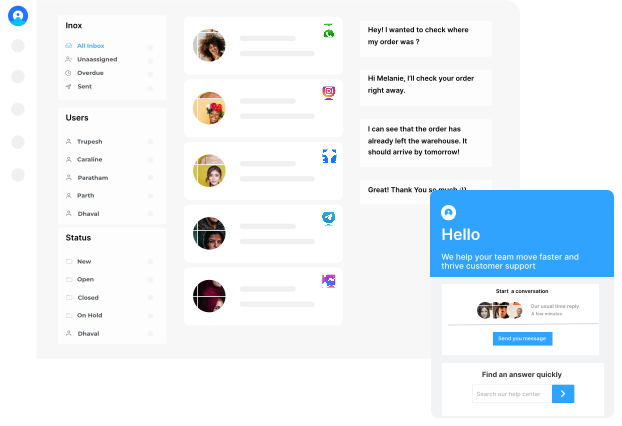
Whether it’s about acquire, engage or support – Omni24 covers all your customer engagement needs in one complete platform.

Copyright ©2026 Veemo All rights reserved.
CA, Los Angeles, Hall Ave, 19011