Customer Engagement vs Customer Experience: What’s the Best?
Explore customer engagement vs customer experience to unlock loyalty, revenue growth and brand success through personalized, omnichannel strategies.

Explore customer engagement vs customer experience to unlock loyalty, revenue growth and brand success through personalized, omnichannel strategies.
Companies are constantly striving to find ways to stand out as well as retain customers. Two strategies that are often discussed are customer engagement and customer experience. But what exactly do these terms mean and how do they differ from each other?
Companies must go beyond simply satisfying their customers while striving to create memorable experiences that keep them coming back for more.
Understanding the difference between customer engagement vs customer experience is crucial for businesses. If you’re looking to create long-lasting relationships with their customers while staying ahead of the competition, let’s dive right in! We’ll uncover the differences between customer engagement vs customer experience.
Customer engagement is the process of building a strong emotional connection and ongoing relationship with customers that leads to loyalty, increased sales, as well as brand advocacy. It involves actively communicating with customers through various channels to provide them with valuable information, personalized experiences, as well as exceptional customer service. In fact, 41% of the customer-centric companies earned a minimum of 10% revenue growth in the last fiscal year!
Effective engagement strategies help companies better understand their customers’ needs, preferences, and pain points, enabling them to deliver more personalized experiences and targeted solutions. This deeper understanding leads to improved products and services that better serve customer needs, creating a virtuous cycle of satisfaction and growth.
Key benefits:
Customer experience (CX) refers to the overall perception that a customer has of a brand based on their interactions with it throughout the entire customer journey. It includes all touchpoints, from the first awareness of the brand to the post-purchase follow-up.
CX has become a critical factor in a brand’s success, with many studies revealing that customers are willing to pay more for a better experience. In fact, CX has arguably become the primary factor in differentiating a brand from its competitors.
Key Benefits:
Customer engagement and customer experience are two terms that are frequently used in the business world. While both might sound similar, here are the crucial differences to consider.
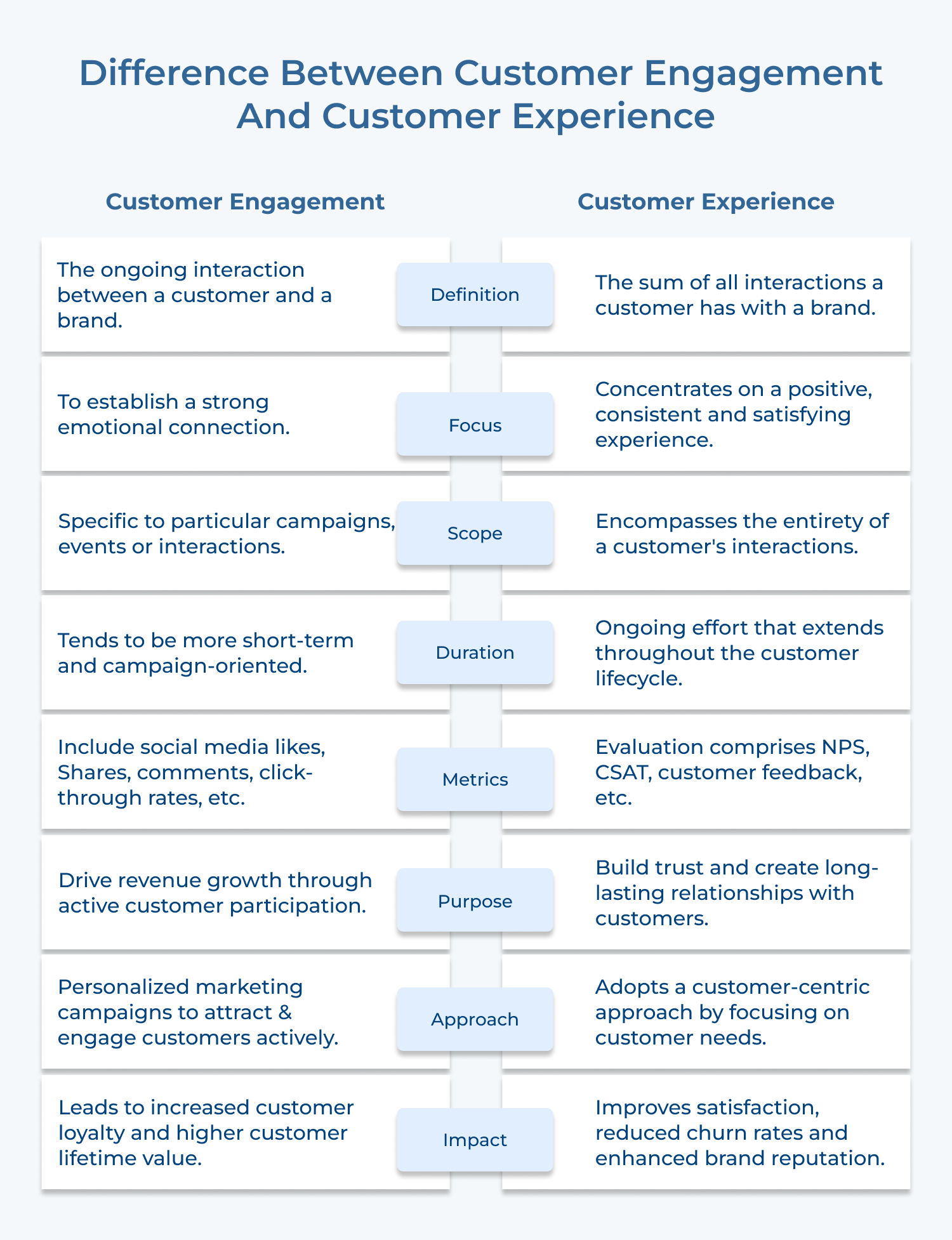
Customer engagement refers to the ongoing interactions and relationship-building efforts between a brand as well as its customers. Here, you create meaningful connections with customers that go beyond a regular business transaction.
Customer experience is the overall perception and feelings customers have after interacting with a brand. It encompasses the entire customer journey, from the first point of contact with a brand to post-purchase activities.
Customer engagement focuses on creating purposeful interactions, building a sense of loyalty and commitment from the customers. It has active participation from customers through various channels such as social media, email marketing, etc. Customer experience, on the other hand, strives to provide a seamless, enjoyable, and memorable experience for customers at every stage of their interaction with a brand.
Customer engagement is a broader term that encompasses various activities such as social media interactions, email marketing campaigns, personalized messaging, loyalty programs, and customer feedback. It aims to initiate and maintain active interactions with customers to keep them engaged as well as connected to the brand. Customer experience covers the entire customer journey from initial contact to post-purchase support. It has a wider scope as it covers every touchpoint and interaction a customer has with a brand.
Customer engagement is an ongoing process that requires continuous effort to maintain the customer’s interest and involvement with the brand. It aims to build long-term relationships and loyalty. Customer experience encompasses the entire duration of each customer interaction with the brand, including before, during, and after the transaction. It can leave a lasting impression that influences their perception and future interactions with the brand.
Customer engagement is measured using metrics such as customer engagement score, social media mentions, click-through rates, and customer satisfaction surveys. These metrics help track customer interactions as well as gauge their level of engagement. Customer experience can be measured through metrics such as Net Promoter Score (NPS), customer satisfaction ratings, repeat purchase rate, and customer loyalty. These metrics provide insights into the overall experience a customer has with a brand.
The purpose of customer engagement is to build strong relationships, increase customer loyalty, and encourage repeat business. It aims to cultivate a community of brand advocates who actively promote as well as recommend the brand to others. The purpose of customer experience is to create positive brand perceptions, enhance customer satisfaction, and differentiate the brand from competitors.
Customer engagement requires active interaction from both the brand and the customer. It involves personalized marketing messages, social media engagement, and frequent communication. Customer experience requires a customer-centric approach, concentrating on delivering consistent and exceptional experiences at every touchpoint. It involves optimizing processes, providing knowledgeable customer support, while ensuring a smooth and enjoyable user experience.
Effective customer engagement can render a strong customer base that is more likely to repurchase and recommend the brand. A positive customer experience can lead to customer loyalty, positive word-of-mouth referrals, and increased brand reputation. It differentiates a brand from its competitors and attracts new customers through positive reviews and recommendations.
Customer engagement and customer experience are two crucial aspects of building a successful business. While they may seem like separate concepts, they are very much connected and rely on each other to achieve success.
The connection between customer engagement and customer experience is vital for businesses for several reasons:
Improving customer engagement as well as customer experience requires a combination of that focus on the entire customer journey. Here’s the list of the most effective ones!
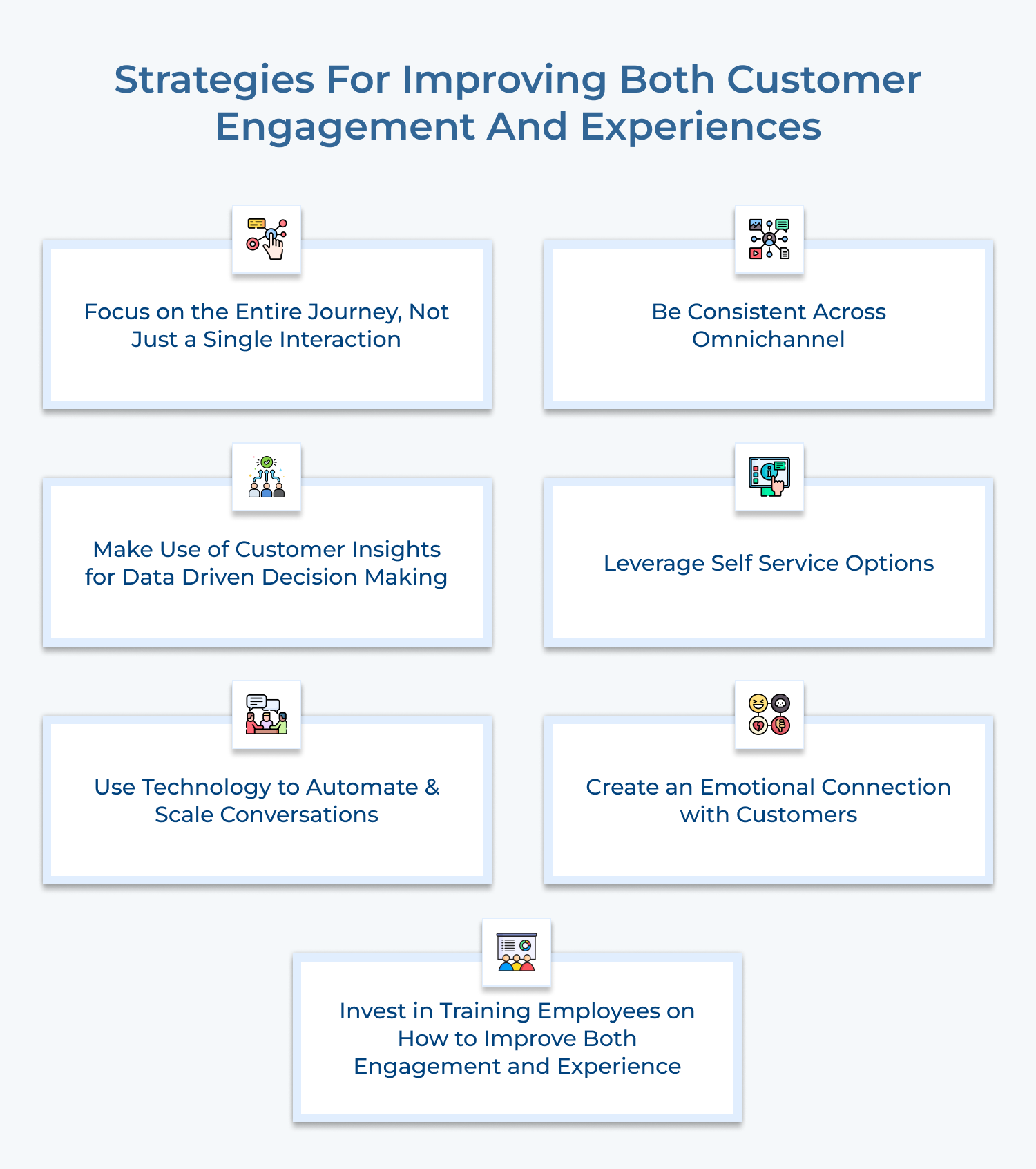
Businesses must take a holistic approach and focus on the entire customer journey, encompassing every touchpoint as well as interaction that a customer has with their brand. Businesses gain a deep understanding of customer needs, break down silos between teams, as well as leverage technology and data analytics to provide an exceptional customer experience at every stage of the journey.
Best practices:
Consistency across omnichannel is crucial for creating a seamless and enjoyable customer experience. Customers expect a seamless shopping journey across all touchpoints, including physical stores, websites, social media and mobile applications. Inconsistent messaging, branding and customer service can cause confusion as well as frustration among customers. A lack of consistency can negatively impact customer loyalty, retention rates as well as overall revenue.
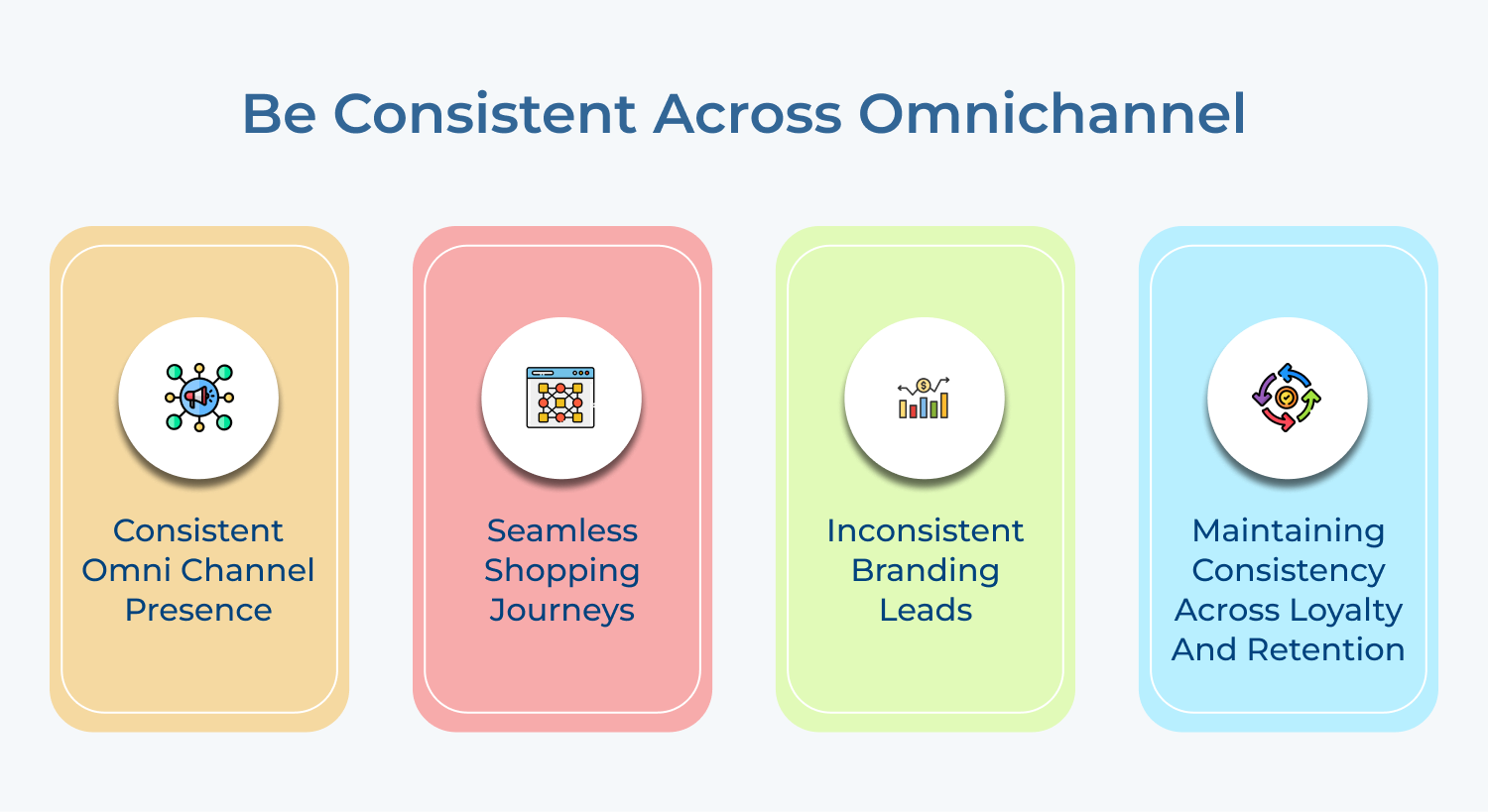
Best practices:
48% of the consumers would like to get a specialized treatment for being a good customer. Customer insights are valuable information gained through interactions with customers that provide businesses with the knowledge needed to understand customer behavior, preferences and needs. When used strategically, these insights can drive data-driven decision making and lead to a competitive advantage in the market.
Best practices:
Customers expect convenient and easy-to-use self-service options when interacting with businesses. Leveraging self-service options not only improves customer satisfaction and loyalty but also reduces operating costs for businesses. It’s becoming increasingly important for businesses to implement effective self-service options as part of their customer experience strategy.
Best practices:
Brands must keep up with the evolving expectations of their customers. It includes meeting their demands for seamless and efficient interactions with companies. One way to achieve it is by leveraging technology to automate and scale conversations. Its approach can not only improve customer satisfaction as well as engagement but can also save time and money for businesses.
Best practices:
Building an emotional connection allows you to build strong relationships with your customer base, improve customer loyalty, and increase retention rates. By creating a positive emotional experience for your customers, you can improve their overall customer experience, leading to increased customer satisfaction and ultimately more revenue for your business.
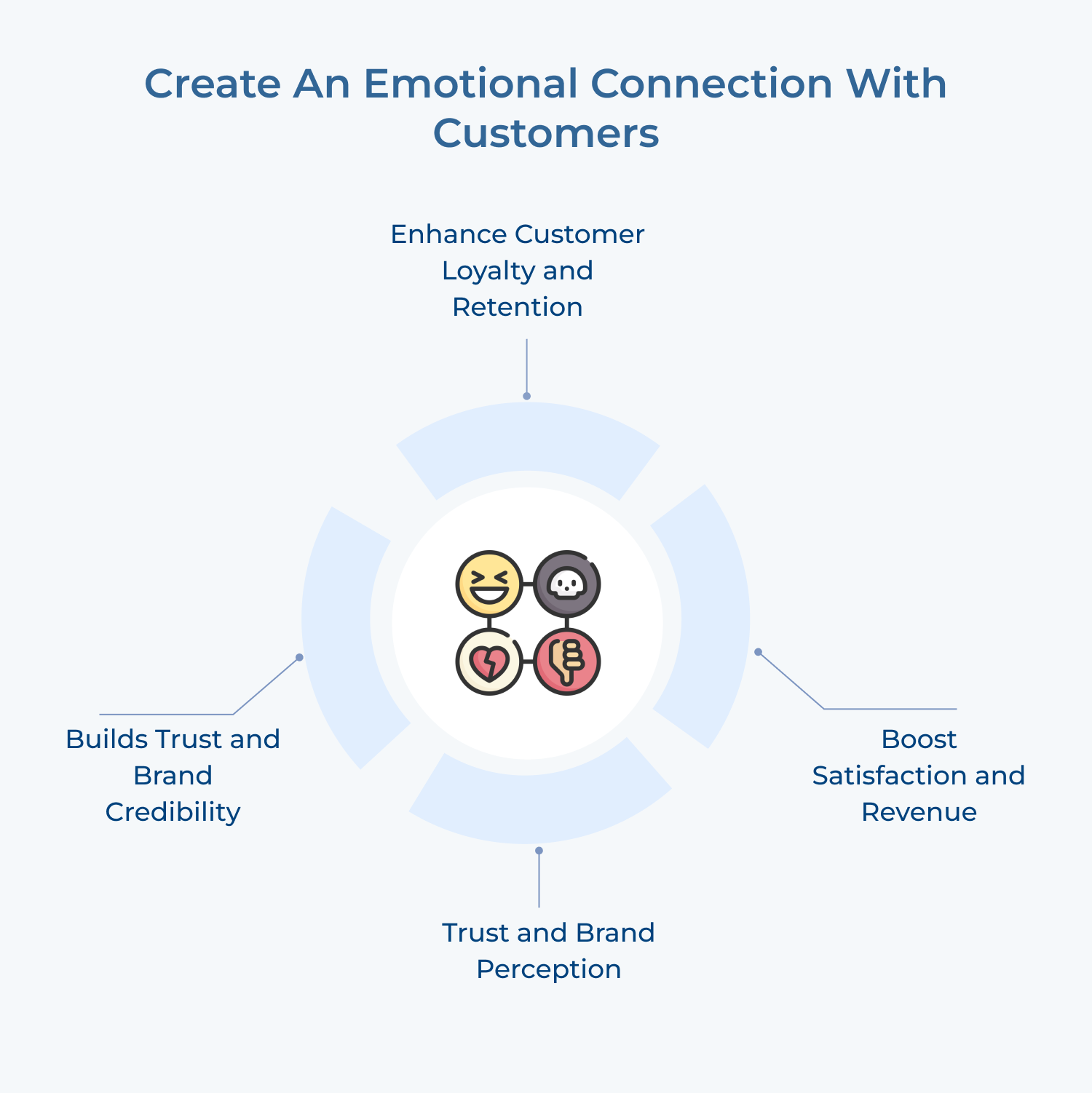
Best practices:
A meaningful interaction with customers can be the difference between loyal customers and lost business. Hence, investing in employee training to improve customer engagement and experience is an investment that pays off in both short as well as long-term benefits.
Best practices:
Customer engagement as well as customer experience are interconnected, they have unique characteristics and play different roles in delivering exceptional service. Focusing on customer engagement allows brands to actively involve customers and build emotional connections, whereas customer experience concentrates on providing a consistent, satisfying as well as memorable journey for customers.
Omnichannel messaging allows brands to personalize their interactions with customers, build emotional connections and gather valuable feedback. It allows brands to optimize their customer engagement efforts by tailoring their communication to specific customers and listening to their needs. Understanding and leveraging the differences between these concepts can effectively enhance customer relationships as well as satisfaction.

What is customer experience?
Customer experience (CX) refers to the overall experience that a customer has with a company or brand. It includes every touchpoint that the customer has with the organization, from browsing their website and interacting with customer service to purchasing a product, as well as receiving follow-up communication. Customer experience is all about how a customer feels about the brand after interacting with them and it can have a significant impact on customer loyalty.
What is customer engagement?
Customer engagement (CE) is the process of building relationships with customers over time. It encompasses all interactions between a business and its customers, including marketing campaigns, social media posts, customer service conversations, as well as loyalty programs. The goal of customer engagement is to create a connection with the customer that goes beyond the initial purchase, building loyalty and encouraging repeat business.
What is the difference between customer engagement and customer experience?
Customer engagement is focused on building relationships with customers over time, while customer experience is more about the overall impression that a customer has of a brand based on all their interactions. While customer experience and customer engagement are closely related, they are not interchangeable. Customer engagement is a crucial component of the customer experience, but it is just one piece of the puzzle.
How can businesses improve their customer experience and customer engagement?
Businesses need to take a holistic approach and consider every touchpoint that the customer has with the brand to improve customer experience. It includes optimizing their website for ease of use, providing excellent customer service, delivering a great product or service, and following up with customers after the sale. Businesses need to take a more proactive approach, using social media as well as other channels to create customer connection efficiently and encourage them to interact with the brand over time.
Which is more important: customer experience or customer engagement?
Both customer experience and customer engagement are crucial for business success. Without a good customer experience, it is unlikely that customers will return for repeat business or recommend the brand to others. Similarly, without customer engagement, customers may not feel a connection to the brand and may not be motivated to make repeat purchases or become brand advocates. The key is to strike a balance between the two, creating a seamless customer journey that combines excellent customer experience with engaging customer interactions.
Can businesses measure the success of their customer experience and customer engagement efforts?
Yes, businesses can measure the success of their customer experience and customer engagement efforts using a variety of metrics. For customer experience, metrics such as customer satisfaction scores and Net Promoter Scores (NPS) can be used to track how customers feel about the brand. Customer engagement metrics such as social media engagement, email open rates, as well as website traffic can be used to track how customers are interacting with the brand and whether they are becoming more engaged over time. Ultimately, the success of these efforts will be reflected in business metrics such as customer retention rates and revenue.
 https://omni24.io/wp-content/uploads/2026/08/Enterprise-Customer-Engagement.png
1256
2400
Tushar Joshi
https://omni24.io/wp-content/uploads/2023/04/Omni-Logo-1.svg
Tushar Joshi2026-09-02 05:29:412026-09-02 05:29:41How to Scale Enterprise Customer Engagement Strategies
https://omni24.io/wp-content/uploads/2026/08/Enterprise-Customer-Engagement.png
1256
2400
Tushar Joshi
https://omni24.io/wp-content/uploads/2023/04/Omni-Logo-1.svg
Tushar Joshi2026-09-02 05:29:412026-09-02 05:29:41How to Scale Enterprise Customer Engagement Strategies https://omni24.io/wp-content/uploads/2026/08/Client-vs-Customer.png
1256
2400
Tushar Joshi
https://omni24.io/wp-content/uploads/2023/04/Omni-Logo-1.svg
Tushar Joshi2026-09-01 03:57:222026-09-01 03:59:31Client vs Customer: What’s the Difference & Why Does it Matter?
https://omni24.io/wp-content/uploads/2026/08/Client-vs-Customer.png
1256
2400
Tushar Joshi
https://omni24.io/wp-content/uploads/2023/04/Omni-Logo-1.svg
Tushar Joshi2026-09-01 03:57:222026-09-01 03:59:31Client vs Customer: What’s the Difference & Why Does it Matter? https://omni24.io/wp-content/uploads/2026/08/Benefits-of-Conversational-AI.png
1256
2400
Webvision Solution
https://omni24.io/wp-content/uploads/2023/04/Omni-Logo-1.svg
Webvision Solution2026-08-31 04:29:522026-08-31 04:29:52Benefits of Conversational AI: What You Should Know
https://omni24.io/wp-content/uploads/2026/08/Benefits-of-Conversational-AI.png
1256
2400
Webvision Solution
https://omni24.io/wp-content/uploads/2023/04/Omni-Logo-1.svg
Webvision Solution2026-08-31 04:29:522026-08-31 04:29:52Benefits of Conversational AI: What You Should Know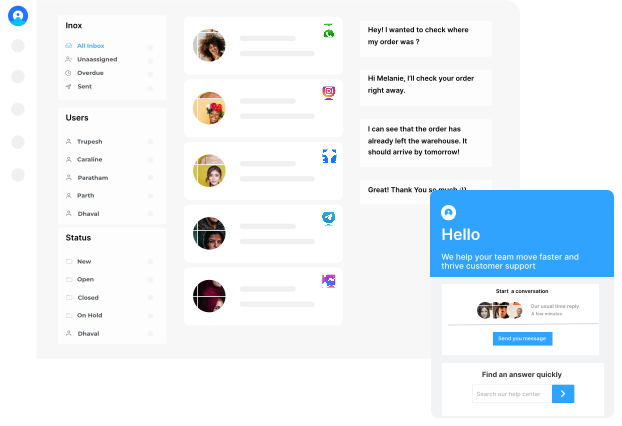
Whether it’s about acquire, engage or support – Omni24 covers all your customer engagement needs in one complete platform.

Copyright ©2026 Veemo All rights reserved.
CA, Los Angeles, Hall Ave, 19011