Customer Experience vs Customer Success: Is there a Difference?
Navigate the nuances of customer success vs customer experience. Unveil their distinct roles and collaborative impact on customer journeys.

Navigate the nuances of customer success vs customer experience. Unveil their distinct roles and collaborative impact on customer journeys.
When it comes to building a successful business, what matters more: customer success or customer experience? It’s a question that many businesses grapple with, as they try to find the right balance between these two important factors.
Though companies are recognizing that providing a positive customer experience is paramount to their success – there is another aspect to consider: customer success.
Understanding the differences and knowing how to prioritize them is vital for businesses striving to meet customer expectations. Let’s delve into the distinctions between customer experience vs customer success while exploring why both are crucial for achieving sustainable growth.
Customer experience refers to the overall perception and feelings that customers have towards a company or brand based on their interactions as well as engagements throughout the customer journey. It encompasses every touchpoint, from initial contact to post-purchase support and can greatly influence customer satisfaction, loyalty, advocacy etc.
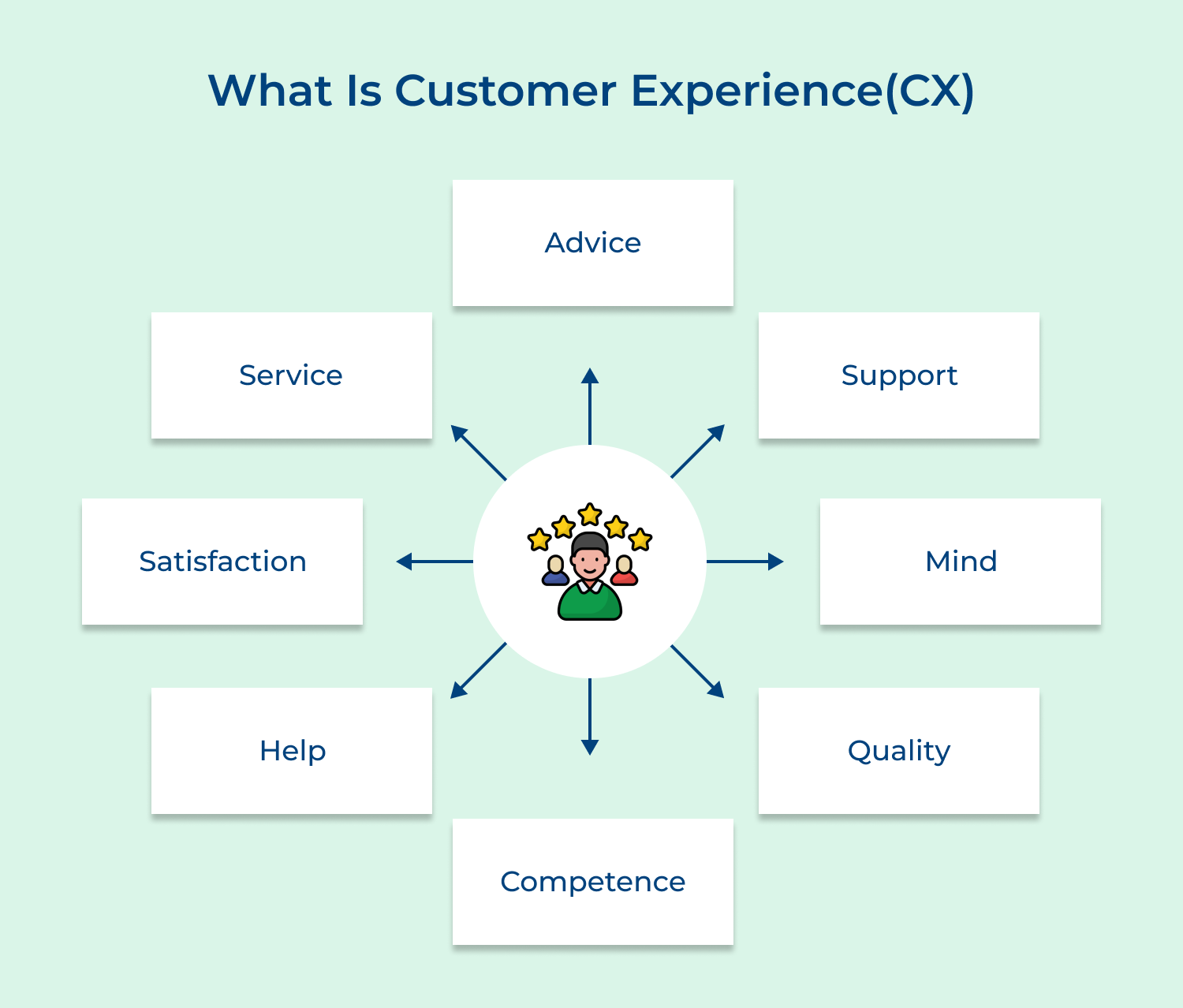
Key objectives of customer experience:
Do you know? Customers that earn over $1 Billion annually can expect to earn over $700 million more within the first 3 years of investing in customer experience.
Customer Success can be defined as the practice of ensuring that customers achieve their desired outcomes while using a product or service. It focuses on understanding the needs and goals of customers while providing them with the necessary resources, support as well as guidance to maximize the value they derive from the product or service.82% of the companies with 500 and over employees use a customer success platform.
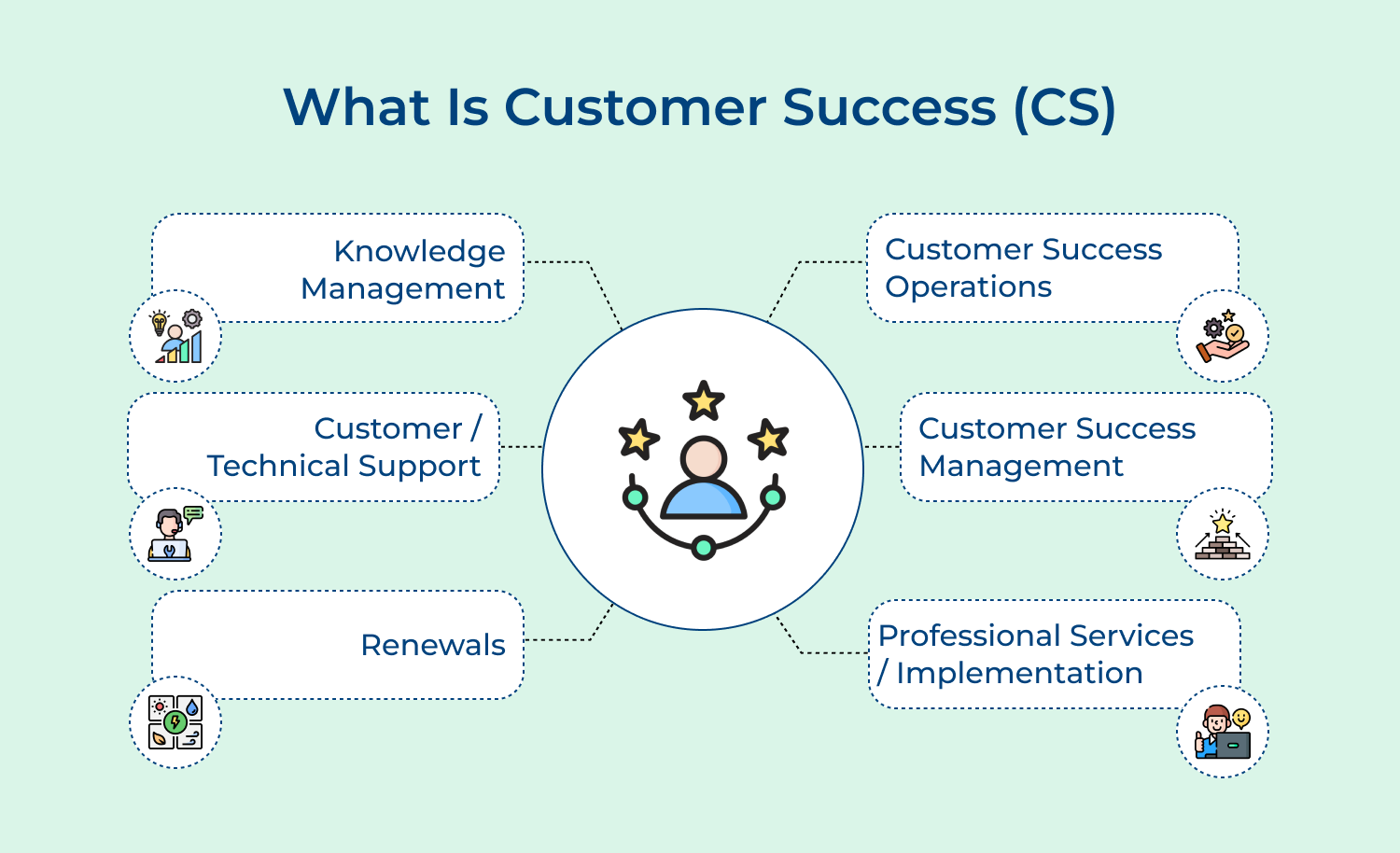
Here are a few reasons why customer success is crucial for the success of any business:
Customer Success and Customer Experience are two terms that are often used interchangeably in the business world. While they are related concepts, there are distinct differences between the two. Here are five key differences:
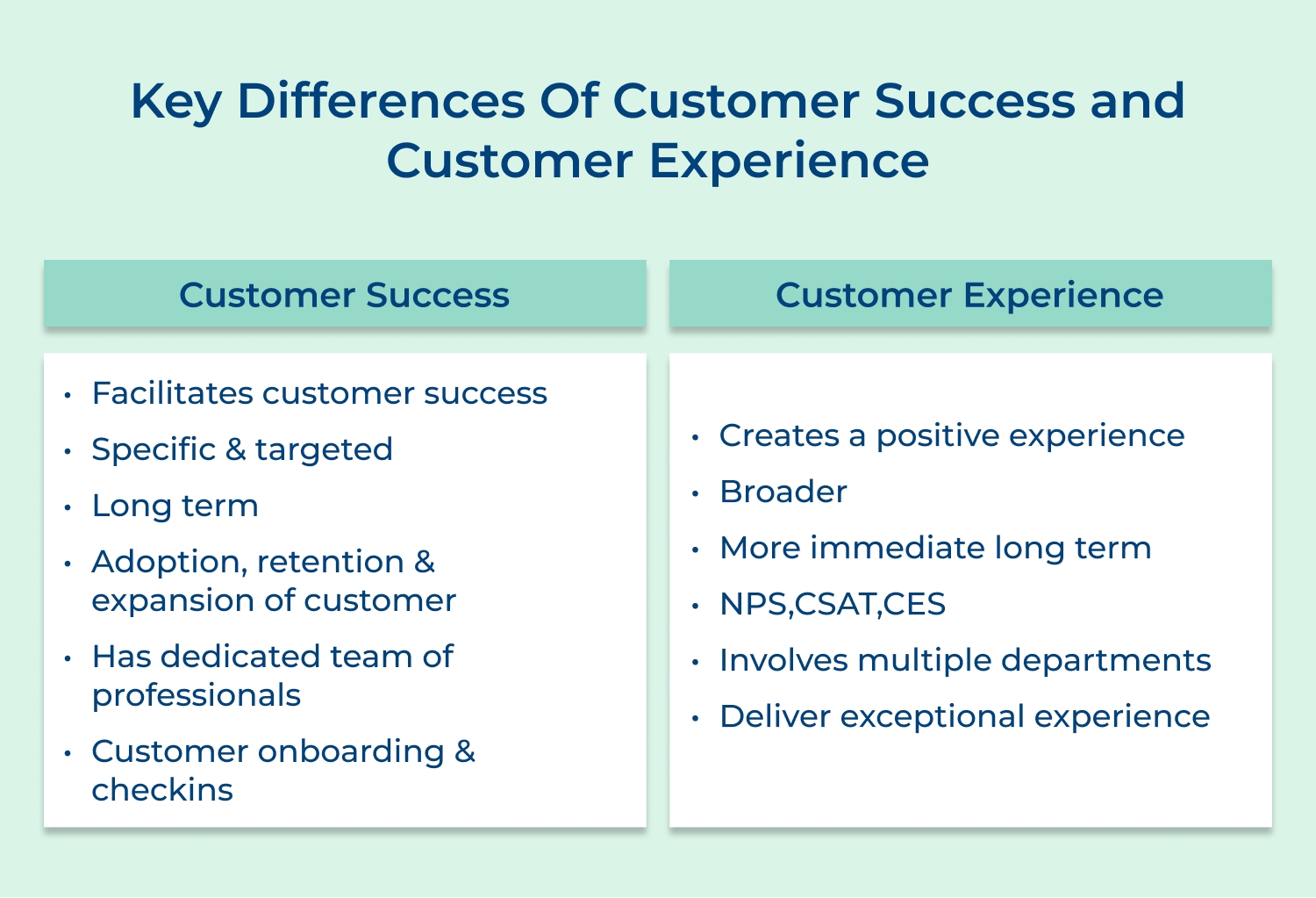
Customer Success is primarily focused on ensuring that customers achieve their desired outcomes. It involves proactively assisting customers throughout their journey, helping them derive maximum value from a product or service. Customer Success professionals work closely with customers, offering guidance, support and resources to facilitate their success.
Customer Experience is about creating a positive overall experience for the customer at each touchpoint. It involves everything from the first interaction with a brand to post-purchase support. Customer Experience professionals aim to deliver seamless, personalized and memorable interactions that leave a lasting impression on customers. In fact, 86% of the customers are willing to pay more for better customer experience.
Customer Success is more specific and targeted. It concentrates on individual customer accounts, understanding their unique needs and goals, while tailoring strategies to drive their success. Customer Success managers closely monitor customer metrics and engagement to identify areas of improvement as well as take proactive steps to address them.
Customer Experience is broader in scope. It encompasses the entire customer journey, focusing on the end-to-end experience. It involves creating positive interactions across various touchpoints, such as the website, customer service and product usage. Customer Experience teams analyze customer feedback and data to identify pain points as well as optimize the overall experience.
Customer Success is often associated with long-term relationships. It involves building strong partnerships with customers and maintaining ongoing engagement to ensure their continued success. Customer Success professionals keep an eye on customer health and progress over time, working towards achieving mutually beneficial outcomes.
Customer Experience can be viewed in a more immediate time frame. It is about ensuring that each interaction along the customer journey is positive and memorable. Customer Experience teams focus on improving satisfaction and loyalty at each touchpoint, working towards creating a consistent, delightful experience.
In Customer Success, the key metrics revolve around customer adoption, usage, and satisfaction. Success is measured by factors such as product adoption rates, customer retention, and expansion of the customer base. Customer Success teams use a variety of tools and technologies to track customer metrics as well as identify areas for improvement.
Customer Experience metrics focus on overall satisfaction, loyalty, and advocacy. Metrics like Net Promoter Score (NPS), Customer Satisfaction Score (CSAT) and Customer Effort Score (CES) are commonly used to gauge the effectiveness of the customer experience. Customer Experience teams analyze feedback, conduct surveys, as well as use other feedback channels to monitor customer sentiment and make necessary improvements.
Customer Success often involves a dedicated team of professionals who work closely with customers. These teams have deep knowledge of the product/service while building strong relationships with customers by understanding their goals and challenges. They act as partners, providing ongoing support and guidance to ensure customer success.
Customer Experience is a collaborative effort that involves multiple departments within an organization. It requires alignment along with coordination across marketing, sales, customer service and other teams to deliver a consistent experience. Customer Experience professionals act as advocates for the customer, working to break down silos and ensure a holistic customer-centric approach.
Customer Success is typically a dedicated function within a company that focuses on helping customers achieve their goals and ensuring their success. It involves activities like customer onboarding, training, ongoing support and regular check-ins.
Customer Experience is a broader concept that involves multiple departments and touchpoints within a company. It is the collective responsibility of everyone in the organization to design and deliver exceptional experiences at every customer interaction point.
While they may seem similar at first glance, customer success and customer experience actually have distinct roles while working hand-in-hand to ensure customer satisfaction.
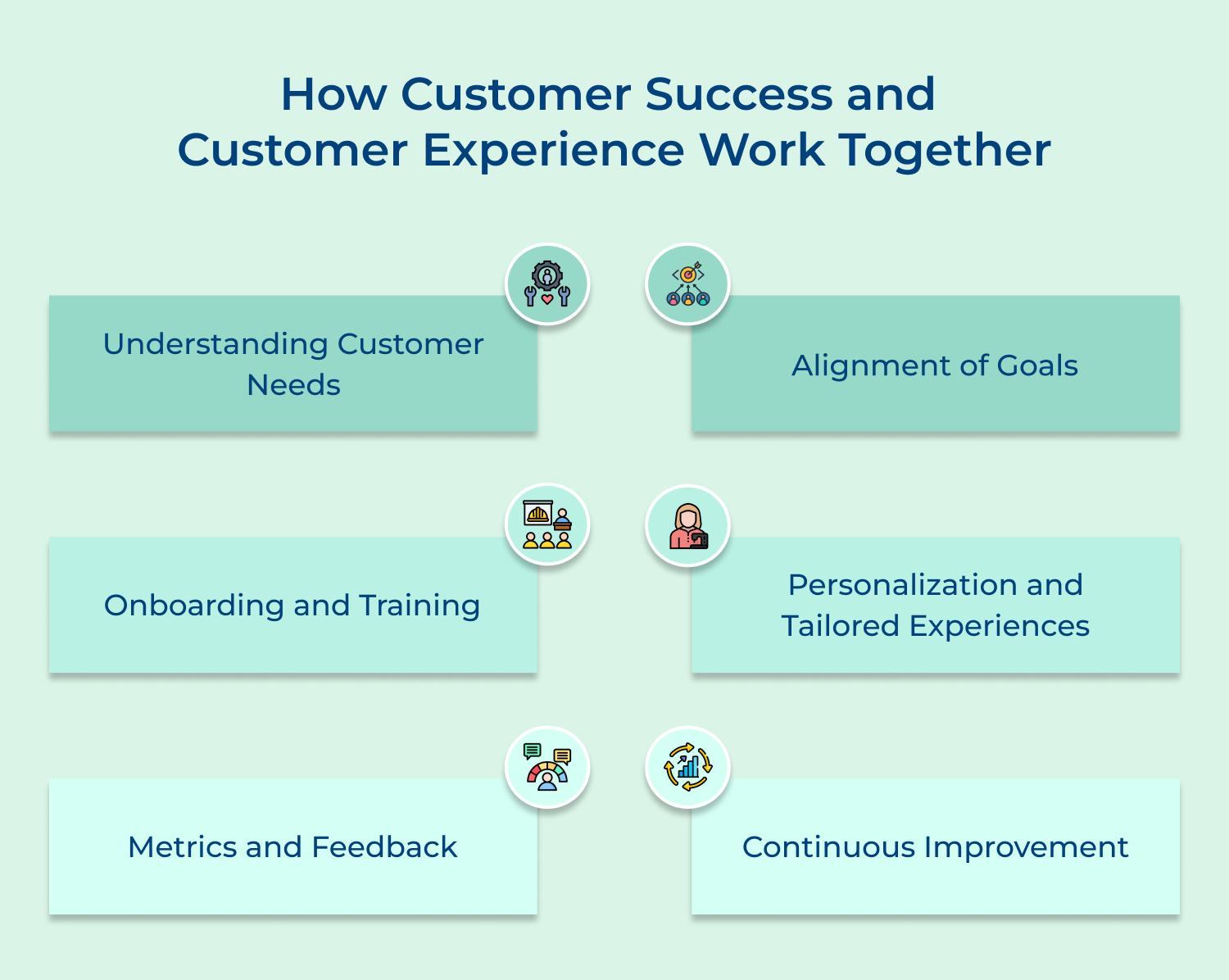
The impact of customer success and customer experience on the customer journey is significant. Here’s how they influence each stage of the journey:
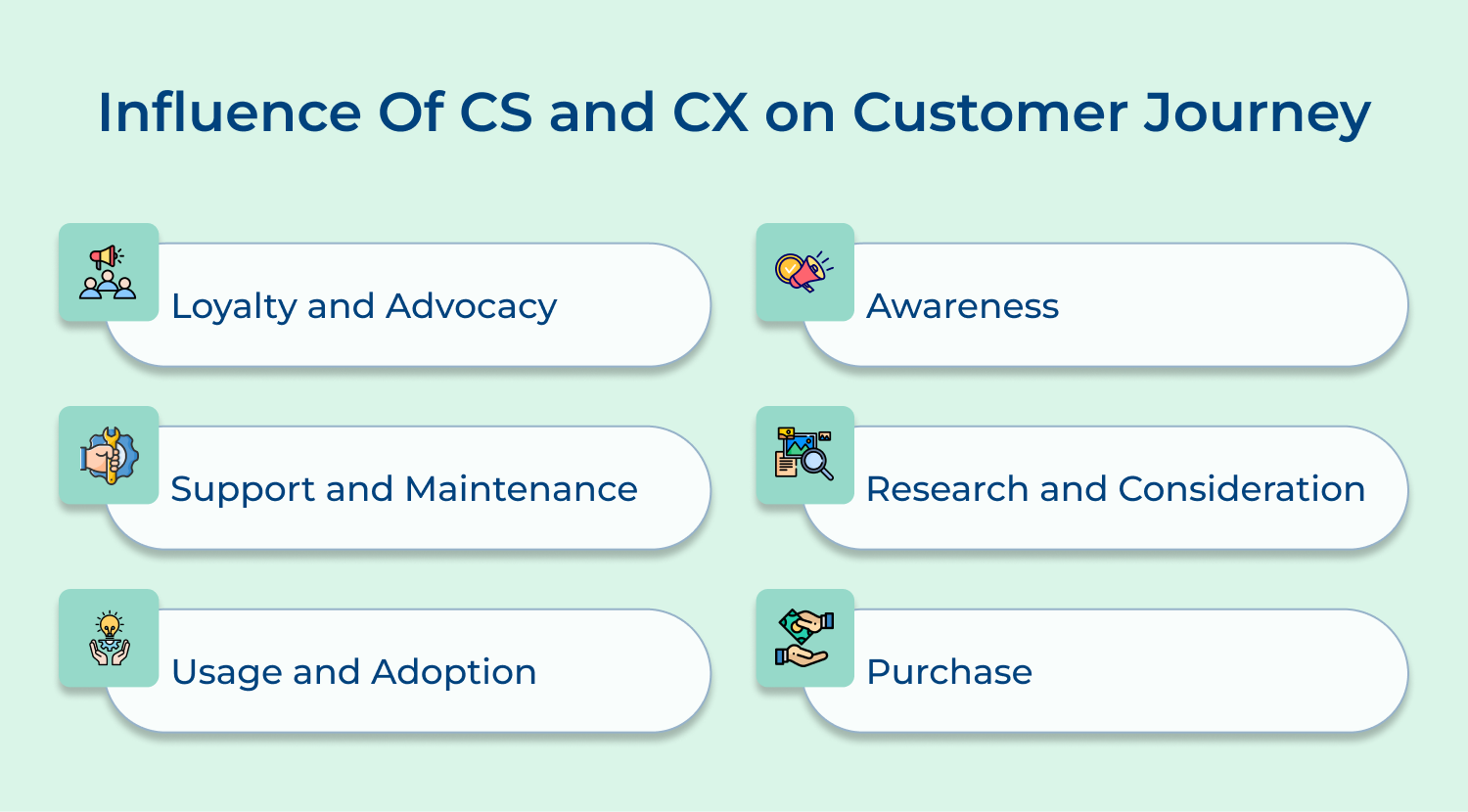
Customer success and customer experience are both crucial components of a customer-centric approach. While customer success focuses on helping customers achieve long-term value, customer experience encompasses the entire journey, from initial interaction to ongoing support.
Understanding the distinctions between the two concepts allows businesses to create a comprehensive customer-centric strategy. Focusing on customer success, companies can provide a seamless customer experience, resulting in customer satisfaction. Investing in customer success and delivering exceptional customer experiences is key to business success in a competitive market.

How do customer experience and customer success work together ?
Customer success and customer experience work together to create a positive relationship between the customer as well as the brand. By providing exceptional customer experiences, companies can increase customer satisfaction and loyalty. Customer success, from the other perspective, plays a critical role in proactively guiding customers towards achieving their goals, anticipating their needs, and providing the necessary support.
How customer success and CX impact the customer journey?
Customer success and customer experience impact the journey by creating a continuous value loop. CX designs touchpoints that shape perceptions at each interaction, while CS ensures customers achieve desired outcomes over time. Together, they transform the journey from transactional exchanges into a strategic partnership that increases retention, expands revenue opportunities, and creates loyal advocates who promote your brand organically.
Is customer success part of customer experience?
Customer success is a distinct discipline within the broader customer experience ecosystem. While CX encompasses every interaction a customer has with your brand across all channels and departments, customer success focuses specifically on helping customers achieve measurable value from your product or service. CS is proactive and outcome-focused, whereas CX designs the emotional as well as functional quality of interactions throughout the entire relationship.
What metrics are used in Customer Experience vs Customer Success?
Customer Experience metrics measure perception as well as satisfaction through NPS (Net Promoter Score), CSAT (Customer Satisfaction), CES (Customer Effort Score), and churn rate. Customer Success metrics focus on tangible outcomes: Customer Health Score, product adoption rate, time-to-value, expansion revenue, and renewal rates. CX measures how customers feel about interactions, while CS measures what customers achieve with your product.
What are common mistakes in managing Customer Experience vs Customer Success?
Common customer experience mistakes include focusing on touchpoints over the full journey, prioritizing internal processes, and ignoring feedback. Customer success teams often confuse support with success, track vanity metrics, as well as fail to tailor programs to different customer needs, value definitions, and maturity levels.
 https://omni24.io/wp-content/uploads/2026/08/AI-Customer-Service-Agents.png
1256
2400
Webvision Solution
https://omni24.io/wp-content/uploads/2023/04/Omni-Logo-1.svg
Webvision Solution2026-09-21 04:48:512026-09-21 04:48:51How to Build an AI Customer Service Agents: 8 Key Steps
https://omni24.io/wp-content/uploads/2026/08/AI-Customer-Service-Agents.png
1256
2400
Webvision Solution
https://omni24.io/wp-content/uploads/2023/04/Omni-Logo-1.svg
Webvision Solution2026-09-21 04:48:512026-09-21 04:48:51How to Build an AI Customer Service Agents: 8 Key Steps https://omni24.io/wp-content/uploads/2026/08/Omnichannel-Conversational-AI.png
1256
2400
Tushar Joshi
https://omni24.io/wp-content/uploads/2023/04/Omni-Logo-1.svg
Tushar Joshi2026-09-16 03:51:072026-09-16 03:51:07How to Build Omnichannel Conversational AI Strategy
https://omni24.io/wp-content/uploads/2026/08/Omnichannel-Conversational-AI.png
1256
2400
Tushar Joshi
https://omni24.io/wp-content/uploads/2023/04/Omni-Logo-1.svg
Tushar Joshi2026-09-16 03:51:072026-09-16 03:51:07How to Build Omnichannel Conversational AI Strategy https://omni24.io/wp-content/uploads/2026/08/Customer-Service-Teams.png
1256
2400
Tushar Joshi
https://omni24.io/wp-content/uploads/2023/04/Omni-Logo-1.svg
Tushar Joshi2026-09-15 04:01:522026-09-15 04:02:16How to Build Customer Service Teams: 6 Key Steps
https://omni24.io/wp-content/uploads/2026/08/Customer-Service-Teams.png
1256
2400
Tushar Joshi
https://omni24.io/wp-content/uploads/2023/04/Omni-Logo-1.svg
Tushar Joshi2026-09-15 04:01:522026-09-15 04:02:16How to Build Customer Service Teams: 6 Key Steps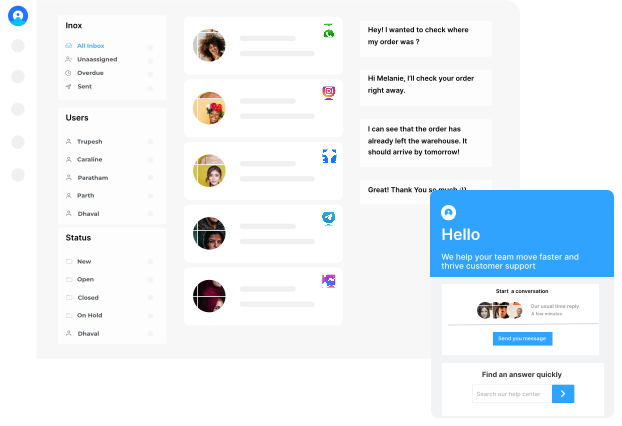
Whether it’s about acquire, engage or support – Omni24 covers all your customer engagement needs in one complete platform.

Copyright ©2026 Veemo All rights reserved.
CA, Los Angeles, Hall Ave, 19011