What is Customer Experience (CX) Maturity Assessment & Its Stages
Assess and improve CX maturity to drive business growth, boost loyalty and outpace competitors—start elevating yours today!

Assess and improve CX maturity to drive business growth, boost loyalty and outpace competitors—start elevating yours today!
As customer expectations continue to rise, companies must prioritize the customer experience to stay competitive in the market. The customer experience (CX) maturity model provides a roadmap for organizations to assess and improve their customer experience strategies.
CX has become a key differentiator for businesses across industries. Companies that invest in delivering exceptional customer experiences see increased customer loyalty and higher revenues. The CX maturity model helps organizations understand where they currently stand in terms of customer experience and what steps they need to take to reach higher levels of maturity.
We will explore the impact of the CX maturity model on businesses and how it can help organizations enhance their customer experience strategies.
A CX maturity model is a framework that helps organizations assess their customer experience (CX) capabilities as well as identify areas for improvement. The model provides a roadmap for companies to advance their CX practices and deliver better outcomes for their customers.
37% of the mature companies reported that delivering exceptional service as possible is their #1 goal for CX initiatives.
A well-defined CX maturity model guides organizations to evolve their customer strategies, ensuring a consistent and exceptional experience across all touchpoints. It ultimately leads to increased customer satisfaction and loyalty.
The objectives of a CX maturity model include:
As businesses strive to meet the increasing demands of customers, having a mature customer support function can provide numerous benefits.
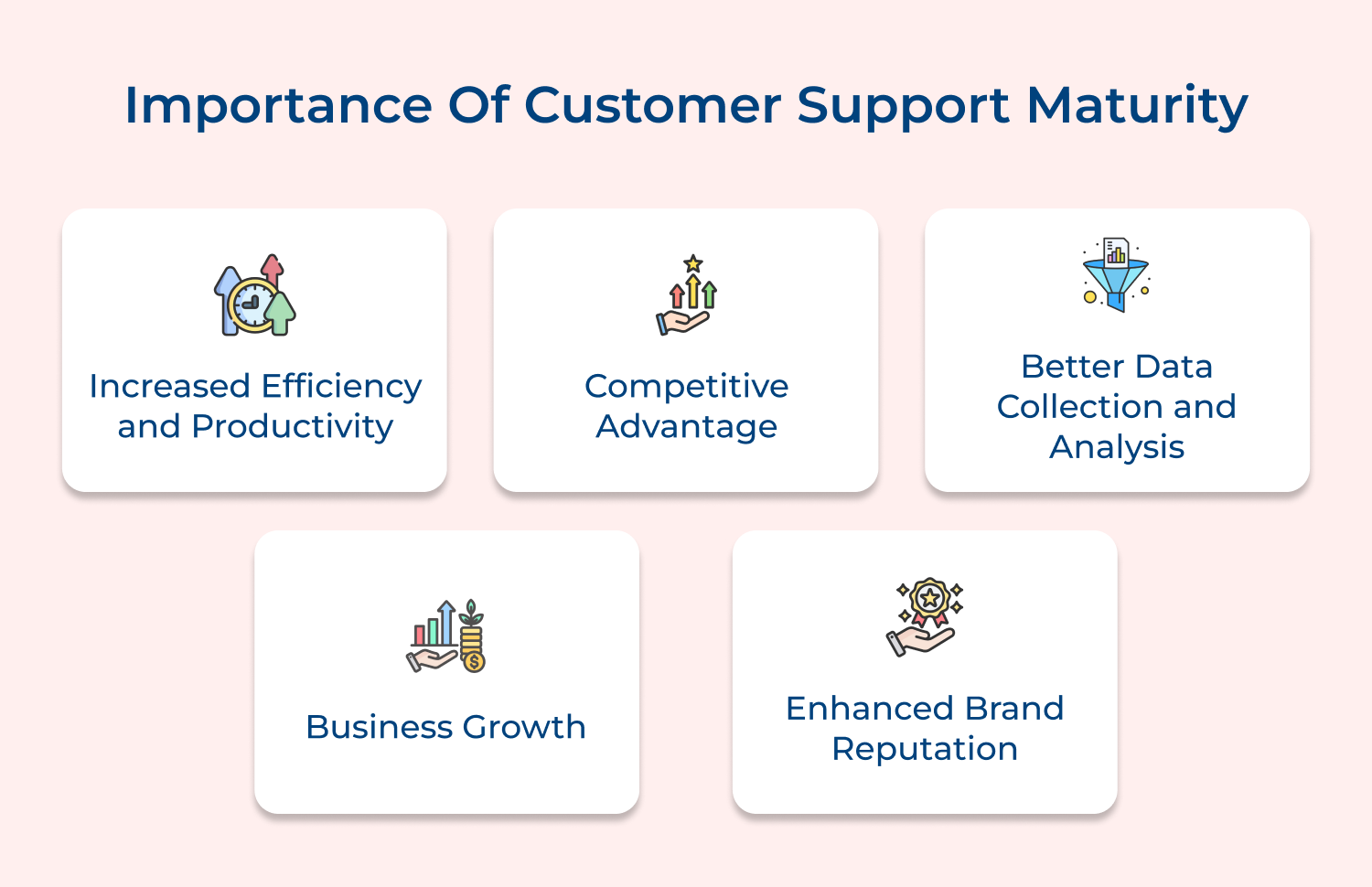
As customer expectations continue to rise, companies must continuously evolve and improve their CX strategies in order to stay competitive.
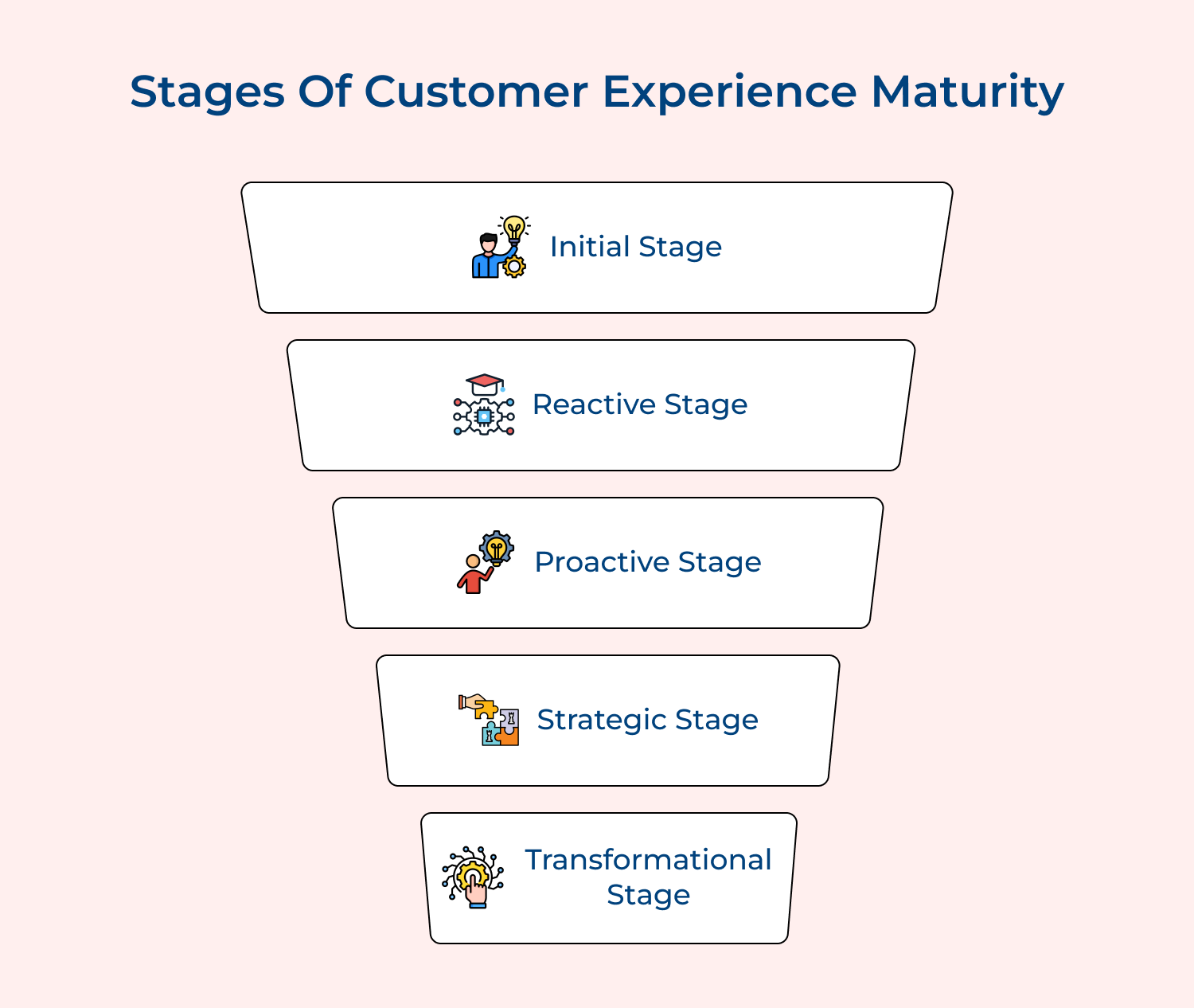
At the initial stage of CX maturity, companies are primarily focused on delivering products or services without much consideration for the overall customer experience. Customer interactions are often disjointed and there is little emphasis on gathering feedback or data to improve the customer journey. Companies in this stage may lack a clear strategy for CX and struggle to meet customer expectations. A report says, 61% of customers will pay at least 5% extra for a good customer experience.
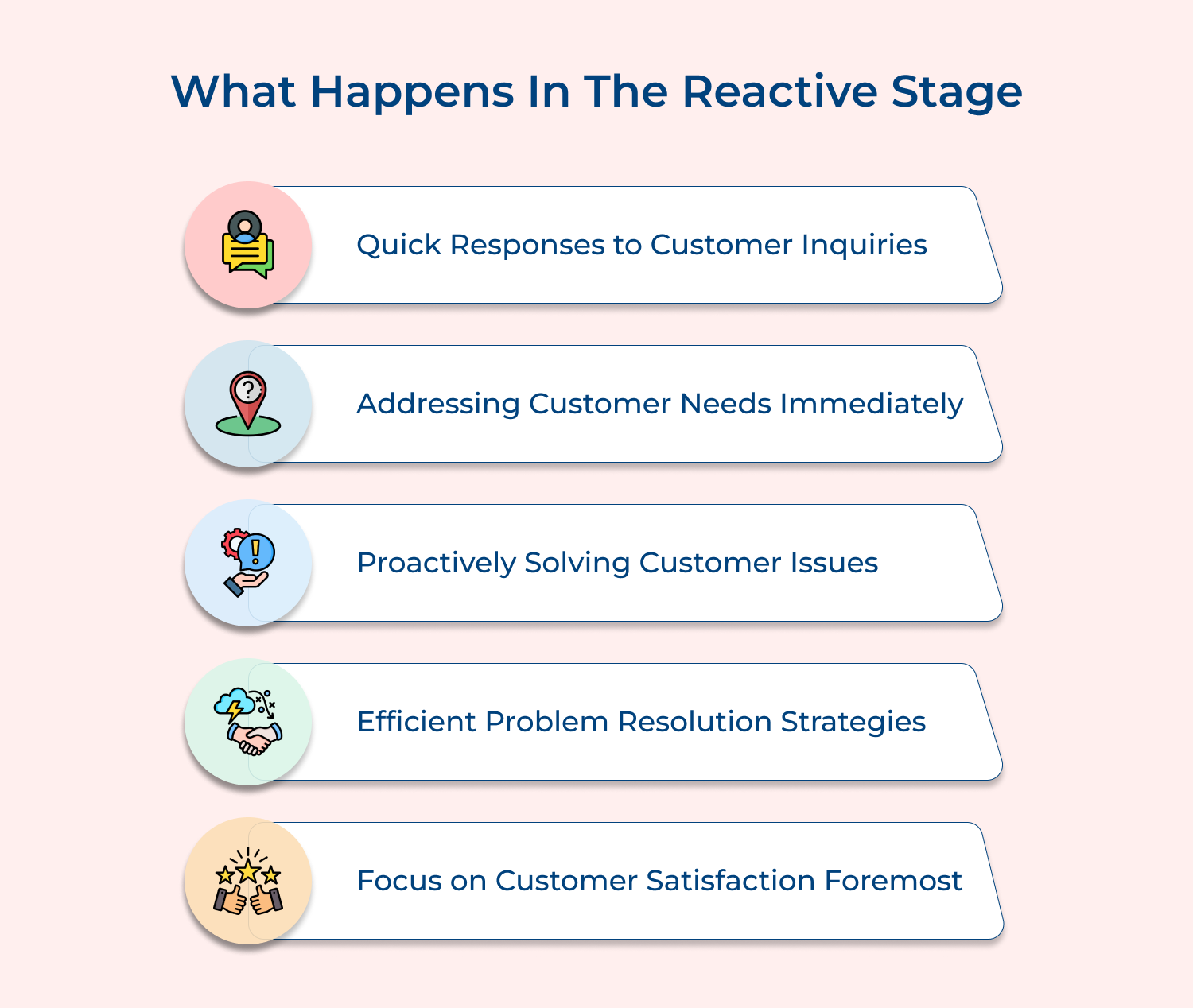
In the reactive stage, companies start to recognize the importance of customer experience but are still primarily focused on addressing customer complaints or issues as they arise. Feedback is collected sporadically and improvements are made on an ad-hoc basis. Companies in this stage may invest in customer service training or technology to better handle customer inquiries.
As companies progress to the proactive stage of CX maturity, they begin to take a more proactive approach to customer experience. It involves gathering feedback regularly, analyzing customer data while also implementing strategies to anticipate and meet customer needs. Companies in this stage may start to personalize interactions, offer proactive support and leverage technology to streamline the customer journey.
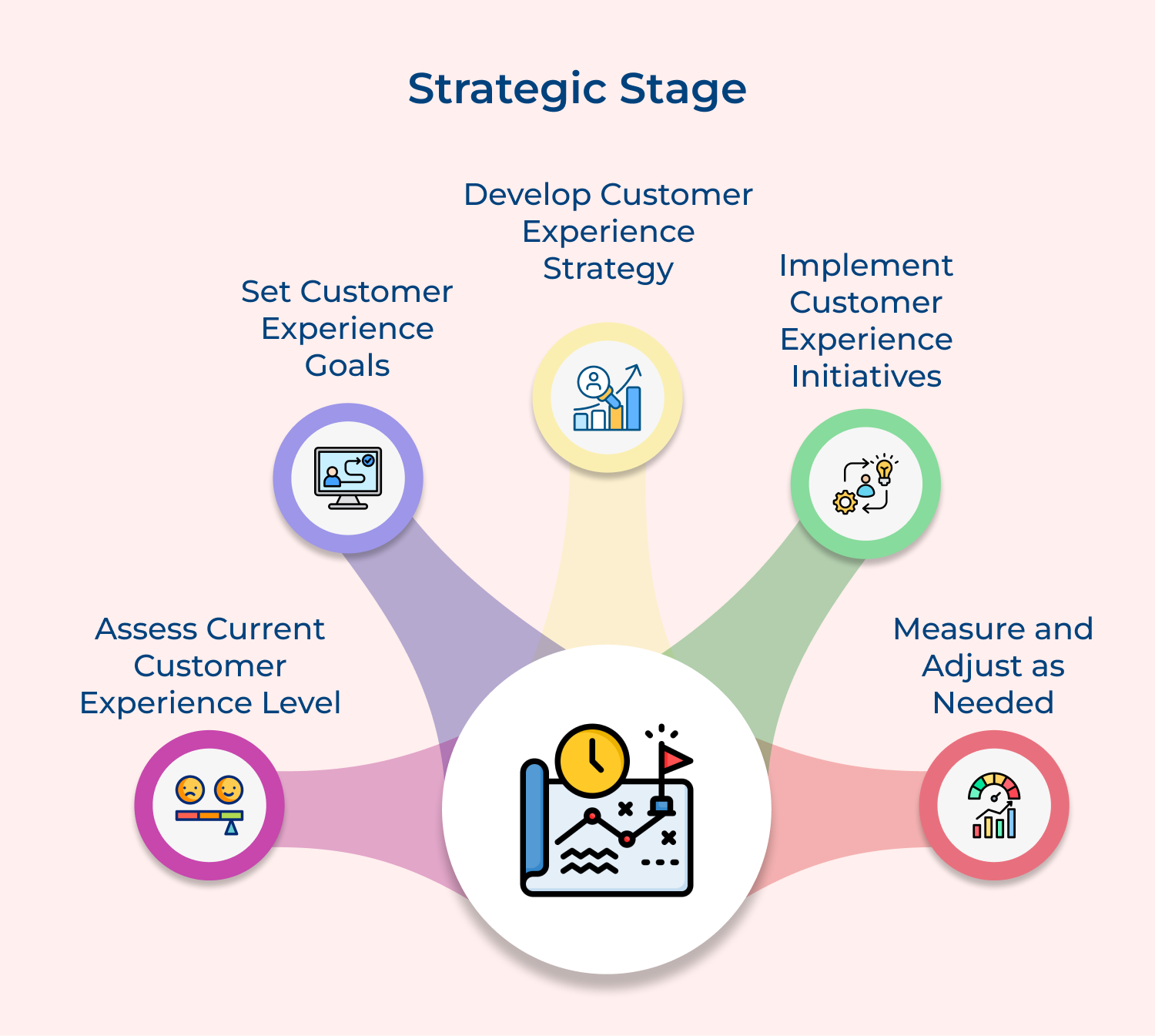
In the strategic stage, companies have fully integrated customer experience into their overall business strategy. CX is seen as a key differentiator and driver of business success. Companies in this stage invest in advanced technology, implement omni-channel strategies and prioritize continuous improvement in all aspects of the customer journey. They have a deep understanding of their customers and consistently deliver exceptional experiences that build customer loyalty.
The transformational stage represents the highest level of customer experience (CX) maturity model, where companies are fully committed to a customer-centric culture. Customer experience is ingrained in every aspect of the organization, from top leadership to frontline employees. Companies in this stage continuously innovate to changing customer expectations, using cutting-edge technology and data analytics to deliver seamless, personalized experiences. They excel in creating emotional connections with customers and are seen as industry leaders in customer experience.
A Customer Experience (CX) Maturity Model Toolkit can be a valuable resource for organizations looking to elevate their customer experience strategies which includes a set of tools, templates and guidelines.
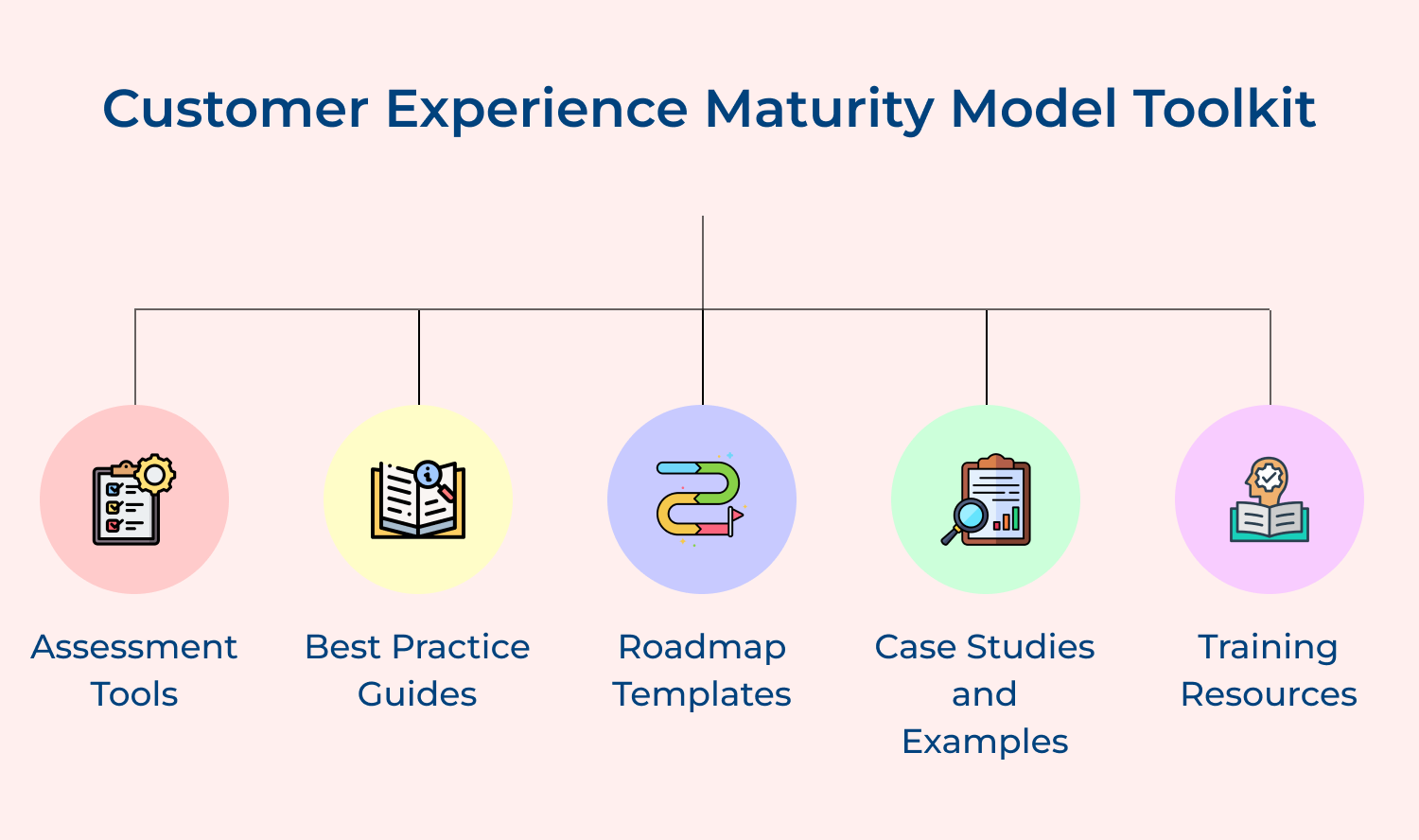
Using a Customer Experience Maturity Model Toolkit can offer several benefits to businesses, including:
Customer service maturity is an important aspect of any successful business, regardless of the industry.
Salesforce is a leading provider of customer relationship management (CRM) software and is known for its exceptional customer service. They offer a range of support options, personalized training programs and regular check-ins to ensure that their clients get the most out of their services. Salesforce continuously collects feedback from clients and uses it to improve their products as well as services.
Customer service maturity is key to ensuring users have a positive experience with the product. One software company known for their exceptional customer service is Adobe. They offer 24/7 customer support, online tutorials and regular updates to their software to address user feedback. Adobe also has a user community where customers can share tips and tricks with each other, creating a sense of camaraderie among users.
IKEA is a well-known example of customer service maturity in the furniture industry. IKEA has a dedicated customer service hotline, online chat support and a comprehensive returns policy. They also offer home delivery and assembly services for customers who need assistance with their furniture purchases.
Samsung is a standout example of a home appliance manufacturer with a strong focus on customer service maturity. Samsung offers a range of after-sales support services, including remote troubleshooting, product repairs and warranty extensions. They also have a dedicated customer support team that is available around the clock to assist with any customer queries or concerns.
In conclusion, taking the time to assess your business’s Customer Experience (CX) maturity can truly elevate your company to the next level. By understanding where you currently stand in terms of CX and identifying areas for improvement, you can enhance the overall customer journey as well as increase customer satisfaction.
Utilizing tools such as CX maturity assessments can provide valuable insights and guidance on how to create a more customer-focused approach within your organization. With a strong focus on CX, you can stay ahead of the competition, build customer loyalty and drive business growth. So, don’t delay, start assessing your CX maturity today and watch your business thrive.

How to use a customer experience maturity model?
A customer experience maturity model is a framework that helps businesses assess and improve their customer experience capabilities. To use a customer experience maturity model, a business will typically evaluate its current practices against the model’s benchmarks and identify areas for improvement. This model helps businesses track their progress and make strategic decisions to enhance their customer experience.
What are the four elements of the customer experience model?
The four key elements of a customer experience model are strategy, culture, customer understanding and customer touchpoints. Strategy involves defining the overall goals and objectives of the customer experience strategy. Culture focuses on creating a customer-centric culture within the organization. Customer understanding involves gathering data and insights to better understand customer preferences. Customer touchpoints refer to the various points of contact between the customer and the business, such as interactions with the website customer service or sales team.
What is the purpose of the customer experience model?
The purpose of a customer experience model is to help businesses understand their current level of customer experience maturity while identifying areas for improvement. By using a customer experience model, businesses can create a roadmap for enhancing the customer experience and building stronger relationships with their customers. The goal of the customer experience model is to drive customer loyalty, satisfaction and advocacy, leading to long-term success for the business.
 https://omni24.io/wp-content/uploads/2026/09/Social-commerce-scaled.png
1340
2560
Webvision Solution
https://omni24.io/wp-content/uploads/2023/04/Omni-Logo-1.svg
Webvision Solution2026-10-23 12:18:272026-10-23 12:18:27What is Social Commerce and Why Does It Matter?
https://omni24.io/wp-content/uploads/2026/09/Social-commerce-scaled.png
1340
2560
Webvision Solution
https://omni24.io/wp-content/uploads/2023/04/Omni-Logo-1.svg
Webvision Solution2026-10-23 12:18:272026-10-23 12:18:27What is Social Commerce and Why Does It Matter? https://omni24.io/wp-content/uploads/2026/08/AI-Customer-Service-Agents.png
1256
2400
Webvision Solution
https://omni24.io/wp-content/uploads/2023/04/Omni-Logo-1.svg
Webvision Solution2026-09-21 04:48:512026-09-21 04:48:51How to Build an AI Customer Service Agents: 8 Key Steps
https://omni24.io/wp-content/uploads/2026/08/AI-Customer-Service-Agents.png
1256
2400
Webvision Solution
https://omni24.io/wp-content/uploads/2023/04/Omni-Logo-1.svg
Webvision Solution2026-09-21 04:48:512026-09-21 04:48:51How to Build an AI Customer Service Agents: 8 Key Steps https://omni24.io/wp-content/uploads/2026/08/Omnichannel-Conversational-AI.png
1256
2400
Tushar Joshi
https://omni24.io/wp-content/uploads/2023/04/Omni-Logo-1.svg
Tushar Joshi2026-09-16 03:51:072026-09-16 03:51:07How to Build Omnichannel Conversational AI Strategy
https://omni24.io/wp-content/uploads/2026/08/Omnichannel-Conversational-AI.png
1256
2400
Tushar Joshi
https://omni24.io/wp-content/uploads/2023/04/Omni-Logo-1.svg
Tushar Joshi2026-09-16 03:51:072026-09-16 03:51:07How to Build Omnichannel Conversational AI Strategy
Whether it’s about acquire, engage or support – Omni24 covers all your customer engagement needs in one complete platform.

Copyright ©2026 Veemo All rights reserved.
CA, Los Angeles, Hall Ave, 19011