6 Best Ways to Set Your Customer Engagement Loyalty Program
Customer engagement loyalty forges lasting relationships between businesses and customers. Drive repeat purchases as well as advocacy through personalized experiences and rewards.
Customer engagement loyalty forges lasting relationships between businesses and customers. Drive repeat purchases as well as advocacy through personalized experiences and rewards.
Half of the companies incorporated in the first year don’t last until their 5 year mark. The only that remain in the market are the ones with good customer loyalty.
In my opinion, engaging with the customers and keeping them loyal for years is not an easy task. You must first know what they need as well as how to cater to them creatively. These dynamic factors build the key to developing a successful customer engagement strategy.
We’ll discuss the factors that hinder customer loyalty and provide strategies to enhance customer engagement for long-lasting loyalty.
The process of developing meaningful and long-lasting relationships between a business as well as its customers is customer engagement loyalty. It involves actively involving customers in various activities, promotions and interactions that go beyond mere transactions.
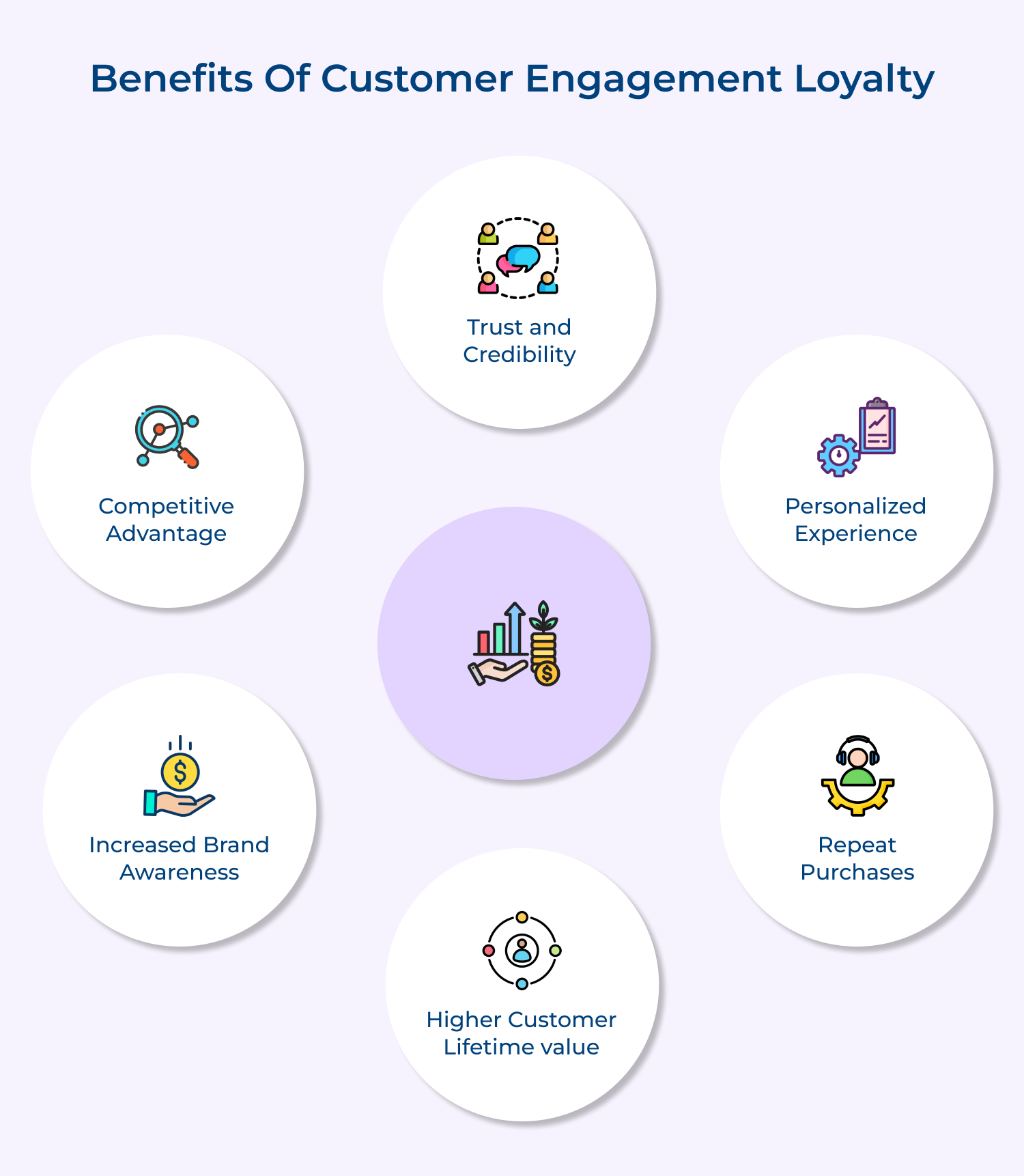
Engaged loyal customers not only make repeat purchases but also become brand advocates, providing valuable feedback and promoting the brand to others. This emotional investment leads to increased customer lifetime value, reduced churn, and a stronger reputation.
Key features of customer loyalty engagement are:
39% of the companies don’t ask for customer feedback. What does this lead to? You stay in the dark from finding potential opportunities for growth.
Setting up a customer loyalty program is easier than you think. With the right tools and process in place, managing the program becomes a piece of cake.
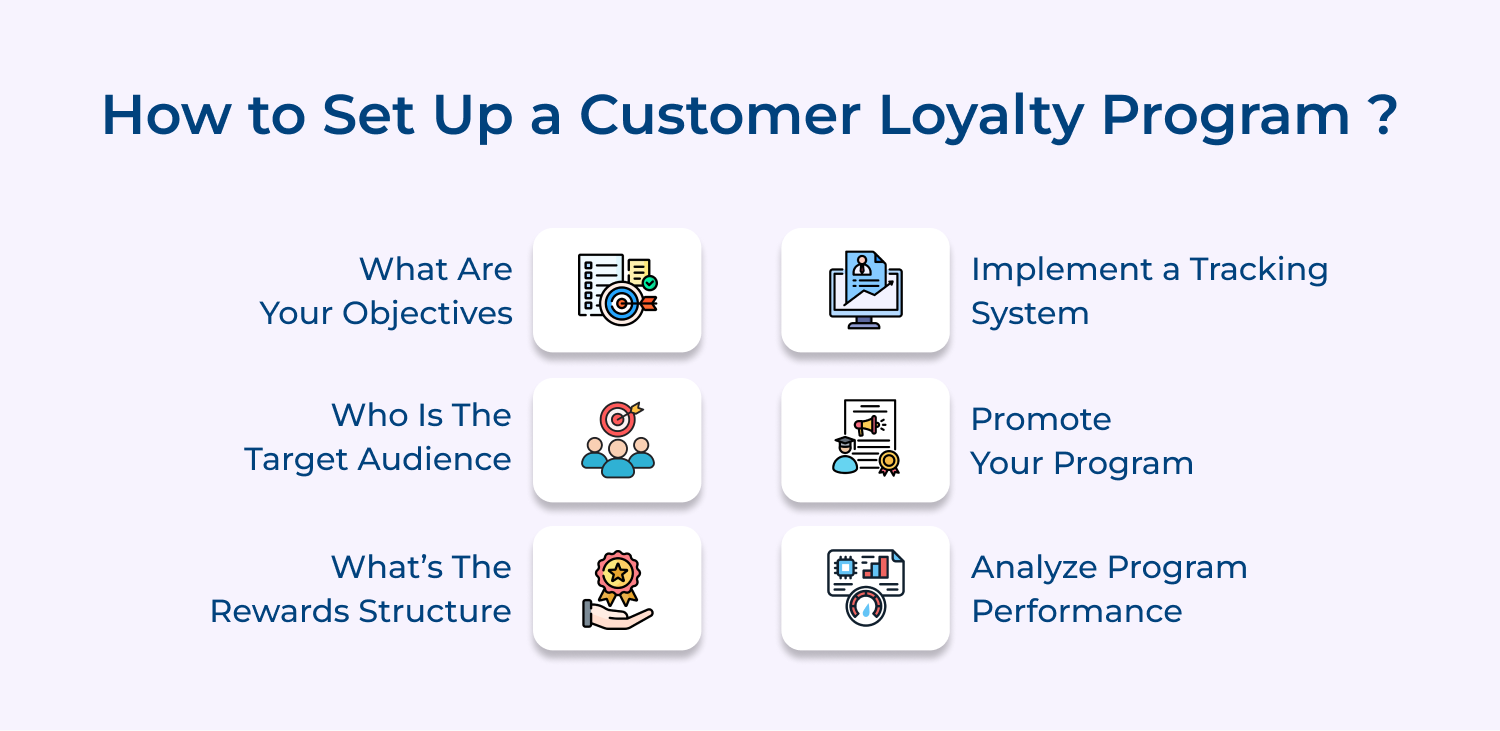
Before diving into setting up a loyalty program, it’s essential to establish clear objectives. Ask yourself what specific goals you want to achieve with your program. Do you want to increase customer retention, encourage higher spending, or reward frequent purchases? By defining your objectives, you design a loyalty program that aligns with your business goals.
Once you have defined your objectives, the next step is to identify your target audience. Analyze your customer base and segment it based on demographics, purchase behavior or any other relevant criteria. Understanding your target audience’s motivations will help you tailor your loyalty program to their needs and increase its effectiveness.
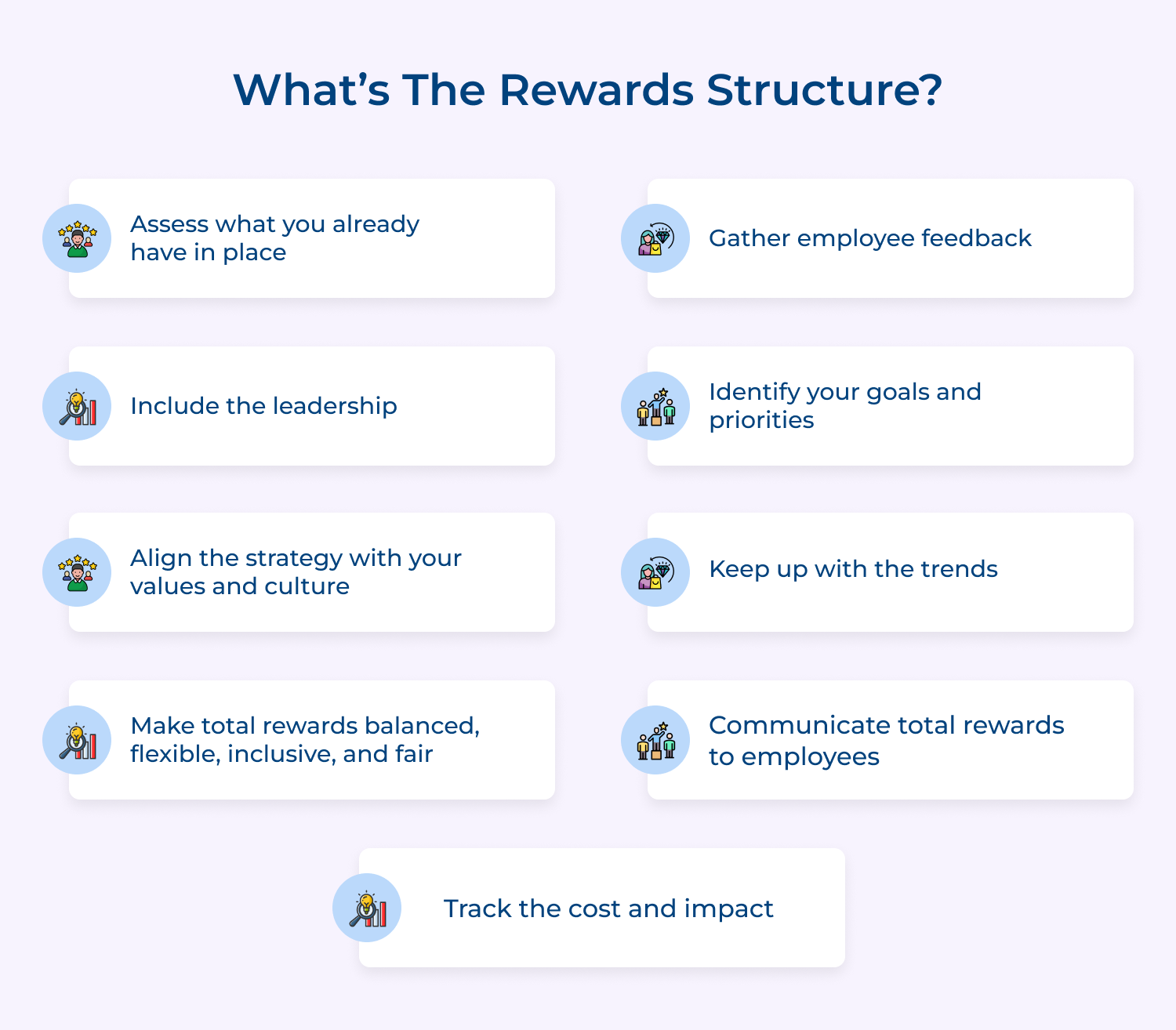
The heart of any loyalty program lies in the rewards it offers to customers. Consider what type of rewards would be most appealing to your target audience. These usually include discounts, exclusive access to events / promotions, freebies or even personalized offers. Strike a balance between valuable rewards and realistic costs for your business.
A strong tracking system is vital for monitoring customer participation and providing rewards. Utilize customer relationship management (CRM) software or loyalty program management tools to track customer activities, points and rewards. It will help you keep your program organized and ensure a seamless experience for your customers.
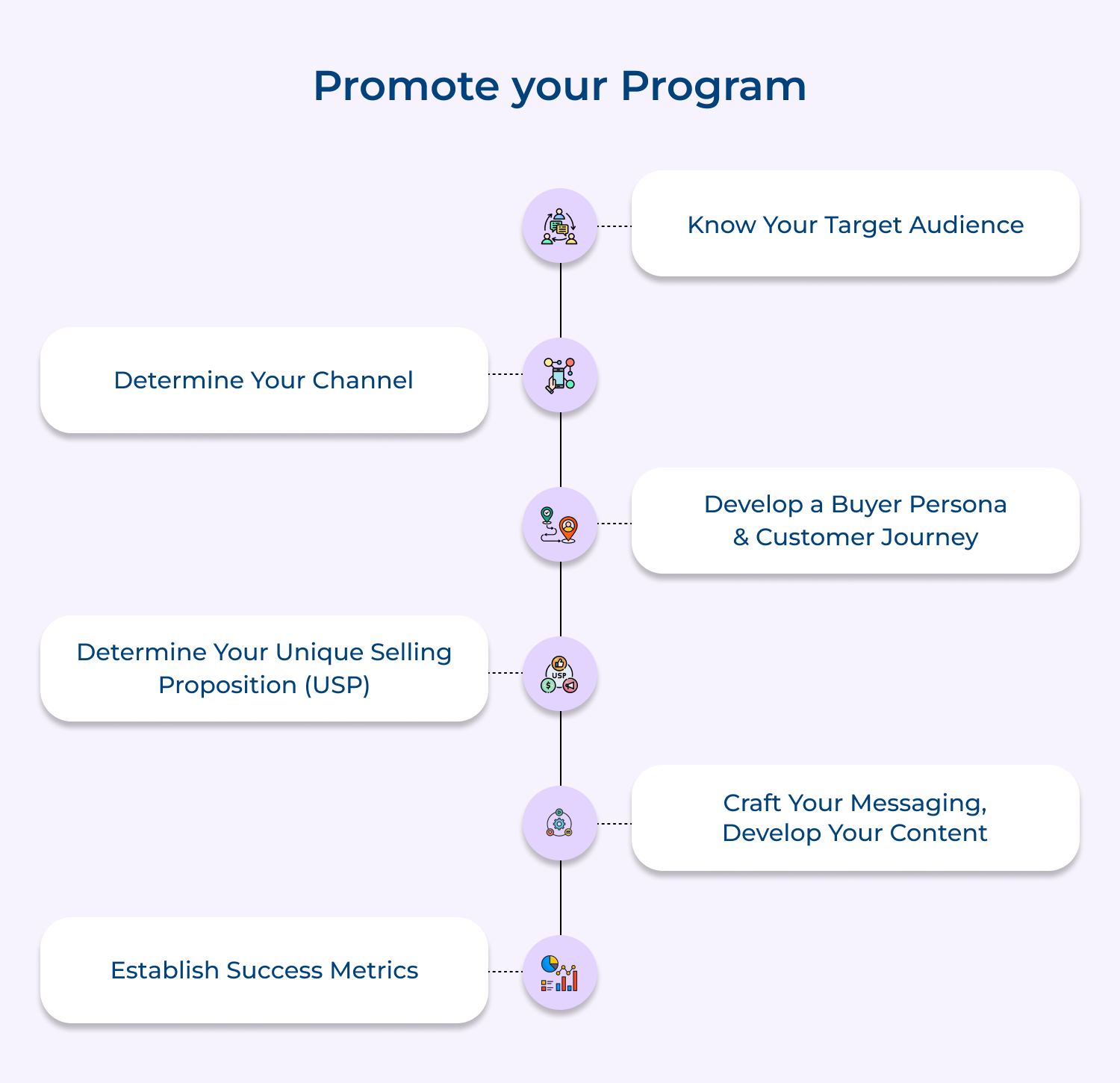
Once your loyalty program is up and running, you need to effectively promote it to your customers. Craft a creative yet compelling marketing campaign that highlights the rewards they can earn for joining the program. Leverage various channels such as email marketing, social media and your website to reach your target audience as well as encourage their participation.
Setting up customer engagement programs is not a one-time effort. It requires ongoing monitoring to ensure its effectiveness. Use analytics tools to track program participation, customer engagement and program outcomes. Regularly evaluate the data to identify patterns, trends and areas for improvement. Make adjustments as necessary to optimize your program and maximize its impact.
87% of marketers say they’re offering engaging customer experience. However, how effective it is, is the question!
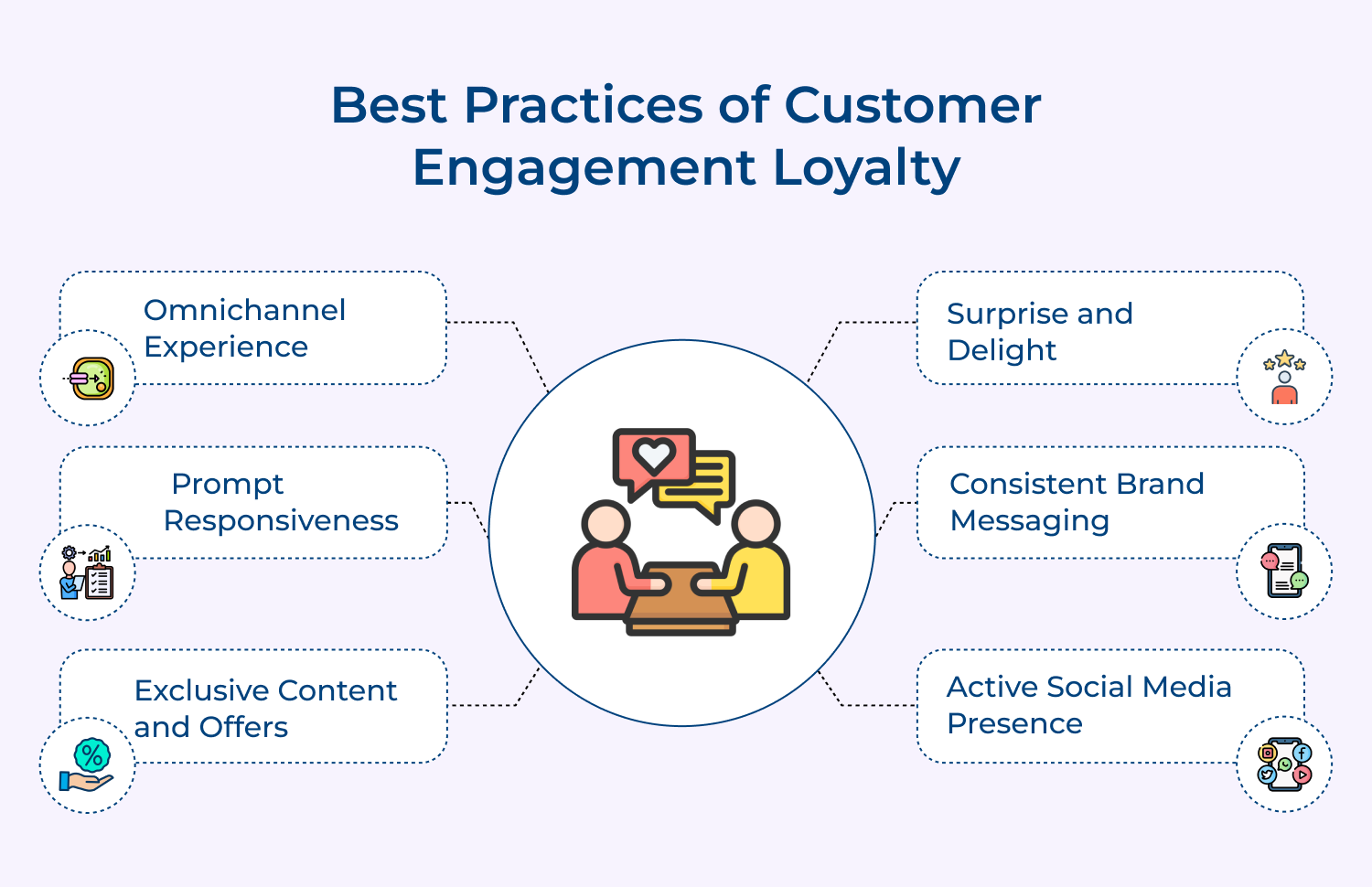
Not understanding the delicate balance of the team’s efforts can leave the entire company in a ditch!
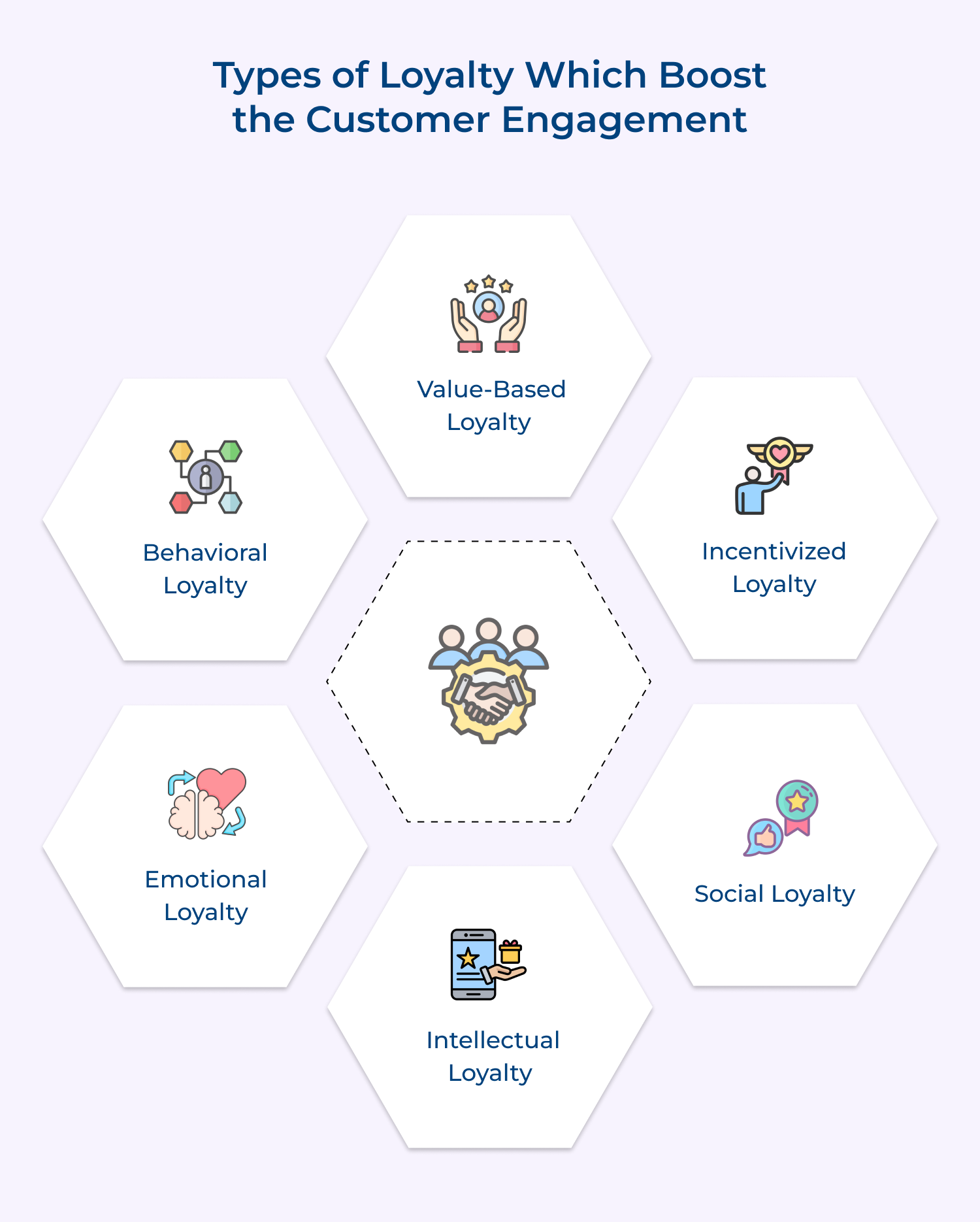
1. Behavioral loyalty occurs when customers repeat their purchase behavior over time. They continue to choose a particular brand out of habit, convenience, or satisfaction. Behavioral loyalty can be nurtured by providing excellent customer service, offering rewards programs, or providing personalized experiences.
2. Emotional loyalty is based on the customer’s emotional connection and attachment to a brand. Customers who have an emotional bond with a brand are more likely to remain loyal. To build emotional loyalty, businesses should focus on creating authentic connections, delivering exceptional customer experiences and evoking positive emotions through marketing campaigns as well as brand messaging.
3. Intellectual loyalty is all about the customer’s belief in a brand’s values, mission, or product quality. Customers with intellectual loyalty trust a brand’s expertise and rely on its products. To strengthen intellectual loyalty, businesses should focus on building credibility through thought leadership, providing reliable information, while also showcasing expertise in their industry.
4. Social loyalty is driven by the influence of family, friends and peers. Customers who are socially loyal tend to be brand advocates, recommending products / services to those around them. Social loyalty can be encouraged by implementing referral programs, providing incentives for customer referrals and leveraging social media platforms to engage with customers as well as encourage sharing.
5. Incentivized loyalty involves offering rewards or incentives to customers for their loyalty and engagement. It includes loyalty programs, exclusive discounts, freebies, or special access to events. Incentivized loyalty strategies help businesses retain customers and encourage them to continue engaging with the brand.
6. Value-based loyalty happens when the customers perceive the value they receive from a brand. When customers believe they are getting a good value for their money, they remain loyal. To enhance value-based loyalty, businesses should focus on delivering high-quality products or services, providing competitive pricing and constantly seeking ways to exceed customer expectations.
Customer service is a critical aspect of any business. It can make or break a company’s success, as it directly impacts customer satisfaction and loyalty. It is not enough to provide good customer service. To truly excel in this area, businesses need to level up their customer service by focusing on customer engagement.
As per my opinion, customer engagement and loyalty cannot be achieved overnight. It requires consistent effort, effective communication, as well as a genuine commitment to providing exceptional customer service. By implementing these strategies, you level up your customer service and cultivate a loyal customer base that advocates for your brand.

How to increase Customer Loyalty Via Customer Engagement
One of the most effective ways to increase customer loyalty is by actively engaging with your customers. It can be done through various channels such as social media, email marketing, or even personalized interactions. By showing genuine interest in your customers’ needs and providing exceptional customer service, you create a positive as well as lasting impression that will encourage them to become loyal advocates for your brand.
How to build customer engagement loyalty ?
To build customer engagement loyalty, it is important to understand your target audience and tailor your engagement strategies accordingly. It may involve conducting market research to gain insights into their preferences, interests and behaviors. Once you have the information, you can design engagement initiatives that resonate with your customers as well as make them feel valued. It could include hosting events, offering exclusive promotions, or providing personalized recommendations.
How to create a customer engagement loyalty strategy?
Creating a customer engagement loyalty strategy requires careful planning and consideration. Start by defining your goals. Determine the key metrics you will use to measure success, such as customer satisfaction or repeat purchases. Next, identify the channels where you can engage with your customers effectively. Develop a content strategy that aligns with your brand values and resonates with your target audience. Finally, implement your strategy and continually refine it based on customer feedback as well as results.
What are the advantages of customer engagement loyalty?
Customer engagement loyalty offers several advantages for businesses. It helps foster a sense of community as well as connection with your customers, promoting brand loyalty and advocacy. Engaged customers are more likely to refer their friends and family to your business. Engaging with your customers allows you to gather resourceful feedback and insights. The feedback can help you improve your products or services, resulting in increased customer satisfaction and loyalty. Engaged customers are more likely to repurchase from you, leading to higher customer lifetime value.
How does customer engagement affect loyalty?
Customer engagement plays a significant role in building customer loyalty. When customers feel engaged with a business, they develop a stronger emotional connection and sense of loyalty. Engaged customers are more likely to trust the brand, make repeat purchases and become brand advocates. By actively engaging while also nurturing relationships with your customers, you create a loyal customer base that supports your business in the long run.
 https://omni24.io/wp-content/uploads/2026/08/AI-Customer-Service-Agents.png
1256
2400
Webvision Solution
https://omni24.io/wp-content/uploads/2023/04/Omni-Logo-1.svg
Webvision Solution2026-09-21 04:48:512026-09-21 04:48:51How to Build an AI Customer Service Agents: 8 Key Steps
https://omni24.io/wp-content/uploads/2026/08/AI-Customer-Service-Agents.png
1256
2400
Webvision Solution
https://omni24.io/wp-content/uploads/2023/04/Omni-Logo-1.svg
Webvision Solution2026-09-21 04:48:512026-09-21 04:48:51How to Build an AI Customer Service Agents: 8 Key Steps https://omni24.io/wp-content/uploads/2026/08/Omnichannel-Conversational-AI.png
1256
2400
Tushar Joshi
https://omni24.io/wp-content/uploads/2023/04/Omni-Logo-1.svg
Tushar Joshi2026-09-16 03:51:072026-09-16 03:51:07How to Build Omnichannel Conversational AI Strategy
https://omni24.io/wp-content/uploads/2026/08/Omnichannel-Conversational-AI.png
1256
2400
Tushar Joshi
https://omni24.io/wp-content/uploads/2023/04/Omni-Logo-1.svg
Tushar Joshi2026-09-16 03:51:072026-09-16 03:51:07How to Build Omnichannel Conversational AI Strategy https://omni24.io/wp-content/uploads/2026/08/Customer-Service-Teams.png
1256
2400
Tushar Joshi
https://omni24.io/wp-content/uploads/2023/04/Omni-Logo-1.svg
Tushar Joshi2026-09-15 04:01:522026-09-15 04:02:16How to Build Customer Service Teams: 6 Key Steps
https://omni24.io/wp-content/uploads/2026/08/Customer-Service-Teams.png
1256
2400
Tushar Joshi
https://omni24.io/wp-content/uploads/2023/04/Omni-Logo-1.svg
Tushar Joshi2026-09-15 04:01:522026-09-15 04:02:16How to Build Customer Service Teams: 6 Key Steps
Whether it’s about acquire, engage or support – Omni24 covers all your customer engagement needs in one complete platform.

Copyright ©2026 Veemo All rights reserved.
CA, Los Angeles, Hall Ave, 19011