A Beginner’s Guide to Customer Experience (CX) Governance
Explore the elements of CX governance, key steps for success, real-world examples and best practices to elevate your organization's customer experience.

Explore the elements of CX governance, key steps for success, real-world examples and best practices to elevate your organization's customer experience.
Are you struggling to provide a consistent and exceptional customer experience across all touchpoints? The answer may lie in implementing effective Customer Experience (CX) governance.
Customers expect more than just a product or service, they want a personalized experience throughout their journey with a brand. Delivering a consistent customer experience can be a complex task, especially for large organizations with multiple touchpoints and departments.
As per Gartner 2020 customer experience innovation survey, 93% of leaders already have some kind of customer experience governance included in their organization. We will explore the importance of CX governance, the key elements and how it can drive business success.
Customer Experience (CX) Governance refers to the practices and strategies that organizations implement to manage as well as improve the overall customer experience. It involves the development of guidelines, processes and frameworks to ensure consistency across various interactions with customers.
CX Governance establishes a structured approach for designing, implementing, and optimizing customer journeys across all touchpoints. It creates accountability through designated roles, metrics, and feedback mechanisms that ensure customer needs remain central to business decisions as well as operations.
Key objectives:
Effective CX governance is crucial for businesses looking to provide exceptional service. When it comes to CX governance, there are five critical elements to consider:
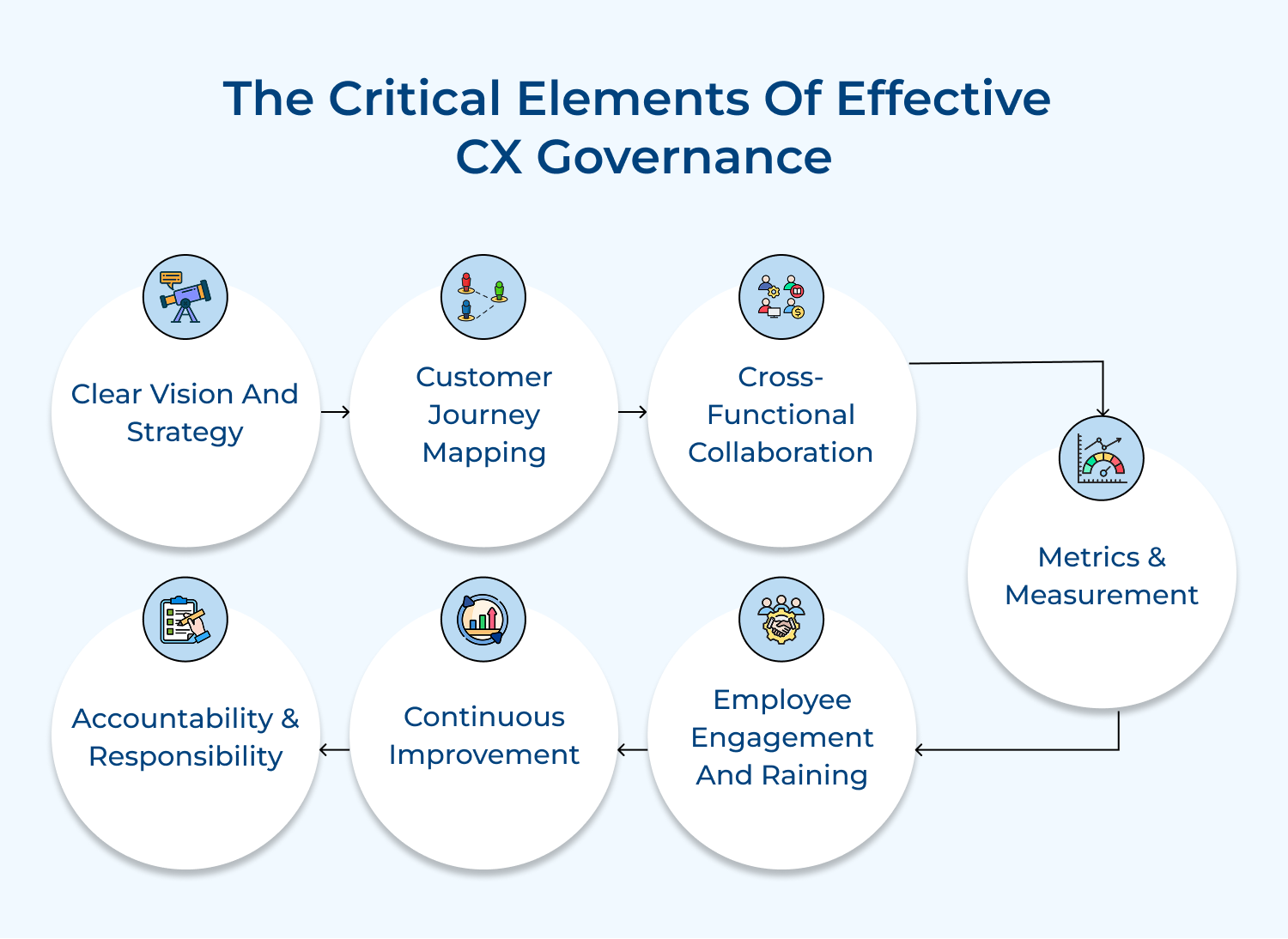
When it comes to CX governance, there are five critical elements to consider:
Increase your customer loyalty, improve brand reputation and drive revenue growth by focusing on customer experience governance.
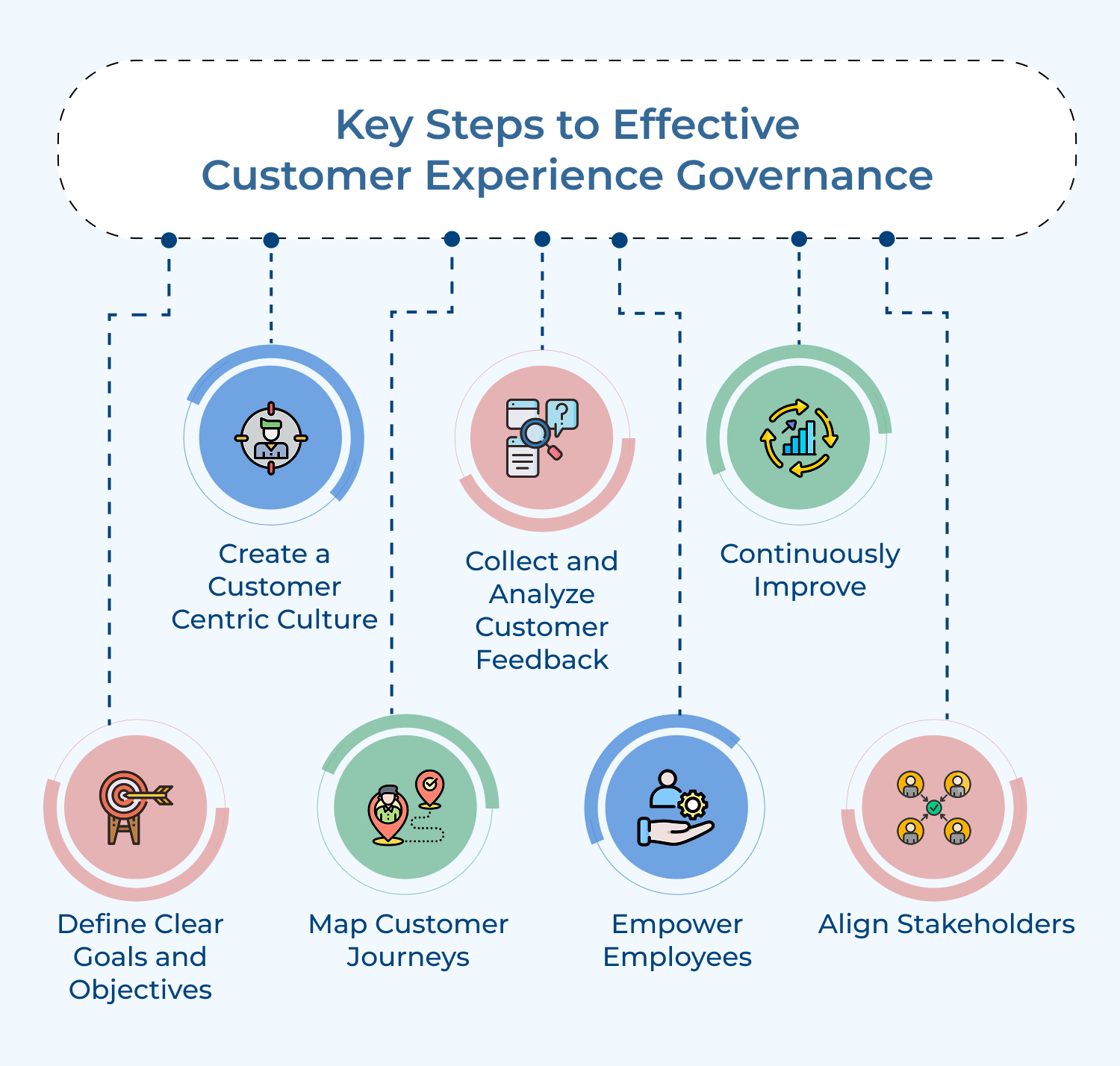
The first step in effective customer experience governance is to define clear governance goals and objectives. Understand what you want to achieve through your customer experience efforts while setting specific, measurable, attainable, relevant and time-bound (SMART) goals. It will provide a clear governance framework for your initiatives as well as allow you to track success.
Customer experience governance should be ingrained in the company’s culture. Everyone, from top-level executives to front-line employees, should understand the importance of customer experience and be committed to delivering exceptional experiences. Impart a customer-centric culture by providing training, resources and incentives that encourage employees to prioritize as well as exceed customer expectations.
Effectively govern customer experiences to understand the customer journey. Map out the various touchpoints and interactions a customer has with your brand, from initial awareness to post-purchase support. Identify pain points, areas for improvement and opportunities to delight customers at each stage. The information will guide your governance efforts as well as help you prioritize initiatives.
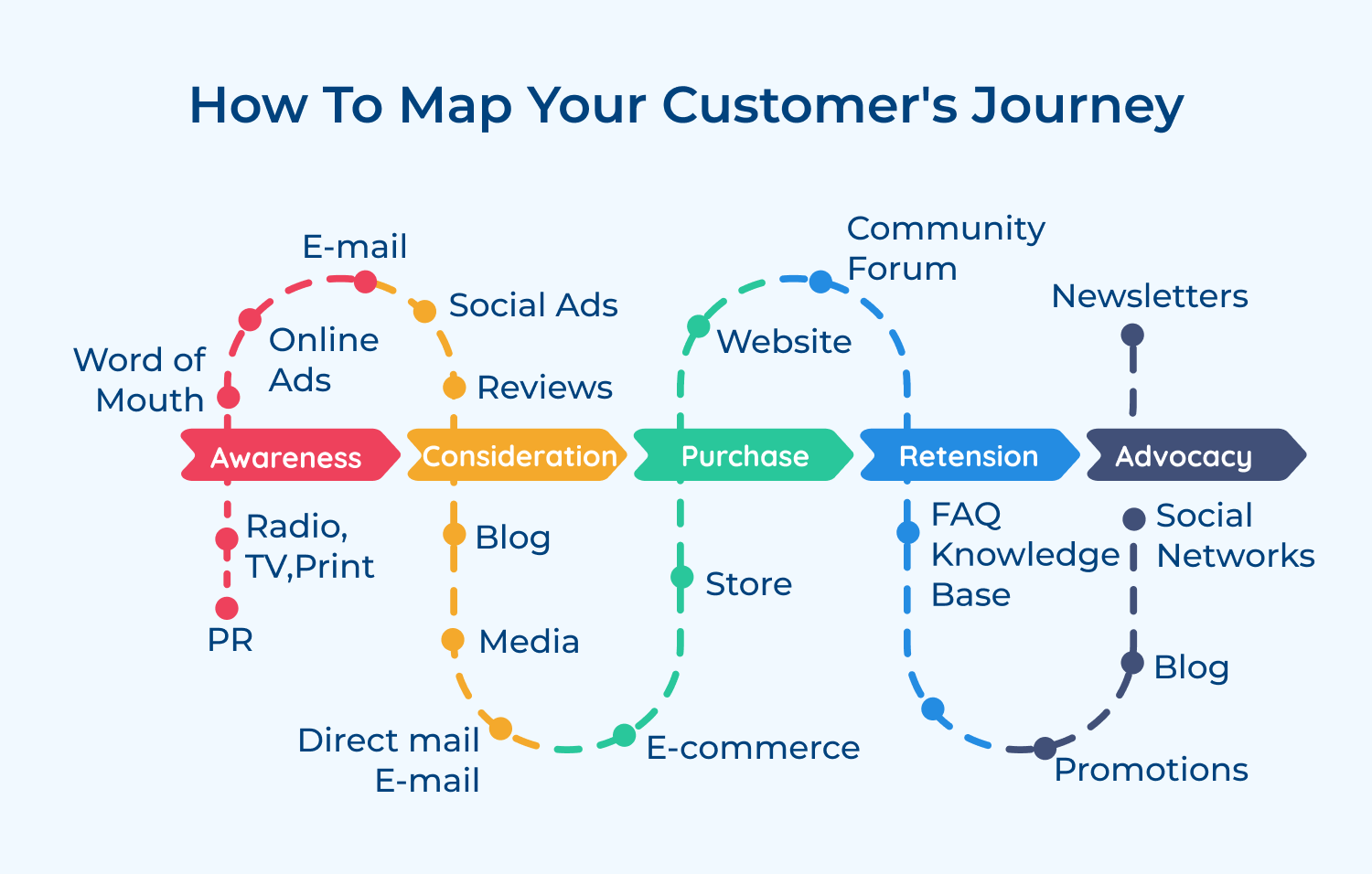
Regularly collect feedback from your customers to understand their needs, preferences and satisfaction levels. Utilize surveys, focus groups, social media listening and other tools to gather both quantitative as well as qualitative data. Analyze the feedback to identify trends, uncover insights and make informed decisions on how to improve the customer experience.
Effective governance processes require empowering employees to take ownership of the customer experience. Provide them with the necessary tools, training and authority to resolve issues, make decisions, as well as go the extra mile to satisfy customers. Encourage cross-functional collaboration and empower employees to share ideas related to improving customer experience.
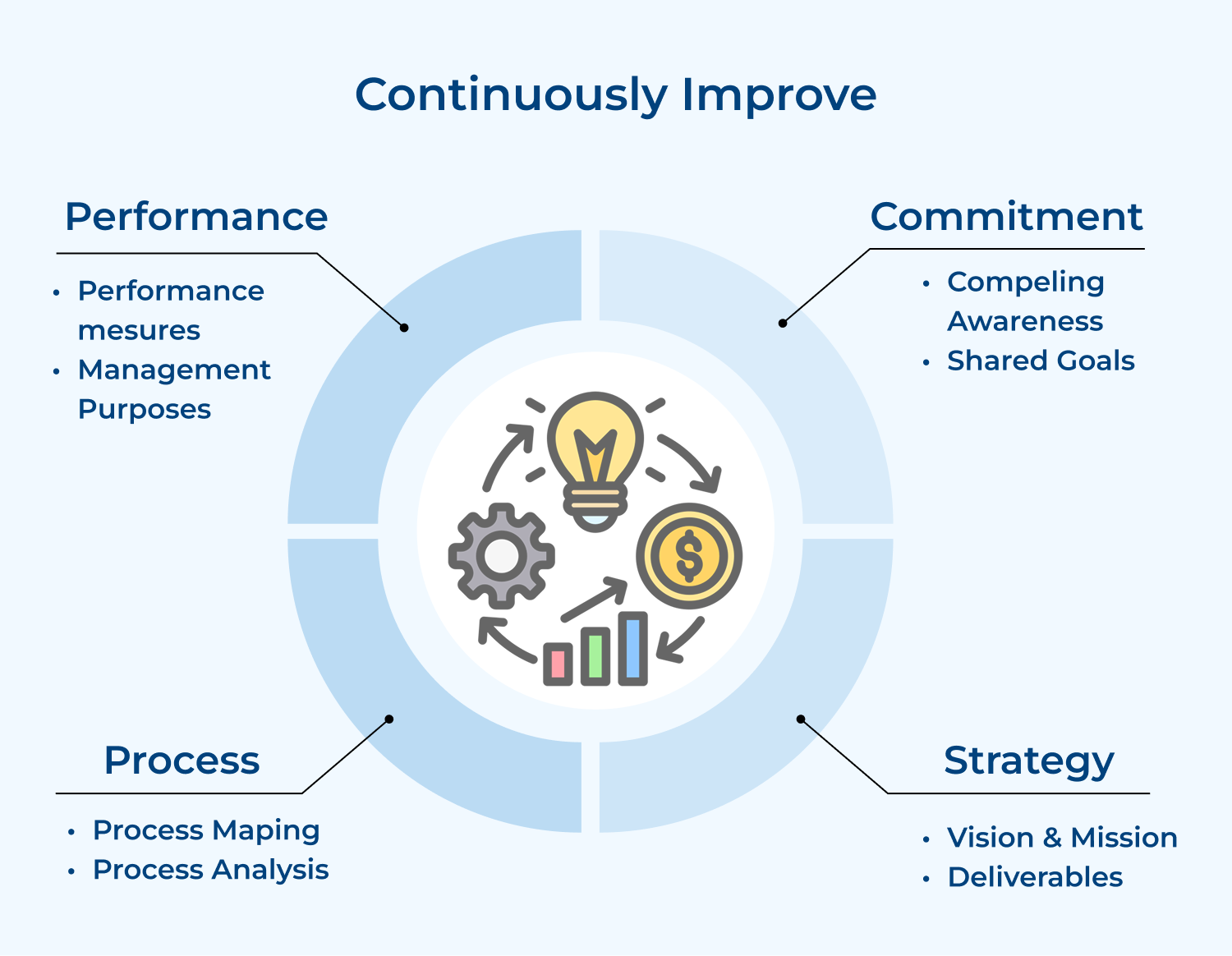
Customer experience governance is an ongoing process that requires constant monitoring and improvement. Regularly assess your customer experience initiatives and metrics, such as Net Promoter Score (NPS) or customer satisfaction (CSAT) scores. Identify areas where you are falling short and develop action plans to address these gaps. Embrace a culture of continuous improvement as well as adaptability to stay ahead of evolving customer expectations.
Customer experience governance involves collaboration and alignment across various stakeholders within the organization. Establish a cross-functional governance team comprising representatives from marketing, sales, customer support, operations and other relevant departments. The team should meet regularly to discuss customer experience strategies, share insights and coordinate efforts to ensure consistency across all touchpoints.
Exceptional customer experience governance structure ensures that their customers receive the best possible service. Let’s look at some examples of companies that have excelled in this area.

Apple is widely recognized for its exceptional customer experience, from the moment customers step into their stores to the after-sales support they offer. One of the key elements of their customer experience governance is their focus on simplicity and ease of use. Whether it’s their products, packaging, or user interfaces, It ensures that everything is intuitive as well as user-friendly. They also have well-trained and knowledgeable staff that provide personalized assistance to customers, aiming to address their queries or concerns effectively.
Zappos, an online shoe and clothing retailer, has built its reputation on providing exceptional customer service. They have implemented a customer-centric culture where employees are empowered to go above and beyond to meet customer needs. It offers free shipping and a generous return policy, making it easy for customers to shop without any worries. They also have a 24/7 customer service department that is readily available to assist customers with any issues or inquiries they may have. Its dedication to creating a seamless and positive customer experience has earned them a loyal customer base.
Amazon is known for its customer-centric approach as well as relentless focus on convenience. From their easy-to-use website to their fast and reliable delivery services, It has set the standard for online shopping. They have also prioritized customer feedback and reviews, allowing customers to make informed purchasing decisions. Its customer experience governance is based on data-driven insights as well as continuous improvement, ensuring that they meet and exceed customer expectations.
Starbucks is famous not only for its coffee but also for the exceptional customer experience it provides. They have created a welcoming environment in their stores, where customers can relax and enjoy their beverages. It invests in training their employees to deliver personalized and attentive service, applying their knowledge of customer preferences along with customization options. They also engage with customers through their mobile app, offering rewards and personalized offers based on their purchase history.
Let’s discuss the ten best practices of customer experience governance that can help businesses thrive in a competitive market.
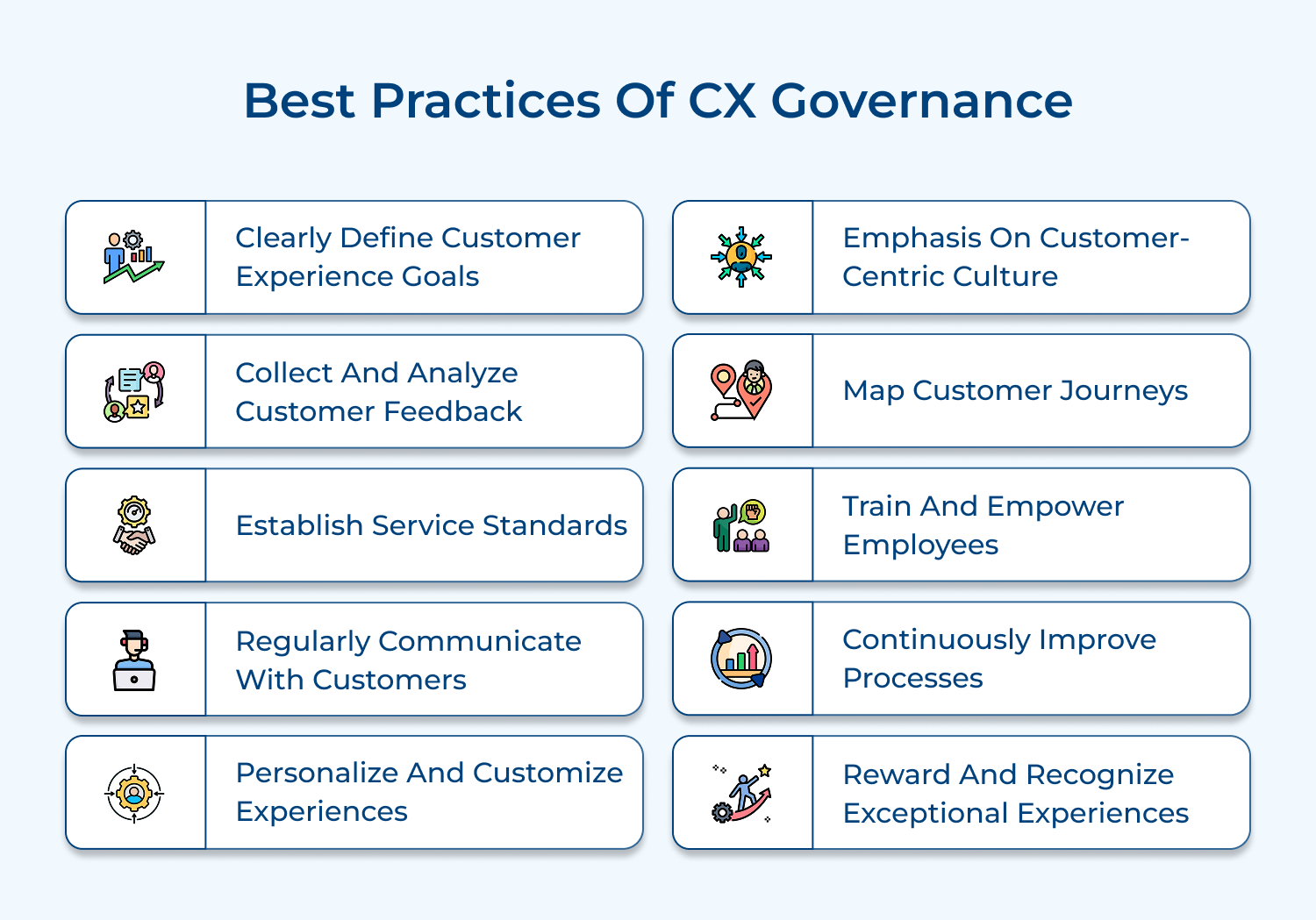
Companies can build strong customer relationships and achieve long-term success by prioritizing exceptional customer service. It involves establishing guidelines, processes and standards that guide how organizations deliver exceptional customer experiences.
Effective customer experience governance is an ongoing process that requires commitment and dedication. Whether it’s through empowering employees or hassle-free processes, exceptional customer experience governance is vital in creating memorable experiences that keep customers coming back.

What are the DOs and DON’Ts of CX Governance?
Do define your goals of CX governance clearly across the organization. Establish a cross-functional team responsible for overseeing CX initiatives. Invest in analytics tools to gather insights on customer satisfaction. Encourage a customer-centric culture within the organization through training and awareness programs. Don’t neglect the importance of leadership buy-in and support for CX governance. Don’t restrict CX governance to a single department; involve all relevant teams and stakeholders.
What are the structures of CX governance?
CX governance is centralized under a dedicated team responsible for overseeing CX initiatives company-wide. Meanwhile, each business unit has its own CX governance team responsible for managing CX strategies within their respective areas. The approach combines elements of both centralized and decentralized structures. It involves a central CX governance team responsible for setting overall CX strategies and decentralized teams ensure their implementation at the business unit level. The structure strikes a balance between consistency and flexibility.
Why is governance essential to propelling innovation in customer experience?
Governance is essential for propelling innovation in customer experience because it provides the necessary structure, accountability and strategic direction. Governance ensures that CX initiatives are aligned with the organization’s overall strategy and goals. Effective governance ensures that individuals or teams are accountable for the success of CX initiatives. Governance helps allocate resources effectively, ensuring that innovation is supported with the necessary budget, technology and human capital.
How can data support Customer Experience Governance?
Data supports Customer Experience Governance by providing objective measurements to track customer satisfaction, identify pain points, and validate improvement initiatives. Analytics enable companies to quantify customer experiences across touchpoints, reveal hidden trends, and demonstrate ROI of CX investments. This evidence-based approach ensures decisions align with actual customer needs rather than assumptions.
 https://omni24.io/wp-content/uploads/2026/08/Omnichannel-Chatbots.png
1256
2400
Tushar Joshi
https://omni24.io/wp-content/uploads/2023/04/Omni-Logo-1.svg
Tushar Joshi2026-08-13 04:43:302026-08-13 04:43:30How Omnichannel Chatbots Improve Your Customer Experience
https://omni24.io/wp-content/uploads/2026/08/Omnichannel-Chatbots.png
1256
2400
Tushar Joshi
https://omni24.io/wp-content/uploads/2023/04/Omni-Logo-1.svg
Tushar Joshi2026-08-13 04:43:302026-08-13 04:43:30How Omnichannel Chatbots Improve Your Customer Experience https://omni24.io/wp-content/uploads/2026/08/Ecommerce-Chatbots-1.png
1256
2400
Tushar Joshi
https://omni24.io/wp-content/uploads/2023/04/Omni-Logo-1.svg
Tushar Joshi2026-08-12 03:57:552026-08-13 04:37:30Ecommerce Chatbots: What are They and Their Use Cases
https://omni24.io/wp-content/uploads/2026/08/Ecommerce-Chatbots-1.png
1256
2400
Tushar Joshi
https://omni24.io/wp-content/uploads/2023/04/Omni-Logo-1.svg
Tushar Joshi2026-08-12 03:57:552026-08-13 04:37:30Ecommerce Chatbots: What are They and Their Use Cases https://omni24.io/wp-content/uploads/2026/08/Omnichannel-Ecommerce.png
1256
2400
Tushar Joshi
https://omni24.io/wp-content/uploads/2023/04/Omni-Logo-1.svg
Tushar Joshi2026-08-11 04:50:362026-08-11 04:50:36How to Create an Omnichannel Ecommerce Strategy: 7 Best Ways
https://omni24.io/wp-content/uploads/2026/08/Omnichannel-Ecommerce.png
1256
2400
Tushar Joshi
https://omni24.io/wp-content/uploads/2023/04/Omni-Logo-1.svg
Tushar Joshi2026-08-11 04:50:362026-08-11 04:50:36How to Create an Omnichannel Ecommerce Strategy: 7 Best Ways
Whether it’s about acquire, engage or support – Omni24 covers all your customer engagement needs in one complete platform.

Copyright ©2026 Veemo All rights reserved.
CA, Los Angeles, Hall Ave, 19011