How to Create Customer Profile: Best Practices, Templates
Explore the art of customer profiles, crucial for businesses seeking personalized marketing. Uncover effective strategies and elevate customer engagement for success.

Explore the art of customer profiles, crucial for businesses seeking personalized marketing. Uncover effective strategies and elevate customer engagement for success.
Consumer behavior is constantly evolving, and businesses need to keep up with these changes in order to stay relevant. Identifying and understanding your customer profile is essential for any business looking to market their products or services effectively.
Over 59% of the customers want businesses to collect data regarding them to enhance personalization. The information can then be used to tailor marketing strategies and products to better meet their customers’ expectations.
We will explore the importance of creating a customer profile and highlight common mistakes businesses should avoid in the process.
A customer profile is a detailed representation of your ideal customer, capturing their demographic information, behavioral patterns, preferences, and pain points. It’s a structured collection of data that paints a comprehensive picture of who your customers are, allowing you to understand their needs on a deeper level and anticipate their expectations.
Customer profiles serve as the foundation for effective business strategy by enabling personalized interactions that resonate with your audience. They help you create targeted marketing campaigns, develop relevant products and deliver experiences that truly matter to customers.
Key objectives:
Customer profiling is the process of creating detailed descriptions of your ideal customers based on various factors like demographics and purchasing patterns. Let’s learn about how it benefits:

Here are some benefits of customer profiling:
1. Personalized Communication to Enhance Customer experience
Customer profiling allows you to create more personalized and targeted communication with your customers. By understanding their preferences and interests, you can deliver relevant content as well as offers that resonate with them. The personalized communication not only improves customer experience but also enhances brand loyalty and engagement.
2. Targeted Marketing Campaigns
Customer profiling allows you to identify specific customer segments that are most likely to be interested in your products or services. The information can be then used to create targeted marketing campaigns that resonate with each segment’s unique characteristics and preferences. The targeted approach saves time and resources by focusing your efforts where they are most likely to yield results.
3. Improved Product Development
Understanding your customer’s needs and preferences is vital for developing successful products. Customer profiling provides valuable insights into what drives purchase decisions, helping you identify gaps in the market and develop offerings that meet specific customer demands. It leads to higher customer satisfaction as well as increased sales.
4. Data-Driven Decision Making from customer insights
Customer profiling provides you with actionable data and insights that drive informed decision-making. By analyzing customer demographic information, purchasing patterns, and behaviors, you make data-driven decisions regarding pricing, product positioning as well as promotional activities. It minimizes guesswork and maximizes the effectiveness of your marketing efforts.
5. Efficient Lead Generation
Customer profiling helps you identify and focus on high-value leads that are more likely to convert. Analyze your existing customer base to figure out the characteristics and behaviors exhibited by your most valuable customers. The knowledge allows you to target similar prospects and allocate your resources more efficiently, resulting in higher conversion rates as well as increased ROI.
6. Enhanced Marketing Strategies
Profiling guides the development of comprehensive marketing strategies that align with your target audience. Learn their preferences, pain points and motivations to create messaging that resonates, choose the most effective marketing channels while also optimizing your marketing mix. It leads to more impactful and successful marketing campaigns.
7. Efficient Resource Allocation
Customer profiling helps you optimize your allocation of resources by focusing on customer segments that provide the greatest return on investment. Identify the most profitable customer profiles and allocate resources such as marketing budgets, time, manpower, etc. where they will have the most impact. It ensures that your efforts are directed strategically and efficiently.
Creating a customer profile is an essential step in developing a successful marketing strategy. If you’re unsure where to start, here are some steps to help you create a customer profile:

Begin by defining the group of people who are most likely to be interested in your product or service. Consider demographics such as age, gender, location, income and occupation. It will give you a broad understanding of your target market.
Pro tips:
Start by gathering market research to gain insights into your target market. Look for data and statistics related to demographics, behaviors, interests and purchasing patterns. The information can be collected through surveys, interviews, focus groups, or online research.
Pro tips:
Once you have gathered enough data, create fictional representations of your ideal customers, known as customer personas. Give each persona a name, age, occupation, interests and goals. It will make it easier to relate to and understand your target audience.

Pro tips:
Examine your target audience’s behavior patterns to understand how they interact with products or services similar to yours. Look at their online behavior, buying habits, frequency of purchases and preferred channels of communication. The information can help you personalize your marketing strategy.
Pro tips:
Once you have gathered all the relevant data, start creating individual customer profiles based on the key findings. These profiles should include a fictional representation of your typical customer, incorporating both demographic and psychographic information. Give your customer profile a name and assign relevant details to make it more tangible.
Pro tips:
Identify the pain points, challenges and needs of your target audience. What problems are they trying to solve? What are their goals and aspirations? The understanding allows you to tailor your marketing messages to address their specific pain points and offer relevant solutions.

Pro tips:
Utilize data analytics tools to track and analyze customer behavior as well as engagement on your website, social media platforms, other marketing channels, etc. It will provide valuable insights into their preferences, purchasing habits and overall satisfaction. Use the information to continuously refine and update your customer profile.
Pro tips:
A buyer persona is a more detailed and comprehensive representation of your customer profile. It includes additional information such as personality traits, hobbies, preferred communication channels, and media consumption habits. The persona helps you understand your customers on a more personal level and allows you to develop targeted marketing strategies.
Pro tips:
Customer profiling is an essential component of any successful marketing strategy. To help you grasp the concept further, here are some examples of customer profiles.
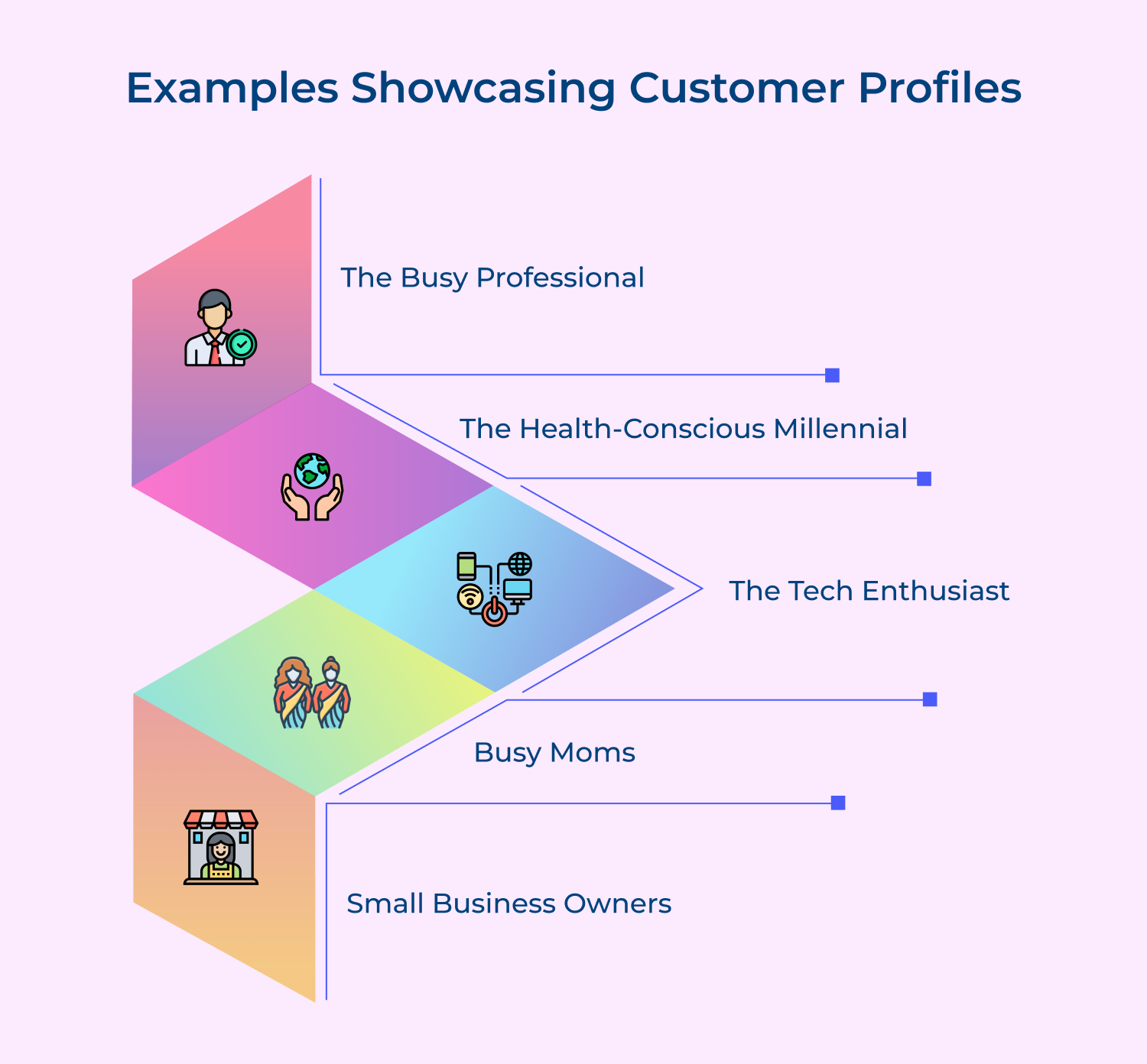
The customer profile represents individuals who have demanding jobs and little time to spare. They value efficiency, convenience and quality. They prefer products that can save them time and make their lives easier. For example, a busy professional might prefer a meal delivery service or a streamlined online shopping experience.
The customer profile represents millennials who prioritize their health and well-being. They are often interested in organic, sustainable and locally sourced products. They are active on social media and rely on online reviews as well as recommendations when making purchasing decisions. The customer might be attracted to a company that offers eco-friendly products or a fitness app that tracks their progress.
The profile represents individuals who are passionate about technology and always eager to try the latest innovations. They are early adopters who rely heavily on online reviews, blogs, and social media for product recommendations. The tech enthusiast seeks out companies that offer cutting-edge products and have a strong online presence.
Busy moms are typically in their 30s or 40s, often juggling multiple responsibilities. They are primary decision-makers for household purchases, ranging from groceries to children’s clothing. These moms prioritize quality, efficiency and convenience. Marketers targeting this group can create content that speaks to their challenges, offer time-saving solutions and provide excellent customer service.
These individuals are entrepreneurs or own small businesses in various industries. They are motivated, innovative and looking for solutions to grow their business. Marketers targeting small business owners can provide resources, strategies to enhance productivity, increase online presence and attract more customers. Utilizing platforms like LinkedIn, email marketing and industry-specific events can effectively reach the customer profile.
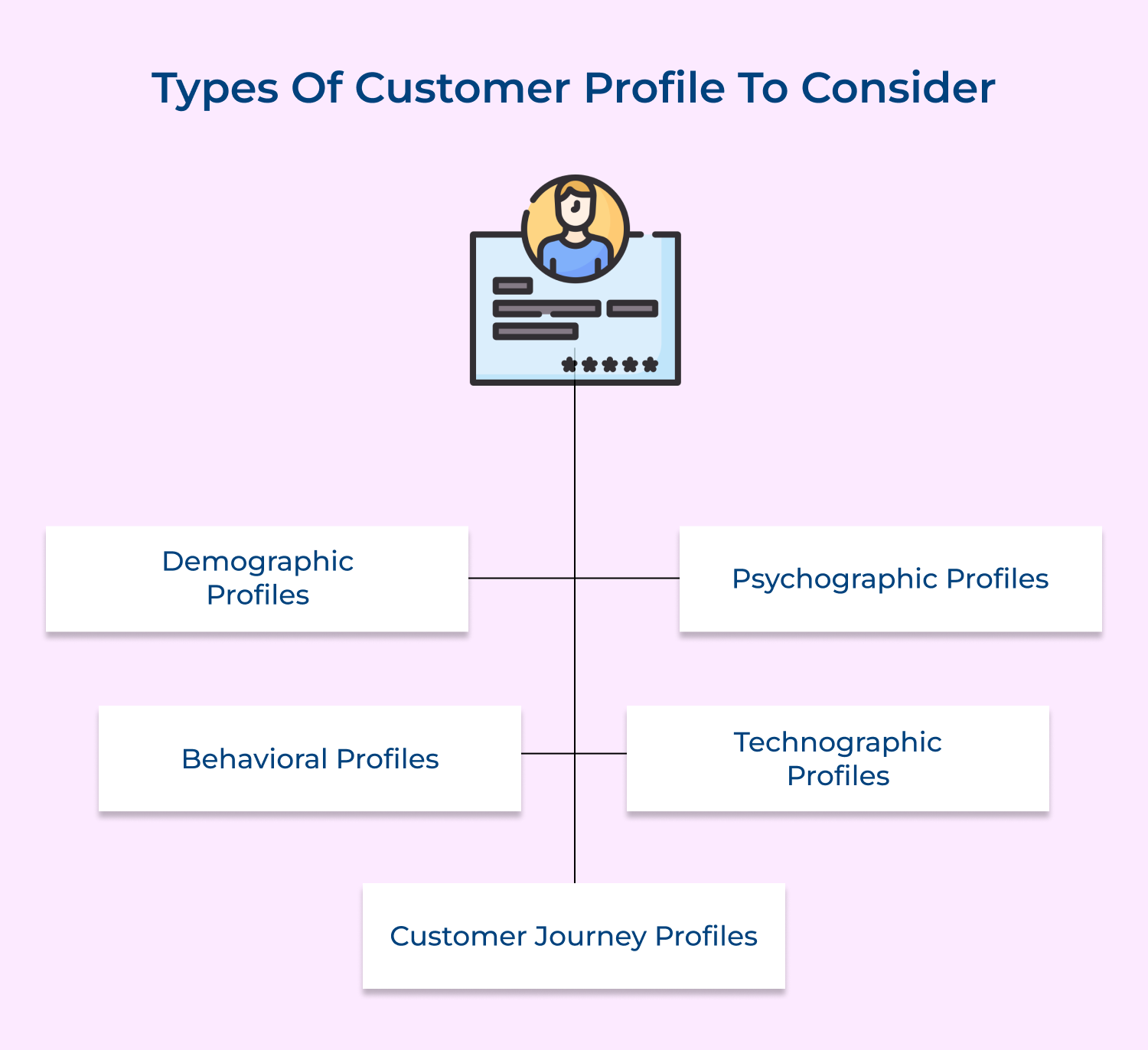
What is most important for the 99% of the marketers is the ability to create, store as well as leverage customer profile. Let’s explore different types of customer profiles:
1. Demographic Profiles
The type of customer profile focuses on demographic information such as age, gender, income level, education and location. Understanding these demographic characteristics helps businesses target their marketing efforts towards specific age groups, genders or income brackets.
2. Psychographic Profiles
Psychographic profiles dive deeper into a customer’s personality traits, values, attitudes, interests and lifestyle choices. The profile focuses on understanding the motivations, desires, and behaviors of customers. Understand what drives their target audience to create marketing messages that resonate with their customers on a deeper level.
3. Behavioral Profiles
Behavioral profiles look at a customer’s purchasing behavior, brand loyalty, shopping frequency and preferences. The type of profile helps businesses understand how their customers interact with their products or services. Businesses should analyze the buying patterns to tailor their marketing strategies to encourage repeat purchases and customer loyalty.
4. Technographic Profiles
The profile focuses on a customer’s use of technology, including their preferred devices, social media platforms and digital habits. By understanding a customer’s technological preferences, businesses can better target their marketing campaigns on the platforms and devices where their customers are most active.
5. Customer Journey Profiles
Customer journey profiles map out the various stages a customer goes through when interacting with a business. The profile helps businesses understand the touchpoints and interactions customers have along their buyer’s journey. Businesses can enhance their marketing efforts by learning the customer journey at each stage to guide the customer towards making a purchase.
Creating accurate customer profiles allows businesses to tailor their strategies to effectively reach their desired customers. Let’s take a closer look at these mistakes and how to avoid them.
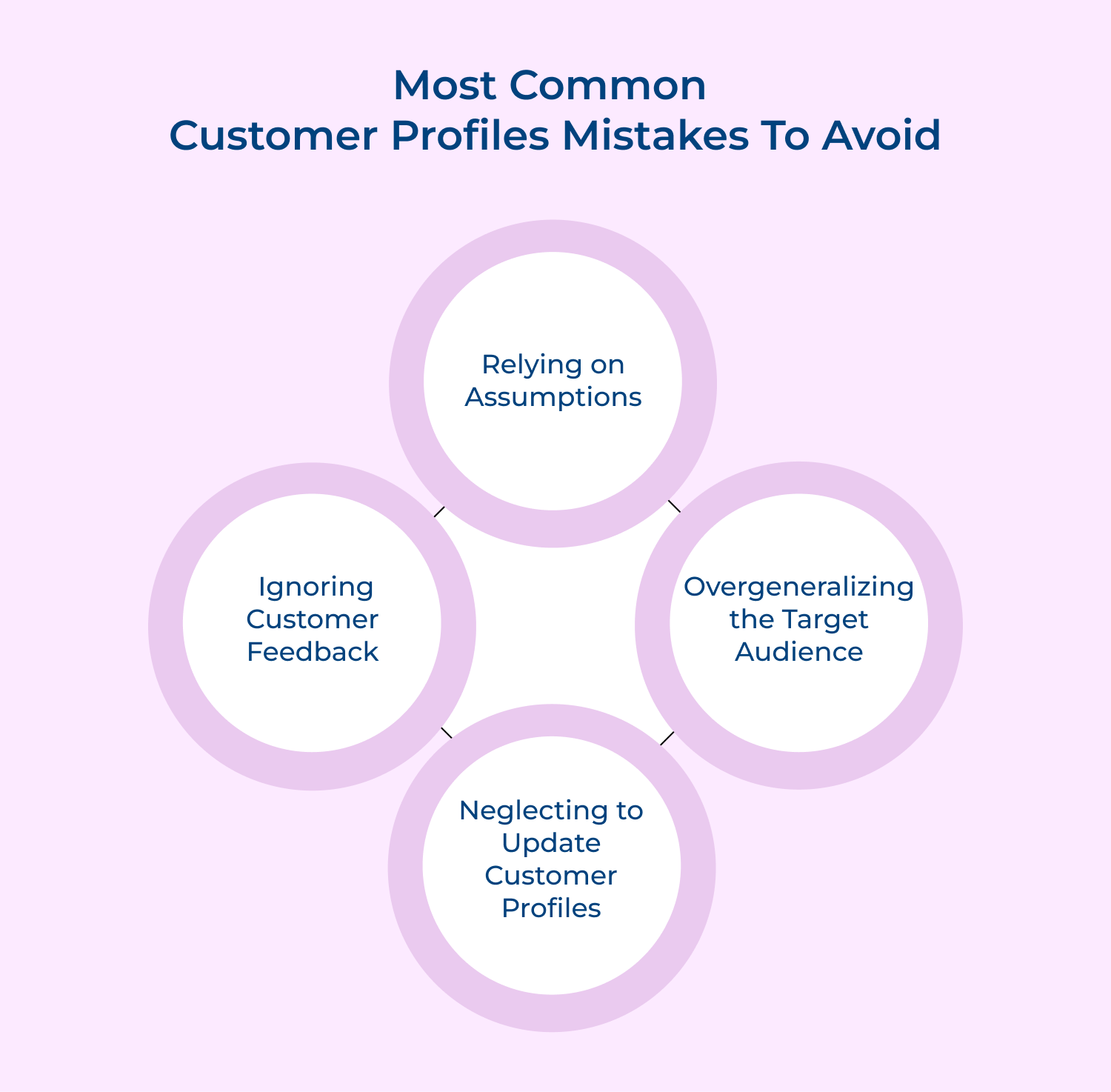
One of the biggest mistakes that marketers make is relying on assumptions rather than conducting proper research. 79% of the customers are more loyal to the businesses that understand them. Assuming that you know your customers can lead to inaccurate customer profiles and ineffective marketing strategies. It is essential to gather data and insights through market research, surveys and customer feedback to create accurate customer profiles.
Solution: Conduct thorough market research to understand your target audience’s demographics, interests, preferences and behaviors. Use tools like analytics, social media listening and customer feedback surveys to gather insights. The approach will help you develop accurate and data-driven customer profiles.
Another common mistake is overgeneralizing the target audience. Some marketers tend to create broad customer profiles that encompass a wide range of people. While it may be tempting to cast a wide net, the approach can dilute your marketing efforts and make it challenging to connect with specific customer segments.
Solution: Instead of creating broad customer profiles, focus on segmenting your target audience into smaller, more specific groups. Consider factors like age, gender, location, interests and behaviors to create niche customer profiles. By targeting specific segments, you can tailor your marketing messages and campaigns to resonate with each group individually.
Customer behaviors and preferences are not static. They evolve over time and failing to update customer profiles can result in ineffective marketing strategies. Customers’ needs, preferences, and behaviors may change due to various factors like technology advancements, cultural shifts, or economic conditions.
Solution: Regularly review and update your customer profiles to ensure they accurately reflect your target audience. Stay updated on industry trends, conduct periodic market research and analyze customer data to identify any relevant changes. You can adjust your marketing strategies to accommodate the evolving needs and preferences of your target audience.
Customer feedback is a valuable resource for understanding your target audience and improving your marketing efforts. Some marketers neglect to listen to their customers and incorporate their feedback into their customer profiles. Ignoring customer feedback can result in missed opportunities and the inability to connect with your audience effectively.
Solution: Actively collect as well as analyze customer feedback through surveys, social media platforms and customer support channels. Pay attention to what your customers are saying about your products, services and overall brand experience. Incorporate their feedback into your customer profiles to gain a deeper understanding of their needs, preferences and pain points. The approach will enable you to refine your marketing strategies and better serve your target audience.
Achieving great business outcomes relies heavily on understanding your customers. One way to gain valuable insights into your target audience is by creating customer profiles. The information allows you to tailor your marketing strategies, products and services to better meet their expectations.
Developing a deep understanding of your target audience helps to tailor your marketing efforts and business strategies to effectively meet their needs. Invest time and effort into developing as well as refining customer profiles, you will see tangible results in the form of increased customer satisfaction.

What is another name for a customer profile?
A customer profile can also be referred to as a buyer persona. It is essentially a detailed description or representation of your ideal customer. It includes information such as demographics, interests, behavior patterns and purchasing habits.
How important is customer profile?
Having a customer profile is crucial for any business, regardless of its size or industry. It helps you understand who your customers are, what motivates them and how they make purchasing decisions. The knowledge enables you to tailor your marketing strategies, products and services to meet their specific needs. By targeting the right audience with the right messaging, businesses can increase their chances of attracting and retaining customers, ultimately leading to higher profitability.
Why are customer profiles useful for a business?
Customer profiles serve as a guide for businesses to make informed decisions and implement effective marketing strategies. Understanding customer demographics and interests leads you to create more targeted marketing campaigns that connect deeply with your audience. A customer profile helps you find opportunities for product enhancements, new product development and even diversification. Lean the consumers pain points to deliver exceptional service that leads either to new customer acquisition if not, customer retention.
What is the customer profile form?
A customer profile form is a tool used to gather information about your customers. It typically includes fields for personal details like age, gender, location and occupation as well as information about interests, hobbies, purchasing habits, preferred communication channels, etc.
 https://omni24.io/wp-content/uploads/2026/09/Social-commerce-scaled.png
1340
2560
Webvision Solution
https://omni24.io/wp-content/uploads/2023/04/Omni-Logo-1.svg
Webvision Solution2026-10-23 12:18:272026-10-23 12:18:27What is Social Commerce and Why Does It Matter?
https://omni24.io/wp-content/uploads/2026/09/Social-commerce-scaled.png
1340
2560
Webvision Solution
https://omni24.io/wp-content/uploads/2023/04/Omni-Logo-1.svg
Webvision Solution2026-10-23 12:18:272026-10-23 12:18:27What is Social Commerce and Why Does It Matter? https://omni24.io/wp-content/uploads/2026/08/AI-Customer-Service-Agents.png
1256
2400
Webvision Solution
https://omni24.io/wp-content/uploads/2023/04/Omni-Logo-1.svg
Webvision Solution2026-09-21 04:48:512026-09-21 04:48:51How to Build an AI Customer Service Agents: 8 Key Steps
https://omni24.io/wp-content/uploads/2026/08/AI-Customer-Service-Agents.png
1256
2400
Webvision Solution
https://omni24.io/wp-content/uploads/2023/04/Omni-Logo-1.svg
Webvision Solution2026-09-21 04:48:512026-09-21 04:48:51How to Build an AI Customer Service Agents: 8 Key Steps https://omni24.io/wp-content/uploads/2026/08/Omnichannel-Conversational-AI.png
1256
2400
Tushar Joshi
https://omni24.io/wp-content/uploads/2023/04/Omni-Logo-1.svg
Tushar Joshi2026-09-16 03:51:072026-09-16 03:51:07How to Build Omnichannel Conversational AI Strategy
https://omni24.io/wp-content/uploads/2026/08/Omnichannel-Conversational-AI.png
1256
2400
Tushar Joshi
https://omni24.io/wp-content/uploads/2023/04/Omni-Logo-1.svg
Tushar Joshi2026-09-16 03:51:072026-09-16 03:51:07How to Build Omnichannel Conversational AI Strategy
Whether it’s about acquire, engage or support – Omni24 covers all your customer engagement needs in one complete platform.

Copyright ©2026 Veemo All rights reserved.
CA, Los Angeles, Hall Ave, 19011