How to Reduce Customer Response Time: Best Practices & Examples
Discover the art of swift customer response time! Strategies for ideal response times to ensure customer satisfaction, loyalty and business growth.

Discover the art of swift customer response time! Strategies for ideal response times to ensure customer satisfaction, loyalty and business growth.
Customers expect quick service, and with advancements in technology, it is easier than ever for businesses to provide timely responses. Many companies still struggle with response times, which can have a detrimental impact on customer satisfaction and loyalty.
Customer response time is not to be taken lightly. It can positively or negatively impact your business’s reputation and bottom line. Understanding the importance of quick and efficient communication with customers can help you stay ahead of the competition as well as retain customer loyalty.
We will explore the various aspects of customer response time and provide strategies to improve it for the benefit of your business.
Customer response time refers to the duration it takes for a business to provide a response to customer inquiries or feedback. It can be measured in various ways, such as the time it takes to answer phone calls, reply to emails, respond to social media messages or resolve support tickets.
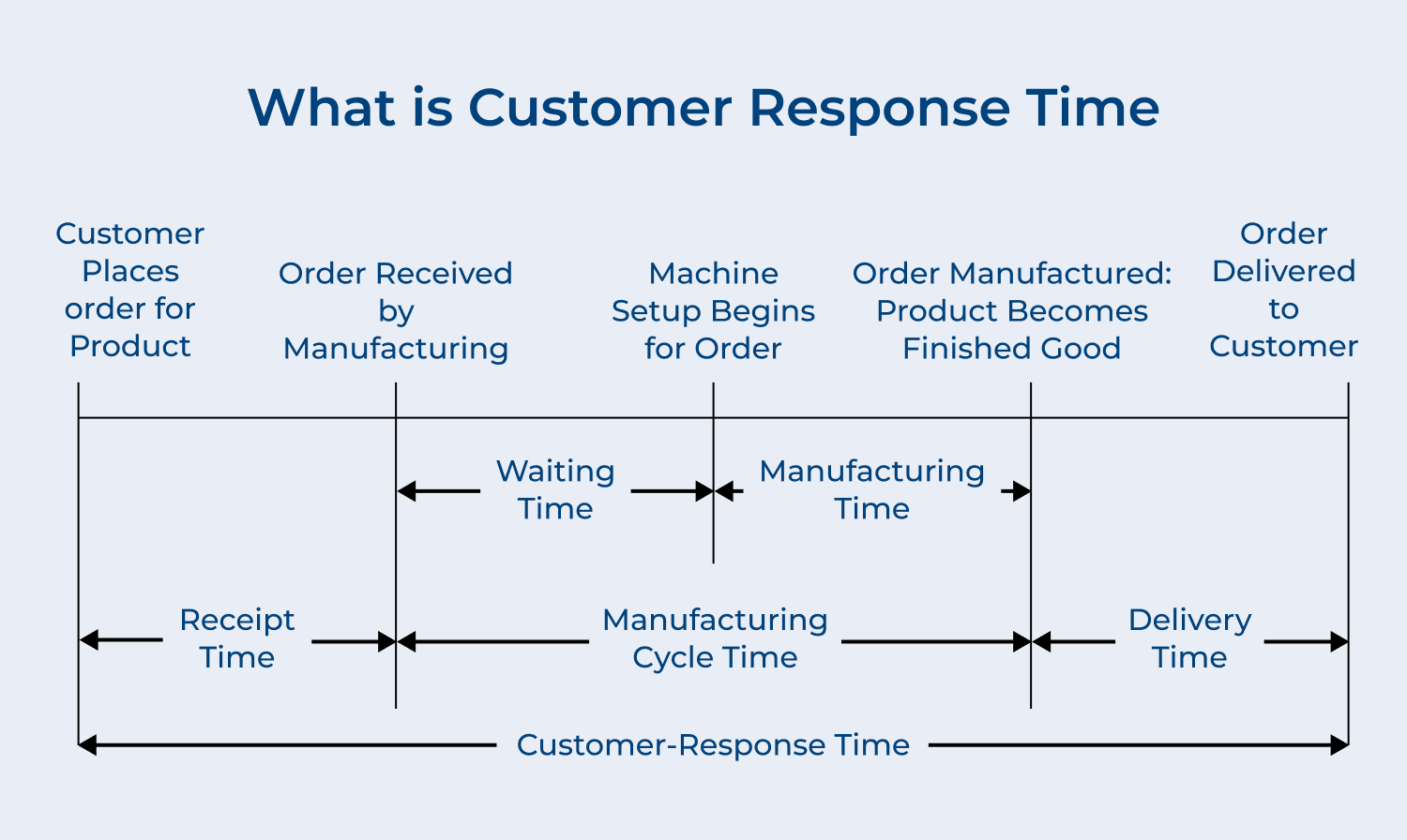
The objective of customer response time is to ensure that customer’s needs and concerns are addressed promptly as well as effectively. When customers receive quick and helpful responses, they feel valued as well as respected. The positive experience builds trust in the business and enhances customer loyalty.
The ideal customer service response time refers to the time it takes for a business to respond to a customer’s inquiry or request for assistance. It is the timeframe within which a customer can expect to receive a meaningful response. Usually shoppers don’t want to wait for a response – as per a survey, the maximum time for them to wait is no more than 10 minutes (especially if its sales)! While there is no one-size-fits-all answer to what the ideal response time should be, it generally depends on the nature of the inquiry and the industry.
Here are a few reasons why the ideal customer service response time is important:
Average First Response Time refers to the average duration it takes for a business or organization to respond to an initial customer contact or query. Average response time is typically measured in minutes or hours, and it plays a vital role in customer satisfaction as well as overall brand perception.
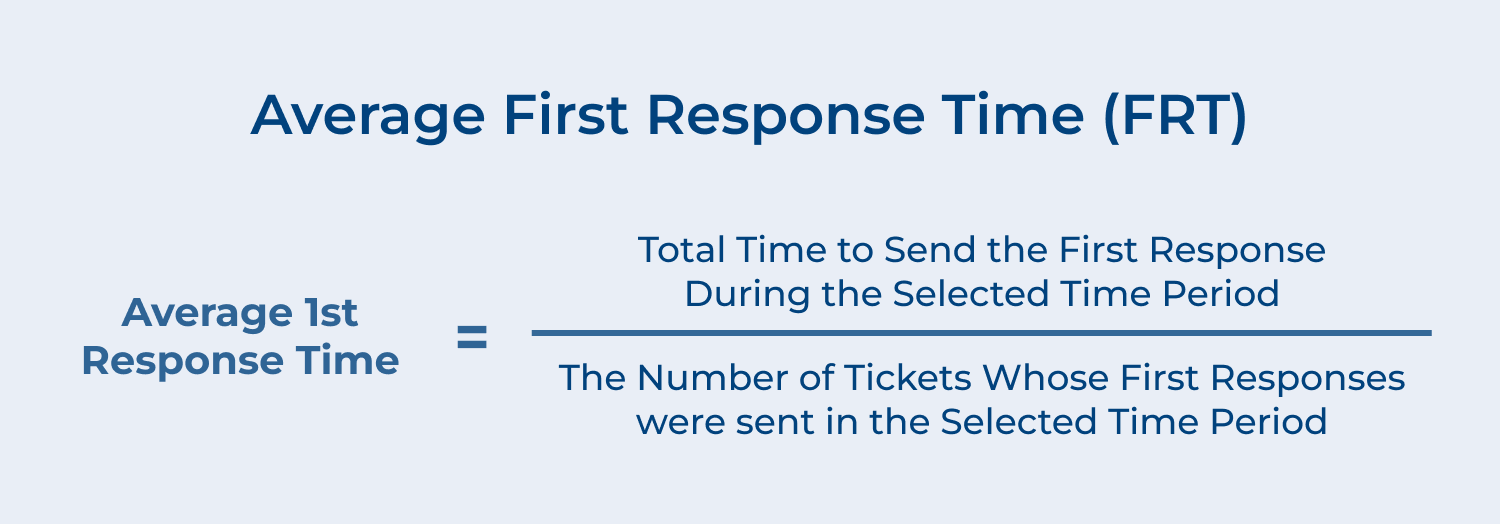
The FRT reflects a company’s internal efficiency and effectiveness in handling customer
inquiries. A high FRT suggests that there may be bottlenecks or inefficiencies in the customer service department, which can affect the overall customer experience. A low FRT indicates that the company has streamlined processes and is able to address customer inquiries in a timely manner.
First vendors to respond to leads get 30-50% of the sales locked! Here are a few ways you can streamline your customer service request processes and reduce response time.
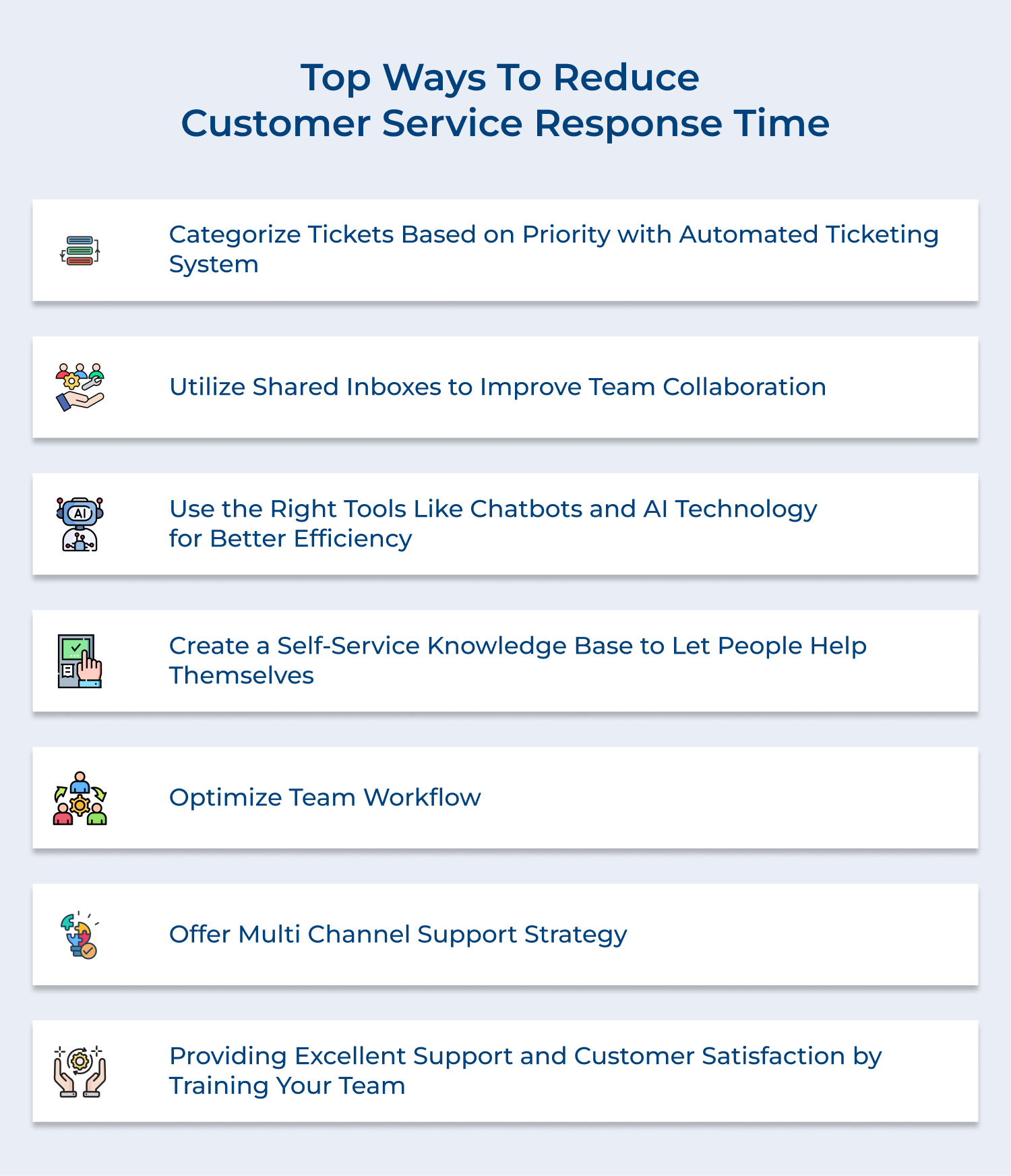
Automated ticketing systems allow for easy categorization of tickets into different priority levels such as high, medium, and low. It ensures that urgent and critical issues are dealt with promptly, preventing any potential impact on business operations or customer experience.
Here are a few pro tips:
Shared inboxes provide a centralized platform where team members can manage and respond to customer inquiries collectively. The collaborative approach ensures that multiple team members can access and respond to customer emails, messages, or tickets in a timely manner. By utilizing shared inboxes, businesses can streamline their customer service processes and provide quick resolutions to customer issues.
Here are some pro tips:
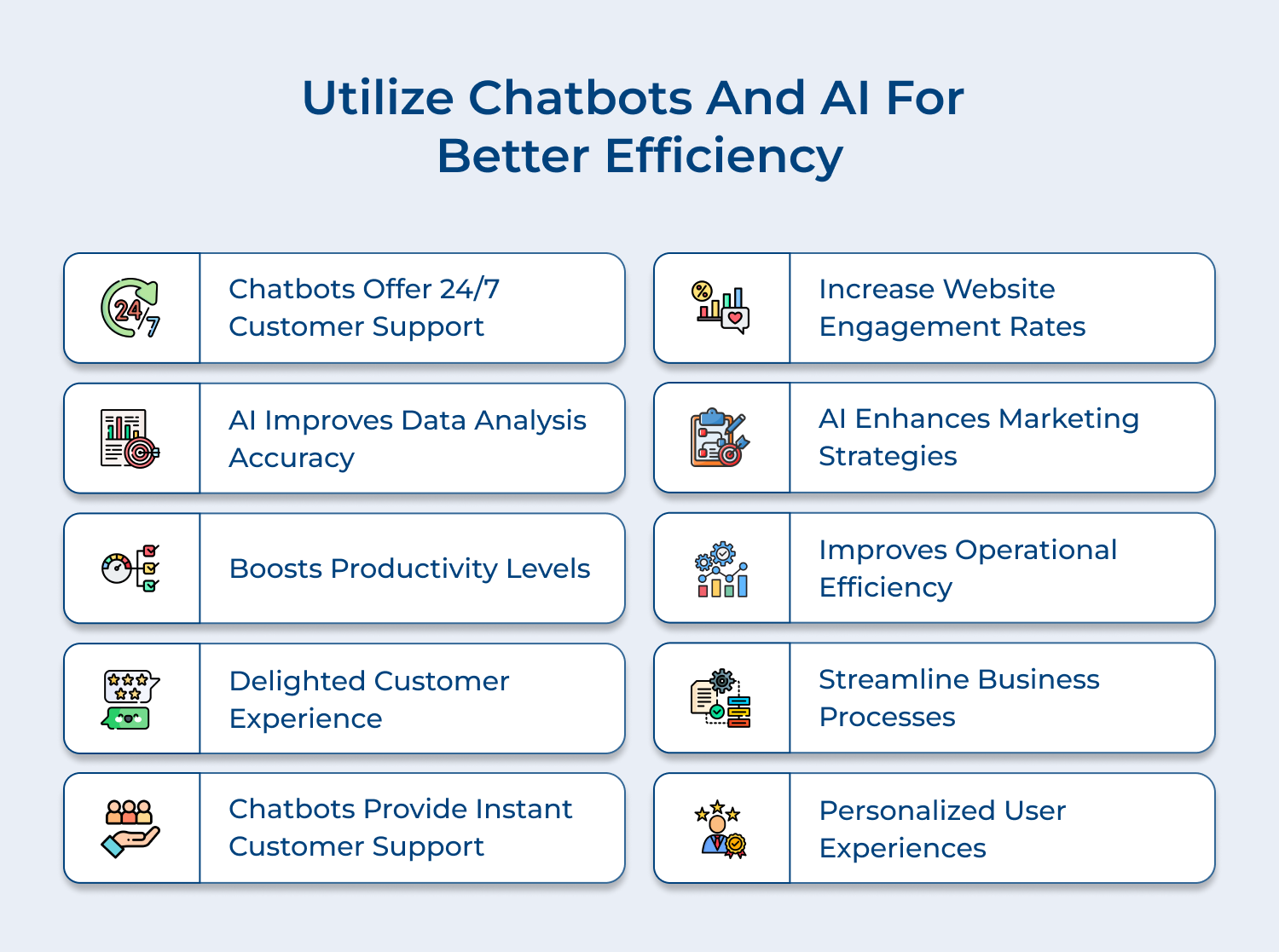
Customers expect quick along with immediate assistance, and any delays can lead to frustration as well as potentially lost business. By utilizing chatbots and AI technology, businesses can provide round-the-clock support, ensuring that customer inquiries are addressed promptly, even outside regular business hours.
Here are some pro tips:
A self-service knowledge base is an online resource that contains comprehensive information about a product or service. It serves as a central hub of information that customers can access anytime, anywhere. By providing customers with the tools to help themselves, businesses can reduce the number of inquiries that require human assistance, ultimately decreasing response time.
Here are some pro tips:
Efficient workflows ensure that tasks are completed promptly, allowing customer service representatives to respond to customer inquiries and issues in a timely manner. It is essential for maintaining customer satisfaction and loyalty, as customers appreciate prompt responses as well as resolutions. Faster response times also contribute to increased productivity, as representatives can handle more cases in a shorter period.
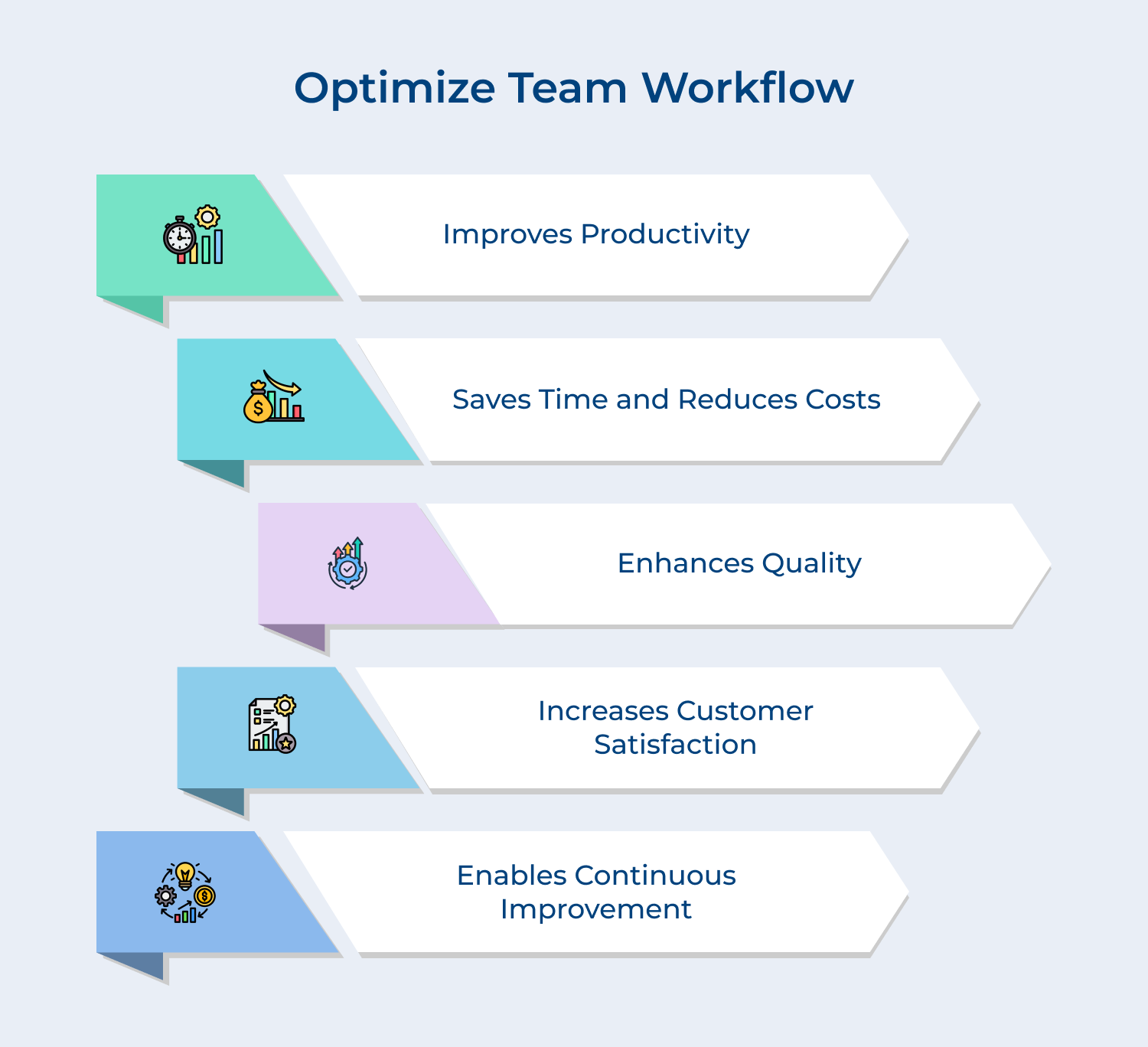
Here are some pro tips:
A multi-channel support strategy involves providing customer service through various platforms such as phone, email, live chat, social media, and self-help knowledge bases. The approach ensures that customers have multiple avenues to reach out for assistance, allowing businesses to address their concerns promptly.
Here are some pro tips:
Providing excellent support and ensuring customer satisfaction are key goals for any business. One effective way to achieve this is by training your team to reduce customer service response time. Reducing customer service response time is important because it demonstrates your commitment to addressing customer needs promptly and efficiently.
Here are some pro tips:
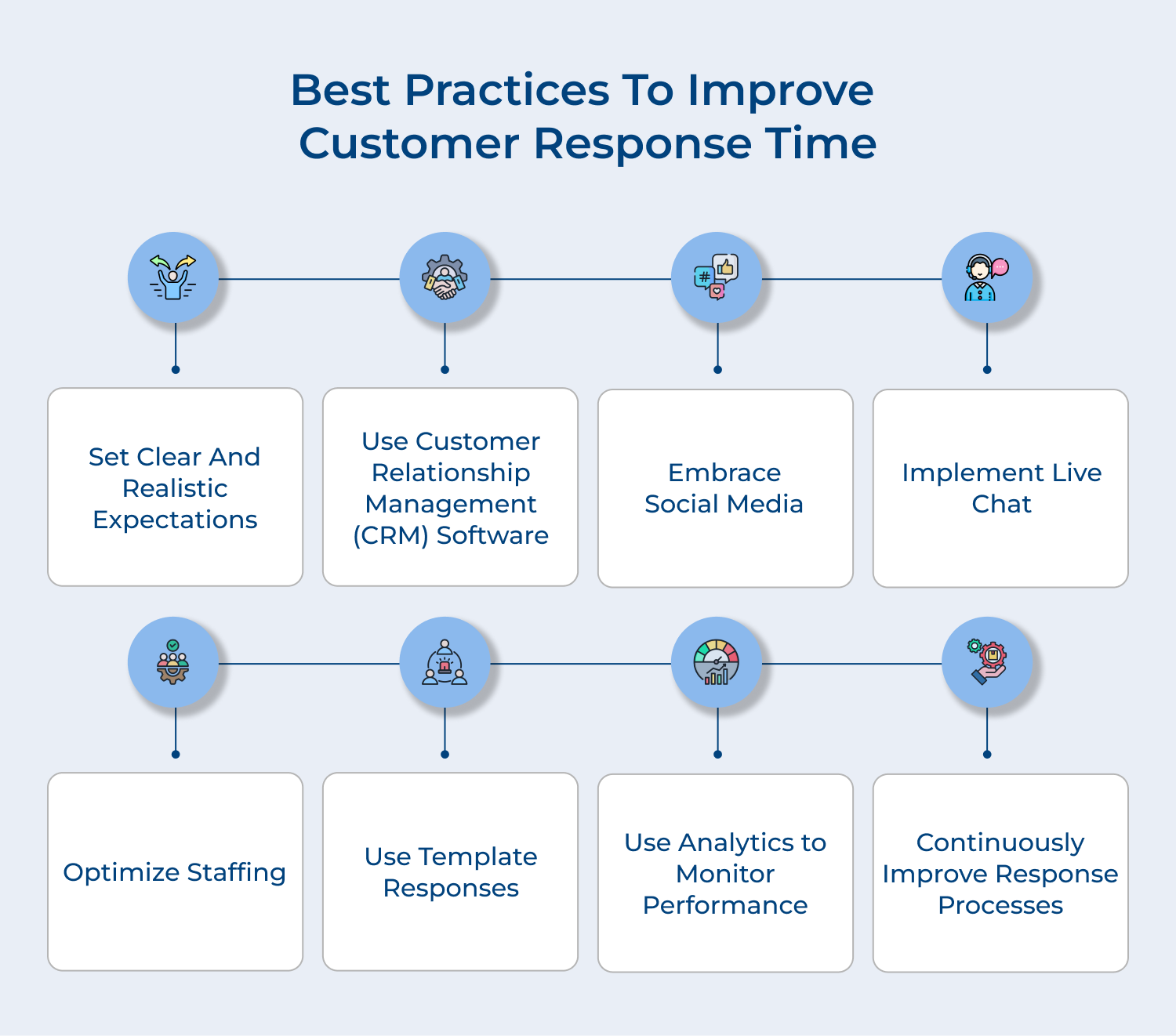
Quick and efficient responses play a significant role in shaping customer satisfaction as well as loyalty. Here are the best practices to improve customer response time:
Customers expect timely and efficient responses to their queries, concerns, issues, etc. Here are some real-time examples of exceptional customer response time that can serve as inspiration:
Zappos, the online shoe and clothing retailer, is renowned for its exceptional customer service. They prioritize rapid response time through various channels such as phone, email and social media. It sets a benchmark for customer response time by aiming to address all customer queries within 24 hours, ensuring customer satisfaction and loyalty.
Amazon, the e-commerce giant, understands the importance of rapid response time. They have implemented various strategies, such as their “Mayday” button for Kindle users, which connects customers to live support within seconds. Their social media team is known for their quick response to customer queries and concerns.
Southwest Airlines is widely recognized for its exceptional customer service and response time is a key aspect of their customer-centric approach. Their dedicated social media team ensures prompt responses to customer inquiries and addresses any issues that may arise during travel promptly. The commitment to customer satisfaction has earned them a strong reputation in the airline industry.
Apple is known for its commitment to providing an excellent customer experience. They prioritize customer response time through various channels, including online chat support, phone support and social media channels. Its dedicated support team ensures that customer concerns are swiftly addressed, contributing to their brand loyalty.
How quickly a business responds to customer inquiries can make all the difference in their overall experience. Reducing customer service response time requires a proactive and customer-centric approach.
The ideal customer service response time varies based on the industry and nature of the inquiry. Customer response time ranges from immediate responses to 24-hour turnarounds.
Businesses should strive for prompt and efficient customer service to maintain customer satisfaction as well as loyalty. Investing in delivering timely customer service not only enhances customer satisfaction but also contributes to overall business success and growth.

What are the three major elements of the total customer response time?
The three major elements of the total customer response time are, Initial response time – the time it takes for a business to acknowledge a customer’s inquiry or request. Processing time – The duration required to address and resolve the customer’s issue or fulfill their request. Resolution time – The overall time taken to completely resolve the customer’s concern, including any follow-up or additional steps.
How do you measure customer response time?
Measuring customer response time involves tracking the duration at various stages of the customer service process. It can be done through customer service software or tools that record and analyze response times. Key metrics to consider include initial response time, time to resolution and average handling time.
How important is response time in customer service?
Response time is critically important in customer service. Studies have shown that customers expect quick responses to their inquiries and a delayed response can lead to frustration as well as dissatisfaction. Swift response times help to build trust, enhance the customer experience and increase customer loyalty.
How does customer response time impact customer satisfaction?
The response time significantly impacts customer satisfaction. Customers value a prompt and efficient resolution to their issues or inquiries. When businesses respond quickly, customers feel valued and taken care of, leading to higher satisfaction levels. On the contrary, a slow or inadequate response can leave a negative impression and erode customer satisfaction.
What factors influence customer response time?
Several factors can influence customer response time, including the complexity of the customer’s issue, available resources and staff, the level of communication channels utilized (e.g., phone, email, social media) along with the overall efficiency of the customer service process.
How can businesses improve their customer response time?
To improve customer response time, invest in customer service software or tools that automate and streamline the response process. Provide adequate training to customer service representatives to enhance their efficiency and problem-solving skills. Utilize multiple communication channels to cater to customers’ preferences. Set clear response time goals and establish a system for monitoring while enforcing them.
 https://omni24.io/wp-content/uploads/2026/09/Social-commerce-scaled.png
1340
2560
Webvision Solution
https://omni24.io/wp-content/uploads/2023/04/Omni-Logo-1.svg
Webvision Solution2026-10-23 12:18:272026-10-23 12:18:27What is Social Commerce and Why Does It Matter?
https://omni24.io/wp-content/uploads/2026/09/Social-commerce-scaled.png
1340
2560
Webvision Solution
https://omni24.io/wp-content/uploads/2023/04/Omni-Logo-1.svg
Webvision Solution2026-10-23 12:18:272026-10-23 12:18:27What is Social Commerce and Why Does It Matter? https://omni24.io/wp-content/uploads/2026/08/AI-Customer-Service-Agents.png
1256
2400
Webvision Solution
https://omni24.io/wp-content/uploads/2023/04/Omni-Logo-1.svg
Webvision Solution2026-09-21 04:48:512026-09-21 04:48:51How to Build an AI Customer Service Agents: 8 Key Steps
https://omni24.io/wp-content/uploads/2026/08/AI-Customer-Service-Agents.png
1256
2400
Webvision Solution
https://omni24.io/wp-content/uploads/2023/04/Omni-Logo-1.svg
Webvision Solution2026-09-21 04:48:512026-09-21 04:48:51How to Build an AI Customer Service Agents: 8 Key Steps https://omni24.io/wp-content/uploads/2026/08/Omnichannel-Conversational-AI.png
1256
2400
Tushar Joshi
https://omni24.io/wp-content/uploads/2023/04/Omni-Logo-1.svg
Tushar Joshi2026-09-16 03:51:072026-09-16 03:51:07How to Build Omnichannel Conversational AI Strategy
https://omni24.io/wp-content/uploads/2026/08/Omnichannel-Conversational-AI.png
1256
2400
Tushar Joshi
https://omni24.io/wp-content/uploads/2023/04/Omni-Logo-1.svg
Tushar Joshi2026-09-16 03:51:072026-09-16 03:51:07How to Build Omnichannel Conversational AI Strategy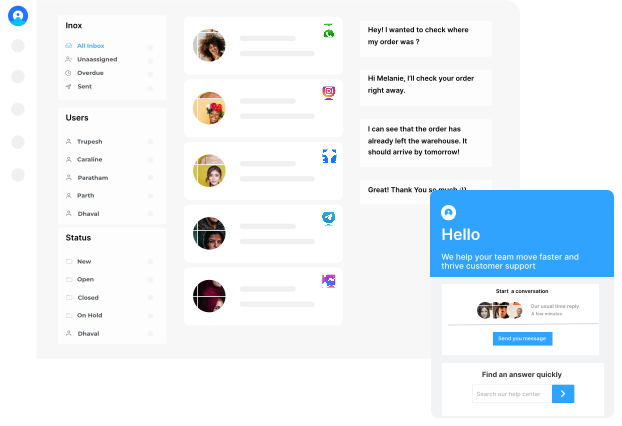
Whether it’s about acquire, engage or support – Omni24 covers all your customer engagement needs in one complete platform.

Copyright ©2026 Veemo All rights reserved.
CA, Los Angeles, Hall Ave, 19011