What is Knowledge Management? A Complete Guide
Implementing knowledge management processes offers tangible benefits that drive value and positively influences organizational performance.
14 Day Trial | No Credit Card Needed | Guided Setup
Implementing knowledge management processes offers tangible benefits that drive value and positively influences organizational performance.
14 Day Trial | No Credit Card Needed | Guided Setup
Implementing knowledge management processes offers tangible benefits that drive value and positively influences organizational performance.
14 Day Trial | No Credit Card Needed | Guided Setup
Knowledge management process ensures that all the employees have access to the overall expertise held within the organization, to make quick, informed decisions.
AI-powered search and generative tools reshape your team’s access to information. Companies without a structured practice are falling behind in onboarding efficiency and response quality.
This is where good knowledge management (KM) comes into play by creating, organizing and applying collective assets to improve operational performance and the decision-making process.
Let’s explore the definitive guide to understand the types, components, processes and strategies of knowledge management.
Knowledge Management (KM) is a systematic approach to creating, organizing, storing, sharing, and utilizing an organization’s knowledge assets. It involves processes or strategies to effectively handle both explicit knowledge (documented information) and tacit knowledge (expertise & experience of individuals).
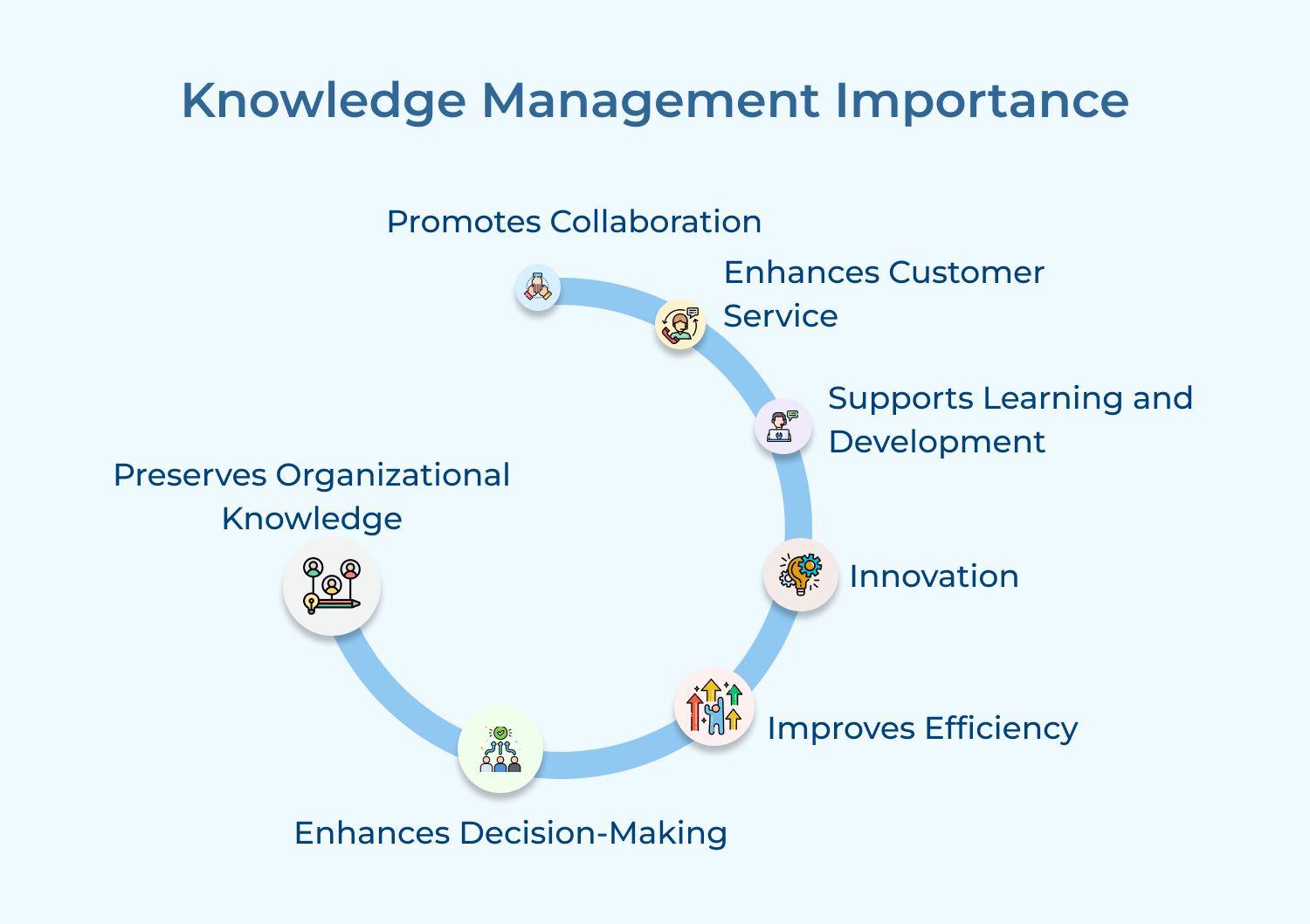
The importance of KM lies in its ability to transform individual’s knowledge into collective wisdom, enabling organizations to leverage their intellectual assets. Facilitating access to information helps avoid redundancy and ensures that valuable insights are retained even when employees leave.
Key objectives:
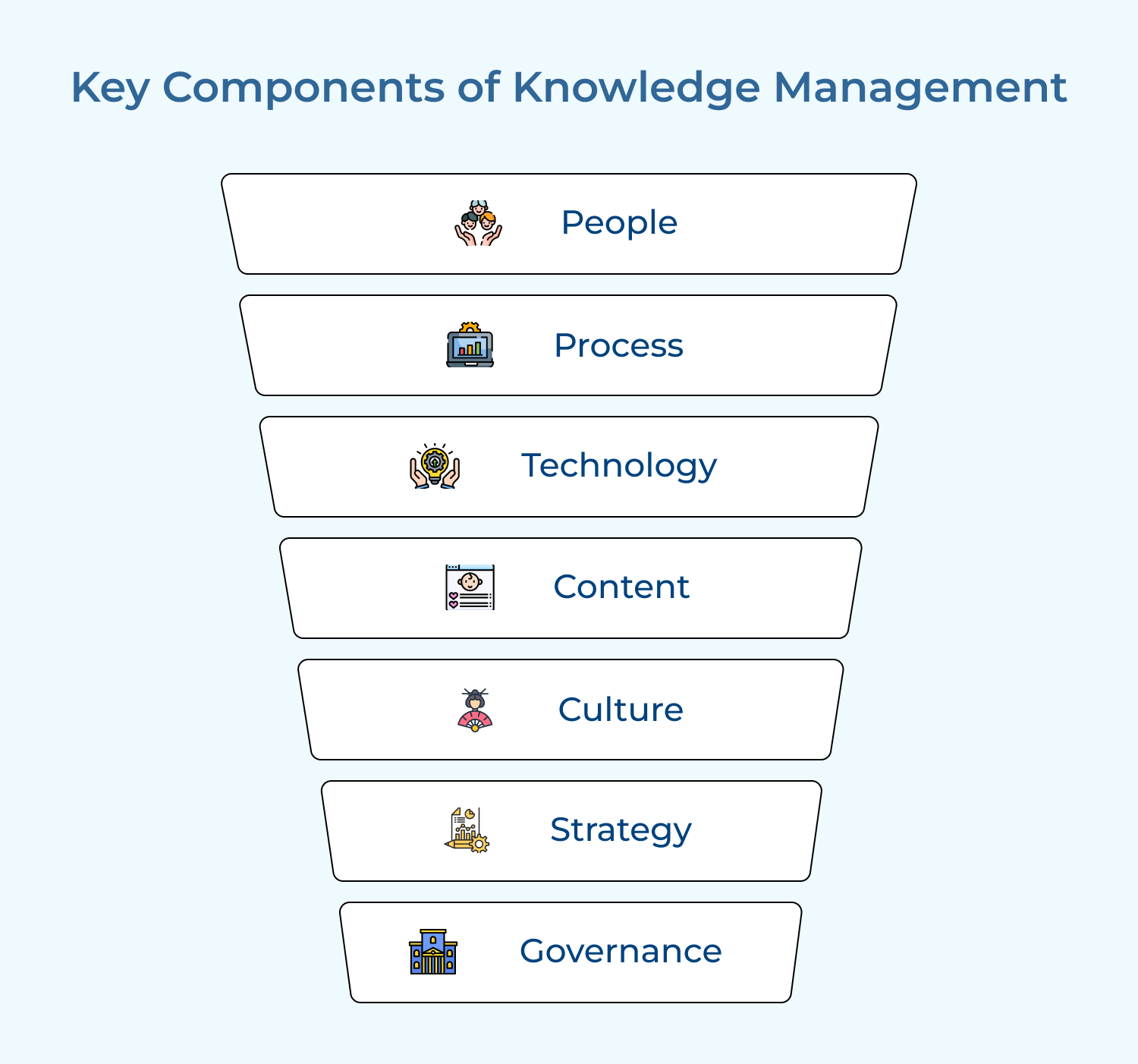
Knowledge Management (KM) is a multifaceted discipline that involves several interconnected components. Let us understand some of its key components and how they work together.
The human element is at the core of any KM system. It includes knowledge workers, subject matter experts and leadership. Knowledge workers are employees who create, use and share knowledge in their daily tasks.
Subject matter experts possess specialized knowledge in specific areas and play a crucial role in knowledge transfer. Leadership sets the vision for KM and ensures its alignment with organizational goals. The success of KM largely depends on people’s willingness to share knowledge and their ability to use it effectively.
These are the systematic approaches to managing knowledge within an organization. A knowledge management process includes knowledge creation, knowledge capture, knowledge sharing and knowledge application. Well-designed processes ensure that knowledge flows smoothly throughout the organization, from creation to application.
The technology knowledge management component refers to the tools and platforms that support KM activities. It includes knowledge repositories, collaboration tools and search or retrieval systems.
While technology is not the sole focus of KM, it plays a crucial role in facilitating knowledge capture, storage and dissemination, especially in large or geographically dispersed organizations.
Content as a KM component refers to the actual knowledge being managed. It encompasses both explicit knowledge (formal, codified information such as documents, databases or procedures) and tacit knowledge (personal know-how, experience & intuition that is often difficult to formalize).
Effective KM systems must be able to handle both types of knowledge, facilitating the conversion of tacit knowledge into explicit forms when possible.
An organization’s culture significantly impacts the success of KM initiatives. A knowledge-friendly culture encourages continuous learning, and rewards for knowledge sharing. It creates an environment where employees feel safe to share their ideas or insights, ask questions and learn from mistakes. Leadership plays a crucial role in shaping this culture and demonstrating the value of knowledge sharing.
The strategy component involves aligning KM efforts with overall organizational objectives. It includes developing KM policies and procedures, setting goals for KM initiatives by establishing metrics to measure their effectiveness. A well-defined knowledge management strategy ensures that knowledge management activities contribute directly to the organization’s success and receive the necessary resources.
The final component deals with the oversight and management of KM activities. It involves defining roles & responsibilities for KM, establishing quality control measures to ensure the accuracy or relevance of knowledge, and managing access to sensitive information. Effective governance ensures that KM efforts are coordinated, consistent, and aligned with organizational policies/regulations.
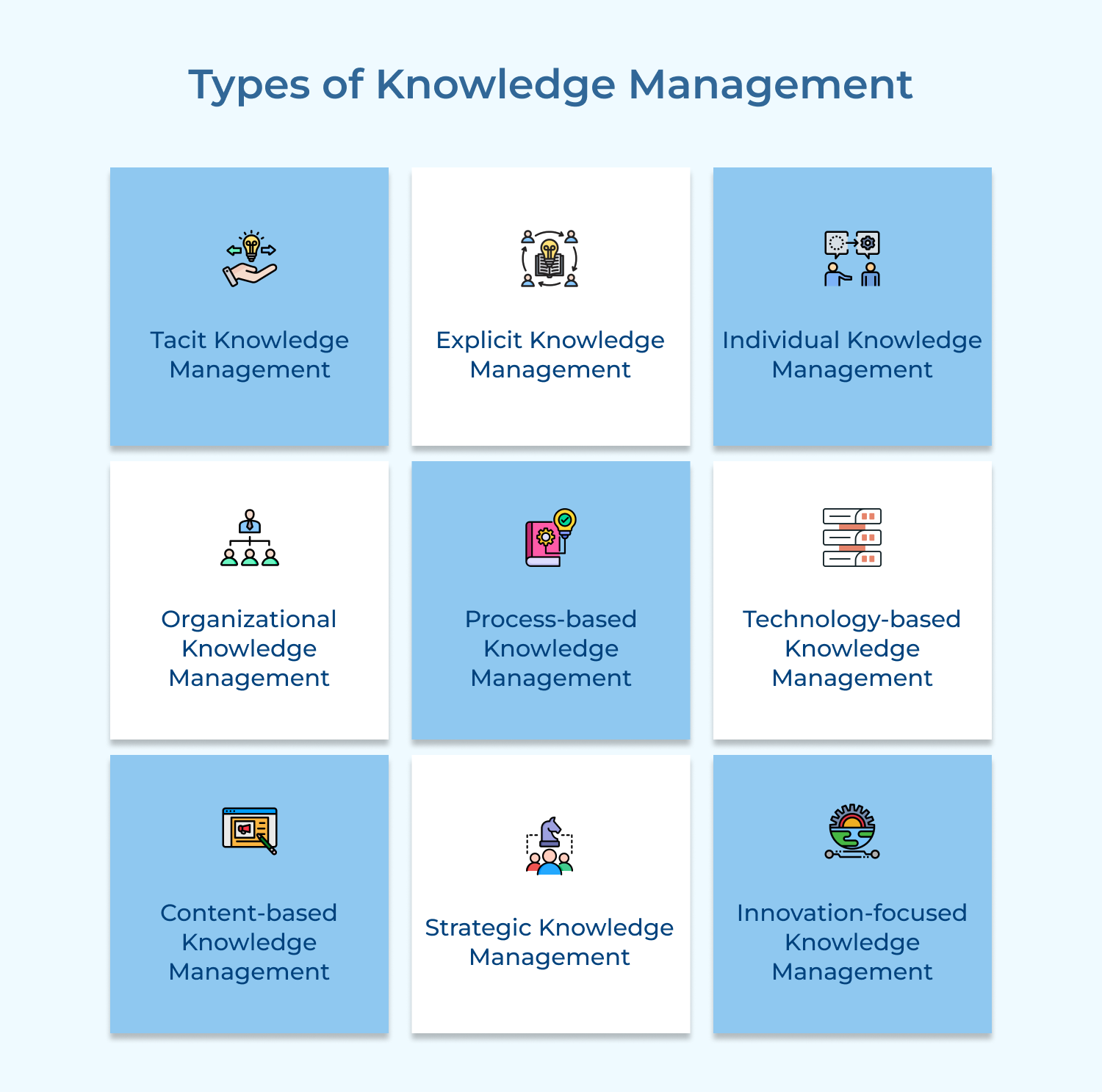
Knowledge management can be categorized into several types, each focusing on different aspects of how knowledge is handled within an organization.
Tacit type KM deals with managing knowledge that is difficult to articulate or codify. Tacit knowledge is often personal, context-specific and based on individual experiences.
Examples include intuition, expertise and know-how gained through years of practice. Managing tacit knowledge involves creating opportunities for knowledge transfer through mentoring, job shadowing and communities of practice.
Explicit KM focuses on managing knowledge that can be easily articulated, codified and stored in documents, databases or other media. Examples include written procedures, reports and technical specifications.
Explicit knowledge management involves creating, organizing and maintaining repositories of information that can be easily accessed across the organization.
The individual type KM concentrates on helping individuals within an organization to better manage their personal knowledge and skills. It includes techniques for personal learning, information organization and time management. Tools like personal wikis, note-taking apps and learning management systems fall under this category.
Categorizing as a broader approach, it focuses on managing knowledge at the organizational level. It involves creating systems/processes to capture, store and share knowledge across the entire organization.
This type of knowledge management often includes implementing enterprise-wide knowledge management systems, fostering a knowledge-sharing culture and aligning knowledge management with organizational goals.
The process based KM focuses on embedding knowledge into organizational processes and workflows. It involves documenting best practices, creating standard operating procedures and continuously improving processes based on learned experiences. Process-based knowledge management aims to make knowledge readily available at the point of need within business processes.
As the name goes, technology based leverages relevant technology solutions to facilitate knowledge capture, storage and sharing. It includes implementing:
While technology is an enabler, it’s important to remember that successful knowledge management also requires addressing cultural and organizational aspects.
Content-based Knowledge Management emphasizes the organization and retrieval of explicit knowledge, often stored in documents, databases, and digital platforms. This approach focuses on creating a structured repository of information that can be easily accessed and shared.
As per the strategic knowledge management approach aligns knowledge management initiatives with the organization’s strategic objectives. It involves identifying critical knowledge areas that support business strategy and developing knowledge assets.
Innovation-Focused Knowledge Management centers on fostering a culture of creativity and knowledge sharing to drive new ideas and solutions. This approach encourages collaboration among employees, promotes brainstorming sessions, and utilizes tools for collective problem-solving.
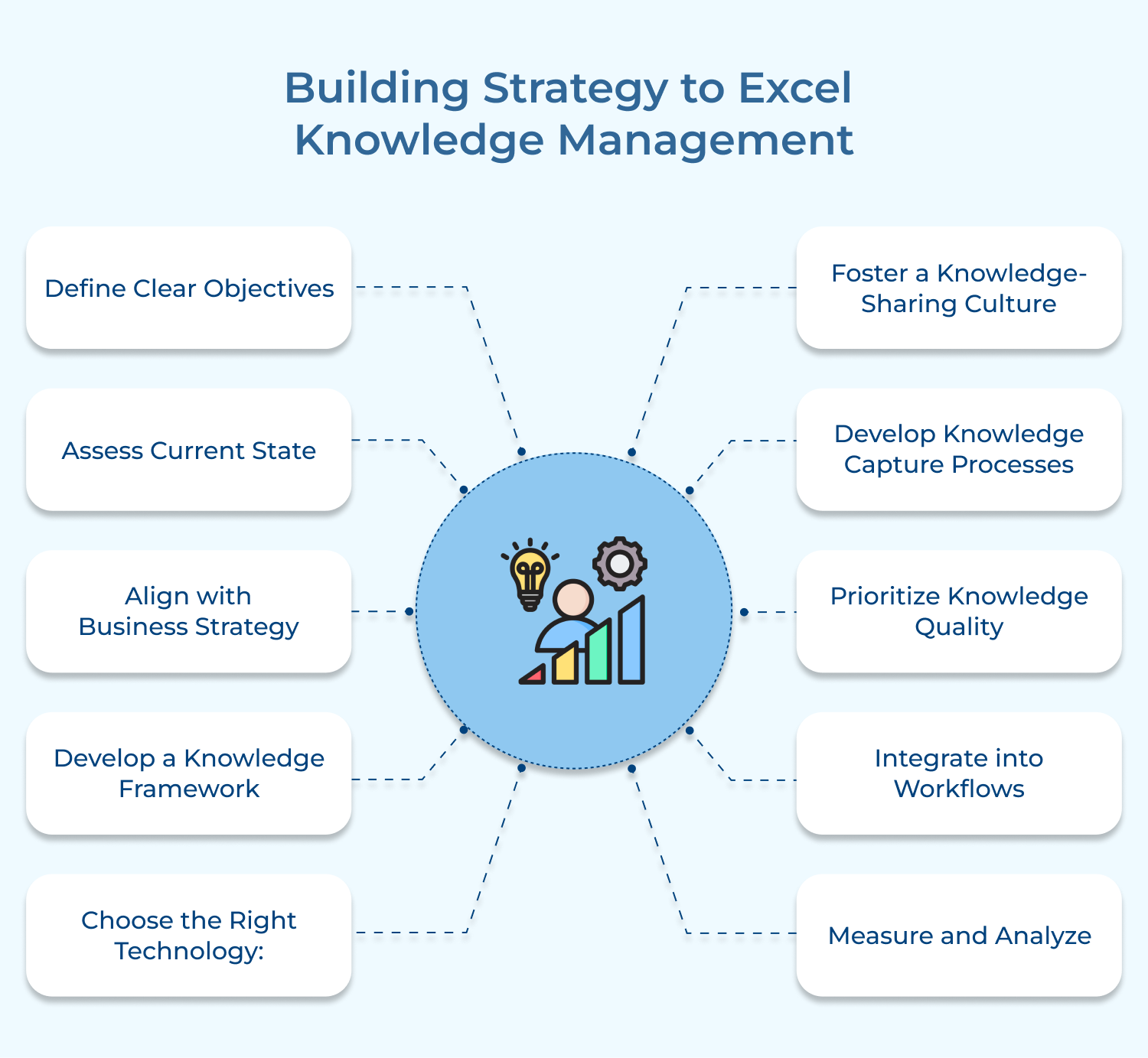
Building a successful knowledge management strategy requires a comprehensive approach that aligns with your organization’s goals and culture.
1. Define clear objectives: Start by identifying what you want to achieve with knowledge management. Are you looking to improve innovation, increase efficiency, enhance decision-making, or preserve institutional knowledge? Having clear objectives will guide your strategy and help measure success.
2. Align with business strategy: Ensure your knowledge management strategy supports overall business goals. The alignment will help secure buy-in from leadership and demonstrate the value of knowledge management initiatives.
3. Choose the right technology: Select knowledge management tools/platforms that fit your organization’s needs and integrate well with existing systems. Consider factors like user-friendliness, scalability and compatibility with your IT infrastructure.
4. Foster a knowledge sharing culture: Encourage a culture where knowledge sharing is valued and rewarded. It involves changes in performance evaluations, recognition programs, or even adjusting organizational structures to promote collaboration.
5. Develop knowledge capture processes: Create systematic processes for capturing knowledge, especially tacit knowledge from experts. It might include after-action reviews, mentoring programs or story-telling sessions to document experiences and insights.
6. Prioritize knowledge quality: Implement mechanisms to ensure the quality and relevance of knowledge. It could include peer review processes, regular content audits, or automated systems for flagging outdated information.
7. Measure and analyze: Develop key performance indicators (KPIs) to measure the effectiveness of your knowledge management initiatives. Regularly analyze these metrics to identify areas for improvement and demonstrate ROI to stakeholders.
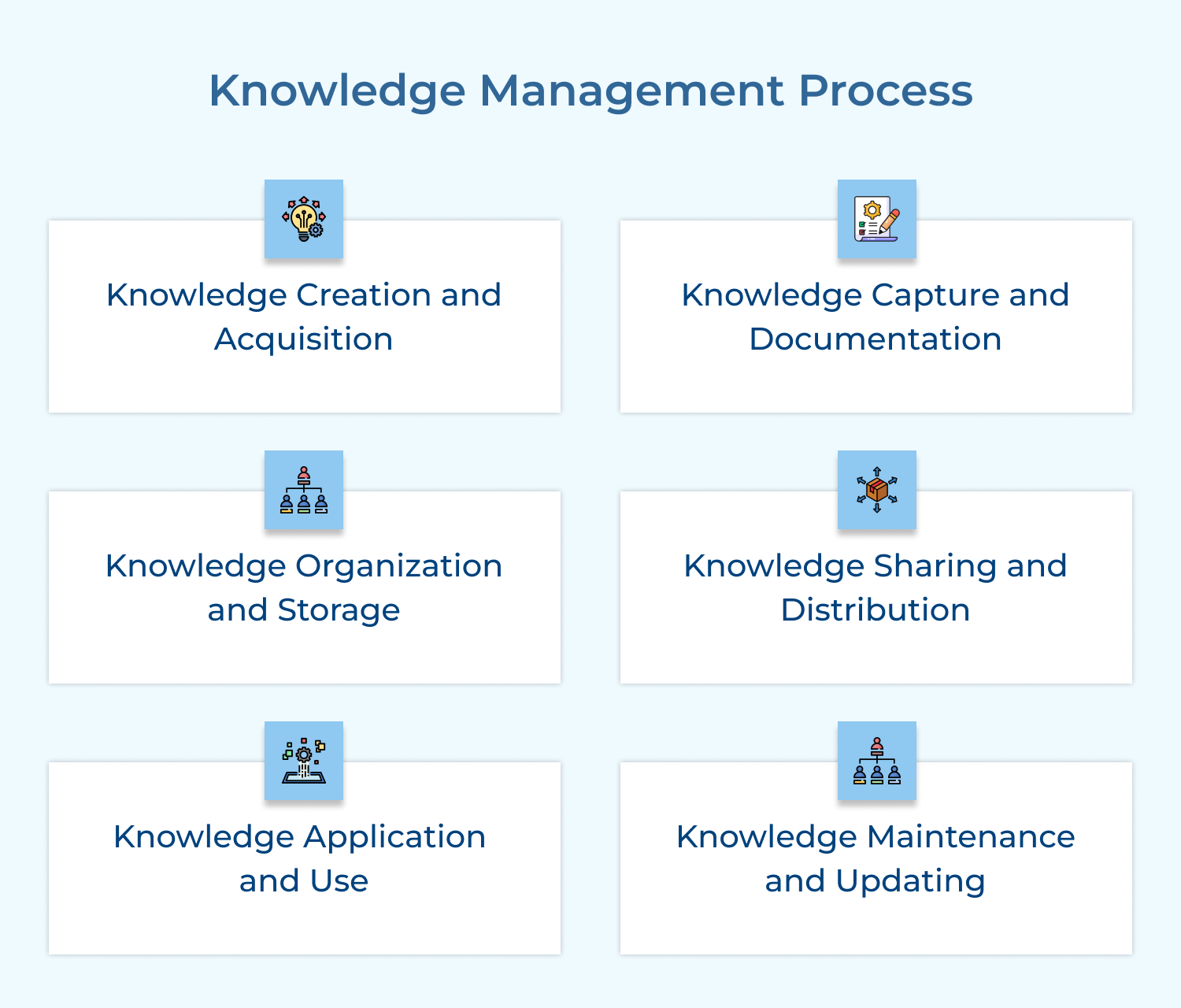
The process of knowledge management involves several interconnected steps aimed at effectively capturing knowledge. Explore its systematic approach one step at a time!
Knowledge creation can occur through research and development, problem-solving or innovative thinking. Acquisition may include hiring experts, partnering with other organizations or purchasing information from third parties. The goal is to continuously expand the organization’s knowledge base.
Teams often build knowledge bases that look comprehensive but don’t actually solve the problem that prompted the initiative without a defined objective. The mismatch is usually identified months later, when adoption stays low despite being technically complete.
Having a specific goal also avoids building a generic system:
Once knowledge is created or acquired, it must be captured and documented in a usable format. This could involve recording knowledge management best practices, documenting processes, or creating training materials. The key is to transform tacit knowledge (personal, experience-based insights) into explicit knowledge that can be easily shared and understood by others.
Revisit the alignment as business priorities shift, since a strategy built around last year’s goals can become irrelevant to leadership. Scheduling a periodic review keeps the initiative connected to whatever the business is currently focusing.
A few signals that alignment is working:
Properly organizing and storing knowledge is crucial for easy retrieval or use. The step involves categorizing information, creating metadata and implementing knowledge management systems or databases. The goal is to create a structured repository that allows for efficient searching and access to relevant information.
A few extra checks that help identify the right platform:
The true value of knowledge management lies in the application of knowledge to solve problems, make decisions and improve processes. This step involves encouraging employees to use available knowledge resources in their daily work and providing tools that integrate knowledge into workflows.
Outdated information is often worse because employees may act on it confidently without realizing its inaccuracy. The risk grows as the knowledge base scales and no single person can track every article’s accuracy.
A quality-focused system typically offers:
Knowledge is not static; it evolves. The step involves regularly reviewing and updating the knowledge base to ensure its relevance as well as accuracy. It includes removing outdated information, validating existing knowledge and incorporating new insights or changes in best practices.
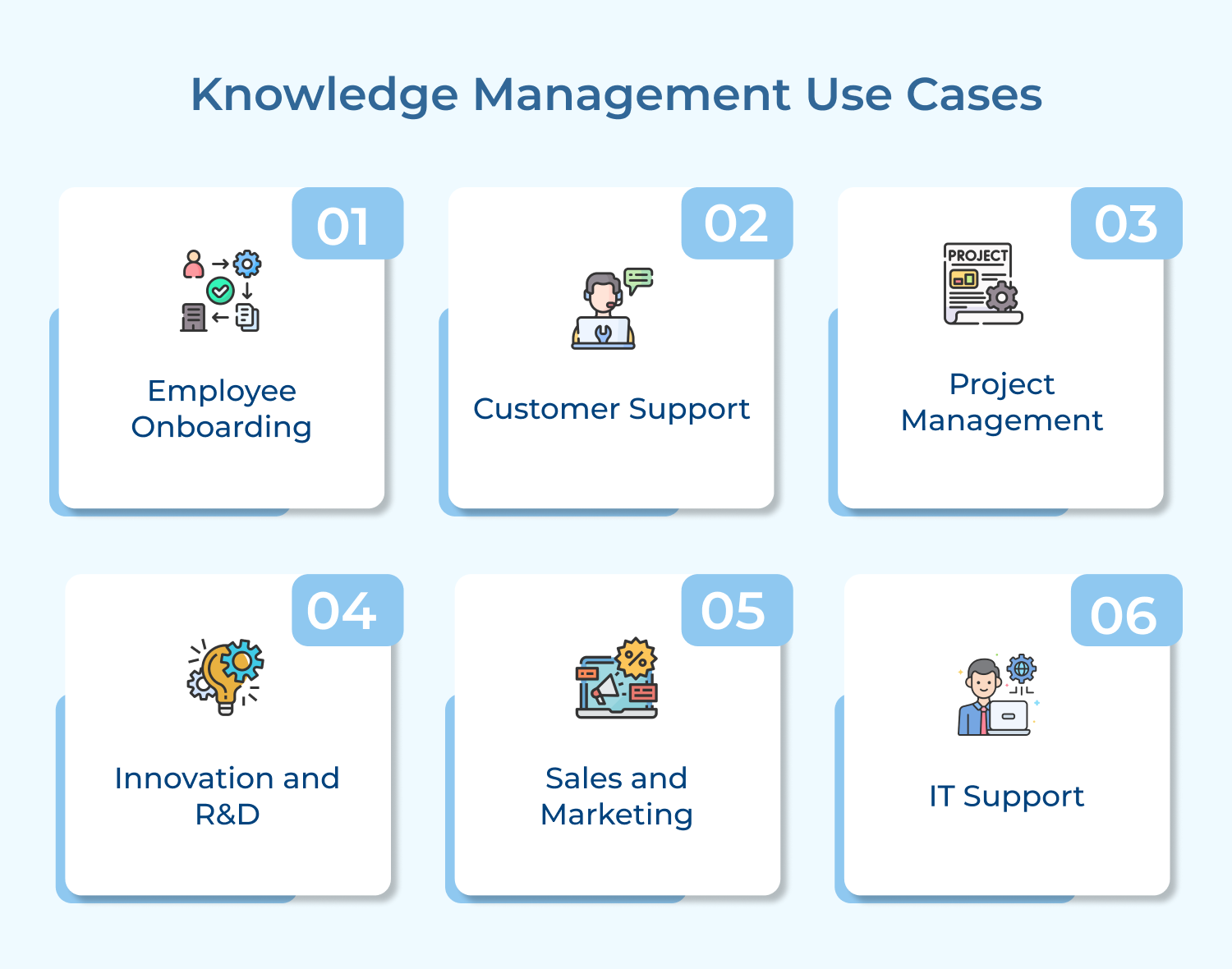
By effectively managing knowledge, companies are able to access, share and use information in a more efficient manner. Here are some use cases for your to consider.
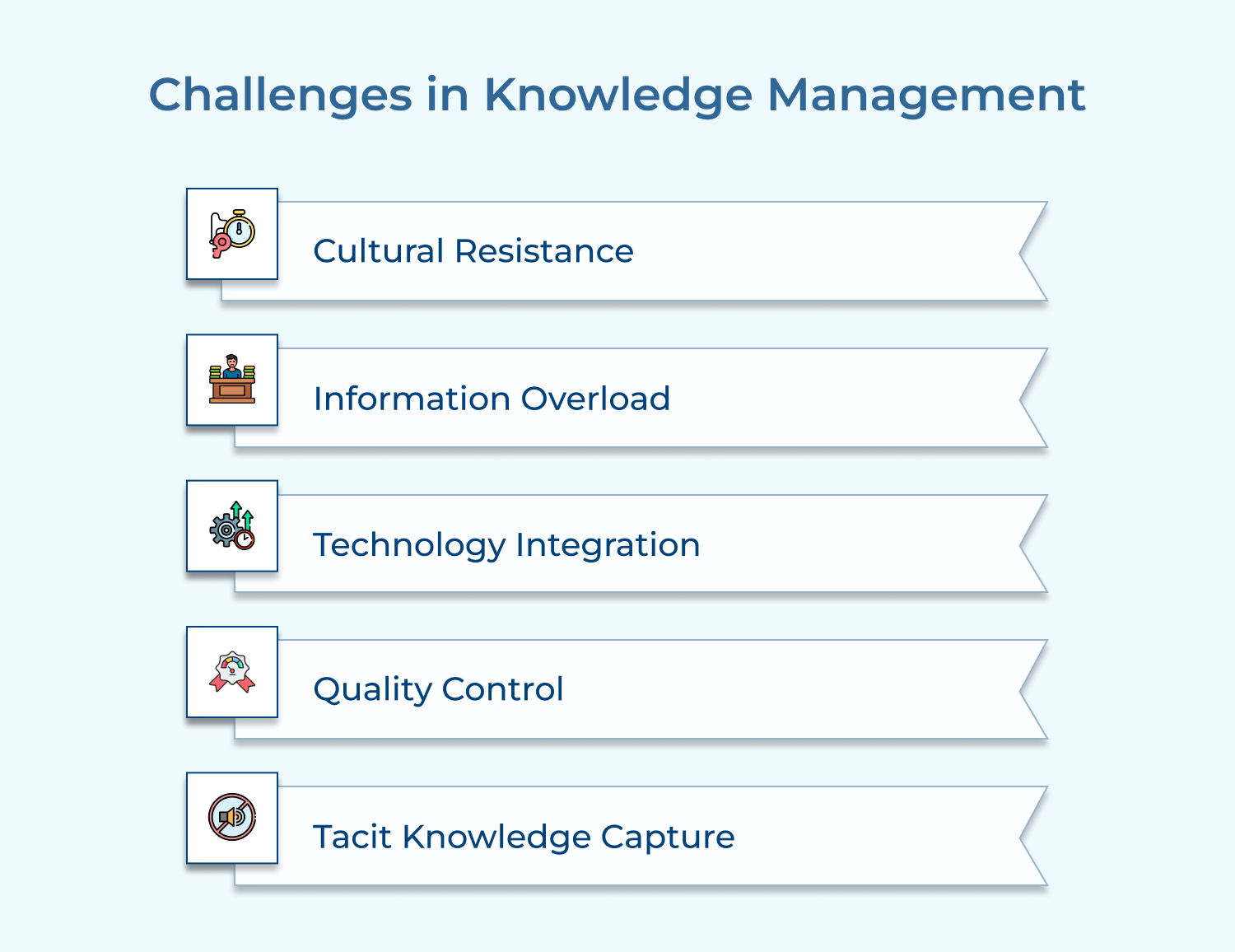
Knowledge management is a critical process in any organization. But, organizations may face several knowledge management challenges when implementing KM initiatives.
Knowledge management is a critical aspect of any organization, regardless of its size or industry. It involves the strategies used to create, share knowledge within the organization.
Effective knowledge management is the key to organizational growth that transforms scattered information into a strategic advantage through better decisions, as well as faster onboarding and a culture of learning.
Ready to put knowledge management to use? Start your 14-day free trial of Omni24 to see its KB in action. A well-executed knowledge management strategy turns collective wisdom into an organization’s most competitive asset.
Omni24’s customer engagement platform harnesses automation and AI to deliver unified customer experiences across digital channels, while keeping human touch
Knowledge management is used to capture, organize and share knowledge within an organization to facilitate learning, improve performance. It helps employees access relevant information when they need it, promotes knowledge sharing enhances organizational responsiveness to changes in the market or industry.
A knowledge manager is responsible for overseeing the implementation of knowledge management initiatives within an organization. This includes developing knowledge management strategies, processes/tools, facilitating knowledge sharing among employees, identifying knowledge gaps, and ensuring that knowledge is effectively captured.
A knowledge management system can include several components working together, such as a centralized knowledge repository, document management and collaboration platforms. Search engines and content management enable employees to locate information, while connecting them with the right colleague.
Workflow automation streamlines the way knowledge moves across the organization, from creation to review to retirement. Analytics track usage, showing which content actually gets used and the gaps that still need to be filled.
The four main components of knowledge management are knowledge creation, knowledge capture, knowledge sharing and knowledge utilization. These components work together to facilitate the flow of knowledge within an organization and enable employees to access knowledge effectively to achieve organizational goals.
Knowledge management systems can capture various types of information, including:
Organizations can create a comprehensive knowledge repository that supports learning, decision-making and innovation by capturing both types of knowledge.