12 Proven Methods to Deliver Personalized Customer Service
Businesses must prioritize personalized customer service aligned with consumer preferences to deliver unforgettable experiences.
Businesses must prioritize personalized customer service aligned with consumer preferences to deliver unforgettable experiences.
Providing personalized customer service is essential for all businesses. Customers appreciate the individualized attention and are more likely to continue doing business with you if they feel valued.
80% of consumers will purchase a brand that offers personalized experiences. With drastic technological advancements, it’s easier than ever before to deliver personalized customer service.
From live chatbots to AI-driven customer profiles, there are many tools available that can make delivering individualized treatment faster. Customers want an experience where they feel understood, which should be at the heart of your online customer service strategy.
Let us discuss different ways to provide personalized customer service that will help you build relationships with customers while increasing sales and building your brand reputation.
Personalized customer service is defined as a strategy that prioritizes understanding each customer’s individual needs and preferences. Companies use personalized customer service to provide customized products, services, and experiences that are tailored to meet the particular needs of each consumer.
The goal of personalized customer support is to differentiate your brand from competitors by delivering an exceptional experience to each consumer. Personalizing customer service requires treating each person individually, listening, and responding to them quickly.
Key Objectives:
1. Customer-centric solutions: Deliver tailored solutions based on individual customer profiles and historical data.
2. Relationship building: Build stronger customer relationships through consistent, contextualized interactions.
3. Value optimization: Increase customer lifetime value by anticipating and meeting specific needs.
Customers now expect seamless, personalized experiences throughout their journey. Personalized support not only enhances satisfaction but also drives long-term brand loyalty and business growth.
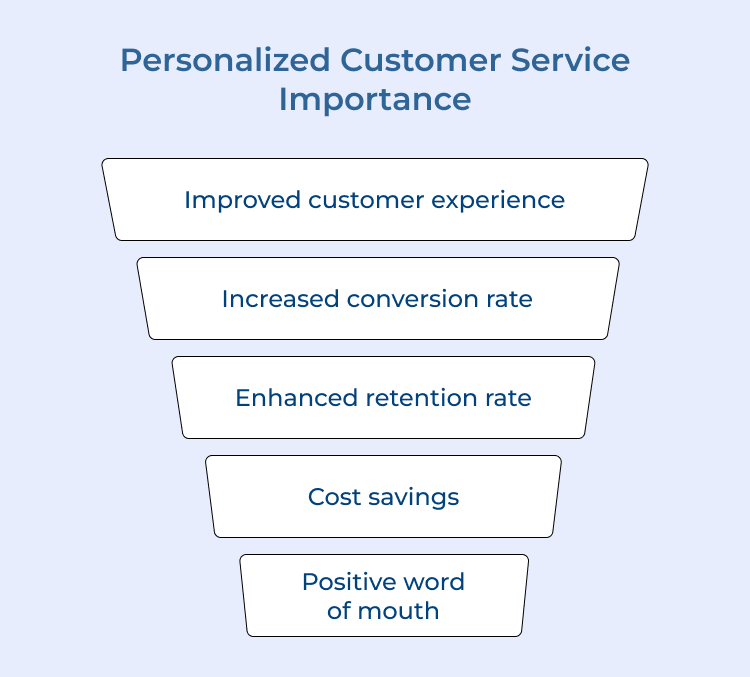
Personalized customer service is more impactful than ever, with 97% of marketers seeing measurable business gains. Tailored experiences strengthen relationships, boost loyalty, and drive superior results.
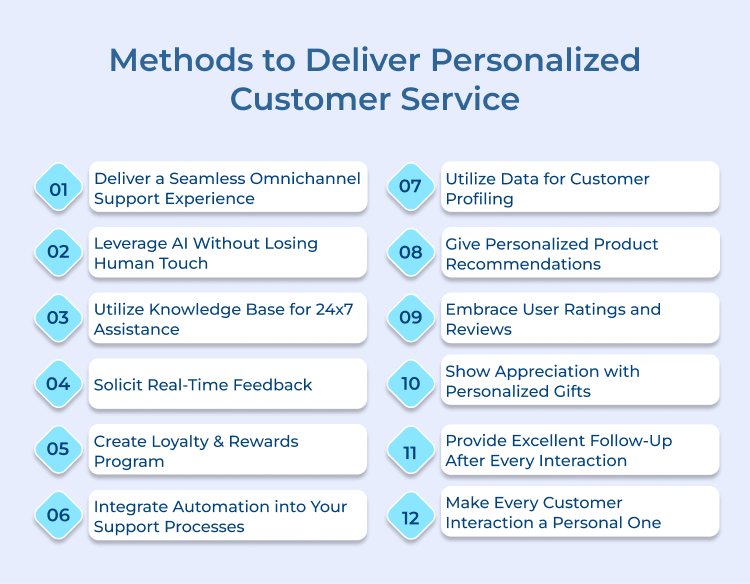
Over 35% of customers wish to contact the same customer service agent on any channel. Delivering a seamless omnichannel customer support experience is highly essential.
An effective omnichannel customer experience enables customers to access services and support via multiple channels, such as online chat, mobile apps, email, social media, etc. It allows support reps to provide personalized customer service.
Benefits of omnichannel customer engagement:
The ability to provide this kind of personalized support can be significantly enhanced when companies have access to technologies like artificial intelligence (AI) and data analytics.
By harnessing these technologies, companies can gain valuable insights into customer behavior and preferences to deliver personalized customer service experiences across all channels.
Leveraging Artificial Intelligence and Automation in customer service has become a major buzzword. 61% of consumers say they would prefer businesses that deliver an instant response.
Automate personalization with a chatbot by allowing sales/support teams to use an AI-powered chatbot to converse with visitors, answer their questions, and convert them into qualified leads.
Leveraging a chatbot helps in the following ways:
Employing AI, allows to deliver tailored responses to customer inquiries without losing the human touch. Automating speeds up delivery along with personalization; receiving vital insights that enable them to know their customers, understand their needs, and build stronger relationships with them.
Leveraging artificial intelligence and automation in the customer service sector helps businesses to cultivate strong bonds with customers while not compromising on efficiency.
51% of customers prefer technical support through a knowledge base.
Knowledge Base is a powerful technology that provides 24×7 customer service to companies of all sizes. It enables customers to easily access the information they need and answer their queries quickly when they need it.
By using the knowledge base, companies can:
The knowledge base offers customers relevant content with intuitive search tools, which reduces customer satisfaction and loyalty. This allows your business to operate more efficiently and effectively, giving customers a great user experience.
Customers expect brands to listen to them and stay open for feedback.
55% of respondents would stop using the products or services of a company that ignored their feedback.
Real-time feedback can help businesses create a better understanding with their customers, leading to greater loyalty and long-term growth. Businesses can solicit real-time feedback by using surveys and interviews as a tool for analyzing how customers interact with them during an exchange.
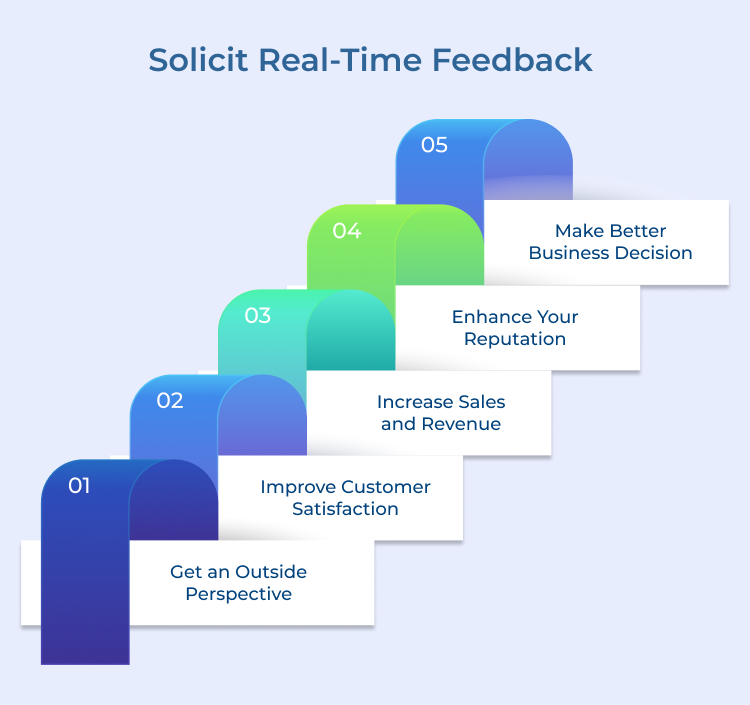
Engaging customers through feedback systems:
Implementing an effective loyalty and rewards program and other customer service methods can be a great way to reward customers for their business, while also providing personalized customer service.
72% of global customers feel loyalty toward at least one brand or company.
When customers are offered rewards in exchange for repeat purchases or increased spending, businesses witness customers keep coming back and create a more personal relationship with them.
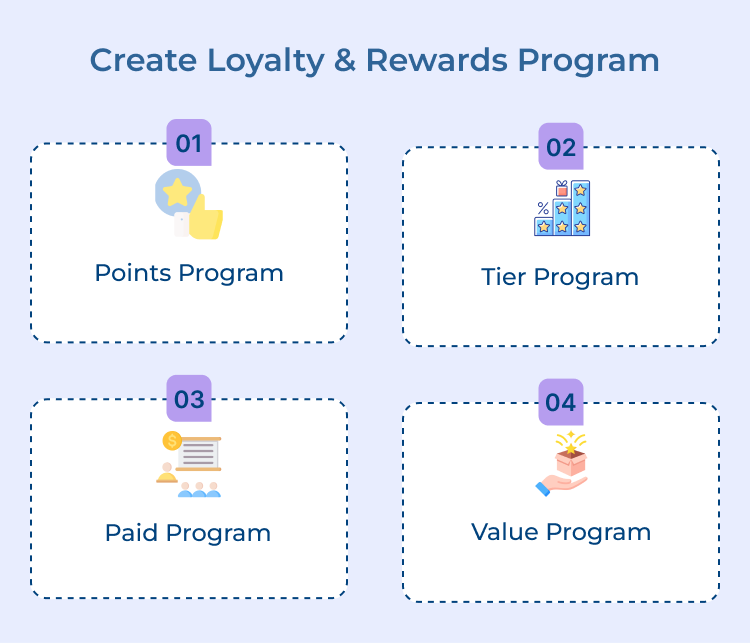
Loyalty programs can also help businesses gain valuable insights into their customers’ preferences and service needs.
By tracking customer behavior over time through the use of these programs, businesses can develop well-tailored services that meet their customer’s specific needs and increase satisfaction.
Automating customer service processes is the best way to deliver high-quality, personalized service to customers while reducing human errors. Automation can be used to make repetitive tasks easier and faster.
For example, automated ticketing systems can help reduce customer wait times and easily track tickets while allowing agents to respond quickly with a personalized message.
Benefits of automating the support process:
Personalized customer service requires understanding the target customers and their preferences, as well as knowing how to better engage them.
Utilizing data for customer profiling is a great way to deliver highly tailored and specific services that meet the needs of different customers.
Businesses can develop detailed segments and customer profiles according to their demographics, interests, behaviors, and likes allowing businesses to deliver more effective and personalized services to their target audience.
Implementing the data for customer profiling helps businesses minimize mistakes in marketing campaigns or targeted offers since they have more accurate information about potential leads.
Personalization is a great way to show individual customers that you value them and care about their specific needs.
Offering personalized product recommendations to your customers will demonstrate to them that you know what they are looking for and take the time to hand-pick the best products for them.
You can tailor product recommendations based on previously purchased items, shopping categories, and interests. Discounts can be used to further personalize each interaction, making your customers feel even more valued and included in your process.
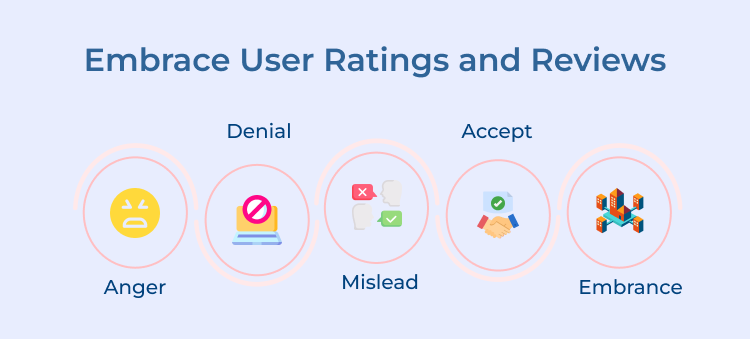
User ratings and reviews play a huge role in personalized customer service. They help businesses to better understand their customers’ wants, needs and habits thus enabling them to provide more tailored product and service offers.
The information can be used to improve the user experience for all customers as businesses can identify areas that require improvement or changes.
Also, it can provide feedback on merchandise which will enable businesses to restock what sells out quickly and may even allow them to discover previously hidden market opportunities.
Showing appreciation to customers, partners, and prospects is an important part of providing personalized customer service.
Sending a personalized gift, such as a branded item or corporate gift, can help increase loyalty and create goodwill. Personalized gifts are thoughtful reminders that your company cares about its customers and will foster stronger relationships with them.
Whether it is a simple handwritten thank-you card or a gift basket full of goodies, offering customers something special shows them that you appreciate their business, which leads to higher satisfaction levels and better customer service in the long run.
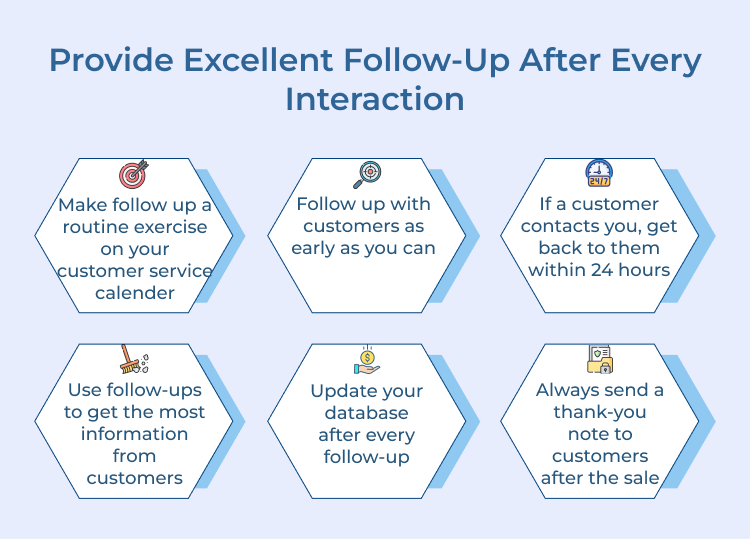
Providing excellent follow-up after each customer interaction is essential to delivering truly personalized customer service.
Businesses can tailor their offerings to meet the needs of their customers by tracking their past purchases and transactions. Such personalization provides customers with a better shopping experience, increases loyalty, and improves overall customer satisfaction.
Not only that, but they must also address any complaints or feedback they receive to stay on top of changes in the marketplace and remain competitive.
Excellent follow-up not only helps businesses achieve this but also builds strong relationships with their customers that will last for years to come.
Regardless of the size of your business, extraordinary customer service starts at the individual level – it’s all about making the customer feel heard and valued.
The more personalized and unique the experience is for each customer, the higher the chance you have of creating successful relationships with customers that keep them coming back for more.
When done right, this kind of personalized approach can create repeat customers who are devoted to your brand as they appreciate being treated like an individual instead of just another “buyer”.
As a result of ensuring excellent customer care every time, businesses will create a positive reputation amongst their target audiences and ensure long-term success for themselves.
Customers now expect personalized service that makes them feel valued and understood. The shift from one-size-fits-all to tailored experiences reflects their desire for relevance, connection, and better overall engagement.
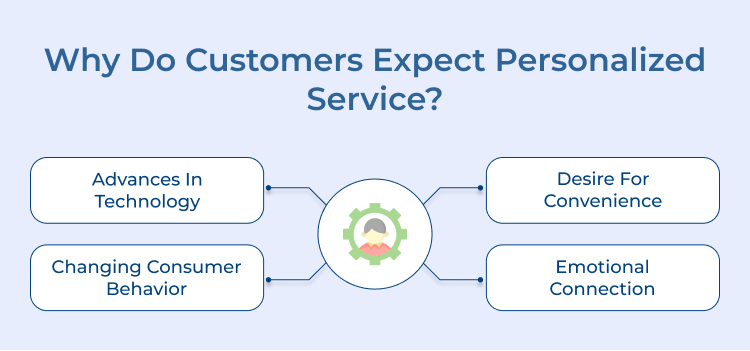
Delivering personalized customer service is now vital for strengthening relationships. Moving away from generic interactions, it ensures customers feel recognized and truly understood.
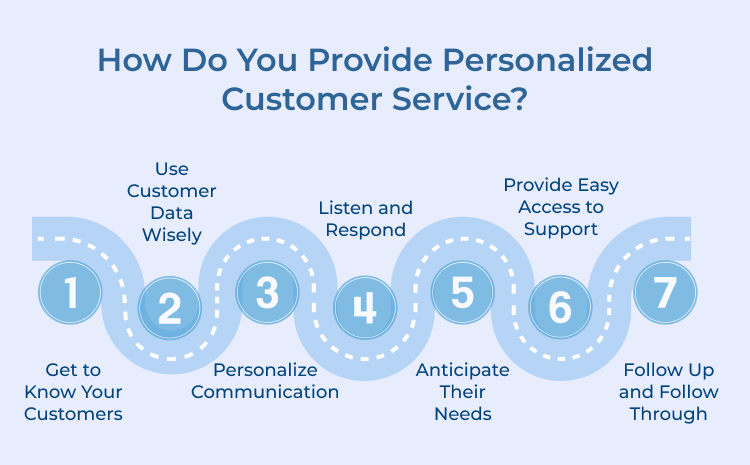
Take the time to understand your customers’ preferences, buying habits, and needs. By gathering data through customer surveys, feedback forms, or CRM systems, you can create customer profiles that will help you tailor your service to their individual needs.
Utilize the customer data you have collected to deliver personalized experiences. This could include personalized product recommendations, targeted promotions, or special offers based on their past purchases or browsing history.
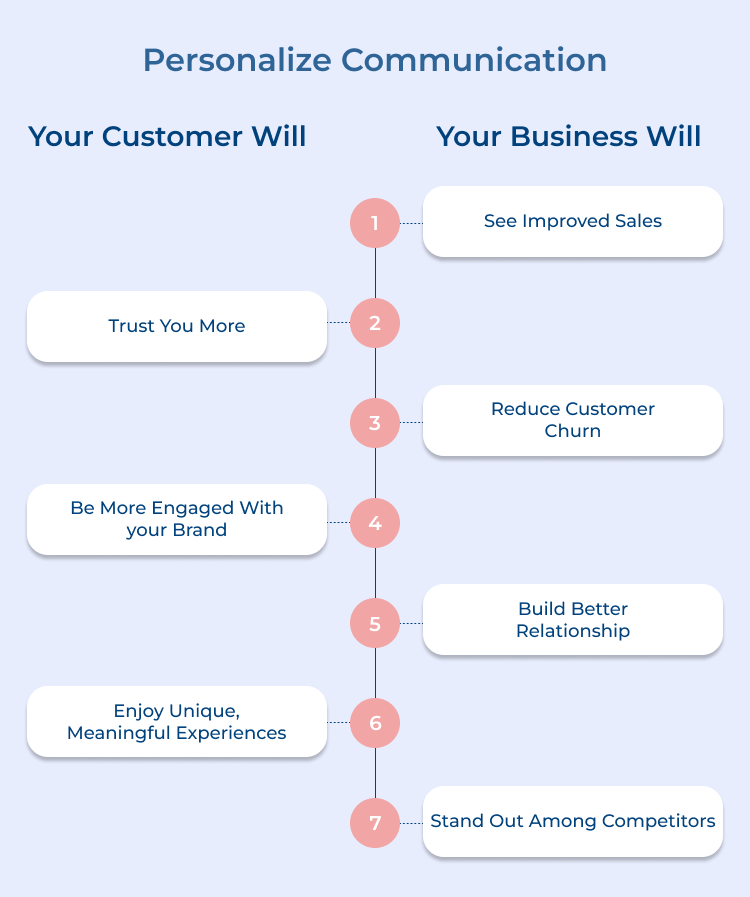
Address your customers by their name, and personalize your communication by referencing their past interactions with your brand. Tailor your tone and messaging to match their preferences and make them feel like you are speaking directly to them.
Be attentive to your customer’s needs and feedback. Listen actively to their concerns or suggestions, and respond promptly with solutions that are specific to their situation. Show empathy and understanding to let them know that you value their input.
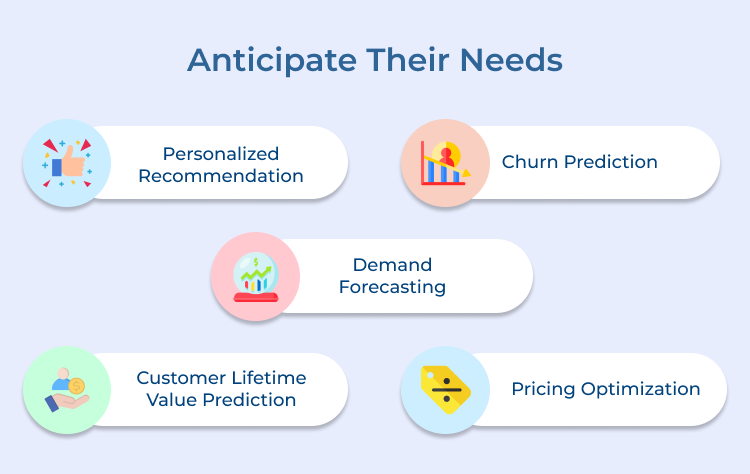
Proactively anticipate your customer’s needs and offer solutions before they even realize they need them. By analyzing their behavior patterns and preferences, you can predict what they might be looking for and provide a customized experience.
Make it easy for customers to reach out to you for assistance. Offer multiple channels for communication, such as phone, email, live chat, or social media, and ensure prompt responses to their inquiries.
After resolving a customer’s issue or fulfilling their request, follow up to ensure that they are satisfied with the outcome. Show that you care about their experience and are committed to providing top-notch service.
Personalized customer support can be your differentiating factor, and a personalized customer experience is not just limited to support. It can be implemented across all customer touchpoints.
Having a human touch is an important aspect of personalized customer service, but you can also scale that by leveraging AI and VR and augment their hyper-personalized experience.
Brands need to fast align with the evolving preferences of customers and understand that a strategy of personalized customer experience is the new demand. The focus needs to be on adopting a personalized approach as this is the only way to gain the trust of customers and improve different metrics.

How can technology be used to enhance personalized customer service?
There are many ways you can use technology to provide a more personalized customer service experience. For example, using live chat can help in addressing customer support and sales concerns effectively. A chatbot is a great automated tool that you can use to answer common customer questions or inquiries. Live chat and chatbots can help your support team address a larger volume of individual customer requests more effectively.
How can I implement personalized customer service in my business?
Employees and support staff who are properly trained and demonstrate professional customer service skills can improve customer satisfaction. It helps businesses to retain customers and boost profits. As you would agree that it costs less to retain loyal customers than to acquire new ones.
Why do customers prefer personalized customer service over generic service?
Businesses that understand the value of happy customers and believe how important they are to their business invest in or outline strategies to deliver personalized customer service. On the other hand, customers feel that they are heard and are a part of the company. It also shows the effort you are taking to go out of your way to deliver an exceptional personalized support experience.
How can I measure the effectiveness of personalized customer service?
To measure the success of personalized customer support, you decide to keep track of a certain metric. Each metric has its significance and contributes differently to personalization success. Hence, it is important to know when to track a particular metric depending on the goal. The key metrics are equivalent to understanding your customer’s response to your digital communication effort. Some of these key metrics are as follows: cart abandonment, churn rate, click-through rate, conversion rate, average revenue per user, customer lifetime value etc.
 https://omni24.io/wp-content/uploads/2026/07/customer-experience-benefits.png
1257
2400
Tushar Joshi
https://omni24.io/wp-content/uploads/2023/04/Omni-Logo-1.svg
Tushar Joshi2026-07-20 06:28:322026-07-20 06:28:32What are the Benefits of Customer Experience for Business?
https://omni24.io/wp-content/uploads/2026/07/customer-experience-benefits.png
1257
2400
Tushar Joshi
https://omni24.io/wp-content/uploads/2023/04/Omni-Logo-1.svg
Tushar Joshi2026-07-20 06:28:322026-07-20 06:28:32What are the Benefits of Customer Experience for Business? https://omni24.io/wp-content/uploads/2026/07/Proactive-Customer-Engagement.png
1256
2400
Tushar Joshi
https://omni24.io/wp-content/uploads/2023/04/Omni-Logo-1.svg
Tushar Joshi2026-07-16 03:26:572026-07-16 03:32:56What is Proactive Customer Engagement: A Quick Guide
https://omni24.io/wp-content/uploads/2026/07/Proactive-Customer-Engagement.png
1256
2400
Tushar Joshi
https://omni24.io/wp-content/uploads/2023/04/Omni-Logo-1.svg
Tushar Joshi2026-07-16 03:26:572026-07-16 03:32:56What is Proactive Customer Engagement: A Quick Guide https://omni24.io/wp-content/uploads/2026/07/Customer-Service-Profit-Center.png
1256
2400
Tushar Joshi
https://omni24.io/wp-content/uploads/2023/04/Omni-Logo-1.svg
Tushar Joshi2026-07-13 04:23:122026-07-21 04:55:56How to Turn Customer Service Into a Profit Center
https://omni24.io/wp-content/uploads/2026/07/Customer-Service-Profit-Center.png
1256
2400
Tushar Joshi
https://omni24.io/wp-content/uploads/2023/04/Omni-Logo-1.svg
Tushar Joshi2026-07-13 04:23:122026-07-21 04:55:56How to Turn Customer Service Into a Profit Center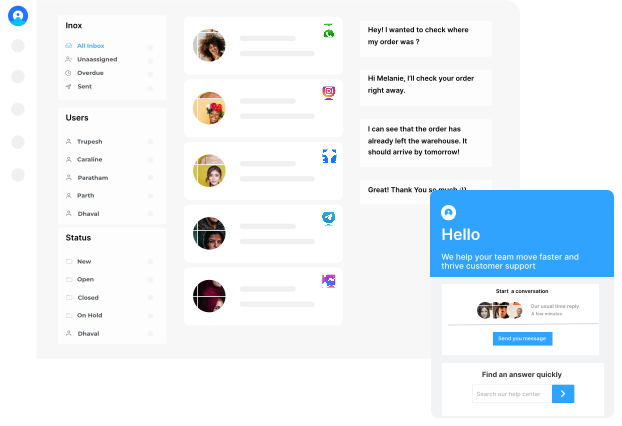
Whether it’s about acquire, engage or support – Omni24 covers all your customer engagement needs in one complete platform.

Copyright ©2026 Veemo All rights reserved.
CA, Los Angeles, Hall Ave, 19011