How to Build a Customer Service Playbook That Drives CX
A structured customer support playbook that standardizes interactions, cuts resolution time and protects revenue through consistent service delivery.

A structured customer support playbook that standardizes interactions, cuts resolution time and protects revenue through consistent service delivery.
Most support teams are working harder than ever yet still losing customers to inconsistent and unresolved experiences. The problem is rarely the people, it is the absence of a structured system.
Over 70% of consumers will switch to a competitor after multiple bad experiences. Without a documented playbook your support operation runs on individual judgment calls that vary from agent to agent. That inconsistency quietly damages customer trust and puts renewals at serious risk.
A well-built playbook gives your team a clear framework for every interaction, escalation and resolution. This guide walks through exactly how to build one that works on the ground.
A customer support playbook is a structured document that outlines how a support team should handle customer interactions, escalations and resolutions. It sets a clear standard for responses so every team member operates from the same page.
For B2B and SaaS businesses, a playbook is critical because customer retention directly depends on consistent as well as reliable support experiences. A single mishandled escalation in these environments can cost a contract worth thousands of dollars.
Key objective:
Not every support situation is the same and that’s exactly why different types of playbooks exist to handle different realities on the ground.
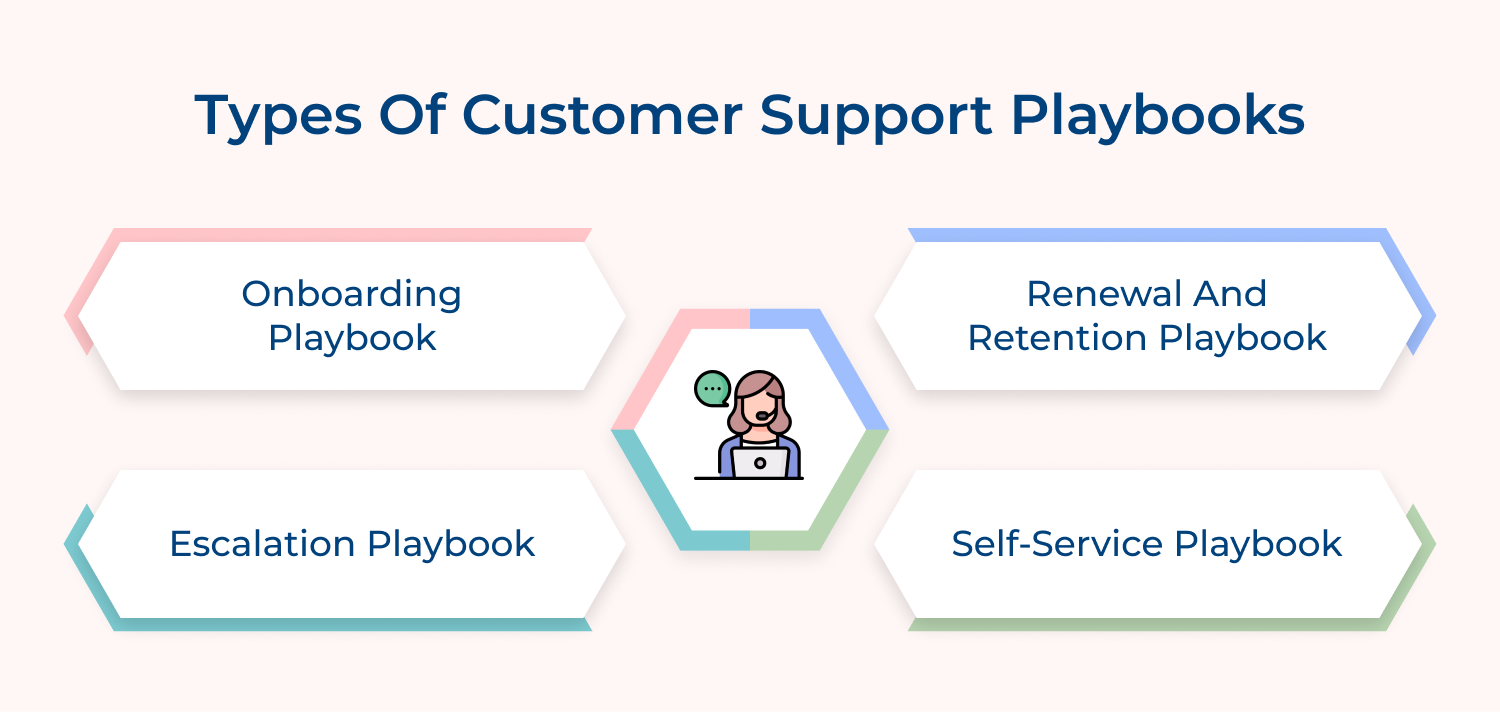
The first 30 days decide whether a new customer sticks around or quietly disengages before renewal. A strong onboarding playbook takes the guesswork out of that window.
Key elements to cover:
Ambiguity at this stage is the fastest way to lose a customer who was otherwise sold on your product.
Nothing damages trust faster than a customer being passed around with nobody owning the problem. An escalation playbook sets hard thresholds based on ticket age, customer tier and business impact – so the right person steps in before things spiral.
A renewal playbook is less about sending contracts and more about catching at-risk accounts early. Support and customer success need to run this one together.
What a mature retention playbook should cover:
Teams that treat renewal as a support responsibility (not just a sales one) consistently see stronger net revenue retention.
Scaling support doesn’t always mean hiring more people. Nearly 40-60% of incoming tickets are repeat questions a solid knowledge base could’ve answered instantly. A self-service playbook gives customers the answers they need without ever opening a ticket.
Running a support team without a playbook is like asking every agent to solve the same problem using a different method, the results will never be consistent.
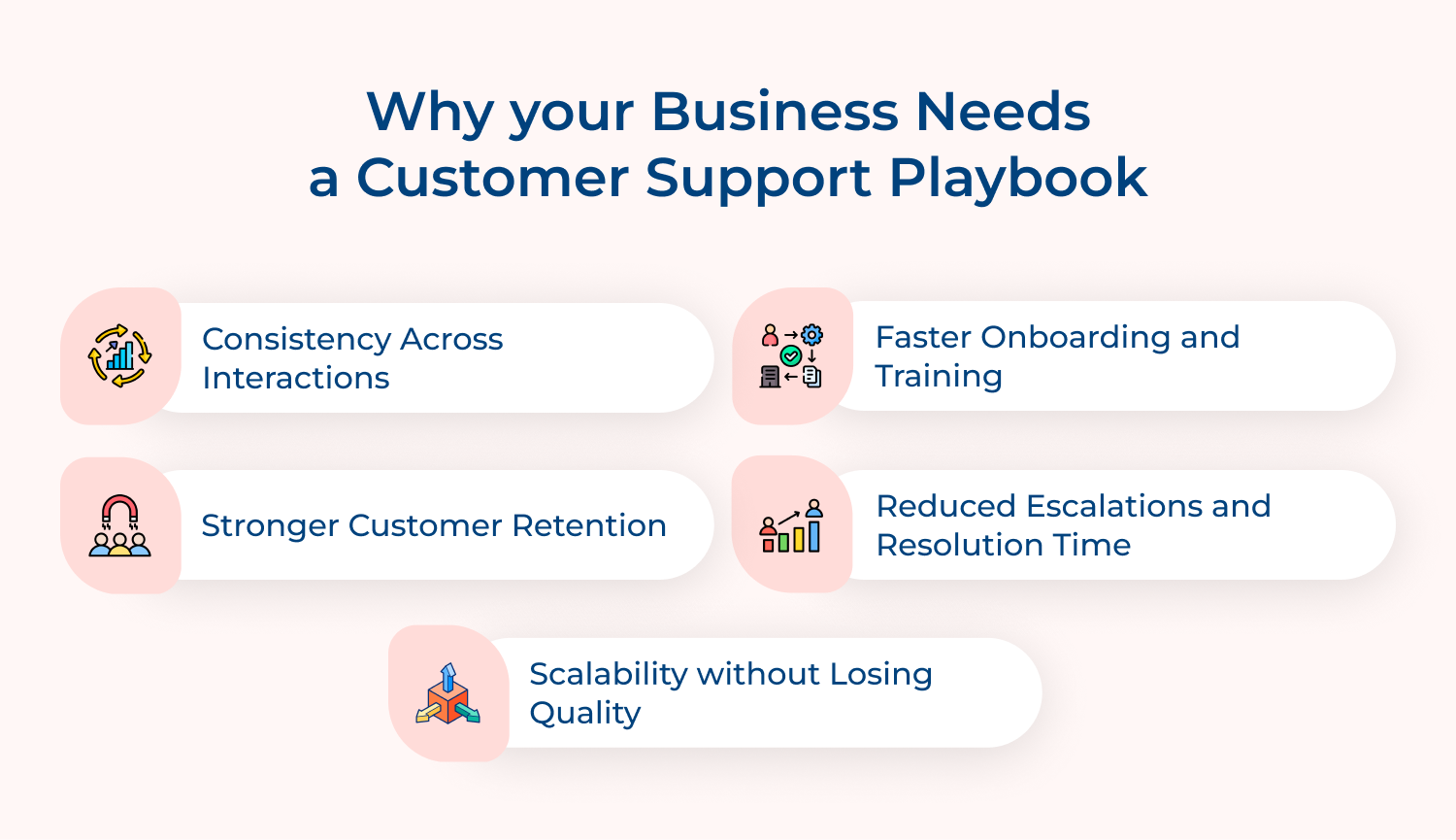
1. Consistency Across Interactions
In high-volume support, inconsistency is a silent trust-killer. When one agent resolves a billing issue in 10 minutes and another takes three days for the exact same problem, customers notice. That gap damages brand credibility faster than any competitor ever could.
2. Faster Onboarding and Training
No playbook means new agents rely on tribal knowledge and that knowledge walks out the door every time someone leaves. A well-structured playbook cuts ramp time significantly by giving new hires documented workflows, escalation paths and response frameworks to follow from day one.
3. Reduced Escalations and Resolution Time
Agents with clear decision-making guidelines in front of them stop second-guessing and start resolving. Support leaders who track CSAT and AHT consistently see measurable improvement once their teams follow a proven process instead of improvising their way through every ticket.
4. Stronger Customer Retention
Customers who receive reliable, predictable support don’t go looking for alternatives. In B2B and SaaS environments where contracts renew annually, a team operating from a strong playbook directly protects revenue by keeping customers confident in the relationship.
5. Scalability Without Losing Quality
Scaling from 5 agents to 50 without a playbook means quality degrades as headcount grows. A playbook is the foundation that lets support operations expand across regions, time zones and product lines – without compromising the standard customers experienced on day one.
A playbook is only as strong as what goes inside it and missing even one critical component can create gaps that show up at the worst possible moments.
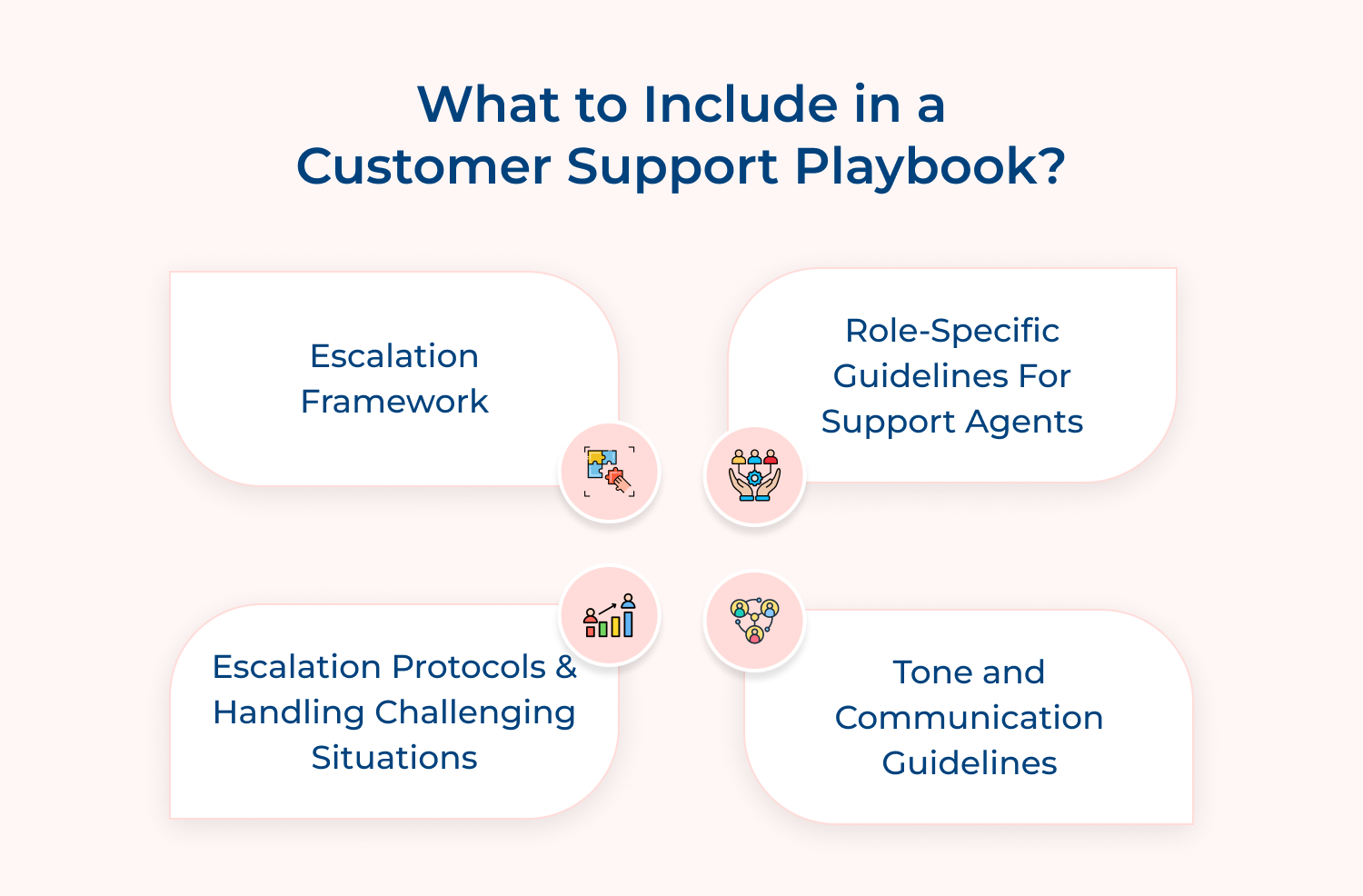
1. Role-Specific Guidelines for Support Agents
Every support role carries different responsibilities and a playbook must reflect that reality clearly for each level. A frontline agent should never be operating with the same set of instructions as a senior escalation specialist because their scope of decision-making is fundamentally different.
2. Tone and Communication Guidelines
Tone is what separates a response that de-escalates a frustrated customer from one that makes the situation worse. Defining clear tone guidelines (empathetic, direct and solution-focused) is what keeps communication consistent across every agent interaction regardless of who is handling the ticket.
3. Escalation Protocols and Handling Challenging Situations
Every support team will face situations where a customer is angry, a problem is unresolved and the pressure to act fast is high. A well-defined escalation protocol removes panic from that moment by giving agents a clear path — who to contact, when to escalate and how to communicate the delay to the customer.
4. Escalation Framework
An escalation framework defines the hierarchy of ownership when a ticket moves beyond frontline resolution. Without a documented framework critical issues get stuck in grey zones where nobody is clearly responsible for the outcome and the customer ends up paying the price for that confusion.
Building a support playbook doesn’t have to be complicated, but skipping it is costly. Here’s a step wise guide to creating your perfect playbook.
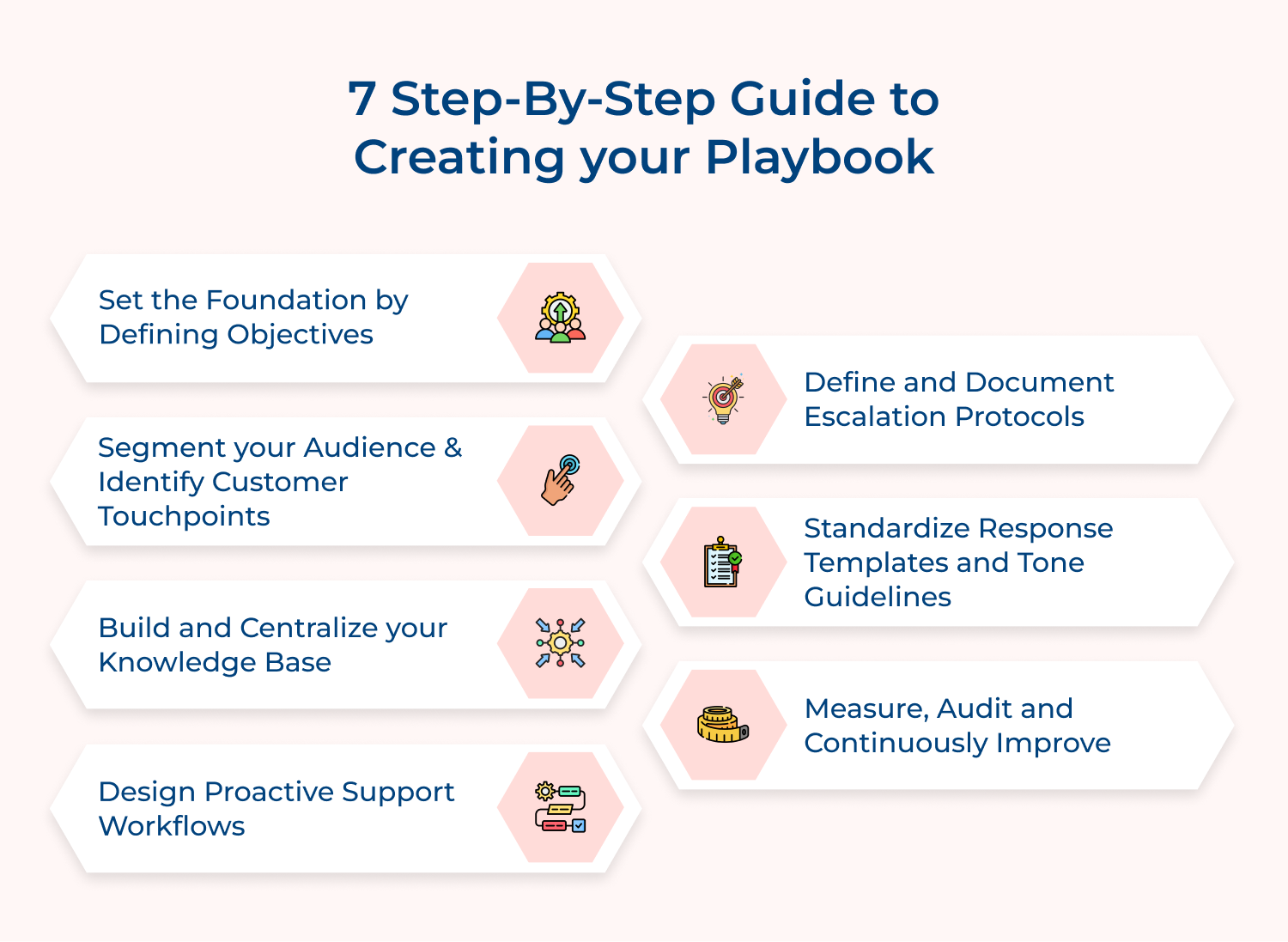
Defining objectives is the most critical starting point because every process, template and escalation path in your playbook must connect back to a measurable business goal. Without this clarity your playbook becomes a collection of instructions with no real direction.
Most teams rush past this step and end up with a playbook that looks complete but drives no measurable outcome. The right objectives tie support performance directly to retention, revenue and customer satisfaction metrics.
Here are 4 ideal objectives to define in your customer support playbook:
Once objectives are locked every team member needs a clear ownership assignment tied to specific numbers. A playbook without accountability built into its foundation will always underdeliver on its promise.
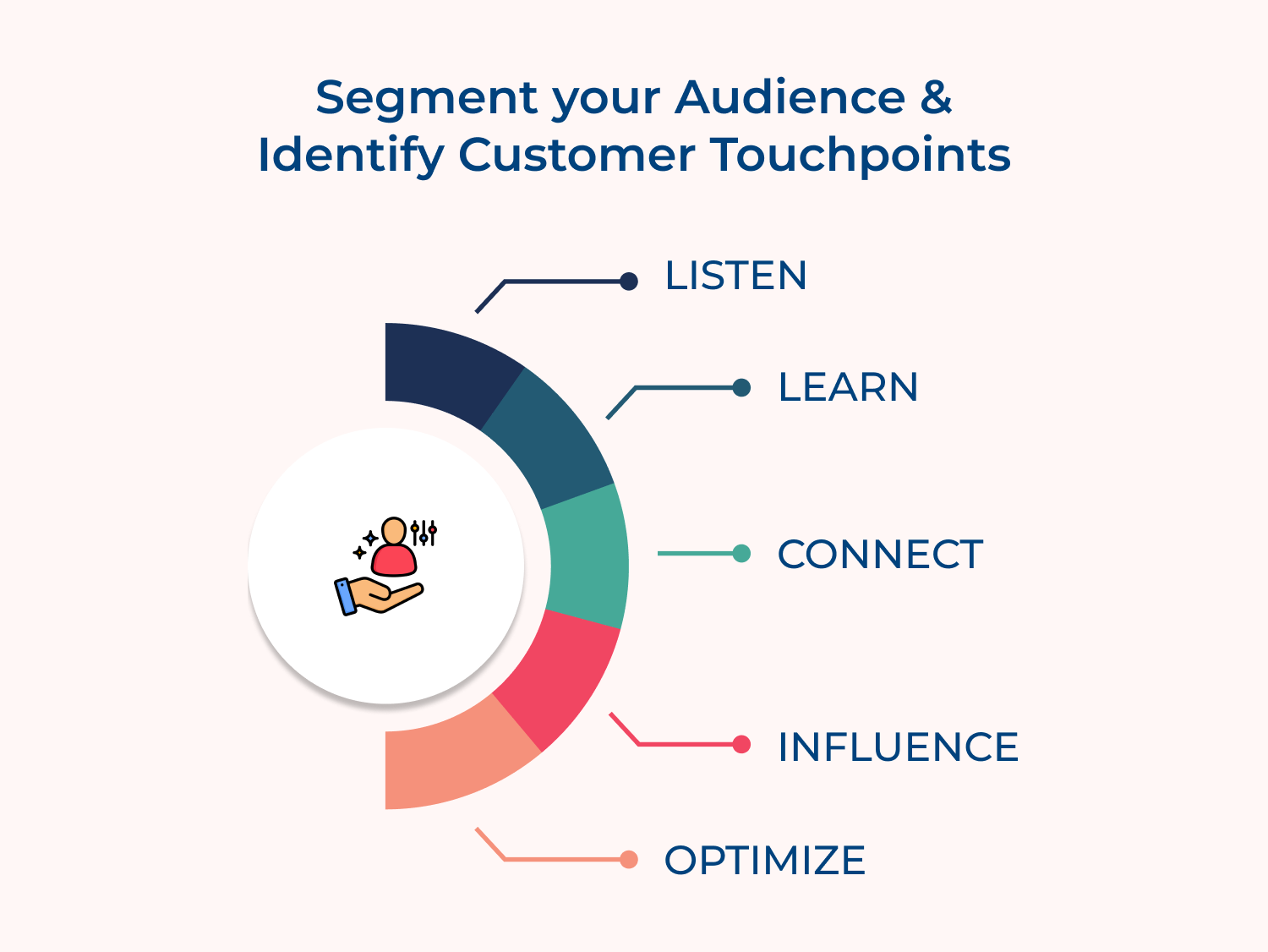
Treating every customer the same inside a playbook is one of the most common mistakes support teams make. Different segments carry different expectations and your playbook must be built around that reality.
It starts with mapping the customer journey, which means identifying every channel where customers reach out – chat, email, phone or in-app. Each channel carries a different urgency level and your playbook must define a distinct response strategy for each one.
Key channels to map in your customer journey:
Next starts with segmentation which allows your team to prioritize efforts and deliver support that actually matches what each customer group needs. A self-serve startup and an enterprise account should never receive identical support treatment inside the same playbook.
4 segmentation categories and how each one strengthens your playbook:
A scattered knowledge base forces agents to search for answers during live interactions which directly increases handle time and frustrates customers. Centralizing everything into one structured system is what allows a support team to operate with real speed and consistency.
Organize Content by Issue Type and Agent Role
A frontline agent should never have to scroll through escalation-level documentation to find a basic troubleshooting guide. Role-based content organization ensures every agent finds exactly what they need without wasting time during a live customer interaction.
Keep Documentation Updated After Every Major Resolution
Every complex ticket resolved is a signal that something in the knowledge base needs to be added or improved. Teams that treat documentation as a living system rather than a one-time setup end up with a knowledge base that compounds in value over time.
Make It Searchable and Accessible for Everyone
A knowledge base that is hard to navigate is nearly as damaging as having no knowledge base at all. Proper tagging, smart search functionality and role-based access ensure agents retrieve the right answer in seconds during high-pressure interactions.
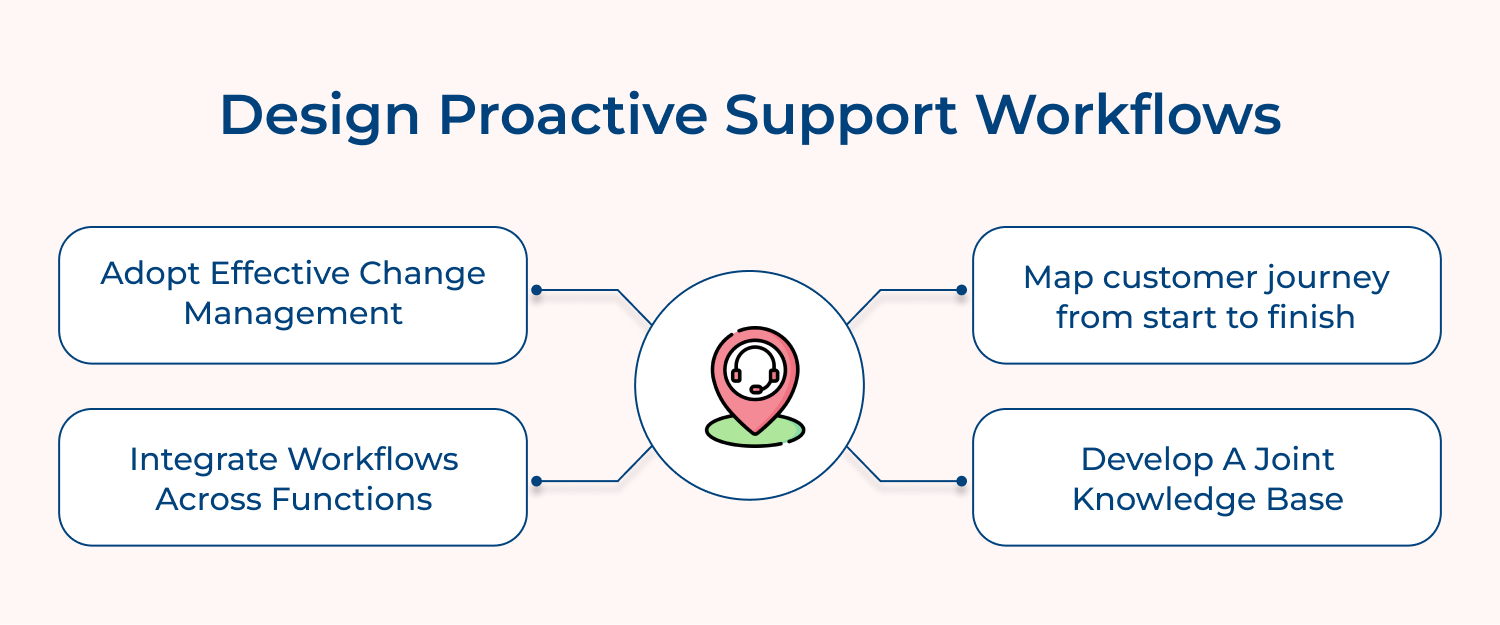
Reactive support means waiting for customers to report problems which is already too late in most retention-sensitive situations. Proactive workflows allow the team to identify risk signals early and act before a customer even considers raising a complaint.
A 5-question checklist before implementing proactive support workflows:
Proactive workflows deliver the best results when they are triggered by real data from your CRM or customer success platform. Acting on signals like a drop in logins or repeated failed actions is far more effective than relying on intuition alone.
Pro Tips:
Escalation protocols are the backbone of any high-performing support operation because they eliminate guesswork when tickets move beyond frontline resolution. Every unstructured escalation is a direct risk to customer trust and retention.
3 effective methods for setting up efficient escalation protocols in your playbook:
So what actually breaks down when escalation protocols are missing? A high-value account experiencing a product failure gets passed between agents with no clear owner and the customer starts evaluating alternatives before anyone takes responsibility.
A documented escalation protocol does not just resolve tickets faster – it protects revenue by ensuring critical situations always reach the right person at the right time.
Inconsistent communication almost always traces back to agents having no standardized templates to work from and that inconsistency directly reflects in CSAT scores. Customers experience unpredictability instead of a reliable support team.
The key is building templates that give agents a strong structural foundation while allowing room for personalization. A rigid script kills authenticity but a well-designed template ensures the right message lands every single time.
5 ideal response templates every support playbook should include:
A SaaS company handling a billing dispute uses a pre-built resolution template that acknowledges the error and commits to a 24-hour fix. The ticket closes with a 5-star CSAT rating despite the issue occurring in the first place. Now explore the 3-4 tone guidelines every business should follow in their support playbook:
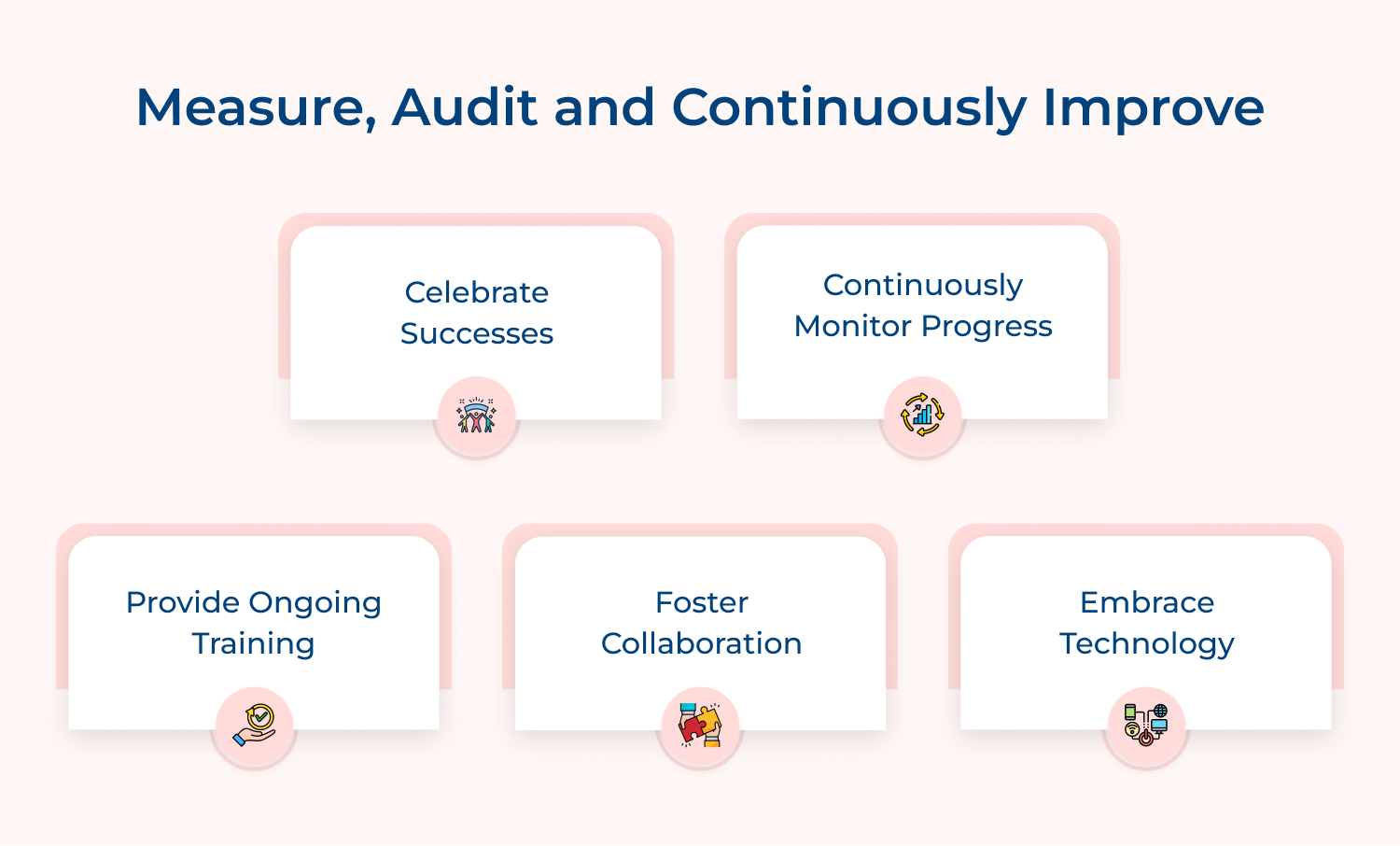
A playbook that never gets updated becomes a liability because customer behavior and product complexity evolve faster than any static document can keep up with. Measurement and auditing must be built into the playbook as a non-negotiable recurring process.
Key metrics to measure, audit and continuously improve your playbook:
Tracking these metrics weekly gives managers a real-time view of where the playbook is working and where gaps are creating friction. When any metric trends negatively it almost always points to a specific playbook section needing an immediate update.
Best practices:
The teams that consistently deliver superior support are the ones that treat their playbook as a living system. Here are six best practices that keep it effective over time.
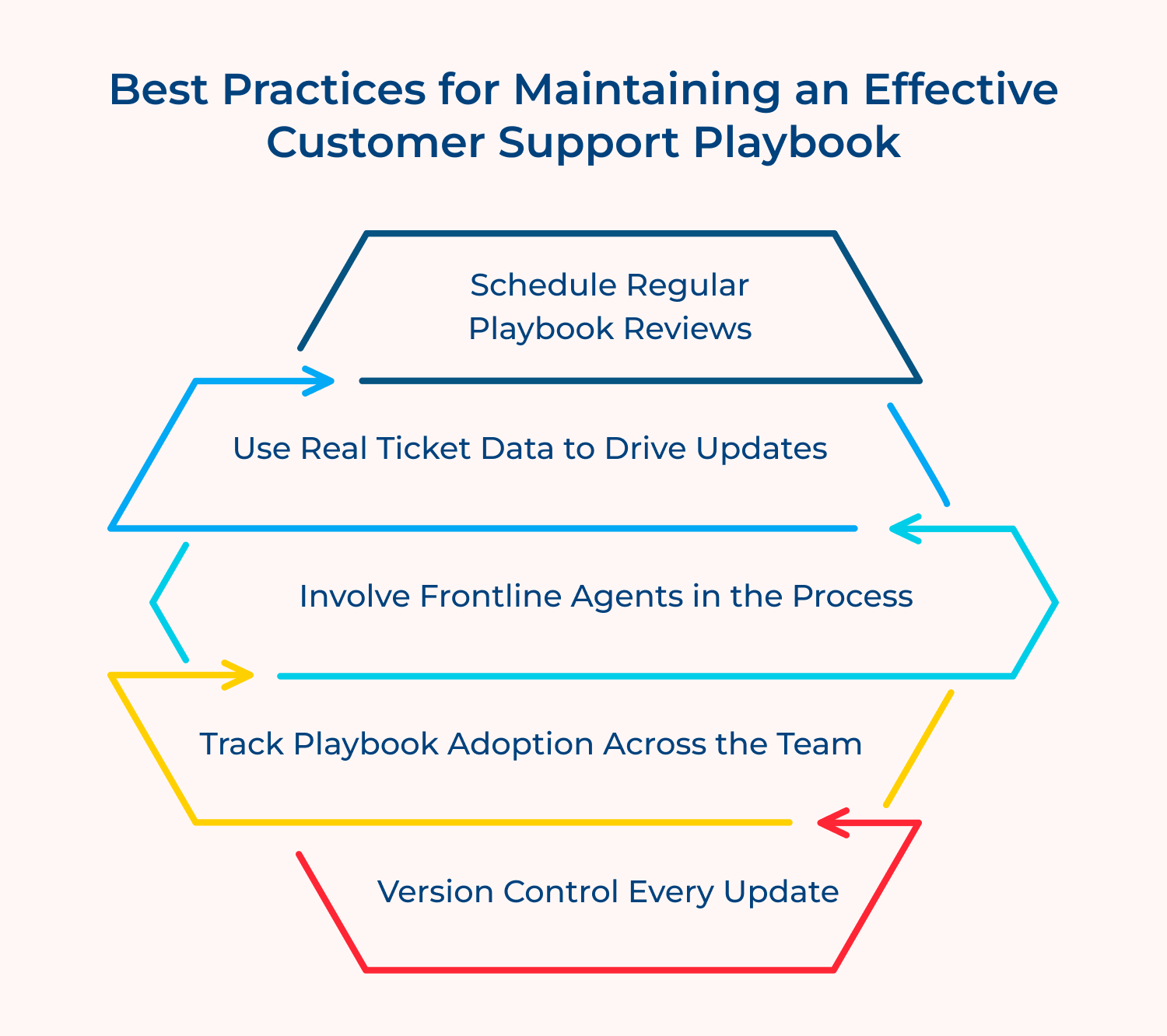
1. Schedule Regular Playbook Reviews
A playbook reviewed once a year is already outdated by the second quarter and the gaps show up directly in agent performance. Set a fixed quarterly review cycle where specific sections are audited against real ticket data and current product realities.
2. Use Real Ticket Data to Drive Updates
Gut feeling should never drive playbook changes — actual ticket patterns, escalation trends and reopen rates tell a far more accurate story. When data consistently points to the same failure point that section of the playbook needs an immediate and deliberate rewrite.
3. Involve Frontline Agents in the Process
Frontline agents interact with the playbook under real pressure every single day and they know exactly where it fails them. Building a structured feedback loop where agents flag unclear or outdated sections ensures updates come from ground-level experience and not just management assumptions.
4. Track Playbook Adoption Across the Team
A well-written playbook that agents are not actually using delivers zero value to the customer experience. Monitoring whether templates are being used, escalation paths are being followed as well as knowledge base articles are being accessed regularly tells managers where adoption is breaking down and where additional coaching is needed.
5. Version Control Every Update
Every change made to a playbook should be logged with a date, the reason for the change and the expected outcome it is designed to drive. Without version control teams lose visibility into what changed and why which makes it impossible to connect playbook improvements to actual metric gains over time.
Even well-intentioned playbooks fail when foundational mistakes go unaddressed during the building phase. Recognizing these early separates a playbook that drives results.
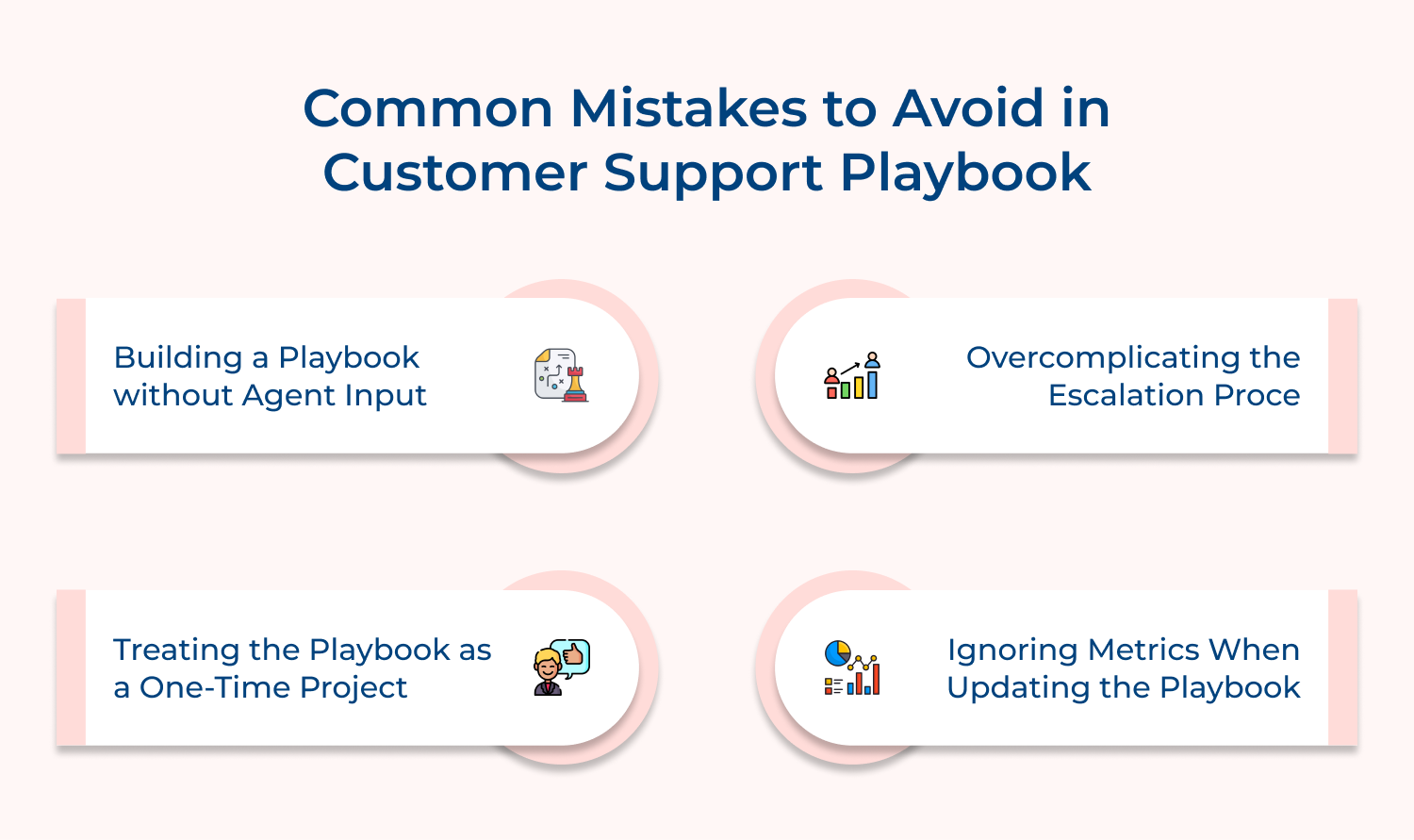
A playbook built without frontline agent involvement always misses the real-world friction points that matter most. It looks thorough on paper but fails the moment an agent applies it during a live interaction.
Teams that build a playbook and leave it untouched for months are essentially operating on outdated guidance. Customer behavior shifts and product changes mean a static playbook becomes a liability faster than most managers expect.
An escalation framework with too many tiers and unclear ownership creates hesitation instead of resolution during high-pressure situations. Agents default to improvising when the documented process feels harder to follow than the problem itself.
Updating a playbook based on opinions rather than data produces changes that feel productive but move no real needle. CSAT scores and escalation rates are the clearest signals pointing to exactly what needs fixing.
Solutions to keep your customer support playbook effective:
Looking at how industry-leading companies structure their support playbooks reveals patterns that any business can learn from. Let’s explore 3 real-world examples:
Airbnb
Airbnb operates a two-sided marketplace where both hosts and guests need support simultaneously as well as their playbook is built around resolving conflict between two parties under time pressure. Every escalation path is mapped to specific dispute types with clear ownership and resolution timelines that protect both sides of the transaction.
Mayo Clinic
Mayo Clinic operates in an environment where support interactions carry direct patient experience implications making consistency and empathy non-negotiable at every touchpoint. Their playbook prioritizes clear communication protocols that ensure every patient-facing interaction reflects the same standard of care regardless of which department handles the query.
Zappos
Zappos built its entire brand reputation on a support playbook that gives agents genuine autonomy to resolve customer issues without rigid scripts or approval chains slowing down the process. Their approach treats every customer interaction as a relationship-building opportunity rather than a transaction to close as quickly as possible.
A customer support playbook is the operational backbone that determines whether your support function builds customer loyalty or quietly drives churn. Every process, template and escalation path documented today directly protects revenue tomorrow.
The teams that consistently outperform their competitors are not necessarily the ones with the largest headcount – they are the ones operating from a well-built and regularly updated playbook. Start building yours with clear objectives and treat every customer interaction as data that makes it stronger over time.

How Often Should a Customer Support Playbook Be Updated?
A customer support playbook should be reviewed quarterly at minimum because product changes, policy updates and shifting customer behavior make older guidance unreliable. Any major product release or support failure should also trigger an immediate targeted update regardless of the scheduled review cycle.
How Can I Measure the Effectiveness of My Customer Support Playbook?
The most reliable way to measure playbook effectiveness is by tracking CSAT scores, escalation rates as well as ticket reopen rates before and after any update. A playbook that is working will show consistent improvement across these metrics over a sustained period of time.
How Long Does It Take to Create a Customer Support Playbook?
A functional first version of a customer support playbook can realistically be built in four to six weeks when the right stakeholders are involved from the start. The initial version does not need to be perfect, it needs to be structured enough to guide agents and refined enough to measure against real outcomes.
What Is the Difference Between a Support Playbook and a Knowledge Base?
A knowledge base stores product information and troubleshooting guides while a support playbook defines how agents should think, communicate as well as act across every customer scenario. The knowledge base answers the question of what – the playbook answers the question of how and when.
Who Should Own the Customer Support Playbook?
A dedicated support operations manager or a senior customer success lead should own the playbook because ownership without accountability leads to a document that never gets updated. The owner is responsible for tracking adoption, gathering agent feedback and ensuring every section reflects current business as well as product realities.
 https://omni24.io/wp-content/uploads/2026/08/AI-Customer-Service-Agents.png
1256
2400
Webvision Solution
https://omni24.io/wp-content/uploads/2023/04/Omni-Logo-1.svg
Webvision Solution2026-09-21 04:48:512026-09-21 04:48:51How to Build an AI Customer Service Agents: 8 Key Steps
https://omni24.io/wp-content/uploads/2026/08/AI-Customer-Service-Agents.png
1256
2400
Webvision Solution
https://omni24.io/wp-content/uploads/2023/04/Omni-Logo-1.svg
Webvision Solution2026-09-21 04:48:512026-09-21 04:48:51How to Build an AI Customer Service Agents: 8 Key Steps https://omni24.io/wp-content/uploads/2026/08/Omnichannel-Conversational-AI.png
1256
2400
Tushar Joshi
https://omni24.io/wp-content/uploads/2023/04/Omni-Logo-1.svg
Tushar Joshi2026-09-16 03:51:072026-09-16 03:51:07How to Build Omnichannel Conversational AI Strategy
https://omni24.io/wp-content/uploads/2026/08/Omnichannel-Conversational-AI.png
1256
2400
Tushar Joshi
https://omni24.io/wp-content/uploads/2023/04/Omni-Logo-1.svg
Tushar Joshi2026-09-16 03:51:072026-09-16 03:51:07How to Build Omnichannel Conversational AI Strategy https://omni24.io/wp-content/uploads/2026/08/Customer-Service-Teams.png
1256
2400
Tushar Joshi
https://omni24.io/wp-content/uploads/2023/04/Omni-Logo-1.svg
Tushar Joshi2026-09-15 04:01:522026-09-15 04:02:16How to Build Customer Service Teams: 6 Key Steps
https://omni24.io/wp-content/uploads/2026/08/Customer-Service-Teams.png
1256
2400
Tushar Joshi
https://omni24.io/wp-content/uploads/2023/04/Omni-Logo-1.svg
Tushar Joshi2026-09-15 04:01:522026-09-15 04:02:16How to Build Customer Service Teams: 6 Key Steps
Whether it’s about acquire, engage or support – Omni24 covers all your customer engagement needs in one complete platform.

Copyright ©2026 Veemo All rights reserved.
CA, Los Angeles, Hall Ave, 19011